By CB Adams

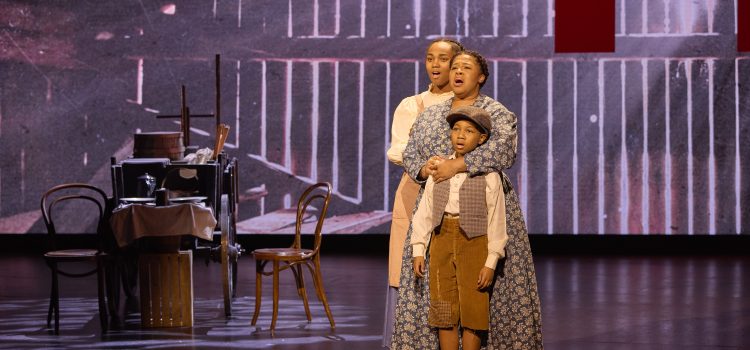
There’s swagger aplenty in “Joshua’s Boots,” along with a cattle stampede, a lynching and the complicated business of growing up Black in the American West of 1878. After a white mob murders his father in Tennessee, young Joshua heads west, hoping to make a life among the cowboys.

Director Adam Flores knows the size of these ingredients and, more importantly, their proportions. Working with Adolphus Hailstork’s music and Susan Kander’s deft libretto, he gives this hourlong opera its humor, heartbreak and historical weight, all governed by an admirable sense of restraint.

Michael Breaux plays Joshua with unwavering conviction, giving the young man’s journey a believable emotional center. His singing and acting possess an assurance that makes Joshua’s determination palpable.

Angel Love is a heartbreaker as Joshua’s Mama, then gives Sally Fingers a knowing blend of Miss Kitty from “Gunsmoke” and Joanie Stubbs from HBO’s “Deadwood.” She has the former’s poise, the latter’s worldly edge and the good sense to know what sort of men she’s dealing with.
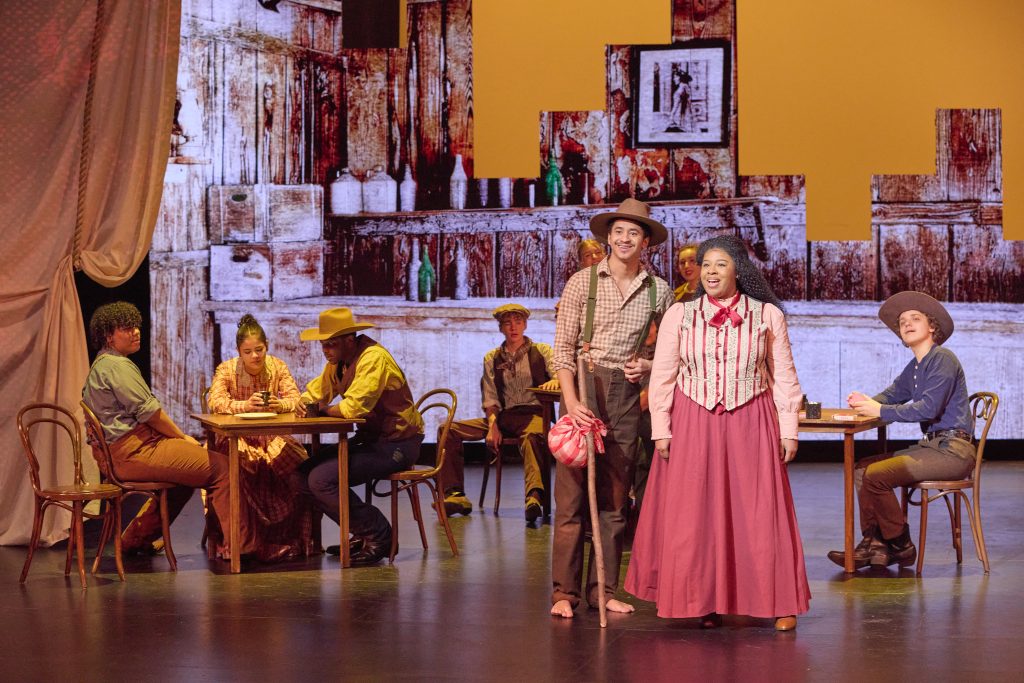
Joshua (Michael Breaux) meets tavern keeper Sally (Angel Love) in Dodge City. Photo by Eric Woolsey

Sam Hawkins plays Frederick, the prejudiced trail boss who hires Joshua and treats him with open contempt. Hawkins makes that prejudice so convincing, so deeply ingrained in the man, that Frederick’s eventual change of heart after Joshua saves his life during a stampede strains credibility. Hawkins may have done his job a little too well for the libretto’s own good.

James Stevens handles four roles—Geezer, Frank, Captain Pershing and Cookie—with the unruffled ease of a man changing hats. Ricco Martin Jr. gives Natty Green, a cowboy Joshua encounters on his journey, his full allotment of swagger, then reins it in enough to reveal the man beneath the mannerisms.

One of the opera’s loveliest moments comes beside a campfire, where a solitary figure listens as Kayden Brooks sings from offstage. His voice meets Hailstork’s music and Kander’s words at precisely the right emotional temperature. A lovely bit of theatrical alchemy.

There are more performers onstage than musicians in the pit, though you’d never know it from the sound. Stephen Mager draws a remarkably full-bodied performance from his chamber orchestra, seemingly anticipating the singers’ every move. One hopes the young artists appreciate just how good they’ve got it.
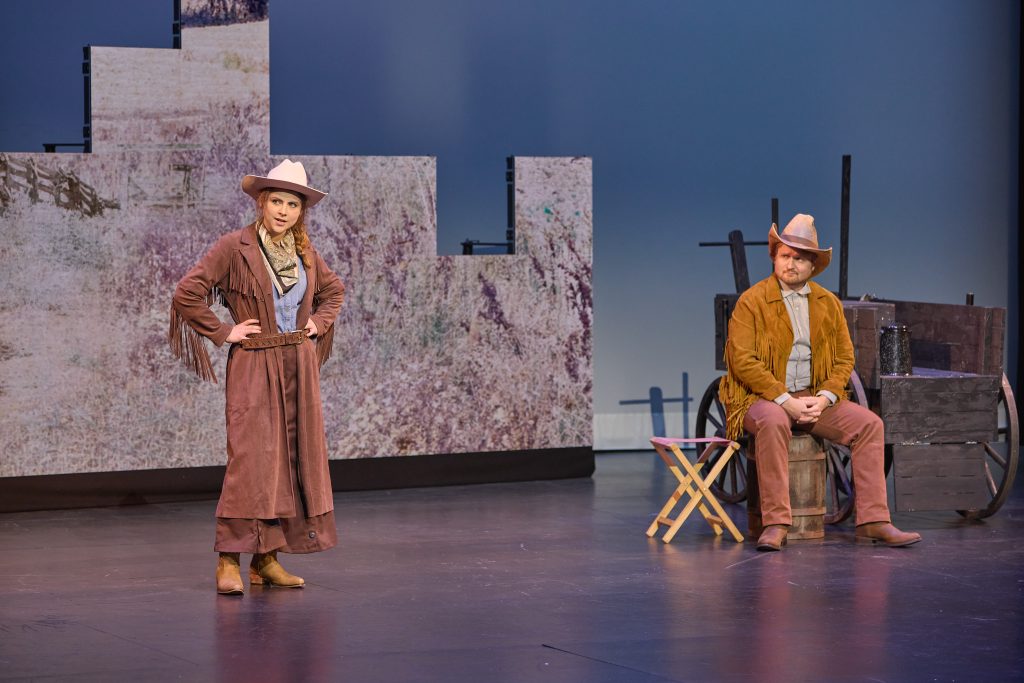
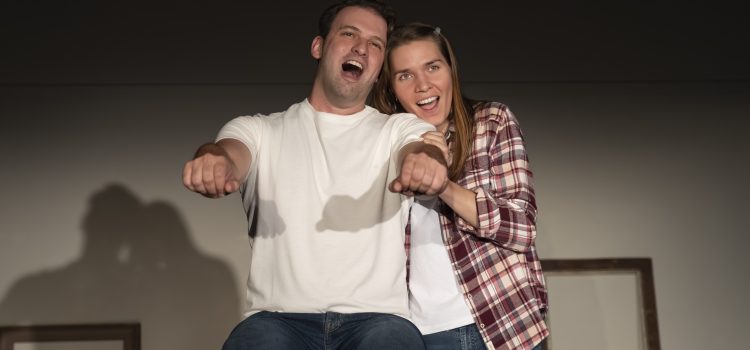
Lucinda (Anna Edwards) complains to Cooke (James Stevens) that girls aren’t allowed to become cowboys, too. Photo by Eric Woolsey

Can a puff of smoke in a projected Tennessee holler be fraught with meaning? It can in the hands of video designers David Sajewich and Kylee Loera. That ominous detail signals Joshua’s father’s lynching.

Elsewhere, their projections establish the changing landscape of Joshua’s journey and, during the cattle stampede, join Giac Noelle’s choreography in sending bodies and images into convincing commotion. Suggestion and spectacle, each in its proper place.

The partnership among Opera Theatre of Saint Louis, COCA and its Artists in Training program gives emerging performers the opportunity to work alongside seasoned professionals, with the same artistic expectations. “Joshua’s Boots” makes a persuasive case for that collaboration and for the future of opera in St. Louis.

“Joshua’s Boots” was presented October 21–24 at COCA’s Catherine B. Berges Theatre.
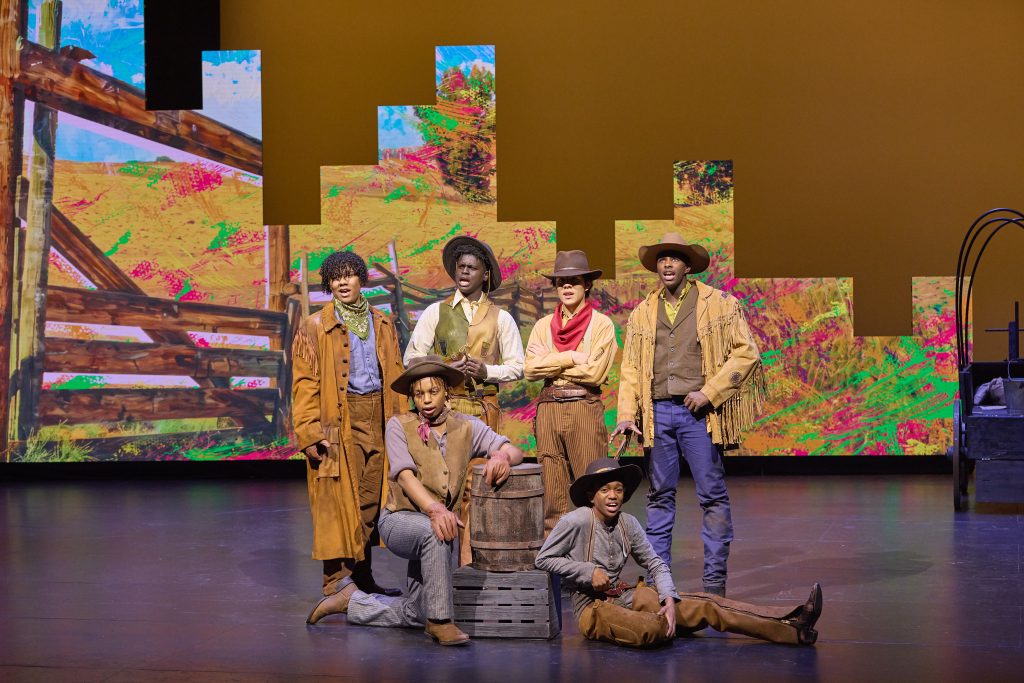
(L to R) Kayden Brooks, Thomas Chatman, Ricco Martin Jr., Éamon Ewing, Cameron Hadley, and Kameron Henry as cowboys in “Joshua’s Boots.” Photo by Eric Woolsey

By CB Adams

Union Avenue Opera’s inaugural One-Act Festival is intimate in scale and ambitious in reach, a chamber-sized gesture that embraces the big questions shaping our moment — race, gender, justice, identity.

By pairing “dwb (driving while black)” and “As One,” the company affirmed opera’s ability to thrive in spectacle and in distillation, to fill a grand hall and also to transform a close space into a forum for empathy.

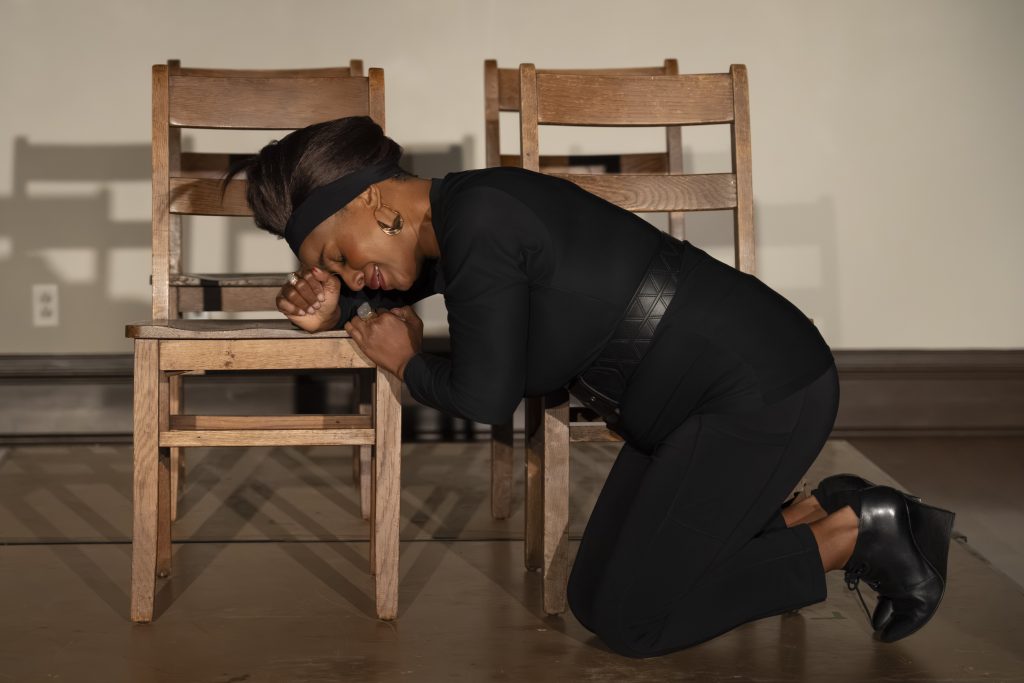
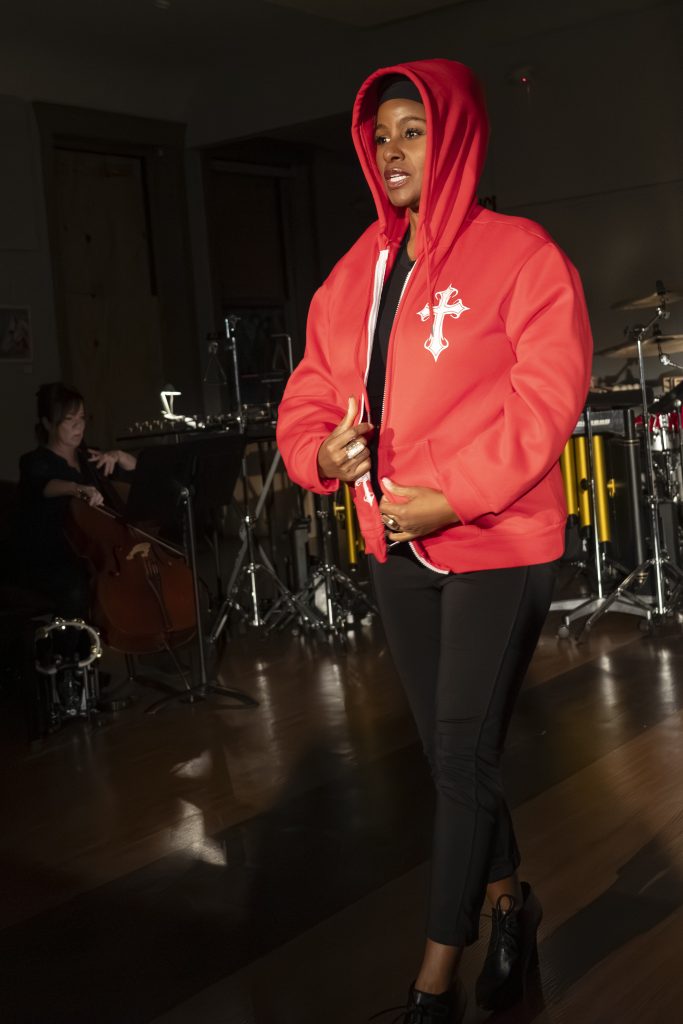
Marsha Thompson in “dwb (driving while black)

“dwb (driving while black)” — Urgency in Compression

“dwb (driving while black),” composed by Susan Kander with words by Roberta Gumbel, follows a Black mother from the moment of birth through the long arc of raising a son. The opera charts a continuum of love, vigilance and reluctant instruction in how to survive, compressing years into a concentrated meditation.

Soprano Marsha Thompson brought to the role a warm, agile soprano with strength and flexibility. She carries emotional nuance through her upper and middle registers and meets its dramatic demands with secure technique — qualities evident in her performances elsewhere in roles such as Violetta, Aïda and Tosca.

Her familiarity with the part, including past performances with Fort Worth Opera, lent her assurance and depth. She moved from tenderness to unease with natural poise, always anchoring the story in a mother’s love.

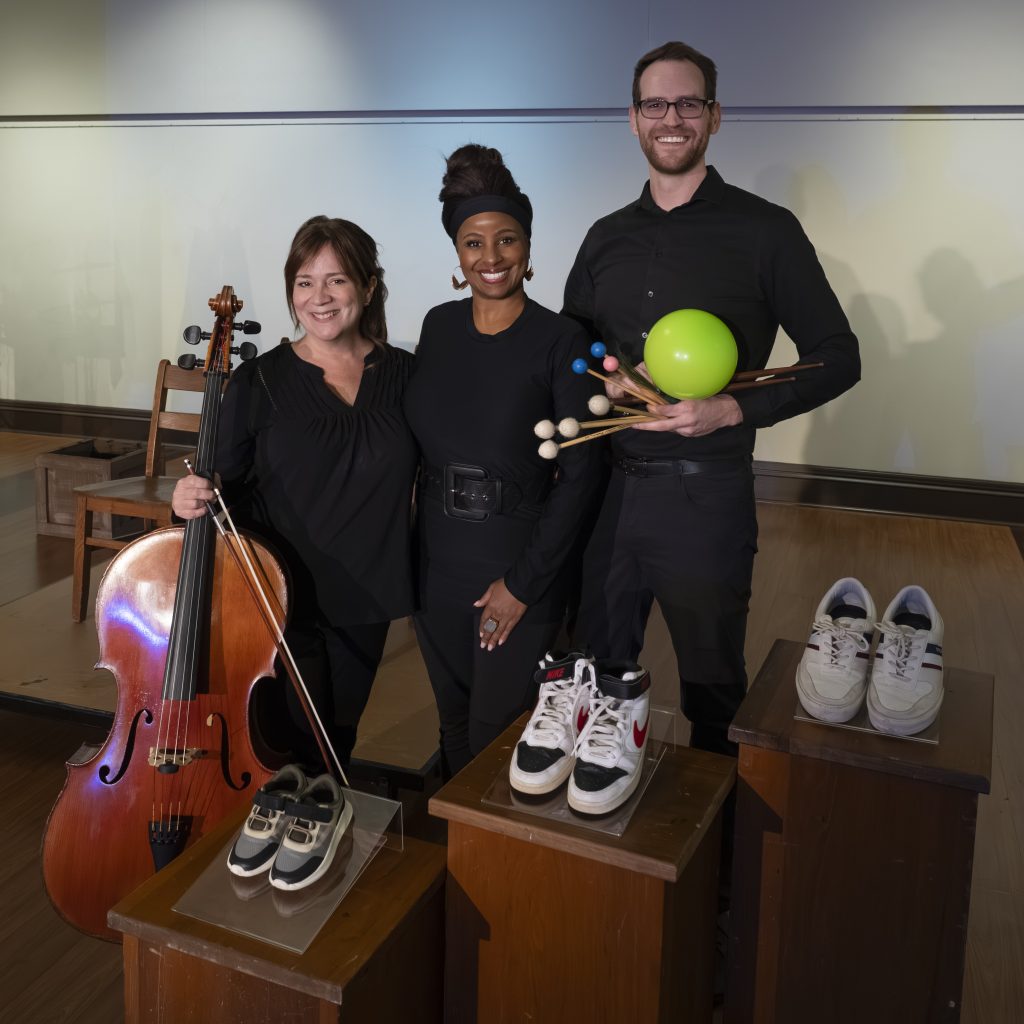
Director Ivan Griffin staged the work with economy, allowing the smallest gestures to resonate. The motif of shoes — baby shoes, boyhood sneakers, grown-up lace-ups — provided a visual shorthand eloquent in its simplicity.

In a festival devoted to brevity, this staging showed how objects can tell stories and how music can give them voice.

“As One” — Duality and Discovery

“As One,” by Laura Kaminsky with Mark Campbell and Kimberly Reed, is the most performed contemporary opera in North America, and Union Avenue’s staging marked its first appearance in St. Louis. The milestone carried weight, and the company embraced it fully.

The opera follows Hannah, a transgender woman, through two voices — lyric baritone Evan Bravos as “Hannah Before” and lyric mezzo-soprano Emma Dickens, a St. Louis artist, as “Hannah After.”

Bravos, with his impressive range, has performed the role with Opera Santa Barbara and other companies, and his experience gave him a confident presence that anchored the evening.

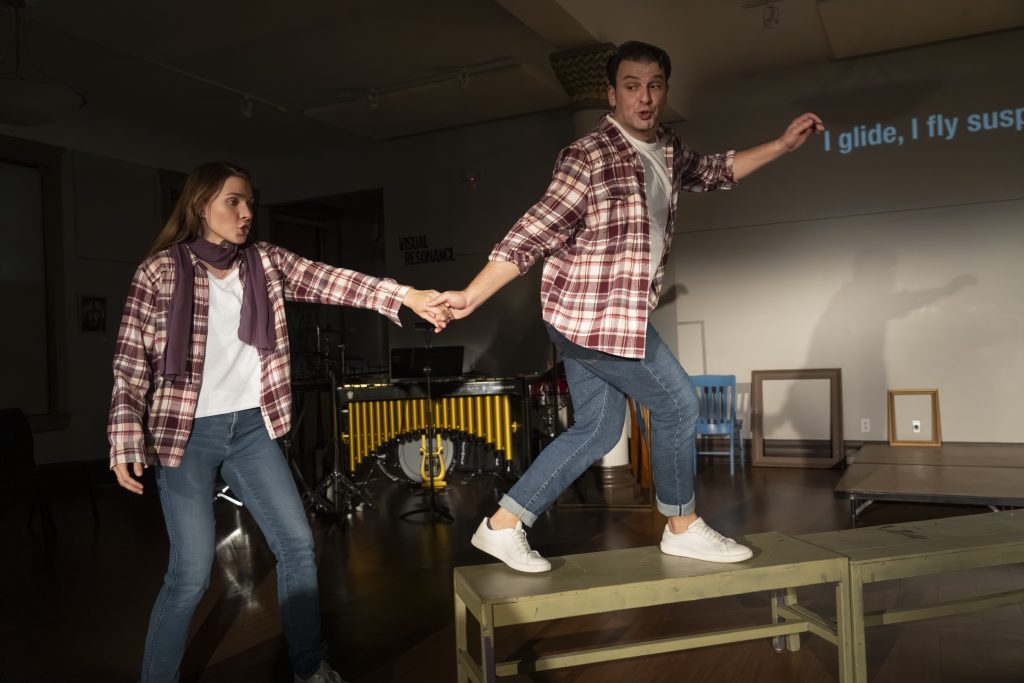
Emma Dickens and Evan Bravos.

Dickens sang with warmth, flexibility and a rich middle voice, her local presence giving the work an added resonance. Together they created a dialogue of memory and emergence that edged, with beauty and persuasion, toward unity.

The production of “As One” also included a visual narrative of still photographs and video to illustrate Hannah’s journey. These images complemented the action thoughtfully, and yet the magnetism of Bravos and Dickens drew attention primarily to their interplay. I

n a larger space, projected more expansively, the visuals could carry greater weight; in the gallery setting, the storytelling was carried most powerfully by the singers themselves.

Director Joan Lipkin, in her opera debut, emphasized resilience and humor, qualities underscored by Scott Schoonover’s musical direction. Kaminsky’s score is rhythmic and lyrical, and Reed’s lived experience infused the libretto with authenticity. Together the creative team shaped a work of immediacy and poignancy.

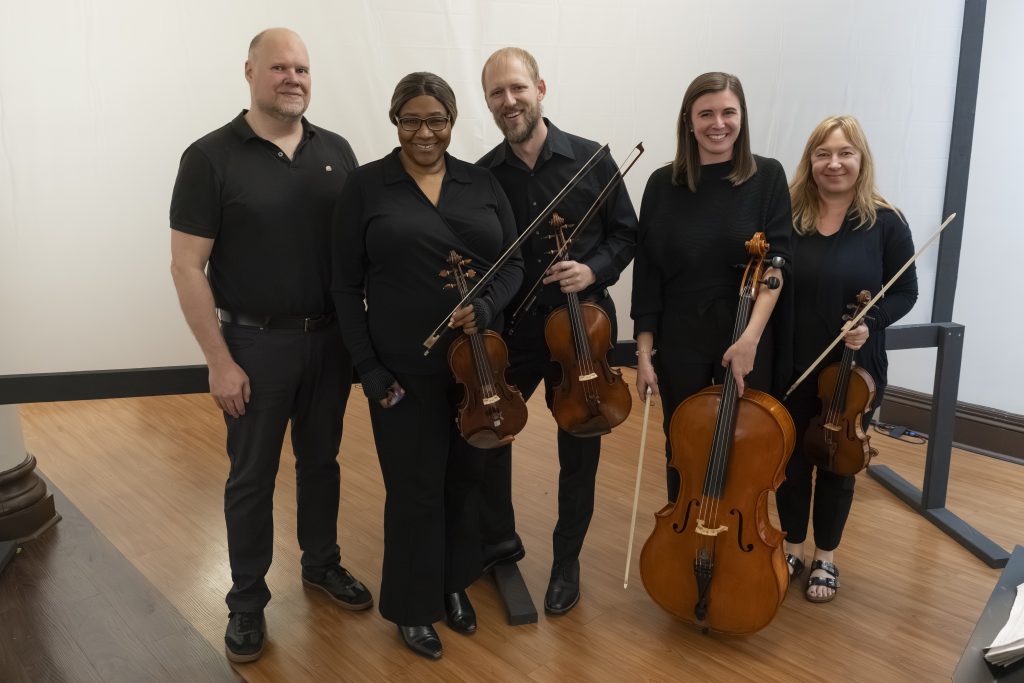
Scott Schoonover, Nikki Glenn, Stephen Luehrman, Marie Brown, and Manuela Topalbegovic. 

The Music and the Musicians

Both operas gained strength from committed playing and Schoonover’s clear leadership. In “dwb,” the pairing of cello and percussion created a spare frame that heightened the impact of Thompson’s performance.

In “As One,” Kaminsky’s writing unfolded with beauty and urgency, performed with conviction by Bravos and Dickens and balanced with clarity by the ensemble. The result was music-making that embraced intimacy and carried emotional sweep.

Union Avenue’s One-Act Festival ran Oct. 10–12 in the gallery of Union Avenue Christian Church.

Marsha Erwin, Marsha Thompson, and Sebastian Buhts.