
By CB Adams
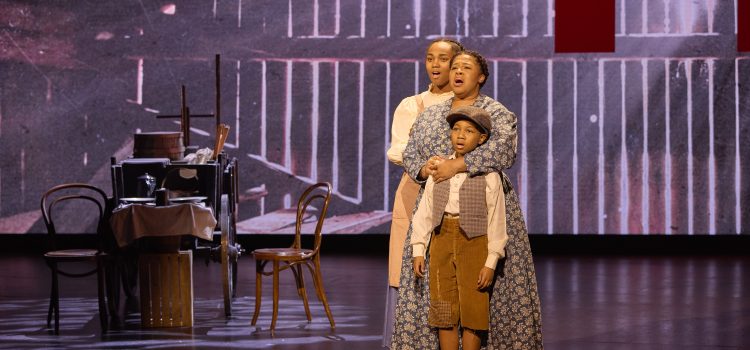
There’s swagger aplenty in “Joshua’s Boots,” along with a cattle stampede, a lynching and the complicated business of growing up Black in the American West of 1878. After a white mob murders his father in Tennessee, young Joshua heads west, hoping to make a life among the cowboys.
Director Adam Flores knows the size of these ingredients and, more importantly, their proportions. Working with Adolphus Hailstork’s music and Susan Kander’s deft libretto, he gives this hourlong opera its humor, heartbreak and historical weight, all governed by an admirable sense of restraint.
Michael Breaux plays Joshua with unwavering conviction, giving the young man’s journey a believable emotional center. His singing and acting possess an assurance that makes Joshua’s determination palpable.
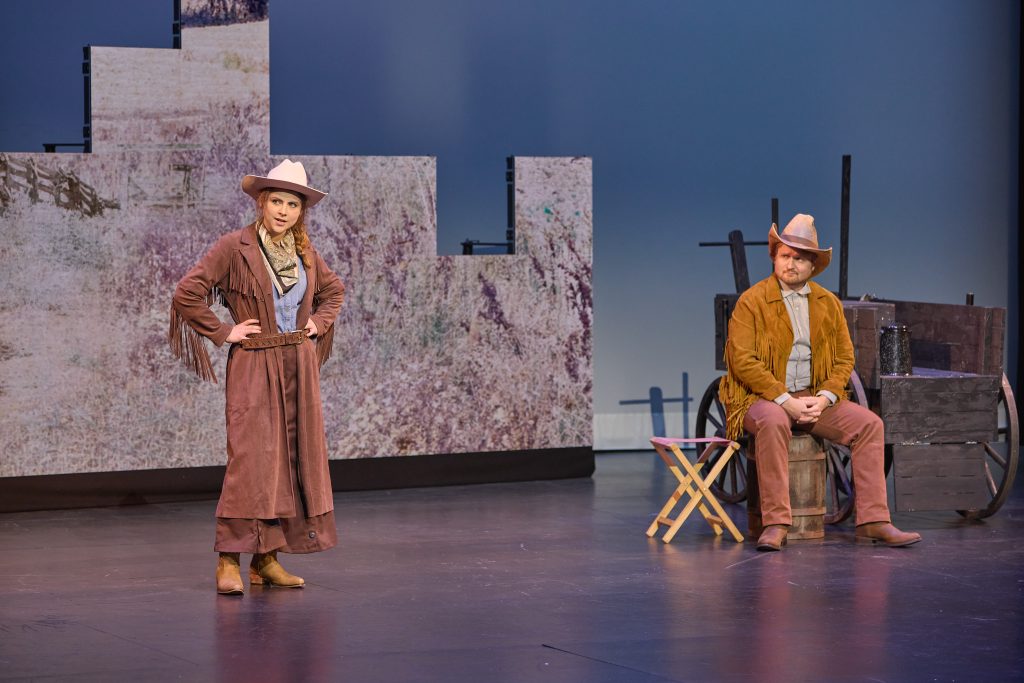
Angel Love is a heartbreaker as Joshua’s Mama, then gives Sally Fingers a knowing blend of Miss Kitty from “Gunsmoke” and Joanie Stubbs from HBO’s “Deadwood.” She has the former’s poise, the latter’s worldly edge and the good sense to know what sort of men she’s dealing with.
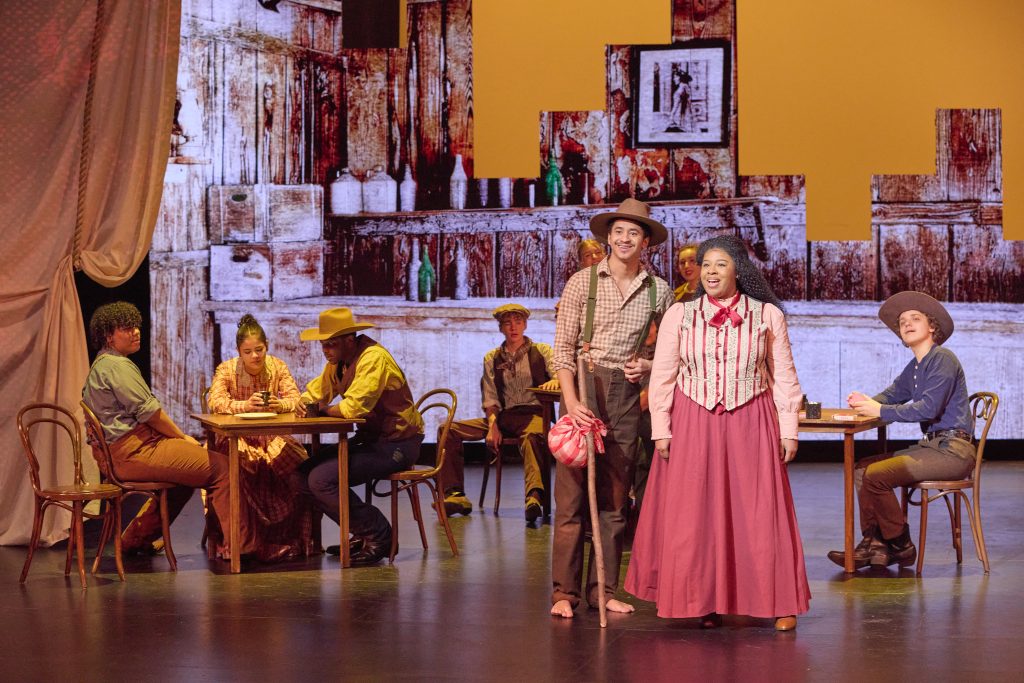
Sam Hawkins plays Frederick, the prejudiced trail boss who hires Joshua and treats him with open contempt. Hawkins makes that prejudice so convincing, so deeply ingrained in the man, that Frederick’s eventual change of heart after Joshua saves his life during a stampede strains credibility. Hawkins may have done his job a little too well for the libretto’s own good.
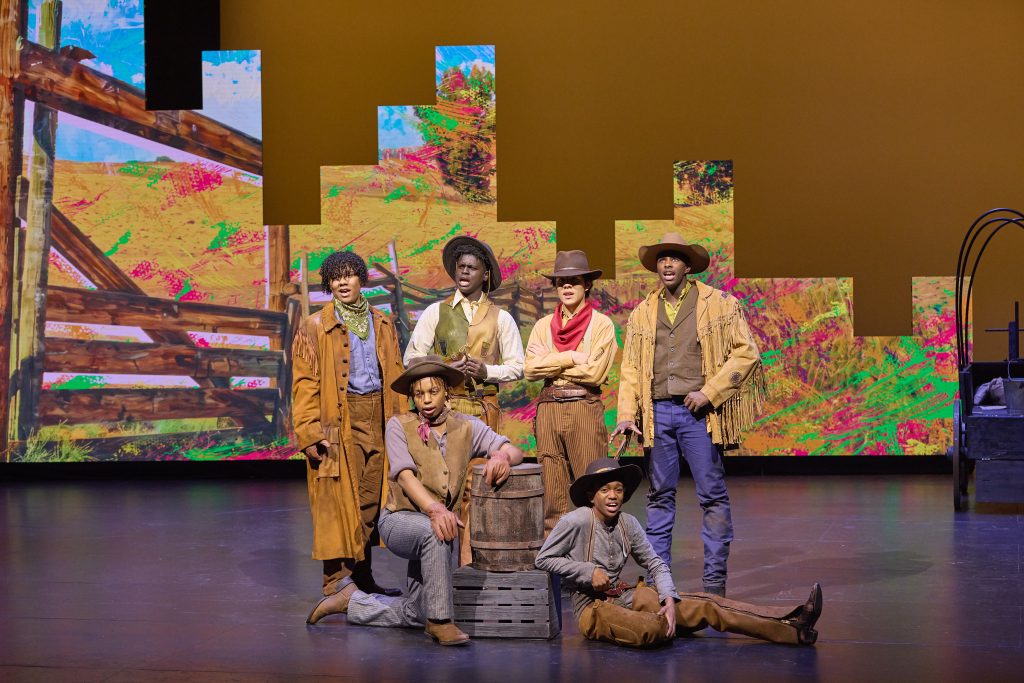
James Stevens handles four roles—Geezer, Frank, Captain Pershing and Cookie—with the unruffled ease of a man changing hats. Ricco Martin Jr. gives Natty Green, a cowboy Joshua encounters on his journey, his full allotment of swagger, then reins it in enough to reveal the man beneath the mannerisms.
One of the opera’s loveliest moments comes beside a campfire, where a solitary figure listens as Kayden Brooks sings from offstage. His voice meets Hailstork’s music and Kander’s words at precisely the right emotional temperature. A lovely bit of theatrical alchemy.
There are more performers onstage than musicians in the pit, though you’d never know it from the sound. Stephen Mager draws a remarkably full-bodied performance from his chamber orchestra, seemingly anticipating the singers’ every move. One hopes the young artists appreciate just how good they’ve got it.
Can a puff of smoke in a projected Tennessee holler be fraught with meaning? It can in the hands of video designers David Sajewich and Kylee Loera. That ominous detail signals Joshua’s father’s lynching.
Elsewhere, their projections establish the changing landscape of Joshua’s journey and, during the cattle stampede, join Giac Noelle’s choreography in sending bodies and images into convincing commotion. Suggestion and spectacle, each in its proper place.
The partnership among Opera Theatre of Saint Louis, COCA and its Artists in Training program gives emerging performers the opportunity to work alongside seasoned professionals, with the same artistic expectations. “Joshua’s Boots” makes a persuasive case for that collaboration and for the future of opera in St. Louis.
“Joshua’s Boots” was presented October 21–24 at COCA’s Catherine B. Berges Theatre.

CB Adams is an award-winning fiction writer and photographer based in the Greater St. Louis area. A former music/arts editor and feature writer for the St. Louis Globe-Democrat, his non-fiction has been published in local, regional and national publications. His literary short stories have been published in more than a dozen literary journals and his fine art photography has been exhibited in more than 40 galley shows nationwide. Adams is the recipient of the Missouri Arts Council’s highest writing awards: the Writers’ Biennial and Missouri Writing!. The Riverfront Times named him, “St. Louis’ Most Under-Appreciated Writer” in 1996.