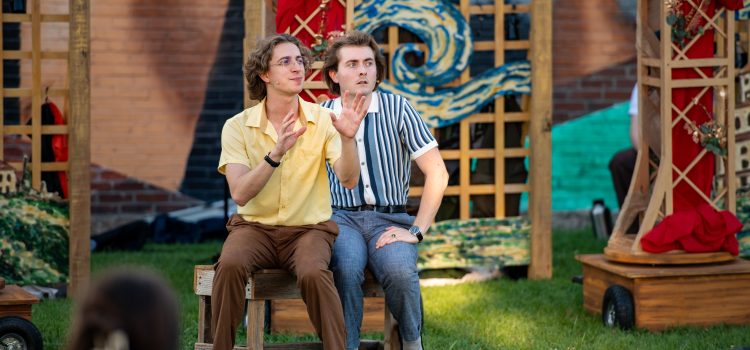
By CB Adams

Opera Theatre of Saint Louis closes its 2026 festival season with a production of Charles Gounod’s “Romeo and Juliet” that understands exactly what makes the opera work.

Director Keturah Stickann, conductor Ramón Tebar and a superb cast place the relationship between the young lovers at the center of the evening. Every scene, every duet and nearly every design choice serves that relationship, allowing the opera’s final moments to land with uncommon emotional force.

Emma Marhefka and Leonardo Sánchez establish that foundation from their first encounter at the Capulet ball. Over the course of four duets, attraction deepens into devotion, devotion deepens into intimacy and intimacy collides with tragedy. By the opera’s final moments, the fate of Romeo and Juliet feels like a personal loss.

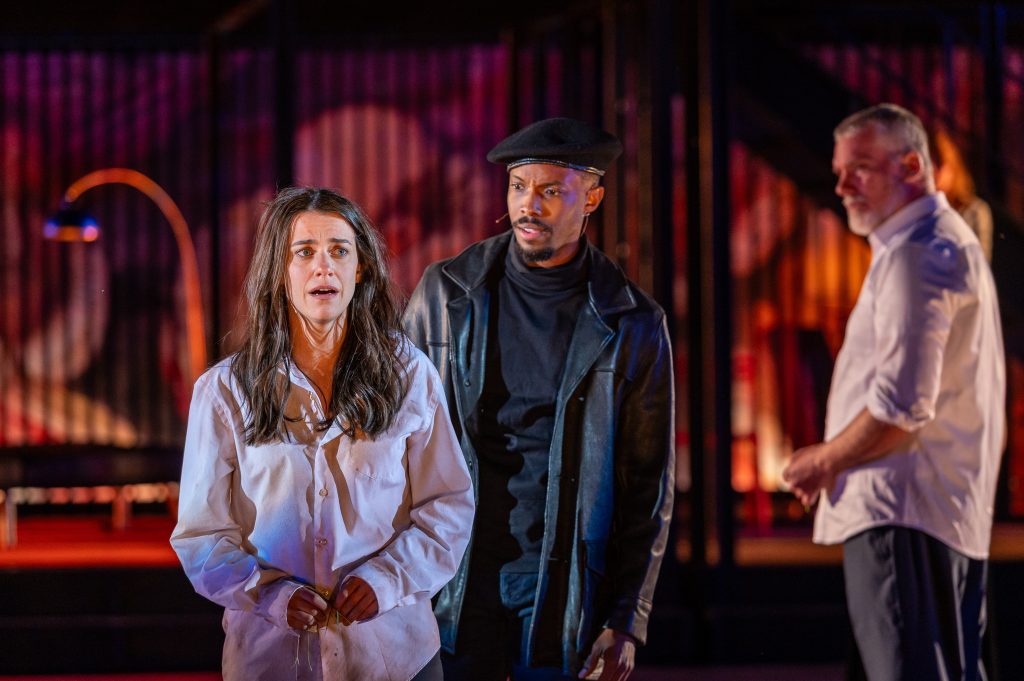
Although the opera bears the lovers’ names, this production finds its emotional center in Juliet. Marhefka charts the evening’s most significant journey, carrying Juliet from youthful exuberance and certainty toward hard-won understanding. Her buoyant “Je veux vivre” captures a young woman delighted by life’s possibilities and confident in her place within them.

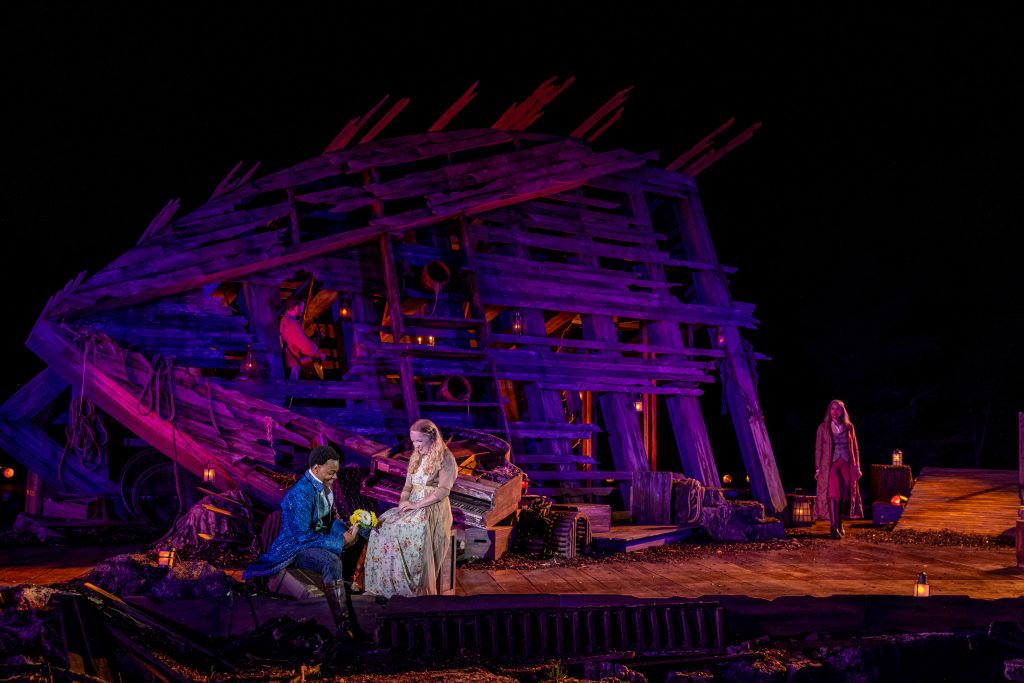
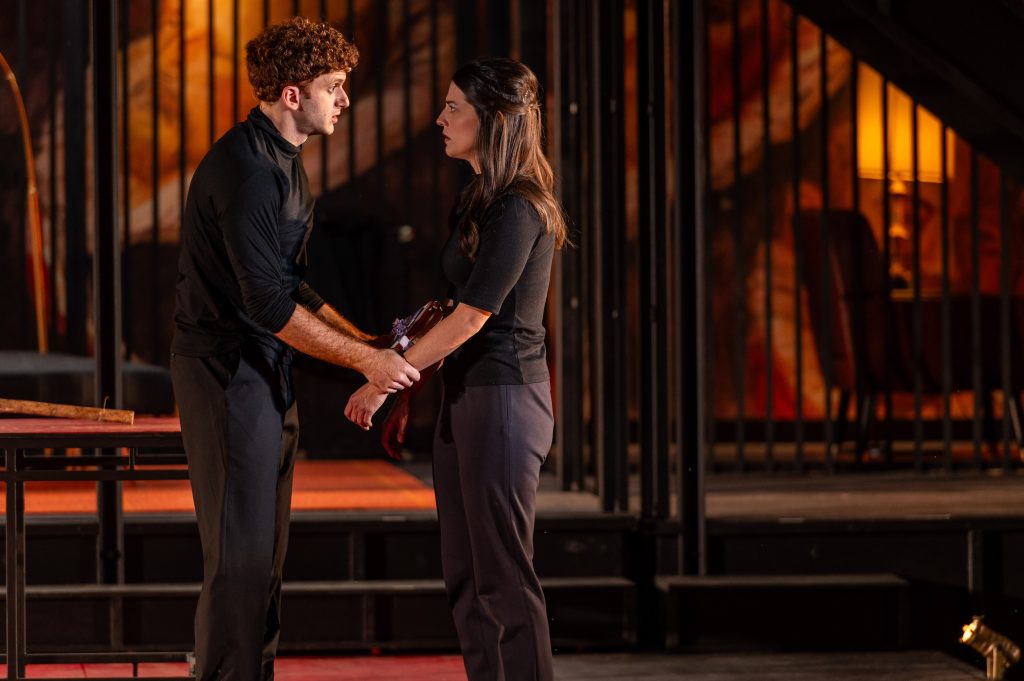
Romeo (Leonardo Sánchez) and Juliet (Emma Marhefka) in “Romeo and Juliet.” Photo © Eric Woolsey

Marhefka uses the aria to establish the emotional ground beneath the entire performance. Experience, loss and consequence gradually reshape that confidence, and Marhefka traces every step of the transformation.

Sánchez proves an ideal partner in that journey. His clear, ardent tenor and openhearted stage presence ground Romeo’s devotion in genuine feeling. He also captures the impulsiveness that repeatedly transforms emotion into action and action into consequence. Together, Marhefka and Sánchez accomplish the production’s central task. They make the relationship real.

Stickann follows the emotional architecture that Gounod built into the score. The four great duets become milestones in the relationship’s evolution. At the ball, attraction arrives with the force of discovery.

At the balcony, discovery deepens into commitment. In the bedroom, longing yields to intimacy. In the tomb, intimacy confronts consequence. Marhefka and Sánchez make each stage feel earned, allowing the relationship to grow before our eyes rather than simply advancing it from one familiar scene to the next.

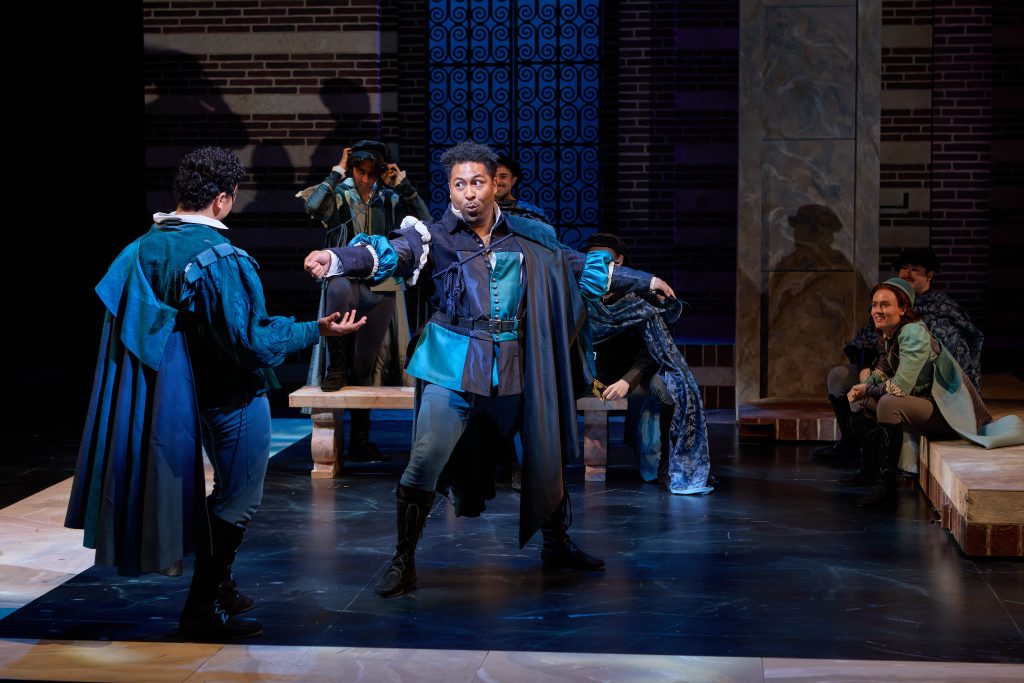
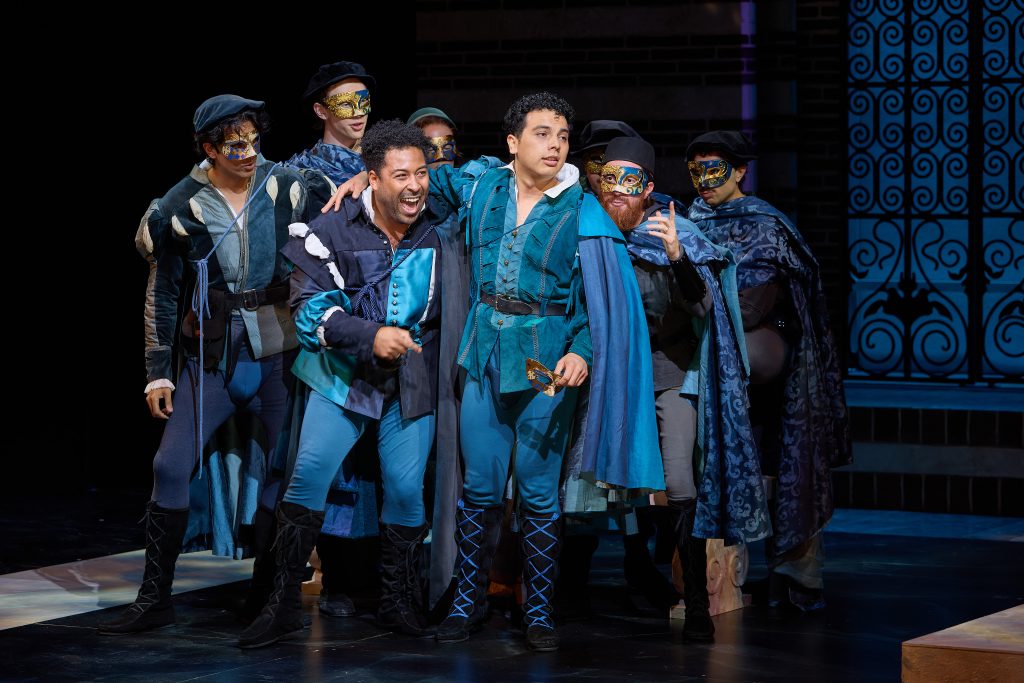
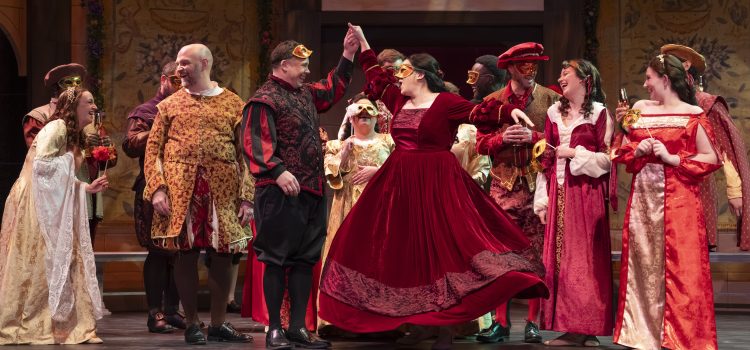
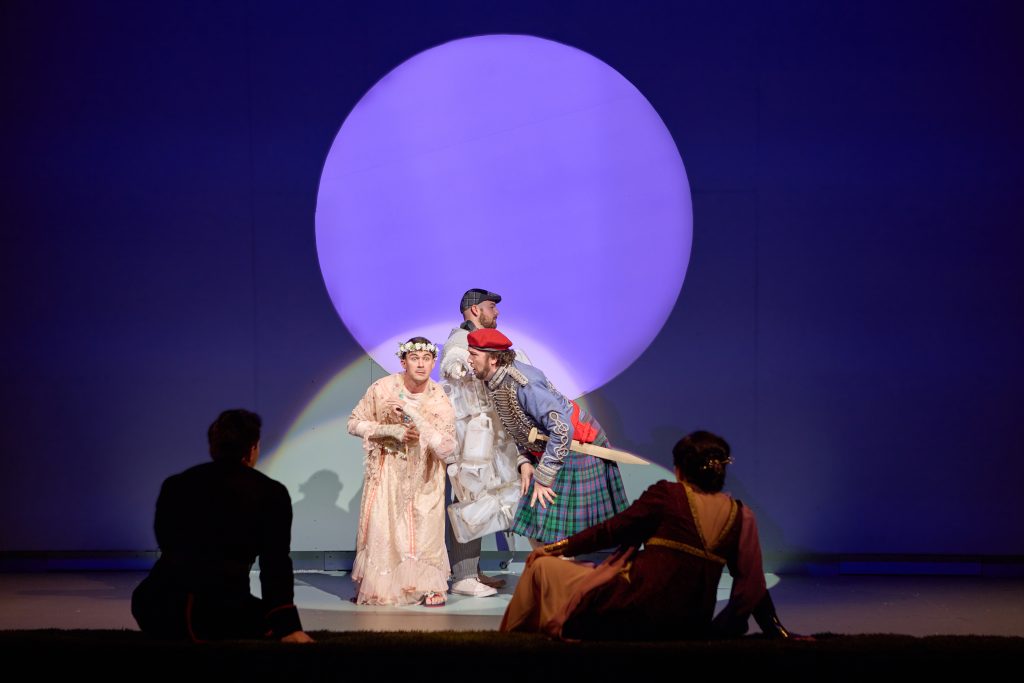
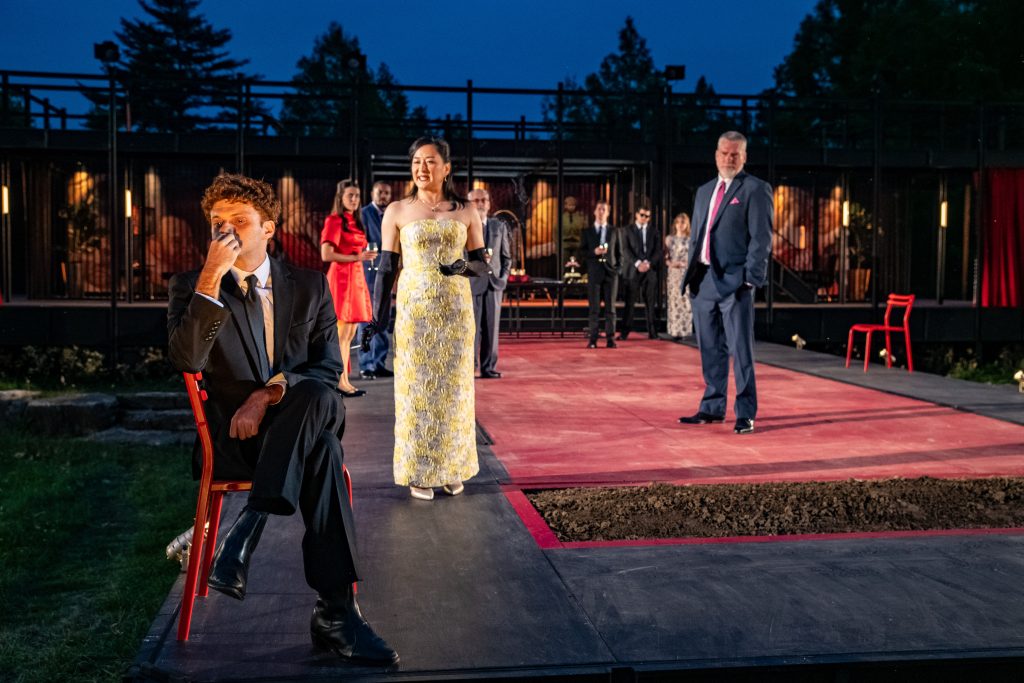
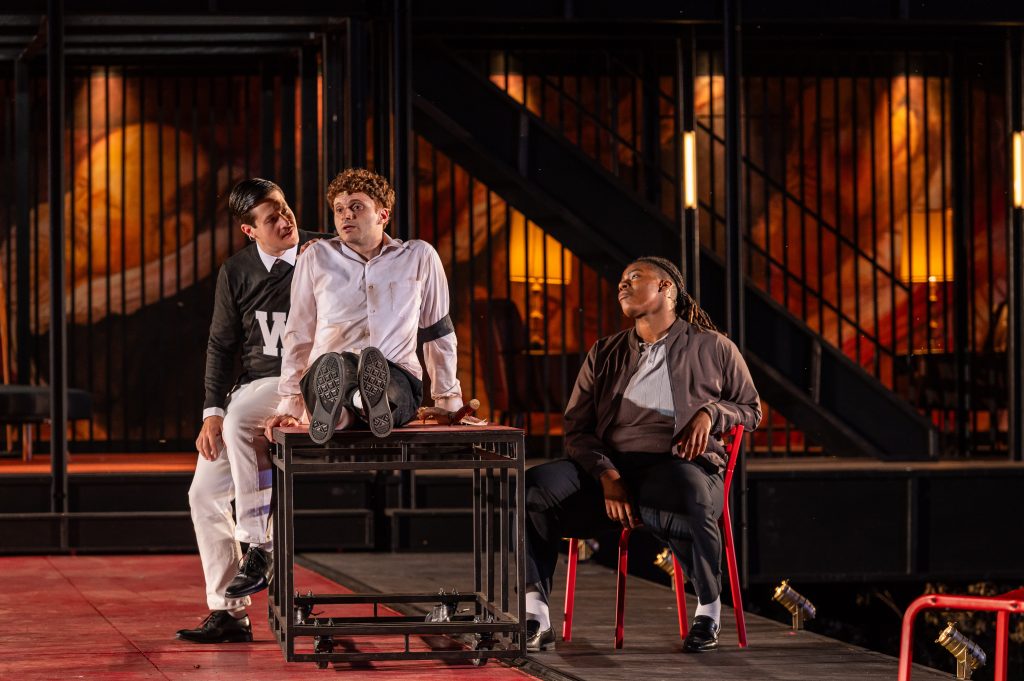
Mercutio (Benjamin Taylor, center left) and Romeo (Leonardo Sánchez, center right) spy on the Capulet ball, accompanied by other Montagues. Photo © Eric Woolsey, 2026

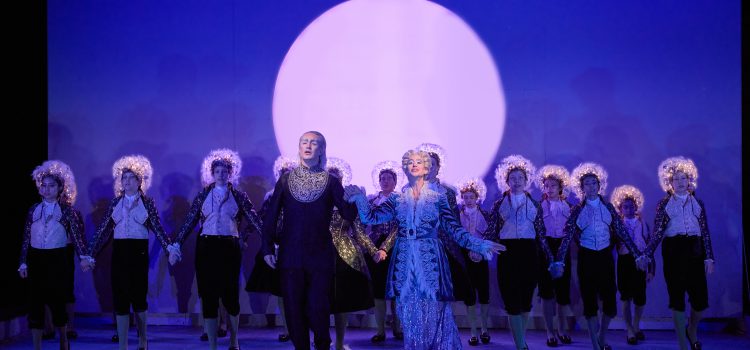
The masked ball pulses with youthful energy. Seán Curran’s choreography fills the stage with movement while Marhefka and Sánchez create an immediate connection that feels spontaneous and authentic.

The balcony scene narrows the world around them. Family loyalties, social obligations and old grievances lose their hold as the lovers construct a private universe of their own making. They move forward with complete certainty. They trust feeling to overcome circumstance.

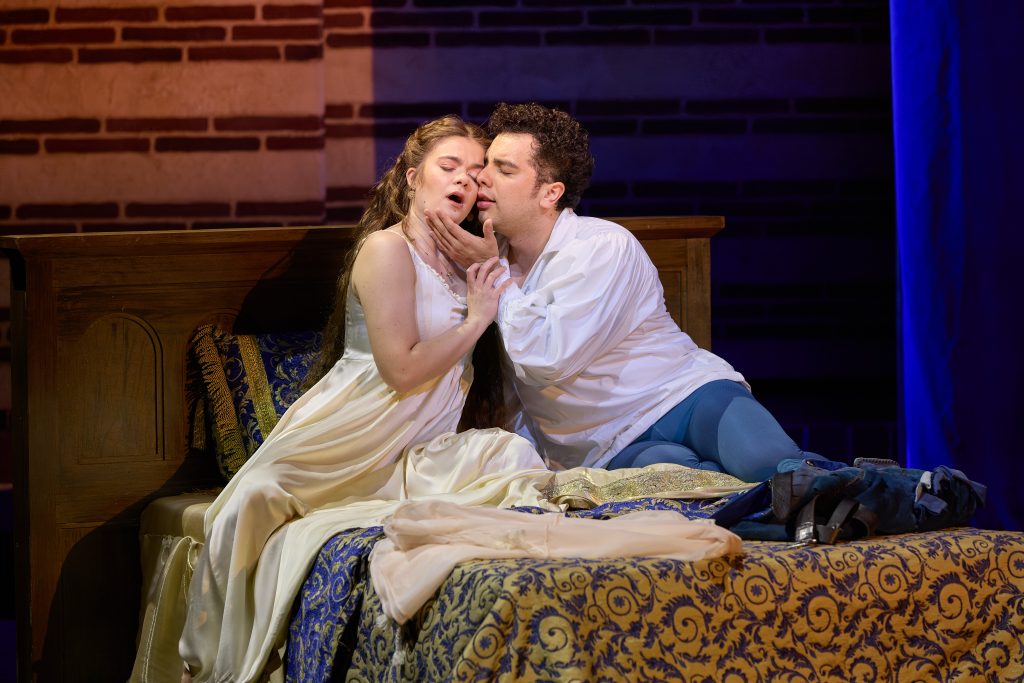
The bedroom scene reveals the relationship at its fullest expression. The lovers move beyond longing and into intimacy. Reality waits outside the room. Neither lover recognizes how quickly it will arrive.

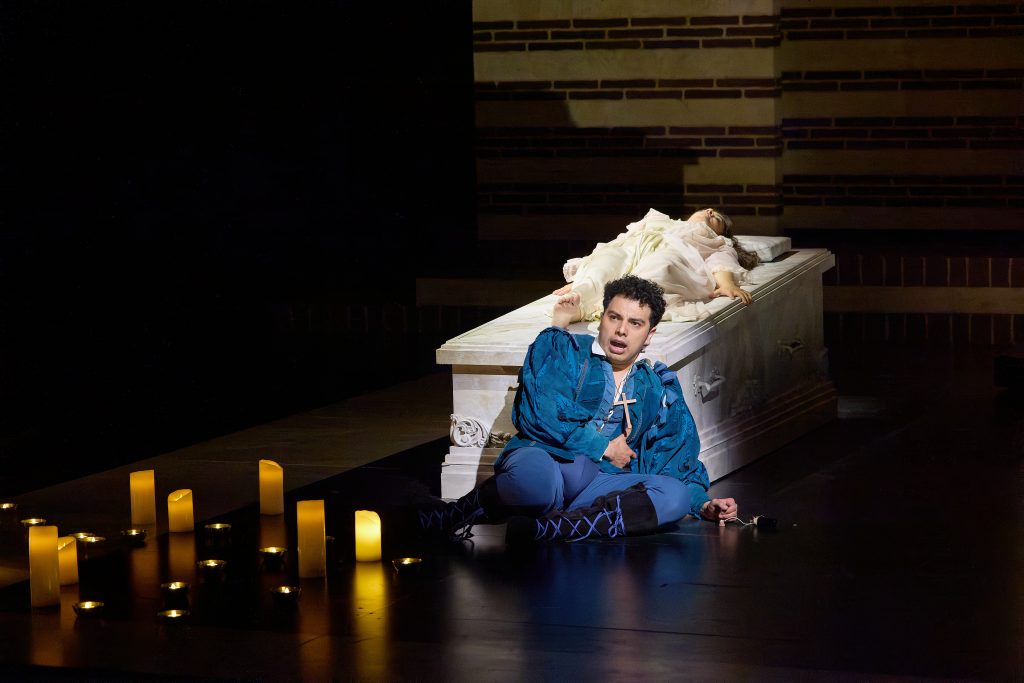
By the tomb scene, reality has arrived in full. The final duet devastates because the production earns it. Marhefka and Sánchez carry the emotional weight of everything that came before. The audience mourns two people rather than two symbols.

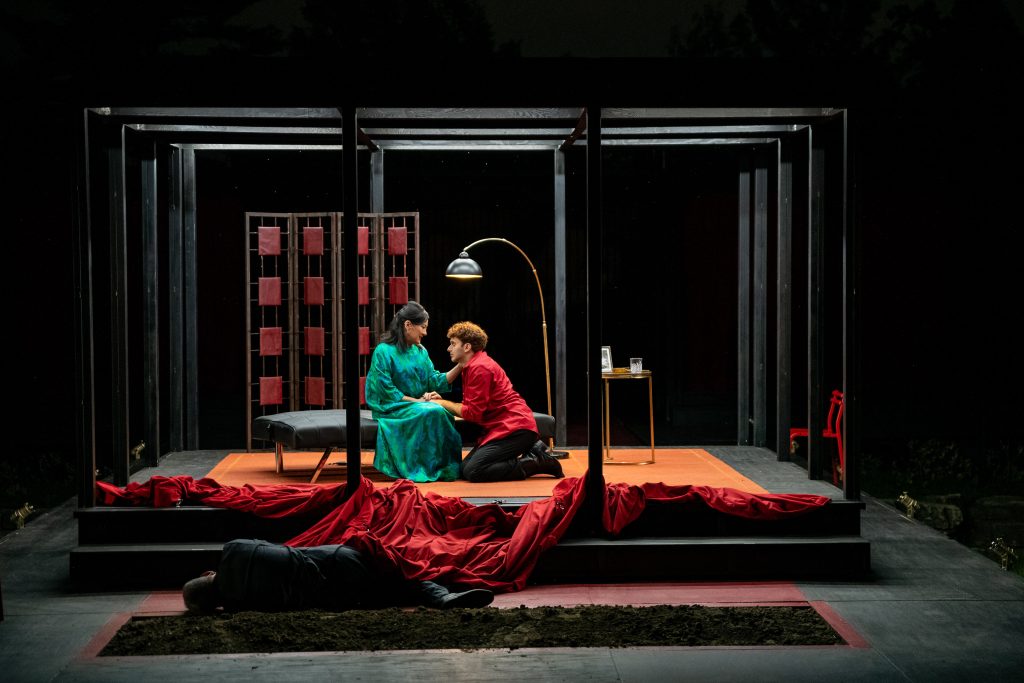
Juliet (Emma Marhefka) and Romeo (Leonardo Sánchez) celebrate their wedding night. Photo © Eric Woolsey

The supporting cast defines the forces pressing against that increasingly fragile private world. Benjamin Taylor’s Mercutio embodies the exuberance the production spends its first act celebrating and its remaining acts dismantling.

His Queen Mab scene sparkles with wit, confidence and youthful vitality. His death shifts the emotional temperature of the evening and signals that the world surrounding the lovers has begun to harden.

Micah Perry’s Tybalt burns hot and fast. His bright tenor matches a temperament that seems incapable of imagining a future beyond the next insult, challenge or grievance. The emotions arrive with the same force as his blade. Perry captures the moment when youthful certainty hardens into catastrophe.

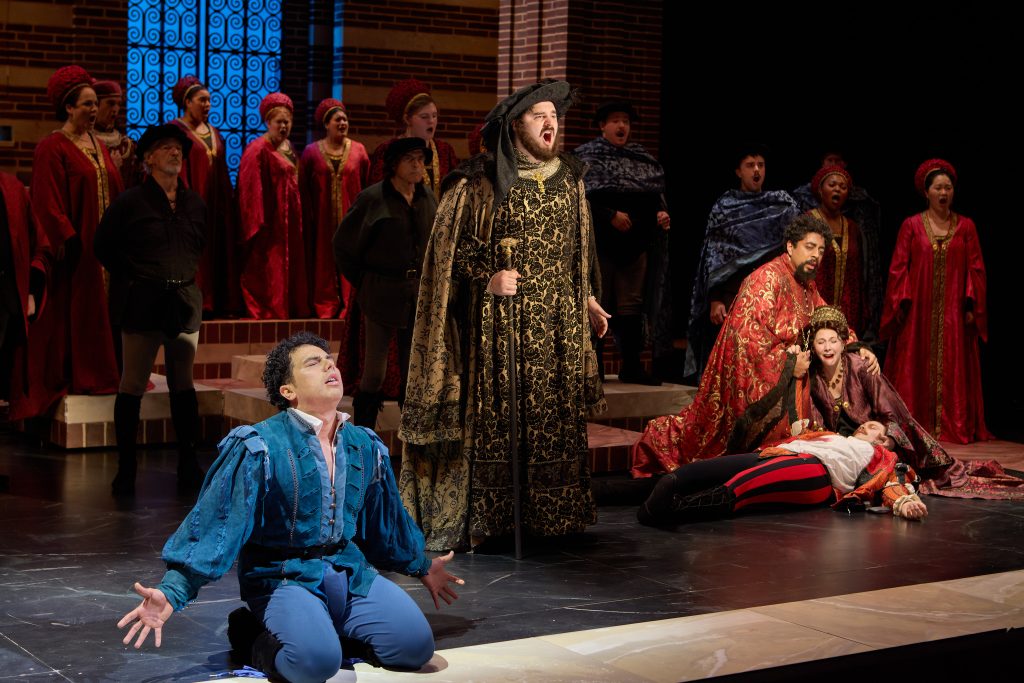
Romeo (Leonardo Sánchez, left) is banished by the Duke of Verona (Jason Edelstein, center) for the murder of Tybalt (Micah Perry). Lord Capulet (Vinicius Costa) and Lady Capulet (Julia Maria Johnson) mourn the death of their nephew. Photo © Eric Woolsey

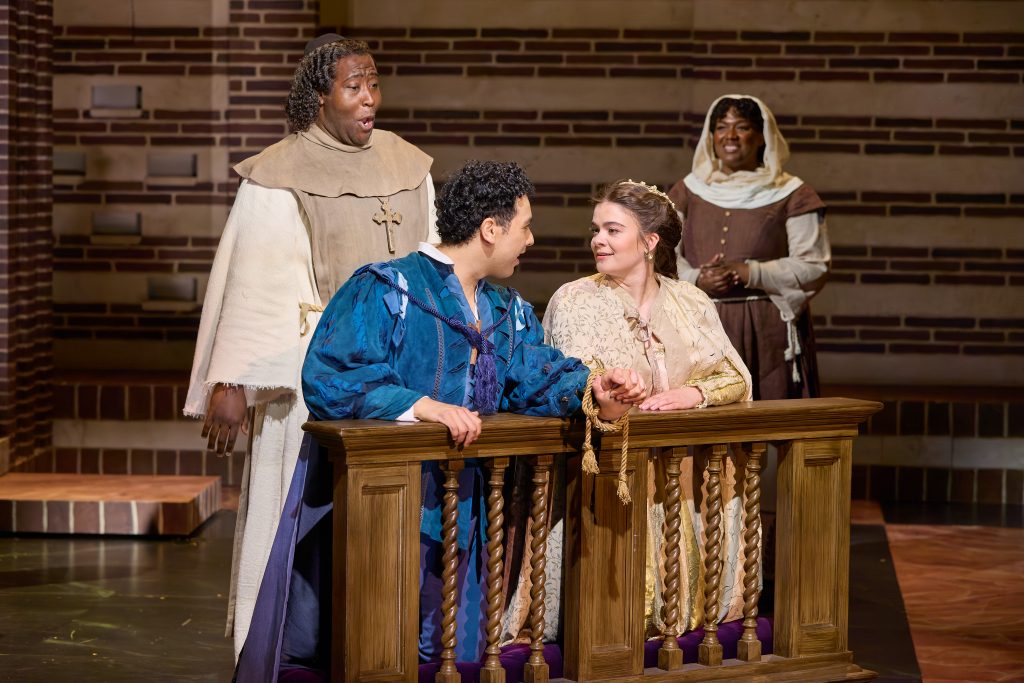
Nicholas Newton gives Friar Laurence the confidence of a man who believes wisdom and planning can master events. The opera steadily exposes the limits of that confidence.

Vinicius Costa commands the stage as Lord Capulet, embodying the expectations and obligations that increasingly constrain Juliet’s choices. The certainty of the older generation proves no more reliable than the certainty of the younger one.

Edmond Rodrigues brings quiet steadiness to Benvolio, while Veronica Siebert’s spirited Stephano, Imara Ashton’s warm Gertrude, Jason Edelstein’s authoritative Duke of Verona, Cole Bellamy’s Paris, Julia Mariah Johnson’s Lady Capulet and Kevin Douglas Jasaitis’ Gregorio give shape and texture to the world surrounding the lovers.

Tebar understands that Gounod often advances the drama by suspending it. Again and again, the orchestra creates moments in which time seems briefly to stop and attention narrows to the emotional lives of the lovers. Tebar draws feeling from melody, phrasing and texture rather than sheer volume. The St. Louis Symphony Orchestra illuminates the drama without overwhelming it.

Romeo (Leonardo Sánchez) and Juliet (Emma Marhefka) are married in secret by Friar Laurence (Nicholas Newton), as Juliet’s nurse (Imara Ashton) looks on. Photo © Eric Woolsey

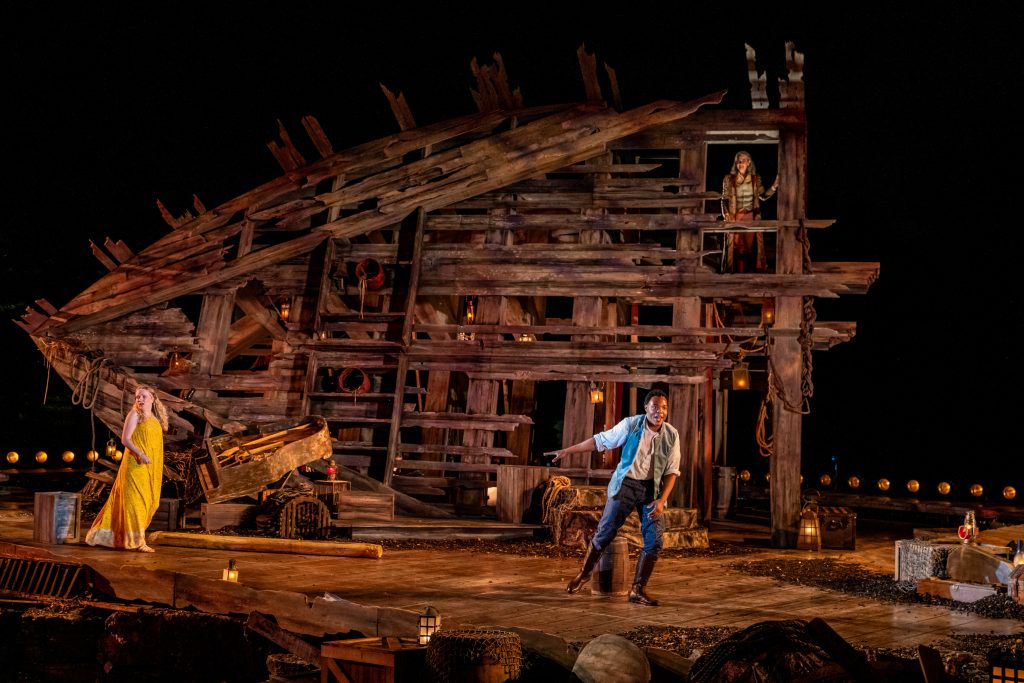
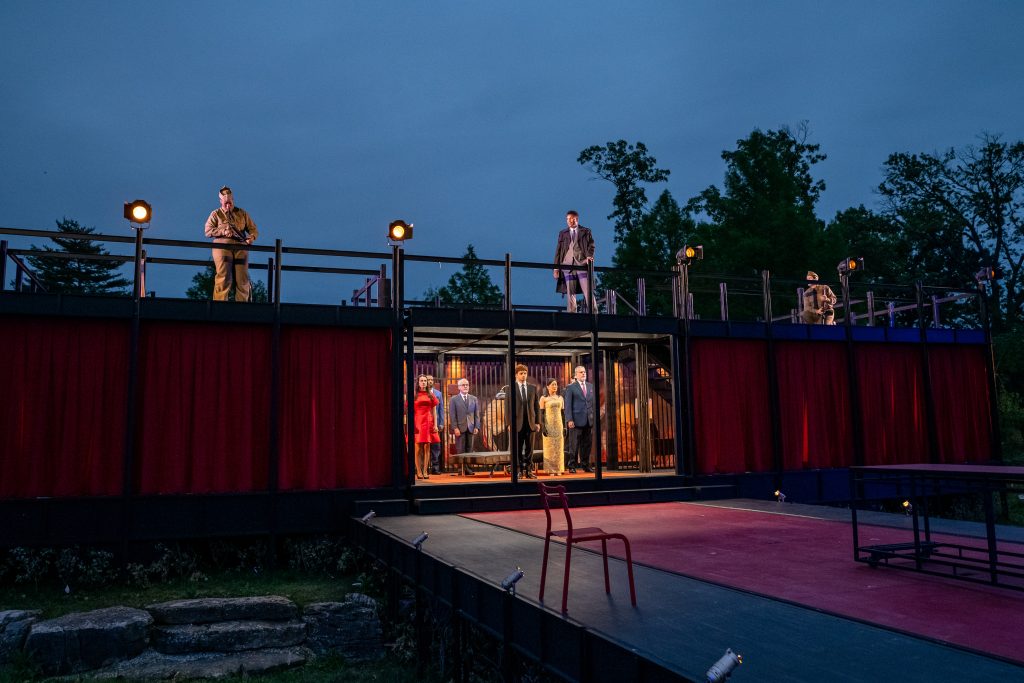
Stickann’s collaborators reinforce the production’s focus on emotional clarity. Scenic designer Liliana Duque Piñeiro embraces fluidity and metaphor. At first glance, the set’s broad expanse of masonry and geometric forms resembles a public swimming pool emptied of water.
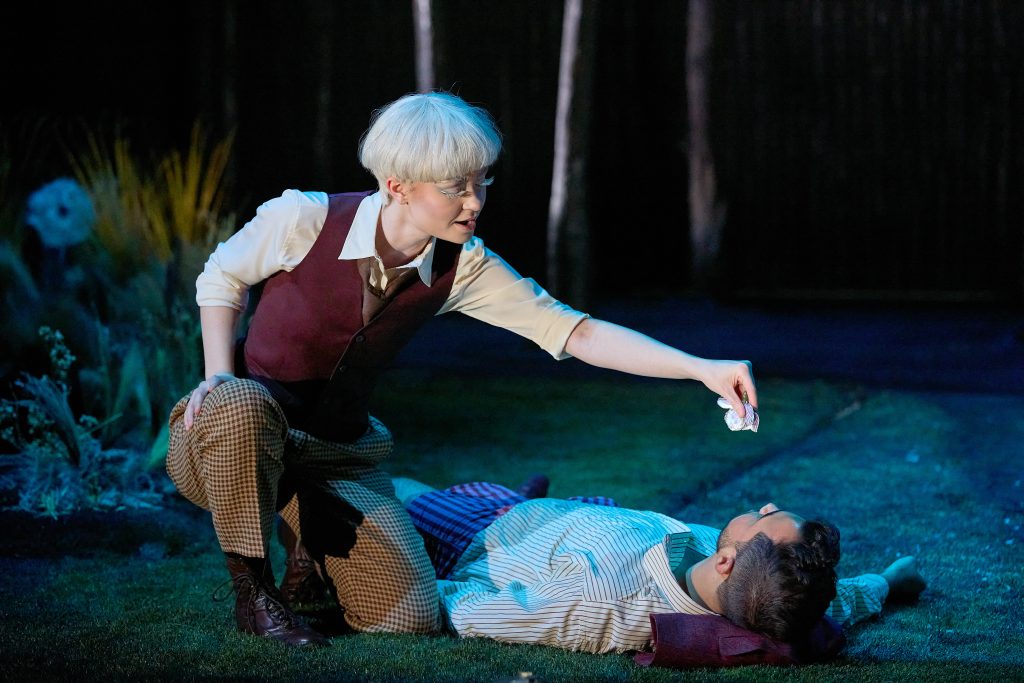
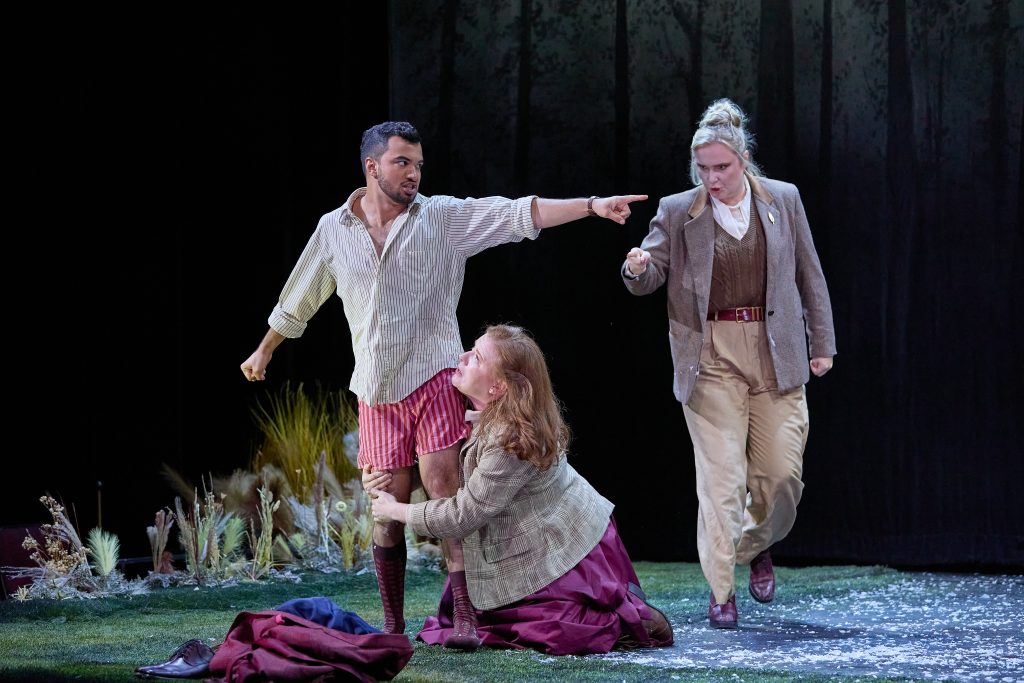
As the evening unfolds, however, its logic reveals itself. Steps, balconies, platforms and even convenient toe holds for Romeo gradually emerge from the design, creating a flexible environment for the opera’s succession of intimate encounters. Large movable columns continually reshape the playing space, suggesting both a divided society and shifting emotional terrain.
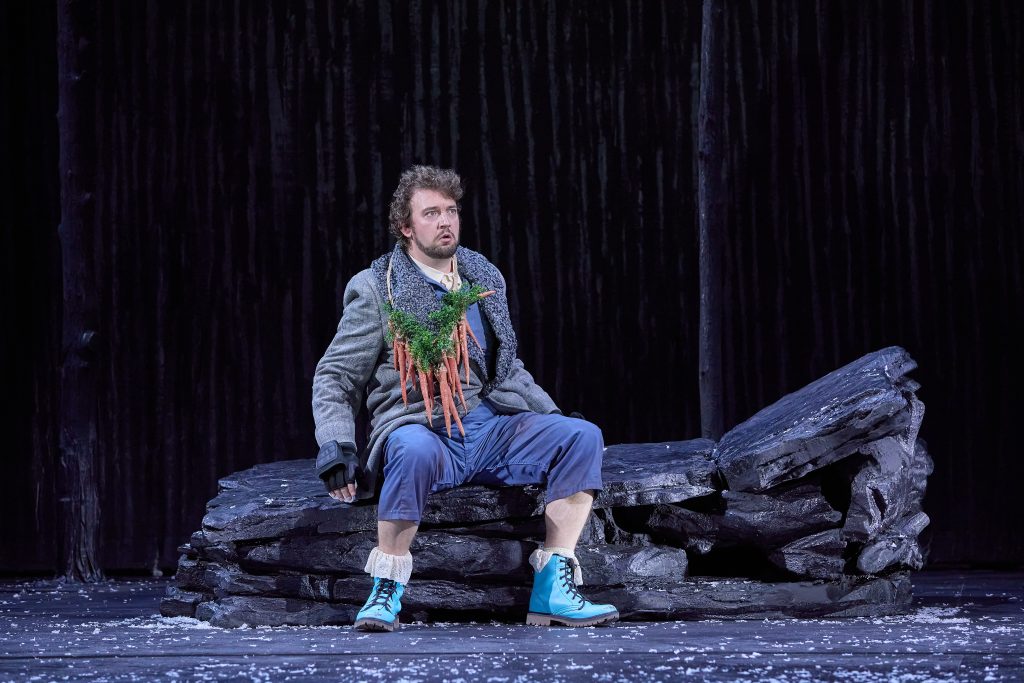
Their movement occasionally draws attention to the mechanics of the staging, but never enough to pull the audience from the drama. The architecture rarely competes for attention. Instead, the eye naturally returns to the performers and Robert Perdziola’s richly colored costumes.

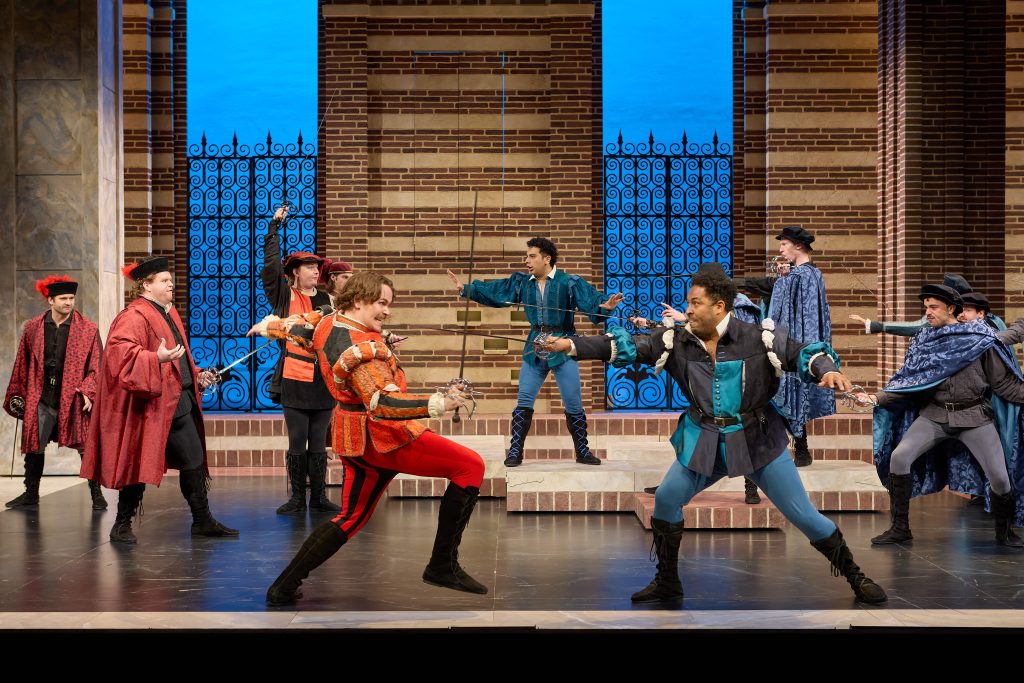
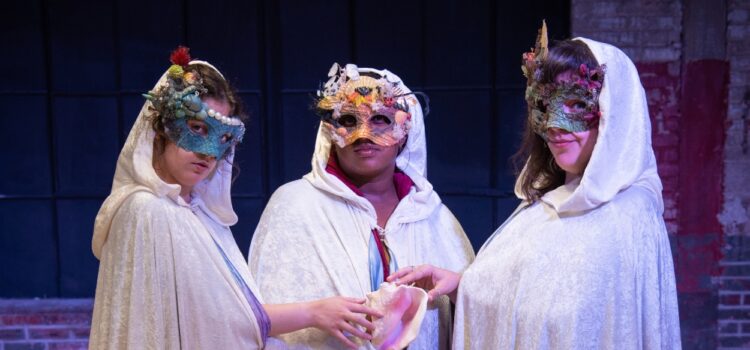
Costume designer Robert Perdziola externalizes the feud through color. The Montagues inhabit a world of blue while the Capulets move through shades of red, rose and violet. The visual contrast immediately clarifies the barriers the lovers spend the evening attempting to cross.

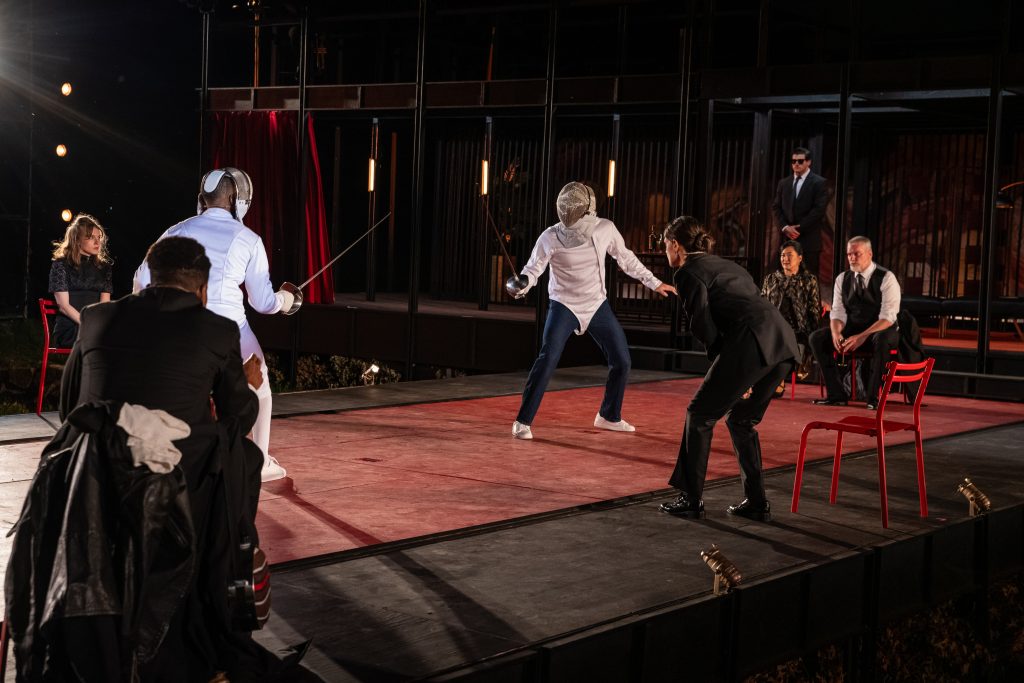
The Capulets and Montagues erupt into a street fight, led by Tybalt (Micah Perry, center left) and Mercutio (Benjamin Taylor, center right), as Romeo (Leonardo Sánchez, center background) attempts to stop the violence. Photo © Eric Woolsey,

Eric Southern shapes mood and focus through light, while Andrew Whitfield’s chorus establishes the conflict that shadows the lovers from the opening moments.

The achievement of OTSL’s “Romeo and Juliet” lies in how completely it earns its emotional ending. By the time the lovers reach the tomb, the exuberance that animated the ball has collided with the realities waiting outside the lovers’ private world. The story remains familiar. The ending still hurts.

“Romeo and Juliet” runs June 7-26 at Opera Theatre of Saint Louis. The production concludes OTSL’s 2026 festival season, which features all four productions in rotating repertory at the Loretto-Hilton Center on the campus of Webster University. For tickets and additional information, visit Opera Theatre of Saint Louis at opera-stl.org.

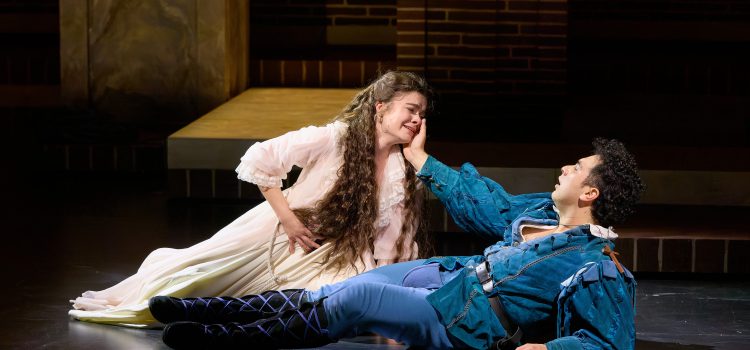
Romeo (Leonardo Sánchez) mourns over Juliet’s lifeless body in the Capulet crypt. Photo © Eric Woolsey

By Lynn Venhaus

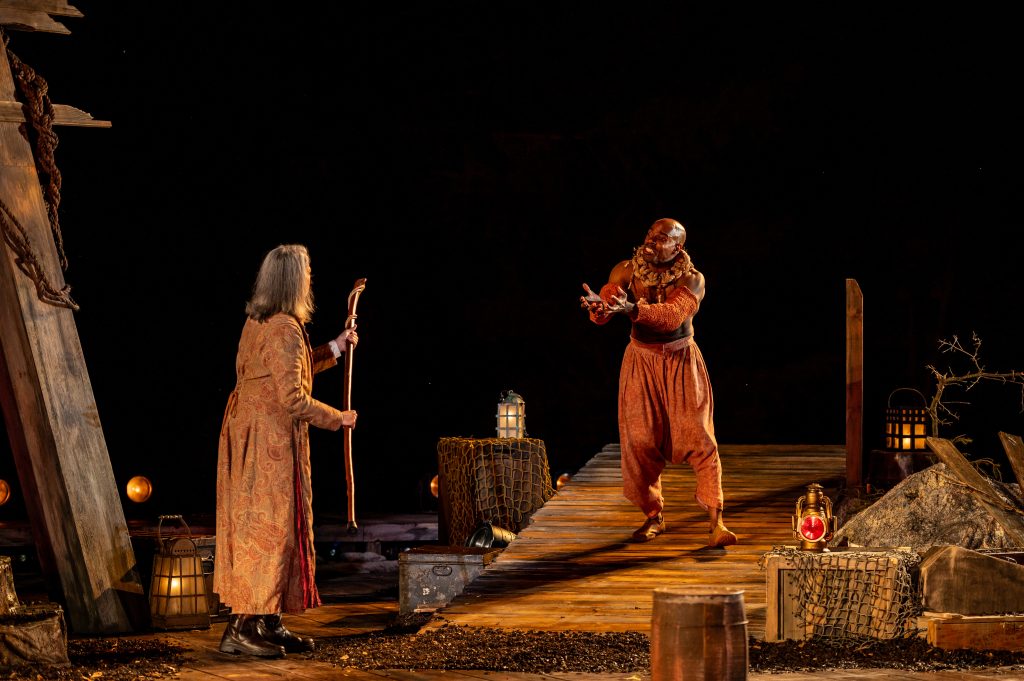
On a remote island far, far away, a mischievous mix of magic and mayhem mark “The Tempest,” which is the St. Louis Shakespeare Festival’s flagship production now anchored in Forest Park’s Shakespeare Glen.

William Shakespeare’s drama-tinged romantic comedy takes place after a violent storm has washed ashore a merry band of revelers, upending the inhabitants on this island – and nothing is as it seems. Perhaps, someone’s bad dream is another’s hopeful voyage. In any case, there is perceptible verve.

Think of this as a way-back machine “Survivor,” where everyone must outwit, outplay and outlast the people who want power. And Prospero (Nancy Bell) is manipulating a chess game.

A mother and sorcerer, Prospero rules this mystical place, and tensions rise between her, her teenage daughter and now the brother who messed up her future and has reappeared. Haunted by his betrayal, she has vengeance on her mind, for she was once Duke of Milan.

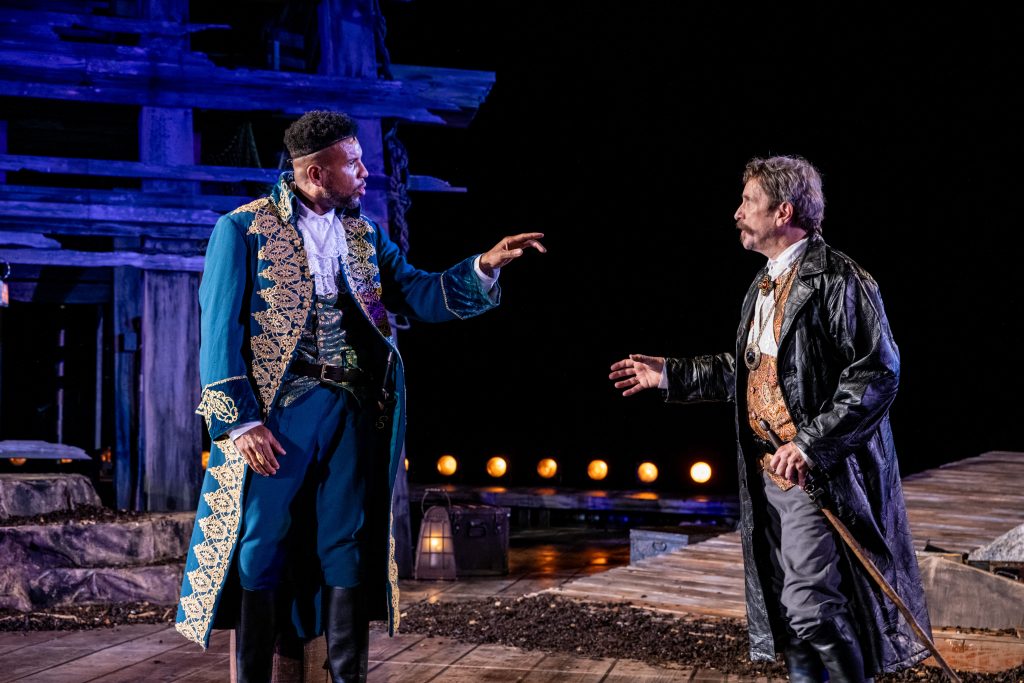
Reginald Pierre and Jeff Cummings as Prospero’s evil brothers. Photo by Phillip Hamer.

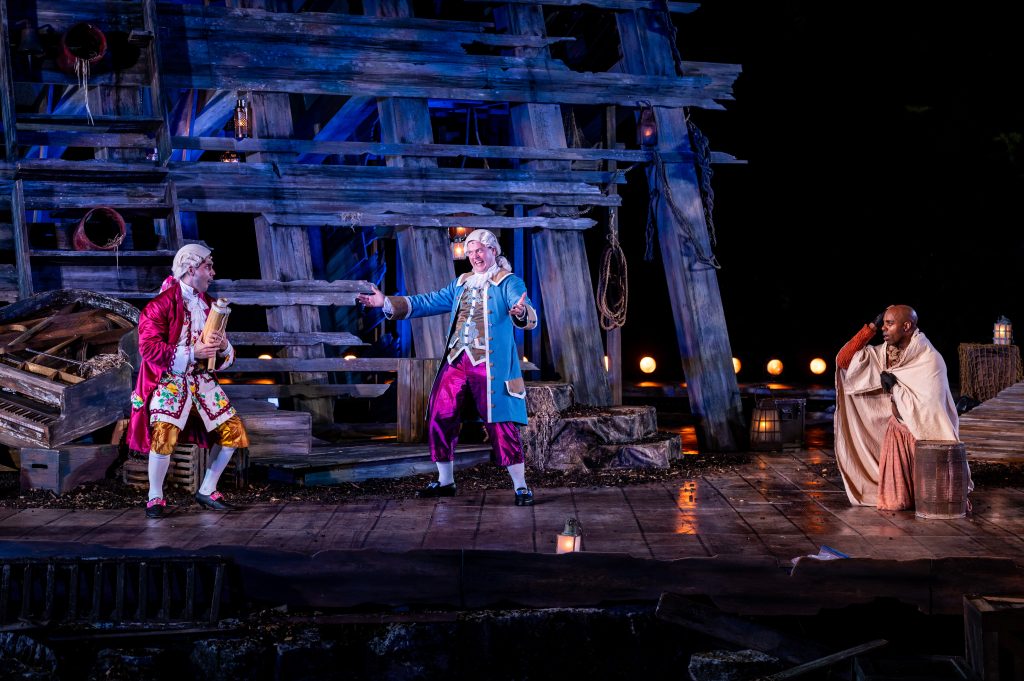
Through royal chicanery, Antonio (Jeff Cummings) usurped the title, and with the help of another brother, Alonso (Kathryn Bentley), King of Naples, she was banished 12 years earlier. But they can’t be trusted because another ambitious brother, Sebastian (Reginald Pierre), wants the king’s crown himself.

Ariel (Eliza Pagelle) is a shape-shifting spirit on the island that aids Prospero. Through her occult preoccupation, the boss finds out that her nefarious brothers are on their way from Tunis to Italy, so she conjures a squall, and they wind up where she is. Mama Bear thinks she is in control.

It won’t be long until old wounds resurface and new challenges arise. Oh, be careful what you wish for, as Alonso’s honorable son Ferdinand (an earnest Zay Williams) spies Miranda (Sigrid Wise) and falls in love.

Caliban (Chauncy Thomas) is the only true island inhabitant, a witch’s son, and resents being overtaken by Prospero, who imprisoned him so he doesn’t get too close to her daughter.

A fierce Thomas musters all his fury as a resentful native. Formerly of St. Louis, Thomas is always a welcome addition when he returns, now for the sixth time.

Bell and Chauncy Thomas as Caliban. Photo by Phillip Hamer.

The ensemble includes kindly Gonzalo (veteran Whit Reichert), an elderly Neapolitan lord who helped Prospero survive exile (but secretly), and comic buffoons Stephano (Michael Dougherty) and Trinculo (Jose Sabillon), Alonso’s butler and court jester. That daffy duo plots with Caliban to take over.

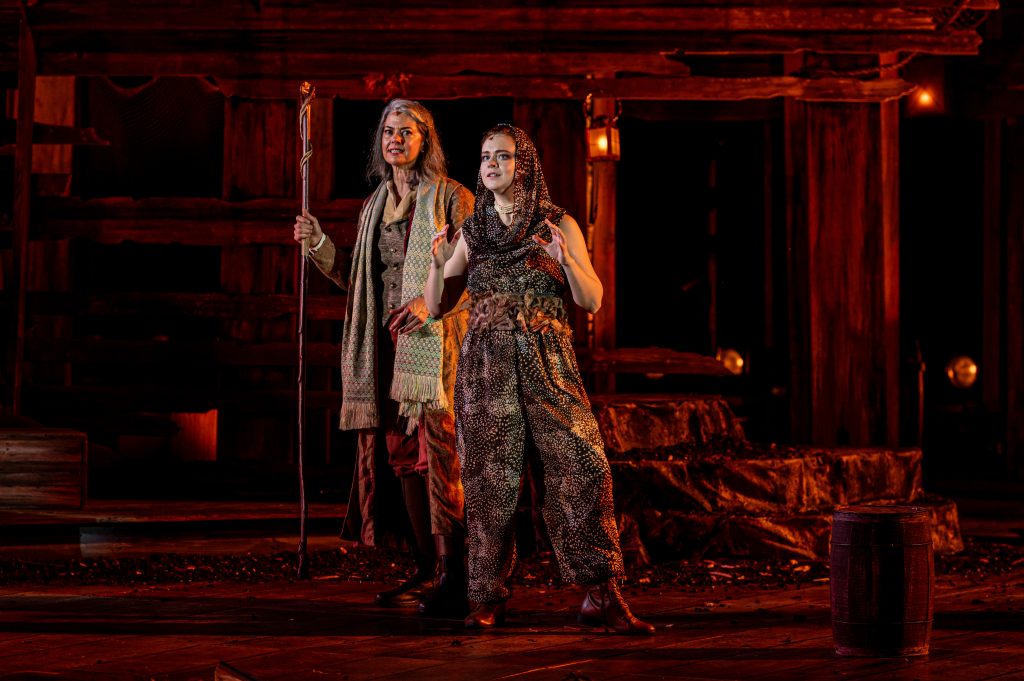
Mother and daughter have been marooned since the girl was 2 years old, so one can imagine her naivete and innocence – and yearning to break free of the overbearing parent. Nevertheless, the protective mom wants her daughter to marry for love and position.

Wise, enchanting as the isolated Miranda, is as luminous as she was as Juliet in “Romeo and Juliet” in 2018 and was part of “The Winter’s Tale” the year before. She has tangible chemistry with Williams as a decent prince who can be trusted.

Through her instincts and technique, Bell is a formidable Prospero – and as much of an impact she has had on Shakespeare in this city, one must note that this is her first leading role outdoors in Shakespeare Glen.

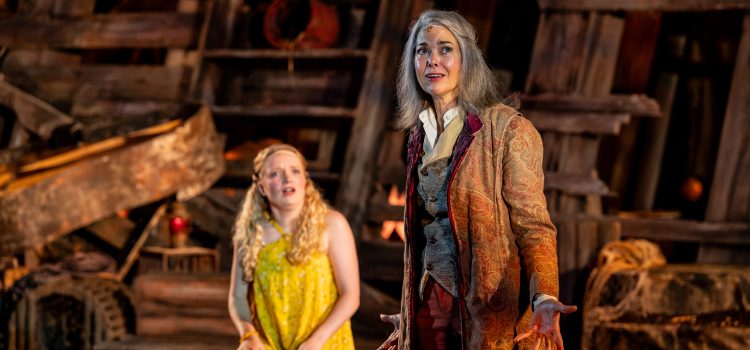
Bell and Eliza Pagelle as Ariel. Photo by Phillip Hamer.

 (As Playwright-in-Residence, Bell wrote several “Shakespeare in the Street” productions, earning Best New Play awards from the St. Louis Theater Circle for “The World Begun” and “Old Hearts Fresh,” and two years ago, directed the award-winning “As You Like It.” She also founded the Confluence New Play Festival.)

The Circle’s most awarded theater artist, for acting, writing and directing, Bell commands attention from various vantage points perched on the decaying hull of a shipwreck. Her character must find a way to forgive on this journey.

Director Rick Dildine shrewdly showcases Prospero’s dominance by staging Bell’s position at different heights – when she’s talking to others. It’s rare when she’s on the same level of this imposing set, masterfully adorned with functional nooks and crannies.

The former director of St. Louis Shakespeare Festival (2009 – 2017) emphasizes nature’s impact as well as the colonial-era themes. Dildine’s version is a breezy 90 minutes without an intermission.

Goofballs Jose Sabillon and Michael Dougherty with Thomas. Photo by Phillip Hamer.

He is aided by a talented squad — assistant director Lize Lewy, producer Colin O’Brien, production company Blank Slate, stage manager Sarah Luedloff, and assistant stage manager Britteny Henry.

Dildine won a Circle award for directing a shimmering “A Midsummer Night’s Dream” in 2016 where sound, lighting and scenic design enhanced the production, especially the original music.

The storytelling here is boosted by those same elements. The artisan MVPs who blended music and storm effects to elevate the experience included music director Michael Grieve, sound designer Melanie Chen Cole, lighting designer Jeff Behm and scenic designers Justin and Christopher Swader, all making impressive debuts, as were costume designer Kathleen Geldard and props designer Katherine Stepanek.

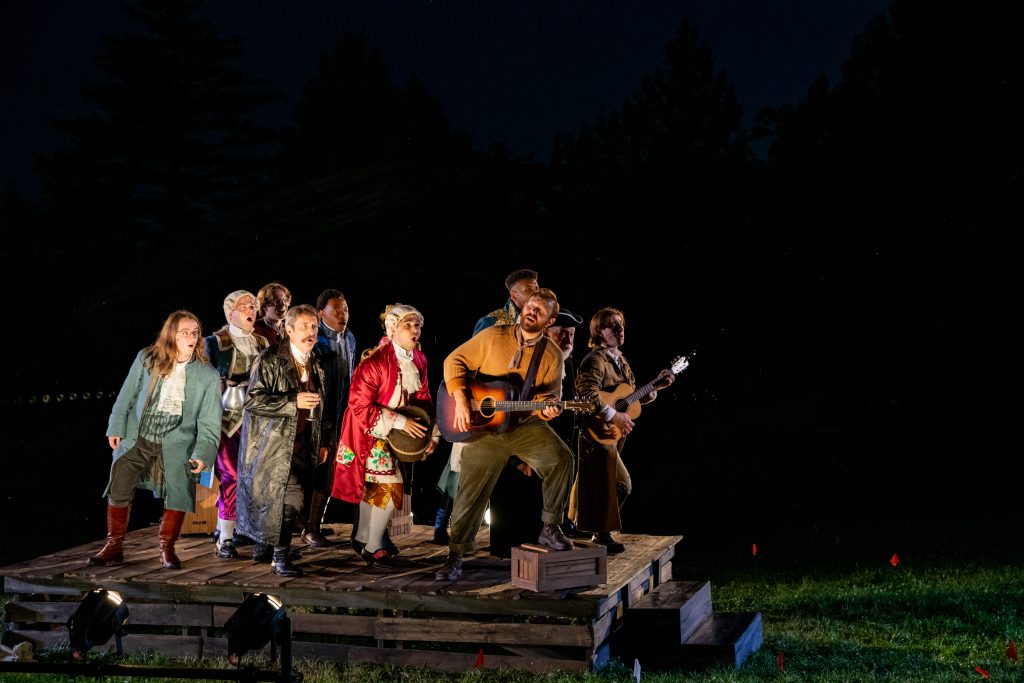
Grieve’s captivating immersive upbeat music is a zesty blend of roots music, sea shanties and folk melodies, with lively musicians Harrison Farmer, Crayton Haney and Otto Klemp, also in supporting roles, as is Grieve.

Musicians and partiers aboard a vessel. Photo by Phillip Hamer.

An original prologue on a satellite stage creates a festive atmosphere at Alonso’s daughter Claribel’s wedding, which kicks off the show (starting at 8 p.m.). Paul Dennhardt has provided interesting moves for the musicians and guests. All that’s swept away in the tempest.

Regarded as Shakespeare’s last play, when he was in his late 40s, this tale of forgiveness has the compassion of an experienced man looking at what’s important in life. And that is expressed well in this vibrant setting.

Dildine’s focus on nature’s capacity to heal is a key component to this 26th annual outing in the park, a year after a destructive tornado tore through Forest Park. He interprets that resiliency in the aftermath, as we all weather calm seas and violent storms in life.

A portion of the donations collected during “The Tempest” will go towards the tornado relief funds for the St. Louisans hit the hardest. And thanks to the parks department and Forest Park Forever, we are sitting today in these hallowed grounds of immense cultural importance.

Zay Williams and Sigrid Wise as Ferdinand and Miranda while Bell looks on. Photo by Phillip Hamer.

St. Louis Shakespeare Festival presents “The Tempest” May 27 – June 21 at 8:15 p.m., Tuesdays through Sundays, in Shakespeare Glen in Forest Park, 6604 Fine Arts Drive (next to the Art Museum). Admission is free and accessible to everyone. The Glen opens at 6:30 p.m. and the Teen Green Show takes place at 7:15 p.m. Thursday through Sunday. For more information, visit www.stlshakes.org

Wise, Williams and Bell. Photo by Phillip Hamer.

By CB Adams

Opera succeeds when theater, singing, and orchestra move together. Winter Opera St. Louis brought those forces into satisfying alignment with Charles Gounod’s “Roméo et Juliette,” closing its season with a production that carried Shakespeare’s familiar tragedy with immediacy and emotional force.

Gounod’s 1867 opera, with a libretto by Jules Barbier and Michel Carré, keeps its focus firmly on the young lovers rather than the feud that surrounds them. That emphasis places unusual weight on the title roles, and Winter Opera delivered with a compelling pair.

Tenor Taylor Comstock sang Roméo with youthful ardor and a clear, lyrical tenor that expanded in power as the music climbed into the upper register. Opposite him, soprano Megan Barrera offered a Juliette of brightness, agility, and growing emotional depth.

Her “Je veux vivre” waltz sparkled with buoyant phrasing and easy coloratura, and she navigated the role’s demanding succession of arias and duets with clarity of tone and precise French diction.

Taylor-Comstock-Nathan-Whitson-Megan-Barrera. Photo by Dan Donovan.

Together they projected the impulsive youth at the heart of the story, allowing Gounod’s long love duets to unfold with warmth and urgency.

Director John Stephens guided the drama with clarity and focus. The turning point arrived in the duel between Mercutio and Tybalt, staged with sharp dramatic energy as Roméo’s intervention sealed the opera’s tragic course.

The final scene, shaped with intimate restraint, carried the emotional weight of the evening.

The supporting cast added vivid character and vocal strength. Baritone Kenneth Stavert filled Mercutio with swagger, wit, and striking physical vitality, relishing the playful brilliance of the Queen Mab scene.

Marc Schapman’s Tybalt burned with fierce intensity, while Jacob Lassetter brought warmth and authority to Capulet. Raphaella Medina charmed as Stéphano, and Emily Moore animated the role of Gertrude with lively presence. The ensemble throughout sang and acted with admirable cohesion.

In the pit, conductor Edward Benyas shaped the score with sensitivity to its lyrical sweep, balancing orchestra and voices so that Gounod’s melodic lines could bloom freely.

The chorus, prepared by Scott Schoonover, sang with clarity and strength, particularly in the somber lament that follows the duel.

Taylor Comstock and Marc Schapman as Romeo and Tybalt. Dan Donovan photo.

Scott Loebl’s flexible scenic design and Jen Blum-Tatara’s richly colored costumes reinforced the divided world of the rival houses while allowing the drama to move fluidly from celebration to tragedy.

The result proved deeply affecting and a fitting close to Winter Opera’s season. Performances at this level make a persuasive case for opera at an intimate scale, where music, voices, and story meet the audience directly.

Winter Opera’s “Roméo et Juliette” was performed on Feb. 27 and March 1 at the Kirkwood Performing Arts Center.

Megan Barrera as Juliette and Emily Moore as Gertrude. Photo by Dan Donovan.

By Lynn Venhaus

Laying the foundation for the palace intrigue in Shakespeare’s tragic “Hamlet,” the original play “Elsinore” is an interesting interpretation of those familiar characters in an affecting prequel.

Known for its bold choices, local theater company Chorus of Fools has mounted artistic director Eric Satterfield’s 2021 play updated by co-playwrights David Nonemaker and Satterfield, who also directed.

How did Denmark become so rotten? Satterfield wants answers and his strong cast will tell a more nuanced story.

Through compelling performances, this ensemble delves into the unraveling of the royal family and how the political scheming escalates, which eventually leads to the kingdom’s instability and headed to war with Norway.

Most remarkable is how much the language sounds like the Bard in tone and tempo. Smartly written with style, wit and theatricality, “Elsinore” plausibly imagines the backstories.

John Wolbers is the domineering King Hamlet. Photo by David Nonemaker.

The playwrights obviously have read and studied Shakespeare, presenting a new angle on one of literature’s most influential works. After all, “Hamlet” has been adapted in many ways (“The Lion King,” anyone?)

A rewarding aspect is its exploration of many of the same universal themes, such as making one’s mark, duty, honor, loyalty, destiny and revenge. However, in these earlier incarnations, character transformations and motivations give the actors a juicy challenge.

We may think we know these characters, but by the time Shakespeare crafted them, they had been developed by circumstances, revealing their true nature.  In the prequel, they are forging their paths.

While the prince of Denmark has always been fascinating, in the before times he is secondary to Claudius, who has the most complex character arc. Joseph Garner, one of the region’s most versatile performers, has been a formidable stage presence in supporting roles. As the king’s brother and emissary, he delivers a dynamic characterization rich in detail.

Initially, a dedicated selfless royal, Claudius undergoes personal tragedies and moral dilemmas that lead to his stunning power-grab as he ascends to the throne while breaking up his brother’s family.

Joseph Garner and Jocelyn Padilla as Claudius and Gertrude. Photo by David Nonemaker.

King Hamlet is not a benevolent ruler. John Wolbers portrays him as imperious and devious, and with his son Hamlet, he is demanding and impatient. The young heir is finding his way, clashing with his father and being more comfortable around his uncle.

He starts brooding, and Andre Eslamian gives the intense, rebellious lad an emotional depth while conveying quicksilver moods. He’s confused and angry in interactions with his father, merry with his goofy friends Rosencrantz and Guildenstern, playful with his cousin Claudius, and tender with Ophelia.

His father is not fond of his childhood pals, and Xander Huber, as Rosencrantz, and Zach Pierson, as Guildenstern, display why. As the bumbling buddies, they demonstrate sharp comic timing and play off each other well, adept at slapstick.

Chuck Brinkley, equally good at comedy and drama, adds moments of daffiness to the garrulous Polonius, who is Claudius’ trusted advisor. But he’s capable of conniving. (And what a trouper — he really did break his ankle, hence the assistance.)

Madness has not yet affected major players. Ophelia becomes a handmaiden for Queen Gertrude. She is an intelligent, curious girl, devoted to her father Polonius and gives her heart to Hamlet. Hannah Geisz plays her as a spirited, virtuous member of the court – but one who won’t be an afterthought.

Hannah Geisz and Chuck Brinkley as Ophelia and Polonius. Photo by David Nonemaker.

As Gertrude, Jocelyn Padilla is an obedient wife and dutiful mother. She is hurt by the king’s gruff treatment of her, and after his untimely death, brightens under the gaze of Claudius.

Huber and Pierson each fill another role – Huber is Lord Waldemar and Pierson as young Claudius. Joe Kercher handles three brief roles – Lord Olaf, Laertes and a hooded figure. Rose Reiker is Osric, a courtier and messenger.

Claudius, who becomes a widower after his loving wife Colette (Lexie Johnson) and their beloved son Claudius (Zach Pierson), died in a shipwreck, has somewhat of a reset.

He has lost faith after those devastating losses, becoming bitter and angry. He disagrees with his brother’s decisions and ruthlessly sets a course to takeover.

“Hamlet” was Shakespeare’s longest play, and this version is in three acts, with two intermissions. The second act resumes 14 years later, and the third is one year after that.

Joseph Garner, Andre Eslamian as Claudius and Hamlet. Photo by David Nonemaker.

The small company, with a modest budget, cleverly depicts the castle’s throne room, Claudius’ family sitting room, and the orchard where King Hamlet often napped. Vickie Delmas worked on the set design with Satterfield, and took care of props..

With its “Downtown Abbey” inspired Edwardian setting and period costumes, “Elsinore” creates an insular world where loyalty is demanded while secrets and lies are part of the growing corruption.

Costume designer Celeste Gardner paired different textures together to appropriately outfit the characters, with her work particularly noteworthy for Ophelia and Gertrude.

Bradley Rohlf’s atmospheric lighting design highlighted an impending doom, while giving the ghosts an other-worldly illumination. Satterfield’s outstanding sound design included imaginative needle drops and a regal music score to reflect the spreading darkness.

Other contributors were Ryan Lawson-Maeske, fight choreographer; Jen Kerner, accessibility consultant; Tress Kurzym, intimacy director; and Nikki Pilato, dramaturg (and also assistant director). Moira Healy was the stage manager.

With a castle community sensibility, the savvy cast transported us to a troubled time that has been examined through the ages, and managed to engage us with different, interesting angles. They skillfully conveyed Satterfield’s and Nonemaker’s intentions in a smart, entertaining presentation.

Andre Eslamian, Zach Pierson as the young Hamlet and young Claudius. Photo by David Nonemaker.

Chorus of Fools presents “Elsinore” Thursdays through Saturdays at 7:30 p.m. from Oct. 9 through Oct. 19 at The Greenfinch Theatre and Dive Bar, 2525 S. Jefferson. For more information: greenfinchstl.com/events

By Lynn Venhaus

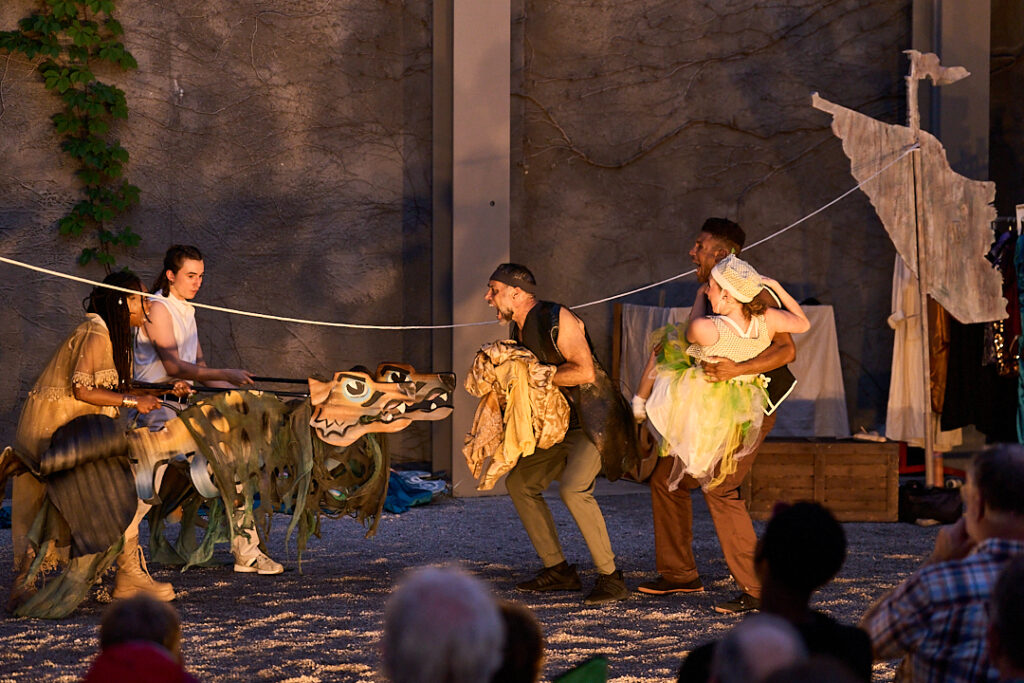
A grizzly bear, crocodile, prairie dog, red panda, and tiger dance into a party in Zoorona, and we get a bouncy beat, a perky vibe, and a bright-eyed and bushy-tailed family-friendly adaptation of Shakespeare’s classic love story, revived as “Romeo and Zooliet.”

After all, what’s in a name? “That which we call a rose by any other name would smell as sweet.” What if the animal kingdom put on their own show in the friendly confines of a public zoo?

This inspired first-ever collaboration between St. Louis Shakespeare Festival and the Saint Louis Zoo is staged in a grassy, wooded valley area known as “Historic Hill,” between the sea lions and Cat Country on the zoo’s south side.

It is an enchanted setting on a midsummer night, and even a rain delay and sound glitch on Friday, July 11, couldn’t dampen the enthusiasm and enjoyment, particularly of the young and the young at heart.

Ingeniously camped in a performance space named “The Glowb,” clever large custom-made animal puppets cavort in their make-believe habitats, courtesy of Shakespeare-trained actors nimbly operating their characters while they provide the voices and the movements.

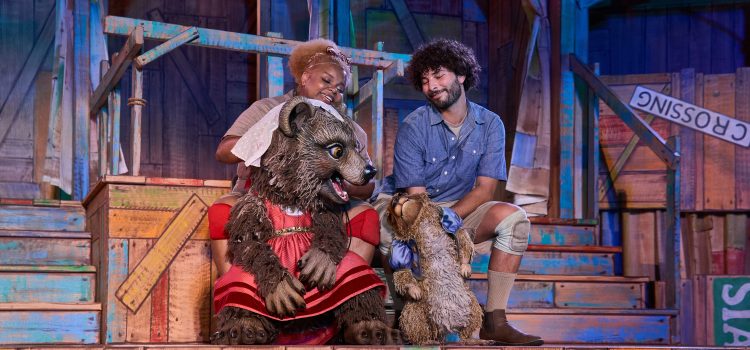
Ryan Omar Stack and Nisi Sturgis. Photo by Theo R Welling.

The synergy between playful puppeteers is uplifting, especially when you have a tale aimed at young audiences that is an ode to friendship. (In crossing the biological divide, no animals were harmed in this charming presentation).

The tragic-free conflict, created with wildlife behaviors in mind, is that cuddly bear cub Juliet, an omnivore who leans towards being a vegetarian, becomes best friends with adorable prairie dog Romeo, an herbivore who eats plants.

They don’t mind their differences and want to spend time together without their friends and families interfering. Those colorful characters are not feuding; they’re just from different clans.

Playwright Jennifer Joan Thompson’s imaginative script, based on a 2015 graphic novel, “The Stratford Zoo Midnight Revue Presents Romeo and Juliet,” which was written by Ian Lendler and illustrated by Zack Giallongo, takes flight in this delightful zoo setting.

An exuberant Ricki Franklin, a master interpreter of Shakespearean iambic pentameter, is the sweet Juliet seeking a best buddy. Franklin is a two-time winner of the St. Louis Theater Circle Award for performer in a supporting role for “Twelfth Night” and “As You Like It,” two recent outdoor productions in Shakespeare Glen, and her vibrant stage presence is welcoming.

Jacob Schmidt and Jordan Moore. Photo by Theo R. Welling.

Agile Jordan Moore plays nice Romeo, smitten with Juliet in a way where it’s the platonic version of “Did my heart love till now? forswear it, sight! For I ne’er saw true beauty till this night,” and wants to hang out after they dance.

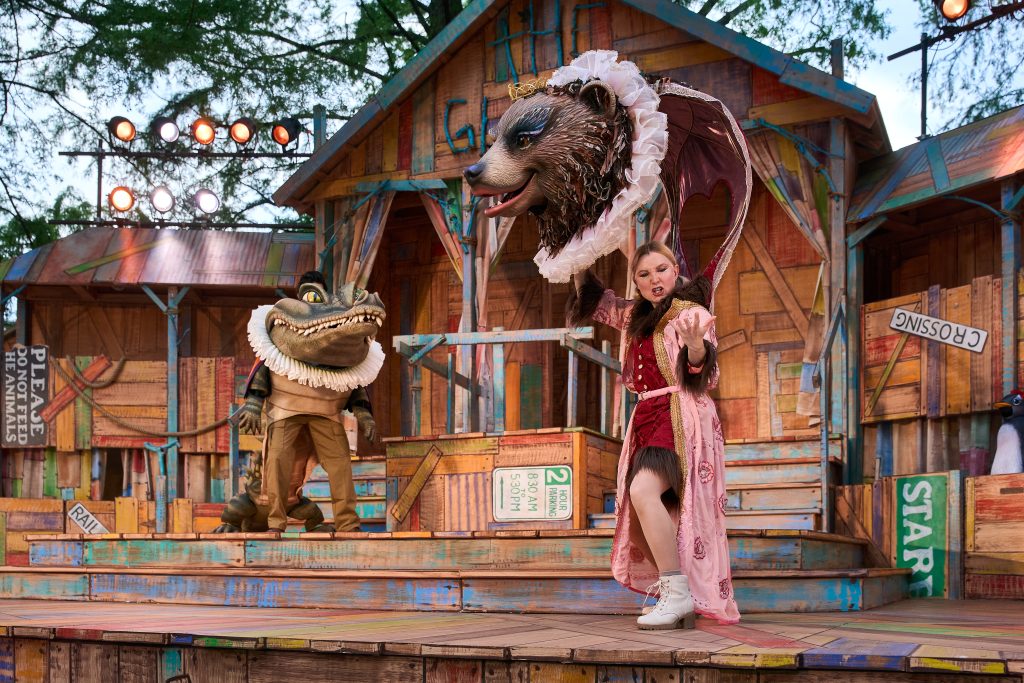
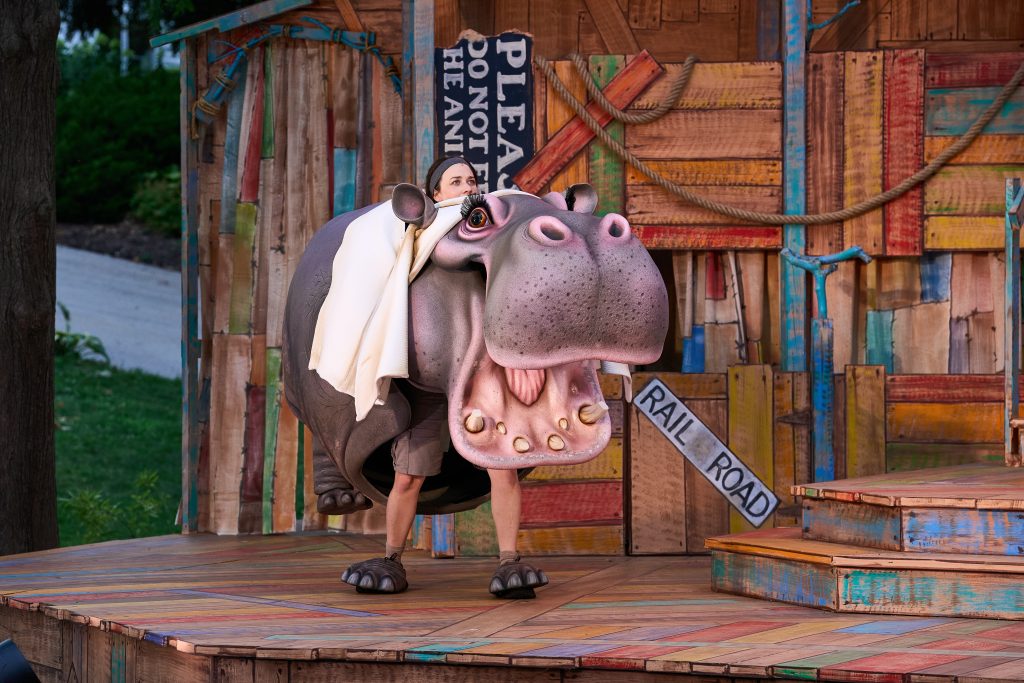
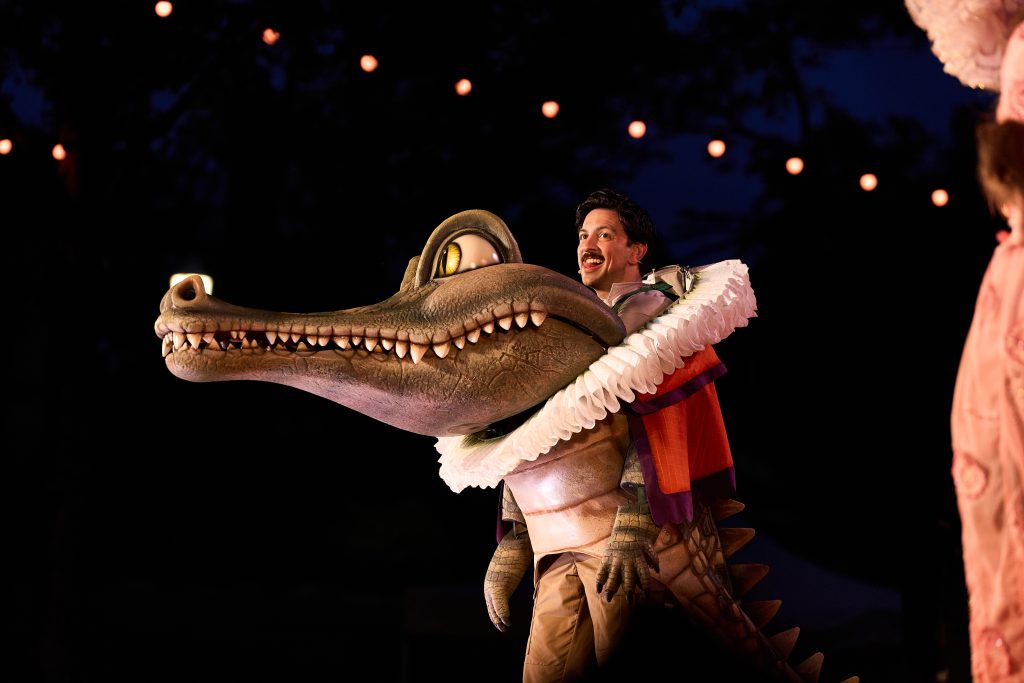
Juliet’s controlling mom, Lady Capulet, has other ideas — to have a play date with Paris, a smarmy crocodile with ulterior motives, for he sees a meal ticket. Nisi Sturgis’s suppleness in moving with an enormous bear apparatus above her head is impressive.

Adroit Ryan Omar Stack cunningly delivers his double entendre lines, trying to cover up his hearty appetite. He also portrays the prince, who is a sage sea lion (and easily distracted by balls!)

Zookeepers have gone home for the evening, and assorted critters come alive for fun and adventure. The remarkable puppets were designed and fabricated by Michael Curry Design. They collaborated with Julie Taymor for incredible “The Lion King” puppets, so no wonder these are striking in detail.

All the characters are animals that can be found in the Saint Louis Zoo – and on your way in and out, you can watch the prairie dogs’ antics as they go about their evening.

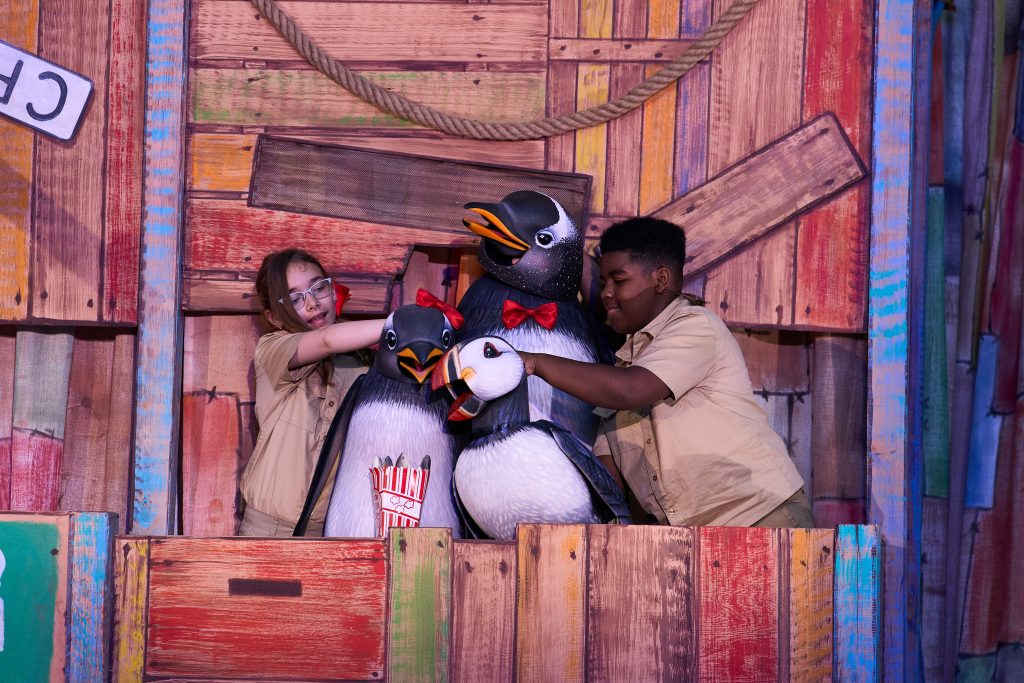
Narrators are a penguin, their offspring, and a puffin. Bryce Cleveland is Puff, Genevieve Mazzoni is Penny. Rian Page and Sophie Stogsdill are also listed in the program.

An animated Jacob Schmidt is a gleeful Mercutio, ready to dance, but he clashes with Juliet’s cousin, Tybalt (the always vivacious Rae Davis). He’s more laid back, she’s friskier – but they both are protective of their pals.

Schmidt also makes a comical entrance as an ambling tortoise, Friar John, ready to dispense his wisdom. He’s quite a crowd-pleaser.

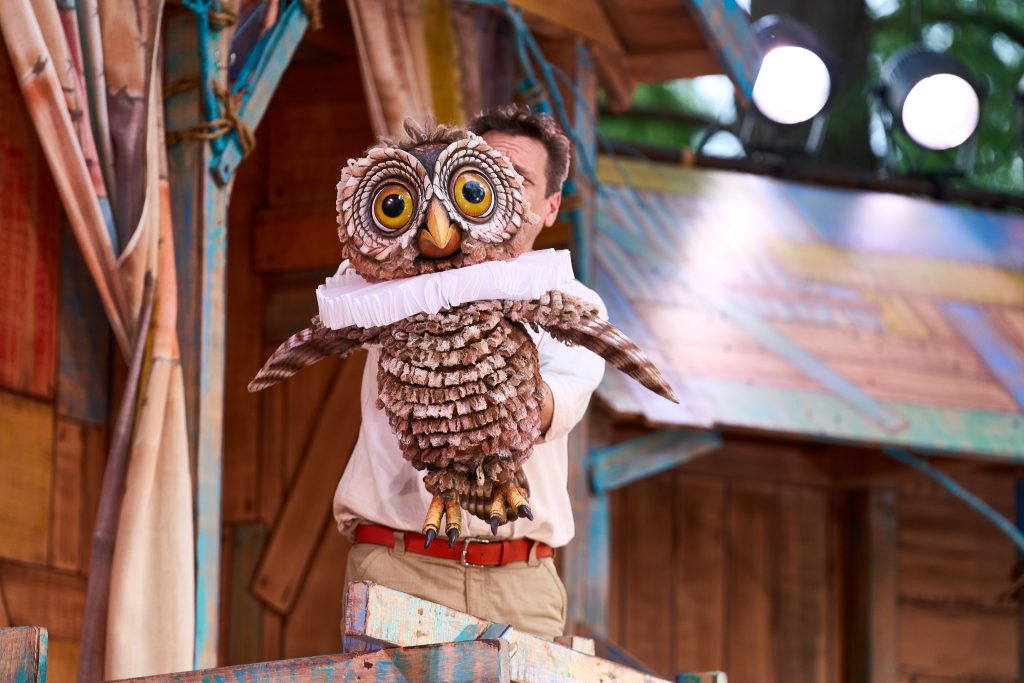
The mellifluous Jeff Cummings is Friar Lawrence, a wise owl, while Olivia Scicolone is a marvel of motion as a hippo, who is quite limber as Juliet’s fussy nurse.

Rising stars Charlie Mathis and Daisy Held are the capable swings throughout the run.

Scenic designer extraordinaire Scott C. Neale has fashioned a rustic performance space that’s part clubhouse, treehouse, campground and stage – with interesting nooks and crannies for the animals to pop in and take off from.

Jesse Klug’s lighting design incorporates fairy lights, and their illumination elicited ‘aws’ from the crowd.

Costume designer Rachel Adorno, in tandem with Caitlin McLeod, associate costume designer and additional puppet fabrication, give the animals distinct personalities – including sparkly masks for the party scene, to convey the whimsy. Eric Barnes managed the props.

With his keen eye for detail and his zest for high-spirited, fun-filled action, producing artistic director Tom Ridgely has helmed this show laser-focused on cheerful entertainment for all ages, especially wide-eyed youngsters.

Ridgely, as he always does, has included exceptional creatives on this show’s roster. His team included producer Colin O’Brien, associate producer Ryan Jeffery, stage manager Sarah Luedloff and assistant stage manager Britteny Henry.

Olivia Scicolone

The 80-minute show includes catchy pop tunes, with a sensational signature song “Just Like Romeo and Zooliet,” the show’s own interpretation of a song first recorded in 1964 by The Reflections.

It has been re-arranged by music supervisor Jeffrey “JQ” Oaiyum, and sung by JQ and Kiley B. Moore, with background vocals by Sophie Dimitroff and trumpet playing by Marques Carroll.

JQ is part of The Q Brothers, which have been involved in several shows presented here by the St. Louis Shakespeare Festival. A Chicago composer, he also works on the Emmy-winning Hulu series “The Bear.”

The peppy music numbers are choreographed by Sam Gaitsch, and Steve Ptacek did a terrific job with sound design. Zev Steinrock choreographed the fights.

Jeff Cummings.

While it’s briskly performed and pleasantly presented, “Romeo and Zooliet” is a massive undertaking, so no small feat for all involved to create such a magical, purposeful experience.

With an entire village of artisans, Ridgely good-naturedly directed this groundbreaking attempt to unite two different worlds, and we’re the better for it.

If you’re like me, you’ll leave grinning ear to ear, hearing little tots giggling being the best sounds of all on a summer’s eve. (And it’s not every day you hear barking sea lions ready to go to bed).

St. Louis Shakespeare Festival presents “Romeo and Zooliet” Tuesdays through Sundays at 7:30 pm from July 8 through Aug. 17. Performances take place at the Historic Hill in the St. Louis Zoo. For more information: stlzoo.org.

Rehearsal photos by Theo R Welling

Ryan Omar Stack as Paris.

By CB Adams

In Opera Theatre of Saint Louis’ shimmering new production of Benjamin Britten’s “A Midsummer Night’s Dream,” the familiar Shakespearean tale is reborn with a rare blend of musical precision, visual poetry and theatrical wit.

Under the baton of maestro Leonard Slatkin and the direction of Tim Albery, this staging is less a retelling than a re-enchantment—an immersive journey into a world where fairies glide, lovers quarrel and rustic clowns stumble through tragedy with comic brilliance.

The production is anchored by a cast of world-class singers and actors, each bringing nuance and vitality to their roles. The creative team, led by designer Emma Kingsbury, conjures a forest that breathes and transforms while the children’s chorus and mechanicals add layers of charm and humor.

What follows is a breakdown of the production’s key contributors—principal cast, lovers, mechanicals, fairies and creatives—each of whom helps weave this dream into something unforgettable.

Puck (Matisse Carmack) lays a spell upon a sleeping Lysander (Anthony León) in A Midsummer Night’s Dream. Photo © Eric Woolsey

Principal Cast

The heart of Britten’s dreamscape lies in the ethereal authority of its fairy royalty. Oberon and Tytania, portrayed with vocal finesse and dramatic poise, anchor the supernatural world with a sense of grandeur and mystery. Puck, though silent in song, is a kinetic presence who threads the narrative with mischief and grace.

  • James Laing – Oberon: A commanding OTSL debut, Laing’s countertenor voice is smooth and powerful, embodying the regal and mystical presence of the fairy king.
  • Jana McIntyre – Tytania: Also making her OTSL debut, McIntyre dazzles with a silvery bel canto soprano, bringing both elegance and emotional depth to the fairy queen.
  • Matisse Carmack – Puck: In this non-singing role, Carmack is a kinetic force—quick, agile and mischievous. Her delivery of Puck’s final monologue is masterful.
Tytania (Jana McIntyre) embraces Bottom (Ben Brady) as her bemused fairies (L to R: Laura Santamaria, Veronica Siebert, Emilie Kealani, and Zoe Brooks) look on in A Midsummer Night’s Dream. Photo © Eric Woolsey

The Lovers

The quartet of young lovers brings emotional volatility and romantic confusion to the forest, their entanglements rendered with vocal clarity and dramatic charm. Each performer navigates the shifting affections and magical manipulations with humor and heart, grounding the opera’s fantasy in human longing.

  • Anthony Léon – Lysander: A strong and expressive tenor, Léon brings warmth and charm to the role.
  • Jennifer Johnson Cano – Hermia: A returning OTSL favorite, Cano delivers a sterling performance with emotional nuance and vocal richness.
  • Theo Hoffman – Demetrius: A standout among the lovers, Hoffman’s powerful baritone is one of the production’s vocal highlights.
  • Teresa Parrotta – Helena: Parrotta brings humor and heart to Helena, rounding out the quartet with a vibrant performance.
Ben Brady as Bottom in A Midsummer Night’s Dream. Photo © Eric Woolsey

The Rude Mechanicals

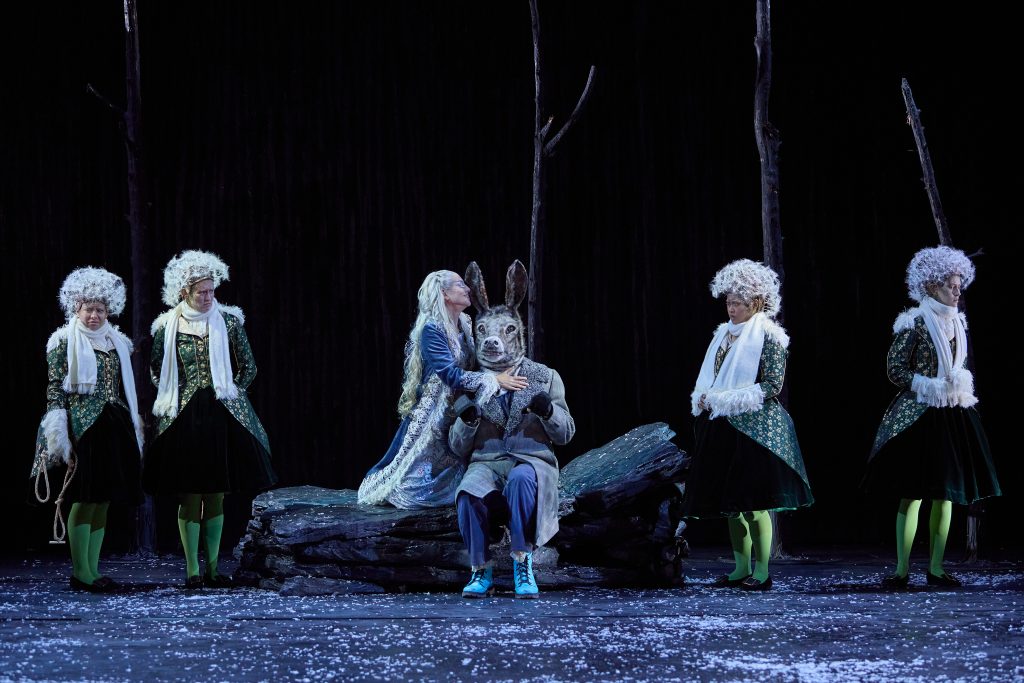
Comic relief arrives in the form of the “rude mechanicals,” whose earnest attempt at theatrical tragedy becomes a riotous farce. Their scenes are a masterclass in physical comedy and ensemble timing, with Bottom’s transformation into an ass providing one of the production’s most memorable visual gags.

  • Ben Brady – Bottom: A comedic triumph, Brady is hilarious in both human and donkey form. The donkey’s head is described as a miracle of stagecraft—realistic with a moving mouth that allows Brady’s voice to project clearly and powerfully.
  • Christian Sanders – Thisbe: Sanders delights with a playful and endearing portrayal of Thisbe.
  • Robert Mellon, Dylan Gregg, Adam Partridge, Sam Krausz – Mechanicals Ensemble: This troupe delivers classic low-comic charm, wringing every laugh from their vaudevillian rehearsal scenes.
Tytania (Jana McIntyre) embraces Bottom (Ben Brady) as her bemused fairies (L to R: Laura Santamaria, Veronica Siebert, Emilie Kealani, and Zoe Brooks) look on in A Midsummer Night’s Dream. Photo © Eric Woolsey

The Fairies & Children’s Chorus

The enchanted forest is populated by a chorus of fairy sprites, led by four charming attendants. Their presence adds a layer of visual and vocal delicacy, transforming the stage into a living, breathing dreamscape. The children’s chorus, under expert direction, brings both innocence and eerie beauty to the production.

  • Emily Kealani – Cobweb
  • Veronica Siebert – Mustardseed
  • Laura Santamaria – Peaseblossom
  • Zoe Brooks – Moth: These young performers lead the children’s chorus with grace and whimsy, adding a magical layer to the production.
  • St. Louis Children’s Choruses – Fairy Sprites: A visual and vocal delight, these young singers enhance the enchanted forest with charm and precision.
Thisbe (Christian Sanders) and Pyramus (Ben Brady) speak through the Wall (Sam Krausz) as Theseus (Jose Olivares) and Hippolyta (Michelle Mariposa) watch their play in A Midsummer Night’s Dream. Photo © Eric Woolsey

Creative Team

Behind the scenes, a visionary creative team shapes the production’s aesthetic and emotional tone. From the conductor’s podium to the costume shop, each contributor brings a distinct artistry that elevates the opera’s dreamlike world. Their collaboration results in a production that is as visually arresting as it is musically rich.

  • Tim Albery – Stage Director: Albery’s minimalist Shakespearean-inspired staging is both magical and emotionally resonant.
  • Emma Kingsbury – Scenic & Costume Designer: Her designs are exquisite with transformative sets and timeless costumes that elevate the production’s visual storytelling.
  • Krystal Balleza & Will Vicari – Wig & Makeup Designers: Their work is brilliant, especially in crafting the ethereal looks of the fairy realm.
  • Seán Curran – Choreographer: Curran’s choreography adds fluidity and charm, enhancing the dreamlike atmosphere.
  • Leonard Slatkin – Conductor: A celebrated return to OTSL, Slatkin leads the St. Louis Symphony Orchestra with finesse, bringing Britten’s haunting score to life.
  • Andrew Whitfield – Chorus Master: His direction of the children’s chorus is superb, contributing to some of the production’s most enchanting moments.
Jose Olivares as Duke Theseus and Michelle Mariposa as Queen Hippolyta in A Midsummer Night’s Dream. Photo © Eric Woolsey

Cover Photo: Oberon (James Laing), Tytania (Jana McIntyre), and the fairies bless the slumbering household at the end of A Midsummer Night’s Dream. Photo © Eric Woolsey

By Lynn Venhaus

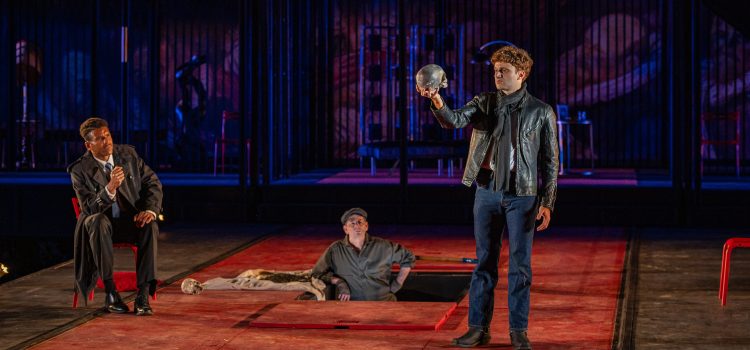
An invigorating energy, combined with an intriguing neo-noir atmosphere, mark an unforgettable milestone production of William Shakespeare’s most famous work, “Hamlet” as this year’s 25th St. Louis Shakespeare Festival in Forest Park offering.

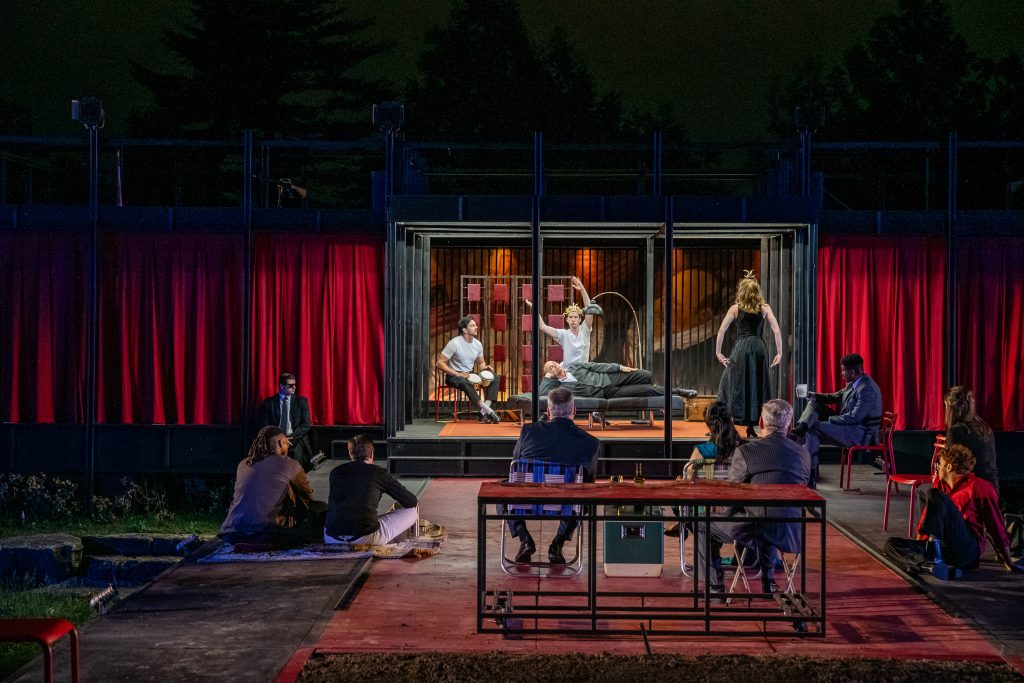
Director Michael Sexton’s novel interpretation is moody and minimalist, with scenic designer Scott C. Neale’s striking mid-century modern setting. Sexton follows through his stylistic vision with a noteworthy flair.

From the bold first appearance of King Hamlet’s ghost (Larry Paulsen), the prince’s father, one can sense we’re in for electric, thrilling storytelling, and these inspired choices bring out the best in the impressive ensemble.

Think the angsty howl of James Dean in “Rebel Without a Cause” combined with Robert Pattinson’s emo rendering of tormented Bruce Wayne in “The Batman” for this new-age Hamlet. After all, no one out-broods this iconic prince of Denmark.

Raw, confrontational and reeling in emotional distress, Michael Khalid Karadsheh is mesmerizing as the boy – to the manner born — who comes home from college in Germany to learn of a “murder most foul.”

The play within a play. Photo by Phillip Hamer.

His father has been killed, and his mother Gertrude (Jennifer Ikeda) has married his uncle Claudius (Glenn Fitzgerald), who has seized the throne. He is the leading suspect in his stepson’s eyes and ever the manipulator, is trying to cast doubt on Hamlet’s stability.

“Something is rotten in the state of Denmark,” military sentry Marcellus (CB Brown) fears. Meanwhile, a war is brewing. Hamlet is a powder keg of emotion as he plunges into a downward spiral, suspecting corruption and abuse of power. A sense of foreboding is palpable.

Written around 1600, Shakespeare’s tragedy endures because of rich characters, complicated relationships and sharp observations about human nature. In the pastoral setting of Shakespeare Glen, the festival team blows the cobwebs off your English lit textbook with a fresh look at these Danish royals.

That includes a dynamic black, white, and red palette with shades of gray for unconventional statement designs – in Oana Botez’ functional, comfortable costumes (reminiscent of The Beat Generation and “Mad Men” wardrobes), Denisse Chavez’ atmospheric lighting emphasizing dramatic shadows, and Neale’s layered set. You won’t miss a palatial setting for Elsinore Castle.

Scott C. Neale’s striking set. Photo by Phillip Hamer.

The innovative dramatizing includes a versatile thrust stage (just like Shakespeare’s Old Globe) – 50 feet that juts from the standard proscenium stage. This allows for a more intimate connection with the actors.

And if you are waiting to be wowed by Hamlet’s soliloquies, Karadsheh’s emotional pleas are in optimum positions, and his commanding delivery of one of the most famous literary passages is a joy to behold. Drink every word in of the beautiful iambic pentameter.:

“To be, or not to be, that is the question
Whether ’tis nobler in the mind to suffer
The slings and arrows of outrageous fortune,
Or to take arms against a sea of troubles
And by opposing end them. To die—to sleep,
No more; and by a sleep to say we end
The heart-ache and the thousand natural shocks
That flesh is heir to: ’tis a consummation
Devoutly to be wish’d. To die, to sleep;
To sleep, perchance to dream—ay, there’s the rub:
For in that sleep of death what dreams may come,
When we have shuffled off this mortal coil,
Must give us pause—there’s the respect
That makes calamity of so long life.

Sarah Chalfie as Ophelia. Photo by Phillip Hamer.

Consumed with guilt, rage and confusion, Hamlet is acting out, and not in a good way, alarming those closest to him. His mother sends for his Wittenberg University chums Rosencrantz (Mitch Henry-Eagles) and Guildenstern (CB Brown), hoping they can shed light on the situation.

His gal pal Ophelia (Sarah Chalfie) is scared, her brother Laertes (Grayson DeJesus) startled, their caring father Polonius – Claudius’ counselor – upset, and his best friend Horatio (Reginald Pierre) worried. It doesn’t help that he keeps seeing disturbing visions of his dad’s ghost.

Meanwhile, cunning Claudius is forcing power plays and mistrust to protect his secrets and lies. “That one may smile and smile and be a villain,” and Fitzgerald suits him well. Thus, Hamlet’s rebellion will bring more sadness, madness and losses.

Hamlet, Gertrude and Claudius. Photo by Phillip Hamer.

Most of all, the regal Gertrude, dressed in elegant ballgowns and cocktail attire, symbolizes wealth and aristocracy. Ikeda, who appeared as Juliet here in the fest’s inaugural production, contrasts with the young characters representing the need to explore and discover, find their purpose while they question moral decay.  

Hamlet’s disgust at his mom’s choices couldn’t be clearer — “The lady protests too much, methinks.” He can’t get past what he perceives as her betrayal.

You know exactly where Hamlet is coming from when he tells Horatio: “There are more things in heaven and earth, Horatio, than are dreamt of in our philosophy.” As Hamlet’s best friend, Reginald Pierre is a harmonious Horatio, his eloquence shines through, as he does in every Shakespeare role.

Pierre is masterful in delivering a heart-tugging “Goodnight, sweet prince, and flights of angels sing thee to thy rest!”

Gertrude, Hamlet. Photo by Phillip Hamer.

Mark Nelson excels as busybody Polonius, who is doomed by his meddling. When he advises his son and daughter “To thine own self be true,” the audience erupted in applause.  He also delivers the often misquoted “Though this be madness, yet there is method in’t.”

No matter how much he tries, he can’t save his emotionally bruised daughter, who can’t cope with losing her parent. Sarah Chalfie is outstanding in her robust portrayal of Ophelia, one of the best I’ve seen.

She’s no fragile flower, not the usual whiny or showing too ethereal qualities, and instead gives a fully formed rendering of a psychologically battered young woman raised to be sweet and pretty, but there’s an independence and intelligence that she brings out too.

In real life, Chalfie is responsible for helping to save the day when original cast member Vaughn Pole was injured and unfortunately needed to be replaced as Laertes. Chalfie knew actor Grayson DeJesus had played the part twice before, and he came to the rescue. Considering that he had only four hours’ rehearsal before opening night May 30 and was so vibrant on stage was a remarkable feat. His dexterity and fervor were exceptional.

Hamlet, Ophelia. Photo by Phillip Hamer.

The supporting roles are fluidly handled by Max Fiorello, Daisy Held, Charlie Mathis and Ryan Omar Stack. Henry-Eagles and Brown also capably play another role other than their sharp preppies Rosencrantz and Guildenstern, and Larry Paulsen is also effective as the gravedigger, in addition to the fatherly spirit.

The presentation’s nifty flourishes in no way overshadow the passionate performances, for this tight ensemble rises to the occasion – it’s lucid, riveting and rhythmic in a way that the audience leans into the gripping action and the heartfelt agony.

Another outstanding addition to this year’s set is an eye-popping moving, motorized room that rolls up and down the stage on tracks, especially in the pivotal Polonius eavesdropping scene.

Perhaps music personifies this tale more than any other staged in recent years – although fine local musicians have added such gorgeous sounds in the previous comedies ‘As You Like It,” “Twelfth Night,” “Much Ado About Nothing” and “A Midsummer Night’s Dream.”

Music director/Composer Brandon Wolcott’s jazzy score played by East St. Louis trumpeter Brady Lewis is an integral part of the storytelling,. and recorded music sets the cinematic tone and heightens the ominous tension that builds in intensity.

Rosencrantz and Guildenstern, talk to Hamlet, center. Photo by Phillip Hamer.

Special mentions to choreographer Sam Gaitsch for her 50s ultra-cool dance moves, Zev Steinrock for his taut fight choreography, Laura Skroska as the key props master, stage manager Sarah Luedloff and assistant stage manager Britteny Henry for their brisk work, producer Colin O’Brien and assistant director Heather Anderson for assuring that all the elements come together in fine fashion.

This nontraditional dark adaptation is refreshing because its artistic accomplishments feel organic, and its collaborative creatives and cast dazzle without artifice for a truly enthralling evening. The play’s the thing! A haunting and hypnotic “Hamlet” starts the summer off with an exclamation point, and more is in store from St Louis Shakespeare Festival — with “Romeo and Zooliet,” the touring company’s “A Midsummer Night’s Dream” in 34 parks and an original St. Louis Shake in the Streets in East St. Louis.

St. Louis Shakespeare Festival presents “Hamlet” May 28 through June 22, nightly at 8 p.m. except Mondays in Forest Park’s Shakespeare Glen (near Art Museum). Admission is free but special seating is available for a fee. For more information, visit www.stlshakes.org

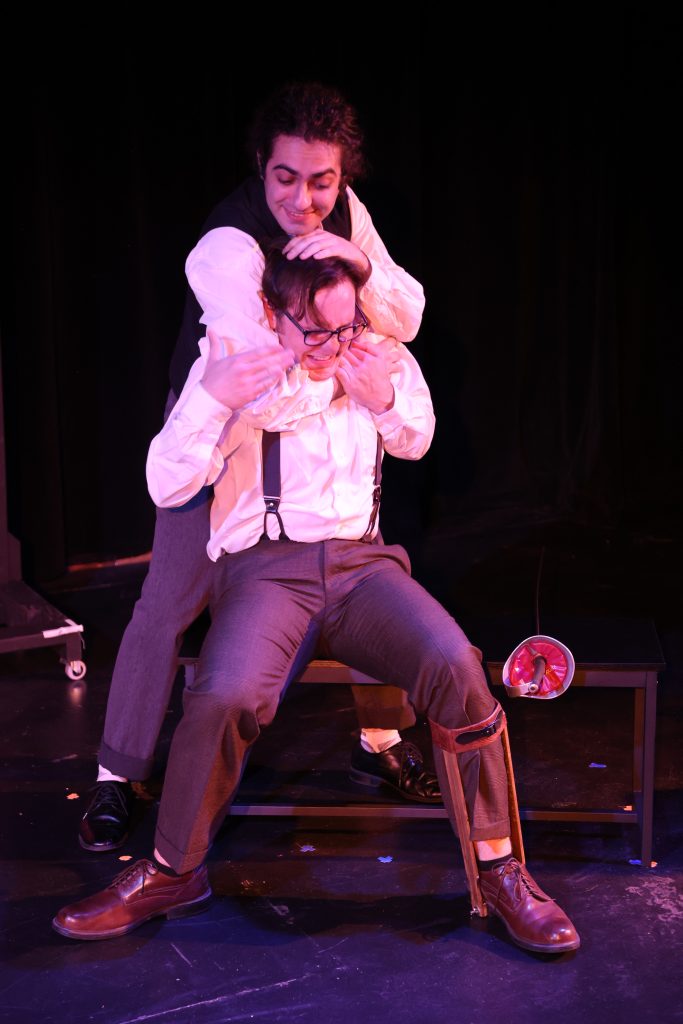
Laertes and Hamlet fence. Photo by Phillip Hamer.

By Lynn Venhaus
Looking at female agency through the prism of mothers, daughters and sisters, “Am I Dangerous?” is an earthy, sensual exploration written by a perceptive local playwright and performed by a quartet of instinctive actresses, directed by a shrewd Tress Kursym.

With such authentic credentials, the play’s perspective is set in the past, albeit a mythical framework, but resembles a modern coming-of-age tale.

Committed to fresh voices, Contraband Theatre presents this world premiere Wednesday through Sunday, Oct. 9 through Oct. 26, at The Chapel.

Playwright e.k. doolin asks: “If everything you knew burnt to the ground, what would you risk to discover who you are?”

It’s a thought-provoking entry into how females understand womanhood, whether based on observing behaviors or being schooled by elders on customs and culture – their wisdom hard-won.

The heroine’s journey begins with Philoten, 16, who appears to be a typical ‘good girl’ teenager trying hard not to be ‘dangerous.’ As played by Allison Sexton, she is a young woman trying to find her way. She’s been warned about those who are different and don’t follow the rules, those women who flaunt their bodies. But then, life – and death – happens, and chaos ensues.

Doolin has used a minor Shakespeare character in “Pericles, Prince of Tyre,” circa 1609, as her vessel to question patriarchy.

Zahria Moore and Jade Cash, with Allison Sexton in the background. Photo by Jennifer A. Lin

Dionyza (Zahria Moore) is her mother, who is also in charge of Pericles’s daughter, Marina (Jade Cash). They view each other more as enemies than friends. The fourth woman, Lychorida (Rachel Bailey), is a nurse who could be described as chief nurturer.

They share somewhat complicated connections and are not reticent in expressing their emotions. The focus is to confront and contrast facets of women at various stages. (They have all gone through some things!). Basically, they can run, but they can’t hide, no matter how they try to control their fates.

The dialogue appears to be a mixture of old and new styles, rooted in classic drama but with a contemporary edge. At times, the content seems like it’s translated from centuries-old text, while in other passages that establish characters’ motives, it appears to be modern musings.

Doolin has also incorporated the senses and the elements into her action, which adds an interesting texture. Kursym’s well-rehearsed ensemble are earnest in establishing their purpose, making sure they are heard as well as seen.

The actresses quickly convey their characters’ distinct personality traits. Sexton seamlessly conveys her doubts and anxieties as she questions if she is a danger because of how she views her life. Feeling like an outsider, she challenges the old-guard ways, which Dionyza is resistant to – and wants to control.

It is Sexton’s St. Louis professional acting debut, and she’s impressive. The other accomplished actresses are equally compelling.

Moore adds a haughtiness to the imperial-acting Dionyza, content to wait for the men to return home and steer their lives. She may smile, but there are motives behind the grin.

Allison Sexton and Jade Cash. Photo by Jennifer A. Lin

Marina and Philoten are oil and water, chafe at association, and accuse each other like they are teenagers grumpily thrown together. Cash is a live wire as the spunkier, more impetuous and sexually active young woman.

Bailey is convincing as a quintessential Earth Mother, and as always, commands the stage in whatever role she plays.

Three of the women are in dual roles as the gods that guard the Temple of the Sacred Sky, Sea and Earth, aka “The Watchers.”  They are tasked with judgment. Then we view flashbacks to see how the four women interact – relating joys, sorrows, desires and wistful memories.

The ancient setting, blending fantasy and reality, is imagined through astute atmospheric lighting design from Theresa Comstock, De’Janna Hand’s intriguing expressive sound design that has an ethereal quality. Erik Kuhn’s illustrates a simple coastal tableau in scenic design suited for the small stage, and director Tress Kursym’s costume design reflects the ages and status of the characters.

The play runs 90 minutes without an intermission.

Doolin has used the past to explore the present and raise concern about the future. It’s a topic worthy of continued conversations. Providing new perspectives and creating fem-tagonist opportunities is refreshing, and certainly welcome here.

Jade Cash, Rachel Bailey and Allison Sexton. Photo by Jennifer A. Lin

Note: On Thursday, Oct. 17, a post-show discussion on “Stealing from Shakespeare” will feature guest panelists Bryn McLaughlin, an independent director and scholar, and Hannah Baartman, a St. Louis theatre educator and performer with a deep well of inspiration in Shakespeare.

Part of the St. Louis theater community, they have performed on such local stages as The Muny, Metro Theater Company, St. Louis Shakespeare Festival, St. Louis Actors’ Studio and New Jewish Theatre. They will discuss the connection between the source text of “Pericles” and e.k. doolin’s script.

Contraband Theatre presents “Am I Dangerous?” Wednesday through Saturday at The Chapel, 6238 Alexander Drive, St. Louis. Performances are at 7:30 p.m. For more information, visit: https: contrabandtheatre.org

All tickets are pay-what-you-wish, from $0 to $30. Reserve your spot at https://events.humanitix.com/am-i-dangerous

By Lynn Venhaus

On an enchanted evening at local parks, you’ll be swept away to a far-off island, where mischief, magic and mayhem will ensue. This is a brave new world, where puppets are part of the storytelling and lovely music enhances the experience.

It’s one of those gratifying adventures that you will remember long after the summer’s heat has faded.

St. Louis Shakespeare Festival’s TourCo annual traveling show is a 90-minute adaptation of the Bard’s dramatic-tinged romantic comedy “The Tempest,” which is free each evening beginning at 6:30 p.m. at 24 parks in Illinois and Missouri from July 30 – Aug. 25.

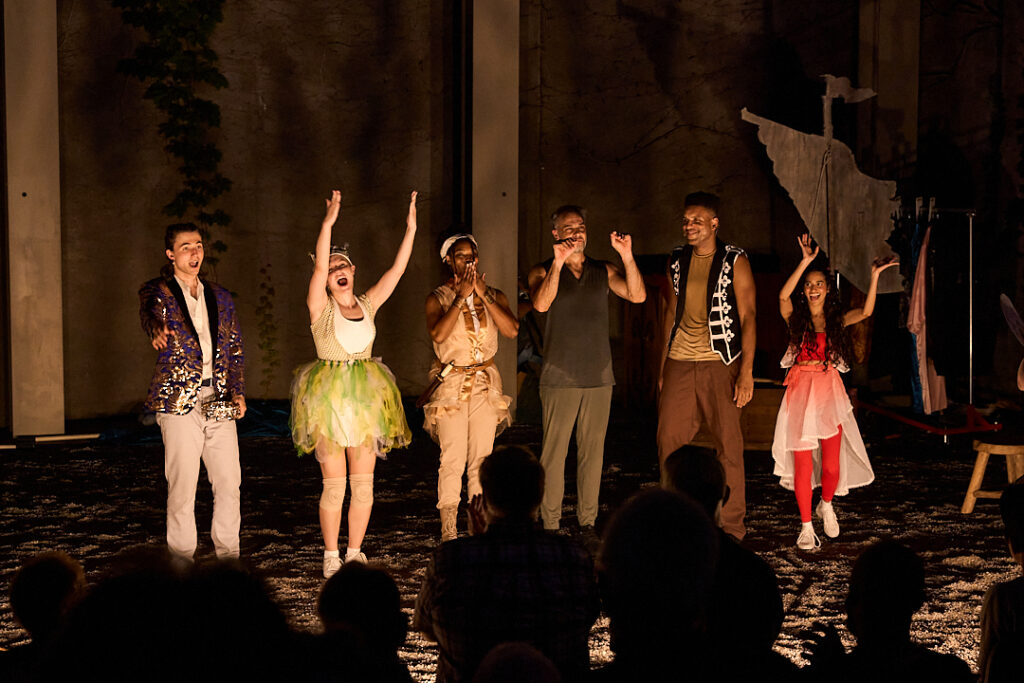
Featuring a merry band of spry performers who appear to be constantly in motion, the six take on multiple roles. They will introduce themselves and their characters, and draw you into this tale of family squabbles, revenge, betrayal — and sorcery. Maybe it’s not exactly Paradise Island, but it is accessible Shakespeare.

The fine-tuned ensemble includes Joy Christina Turner as Prospero, the Duke of Milan who is a wizard too. He escaped to a remote island with his infant daughter Miranda (Daisy Held) years ago, because his deceitful double-crossing brother Antonio (Reginald Pierre) took over his dukedom with the help of Alonso (Alex Daspit).

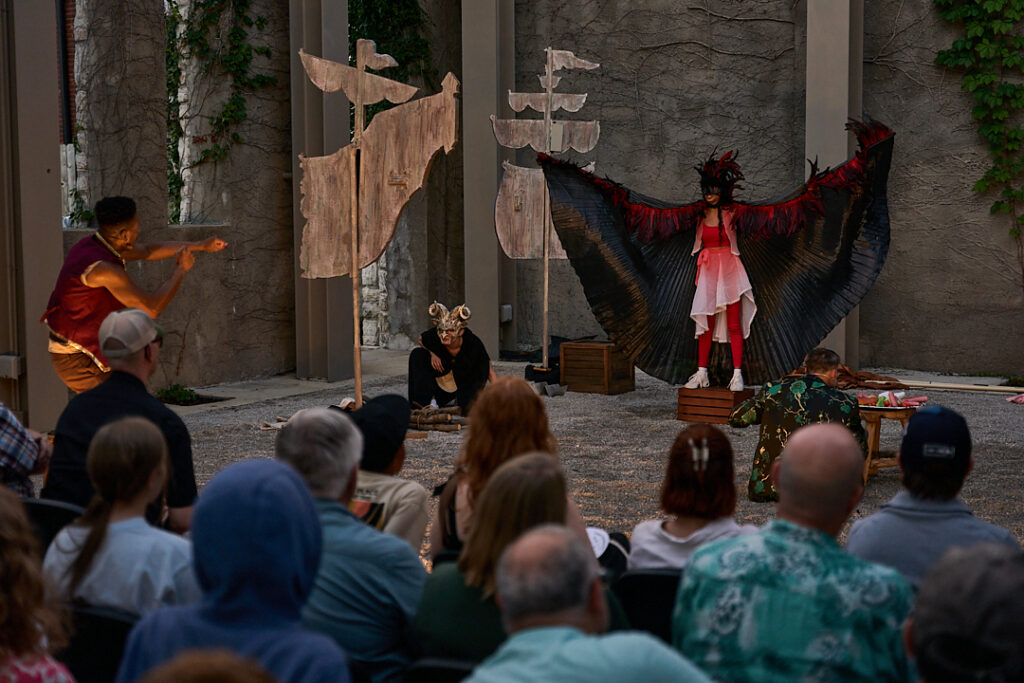
Prospero has two very quirky servants – Caliban (Isaiah Di Lorenzo) and Ariel (Aliyah Jacobs) that carry out his schemes. He is determined to get his territory back and conjures up a storm so that his brother’s boat is shipwrecked, leaving Antonio and Alonso stranded.

Alonso’s son Ferdinand (Alex Daspit) is also there, as is Prospero’s trusted minister Gonzalo (Isaiah Di Lorenzo). Ferdinand is heir to the throne and Prospero puts him together with his now 15-year-old daughter, hoping a royal marriage is in their future.

The king’s jester Trinculo is played by Daisy Held and his head servant Stephano is played by Reginald Pierre, and they are a daffy duo. Held is also a spirit and Jacobs is a boatswain.

There are plans to thwart, people who must change their ways, a young couple to keep innocent, and meddling spirits.

Directed by Tom Ridgely with a big splash of whimsy, he favors broad strokes for the performers to play to whatever size crowd has assembled – and deal with whatever kind of conditions that spring up outdoors.

Ridgely is the festival’s producing artistic director, and under his guidance, they have shaped summers quite imaginatively the past few years post-pandemic – with its revered annual month-long offering in Forest Park; Shake in the Streets, where they take a hand-crafted show and bring it to a festive neighborhood setting; and this touring company, which has grown into delightful flights of fancy adapted for various park locations.

With such an esprit de corps, players are reminiscent of an old-timey troupe (think “Rosencrantz and Guildenstern Are Dead” and ‘The Fantasticks”) immersed as these strolling troubadours.

The addition of songs and puppets really enrichthe production values, and the stagecraft is exceptional in elevating the experience. Because the show’s presentation is focused on mobility and makeshift exteriors, the costumes, props and scenery are not hidden backstage, but placed off to the side, for folks to witness the process. Breaking the fourth wall, so to speak.

The clever costume designs by Sam Hayes consider the flexibility needed and differentiate the multiple characters, outfitting the females in airy, ethereal textures and the men in flamboyant brocaded jackets.

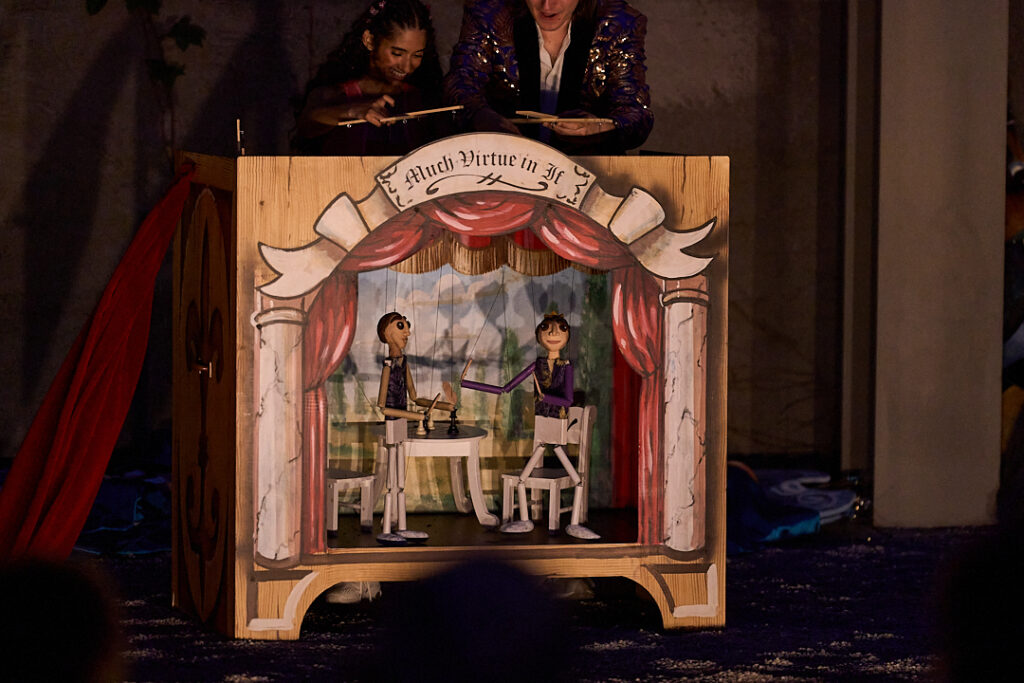
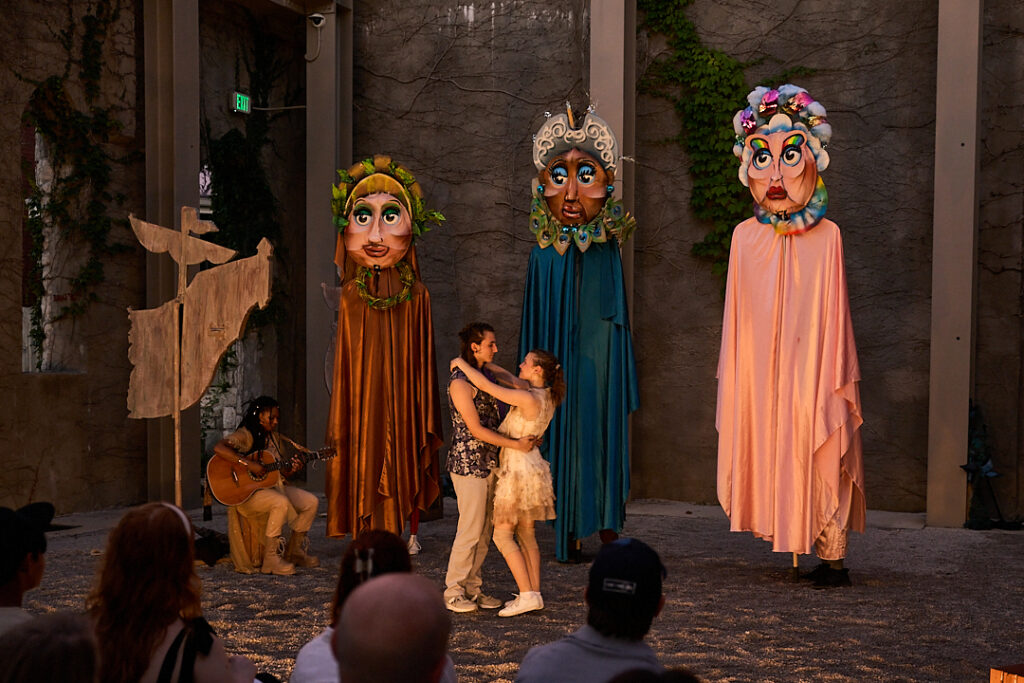
This play involves a masque, which was a popular technique in Renaissance England to combine music, dance and drama, so this is where the puppets come in, and they are effective in advancing the plot.

Puppet designer Ryan Marshall and puppet fabricator Taylor Abs created three tall imposing figures that mimic goddesses and smaller marionettes you find in puppet theater. They created dogs ready to attack, too. Abs also managed the props.

Stage Manager Britteny Henry kept everything moving without any glitches on the evening I went, and they have an admirable system in place.

The show was created for audiences of all ages, so pack a picnic, grab some chairs or a blanket, and experience a communal adventure that is a singular sensation.

SCHEDULE

July 30 – Spring Church, Grand Center
July 31 – Old Post Office Plaza, St. Louis
Aug. 1 – Metter Park, Columbia, Ill.
Aug. 2 – Schroeder Park, Manchester, Mo.
Aug. 3 – Carondelet Park, St. Louis
Aug. 4 – Frank Holten State Park, East St. Louis
Aug. 6 – Tower Grove Park, St. Louis
Aug. 7 – Lot at St. Ann & Augusta St., Normandy, Mo.
Aug. 8 – O’Day Park Amphitheater, O’Fallon, Mo.
Aug. 9 – Cortex Commons, St. Louis
Aug. 10 – 14th & St. Louis – Old North, St. Louis
Aug. 11 – Shaw Park, Clayton, Mo.
Aug. 13 –  Brussels Heritge Park,  Brussels, Ill.
Aug. 14 – Chesterfield Amphitheatre,  Chesterfield, Mo.
Aug. 15  – Ivory Perry Park, St. Louis
Aug. 16 – City Park, Edwardsville, Ill.
Aug.17  – January-Wabash Park, Ferguson, Mo.
Aug. 18 – Bellevue Park Bandstand, Belleville, Ill. 
Aug. 20 – 370 Lakeside Park Pavilion, St. Peters, Mo.
Aug. 21 – Fairground Park, St. Louis
Aug. 22 – Tisch Park at Washington University, St. Louis
Aug. 23– Love Bank Park, St. Louis

For more information, visit www.stlshakes.org.

By Lynn Venhaus

Need a vacation? Escape to Forest Park’s Shakespeare Glen for an idyllic summer treat, for “As You Like It” is a robust, refreshing tonic that celebrates the restorative powers of art, love, and nature.

An absolutely perfect vehicle for the St. Louis Shakespeare Festival’s annual offering, this 1623 romantic comedy is fun and frisky.

It’s been 20 years since it was last performed on the mainstage, and one of the playwright’s most accessible.

Sprinkling her magic fairy dust, director Nancy Bell demonstrates why she is a master interpreter of the Bard. A creative genius, she stamps every project with esprit and has a firm grasp of iambic pentameter.

In much the same way she has engaged audiences by transforming classics into easy-to-understand mashups in past local Shakespeare in the Streets projects, she maintains a breezy and playful atmosphere.

The festival’s former playwright-in-residence, she wrote the vigorous “Remember Me” performed outdoors in Maplewood, “Blow Winds!” downtown, “Good in Everything” in Clayton, “The New World” in Benton Park West, and the St. Louis Theater Circle Award winners for Best New Play “The World Begun” in Old North St. Louis and “Old Hearts Fresh” in The Grove.

Christian Thompson, Wali Jamal.. Photo by Phillip Hamer.

To further illustrate a point about embracing change in “As You Like It,” Bell’s adaptation is a liberating antidote to a stuffy and strait-laced patriarchal Gilded Age.

A scintillating ensemble conveys a more laid-back, accepting merry band of brethren – well, emphasis on a sisterhood – once action shifts to the Forest of Arden.

The contrasts couldn’t be sharper when imperious Duke Frederick – ever-reliable Joel Moses in high-handed wickedness, banishes his sister Duchess Senior, a feisty Michelle Hand, from the royal court. Oh pshaw!

Defiantly, the Duchess flees to the Forest of Arden, where she discovers exile can be rejuvenating. It’s another memorable performance from the inspired Hand.

Also thriving in this pastoral setting is the Duchess’ daughter Rosalind, a clever girl who disguises herself as a man, Ganymede. After all, this is Shakespeare, so of course the plot includes mistaken identities.

Caroline Amos is poetry in motion as Rosalind, sprinting across the stage with boundless energy. She is matched by the delightful Jasmine Cheri Rush as her loyal cousin-best friend Celia, the Duke’s daughter. Rush has returned for a second year, after playing Olivia in last summer’s “Twelfth Night.”

Bianca Sanborn, Michelle Hand, Riley Carter Adams, Beth Bombara. Photo by Phillip Hamer.

Rosalind falls in love with affable landowner Orlando, also displaced, and Christian Thompson is a charmer as her heroic object of affection, if a bit dim because he doesn’t suspect anything unusual.

In fairness, he’s pre-occupied trying to stay one step ahead of his scheming brother Oliver (Greg Cuellar), who is not very nice – as in trying to get his sibling killed.

Their lives become topsy-turvy, with thankfully Orlando having a change of heart, and the sweet Celia zeroes in on him.

Further wackiness ensues with the introduction of effervescent Ricki Franklin as bawdy Touchstone, a clownish character. Franklin’s a bright addition for the second year in a row, a scene-stealer last summer as Dame Toby Belch in “Twelfth Night,” a gender-bending turn that earned her a St. Louis Theater Circle Award,

Delivering one of Shakespeare’s most famous soliloquys, “All the world’s a stage…,” the mellifluous Wali Jamal earned applause immediately after reciting the passage so eloquently. He plays Jaques, a solitary and gloomy man who leans towards the melodramatic.

The multi-generational cast includes familiar and fresh faces, notably local treasure Joneal Joplin, who was in the festival’s first Forest Park show, “Romeo and Juliet,’ in 2001. He returns for his seventh one as Adam, a devoted servant of Sir Rowland de Boys, who is Oliver and Orlando’s father.

Jasmine Cheri Rush, Caroline Amos. Photo by Phillip Hamer.

Making her festival ensemble debut is winsome young teen Riley Carter Adams, a seasoned performer on local stages with television credits. She is listed as “young lady.”

Romance is on the mind of several characters. Kathryn A. Bentley is a likable shepherd Corin, a sage advisor to Silvius, who is not listening. CB Brown is endearing as the lad in need of guidance, for he’s in pursuit of Phoebe, who only has eyes for Rosalind (Ganymede).

Molly Wennstrom is spirited as the unpleasant but lovestruck shepherdess, whose course is altered by Touchstone’s interesting moves. Phoebe’s due for a rude awakening.

Two of the goofiest characters are Isaiah Henry as William, a simple, unsophisticated country boy crushing on goatherder Audrey, humorously played by Bianca Sanborn.

In a crowd-pleasing turn, St. Louis professional wrestler Lenny Mephisto, aka Maniacal Mephisto, is pitted against Orlando as Charles, a wrestler in the duke’s court.

The wrestling match is well-staged, thanks to savvy fight and intimacy choreographer Rachel Flesher, and Cuellar, who also is fight captain.

Lenny Mephisto, Christian Thompson wrestle. Photo by Phillip Hamer.

Captivating music is an integral part of this vibrant tableau, with an original score performed live on stage by local musician Beth Bombara in the role of faithful friend Amiens. Joining her are Sam Golden on viola and mandolin and percussionist Jeremy Reidy.

Scenic Designer Scott C. Neale, whose work has always astonished on the outdoor stage in Shakespeare Glen, has created a striking bucolic setting that is reminiscent of an old-timey illustrated picture book. Its reveal earned a hearty round of applause.

Among his six previous designs, you may recall his stunning set for “Antony and Cleopatra” in 2015 and “Henry IV and V” the year before.

As is customary, the technical work is superb, with distinct work by lighting designer Denisse Chavez and costume designer Dottie Marshall Englis. Sam Gaitsch choreographed buoyant moves, and props manager Taylor Laine Abs kept the accessories simple.

The unpredictability of working with live farm animals is evident with a goat and a sheep from D Bar S Ranch, which amused the crowd May 31. Apparently, from new accounts, they are adjusting to life in the spotlight.

Bianca Sanborn, Ricki Franklin. Photo by Phillip Hamer.

With its exuberant and energetic cast having a swell time on stage, that translates into one of the most enjoyable Shakespeare Festival’s mainstage efforts to date.

Due to their high standards, the festival has grown into the largest free outdoor Shakespeare play between the coasts. It’s a well-deserved achievement, and this supremely entertaining effort is not to be missed.

The festival is one of the best things about living in the St. Louis metropolitan region, and we are so very fortunate to be able to smile on a summer night under the stars in Forest Park.

St. Louis Shakespeare Festival presents “As You Like It” from May 29 to June 23, Tuesday through Sunday, at 8 p.m., free in Forest Park (Shakespeare Glen). https://stlshakes.org/production/as-you-like-it/

Shakespeare in the Park is free to attend, no reservations or tickets required for any of the performances. But every night a small number of reserved chairs and blanket spots are available for purchase – directly supporting the Festival’s mission and year round programming. Find your favorite spot: in the blanket-only section, box seats for up to six guests or general single-chair reservations.

CB Brown, Molly Wennstrom, Caroline Amos, Jasmine Cheri Rush. Photo by Phillip Hamer.
The company. Photo by Phillip Hamer.