By CB Adams

Union Avenue Opera’s “Fiddler on the Roof” returns to the artistic conversation from which the musical emerged. Stage director Kasey Cox reunites the humanity of Sholem Aleichem’s original Tevye stories, Marc Chagall’s symbolic visual imagination, Joseph Stein’s theatrical adaptation and Jerry Bock and Sheldon Harnick’s beloved score in a production that speaks confidently in the company’s own operatic voice.

Judged on those terms, it succeeds as a cohesive interpretation that lets each artistic voice strengthen the others.

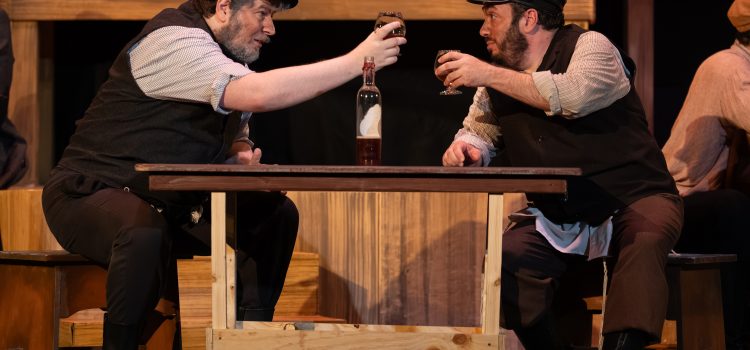
Tevye is one of those rare roles that every audience has already cast before the actor walks onstage. E. Scott Levin wisely avoids competing with the ghosts of Zero Mostel, Topol and others who have shaped the character’s legacy.
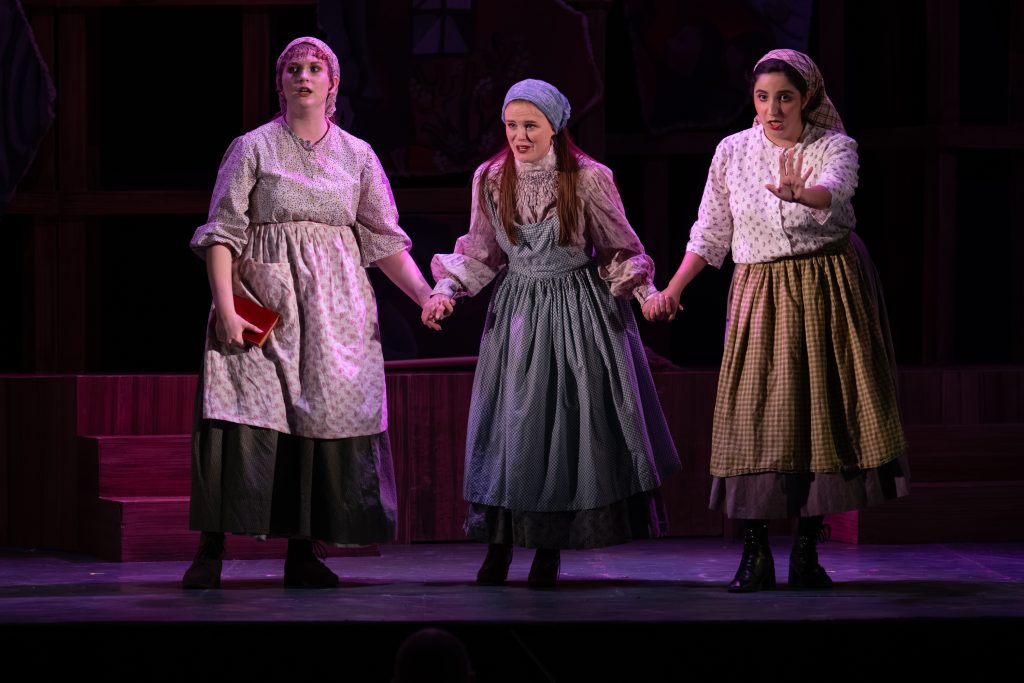
Arielle Pedersen as Chava, Brianna Murray as Tzeitel. Vianca Alejandra as Hodel. Fiddler on the Roof at Union Avenue Opera/ Dan Donovan Photography.

Instead, his resonant bass-baritone opens another path into Tevye, revealing the milkman’s negotiations with God, his family and himself through the expressive power of the voice.

Kate Tombaugh’s Golde finds her greatest authority in song, while Brianna Murray and Eric Botto as Tzeitel and Motel, Vianca Alejandra and John Tibbetts as Hodel and Perchik, and Arielle Pedersen and James Stevens as Chava and Fyedka allow the musical’s three courtships to unfold with steadily increasing emotional weight.

Amy Maude Helfer gives Yente warmth beyond comic obligation, and Spencer Reichman brings both strength and vulnerability to Lazar Wolf.
Dan Donovan Photography.

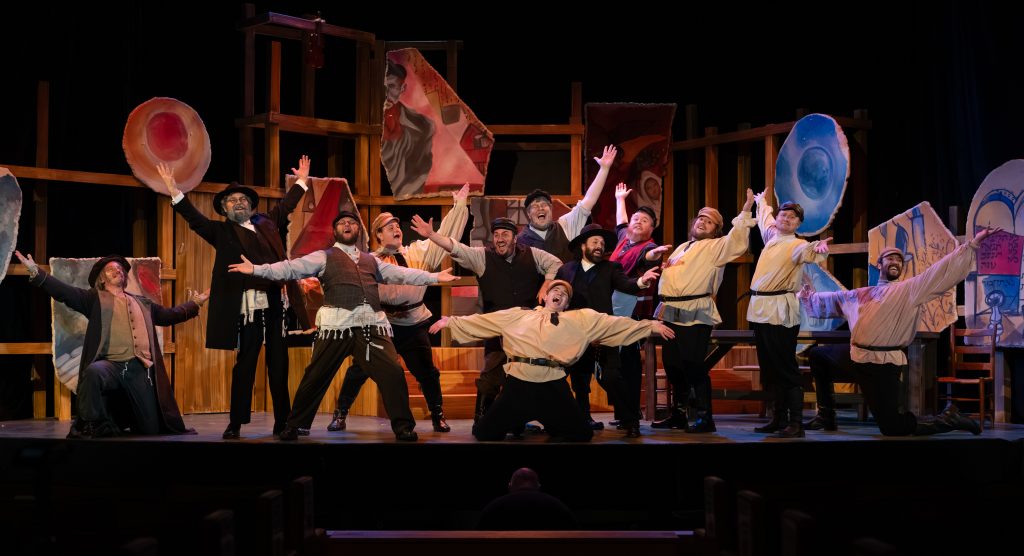
Conductor Scott Schoonover draws warmth, clarity and balance from orchestra and cast, allowing Bock’s score to bloom without overwhelming the unamplified voices. The great ensemble numbers—especially “Tradition,” “Sabbath Prayer” and the wedding sequence—rise, swell and wash over the audience like a warm, powerful wave.

They become the sound of Anatevka itself, voices rising from individual characters into a shared expression of faith, celebration and endurance.

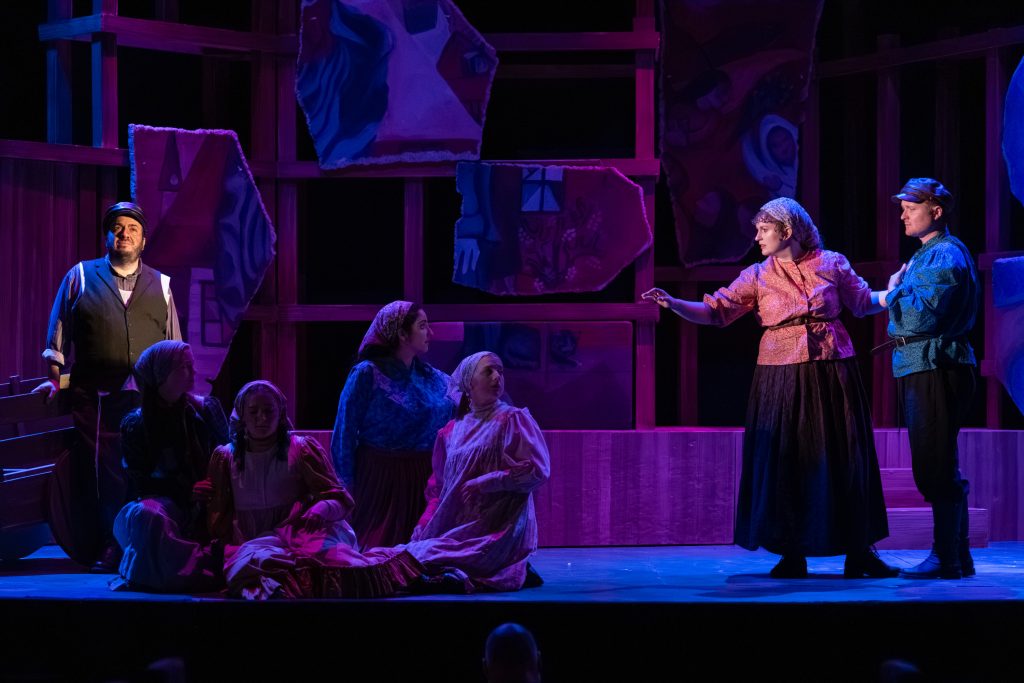
Patrick Huber’s scenic design speaks Chagall’s symbolic visual language rather than literal realism, its fragmented imagery gaining meaning as the evening unfolds before culminating in a quietly moving final image.
Dan Donovan Photography.

Andrea Reed adapts Jerome Robbins’ iconic choreography with intelligence and economy to Union Avenue Opera’s intimate stage, while Teresa Doggett’s costumes and Zak Metalsky’s lighting complete a visual world rooted in memory, tradition and community.

Cox directs with confidence in the material itself, trusting the performances, voices and score to carry the storytelling. The result is a thoughtful, integrated production that honors the musical’s deepest artistic roots while making full use of Union Avenue Opera’s greatest strength: the expressive power of the human voice.

Union Avenue Opera presented “Fiddler On the Roof” on July 3, 5, 10 and 11 2026 at Union Avenue Christian Church.
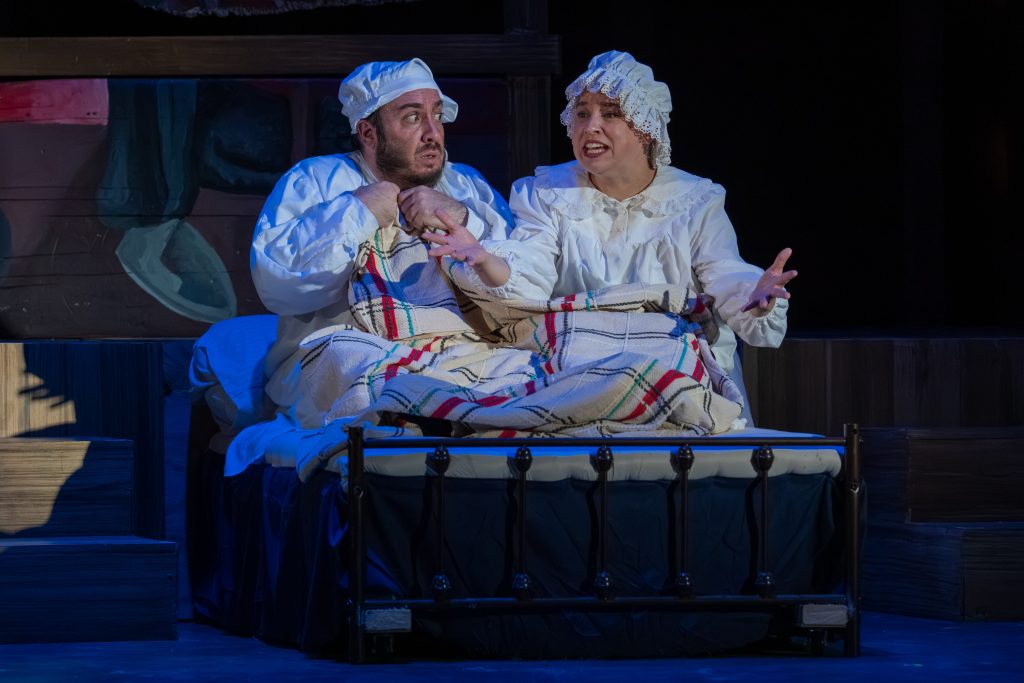
E Scott Levin as Tevye. Kate Tombaugh as Golde.Fiddler on the Roof at Union Avenue Opera. Dan Donovan Photography.

By Lynn Venhaus
Our past, present and future intersect in playwright Heidi Schreck’s deeply affecting memoir, “What the Constitution Means to Me,” to make a riveting statement on what our rights are as an American during the 236 years since the document’s adoption.

Far from a dry lecture on rules of law and bills of rights, this persuasive play is alive with hope and humor because of the passion displayed by the performers, playwright, and production team.

Directed with conviction and a contemporary focus by Nancy Bell, this Max & Louie Production wears its heart on its sleeve about liberty and justice for all, firmly establishing fervent exchanges on women’s lack of protection, and the need for a more perfect union. Could we modernize the Constitution to assuage the inherent gender and racial biases?

Schreck’s compelling 2017 play, a finalist for the Pulitzer Prize for Drama in 2019 as well as Best Play nominee at the Tony Awards, and winner of the Obie Award for off-Broadway play, hits a bullseye in so many ways.

Force-of-nature Michelle Hand, charmingly embodying Schreck as her adult self and a version of her then-15-year-old in 1989, chronicles what four generations of women in Schreck’s family endured and key impactful moments in her life. She is so relatable you identify with her plight.

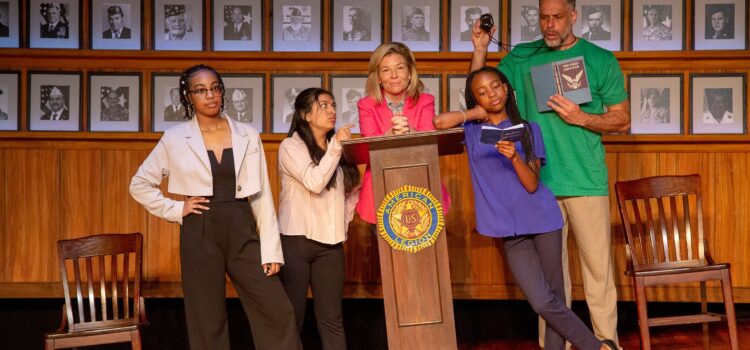
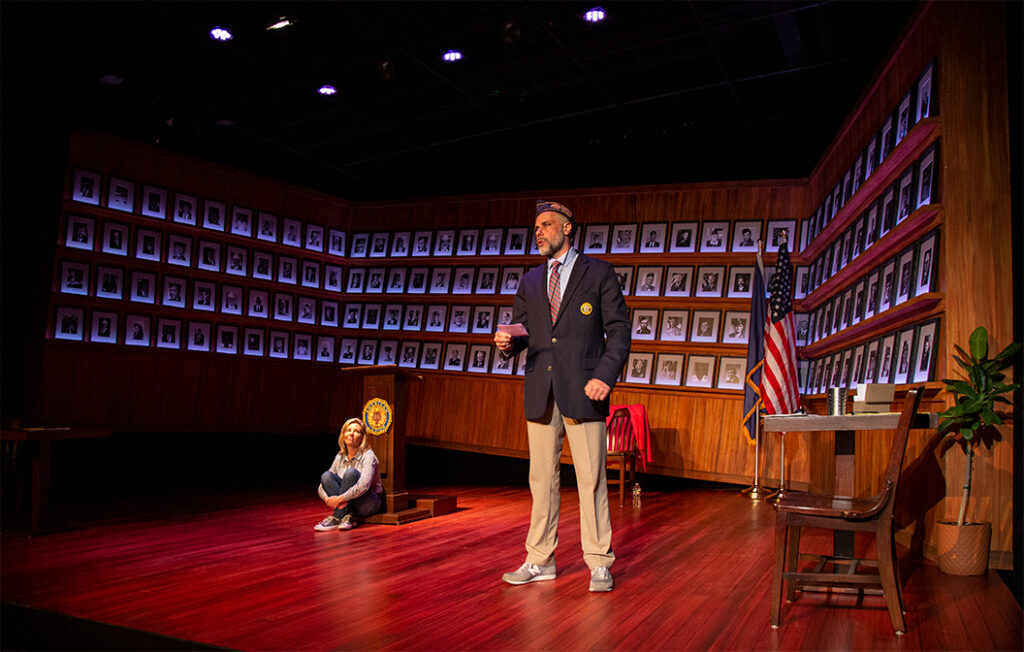
The play’s structure outlines Shreck as a debater in 1989, who gave speeches on the U.S. Constitution to win money for college. The set, designed by Dunsi Dai is an American Legion hall in Wenatchee, Wash., with framed military veterans lining the walls and a World War II veteran representing the moderator and judges.

Isaiah di Lorenzo compassionately portrays the Legionnaire and then makes the story personable as a version of himself.

Michelle Hand and Isaiah di Lorenzo. Photo by Dunsi Dai

Both Bell and Hand are masterful storytellers, and their ease with the material immediately engages us.

While feminism is a major focus, so are other injustices regarding marginalized citizens – and immigration, sexual and domestic abuse — and Schreck’s points are delivered with such urgency as to galvanize the audience.

The use of historic audio recordings from several Supreme Court cases emphasizes Schreck’s points – including Justices Potter Stewart, Earl Warren, Stephen Breyer, Antonin Scalia and Ruth Bader Ginsberg. Phillip Evans’ sound design is impressive, as is lighting design by Zak Metalsky.

Because this show is so skillfully staged, it sparks a fire in the audience – uplifting, and full of possibilities about how the next generation of Americans could change the contradictions and failures while holding on to our aspirations.

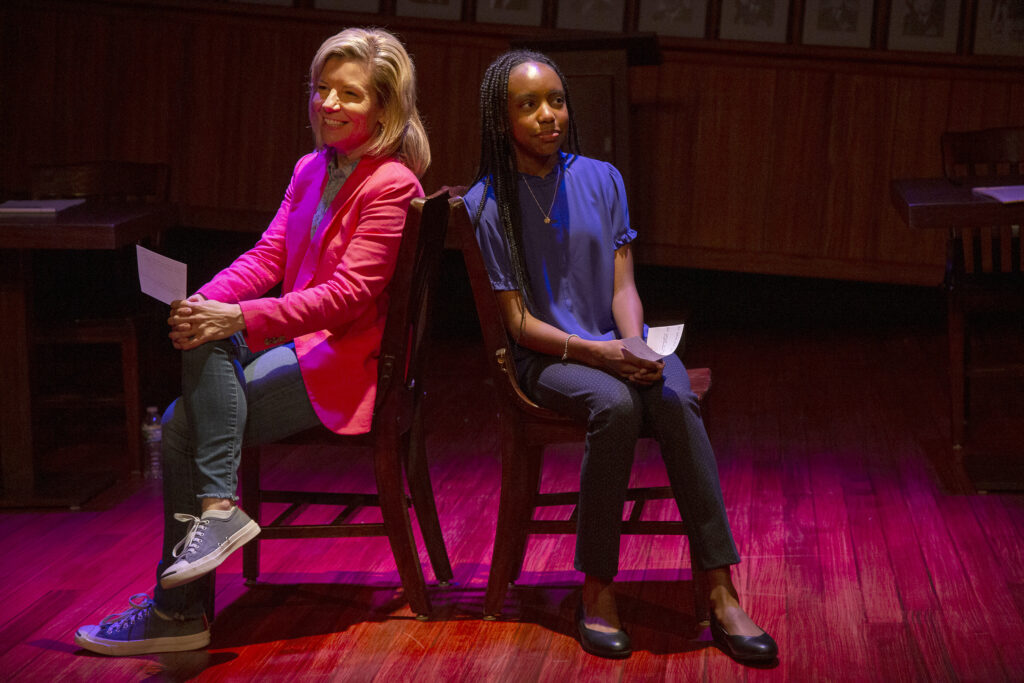
The final portion is somewhat improvised, where Schreck and a local high school debater discuss whether the Constitution should be abolished and replaced. The audience is the jury, and one member delivers a final verdict. The experience is an interactive one, and the audience wasn’t timid in expressing their opinions.

As the three teenage actresses alternating as a student debater for each performance, Riley Carter Adams, Aislyn Morrow, and Maahi Saini bring their energy and youthful interpretations to the live theater experience.

On opening night, April 6, Riley Carter Adams was poised and personable, able to explain her stance to the audience with persuasive skills.

The play runs 1 hour and 40 minutes without an intermission, and its timeliness is key. The entertaining presentation keeps us charmed, the facts keep us on our toes, and the intent wills us to pay attention.

Let’s face it, we’ve been through a lot the past few years, with the global pandemic and political tribalism, an attempted insurrection and threat to democracy, but the dialogue here is fiery to show us what should matter, and progress is possible.

I left fired up, linking a personal connection between women’s lives and the Constitution — as well as the right to debate and freedom of speech – and the work we must do for domestic tranquility and general welfare for all.

Max and Louie Productions presents “What the Constitution Means to Me” from April 5 to 23 at The Marcelle Theatre, 3310 Samuel Shepard Drive, St. Louis, 63103. Free secured parking Tickets are on sale at www.maxandlouie.com or by phone at Metrotix (314)534-1111. Times: Thursdays at 7:30pm (April 6, 13, 20), Fridays at 8pm (April 7, 14, 21), Saturdays at 3pm & 8pm (April 8, 15, 22) and Sundays at 3pm (April 16, 23)

Michelle Hand and Riley Carter Adams. Photo by John Lamb