
By Alex McPherson

Director Jonathan Hensleigh’s new film, “The Ice Road,” is a solid, thoroughly predictable chunk of B-movie entertainment. 

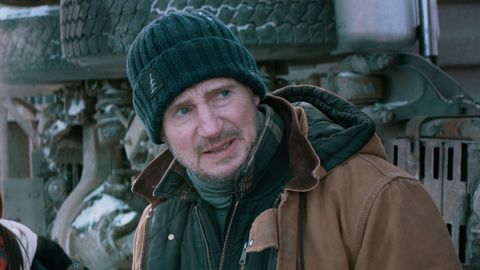
The film centers around Mike McCann (Liam Neeson), a blue-collar mechanic and big rig truck driver struggling to hold a job while looking after his brother, Gurty (Marcus Thomas), a war veteran with aphasia who’s also a skilled technician.

After an isolated diamond mine operated by Big Business “Katka” collapses in Manitoba, Canada, Mike and Gurty are recruited by fellow driver Jim Goldenrod (Laurence Fishburne) to help deliver life-saving wellheads to a mining base near the disaster location. They’re joined by a young Indigenous woman named Tantoo (Amber Midthunder) and a corporate actuary from Katka named Varnay (Benjamin Walker).

Together, the group must race to their destination before it’s game over for the miners, contending with all-powerful Mother Nature and greedy, cutthroat humans along the way.

Viewers likely know exactly what they’re signing up for with the “The Ice Road.” Indeed, Hensleigh’s film isn’t high art, but it remains an enjoyable diversion nevertheless. With Neeson embracing his action hero starhood once again, some likable characters, and a few stressful set-pieces, the film’s storytelling missteps and shoddy CGI don’t completely negate its charms.

Neeson does what he usually does here — portraying an aging badass with a short fuse willing to go to extreme lengths to protect those he cares about. While “The Ice Road” could have given his character more time to develop, he’s still a gruffly amusing lead, who’s fun to watch when let off the chain in the final act.

His brotherly bond with Gurty, well-portrayed by Thomas, is believable and surprisingly poignant, albeit heavy-handed thanks to the clunky script. Midthunder is underutilized but leaves a positive impression as Tantoo, an activist working for Goldenrod whose brother is trapped in the mine. Fishburne is primarily relegated to providing exposition dumps, but his grizzled mug fits in well amidst the snow-covered landscape.

The side-characters, on the other hand, don’t leave much of an impact. The backstabbing corporate heads of Katka are cartoonishly one-dimensional, and the sketchy Varnay has an arc that most viewers can likely foresee before the trek is even underway. The trapped miners are easy to sympathize with, but none of them stand out individually. Sure, we hope they get rescued, but “The Ice Road” could have done more to flesh them out as real people and not deploy them mainly as a plot device to heighten tension.

When our intrepid truckers embark on their treacherous voyage, “The Ice Road” presents some distinctive obstacles for them to overcome. Principally among these challenges are, you guessed it, the unstable ice roads they traverse. Hensleigh does an effective job at cranking up suspense when the ice could break beneath their feet at any moment. Watching them navigate their surroundings and evade deadly “ice waves” yields some thrilling moments, and scenes of Mike and company extricating themselves from sticky situations using their engineering skills are compelling to watch. 

Unfortunately, when “The Ice Road” becomes a more traditional action thriller in its second half, Hensleigh doesn’t quite deliver the goods the material warrants — using some fake-looking CGI and iffy hand-to-hand combat that lacks any real “oomph” factor, held back by the film’s PG-13 rating. Familiar tropes of last-minute escapes, heroic sacrifice, and the bad guy who absolutely will not die are present in full force. While those clichés aren’t glaringly bad, the film has neither the emotional stakes nor the visceral action necessary to forge its own path.

Still, despite all this, “The Ice Road” is an adequate, though forgettable, way to spend two hours, trucking along at a steady enough clip without totally spinning out.

“The Ice Road” is a 2021 action-thriller written and directed by John Hensleigh. Starring Liam Neeson, Laurence Fishburne, Benjamin Walker, Marcus Thomas and Amber Midthunder, it is rated PG-13 for strong language and sequences of action and violence. Run time is 1 hour, 49 minutes. Alex’s Grade: C+ 

By Alex McPherson
An uplifting, inspiring, though unremarkable sports drama, director Ty Roberts’ new film, “12 Mighty Orphans,” meets expectations without going the extra mile.

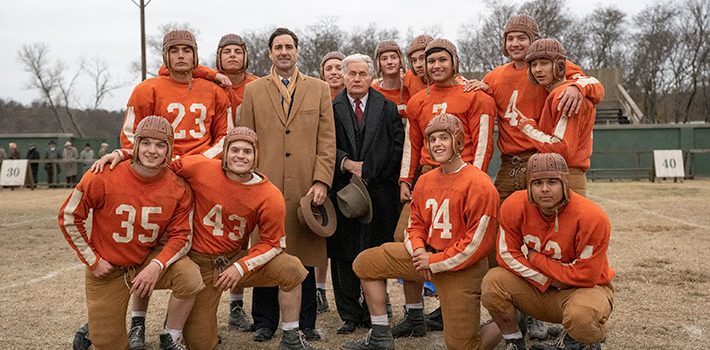
Based on Jim Dent’s novel of the same name and inspired from true events, the film transpires within the grimy, dust-swept landscape of Texas during the Great Depression of the 1930s. Many orphaned children were sent to such places as Fort Worth’s Masonic Home until able to join the workforce.

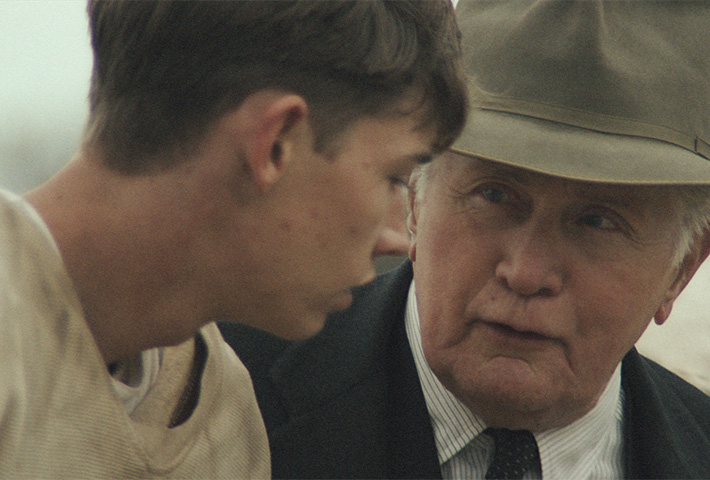
Rusty Russell (Luke Wilson), an orphaned World War I veteran himself, begins teaching math and science there. He is accompanied by his wife, Juanita (Vinessa Shaw), who teaches English, and his young daughter. He also becomes the new football coach, with kind-hearted physician Doc Hall (Martin Sheen) taking on assistant duties. Rusty believes the sport can help give the teenaged players a sense of community despite their hardships. 

With the kids lacking shoes, protective gear, and footballs to practice with, Rusty immediately realizes the challenges ahead of him. Difficulties are exacerbated by the abusive treatment the boys receive from superintendent Frank Wynn (Wayne Knight), who forces the boys to operate an in-house printing press, as well as by the tempers of several players, including the mentally scarred Hardy Brown (Jake Austin Walker). Will they be able to overcome these challenges and acquire a renewed sense of purpose in their lives?

Offering neither surprises nor genuine thrills, “12 Mighty Orphans” rides on its crowd-pleasing cliches and likable performances to score touchdowns. While Rusty’s team pioneered innovations in football that became widely used later on, “12 Mighty Orphans” plays much more to tradition, for better and worse. Some viewers might be left underwhelmed, but Roberts’ film delivers a sentimental story of comradeship and hope during crushing times.

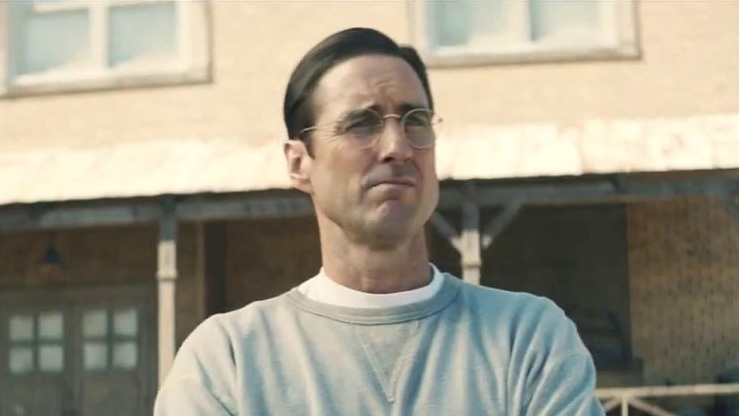
Luke Wilson as Rusty Russell

Indeed, “12 Mighty Orphans” offers a sense of comforting predictability that’s difficult to fault, even though there isn’t much to ponder once the credits roll. All the expected plot beats of the “inspirational sports film” genre are covered, including the value of perseverance and the true meaning of victory, with ample speechifying to boot. The cast of characters — especially Rusty, Hardy, and the other orphans on the team — are largely sympathetic and likable, with fine acting across the board. 

Wilson gives a fittingly sincere effort as Rusty, conveying a stubborn optimism that yields both frustration and life-affirming joy, belying deeper insecurities. Sheen is decent, swigging alcohol and providing dry-humored remarks, in addition to delivering the film’s simplistic narration. Less strong are Shaw, not given much to work with, and Knight — rendered a one-note antagonist whose subplot doesn’t meaningfully add to the themes being explored. Lane Garrison is amusingly over-the-top portraying a petty rival coach from a nearby, wealthy high school.

The true standouts are the kids themselves. Walker brings a shattered, tormented quality to his performance as Hardy, portraying an individual suffering from impossible grief thrust into a new environment. His arc over the course of the film, as he discovers a passion for football and gradually bonds with his teammates, is moving and heart-warming, albeit easy to foresee. Jacob Lofland is excellent as Snoggs, a lean sap with a penchant for immaturity who nevertheless deeply cares for his peers.

Although “12 Mighty Orphans” fails to delve into its time period or the inner-workings of the Masonic Home with much nuance, it’s easy to root for “The Mighty Mites” as they grow closer as a family unit and achieve national attention. Still, overdone narration sometimes breaks the flow, especially when Sheen bluntly explains themes near the end, as do some eye-rollingly trite bits of dialogue and abrupt flashbacks to Rusty’s wartime past. 

Fortunately, the film is so heartfelt in its ambitions, and ultimately affecting in its execution, that the numerous criticisms I have don’t detract much from the experience. Not everything needs to be an unforgettable, emotional powerhouse, and “12 Mighty Orphans” succeeds where it counts.

“12 Mighty Orphans” is a 2021 fact-based sports drama directed by Ty Roberts and starring Luke Wilson, Martin Sheen, Vinessa Shaw, Wayne Knight, Jake Austin Walker, Jacob Lofland and Lane Garrison. It is rated PG-13 for violence, language, some suggestive references, smoking and brief teen drinking, and the run time is 1 hour, 58 minutes. Alex’s Grade: B. The film is in theatres June 18. 

By Alex McPherson

A soul-stirring examination of love, injustice, and the American Dream, director Heidi Ewing’s new film, “I Carry You With Me,” will stay with me for a long time to come.

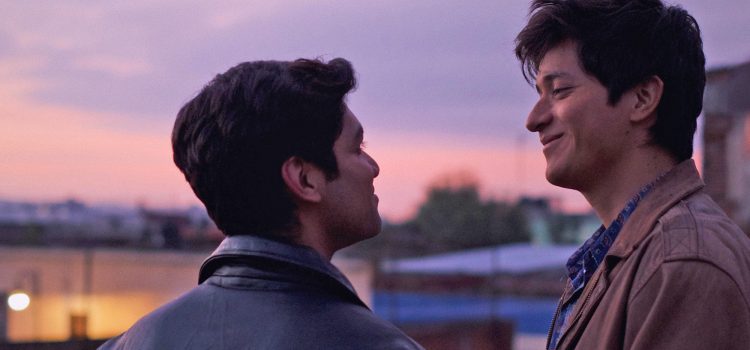
Based on a true story, the film centers around Iván (Armando Espitia), an aspiring chef living in Puebla, Mexico, and barely making enough money to support his wife and young child. Iván is also gay and remains unable to freely express himself. While visiting a nightclub with his good-humored best friend, Sandra (Michelle Rodríguez), he meets a charismatic schoolteacher named Gerardo (Christian Vazquez). After spending the night together, the two fall passionately in love, yet their relationship is fraught with danger. It doesn’t take long before Iván’s wife finds out about Gerardo, and she promptly cuts Iván off from interacting with her or their son. Devastated and lacking opportunities for economic mobility, Iván decides to illegally cross the border into the U.S., then onto New York City, with hopes of a new beginning.

Veering elegantly between several timelines, “I Carry You with Me” presents a heartbreaking story of rebellion against prejudice. Ewing’s film urges viewers to treat those in similar situations with respect, dignity, and appreciation of the sacrifices they make in pursuit of a better life. 

Beginning with documentary footage of the real Iván riding the metro in NYC, the bulk of the film takes place through flashbacks that illuminate his story in an engrossing fashion — echoing his nostalgia for years gone by and fears for his uncertain future. Espitia powerfully conveys Iván’s internal conflicts, including regarding the legal consequences of being an undocumented immigrant, with a mournful air that sparks empathy from the moment we lay eyes on him. Vazquez delivers an effective performance, but it’s clear the film’s attention rests mainly on Iván’s character. Their bond is the film’s core, and Ewing emphasizes the difficulties of maintaining it in the face of biased, heteronormative standards.

Several sequences remind me of Barry Jenkins’ filmography in how the editing and camerawork evoke complex emotions in a manner that’s rarely pretentious, but deeply tender. “I Carry You With Me” is not an uplifting film by any means, but the film creates instances of beauty that radiate from the screen. Ewing proceeds to counter those moments in scenes that inspire anger, frustration, and sympathy for the lead characters — rendering fleeting moments of relief all the more poignant, and emphasizing the tragedy of what’s lost through existing in a world drenched in inequality. 

From its opening frames, “I Carry You With Me” has a strong sense of place, and Ewing’s documentarian background is on full display. The cluttered cityscapes and wide open rural prairies, often draped in darkness, visualize an environment equally overwhelming and restrictive — one which holds memories both joyous and tragic for our protagonists. Indeed, as the central romance blossoms, “I Carry You With Me” takes detours into both men’s childhoods, showcasing threats from their respective fathers to abandon their homosexuality. These well-acted sequences, though undeniably difficult to watch, underscore what’s at stake.

The concept of memory, in fact, plays a huge role in the film as a whole — especially when it switches to a more traditional documentary style in its last third — where we observe how Iván and Gerardo have been morphed by the past, retaining only pieces of their former selves as they make tough decisions in service of love and personal growth.

Although the nonlinear structure gives more attention to Iván than Gerardo, “I Carry You With Me” is an altogether impressive film, formulating a persuasive cry for justice for all human beings, regardless of sexual orientation or place of origin, with lyrical verve. While Ewing may be preaching to the choir, her film depicts lives whose stories are absolutely worth telling, and which should be carried in our hearts.

“I Carry You With Me” is a 2020 drama directed by Heidi Ewing and starring Armando Espitia and Christian Vasquez. It is rated R for language and brief nudity and runs 1 hour, 51 minutes. Alex’s Grade: A-. It is available in selected St. Louis theatres on July 2 and available virtually at the Tribeca Film Festival (Tribeca at Home through June 23).

By Alex McPherson
Whenever Edgar Wright releases a new film, my heart races with anticipation. After such classics as “Shaun of the Dead” and my all-time favorite, “Hot Fuzz,” I had high expectations for his new documentary about the difficult-to-describe pop band known as Sparks. The film, aptly titled “The Sparks Brothers,” isn’t as fine-tuned as his previous efforts, despite Wright’s stylistic touches and the likability of the subjects at its center.

“The Sparks Brothers” chronicles the rickety journey of brothers Ron and Russell Mael — two individuals passionate about staying true to their creative spirit, despite outside pressures. Growing up in Los Angeles with a love of music and French New Wave cinema, Ron and Russell were eager to make a name for themselves by walking paths less taken. As a result, their artistic “genius” — rammed into our heads by a huge group of interviewees, including Flea, “Weird Al” Yankovic, and Neil Gaiman — was often overlooked by record companies, nevertheless influencing a number of successful bands down the road. They have remained steadfast in their desire to create art, frequently layered with social commentary, that never panders to a given audience and remains beautifully unpredictable. Wright’s film, organizing their story by spotlighting specific songs from each of their 25 albums, aims to finally give them the recognition they merit.

An energetic, inspiring, yet overly glowing music documentary, “The Sparks Brothers” feels like a film made by Sparks fans for Sparks fans. Viewers previously unaware of the band, like myself, will likely leave the film with an urge to listen to some Sparks songs and not much else. Sure, perhaps Wright wasn’t aiming to “move” viewers, but when the two-hour mark rolls around, hearing the huge pool of interviewees gush about how much they love Sparks grows tiresome.

“The Sparks Brothers” is, thankfully, a much more self-aware documentary than most others I’ve seen, filled with Wright’s signature quick-cuts and sight gags that usually put a smile on my face. He incorporates archival footage, stop-motion animation, and staged reenactments to visualize anecdotes during Spark’s tumultuous history. For example, to complement discussion of Spark’s beginnings, we see shots of a colorful bird spreading its wings, and shots of doors being shut in people’s faces when they struggle to get signed. These moments don’t necessarily add poignancy to the proceedings, but their charm helps keep the film moving when the runtime threatens to derail my interest.

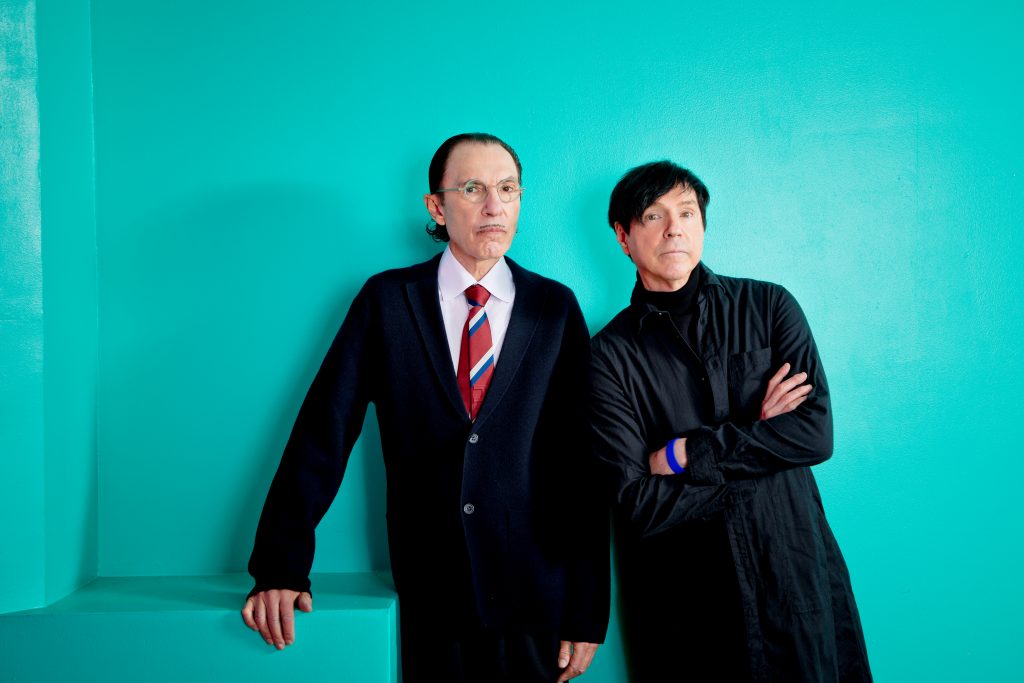
It doesn’t hurt that Ron and Russell are excellent interview subjects, each with a dry sense of humor that fits perfectly among the characters in Wright’s filmography. Russell, the more traditionally handsome, outgoing one, is effectively contrasted with Ron, who dons an Adolf Hitler/Charlie Chaplin mustache and retains stoic facial expressions. They seem inseparable, sticking together through challenges, even when they dip in popularity and end up abruptly abandoning those they collaborate with. While we don’t get an in-depth look at their personal lives or their songwriting process, their desire to create songs that challenge and entertain is admirable.

Anecdotes about mishaps onstage, their love lives, and unfortunate cinematic involvement are amusing, albeit not especially compelling from an outsider perspective. When specific songs and album covers are discussed, on the other hand, “The Sparks Brothers” is considerably more appealing. The surprising themes of “Tits” and the stylistic subversion of “Kimono My House” are enlightening. I wish “The Sparks Brothers” contained more of this deeper analysis, and spent less time on famous interviewees repeating themselves about how godlike the band is. A tight, 90-minute cut is in there somewhere, but two-hours-and-twenty-minutes is really pushing it. Maybe Wright’s excess matches those of the Mael brothers themselves, though, marking their big-screen treatment with the showmanship they deserve (at least until their new project alongside Adam Driver, Marion Cotillard, and French director Leos Carax releases later this year).

When the dust has settled, “The Sparks Brothers” feels somewhat superfluous, but remains passably engaging through to the end. Watching the film in two sittings could provide a more satisfying experience, but I’m eager to add Sparks to my playlists, so perhaps that’s good enough.

Sparks_By_Anna_Webber_9 c Ron Mael and Russell Mael star in Edgar Wright’s documentary THE SPARKS BROTHERS, a Focus Features release. Credit: Anna Webber / Focus Features

“The Sparks Brothers” is a 2021 documentary directed by Edgar Wright. It is Rated R for language and runs 2 hours, 15 minutes. Alex’s Grade: B-. The film is in theaters June 18.


By Alex McPherson

Zack Snyder’s “Army of the Dead” is a hugely enjoyable jaunt into undead splatterville.

After a military convoy transporting cargo from Area 51 collides with a distracted driver, a bloodthirsty brain-muncher is unleashed upon the population of Las Vegas. All hell breaks loose — visualized in an over-the-top montage involving strippers, Elvis impersonators and others being overpowered in slow motion while “Viva Las Vegas” plays on the soundtrack. Oh, there’s also a zombie tiger and two smarter “alpha” zombies leading a, well, army of the dead. 

The U.S. military tries to rescue as many survivors as possible, assisted by mercenaries Scott Ward (Dave Bautista), Maria Cruz (Ana de la Reguera), and Vanderohe (Omari Hardwick), a lover of buzzsaws and existential ponderings. They eventually contain the zombies within the city’s borders. The government establishes a ramshackle refugee camp immediately outside, and the President announces a plan to deploy a tactical nuke to eliminate the infected once and for all. 

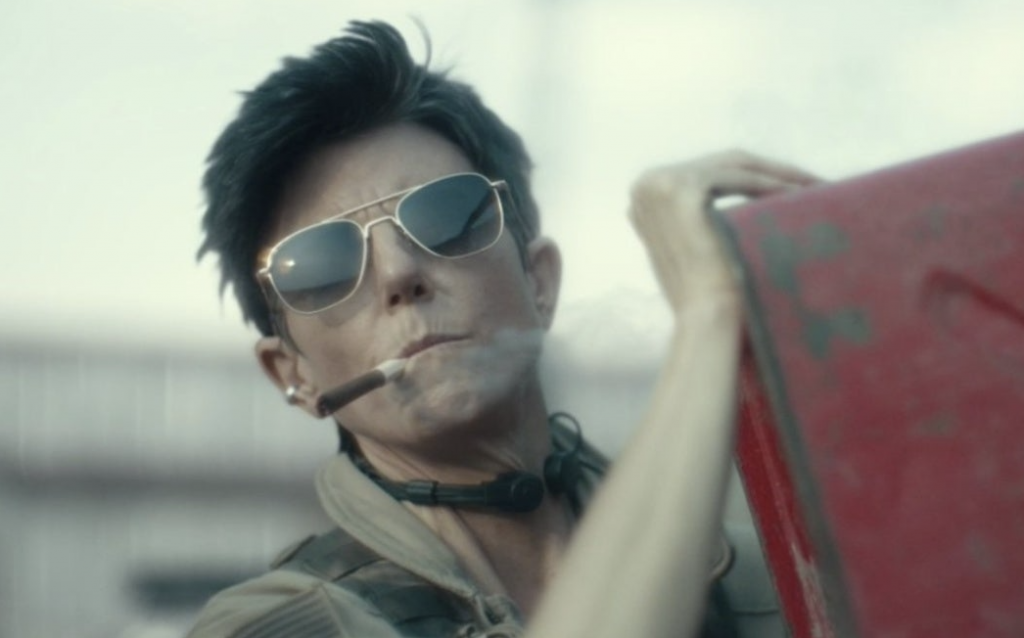
Scott, reeling from a decision that fractured his relationship with his daughter, Kate (Ella Purnell), is relegated to flipping burgers at a bar outside Vegas, despite having received the Medal of Freedom for saving the Secretary of Defense. Soon enough, a sketchy businessman named Bly Tanaka (Hiroyuki Sanada) offers Scott an assignment to venture back inside Vegas to retrieve the contents of his casino’s safe, with the potential to get rich. Scott then recruits Maria, Vanderohe, a socially awkward safecracker named Dieter (Matthias Schweighöfer), a viral zombie-killing sensation named Mikey Guzman (Raúl Castillo), and a sardonic helicopter pilot named Marianne Peters (Tig Notaro, digitally replacing Chris D’Elia).

They are joined by Guzman’s pal, Chambers (Samantha Win), Bly’s crony, Martin (Garret Dillahunt), and “The Coyote,” (Nora Arnezeder), a badass individual who knows how to navigate the zombified horde. To complicate matters, Kate insists on rescuing her friend Geeta (Huma Qureshi), who entered Vegas to find funds to buy her escape from the refugee camp. Last and certainly least, an abusive security guard named Burt Cummings (Theo Rossi) tags along. Over-the-top fun ensues as the group attempts to grab the cash before they’re disemboweled or blown to smithereens.

Tig Notaro

Loud, unrestrained, and packed with cliches, “Army of the Dead” is perfectly satisfying as a summer action film, albeit one that shouldn’t be analyzed too closely. Indeed, for the most part, Snyder’s film embraces its goofiness — going all in on the gore and bombastic set pieces that any reasonable viewer should expect, while delivering the occasionally effective character moment and feeling about an hour too long.

Sure, “Army of the Dead” might not be doing anything particularly “new” for the genre, but the few additions Snyder adds are welcome, especially the aforementioned zombie hierarchy and intimidating feline. There’s little to criticize in the outrageously gory action sequences with on-the-nose musical accompaniments. During these moments, Snyder’s indulgent style absolutely shines, creating a symphony of carnage that’s glorious to behold.

The quieter scenes are less successful, but there’s still a few surprises to be found. “Army of the Dead” takes a while to get going, mostly due to the excess of characters of varying quality. Besides Scott, they’re each given barebones backstories that render them more as cartoonish caricatures than real people, and maybe that’s acceptable in this instance. I certainly wouldn’t want the film to be any longer — it’s two-and-a-half hours, for god’s sake — but having fewer characters could have strengthened the film’s pacing and given us more time to grow attached before they’re fighting for their lives. 

The film’s screenplay does elevate their charm, though, especially regarding the unlikely bond between Vanderohe and Dieter. Hardwick and Schweighöfer have excellent comedic chemistry, creating several amusing moments.  There’s plenty of cringeworthy lines scattered throughout, but the script has enough personality for me to care about (most) of the characters by the intense finale, overlooking some abrupt tonal shifts.

Only Scott is given much depth, but Bautista’s performance carries the film’s heart, lending the proceedings a human edge amid the bloodshed. Although I wish he was given more screen time and his storyline took more risks, there’s enough thematic meat to chew on. Bautista proves that he can deliver emotional lines with skill, as well as demolish ghoulish baddies with gusto.

All things considered, “Army of the Dead” is a messy, but nevertheless thrilling blockbuster. My criticisms don’t detract much from how entertained I was, and as a balm for our depressing times, it’s a meal worth feasting on.

“Army of the Dead” is a 2021 horror-action movie directed by Zack Snyder and starring Dave Bautista, Ella Purnell, . Rated R for strong bloody violence, gore and language throughout, some sexual content and brief nudity/graphic nudity, the film’s run time is 2 hours and 28 minutes. The movie is currently available in theaters and streaming on Netflix. Alex’s Rating: B 

By Alex McPherson

“Without Remorse,” roughly based on Tom Clancy’s 1993 novel, is a serviceable yet forgettable action film elevated by a committed performance from Michael B. Jordan.

We follow John Kelly (Jordan), a Navy SEAL chief who finds himself immersed in an international conspiracy with a gargantuan body count. After rescuing a CIA operative in Aleppo, Syria, and unexpectedly encountering Russian military forces, all hell breaks loose. Three months later, Russian FSB operatives brutally murder two SEAL team members who participated in the mission. They also execute Kelly’s wife, Pam (Lauren London), and unborn child. While Kelly is able to kill three of the operatives at his house, one escapes.

Mean-spirited CIA officer Ritter (Jamie Bell) and Defense Secretary Clay (Guy Pearce) want to brush the situation under the rug for fear of starting an international incident, but Kelly takes matters into his own hands. Thanks to the help of his superior officer, Lt. Commander Greer (Jodie Turner-Smith), Kelly gets the intel necessary to exact revenge without, well, much remorse or self preservation. After being arrested and branded a felon for his vengeful acts, he’s placed on a black ops team to eliminate those responsible once and for all. Copious bloodshed ensues, and Kelly eventually acquires the last name of “Clark.”

Worth watching if only for Jordan’s acting chops, “Without Remorse” ends up feeling predictable, dated, and shallow by the end credits — squandering an opportunity to give Kelly much depth, or present a storyline that isn’t swamped in clichés. That’s not to say there isn’t some entertainment value to be found here, however, as Jordan’s performance remains consistently engaging, and director Stefano Sollima knows how to stage punchy, visceral set pieces.

Indeed, even though “Without Remorse” fails to delve into Kelly’s psychology beyond the surface level, Jordan’s portrayal lends him a damaged, unhinged quality. Jordan convincingly sells the fact that Kelly has nothing left to lose and is ready to die for retribution over his family’s killing. He’s always a gripping presence onscreen, and we can infer deeper tensions from his body language alone, even if Taylor Sheridan’s script avoids any kind of real complexity in his character or the larger plot he’s embroiled in. 

Similarly, side characters, particularly Turner-Smith, turn in decent performances, but they end up feeling quite plain. There’s little to latch onto emotionally across the board, and “Without Remorse” fails to make any kind of meaningful social commentary. The plot twists are easy to foresee, ending with patriotic sentiments that caused me to roll my eyes.    

If only Sollima’s film had given us more time to grow attached to Pam before she’s unceremoniously riddled with bullets, or provided any unique spin on the “America vs. Russia” trope, then perhaps “Without Remorse” could have stood out from its military-obsessed competition. Alas, for all the film’s thematic failings, it still remains enjoyable, due to the slickly choreographed shoot-em-up sequences peppered throughout.

Jordan, ripped as ever, absolutely shines in these scenes. A brutal interrogation within a burning car, an underwater escape from a downed airplane, and a claustrophobic punch out in a jail cell stand out in particular. It’s too bad the final-act skirmishes feel repetitive and too video gamey to impress. They’re sometimes dimly lit and, reflective of other elements, feel generic.

As a precursor to more Tom Clancy films down the road, “Without Remorse” carries out its mission dutifully, but uncreatively. Jordan, holding the whole ordeal together with his jacked arms, deserves better. 

“Tom Clancy’s Without Remorse” is a 2021 action thriller directed by Stefano Sollima and starring Michael B. Jordan, Guy Pearce, Jamie Bell, Jodie Turner-Smith, Colman Domingo and Lauren London. Rated R for violence, the movie runs 1 hr. 49 minutes. Streaming on Amazon Prime beginning April 30. Alex’s Rating: B-

By Alex McPherson

Alex’s Picks and Predictions for the 2021 Oscars

Well, dear readers, the 2021 Academy Awards are nearly upon us. How unbearably exciting. Although most of my favorite films of 2020 were snubbed — “First Cow,” “Bacurau,” “Da 5 Bloods,” and “Never Rarely Sometimes Always” among them — there’s still a fine crop nominated this time around. Below are my picks and predictions for most of the categories. Please keep in mind that, as a recently graduated University student perpetually hunting for a paying job, I haven’t had time to watch every nominated film, and as such, I have omitted categories that I couldn’t weigh in on effectively. Now that we’ve gotten all that out of the way, let’s begin.

Best Picture:

  • The Father
  • Judas and the Black Messiah
  • Mank
  • Minari
  • Nomadland (prediction)
  • Promising Young Woman (pick)
  • Sound of Metal
  • The Trial of the Chicago 7

My personal picks for “Best Picture” are “Sound of Metal” or “Promising Young Woman” — two thought-provoking, eminently well-crafted experiences supported by outstanding performances from Riz Ahmed and Carey Mulligan, respectively. I never officially reviewed “Promising Young Woman,” but the film’s genre-blurring style and controversial ending have stuck in my mind ever since I watched it. “Minari” is pretty damn good as well. Sheesh, I suppose that I enjoy all the nominees on some level. 

Anywho, director Chloé Zhao’s “Nomadland” will most certainly take top honors. A well-acted, atmospheric, and resonant endeavor, Zhao’s film nevertheless became slightly too predictable for my taste in its latter half. 

Best Director:

  • Thomas Vinterberg
  • David Fincher
  • Lee Isaac Chung
  • Chloé Zhao (prediction; pick)
  • Emerald Fennell

In keeping with her film’s awards season spark, I predict Chloé Zhao to win for “Nomadland.” Zhao, who also wrote and edited the film, is a prime choice for this category. Lee Isaac Chung and Emerald Fennell also stand out among the nominees. However, I wasn’t on set for any of these films, so who am I to judge?

Best Actor:

  • Riz Ahmed (pick)
  • Chadwick Boseman (prediction)
  • Anthony Hopkins
  • Gary Oldman
  • Steven Yeun

Every nominated actor gave a superlative performance, rendering my personal choice an arbitrary one. Chadwick Boseman’s portrayal of Levee Green in “Ma Rainey’s Black Bottom” is undeniably powerful (my prediction to win), but I’d have to go with Riz Ahmed as Ruben in “Sound of Metal.” A complex and massively conflicted character, Ahmed imbues Ruben with a soulful edge that renders him one of the most memorable and empathetic protagonists in recent memory.

Best Actress:

  • Viola Davis
  • Andra Day
  • Vanessa Kirby
  • Frances McDormand
  • Carey Mulligan (prediction; pick)

I haven’t seen “The United States Vs. Billie Holiday” or “Pieces of a Woman” yet (sue me), but I’m still confidently choosing Carey Mulligan’s performance in “Promising Young Woman” as the hopeful winner here. A shattered, sardonic soul fueled by grief, Cassandra is always a compelling presence. Mulligan’s portrayal captures her turbulent emotions with searing impact. Who will actually take home the Oscar, though? No clue, really. There isn’t a clear frontrunner going into the ceremony. 

Best Supporting Actor:

  • Sacha Baron Cohen
  • Daniel Kaluuya (prediction; pick)
  • Leslie Odom, Jr.
  • Paul Raci
  • Lakeith Stanfield

Good grief, what an outstanding collection of performances. Paul Raci’s portrayal in “Sound of Metal” is first-rate, but I’m picking Daniel Kaluuya’s masterful turn as Chairman Fred Hampton in “Judas and the Black Messiah” as deserving of the trophy. Kaluuya gives a dynamite performance — conveying Hampton’s authoritative grandeur, but also quieter moments of reflection and intimacy. There’s little doubt in my mind that he won’t walk out empty handed. He should have been nominated for the “Best Actor” category, though. Hmph.

Best Supporting Actress:

  • Maria Bakalova (pick)
  • Glenn Close
  • Olivia Colman
  • Amanda Seyfried 
  • Yuh-Jung Youn (prediction)

Besides the strange nomination of Glenn Close for her over-the-top performance in “Hillbilly Elegy,” this is a highly contested category. I loved Yuh-Jung Youn’s performance as the grandmother in “Minari,” but Maria Bakalova’s fearless work in “Borat Subsequent Moviefilm” deserves all the accolades. It’s a downright impressive feat of acting and bravery, and she is most definitely my choice for this category. Even so, I predict Yuh-Jung Youn to win due to her previous awards showings.

Best Adapted Screenplay:

  • Borat Subsequent Moviefilm (pick)
  • The Father (prediction)
  • Nomadland
  • One Night in Miami
  • The White Tiger

I’d have to pick the zany, oddly emotional screenplay for “Borat Subsequent Moviefilm” as my preference here. I can definitely see Academy voters going for “The Father,” because of its theatrical structure and the ways it attempts to subvert viewer expectations of what’s really going on in Anthony’s daily life. 

Best Original Screenplay:

  • Judas and the Black Messiah
  • Minari
  • Promising Young Woman (pick)
  • Sound of Metal
  • The Trial of the Chicago 7 (prediction)

Academy voters will probably side with Sorkin’s quippy, rapid-fire dialogue in “The Trial of the Chicago 7.” While that film’s script is definitely enjoyable, I find the incisive, darkly comedic screenplay of Emerald Fennell’s “Promising Young Woman” far more compelling. Chock full of memorable sequences and shocking twists, it forges a path all its own.

Best Cinematography:

  • Judas and the Black Messiah
  • Mank
  • News of the World
  • Nomadland (prediction; pick)
  • The Trial of the Chicago 7

The cinematography of “Nomadland” is richly textured, conveying both the ruggedness of Fern’s lifestyle, but also utilizing her environment as a symbolic representation of her personal journey over the course of the film. “Mank” also features expert camerawork, but its presentation lacks the variety and thematic weight of the former.

Best Editing:

  • The Father (prediction)
  • Nomadland
  • Promising Young Woman (pick)
  • Sound of Metal  
  • The Trial of the Chicago 7

There’s something to be said for all these nominees — each of the films has a different feel, and their editing accounts for that. Yorgos Lamprinos’ (not acclaimed director Lorgos Lanthimos) editing in “The Father” is especially noteworthy for the ways it manipulates and intentionally obfuscates the proceedings to immerse viewers into Anthony’s declining mental state. We never quite get our footing on reality in any given moment.

Best Production Design:

  • The Father (pick)
  • Ma Rainey’s Black Bottom
  • Mank (prediction)
  • News of the World
  • Tenet

I admire how “The Father” manipulates Anthony’s environment to reflect his disorientation and the passage of time, but Academy voters will in all likelihood choose the meticulous attention to detail of David Fincher’s “Mank.” I wouldn’t be upset by that winning — the film has extremely high production value, but a lackluster screenplay supporting it.

Best Original Score:

  • Da 5 Bloods 
  • Mank
  • Minari (pick)
  • News of the World
  • Soul (prediction)

It’s difficult to choose a favorite here — I’ve frequently revisited “What This Mission’s About” from Terrence Blanchard’s score for “Da 5 Bloods” — but my personal pick is Emile Mosseri’s score for “Minari.” Incredibly emotional and moving, Mosseri’s compositions perfectly complement the film’s poignant story of the American Dream. I’m predicting Jon Batiste, Trent Reznor, and Atticus Ross to win for “Soul” because of their previous awards momentum, as well as the musical contrast they create throughout the film. Side note: I bet “Soul” wins “Best Animated,” too, because it’s Pixar.

Best Original Song:

  • Fight for You
  • Hear my Voice (prediction)
  • Husavik (pick)
  • Seen
  • Speak Now

I don’t feel particularly strongly about any of these nominees, but I’m choosing “Husavik” from “Eurovision Song Contest: The Story of Fire Saga” as my favorite for its strangely poignant, multilingual lyrics, with in-your-face sentimentality that’s kind of infectious. “Hear My Voice,” from “The Trial of the Chicago 7,” will doubtless emerge victorious — it’s simple, blunt, and fits in nicely with previous winners.  

Best Sound:

  • Greyhound
  • Mank
  • News of the World
  • Soul
  • Sound of Metal (prediction; pick)

The sound design in “Mank” is impeccable in how it evokes films of the “Citizen Kane” era, but “Sound of Metal” should win this category, unquestionably. Utilizing innovative techniques to depict Ruben’s hearing loss, it becomes a character itself as his story unfolds.

Best Documentary Short Film:

  • Colette
  • A Concerto is a Conversation
  • Do Not Split (pick)
  • Hunger Ward
  • A Love Song for Latasha (prediction)

This category was, yet again, a frustrating decision. Each of these nonfiction gems are stylistically distinct, but deeply poignant and immersive in their own ways. I was particularly gripped by the raw, uncompromising “Hunger Ward” (about the ongoing conflict in Yemen), and “Do Not Split” (an up-close-and-personal look at the pro-democracy protests in Hong Kong). “A Love Song for Latasha,” documenting the life and murder of Natasha Harlins, will likely win. Presented in a mesmerizing, vivid fashion. “Love Song” is incredibly moving and would absolutely be deserving of the Oscar. 

Best Live Action Short Film:

  • Feeling Through
  • The Letter Room
  • The Present
  • Two Distant Strangers (prediction; pick)
  • White Eye

An amazing collection of short films, I predict and really hope that “Two Distant Strangers” — about a young black man trapped in a time loop where he’s always killed by the same cop, no matter how he acts — wins the Oscar. A brilliant, heartbreaking film, it’s extremely relevant to today’s climate and remains absolutely essential viewing for anyone with a Netflix account.

Best Animated Short Film:

  • Burrow
  • Genius Loci
  • If Anything Happens I Love You (prediction; pick)
  • Opera
  • Yes-People

This year’s batch of nominated animated shorts was an eclectic one, filled with varying tones, styles, and subject matter. The inventive construction of “Opera” and the twisted, fever-dream beauty of “Genius Loci” stand out in particular. Alas, my personal pick is the heartbreaking gut-punch of a film, “If Anything Happens I Love You.” Focusing on two emotionally distanced parents reeling from their daughter’s death, the film is profoundly well-made, and a prime example of doing less with more. The topic of gun violence is, sadly, ever-relevant, and this film is unflinching in confronting the grief left in its wake.

By Alex McPherson

With shallow characterization and underwhelming action sequences, George Gallo’s new film, “Vanquish,” winds up being decidedly average.

This generic thriller stars Ruby Rose as Vicky, a former courier for Russian drug dealers, who’s become a caretaker for Damon (Morgan Freeman), a retired police commissioner in cahoots with crooked cops. When the operation Damon’s team is working on is nearly jeopardized, he decides to take matters into his own hands. Vicky can’t afford to pay medical bills for her young daughter, so Damon offers funds in exchange for her embarking on a dangerous task — completing five money pickups from criminals around town. When Vicky refuses, Damon takes Lily hostage and won’t release her until the job is completed. Vicky must utilize her particular set of skills to survive the night and rescue her child.

With a style reminiscent of the “John Wick” franchise, Gallo’s film neglects to make the most of its lead actors and only provides sporadic moments of enjoyment throughout.

Even with low expectations going in, I hoped “Vanquish” would provide a campy, suspenseful experience that didn’t take itself too seriously. Unfortunately, for such a simple premise, the film seems unfocused. In too often switching attention from Vicky to the larger drug-smuggling operations behind the scenes, the pacing suffers, and the film abandons its strengths in favor of bland storytelling with predictable outcomes.

There are faint glimmers of intrigue here and there, however, particularly involving the visuals. Employing thick contrast and color grading in practically every shot, “Vanquish” aims for the appearance of a comic book and is often striking to behold, if sometimes overbearingly so. One scene early on, for example, is bathed in green hues and features a camera angle from the perspective of a scurrying rat — an oddball decision, to say the least. More often than not, though, this threatening atmosphere is undone by hyperactive editing that muddles the intensity. The camera rarely slows down, constantly cutting between shots without precision or purpose. I see what Gallo was attempting in trying to create a hazy, sensory feel at certain points, but “Vanquish” needed a more restrained approach overall. 

This surface-level quality extends to Vicky herself.  Her backstory is relegated to clunky exposition dumps and rushed flashbacks that lack emotional impact. Rose does a passable job with dialogue that chugs along without nuance. We’re not given many opportunities to spend time with her outside of her immediate objectives — rather, we spend a lot of time with Damon and the slimy cops he manages. Portrayed with uneven acting, the officers come across as infinitely less interesting than Vicky. 

The film’s video-game-esque skirmishes aren’t especially memorable, despite some impressive gore effects. Except for one moment of cocaine-induced gun fu and a slick motorcycle stunt, they fail to stand out — they’re sometimes downright difficult to follow due to the aforementioned editing. 

Side characters don’t fare much better. Damon has an engaging history, but “Vanquish” sends him down a familiar arc as events unfold. Confined to a wheelchair for the entire duration, Freeman doesn’t deliver Damon’s lines with much emotion. Admittedly, this creates some amusing moments of deadpan humor, but Gallo misses an opportunity to give Damon a soul beneath his shady actions — Freeman’s presence is where the primary entertainment comes from. Cynical, calculating, and emotionally distanced from the carnage happening around him, Damon is an over-the-top character that deserves a more over-the-top depiction. 

Failing to embrace its B-movie potential, “Vanquish” isn’t the worst option for an action film, but viewers could certainly do better elsewhere. 

“Vanquish” is a 2021 action crime thriller directed by George Gallo and starring Morgan Freeman and Ruby Rose. It is rated R for bloody violence, language, some sexual material and drug use, and run time is 1 hour, 36 minutes. It opens in theatres April 16. Alex’s Rating: C

By Alex McPherson

Acclaimed French director François Ozon’s newest work, “Summer of 85,” is a nostalgic coming-of-age story that lacks focus and subtlety.

Based on the novel “Dance on My Grave” by Aidan Chambers, the film takes place off the sun-drenched coast of Normandy and follows a reserved, working-class teenager named Alex (Félix Lefebvre), who happens to be fascinated with death. After his boat capsizes, Alex is rescued by the thrill-seeking David (Benjamin Voisin), and the two boys become infatuated with one another. Like most queer love stories in cinema, though, tragedy strikes. Switching back and forth between two separate timelines — one in which Alex is under investigation for a crime; the other presented as a flashback — viewers experience the exhilaration of Alex’s first love, as he recounts the events of those formative weeks.

Despite expert performances, vivid cinematography, and a dreamlike flow, “Summer of 85” remains disappointingly sappy, especially during its latter half. There’s much to appreciate about Ozon’s film, however, and there are specific powerful scenes peppered throughout. This is largely thanks to the chemistry of the two leads, as well as the ways their characters reflect and contrast each other.

16-year-old Alex is unsure whether to remain in school or join the workforce. He’s soft-spoken and, in 18-year-old David’s eyes, failing to capitalize on the exuberance of his youth. Lefebvre convincingly portrays his obsession, childishness, and turbulent emotions in a manner that feels understandable for a boy his age — including a climactic dance sequence that’s fittingly over-the-top.

David, on the other hand, is constantly seeking excitement in his life and grieves the death of his recently passed father. Voisin gives David a flamboyant swagger that’s simultaneously alluring and insecure, conveying a character with additional layers beneath his outgoing demeanor.

“Summer of 85” showcases their bond while bluntly illuminating larger themes, such as the perils of fantasization. The beginning of their relationship, for example, is depicted in a jubilant fashion — the scenery is breathtaking, and the sense of adventure is palpable. These breezy sequences evoke the sense that David and Alex have been literally swept off their feet by each other, throwing their frets to the wayside. There’s a distinctive energy pulsing through these moments, particularly when Rod Stewart’s “Sailing” blares on the soundtrack as David and Alex chart a new course in their lives.

When extreme melodrama comes to the forefront around the halfway point, the previously brisk pacing sags, and “Summer of 85” proves too forceful for its own good. Combined with distracting comedic elements, side characters that are well-acted but underdeveloped, excessive narration, and a conclusion that feels thoroughly Hollywoodized — “Summer of 85” doesn’t quite know what to do with itself. 

Indeed, the film’s disjointed narrative structure ultimately detracts from the suspense Ozon tries to create, breaking from the story’s interiority regarding Alex. If “Summer of 85” insists on portraying the highs and lows of Alex’s passion, then why shouldn’t we experience those feelings along with him without knowledge of the future?

A flawed but consistently watchable effort, “Summer of 85” plays to convention when it could have become unforgettable.

“Summer of 85” is a 2020 French film directed by Francois Ozon and starring Felix Lefebvre and Benjamin Voison. Its runtime is 1 hour, 30 minutes, and not rated. This film is a selection in Cinema St. Louis’ annual QFest from April 16 to 25. Alex’s Rating: B-.

By Alex McPherson

Director Caleb Michael Johnson’s new film, “The Carnivores,” is a lurid and disturbing psychological thriller that actually prompted nausea at one point, which is no small feat.

This bizarre story follows Alice (Tallie Medel) and Bret (Lindsay Burdge), an amiable yet stressed couple contending with several unaddressed issues. They each work dead-end jobs and can hardly afford to pay vet expenses for their dog, Harvie, who suffers from a terminal illness.

Alice is particularly jealous of Harvie, who receives more attention from Bret than she does. Hungry for intimacy and sleepwalking on a regular basis, Alice barely maintains her sanity. She develops a newfound fascination with meat, having been a vegan previously. When Harvie disappears, Bret becomes increasingly paranoid, and their relationship encounters a veritable smorgasbord of challenges. What follows is a deadpan, sometimes shocking film about the all-consuming pull of passion and the lengths that some will go to satiate it.

With hints of David Lynch and the off-kilter humor of Lorgos Lanthimos sprinkled throughout, “The Carnivores” definitely won’t be for all tastes. Like it or not, Johnson’s vision is undeniably striking — providing richly conceived visuals, devoted performances, and a genre mashup that’s difficult to look away from, even if you want to.

Indeed, “The Carnivores” is a refreshingly unpredictable experience, with slow-burn pacing and a tone that swerves noticeably from one moment to the next. I’m kept in nervous discomfort, never quite sure how to feel about the craziness unfurling before my eyes.

Alice is a perfect vessel for the film’s absurdist leanings. Although “The Carnivores” begins with her already in a state of mental anguish, Johnson’s film does an exceptional job at establishing her malaise with her day-to-day life. Despite her character’s potential for violence, Medel’s performance and the script’s blackly comic dialogue generate empathy and occasional amusement from her situation.

“The Carnivores” excels at a particular kind of droll comedy that befits this twisted tale perfectly, creating an uneasy atmosphere that simultaneously prompts laughter and grimaces. It’s a tricky balancing act, and Johnson more or less pulls it off effectively, especially in scenes involving Alice’s chatterbox boss and her obsessive preoccupation with slabs of meat.

Bret’s character doesn’t receive nearly as much development, but Burdge still gives her a raw edge beneath her compassionate personality. Watching her take matters into her own hands, as Alice’s life seemingly slips away from her, is upsetting but grimly compelling — not always making much sense, but building towards a suitably ravenous climax.

Of course, much of the film’s strengths lie in its cinematography and score, which constantly keep viewers on edge as to whether or not scenes are taking place in reality, or merely within Alice’s mind. Sensual, vivid imagery of her yearnings and obsessions — including a particularly memorable shot of Alice and Bret making out from either side of a shower door — have a mesmerizing quality that, while sometimes too overt for their own good, are admirable in their confidence.

Unfortunately, however, this tonal mishmash ultimately lessens the film’s emotional impact. “The Carnivores” held my interest throughout, but there are some plot beats that don’t ring as poignantly as they could have, especially near an ending that feels oddly cut and dry.

The premise is also inherently difficult to buy into, and I couldn’t become much involved in the proceedings due to its blunt, in-your-face imagery, especially in the latter half. Perhaps I will grow to appreciate “The Carnivores” more upon repeat viewings, but I couldn’t help but feel slightly distanced from the characters and the peculiar journey we’re taken on.

An acquired taste, “The Carnivores” bites off slightly more than it can chew, but remains satisfyingly well done nevertheless.

“The Carnivores” is a 2020 comedy-drama-thriller directed by Caleb Michael Johnson and part of the 2021 Cinema St Louis Q Fest April 16-25. Starring Tallie Medel and Lindsay Burdge, it is not rated and runs 1 hour, 17 minutes. Alex’s Rating: B.