Lynn (Zipfel) Venhaus has had a continuous byline in St. Louis metro region publications since 1978. She writes features and news for Belleville News-Democrat and contributes to St. Louis magazine and other publications.
She is a Rotten Tomatoes-approved film critic, currently reviews films for Webster-Kirkwood Times and KTRS Radio, covers entertainment for PopLifeSTL.com and co-hosts podcast PopLifeSTL.com…Presents.
She is a member of Critics Choice Association, where she serves on the women's and marketing committees; Alliance of Women Film Journalists; and on the board of the St. Louis Film Critics Association. She is a founding and board member of the St. Louis Theater Circle.
She is retired from teaching journalism/media as an adjunct college instructor.
R.E.M. co-founder Mike Mills, violinist Robert McDuffie, and a rock band join the orchestra for performances of Mills’ Concerto for Violin, Rock Band, and Orchestra; concert opens with symphonic arrangements of R.E.M. hits
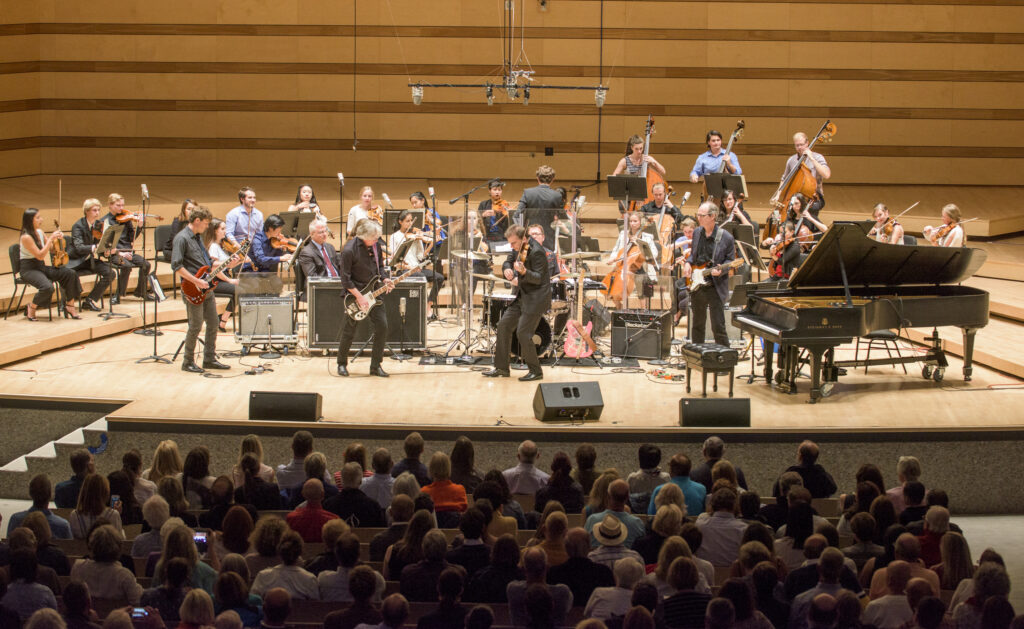
The St. Louis Symphony Orchestra has announced a one-night-only symphonic tribute to the music of R.E.M., the award-winning American rock band. Mike Mills, R.E.M. co-founder and bassist, joins the orchestra in the second half of the concert for a performance of his new Concerto for Violin, Rock Band, and Orchestra, with celebrated violinist Robert McDuffie, who collaborates with the SLSO for the first time in more than 20 years. The concert is 7:30pm, Friday, April 5, at the Stifel Theatre in downtown St. Louis.
Tickets starting at $45 are on sale now and may be purchased at slso.org or by calling the Box Office at 314-534-1700.
R.E.M. Explored Friday, April 5, 2024, 7:30 pm Stifel Theatre 1400 Market Street, St. Louis, Missouri, 63103
Ward Stare, conductor Mike Mills | bass, piano, and guitar Robert McDuffie, violin Gerry Hansen, drums John Neff, guitar William Tonks, guitar Note: This concert does not feature vocalists.
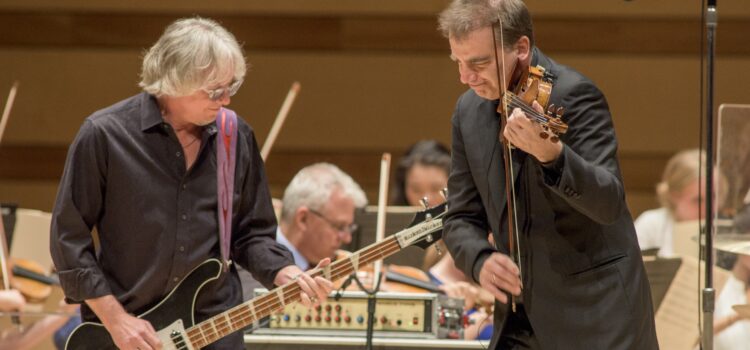
R.E.M. Co-Founder Mike Mills and Robert McDuffie in “R.E.M. Explored” with Winston-Salem Symphony. J Farley Photography
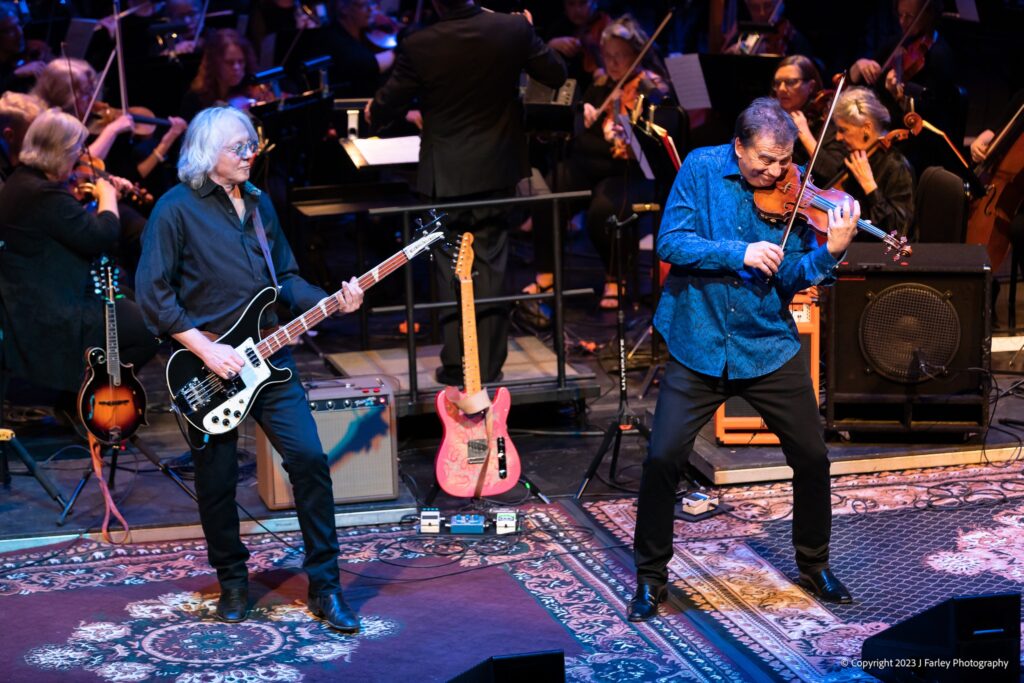
The SLSO explores some of the greatest hits of R.E.M.—the Grammy Award-winning American rock band hailing from Georgia—in newly reimagined orchestrations of the band’s legendary catalogue. The orchestra performs many of R.E.M.’s chart toppers including “It’s the End of the World As We Know It,” “Man on the Moon,” and “Everybody Hurts.” Then, Mike Mills—R.E.M. co-founder, singer-songwriter, and bassist—joins the SLSO for performances of his eponymous Concerto for Violin, Rock Band, and Orchestra, a synthesis of his rock background fused with symphonic form that also draws partially from the band’s catalogue, including the 1993 song “Nightswimming.” Grammy-nominated violinist Robert McDuffie joins Mills and a rock band for the St. Louis premiere of this concerto.
About the St. Louis Symphony Orchestra
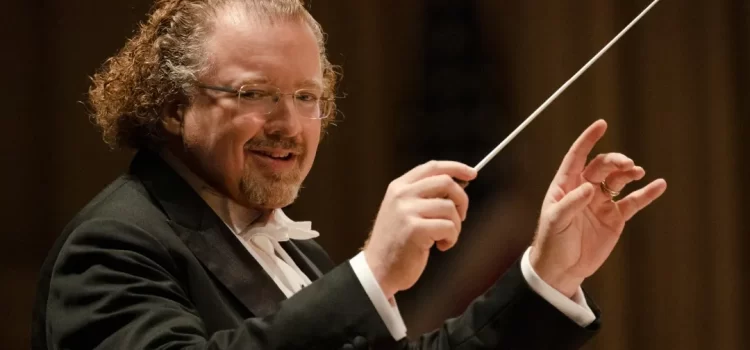
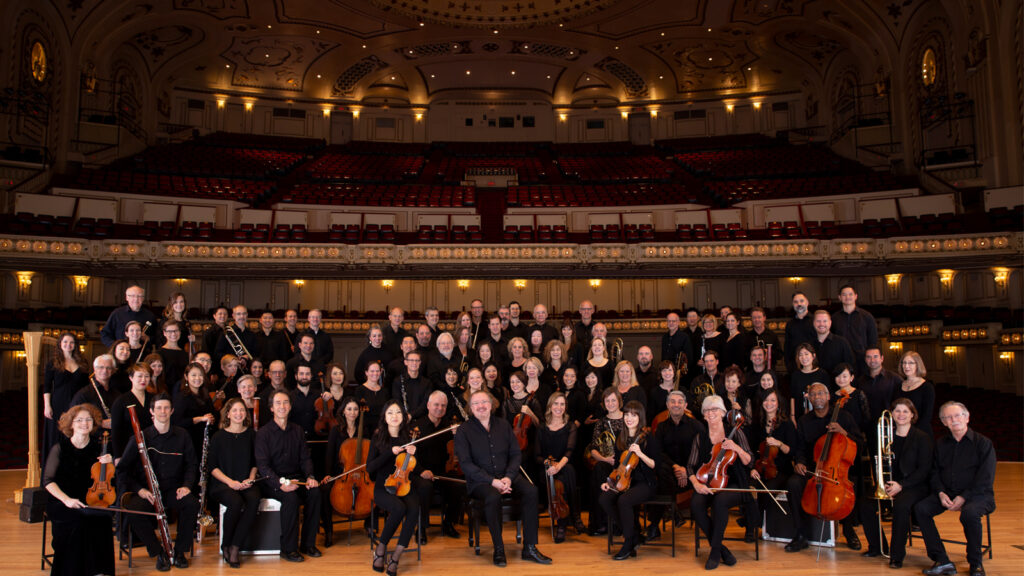
Celebrated as one of today’s most exciting and enduring orchestras, the St. Louis Symphony Orchestra is the second-oldest orchestra in the country, marking its 144th year with the 2023/2024 season and its fifth with Stéphane Denève, The Joseph and Emily Rauh Pulitzer Music Director. Widely considered one of the leading American orchestras, the Grammy® Award-winning SLSO maintains its commitment to artistic excellence, educational impact, and community collaborations—all in service to its mission of enriching lives through the power of music.
The transformational expansion and renovation of its historic home, Powell Hall, slated to be completed in 2025, builds on the institution’s momentum as a civic leader in convening individuals, creators, and ideas, while fostering a culture welcoming to all. Committed to building community through compelling and inclusive musical experiences, the SLSO continues its longstanding focus on equity, diversity, inclusion, and access, embracing its strengths as a responsive, nimble organization, while investing in partnerships locally and elevating its presence globally. For more information, visit slso.org.
Concerto for Violin and Rock Band. Photo J. Farley Photography
Lynn (Zipfel) Venhaus has had a continuous byline in St. Louis metro region publications since 1978. She writes features and news for Belleville News-Democrat and contributes to St. Louis magazine and other publications.
She is a Rotten Tomatoes-approved film critic, currently reviews films for Webster-Kirkwood Times and KTRS Radio, covers entertainment for PopLifeSTL.com and co-hosts podcast PopLifeSTL.com…Presents.
She is a member of Critics Choice Association, where she serves on the women’s and marketing committees; Alliance of Women Film Journalists; and on the board of the St. Louis Film Critics Association. She is a founding and board member of the St. Louis Theater Circle.
She is retired from teaching journalism/media as an adjunct college instructor.
If you didn’t know it really happened, “Ordinary Angels” is the type of schmaltzy movie aiming straight for the heart that some would scoff at, yet even though cynics will pick it apart, people seeking an uplifting jolt will be touched by the selfless acts of human kindness.
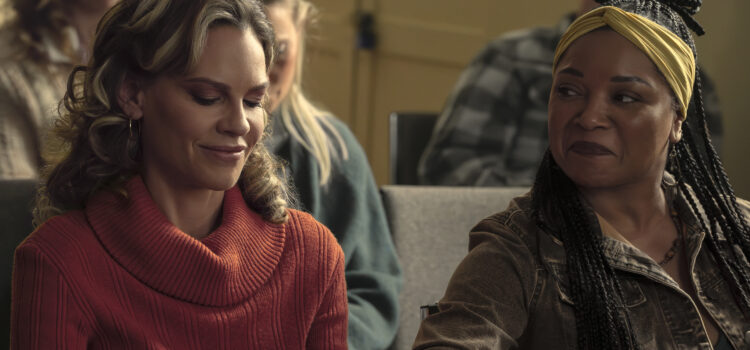
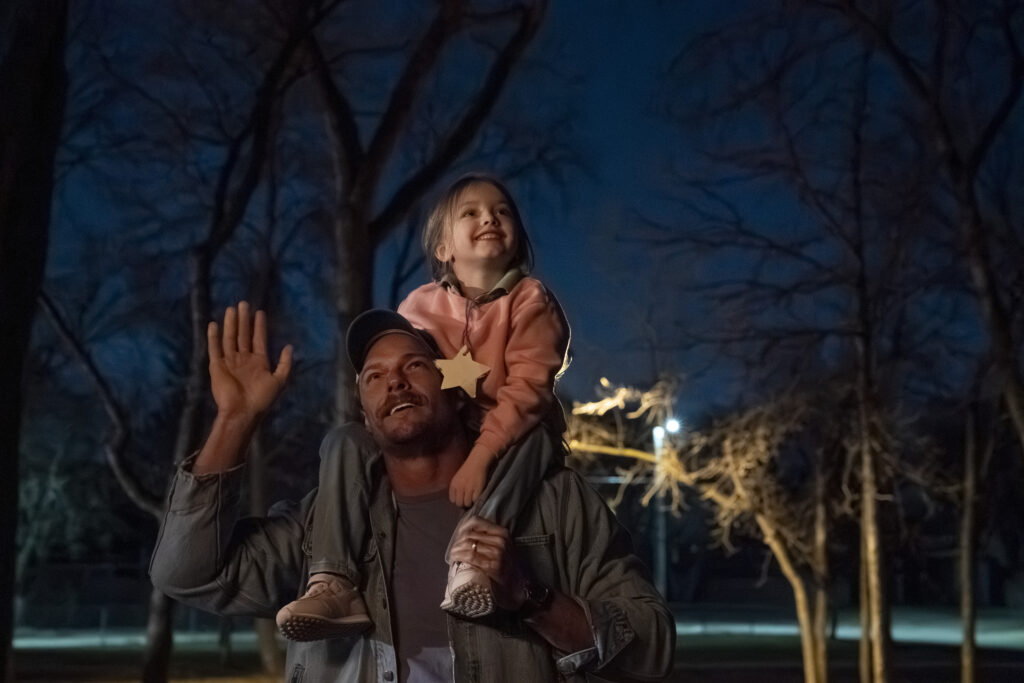
Inspired by the true story of Kentucky hairdresser Sharon Stevens (Hilary Swank) who single-handedly rallied an entire community to help a widowed father Edward Schmitt Jr. (Alan Ritchson) save the life of his critically ill young daughter Michelle (Emily Mitchell), who needed a liver transplant.
Those who need their faith in humanity restored can find plenty to respond to in this tearjerking drama, from the heartfelt performances to the duplication of a harrowing effort by a community responding to a life-or-death situation that really took place in Louisville, Kentucky, during an historic snowstorm when 17 inches fell on Jan. 17, 1994.
Two-time Oscar winner Swank plays a hot mess of a hairstylist who decides to help a widowed father and his two daughters after she reads a newspaper article detailing the youngest’s battle with an incurable liver disease. As brassy as she is, Sharon finds purpose in this mission and gets things done.
You know the adage, “People come into your life for a season or a reason,” well this is that moment. Thirty years ago, in one of Kentucky’s worst blizzards, a life was saved by people going the extra mile, coming together, and making things happen against impossible odds.
Alan Ritchson as Ed and Emily Mitchell as Michelle in Ordinary Angels. Photo Credit: Allen Fraser
Not that life was easy for the Schmitts under any circumstance. Think: The Book of Job. Or Stevens, for that matter.
The film is set mostly in 1993. Ed’s beloved Theresa (Amy Acker) has died of a congenital liver disease, biliary atresia, which their daughters have, Ashley (who received a transplant in 1991, which the film leaves out), and Michelle, who is in desperate need of a transplant, as medical bills mount, and her condition worsens. The film is at its best when focusing on the not-enough time and money scenario.
And then the cavalry arrives when Stevens becomes their lifeline, starting a fundraiser and then crusading for financial breaks, corporate donations and helping Ed find more work as a roofer.
It is one of these incredulous examples of divine intervention. The film, in partnership with Kingdom Story Company, a faith-based operation responsible for Kurt Warner’s story “American Underdog,” isn’t preachy, in case you were wondering, or pandering. The filmmakers display earnest intentions, and it’s a terrific public service announcement for organ donors.
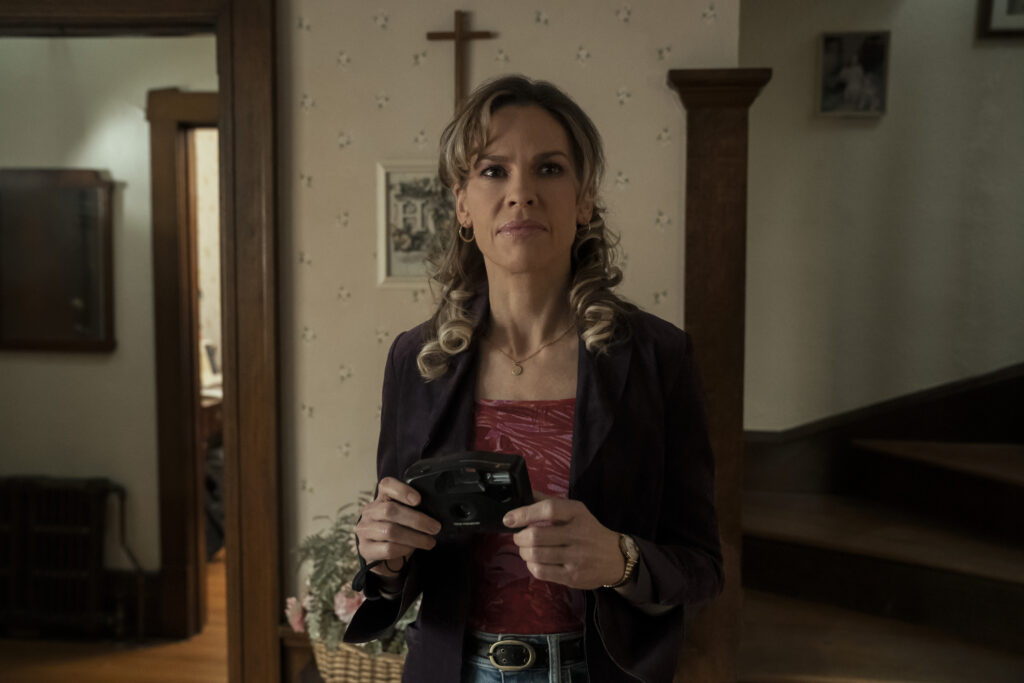
Stevens is fictitiously written as an alcoholic with an estranged grown son, and Swank sympathetically shows a tormented woman masking her pain by throwing herself into the role of miracle worker. She leans in as this sassy, saucy do-gooder who won’t take no for an answer, but her undivided attention and tenacity help a grieving family in need.
This is the kind of role Swank excels at, transforming into a force of nature. It’s inspiring to watch this flawed woman’s journey as she makes a difference, called to action (my sister refers to these ‘Godwinks’ as ‘Angels with skin on”), and restores her faith – and those around her.
Hilary Swank as Sharon in Ordinary Angels. Photo Credit: Allen Fraser
Ritchson, who has played a wide array of tough action heroes, from Aquaman on “Smallville” and Raphael in “Teenage Mutant Ninja Turtles” movie reboots to Lee Child’s retired military police officer Jack Reacher on the current Amazon Prime Video TV series, is good at depicting the strong, silent type who’s hiding his pain. He’s overwhelmed by grief, medical bills and a nagging feeling he isn’t doing enough for his family.
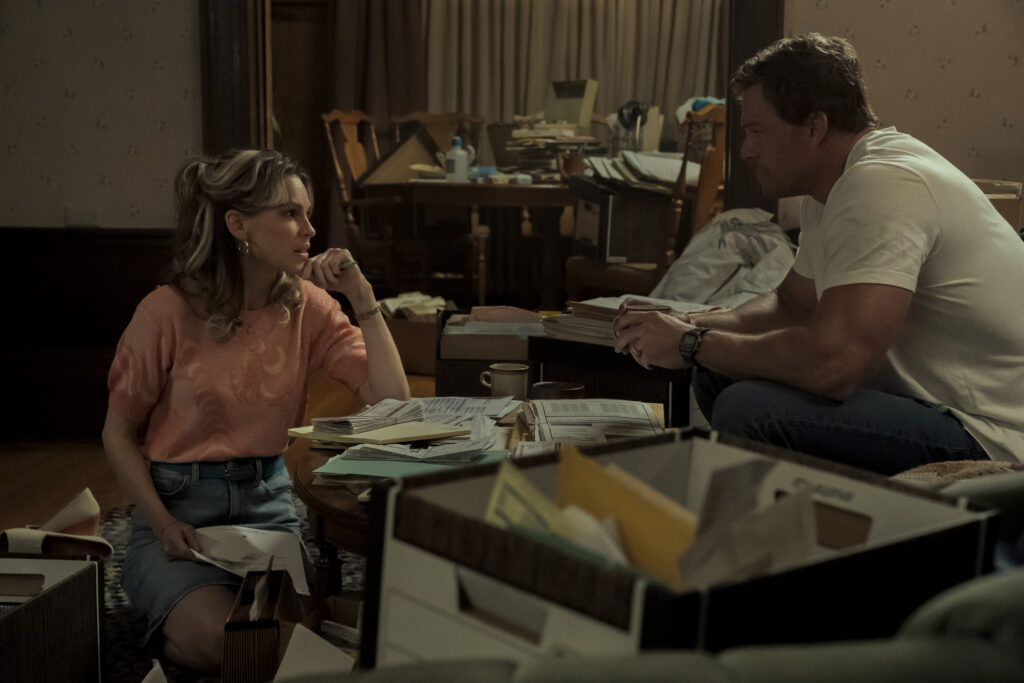
The conflict here – because of course we need one – is that Ed resents Sharon swooping in and helping his family when he thinks he should be the superhero. He’s wary of her pushiness and questions her motives. But as he pushes back, she pushes forward. His mom Barbara (Nancy Travis), helping with the girls, considers her a gift, and so do the kids.
The young actresses playing Ashley (Skywalker Hughes) and Michelle (Emily Mitchell) couldn’t be cuter, and the situation resonates easily (and not in a manipulative way – but have tissues nearby).
Director Jon Gunn’s filming of the race-against-the-clock sequence to get to an Omaha hospital for Michelle’s liver transplant is truly remarkable when empathy and mutual aid are tested by nature’s harsh elements. Cinematographer Maya Bankovic intensely captures the raging blizzard and editor Parker Adams’ work ramps up the tension.
Co-screenwriters Meg Tilly, the actress now retired, and Kelly Fremon Craig, who wrote and directed “Are You There God? It’s Me, Margaret” highlight the transformative power of human connection and what happens when people collectively meet a moment.
If a film celebrating community and kindness doesn’t elicit some joy during this dreary winter, then we, as a people, are in a truly sad place. We need every opportunity to see how people can respond to others in need with extraordinary compassion and resourcefulness. “Ordinary Angels” is a welcome beacon of hope in these difficult divisive modern times.
Hilary Swank as Sharon and Alan Ritchson as Ed in Ordinary Angels. Photo Credit: Allen Fraser
“Ordinary Angels” is a 2024 drama based on a true story, directed by Jon Gunn and starring Hilary Swank, Alan Ritchson, Nancy Travis, Tamala Jones, Emily Mitchell and Skywalker Hughes. It is rated PG for thematic content, brief bloody images and smoking and the run time is 1 hour, 56 minutes. The film opens in theaters Feb. 23. Lynn’s Grade: B.
Lynn (Zipfel) Venhaus has had a continuous byline in St. Louis metro region publications since 1978. She writes features and news for Belleville News-Democrat and contributes to St. Louis magazine and other publications.
She is a Rotten Tomatoes-approved film critic, currently reviews films for Webster-Kirkwood Times and KTRS Radio, covers entertainment for PopLifeSTL.com and co-hosts podcast PopLifeSTL.com…Presents.
She is a member of Critics Choice Association, where she serves on the women’s and marketing committees; Alliance of Women Film Journalists; and on the board of the St. Louis Film Critics Association. She is a founding and board member of the St. Louis Theater Circle.
She is retired from teaching journalism/media as an adjunct college instructor.
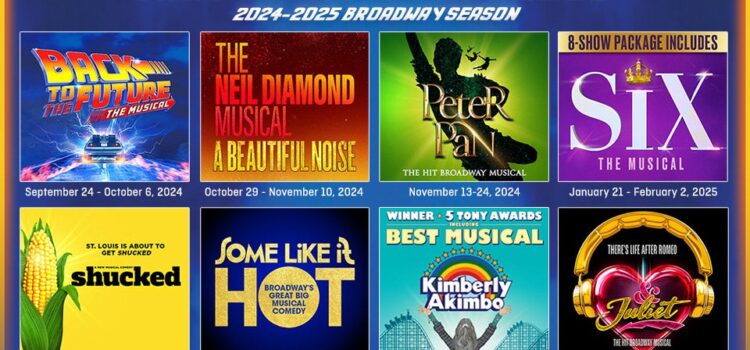
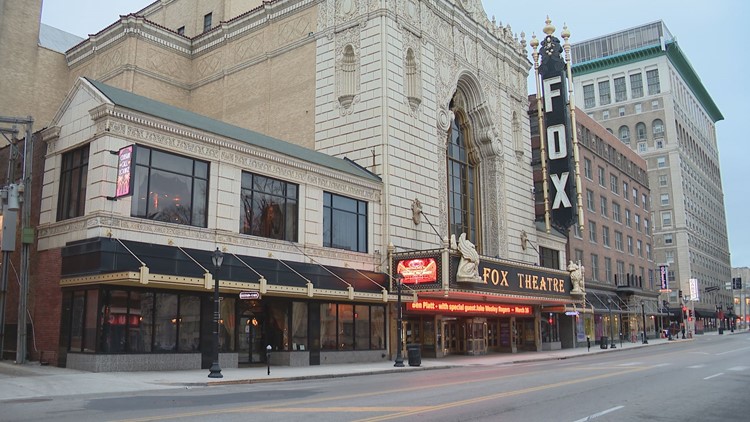
The Fabulous Fox Theatre is ecstatic to announce its electrifying 2024-2025 Broadway season that will take audiences on a journey of timeless entertainment. The 2024-2025 Broadway Subscription will include the beloved, cinematic classic that’s now a smash-hit on Broadway, BACK TO THE FUTURE: THE MUSICAL, the untold true story A BEAUTIFUL NOISE: The Neil Diamond Musical,the newly-imagined PETER PAN, the highly anticipated return of SIX, the “corniest” hit SHUCKED, the spectacular Grammy Award® winning SOME LIKE IT HOT, the most Tony Award®-winning musical of the season KIMBERLY AKIMBO, and the sensational & JULIET.
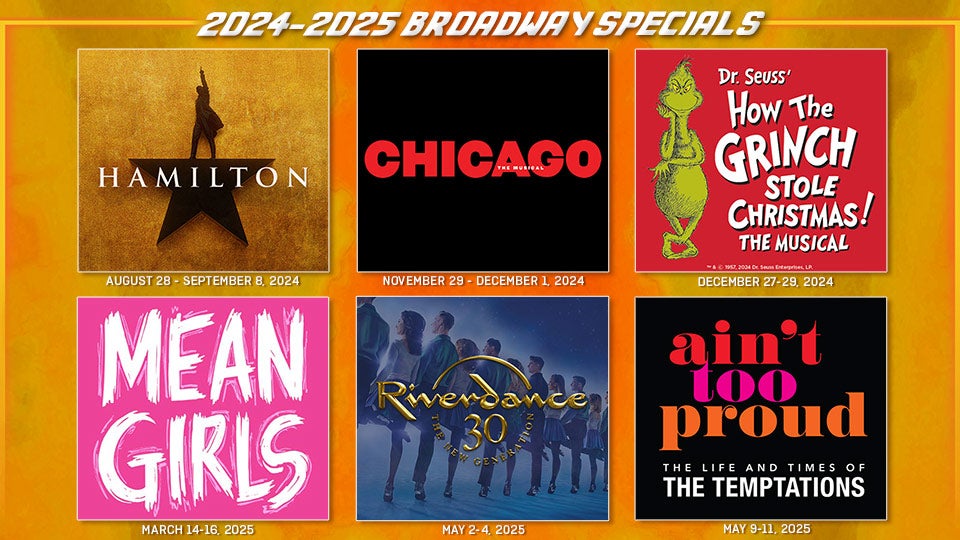
Off-Series specials include CHICAGO, Dr. Seuss’ HOW THE GRINCH STOLE CHRISTMAS! The Musical, MEAN GIRLS, RIVERDANCE- 30th Anniversary Tourand AIN’T TOO PROUD- The Life and Times of The Temptations.As previously announced, the return of HAMILTON will kick off the 2024-2025 Broadway Season August 28 – September 8. Subscribers will have priority access to purchase tickets to HAMILTON before the general public.
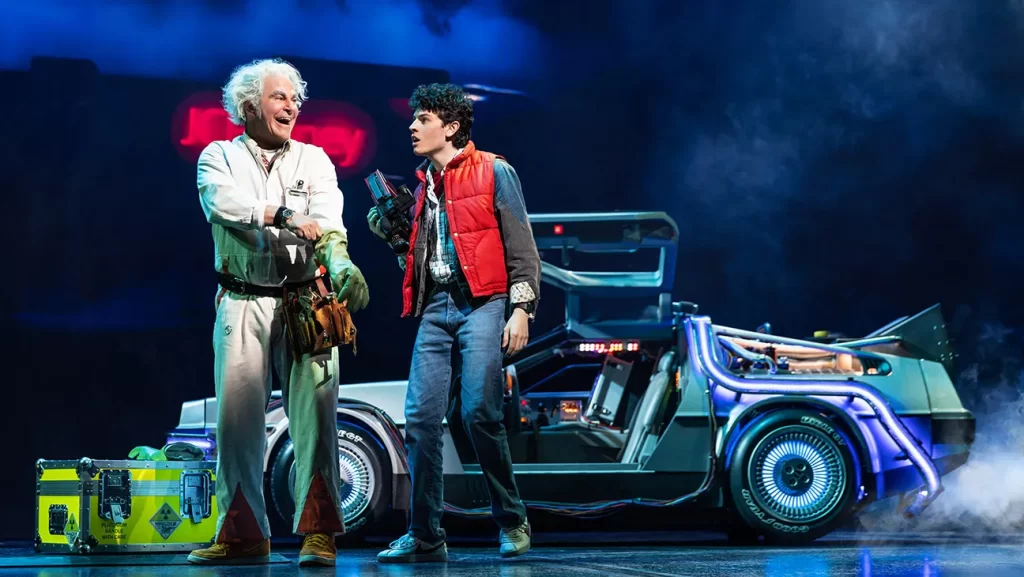
BACK TO THE FUTURE: The Musical | September 24 – October 6, 2024
Great Scott! BACK TO THE FUTURE, the beloved, cinematic classic is now a Broadway musical with its destination set for St. Louis in 2024. Winner of the 2022 Olivier Award for Best New Musical, four WhatsOnStage Awards, including Best New Musical, and the BroadwayWorld Award for Best New Musical, Back to the Future: The Musical is adapted for the stage by the iconic film’s creators Bob Gale (Back to the Future trilogy) and Robert Zemeckis (Forrest Gump) and directed by Tony Award®-winner John Rando with original music by multi-Grammy® winners Alan Silvestri (Avengers: Endgame) and Glen Ballard (Michael Jackson’s “Man in the Mirror”), alongside hit songs from the movie including “The Power of Love,” “Johnny B. Goode,” “Earth Angel,” and “Back in Time.” When Marty McFly finds himself transported back to 1955 in a time machine built by the eccentric scientist Doc Brown, he accidentally changes the course of history. Now he’s in a race against time to fix the present, escape the past, and send himself… back to the future. When BACK TO THE FUTURE hits 88mph, it’ll change musical theatre history forever.
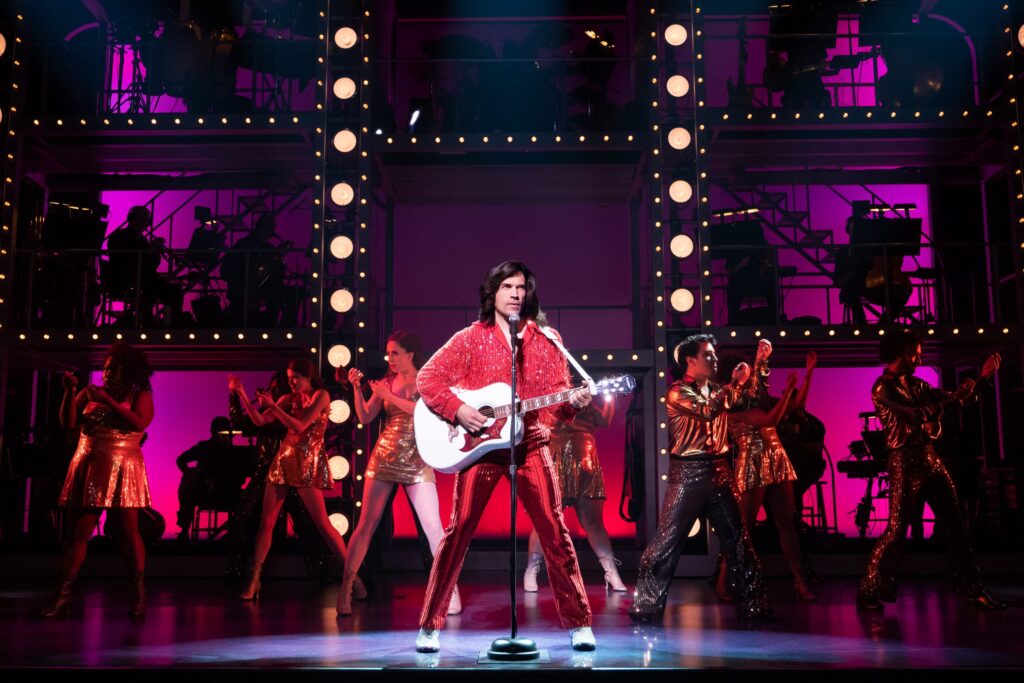
A BEAUTIFUL NOISE: The Neil Diamond Musical | October 29 – November 10, 2024
Created in collaboration with Neil Diamond himself, A BEAUTIFUL NOISE is the uplifting true story of how a kid from Brooklyn became a chart-busting, show-stopping American rock icon. With 120 million albums sold, a catalogue of classics like “America,” “Forever in Blue Jeans,” and “Sweet Caroline,” an induction into the Songwriters and Rock and Roll Halls of Fame, a Grammy® Lifetime Achievement Award, and sold-out concerts around the world that made him bigger than Elvis, Neil Diamond’s story was made to shine on Broadway-and head out on the road across America. Like Jersey Boys and Beautiful: The Carole King Musical before it, A BEAUTIFUL NOISE- The Neil Diamond Musical is an inspiring, exhilarating, energy-filled musical memoir, that tells the untold true story of how America’s greatest hit maker became a star, set to the songs that defined his career.
PETER PAN | November 13-24, 2024
This high-flying musical has been thrilling audiences of all ages for close to 70 years and is now being brought
back to life in a new adaptation by celebrated playwright Larissa FastHorse, with direction by Emmy® Award winner Lonny Price and choreography by Lorin Latarro. The adventure begins when PETER PAN and his mischievous sidekick, Tinker Bell, visit the bedroom of the Darling children late one night. With a sprinkle of fairy dust and a few happy thoughts, the children are taken on a magical journey they will never forget. This extraordinary musical full of excitement and adventure features iconic and timeless songs including “I’m Flying,” “I Gotta Crow,” “I Won’t Grow Up” and “Neverland.” PETER PAN embraces the child in us all so go on a journey from the second star to the right and straight on ‘til morning–your entire family will be Hooked!
SIX I January 21 – February 2, 2025
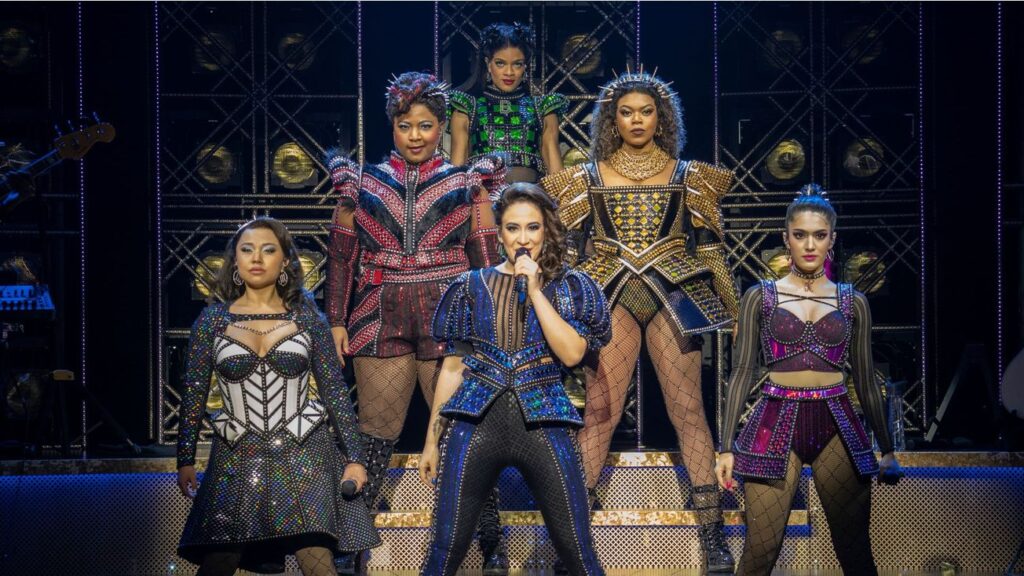
From Tudor Queens to Pop Icons, the SIX wives of Henry VIII take the microphone to remix five hundred years of historical heartbreak into a Euphoric Celebration of 21st century girl power! This new original musical is the global sensation that everyone is losing their head over! SIX won 23 awards in the 2021/2022 Broadway season, including the Tony Award® for Best Original Score (Music and Lyrics) and the Outer Critics Circle Award for Best
Musical. The New York Times says SIX“TOTALLY RULES!” (Critic’s Pick) and The Washington Post hails SIXas “Exactly the kind of energizing, inspirational illumination this town aches for!”
SHUCKED | February 11-23, 2025
SHUCKEDis the Tony Award®–winning musical comedy The Wall Street Journal calls “flat out hilarious!” And nobody knows funny like economists. Featuring a book by Tony Award winner Robert Horn (Tootsie), a score by the Grammy® Award–winning songwriting team of Brandy Clark and Shane McAnally (Kacey Musgraves’ “Follow Your Arrow”), and directed by Tony Award winner Jack O’Brien (Hairspray), this corn-fed, corn-bred American musical is sure to satisfy your appetite for great musical theater.
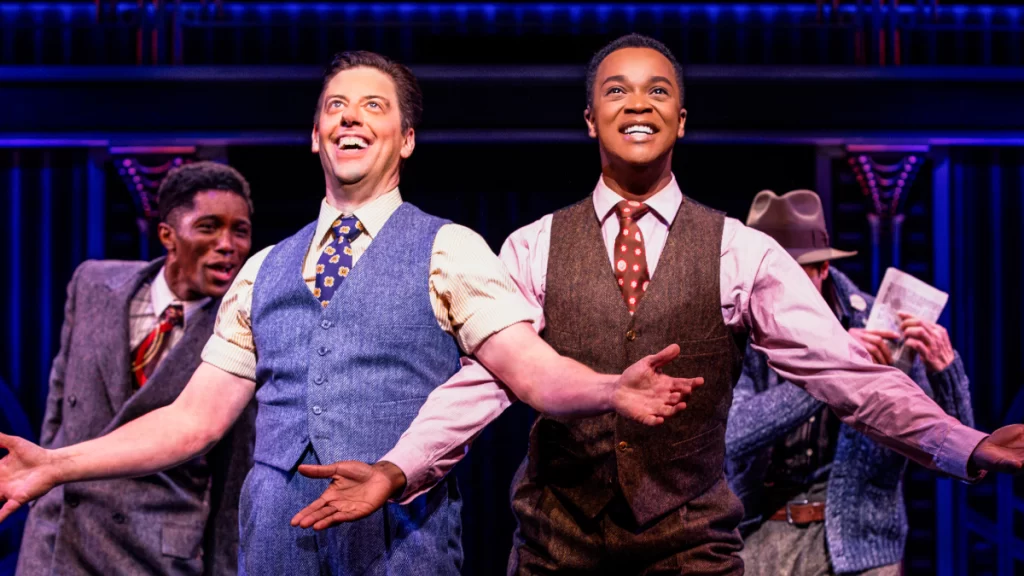
SOME LIKE IT HOT | February 26 – March 9, 2025
Winner of 4 Tony Awards®, including Best Choreography and Best Costumes, and the Grammy Award® for Best Musical Theater Album, SOME LIKE IT HOT is “A Super-Sized, All-Out Song-And-Dance Spectacular!” – The New York Times. Set in Chicago when Prohibition has everyone thirsty for a little excitement, SOME LIKE IT HOT is the “glorious, big, high-kicking” (Associated Press) story of two musicians forced to flee the Windy City after witnessing a mob hit. With gangsters hot on their heels, they catch a cross-country train for the life-chasing, life-changing trip of a lifetime. And what a trip it is! With its irresistible combination of heart and laughs, song and dance, SOME LIKE IT HOT won more theater awards than any show this season, and was named Best Musical by the Drama Desk, The Drama League, and the Outer Critics Circle. No wonder Deadline calls it “a tap-dancing, razzle-dazzling embrace of everything you love about musical theater.”
KIMBERLY AKIMBO | March 25 – April 6, 2025
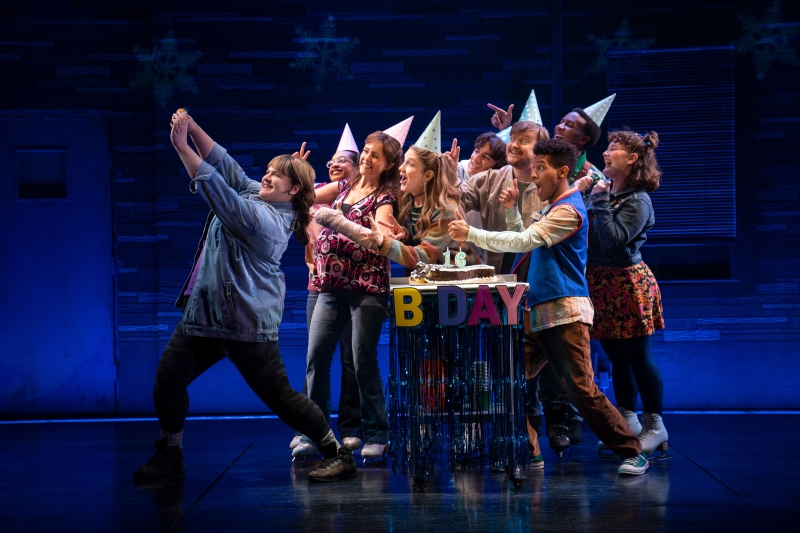
A new musical about growing up and growing old (in no particular order), KIMBERLY AKIMBO is the winner of 5 Tony Award® including BEST MUSICAL. It features Tony Award®-winning book and lyrics by David Lindsay-Abaire (Shrek), a Tony Award®-winning score by Jeanine Tesori (Fun Home), choreography by Danny Mefford (Dear Evan Hansen) and direction by Tony-nominated director Jessica Stone. Kimberly is about to turn 16 and recently moved with her family to a new town in suburban New Jersey. In this “howlingly funny heartbreaker of a show” (The New Yorker), Kim is forced to navigate family dysfunction, a rare genetic condition, her first crush … and possible felony charges. Ever the optimist, she is determined to find happiness against all odds and embark on a great adventure.
& JULIET | May 20 – June 1, 2025
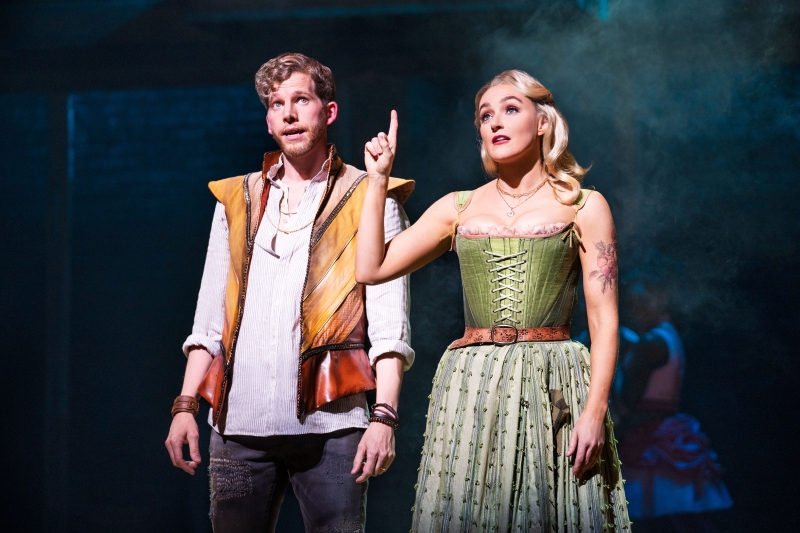
Created by the Emmy®-winning writer from “Schitt’s Creek,” this hilarious new musical flips the script on the greatest love story ever told. & JULIETasks: what would happen next if Juliet didn’t end it all over Romeo? Get whisked away on a fabulous journey as she ditches her famous ending for a fresh beginning and a second chance at life and love—her way. Juliet’s new story bursts to life through a playlist of pop anthems as iconic as her name, including “Since U Been Gone‚” “Roar,” “Baby One More Time,” “Larger Than Life‚” “That’s The Way It Is,“ and “Can’t Stop the Feeling!”—all from the genius songwriter/producer behind more #1 hits than any other artist this century. Break free of the balcony scene and get into this romantic comedy that proves there’s life after Romeo. The only thing tragic would be missing it.
Series Specials
Including HAMILTON, six Broadway shows will be offered as specials to 2024–2025 season ticket holders for priority seating before their public on-sale dates. The longest-running American musical in Broadway history, CHICAGO, will razzle-dazzle St. Louis audiences November 29 – December 1. In Dr. Seuss’ HOW THE GRINCH STOLE CHRISTMAS! The Musical, the classic holiday tale comes to life on stage at the Fox December 27-29. You know you’ll want to sit with us when Tina Fey’s hilarious hit musical MEAN GIRLS returns for a limited engagement March 14-16. The 30thAnniversary production of RIVERDANCEwill return May 2-4. Get ready to dance in your seats with the signature dance moves and silky-smooth harmonies of the legendary quintet in AIN’T TOO PROUD- The Life and Times of The Temptations May 9-11.
A seven show package is also available to subscribers that will exclude the show SIX. New seven and eight-show season ticket packages will go on sale Friday, May 10. Current Broadway season ticket holders will receive their renewal information in the coming days. On-sale dates for individual shows will be announced later. For more information, please visit FabulousFox.com.
2024 – 2025 Broadway Series Shows and Specials: (The Season Ticket Package shows are in bold) HAMILTON * August 28 – September 8, 2024 BACK TO THE FUTURE * September 24 – October 6, 2024 A BEAUTIFUL NOISE: The Neil Diamond Musical * October 29 – November 10, 2024 PETER PAN * November 13-24, 2024 CHICAGO * November 29 – December 1, 2024 Dr. Seuss’ HOW THE GRINCH STOLE CHRISTMAS! The Musical * December 27-29, 2024 SIX * January 21 – February 2, 2025 SHUCKED * February 11-23, 2025 SOME LIKE IT HOT * February 26 – March 9, 2025 MEAN GIRLS * March 14-16, 2025 KIMBERLY AKIMBO * March 25 – April 6, 2025 RIVERDANCE * May 2-4, 2025 AIN’T TOO PROUD- The Life and Times of The Temptations * May 9-11, 2025 & JULIET * May 20 – June 1, 2025
Lynn (Zipfel) Venhaus has had a continuous byline in St. Louis metro region publications since 1978. She writes features and news for Belleville News-Democrat and contributes to St. Louis magazine and other publications.
She is a Rotten Tomatoes-approved film critic, currently reviews films for Webster-Kirkwood Times and KTRS Radio, covers entertainment for PopLifeSTL.com and co-hosts podcast PopLifeSTL.com…Presents.
She is a member of Critics Choice Association, where she serves on the women’s and marketing committees; Alliance of Women Film Journalists; and on the board of the St. Louis Film Critics Association. She is a founding and board member of the St. Louis Theater Circle.
She is retired from teaching journalism/media as an adjunct college instructor.
With its sinister hints of Adam-and-Eve symbolism, “Dutchman” is a daring and thought-provoking ritual drama that indicates Soul Siren Playhouse is a new group with something to say.
The gritty and raw one-act is now playing at the well-appointed Greenfinch Theatre (formerly the Way Out Club), the newest performing space in St. Louis. The intimate setting lends itself to focus on the two bravura performances by Cameron Jamarr and Eileen Engel.
Written by Amiri Baraka, aka poet activist LeRoi Jones, he had much to say about black men in ‘60s society during the heightened civil rights struggle. With its themes of racism, sexism, and discrimination, it may make people uncomfortable, but its intention is to start a dialogue, and that’s necessary.
Soul Siren’s co-directors – Jamarr, Engel, Bradford Rolen and Zahria Moore — unpacks the complexities of this revolutionary play related to bias, stereotypes, race relations in America and our social responsibility as bystanders. An interactive dramaturgy display designed by Moore is at the back of the room and illuminating the period that influenced Baraka – beat poets, emerging black artists and the avant-garde movement in a vibrant Greenwich Village.
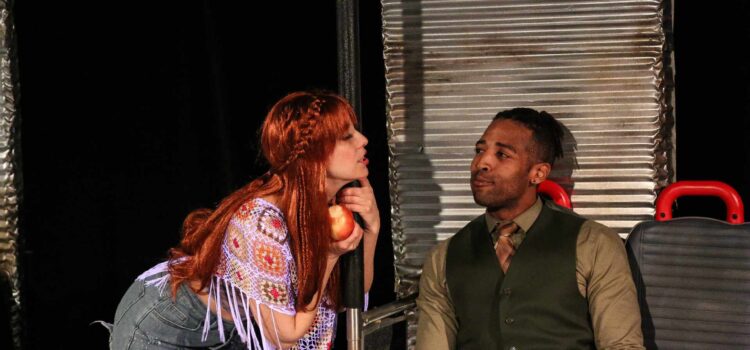
Photo by Zak Littrell
Fast forward to the 21st century, and divisions, misinformation and social media outrage fan flames that point out that we have a long way to go towards understanding common humanity.
Jamarr and Engel are fearless in undertaking this challenging work, which is as disturbing as it was in 1964. Bakara boldly presented a distinct sociological situation, heavy on symbolism, to propel audiences into action, and the pair convey the intensity required. It’s quite the tango.
The first slave-bearing ship to America was from the Dutch, and Bakara also references the legend of “The Flying Dutchman,” a doomed ship cursed with never finding safe harbor.
In describing his short play’s metaphorical setting, Bakara wrote: “In the flying underbelly of the city, steaming hot and summer on top, outside. Underground. The subway heaped in modern myth.”
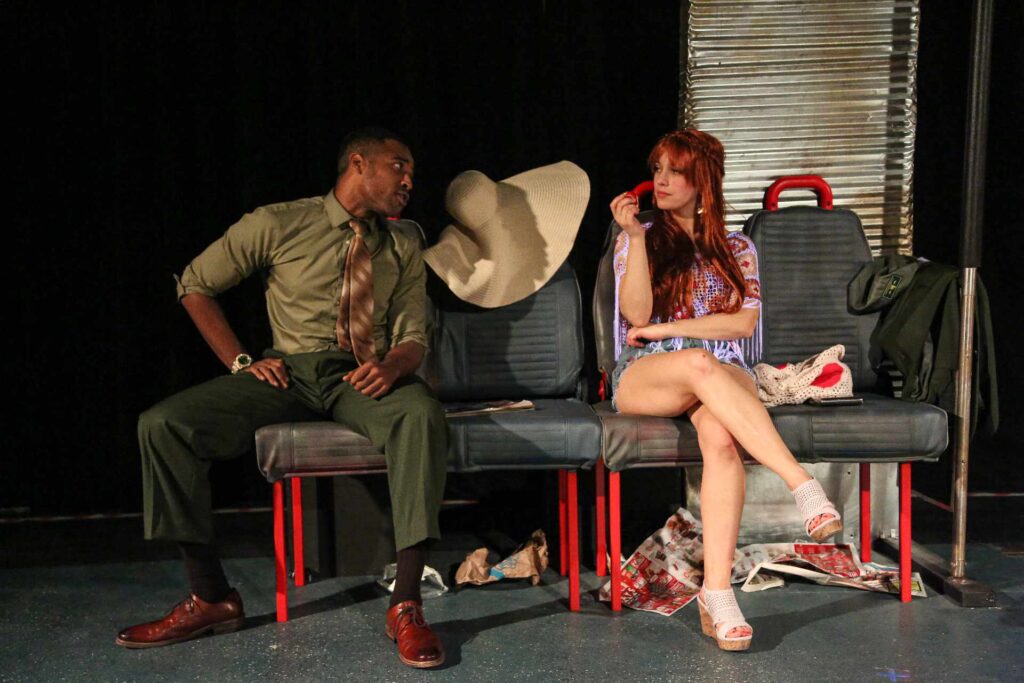
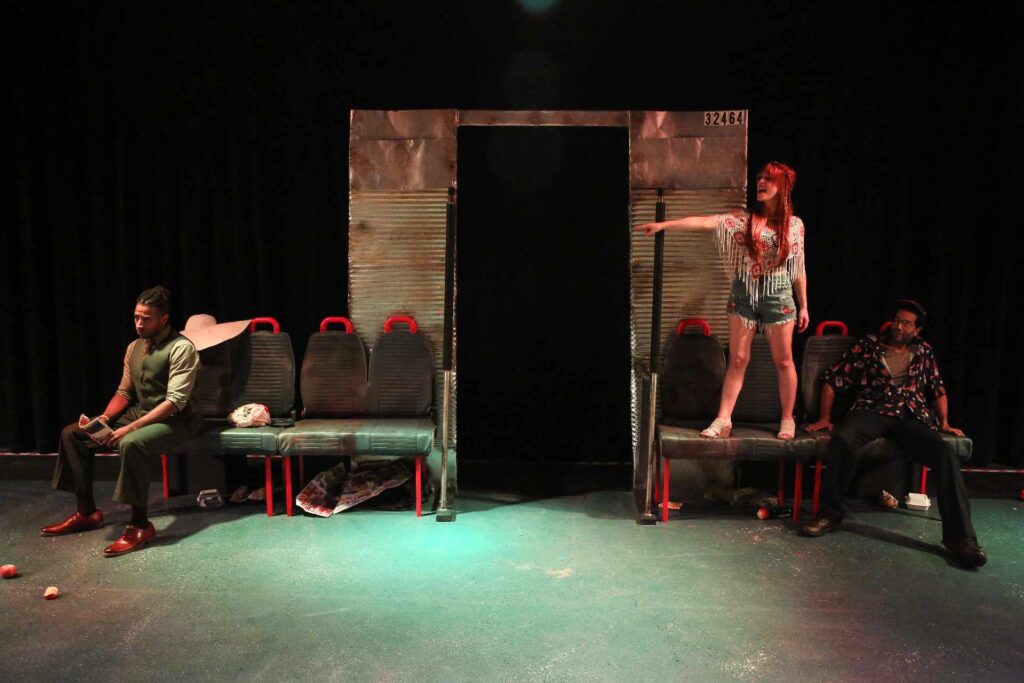
Rolen’s scenic design puts us on the subway car, and Lenny Banks’ lighting design sets the mood well. De’Janna Scales-Hand’s sound design has enhanced the experience too.
Jamarr is an unsuspecting sharp-dressed man named Clay on a mass transit train who encounters a mysterious white woman, Lula, who looks like a wild flower-child dressed in Bohemian attire. Unfiltered, Lula is obviously trying to seduce the man, who is at first wary, but then gives in to the temptation.
Engel’s character is no hippy-dippy chick, although she looks like a poster-girl for 1967’s “Summer of Love.” Presenting herself as a flirty seductress with a good time on her mind, she slowly indicates her intensions are not noble.
Calculating, with a maniacal unhinged laugh, Lula tries to manipulate, but Clay is no push-over. An eerie aspect is that Lula seems to know things about Clay and that is both mysterious and unsettling.
The confrontations become emotionally charged, compelling in a horror-movie jump-scare kind of way. This collision course of a play, unpredictable and with actions unexpected, will linger. It’s certain to spark conversations.
Photo by Zak Littrell.
That, of course, was Baraka’s point. The fact that we can still talk about social injustice in a meaningful way is a unifying message, but it also points out that much more change is needed.
This production takes a timeless approach to the story – a cell-phone! – as the play will celebrate its 60th anniversary next month, of its premiere off-Broadway in March 1964 It won the Obie Award for Best Play that year.
The cast includes Jeremy Thomas and alternate DeAnte Bryant as the conductor and an annoying drunk passenger, and Donald Kidd in a brief role.
Racially explicit language is used, and physical violence is part of the piece.
One can see and feel the passion and commitment involved in this well-produced show, and I look forward to seeing what’s next on their schedule.
Soul Siren Playhouse presents Amiri Baraka’s “Dutchman” Feb. 1 through Feb. 18 at Greenfinch Theatre and Dive Bar on 2525 South Jefferson. Performances are Thursday at 7 p.m., Friday at 8 p.m., Saturday two shows – 4 p.m. and 8 p.m., and Sunday at 2:30 p.m. The cost is free (donations can be made), but RSVPs are necessary. For more information: www.playsiren.com
Lynn (Zipfel) Venhaus has had a continuous byline in St. Louis metro region publications since 1978. She writes features and news for Belleville News-Democrat and contributes to St. Louis magazine and other publications.
She is a Rotten Tomatoes-approved film critic, currently reviews films for Webster-Kirkwood Times and KTRS Radio, covers entertainment for PopLifeSTL.com and co-hosts podcast PopLifeSTL.com…Presents.
She is a member of Critics Choice Association, where she serves on the women’s and marketing committees; Alliance of Women Film Journalists; and on the board of the St. Louis Film Critics Association. She is a founding and board member of the St. Louis Theater Circle.
She is retired from teaching journalism/media as an adjunct college instructor.
THE SLSO OFFERS PERFORMANCES THROUGHOUT ST. LOUIS WHILE TRANSFORMATIONAL EXPANSION AND RENOVATION OF POWELL HALL PROCEEDS
SUBSCRIPTIONS ON SALE NOW; ADDITIONAL PROGRAMMING TO BE ANNOUNCED LATER
Highlights include:
The free Forest Park concert on Art Hill on September 19, 2024, a St. Louis tradition for more than 55 years
World premieres of two SLSO commissions: Anna Clyne’s PALETTE and Nina Shekhar’s Accordion Concerto; an SLSO co-commission and U.S. premiere of Magnus Lindberg’s Viola Concerto; U.S. premieres of Guillaume Connesson’s Lost Horizons Violin Concerto and Daniel Slatkin’s Voyager 130; and the first SLSO performances of works by Mason Bates, Gabriela Lena Frank, Detlev Glanert, Adolphus Hailstork, James MacMillan, Cindy McTee, Kevin Puts, Outi Tarkiainen, John Williams, and more
Denève leading two programs exploring Mozart’s output from musical prodigy to Classical era icon
A theatrical version of Edvard Grieg’s Peer Gynt, led by Denève with writing and direction by Bill Barclay and actors from Concert Theatre Works, to conclude the season
A program celebrating Conductor Laureate Leonard Slatkin’s legacy, with music by himself and his family
The second season of the Live at The Sheldon series, chamber music concerts curated by SLSO musicians featuring a variety of chamber music repertoire including world premieres by student composers at the University of Missouri, building on a successful inaugural season
The 21st Live at the Pulitzer season, curated by St. Louis-based composer Christopher Stark
Artists making their first SLSO appearances include conductors David Afkham, Patrick Dupré Quigley, and Ruth Reinhardt; pianist Yeol Eum Son; Hardanger fiddle player Vidar Skrede; violist Lawrence Power; cellist Andrei Ioniță; accordionist Hanzhi Wang; and vocalists Ben Bliss, Brandon Cedel, and Jamez McCorkle
Returning artists include conductors Daniela Candillari, David Danzmayr, Jonathon Heyward, Hannu Lintu, Cristian Măcelaru, Gemma New, Leonard Slatkin, and John Storgårds; pianists Behzod Abduraimov, Saleem Ashkar, Kirill Gerstein, Nikolai Lugansky, and Conrad Tao; violinists James Ehnes, Gil Shaham, Akiko Suwanai, and Christian Tetzlaff; and vocalists Dashon Burton, Sasha Cooke, Joélle Harvey, Kelley O’Connor, Susanna Phillips, Michael Spyres, and Camilla Tilling
Programming that showcases the entire family of SLSO ensembles: the St. Louis Symphony Chorus, St. Louis Symphony IN UNISON Chorus with Director Kevin McBeth, and the St. Louis Symphony Youth Orchestra
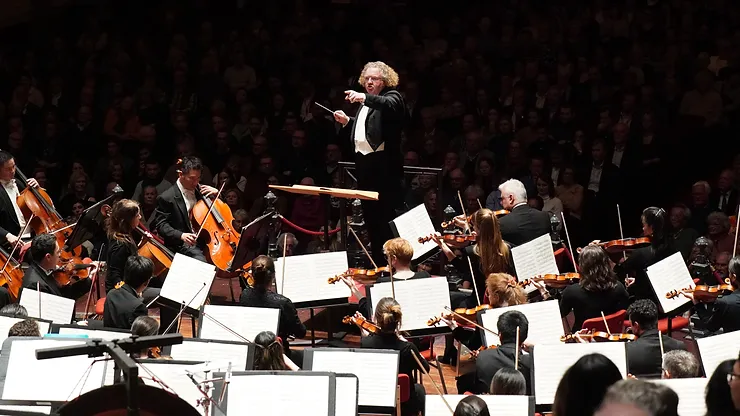
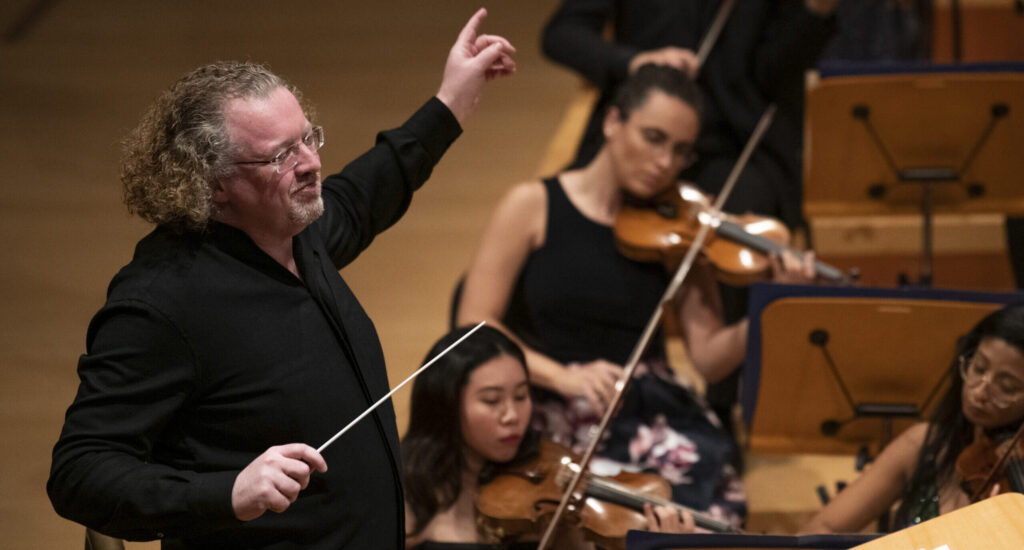
The St. Louis Symphony Orchestra (SLSO) and Stéphane Denève, The Joseph and Emily Rauh Pulitzer Music Director, have announced programming for the orchestra’s 2024/2025 season, the orchestra’s 145th and Denève’s sixth as Music Director.
While the transformational expansion and renovation of the orchestra’s historic home at Powell Hall progresses, the orchestra will perform throughout the St. Louis region, connecting with communities where they are and showcasing the signature sound of the orchestra and the talents of its remarkable musicians. As the orchestra spends a second season away from its musical home, programming reflects themes of new perspectives discovered through traveling.
Stéphane Denève, The Joseph and Emily Rauh Pulitzer Music Director of the SLSO, said, “The versatility, virtuosity, and vibrancy of our wonderful musicians will be on display throughout this season—from well-known symphonic favorites and family concerts to film scores and chamber music. As we spend a second season away from our beloved Powell Hall, our 24/25 season will reflect on the meaning of home—from Mozart’s travels as a rising composer to Guillaume Connesson’s musical search for the Shangri-La paradise and Mason Bates’ Nomad Concerto, and more. Many amazing guest artists will bring their talents to St. Louis, and we are excited to offer music from voices of today including Anna Clyne, Detlev Glanert, Nina Shekhar, Adolphus Hailstork, and many others. It is a joy to be living in St. Louis and to connect with audiences throughout the community as the SLSO and I anticipate returning to our musical home in 2025.”
Marie-Hélène Bernard, SLSO President and CEO, said,“Our 24/25 season offers a wide variety of memorable music experiences, tapping into the remarkable talents of our musicians, and meeting audiences where they are as the transformational expansion and renovation of Powell Hall progresses. Under Stéphane’s spirited and creative leadership, some of today’s most celebrated artists, composers, and conductors will join our orchestra and choruses to share beloved works, world and U.S. premieres, and meaningful musical experiences unique to St. Louis. We look forward to making new memories with our audiences this year as we share the joyous and transformative power of music throughout the region.”
Bjorn Ranheim and Chris Tantillo, co-chairs of the SLSO Musicians’ Council, said, “It is a joy and honor for the musicians of the SLSO to share our music throughout the community during this time of renovation and renewal of our beloved Powell Hall. We are incredibly grateful for the support of our loyal audiences and excited about the tremendous variety of world-class programming that we will present during the 2024/2025 season.”
Throughout the season, the orchestra will share music in several venues throughout the community, including:
The Touhill Performing Arts Center at the University of Missouri–St. Louis
Stifel Theatre
J. Scheidegger Center for Performing Arts at Lindenwood University (St. Charles)
The Sheldon
Pulitzer Arts Foundation
The E. Desmond Lee Concert Hall, 560 Music Center at Washington University (University City)
Curated and Compose Your Own Subscriptions are on sale now. Single tickets for specials, films, and holiday concerts go on sale in May 2024. Single tickets for classical concerts go on sale in summer 2024. Visit slso.org/season or call the Box Office at 314-534-1700 for more information.
Camilla Tilling
Season highlights and collaborations with Denève
Denève leads a host of programs, with repertoire spanning genre and time. Following the annual community concert in Forest Park, he opens the season with the much-anticipated return of violinist Gil Shaham, a close collaborator of Denève’s and frequent SLSO guest, giving the first SLSO performances of Mason Bates’ Nomad Concerto. Denève closes the season with a semi-staged version of Edvard Grieg’s opera Peer Gynt, with internationally renowned soprano Camilla Tilling serving in the lead role of Solveig and Vidar Skrede on Hardanger fiddle. These performances of Peer Gynt include staging, costumes, and actors, led by acclaimed writer and director Bill Barclay in adaptation of the Henrik Ibsen play.
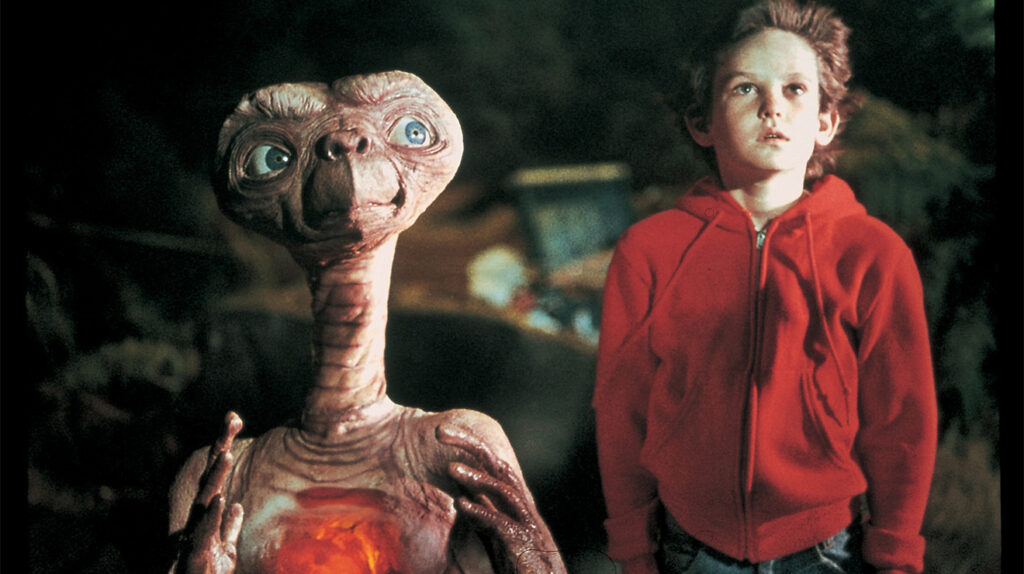
Throughout the season, Denève conducts the SLSO in some of symphonic music’s most beloved works including Hector Berlioz’s Symphonie fantastique, Gustav Mahler’s Symphony No. 1, Pyotr Ilyich Tchaikovsky’s Romeo and Juliet Overture-Fantasy, and Maurice Ravel’s Bolero, alongside the first SLSO performances of many works, including Guillaume Connesson’s Lost Horizons Violin Concerto, Adolphus Hailstork’s An American Port of Call, John Williams’ Theme from Seven Years in Tibet, and more. Denève also leads the orchestra in a live presentation of John Williams’ score to E.T. the Extra-Terrestrial, a formative film in his life, while the film plays.
Denève and the orchestra take audiences a two-week exploration of the music of W.A. Mozart. The first week features Mozart’s brooding late-in-life works including the Requiem with vocalists Joélle Harvey, Kelley O’Connor, Ben Bliss, and Dashon Burton and the Adagio and Fugue in C minor. The second week explores Mozart’s journeys away from home in works including the Symphony Nos. 1 and 31, “Paris”; Piano Concerto No. 20 with Behzod Abduraimov; and the overture to the rarely heard opera Mitridate, rè di Ponto. Additional pieces from contemporary composers Detlev Glanert and Anna Clyne connect Mozart’s music to today.
Denève extends his tradition of meaningful artistic partnerships, collaborating with internationally renowned artists, including Grammy Award-winning violinist James Ehnes on Beethoven’s Violin Concerto,and Akiko Suwanai on the U.S. premiere of Guillaume Connesson’s Lost Horizons Violin Concerto. A leading interpreter of the music of Maurice Ravel, Denève and pianist Kirill Gerstein, a frequent SLSO guest artist, collaborate on Ravel’s Piano Concerto in G and Concerto for the Left Hand in the same program in celebration of the composer’s 150th birthday. Pianist Nikolai Lugansky returns for performances of Sergei Rachmaninoff’s Piano Concerto No. 2 and tenor Michael Spyres, who received critical acclaim in the title role in the 2023 SLSO performances of Hector Berlioz’s The Damnation of Faust, returns to sing Benjamin Britten’s Les Illuminations and Mahler’s Songs of a Wayfarer in a program of signature music for Denève.
Magnus Lindberg
WORLD AND SLSO PREMIERES
More than 20 pieces enter the SLSO’s repertoire during the 2024/2025 season, including 12 works by living composers. In addition to world premieres by Anna Clyne and Nina Shekhar and U.S. premieres by Guillaume Connesson, Magnus Lindberg, and Daniel Slatkin, the SLSO performs works by living composers including Mason Bates, Gabriela Lena Frank, Detlev Glanert, Adolphus Hailstork, James MacMillan, Cindy McTee, Kevin Puts, Outi Tarkiainen, and John Williams.
Nina Shekhar’s Accordion Concerto, an SLSO commission,will receive its world premiere with conductor Daniela Candillari, Opera Theatre of Saint Louis’ Principal Conductor, and accordionist Hanzhi Wang (January 10-11). Wang, a noted interpreter of her instrument, makes her SLSO debut to perform the concerto.
Anna Clyne’s PALETTE, an SLSO commission, combines electronically augmented sounds captured from microphones placed among the musicians with the live orchestral performance for a unique sonic experience (February 14-15). Denève leads this world premiere. A champion of Clyne’s music, Denève has conducted three of Clyne’s pieces since beginning his tenure in September 2019. The SLSO gave the U.S. premiere of Clyne’s PIVOT in November 2021 with conductor David Danzmayr.
Magnus Lindberg’s Viola Concerto,an SLSO co-commission, will receive its world premiere in February 2024 with the Finnish Radio Symphony Orchestra and soloist Lawrence Power, who will also give the U.S. premiere performance with the SLSO and conductor Hannu Lintu, a fellow Finn and close collaborator (March 14 & 16).
Guillaume Connesson’s Lost Horizons Violin Concerto tells the story of the search for the famed paradise, Shangri-La, and will be performed by Akiko Suwanai as violin soloist (March 21-22), led by Denève. Since his Music Directorship began in 2019, Denève has championed Connesson’s music in St. Louis, leading performances of three of his works with the orchestra, including the world premiere of Astéria in November 2022.
Daniel Slatkin’s Voyager 130completes the opening half of a program celebrating the legacy of Conductor Laureate Leonard Slatkin, Daniel Slatkin’s father (October 25 & 27). A prolific composer for film and television, Slatkin found inspiration for this concert piece, which tells the story of the Voyager spacecrafts, from Beethoven’s 13th string quartet.
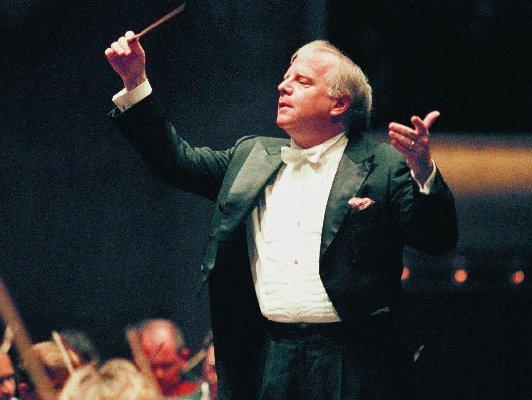
Leonard Slatkin
CELEBRATING LEONARD SLATKIN’S LEGACY
A weekend of concerts celebrates the legacy of SLSO celebrates Conductor Laureate Leonard Slatkin. Slatkin—who served as the SLSO Music Director from 1979 to 1996—leads the orchestra in a family-oriented celebration. The program includes Timepiece by Cindy McTee, Leonard’s wife; the U.S. premiere of Voyager 130 by Daniel Slatkin, Leonard’s son; Leonard’s own arrangement of piano sonatas by Domenico Scarlatti for winds; and Tchaikovsky’s Symphony No. 5, a signature work which Leonard took on multiple tours with the orchestra. Details of additional events will be announced later.
24/25 SEASON VENUES
The SLSO will welcome audiences at venues throughout the St. Louis region, while the transformative expansion and renovation of Powell Hall, the orchestra’s historic home, progresses. Concerts will take place at several venues:
The Touhill Performing Arts Center at the University of Missouri–St. Louis will serve as a venue for symphonic programming, after serving in the same capacity throughout the current season. The SLSO will perform in the Anheuser-Busch Performance Hall, which seats 1,600.
· Stifel Theatre, a 3,100-seat venuein downtown St. Louis, will host a combination of symphonic, choral-orchestral, film, holiday, and special concerts.
The J. Scheidegger Center for Performing Arts at Lindenwood University in St. Charles will again host SLSO holiday concerts (December 17-18).
The Pulitzer Arts Foundation in Grand Center will again serve as the venue for the Live at the Pulitzer series, providing an intimate atmosphere for the 21st season of the adventurous chamber music series.
The Sheldon in Grand Center will again host the Live at The Sheldon chamber music series, providing an acoustically rich environment to elevate the individual talents of SLSO musicians.
The E. Desmond Lee Concert Hall, 560 Music Center at Washington will welcome the orchestra for a weekend of Baroque Music featuring SLSO soloists (December 6-7).
ARTIST DEBUTS
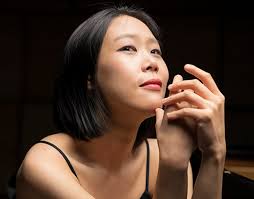
Yeol Eum Son
Throughout the 24/25 season, many acclaimed artists will make their SLSO debut.
Conductor David Afkham, Chief Conductor and Artistic Director of the Spanish National Orchestra and Chorus, makes his SLSO debut on a program that includes Johannes Brahms’ Symphony No. 1. Rising German conductor Ruth Reinhardt makes her SLSO debut conducting music by Grażyna Bacewicz, Antonín Dvořák, and Paul Hindemith.
Instrumentalists making their SLSO debuts include: pianist Yeol Eum Son, a prizewinner at the International Tchaikovsky and Van Cliburn competitions, performing Sergei Prokofiev’s Piano Concerto No. 2; violist Lawrence Power, who will give the U.S. premiere of Magnus Lindberg’s Viola Concerto; cellist Andrei Ioniță, the Gold Medal winner of the 2015 International Tchaikovsky Competition, tackles Antonín Dvořák’s Cello Concerto; and accordionist Hanzhi Wang, an international ambassador for her instrument, gives the world premiere of Nina Shekhar’s Accordion Concerto. Vidar Skrede makes his debut on Edvard Grieg’s Peer Gynt on Hardanger fiddle.
Tenor Ben Bliss debuts in performances of W.A. Mozart’s Requiem, while tenor Jamez McCorkle and bass-baritone Brandon Cedel join the SLSO for Ludwig van Beethoven’s Symphony No. 9.
Federico Ramos, featured guitarist on the soundtrack of the Disney Pixar film Coco, reprises the role for the SLSO performances of the Germaine Franco score.
IN UNISON chorus
RETURNING ARTISTS AND SLSO ENSEMBLES
The world’s leading conductors Daniela Candillari, David Danzmayr, Jonathon Heyward, Hannu Lintu, Cristian Măcelaru, and John Storgårds return to lead the SLSO along with pianists including Behzod Abduraimov (Mozart’s Concerto No. 20), Saleem Ashkar (Mozart’s Concerto No. 24), Kirill Gerstein (Ravel’s Concerto in G and Concerto for the Left Hand), Nikolai Lugansky (Rachmaninoff’s Concerto No. 2), and Conrad Tao (Camille Saint-Saëns’ Concerto No. 2). Returning violinists include James Ehnes (Beethoven’s Concerto), Gil Shaham (Mason Bates’ Nomad Concerto), Akiko Suwanai (Guillaume Connesson’s Lost Horizons Concerto), and Christian Tetzlaff (Brahms’ Concerto).
Two SLSO musicians take center stage in the Baroque Christmas program: Associate Principal Violist Alejandro Valdepeñas in Telemann’s Viola Concerto in G major and piccolo player Ann Choomack in Vivaldi’s Piccolo Concerto in C major.
The St. Louis Symphony Chorus, which has performed repertoire from the entire choral-orchestral canon to critical acclaim since its formation in the 1976/1977 season, performs a trio of large-scale choral works: Mozart’s Requiem; Beethoven’s Symphony No. 9; and Grieg’s Peer Gynt. All choral performances will take place at Stifel Theater.
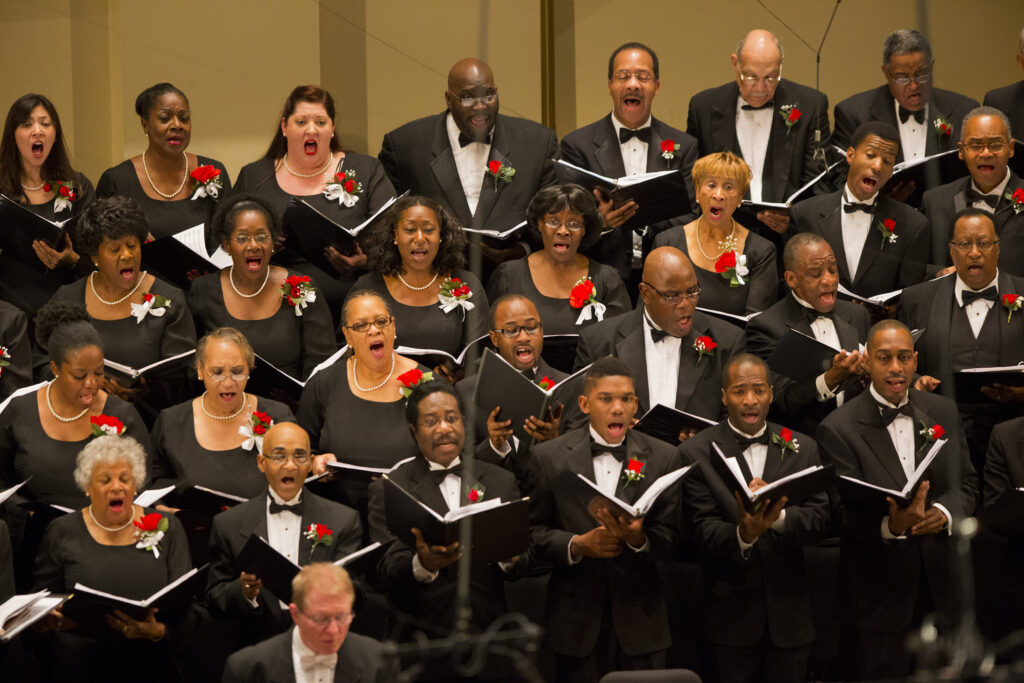
The St. Louis Symphony IN UNISON Chorus, which preserves and performs music from the African diaspora and is directed by Kevin McBeth in his 14th season, returns for its annual holiday-time soulful celebration: IN UNISON Christmas with award-winning a cappella group Take 6 (December 13). The chorus performs its annual Lift Every Voice: Celebrating Black History Month concert, also under McBeth’s direction and featuring veteran Broadway singer and actor Brian Stokes Mitchell (February 28).
The St. Louis Symphony Youth Orchestra, the region’s premiere training orchestra for young musicians aged 12-22, will present three concerts in its 55th season, which include free seats for the community. Concert details will be announced later.
E.T.: The Extra-Terrestrial Sept. 21-22 at Stifel Theatre
COMMUNITY, FILM, FAMILY, AND HOLIDAY PROGRAMMING
Denève and the SLSO open the season with the much-anticipated concert in Forest Park for a free night of music on Art Hill (September 19). The concert is performed in memory of Mary Ann Lee.
Film presentations with the SLSO playing the score live include E.T. the Extra-Terrestrial, led by Stéphane Denève(September 21-22); Coco (November 2-3); The Muppet Christmas Carol (December 14-15); and Casino Royale (March 8-9). On Mother’s Day weekend, the SLSO will present Disney Princess–The Concert (May 9-10) featuring songs from popular Disney films. All film presentations will take place at Stifel Theatre.
Holiday concerts include the popular IN UNISON Christmas concert, previously known as Gospel Christmas (December 13, 2024), which features a cappella group Take 6 and the IN UNISON Chorus led by Kevin McBeth. The Mercy Holiday Celebration presents four concerts of beloved holiday music with conductor Norman Huynh and vocalist Capathia Jenkins—two at the J. Scheidegger Center for the Arts at Lindenwood University in St. Charles (December 17-18, 2024) and two at Stifel Theatre (December 21-22, 2024). Former Assistant Conductor Stephanie Childress leads the annual New Year’s Eve Celebration Concert (December 31). The SLSO also performs its annual Lift Every Voice: Celebrating Black History Month concert with the IN UNISON Chorus and Broadway veteran Brian Stokes Mitchell (February 28).
In May 2024, the SLSO will announce plans for additional programming, including:
Family Concerts, 45-minute performances designed for families with young children
Special, one-night concerts that celebrate a breadth of musical styles and artists
Programming for the 21st Live at the Pulitzer series, chamber music by composers of today programmed in response to art exhibitions at the Pulitzer Arts Foundation
Programming for the second Live at The Sheldon series, a broad range of chamber music curated and performed by SLSO musicians at The Sheldon
OPERA THEATRE OF SAINT LOUIS
The SLSO will conclude its season as the resident orchestra of Opera Theatre of Saint Louis (OTSL), the 47th year of this partnership. The 2025 Festival Season runs May 24–June 29, 2025. Programming for OTSL’s 2025 Festival Season will be announced later this summer. The current 2024 Festival Season takes place this May and June; tickets and more information can be found at ExperienceOpera.org.
PREMIERES AND FIRST PERFORMANCES
Classical concerts in the 2024/2025 season include the first SLSO performances of 20 different works, with 12 by composers of today. Denève remains committed to discovering and performing works by living artists that will become mainstays of the orchestral repertoire, as well as developing deep relationships with composers of today.
World Premieres/SLSO commissions Nina Shekhar Accordion Concerto (January 10-11, 2025) Anna Clyne PALETTE(February 14-15, 2025)
U.S. Premiere/SLSO co-commission Magnus Lindberg Viola Concerto (March 14 & 16, 2025)
U.S. Premieres Daniel Slatkin Voyager 130 (October 25 & 27, 2024) Guillaume Connesson Lost Horizons Violin Concerto (March 21-22, 2025)
Nina Shekhar
First SLSO Performances Mason Bates Nomad Concerto(September 27 & 29, 2024) Gabriela Lena Frank Concertino Cusqueño (October 4 & 6, 2024) Samuel Coleridge-Taylor Ballade(October 18-19, 2024) James MacMillan One(October 18-19, 2024) Domenico Scarlatti (arr. L. Slatkin) Five Sonatas for Orchestral Wind Ensemble (October 25 & 27, 2024) Cindy McTee Timepiece (October 25 & 27, 2024) W.A. Mozart Overture to Mitridate, rè di Ponto (November 15-16, 2024) William Grant Still Threnody: In Memory of Jean Sibelius(November 22 & 24, 2024) Outi Tarkiainen The Ring of Fire and Love (February 21 & 23, 2025) Kevin Puts Hymn to the Sun (March 1-2, 2025) J.S. Bach (arr. Elgar) Fantasia & Fugue in C minor (March 1-2, 2025) John Williams Theme from Seven Years in Tibet(March 21-22, 2025) Adolphus Hailstork An American Port of Call (March 21-22, 2025) Jean Sibelius Lemminkäinen Suite (Four Legends from the Kalevala)(April 11-13, 2025)* Grażyna Bacewicz Concerto for String Orchestra (April 26-27, 2025) Edvard Grieg Peer Gynt (May 3-4, 2025)*
*First complete performances
MEDIA PARTNERSHIPS
The SLSO’s partnerships with 90.7 KWMU St. Louis Public Radio and Classic 107.3 continue with select Saturday night symphonic concerts broadcast and streamed online by St. Louis Public Radio for a 16th year, and simulcasts on Classic 107.3 continuing for a fifth year.
About the St. Louis Symphony Orchestra
Celebrated as one of today’s most exciting and enduring orchestras, the St. Louis Symphony Orchestra is the second-oldest orchestra in the country, marking its 145th year with the upcoming 2024/2025 season and its sixth with Stéphane Denève, The Joseph and Emily Rauh Pulitzer Music Director. Widely considered one of the leading American orchestras, the Grammy® Award-winning SLSO maintains its commitment to artistic excellence, educational impact, and community collaborations—all in service to its mission of enriching lives through the power of music.
The core of the SLSO’s artistic foundation is its dynamic partnership with Denève, whose energetic musicianship, visionary storytelling, and collaborative spirit have created stronger connections with local and visiting artists, as well as advanced the SLSO’s role as a leader in music education. The SLSO musical family also includes two resident choruses: the St. Louis Symphony Chorus, founded in 1976, performs choral-orchestral music from the Baroque era to today; and the St. Louis Symphony IN UNISON Chorus, founded in 1994, focuses on the performance and preservation of music from the African diaspora. The St. Louis Symphony Youth Orchestra, founded by Conductor Laureate Leonard Slatkin in 1970, is the region’s premiere training orchestra for high school and college students.
The transformational, 65,000-square foot expansion and renovation of the orchestra’s home, Powell Hall, begun in 2023, continues. Led by the internationally acclaimed architecture firm Snøhetta, the project will transform the audience and artistic experience while protecting Powell Hall’s historic character and celebrated acoustics, creating a state-of-the art center for community, innovation, and powerful music experiences. The revitalized Powell Hall will open in 2025 to coincide with the building’s centennial.
An integral part of the vibrant St. Louis community, the SLSO enjoys a long history of robust and enduring artistic collaborations with individuals and organizations locally and around the world. Orchestra musicians share dozens of education and community performances throughout the region each year at medical facilities, places of worship, community centers, and schools. For 20 years, the St. Louis Symphony Orchestra: Live at the Pulitzerseries has highlighted today’s leading musical voices through innovative performances in collaboration with, and reaction to the exhibitions at, the Pulitzer Arts Foundation. The SLSO has served as the resident orchestra for Opera Theatre of Saint Louis for more than 45 years. The orchestra also continues to develop new artistic collaborations, continuing a chamber music series in collaboration with The Sheldon, begun in the 23/24 season, as well as regular partnerships with The Muny, The Big Muddy Dance Company, the Saint Louis Art Museum, and others. Beyond the St. Louis region, the SLSO’s impact is realized through Saturday night concert broadcasts on St. Louis Public Radio and Classic 107.3, acclaimed recordings, regular touring activity, and a digital portfolio that includes a robust online education platform with digital concerts and learning activities for all ages.
Since the arrival of Marie-Hélène Bernard as President and CEO in 2015, the SLSO has aligned its mission to make music more accessible, while fostering a culture welcoming to all. Building on its momentum, the SLSO serves as a convener of individuals, creators, and ideas, and is committed to building community through compelling and inclusive musical experiences. As it continues its longstanding focus on equity, diversity, inclusion, and access, the SLSO embraces its strengths as a responsive, nimble organization, while investing in partnerships locally and elevating its presence globally. For more information, visit slso.org.
About Stéphane Denève, The Joseph and Emily Rauh Pulitzer Music Director
Stéphane Denève is The Joseph and Emily Rauh Pulitzer Music Director of the St. Louis Symphony Orchestra, the Artistic Director of the New World Symphony, and the Principal Guest Conductor of the Netherlands Radio Philharmonic. He recently concluded terms as Chief Conductor of the Brussels Philharmonic and Principal Guest Conductor of The Philadelphia Orchestra, and previously served as Chief Conductor of Stuttgart Radio Symphony Orchestra (SWR) and Music Director of the Royal Scottish National Orchestra.
Recognized internationally for the exceptional quality of his performances and programming, Denève regularly appears at major concert venues with the world’s greatest orchestras and soloists. He has a special affinity for the music of his native France, and is a passionate advocate for music of the 21st century.
He is a frequent guest with the New York Philharmonic, The Philadelphia Orchestra, The Cleveland Orchestra, Los Angeles Philharmonic, Royal Concertgebouw Orchestra, NHK Symphony Orchestra, Bavarian Radio Symphony Orchestra, Royal Stockholm Philharmonic Orchestra (with whom he conducted the 2020 Nobel Prize concert), Orchestre national de France, Czech Philharmonic, NDR Elbphilharmonie Orchestra, Vienna Symphony, DSO Berlin, Orchestre philharmonique de Radio France, and Rotterdam Philharmonic.
A graduate and prize-winner of the Paris Conservatoire, Stéphane Denève worked closely in his early career with Sir Georg Solti, Georges Prêtre and Seiji Ozawa. A gifted communicator and educator, he is committed to inspiring the next generation of musicians and listeners, and has worked regularly with young people in programmes such as those of the New World Symphony, Tanglewood Music Center, the Colburn School, the European Union Youth Orchestra, and the Music Academy of the West.
Lynn (Zipfel) Venhaus has had a continuous byline in St. Louis metro region publications since 1978. She writes features and news for Belleville News-Democrat and contributes to St. Louis magazine and other publications.
She is a Rotten Tomatoes-approved film critic, currently reviews films for Webster-Kirkwood Times and KTRS Radio, covers entertainment for PopLifeSTL.com and co-hosts podcast PopLifeSTL.com…Presents.
She is a member of Critics Choice Association, where she serves on the women’s and marketing committees; Alliance of Women Film Journalists; and on the board of the St. Louis Film Critics Association. She is a founding and board member of the St. Louis Theater Circle.
She is retired from teaching journalism/media as an adjunct college instructor.
Mesmerizingly crafted, “Moby Dick” is an astonishing triumph of sound and fury.
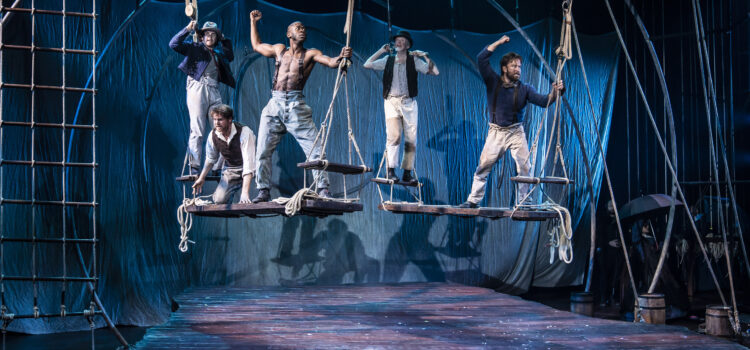
Through its hybrid expressionist storytelling involving aerials, acrobatics, dance, visual artistry and dramatic encounters, the aesthetically innovative staging is extraordinary.
This brilliant vision by director David Catlin, who adapted the 1851 novel by Herman Melville, has been executed fluidly with bold intentions. He has stripped an unwieldy story down to essentials — although it still takes 3 hours with 2 intermissions to tell this three act masterpiece.
Catlin immerses us as green hands on the Pequod whaling ship – you will feel as if you are on the voyage on the treacherous high seas around the world.
Perhaps comparable to a Cirque du Soleil experience, it is unlikely that you have seen anything like it, unless you were privy to its landmark 2015 debut at the Lookingglass Theatre Company in Chicago, where it was developed and mounted.
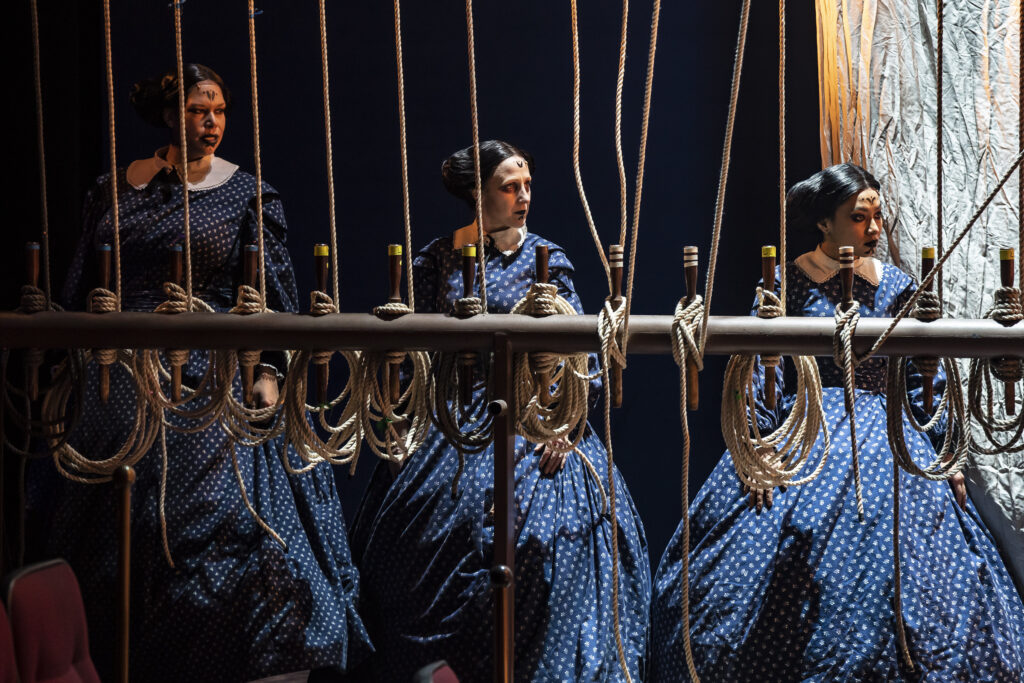
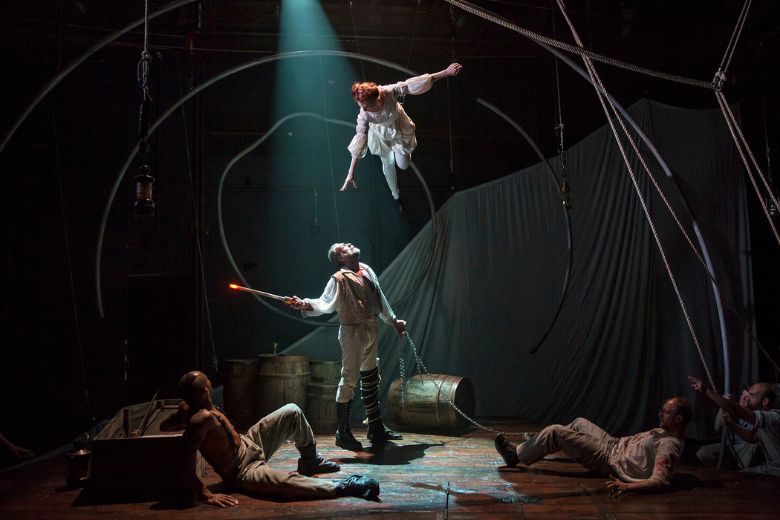
The Fates, Photo by Liz Lauren
Catlin, a longtime ensemble member, is not the only one involved in The Rep’s stunning and at times, jaw-dropping, production. An outstanding Christopher Donahue, who originated the role of Captain Ahab there, returns as the maritime officer obsessed with revenge against the great white sperm whale who bit his leg off.
A sparse high concept set designed by Courtney O’Neill, aided by assistant designer Catalina Nino, yields to an epic sea adventure that at its core is a battle between fate and free will, as Ahab goes mad in his maniacal quest while his first mate Starbuck believes that our choices fulfill our destiny.
This isn’t your English class study guide, rather a living work of art, composed stylistically with dynamic imagery and movement that creates an unrivaled seafaring adventure.
The now iconic Ishmael is the first sailor we encounter, a philosophical narrator who has worked on a merchant vessel. This time, he signs up for the Pequod, leaving Nantucket. This sea hunt is for whale oil and the byproducts used in the 19th century – the appeal of a comfortable lifestyle was at odds with the messy and grimy business of whale hunting.
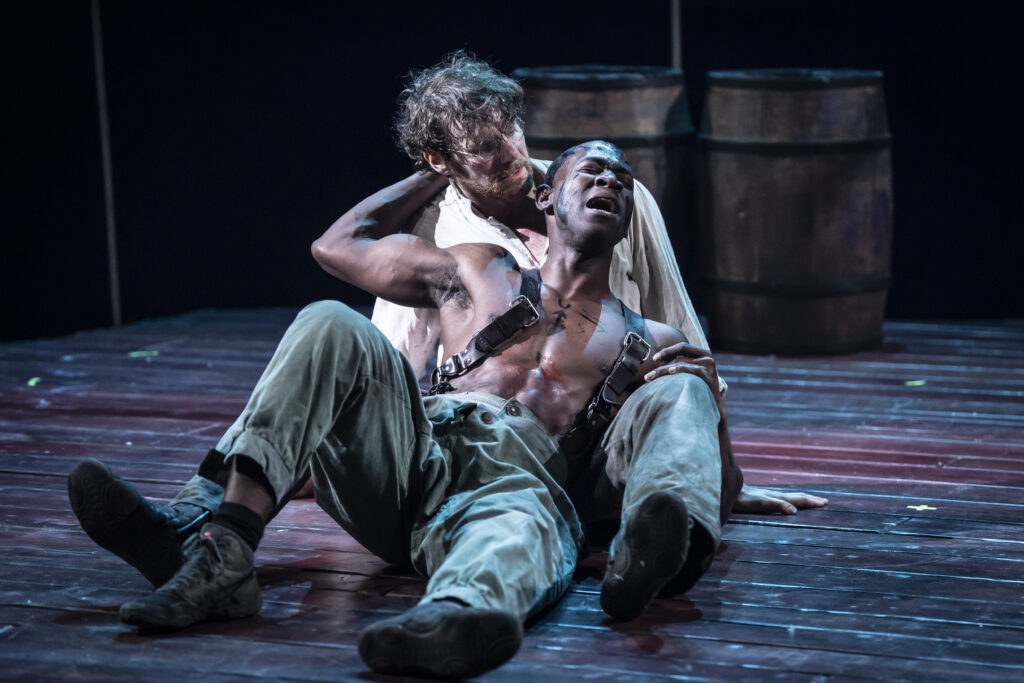
Ishmael and Queequeg. Photo by Liz Lauren.
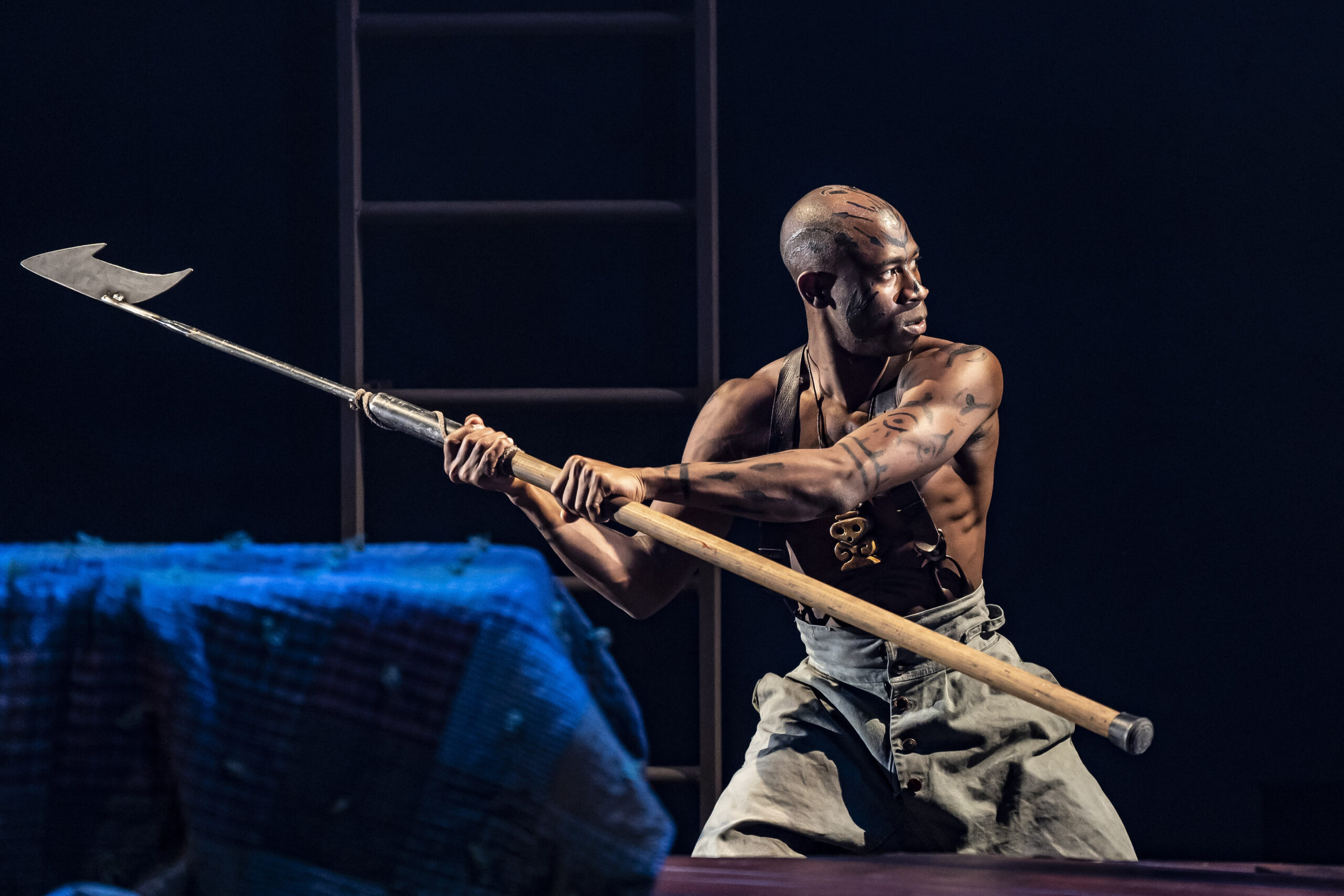
At a crowded inn, he is forced to share a room with a distinctively tattooed Polynesian harpooner, Queequeg, and that comical situation cements a friendship between the men. Muscular Kevin Aoussou is an imposing and regal Queequeg.
Walter Owen Briggs conveys Ishmael’s curious nature and sense of wonder, while looking at developments sensibly. He struggles with Ahab’s recklessness and the looming doom.
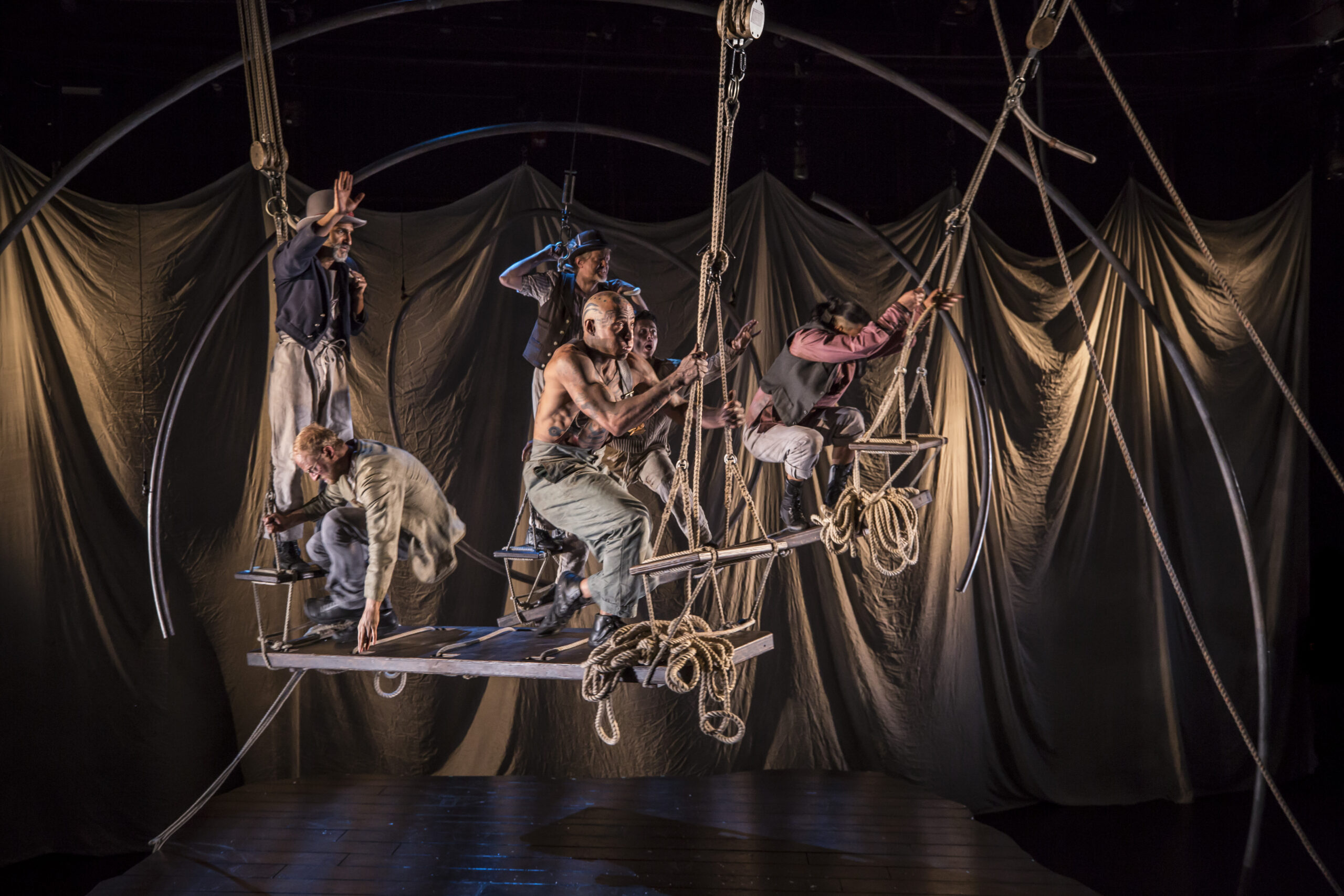
The Fates and the sailors. Photo by Liz Lauren
Ahab’s single-mindedness is his tragic flaw, and it will consume him. As the men resist, he pushes harder. He has tough altercations with brave first mate Starbuck, a fierce and agile Felipe Carrasco, that are intense and frightening.
The ensemble offers personal portraits to help identify them as crew members, and their instincts are finely tuned. In supporting roles are original castmates Micah Figueroa as Cabaco and Captain of New Bedford whaleship and Raymond Fox as Stubb as well as Captains Boomer and Gardiner, joining Julian Hester as Bulkington.
They indicate the physical aspects of their struggles with precise movements by acrobatic choreographer Sylvia Hernandez-Distasi, a founder and artistic director of The Actors Gymnasium in Chicago. She impresses with dazzling derring-do.
Three women portray the Fates – Maggie Kettering, Ayana Strutz and Bethany Thomas – and they swirl in and out, like spirits. They also present themselves as images of loved ones left behind, and townspeople in the villages.
The dexterity and physical stamina required of these performers is remarkable, and not unnoticed.
Kevin Aoussou. Photo by Liz Lauren
Costume designer Carolyn “Sully” Ratke and associate designer Stephanie Gluggish have fashioned ethereal garb for the mystical spirits, and an interesting wardrobe to create a human metaphor for Moby Dick and other whales. The other costumes are period-appropriate.
The squalls, the hunt, and the insurmountable typhoon are thrillingly staged as spectacles, diving deep into the life-or-death danger. The technology used is next-level and breathtaking, especially what Rigging Designer Isaac Schoepp has created.
(Kudos to the stagehands who participated in the curtain call, deserving a major standing ovation for their efforts), Bravo!
Lighting designer William C. Kirkham, and assistant designer Madeleine Reid, along with sound designer Rick Sims and associate sound designer Forrest Gregor, have recreated an atmospheric ocean tableau — thunderstorms, eerie nighttime shadows, blazing sun daylight, fire, the mysterious echoes of the high seas and the relentless waves.
They have captured dreamlike sequences as well as nightmares through aural and visual techniques, and Sims’ music compositions add texture.
A sequence of staggering beauty is when lanterns lit with whale oil illuminate the night sky, as they rise and seemingly float away, like fireflies.
Photo by Liz Lauren
Moments of non-traditional storytelling are effective bridging the gap between the classic text and a new way to look at a staged presentation. However, the everlasting human condition commentary is not overshadowed by the production’s technical mastery.
Now, this show can be a challenge to navigate, particularly if you have never read “Moby Dick” or only made it through a few pages – it is not an easily digested drama. But stick with it, let the experience sweep you away, and you will be rewarded handsomely. (And you may want to read some Cliff Notes or Wikipedia information beforehand).
It’s exciting to watch something so significantly singular swing for the fences and achieve a greatness that people will be talking about for years.
The Repertory Theatre of St. Louis presents “Moby Dick,” adapted from the book by Herman Melville and directed by David Catlin of the Lookingglass Theatre Company through Feb. 25. Performances take place on the main stage of the Loretto-Hilton Center on the Webster University campus. For more information: www.repstl.org.
Christopher Donahue as Captain Ahab. Liz Lauren photo.
Lynn (Zipfel) Venhaus has had a continuous byline in St. Louis metro region publications since 1978. She writes features and news for Belleville News-Democrat and contributes to St. Louis magazine and other publications.
She is a Rotten Tomatoes-approved film critic, currently reviews films for Webster-Kirkwood Times and KTRS Radio, covers entertainment for PopLifeSTL.com and co-hosts podcast PopLifeSTL.com…Presents.
She is a member of Critics Choice Association, where she serves on the women’s and marketing committees; Alliance of Women Film Journalists; and on the board of the St. Louis Film Critics Association. She is a founding and board member of the St. Louis Theater Circle.
She is retired from teaching journalism/media as an adjunct college instructor.
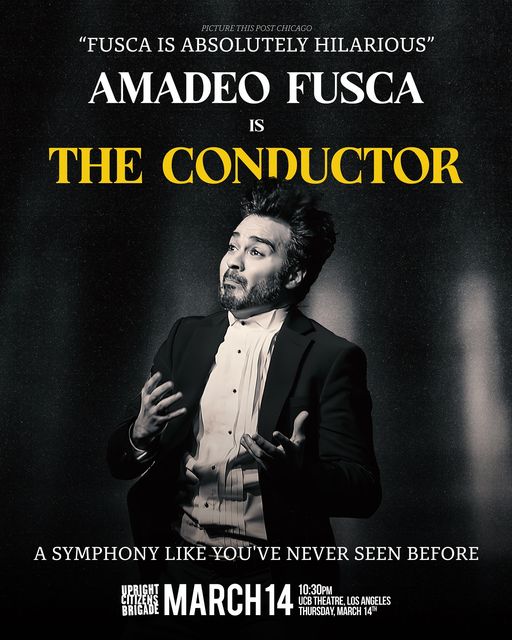
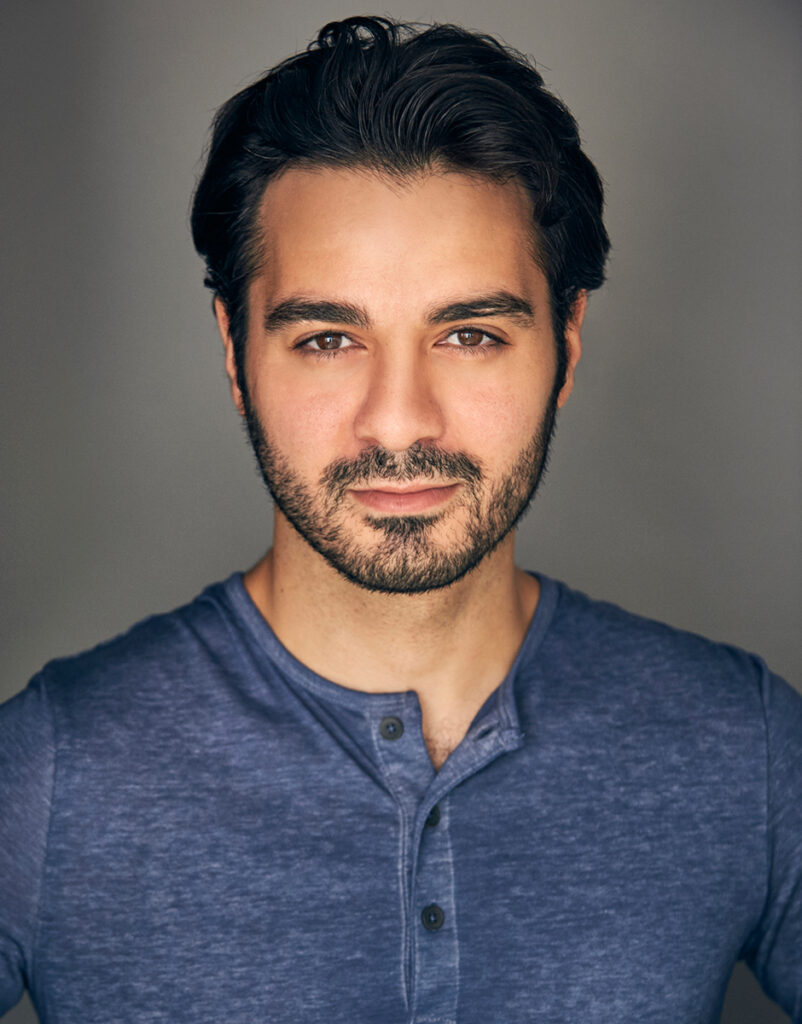
A career path that includes comedy, live theatrical performances and an upcoming Robert DeNiro film has taught Amadeo Fusca to be open to challenges that come your way. Known for his energy and quick wit, the actor says that getting laughs from an audience is always the cherry on top to making a live connection.
Recently in town for “Men Are From Mars Women Are From Venus Live” at the Playhouse at West Port Plaza, Fusca explained the part play-part stand-up comedy based on the 1992 best-selling self-help book by John Gray is a revised version of the one-man show now celebrating its 10th anniversary, the Evolution Tour. He was here before, in 2016, and last year at The Pageant. He will be in other major cities this spring with the revamped version.
Gray’s book exploring the differences between the sexes has sold in excess of 50 million copies, been translated into 40 different languages and is one of the most recognizable titles in the world.
He said you can expect the same delightful, light-hearted comedy that is definitely for adults. Eric Coble, the original writer, and director Mindy Cooper are back to inject new life into the script, ensuring its relevance and resonance with today’s audiences. Moving swiftly through a series of vignettes, Fusca covers everything from dating and marriage to the bedroom.
Fusca does his homework, using local references, works in ad-libs and improvises, too — he’s so familiar with the material, and how audiences will respond.
He enjoys engaging an audience, hearing all the laughs and giggles, and seeing couples elbow each other as they see themselves on stage. Fusca said it’s a great night out – combining storytelling, comedy and some sage wisdom from the book.
“Men Are From Mars, Women Are From Venus” at Westport in 2016
Originally from Pittsburgh, Amadeo has now performed “Men are From Mars Women are From Venus Live!” in over 60 cities, across 30+ states and in front of 75,000 people and counting.
In 2013, he won the legendary Friars Club “So You Think You Can Roast?” competition beating out 55 other comedians roasting ‘80s child star Ricky Schroeder and NBA Hall of Famer Dennis Rodman in the process. As the winner, Amadeo was among the dais to roast Jack Black along with comic legends such as “Roastmaster” General Jeff Ross, Sarah Silverman, Amy Schumer, Bob Saget, Jerry Lewis and more!
In addition to his theatrical comedy, Amadeo can also be seen in various television and film productions including: “Princess Cut” on HBO MAX, “NCIS” on CBS, “That Damn Michael Che” on HBO MAX, Marvel’s “Daredevil” on Netflix, “Boardwalk Empire” on HBO, “The Holiday Dating Guide” on Lifetime, “Almost Family” on FOX and “As the World Turns” on CBS.
Sometime this year, you can catch him as Lucky Luciano in the new Robert DeNiro film “Alto Knights” directed by Barry Levinson.
He had been performing his infamous character World Renowned Conductor Salvatore Giovanni across the globe to roaring reactions in the world’s greatest variety show run by Zach Zucker called “Stamptown,” which played at the Edinburgh Fringe Festival.
But now, he has developed Salvatore into a solo show that may just play on this stage one day as well…
1. Why did you choose your profession/pursue the arts? I grew up in a household where we followed the Oscars very closely every year. I would watch all the best dramas and analyze who I thought should win. On top of that, we just watched a lot of great TV shows at my house as well. Including classics like Taxi. I always admired the work and felt good doing it.
2. How would your friends describe you? Nocturnal
3. How do you like to spend your spare time? Seeing shows, gambling on sports and word games.
4. What is your current obsession? Fanduel Faceoff – A betting app with games
5. What would people be surprised to find out about you? I never learned how to ride a bike
6. Can you share one of your most defining moments in life? When I was awarded the winner of the Friars Club “So You Think You Can Roast?” Competition and got to Roast Jack Black.
7. Who do you admire most? My Mom for everything she’s endured in life and keeps on persevering through.
8. What is at the top of on your bucket list? “Go into Outer Space”
9. What is your favorite thing to do in St. Louis? Perform (:
10. What’s next? Heading to London to perform some shows with my World Renowned Conductor Character Salvatore Giovanni and then shows in Davenport, IA, Cincinnati, OH, Burnsville, MN and Sioux Falls, SD.
More About Amadeo
Age: 37 Birthplace: Pittsburgh, PA Current location: Los Angeles, CA Education: BA in Acting from Point Park University Conservatory of Performing Arts Day job: Acting First job: Busboy First role: Albert Peterson in “Bye Bye Birdie” Favorite roles/plays: Jerusalem – Mark Rylance Dream role/play: Something Funny & Serious that hasn’t been made just yet. Awards/Honors/Achievements: Friars Club Roast Competition Winner Favorite quote/words to live by: “All I know is I don’t know” A song that makes you happy: “Good Riddance” by Green Day
The producer of the “Men Are From Mars, Women Are From Venus” Evolution Tour is St. Louis based Emery Entertainment has produced and promoted thousands of events around the globe, including superstar attractions Blue Man Group, David Copperfield and James Taylor. The talented team assembled for this production continues with the award-winning playwright Eric Coble, direction by Broadway veteran Mindy Cooper, and animation & video production by the talented animators at Bazillion Productions.
Westport Playhouse is back, hosting plays, musicals, films, comedy, private events and much more. Enhanced with a new 40-foot video screen backdrop, upgraded lighting and a new sound system, Westport Playhouse is located at 635 Westport Plaza in Maryland Heights. For more information or to see a list of nearby restaurants,
Performance times are February 14-16 at 7:30 p.m.; February 17 at 2 p.m. & 7:30 p.m.; and February 18 at 2 p.m. Tickets may be purchased through MetroTix at www.metrotix.com or by calling 314/534-1111. Additionally, tickets will be available at The Westport Playhouse box office one hour prior to show time. All seats are $67. Use promo code MARS to save half-off.
Lynn (Zipfel) Venhaus has had a continuous byline in St. Louis metro region publications since 1978. She writes features and news for Belleville News-Democrat and contributes to St. Louis magazine and other publications.
She is a Rotten Tomatoes-approved film critic, currently reviews films for Webster-Kirkwood Times and KTRS Radio, covers entertainment for PopLifeSTL.com and co-hosts podcast PopLifeSTL.com…Presents.
She is a member of Critics Choice Association, where she serves on the women’s and marketing committees; Alliance of Women Film Journalists; and on the board of the St. Louis Film Critics Association. She is a founding and board member of the St. Louis Theater Circle.
She is retired from teaching journalism/media as an adjunct college instructor.
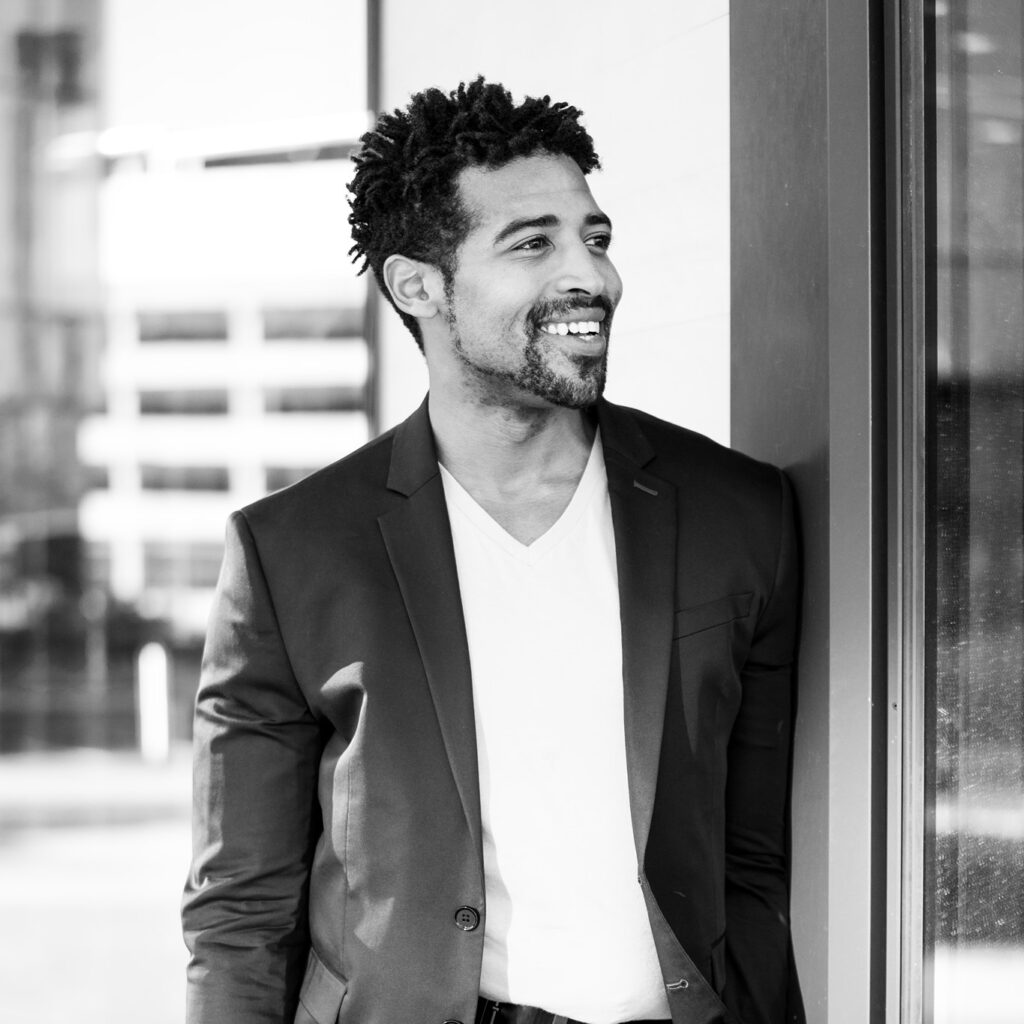
By Lynn Venhaus Seeking his own creative lane in St. Louis, multi-hyphenate Cameron Jamarr Davis is making some noise as founding artistic director of Soul Siren Playhouse, whose inaugural production is Amira Baraka’s “Dutchman.”
The 60-year-old revolutionary play is running from Feb. 1 to Feb. 18 at the new venue, Greenfinch Theater and Dive.
An American nonprofit arts and cultural enrichment organization committed to social outreach, activism, and artistic development through the medium of dramatic and artistic expression, Soul Siren Playhouse aims to challenge and provoke thought, thus change, through artistic exploration and dramatic encounters — while holding space for safe, civil, proactive communication and collaboration on polarizing issues, he said.
The past five years have been a journey for Cameron. “One riddled with lessons, setbacks, successes, and various trials of patience, determination and faith,” he said.
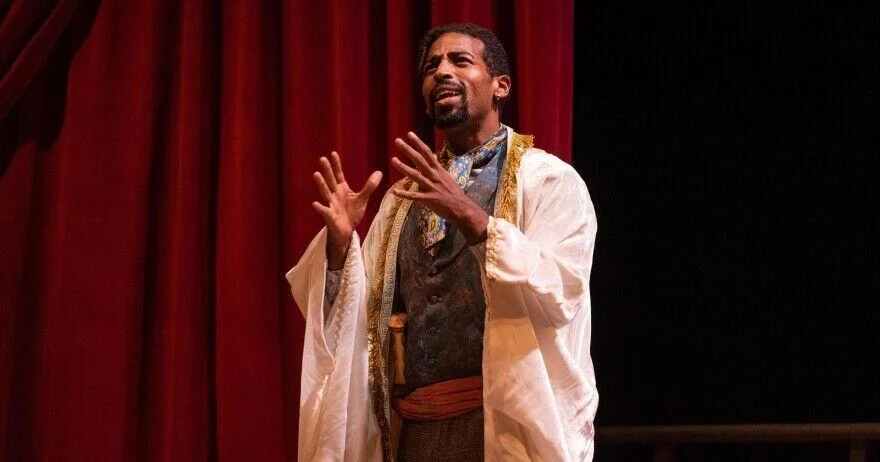
After starting Soul Siren in Los Angeles in 2019, he relocated back to St. Louis and weathered the pandemic. In 2022, he was named a directing fellow at St Louis Shakespeare Festival and played James Hewlett, the first black Shakespearean actor in the U.S., in “The African Company Presents Richard III” at The Black Rep..
In 2023, he won the St. Louis Theater Circle Award for Outstanding Supporting Performer in a Drama, Male or Non-Binary Role, for that role.
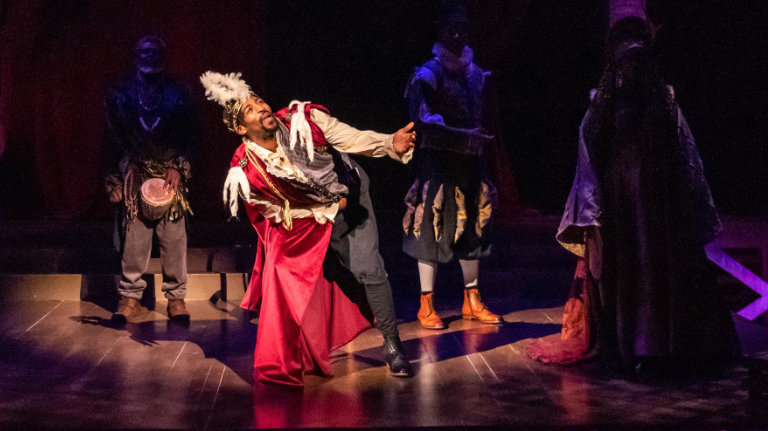
Cameron Jamarr Davis as James Hewlett, the first black Shakespearean actor in the U.S. Photo by Phillip Hamer.
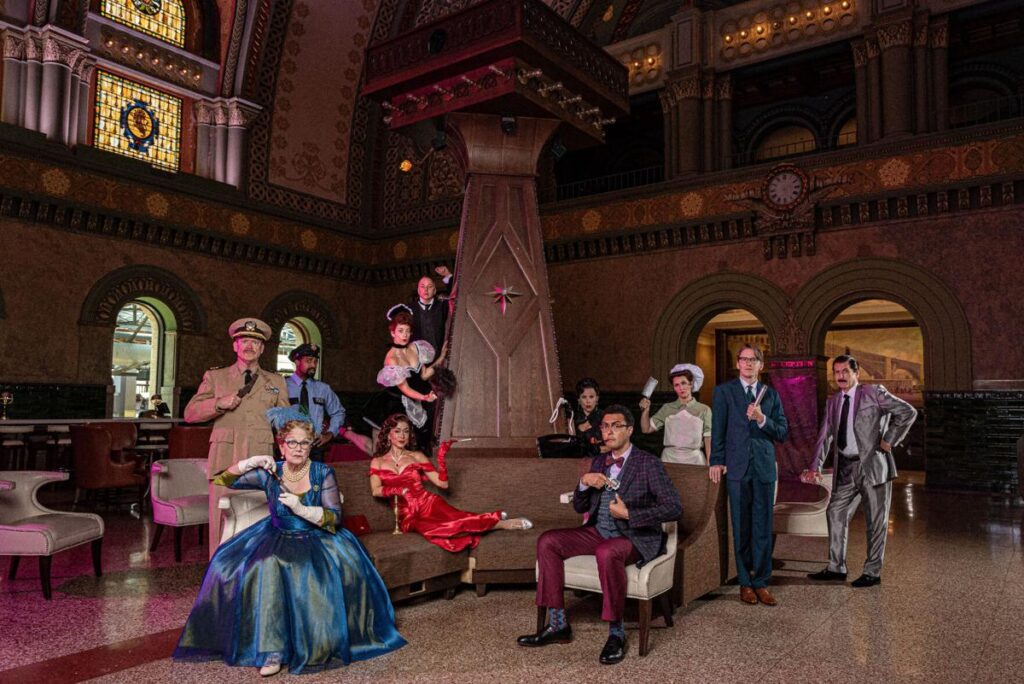
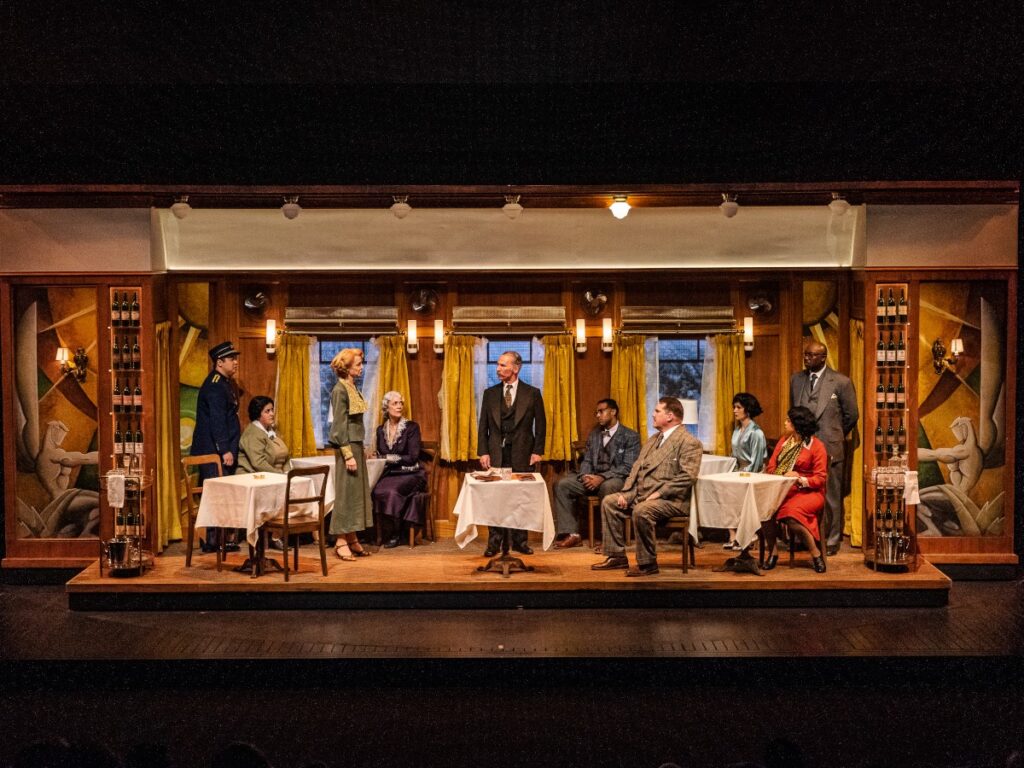
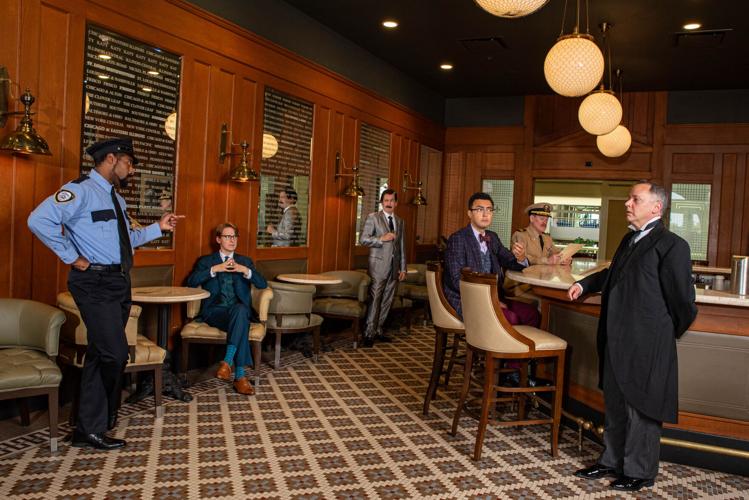
He also portrayed Hector MacQueen in “Murder on the Orient Express” at The Rep and was the cop, among other roles, in “Clue” at Stages St. Louis.
“Clue” and “Murder on the Orient Express” are both nominated for Outstanding Ensemble in a Comedy, and “Clue” leads all St. Louis Theater Circle Awards nominations with 11. (Ceremony on March 25).
“Cameron said “Clue” was the highlight of 2023 on stage for him.
“It was one of those productions that actors dream to be a part of because it was the definition of ‘theater magic’ — all the elements came together so perfectly, you could feel the pure, unrelenting joy that the audience was experiencing. That, in turn, reminded me of the joy I experience onstage as an actor, and the gift of light that theater is capable of bringing to people’s lives,” he said.
“To work with such skilled, hilarious actors, I was on stage legit trying not to break every night. And would bow at the end of every performance not only taking pride in what I do, but beaming with sincere joyfulness. That show truly was a gift, and redeemed something for me I didn’t know I needed,” he said.
The cast of “Clue” at Stages St. Louis, with Cameron third from left. Phillip Hamer photo.
Davis is currently an artist-in-residence at the Kranzberg Arts Foundation, and has rebuilt Soul Siren from the ground up, along with a collective of committed artisans. He is a graduate of Clayton High School and earned a BFA in Dramatic Performance at the University of Cincinnati College Conservatory of Music.
For Soul Siren’s first show, Cameron wanted to celebrate the timeless artistry of “Dutchman.” When he read it in college, he identified with its passion, rawness and abstract chaotic nature.
“Unfiltered and unapologetic, Baraka’s writing sirens the soul of the artist as strongly as it does the revolutionary,” he said.
He describes the 65-minute show as an emotionally charged and highly symbolic version of the Adam and Eve story, where an unsuspecting black man is encountered by a mysterious and calculating white seductress alone on an underground train.. It won the Obie Award for Best Play in 1964.
“The show is gritty, raw, and provocative. It is a clear affirmation of a counter-cultural identity that demands to be seen, felt, heard and understood,” he said.
“We aim to assume a timeless approach to this story that is coming upon the 60th Anniversary of its premiere off-Broadway in March 1964. We also have an interactive dramaturgy display, educating audiences on the playwright, the Black Arts Movement of the 70’s, and the genre of beat poetry, which came about at this time that also has influence on the play’s script,” he said.
Cameron Jamarr as Clay and Eileen Engel as Lula in “Dutchman.” Photo by Zak Littrell.
“A provocative drama that rests between allegory and realism, I believe the danger of this play lies in its fearless attempt to explore what lies at the heart of America’s subconscious and collective identity. Its subterranean setting grants two complete strangers the freedom to encounter their hidden natures as well as one another. A clamorous racing train serves as the vessel for its action as well as the thoughts of its passionate playwright,” he said.
“Though Baraka, the individual, does not fully represent the philosophy, truth, and ideals of Soul Siren Playhouse; the fearless and socially conscious instincts represented in ‘Dutchman’ speak directly to the foundation of our goals as a cultural institution,” he explained.
“We want to facilitate community dialogue on the challenging questions the play continues to present, Our intention is to unify, harmonize and most importantly, entertain, with this bold, challenging story,” he said.
The cast features Cameron Jamarr, Eileen Engel, Jeremy Thomas and alternates DeAnte Bryant and Donald Kidd in a brief role. The creative team includes Scenic Design by Bradford Rolen, Lighting Design by Lenny Banks, Sound Design and Hair Design by De’Janna Scales-Hand, and Dramaturgy by Zahria Moore. Bradford Rolen is also the Stage Manager. The show was co-directed by Cameron, Eileen, Rolen and Moore.
So far, the word he hears most from audiences is “unexpected.” You’ll want to join the conversation.
Soul Siren Playhouse presents Amiri Baraka’s “Dutchman” through Feb. 18 at Greenfinch Theatre and Dive Bar on 2525 South Jefferson, St. Louis.
Performances are Thursday at 7 p.m., Friday at 8 p.m., Saturday two shows – 4 p.m. and 8 p.m., and Sunday at 2:30 p.m.
The cost is free (donations can be made), but RSVPs are necessary. For RSVPs/tickets, visit: https://a.purplepass.com/organizer/67544
For more information: www.playsiren.com.
There will be talkbacks following the shows Thursday 2/8 and 2/15.
Our Take Ten Q&A with Cameron Jamarr Davis
1. What is special about your latest project?
“Our first show ‘Dutchman’ has been five years in the making to get to this point, and we have made personal history by presenting our inaugural production as a black inspired theater company on the first day of Black History Month.”
2. Why did you choose your profession/pursue the arts?
“It very much chose me. I was torn between going to college to study acting professionally or pursuing a degree in English. After inadvertently booking my first professional gig at 17 with St. Louis Shakespeare Festival in “Richard lll,” I took that as a sign to pursue the arts as a professional actor.”
3. How would your friends describe you? Passionate. Loving. Crazy. Soulful. Intelligent. Wild.
Portraying Richard III and the actor James Hewlett at The Black Rep. Phillip Hamer photo.
4. How do you like to spend your spare time? Baking. Writing. Learning how to DJ. Plotting how to take over the world.
5. What is your current obsession? Creating my own professional, creative lane in this city.
6. What would people be surprised to find out about you? I’ve had the honor of dining with Prime Ministers of the United Nations in Nairobi, Kenya. Good God, the food was incredible!
7. Can you share one of your most defining moments in life? Unexpectedly losing my mom at the age of 24. Until then, I’d taken so much of my life, life in general, for granted. In light of her death, I was forced to choose new Life.
8. Who do you admire most? My friends. Their resilience. Their loyalty. The capacity and magnitude of their hearts.
9. What is at the top of your bucket list? Participation in a traditional ayahuasca ceremony led by an indigenous shaman.
The cast of “Murder on the Orient Express” at The Rep. Davis, fifth from right, played Hector MacQueen, the personal secretary and translator to Samuel Ratchett, who is murdered (spoiler alert). Photo by Phillip Hamer.
10. How were you affected by the pandemic years, and anything you would like to share about what got you through, and any lesson learned during the isolation periods? Any reflections on how the arts were affected? And what it means to move forward?
If it weren’t for the pandemic I probably would not have moved back to St. Louis. Sustaining myself creatively was essential in navigating and enduring the uncertainties of the pandemic. In this time I learned patient persistence and the power of the pivot. I created a spoken word album and decided to relocate to St. Louis to restart Soul Siren Playhouse from the ground up, yet did not want to produce theater that required mask mandates. I watched theater become an unidentifiable shadow of itself; actors and audiences in masks, plus various barriers between Art, the Artist and Community. I watched art become increasingly self-serving as a means of survival.
Moving forward I believe that theater’s primary objective should be to entertain, and to be of service to its local community via artistic expression or creative intent (free tickets, child care at shows, pay with a can performances to support food banks, etc). I believe theater can take a greater responsibility in the role of social elevation and enrichment. How can theater meet the needs of audiences and return value as opposed to the self-serving nature of exploitation I commonly see as a detriment.
11. What is your favorite thing to do in St. Louis? Grocery shop at Soulard Market on Saturday mornings.
12. What’s next? Developing my one-man show, “Death Jam” as an Artist in Residence with the Kranzberg Arts Foundation.
With the cast of “Clue,” at left, as a police officer, at Stages St Louis last summer. Phillip Hamer photo.
More About Cameron Jamarr Davis
Age: 33 Birthplace: St. Louis, Current location: St. Louis Family: Only Child / Fairy God Cousin / Cool “Uncle” with no kids or siblings Education: BFA Dramatic Performance from the University of Cincinnati College-Conservatory of Music (CCM) Day job: Substitute Teacher, Clayton School District First job: Busser/Dishwasher, Outback Steakhouse (age 16) First movie you were involved in or made: “Fenced Off” – Rebel Pilgrim Productions in Cincinnati, Ohio Favorite jobs/roles/plays or work in your medium? Oberon in “A Midsummer Night’s Dream” / Leontes + The Bear in “A Winter’s Tale “/ Kendrick Lamar in Lil Wayne’s “Mona Lisa” Dream job/opportunity: Producing Artistic Director of my own theater company Awards/Honors/Achievements: 2023 STL Theater Circle Winner (Best supporting actor in a drama for “The African Company Presents Richard lll” at the STL Black Rep), 2024 Artist in Residence of the Kranzberg Arts Foundation, 2022 Directing Fellow with St. Louis Shakespeare Festival, 2023 Community Arts Training (CAT) Cohort Favorite quote/words to live by: call it our craziness even, call it anything. it is the life thing in us that will not let us die… it is the light in us it is the light of us it is the light… – Lucille Clifton, “Roots” A song that makes you happy: “Built for Greatness” – Marieme Marieme is a Soul Siren Playhouse board member and this song is featured as a promo for Michelle Obama’s Netflix special. This song is GREAT and will make anyone feel like they can conquer anything.
Eileen Engel, Bradford Lewis Rolen, and Cameron Jamarr Davis. Photo provided.
Lynn (Zipfel) Venhaus has had a continuous byline in St. Louis metro region publications since 1978. She writes features and news for Belleville News-Democrat and contributes to St. Louis magazine and other publications.
She is a Rotten Tomatoes-approved film critic, currently reviews films for Webster-Kirkwood Times and KTRS Radio, covers entertainment for PopLifeSTL.com and co-hosts podcast PopLifeSTL.com…Presents.
She is a member of Critics Choice Association, where she serves on the women’s and marketing committees; Alliance of Women Film Journalists; and on the board of the St. Louis Film Critics Association. She is a founding and board member of the St. Louis Theater Circle.
She is retired from teaching journalism/media as an adjunct college instructor.
Gateway Center of the Performing Arts and Monroe Actors Stage Company lead with 31 nominations each
Tickets are now available for the Arts For Life annual awards ceremonies for community theater recognition. The Theater Mask Awards will be on April 20 and the Best Performance Awards will be on June 30.
Nominations were recently announced, with Act Two Theatre’s “The Drowsy Chaperone” and Monroe Actors Stage Company’s “How to Succeed in Business Without Really Trying” leading all musical productions with 17 nominations apiece and O’Fallon Theatre Works’ “Radium Girls” topping plays with 12. See the link below.
Through the nonprofit organization AFL, the TMAs have honored drama and comedy plays since 2015 while the BPAs have honored musical theater in community and youth productions since AFL began the awards recognition program in 1999.
This year’s 10th annual Theatre Mask Awards will take place starting at 11 a.m. on Saturday, April 20, at the Royale Orleans banquet center, 2801 Telegraph Road, St. Louis, Mo. 63125. Doors open at 10:30 a.m.
Awards will be presented in 17 categories as lunch is served. Cocktail attire is suggested. Tickets to the event are $30 + $2 service fee. Table seating is available at 8 per table.
Please let us know what theatre group or person(s) you would like to sit with in the checkout process by clicking “Add an order note” while viewing your cart.
A full meal is included with the ticket purchase (menu coming soon). Please let us know if you have any special dietary concerns or needs. A cash bar is available.
Mark Lull
Mark Lull returns as the master of ceremonies after hosting in 2022. A 10-time AFL nominee, he won Best Performance by a Comedic Actor as Uncle Fester in Alfresco Productions’ “The Addams Family” in 2015.
A retired school principal, he has performed at Worlds of Fun in Kansas City, The Muny, and with other theater companies in the St. Louis metropolitan area. He is currently teaching early childhood education at St. Louis Community College and serves as vice president on the AFL board of directors.
For the Best Performance Awards on Sunday, June 30, at 2 p.m. at the Keating Theater at Kirkwood High School, formal attire is requested, and the event will be reserved-style seating. A cash bar will be available. Doors open at 1:30 p.m.
The event will include performances from the top musicals nominated in the three Best Musical Production categories. Tickets to the show are $30.00 + a $2.00 service fee per ticket. Seating is reserved seating. Please let us know which theatre group or individual you would like to sit with in the “notes to seller” section at checkout.
Both TMA and BPA tickets are available online with a service fee of $2 added: https://arts-for-life-2.square.site/.
A combination ticket for both, at a discounted price of $50 with a $2 service fee, is available, but must be purchased by April 12.
Reservations can be arranged through the mail and tickets can be picked up at the venues on event day. Please make check payable to ARTS FOR LIFE and mail to PO Box 16426, St. Louis, MO 63125.
All BPA ticket orders will be held at the box office unless a self-addressed stamped envelope is included with the ticket order. If ordering for a group, please attach a list of individual names for box office pick-up.
Please contact us at [email protected] if you have any special seating needs or COVID-19 related concerns. Handicapped seating is available.
“Radium Girls’ at O’Fallon Theatre Works is nominated for 12 TMAs. KWR Photography.
Award Nominations
Nominations are listed on the website, www.artsforlife.org.
“Arts For Life provides a community recognition program. These events recognize the incredible talent we have in St. Louis community theater and honor the passion and dedication of those who build this amazing and unique theatrical community,” said Mary McCreight, AFL president.
Gateway Center for the Performing Arts earned 31 BPA nominations – for “Bare: A Pop Opera” (7) and youth productions “9 to 5: The Musical” (14) and “School of Rock” (10), with Monroe Actors Stage Company in Waterloo receiving 17 BPA and 14 TMA nominations (including “Father of the Bride” – 3, “Fuddy Meers” – 1, “Unnecessary Farce” – 10, and “How to Succeed” – 17) for a total of 31.
Act Two Theatre in St. Peters followed with 17 BPA and 12 TMA nominations for a total of 29 (including “Peter and the Starcatcher” – 11, “Sandy Toes and Salty Kisses” – 1, and “The Drowsy Chaperone” – 17).
O’Fallon Theatre Works had 29 total, for 23 TMA and 6 BPA nominations (“Emma: Portrait of a Lady” – 11, “Radium Girls” – 12, and “Be More Chill” – 6).
The Kirkwood Theatre Guild had 20 overall, with TMA nominations for “The Last Night of Ballyhoo” – 6, “Vanya and Sonia and Masha and Spike” – 6, and “The Mousetrap” – 4, with 4 BPA nominations for “The Sound of Music.”
‘The Drowsy Chaperone’ at Act Two earned 17 nominations. Lori Biehl Photography.
Other participating groups included Alpha Players of Florissant, Christ Memorial Productions, Clayton Community Theatre, Crusader Players, Curtain’s Up Theatre, Dayspring Arts and Education, Goshen Theatre Project, Hawthorne Players, KTK Productions, Looking Glass Playhouse, Over Due Theatre, Theatre Guild of Webster Groves, Spotlight Productions and Take Two Productions.
Arts For Life is a local not-for-profit arts organization dedicated to the healing power of the arts through its work with youth, the underserved, and the community, with its goal of “Making a Dramatic Difference.”
AFL is dedicated to promoting public awareness of local community theatre, encouraging excellence in the arts, and acknowledging the incredible people who are a part of it.
TMA Event Sponsorships are available at either $100 or $50 if you also purchase an ad. Sponsorship includes group/company name and logo displayed at the event, website and on our social media platforms.
Lynn (Zipfel) Venhaus has had a continuous byline in St. Louis metro region publications since 1978. She writes features and news for Belleville News-Democrat and contributes to St. Louis magazine and other publications.
She is a Rotten Tomatoes-approved film critic, currently reviews films for Webster-Kirkwood Times and KTRS Radio, covers entertainment for PopLifeSTL.com and co-hosts podcast PopLifeSTL.com…Presents.
She is a member of Critics Choice Association, where she serves on the women’s and marketing committees; Alliance of Women Film Journalists; and on the board of the St. Louis Film Critics Association. She is a founding and board member of the St. Louis Theater Circle.
She is retired from teaching journalism/media as an adjunct college instructor.
As good as Kingsley Ben-Adir is portraying the reggae icon in “Bob Marley: One Love,” the movie’s script fails to hit the right notes, and the result is a disjointed, unsatisfying profile.
Made in partnership with Marley’s widow Rita and two children Ziggy and Cedella, the film celebrates Marley’s life and music as Jamaica’s most famous citizen who never wavered in his message of love and unity, broke boundaries and promoted healing in his country – although the timeline is wonky here.
The trio of screenwriters Zach Baylin, Frank E. Flowers and Terence Winter plus director Reinaldo Marcus Green narrowly focused on the years 1976-1978, when Marley was at the height of his career, and then he learned he had cancer. Now, granted, this isn’t a documentary, it’s “inspired by a true story,” but they have left out some key details of his life.
At the onset, the film explains that warring political factions heightened danger on the island, and an assassination attempt was made on Marley’s life. On Dec. 3, 1976, two days before the free Smile Jamaica Concert he organized, he was wounded, Rita was shot in the head, and manager Don Taylor had serious injuries.
He moved to London to escape, toured Europe, and recorded his acclaimed album “Exodus.” (He also made “Kaya” then, but that’s omitted).
When a toe injury didn’t heal, he was diagnosed with acral lentiginous melanoma, a rare skin cancer, but didn’t stop touring – for a while. (Tragically, he died at age 36 in 1981, after cancer spread to other areas).
Green, who directed “King Richard” about Venus and Serena Williams’ father, presents part of Marley’s journey in flashbacks that focus on imagery without context – his childhood years with a white absentee father, and he leaves with his mother, plus nods to his faith in Rastafari. Those, in repetition, cloud the story instead of illuminate.
The film mentions Haile Selassie I, the emperor of Ethiopia who was considered a god in the religion, but doesn’t explain much about it. Rastafari originated in poor Afro-Jamaican communities in the 1930s as reaction to British Colonial culture and is rooted in Protestant Christianity and mysticism.
Marley’s relationship with his wife, Rita, well-played by Lashana Lynch, began as teenagers, and she was also in his band, The Wailers, as one of the back-up singers of “I Threes” after Peter Tosh and Bunny Wailer left. They married in 1966. Both came from the Trenchtown neighborhood in Kingston.
It is not clear that the three children they had together are among the 11 recognized as Marley’s, for they both had extramarital affairs. Cedella, David “Ziggy,” and Stephen are theirs, and Bob adopted Sharon, Rita’s daughter from a previous relationship. There is no mention that he had six other children with six different women between 1972 and 1978.
How Marley became a music legend, with his unique blend of reggae, rocksteady, and ska, isn’t given much air either – you’ll have to either be familiar with his rise in the music business or read about it later.
Marley returned to Jamaica in April 1978 to much fanfare, and presented the One Love Peace Concert, his attempt to unite opposing political parties. It is only in the archival footage at the film’s end that the political leaders shake hands – populist prime minister Michael Manley and Edward Seaga, head of the opposing Jamaica Labour Party, but it did not end the island’s violence and political tensions.
In fact, what the movie doesn’t say is that the concert’s two organizers were killed in the years following, and 1,000 more people died in 1979-80.
Now the music is a high point, as expected. Many of the hits, including “Jamming,” “Get Up/Stand Up,” “I Shot the Sheriff,” “One Love/People Get Ready,” and “This Is Love” are included in the soundtrack.
One of the most touching scenes is when Marley plays “The Redemption Song” for his family while sitting around a fire, and his wife asks him: “When did you write that?” and he answers: “All my life.”
Ben-Adir, who was impressive as Malcolm X in “One Night in Miami” and amusing as one of the Kens in “Barbie,” immerses himself in a virtuoso performance. Not only did he nail the accent, speech pattern and movements of the man, but he also sang and played guitar.
Kris Bowers composed the film’s score, using Marley’s music as a foundation. Costume designer Anna B. Sheppard captured the culture and the period well, as did production designer Chris Lowe.
Despite the appealing music and the mega-watt turn by Ben-Adir, “Bob Marley: One Love” is too fragmented. It fails to offer something more scintillating overall, and lands merely as an average Hollywood biography.
“Bob Marley: One Love” is a 2024 biopic directed by Reinaldo Marcus Green and starring Kingsley Ben-Adir, Lashana Lynch, and James Norton. It is rated PG-13 and the runtime is 1 hour, 47 minutes. It opens on Wednesday, Feb. 14. Lynn’s Grade: C.
Lynn (Zipfel) Venhaus has had a continuous byline in St. Louis metro region publications since 1978. She writes features and news for Belleville News-Democrat and contributes to St. Louis magazine and other publications.
She is a Rotten Tomatoes-approved film critic, currently reviews films for Webster-Kirkwood Times and KTRS Radio, covers entertainment for PopLifeSTL.com and co-hosts podcast PopLifeSTL.com…Presents.
She is a member of Critics Choice Association, where she serves on the women’s and marketing committees; Alliance of Women Film Journalists; and on the board of the St. Louis Film Critics Association. She is a founding and board member of the St. Louis Theater Circle.
She is retired from teaching journalism/media as an adjunct college instructor.