
By Alex McPherson
A quietly bananas experience dripping in studious authenticity and a passion for research, directors Kevin Walker and Jack Auen’s “Chronovisor” provides a rabbit hole worth tumbling into.
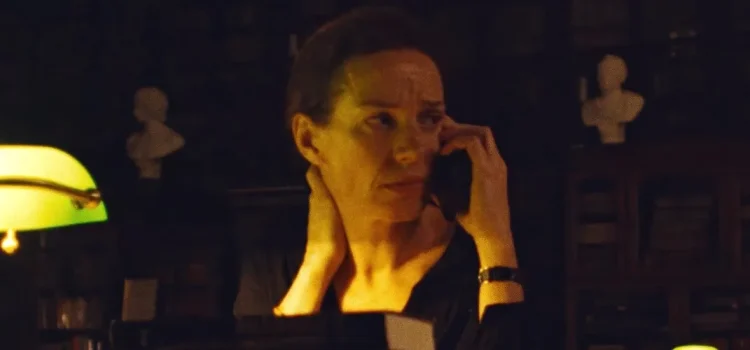
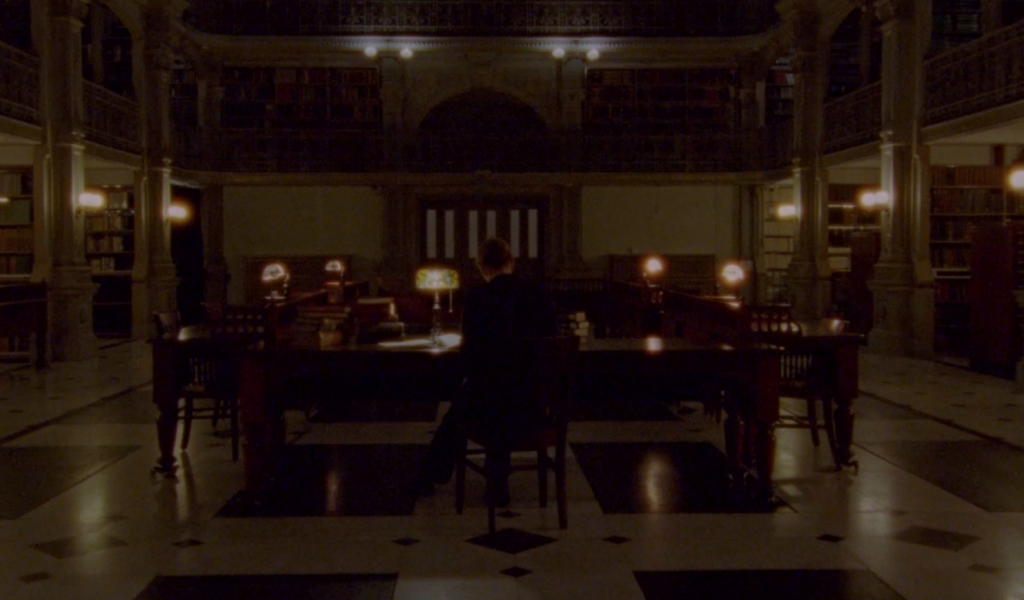
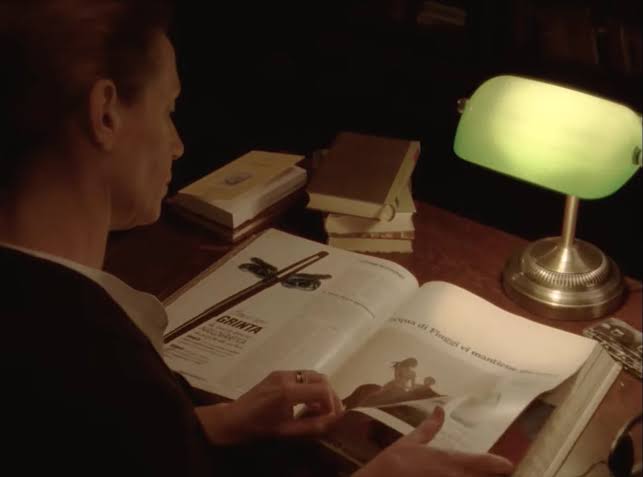
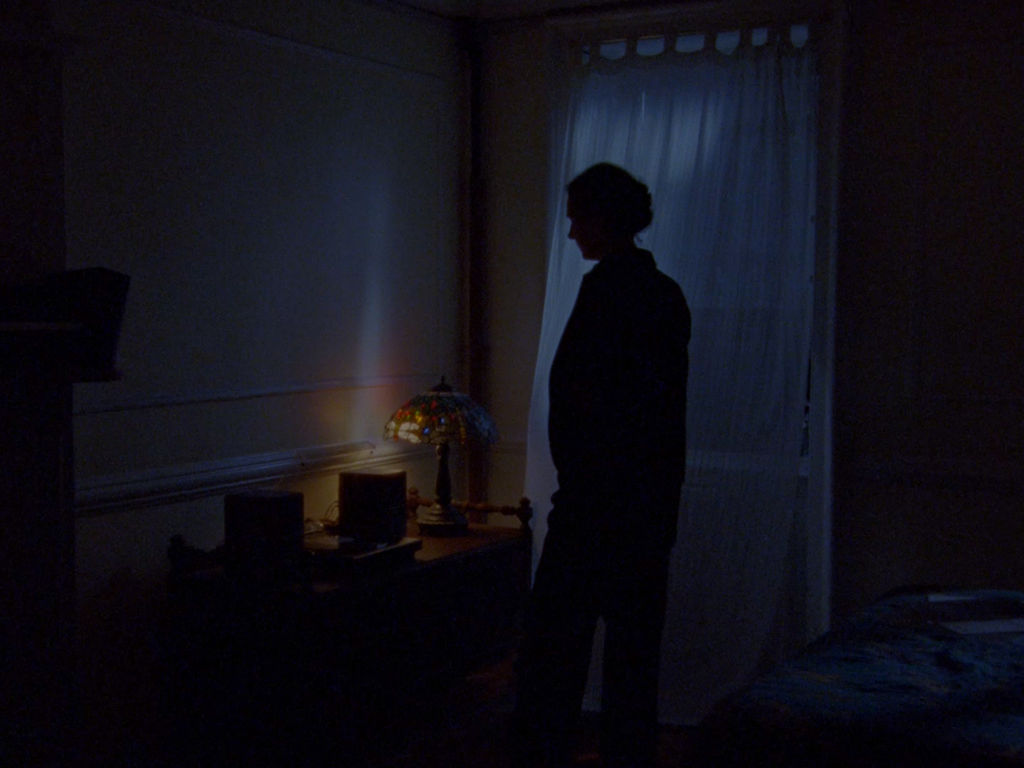
The film, shot in grainy 16mm, takes place in present-day New York City and follows Beatrice Courte (played by real-life professor Anne-Laure Sellier), a French scholar of philosophy and neuroscience at Columbia University. Beatrice feels disconnected from her colleagues; she’s much more at home on her own in the school’s cavernous library, with her research papers and stacks of books under the warm glow of a table light.
She’s fascinated by the concept of memory and pursues a new lead: the titular Chronovisor, a controversial, possibly fabricated 1970s “time viewing” device that allows whoever uses it to view any point in human history via silent video. Yes, that includes the crucifixion.
Although the Chronovisor was debunked as fiction, Beatrice can’t let go, pulling at an increasingly tangled string of threads to uncover the truth of its existence — and, if the Chronovisor still exists, how to potentially access it herself. She starts by investigating the history of its creator, the Italian Benedictine monk Pellegrino Ernetti, and quickly becomes immersed in worlds of academic conspiracies, using every tool at her disposal whilst having an obvious affinity for the analog.
Suspense builds, certain doors of inquiry are closed while others open, and Beatrice — along with us viewers — are on the edge of our seats hungering for each new morsel of information.
“Chronovisor,” Walker and Auen’s feature debut, is a unique film that does an ingenious job at putting viewers in Beatrice’s shoes. It deliberately doles out its quietly wild plot twists (largely lifted from the real urban legend of the Chronovisor) like a great detective novel and treats viewers like their own sleuths.
Making extensive use of actual archival documents about the Chronovisor and weaving together their own narrative surrounding it, Walker and Auen infuse a sense of “realness” into practically every frame, giving us the sense of uncovering hidden history and encouraging us to give into the allure of obsessive research.
Indeed, “Chronovisor” takes a gamble with its pacing and approach to unfolding its narrative. We’re reading and discovering along with Beatrice, and the film respects us enough to keep up, rewarding our diligence with chilling reveals and an increasingly suspenseful sensation of cosmic-horror-inflected paranoia.
Sellier, making her screen debut, brings a sense of lived experience and, again, genuineness to the proceedings that add to the film’s commitment to tangibility. Beatrice is reclusive, socially awkward, and subtly becoming consumed by her fixation on the Chronovisor. It’s a largely internal performance where much is communicated through her furrowed brow, darting eyes, quiet exasperation, and the white lies she tells to unearth just one more layer of this mystery — further pushing away her peers and her own attachment to reality as she becomes more obsessed with this strange device.
Much of the brilliance of “Chronovisor” also lies in the distinctive atmosphere that Walker and Auen create: both unnerving and contemplative, capturing the thrill of new clues along with the foreboding doom that these new revelations bring. Leo Zhang’s richly sensory cinematography conveys Beatrice’s disconnection from the outside world and the tactile joy of poring through leather-bound volumes and watching scratchy VHS tapes in darkened libraries, bringing us right over her shoulder.
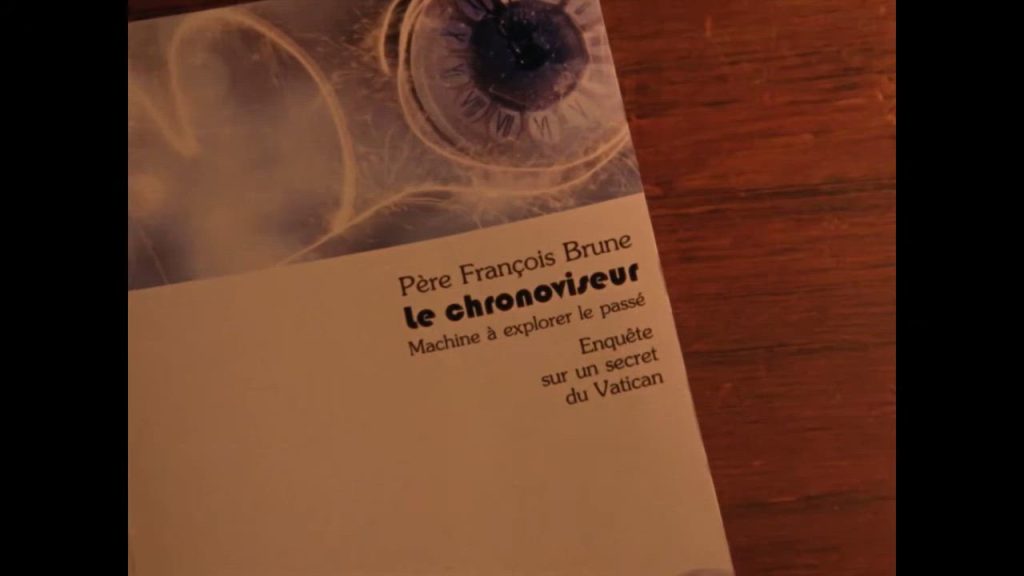
“Chronovisor” requires us to read paragraphs as Beatrice reads them; the camera zooms in on the text (often in different languages) and elegantly overlays the English translation, another way the film simulates the psychological ups and downs of Beatrice’s quest for understanding.
Music plays a huge role here. Booming orchestrations by the late English classical composer Gustav Holst hauntingly ebb and flow as questions are gradually answered — at times, it even sounds like a more cerebral version of John Williams’ music for “Indiana Jones.”
All these elements combine to create an enveloping mind-bender that, so long as one can read at a rather rushed pace, absolutely flies by. It almost makes uncovering the last stone undesirable as Beatrice nears the end of the road.
If there are any issues whatsoever with “Chronovisor,” they’re in the finale, which — without giving too much away — writes itself into a corner. Luckily, it’s balanced out by some nightmare-fuel imagery that encapsulates the crescendo of stress the film has been building towards.
So, “Chronovisor” remains more about the journey than the destination, but when the storytelling is so wildly creative — and deeply ambitious in its melding of fact and fiction, the past, present, and future — any quibbles fade away into the recesses of the mind. It’s a bonafide masterpiece.
“Chronovisor” is a 2026 occult sci-fi mystery thriller written and directed by Kevin Walker and Jack Auen and starring Anne Laure Sellier? It is not rated by MPAA and the run time is 1 hour, 39 minutes. It is currently in limited release. On Saturday, Oct. 3, it will be shown at 5 p.m. at the Arkadin Cinema & Bar. The film is also listed as “coming soon” at the Alamo Drafthouse Cinema in St. Louis. Alex’s Grade: A+

Alex McPherson is an unabashed pop culture nerd and a member of the St. Louis Film Critics Association.
