
By Alex McPherson
Bringing to mind a range of influences including “The Wages of Fear,” but never fully capitalizing on the intensity of its premise, director Padraic McKinley’s debut feature “The Weight” is a solid, if underwhelming, adventure that gives Ethan Hawke yet another opportunity to flex his acting chops.
Taking place in Oregon in 1933 amid the throes of the Great Depression, battle-scarred World War 1 veteran Samuel Murphy (Hawke) and his young daughter Penny (Avy Berry) are struggling to make ends meet. Murphy is a deeply devoted father who, despite his traumatic past, is gentle and tender with Penny, helping her mature in a world that forces her to grow up way too quickly.
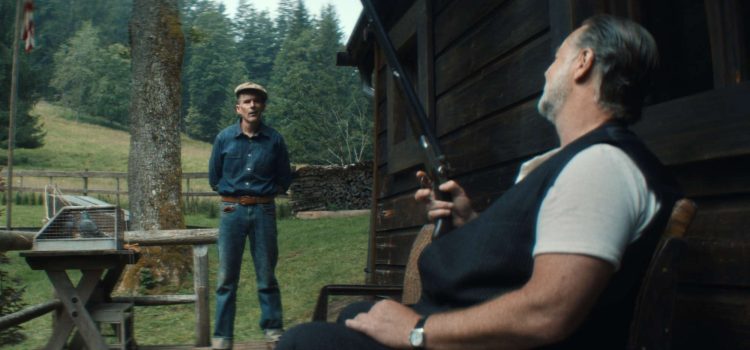
Murphy is evicted from his dingy apartment and, to make matters worse, is beaten up by a squad of corrupt cops in self-defense. They promptly take him to prison and he’s sent off to a work camp led by the arrogant yet charismatic Warden Clancy (Russell Crowe) to build roads.
Murphy — quiet, introspective, highly resourceful, and possessing a superhuman ability to withstand pain — sparks up a strange rapport with Clancy. Clancy gives Murphy the opportunity for an early release, and the chance to reunite with Penny before she’s adopted, if Murphy helps haul a fortune of gold bars from a nearby mine across the Oregonian wilderness (avoiding confiscation by FDR’s government).
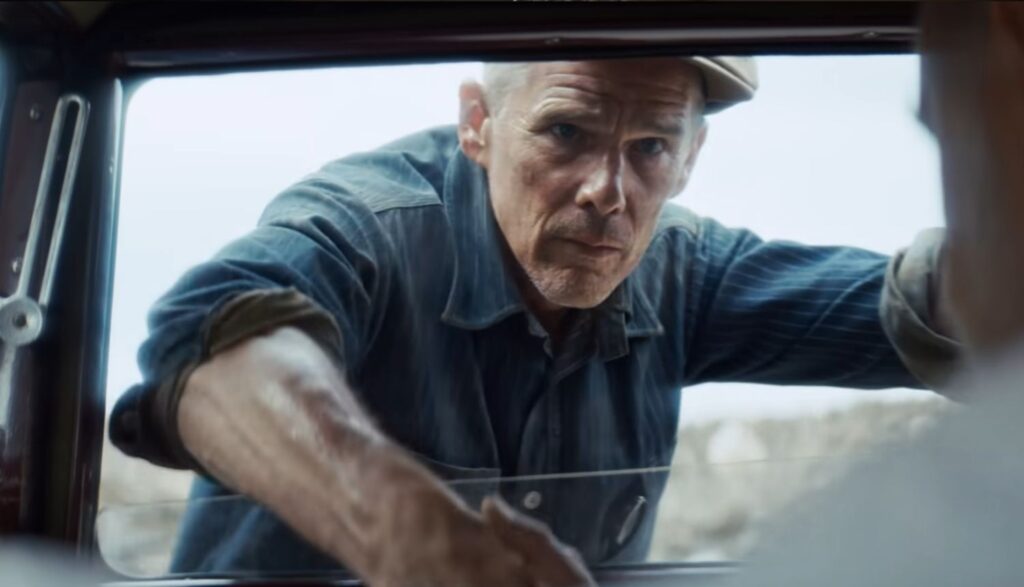
Murphy agrees to the job, bringing along fellow convicts Singh (Avi Nash), Olson (Lucas Lynggaard Tonnesen), and the boisterous, unpredictable Rankin (Austin Amelio). They’re accompanied by tough-guy enforcers Amis (Sam Hazeldine) and Letender (George Burgess) who were hired by shady lawman Taggart (Alec Newman) to keep the men in line and make sure all the gold makes it to the drop-off point. The group is soon joined by Anna (Julia Jones), an Indigenous woman seeking her own freedom.
Danger, both from the natural world and from their fellow men, plagues the journey, pushing Murphy to his limits as he fights to complete the trek and, ultimately, to reunite with his dear Penny before it’s too late.
It’s a gritty, pulpy yarn, full of high peril and (mostly expected) double-crosses peppered with crackling dialogue and a badass protagonist using a “particular set of skills” to achieve his goals. “The Weight” is also muddled, clunkily paced, and only fitfully containing the armrest-gripping moments that define its throwback inspirations.
But what’s here remains greatly helped by Hawke’s performance, full of pain and grim determination that balances McKinley’s film through its clumsier stretches.
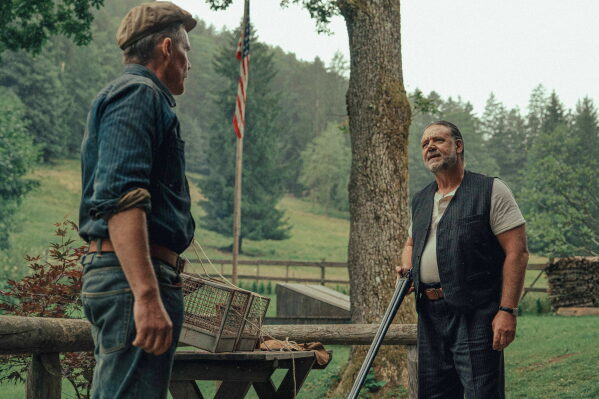
Hawke once again proves his versatility as a performer, coming off his Oscar nominated turn in Richard Linklater’s “Blue Moon.” Although Matthew Booi and Shelby Gaines’ screenplay generally paints in broad strokes without truly digging into any individual character’s psyche, Murphy’s rage and deep resolve is palpably conveyed.
Hawke plays Murphy as a semi action hero who becomes the de-facto leader of the group. His portrayal, full of solemn stares, gruff one-liners, and often quiet anguish (albeit not so subdued when he eventually goes off the chain) brings more to the table for Murphy as a character than the actual script does.
Indeed, it’s clear that “The Weight” isn’t trying to be a profound character piece so much as an old school experience that, by the time its “frontier justice” climax rolls around, prioritizes crowd-pleasing catharsis over making a strong statement about anything in particular.
The set-pieces — especially a hair-raising sequence involving a barely-held-together rope bridge and a fatal nighttime ambush lit by flashes of lightning — are well-helmed by cinematographer Matteo Cocco. He tightens the framing to ratchet up feeling, which jolts the film out of its otherwise rudimentary editing and shot compositions.
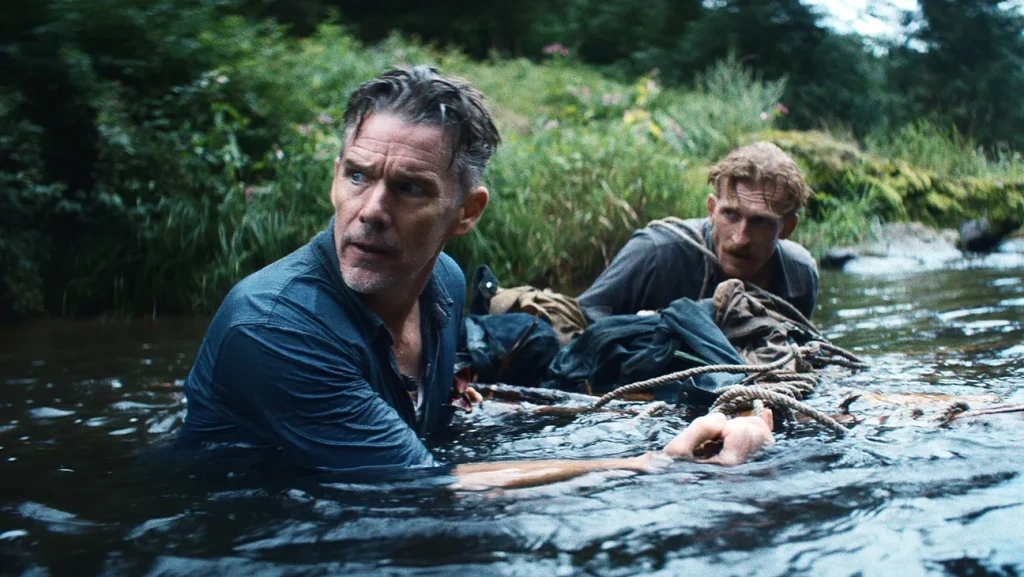
There are several sequences of convincingly gnarly brutality, as well as a strong attention to period detail that shines when McKinley lets us sit in the quieter moments.
The screenplay, particularly during conversations between Clancy and Murphy (Crowe is underutilized), hisses with enjoyably cynical energy. Amelio is also great as the erratic yet good-hearted Rankin; he’s given far more to do than the majority of the supporting characters, who mostly function as cogs moving the plot from Point A to Point B.
There are attempts to bring in social issues — like economic inequality, racism, the treatment of Indigenous peoples, burgeoning political movements of the time — but they don’t add up to much besides scene-setting, given McKinley’s preference for more traditional thrills.
Uneven pacing and structural issues limit this approach, though, with McKinley and Woolley’s editing distractingly holding shots for just a beat too long. The film’s segmented, time-jump-heavy structure also weirdly undermines the grueling nature of the journey.
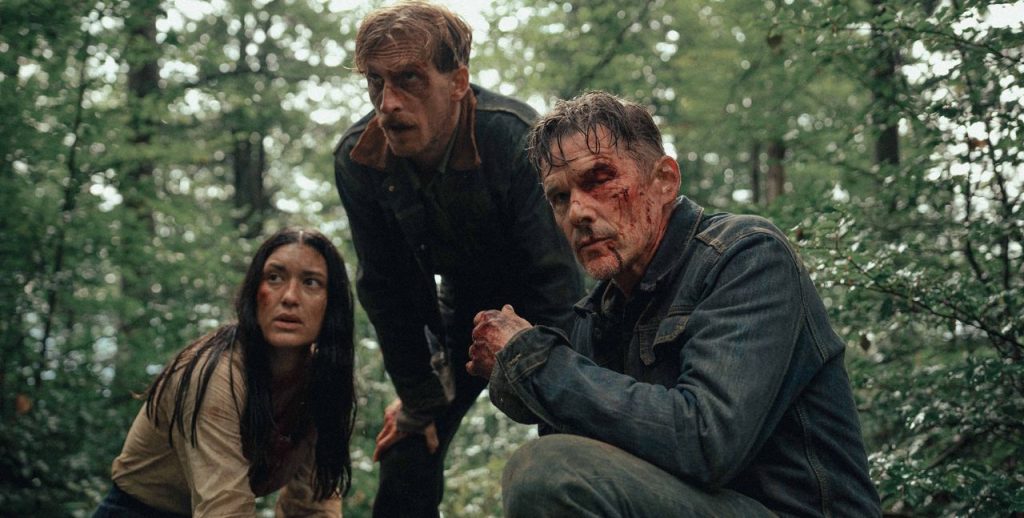
It’s a shame that “The Weight” never quite finds its footing, but there are flashes of excitement here, and another role for Hawke that’s almost worth the price of admission on its own.
“The Weight” is a 2026 crime-action period drama directed by Padraic McKinley and starring Ethan Hawke, Russell Crowe, Austin Amelio, Avi Nash, Julia Jones, Lucus Lynggaard Tonnesen, Avy Berry, Sam Hazeldine, George Burgess and Alec Newman. The runtime is 1 hour, 55 minutes, and it’s rated R for language and some violence/bloody images. It opens in theaters Sept. 18. Alex’s Grade: B-

Alex McPherson is an unabashed pop culture nerd and a member of the St. Louis Film Critics Association.
