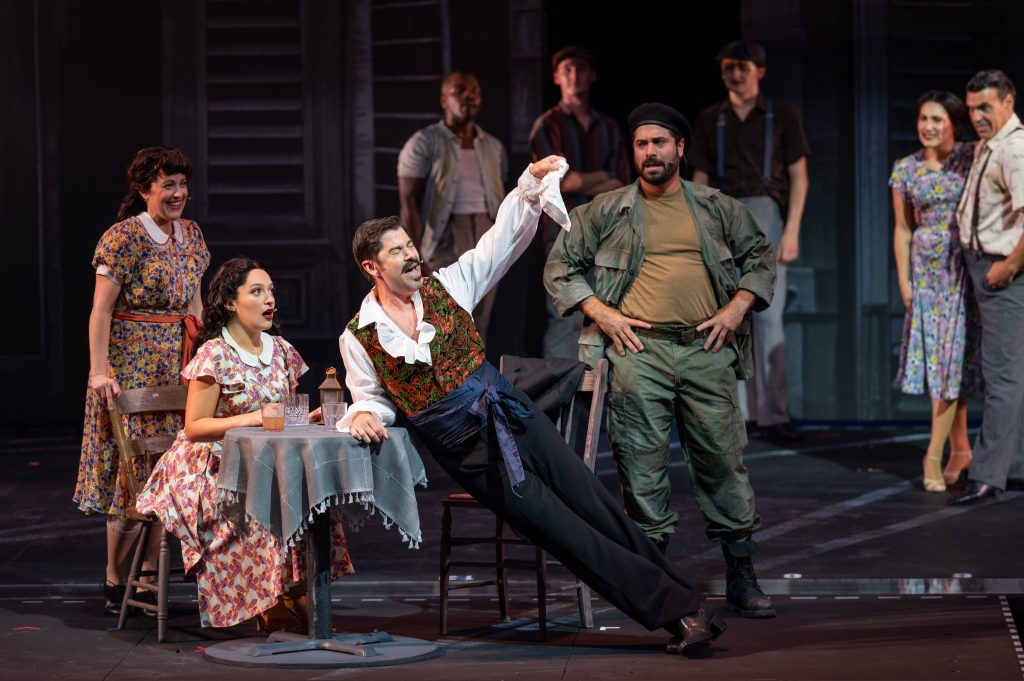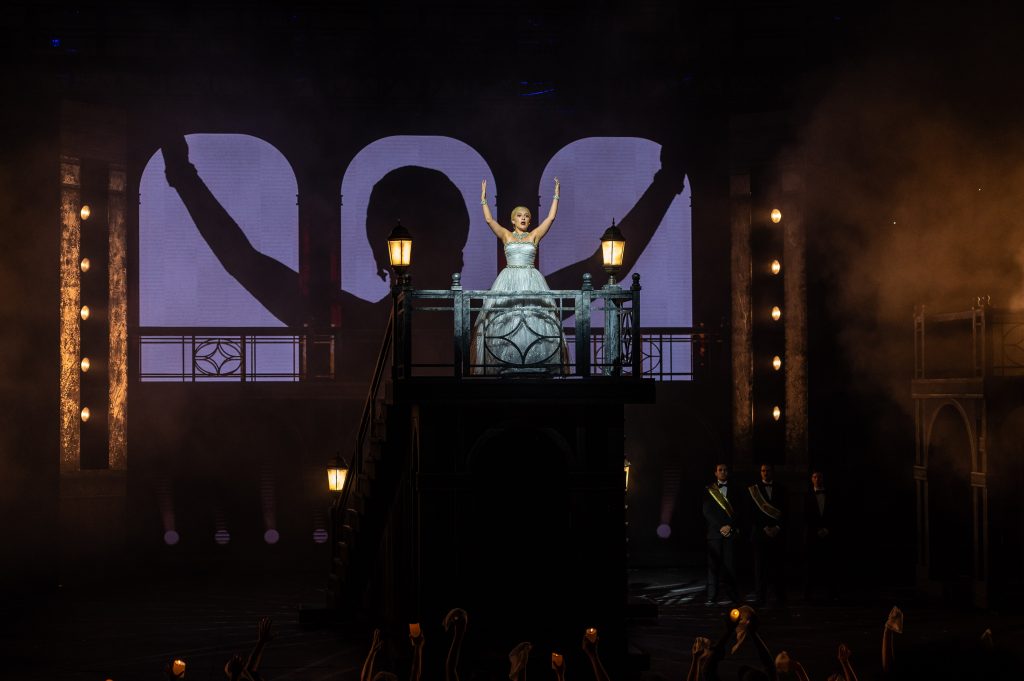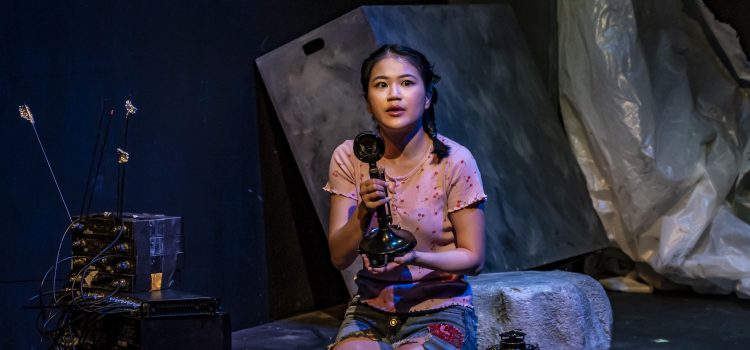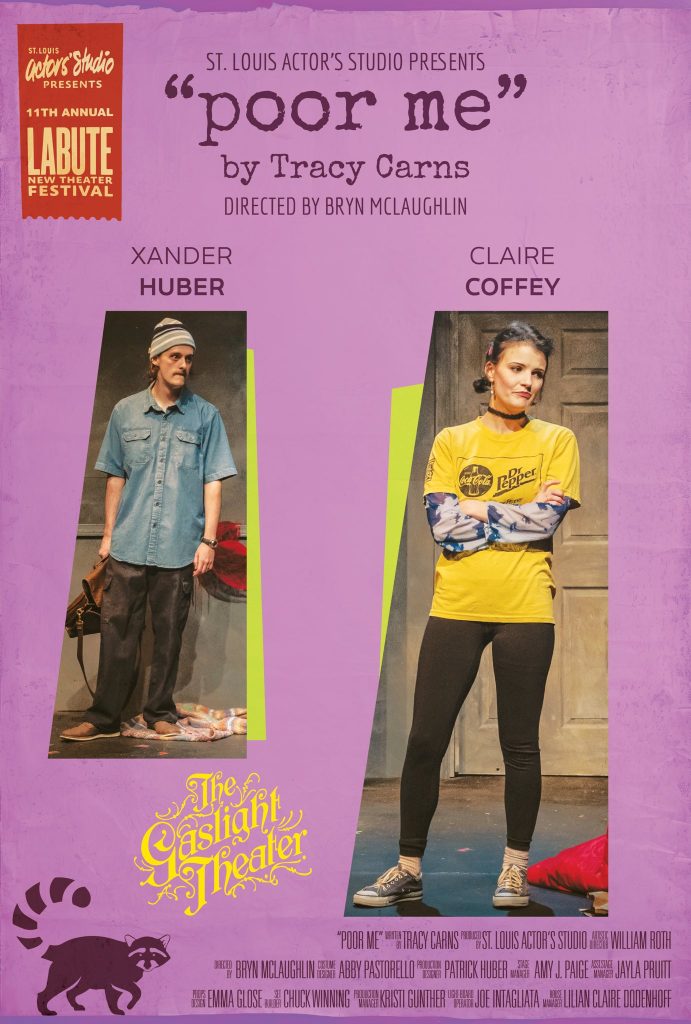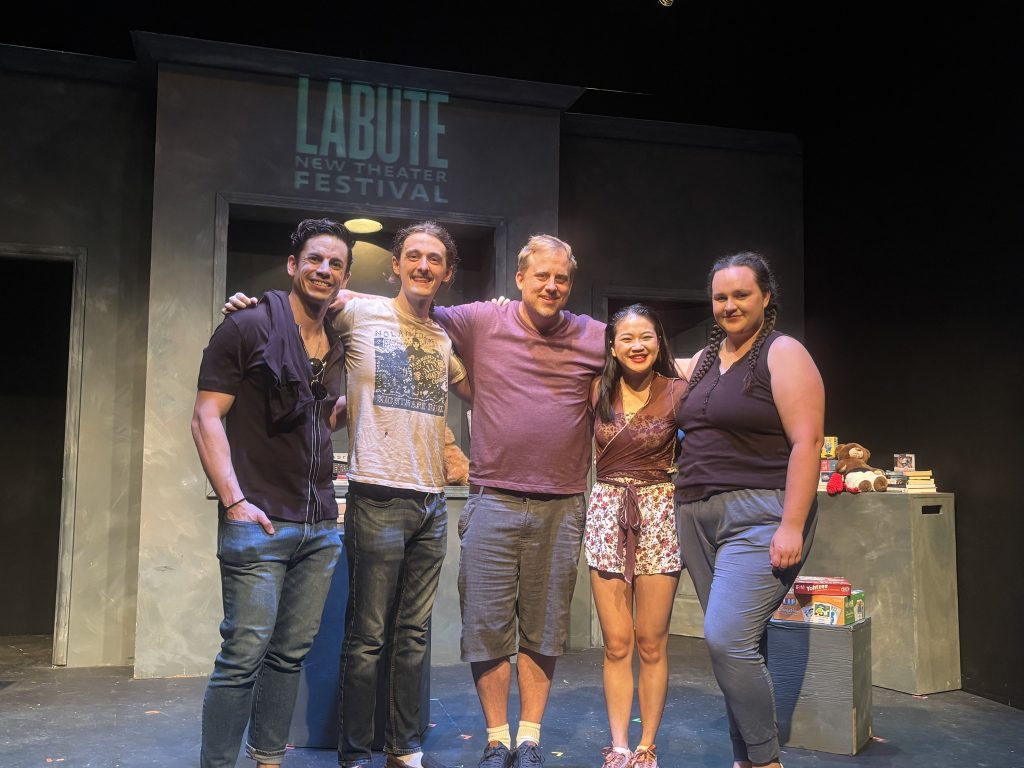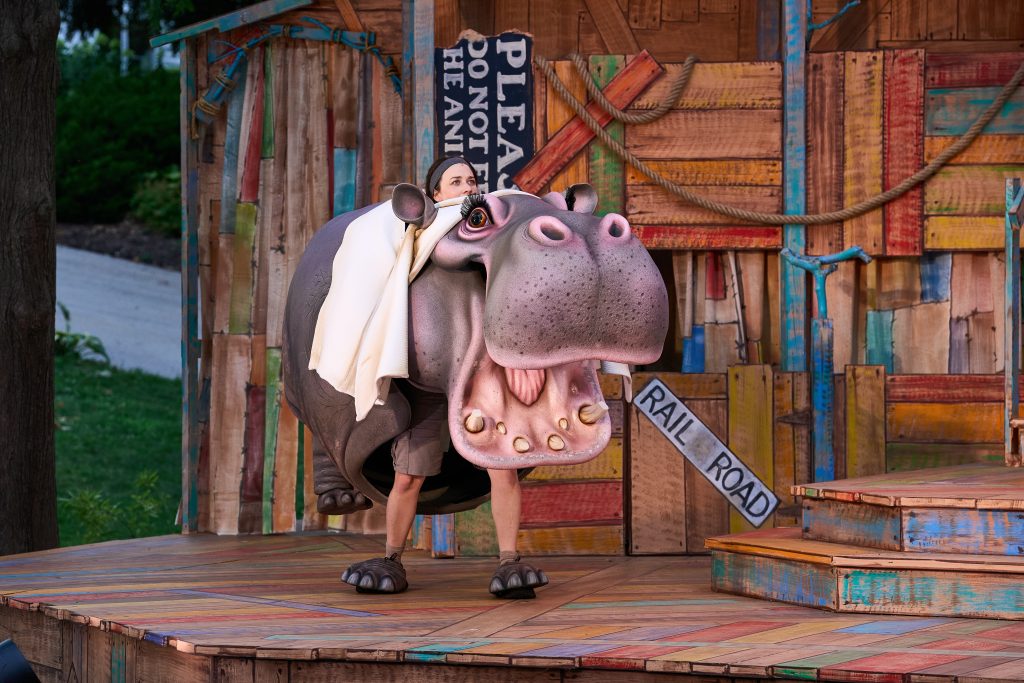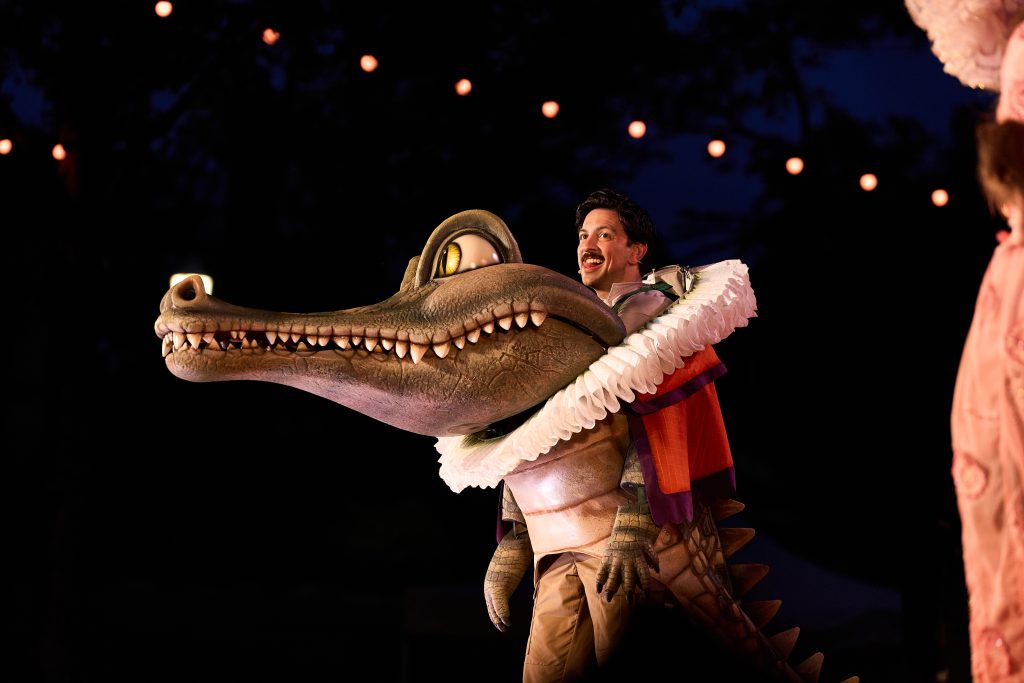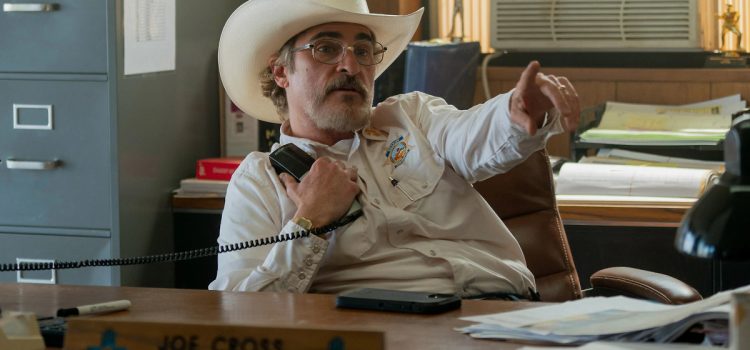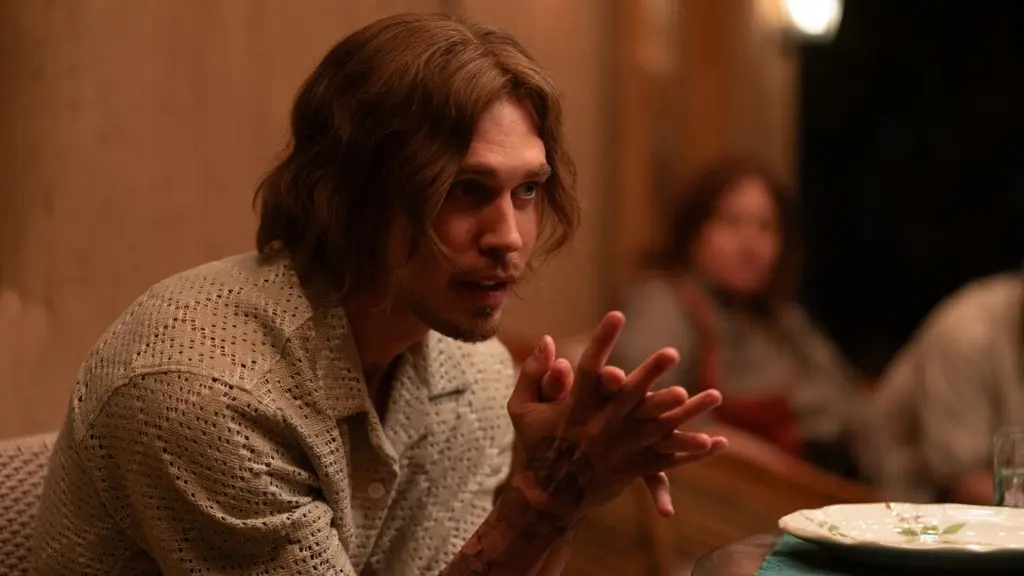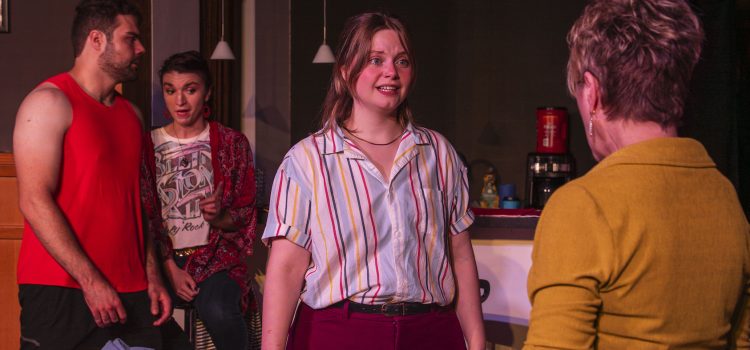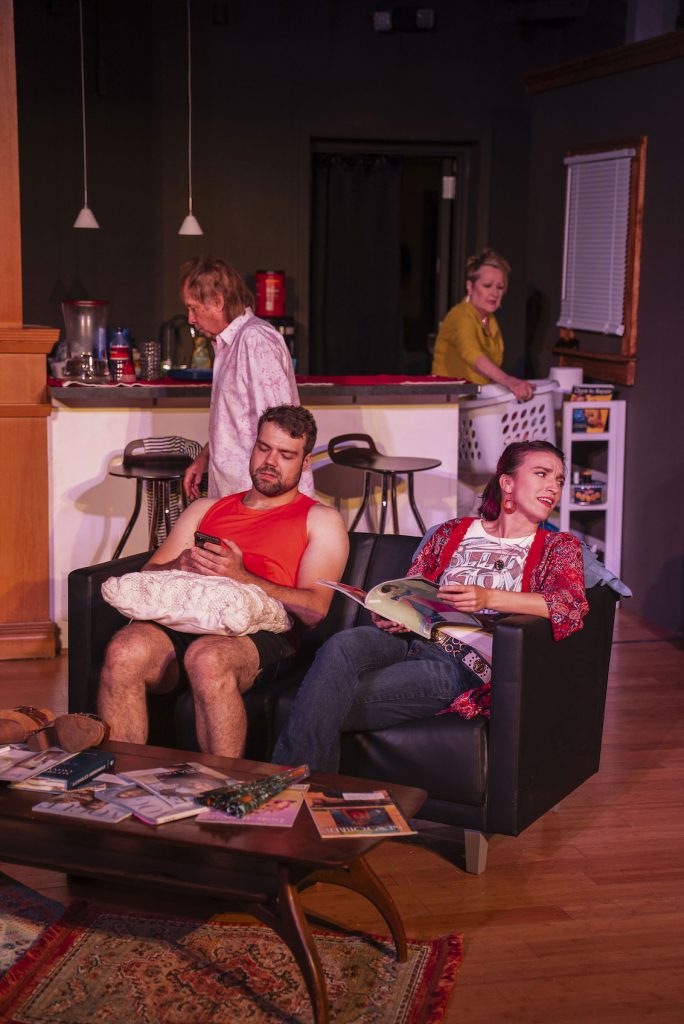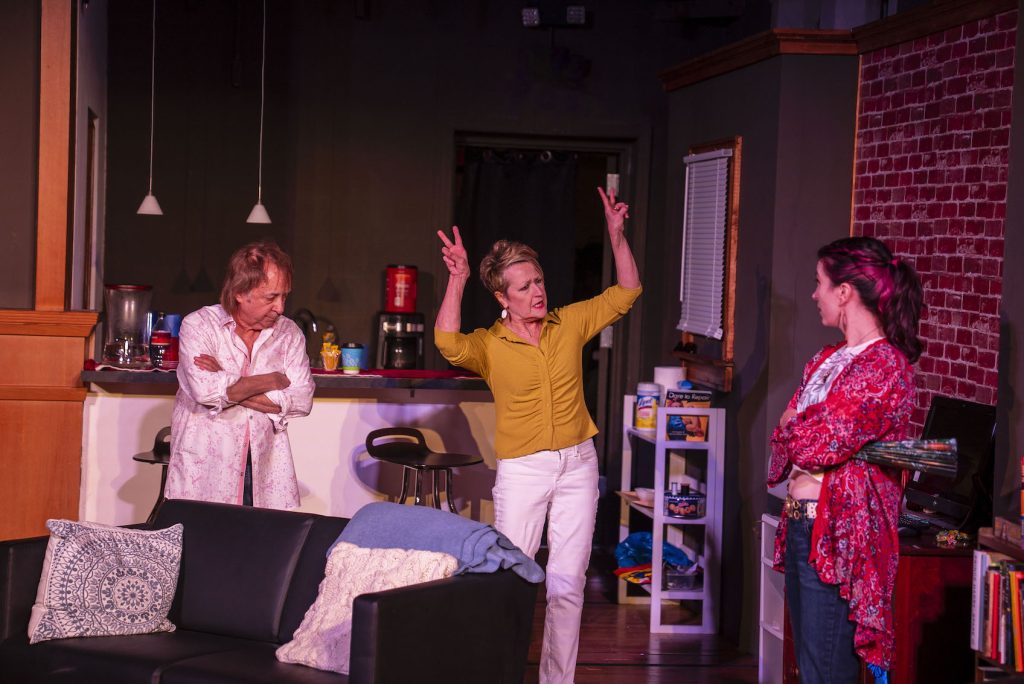
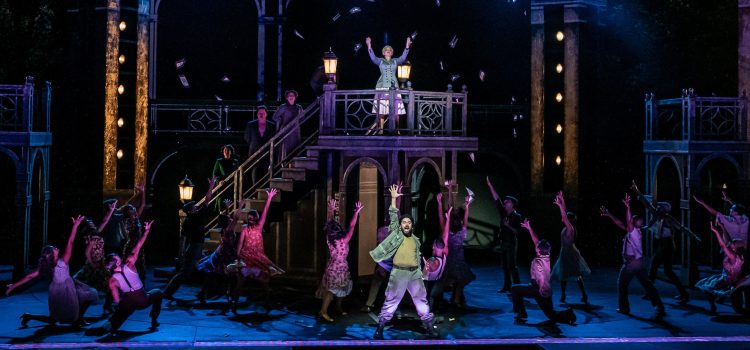
The Midnight Company announces two shows for its 2025 Season. In July at The Chapel, Midnight will present the World Premiere of PRIDE AND JOY, co-produced with playwright Colin McLaughlin. And October at Greenfinch will bring a revival of Conor McPherson’s ST. NICHOLAS.

McLaughlin’s PRIDE AND JOY, which was seen in a one performance reading at the 2024 St. Louis Fringe Festival, reveals a family gathering for an intervention for one of its members. But confusion reigns as the family tries to figure out just who this intervention is meant for. Carl Overly Jr. will direct. Carl won a Theatre Critics Circle award for Outstanding Supporting Actor/Comedy for Midnight’s 2021 show IT IS MAGIC. The cast includes Summer Baer, who’s performed in Midnight shows RODNEY’S WIFE and THE YEARS; Lavonne Byers, who last year won a Critics Circle award for Outstanding Actress for Midnight’s THE LION IN WINTER; Lize Lewy, who as a playwright is nominated this year for a Critics Circle award for Outstanding New Play for her script LONGING; Jacob Schmidt, who this year is nominated as Outstanding Supporting Actor/Comedy for his role in TRAYF at New Jewish Theatre; and Joe Hanrahan, Midnight’s Artistic Director. PRIDE AND JOY will run July 10-26 at The Chapel.
And kicking off the Halloween season will be ST. NICHOLAS, the eerie story of a Dublin theatre critic (portrayed by Joe Hanrahan) who, on a wayward trip to London, encounters a band of vampires and faces a turning point in his life. Midnight has presented this show before, with performances at McGurks Irish pub, the late great Herbie’s Wine Room, and at Carrie Houk’s HH Studio. For these, critics cited the production’s “terrifying realism”, and called Hanrahan’s performance “stunning” and “brilliant.” (Hanrahan shared that Outstanding Actor award with Overly in a tie for IT IS MAGIC, and this year will receive a Lifetime Achievement award at the Critics Circle ceremony.) ST. NICHOLAS will be directed by Bradley Rohlf, who previously won an Outstanding Director award for his direction of the musical ASSASSINS from Fly North. The show will run October 2-5 at Greenfinch.
More details, including when tickets will go on sale, and invitations to these will be forthcoming. For more information on the Company, visit MidnightCompany.com.
(These shows will follow Midnight Cabaret Theatre productions at The Blue Strawberry: March 22 (with more to be announced) will be JUST ONE LOOK, Midnight’s Linda Ronstadt show, entering its third year of sold out performances. And April 11 & 18 will be the Premiere of IT WILL BE, The Spirit and Soul of Natalie Cole. Tickets for these shows are on sale now at BlueStrawberrySTL.com)
With its genre mash-up of science fiction, horror, action-adventure and romance, the most surprising of all is that the romance is the most satisfying aspect of “The Gorge.” And that’s because of the sparks flying between charismatic co-stars Anya Taylor-Joy and Miles Teller.
While this mysterious thriller has intriguing menacing elements, it does take a while to get going, but once the creature danger plotline is revealed, it doesn’t take a biochemist to explain it all to us (although that does help) – so then what follows is entirely predictable and borders on the ridiculous at times.
But the pair’s coupling is worth sticking out the extra-long runtime of 2 hours, 7 minutes, because these lost souls are clearly meant to be together. As two lone wolves, they discover not only do they have their line of work in common, but so much more. Tenderly, though, they bond through poetry and music, which is a sweet, thoughtful touch.
Both are hired guns – she’s a Lithuanian assassin whose dad was a KGB agent, and he’s a former U.S. Marine who takes on sniper assignments, used to a solitary existence. They’ve accepted a vague year-long assignment to be guards at an undisclosed location.
They are told they are protecting the world from the present evil in this misty gorge, with eerie noises and a foreboding terrain. The enemy is unseen, but it’s only a matter of time until the threat is disclosed.
Teller’s Levi Kane is in the West Tower while Taylor-Joy’s Drasa is in the East Tower, super-secret representatives of a government pact made during the Cold War, during the tail end of World War II.
Levi, a reader, discovers a wall inscribed with sayings from all the previous guards, hidden behind a bookcase. He’s given a training lesson from his British counterpart who’s about to return to civilization after 365 days. As JD, Sope Dirisu alludes to the “Hollow Men,” a reference to the T.S. Eliot poem that Levi is familiar with, so that’s a tipoff.
Levi is told not to have contact with ‘the other side,’ although it’s unclear why not. The watchtower is self-sufficient with a garden, rainwater system, solar power, and he must perform a radio check every 30 days. Lots o’ firepower for protection as well.
Drasa may not have gotten the same memo, so she fires the first shot – they begin writing messages to each other, visible in their panoramic windows. It doesn’t take long before they’re playing long-distance chess and feeling a strong connection. What develops is fun and joyful, because it all makes sense in a swashbuckling scenario.
The screenplay by Zach Dean, while clever, has limitations because once we figure out who the real threat is, we’re faced with an onslaught of increasingly icky gross ‘things’ that crawl, some form of zombified human-plant-insect hybrids. They are relentless in trying to climb the steep walls of their ‘hell.”
Among other higher profile projects, Dean wrote one of my favorite guilty pleasures, “Deadfall,” so I admire his intentions. Yet, he did write “Fast X,” not chimps, which is what I suspected.
After repeated gnarly attacks, it doesn’t take a nuclear physicist to figure out that some sort of chemical warfare experiments have gone wrong (but of course, there is more to that discovery).
Our heroes now must team up for their survival, and the gauntlet is a disgusting maze of natural and man-made disasters. Director Scott Derrickson, who has crafted some well-received horror movies, including “The Black Phone,” and the mega-blockbuster “Doctor Strange,” has laid out a booby-trapped road map that benefits from cinematographer Dan Laustsen, who is known primarily for his work with Guillermo del Toro and “John Wick” chapters 2-4.
Lausten makes the environment a terrifying living, breathing world for this resourceful and smart couple to navigate, with plenty of tension and threats of bodily harm. Their final attempt to escape is quite an inventive piece of derring-do.
The score is a dandy spooky synth-driven composition by Trent Reznor and Atticus Ross that adds to the creepy atmosphere, and Drasa’s musical taste unearths some alt-rock favorites like the Yeah Yeah Yeah’s “Spitting Off the Edge of the World.”
This is best to enjoy with as few expectations as possible. Come for the romance and stay for the thrills.
“The Gorge” is an action-adventure sci-fi horror thriller romance directed by Scott Derrickson and starring Miles Teller and Anya Taylor-Joy. Rated PG-13 for intense sequences of violence and action, brief strong language, some suggestive material and thematic elements, its run time is 2 hours, 7 minutes. It began streaming on Apple TV+ on Feb. 14. Lynn’s Grade: B.
By Lynn Venhaus The awful truths of a dysfunctional family dealing with addiction and a lifetime of blame games is presented, unvarnished, in Eugene O’Neill’s potent semi-autobiographical masterwork, “Long Day’s Journey into Night.”
St. Louis Actors’ Studio has bravely tackled this challenging behemoth with ambition, dedication and determination, but with an interpretation that isn’t always as hard-hitting as one expected. Perhaps the subtlety sneaks up on us with a final emotional wallop at that sorrowful ending.
For those familiar with the clinical aspects of addiction psychology, the play is nearly a textbook example of how people in a family are affected by years of resentment, bickering, excuses, and unhealthy confrontations. And this is at an unenlightened time.
Mary Tyrone (Meghan Baker) has returned home after a sanitarium stay for her morphine addiction, which she blames on her rheumatoid arthritic pain, and her difficult pregnancy with her second son, Edmund. She fusses about her appearance, and frets about the family’s misfortunes.
Dustin Petrillo as Edmund and William Roth as James. Photo by Patrick Huber.
Her obsessive husband James (William Roth) is a once-famous stage actor who had a prosperous career, but is a notorious penny-pincher, haunted by his poor Irish immigrant upbringing. He is often chastising his sons for wasteful spending and not living up to their potential. He and the boys are heavy drinkers, likely he and Jamie are alcoholics, which they don’t acknowledge but keep enabling.
Oldest son Jamie (Joel Moses) is also an actor, not as successful, while Edmund (Dustin Petrillo) is a writer and poet, working for the local newspaper. He is also in ill health, likely consumption (tuberculosis). They are used to their flawed and stingy father finding fault with them, already beaten down by life.
Mary’s family is welcoming, but worried, afraid that she will slide back into use. Given the family’s penchant for blaming each other for their shortcomings and failings, it doesn’t take long to return to those bad habits.
They lack coping skills, and it’s obvious how deep the grudges go. It’s a sad, but inevitable dark trajectory, and unfortunately, a familiar one to many. Hence, the universal theme that remains recognizable.
Set in August 1912, over the course of one day, O’Neill wrote the play between 1939-1941, but it wasn’t staged until 1956, after the writer’s death in 1953. He posthumously won the Pulitzer Prize for Drama in 1957, and it is considered one of the great plays of the 20th century. Of course, these days, one can admit the exposition is lengthy, and the penchant for narrating memories is overused, but that was O’Neill’s style.
Meghan Baker and William Roth as Mary and James Tyrone. Photo by Patrick Huber.
As characters tiptoe around their deeply felt animosity, they recite their laundry lists of grievances, and each of the four acts explores a toxic atmosphere of bitterness despite a foundation of familial love, although broken.
The gloomy setting is their seaside summer home in Connecticut, and the tech crew has incorporated mist rolling in and sounds of the sea, which is a nice atmosphere in contrast to the claustrophobic drawing room where most of the action, well heated conversations, take place.
Everyone excuses their behaviors, and as Mary, in serious denial, becomes increasingly miserable and delusional, no amount of numbing themselves through whiskey matters.
The assignment is to bring out each character’s humanity and that is a tough one. Director Austin Pendleton has taken a measured approach, and the pace does not sag. While at times, the parents seem to be talking at each other, not with each other, they hint at the inescapable conflicted feelings that make them unavailable emotionally for each other. However, Roth and Baker exhibit a tenderness towards each other at times.
Most impressive are the brothers, Moses and Petrillo, who are dynamic scene partners, conveying an unbreakable brotherhood bond even when they lash out at each other.
Petrillo’s performance as the brooding, seemingly doomed brother, is the right amount of fear, confusion, and conflict. He’s closest to his mother, and therefore crestfallen when he fears a relapse. He earns the most sympathy.
Jamie could just be a caricature of an insensitive jerk unable to break a cycle of irresponsibility and anger, but Moses has found the right shift in tone, the character’s inability to break his abusive cycle. He’s the more pitiable character.
The elder James is too stubborn and intolerant, which is to his detriment, so Roth’s performance is an unwavering one-note in judginess.. He can’t understand his family’s falling apart because it would mean he has to shoulder some of the blame, and he lacks that capability. I thought, because his background is old-timey stage-acting, he’d offer more grandstanding, but it’s a stern tone throughout. at times rushed.
As the most tragic Mary, Baker appeared to be too young for the emotional heft of the role, but perhaps she didn’t project her desperation enough. The haunted Mary has spent a lifetime of disappointment looking back and never dealing with the present issues at hand. She has become irrelevant and a bystander in her own life, which is incredibly morose. Nevertheless, her longing is palpable.
Meghan Baker and Bridgette Bassa. Photo by Patrick Huber.
While the melancholy play is a mixture of fire and ice, it can appear tedious, but the celebrated Pendleton kept the action conventional, where the actors stay focused in the moment on the oppressive dysfunction. Amy J. Paige, longtime stage manager, is a master at calling a show, too.
Bridget Bassa, as the Irish maid Cathleen, engages in moments of levity, which are nice comic relief.
“Long Day’s Journey into Night” has strong technical work from scenic designer Patrick Huber, always a treat, who also designed the outstanding lighting. Costume designer Teresa Doggett’s period appropriate garb established the family’s positions, although Baker’s wig seems overwhelming. Noteworthy were Kristi Gunther’s crisp sound work, Chuck Winning’s technical direction, and Emma Glose’s props. Shawn Sheley’s work on the fight choreography was also convincing.
While a painful glimpse into one American family’s addiction ordeal, the fact that O’Neill was candid enough to recognize his trauma wasn’t unique, and lays bare fragile episodes we can identify with, and grow from (hopefully).
For anyone wondering if “Long Day’s Journey into Night” remains relevant, yes it does, and St. Louis Actors’ Studio’s effort is commendable because of the depth and difficulty required.
St. Louis Actors’ Studio presents “Long Day’s Journey into Night” from Feb. 10 to Feb. 23, Thursdays through Saturdays at 8 p.m., and Sundays at 3 p.m. at the Gaslight Theatre. The play is about 3 hours, with a 15-minute intermission. For tickets, visit www.Ticketmaster.com. They are also on sale at the box office an hour before showtime.
Meghan Baker and William Roth. Photo by Patrick Huber.
When is a sandwich not just our daily bread, but a symbol of an American Dream and the sustenance we need for nourishment? When it’s the specialty of the house at “Clyde’s.”
Lynn Nottage’s pungent work thrives as food for the soul – as in redemption, second chances and the power of food as community. It is surprising in its depth of flavors and the power in its connection.
Starting out as gray and bleak as the winter weather, “Clyde’s” combines zesty, peppery comedy and tough-as-nails drama led by an exceptionally sinewy, robust ensemble.
As they convincingly weave tales of dashed dreams and delayed hope, many layers reveal themselves slowly once we embrace this hub — a grungy truck stop diner in the struggling Rust Belt city of Reading, Penn.
The gritty location is important, because it ties into Nottage’s Pulitzer-Prize winning 2015 play “Sweat,” about what happens when the town’s economic center, Olstead’s Steel Tubing plant, goes on strike. Most of that play’s main characters work there, as have their families, for generations.
Ron Himes as Montrellous. Photo by Jon Gitchoff.
The town’s manufacturing industry decline, resulting in high unemployment and abandoned factories, is represented by the withdrawn character Jason, who is a part of both scenarios. In “Sweat,” he goes to prison for badly beating a Columbian busboy. In “Clyde’s,” he is on parole and desperate to outrun his past. You feel Brendan D. Hickey’s anguish.
Clyde hires ex-cons, as she is one herself. But in her cruel tirades and harassment, she reminds them that she gave them a second chance when no one else would. As played by Phyllis Yvonne Stickney, Clyde is as fiery as her red-haired wig and mean in a nasty irredeemable way.
Despair is heavy in the air, for the ragtag staff seeking a glimmer of hope and a brighter day. They are between a rock and a hard place, trying to earn a living as they keep paying their debt to society. The stakes are high for them not to mess up again and return to prison.
They eventually become each other’s lifelines.
Rafael (Alfredo Antillion) wears his heart on his sleeve. The master of the grill and the fryer, he tries to be a cheery coworker. Now clean and sober, he served time for robbing a bank with a BB gun when he was high, to buy his girlfriend a pedigree dog.
Phyllis Yvonne Stickney as Clyde. Photo by Jon Gitchoff.
He is sweet on his co-worker, Letitia (Essence Anisa Tyler), known as “Tish,” who has a disabled daughter and a worthless baby daddy. She served time for stealing prescription drugs from a local pharmacy. She knows her options are limited. She likes to project a tough exterior, but she is not hardened – yet.
As Montrellous, Ron Himes is the heart and soul of this operation. As Rafael says “He’s like Buddha, if he grew up in the hood.” It’s a sturdy, grounding performance to marvel at, makes you believe in the goodness of people.
A wise sage whose selflessness is remarkable, Montrellous believes in the power we have in ourselves to create opportunities. He is an artist in the kitchen too, crafting delicious blends of bread, meats, cheeses, condiments and garnishes. He calls his creations “sublime,” and his belief wins the staff over.
They soon collaborate by describing various flavor combinations. If your mouth doesn’t water as they imagine appetizing versions, then you may have no taste buds.
His zeal is contagious, and soon his co-workers’ creativity is in overdrive. Their efforts get noticed by a local food writer, but Clyde doesn’t care. Through this invigorating endeavor, the staff feel worthy, and they display a renewed sense of purpose. They work together as a team, and in the motivational word of Ted Lasso: “Believe” – especially when their boss wants to beat them down.
Alfredo Antillion as Rafael and Brendan D. Hickey as Jason. Photo by Jon Gitchoff.
Even though Nottage wrote “Clyde’s” in 2021, before “The Bear” premiered as a television series, it shares that unmistakable sense of time and place, of found families, and what “family dinner” means — that food is love, food is community.
“Clyde’s” kitchen characters renew a faith in their contributions, that they could do something worthwhile. For people trying to make a fresh start, someone’s belief in them could be a catalyst, could make that difference.
With the guidance of Prison Performing Arts organization’s staff, they have brought insight and meaning to the difficulties of the former incarcerated trying to navigate re-entry with roadblocks in their way.
Josiah Davis directs with a full heart and a sharp eye for human comedy, and this vibrant cast comes together through rocky journeys and believable transformations. With Davis’ empathy and grace, they don’t make a false step.
The technical aspects are also first-rate, with a realistic restaurant kitchen by set designer Jean Kim, and working/casual attire that suits the characters’ personalities, designed by costumer Haydee Zelideth and wig designer Shevare Perry. Lighting designer Christina Watanabe uses a mystical approach and works in sync with sound designer Michael Costagliola.
At times, Nottage’s plot is shaggy, but the ensemble’s authenticity – in both the bitter and the sweet – pierces our hearts for an indelible impression.
Hickey, Essence Anisa Tyler, Antillion and Himes. Photo by Jon Gitchoff.
The Repertory Theatre of St. Louis presents “Clyde’s” Feb. 5 – March 2 at the Loretto-Hilton Center on the campus of Webster University. The runtime is 105 minutes without intermission. Tickets can be purchased online at www.repstl.org or by phone at 314-968-4925. The box office is also open on Tuesdays and Wednesdays from 10:30 a.m. to 5 p.m. and two hours before the curtain.
Rush Tickets: Available for students, seniors, educators, and theatre professionals by calling the Box Office at 314-968-4925, 1 – 2 hours prior to curtain time.
Student Tickets: Students can purchase $20 tickets available by calling the Box Office at 314-986-4925
A RepresentSTL talkback following the performance on Feb.15 will further engage audiences in meaningful dialogue.
The Rep has also partnered with Laughing Bear Bakery, which supports re-entry opportunities for formerly incarcerated individuals, and will have their goods available at concessions during the run of the show.
To discuss Opera Theatre of Saint Louis’ New Works Collective in 2025 is to engage with a program that is, at once, an artistic initiative, a social experiment and a statement of intent.
The project, now in its third year, represents a quiet but deliberate recalibration of the operatic landscape, a gesture toward a more inclusive and participatory model of commissioning and production.
If Peter Gelb, General Manager of the Metropolitan Opera, is correct in asserting that “the future of opera lies in the creation of new works that speak to contemporary audiences,” then OTSL’s New Works Collective is both a response and a challenge to that claim. The initiative does more than merely generate new operas because it also interrogates the mechanisms by which they come into being.
The Collective’s methodology is notable: rather than relying on the insular world of opera professionals to dictate artistic output, it assembles a committee of St. Louis-based artists, advocates and local leaders to guide its commissions. The result is an inherently communal aesthetic, one that seeks to reflect the multiplicity of voices within its reach.
Black Coffee, with Taylor-Alexis DuPont and Paul Chwe Minchul An). Photo by Philip Hamer.
The productions have explored a diverse array of themes and settings, including explorations of female empowerment, free speech, Black queer joy, and neurodiversity.
This year’s cohort—three short operas bound by the thematic thread of parent-child relationships—extends the program’s tradition of eclecticism and social engagement.
The evening opened with Black Coffee, a collaboration between librettist Alicia Revé Like. At its core, the opera is a meditation on displacement and belonging, following Makena, a young woman newly arrived in St. Louis, as she navigates the nebulous terrain of community and self-definition. Taylor-Alexis DuPont’s portrayal of Makena was imbued with a light, airy lyricism that lent warmth to the character’s uncertainties.
The supporting cast, including Martin Luther Clark as Makena’s father and Emilie Kealani in dual roles as Blake and Allegra, demonstrated impressive versatility, particularly in a score that demanded an interplay of humor and poignancy. Concert Black’s music, characterized by its understated charm, was complemented by a nimble use of projections, evoking the shifting spaces of bookstores and cafés with a disarming sense of whimsy.
Makena ITaylor-Alexis DuPont) meets Allegra (Emilee Kealani) in ‘Black Coffee.” Philip Hamer photo.
The second opera, Family Style, offered a tonal shift. Librettist Melisa Tien and composer Meilina Tsui construct a world in which familial duty and personal aspiration collide with an almost operatic inevitability.
Mia, played with luminous sensitivity by Emilie Kealani, finds herself at an impasse: her father, Ping (Paul Chwe Minchul An), dreams of opening a Taiwanese restaurant, while she wrestles with the financial and emotional weight of her own ambitions.
Tsui’s score, laced with Chinese tonalities and instrumentation, shaped the opera’s emotional contours with an evocative depth.
A moment of levity—an exuberant ode to broccoli, featuring dancing vegetable stalks—was an unexpected delight, evidence of the production’s ability to balance gravity with playfulness. The chemistry between Kealani and An was particularly affecting, their voices intertwining in moments of shared longing and resignation.
Family-Style. Photo by Philip Hamer.
The evening concluded with Kandake, perhaps the most traditionally operatic of the three in scope and subject matter. Written by librettist Jarrod Lee and composer Tim Amukele, Kandake recounts the true story of Amanirenas, the warrior queen of Kush who defied the Roman Empire. Cierra Byrd, in the title role, delivered a performance of striking authority, her rich, full-bodied voice channeling both the grandeur and vulnerability of Amanirenas.
The opera’s climactic moment—a visual and musical spectacle in which Amanirenas, clad in Angelique Newbauer’s resplendent gold costume, ascends to her final triumph amidst a cascade of shimmering confetti—was among the evening’s most indelible images. If any of the works on offer seemed poised for expansion into full-length form, Kandake was the clear candidate, its narrative ambition and dramatic breadth demanding a longer canvas.
Kandake. Photo by Philip Hamer.
Under the assured musical direction of Darwin Aquino and the deft staging of Richard Gammon, the 2025 New Works Collective was executed with a coherence that belied its tripartite structure.
Yuki Izumihara’s scenic and projection designs, Newbauer’s costumes, Kaitlyn Breen’s lighting, Brandon Fink’s choreography, and Kelley Jordan’s wig and makeup design all contributed to a production that felt polished and deeply considered.
Three years into its existence, the New Works Collective has carved out a space that is at once generative and disruptive, honoring opera’s traditions while challenging its insular tendencies. It has become a platform not only for emerging composers and librettists but for an evolving vision of what opera can and should be.
Whether it continues beyond this cycle remains to be seen, but if the 2025 performances are any indication, the project is far from exhausted. One can only hope for its continuation, as a program and as a provocation to the wider operatic world: who gets to create opera, and for whom is it created?
A sweet and tender-hearted foray into found families, “The Curious Savage” is brought to vivid life with warmth by an eclectic cast of 11 characters.
Reminiscent at times of the screwball antics of “You Can’t Take It with You,” this 1950 amiable comedy by playwright John Patrick kicks off Stray Dog Theatre’s season with a heartwarming effort.
Set in a live-in psychiatric center called The Cloisters, Ethel Savage has been placed there by her three awful stepchildren. Greedy, self-centered and rude, the trio are cartoonish villains played in over-the-top characterizations by seasoned pros Matt Anderson, Sarajane Clark and Joseph Garner, who have great fun being despicable.
Anderson is a condescending senator, Clark is a vain actress who has been married six times, and Garner is a haughty judge. All display degrees of entitlement and indignation, for they think their father’s second wife is mentally unstable. She inherited $10 million and wants to give it to people who want to pursue their dreams.
The bratty kids want the money for themselves, therefore, wreak havoc at the sanitarium by badgering her, bullying the staff and disrupting the fragile ecosystem among the patients.
Tyson Cole, Liz Mischel, Gansner and Lindsey Grojean. Photo by John Lamb.
In an amusing performance, Liz Mischel excels as a crazy-like-a-fox senior citizen, whose compassion and kindness is in stark contrast to her stepchildren’s demanding threats.
Ethel quickly ingratiates herself with the staff and the residents, and bonds form with the damaged/broken people whose mental trauma resulted in a sanitarium stay.
Director Gary F. Bell deftly directed this piece to bring out The Cloisters’ characters’ goodness and dignity, and the staff’s humanity. While what they say is often funny, they are not punchlines to any cruel jokes and are treated as individuals. The well-cast performers are convincing in portraying their characters’ issues, and they all gel as a satisfying ensemble.
Lindsey Grojean is delightful as the childlike Fairy May, who is unfiltered and funny, while Anne Vega is a caring mother, Florence, whose loss of her infant son caused a breakdown. She believes John Thomas is still alive.
Camille Fensterman is tormented Mrs. Paddy who professes to “hate everything” and delivers laundry lists of things she dislikes, but she doesn’t speak other than those litanies, only painting seascapes in a corner.
Tyler Cole plays a skittish World War II veteran Jeffrey, who was a pilot who survived a crash while all his men perished. He’s convinced he has a horrible facial scar and holds his hand to his face hiding it.
Gansner is helpful statistician Hannibal, who lost his job to an electronic calculator. He plays the violin, badly. The characters have personal quirks, such as Miss Paddy who gave up electricity for Lent, and is turning off the lights at inopportune times.
David Wassilak is Dr. Emmett, the matter-of-fact and fair doctor-administrator, while Claire Coffey is pleasant Miss Willie, who helps with patients. She also shares a secret.
Over the course of three acts, we are charmed by this smart, intuitive ensemble, portraying lovable characters with a great deal of heart, and the bad guys who are at their grumpiest and at times, histrionic. The joke is often on them.
Lz Mischel, David Wassilak, Anne Vega, Joseph Garner, Matt Anderson and Sarajane Clark. Photo by John Lamb.
The playwright has become a favorite of community and school theaters, and the most famous of his works is “The Teahouse of the August Moon,” which won a Pulitzer Prize for drama and a Tony Award for best play in 1954.
The only drawback to presenting a 75-year-old play is its outdated views on mental illness and mental health but does make strong points about the insanity on the outside that wields ugly power in society.
Think of it as a period piece, like the classic “Harvey” and other old chestnuts. Costumer Colleen Michelson has gathered frocks and casual attire from the 50s era, while dressing Lily Bell in scarlet dresses. As Ethel, Liz wears a dandy gaudy hat.
As is customary, Bell, as scenic designer, created a cozy interior on stage, while lighting designer Tyler Duenow and sound designer Justin Been enhanced the atmosphere.
A thoughtful and enjoyable approach to a heart-warming comedy, “The Curious Savage” is a comical kiss to kindness elevated by captivating performances.
Camille Fensterman, Lindsey Grojean, David Wassilak. Photo by John Lamb
Stray Dog Theatre presents “The Curious Savage” Thursdays through Saturdays at 8 p.m., Feb. 6-Feb. 22, with additional performances at 2 p.m. Sunday, Feb. 16, at Tower Grove Abbey, 2336 Tennessee Avenue, St. Louis. There are two 10-minute intermissions. For more information: www.straydogtheatre.org.
Tickets on sale for Theatre Mask Awards April 26 and BPAs June 29
Lifetime Achievement Awards to Nancy Crouse and Karen Mason
Ryan Cooper, local performer, producer, and past Best Performance Awards recipient, will return to host the 25th BPAs for a record sixth time.
“I’m a big Arts for Life fan. I’m excited. As a lifelong St. Louisan, I grew up working with many of the wonderful companies that make up the vibrant St. Louis community theatre scene,” he said.
In recent years, he has been seen wearing a variety of hats (literally) with Stages St. Louis in roles such as the Mad Hatter in “Alice in Wonderland,” Seussical’s Cat in the Hat, and The Barber in “Man of La Mancha.”
Out of town, he spent several seasons at the Walt Disney World Resort in Orlando, Florida, performing in the long-running Hoop-Dee-Doo Musical Revue and short-lived Storybook Circus Giggle Gang shows.
A proud member of Actor’s Equity Association, by day Ryan is the Signature Event Producer for the Main Street Historic District in Saint Charles, Mo., where for 20 years he has been involved with their annual Saint Charles Christmas Traditions festival, in addition to creating new programming for Halloween and Valentine’s Day with the Legends & Lanterns and Once Upon a Valentine festivals.
Tickets are now available for the Arts For Life annual awards ceremonies for community theater recognition – the Theatre Mask Awards on April 26 and the Best Performance Awards June 29.
Nancy Crouse
Lifetime Achievement Awards
Nancy Crouse,a legend in local community theater,and Karen Mason, a musical theatre actress and cabaret singer who grew up in St. Louis, will both be honored with Lifetime Achievements Awards at the BPAs on June 29.
After an impressive career in both theater education and theater administration, Crouse moved to St. Louis in 1999 and has kept busier than ever working for several theater companies as a performer, director, set designer and costume designer. Hawthorne Players is her home base, and she won Best Director for her “The Color Purple” production last year, which also won best large ensemble musical.
Growing up in Indiana, she received a master’s degree in theatre from Ball State University. She taught English and Theatre for 33 years, and spent many years as the Managing Artistic Director for Muncie Civic Theatre
Karen Mason
Mason originated the role of Tanya in the Broadway production of “Mamma Mia!” in 2001, performed as Madame Giry in the North American tour of “Love Never Dies” and was Glenn Close’s standby as Norma Desmond in the Los Angeles production of “Sunset Boulevard.”
She was in “White Christmas” at the Muny Opera and has appeared on stages across the country.
She won an Outer Critics Circle Award for her performance in the off-Broadway Kander and Ebb review “And the World Goes Round.”
A renowned cabaret singer, she is the most lauded vocalist in MAC Awards history, with 13, which honors the best of Manhattan cabaret. She has performed locally with the St. Louis Symphony Orchestra and at the Sheldon Concert Hall.
Awards Ceremonies
The Theatre Mask Awards have honored drama and comedy plays since 2015.
This year’s 10th annual TMAs will take place starting at 11 a.m. on Saturday, April 26, at the Royale Orleans banquet center, 2801 Telegraph Road, St. Louis, Mo. 63125. Doors open at 10:30 a.m.
Awards will be presented in 17 categories as lunch is served. Cocktail attire is suggested. Tickets to the event are $30 + $2 service fee. Table seating is available at 10 per table. A full meal will be served, and a cash/card bar will be available.
Clayton Community Theatre topped all TMA nominations with 22, with a production-leading 11 for “The Play That Goes Wrong,” 8 for “Twelfth Night,” and 4 for “Night of the Iguana.”
Act Two Theatre followed with 17 overall, 10 for “Over the River and Through the Woods” and 7 for “The Play That Goes Wrong,” and so did Hawthorne Players with 17, 10 for “All My Sons” and 7 for “for colored girls who have considered suicide when the rainbow is enuf.”
Other groups receiving TMA nominations included Kirkwood Theatre Guild, Monroe Actors Stage Company and Theatre Guild of Webster Groves.
Mark Lull
Mark Lull returns as the master of ceremonies after hosting in 2022 and 2024. An 11-time AFL nominee, he won Best Performance by a Comedic Actor as Uncle Fester in Alfresco Productions’ “The Addams Family” in 2015.
A retired school principal, he has performed at Worlds of Fun in Kansas City, The Muny, and with other theater companies in the St. Louis metropolitan area. He is currently teaching early childhood education at St. Louis Community College and serves as vice president on the AFL board of directors.
Tickets are available online with a service fee of $2 added: https://arts-for-life-2.square.site/.
A combination ticket for both TMAs and Best Performance Awards, at a discounted price of $50 with a $2 service fee, is available, but must be purchased by April 11.
The BPAs have honored musical theater in community and youth productions for 25 years. The awards ceremony will take place on Sunday, June 29, at 2 p.m. at the Keating Theater at Kirkwood High School. Formal attire is requested, and the event will be reserved-style seating. Soft drinks and snacks will be available in the lobby. Doors open at 1:30 p.m.
The event will include performances from the top musicals nominated in the three Best Musical Production categories. Tickets to the show are $30+ a $2service fee per ticket. Seating is reserved seating.
Special Youth Awards will be presented to Bella Crank, for Best Youth Musical Performance Award, as Nancy in “Oliver!” at Gateway Center for the Performing Arts, and Alyssa Sayuk for Best Youth Featured Dancer Award, as Odette in “Anastasia” at the Stages Performing Arts Academy.
Take Two Productions led with 16 nominations, 8 for “Merrily We Roll Along,” 6 for “Head Over Heels” and 2 for “The Prom.” Kirkwood Theatre Guild’s “Anything Goes” received the most production nominations, with 15, while Hawthorne Players earned 14 for “Bright Star” and Goshen Theatre Project had 11 for “The Hunchback of Notre Dame” with 9 and “The Trail to Oregon” with 2.
Other groups receiving BPA nominations included Act Two Productions, Alpha Players, Curtain’s Up Theater Company, and Monroe Actors Stage Company.
In the Youth Performance Awards categories, Gateway Center for the Performing Arts received a total of 31 nominations, 16 for “Alice By Heart,’ 7 for “Ragtime” and 8 for “Oliver!” Young People’s Theatre followed with 17 – 9 for “Seussical” and 8 for “Anastasia: The Musical.” Stages Performing Arts Academy received 8 nominations for “Anastasia: The Musical.”
Arts For Life is a local not-for-profit arts organization dedicated to the healing power of the arts through its work with youth, the underserved, and the community, with its goal of “Making a Dramatic Difference.”
AFL is dedicated to promoting public awareness of local community theatre, encouraging excellence in the arts, and acknowledging the incredible people who are a part of it.
Packed with impressively choreographed action sequences and featuring another lovable performance from Ke Huy Quan, director Jonathan Eusebio’s “Love Hurts” delivers schmaltzy Valentine’s Day beats with a side of cartoonishly excessive violence.
Marvin (Quan) is a successful realtor who goes about his days with a smile on his face and a sense of true contentment. His depressed and jaded assistant, Ashley (Lio Tipton), on the other hand, threatens to leave her job, but can’t bring herself to actually quit. Marvin’s boss and BFF, Cliff (Sean Astin), awards Marvin a coveted Employee of the Month certificate.
Everything seems dandy for Marvin for the time being (Marvin’s inner monologue frequently reminds us that he loves his life), but, as it happens, Marvin’s history as an assassin just ain’t done with him yet.
After being ambushed in his workplace office by The Raven (Mustafa Shakir), a killer with a taste for bad poetry, Marvin makes use of his dormant skill set.. Marvin KOs The Raven with the help of, among other things, a freshly-sharpened #2 pencil — reassuring Ashley that he’s doing “high intensity yoga” when she hears the ruckus from the lobby and knocks on the door.
The Raven was sent by Marvin’s crime lord brother, Alvin a.k.a. Knuckles (Daniel Wu), to find the whereabouts of Rose (Ariana DeBose), Alvin’s former right-hand who stole money from him and, along with that, stole Marvin’s heart. Long ago, when working as an assassin for his brother, Marvin was ordered to eliminate Rose, but he spared her life.
André Eriksen, Ke Huy Quan) and Marshawn “Beastmode” Lynch, star in a scene from the movie “Love Hurts.” The OSV News classification, A-III — adults. Motion Picture Association rating, R — restricted. Under 17 requires accompanying parent or adult guardian. (OSV News photo/Universal Pictures)
The badass Rose, previously in hiding, has returned to take down Knuckles once and for all, while also luring Marvin into his old ways — not-so-subtly nudging him to embrace the love he still has for her.
She soon gets in touch with Marvin directly (by tasing him, as one does), and Marvin reluctantly joins forces with her to end Alvin’s criminal reign. They’re also pursued by goons King (Marshawn “Beastmode” Lynch) and Otis (André Eriksen), who are working for Renny (Cam Gigandet), the current second-in-command at Knuckles’ criminal enterprise.
They all have absolutely no idea who they’re dealing with. Over-the-top violence, double-crosses, and copious exposition dumps ensue, as the innocent-looking Marvin confronts his violent past and maybe embraces his true love along the way.
Suffice to say, viewers going into “Love Hurts” expecting a masterfully crafted action extravaganza à la “Monkey Man,” “Nobody,” or the “John Wick” franchise won’t be blown away. Longtime stunt coordinator Eusebio’s film, his feature directorial debut, is neither slick nor particularly clever, ultimately doing little with its now-familiar premise.
But what “Love Hurts” does have, in spades, is charm, thanks in large part to Quan, who more than holds his own as an action star even when the script lets him down.
Indeed, as demonstrated recently in his Oscar-nominated turn in “Everything Everywhere All At Once,” Quan has an inherent likability that’s easy to become attached to. Here, in “Love Hurts,” that persona is initially dialed up to 11, with Marvin embracing his job as a realtor seemingly caring only about helping his customers find their perfect homes.
It’s a natural fit for Quan, and Luke Passmore’s screenplay finds humorously nutty contrasts between the normal-ish appearance Quan puts on at the beginning and the cutthroat carnage he’s willing to dish out if provoked.
Less successful are the film’s inner monologues (not just applicable to Marvin), which outright tell us what Marvin feels at any given moment, undermining Quan’s obvious skills as an actor to show rather than tell.
Quan shines over the rest of the ensemble, which, like him, aren’t supported by strong characterizations. DeBose slides into the role of the “cool,” seductive Rose a bit too easily, not given much to work with on her own thanks to the screenplay’s rushed exposition; Rose functions more as a vessel for Marvin’s arc than anything else.
Gigandet and Wu don’t bring much to the table, besides some dangerously-sharp boba tea straws, but Eriksen and, especially, Lynch (who showed his comedic chops in 2023’s “Bottoms”) are hilarious and well-cast as two henchmen in a bromance.
Shakir is also entertainingly deadpan as The Raven, who strikes up an unexpected romance with Tipton’s Ashley. Astin (a long way from “The Lord of the Rings”) seemingly has more romantic chemistry with Quan than DeBose does. Rhys Darby, sans most of his teeth, also pops in for a brief but memorable appearance as a back-stabbing bad guy.
From a storytelling perspective, “Love Hurts” is clumsy, packing in a surprisingly dense amount of exposition during its 83-minute (wow!) runtime that Eusebio doesn’t weave into the proceedings with any sort of elegance.
But that’s okay when the action is so relentless, creative, and, above all else, fun — creating an entertainingly unhinged juxtaposition between the film’s cheesy, lovey-dovey character arcs and R-rated beatdowns.
Bridger Nielson’s cinematography puts viewers right in the thick of it, in which characters use anything and everything at their disposal to dish out maximum pain. Like the best of Jackie Chan, “Love Hurts” excels when showing violent set-ups and payoffs amid its fisticuffs and gun-fu-adjacent set-pieces; they’re perfect to watch with a crowd, where the carnage on display provides more comedy than anything in the film’s script.
And that’s what “Love Hurts” delivers — excellent action with a likable lead let down by a decidedly less-than-excellent narrative that, despite its ample flaws, remains agreeably pure at the end of the day. Quan and DeBose, especially, deserve meatier roles than this, but “Love Hurts” is a perfectly enjoyable, blood-spattered action film that doesn’t overstay its welcome.
“Love Hurts” is a 2025 action-comedy directed by Jonathan Eusebio and starring Ke Huy Quan, Ariana DeBose, Sean Astin, Cam Gigandet, Mustafa Shakir, Marshawn Lynch, Lio Tipton, Daniel Wu, and Andre Eriksen. It is rated R for strong/bloody violence and language throughout. and the runtime is 1 hour, 23 minutes. It opened in theaters Feb. 7. Alex’s Grade: B.
Neither scary nor swoonworthy, director Josh Ruben’s “Heart Eyes” is a horror-rom-com hybrid that is amusing but never truly carves out its own spot among its influences.
We follow Ally (Olivia Holt), an advertising exec at a Seattle jewelry company who has given up on romantic love. In fact, her “ingenious” new ad campaign proposal revolves around doomed cinematic romances. This idea doesn’t go over well with her boss (Michaela Watkins, with a cartoonish southern drawl) and on social media, given that there’s a killer on the loose — a masked murderer with heart-shaped eyes, who has employed copious tools for impaling, slicing, and dicing unsuspecting couples on Valentine’s Day for the past two years.
The Heart Eyes Killer has arrived in Seattle, and, as evidenced by a suitably gnarly cold open involving a staged proposal, literal “camera cut,” and novel use of an industrial grape press, they’re as bloodthirsty as ever.
But, for the time being, Ally isn’t all that concerned, given that she’s written off true love as a myth. In typical rom-com fashion, she bumps into the extroverted and charismatic Jay (Mason Gooding) at a coffee shop, and sparks fly. Their first interaction is awkward, cute, and, given the film’s propensity for slapstick violence, quite bloody, ending with Ally and her best friend (Gigi Zumbado) awkwardly rushing out of the building.
It turns out, however, that Jay was just hired at Ally’s company to help clean up her PR mess with the ad campaign, and he’s eager to take her out for dinner to discuss a new marketing plan — after his yoga session in a nearby spa.
Ally agrees to meet Jay at a swanky restaurant (complete with a cheesy dress-shopping montage beforehand), but she remains emotionally guarded, unwilling to welcome this (overeager) Mr. Right into her life. Their meet-up is decidedly awkward and uncomfortable, exacerbated by a run-in with Ally’s ex and his girlfriend. Ally kisses Jay to make her ex jealous, which catches the attention of the Heart Eyes Killer lurking nearby.
Thus, Ally and Jay are on the run from the sadistic slayer, eventually encountering a pair of detectives, Zeke Hobbs (Devon Sawa) and Jeanine Shaw (Jordana Brewster) — yes, it’s a joke about the “Fast & Furious” spinoff film “Hobbs and Shaw” — who are determined to catch the killer once and for all. Plus, love is in the air, or whatever.
“Heart Eyes” has a solid premise — parodying two conflicting genres for a Valentine’s Day film with as much cheesy romance as ultraviolent mayhem. But to what end, exactly? Ruben’s film is enjoyable, but lacks the cleverness and wit to truly stand out. It tries to have the best of both worlds while remaining firmly in bland territory, no matter how cheekily self-aware it thinks it is.
That’s not to say “Heart Eyes” is a bad film, just an insubstantial one. It is too obvious in its humor and structure to leave much of an impression beyond mild enjoyment. Holt and Gooding make a solid pairing, with nice chemistry that makes their gradual attraction believable, if not easy to become invested in.
Neither actor is given much to work with from a “dramatic” perspective, and the screenplay by Christopher Landon, Michael Kennedy, and Phillip Murphy relies on broad, reference-heavy humor that’s both trying too hard and not hard enough to earn its laughs and scares.
“Heart Eyes” ultimately embraces the clichés of both rom-coms and slashers without meaningfully subverting them. The Heart Eyes Killer itself, for example, is seemingly a combination of Jason Vorhees, Batman, and V from “V For Vendetta,” stalking around in the shadows with a full toolbelt of weapons underneath their jacket. Except this time, their mask has two glowing red hearts where eyes should be.
Indeed, “Heart Eyes” is content to coast on tropes without presenting much of anything surprising within the genres it parodies and, clearly, has affection for., Instead, it insists that its competent mediocrity on both the horror and romance fronts is enough to excuse an ultimate lack of ideas.
Jump scares are aplenty, laws of space and time are thrown out the window, and the ultimate “reveal” is eye rolling, to say the least. But Holt and Gooding are charming, the kills are gnarly, and the film’s seemingly perpetual scenes of cat-and-mouse pursuits are engagingly helmed and keep the film moving at a fast clip.
Through all the bloodshed, Ruben’s film maintains an innocence and belief in the power of love that’s endearing, and, for Valentine’s Day fare at the movies, what more could you ask for? “Heart Eyes” doesn’t aim for “classic” status; it’s a fun, harmless little trifle that won’t break anyone’s heart.
“Heart Eyes” is a 2025 horror-romance directed by Josh Ruben and starring Olivia Holt, Michael Watkins, Mason Gooding, Gigi Zumbado, Jordana Brewster, and Devon Sawa. It is rated R for strong violence and gore, language and some sexual content., and the run time is 1 hour, 37 minutes. It opened in St. Louis Feb. 7. Alex’s Grade: B-.
Featuring outrageous kills and directorial craft, Osgood Perkins’ “The Monkey” is a nihilistic experience that undermines its potential through a reliance on hit-or-miss dark comedy — substituting emotional connection for blunt-force laughter and smug pessimism about the state of humanity.
Based on the short story by Stephen King, Perkins’ film begins with pilot Petey Shelborn (Adam Scott) attempting to return the titular drum-playing toy monkey to an antiques shop, but not having much success (the shop’s owner meets a grisly end, to put it mildly). Petey takes a flamethrower to the little rascal, but the monkey doesn’t give up so easily.
Years later, in 1999, Petey’s young children, identical twins Hal and Bill (both played by Christian Convery) are living with their mother (Tatiana Maslany), with Petey no longer in the picture. Hal is the more sensitive, soft-spoken one, whereas Bill is a popular, immature bully, often humiliating his brother at school.
While looking through their father’s belongings one random day, the boys find the monkey, and things start to get tragic. Hal and Bill are unnerved but intrigued by this creepy contraption. They wind the key on the monkey’s back, watch its mouth open into a toothy grin, and see its drumstick spin theatrically.
The boys have absolutely no idea that, when the monkey starts to play the drum that evening, accompanied by circus music, their babysitter will get decapitated at a Teppanyaki restaurant.
Everyone is shocked by the suddenness and brutality of the death (including the priest at her funeral service, who stumbles through his sermon in darkly funny fashion), but Hal — who feels like the monkey is watching and stalking him at any given moment — suspects he knows who, or what, is behind it.
And, after being humiliated yet again at school, Hal sees a chance to get the revenge he’s craved his whole life against Bill. But the monkey doesn’t take requests, resulting in further tragedies that tear the family apart, and in the monkey being thrown into a nearby well, hopefully never to be heard again.
Flash forward 20 years, and the all-grown-up, at least physically, Hal (now played by Theo James) is a deadbeat dad estranged from his son, Petey (Colin O’Brien), drifting through life without much enthusiasm or purpose.
When their kooky Aunt Ida (Sarah Levy) meets a demise of R-rated “Looney-Tunes” proportions, Bill (also played by James) contacts Hal out of the blue to reveal that, yes, the monkey is back for more bloody shenanigans, and there’s no running away this time.
Perkins, who directed last year’s “Longlegs,” has a knack for creating unsettling worlds where violence could occur at any point. “The Monkey,” though, represents a stylistic departure in terms of its cartoonish, deadpan instincts that encourage viewers to laugh at the carnage — it’s best viewed in a packed theater with viewers willing to go along with its warped sense of humor.
Without real emotional connection, however, “The Monkey” eventually wears out its welcome by not fully exploring its themes and presenting characters that are difficult to latch onto amid Perkins’ devilishly sardonic tendencies.
Indeed, there’s definitely merit to the off-kilter, desensitized world that Perkins depicts here, and the skillful ways he crafts suspense through patient camera movements and editing that jolts and amuses in equal measure.
The film plays with expectations and takes obvious glee in putting the story’s hapless characters in harrowing situations where, should that monkey kick into gear, their fates are essentially sealed.
The kills are memorably gory throughout, usually ending in exploding limbs and showers of blood. The bulk of the film’s crowd-pleasing entertainment value comes from watching what elaborate scenario Perkins concocts for us next; he encourages us to laugh at the craziness, which ensures “The Monkey” is never boring.
Perkins doesn’t spend time delving into the monkey’s origins or how it came to focus on Hal and his family. It’s a smiling, omnipresent manifestation of death, fueled by hatred of the Other and remaining ambiguous in its targets — except that it never chooses the one who winds the key. This idea is compelling, as is the film’s timely perspective on continuing to live amid the anarchy in whatever way we can and break cycles of trauma.
The film’s main issues stem from a lack of strong characterization, especially as the screenplay resorts to third-act exposition dumps (also a flaw in “Longlegs”), and tends to undercut its fleeting moments of sincerity with blood-spattered punchlines that leave little room for reflection. Perkins ultimately takes the easy way out rather than thoughtfully engaging with the story’s themes.
The ensemble — Maslany and James especially — do what they can to add extra layers to their characters through their easy charisma and ability to convey unspoken pain, but there’s no escaping the film’s exhaustingly snarky sensibilities.
It’s apparent that “The Monkey” is deeply personal to Perkins, who experienced unimaginable family tragedy himself. But regardless of how he and this film use humor as a deflection from trauma, it creates a distancing effect that numbs and dilutes the film’s messages and, finally, lessens the impact of its twistedly hopeful ending.
At the end of the day, “The Monkey” is a strange beast — defiantly marching to the beat of its own sinister drum but seemingly forgetting to give its characters the same attention.
“The Monkey” is a 2025 horror-comedy thriller directed and written by Osgood Perkins. It stars Theo James, Christian Convery, Tatiana Maslany, Adam Scott, Sarah Levy and Colin O’Brien. Rated R for strong bloody violent content, gore, language throughout and some sexual references and runs for 1 hour, 38 minutes. It opened in theaters March 7. Alex’s Grade: B-,