
By Alex McPherson

Tense, nostalgia-heavy, and featuring mind-boggling set pieces with Tom Cruise yet again putting his life on the line for our entertainment, director Christopher McQuarrie’s “Mission: Impossible – The Final Reckoning” is a rip-roaring summer thrill ride that trades plot finesse for pure spectacle and a heavy dose of earnestness.

“The Final Reckoning” continues the story of sentimental daredevil Ethan Hunt (Cruise) and his trusty group of Impossible Mission Force (IMF) cohorts as they face off against the self-aware, rogue AI “the Entity” introduced in 2024’s “Dead Reckoning.”

The Entity has grown to be an all-knowing threat that’s destabilized governments across the globe, inspired a cult of brainwashed followers, and, in four days time, will have control of the world’s nuclear arsenals, setting the stage for catastrophic destruction. The United States government, led by President Sloane (Angela Bassett), who is surrounded by a posse of officials with itchy trigger fingers, is weighing pre-emptive strikes on the other nuclear capitals before the US loses control. 

After the motorcycle-base-jumping, train-dangling antics of “Dead Reckoning,” Ethan gained possession of a cruciform key from the Entity’s primary henchman, Gabriel (Esai Morales), that is critical to ending its reign of terror once and for all. Getting the key was just the start, though, as Ethan and his team must locate the Sevastopol, a sunken vessel at the bottom of the Bering Sea containing the Entity’s source code.

Luther (Ving Rhames) and Benji (Simon Pegg) developed a “poison pill” that, once slotted in, should neutralize the dastardly system. A particularly vengeful Gabriel, having been sidelined by his AI overlord, wants to control it for himself. 

With the help of Luther, Benji, thief-turned-love-interest Grace (Hayley Atwell), reformed villain Paris (Pom Klementieff), and other returning and new faces, hope remains, no matter how far-fetched it seems. Ethan takes every opportunity to (literally) run towards danger if it means saving the world and, most importantly, his friends.

The stakes couldn’t be higher, and the whole endeavor gets rapidly convoluted as more parties get involved and over-the-top plans are set in motion (inevitably winding up improvised with near-”Looney Tunes”-level chaos).

The talky first hour renders “The Final Reckoning” narratively clunky initially. It doesn’t fully find its groove until the main plan is set and the explosive, expertly choreographed set pieces ramp up. Even during its most haphazard moments, though, a soulful energy remains. Faults and all, “The Final Reckoning” achieves the mission of delivering pure, nail-biting, popcorn entertainment.

This potentially last “Mission: Impossible” is a more somber and self-reverential affair than most, with McQuarrie and Erik Jendresen’s screenplay taking ample time to establish the stakes of the Entity’s goals and to tie into previous entries. It also continues unabashed hero worship of both Ethan and Cruise as one of cinema’s last remaining “movie stars.” 

Indeed, it’s a messy, jam-packed opening stretch, chock full of indulgent montages and exposition dumps delivered with straight-faced goofiness by an ensemble fully on McQuarrie’s wavelength. This is complemented by fast-paced editing and cinematography that captures an anxious, sweat-drenched energy as the world teeters on the brink of annihilation. 

Emotions and Big Moments are rushed, particularly regarding one key character, and if one wanted a more contemplative pace than “Dead Reckoning,” that certainly won’t be found here; nor will much elaboration on the themes of fate vs. free will established in that film.

Much of the ambiguity surrounding the Entity in “Dead Reckoning” is gone here, too, with the evil system given a literal voice and opportunities to bluntly lay out its villainous designs. But most everything works to build tension, setting the stage for second and third acts that achieve real cinematic bliss.

Given that most of the cloak-and-dagger spycraft is sidelined from “Final Reckoning,” we expect some spectacular action filmmaking, and McQuarrie wholeheartedly delivers on that front. There are always multiple high-stakes scenarios happening at once, and McQuarrie zips between them with ease, making strong use of cross-cutting to underline the interconnectedness of each character’s role and to emphasize the ever-present countdown towards potential Armageddon.

Two sequences in particular stand out. The first is a visually striking, wordless swim sequence from a submarine to and aboard the precariously-perched Sevastopol, complete with intensely detailed sound design and a rotating set that stands toe-to-toe with Christopher Nolan’s work in “Inception.” It’s both patient and nerve-rattling, with each new growl of the lurching ship signalling fresh chaos for Ethan.

The second features the most impressive big-screen stunt work in recent memory: a frantic fight atop multiple planes doing barrel rolls in South Africa, with Ethan/Cruise hanging onto the wings for dear life as horns on Lorne Balfe’s score blare with each stomach-churning twist.

Both capture an infectious adrenaline that makes “The Final Reckoning” an absolutely essential watch in IMAX, as Hunt makes armrest-clenching, on-the-fly decisions to complete his objectives and survive, often using slapstick violence that pushes the PG-13 rating.

Nothing else in “The Final Reckoning” quite lives up to the crazy heights of these two sequences. Still, it’s great fun watching this film put its foot on the gas pedal and never let up, thanks in large part to Cruise (ripped as ever and committed to the plot’s cheesiness and heightened drama) and a reliable cast that, for the most part, understands the assignment.

Yes, the overstuffed narrative limits how much time each character gets in the spotlight — functioning more as quippy cogs in the machine of the plot than fully fleshed-out beings  — but everyone gets their moments to shine (especially Rhames and Klementieff).

“The Final Reckoning” is really Cruise’s show at the end of the day. McQuarrie’s film is at its most compelling when focusing on Cruise’s death-defying, no-holds-barred commitment to the bit. There’s plenty to critique from a storytelling standpoint, especially regarding the reliance on past films, but there’s no denying the raw power of seeing these shenanigans on the big screen — leaning into the fantasy at a time when humanity desperately needs a victory.

“Mission: Impossible – The Final Reckoning” is a 2025 action adventure directed and co-written by Christopher McQuarrie. It stars Tom Cruise, Hayley Atwell, Simon Pegg, Ving Rhames, Pom Klementieff, Nick Offerman, Holt McCalleny, Angela Bassett, Shea Wigham, Greg Tarzan Davis, Hannah Waddingham, Rolf Saxon, Tramell Tillman. Janet McAteer and Lucy Tulugarjuk. It is rated PG-13 for sequences of strong violence and action, bloody images, and brief language and the run time is 2 hours, 49 minutes. It opens in theatres May 23. Alex’s Grade: A-

Facebook Comments

By Alex McPherson

A sincere and impressively well-acted reminder of the power of community to persevere through adversity, director Josephine Stewart-Te Whiu’s debut feature, “We Were Dangerous,” shines a warm, hopeful light through the darkness.

The film is set in 1954 and begins at New Zealand’s School for Incorrigible and Delinquent Girls, where the free-spirited and courageous Nellie (Erana James) plots an escape from the institution with her best friend, the younger but no less resilient Daisy (Manaia Hall), and her other Māori classmates.

Their class instructor, The Matron (an alternately satiric and terrifying Rima Te Wiata), aims to “correct” these girls through her three education principles: “Christianize, civilize, and assimilate.” The program attempts to restrict the girls’ free will and independence each step of the way. 

When Nellie’s escape attempt fails, just a few inches from clearing the gate, The Matron is instructed by her superiors to relocate her class to a small island previously used as a leper colony. This renders their chance of escape and risk of pregnancy moot, given that the only man there is the island’s bumbling caretaker, Barry (Stephen Tamarapa).

Nellie and Daisy’s group are accompanied by some new arrivals to the program, including the mysterious and confident Lou (Nathalie Morris), who Nellie and Daisy strike up a fast friendship with. The three of them room together in a ramshackle hut with a leaky ceiling. As the girls spend their days doing manual labor and enduring mind-numbing lessons about religion and female etiquette under The Matron’s eye, their vibrant spirits endure, and their bond strengthens, despite their bleak circumstances. 

But when the institution begins running sterilization experiments on the girls, Nellie, Daisy, and Lou must fight back against The Matron and her superiors before it’s too late.

“We Were Dangerous,” executive produced by Taika Waititi, isn’t a downbeat film,  despite the tough subject matter. Stewart-Te Whiu positions the lead characters as heroes resisting the systems trying to shape their identities, complete with a surprisingly light touch that works as its own sort of defiance against their grim reality and the morose nature of many period dramas. 

It’s definitely a choice that risks sugarcoating the timely issues on display if used in the wrong hands. Luckily, the performances and rich visuals give “We Were Dangerous” a soulful weight that elevates the sometimes archetypal nature of a screenplay that, for all its wry and rousing sensibilities, can’t quite do justice to the characters at its center.

Stewart-Te Whiu doesn’t wallow in the sadness and horror, but doesn’t underplay it either, striking a seriocomic tone that brings to mind Waititi’s work in its balancing of the harrowing and humorous. “We Were Dangerous” almost plays like a comedy at certain points, with the girls’ wit and playfulness contrasting with The Matron’s ghastly actions and the antiquated ideas of womanhood being forced upon them.  

Cam Ballantyne’s score, too, is lively and energetic, reflecting the continued hope and moments of happiness found scattered amid the abuse and drudgery they endure under The Matron’s watch. María Inés Manchego’s cinematography captures a vivid beauty alongside chilling isolation in the island’s untouched landscapes.

James brings rousing confidence and heartbreaking vulnerability to Nellie, who was forced to attend the school after being caught shoplifting in Christchurch. She had  been sent there by her family to live with a relative, but ultimately left to survive on her own.

Nellie is a surrogate big sister for Daisy, brought to life by Hall with a playful innocence belying Daisy’s trauma and determination to not have her “wild” spirit be tamed. Morris brings a mischievous energy to her performance as Lou, rejected by her well-off family and sent away to the school due to her sexuality.

James, Hall, and Morris have terrific chemistry, and their dynamic is tangible and grounded. It’s easy to buy them as a surrogate family unit, even though Stewart-Te Whiu and Maddie Dai’s screenplay rushes through their initial bonding without giving enough space for it to develop organically. 

Their connection feels a bit schematic as a result, especially during late-game plot beats that half-heartedly explore the risks and benefits of rebellion with the foot firmly on the gas pedal, building towards a near-fantastical conclusion. Indeed, the film’s 82-minute runtime is both efficient and limiting.

Stewart-Te Whiu is clearly intentional with what she focuses on — foregrounding the defiant joy and strong, distinct personalities of the girls above all else — but the film’s insistence on being inspirational also robs more traditionally dramatic character moments of the weight and consideration they deserve.

Narration by The Matron is woven throughout the plot — she explains Nellie, Daisy, and Lou’s backstories through her own point of view, flashbacks included — and while this decision successfully illustrates the contrast between The Matron’s warped worldview and reality, it also condenses these women’s stories to a semi-frustrating degree.

Still, the performances truly elevate the proceedings, revealing complexity not always afforded by the screenplay. 

Te Wiata, for example, chews scenery to a nasty, memorable pulp as The Matron, but we can see for ourselves, through subtle mannerisms, the self-hatred that percolates as a result of embodying the misogyny she was herself indoctrinated into as a young Māori teenager once searching for purpose — perhaps recognizing that it’s easier to conform than to embrace her own individuality.

Suffice to say, “We Were Dangerous” is an imperfect film, but one that features shades of greatness and that tells a worthy story while (in some respects) bucking convention. It’s disappointing that Stewart-Te Whiu opts for speed rather than necessary patience, but this remains both a serious-minded and life-affirming film that, especially in today’s troubled times, we can all take something from right now.

“We Were Dangerous” is a 2024 drama directed by Josephine Stewart-Te Whiu and starring Erana James, Manaia Hall, Rima Te Wiata, Nathalie Morris, and Stephen Tamarapa. Its runtime is 1 hour, 22 minutes, and it’s currently unrated. It opens at the Hi-Pointe Theatre May 9. Alex’s Grade: B

Facebook Comments

By Lynn Venhaus

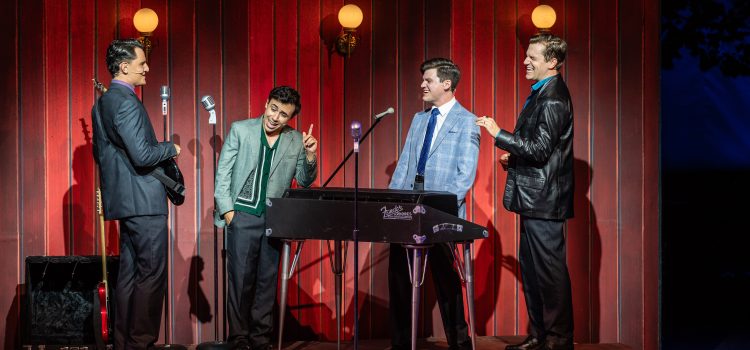
One encounter with Robert Crenshaw, and you can tell that he is a bright light chasing his dream. Currently on tour in the smash hit Broadway musical “Ain’t Too Proud: The Life and Times of the Temptations,” he will be coming home to perform May 9-11 at the Fox Theatre in St. Louis.

Robert said he is eager to see his family and friends — and enjoy his mom’s home-cooking. A recent guest on our PopLifeSTL Presents podcast, he shared his joy in being part of this high-energy production as well as his life story.

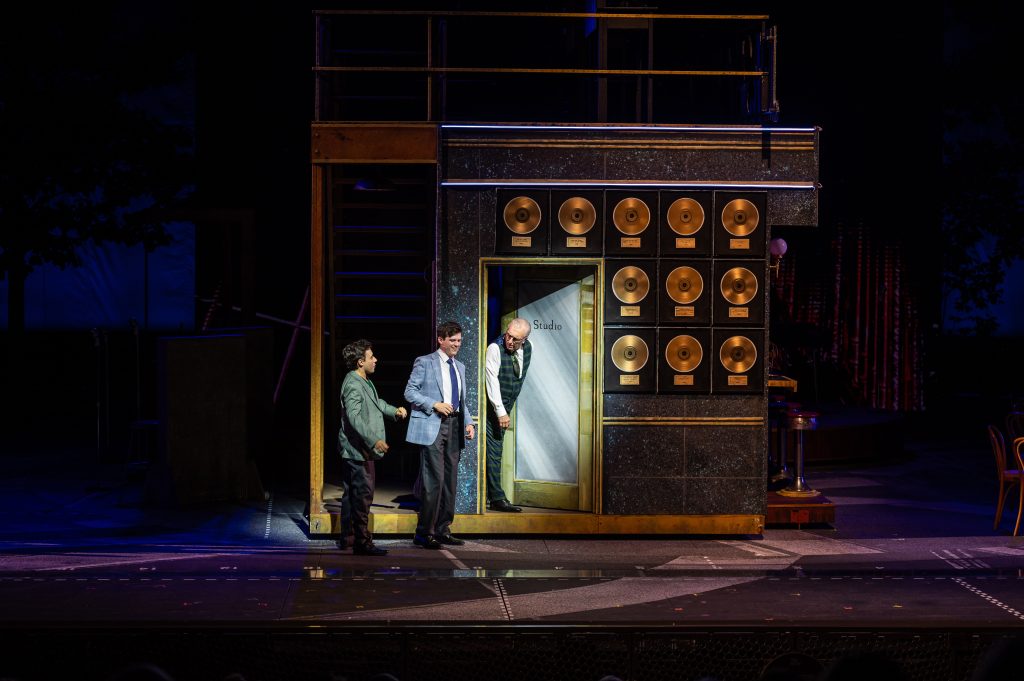
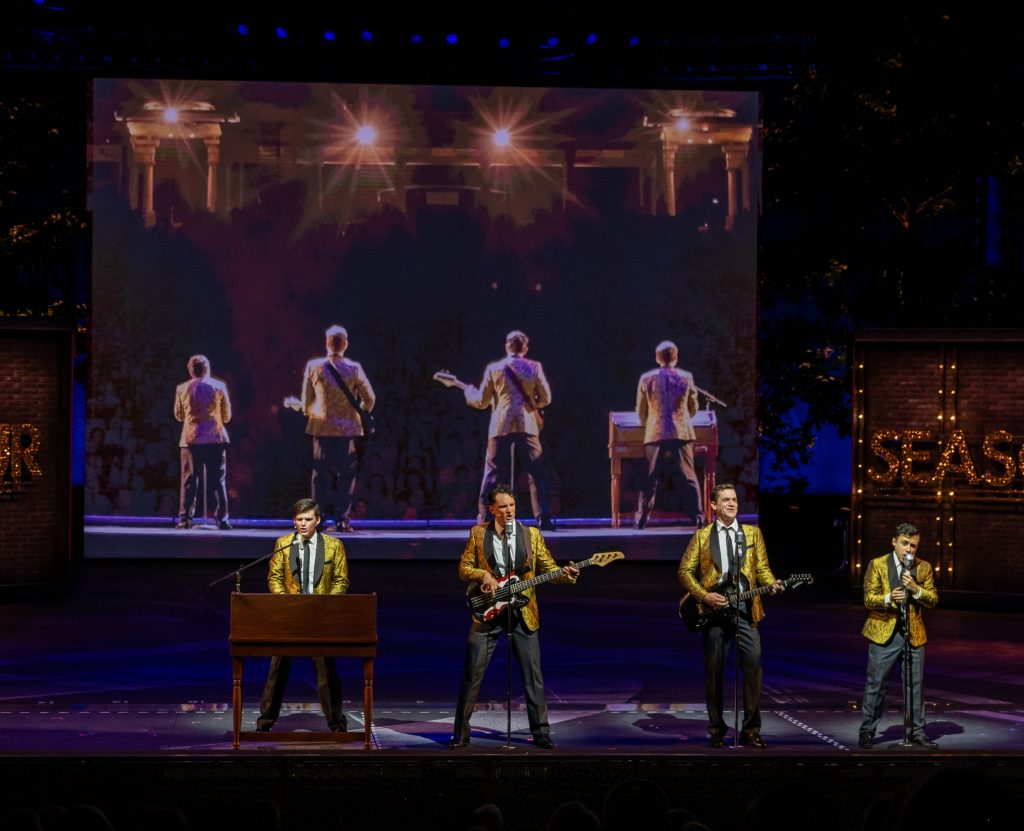
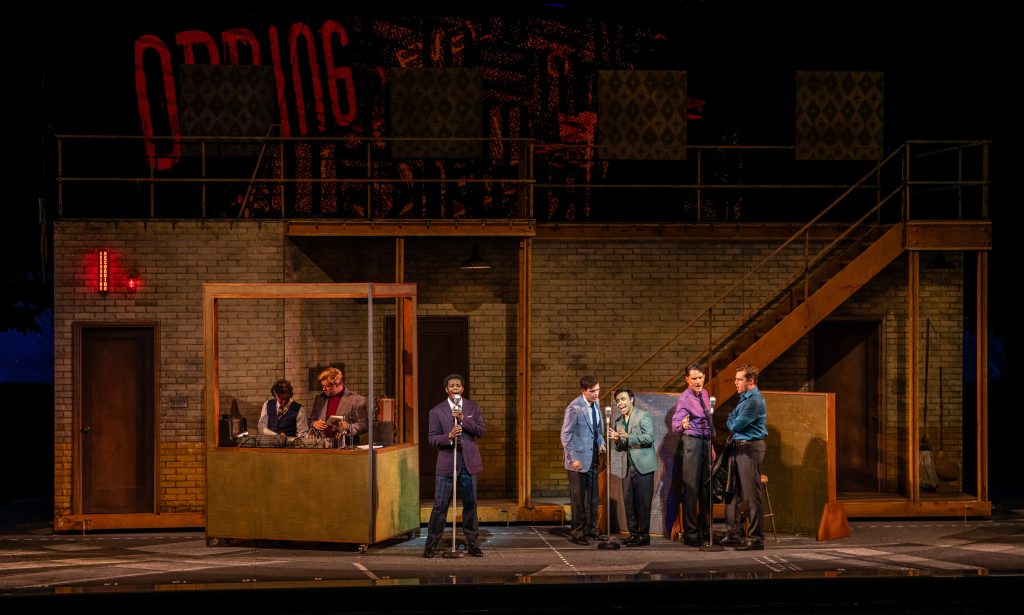
Crenshaw plays founding member Al Bryant and Motown songwriter Norm Whitfield in the musical. The musical explores their brotherhood, family ties, loyalty and betrayals, and includes the group’s treasured hits, including “My Girl,” “Just My Imagination,” “Get Ready,” “Papa Was a Rolling Stone” and many more.

He said he chose to pursue the arts because he’s been performing since elementary school.

“I’ve always had dreams of becoming a superstar and leaving my stamp on the world. I went to performing arts school my entire life and attended arts programs as well. I’ve always had fun being on stage! I love portraying different characters and putting my own spin on it,” he said.

“Ain’t Too Proud: The Life and Times of the Temptations” national touring cast

Recognized as a promising young artist when he was in third grade at Ames Elementary School in the Old North neighborhood, Robert began taking classes at COCA (Center of Creative Arts). He studied ballet, hip-hop, tap and jazz.

He graduated from Central Visual and Performing Arts High School, was a Muny Teen, and appeared in shows at COCA, including “Memphis” and “The Wiz,” and The Black Rep.

He was also part of The Dancing Six featuring Channce Williams, David McCall, Daryon Kent, Joshua Hall, Jacob Dorsey and Crenshaw that were part of the St. Louis Teen Talent Competition two years in a row through the Fox Performing Arts Charitable Foundation.

He credits his COCA faculty member Lee Nolting for helping to develop his talents and voice teacher Dr. Philip Woodmore as a big part of his success, as well as Ron Himes, founder of the Black Rep, who has become a mentor to him.

Describing him as a “true triple threat,” Himes commented: “Robert is living his dream now because he worked hard to be ready for the opportunity. He is super talented, humble and dedicated to growing in the craft. He’s a true triple threat with a magnetic smile.”

Robert Crenshaw, left, in “Eubie!: The Musical” at the Black Rep in 2023. Philip Hamer Photo.
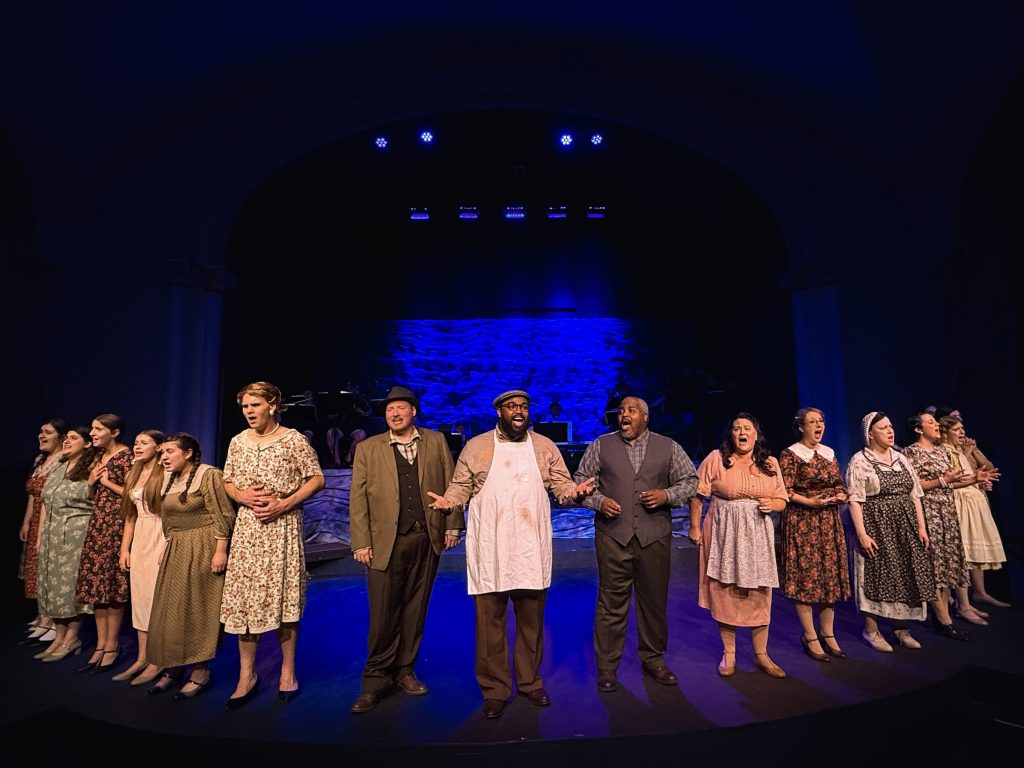
At the Black Rep, Robert starred in “Don’t Bother Me, I Can’t Cope” in 2019 and in “Eubie!” in 2023. At Stray Dog Theatre, he was in the “Dreamgirls” ensemble in 2019.
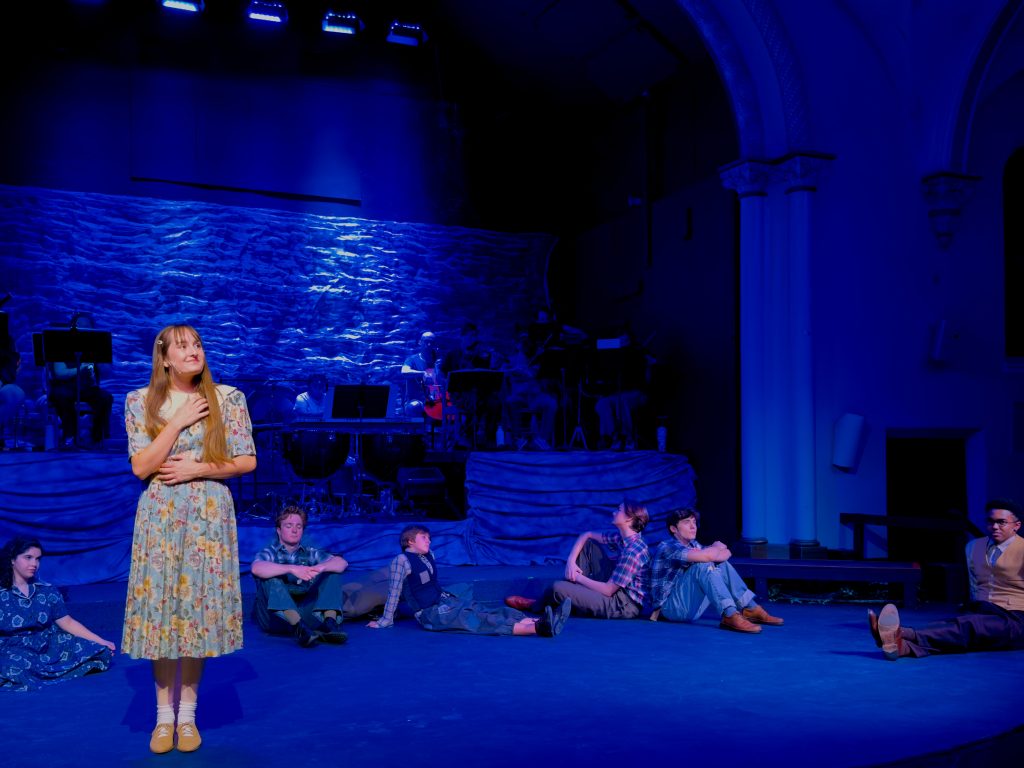
He also was the youth choreographer for “A Christmas Carol” in 2022 at The Repertory Theatre of St. Louis and received an Arts For Life Best Performance Award nomination for his choreography in “Little Shop of Horrors” at Kirkwood Theatre Guild.

In my May 15, 2023, review of “Eubie!”, I wrote: “Noteworthy in the Black Rep’s last musical, “Don’t Bother Me, I Can’t Cope” in 2019, the multi-faceted Robert Crenshaw stars and designed the tap choreography. He dances with such joy, that when he’s performing a solo number, it’s extraordinary, especially in “Low Down Blues” and “Hot Feet.”

He was part of the choreography team that won the 2024 St. Louis Theater Circle Award for Best Choreography for “Eubie!” (produced in 2023) – including Heather Beal and Vivian Watt.

After a year at the Chicago College of Performing Arts, he returned home to St. Louis, then moved to New York in 2023 to follow his dream.

Performing at COCA.

For 10 months, he hadn’t landed a role yet until he was cast in the musical “Forever Motown.” Then, he cast in the national touring company for “Ain’t Too Proud: The Life and Times of the Temptations” musical, based on Otis Williams’ personal journey, and has been traveling across the U.S.

“What makes being on tour so special is that it’s one of my dream jobs. I put on a showcase where I displayed all of my talents to raise money to move to New York from St. Louis. I moved September 13, 2023, and after 10 months of auditioning, receiving callbacks, and working other jobs to survive in New York, I booked ‘Ain’t Too Proud,’” he said.

The musical, which chronicles The Temptations’ extraordinary journey from the streets of Detroit to the Rock & Roll Hall of Fame, first opened at the Imperial Theatre on March 19, 2019, and received 12 Tony nominations, including Best Musical. It won the Tony Award for Best Choreography for Sergio Trujillo’s electrifying work recreating the group’s signature dance moves.

Robert as the Tin Man in “The Wiz” at COCA, one of his favorite roles.

The first national tour began in 2021, and the second one started in 2024, showcasing the group’s unmistakable harmonies. They topped the charts with 14 of their 42 Top Ten hits reaching number one.

The story explores their heritage and influence — how they met, their successes, and how conflicts derailed people in the group.

His advice to young artists is to work hard, stay prepared and open-minded, be humble, and don’t let negativity get to you.

The Fabulous Fox’s presentation of “Ain’t Too Proud: The Life and Times of The Temptations” will take place from May 9 – 11th at The Fox Theatre. For tickets, showtimes or additional information, visit www.fabulousfox.com.

To listen to the April 23 PopLifeSTL podcast: https://soundcloud.com/lynn-zipfel-venhaus/april-23rd-2025-ft-steve-ewing-robert-crenshaw

Take Ten with Robert Crenshaw:

1. How would your friends describe you?

“My friends would say that I am hardworking, talented, humble and full of love. They would also say that I am an inspiration for so many.”

2. How do you like to spend your spare time?

“I really enjoy reading, taking classes (anything arts related), working out, and doing some kind of activity that makes me feel like I’m touching grass.”

3. What is your current obsession?
“My current obsession is Duolingo! I’ve been wanting to learn Spanish so that I could connect with other people. Another thing I’m obsessed with right now is practicing self-awareness, self-improvement, and self-love. Lastly, different foods! I want to expand my palate and try things outside of my comfort zone.”
4. What would people be surprised to find out about you?

“People are always so stunned when they find out that I am allergic to shellfish.”

5. Can you share one of your most defining moments in life?

“My most defining moment is when I put on a showcase to raise money for Central Visual & Performing Arts High School after the school shooting that took place in 2022. I graduated from CVPA, and my brother was shot in the tragedy. I collaborated with community arts organizations, the SLPS foundation, CVPA alumni and current students to raise money in support. The showcase was a little over a month after the tragedy and took place at The Center of Creative Arts (COCA). There were performances and donations from so many organizations. I called it ‘The CVPA Relief Showcase’.”

6. Who do you admire most?

“My mom and Jesus along with some mentors, teachers and peers from my village in St. Louis.”

7. What is at the top of your bucket list?

“Sit amongst other celebrities and feel/know that I belong in those circles. I would like to travel to Africa, Tokyo, and Jamaica. Create a family of my own. Be wealthy in knowledge, finances, and health. Perform a one-man show in a sold out a building.”

8. What is your favorite thing to do in St. Louis?

“My favorite things to do in St. Louis is to spend time with family and friends, take classes, and eat home cooked meals!”

9. What’s next for you?

“Let me start by saying I am open to whatever God has in store for me. My plan is to make it back to New York City and audition as much as I can. I have to get my face back in those rooms. If I spend time in St. Louis after touring it will be teaching master classes and taking a few dance classes and voice lessons before going back to NYC. I’m also searching for representation so that I have someone else advocating for me in the business.”

Benefit performance at COCA.

More Info on Robert Crenshaw:

Age: 28
Birthplace: St. Louis
Education: Central VPA, Center of Creative Arts, Chicago College of Performing Arts
Day job: Broadway National Tour: Ain’t Too Proud (AL Bryant & Norman Whitfield)
First job: Journey’s
First play or movie you were involved in or made: “The Music Man”
Favorite jobs/roles/plays or work in your medium? Seaweed in “Hairspray,” Tin Man in “The Wiz,” and Gregory Hines in “Eubie: The Musical”
Dream job/opportunity: Aaron Burr in “Hamilton,” Lead in a Broadway Musical, Movie with Denzel Washington, Kevin Hart, or star in my own.
Awards/Honors/Achievements: St. Louis Theatre Circle Award for Best Choreography: Eubie
Favorite quote/words to live by: “Don’t ever say you can’t, and if you fail, try again.”
A song that makes you happy: Anything by Michael Jackson, Chris Brown, or Kendrick Lamar.

Cover photo courtesy of Robert Crenshaw’s Instagram

Facebook Comments

By Lynn Venhaus

A comfortable slice of life, “Johnnie Taylor is Gone” is part nostalgia trip and part character study with a pleasant panoply of St. Louis cultural references and distinct personalities that draw one into a recognizable old-timey stomping ground.

Gregory S Carr’s warm-hearted and engaging original play is set in a cozy neighborhood hangout, the fictional Golden Zodiac Lounge, which was patterned after a real north city gathering spot. This is where regulars discuss current events, their personal relationships and philosophies on life, all while enjoying a beer and plunking change in the jukebox.

The time is a few years into the Millennium, and change is inevitable in many ways in this natural setting. Owner Will Strong is a man who likes things the way they are, and because he is set in his ways, resists modernizing and catering to a younger clientele. He is fond of an over 30 crowd, although an update would help the bar stay solvent.

As embodied by virtuoso Archie Coleman, Strong is a caring father figure and stubborn proprietor who clings to his heritage. His prized possession is his vintage jukebox that only plays R&B classics and soul singers.

A popular artist, Johnnie Taylor, once visited the bar, and his picture hangs prominently on the wall. .He represents an era that Strong most identifies with, and he doesn’t want the soundtrack of his life forgotten. Taylor, best known for four chart-topping hits including 1979’s “Disco Lady,” died in 2000.

The Chicago blues legend Koko Taylor is also a favorite. Retro tunes are played, and people dance down memory lane, evoking fond memories. A song is often used to shift a mood, too.

In addition to the familiar patrons – everyone knows their names – there is a changing cultural dynamic.

A flashy, hip and imposing young guy, called Jay-G, also known as Jiggy, struts in, projecting major attitude, and is eager to purchase the bar and turn it into a hip-hop club. He is not subtle, putting pressure on Strong, talking big ideas and appearing to live large. As the not-as-smooth-operator as he thinks he is, Sequoi Edwards nails this part.

He’s also involved with someone that has a complicated character arc best not spoiled, but Wanda is a flighty younger woman (Arriel Cummings). Generational clashes figure into the storyline.

Standing out are two of the bar’s employees – the streetwise hostess and world-weary Annie, who can be alternately sassy and sweet, and is fully realized by Mardra Thomas, and the cheery, lovable bartender Bette, played by the cheery and lovable LaWanda Jackson, who just brightens every scene she’s in, oozing optimism and hope.

They smoothly interact with customers like they’ve been working there for years. The patrons enjoying each other’s company include Jeremy Thomas as Pace, a barfly whose wife Myrtle is always calling the landline with grocery lists and checking up on where he is, Juan Smith as opinionated fixture Bruh and Jaz Tucker as a nice-guy delivery man Bud. Talk includes sports, music, art, politics, religion and current events.

In brief but memorable turns, veteran Don McClendon looks dapper in a bright yellow suit and fancy green hat as a church pastor called Churchill and Ieshah Edwards as helpful beat cop Judy, looking out for the welfare of her turf.

The bar has such a lively feeling that you know exactly what kind of place it is, having no doubt entered the door of similar establishments, where the staff knows drink orders and there is always something to talk about, whether it’s criticizing Cardinals manager Tony LaRussa or bringing up people who live in the vicinity. That’s a charming aspect of this 2-hour, 15-minute show.

Another delight is listening to the golden oldies that play. The music is integral to the whole experience and is part of the show’s vibe. Sound designer Darrious Varner has curated an interesting list of tunes, which add authenticity. He also assembled the costumes.

While its heart is in the right place and one applauds their ambition, Aquarian Rising Productions is a fledgling professional theater group that strives to represent black voices and black experiences, and their enthusiasm is contagious.

Because they are so new, this is a very low-budget production that is obviously a labor of love. Some of the technical issues – sound and lights, especially – are problematic. It is often hard to hear characters, which is a shame because Carr has a flair for writing witty dialogue and the local references are fun to hear.

The venue is the Jefferson Avenue Mission, a former old church, so the audience sits in pews, and the small stage provides limited space for some of the action. Wiring for microphones and lights hit some snags opening weekend. Hopefully as the company grows and flourishes, the stagecraft elements will be stronger, for they’re off to a good start with quality performances and eager creatives.

The director is veteran actress and artist Thomasina Clarke, who is Jaz Tucker’s mother. Tucker not only is in the ensemble, but is the group’s founder. Clarke also wore several hats – designing a functional set for easy interaction, despite the limitations, giving everyone maximum visibility when sharing their story.

You’ll recognize these characters, and this place, feel the community spirit, and enjoy a sentimental journey. The conflicts and crises that make up the dramatic elements are quickly resolved, in some ways you don’t expect, and you’ll want to root for everyone to do better as time marches on.

Aquarian Rising Productions presents “Johnnie Taylor is Gone” from April 25 to May 4, with performances Fridays and Saturdays at 7 p.m. and Sundays at 4 p.m. at the Jefferson Avenue Mission, 2241 Jefferson, in the Fox Park neighborhood. For more information: www.jamstl.org.

Facebook Comments

By Lynn Venhaus

“Life is what happens to you while you’re busy making other plans” – “Beautiful Boy,” John Lennon, 1980

Grounded but teeming with uncertainty, an off-kilter sense that an alternate reality is emerging for a pair of lost women becomes clearer as we watch them grapple with their fate in Upstream Theater’s compelling, bravely acted two-hander “Meet Me at Dawn.”

As life partners Helen and Robyn, Michelle Hand and Lizi Watt are riveting after they wash up on a distant shore following a boating accident. Dazed and worried about each other, they attempt to get their bearings and find a way home.

But this sandy patch of seascape is not what it seems, nor are they who they appear to be, which will come into focus as their circumstances unfold. This may sound like a twisty sci-fi drama, but playwright Zinnie Harris wrote this as a lyrical meditation inspired by the myth of Orpheus and Eurydice.

This modern fable reveals its goal – tackling love, loss, and grief – during a 90-minute play without intermission. As time and space is disrupted, the performers recreate a mysterious sense of being “in between.”

Michelle Hand and Lizi Watt. Photo by ProPhotoSTL.

Through their distinctive raw and real characterizations, Hand and Watt lead us through the transitional state of “liminality.” This other world is jarring, but how they process fate is a remarkable feat.

We’re watching two actors being present and giving their all in convincing portraits, conveying a range of emotions in a profoundly moving way. The pair’s chemistry is palpable – in moments of tenderness, exasperation and fear. And they convey a dreamlike, surreal state in their body language and exchanges, not just intimacy.

Helen, a scientist who is more high-strung and very funny in mining situations for humor, complements Robyn, who is an academic and more deliberate and less impulsive when speaking, deftly handle the squabbles as well as the caring between longtime companions.

Can they figure out what is real and what is fantasy? Can they trust their memories? Their hope turns to despair, and paranoia mixes with the metaphysical. When the play comes together, you feel what they feel — pain, helpless, resignation, mourning.

Hand, an actor for 25 years whose name in a program means you will always be treated to a robust characterization and often in a thrillingly alive way, has met her match in intensity in Watt.

During the past couple of years, Watt has impressed with vivid characterizations in “The Whale,” “Copenhagen,” and “Pictures from a Revolution.”  With their expressive work, they boost their reputation as being among the best theater artists of their generation.

Photo by ProPhotoSTL

Harris, who is known for specializing in modern interpretations of classic literature, debuted this play at the Edinburgh International Festival in 2017. The Scottish playwright’s work includes “Macbeth (An Undoing),” “The Scent of Roses,” “This Restless House” and “How to Hold Your Breath.”

Perceptively directed by Larissa Lury, she understands the allegorical nature and rhythms of the play, trauma, and appreciates the quality of her dynamic duo.

The show is enhanced by the technical team’s contributions. The simple sandbank set is meticulously detailed by scenic designer Patrick Huber, atmospherically lit by lighting designer Tony Anselmo and featuring added depth through sound designer Kristi Gunther’s inobtrusive work, with sounds of the sea and sky. The women are dressed in casual wear designed by costumer Lou Bird.

Note: Some reflections may trigger emotional feelings or upsetting memories for audience members.

Photo by ProPhotoSTL

Loss is a tough fact of life, but grief is a personal journey that rips your heart out in different degrees. As one who experienced three major family deaths in five years, understanding that grief affects everyone differently, but it’s never something you “get over,” helps as you learn acceptance.

As the play alludes, everything shifts, you learn to live with trauma. What is necessary is talking about grief, because our society tends to shy away from talking about letting go and the powerlies in talking about it to heal.

This play may spark conversation, and isn’t that a wonderful opportunity? Going through something that others experience too means we’re not alone, and we can learn and grow when material resonates.

Poignant and meaningful, “Meet Me at Dawn” showcases two extraordinary actresses fearlessly not holding back in showing us their humanity in a thoughtful drama produced by Upstream Theater.

Upstream Theater presents “Meet Me at Dawn” April 11 – April 27, with performances take place at The Marcelle in Grand Center. For more information: www.upstreamtheater.org.

Photo by ProPhotoSTL
Facebook Comments

By Lynn Venhaus

Pretty people and sun-dappled scenery wind up being ineffective in a shallow head-scratcher, “On Swift Horses,” a stagnant 1950s melodrama heavy on turgid soap opera and light on authentic emotion.

Two card sharks, a freedom-yearning woman from Kansas, and a traditional breadwinner in the 1950s seek the suburban American Dream after the Korean War. While their lives intersect, they are actually very far apart in their wants, needs and desires.

Trying to imitate Douglas Sirk’s lush films from that era, director Daniel Minahan’s queer period piece addresses how homosexuals had to remain closeted during a very repressed and cookie-cutter time but fails to connect in any meaningful way.

An example of style over substance, this is the kind of film where chain-smoking cigarettes substitute for pensive thoughts and inner torment. And they all live in the shadows.

Sirk, who made “Magnificent Obsession,” “All That Heaven Allows,” “Written on the Wind,” and “Imitation of Life” from 1954 to 1959, captured attractive people who were trapped by social conditions, and his overwrought stories appealed because his filming featured splendid cinematic set pieces, and matinee idols like Rock Hudson and Lana Turner.

With such well-regarded performers as Daisy Edgar-Jones, Jacob Elordi and Will Poulter in what you may think is a seductive love triangle (trailer is a misdirect), one hoped they’d make us care about their journeys, but the story fails to provide reasons to be interested in what happens.

The trio is built up to appear “longing,” only they smolder and do not ignite. This disjointed adaptation of Shannon Pufahl’s 2019 novel by screenwriter Bryce Kass is overstuffed, not satisfying with basics. Neither did his lackluster “Lizzie” in 2018, which did not go far enough in fleshing out accused ax murderer Lizzie Borden.

Sure, they are a tempting pair, Elordi and Edgar-Jones, but do their character’s mutual connection benefit either? They spend most of their time in separate turmoil, with only a few scenes together.ccc

Oh, the trio try for big emotions, but it’s dialed down, as they speak in hushed tones and move around in scenes lit in such moody, murky atmospheres that it is almost too dark, so that is aggravating. Now, the stylish costumes designed by Jeriana San Juan, and distinct make-up and hairstyles are fabulous, but that can’t be the only selling point.

Muriel (Edgar-Jones) chafes at convention – doomed to be a typical wife in post-war America although she reluctantly attempts to fit in — while brothers Lee (Poulter) and Julius (Elordi) are Korean War veterans. The film starts in 1952 but it’s not clear how much time passes.

These young adults have different goals and desires, but fumble badly in their communication with each other. Lee talks in code about his wayward, secretive brother Julius who is always flirting with the wild side. “He has passions of his own. He’s just not like us,” he tells his wife.

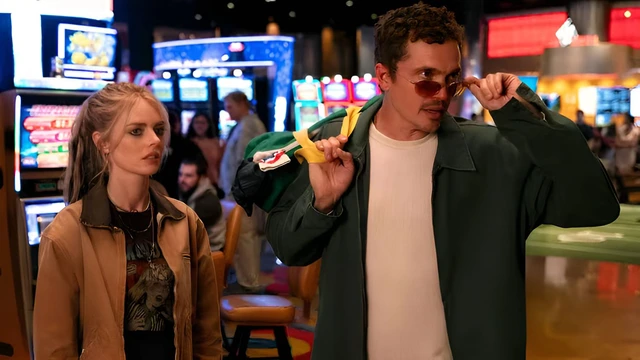
The handsome Julius is a smooth gambler and gay hustler who falls in love with Henry (Diego Calva) while working in Las Vegas. Much of the interaction doesn’t feel genuine, and lack of convincing chemistry is an issue.

However, Elordi and Edgar-Jones have a spark when Julius and Muriel meet, becoming pen pals and share some, but not all, of their secrets. Don’t think this is going anywhere because it’s not.

At the diner she works at, Muriel overhears customers talking about their picks for the racetrack, so she starts playing the ponies with those tips. It’s a thrill for her to win and live a double life, stashing away the cash without her husband’s knowledge.

Lee, a total straight arrow who loves his wife and desperately wants the fantasy suburban life including a ranch house in a subdivision that signals middle-class prosperity. Developers are buying up farms and fields in San Diego for the “Baby Boom.”

One of the neighboring farms where Muriel purchases eggs and takes a shine to olives – and the woman selling them, Sandra (Sasha Calle). They become entangled in a clandestine affair.

Those hiding secrets are on a collision course for crash-and-burns, but whether you want to invest in their mess depends on how impatient you feel, for the pace is sluggish and resolutions are prolonged. And why does it take nearly 2 hours to tell this insipid story?

I fret that Elordi, promising as Elvis in “Priscilla” and as the rich golden-boy Felix in “Saltburn,” is a one-trick pony, destined to be the bad boy with the sad eyes. Let’s hope not, because he’s playing Heathcliff to Margot Robbie’s Catherine in Emerald Fennell’s adaptation of Emily Bronte’s classic gothic novel “Wuthering Heights,” due out next year.

Poulter, who seems to be everywhere these days, recently in “Warfare” and “Death of a Unicorn,” is saddled with an underdeveloped character and being boxed in as the cuckolded husband. And would you believe he and Elordi are brothers?

After taking risks, Edgar-Jones’ character is mired in blandness. The actress, feisty in last year’s “Twisters” and superb in “Where the Crawdads Sing,” makes Muriel sympathetic but needed to give her more dimension. It’s a letdown.

Tell us something we don’t know and would like to know and not foist half-baked performative junk at us and call it alluring. “On Swift Horses” goes in circles and limps to the finish line with a clumsy ending that doesn’t answer any questions raised. It’s a safe bet you can skip this gussied-up charade.

“On Swift Horses” is a 2025 drama directed by Daniel Minahan and starring Jacob Elordi, Daisy Edgar-Jones, Will Poulter, Diego Calva and Sasha Calle. Its run time is 1 hour, 57 minutes, and it’s rated R for sexual content, nudity and some language. It opens in theatres April 25. Lynn’s Grade: D+

Facebook Comments

By Lynn Venhaus
A modern re-imagining of Ang Lee’s first 1993 breakthrough film, “The Wedding Banquet” is a funny, charming queer family romantic comedy about personal growth, making a home, and your chosen family becoming your real family.

The story is about a gay man (Han-Gi Chan), hoping to stay in the U.S., proposes a green card marriage to a female friend (Kelly Marie Tran) in exchange for paying for her IVF treatment. However, things soon get complicated when his grandmother (Youn Yuh-Jung) surprises them with plans for an extravagant Korean wedding banquet.

It’s safe to say much of society has changed towards more acceptance of same-sex couples in the three decades since Lee and his screenwriter James Schamus imagined a green-card marriage between a gay bride and groom, noting marriage equality and LGBTQ rights achieved since 1993.

This remake has many things it wants to say through writer-director Andrew Ahn, who also teamed up with Shamus for this version. Ahn, an L.A. filmmaker whose previous film “Fire Island” also starred Bowen Yang, was a summer vacation rom com inspired by Jane Austen’s “Pride and Prejudice.”

Bowen Yang, Han Gi-Chun, Kelly Marie Tran, Lily Gladstone.

The cast is all aces-high, with Joan Chen, ‘Minari’ Oscar winner Youn Yuh-Jung, Oscar nominee Lily Gladstone, Emmy nominee Yang, Kelly Maria Tran and newcomer Ha Gi-Chan endearing characters you can relate to through a modern lens.

As the two same-sex couples, Tran, Gladstone, Yang and G-Chan nimbly play complicated Millennials and give us enough genuine emotion to make a connection.

Lee, the Taiwanese filmmaker who has won two Oscars for directing “Brokeback Mountain” and “The Life of Pi,” was considered a legitimate talent after his “The Wedding Banquet” was both Oscar-nominated and won the Golden Bear at the Berlin Film Festival, the first of his two (no one else has achieved that). It was also his first film to release theatrically in the U.S. (Fun fact: He has an undergraduate degree from University of Illinois).

Fast-forward 32 years, and the Ahn-Schamus American remake collaboration still concerns cultural friction and a sham marriage ceremony — only it’s South Korea and not Taiwan as the immigrants’ home country, they’ve shifted the action from New York City to Seattle, and they’ve increased the involved couples from one to two.

Bowen Yang, Han Gi-Chun,

Min (Gi-Chan) and Chris (Yang) have been in a five-year relationship and live in the garage of their good friends Angela (Tran) and Lee (Gladstone), who live in Lee’s family home. They would like a child and have tried IVF twice with Lee. Angela doesn’t want to carry the baby, for she has an overbearing mother (Chen), and she frets about what kind of parent she’d be. Chris and Angela became good friends in college.

Min has family money, but his grandmother Ja-Young (Yuh-Jung) is not happy with his reluctance to join the family business – a multinational corporation, and with his student visa about to expire, is making demands.

The pair hatch this scheme — Min will pay for the IVF again if Angela marries him, basically helping both couples — but it becomes more complicated when Min’s grandmother shows up.

As played by the wonderful character actress Youn Yuh-jung, who won an Oscar as the grandmother in “Minari,” Min’s grandmother Ja-Young steals every scene she’s in, and will also break your heart as she reveals confidences to her grandson. After all, Yuh-jung has five decades’ worth of film credits.

Kelly Marie Tran, Lily Gladstone

The characters could all easily have been one-note, but the performers provide unexpected layers, while also crowd-pleasing with broad laughs. OK, it may be cliché, but the scene where they “de-queer” the girls’ home is very funny, especially when Yang is shown taking down a framed Lilith Fair poster.

While one can easily predict “all’s well that ends well” after mishaps and complications arise, yet there are some sweet surprises that await.

“The Wedding Banquet” may have some clunky moments, awkward baggage, and appear not svelte enough in its execution, but one can feel its sincerity, its concern over Asian-American representation, and appreciate its lovable cast.

“The Wedding Banquet” is a 2025 romantic comedy directed by Andrew Ahn and starring Kelly Marie Tran, Lily Gladstone, Bowen Yang, Han Gi-Chun, Joan Chen and Youn Yuh-Jung. Its runtime is and it is rated R for language and some sexual material/nudity. It opened in theatres on April 18, became available on premium VOD May 13, and will stream on Paramount + beginning Sept. 8. Lynn’s Grade: B.

Kelly Marie Tran, Lily Gladstone, Han Gi-Chun, Bowen Yang.
Facebook Comments

By Alex McPherson

Infused with wry humor and gradually mounting dread, director Alain Guiraudie’s “Misericordia” is a fascinating drama in which repressed urges and human fallibility come bubbling to the surface in quietly bonkers fashion. 

We follow Jérémie (Félix Kysyl), an attractive, mild-mannered, yet unpredictable man traveling from Toulouse to the picturesque countryside village of Saint-Martial for the funeral of his late boss Jean-Pierre, who ran the village bakery. The baker’s widow, Martine (Catherine Frot), invites Jérémie to spend the night in the room previously occupied by her hot-headed son, Vincent (Jean-Baptiste Durand). Vincent is disoriented by Jérémie’s reappearance, and he’s weirded out that his former “pal” doesn’t seem to want to leave Martine’s house. 

It’s clear that Jérémie and Vincent shared (or share) some connection beyond the platonic. Their roughhousing session in the nearby forest, for example, carries a homoerotic charge that’s difficult to deny. But Jérémie apparently isn’t interested in rekindling their nascent bond, and Vincent grows increasingly paranoid that Jérémie actually has his eyes set on Martine — who recognizes that Jérémie had and continues to have feelings for her late husband. Both Jérémie and Martine lovingly admire pictures of him in a Speedo, and Martine even lets Jérémie wear Jean-Pierre’s clothes.

Jérémie continues to stay in Saint-Martial, wandering through the village hunting for mushrooms and slowly inciting confusion wherever he goes. Jérémie hits on Walter (David Ayala), an unkempt older man who’s also Vincent’s best friend, despite the fact that Walter claims he treated him poorly in the past.

Film/ Misericordia

Vincent’s anxiety continues to grow and, soon enough, a web of desire, violence, and forgiveness manifests, especially when the idiosyncratic local abbot, Philippe (Jacques Develay), floats onto the scene, drawn to Jérémie’s mysterious and strangely threatening energy.

What follows is a sensory, deliberately paced slice of absurdism whose weirdness builds scene by scene as Jérémie, returning to his roots, causes turmoil in the bucolic Saint-Martial — chipping away at the boundaries between spoken and unspoken urges to decidedly strange results. “Misericordia” (Latin for mercy or compassion) explores the power and perils of desire held back by societal/cultural expectations. The film walks a tightrope between the comic and downright sinister, operating by its own twisted logic.

Guirardie avoids spoon-feeding us what these characters, especially Jérémie, are ultimately after. Rather, “Misericordia” renders literal their internal feelings in its own understated, but nonetheless mischievous fashion. The film teases out characters’ true feelings in pointed glances, deadpan dialogue, and perverse symbolism (particularly regarding mushrooms), within a fairytale-esque environment in the midst of transition not unlike the characters themselves.

From the opening moments, in which Claire Mathon’s richly textured cinematography takes us into Saint-Martial from the POV of Jérémie’s car — driving in pitch-blackness through winding streets, setting an ominous tone from the outset as we’re not sure what awaits beyond each turn — “Misericordia” establishes Jérémie as a foreign presence disrupting the equilibrium of the village. 

He seems unassuming enough, at least initially; Kysyl brings an oddly calming, yet inscrutable energy to the character, rendering Jérémie immediately likeable but difficult to read. But every action is deliberate. Despite the film’s languid pacing, Guiraudie doesn’t waste our time, encouraging us to read between the lines to identify the messiness beneath seemingly banal interactions that, when revealed, are both shocking and darkly hilarious.

Without spoiling too much, Jérémie gets in some serious hot water. Much of “Misericordia” consists of him trying to weasel his way out of trouble via lies and misdirection in various “low-stakes” (but high-stakes) conversations that teeter dangerously close to chaos and which are enjoyably uncomfortable.

The ensemble is perfectly calibrated to Guiraudie’s rhythms — Frot is especially effective as the welcoming but knowing Martine, and Develay as the quirky abbot unable to embrace his true passions. 

Guiraudie’s tactile filmmaking and the precisely tuned performances keep suspense high and the dark humor higher, as “Misericordia” zeroes in on the lengths to which we’re willing to overlook treachery for what we truly believe in, as well the unknowability of people when societal constructs of “normalcy” are stripped away, sometimes literally.

This is a dark story, but Guiraudie mines plentiful humor even in the film’s most unsettling moments. It’s amusing just to see what shenanigans these unassuming characters stumble into, subverting expectations to a ballsy, likely polarizing degree.

“Misericordia,” at some points, feels more like a dream than a traditional narrative, guided and framed through the psychologies of its characters rather than by traditional conventions. The film is patiently edited and easy to become lost in without the freneticism that impacts much of what graces the multiplex. Guiraudie ensures we’re in good hands, and, if we’re willing to embrace the eccentricity, there’s much to appreciate about his film, one whose mysteries enthrall long after the last mushrooms are plucked from the forest floor.

“Misericordia” is a 2024 dark comedy and psychological drama written and directed by Alan Guiraudie, starring Felix Kysyl, Catherine Frot, David Ayala, Jacques Develay, and Jean-Baptiste Durand. It is unrated and the runtime is 1 hour, 44 minutes. The film is French, with English subtitles. It opened at the Hi-Pointe Theatre in St. Louis on April 18. Alex’s Grade: A.

Facebook Comments

By Lynn Venhaus

Accurately described as the most realistic war film ever made, “Warfare” is a harrowing and intense depiction of the Iraq War based on the recollections of a Navy SEALS platoon during the Battle of Ramadi in 2006.

“Warfare” embeds audiences on a surveillance mission gone wrong in insurgent territory as a boots-on-the-ground story of modern warfare and brotherhood based on the memory of the people who lived it.

Filmmaker Alex Garland, known for “Civil War” and “Ex Machina,” has teamed up with military veteran Ray Mendoza to write and direct a daring and gripping account of one day’s work, all from first-hand accounts.

After his military discharge, Mendoza has served as a film consultant, including for Garland’s “Civil War,” “The Outpost” and “Lone Survivor.” His expertise is paramount to this film succeeding and its visceral storytelling is admirably efficient.

In its 96 minutes, we see the U.S. forces take on the al-Qaeda insurgents in the capital of Anbar province, and it unfolds as if in real time in a naturalistic style. The screenplay is written like a transcript, and the soldiers go through their methodical routines.

Yet, there is an emotional charge. Garland and Mendoza filmed this war drama with such meticulous detail that you feel the tension, the clock ticking, the exactness of surveillance evidence, the danger lurking, maneuver plans, and the aftermath of an ambush as if we’re peeking through a hole in the apartment they’ve taken over.

D’Pharoah Woon-A-Tai plays Ray, the real-life soldier who co-wrote “Warfare.”

Like them, we wait for some movement or something to happen as they watch “military age men” in the street gather and look for signs of activity that would indicate an attack is imminent. As things developed, it makes a point: “Are we ever prepared to witness the graphic consequences of an explosion’s destruction?”

With their military training, the guys respond to their shifting minute-by-minute interactions with split-second compassion and quick-thinking remedies. This film focuses on teamwork, not individual character development, with the mindset that they are a band of brothers. But you feel everyone’s bravery and their fear.

Known as the “Gettysburg” of the conflict, the Ramadi battle was a key turning point, and it lasted from mid-March through mid-November. At least 75 American soldiers and Marines were killed, along with an unknown number of Iraqi soldiers and police.

The battle led to the formation of the Anbar Awakening, where Iraqi tribal groups rejected al-Qaeda and cooperated with U.S. forces.

Mendoza lived through the operation, and the actor playing him is the charismatic D’Pharoah Woon-A-Tai, an Emmy nominee as Bear Smallhill in “Reservation Dogs.”

Will Poulter as platoon leader Erik.

Do not expect backstories – families, hometowns, why they enlisted – because that information does not factor into the team focus.

You won’t really get to know the individual guys that well, and it may be hard to discern these young actors in all their gear, but a few do stand out by virtue of their assigned role.

The cast of up-and-comers may look somewhat familiar, as you’ve likely seen some of their work, but they blend in as men in service to each other. Each plays a real person, with character actor Will Poulter, recently in “Death of a Unicorn” and Emmy nominated as a pastry chef on “The Bear,” as the platoon leader, Erik.

He has a funny moment with some other soldiers as they notice a young man’s enthusiasm, and he says “That’s that new guy energy” and they all chuckle.

He’s calling the shots until Charles Melton, an Oscar nominee for “May December,” leads a team to rescue the wounded soldiers from this targeted hot spot.

The actors trained in a three-week boot camp to mimic soldier’s duties, and they appear as authentic as possible.

Kit Connor, who was recently heard as the voice of Brightbill in “The Wild Robot,” is memorable as Tommy, whose injuries are swiftly dealt with by the guys.. Cosmo Jarvis, who plays Elliot, an injured sniper and medic, is one of the unforgettable guys in a frantic race for help. Michael Gandolfini, as Lt. MacDonald, is his wingman.

Joseph Quinn is Sam.

Joseph Quinn, whose recent credits include “Gladiator 2,” “A Quiet Place: Day One,” not to mention “Stranger Things,” is a more seasoned operative, Sam.

Noah Centineo, Owen in TV’s “The Recruit,” is Brian, Finn Bennett of “True Detective” and “Black Doves” is John, Evan Holtzman of “Hit Man” is Brock, Alex Brockdorff of “Mission: Impossible Dead Reckoning” is Mikey, and Taylor John Smith of “Where the Crawdads Sing” is Frank, among others.

The credits will roll with the making of shots, and a side-by-side portrait of the soldier and the actor who played him. Because some of the men remain on active duty, their real-life photos are blurred images.

The technical craftsmanship stands out as first-rate, especially David J. Thompson’s cinematography, Fin Oates’ editing, Glenn Freemantle’s sound design and team of sound editors, and the visual and special effects crews.

One of the knocks about the post-9/11 attack Iraq and Afghanistan war movies is that they haven’t been successful with audiences. However, some are outstanding depictions of the conflicts, include Oscar winner “The Hurt Locker,” “American Sniper” (highest-grossing), “Guy Ritchie’s The Covenant” and “Lone Survivor.” “Warfare” deserves to be ranked among the best as well.

A heartfelt tribute to the men who serve, “Warfare” is a powerful reminder of the human cost of war.

Cosmo Jarvis is Elliot, the inspiration for the film.

“Warfare” is a 2025 war drama co-directed by Alex Garland and Ray Mendoza, and starring Will Poulter, Charles Melton, Joseph Quinn, D’Pharoah Woon-A-Tai, Cosmo Jarvis, Kit Connor, Michael Gandolfini, and Noah Centineo. It is rated R for intense war violence and bloody/grisly images, and language throughout and the run time is 96 minutes. “Warfare” opens in theatres April 11. It was released as a DVD Blu-Ray on June 10 and will stream on HBO Max on Sept. 12. Lynn’s Grade: A-

Facebook Comments

A few days remain to purchase discounted tickets for both the 10th Annual Theatre Mask Awards, which honor drama and comedy, on April 26 and the 25th Annual Best Performance Awards, which honor musical theater and youth productions, on June 29.

A combination ticket for both TMAs and BPAs is available for $50 with a $2 service fee but must be purchased by April 11. It is a savings of $10. After April 11, each event is $30 plus the $2 service fees.

This year’s 10th annual TMAs will take place starting at 11 a.m. on Saturday, April 26, at the Royale Orleans banquet center, 2801 Telegraph Road, St. Louis, Mo. 63125. Doors open at 10:30 a.m.

Awards will be presented in 17 categories as lunch is served. Cocktail attire is suggested. Table seating is available at 10 per table. A full meal will be served, and a cash/card bar will be available.

The menu includes top round of beef with special LaFitte Sauce, Chicken Parmesan, home-style green beans, pasta primavera, potatoes royale, chef salad and fresh bakery bread with butter. For dessert, special cupcakes from the Blue Owl Restaurant and Bakery in Kimmswick, Mo.

Clayton Community Theatre topped all TMA nominations with 23, with a production-leading 11 for “The Play That Goes Wrong,” 9 for “Twelfth Night,” and 4 for “Night of the Iguana.”

Act Two Theatre followed with 17 overall, 10 for “Over the River and Through the Woods” and 7 for “The Play That Goes Wrong,” and so did Hawthorne Players with 17, 10 for “All My Sons” and 7 for “for colored girls who have considered suicide when the rainbow is enuf.”

Other groups receiving TMA nominations included Kirkwood Theatre Guild, Monroe Actors Stage Company and Theatre Guild of Webster Groves.

Mark Lull returns as the master of ceremonies after hosting in 2022 and 2024. An 11-time AFL nominee, he won Best Performance by a Comedic Actor as Uncle Fester in Alfresco Productions’ “The Addams Family” in 2015.

A retired school principal, he has performed at Worlds of Fun in Kansas City, The Muny, and with other theater companies in the St. Louis metropolitan area. He is currently teaching early childhood education at St. Louis Community College and serves as vice president on the AFL board of directors.

Tickets are available online for $30 with a service fee of $2 added: https://arts-for-life-2.square.site/.

Best Performance Awards

Ryan Cooper, local performer, producer, and past Best Performance Awards recipient, will return to host the 25th BPAs for a record sixth time.

The BPAs awards ceremony will take place on Sunday, June 29, at 2 p.m. at the Keating Theater at Kirkwood High School. Formal attire is requested, and the event will be reserved-style seating. Soft drinks and snacks will be available in the lobby. Doors open at 1:30 p.m.

The event will include performances from the top musicals nominated in the three Best Musical Production categories. Tickets to the show are $30+ a $2 service fee per ticket. Seating is reserved seating.

Take Two Productions led with 16 nominations, 8 for “Merrily We Roll Along,” 6 for “Head Over Heels” and 2 for “The Prom.” Kirkwood Theatre Guild’s “Anything Goes” received the most production nominations, with 15, while Hawthorne Players earned 14 for “Bright Star” and Goshen Theatre Project had 11 for “The Hunchback of Notre Dame” with 9 and “The Trail to Oregon” with 2.

Other groups receiving BPA nominations included Act Two Productions, Alpha Players, Curtain’s Up Theater Company, and Monroe Actors Stage Company.

In the Youth Performance Awards categories, Gateway Center for the Performing Arts received a total of 31 nominations, 16 for “Alice by Heart,’ 7 for “Ragtime” and 8 for “Oliver!” Young People’s Theatre followed with 17 – 9 for “Seussical” and 8 for “Anastasia: The Musical.” Stages Performing Arts Academy received 8 nominations for “Anastasia: The Musical.”

Nominations are listed on the website, www.artsforlife.org.

In recent years, Cooper has been seen wearing a variety of hats (literally) with Stages St. Louis in roles such as the Mad Hatter in “Alice in Wonderland,” Seussical’s Cat in the Hat, and The Barber in “Man of La Mancha.”

Out of town, he spent several seasons at the Walt Disney World Resort in Orlando, Florida, performing in the long-running Hoop-Dee-Doo Musical Revue and short-lived Storybook Circus Giggle Gang shows.

A proud member of Actor’s Equity Association, by day Ryan is the Signature Event Producer for the Main Street Historic District in Saint Charles, Mo., where for 20 years he has been involved with their annual Saint Charles Christmas Traditions festival, in addition to creating new programming for Halloween and Valentine’s Day with the Legends & Lanterns and Once Upon a Valentine festival.

Nancy Crouse, a legend in local community theater, and Karen Mason, a musical theatre actress and cabaret singer who grew up in St. Louis, will both be honored with Lifetime Achievements Awards at the BPAs on June 29.

Arts For Life is a local not-for-profit arts organization dedicated to the healing power of the arts through its work with youth, the underserved, and the community, with its goal of “Making a Dramatic Difference.”

AFL is dedicated to promoting public awareness of local community theatre, encouraging excellence in the arts, and acknowledging the incredible people who are a part of it.

For more information, email [email protected] or visit the website, www.artsforlife.org

Facebook Comments