By Alex McPherson

As ornately-stylized and star-studded as ever but emotionally out of reach, director Wes Anderson’s “The Phoenician Scheme” provides a rich visual tapestry of idiosyncratic characters and sincere, albeit unwieldy, meditations on greed, goodness, and the personal search for life’s meaning.

Set during the 1950s, Anatole “Zsa-Zsa” Korda (a pitch-perfect Benicio del Toro) is a sharply-dressed, casually vain international financier and industrialist who has amassed boatloads of wealth, shady business dealings, and people who wish him dead.

The opening sequence sees Korda barely surviving an assassination attempt – one of six – aboard his personal plane adorned with his name. The explosion makes short work of his newest administrative assistant, and Korda sends the plane’s pilot (just fired post-blast) soaring skyward via a handy-dandy ejector seat. 

Everyone besides the assistant winds up in one piece, but this latest brush with death has prompted Korda to contemplate his mortality. While he’s unconscious, we shift to a black-and-white tribunal at the gates of Heaven, which we return to periodically throughout the film, sometimes featuring Bill Murray as bushy-bearded God, where Korda is being judged for his sins. He starts looking, however tepidly, inwards, and thus begins considering the legacy he wants to leave behind once he shuffles from this mortal coil.

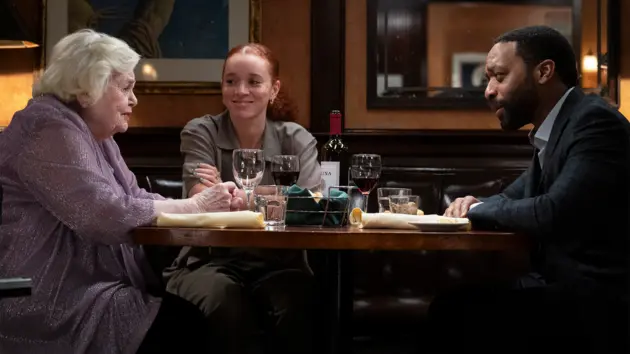
Korda reaches out to his estranged daughter, Liesl (Mia Threapleton), a devoted novitiate nun whom he hasn’t seen or spoken to in six years. He plans to name her heir to his fortune and business investments (“on a trial basis”), and he wants to finalize his elaborate development within the fictional Middle-Eastern-inspired country of Phoenicia: the titular Phoenician Scheme.

Liesl is resolutely against Korda’s exploitative and destructive practices — Korda almost  beams when discussing plans to use slave labor — and she makes clear her refusal to accept his vast sums of wealth. 

Liesl does, however, believe that she can help Korda see the error in his ways within the Scheme, and possibly help to mend the rift between him and Korda’s nine neglected sons, who live across the street from his lavishly hollow estate. She also wants to know the cause of her mother’s death — rumors have it that Korda killed her, or that it was his brother, Nubar (a menacing, impressively-mustached Benedict Cumberbatch). The stage is set for conflict and inevitable reconciliation between Liesl and Korda.

Thanks to the efforts of an American consortium to thwart his power and influence, however, Korda must now attempt to cover the Scheme’s funding deficit (“The Gap”). Thus begins an episodic journey to various investors across Greater New Phoenicia to wrangle the necessary money out of various quirky investors, deploying his characteristic blend of haughtiness and sincerity.

Korda and Liesl are accompanied by Bjørn (Michael Cera, with a wild accent), an entomologist-turned-Korda’s-newest-administrative assistant, who takes a liking to Liesl and who might be more than meets the eye. Oh, and people are still periodically trying to kill Korda.

“The Phoenician Scheme” maintains all the hallmarks of an Anderson film — gorgeously detailed sets, precisely-composed framing, deadpan dialogue, and a smorgasbord of returning faces in roles both big and small. It’s also exhausting, multilayered, and not as streamlined as his best work.

It sacrifices thematic heft for a satirical plot that never quite coalesces into something truly special. But that doesn’t mean “The Phoenician Scheme” doesn’t have its charms, even if the story’s hurried, unconventional structure muddles the profundity of its most heartfelt moments.

Del Toro, making his second appearance in an Anderson production (the first was in “The French Dispatch”), slots in perfectly to Anderson’s particular style, imbuing a character that should be detestable into someone who, despite his haughtiness, is genuinely reckoning with his immoral past and the kind of person he wants to become.

It’s amusing to see Korda’s ostensibly sentimental arc unfold side-by-side with him offering colorful hand grenades, for example, to every investor he meets with. Del Toro delivers Anderson’s signature dryly comedic dialogue with pitch-perfect calibration, while more subtly showing the magnate’s thawing identity brought on by the re-introduction of Liesl into his life. 

This tug-of-war seemingly exists within Anderson’s filmmaking itself, continuing his streak of self-reflection as an artist. The film’s environments are rich with detail but lack warmth, and, particularly in its final third, “The Phoenician Scheme” breaks some of Anderson’s “rules” to reflect Korda’s changing values. It becomes less artificial and more organic in its formal elements, stripping away the unnecessary to get to what really matters.

Threapleton — the MVP — embodies her character’s tension between Liesl’s pious life as a nun with her undeniable draw to material wealth, and to Korda,: a person who seems antithetical to her values. It’s an excellent performance both consistently funny and always operating on a deeper level, marking Threapleton as an actor with a bright future and hopefully becoming a recurring player in Anderson’s troupe of actors.

The remaining characters in “The Phoenician Scheme,” with varying degrees of importance to the plot, are mostly Anderson stalwarts who display expected quirkiness and wry wit. Cera gets most of the film’s laugh-out-loud moments as Bjørn — how is this Cera’s first appearance in an Anderson movie?.

Korda’s cadre of investors — including rail barons Leland (Tom Hanks) and Reagan (Bryan Cranston), the Phoenician prince Farouk (Riz Ahmed), nightclub owner Marseille Bob (Mathieu Almaric), ship-building businessman Marty (Jeffrey Wright), and ,hydroelectric engineer and Korda’s second cousin Hilda (an underused Scarlett Johansson)— are agreeable to watch, but the film’s episodic structure renders them more as amusing asides than memorable, fleshed-out characters. The star power behind them does most of the heavy lifting.

Indeed, amid all the labyrinthine happenings of The Scheme and Anderson’s continued love of nonstop exposition, “The Phoenician Scheme” quickly becomes overwhelming, as the far more engaging story of Korda and Liesl’s connection is nearly swallowed by the mess of everything surrounding it.

It’s not that viewers shouldn’t expect this from late-game Anderson, but when compared to the more-focused successes of “Fantastic Mr. Fox,” “Moonrise Kingdom,” and “The Grand Budapest Hotel,” this latest project doesn’t approach its themes with the attention they merit. It’s all too willing to whisk us away to a new locale or character introduction without allowing much time for reflection.

If viewers go into “The Phoenician Scheme” without expecting anything close to the heights of those aforementioned films, it remains an easy recommendation. Anderson is still crafting experiences more experimental and defiantly strange than most mainstream directors working today, and that’s always to be celebrated.

The Phoenician Scheme” is a 2025 comedy directed by Wes Anderson and starring Benecio Del Toro, Mia Threapleton, Michael Cera, and Benedict Cumberbatch. It is rated PG-13 for violent content, bloody images, some sexual material, nude images, and smoking throughout and the runtime is 1 hour, 41 minutes. It opened in theaters June 6. Alex’s Grade: B.

Facebook Comments

Broadway meets community as The Muny, Greater St. Louis Inc., KMOV and Ballpark Village proudly announce a Tony Awards Watch Party on Sunday, June 8, to benefit St. Louis tornado relief efforts. The watch party begins at 5 p.m. CT. The Muny will receive the 2025 Regional Theatre Tony Award as part of The Tony Awards: Act One, a preshow ceremony starting at 5:40 p.m. CT.

The free, public event will take place at Ballpark Village, where guests can watch Broadway’s biggest night live on the big screen, surrounded by fans, friends and fellow supporters of the arts and the St. Louis community.   

The watch party will be hosted by Tony nominee, Muny alum and Missouri native Taylor Louderman, along with KMOV’s Great Day St. Louis co-host Laura Hettiger, bringing star power and hometown pride to this celebration of theatre and resilience. 

Admission is free, but attendees are asked to bring a nonperishable food item or toiletry donation to support the St. Louis Area Foodbank, or make a monetary gift upon entry to support  Urban League of Metropolitan St. Louis, two organizations working tirelessly to assist those impacted by recent severe weather across the region. 

Celebrating The Muny’s National Recognition 

This year’s celebration holds special significance for St. Louis, as The Muny will be honored during the ceremony as the 2025 recipient of the Regional Theatre Tony Award. The prestigious award recognizes The Muny’s exceptional contribution to the American theatre landscape and its unwavering commitment to artistic excellence and community engagement for over 100 seasons. The award will be presented during The Tony Awards: Act One — a preshow of live, exclusive content leading into the 78th Annual Tony Awards, televised on CBS — streaming exclusively on Pluto TV. 

Event Highlights 

  • Live viewing of the 78th Annual Tony Awards and Act One preshow 
  • Hosted by Tony-nominated actress Taylor Louderman and KMOV’s Laura Hettiger 
  • Celebration of The Muny’s Regional Theatre Tony Award win 
  • Food and beverages available for purchase 
  • Special guest appearances, remarks and giveaways 
  • Donation drive supporting tornado relief through the St. Louis Area Foodbank and Urban League of Metropolitan St. Louis 

Day: Sunday, June 8, 2025 
Time: Event starts at 5 p.m. CT | The Tony Awards: Act One 5:40 p.m. CT | 78th Tony Awards 7 p.m. CT 
Place: Ballpark Village, 601 Clark Ave., St. Louis 
Cost: Free and open to the public — but bring a nonperishable food item, toiletry or monetary gift 

For more information, follow The Muny on social media.

Season 107 at The Muny opens with Bring It On: The Musical (June 16-22) and includes Come From Away (June 26-July 2), Disney’s Frozen (July 6-14), Evita (July 18-24), Dear Evan Hansen (July 28-Aug. 3), La Cage aux Folles (Aug. 8-14) and Jersey Boys (Aug. 18-24).

New season tickets start at just $126 and are on sale now at muny.org/season-tickets and at the Muny Box Office, located at 1 Theatre Drive in Forest Park. Single-performance tickets go on sale May 19. 

The 78th Annual Tony Awards will return to the legendary Radio City Music Hall in New York City next month. Hosted by Tony, Emmy and Grammy Award winner and three-time Oscar nominee Cynthia Erivo, The American Theatre Wing’s Tony Awards will broadcast live to both coasts on Sunday, June 8 (7-10 p.m. CT) on CBS and streaming on Paramount+.  

Paramount+ With Showtime subscribers will have access to stream via the live feed of their local CBS affiliate on the service, as well as on-demand. Paramount+ Essential subscribers will not have the option to stream live but will have access to view on-demand the day after the special airs.

A full list of this year’s nominees and additional honorees is available here.

Taylor Louderman

About The Muny

Now entering its 107th season in St. Louis, The Muny — the recipient of the 2025 Regional Theatre Tony Award — is a 501(c)(3) nonprofit dedicated to producing exceptional musical theatre that is accessible to all, continuing its remarkable tradition in Forest Park. As the nation’s oldest and largest outdoor musical theatre, The Muny welcomes more than 300,000 patrons each summer for seven world-class productions under the stars. Learn more at muny.org, and follow along at facebook.com/munytheatre , instagram.com/themuny and youtube.com/themunytv.

About the Tony Awards

The Tony Awards are produced in collaboration with Tony Award Productions, a joint venture of the American Theatre Wing and The Broadway League, and White Cherry Entertainment. Ricky Kirshner and Glenn Weiss are executive producers and showrunners for White Cherry Entertainment. Weiss will serve as director. The American Theatre Wing’s Tony Awards are presented by The Broadway League and the American Theatre Wing.  At The Broadway League, Kristin Caskey is Chair and Jason Laks is President.  At the American Theatre Wing, Emilio Sosa is Chair and Heather A. Hitchens is President & CEO. Learn more at tonyawards.com. Follow @TheTonyAwards on Instagram, TikTok and Facebook. 

Facebook Comments

By Lynn Venhaus

OK, Boomers. Does “The Heidi Chronicles” retain its bittersweet ‘voice of a generation’ 37 years after its laudable premiere in 1988?

Yes, it does in New Jewish Theatre’s persuasive production now playing through June 15. One woman’s coming-of-age story and her realization of self-worth still hits home.

Under Ellie Schwetye’s perceptive, poignant direction, an exemplary cast breathes life into these well-defined characters with warmth, wit and understanding. They are as resolute as the director and creative team in sharing this quest for fulfillment.

Those of different generations perhaps can relate in a universal parallel lives’ way, for whip-smart playwright Wendy Wasserstein’s entertaining and profound insights endure.

As a fellow child of the 1960s, Wasserstein’s words have always spoken to me. But now, looking in the rear-view mirror, with humor, heart and hindsight, this ensemble’s backbone and boldness was measurable.

Consciousness-raising, 1970s style. Photo by Jon Gitchoff.

Wasserstein, who sadly died of lymphoma at age 55 in 2006, won the Pulitzer Prize for Drama and the Tony Award for Best Play in 1989 for this masterwork. Fun fact: she was the first solo female writer so honored with the award.

Her long-lasting legacy is apparent, creating richly textured characters and the ever-identifiable self-doubts. She also wrote “The Sisters Rosensweig” and “An American Daughter,” plus an under-appreciated Paul Rudd-Jennifer Aniston 1998 movie “The Object of My Affection.” But none landed like Heidi’s story.

As Heidi Holland, Emily Baker’s transformation from awkward schoolgirl to confident feminist who becomes a well-respected art historian over the course of three tumultuous decades, 1965 – 1989, is realistic.

Hopeful in the 1970s but disillusioned in the 1980s, Heidi continues to search for what matters. She is passionate about women artists, informing students of neglected painters and their achievements in a man’s world. That she is fierce about – and good at teaching.

Owning her hard-fought choices, she eventually eschews the super-woman stereotype of yuppie-ism in favor of humanism, individualism and the road she wants to travel. In a discerning performance, Baker displays strength, vulnerability and intelligence.

Emily Baker, Joel Moses. Photo by Jon Gitchoff

The post-war Baby Boom generation known for navel-gazing and its cultural and societal impact has been analyzed many times, but this is one single woman’s voyage that resonates, and compassion is key.

Wasserstein’s atmospheric look back highlights specific years and events that everyone born between 1946-1964 has etched somewhere in their memory, starting with the agony of a teenage mixer then moving on to college activism, displaying the youthful optimism that presidential candidate Gene McCarthy, who opposed the Vietnam War, sparked in 1968.

That sets the tone for the significant characters who come in and out of Heidi’s life. Her first romance with a smooth-talking heartbreaker, the radical journalist Scoop Rosenbaum, leads to much second-guessing.

As the once-and-future womanizer who sells out for position and money, Joel Moses brings out Scoop’s brash, cocky and opinionated qualities, but also his charm. He winds up a prominent magazine editor who dines at Lutece and steps out on his wife, a children’s book illustrator and mother of his two children. But he and Heidi have always had a testy but candid connection.

Cutting a rug. Will Bonfiglio and Emily Baker. Photo by Jon Gitchoff.

The one constant male in her life is stand-up guy Peter Patrone, a gay pediatrician she met when they were young, and they instantly bonded over snappy repartee. Will Bonfiglio adds nuance to the earnest doctor, for they don’t ignore the scariness and worry during the AIDS epidemic. He shares his concerns with sympathetic Heidi.

Wasserstein selected touchstones as turning points. Her militant feminist friends gather for urgent consciousness-raising (IYKYK) during the growing women’s movement. They also attend baby showers and weddings.

The tides change when her successful friends that once rejected materialism to emphasize social responsibility now care about being seen and embrace status symbols in the 1980s.

Kelly Howe is delightful as Heidi’s trendy best friend Susan Johnston, who knows how to flirt and roll up her skirt in the school gym, throws herself into activism, then achieves major success as a Hollywood producer. They no longer have much in common but past loyalty.

Courtney Bailey, Paola Angeli. Photo by Jon Gitchoff.

Besides the four main actors, there are four others who capably play 16 supporting roles. Courtney Bailey and Ashwini Arora provide much comic relief, most notably Bailey as mother-to-be Jill and Scoop’s bride Lisa.

Arora is amusing as April, a vapid preening TV host, but as radical lesbian Fran, ready for liberation – or unleashing – in society, she is hilarious. “Either you shave your legs, or you don’t,” she says at the women’s meeting.

Wearing New Wave shoulder-padded power suits and colorful attire, Paola Angeli is a hoot as Susan’s and April’s assistants, and in the female gatherings as a friend. In addition, Bailey is Debbie and Arora plays Molly and Betsy.

Joshua Mayfield smoothly tackles five parts, including schoolmate, activist, waiter and boyfriends.

One of the funniest scenes is a morning talk show set, with guest appearances by Scoop, Peter and Heidi on “Hello, New York,” and how they handle the host’s superficial questions. The trio’s body language says so much about their characters.

The politics, music and fashions convey Heidi’s rapidly changing world and Schwetye’s vision is a keen lens into the time. She served as sound designer too, and her selections are a superb life soundtrack.

Joshua Mayfield, Emily Baker. Photo by John Gitchoff.

Showcasing seminal moments, like Nixon’s resignation in 1974, John Lennon’s murder in 1980 and the Berlin Wall being torn down in 1989, sets the moods. Kareem Deanes handled the demanding video projections with flair and Michelle Friedman Siler’s costumes splendidly define the personalities and the periods. It was as if she raided my old closets.

Inventive scenic designer Patrick Huber expertly handled the demands of apartments, Plaza Hotel, pediatric ward, restaurant and TV studio with nifty features. He also skillfully designed the lighting. Props supervisor Katie Orr did a swell job gathering items to decorate a doctors’ waiting room and gift-wrapped baby presents.

By the time we get to Heidi’s speech, “Women, Where Are We Going?” at an alumnae luncheon where she is the keynote speaker, she wants to cut through all the greeting-card platitudes that have ruled the narrative for all good girls. It’s an honest outpouring, sharing frustrations, aggravations and confusion.

Women of The Me Generation wanted it all but discovered there were personal costs and sacrifices to be made. Yet, found that forging one’s own path was possible. At last, Heidi chooses herself – and also finds comfort in knowing her friends have become her family.

Wedding reception guests Kelly Howe, Ashwini Arora. Photo by Jon Gitchoff.

Not seen on a local professional regional stage since The Repertory Theatre of St. Louis in 2007, this was a welcome reminder of the past, present and possible future.

With its potent performances and humor shaped through flawed characters, sarcastic remarks and uncertain times, this “The Heidi Chronicles” unequivocally states its relevance.

One glorious takeaway is that contemporary women’s roles are ever evolving, and when it seems that progress is stymied, we should remember we stand on the shoulders of giants, and can lead the charge into the future supporting uncommon women of any age and their choices.

The New Jewish Theatre presents “The Heidi Chronicles” from May 29 to June 15 at the Wool Studio Theater, 2 Millstone Campus Drive, Creve Coeur, Mo. Performances are on Thursdays, Saturdays, and Sundays. There is an additional show on Wednesday, June 4. Show times and tickets are available online at newjewishtheatre.org or by phone at 314.442.3283. NJT’s 2025 Season is generously sponsored by Mary Strauss. The play is 2 hours and 15 minutes long, with a 15-minute intermission.

Sunday, June 8 – Post-Show Talkback with the Director and Cast. Join members of the cast and crew following the 2pm performance for an engaging post-show discussion on the creation of NJT’s special production.

Emily Baker. Photo by Jon Gitchoff.
Facebook Comments

By CB Adams

Set in Harlem’s iconic Sugar Hill—once home to luminaries like W.E.B. Du Bois, Thurgood Marshall and Duke Ellington—”This House,” the new, commissioned opera by composer Ricky Ian Gordon and librettists Lynn Nottage and her daughter, Ruby Aiyo Gerber, arrives at Opera Theatre of St. Louis with sweeping ambition and a world-premiere spotlight.

Its strengths lie in OTSL’s commitment to new works, a fully committed cast, inventive staging and design, and evocative playing by members of the St. Louis Symphony under the direction of principal conductor Daniela Candillari.

The production, directed by James Robinson, features a fine ensemble led by soprano Adrienne Danrich as matriarch Ida and mezzo-soprano Briana Hunter as her daughter Zoe. Baritone Justin Austin brings supple emotional nuance to the role of Lindon, Ida’s son, while Christian Pursell lends warmth and pathos to Thomas, Lindon’s lover.

Tenor Brad Bickhardt portrays Zoe’s husband Glenn, and bass Sankara Harouna takes on the role of Ida’s husband, Milton. The cast is rounded out by soprano Aundi Marie Moore, tenor Victor Ryan Robertson, soprano Brandie Inez Sutton, and mezzo-soprano Krysty Swann.

One of the most compelling presences in the opera is the Walker family’s brownstone itself—less a backdrop than a central character. Over more than a century, it bears witness to couplings, births, betrayals, addiction, activism and grief – among a litany of other human experiences .

(top to bottom) Adrienne Danrich as Ida and Brandie Inez Sutton as Young Ida, with (background) Krysty Swann as Beulah in This House. Photo by Eric Woolsey

It is a house imbued with memory, both sacred and unsettling—a place that might, in real-estate parlance, be labeled a stigmatized property or psychologically impacted. But in family gossip, media headlines or the real talk of buyers and agents, this would be known bluntly as a murder house. And it’s precisely this fraught legacy—how spaces carry the spectral weight of history—that “This House” tries to explore, if not fully resolve.

Composer Ricky Ian Gordon underscores the house’s haunting role by assigning the orchestra’s reed section an eerie vocalise, a ghostly exhale that recurs like a memory trying to resurface. Scenic designer Allen Moyer, video designer Greg Emetaz and lighting designer Marcus Doshi create a visually rich, immersive world that roots the opera’s fragmented narrative in emotional atmosphere.

Moyer, known for “Grey Gardens” and his longtime collaboration with Gordon (“The Grapes of Wrath”), outfits the home with dignified wear and subtle detail—its furnishings shifting over time like the emotional residue of those who’ve passed through. The use of a carousel to move from interior and exterior scenes was as effective as it was impressive.

Emetaz’s excellent cinematic projections add a lyrical visual language that binds characters to time and place. Doshi’s lighting moves seamlessly across eras, illuminating past wounds and present tensions with emotional fluency. And Tony-winning costume designer Montana Levi Blanco’s work grounds the characters with clarity and texture, often accomplishing through wardrobe what the script cannot.

(L to R) Krysty Swann as Beulah and Victor Ryan Robertson as Uncle Percy with (background, L to R) Aundi Marie Moore as Lucy, Adrienne Danrich as Ida, and Sankara Harouna as Milton in This House. Photo by Eric Woolsey

Director Robinson guides the sprawling libretto with attention to pacing and emotional clarity, though the sheer number of narrative threads makes cohesion elusive. The staging is precise, yet the storytelling remains episodic, moving from decade to decade with little connective tissue other than the house itself and the family’s lineage.

The house, for all its beautifully rendered symbolism, ends up standing in for a history that the libretto doesn’t fully explore—a repository of vignetted trauma, legacy and memory that’s often gestured toward rather than meaningfully unpacked.

The cast delivers deeply felt performances that do the best they can to elevate the material. Hunter’s Zoe, a frustrated millennial searching for answers, brings grit and lyrical finesse to a role that could easily feel schematic. Danrich’s Ida exudes quiet strength and vulnerability, her soprano capturing the tension of survival and sorrow.

Austin and Pursell form the opera’s emotional core with understated yet resonant chemistry. Victor Ryan Robertson’s Uncle Percy resonates with presence, embodying the lingering complexities of family and memory.

(L to R) Christian Pursell as Thomas and Justin Austin as Lindon in This House. Photo by Eric Woolsey

Yet despite these achievements, “This House” buckles under the weight of too many competing ideas. Gentrification, addiction, queer identity, generational trauma, cultural legacy—each theme has potential, but none are given enough narrative space to mature.

Characters appear, hint at depth and vanish. Even moments of violence—presumably pivotal—are staged with such abruptness that their emotional impact feels blunted. In this way, the opera mirrors its title too well: a house with many rooms, stories left half-told behind closed doors.

The creative pedigree behind the work raises the stakes. Nottage, a two-time Pulitzer Prize winner in playwriting, is known for emotionally rich, structurally disciplined writing. Gordon, celebrated for his genre-fluid scores and nuanced theatrical sensibility, draws here from a wide palette: ragtime, jazz, gospel, and more.

His ambition is to “place words like a jewel in a ring.” But too often, the music recedes into the background, more atmospheric than dramaturgical. The score supports rather than shapes the action, and its emotional cues—while sometimes lovely—rarely surprise or challenge.

(L to R) Briana Hunter as Zoe and Brad Bickhardt as Glenn in This House. Photo by Eric Woolsey

There are glimpses of brilliance: a melodic motif that pierces, a costume that reveals a character’s arc, a lighting shift that clarifies a ghost’s presence. But the opera’s structure—sprawling and impressionistic—ultimately dilutes its impact. If that was a deliberate choice – and presumably it is – its effect does not satisfy.

In real estate, buyers might walk into a home like the Walkers’ and wonder: Who lived here? What happened in these rooms? “This House” the opera wants to address these questions—the idea that buildings remember—but it gets lost in the hallways. Despite noble intentions and undeniable talent, the result feels less like a unified meditation on lineage and place and more like a haunted, curated scrapbook of ideas—rich in atmosphere, scattered in focus and ultimately more whispered promise than resonant legacy.

Opera Theatre of St. Louis’ production of “This House” continues in repertory at the Loretto-Hilton Center of Performing Arts at Webster University through June 29. For more information, visit https://opera-stl.org.
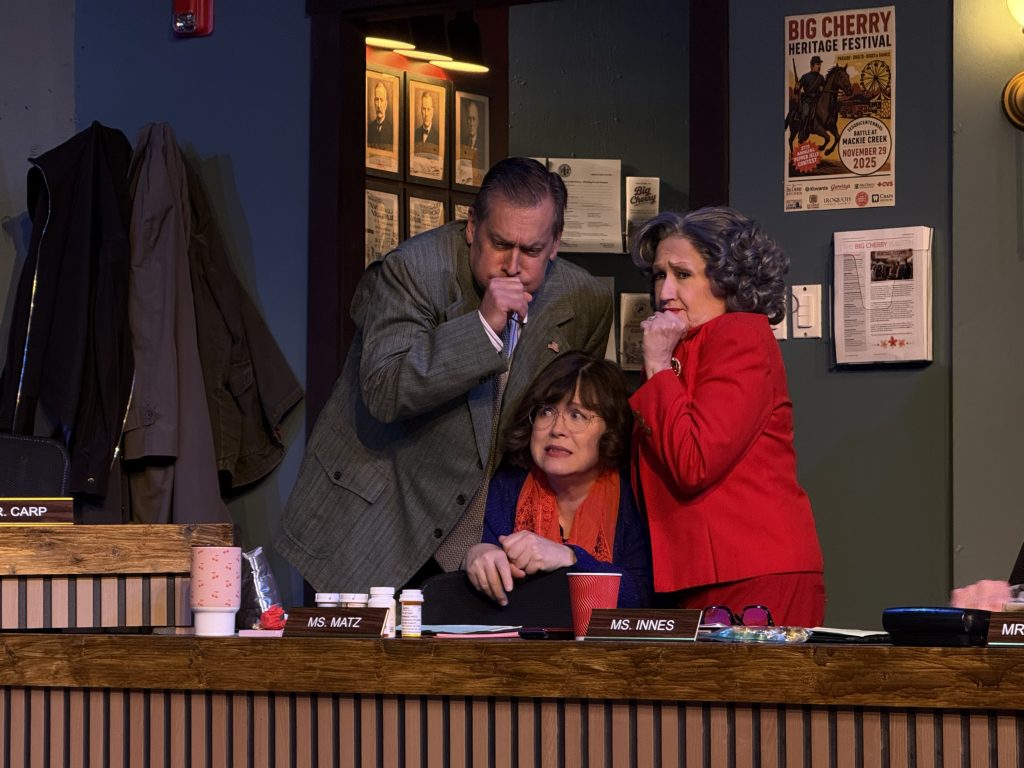
The Harlem brownstone that is the family home of Minus Walker for more than 100 years. Set designed by Allen Moyer. Briana Hunter as Zoe and Brad Bickhardt as Glenn in This House. Photo by Eric Woolsey
Facebook Comments

Bread & Roses Missouri & A Call to Conscience Interactive Theater for Social Change at Metro Theatre Company

Social Justice Shorts 2025, a dynamic festival of short plays running June 6–8 at Metro Theatre Company. Building on the success of last year’s inaugural festival, this partnership brings together two organizations deeply rooted in using the arts to advance equity and social justice.

This year’s festival features 19 powerful short plays and monologues by playwrights from across the country that explore the urgent themes of justice, resistance, identity, and hope. Among the selected works are five compelling pieces from St. Louis-based writers—Kathleen Gamble, Nancy Bell, Michael Paplanus, Joan Appell Lipkin, and Chris Orlet—showcasing the depth and range of our local talent.

These stories speak to the heart of our region while connecting to national conversations around equity
and collective liberation.

Olajuwon Davis and Molly Wennstrom in Ow by Peter Pasco


“The struggle is still more real than ever given the current political climate. This Social Justice Short Play Festival amplifies the diverse perspectives of playwrights boldly confronting injustice. As Dr. Martin Luther King Jr. said, ‘If you can’t fly, then run… keep moving.’ Let’s all take a stand. Join us in the fight for justice, engage with these stories, and commit to making a difference in our communities today.” says Fannie Belle Lebby, Artistic Director of A Call to Conscience Interactive Theatre for Social Change.

“We were amazed to have over 180 submissions from writers all over the country. We’re excited to be inviting local directors and actors to bring these powerful theater pieces to life in the cause of justice,” says Emily Kohring, Executive Director of Bread and Roses Missouri. Support for Social Justice Shorts 2025 is provided by the St. Louis Regional Arts Commission and the Whitaker Foundation.

Social Justice Shorts 2025 will take place at Metro Theatre Company (3311 Washington Ave, St. Louis, MO 63103) and presented in two distinct bills of plays. Audiences can attend either bill or both bills for the full experience. Tickets are available at https://cur8.com/25728/project/131879 or visit breadandrosesmo.org for more information.

Anum Arshad and Lilie Self-Miller in Aurora by Rhys Collins


SOCIAL JUSTICE SHORTS 2025
Friday, June 6 at 7:30 p.m. and Saturday, June 7 at 3 p.m.

BILL #1: THE ISMS
Featuring:
● A Change Is Going to Come? by Kathleen Gamble
● Butterfly by Jenna Jane
● Grown-Up Stuf by D.L. Siegel
● Side Ef ects by Charles Day
● Something to Say by MC Crosby
● The Student by Nancy Bell
● The Round Up by Chris Orlet
● (UN)BOTHERED by Mildred Inez Lewis
● The 92% by Bryan-Keyth Wilson

Saturday, June 7 at 7:30 pm and Sunday, June 8 at 3 pm

BILL #2: THE GENERAL WELFARE
Featuring:
● Are You Comfortable? by J. Lois Diamond
● Aurora by Rhys Collins
● Do Better, Home Depot by Matthew Moore
● First Chapter Friday by Kaily Anderson
● My Eating Disorder, Donald Trump and Me by Joan Lipkin
● Not My Tale to Tell by Donna Latham
● Ow by Peter Pasco
● Room 404 by Bridgette Dutta Portman
● The Nearest Far Away Place by Aleks Merilo
● The Project by Michael Paplanus

Tickets are available at https://cur8.com/25728/project/131879 or visit breadandrosesmo.org for more information.

ABOUT BREAD & ROSES MISSOURI Bread and Roses Missouri amplifies and elevates the stories of working people through art, performance, and activism. They believe that cultural and creative expression are a means to effect deep and lasting social change. Bread and Roses Missouri organizes and produces arts and humanities events, exhibits and workshops for and about workers and their families. We strive to empower participants and educate audiences. Through the arts they envision a world that achieves an
economic base benefitting the entire community.

ABOUT A CALL TO CONSCIENCE INTERACTIVE THEATER FOR SOCIAL CHANGE A Call to Conscience (c2c) is a nonprofit 501(c)(3) theater collective that uses a multi-media format to dramatize historical themes dealing with the struggles of the oppressed. Using speeches, essays, and adaptations we highlight transformative events that evoked change and the various architects and leaders that helped create them. C2C’s mission is to serve as a catalyst for activism within our community. Founded in 2012 by a group of women participants of the Regional Arts Commission’s Community Arts in Training (CAT) Program, C2C presents challenging original works that engages audiences in thought-provoking conversations and an exchange of ideas regarding racism, police brutality, poverty, gender inequality, and other civil and human rights.

Cover Photo: Jayson Heil, Hailey Medrano and Olajuwon Ali in The Project by Michael J. Paplanus

Facebook Comments

By Lynn Venhaus

With its superlative cast, August Wilson’s powerful storytelling, and impressive milestones, “Radio Golf” is a triumph in all aspects.

Thoughtfully presented by the Black Repertory Theatre of St. Louis through June 8 in the Edison Theatre, this shrewdly observant play says so much about at what cost is doing the right thing vs. getting ahead. While it is set 1997, it speaks to issues for the ages.

The premise of Wilson’s 10th and final play is about a real estate entrepreneur who is determined to become Pittsburgh’s first black mayor. Set in the Hill District, Harmond Wilks and his business partner Roosevelt Hicks are golf enthusiasts with big plans for the neighborhood, and their future. But at what risk?

Their office, Bedford Hills Redevelopment Inc., is a storefront on Centre Avenue. The two partners talk of their hopes and dreams as they work on a modern housing and shopping development that will include Whole Foods and Starbucks.

Ronald L. Conner, a St. Louis native now living in Chicago, is a fiery, slick, upwardly mobile Roosevelt who is a bank vice-president and plays golf games to get ahead. Being accepted by the Country Club movers-and-shakers is a goal that he feels is within reach.

Ronald L. Conner and Reginald L. Wilson as business partners Roosevelt and Harmond. Photo by Keshon Campbell

Reginald L. Wilson, in a slow-burn riveting performance, views the development as a way to lift people up. But a block of the Hill District must be torn down. It’s his Black Rep debut but he has immersed himself in Wilson’s works, and previously starred in “Ma Rainey’s Black Bottom” and “Fences.”

Where Harmond and Roosevelt see blight, others see the heritage that marks the tight-knit families who grew up there. He isn’t looking at the other side – and both a cranky yet wise Old Joe Barlow and no-nonsense handyman-contractor Sterling Johnson remind him of people’s worth, no matter their economic means or position.

Himes is unabashedly brilliant and the audience’s favorite character as Joe, a neighborhood elder who knows its history. He also remembers Harmond’s father who was in the real estate business. Blunt and smart like a fox, Joe tells it like it is.

As street-smart Sterling, Kelvin Roston Jr. is the play’s conscience. A good judge of people and their motives, he warns Harmond about neglecting the reasons why people value their history and turning his back on his neighbors. An ex-con who has lived a colorful life, and his dialogue just sings with authenticity, thanks to Roston.

Savvy Velma Austin is the lone female in the cast, portraying Mame, Harmond’s ambitious wife and public relations professional. She is looking ahead and extremely conscious of image. She doesn’t want him to jeopardize the path they envision for their future.

The conflicts occur organically because the ensemble is skilled in delivering Wilson’s rhythmic prose, making their characters’ struggles well-grounded.

Ron Himes as Old Joe Barlow. Photo by Keshon Campbell.

Director Jon Royal’s layered approach allows Wilson’s realistic dialogue to breathe and to build with tense clashes.

Jim Burwinkel’s scenic design aptly encapsulates Wilks’ needs and his hopes – an MLK poster is near his desk and a Tiger Woods poster is near Roosevelt’s. Lighting designer Jayson Lawshee captures times of day through the windows and Justin Schmitz’ astute sound design includes a terrific soundtrack.

Also setting the moods were costume designer Shevare Perry, who fits the period well, and Mikhail Lynn, who nailed the props, such as stolen golf clubs.

In “Radio Golf,” like he has touched on so eloquently before, Wilson examines the lifelong practices of white-run institutions, and whether minorities getting a place at the table was lip service, or another way for control, or an opportunity. And what would you do to ensure that opportunity?

All good, thoughtful points. As Martin Luther King once said, “The time is always right to do the right thing.”

Wilson published the play before his death in 2005, long before social media could have exploited the efforts of people involved to do the right thing vs. the corporate and political spins of the day. However, at that time, the outrage that is the norm when righteous dudes stand up for rights and beliefs now is sadly absent.

Reginald L Wilson and Velma Austin as Harmond and Mame. Photo by Keshon Campbell.

Wilson’s monumental American Century Cycle covers 100 years of the Black experience in America, chronicling social and historical changes in his remarkable style. He won Pulitzer Prizes for two of the plays – “Fences” and “The Piano Lesson.”

“Radio Golf” is the Black Rep’s second completion of the cycle, which took them 18 years to achieve. The Black Rep first completed it – only the third company in the U.S. to do so – from 1988 to 2003.

Starting in 2007, they have presented Wilson’s collection in chronological order. Thanks to the Black Rep, since 2012, I have seen seven of Wilson’s works, and each one has been a gem to treasure.

“Radio Golf” is also a record for actors Himes, founder and producing artistic director of the Black Rep, and Conner, who complete their own personal cycle this go-round.

They have earned St. Louis Theater Circle awards for outstanding production of a drama with Wilson’s “Two Trains Running” in 2022 and “Jitney” in 2023, and Ron Himes won best actor for “Fences.”

All 10 powerful in their own ways, these finely acted and impeccably produced shows illuminate black heritage and specific challenges as only Wilson can, and it’s always the right time to be reminded of his humanity.

With vibrant performances, The Black Rep’s “Radio Golf” is a masterful production that elevates its timeless message for today.

Kelvin Roston Jr as Sterling talks to Harmond.

The St. Louis Black Repertory Company presents “Radio Golf” through June 8. The opening weekend of May 16 – 18 was cancelled because of tornado damage, and performances have been added from Thursday, June 5 to Sunday, June 8. A portion of those ticket sales will support tornado relief. Performances take place in the Edison Theatre on the campus of Washington University with support from The Whitaker Foundation. For more information: www.theblackrep.org Box Office at 314-534-3807. Reduced pricing is available for seniors, educators, museum staff, students, and groups of 12 or more.

Facebook Comments

By Alex McPherson

Bleak, unflinching, and deeply sensory, director Dea Kulumbegashvili’s “April” captures nightmarish realities flecked with vividly-rendered beauty and perseverance of the human spirit.

Set in a rural community within the country of present-day Georgia, we follow Nina (Ia Sukhitashvili), an OB/GYN who has devoted her life to the profession to the point of refusing to have personal ties outside of work in order to focus on providing for her patients. Her hardened empathy has clearly taken its toll on her psychologically, but Nina fully embraces her calling within a patriarchal environment that is seemingly always watching her.

We first meet Nina at the local hospital where she’s helping deliver a baby. Arseni Khachaturan’s camera films a (real-life) birth scene as the struggling mother and hospital staff do all they can to safely extract the child, but to no avail — the newborn dies soon afterwards. 

Nina is blamed for the death by the mother’s resentful husband (Sandro Kalandadze), and Nina’s supervisor (Merab Ninidze) launches an investigation into what transpired. Nina convinces her fellow doctor and ex-lover, David (Kakha Kintsurashvili), to lead it. But despite supporting her, David is concerned by Nina’s actions outside of the hospital, where hushed threats against her are spreading among rageful, conservative men and the population at large.

The risks of the investigation go beyond Nina losing her job at the hospital. They extend to the home abortions she provides for impoverished residents of a nearby village, and her helping married women (some extremely young) access contraceptives, which are both taboo and hard to obtain.

While termination of pregnancies in Georgia is technically allowed up to 12 weeks, prevailing Orthodox Christian views bring intense shame to the procedure.Without transportation to larger cities like Tbilisi where the services are more readily available, Nina is the women’s only hope. Regardless of how the community depends on her, though, Nina’s safety and livelihood remain at the mercy of those wanting to punish her for “sinning” in the name of free will.

Going about her day-to-day life, with the weight of the investigation hanging over her, Nina is slowly being consumed by existential dread — partly visualized through frequent sightings of an alien-like, dried-out humanoid embodying the ultimate futility and depleted sense of self she’s developed over time in her profession. The combined weight of her responsibilities and the empathy she holds onto eats away at her mentally. 

“April” forces us to confront injustice in a manner both agonizing and transfixing, marrying the horror of its narrative with lush lyricism that casts a stunning, albeit elliptical, spell. Kulumbeshgavili’s film is an experience that’s relentless in its brutality yet punctuated by moments of stark beauty and quiet bravery, immersing us in Nina’s point-of-view on both grounded and spiritual levels.

Indeed, “April” is a demanding watch. It can be excruciating in its unblinking depiction of birth and abortion, featuring taut sequences — captured in tense, volatile long-takes — that shiver with the potential for physical and emotional violence. Kulumbesgavili paints the film’s remote setting as an alternately gloomy and vivid landscape reflecting a symbolic tug-of-war between futility and hope.

Brilliant, sunkissed poppy fields one moment become rapidly battered by the elements the next, never being able to escape the forces beyond their control. Neither can Nina’s patients protect themselves from the paralyzing stigma and eye of government. Neither can Nina protect herself from her own self-destructive pull to provide for those who could otherwise perish within futures not written by them.

Kulumbegashvili offers little comfort or reprieve from the film’s relentless sadness and uneasiness. Khachaturan’s cinematography manipulates perspective to a fascinating degree. It often puts us directly in Nina’s POV, whether during clinical operations in the hospital, nighttime drives looking for random, empty sex, or confrontational scenes in which we focus entirely on Nina’s face (hauntedly portrayed by Sukhitashvili) staring directly at the camera. In these scenes, it’s almost as if Nina looks into an abyss that, time and again, reverts to archaic, dangerous expectations of the kind of woman she should be. 

Other shots flip the camera around with Nina offscreen — putting us in her shoes as we evaluate the judgments and barely-concealed threats levied against her by people, mostly men, who fail to understand her and what she believes in. At other times we seem to levitate above the ground, floating through nature. The film’s 4:3 aspect ratio furthers a sense of confinement and claustrophobia, as does the film’s incredible sound design — otherwise quiet scenes are often accompanied by Nina’s deep, heavy breaths that help fill out a memorably unsettling soundscape intimately connected with her mental state.

The film’s bravura sequence — an abortion filmed in one, extremely long take — takes a different approach. The camera positioned at the side, we see the patient’s midsection in the middle of the frame, her sister’s hand holding hers on the left side, and Nina’s hands working on the right. The scene is silent barring the occasional whimper from the patient, and Kulumbegashvili doesn’t sensationalize the ordeal. Rather, the eye is drawn to the left: one person comforting the other in a time of intense uncertainty and fear. A small but important gesture that means the world and, even though the situation down the road cannot end well, shows the necessity of compassion.

Some might fault “April” for its pacing and ambiguity, especially surrounding Nina’s backstory (implying vague trauma), and supernatural interludes that, daring though they are, momentarily break the film’s mesmerizing rhythms. So many elements combine so seamlessly here that we get a comprehensive picture without needing the creature to fill in thematic gaps. But it remains impactful as a distillation of Nina’s sense of self, of also enduring, as new days dawn after darkness, and as the seasons change.

“April” is a beautiful, uncompromising film singular in vision and firmly among the best-directed I’ve seen in recent memory.

“April” is a 2024 drama directed by Dea Kulumbegashvili and starring Ia Sukhitashvili, Merab Ninidze, Kakha Kintsurashvili, and Ana Nikolava. Its runtime is 2 hours, 14 minutes, and it’s currently unrated. In Georgian with English subtitles. It screens at the Webster University Film Series May 30 – June 1. Alex’s Grade: A

Facebook Comments

By Lynn Venhaus

The late great Democratic politician Ann Richards, former Texas governor and vocal feminist advocate, once said: “In politics, if you want anything said, ask a man. If you want anything done, ask a woman.”

She also said, “The roosters may crow, but the hens deliver the goods.”

Amen to that. Such is the example of Tesseract Theatre’s audacious side-splitting satire “POTUS: Or, Behind Every Great Dumbass Are Seven Women Trying to Keep Him Alive” by Selina Fillinger.

The focus is on the subtitle and resembles recent “Saturday Night Live” zingers as we see seven women connected to the U.S. President trying to get through a terrible, horrible, no good, very bad day without a gentle good night in sight, either.

The president’s off-color remark about his wife has created a frenzy, and while his chief of staff and press secretary try to develop a response, other firestorms are brewing. Conditions spiral from there, as zany as a Marx Brothers movie, with nods to “VEEP” and “Noises Off!” as well.

Kelly Schnider as Harriet. Photo by Florence Flick.

Given the world’s current state of affairs, we might as well laugh, and there are plenty of opportunities to do so. Because the alternative is screaming or crying, and we have more chances for that in the continuous “Twilight Zone” loop we’re living in now.

We never see the leader of the free world, but vivid descriptions by the colorful characters piece together an unflattering portrait of an incompetent lout that sure doesn’t appreciate his ninja staff as he should because they deal with his sexual and political fallout. While vulgar, his obscene description of his wife is the least of his problems.

With its spry septet and fleet, whip-smart direction by Jessica Winingham, this regional premiere merges Fillinger’s sly, sharp dialogue and goofy antics into stylish chaos performed with gusto in the Kranzberg Black Box Theatre.

Displaying a farcical team spirit, even at their silliest, the weathered women elevate the nuttiness. Their fierce ‘we’re all in this together’ attitude fuels this stellar female cast.

The best and brightest politicos, now beleaguered, are in various degrees of meltdowns. As Harriet, Kelly Schnider is the epitome of a crisis manager as the sleek chief of staff who has been handling most of the nation’s business anyway.

Sarajane Clark is at her blunt, sarcastic best as Jean, the sharp-tongued press secretary trying to put out fires as soon as the president’s troublemaker sister, haughty unhappy wife, chatty girlfriend and nosy news reporter start them.

Angela Jean Hetz is amusing as Stephanie, the dutiful but hapless secretary who is always worried about losing her job. She throws herself into broad physical comedy with glee, and some blood is spilled.

The other four roles complicate the staff’s workday, which escalates the worsening situation.

Telegraphing B.S. through her facial expressions, Kimmie Kidd is comically delicious as the polished all-image-focused First Lady Margaret, whose line delivery drips with sarcasm as often as possible. She does not suffer fools, although she must act blissfully happy as the president’s spouse.

Angela Jean Hetz and Isa Davis. Photo by Florence Flick.

Isa Davis is a hoot as ditzy Dusty, an unsophisticated smalltown girl who has been invited to the Oval Office to see the president, but she already ‘knows’ him. The disarming Gen-Z’er enlivens the day’s events considerably, using her impressive dance team skills and naivete to benefit them all.

Angelia Prather vies with Davis for the biggest scene-stealer as Bernadette, the president’s black sheep sister, fresh out of prison through a controversial presidential pardon. The drug-dealing lesbian sister also admits to some shady business in the West Wing. She might have the funniest lines of all.

Laurell Renea Costello has fun as Chris, the pushy reporter who overhears and sees things she shouldn’t have, landing in a big puddle of hot water.

Because there aren’t any doors, per se, to dart in and out of, or slam, the creative design dilemma is solved through Winingham’s choice to have moving partitions. This makes the women’s physical comedy unimpeded.

Angelia Prather and Sarajane Clark. Photo by Florence Flick.

Tony Anselmo’s lighting design and Michael Musgrove-Perkins’ sound design add to the atmosphere, with rambling sound bites from the current president and emphasizes the clown-car operations at Pennsylvania Avenue.

Costume Designer Mary Bobbins has made savvy choices suitable for each character’s personality.

Stage Manager Bella Lucero, Production Manager Sarah Baucom and Technical Director Kevin Sallwasser have created an astute playground for power plays, well-suited to achieve success in this production.

While the first act is sharp and skillful, the second act is goofier, often chemically enhanced nonsense – but it’s all madcap, not mean-spirited, in a feel-good but desperate ‘all for one, one for all’ attempt to clean up a very big mess.

Laurell renea Costello as Chris. Photo by Florence Fliick.

While one can pick apart Fillinger’s logic for orchestrating insanity, this delightful cast is so well-choreographed by Winingham that the pleasure is derived from the performances.

Fillinger, who was a staff writer on “The Morning Show,” is clever in her contemporary satire. So is Winingham’s fast-paced direction.

Somehow, the communal laughter is contagious and cathartic, especially at this moment in time. And women indicating there’s strength in community is a lasting takeaway, no matter how pessimistic you are about the future.

Tesseract Theatre Company presents “POTUS: Or, Behind Every Great Dumbass Are Seven Women Trying to Keep Him Alive” May 22 through June 1 at the Kranzberg Black Box Theatre in Grand Center. For more information, visit tesseracttheatreco.org.
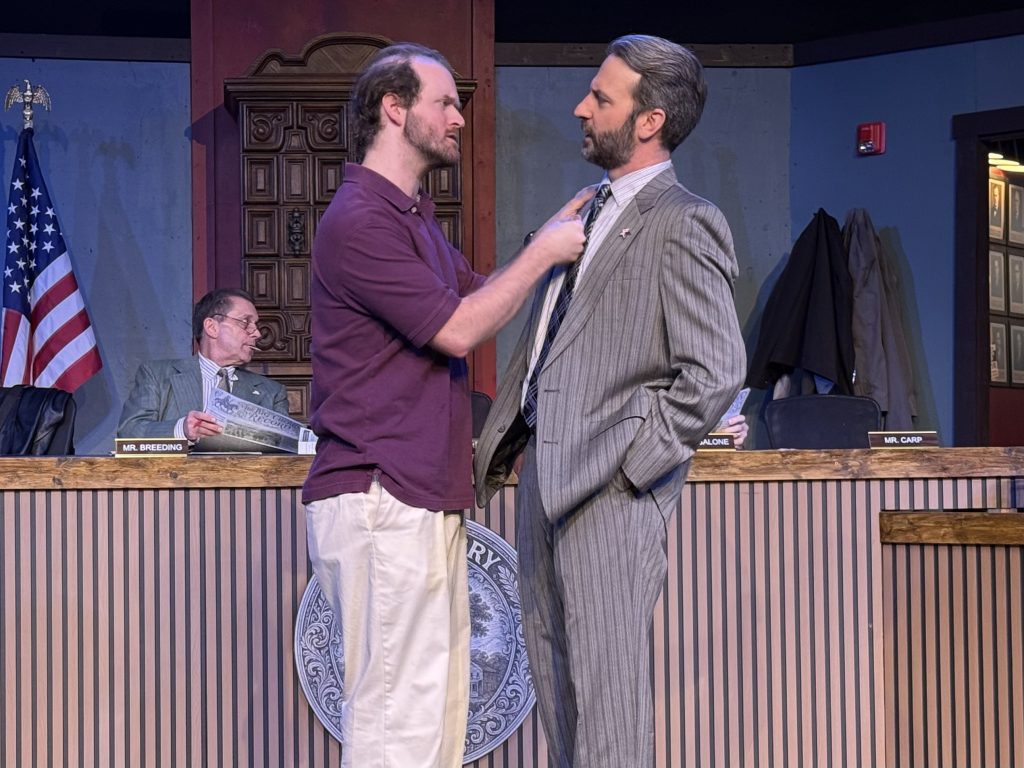
Sarajane Clark as Jean. Photo by Florence Flick

Facebook Comments

The St. Louis High School Musical Theatre Awards winners were announced Thursday, May 15 at The Fabulous Fox. The ceremony was hosted by 2019 & 2020 SLHSMTA Outstanding Lead Actor winner Michael Harp and directed by Lee Anne Mathews. The winners were named in 19 categories (plus WOW! Performance Awards and Special Recognition Awards) including the Outstanding Lead Actress
and the Outstanding Lead Actor who will go on to compete in the Jimmy Awards/National High School Musical Theatre Awards on Monday, June 23 at the Minskoff Theatre in New York City, presented by The Broadway League Foundation.

Outstanding Musical Level 1:
Westminster Christian Academy, Hello, Dolly!

Outstanding Musical Level 2:
Lutheran High School South, Little Women

Outstanding Lead Actress, Amelie Lock for her performance as Emma in Ladue High School’s production of The Prom: School Edition
Outstanding Lead Actor, Tyler Bugg for his performance as Orpheus in Liberty High School’s production of Hadestown: Teen Edition

Outstanding Lead Actress:
Amelie Lock | Ladue Horton Watkins High School

Outstanding Lead Actor:
Tyler Bugg | Liberty High School

Outstanding Supporting Actress:
Molly Sallaberry | Saint Louis Priory School

Outstanding Supporting Actor:
Kevin Friel | Lutheran High School South

Outstanding Student Costume Design & Execution:
Clara Walker & Emily Nguyen | Liberty High School

Outstanding Faculty Costume Design & Execution:
Jenn Erickson | DaySpring Arts & Education
Dianne Mueller | Westminster Christian Academy

Outstanding Ensemble:
Lutheran High School South, Little Women

Outstanding Orchestra:
Edwardsville High School, Chicago: Teen Edition

Outstanding Student Scenic Design & Execution:
Allena Mitchell & Avery Bowen | Liberty High School

Outstanding Faculty Scenic Design & Execution:
Eden Hudder | Frist Baptist Academy
Rick Christensen | Francis Howell Central High School

Outstanding Student Choreography: Outstanding Faculty Choreography:
Sophia Huddleston | Mary Institute and St. Louis Country Day School

Katheryn Pennington | Lutheran High School of St. Charles County

Outstanding Student Technical Execution:
Rachel Church | Liberty High School

Outstanding Faculty Technical Execution:
Evan Sanft | Lutheran High School South

Outstanding Musical Direction:
Carter Datz | Liberty High School

Phylan Peters-Bahkou | Lutheran High School South

Outstanding Direction:
Phylan Peters-Bahkou | Lutheran High School South

Student Reporters:
Eric Perschbacher Belleville West High School
Jane Nordstrom, Visitation Academy

Special Recognition Awards and WOW! Performance Awards for outstanding work in support of the
production were also given out.

SPECIAL RECOGNITION:
Awarded for an outstanding performance in a role not eligible for a nomination.
 Bayless High School
 Christian Brothers College High School
 Oakville High School
 St. Joseph’s Academy

WOW! MOMENTS:
Awarded to a production for something that goes above and beyond what is expected of a traditional high
school production
 Eureka High School
 Hazelwood West High School
 Rockwood Summit High School

CAROL B. LOEB PRODUCTION ENHANCEMENT AWARDS:
Created to provide investments in the technical production elements of select High School theatre programs.
 Incarnate Word Academy
 University City High School


About The St. Louis High School Musical Theatre Awards
The St. Louis High School Musical Theatre Awards (SLHSMTA) are produced by The Fabulous Fox, The Muny and The Fox Performing Arts Charitable Foundation. This program is designed to celebrate outstanding achievement in high school musical theatre. Participating schools will have their productions evaluated by a panel of theatre professionals. The year-long adjudication process culminates in an awards ceremony modeled on the Tony Awards©. The winners of the Outstanding Actress and Outstanding Actor categories will travel to New York (all expenses paid) to compete in the National High School Musical Theatre Awards (Jimmy Awards©) program and to participate in a week-long professional development experience

About The Jimmy Awards® / National High School Musical Theatre Awards®
The Jimmy Awards®/The National High School Musical Theatre Awards® (NHSMTA®) program impacts more than 100,000 students who participate in high school musical theatre competitions sponsored by presenters of Touring

Broadway productions throughout the United States. Presented by the Broadway League Foundation, the program sends a Best Actress and Best Actor winner from each of these competitions to New York for a week-long theatre intensive of coaching and rehearsals with industry professionals in preparation for a one-night-only talent showcase on Broadway. Named for Broadway impresario James M. Nederlander, the program has been the catalyst for more than $2,000,000 in educational scholarships.

The fourteenth annual Jimmy Awards® will take place on Monday, June 23, 2025 at the Minskoff Theatre on Broadway. Coaching and rehearsals for this one-of-a-kind event will be held Saturday, June 14, 2025 through Monday, June 23, 2025 in New York City. For more information, please visit www.JimmyAwards.com.

About Carol B. Loeb
Carol B. Loeb has a great passion for educating young people. A career mathematician and educator, Carol believes passionately that all areas of study contribute to a student’s success – including the arts and musical theatre. Through her intellect and generosity, she has impacted an untold number of students at all levels of education. She is honored to serve as the presenting sponsor of the St. Louis High School Musical Theatre

Facebook Comments

By CB Adams

“Die Fledermaus” is a sparkling comedy of mistaken identities, romantic mischief and champagne-fueled revenge. In Opera Theatre of Saint Louis’s new production, director Shawna Lucey reimagines Johann Strauss II’s classic operetta in the sleek, high-society world of 1960s Manhattan, where cocktail culture and social games set the stage for elegant chaos.

But within this stylish interpretation, there’s something a little new: theft. This “Die Fledermaus” gives new meaning—not just of time and trust, but of the spotlight itself. Nearly every performer finds a moment (or more) to dazzle, tease or upend expectations, and by the curtain call, the show has delivered its comic comeuppance—and it’s stolen your heart. What a way fabulous and fun way to start the company’s current four-opera festival and celebrate its 50th year!

OTSL’s “Die Fledermaus” is a fizzy, stylish delight, reimagining Strauss’s operetta in the sleek, mid-century world of sharp tailoring, cocktail culture and social intrigue. Director Lucey leans into the era’s glamour and satire, crafting a production that feels timeless and freshly minted. The setting proves an ideal backdrop for the operetta’s themes of disguise, flirtation and comic reckoning.

Two scenes in particular showcase the production’s inventiveness and theatrical flair. One is the Act II party, relocated to Prince Orlofsky’s Manhattan penthouse shaken and stirred with a dazzling swirl of martinis, mod fashion and musical mischief. The party becomes a playground for mistaken identities and social games with Kelsey Lauritano’s delightfully eccentric Orlofsky presiding over the chaos like a bemused Warholian host.

Lauritano’s smoky, wine-dark mezzo and magnetic presence give the character a cool detachment and sly charisma. Channeling a touch of Judy Garland glam, Bob Mackie sparkle and the cool mystique of Marlene Dietrich—think, too, of Maurice Chevalier with a Russian accent—she transforms the traditionally male role into a showcase of flair and effortless command.

Sara Gartland shines as Rosalinde, bringing vocal radiance and comic precision to a role that demands transformation and versatility. Her journey from a weary, overlooked housewife to a commanding Hungarian countess is one of the production’s most fun performances.

The role calls for lyrical warmth and agile coloratura, especially in the aria “Klänge der Heimat,” where Gartland’s expressive phrasing and technical finesse reveal Rosalinde’s emotional depth and theatrical flair.

Deanna Breiwick as Adele. Photo by Eric Woolsey.

Deanna Breiwick’s Adele, masquerading as an actress, seizes every comic beat with sparkling wit and vocal agility, her luminous soprano effortlessly navigating the role’s coloratura flourishes. With a stage presence that radiates charm and precision, she blends vocal athleticism with a keen sense of comedic timing, making each moment feel both spontaneous and impeccably crafted.

The visual centerpiece of this production is Robert Innes Hopkins’ dazzling set for the Act II party at Prince Orlofsky’s penthouse—a gleaming, mid-century Manhattan fantasia that perfectly captures the production’s blend of elegance and irony. Known for designs that marry classical structure with theatrical flair, Hopkins creates a space that feels both expansive and intimate, a playground for disguise and deception bathed in sleek lines and shimmering surfaces.

His costume designs are equally impressive, with every character—from leads to ensemble—dressed in looks that evoke period glamour with a wink of camp. Even background figures are meticulously imagined, including one party guest who looked like a vintage Barbie doll come to life, adding layers of visual delight to an already sumptuous scene.

Oscar Olivo as Frosch. Photo by Eric Woolsey.

The other showstopper is the Act III police station scene that shifts gears into full farce, set in a stylized, grungy precinct with “NYPD Blue” and “The French Connection” vibes. Here, the production leans into physical comedy and improvisational energy, with Oscar Olivo’s Frosch, delivering a riotous performance as a world-weary jailer whose antics nearly steal the show.

Robert Mellon’s Frank, the prison warden, is a comic gem, and the ensemble’s timing is razor-sharp. The scene’s loose structure allows for playful invention, and this cast makes the most of it, turning bureaucratic absurdity into comic opportunities.

The cast is uniformly strong, brimming with vocal brilliance and sharp comedic instincts. It’s not easy to pinpoint who deserves the most credit—the singers, Lucey or choreographer Seán Curran—for sustaining such energetic, physically demanding movement across the stage while maintaining vocal clarity. It’s a shared achievement that speaks to the production’s careful coordination and the performers’ versatility.

Edward Nelson’s Gabriel Von Eisenstein is a suave, self-assured figure whose downfall is as satisfying as it is hilarious. Johnathan McCullough brings suave authority to Dr. Falke, his baritone warm, polished, and effortlessly expressive. He shapes each phrase with clarity and control, balancing elegance with a knowing wink.

Robert Mellon as Frank the jail warden. Photo by Eric Woolsey.

Joshua Blue is a scene-stealing (but not too scene-stealing) Alfred, reveling in the character’s theatrical bravado and romantic delusions. His tenor is vibrant and ringing, with a golden tone that soars through Strauss’s lyrical lines. Blue’s voice combines power and warmth, and he uses it with a natural ease that makes Alfred’s over-the-top antics feel hilarious and oddly endearing. His comic instincts are sharp, but it’s the sheer beauty of his singing that elevates the performance beyond caricature.

Sophia Baete brings youthful energy and vocal clarity to Sally, Adele’s sister. Her agile, expressive mezzo and confident stage presence make her a memorable part of the ensemble.

Gregory V. Sliskovich is another comic standout as the hapless lawyer, Dr. Blind, delivering his lines with crisp timing and a keen sense of physical humor. His tenor is bright and flexible, lending a buoyant energy to the role that enhances the character’s frantic absurdity without ever losing vocal finesse.

Edward Nelson as Eisenstein, Johnathan McCullough as Dr. Falke, and Robert Mellon as Frank. Photo by Eric Woolsey,

With gorgeous singing, razor-sharp comic timing and a setting that breathes new life into Strauss’s classic, “Die Fledermaus” at OTSL is a jubilant blend of tradition and reinvention—just as Strauss might have imagined. In the week leading up to the performance, I met three people who admitted they’d never been to an opera and found the idea intimidating. I suspect many opera-goers know people like that.

This production is the perfect invitation—accessible, effervescent and irresistibly fun. And in a time when the arts need all the support they can get, buying a ticket and bringing a newcomer isn’t just a good night out—it’s an investment in the future of live performance.

Opera Theater of St. Louis’ “Die Fledermaus” runs in repertory as part of their festival season through June 29. Visit https://opera-stl.org/.

Party time at Orlofsky’s. Photo by Eric Woolsey.
Facebook Comments