
By Alex McPherson

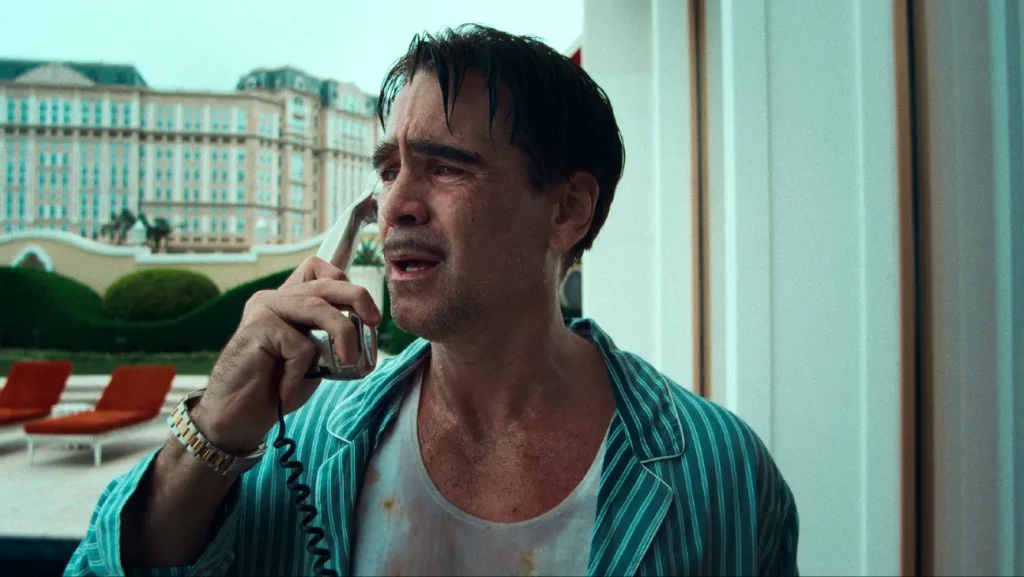
Loud, exciting, and about an hour too long, director Joseph Kosinski’s “F1: The Movie” coasts on Brad Pitt’s starpower and bursts of directorial panache within a narrative framework that leaves deeper thought in the dust.

Kosinski, who previously directed 2022’s excellent “Top Gun: Maverick,” opts for a similar story yet again — an aging professional past his prime coming back into the fold to mentor the next generation and conquer deep-seated traumas, looking effortlessly cool while doing so. 

Sonny Hayes (Pitt) was once a Formula One prodigy with his teammate and buddy Rubén Cervantes (Javier Bardem). Sonny suffered severe injuries from a crash at the Spanish Grand Prix, which promptly took him out of commission. In the following years, Sonny embraced a nomadic lifestyle, going through three divorces and becoming a gambling addict living in a trailer. He travels from race to race seeking that ineffable high he gets from driving really fast and really dangerously. 

After Sonny wins the 24 Hours of Daytona, Rubén shows up and offers (practically begs) him to join his F1 team, “APXGP,” and fill a spare seat that’s been turned down by several other drivers. The team’s life and Rubén’s career are in jeopardy.

Rubén discloses that the investors will sell the team if they cannot win one of the year’s nine remaining Grand Prix — and Rubén instructs the quietly arrogant Sonny to mentor the young rookie Joshua Pearce (Damson Idris). 

Sonny, enticed by the possibility of becoming “the best in the world,” signs onto APXGP. Despite his skills behind the wheel, Sonny quickly discovers that he’s in over his head, and that his mentee-turned-rival Joshua isn’t exactly enamored with cooperation.

Joshua sees Sonny as another obstacle to overcome in his own search for glory in the sport and in the public eye. Sonny also meets the determined team technical director Kate McKenna (Kerry Condon), and, surprise!, they’re quickly drawn to each other.

But Sonny’s technique around the track is unconventional and unsuccessful from the jump, instilling doubt in Rubén and the team’s smarmy investors. Can Sonny adapt, cooperate, and achieve the victory he craves, maybe scoring a new girlfriend along the way? Can Joshua learn to look beyond himself and see the bigger picture? Should we expect any sort of substantial dramatic arc for any of these characters?

The answer to that last question, in the case of “F1: The Movie,” is a resounding “no.” And that’s perfectly fine — the film delivers the expected blockbuster goods (thrilling racing sequences, beautiful people looking cool, the cable-ready “Dad Movie” appeal).

What’s missing, though, is a tangible identity, rendering Kosinski’s film a well-oiled PR stunt for Formula One, and for Pitt himself, draped in appealing Hollywood sheen that remains undeniably easy to watch.

Pitt, like Tom Cruise, is a bonafide movie star, and “F1: The Movie” gives him plenty of opportunities to look like a badass and inject some verve into Ehren Kruger’s earnest and cornball screenplay. Pitt brings a weathered melancholy that suits Sonny’s character well. Bad Boy instincts collide with self-doubt and a spiritual emptiness that only resolves behind the wheel. 

If only Kosinski and Kruger were willing to swerve in more interesting directions with his character. “F1: The Movie” is largely content to go through the motions, brushing over some potentially compelling yet unexplored aspects of Sonny while painting some uncomfortable parallels between Sonny’s controversial history and Pitt’s own. Indeed, one wonders if the requisite victory at the film’s conclusion is actually for Sonny or for Pitt.

The rest of the ensemble brings requisite charm — especially Condon and Sarah Niles as Joshua’s mother. However, the actors can only do so much with characters more resembling cutouts than three-dimensional people.

Idris embodies Joshua’s swagger and egotism effectively, but“F1: The Movie” still paints Joshua’s story in broad strokes, often undercutting character development through music video-esque montages backed by Hans Zimmer’s (admittedly invigorating) techno score.

Fortunately, most viewers go into “F1: The Movie” looking for spectacular racing sequences, and Kosinski — partnering again with cinematographer Claudio Miranda — does not disappoint.

The film’s races (mini stories themselves within the larger narrative) were filmed during actual Formula One races, with Pitt and Idris behind the wheel, and with a new camera system pioneered by Miranda that puts viewers in the cockpit with them, aiming to capture an unmatched sense of speed and immersion. 

This succeeds, for the most part, although Stephen Mirrione’s editing cuts from shot to shot with a tempo that prevents us from fully getting into drivers’ headspaces. The near-constant racing commentary and reaction shots (outright explaining what’s happening on-track, along with some “interesting” intricacies of the sport) also break up the action to a distracting degree, falling into workmanlike tropes that pull away from the film’s experiential achievements. Still, it’s enjoyable to watch these sequences in a theater — in a handful of scattered moments, “F1: The Movie” roars like summer blockbusters should.

Yet Kosinski’s film couldn’t exactly be called “memorable,” nor particularly successful aside from its technical prowess. “F1: The Movie” ultimately lacks what “Top Gun: Maverick” has in spades: heart.

“F1: The Movie” is a 2025 sports action drama directed by Joseph Kosinski and starring Brad Pitt, Damson Idris, Javier Bardem, Kerry Condon, Shea Wigham, Tobias Menzies, Samson Kayo, and Sarah Niles. It is rated PG-13 for strong language and action and its runtime is 2 hours 35 minutes. It opened in theatres June 27. Alex‘s Grade: C+  

Facebook Comments

Before the June 28 performance of Come From Away — the breathtaking musical based on true events in Gander, Newfoundland, in the aftermath of 9/11 — Muny audiences will hear directly from one of the nearly 7,000 airline passengers who found themselves grounded in the tiny Canadian town on an island in the North Atlantic.

Kevin Tuerff, whose real-life experience inspired the character Kevin T. in Come From Away, will speak onstage at the Muny’s Purina Plaza. The preshow event begins at 6:15 p.m. and is open to all ticketholders for that evening’s performance.

Tuerff will share his firsthand account of being stranded in Gander, reflect on the experience of having his story portrayed onstage and share stories from his memoir, Channel of Peace: Stranded in Gander on 9/11

He is also the founder of Pay It Forward 9/11, a nonprofit dedicated to encouraging kindness and community service in memory of the day’s tragic events. Learn more at payitforward911.org.

Pay It Forward Community Drive

Inspired by the kindness of the people of Gander, The Muny will host a Pay It Forward Community Drive, a MunyCares initiative benefiting the International Institute of St. Louis. During the run of Come From Away, patrons are invited to donate new, unopened hygiene items, cleaning supplies and other essential products. Donations will be accepted at four locations: the Muny Box Office, Purina Plaza, the Lower Muny Lot and Kooyumjian Family Plaza. Contributions can also be made online via a Walmart registry.

Learn more about the Pay It Forward Community Drive at muny.org/payitforward.

The Muny production of Come From Away runs June 26-July 2, with performances at 8:15 p.m. nightly.

Single-performance tickets start at just $21 and are on sale now at muny.org or metrotix.com, by calling (314) 534-1111 and at the Muny Box Office, located at 1 Theatre Drive in Forest Park.

A 20% group discount is available for parties of 15 or more. To start the free reservation process, visit muny.org/groups or call (314) 595-5708.

Visit muny.org/comefromaway to read content notes and more for Come From Away; watch In Focus, a Muny original series; and hear Muny Unscripted, a new podcast available exclusively on Spotify. 

Find photos, show logos and other promotional assets in the Muny Press Room.

About The Muny

Now in its 107th season in St. Louis, The Muny — the recipient of the 2025 Regional Theatre Tony Award — is a 501(c)(3) nonprofit dedicated to producing exceptional musical theatre that is accessible to all, continuing its remarkable tradition in Forest Park. As the nation’s oldest and largest outdoor musical theatre, The Muny welcomes more than 300,000 patrons each summer for seven world-class productions under the stars. Learn more at muny.org, and follow along at facebook.com/munytheatreinstagram.com/themuny and youtube.com/themunytv .

Facebook Comments

By Lynn Venhaus

The star power of Brad Pitt combines with the adrenaline rush of Formula 1 racing for an entertaining but strictly-by-the-numbers summer blockbuster.

The turbo-charged technical mastery lifts “F1: The Movie” as a classic underdog-redemption sports drama that follows a standard, if formulaic, template. The thinly written story offers little surprise amidst the turmoil of risk vs. reward, a grizzled veteran clashing with a cocky kid, and whether fun or finance should be the prevailing motivator.

The story follows Sonny Hays (Brad Pitt) as a former Formula 1 driver who is convinced to come out of retirement by his old pal Ruben (Javier Bardem), now owner of a struggling Formula 1 team, to mentor a hotshot rookie Joshua Pearce (Damson Idris). It’s 30 years later and the road to redemption is a rocky one.

A sterling cast supports this star vehicle, and brings authenticity to their roles, which makes it watchable. Oscar winner Javier Bardem is his customary captivating self as APXgp team owner Ruben Cervantes while Oscar nominee Kerry Condon plays Kate McKenna, a smart, feisty technical director whose knowledge of physics has served her well in aeronautics and racing.

Damson Idris fits the promising young talent mold, and while there are many supporting players, Tobias Menzies is memorable as board member Peter Banning, Samson Kayo is Pearce’s manager, and Sarah Niles is a charmer as Joshua’s mother Bernadette. (If you know you’ve seen her but can’t quite place where, she played Ted Lasso’s therapist Dr. Sharon Fieldstone (and scored two Emmy nominations).

Director Joseph Kosinski, who helmed the crowd-pleasing “Top Gun: Maverick” two summers ago, must have been so focused on capturing the thrills that he neglected the emotional sustenance that strong storytelling provides.

He and screenwriter Ehren Kruger, Oscar nominees for the “Top Gun: Maverick” adapted screenplay, collaborated on the cliché-riddled story, which is disappointingly predictable. Kruger, who wrote the “Transformers” sequels, should know his way around a blockbuster.

Nevertheless, the likeable actors are invested in the intensity of these athletes in training and competition.

 Those unfamiliar with the professional auto racing circuit will get a stunning glimpse of fancy racetracks around the world.

Is Sonny Gray a has-been or a never-was? Oscar winner Pitt, now 61, is in his element playing this once-promising hotshot who lost his mojo after a horrific crash and wound up never jump-starting his career.

Pitt is always at his best when he’s a tarnished golden boy. He suits the role of a lone wolf beaten down by life. Through his subtle expressions, you can tell this weathered guy, who is now a racer-for-hire living out of his camper van, has emerged sadder and wiser from Hard Knocks University.

He still tries to be relevant after learning harsh life lessons. With a tawdry laundry list of mistakes made either by gambling or from bad romances (three failed marriages), Sonny seeks another chance to get it right.

Sound familiar? Absolutely. Pitt’s Sonny works his unconventional maverick confidence but also carries around a lot of baggage. He shrugs, he swaggers, he says pithy phrases that motivate people — or quickly shuts them down. A man in motion, he runs – and inspires others.

He’s a betting man, but would he bet on himself?

The movies “Grand Prix” in 1966 and “Le Mans” in 1971 established racing as a compelling action-adventure, even with what was considered state-of-the-art back then, and then “Rush” in 2013 and “Ford v Ferrari” in 2019 surpassed them with high-stakes racing.

This has an old-school escapist feel, although the modern scenario is never in doubt, with social media ‘engagement,’ cell phone usage, and the wall-to-wall product placement palooza.

Cinematographer Claudio Miranda, who last shot the shimmering seascapes of “Nyad,” captured the dizzying spectacle while editor Stephen Mirrione ramped up the stakes and the suspense, heightened by Hans Zimmer’s propulsive score.

Overlong at 2 hours and 35 minutes, you’ll feel like you’ve been driving all night on a road trip. Sure, the action is zippy and immersive. But “F1: The Movie” unfortunately doesn’t have the oomph in the surrounding story on the same level as the vroom-vroom zooming.

“F1: The Movie” is a 2025 sports action drama directed by Joseph Kosinski and starring Brad Pitt, Damson Idris, Javier Bardem, Kerry Condon, Shea Wigham, Tobias Menzies, Samson Kayo, and Sarah Niles. It is rated PG-13 for strong language and action and its runtime is 2 hours 35 minutes. It opened in theatres June 27. Lynn’s Grade: B-.

Facebook Comments

By CB Adams

In Opera Theatre of Saint Louis’ shimmering new production of Benjamin Britten’s “A Midsummer Night’s Dream,” the familiar Shakespearean tale is reborn with a rare blend of musical precision, visual poetry and theatrical wit.

Under the baton of maestro Leonard Slatkin and the direction of Tim Albery, this staging is less a retelling than a re-enchantment—an immersive journey into a world where fairies glide, lovers quarrel and rustic clowns stumble through tragedy with comic brilliance.

The production is anchored by a cast of world-class singers and actors, each bringing nuance and vitality to their roles. The creative team, led by designer Emma Kingsbury, conjures a forest that breathes and transforms while the children’s chorus and mechanicals add layers of charm and humor.

What follows is a breakdown of the production’s key contributors—principal cast, lovers, mechanicals, fairies and creatives—each of whom helps weave this dream into something unforgettable.

Puck (Matisse Carmack) lays a spell upon a sleeping Lysander (Anthony León) in A Midsummer Night’s Dream. Photo © Eric Woolsey

Principal Cast

The heart of Britten’s dreamscape lies in the ethereal authority of its fairy royalty. Oberon and Tytania, portrayed with vocal finesse and dramatic poise, anchor the supernatural world with a sense of grandeur and mystery. Puck, though silent in song, is a kinetic presence who threads the narrative with mischief and grace.

  • James Laing – Oberon: A commanding OTSL debut, Laing’s countertenor voice is smooth and powerful, embodying the regal and mystical presence of the fairy king.
  • Jana McIntyre – Tytania: Also making her OTSL debut, McIntyre dazzles with a silvery bel canto soprano, bringing both elegance and emotional depth to the fairy queen.
  • Matisse Carmack – Puck: In this non-singing role, Carmack is a kinetic force—quick, agile and mischievous. Her delivery of Puck’s final monologue is masterful.
Tytania (Jana McIntyre) embraces Bottom (Ben Brady) as her bemused fairies (L to R: Laura Santamaria, Veronica Siebert, Emilie Kealani, and Zoe Brooks) look on in A Midsummer Night’s Dream. Photo © Eric Woolsey

The Lovers

The quartet of young lovers brings emotional volatility and romantic confusion to the forest, their entanglements rendered with vocal clarity and dramatic charm. Each performer navigates the shifting affections and magical manipulations with humor and heart, grounding the opera’s fantasy in human longing.

  • Anthony Léon – Lysander: A strong and expressive tenor, Léon brings warmth and charm to the role.
  • Jennifer Johnson Cano – Hermia: A returning OTSL favorite, Cano delivers a sterling performance with emotional nuance and vocal richness.
  • Theo Hoffman – Demetrius: A standout among the lovers, Hoffman’s powerful baritone is one of the production’s vocal highlights.
  • Teresa Parrotta – Helena: Parrotta brings humor and heart to Helena, rounding out the quartet with a vibrant performance.
Ben Brady as Bottom in A Midsummer Night’s Dream. Photo © Eric Woolsey

The Rude Mechanicals

Comic relief arrives in the form of the “rude mechanicals,” whose earnest attempt at theatrical tragedy becomes a riotous farce. Their scenes are a masterclass in physical comedy and ensemble timing, with Bottom’s transformation into an ass providing one of the production’s most memorable visual gags.

  • Ben Brady – Bottom: A comedic triumph, Brady is hilarious in both human and donkey form. The donkey’s head is described as a miracle of stagecraft—realistic with a moving mouth that allows Brady’s voice to project clearly and powerfully.
  • Christian Sanders – Thisbe: Sanders delights with a playful and endearing portrayal of Thisbe.
  • Robert Mellon, Dylan Gregg, Adam Partridge, Sam Krausz – Mechanicals Ensemble: This troupe delivers classic low-comic charm, wringing every laugh from their vaudevillian rehearsal scenes.
Tytania (Jana McIntyre) embraces Bottom (Ben Brady) as her bemused fairies (L to R: Laura Santamaria, Veronica Siebert, Emilie Kealani, and Zoe Brooks) look on in A Midsummer Night’s Dream. Photo © Eric Woolsey

The Fairies & Children’s Chorus

The enchanted forest is populated by a chorus of fairy sprites, led by four charming attendants. Their presence adds a layer of visual and vocal delicacy, transforming the stage into a living, breathing dreamscape. The children’s chorus, under expert direction, brings both innocence and eerie beauty to the production.

  • Emily Kealani – Cobweb
  • Veronica Siebert – Mustardseed
  • Laura Santamaria – Peaseblossom
  • Zoe Brooks – Moth: These young performers lead the children’s chorus with grace and whimsy, adding a magical layer to the production.
  • St. Louis Children’s Choruses – Fairy Sprites: A visual and vocal delight, these young singers enhance the enchanted forest with charm and precision.
Thisbe (Christian Sanders) and Pyramus (Ben Brady) speak through the Wall (Sam Krausz) as Theseus (Jose Olivares) and Hippolyta (Michelle Mariposa) watch their play in A Midsummer Night’s Dream. Photo © Eric Woolsey

Creative Team

Behind the scenes, a visionary creative team shapes the production’s aesthetic and emotional tone. From the conductor’s podium to the costume shop, each contributor brings a distinct artistry that elevates the opera’s dreamlike world. Their collaboration results in a production that is as visually arresting as it is musically rich.

  • Tim Albery – Stage Director: Albery’s minimalist Shakespearean-inspired staging is both magical and emotionally resonant.
  • Emma Kingsbury – Scenic & Costume Designer: Her designs are exquisite with transformative sets and timeless costumes that elevate the production’s visual storytelling.
  • Krystal Balleza & Will Vicari – Wig & Makeup Designers: Their work is brilliant, especially in crafting the ethereal looks of the fairy realm.
  • Seán Curran – Choreographer: Curran’s choreography adds fluidity and charm, enhancing the dreamlike atmosphere.
  • Leonard Slatkin – Conductor: A celebrated return to OTSL, Slatkin leads the St. Louis Symphony Orchestra with finesse, bringing Britten’s haunting score to life.
  • Andrew Whitfield – Chorus Master: His direction of the children’s chorus is superb, contributing to some of the production’s most enchanting moments.
Jose Olivares as Duke Theseus and Michelle Mariposa as Queen Hippolyta in A Midsummer Night’s Dream. Photo © Eric Woolsey

Cover Photo: Oberon (James Laing), Tytania (Jana McIntyre), and the fairies bless the slumbering household at the end of A Midsummer Night’s Dream. Photo © Eric Woolsey

Facebook Comments

By Lynn Venhaus

As we all accept that we will die, confronting our own mortality seems to be a lifelong journey – and often tip-toed around with family and friends. How we deal with the inevitability of our end and the loss of our loved ones leads to interesting debates.

Such is the case with Albion Theatre’s latest offering – “Colder Than Here” by Laura Wade. The British playwright sensitively tackles the tricky subject matter, as a terminally ill cancer patient plans her funeral, selects her final resting place, and attempts to discuss the topic with her family.

Grief mixed with humor? Yes, it’s tactful, situational and conveys both pain and love, as does exploring complex family relationships. With utmost delicacy, director Robert Ashton has gracefully staged this comic drama in the intimate Kranzberg Black Box Theatre.

Ashton has cast a quartet that can carry the weight of these characters and still be likable, starting with Susan Wylie as the mom staring at her own fate with clear eyes and an open heart.

The family – LIvy Potthoff, Susan Wylie, David Wassilak and Anna Langdon. Photo by John Lamb.

In typical Mom fashion, Myra is the caretaker, but now others must take care of her. Wylie is convincing as the kindhearted and considerate mother who is trying to nudge her family into accepting what’s ahead. She balances Myra’s inner strength with the outward effects of bone cancer on a human body and does so subtly in an exceptionally well-modulated performance.

Her family’s reluctance to accept the inevitable is understandable as they each have different ways of dealing with the impending loss — but exasperating for her. As Myra becomes sicker, she is aware of the ticking clock, if others aren’t, and she wants matters confirmed. She has even prepared a Power Point with fancy fonts, which garners mixed reactions.

Her husband, Alec, in a skillfully nuanced portrait by David Wassilak, is a taciturn sort used to blocking out the cacophony of three women in the house. Of course he cares for them, but like most dads, he has his routines. He really doesn’t want to talk about anything beyond the immediate issues, like the chilly house because of a wonky boiler.

Now, the daughters are grown, live on their own, but return for visits or temporary stays. How daughters Harriet and Jenna cope with adulting is a mixed bag. They couldn’t be more opposite in appearance and attitudes.

Wylie and Livy Potthoff. Photo by John Lamb.

Anna Langdon is Harriet, the more level-headed, ‘settled’ one, and Livy Potthoff is the rebellious unfiltered Jenna, an impressive debut in a showier part – the daughter who everyone is used to ‘acting out.

The girls express their worries, sadness and guilt, and it is frightening new territory. While they bicker, they still care for each other amd realize they will need each other..

Langdon conveys Harriet’s attempts to maintain control but her anxiety is manifested through eczema. Jenna, who has overcome an eating disorder but not boyfriend troubles, becomes a reliable companion for her mom when checking out cemeteries. You just never know how people will respond.

Wade’s first published play opened in London in 2003, and it’s obvious she has experienced grief and loss, for she created authentic dialogue and believable situations to offer poignant reflection.

Anyone who has gone through similar situations will relate. Grief is a very personal experience, and one can often take comfort with others going through the same thing – or shut down. Everyone is different in how they handle it.

Livy Potthoff and Wassilak. Photo by John Lamb.

A family can grow closer, which happens here. They go through feelings of denial, despair, rage, isolation and helplessness. In finally talking about it, they share warm family moments that lead to empathy, understanding and perspective.

Trying not to be morose or maudlin, Wade successfully integrated gentle humor into the mix. And comic relief is welcome, in any circumstance but important here as a coping mechanism.

In newsroom parlance, gallows humor is resorted to when headlines are routinely horrific, so to continue working on tough subjects, someone will crack an inappropriate joke that makes people laugh, thus releasing tension.

The play’s funniest sight gag is a painted and decorated cardboard coffin sitting in the living room (kudos to set builder Jeff Kargus).

We’re not talking a gut-busting farce like the legendary “Chuckles the Clown” funeral episode of “The Mary Tyler Moore Show,” or even the amusing Monty Python ditty “Always Look on the Bright Side of Life,” now featured in the musical “Spamalot,” which incidentally is the most requested song at British funerals.

Wassilak, Potthoff, Wylie and Anna Langdon. Photo by John Lamb.

But the humor lands, and it’s a nice component. The cast’s emotional journeys are natural as they each grapple with reality, eventually coming together in their shared grief. And because of the mom’s efforts, they can start to heal.

Instead of projections used to show different cemetery grounds, Gwynneth Rausch is a narrator who explains where each setting is and what it looks like.

The simple performance space features a living room with ‘dad’s chair’ and a sofa, and the outdoor gravesites are represented by Astroturf-type grass. The well-appointed set is designed by Kristin Meyer, with construction help from Kargus.

Michelle Zielinski’s lighting design astutely captured the atmosphere, and Ted Drury’s sound design – and Power Point presentation (kudos for the Papyrus!) are excellent. Rausch handled the props and costume designer Tracey Newcomb comfortably outfitted the characters in age-appropriate attire. CJ Langdon was the assistant director.

“Colder Than Here” is a candid account of what people experience on a daily basis, and is sensitively handled so that the points are well-taken. It helps that everyone involved in the project brings an admirable level of commitment to telling this story in a helpful, heart-warming way. And as always, with Albion’s plays set in the UK, the dialect work is impeccable.

When going through difficulties, the only real answer is Love. Do love, never forget to remember. It won’t change the outcome, but it will help get through another day. And that’s a good takeaway from Wade’s play and Albion Theatre’s thoughtful efforts.

Albion Theatre presents “Colder Than Here” June 13-29 at the Kranzberg Black Box Theatre, 501 N. Grand Blvd., St. Louis. The performances are Fridays and Saturdays at 8 p.m. and Sundays at 2 p.m. The play is presented as a one-act in 90 minutes without intermission. For more information, visit www.AlbionTheatreSTL.org.
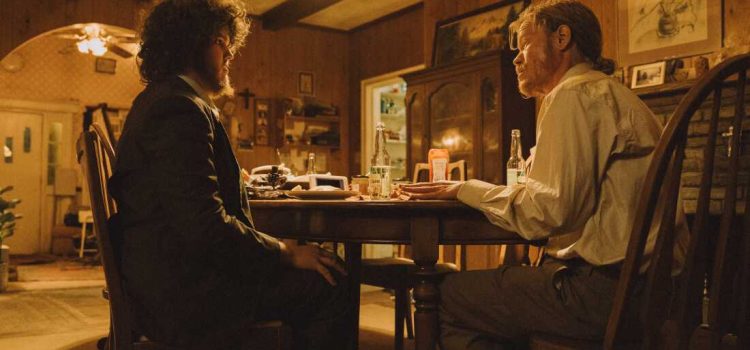
Wassilak, Wylie and Langdon. Photo by John Lamb.

Facebook Comments

By Lynn Venhaus

A spirited Muny debut that is tailor-made for that grand stage, “Bring It On: The Musical” is a marvel of motion that takes place in the cutthroat world of competitive cheerleading.

An engaging combination of original music, exhilarating dance, spunky multi-skilled performers, slick craftsmanship and a relatable finding-your-place story will win you over.

The sociable story is a teen rivalry set in two diverse socio-economic high school cultures that takes a page from “Legally Blonde” and “Mean Girls,” among others, The popular 2000 movie that inspired it starred Kirsten Dunst and Gabrielle Union, grossed $90 million worldwide and sparked five direct-to-video sequels and a TV movie.

Fun fact: Screenwriter Jessica Bedinger pitched the idea as “Clueless” meets “Strictly Ballroom” after becoming obsessed with cheer competitions on ESPN and having experience as a former music journalist covering hip-hop artists.

Taylor Sage Evans, Kennedy Holmes and Jonalyn Saxer. Photo by Phillip Hamer.

Full of pep, elaborate steps and impressive biceps, the acrobatic achievements are quite a spectacle, and 16 of the nation’s most elite college cheerleaders from the University of Kentucky are part of the energetic ensemble. The school has won 24 national championships.

Count me impressed. Their gasp-inducing athletic leaps, lifts and tumbles choreographed by cheer consultant Ryan Martin O’Connor, Kentucky head coach, combined with Jennifer Weber’s high-octane choreography, are thrilling.

While cheerleaders are a staple of film narratives since the 1950s, it is rarely the focus of traditional musical theater.

Enter a team of Broadway heavyweights who saw its appeal through a different lens – adding a hip-hop beat to a standard musical format, with other modern flourishes. Tony winners Lin-Manuel Miranda and Tom Kitt teamed up for the music, Miranda and Tony nominee Amanda Green collaborated on the lyrics, and Tony winner Jeff Whitty wrote a very funny libretto.

The Truman squad of Regine Sophia, Saxer, Katie Riedel and Evans. Photo by Phillip Hamer.

Back then, Mike Isaacson, the Muny’s executive producer and artistic director, co-produced the show with Kristin Caskey for Fox Partners, which premiered in Atlanta in 2011 and earned a 2013 Tony Award nomination for Best Musical and so did choreographer Andy Blankenbuehler, who also directed.

Missouri native Taylor Louderman and Adrienne Warren, who would later win a Tony as Tina Turner, starred as Campbell and Danielle, Jason Gotay was Randall, and Ariana de Bose made her Broadway debut as Nautica.

When it played at the Fabulous Fox in spring 2012 before its Broadway engagement, I was surprised at how enjoyable it was. With its crisp and snappy dance moves and lively performances, it seemed like a perfect fit for stages.

While a challenging commitment, the show has transferred seamlessly to the Muny’s canvas because of the entire creative team’s dedication to getting it right, from Denis Jones’ briskly paced direction to Caite Hevner’s imaginative video designs that add much to the storytelling.

Kennedy Holmes (left) and Jonalyn Saxer in the 2025 Muny production of “Bring It On: The Musical.” Photo by Phillip Hamer

Jones, who has helmed 11 shows at the Muny and won three St. Louis Theater Circle awards, has a knack for presenting spry, ebullient shows performed gracefully with remarkable precision.

However, this show is fortified by perky performances and a perennial thoughtful message about friendship. What’s more important than winning? Purpose, self-worth and valuing true-blue relationships.

Saxer is Campbell, a sweet but driven cheerleader who is popular at Truman High School. Her main goal is to be captain and lead the team to Nationals. However, her dreams are dashed when she must transfer high schools because of redistricting.

She’s now at Jackson High School, where the cheerleading squad was disbanded. She convinces some skeptical students that competitive cheerleading would be their ticket to bigger dreams and more opportunities.

Katy Geraghty (center) and members of the company of the 2025 Muny production of “Bring It On: The Musical.” Photo by Phillip Hamer

She confidently delivers ballads, such as “What I Was Born to Do.” But when she has doubts or shows determination – “One Perfect Moment,” “What Was I Thinking” or even crazy-worry “Something Isn’t Right Here,” that’s when her character’s colors come out.

The clever Whitty, whose irreverent humor helped create “Avenue Q,” has altered the original conflict, dropped and brought in characters and injected Millennial speak.

He added a ruthless schemer “All About Eve” subplot, or more appropriate, “All About Eva,” a two-faced sophomore who masterminds her ascension into cheerleading royalty while orchestrating others’ demise.

Making her Muny debut as villainous Eva, Taylor Sage Evans, who was a standout as the replacement Anne Boleyn in the national tour of “Six” during the Fabulous Fox run in January, is the bouncy plastic blonde wannabe. She reveals her true colors in “Killer Instinct” and “Eva’s Rant.”

From left: Kennedy Holmes, Jonalyn Saxer, Aj Paramo and Ayla Ciccone-Burton in the 2025 Muny production of “Bring It On: The Musical.” Photo by Phillip Hamer

While there is much fresh talent to applaud, one of the obvious hallmarks of Muny summers are returning artists who have come back again and again to our “alone in its greatness” experience.

If actors describe Muny shows as “summer camp,” then “Bring It On” is a triumphant homecoming for Kennedy Holmes, who became a star on that stage over the past 10 years.

A Muny Kid, her big break came as Little Inez in “Hairspray” in 2015, and in recent years, she was in “Dreamgirls” and “Beautiful: The Carole King Musical” (as Little Eva). At age 14, she was an early standout on Season 15 of “The Voice” in 2018, but at the finale, came in fourth – the youngest finalist ever (she was robbed!). She’s been in demand ever since.

Jonalyn Saxer and Bryce Williams in the 2025 Muny production of “Bring It On: The Musical.” Photo by Phillip Hamer

Now 20 and a student at USC, she’s a poised leading lady as Danielle, the ‘crew’ dance team chief at Jackson High. Talk about a Muny moment! It’s so gratifying to see her easily slip into this role that requires her to be a fluid hip-hop dancer and master the vivacious pop and hip-hop lyrics by Miranda and Green..

Saxer, who was an appealing Peggy Sawyer in Jones’ “42nd Street” here in 2016, works well with Kennedy as they navigate their differences, singing together superbly in the touching “We’re Not Done.” Among her credits are multiple Broadway shows, the first national tour of “Mean Girls” and the 2021 Spielberg film of “West Side Story.”

In a scene-stealing performance, Katy Geraghty, as Bridget, is the wackiest sidekick this side of Ethel Mertz. She also endears as a girl who was an ‘outsider’ all her life but finally fits in at her new school.

Geraghty is quickly becoming a Muny favorite, after her hilarious turn as Sister Mary Patrick in “Sister Act” two summers ago. (She was also impressive as Little Red in the 2022 Broadway revival of “Into the Woods.”)

Saxer, Holmes, Geraghty. Photo by Philip Hamer.

Another memorable Muny performer with 11 shows here, Sean Harrison Jones plays Steven, a Truman cheerleader and Campbell’s boyfriend. He was in the original Broadway cast of “The Outsiders,” in “Hamilton” on Broadway and national tour, and was Action in the 2021 film of “West Side Story.”

With his easy-going demeanor and soaring tenor, Bryce Williams stands out as Randall, a popular Jackson student and DJ who befriends Campbell. They share a lovely duet “Enjoy the Trip.” It’s an impressive Muny debut, and he’s still in college.

When Campbell’s first day at the new school is chaotic, the “Do Your Own Thing” number firmly establishes the rules and draw the lines. “Move!” is a savvy directive. Music director Anne Shuttlesworth never lets up.

The scenes at Jackson are where the show gets into a rhythmic groove, and the opening second act number “It’s All Happening” is a rousing fired-up anthem.

The company of the 2025 Muny production of “Bring It On: The Musical.” Photo by Phillip Hamer

Supporting players who added much sass and satire were Katie Riedel as the golden girl Skylar, a spot-on Paris Hilton imitation, with terrific comic timing. One of her zingers in an a-ha moment — “Omigod, everyone’s gone through all this, like, personal growth, but I’m exactly the same person I was a year ago. Oh well! I like myself. Always did.”

In contrast, Regine Sophia is a sunny Kylar (real name Inez), who hangs with Skylar.

Danielle’s posse includes Nautica and La Cienega – and Ayla Ciccone-Burton and AJ Paramo are a dynamic duo. Randall’s buddies Twig and Cameron are winsomely played by Kevin Trino Perdido and Brandon O’Neal Bomer.

Special recognition must go to dancer Bailey “Bailrok” Munoz, who wowed the crowd with a spectacular breakdance routine in the Leprechaun mascot outfit during “Friday Night, Jackson.” Munoz won “So You Think You Can Dance” competition show in Season 16, the only breakdancing winner in the show’s 18 seasons.

Dancer Bailey Munoz as the mascot with members of the company of the 2025 Muny production of “Bring It On: The Musical.” Photo by Phillip Hamer

Weber, who was Tony nominated for “& Juliet,” has designed choreography as vibrant as O’Connor’s vigorous cheer routines. Those numbers, including “Bring It On,” “Legendary,” “Crossing the Line” and the finale “I Got You” are dazzling.

To allow for the splashy dance numbers, Ann Beyersdorfer’s scenic design is masterful fluidity and function, efficiently mobile for the major cheer numbers, too. Jason Lyons’ harmonious lighting designs set the scenes and the sound work of John Shivers and David Patridge was clear and cohesive.

Continuing effective design work, Tristan Raines’ costumes were conducive to movement and represented high school fashions while Ashley Rae Callahan’s wig designs blended in well.

With its disarming good-time vibe, “Bring It On” pops with personality, energizing with uplift and inspiration – and is just so darn much fun.

Surprise guests on Wednesday night! From left: Mike Isaacson, Kwofe Coleman, Amanda Green, Lin-Manuel Miranda and Tom Kitt with the company of “Bring It On: The Musical.” Photo by The Muny | Emily Santel

The Muny presents “Bring It On: The Musical” June 16 – June 22 nightly at 8:15 p.m. in Forest Park. The musical is 2 hours and 10 minutes long, with one intermission. For more information, visit www.muny.org

This review is based on Tuesday’s rain-shortened one-act performance and Thursday’s full production

The company of the 2025 Muny production of “Bring It On: The Musical.” Photo by Phillip Hamer
Facebook Comments

By Lynn Venhaus

With the physicality of silent film actors and the verbal dexterity of Abbott & Costello, a delightful duo cavorts with glee for a quick-witted, fast-paced musical comedy, “Murder for Two.”

The rollicking romp that opened Stages St. Louis’ season showcases Jeremiah Ginn in a stunningly agile tour de force as a dozen murder suspects and Ian Fairlee as the eager small-town police officer who wants to get ahead in the department. Could he make detective by solving this case?

The actors are also deft pianists who tickle the ivories while they’re coaxing the audience to laugh at their foibles, for this work includes a dozen songs.

The premise is a surprise birthday party for Great American Novelist Arthur Whitney, thrown by his wife Dahlia, a fretful, melodramatic Southern belle straight out of a Tennessee Williams play. Everybody in attendance is a suspect, all 12 of them.

Joe Kinosian, who wrote the music and co-wrote the book with Kellen Blair, who also wrote the lyrics, borrows the format from old-fashioned murder mysteries. Think Agatha Christie’s one-room setting filled with possible suspects, but then add the wacky charm of a sketch comedy troupe.

The twist of eccentric characters, so prevalent in parodies, such as the 1985 film “Clue” and the 1976 Neil Simon spoof “Murder by Death,” creates a fertile playground for the two actors.

The colorful characters are distinguished through Ginn’s remarkable quick-changes and sleight of hand techniques – whether it’s a pair of glasses, a dance movement, a hat or an accent shift.

Memorable suspects include the deceased’s flustered wife, snooty ballerina Barrette Lewis, the blabby town psychiatrist Dr. Griff, Dahlia’s niece – a pushy forensics student – Steph, bickering married couple (and next-door neighbors) Barb and Murray Flandon, peculiar gung-ho firefighter Henry Vivaldi, and a boys’ choir. Some are too nonplussed about a cold-blooded murder committed right in front of them. Hmmm…

Ginn’s vocal flexibility as he moves between characters’ dialogues is quite something, managing to keep them all distinct. The boys in the choir sounds straight out of a Bowery Boys movie/Little Rascals short, which is obvious in the song “A Lot Woise” sung by Timmy, Yonkers and Skid.

Ian Fairlee as Marcus. Photo by Phillip Hamer.

As the fledgling detective Marcus Moscowicz, Fairlee gains the audience’s sympathy in rapid exchanges with his boss, his silent partner Lou, and others on the phone. He wants to do everything by the book, as outlined in his funny “Protocol Says” number.

Ginn’s sprightly delivery gets a workout in the ‘company’ numbers – “It Was Her,” “So What If I Did?” and “Process of Elimination.”

The story, heavy on true crime tropes, liberally adds daffy shenanigans as Marcus tries to narrow down who’s the killer and what could have been the motive. We learn the ‘who’ is immaterial to finding out why. You think you sorta know from the get-go — but you may be surprised because your hunch could be the infamous ‘red herring’ employed in so many mysteries.

The reveal is anti-climactic because the whodunit is secondary to the pair’s goofy antics. Ginn is so animated, he could be a live-action figure at Disney World, reminiscent of vaudeville clowns of a different era. He and Fairlee nimbly volley back and forth like tennis pros if they were ‘50s era Dean Martin and Jerry Lewis.

Ginn, who was a part of the New York cast, blends his considerable skills in dance, song and obviously has dealt with ‘seltzer down his pants.’ He is masterful in switching accents, like Peter Sellers did playing multiple characters in films like “Dr. Strangelove” and “The Pink Panther.”.

Fairlee and Ginn. Photo by Phillip Hamer.

While Ginn has the showier roles, Fairlee is as adept with the comic timing in a cagey part. They play off each other well.

Director Michael Kostroff maintained high energy during both acts, and brought out the ingenuity of the work, using as many resources as possible in that confined space.

Ann Beyersdorfer’s sly set, designed to be an author’s mansion in New England, is a well-appointed canvas for the nifty surprises galore, a nod to the Clue game board and every remote country estate where spooky things happen. She has given the actors room to dash around and broaden the action to outside..

And when it’s time for Dahlia’s big show-stopping number, “Steppin’ Out of the Shadows,” a humorous ridiculously over-the-top extravaganza, that’s when Stages ramps up the fun.

The show, which won Chicago’s Jefferson Award for Best New Musical in 2011, was developed at the Chicago Shakespeare Theater, then later produced on Broadway.

Jeremiah Ginn, as Dahlia. Photo by Phillip Hamer.

Because the cleverly constructed play entertains with slapstick, sight gags and slick technical effects, it seems natural to present at mystery dinner-theaters and for inoffensive school plays (never mind that murder is in the title and a few off-color remarks that can be altered.) This show would have been a major crowd-pleaser on the Goldenrod Showboat in its heyday. (Stages’ wildly popular production of the comedy “Clue” — their first-ever non-musical in 2023 was not only an audience hit but an awards magnet).

While both Ginn and Fairlee are skilled pianists, the music isn’t really necessary. They are enjoyable in the roles, with or without the music. And deliver the songs with aplomb. Ginn also served as music director.

The rest of Stages’ tip-top team makes the production flow smoothly. Sean M. Savoie’s lighting always enhances the settings, especially in a mystery where lights suddenly go out and things go bump in the night. Hankyu Lee’s sound design was sharp without any issues. Costume coordinator Erica Jo Lloyd kept up with all the shifts that helped define the characters.

With its zesty vaudeville-style humor, the energetic pair come across as looney, and they’re tuneful, so what’s not to enjoy?

Stages St. Louis presents “Murder for Two” from May 30 to June 29 in the Ross Family Theatre at the Kirkwood Performing Arts Center. .210 E. Monroe Ave. For more information or tickets, visit www.stagesstlouis.org.

Facebook Comments

By Lynn Venhaus

One of the big-bang bursts in musical theater history, “Rent” is why transformative composer Jonathan Larson endures 30 years after his masterwork spoke to the dreamer in all of us.

Therefore, it’s disappointing when people entrusted to perform his deeply emotional and vocally demanding songs fall short because of repeated off-key issues.

After producing “Rent” in 2014, New Line Theatre has brought it back 11 years later as its 100th show, a milestone achievement in its 33 years. Artistic director Scott Miller, an early Rent-head, enthusiastically co-directed, with assistance from associate artistic director Chris Moore, who also amiably played good-natured anarchist Tom Collins.

Using Puccini’s opera “La Boheme” as his template, Larson set his Gen X characters in New York City’s East Village in the 1990s as they struggled with life, love and HIV/AIDS over the course of a year.

As a struggling artist for many years, Larson knew the world he wrote about, which was based on a concept by Billy Aronson. For making their doubts, anxiety and commitments relatable, emphasizing community and connection, Larson posthumously won the Pulitzer Prize for Drama.

He won three of the show’s four Tony Awards (Musical, Book, Score and Actor in a Featured Role – Wilson Jermaine Heredia as Angel Dumott Schunard) out of 10 nominations.

Tragically, Larson did not live to see the first Off-Broadway preview performance, because he died that day — Jan. 25, 1996, after suffering an aortic dissection. He was 35.

While intentions are noble, because this treasured show resonates with so many, the noticeable aural flaws marred this production’s overall effectiveness. The rock opera’s celebrated reputation, inevitable expectations and music challenges are hard to live up to if key performers can’t stay in tune.

These shortcomings made me wonder what rehearsals were like because the band is sensational, and some of the singers’ soar, but voices allowed to make repeated mistakes didn’t adjust or correct before opening. This performance was a week later.

As is customary, the New Line band was outstanding. Musicians John Gerdes on bass, Clancy Newell on drums, Adam Rugo and Zack Kempen on guitar, and music director Randon Lane and Jason Eschoflen on keyboards were a major asset. But they couldn’t be miracle workers rescuing in-trouble vocalists every time, no matter how often they tried.

Corrinna Redford and Nathan Mecey as Mimi and Roger, with Chris Moore as Tom Collins. Photo by Jill Ritter Lindberg.

“Rent” features various musical styles. The biggest hurdle were those singers who relied on belting to convey their emotions, but unable to stay on key, wound up screeching,

Corrinna Redford, who played exotic dancer-junkie Mimi Marquez, was erratic vocally and pushed out of her range in “Out Tonight” and “Goodbye Love.” They were messy, breathy and undisciplined, as was “Your Eyes.”

Shouting less, which resulted in a softer interpretation, helped in “Without You” and “I Should Tell You.” Portraying her love interest Roger, Nathan Mecey often went flat when they sang together, thus trying to achieve their spark was difficult.

As lovestruck Collins, Moore fared the best delivery-wise — a sweetly romantic “I’ll Cover You” shared with Angel (and later his heartbreaking reprise) and a hopeful, melodic “Sante Fe.”

With Aarin Kamphoefner as Angel, they displayed the most chemistry of the couple pairings. To their credit, starting with their introduction “You OK, Honey?,” then becoming the positive and compassionate pair did not seem like a stretch.

Chris Moore singing “I’ll Cover You” reprise, with Angel in background. Photo by Jill Ritter Lindberg.

Angel, a street musician and drag queen afflicted with AIDS, is the glue that holds all her friends together. She is such a vibrant life force that when Kamphoefner didn’t go full ebullient RuPaul, you wanted more oomph because she is the life of the party, especially in “Today 4 U” and “Happy New Year.” However, Kamphoefner gave the role its necessary warmth, and was achingly vulnerable in “Will I?”

A too-large circular centerpiece restricted movement, which didn’t help when it came time for the pivotal “Contact,” because Angel’s death was less impactful staged that way, pulling focus away.

In a different choice, he remained on stage afterwards, wearing a white-cream pants ensemble. Usually, Angel’s absence is a big hole that you feel, not see.

As roommates/best friends, aspiring documentary filmmaker Mark Cohen (J. David Brooks) and struggling musician and ex-junkie Roger Davis are tasked with delivering the show’s most dynamic numbers, including “Rent,” which started fine because of the cohesive band’s skills, but veered off-key.

As written, Mark is nerdy and quirky, and Brooks showed the brainy side, if not the skepticism. Roger is complicated because of recent traumas and initially more withdrawn. It’s a tough role to nail, and if there are vocal irregularities, that’s hard to overcome.

Jazmine Kendela Wade and J David Brooks as Joanne and Mark. Photo by Jill Ritter Lindberg.

The grand statement “What You Own” could be a vibrant exclamation —although an ongoing issue of their blocking behind the oversized table/platform hampered their delivery, for in that intimate confine, they seemed farther away, especially Roger

While bouncy Sarah Lueken, as self-centered Maureen Johnson, is appealing, capitalizing on being a flirt and using her sexuality, daring and sass, her big number “Over the Moon” could have been bolder and more defiant.  The cow print pants were inspired.

As Maureen’s Harvard-educated lawyer girlfriend Joanne Jefferson, Jazmine Kendela Wade was confident, but their song interpretations weren’t convincing.  

Because of Brooks’ foot injury, “Tango: Maureen” couldn’t be performed as expected, a playful dance, and “Take Me or Leave Me” lacked verve as well as pitch..

Aaron Tucker played an undistinguished Benjamin Coffin III, former friend turned foe who owns Mark and Roger’s building, married well, and had a fling with Mimi. It’s a stock villain character whose purpose is to advance several conflicts.

Brittany Kohl in ensemble.

Several fine singers played multiple roles  — as parents, marginalized citizens on the streets, AIDs patients, muggers, employers – and understood the complex demands of the music.

Both blending in and standing out were Rafael Da Costa, Lauren Gottreu, Chelsie Johnston, Brittany Kohl, Gabriel Scott Lawrence, Sofia McGrath, Tawaine Noah, and Rachel Parker. Lawrence and Noah were exceptional in “Will I?”

All performers projected earnestness and conviction, often giving off spirited summer camp energy in the ensemble numbers like “La Vie Boheme.”

But when it came time to express yearning, fear, and gut-wrenching sadness, it was not uniform in fervor, and supporting players brought more of the potency in those company numbers.

The signature piece “Seasons of Love” had some wobbly phrasing, but most soloists brought out its potency, especially daCosta and Noah. At first, it was hard to discern who was singing because of their placement.

The set, designed by Todd Schaefer, was a similar set-up that resident set designer Rob Lippert came up with when the first New Line “Rent” was staged at Washington University’s South Campus Theatre (the former CBC High School), which was effective. This tabletop swallowed up so much stage, it made transitions difficult.

Designers adding their personal touches to the overall effect included Zach Thompson, costumes; Ryan Day, sound; and Ryan Thorp, lighting.

The show is meant to be a celebration of life. In 2025 America, AIDS is no longer a death sentence, but because “Rent” captures a specific harrowing time and place, it can feel timeless and universal with its life-and-death themes.

Having seen Puccini’s opera twice, it was interesting to find out how the “Rent” characters closely resembled it – except in a different century and country, Paris in 1830.  

Sarah Lueken as Maureen. Photo by Jill Ritter Lindberg.

As a longtime fan who has seen “Rent” at least 12 times, starting with the first national tour in 1997, and experiencing chill-inducing Adam Pascal and Anthony Rapp reprise their roles in a 2009 national tour that remains one of the greatest highlights of my theater-going life, it is distressing to hear missteps.

New Line’s shaggy, raw, imperfect production still features moments so dear and emphasizes the evergreen message of “Measure your life in love.”

The cast believed in the dignity and acceptance aspect, that I’m certain of — if only they had devoted more effort to be in tune in service of that glorious score.

The rough spots hampered reaching the heights we expect with “Rent.” Had they all found their voices, this would have been a memorable show for all the right reasons.

New Line Theatre presents “Rent” May 30 – June 21, with Thursday through Saturday performances at 8 p.m. at the Marcelle Theatre, 3310 Samuel Shepard Drive. The musical contains adult content and language and deals with explicit sexual situations. For more information, visit www.newlinetheatre.org
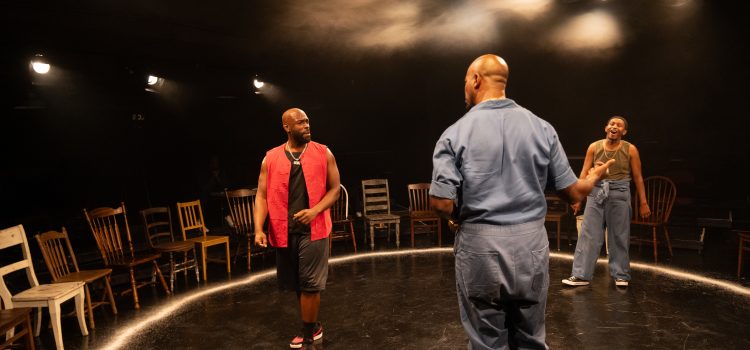
Corrinna Redford and Nathan Mecey as Mimi and Roger. Photo by Jill Ritter Lindberg.
Facebook Comments

By Alex McPherson

Kinetic, daring, and pulsing with soulful energy, director Danny Boyle’s magnificent “28 Years Later” is a post-apocalyptic coming-of-age story staggering in its narrative and stylistic craftsmanship.

The action takes place 28 years after the second outbreak of the Rage Virus — a disease that spreads in mere seconds through bodily fluids and turns people into rabid, blood-spewing monsters. We follow Spike (Alfie Williams), a 12-year-old boy living in an uninfected colony on Holy Island off the northeast coast of England.

The Virus has been pushed back from Continental Europe, leaving the people within the quarantined British Isles to fend for themselves. Surrounded by naval patrols, they can only reach the Virus-stricken mainland by crossing a heavily-fortified tidal causeway. The colony itself, maintained with a strict set of rules, roles, and a belief system that prioritizes “killing the Infected,” lacks doctors and modern amenities. It’s  regressive in its culture and seemingly caught in a state of limbo as the inhabitants wait out the apocalypse. 

Going on a “hunting” expedition on the mainland is seen as a rite of passage for the youth of Holy Island, and now it’s Spike’s turn. His father, Jamie (Aaron Taylor-Johnson), a skilled hunter and hard-partier, plans to accompany him on the trip and wants Spike to follow in his footsteps; Spike isn’t sure if he wants to go down the same path. Jamie is desensitized to the world’s violence, taking a matter-of-fact approach to killing the Infected and serving his role in the community.

Alex Williams and Jodie Comer.

Spike’s tender-hearted mother, Isla (Jodie Comer), is bed-ridden, suffering from a mysterious illness that causes frequent bouts of disorientation and confusion, and the village has no means of diagnosing or curing her. Jamie ultimately sees Isla as a burden, so Spike takes on the role of looking after her and tries everything in his power to help her recover. Isla, alienated from her people physically and morally, is strongly against Spike going to the mainland, but there’s no real choice. It’s the expectation, so it has to be done.

Once Spike and Jamie cross the causeway, the village prepares for Spike’s Welcome Back party. All does not go exactly to plan, though. Spike and Jamie have a few hairy run-ins with the Infected, including rotund worm-eaters and an imposing, very naked “Alpha” that has increased brains and brawn.

Spike also sees a fire in the distance — signaling the whereabouts of the “crazy” Dr. Kelson (Ralph Fiennes), who Jamie almost refuses to acknowledge and seems frightened of. But Kelson might have the cure for Isla’s illness. In fact, he might be her only hope of survival.

It’s clear from the outset that Boyle, reteaming with “28 Days Later” writer Alex Garland, isn’t out to make a standard “zombie” film here. He’s more interested in upending conventions, daring viewers to get on its deranged and oddly sentimental wavelength. Boyle’s film is unabashedly singular in the bold swings it takes with nearly every element of its construction. 

Aaron Taylor-Johnson and Alfie Williams

“28 Years Later” wraps its blood-soaked yarn in social commentary on hate versus love, tradition vs. independence, isolation, and coming to terms with reality, while doing one’s part to honor the lives and memory of those we hold dear. It also encourages the act of looking beyond the stories we’re told to make our own futures. All the while “28 Years Later” remains a gory (at times shockingly so) post-apocalyptic horror film with a healthy dash of dry, British humor sprinkled throughout.

There’s a lot to chew on here, and Boyle/Garland keep the film moving at a breathless clip. On a purely visceral level, “28 Years Later” is punishing in the best way. Boyle’s signature punk rock direction maintains a propulsive momentum, and Anthony Dod Mantle’s cinematography — largely filmed with iPhones, sometimes making use of a 20-camera rig that’s perfect for pseudo-bullet-time Infected kill-cams — heightens moment-to-moment intensity through its gritty, rough-hewn quality.

It establishes an off-kilter atmosphere that underlines just how twisted the world has become, capturing the vast claustrophobia of the mainland with a sense of hard-fought promise and restless uneasiness that can turn to chaos at any moment. 

The masterful score by Young Fathers initially seems anachronistic, yet perfectly complements the film’s messy but deeply poignant core — a particular highlight during the terrifying opening sequence, which juxtaposes the Teletubbies with a rural community being torn apart and reborn by the Infected.

Ralph Fiennes as Dr. Kelson

The film’s style is eclectic and jittery, yet intentional every step of the way, as Boyle weaves in subtle and, well, not-so-subtle symbolism to establish this world of regressive norms, disease, and callous cruelty. It all effectively connects with Spike’s rushed transition into adulthood, and the frantic yet courageous steps Spike takes to become his own person.

Indeed, there’s plenty of harrowing escapes and bloody carnage in “28 Years Later”, but like “28 Days Later” before it, and unlike the Juan Carlos Fresnadillo-directed “28 Weeks Later,” Boyle and Garland remain focused on character above all else. Moments of levity and warmth are unearthed amid the desolation.

The film, at times, resembles a tug-of-war between these disparate tones, as Isla (vividly portrayed by Comer) reveals humane, even sensitive sides of Spike and the world they inhabit. 

By the time Kelson shows up — one of Fiennes’ greatest performances — Boyle and Garland prime us to embrace the unexpected, finding slivers of humanity amid his temples of skulls. Boyle and Garland encourage us to get on the film’s level; whether we can go along with the last act’s emotional trajectory is as much a test for us as it is for Spike. Luckily, with the exceptional performances across the board — especially newcomer Williams — it’s easy to become swept up in the film’s rush of emotion.

Spike and Dr. Kelson

At the end of the day this is a story of a boy and his family — Spike’s disillusionment with the traditions passed down to him, and his gradual realizations of the need to confront his fears, including the inevitable pull of Fate and the importance of love amid an environment pervaded by hatred of the Other.

Not all of the film’s big swings will land for everyone, notably its unhinged final moments that set up future sequels. But “28 Years Later” is still an unforgettable viewing experience. Boyle and Garland prove, once again, that they can find thrilling new avenues into genres we think we know inside out — crafting one of the strongest, most exhilaratingly unusual films of 2025 thus far.

“28 Years Later” is a 2025 horror movie directed by Danny Boyle and starring Aaron Taylor-Johnson, Jodie Comer, Alfie Williams, Ralph Fiennes and Jack O’Connell. The run time is 1 hour, 55 minutes and Rated R for strong bloody violence, grisly images, graphic nudity, language and brief sexuality. The movie opened in theatres June 13. Alex’s Grade: A+

Facebook Comments

By Alex McPherson

Overflowing with self-importance that threatens to drown out its several competent elements, director Mike Flanagan’s “The Life of Chuck” is neither as profound nor as poignant as it thinks it is — a film so carefully-composed that genuine, earned emotion is ultimately left as an afterthought.

Based on the Steven King novella of the same name, Flanagan’s latest begins with the horror-inflected Act 3: the end of the universe as we know it. Chunks of California are breaking off into the ocean, Florida is underwater, fires engulf the Midwest, and the Internet is out. Posters and advertisements are plastered everywhere thanking a sharply-dressed Chuck Krantz (Tom Hiddleston) for “39 great years!” Nobody has a clue who Chuck is. 

We follow Marty Anderson (a typically soulful Chiwetel Ejiofor), a devoted but increasingly exhausted middle school social studies teacher and fan of Carl Sagan. Marty is a cool-headed, empathetic person unwilling to accept that it’s the actual “end of the world.”

At parent-teacher conferences — as attendance continues to decline in school — he helps console anxious parents who aren’t sure what to do amid it all; one of them (David Dastmalchian) bemoans the loss of PornHub. Humanity, more generally, seems to be on a slow walk towards Armageddon, with the majority resigned to their fate.

Marty reconnects with his ex-wife, Felicia Gordon (Karen Gillan), an overworked ER nurse whose department has become known as “The Suicide Squad.” Marty and Felicia see a last chance to bond before the universe is snuffed out; not even Marty’s hopeful view of Sagan’s cosmic calendar can dissuade him from preparing for The End.

Mia Sara, Mark Hamill and Cody Flanagan.

Jump to Act 2. Adult Chuck is a jaded accountant on a business trip in downtown Boston. While walking down a bustling street, Chuck sees a talented but underappreciated busker (real-life drummer Taylor Gordon a.k.a. The Pocket Queen) and gets to dancing — Chuck has quite the moves. 

A crowd gathers to watch and gawk at Chuck/Hiddleston, including Janice (Annalise Basso), a woman whose boyfriend broke up with her moments earlier through text. She starts dancing with Chuck, and, for a brief time, they’re both able to escape their demons and live in the moment.

Afterwards, Chuck looks wistfully off into the distance, reminiscing about his life and, as narration from Nick Offerman reminds us, his fleeting remaining time alive.

Act 1 takes us back to Chuck’s childhood — he’s portrayed by Cody Flanagan, Benjamin Pajak, and Jacob Tremblay. Chuck experiences family tragedy and life’s ups-and-downs with his grandparents Albie and Sarah (Mia Sara and Mark Hamill).

Benjamin Pajak as schoolboy Chuck.

He also discovers his love of dance while grappling with a rushed transition into adulthood, becoming fascinated with the strange “ghost” in the locked room upstairs that deeply frightens Albie.

Needless to say, there’s a lot going on in these three chapters, but, at the same, there’s not much to chew on. Individual scenes and performances break through the prevailing schmaltz, but for a story ostensibly about the importance of spontaneity and of living in the moment, “The Life of Chuck” paints a canvas both messy and overwrought, remaining thoroughly full of itself from start to finish. Several characters like to spout a phrase coined by Walt Whitman: “I contain multitudes” — the same, it must be noted, does not apply to this film.
It starts off strongly enough, though. Flanagan’s roots as a horror director shine through in Act 3 — establishing an eerie tone from the get-go with darkly comedic dialogue and an atmosphere of existential malaise and hopelessness. It’s a bit hokey, sure, but intriguing, with its end-of-the-world happenings not seeming all that implausible.
The conclusion is surprisingly dark, too, especially given distributor Neon’s saccharine marketing campaign. Flanagan’s directing is precise, carefully-composed, and efficient, knowing how to play us for sudden jolts of fear and bursts of unexpected (R-rated) humor.

There’s also real truth to how “The Life of Chuck” depicts humanity’s fatigue and fatalism given today’s horrors off-screen. If only the film committed more to the mystery: Acts 1 and 2 excise most of the story’s compellingly dark and off-kilter threads to embrace sentimentality and ponderous storytelling.

Jacob Tremblay as older teenage Chuck.

Indeed, much like Chuck and Janice’s exuberant dancing — which Flanagan and cinematographer Eben Bolter present with toe-tapping, quick-cut pizazz — the rest of “The Life of Chuck” feels too precious, too precisely-tailored to tug at the heart strings, and oddly-structured, content to explain rather than let viewers put the pieces together themselves.

And, in the end, “The Life of Chuck” is far from revelatory in its views on “the universe contained within us all,” leaning into directorial showmanship to conventional ends.  

Hallmark-card-worthy sentiments are rendered in faux-Spielbergian fashion, with hints of supernatural suspense, supported by a warmly inspirational score from The Newton Brothers and an ensemble that breathes warmth, if not necessarily depth, to characters slotting into Flanagan’s film like cogs in a well-oiled machine. 

Narration from Nick Offerman — presumably reading direct passages of King’s text — interrupts scenes to explain characters’ thoughts and navigate the story’s various time jumps. While this choice helps create a storybook feel, it’s limiting, given the story’s segmented structure (focusing on “big moments” in Chuck’s life).

Nuance is swapped for clarity and brevity — cutting out seemingly crucial connective tissue between Acts 1 and 2 — plus a near-worshipping of King’s source material: a short story expanded to feature length.

Hiddleston is great as usual, albeit not given all that much screen time, adding a sense of mournful reflection to Chuck’s later years as he’s made aware of the small joys in life once again. The younger actors portraying Chuck in Act 1 effectively convey both Chuck’s youthful naivete and gradual coming-of-age.

Sara and Hamill give the film’s most convincing, lived-in performances, with Hamill in particular getting the chance to engage in some Oscar-friendly speechifying, as the alcoholic, superstitious Albie counters young Chuck’s idealism around dance/the arts with a more pragmatic view on what lies ahead.

This excellent ensemble — including other notable turns from Matthew Lillard, Carl Lumbly, and Samantha Sloyan — coupled with Flanagan’s meticulous style of framing and sharp (but not organic) dialogue boosts the film above mediocrity. So long as one doesn’t think too hard about its existential musings, “The Life of Chuck” goes down easy enough.

But despite a compellingly unusual beginning and a handful of well-crafted sequences scattered throughout, it never fully takes flight. At the end of the day, it’s all trying too hard: irritatingly manufactured and only fitfully involving.

“The Life of Chuck” is a 2024 science fiction-fantasy-drama directed by Mike Flanagan and starring Tom Hiddleston, Mark Hamill, Mia Sara, Benjamin Pasak, Jacob Tremblay, Cody Flanagan, Karen Gillan, Chiwetel Ejiofor, and Matthew Lillard. Its run time is 1 hour, 51 minutes, and it is rated R for language. It opened in theatres June 6. Alex’s Grade: C+.

Facebook Comments