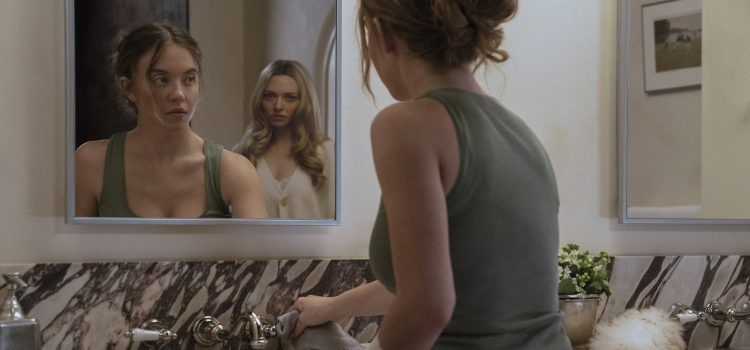
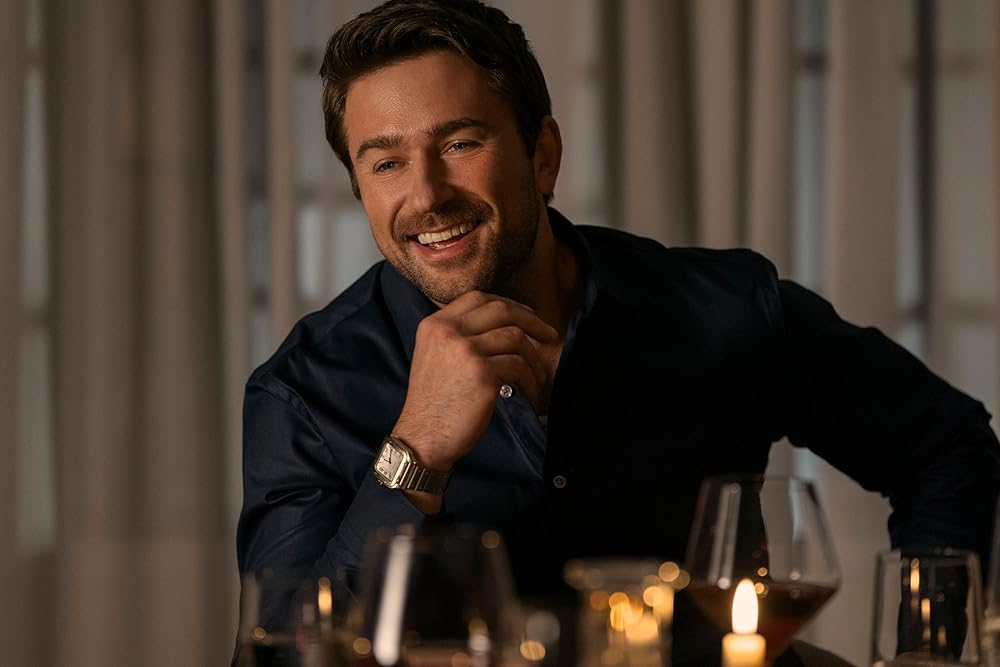
At its best when fully leaning into uninhibited mayhem, director Sam Raimi’s “Send Help” is a knowingly loony, if broad, satire elevated by Dylan O’Brien and a deviously crazed Rachel McAdams.
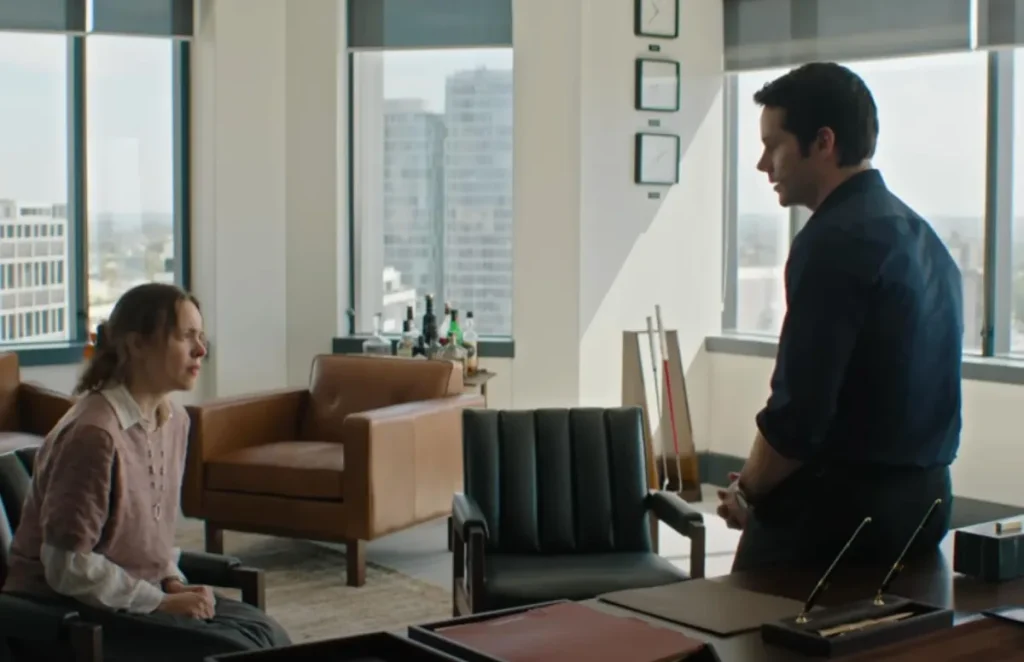
We follow Linda Liddle (McAdams), a nerdy, socially awkward, yet skilled longtime employee at a consulting firm who — despite being far more knowledgeable at her job than the slick-haired men that surround her — is underappreciated. She doesn’t have many friends and most of her meaningful conversations are with her pet cockatoo.
She’s also a trained survivalist and has recently applied to be a contestant on the reality show “Survivor.” Linda hungers for more recognition, and the company’s CEO Franklin Preston (Bruce Campbell) recently promised her that she’d be Vice President one day. Preston has suddenly passed away, though, and the reins of the company fall to his son Bradley (Dylan O’Brien), who has zero interest in following through on his father’s promise.
Bradley, pompous and sexist, is repulsed by Linda’s appearance and efforts to assert herself. Instead of promoting her, he installs fellow frat brother and golfing buddy Donovan (Xavier Samuel) as VP. As consolation before firing her for good, Bradley gives Linda one last assignment to “prove herself” by traveling with his boys club to Bangkok to close a major merger — she is an expert number-cruncher, after all.
While aboard the private plane en route, Linda toils away on a work document. Bradley and his bros are not working; instead they are watching Linda’s “Survivor” audition tape and loudly snickering.
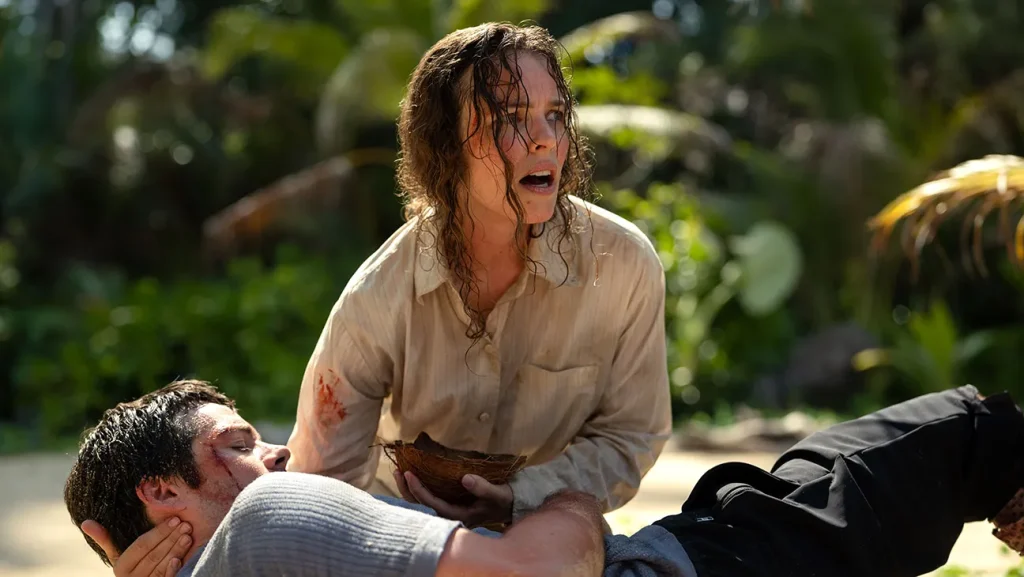
Before Linda finally snaps, a violent thunderstorm sends the plane spiraling into the ocean, killing everyone onboard in gratuitously violent (and, admittedly, quite funny) fashion. Linda barely survives and washes ashore on a nearby deserted island — a prime place to make use of her survivalist skills.
Bradley also survives and washes ashore (with a messed-up leg). Despite continuing to treat Linda terribly, he realizes that he needs her to live. Linda takes almost too much pleasure in this new power dynamic and lifestyle; it’s unclear whether she wants to be rescued at all.
Both Linda and Bradley harbor persistent hatred towards each other despite their burgeoning friendship. As the days pass, tensions escalate, as both of these damaged souls vie for dominance over each other through bloody one-upmanship.
What begins as a rather tame dramedy evolves into something much gnarlier and more cynical. “Send Help” isn’t a revolutionary film, and it doesn’t have anything particularly incisive to say, but it’s a nasty and enjoyably twisted return to form for Raimi. It wouldn’t work anywhere near as well without O’Brien and McAdams’ sheer devotion to every twist and turn.
McAdams in particular really sells this heightened premise. Mark Swift and Damian Shannon’s screenplay sends her on quite the journey from meek nerd to resourceful leader to someone who has fully lost her marbles. It’s great fun watching McAdams lean into Linda’s quirks and neuroses, bringing a happy-go-lucky energy that’s just as quick to stab you in the back (or anywhere on the body).
We want Linda to succeed and get her revenge against Bradley, but part of the twisted fun of “Send Help” is exploring just how far she will go, and how long we’re willing to support her along the way.
O’Brien is pitch-perfect as the smug man-child Bradley, who couches nearly every “dialogue” with a patronizing, better-than-thou tone. Swift and Shannon’s script does an excellent job portrayinging the ways that power-hungry bosses treat their employees, making even Bradley’s most callous moments ring true.
Of course, watching Bradley become wholly dependent on Linda for his survival is satisfying; yet, as “Send Help” reiterates repeatedly, there’s no easy way to resolve their deep-seated mutual hatred.
Raimi’s film is difficult to pigeonhole within a single genre. “Send Help” is a playful, tonally-all-over-the-place experience, with elements of classic adventure films (Danny Elfman’s score feels like something from Hollywood’s Golden Age), strange forays into romcom territory, and Raimi’s signature horror flourishes.
It’s an odd amalgamation that doesn’t always work — the beginning, in particular, is far less tightly edited and stylistically engaging than the island shenanigans, and the will-they-won’t-romance that comes into play heads down predictable paths. So, too, does the big “twist,” which waters down some of the film’s more pointed ideas on gender power dynamics for a far more schematic, underwhelming framework.
With Raimi at the helm, you know he won’t hold back on the over-the-top carnage, editing, and camerawork. Bob Murawski’s editing and Bill Pope’s cinematography perfectly complement Raimi’s sensibilities — match cuts, crazy zooms, POV shots of feral boars, it’s all there, along with buckets of goopy gore and a couple of genuinely squirm-inducing moments that are difficult to unsee (literally).
The film just takes a while to get to those “Holy Shit!” moments, spinning its wheels at times repeating the push-pull dynamic between Linda and Bradley, as defenses are lowered and, soon after, raised again.
But pacing and plotting issues aside, “Send Help” is still a perfect film to watch in a crowded theater, seeing these characters regress as the outside world crumbles around us.
“Send Help” is a 2026 horror film directed by Sam Raimi and starring Rachel McAdams, Dylan O’Brien, Bruce Campbell, and Xavier Samuel. It’s run time is 1 hour, 53 minutes, and it is rated R for strong/bloody violence and language. It opened in theatres Jan. 30. It started streaming on Hulu May 7. Alex’s grade: B.
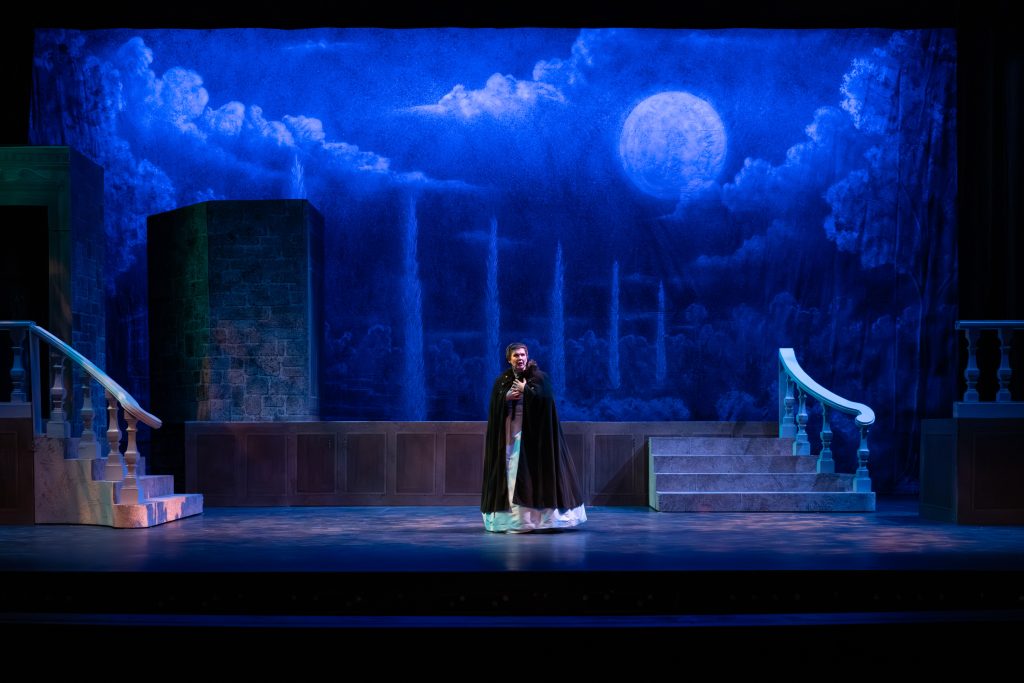
Winter Opera St. Louis’ “Un Ballo in Maschera” succeeds through design. Dianna Higbee approaches Verdi’s tragedy as an architectural problem — how to assemble inevitability — and solves it with patience, proportion, and a clear understanding of where the drama must turn.
The result is an evening of quiet authority, its pressure accumulating through the deliberate arrival and consequence of Verdi’s great confessional arias, and supported by three solid, intelligent performances at its core.
This is Verdi at the height of his dramatic powers, writing in liberated form, where arias reorganize the action and reshape the moral terrain. Higbee honors that maturity by spacing those moments as structural pillars, allowing each confession to alter the dramatic balance. Tragedy unfolds by design, threshold by threshold, until the final masked ball arrives as the natural release of long preparation.
Beneath that design, the orchestra, under Andy Anderson’s direction, sustains the evening with clarity and proportion. Anderson shapes Verdi’s score with rhythmic lift and supple balance, allowing the architecture of the arias to emerge with natural ease rather than orchestral insistence.
Photo by Dan Donovan.
Owing to the postponed performance and inclement weather, the harp part was realized at the piano and a bass was absent from the ensemble, adjustments that passed almost unnoticed in playing of such refinement.
Textures remained transparent, transitions breathed freely, and climaxes rose from accumulated pressure rather than display. The result gave Higbee’s pacing its continuous pulse while leaving the psychological weight squarely with the singers.
At the foundation of that design stands Isaac Hurtado’s Riccardo, the lighthearted governor whose charm quietly initiates the ruin to come. Hurtado sings “La rivedrò nell’estasi” with easy lyric brightness, establishing authority and allure without courting display.
Desire enters the drama gently here, almost casually, and that very ease becomes dangerous. Hurtado’s Riccardo remains humane throughout, a leader whose discipline delays catastrophe without preventing it.
Photo by DanDonovan.
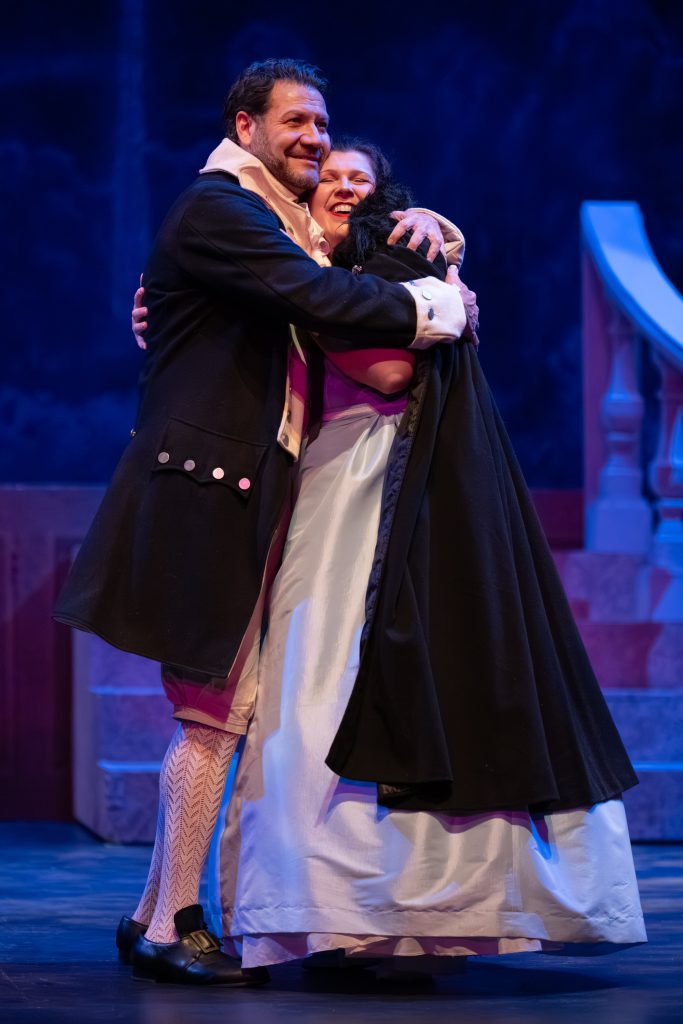
Liz Baldwin’s Amelia forms the opera’s moral center, and her performance anchors the evening with a rare balance of power and vulnerability. In “Morro, ma prima in grazia,” Baldwin shapes the line as an interior reckoning, the voice carrying fear, longing, and resolve in equal measure. This becomes the threshold where tragedy turns irreversible. After her confession, the emotional landscape shifts, and the opera’s remaining possibilities quietly contract.
The final structural pillar arrives with Joseph Gansert’s Renato. His transformation from loyal secretary to assassin unfolds with grim clarity, and in “Eri tu” Gansert delivers the evening’s defining rupture.
The aria rises as psychological collapse rather than bravura, the baritone’s force shaped by anguish rather than fury. Here the architecture locks into place. After this moment, the opera contains no alternatives, only ritual.
Verdi’s tragedy rests on the slow destruction of three people who love one another, and Higbee allows that triangle to emerge with uncommon coherence. Riccardo’s charm, Amelia’s conscience, and Renato’s wounded loyalty form a geometry that builds its own ruin, confession by confession, until fate requires only a public stage.
Photo by Dan Donovan
Around that core, the production finds its colors with intelligence. Ola Rafalo’s Ulrica delivers prophecy with impassive authority, her restraint giving fate the calm weight of certainty — a discipline owed as much to Higbee’s direction as to the mezzo’s control.
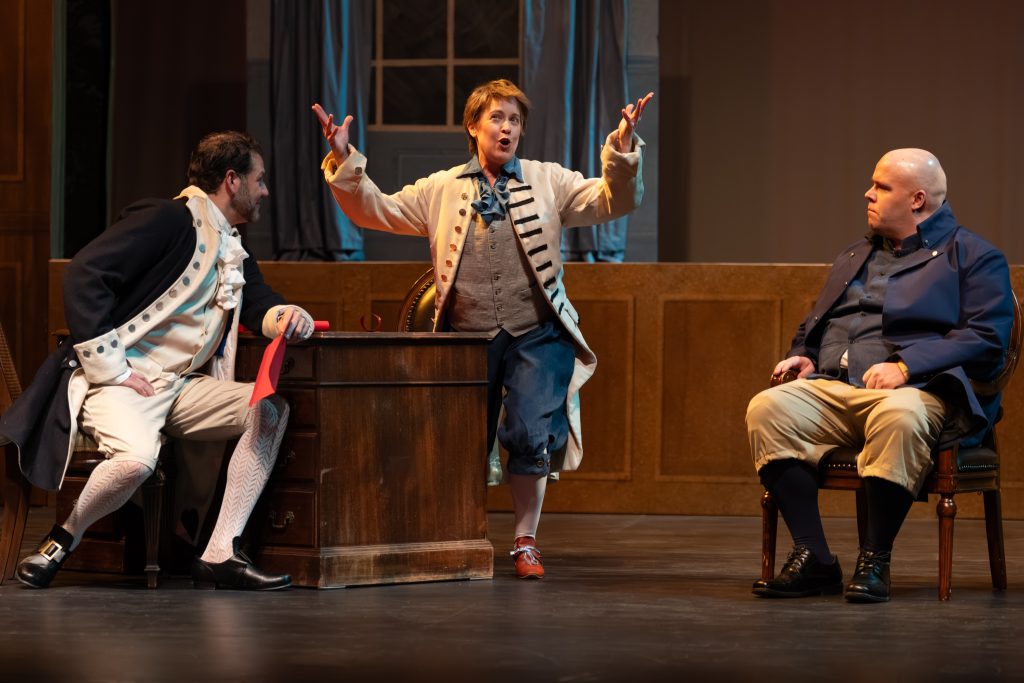
At the opposite pole, Leann Schuering’s Oscar, one of opera’s classic “pants” roles, emerges as sprightly, puckish, almost Chaplinesque, her physical wit and bright tone preserving humanity inside gathering darkness.
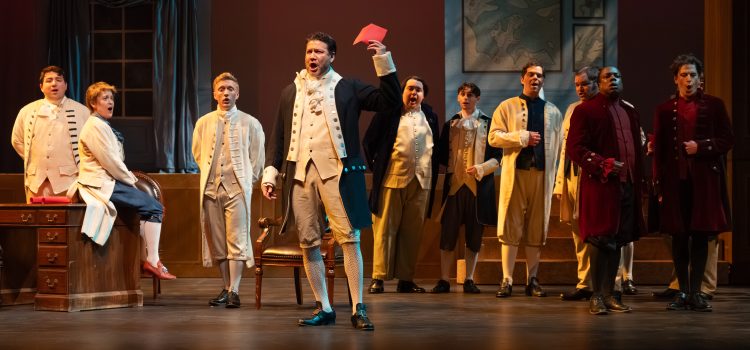
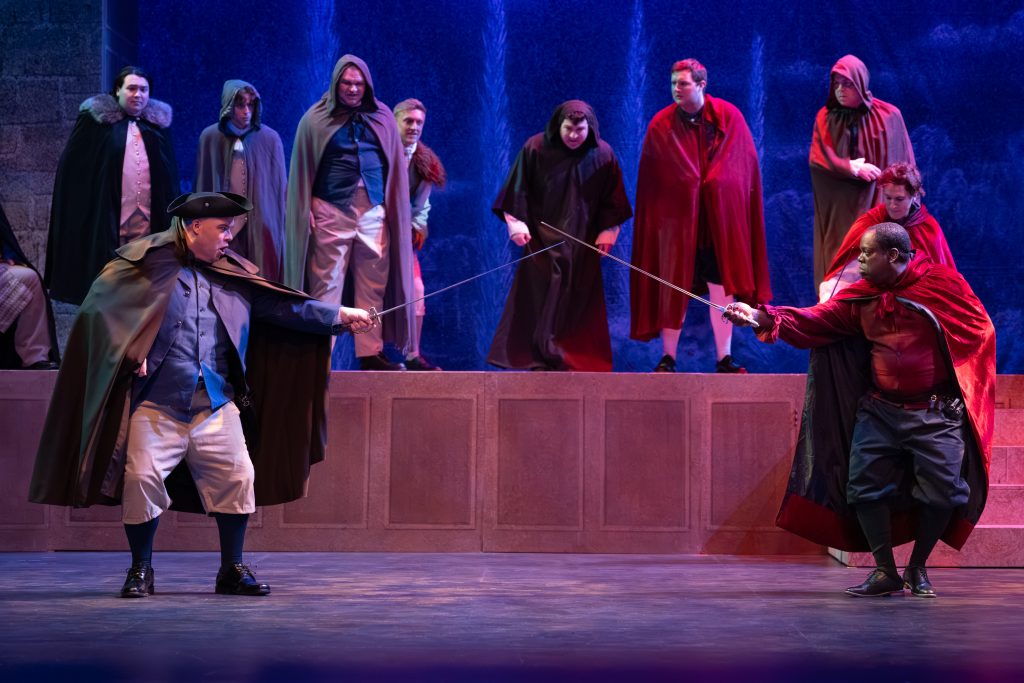
The visual world reinforces that architecture with quiet intelligence. Drawing on the Boston setting and the approaching 250th anniversary of the American Revolution, Higbee frames the drama in a clear chromatic language, Americans in blue set against the red of their British adversaries, the evening moving steadily toward a Fourth of July finale shadowed by catastrophe.
Jen Blum-Tatara’s costumes clarify status and psychology while lending the masked ball its necessary ceremony, sharpening the sense of ritual that governs the final act.
Photo by Dan Donovan.
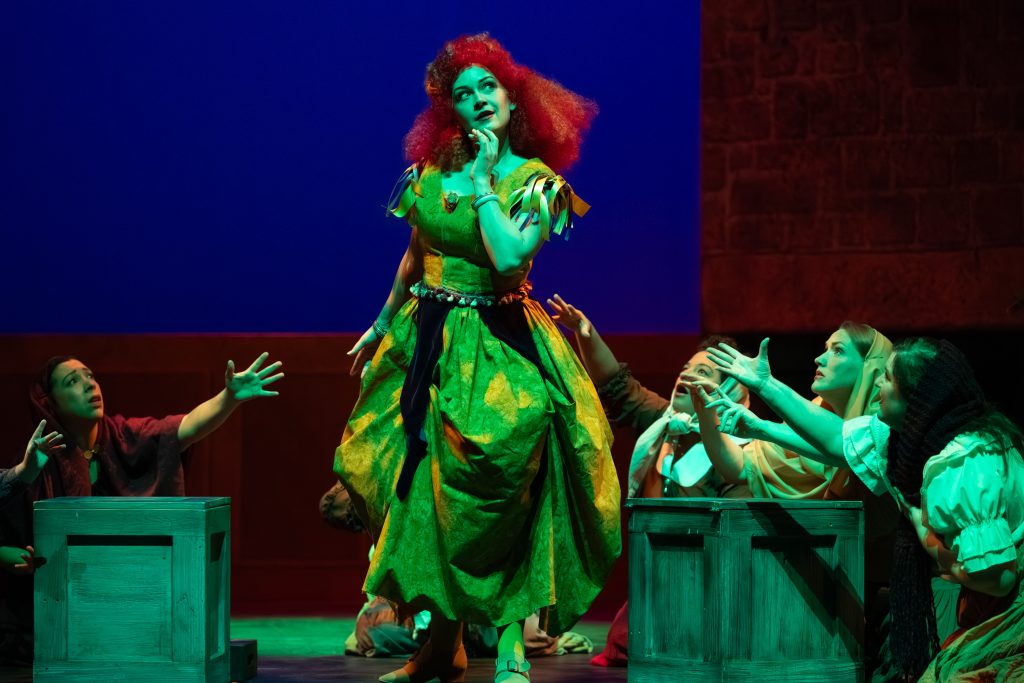
Dennis Milam Bensie’s wigs, exuberant and faintly surreal, introduce flashes of visual fantasy — a hint of Oz in their theatrical whimsy, a touch of “Barry Lyndon” in their powdered hauteur, and the occasional echo of Lynch’s “Dune” in their ceremonial strangeness — reminding us that disguise here belongs as much to dream and ritual as to history.
This “Ballo” makes its case through proportion rather than display. Higbee’s design vindicates Verdi’s mature craftsmanship, allowing voices, confession, and consequence to assemble a tragedy that unfolds with discipline and grace. The memory it leaves is not of a single high note, but of a long arc patiently carried, voice by voice, into ruin.
Winter Opera St. Louis presented “Un Ballo in Maschera” at the Kirkwood Performing Arts Center. The production originally ran Jan. 23–26, 2026.
With a timely yet controversial AI issue to ponder in “Mercy,” this futuristic cyber thriller’s gimmick is that it uses intelligent tools in slick visual effects. Where it fumbles is in the overstuffed storytelling that is not nearly as smart as it wants to be.
This won’t be the only movie to take on the complex ethical issues of Artificial Intelligence, but director Timur Bekmambetov can’t overcome a contrived and convoluted script, so whatever statement he wanted to make isn’t impactful.
No dispute about human vs AI fallibility, but the logic goes off the rails as screenwriter Marco van Bello shifts from a murder mystery to a videogame Doomsday scare. Let’s pile up the highway crashes to enliven the inertia from watching the two main people sit in chairs for 90 minutes while they monitor screens.
The year is 2029, and L.A. is a cesspool of crime in this dystopian-adjacent future. The police and the judicial system have teamed up on a high-tech way to clean up the mean streets, the Mercy System. They’ve cut out lawyers and juries, all there is presiding is an impartial AI judge.
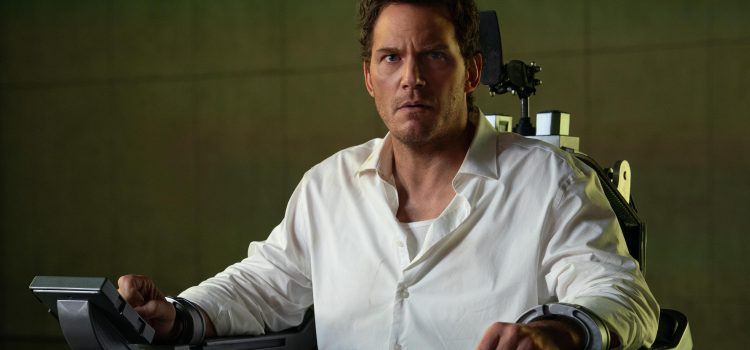
The sci-fi drama starts as a zippy barrage of multi-media evidence when Los Angeles detective Chris Raven (Chris Pratt) stands trial for the heinous murder of his estranged wife Nicole (Annabelle Wallis).
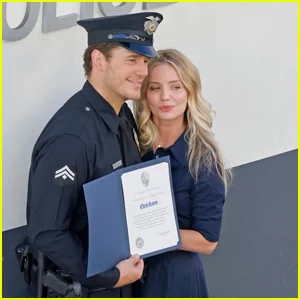
They have been married 20 years, but his escalating drinking problem after his partner Ray (Kenneth Choi) is killed on duty has caused anger management issues. A cliché-riddled home life – miserable marriage, bratty daughter with a secret Instagram account – is meant to cast doubt on his innocence.
Once a champion of Mercy who worked on the court’s first AI murder conviction, Raven awakens from a drunken stupor and has no memory of his wife’s killing. As the facts are revealed, the case looks airtight with him as the primary suspect.
After all, there is an algorithm calculating the likelihood of his guilt as evidence is presented – 92.5 percent probability or higher is what administers a lethal injection and lower unlocks the clasps.
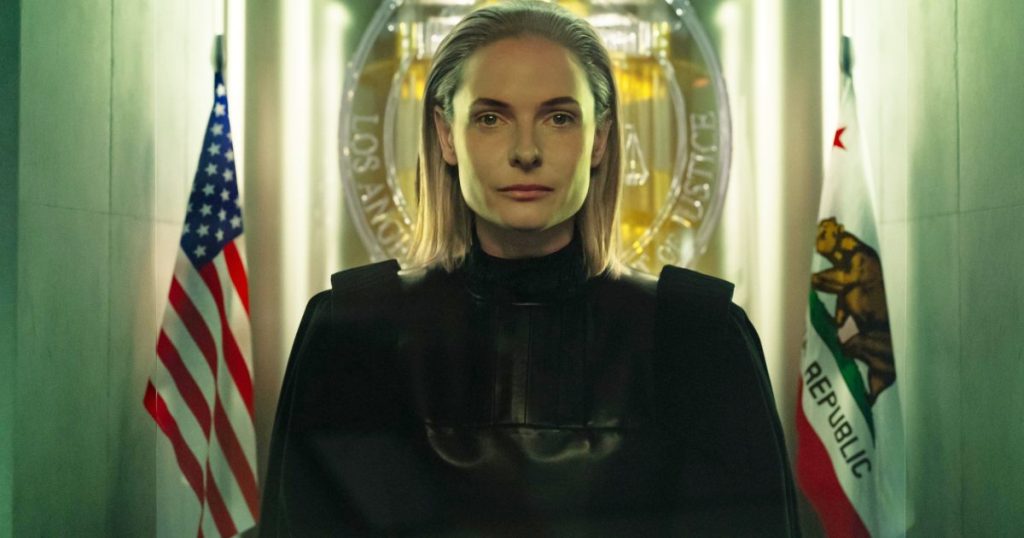
Pratt is confined to a chair for most of the 101-minute film, and Rebecca Ferguson is only visible as a head screenshot as AI hologram Judge Maddox, so this is ‘screen’ acting, not engagement as a countdown clock ticks away in real time.
That gives the plot a sense of urgency, for a desperate Raven has only 90 minutes to determine his fate, because in this pilot program, you are guilty until proven innocent.
When he finally starts investigating the case, at his disposal is a cloud archive of bodycam footage, surveillance tapes, Ring cam, Face Time, phone records and website files. We see this unfold on a virtual reality screen.
Bekmambetov is a master at screenlife movies – the ones that use smartphones, computers and recording technology to tell a story, such as “Unfriended,” “Searching,” “Missing” and “Profile.” He makes the most of modern bells and whistles.
The court allows Raven to make calls to family and friends. His teenage daughter Britt (Kylie Rogers) tearfully talks, confused (she found her dead mom). His friend Rob Nelson (Chris Sullivan, Toby in “This Is Us”), who is Nicole’s co-worker and Chris’ AA sponsor, is helpful with names and background.
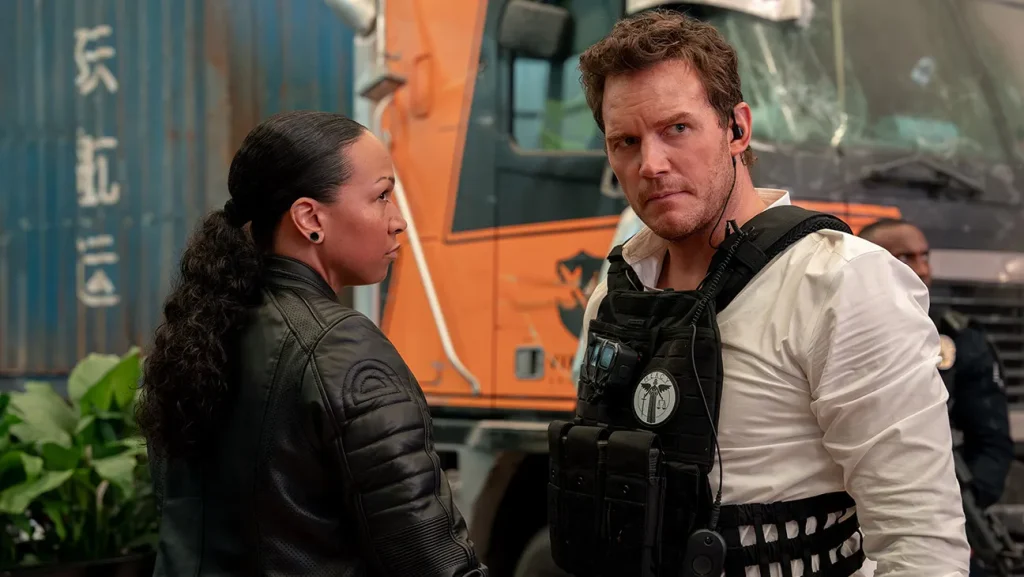
Kali Reis is Chris’ current partner Jaq, and she is reluctantly doing the leg work helping him find evidence. She has a space-age off-road vehicle that allows her to bypass LA traffic.
But this is no “Minority Report.” In the third act, van Bello was not content to wrap things up logically but added multiple ludicrous subplots for a maddening over-the-top finale. It’s one of those films that is ultimately forgettable after you leave the multiplex.
Pratt, so likeable as Peter Quill in the Guardians of the Galaxy and Avengers films, and to an extent as Owen in “Jurassic World” (also preposterous), is badly in need of a hit after making some rote, soulless action films. What about an ensemble comedy, like his breakthrough “Parks and Recreation?”
Ferguson, a superb actress who was the heart of “A House of Dynamite” last fall, is wasted as this efficient robot-like figure, but somehow is humanized after Pratt’s pleading with her.
Editors Dody Dorn, Austin Keeling and Lam T. Nguyen and the visual effects team do exemplary work, but after the techno-razzle-dazzle fades, what’s left? “Mercy” is an empty vessel, failing to make a sincere case for caution with AI because of its ridiculous crash-and-burn climax.
All that for “Human or AI – we all make mistakes.”
“Mercy” is a 2026 crime drama cyber thriller directed by Timur Bekmambetov and starring Chris Pratt, Rebecca Ferguson, Kali Reis, Chris Sullivan, Kylee Rogers and Annabelle Wallis. It is rated PG-13 for drug content, bloody images, some strong language, teen smoking and violence and its run time is 1 hour, 41 minutes. It opened in theatres Jan. 23. It became available VOD Feb. 17 and DVD April 7. It is streaming on Amazon Prime. Lynn’s Grade: D
Savage, heartfelt, and memorable, director Nia DaCosta’s “28 Years Later: The Bone Temple” carves its own gory yet defiantly hopeful path through the apocalypse.
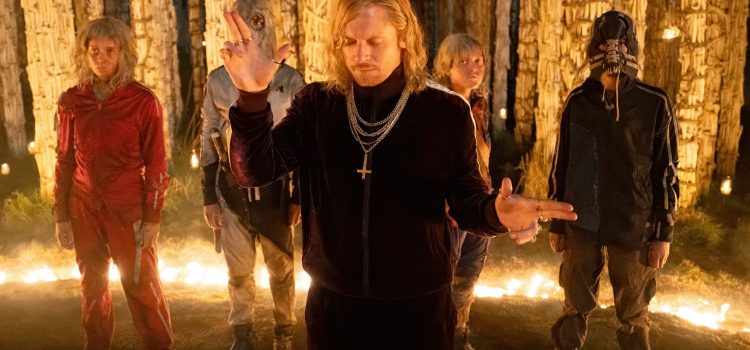
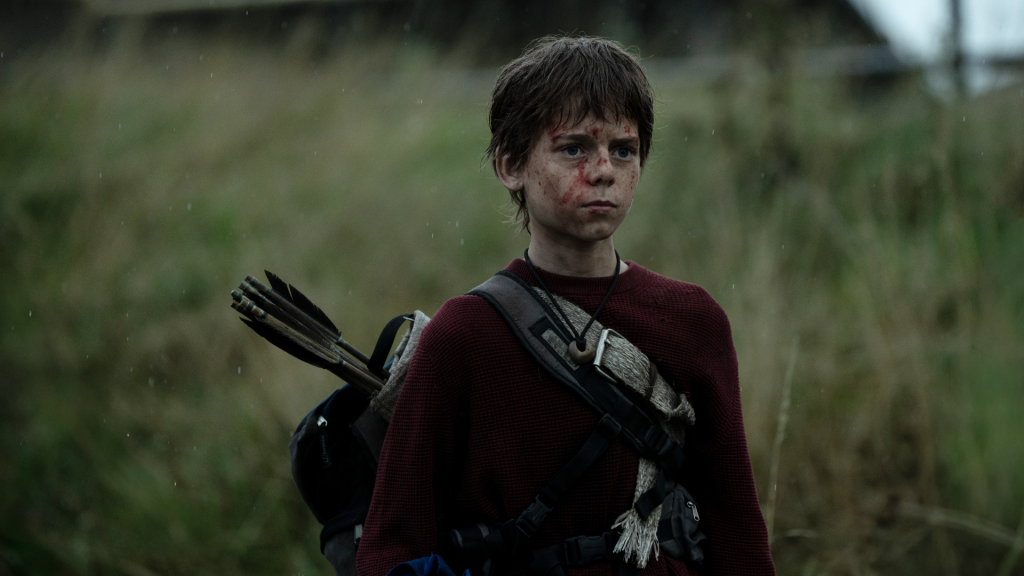
Taking place shortly after the events of Danny Boyle’s “28 Years Later,” DaCosta’s “The Bone Temple” follows young Spike (Alfie Williams) shortly after being saved from the zombielike Infected by the tracksuit-wearing and Satan-loving Sir Jimmy Crystal (Jack O’Connell) and his gang of seven “Fingers,” who are all forced to call themselves Jimmy.
Spike might have come-of-age amid the apocalypse, but instead of thriving on his own, he’s stuck in a barbaric cult of suspended development. He is forced to take part in a murderous initiation ritual and accompany the Jimmies as they cause death and destruction throughout the mainland, somewhat akin to the Droogs in “A Clockwork Orange.” Sir Jimmy is profoundly screwed up (to put it mildly), and asserts that he is Satan’s son.
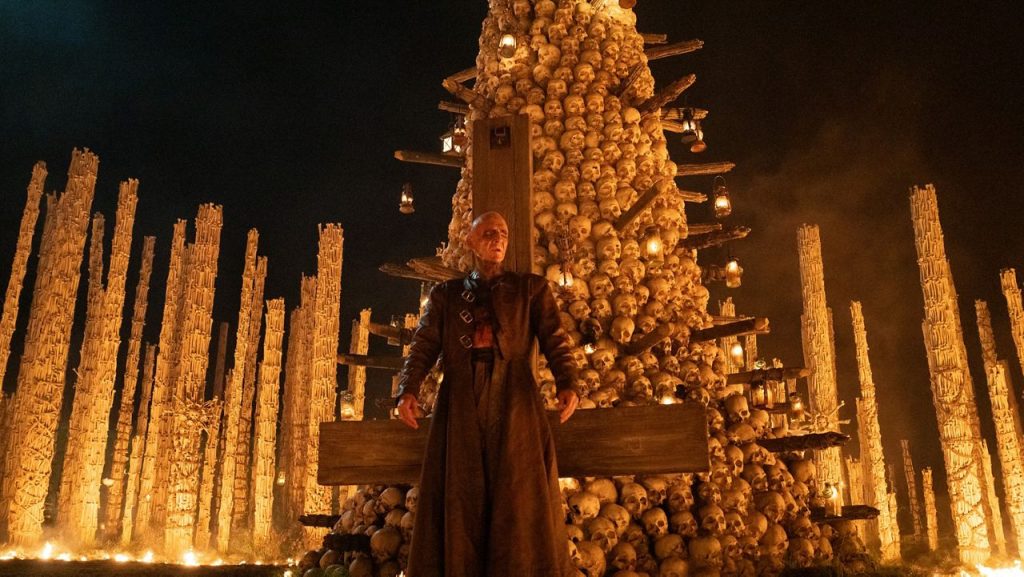
Meanwhile, the benevolent Dr. Kelson (Ralph Fiennes), who constructed the titular Bone Temple as a memorial to those lost to the virus, is maintaining some semblance of peace. Strict in his routines and rituals, there’s a sense of heaviness to how he moves through the world, with the weight of history and his own grief bubbling to the surface.
Dr. Kelson maintains a strange connection with an “Alpha” Infected he named Samson (Chi Lewis-Parry), who might retain some humanity, and possibly a key to altering the future as they know it.
Of course, it’s only a matter of time before Sir Jimmy and Dr. Kelson encounter each other. It’s ultimately a battle between hope and cynicism, fatalism and personal agency. Dr. Kelson and Spike grapple with their identities amid fascist forces and the continuing Infected threat.
Indeed, “The Bone Temple” has much on its mind despite being a clear middle chapter in this revamped franchise. DaCosta, a highly versatile filmmaker, doesn’t try to recreate Boyle’s brilliantly kinetic style or experimental pizazz. She nevertheless brings both an unflinching brutality and surprising sentimentality to the forefront, striking a mostly successful tonal balance that thrills, disgusts, and rocks its way into the soul.
DaCosta’s film isn’t a “full meal” like “28 Years Later,” but on its own, less ambitious merits, it succeeds, and brings along a resonant message for staying true to your values while the world crumbles.
“The Bone Temple” explores familiar genre ideas, zeroing in on how, yes, humans can be even more monstrous than the Infected, and some aspects of DaCosta’s film feel rushed just for the sake of bridging to the next chapter of Spike’s arc. DaCosta and returning screenwriter Alex Garland make Spike a less central character this time around, assembling pieces for the next installment. Instead, DaCosta focuses on the Jimmies, while spending considerable time with Dr. Kelson, who essentially becomes the de facto protagonist.
Jumping back and forth between these two groups definitely causes whiplash from time to time; this film also lacks much of the kinetic momentum and messy energy of its predecessor (Anthony Dod Mantle’s cinematography and Young Fathers’ music are missed).
It’s jarring to go from squirm-inducing horror one moment to kooky-yet-earnest meditations of life and periodic dance sessions. Still, DaCosta’s grounded, unflinching approach to violence hammers home the stakes (sometimes literally), setting the stage for eventual reckoning.
“The Bone Temple” also preserves much of the weirdness that pervades this franchise (in a good way), and it isn’t afraid to veer in unexpected directions regardless of familiar setups.
Fiennes in particular understands the assignment. Dr. Kelson is a weathered soul doing what he can to survive and honor the dead, quietly fighting back against the fear and cynicism bubbling within his own thoughts. At the same time Samson (brought to life with bittersweet pathos by the intimidating but vulnerable Chi Lewis-Parry) represents a thread that Dr. Kelson can latch onto, possibly the dawn of a new age and another reminder to not give up on the future entirely.
Fiennes is alternately hilarious and heartbreaking here, expanding his unexpectedly profound role in “28 Years Later” in emotionally resonant ways that give him opportunities to let his freak flag fly, especially during a finale that I won’t dare spoil.
O’Connell — coming off his villainous portrayal in Ryan Coogler’s “Sinners” — is absolutely frightening as Sir Jimmy (a character apparently modeled after Jimmy Savile, the late British DJ who was fond of wearing track suits), a man haunted by his past with a desire for control and utter disregard for human life. Like most of “The Bone Temple,” Sir Jimmy is both cutthroat and oddly funny at times, with O’Connell walking that tightrope far more elegantly than the film overall.
“The Bone Temple” isn’t up to par with “28 Years Later,” but when the two opposing forces finally come together, DaCosta synthesizes the film’s disparate tones to present a set piece that ranks among the best in the franchise. She and Garland emphasize that it’s noble to fight back against evil and not capitulate, even when all seems lost. It also ends in a place that makes the wait for Part 3 almost unbearable.
“28 Years Later: The Bone Temple” is a 2026 horror film that is directed by Nia DaCosta and stars Ralph Fiennes, Jack O’Connell, Alfie Williams and Chi Lewis-Parry. It is rated R for strong bloody violence, gore, graphic nudity, language throughout, and brief drug use, and runs 1 hour, 49 minutes. It opened in theatres Jan. 16. Alex’s grade: B+,
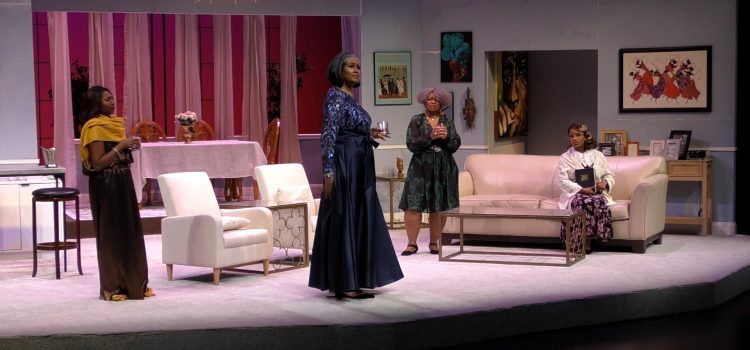
Wackiness will ensue. Four women with very distinct personalities, under suspicion for their husbands’ mysterious deaths, throw a party to socialize with eligible bachelors of a certain age. Everyone’s looking for companionship and whatever that might lead to, so what could go wrong?
Of course, nothing goes according to how the ladies and gentlemen imagined as secrets spill and drinks flow in the amusing “The Dance on Widow’s Row,” playwright Samm-Art Williams’ clever dark comedy about death, dating and superstition.
Mystery elements are also mixed in, so it keeps us guessing. The four Southern widows all live on the same street and between them have nine dead husbands. That’s a source of many jokes, but that’s not all that elicits laughs.
Williams’ wit shines through in light-hearted fashion, and the two-act play is familiar like a television situation comedy. In the hands of a very likeable cast, who have a ball with each other, the play has enough mischief and merriment to make a dreary winter more palatable.
It’s such a crowd-pleaser that this is the third production the Black Rep has mounted over its 49th season. Director Ron Himes, the founder and producing director, assembled an elite ensemble of veteran actors (I think casting is his superpower).
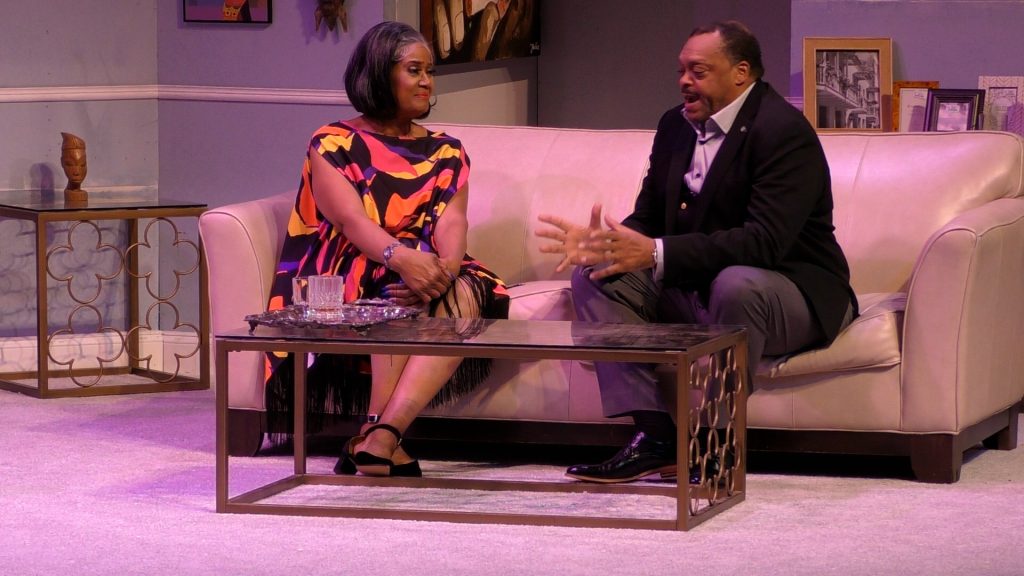
Denise Thimes, as Magnolia, and A.C. Smith, as Deacon Hudson. Photo by The Black Rep.
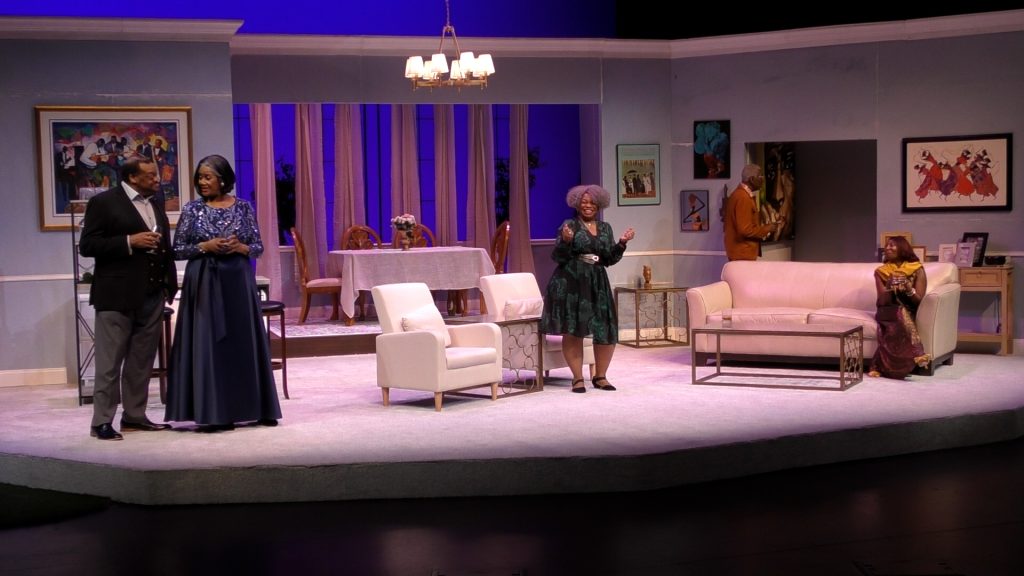
The seven performers – including Denise Thimes, A.C. Smith, Velma Austin, Margery Handy, Tiffany Tenille and Isaiah Di Lorenzo – know how to make the most of an entrance and exit. They sashay, strut and scamper easily across the well-appointed stage.
On opening night, Jan. 9, J. Samuel Davis was replaced as Newly Benson by Ron Himes, who admirably filled the role. Himes, adept at both drama and comedy, immediately connects because he’s so jittery about coming to the party.
The women are trying to revive their reputations in a fictional North Carolina coastal community, Port Town. They know they are the subject of gossip and inuendo, but that’s the chance they are willing to take.
These are full-bodied women, full of sass and spirit. Romance takes a back seat to the comedy, but it’s not for lack of trying to score Mr. Right.
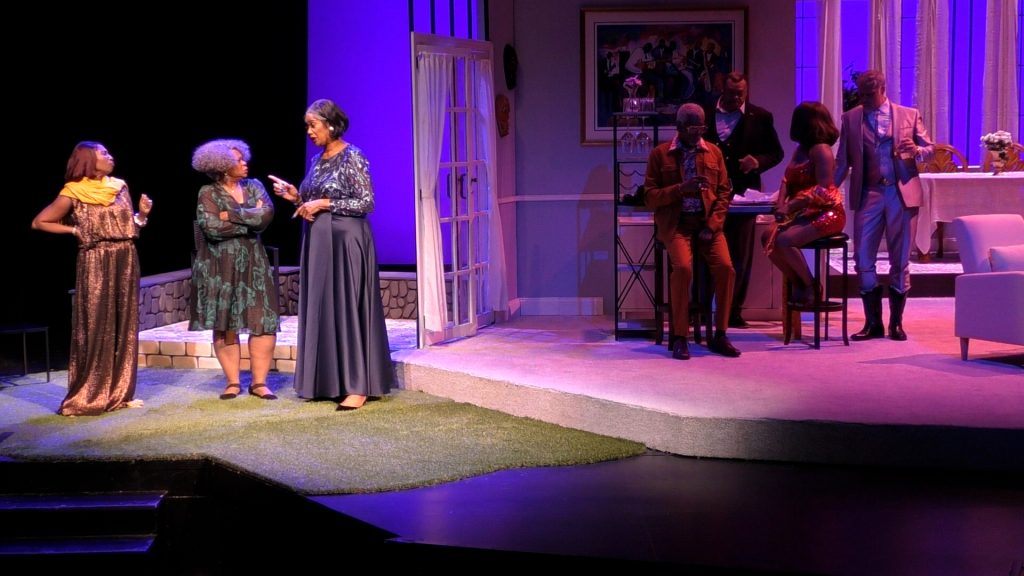
Ready for a good time. Photo by the Black Rep.
Thimes, who is a formidable leading lady, plays the sophisticated Magnolia Ellis, the hostess in her elegant home. Set designer Tim J. Jones mirrored Ellis’ style in chic décor, and prop designer Mikhail Lynn followed suit.
As she prepares for the party, she removes her late husband’s photo, saying: “I gave you a good funeral, so we’re even.”
Always excellent Velma Austin portrays the bold and audacious Simone Jackson, who has an attitude and speaks her mind, but is willing to play along for the ladies’ benefit.
Tiffany Tenille makes her Black Rep debut as the pious Annie Talbot, who doesn’t necessarily practice what she preaches. She’s outlived four husbands and professes to be lonely. As mousy as she appears, she sees an opportunity and strikes while the iron is hot, so to speak.
Margery Handy, also making her Black Rep debut, portrays the saucy Lois Miller, and she is ready to party heartily. Two of her husbands may have died from food poisoning, but that doesn’t prevent her from bringing her specialties – chicken wings and potato salad.
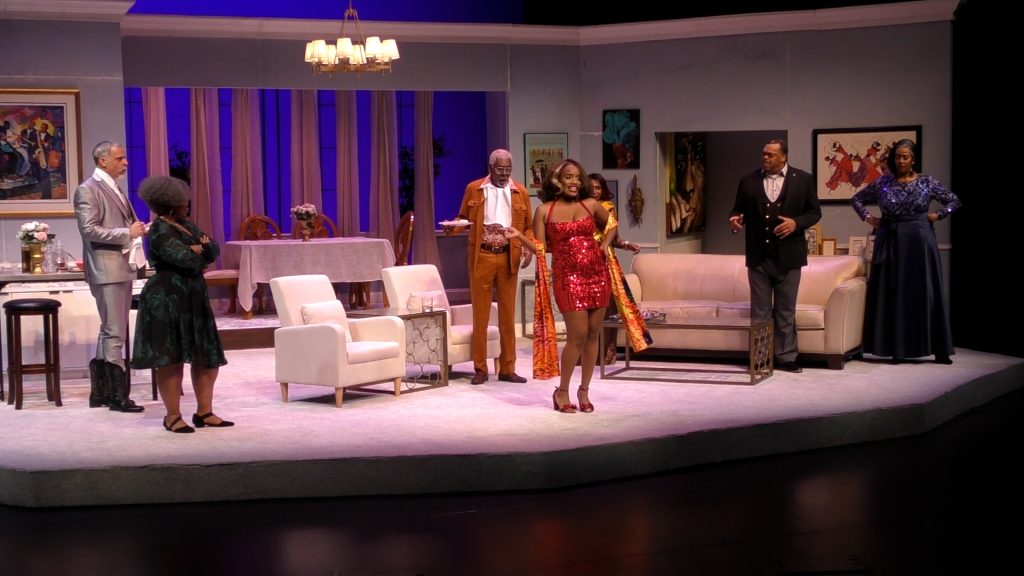
Party time. Photo by the Black Rep.
For the confident ladies, costume designer Brandin Vaughn has blended alluring upscale finery with some va-va-voom outfits emphasizing curves to make eye-catching statements. The men are sharply dressed, reflecting their personalities.
Himes knows how to mine laughs out of movement, and the cast is smooth in their shenanigans.
Because they are lonely, the men bravely take the plunge – even though Newly is very apprehensive and nervous – and show up for a night of drinks and dancing.
Isaiah Di Lorenzo is laugh-out loud hilarious as the oldest gentleman, Randall Spears, dapper and mannerly, but ready for a good time. Maybe he has too good of a time, and Di Lorenzo is a master of comic timing and body language on stage.
A.C. Smith, who was very funny as the blustery church pastor in “Chicken & Biscuits” a year ago, slips into another comedic role effortlessly, trying to be suave. Deacon Hudson is a leader of his flock – and a leader of this wolf pack.
The women flit about, trying to connect and boost the ‘oomph’ as the night progresses, but the best-laid plans…not divulging too much of the plot, so people can enjoy the twists.
While trying to sparkle, the feisty females get aggravated at one’s attempt to outshine the others, and that leads to some caustic, catty remarks that are rapidly fired at the “inappropriate woman.”
Between the women going at it and the men fretting about being present possibly backfiring, the humor doesn’t slow down.
The technical crew has remarkably created a lived-in interior, and lighting designer Sean Savoie and sound designer Kareem Deanes expertly tailored sights and sounds for the occasion. The party music is quite appealing, and Smith displays some spry dance moves, and so does Thimes.
With such a fearless ensemble amplifying their characters’ quirks and Williams’ snappy dialogue, “The Dance on Widow’s Row” delivers the warmth and genuine humor much welcome in January.
The Black Rep presents “The Dance on Widow’s Row” Jan. 9 through Jan. 25. at The Edison Theater on the campus of Washington University in St. Louis.
Single tickets and subscriptions for Season 49 are available at theblackrep.org or through the Box Office at 314-534-3807. Reduced pricing is available for seniors, educators, museum staff, students and groups of 12 or more. For more information: www.theblackrep.org
Line-up includesThe Tempest, Rosencrantz & Guildenstern are Dead, Two Gentlemen of Verona, and Romeo & Zooliet
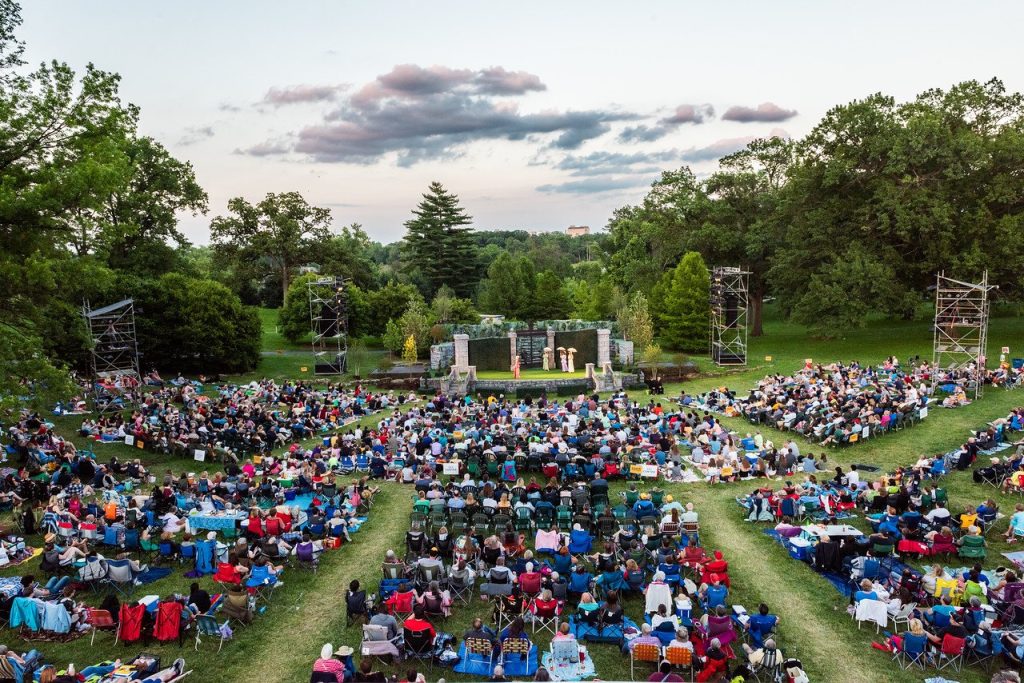
The St. Louis Shakespeare Festival announcedtodayits line-up for their 26th Season of free Shakespeare with THE TEMPESTas the mainstage production in Forest Park. Directed by the Festival’s former artistic director Rick Dildine and featuring Nancy Bell as Prospero, THE TEMPEST, will begin free public performances in Shakespeare Glen on Wednesday, May 27 and run Tuesday – Sunday nights through June 21.
The romance and comedy-forward 2026 season lineup includes the previously announced CONFLUENCE NEW PLAY FESTIVAL (March 19-21), TourCo, a free and outdoor public parks tour of TWO GENTLEMEN OF VERONA directed by Rebekah Scallet (August 4-September 6), ROSENCRANTZ AND GUILDENSTERN ARE DEAD (March 26-April 11), in association with Albion Theatre, and the return of and updated and refreshed ROMEO & ZOOLIET (Fall 2026). The annual Shakespeare in the Streets community storytelling event will return in 2027 in DOGTOWN. During the 2026 season, the Festival will also host the return of Boozy Bard with THE RECLAIMING OF THE SHREW at Schlafly Tap Room.
Tom Ridgely, Artistic Director: “From Hollywood to London, Shakespeare is once again having a moment. His stories and poetry continue to shape our culture in subtle and profound ways. They connect us by illuminating our most defining experiences: love and loss, rupture and reconciliation. This season is about sharing those riches with more of St. Louis than ever before – and celebrating St. Louis’s unique contributions to Shakespeare in America.”
Kate Tichelkamp, Executive Director: “After celebrating a record-breaking 25th anniversary, we’re stepping into 2026 with tremendous momentum. This season builds on the energy, ambition, and community support that have shaped the Festival over the past 25 years, while continuing to expand what’s possible for Shakespeare in St. Louis. We’re excited to carry that success forward and to keep creating experiences that bring people together through extraordinary storytelling.”
The St. Louis Shakespeare Festival’s commitment to radically accessible free theater is made possible through the support of hundreds of Festival supporters throughout the year. Lead support of the 2026 Season comes from Edward Jones, Regional Arts Commission ARPA for the Arts, Whitaker Foundation, Switch, Missouri Arts Council, and Pershing Charitable Trust.
SEASON DETAILS
SHAKESPEARE IN THE PARK is the Festival’s flagship production and the unofficial start of the summer season in St. Louis. As one of the world’s largest free and outdoor Shakespeare productions, the show is accessible for everyone, always. This summer, THE TEMPEST, directed by Rick Dildine, returns to Shakespeare Glen for the first time in 20 years. “Returning to Forest Park feels like coming home. Shakespeare Glen is one of the most inspiring outdoor spaces in the country to share this work, and I’m deeply honored to be invited back to direct The Tempest for the people of St. Louis,” said Rick Dildine. “Having previously staged Twelfth Night and A Midsummer Night’s Dream here, I know how powerfully these plays live under the open sky – where the city, the landscape and the audience all become part of the story. I can’t wait to make theater in St. Louis again.”
Nancy Bell (Prospero): “Years ago, I directed a motley cast of elementary students in an abridged version of The Tempest. On opening night, the third-grade girl who played Prospero held up her cardboard magic wand and said the line, “I’ll break my staff.” She snapped it in half. Her voice broke and she bowed her head. It was one of the most thrilling moments I’ve ever seen in the theatre. It was as if this young person was somehow channeling an elderly Renaissance sorcerer. It made me realize that the play, like many of Shakespeare’s is truly – maybe literally magic.”
BOOZY BARD’S “THE RECLAIMING OF THE SHREW”, marks the return of the wildly popular 2025 event, this time taking on Shakespeare’s The Taming of the Shrew at Schlafly Tap Room on February 5, 6, 12 & 13. During an evening with Boozy Bard, an inebriated performer voluntarily struggles to reconstruct a character in a Shakepeare plan after imbibing several shots of whiskey while the remaining sober performer try to keep the story on track. Tickets for this 21+ event are now on sale.
THE CONFLUENCE NEW PLAY FESTIVALwas created in 2018 to further foster a culture of playwriting in the Midwest by supporting emerging writers in Missouri and Illinois with a fellowship and weekend-long celebration of new works at the Confluence New Play Festival each spring. Under the direction of St. Louis’s own Drama Desk-nominated playwright Deanna Jent since 2022, Confluence has commissioned 19 new plays, six of which have gone on to world premieres around the country. Current fellows include Zachariah Ezer, Pamela Morgan, and Catherine Yu. The Festival will present staged readings of their plays and take place March 19-21, 2026.
ROSENCRANTZ AND GUILDENSTERN ARE DEAD, written by Tom Stoppard, directed by Tom Ridgely, and presented in association with Albion Theatre (Robert Ashton, Artistic Director), arrives in St. Louis in spring 2026. What happens when you’re not the hero of the story? Rosencrantz and Guildenstern Are Dead flips Hamlet on its head, following two side characters who suddenly find themselves trapped inside a story they don’t fully understand. As events spiral around them, Rosencrantz and Guildenstern wrestle with fate, free will, friendship, and the unsettling realization that they may have very little control over what happens next. Performances begin at the Kranzberg Arts Center’s Black Box Theater on March 26 and close April 11, 2026.
ROSENCRANTZ AND GUILDENSTERN ARE DEAD is presented by arrangement with Concord Theatricals on behalf of Dramatists Play Service. www.concordtheatricals.com
TOURCO, the free touring program, TWO GENTLEMEN OF VERONA written by William Shakespeare and directed by the New Jewish Theater’s Rebekah Scallet, features six actors performing a 90-minute free and outdoor adaptation in parks around the region. One of the largest free Shakespeare tours in the country, TourCo will run for a record 5 consecutive weeks in 2026, opening August 4. TWO GENTLEMEN OF VERONA is complete with disguises, misunderstandings – and one very scene-stealing dog – and takes on friendship, forgiveness and the hilarious messiness of growing up.
“I am so thrilled to be able to work with the St. Louis Shakespeare Festival on this production of Two Gents. I have a deep passion for Shakespeare, and this will be my first opportunity to direct one of his works in St. Louis,” said Rebekah Scallet. “This play is also one of my favorites – though it is one of his earliest works, it is full of hints at what it is to come with amazing comic characters and touching love stories — it even has Shakespeare’s first balcony scene! There is truly something for everyone in this coming-of-age adventure, and it will be a perfect show to share with audiences across St. Louis this summer.”
Nisi Sturgis as Juliet’s mother in “Romeo and Zooliet” last summer.
ROMEO & ZOOLIET, written by Jennifer Joan Thompson and directed by Tom Ridgely, is eyeing a return to St. Louis in fall 2026 at a soon-to-be-announced location. In this updated and refreshed production, the animals and back and sillier than ever. ROMEO & ZOOLIET is a vibrant family comedy filled with laughter, friendship and larger-than-life puppets from world-renowned Michael Curry Design. It’s a playful celebration of curiosity, courage and connection – perfect for audiences of all ages.
SHAKESPEARE IN THE STREETS, the internationally recognized community engagement program, that most recently visited East St. Louis will arrive in DOGTOWN in 2027. Shakespeare in the Streets is a grassroots theatrical experience that invites St. Louis neighborhoods to tell their stories. A Festival-selected creative team leads the neighborhood in developing an original play based on one of Shakespeare’s works – a play with themes that reflect the community’s character.
Tickets for ROSENCRANTZ AND GUILDENSTERN ARE DEAD will go on sale to the general public on Monday, February 2, 2026. Reserved seats and boxes for THE TEMPEST in Shakespeare Glen will go on sale in April 2026.
“A Late Summer Night’s Stroll” in Forest Park during the pandemic in 2020.
Biographies
The St. Louis Shakespeare Festival strives to foster community and joy across the St. Louis region through the Shakespearean tradition of art for all. Since 2001, the Festival has grown from producing a single production of Shakespeare in Forest Park to a year-round season of impactful programming in exciting and accessible venues throughout the bi-state area. Artistic and education programs reach over 50,000 patrons and students each season. Their award-winning work has been featured in the New York Times, Wall Street Journal, and Bloomberg News.
Rick Dildine For over 20 years, Rick has led some of the most prestigious theater companies in America. Today he serves as Artistic Director of the Tony Award-winning Children’s Theatre Company, the largest theater in North America dedicated to creating work for multi-generational audiences. Previously, he served as Artistic Director of Alabama Shakespeare Festival and St. Louis Shakespeare Festival. He’s also led Shakespeare & Company, About Face Theatre, and the Stephen Foster Theater. He is a member of the National Board of Directors of Theatre for Young Audiences/USA. MFA from Brown University/Trinity Rep. Member, SDC. His directing credits include A Midsummer Night’s Dream, Twelfth Night, Macbeth, Romeo & Juliet, and The Tempest.
Rebekah Scallet is the Artistic Director of the New Jewish Theatre (NJT), a position she has held since 2022. Credits at NJT include: Cabaret, We All Fall Down and The Immigrant. Other St. Louis credits include The Roommate at the Repertory Theatre of St. Louis and Moliére’s The Learned Ladies for the Sargent Conservatory at Webster University. Rebekah was also the Producing Artistic Director of the Arkansas Shakespeare Theatre for nine years, where she directed many of Shakespeare’s works with some of her favorites being Twelfth Night, King Lear and Macbeth. Other recent credits include The Tempest at the Texas Shakespeare Festival, and The Winter’s Tale for Illinois Shakespeare Festival. Rebekah received her Bachelor of Arts in Theatre and English from Brandeis University and her Master of Fine Arts degree in Directing from Illinois State University.
Nancy Bell is a theatre artist and writer who is grateful to have had St. Louis Shakespeare Festival as an artistic home for more than a decade. She served as Playwright-In-Residence here for six years, serving under Rick Dildine’s leadership as the first playwright for the Festival’s groundbreaking Shakespeare in the Streets program. She was the founding director of the Festival’s Confluence New Play Festival, and the director of Into the Breeches and 2024’s award-winning As You Like It. She is a familiar performer and director at the Repertory Theatre of St. Louis, as well. Recent credits there include The Roommate, Athena, and Emma. Other credits nationally include New York Theatre Workshop, Manhattan Theatre Club, South Coast Repertory, The Geffen Playhouse, The Old Globe, Alabama Shakespeare Festival, among many others. TV and film credits from once upon a time include Star Trek Voyager, Guiding Light, Mad About You, Newsradio, and various Law and Orders. She is Professor of Theatre at St. Louis University.
Tom Ridgely is a Drama Desk-nominated director who has developed or presented work at the Public Theater, The Old Globe, Oregon Shakespeare Festival, Hudson Valley Shakespeare Festival, Red Bull and more, and his productions have won DFW Theater Critics Forum and ECNY Awards and been nominated for St. Louis Theater Circle, Connecticut Critics Circle and BroadwayWorld Connecticut Awards. He came to the Festival from Waterwell in New York City, the company he co-founded and led from 2002-2018. There he helped create and produce more than a dozen world premieres and adaptations of classics nominated for three IT awards, a Drama Desk, a New York Magazine Culture Award and a Village Voice “Best of NYC”. Since taking over the Festival, he has won a St. Louis Magazine A-List Award for “New Arts Leader” and oversaw the Festival’s shift to developing and producing new work, which also won an A-List Award for “New Programming.”
With its inspired casting, “Is This Thing On?” is strongest in its personal self-discovery journey as a married couple divorces.
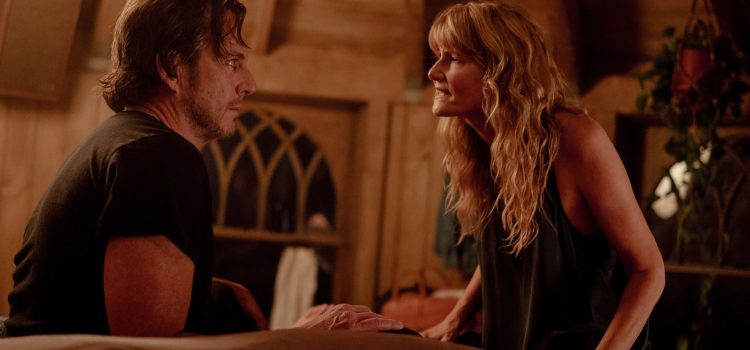
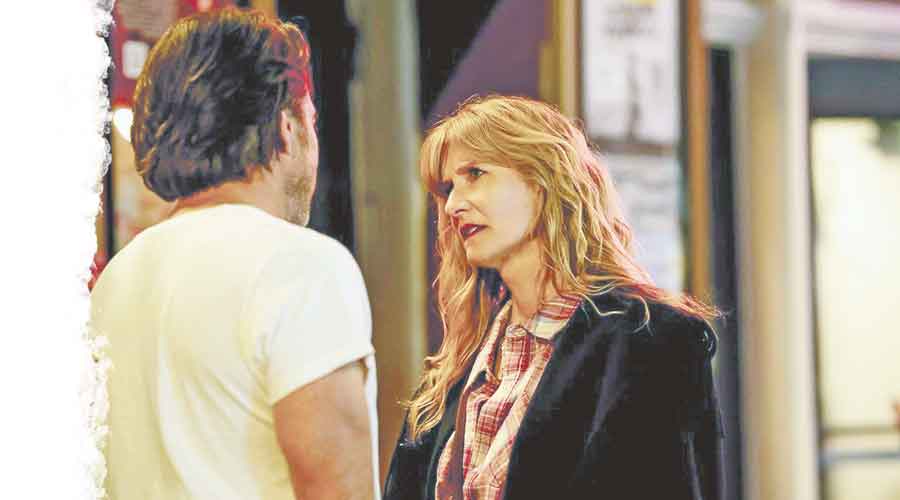
Alex and Tess Novak (Will Arnett, Laura Dern) were married for 20 years and dote on their two boys, so co-parenting isn’t an issue, but navigating the single life is a bumpy path. Tess finds purpose again rejuvenating her athletic career while Alex stumbles onto comedy as therapy.
While how funny Alex is can be debated, the use of humor to get through life’s toughest times is a spot-on assessment. After all, Charlie Chaplin famously said: “Life is a tragedy when seen in close-up, but a comedy in long-shot.”
Frustrated by life’s ups and downs, Alex seeks a sense of purpose while he is frustrated by life’s ups and downs.. In stand-up comedy routines, he finds out he’s relatable as a middle-aged guy navigating ‘uncoupling.’ It’s also therapeutic for this sad dad. An interesting by-product is he learns more about himself.
Tess, who clearly wanted to divorce, sought to renew that zest for life she had as an Olympic volleyball player and college coach. After years of sacrificing for her family, she is loving getting back in the game.
As Alex’s newfound hobby takes flight , he keeps it hidden from Tess, his friends and family. But he also has a re-energized outlook on life, and finds this outlook rewarding in ways he never imagined.
As they face middle age and divorce, the Novaks are working on co-parenting and their identities as singles. Somehow, they come to an understanding that surprises both, as they learn new things about each other.
This film is inspired by the real-life story of British comedian John Bishop. Arnett met him on a canal boat in Amsterdam and, after hearing about how he got his start in stand-up comedy, Arnett wanted to make it into a film.
Arnett, a very funny Emmy-nominated actor who broke out as “Gob” Bluth on “Arrested Development,” has carved a niche in voice-over work, especially in animated series and films (“BoJack Horseman,” “The Lego Batman Movie”).His is best known as the guy enticing us to eat Reese’s peanut butter cups every Halloween.
Showing a new side to his capabilities, he is appealing as the befuddled and vulnerable Alex, while Oscar winner Dern is a good scene partner. Their dynamic is believable, both eliciting empathy.
The film is directed by Bradley Cooper, his third feature, and it’s quite a departure from “A Star Is Born” and “Maestro” – an intimate interpersonal drama-comedy that amplifies relationship struggles that many people face.
In a supporting role, he’s practically unrecognizable as Alex’s best friend, Balls – a scruffy, vain actor in a rocky marriage to Christine (Andra Day), who is friends with Tess. The friends’ scenes seem to pad the film unnecessarily, and Sean Hayes and his real-life husband Scott Icenogle are seen only briefly as pals.
Nevertheless, the family scenes are heartfelt and humorous without strained effort. Terrific character actors Christine Ebersole and Ciaran Hinds lend lived-in credibility to their roles as Alex’s parents, who are close to Tess and their two grandchildren (Blake Kane as Felix and Calvin Knegten as Jude, both naturals).
The appearance of Peyton Manning as Laird, an old friend of Tess’, is a surprise, and he handles playing a character quite well.
The script, written by Cooper, Arnett and Mark Chappell, captures the fast-paced, competitive standup comedy scene, particularly at the iconic venue the Comedy Cellar.
Stand-up comics Chloe Radcliffe, Jordan Jensen, Reggie Conquest, Amy Sedaris and Elizabeth Furiati are an authentic part of the cast.They know that making people laugh during dark times is an elixir.
The grittiness of New York, how both worlds felt real, the sincerity of lessons learned, and an in-sync score add to the film’s enjoyment. However, “Is This Thing On?” never rose above OK, despite its good intentions and amusing, relatable moments.
(“Is This Thing On?” is a comedy directed by Bradley Cooper and starring Will Arnett, Laura Dern, Bradley Cooper, Andra Day, Ciaran Hinds, Christine Ebersole, Peyton Manning, Blake Kane and Calvin Knegten, It is 2 hours and 1 minutes long and rated R for language throughout, sexual references and some drug use. It opened in local theatres Jan. 9. Lynn’s Grade: B-.)
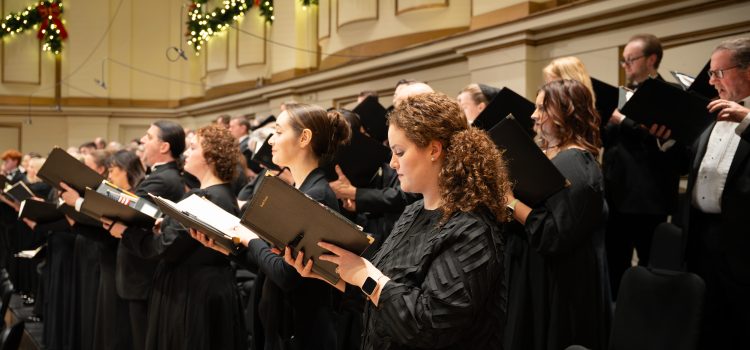
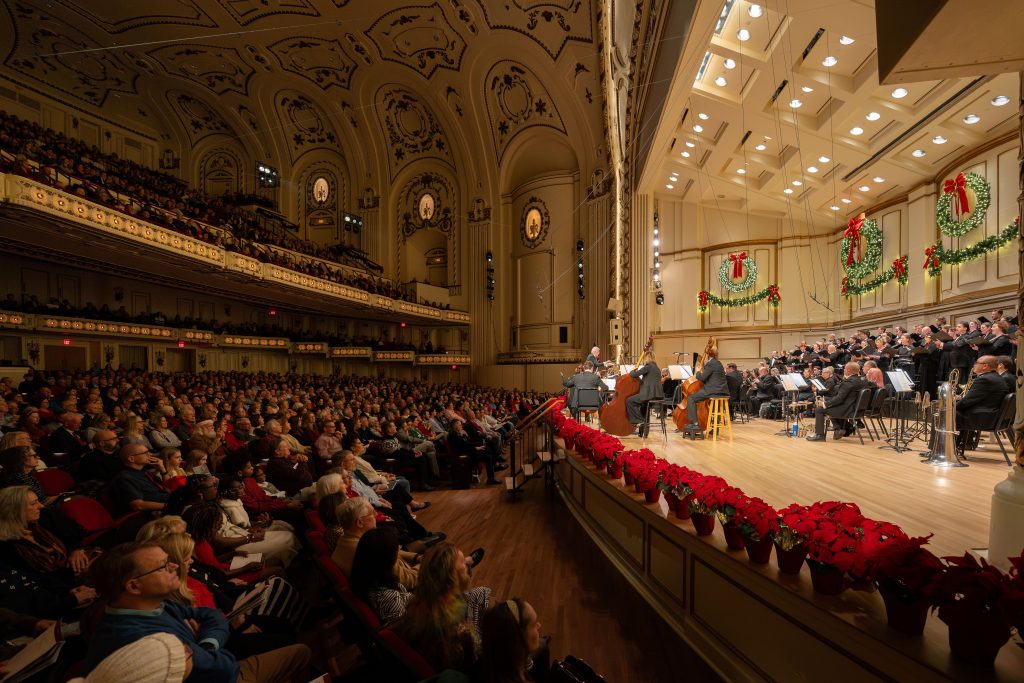
The Bach Society of Saint Louis’ Christmas Candlelight Concert begins where it should: in sound. Before tradition, before ritual, before the familiar glow of candles, there is the resonance of Powell Hall answering the first choral surge. The room settles, the ear sharpens and the evening declares its priorities. This is a concert shaped by listening and care.
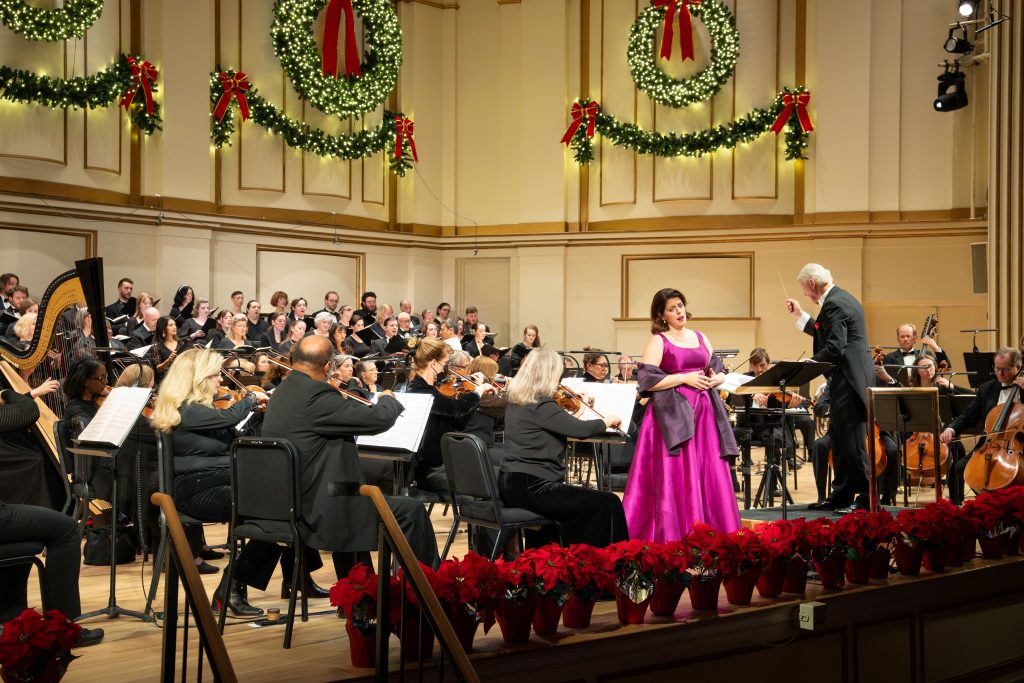
At the center stands John Rutter’s “Magnificat,” performed here with buoyancy, clarity and an instinctive sense of proportion. Rutter’s gift for celebration can be mistaken for easy charm, yet this music asks for discipline to keep its radiance airborne. Under A. Dennis Sparger’s steady direction, the Bach Society Chorus and Orchestra delivered exactly that: rhythmic lift without haste, color without excess and an architectural arc that allowed the work’s alternating exuberance and inwardness to register fully.
The score’s brilliance, especially in its percussion and brass writing, came across with vivid impact, while strings and winds shaped the quieter pages with warmth and transparency. Sparger paced the work so contrasts felt earned rather than imposed, allowing the music to breathe while sustaining forward motion. The result trusted Rutter’s craftsmanship and resisted the temptation to oversell it.
Soprano Emily Birsan sings John Rutter’s “Magnificat.” Photo by Katie Pinkston.
At the heart of the performance was soprano Emily Birsan, whose singing gave the “Magnificat” its center of gravity. Her voice is luminous and richly focused, marked by fine control and a natural inwardness that draws the hall closer rather than pushing sound outward. In reflective passages, her phrasing and breath transformed large-scale celebration into something intimate and human-scaled.
Even in moments of radiance, there was restraint and poise, a sense that clarity mattered more than display. It was singing of interpretive authority, grounded in trust and simplicity.
The remainder of the program functioned as a thoughtful frame rather than a diversion. Seasonal carols and arrangements extended the sound world established by the “Magnificat,” offering familiarity refreshed through color and rhythmic lift.
A Mozart excerpt, the “Laudamus Te” from the Mass in C minor, provided a moment of classical contrast and further showcased Birsan’s musical intelligence, reinforcing her versatility without disrupting the evening’s flow.
The Bach Society of St. Louis’ annual Christmas Concert. Photo by Katie Pinkston.
The concert closed with Craig Courtney’s “A Musicological Journey Through the 12 Days of Christmas,” a piece that wears its learning lightly. Each verse refracts the familiar tune through a different stylistic lens, creating a playful tour of musical history that rewards both ear and intellect. The Bach Society dispatched it with precision and obvious delight, capturing its wit and rhythmic verve. As a finale, it proved supremely engaging, leaving the audience buoyed rather than merely amused.
Candlelight, procession and communal song emerged organically from the musical argument rather than sitting beside it. Back in Powell Hall, the fit felt restored. This concert endures not because it repeats itself, but because it listens, to the music, to the room and to the moment.
The Bach Society of Saint Louis’ Christmas Candlelight Concert was performed at Powell Hall on December 23.
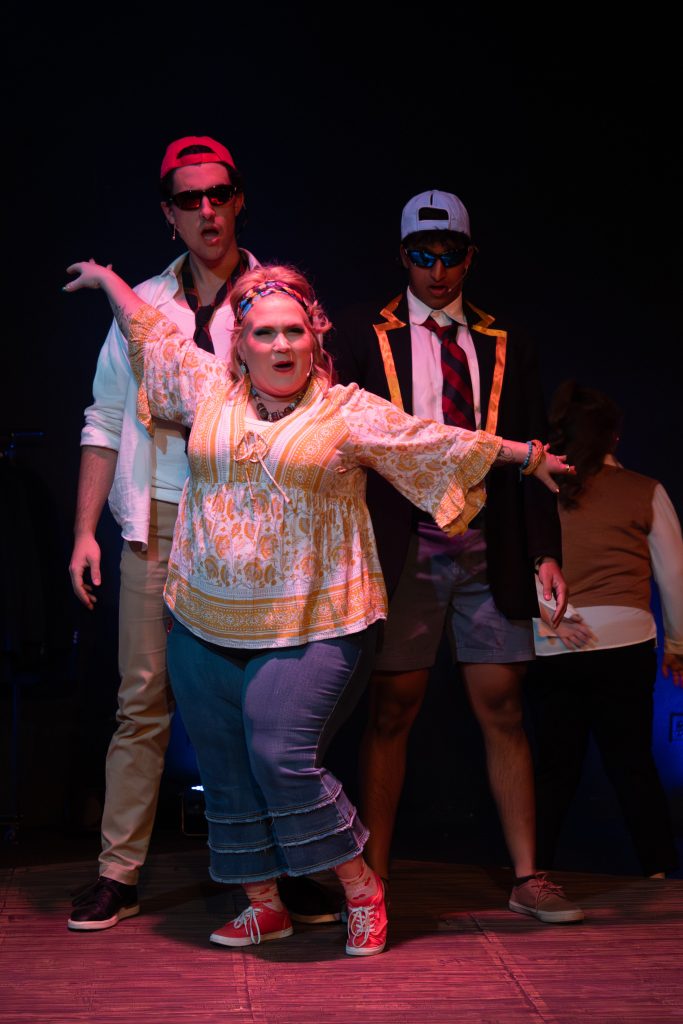
‘Tis the season to emphasize “Believe,” and that’s a fitting attitude about the iconic Elle Woods, the musical “Legally Blonde,” and Tesseract Theatre Company itself.
The “Little Engine That Could” theater group, which mirrors Elle’s plucky, positive demeanor, has produced a fresh, fun, fizzy and feisty reimagining of the upbeat 2007 musical adaptation of the smash hit 2001 romantic comedy.
As the iconic Elle Woods, Grace Seidel is at her best, strong in portrayal of the bubbly California sorority girl who gets into Harvard Law School after a crushing break-up. As she discovers how smart, resilient and dedicated she is, finding her purpose, Seidel triumphs, tossing the blonde ‘bimbo’ first impression out the door.
She defies the stereotype and smoothly slips into champion mode – representing anyone who has had to fight to be seen and heard. And rocks the pink outfits, too.
Known for her powerful vocals, she strikes the right chord with her passionate delivery of Elle’s breakthrough anthem “So Much Better” and turning point “Chip on My Shoulder.” She wins over the other characters in vibrantly staged ensemble numbers, including “Positive,” the ebullient “Legally Blonde” and rousing finale “Find My Way.”
Seidel is not the only bright spot who has a renewed, refreshed take on the musical. Just as you shouldn’t underestimate Elle’s inner light to shine through, there are a few memorable debuts joining reliable veterans in the ensemble.
Marsiya Miller as Paula. Photo by Florence Flick.
In a knockout debut, Marsiya Miller is a hoot as Paula Buonufonte, the hairdresser with heart of gold. She is a skillful vocalist in her solo “Ireland,” and has sharp comic timing too, as she develops a palpable bond with Elle.
Fellow newcomer Kyle Rudolph is delightful as the UPS delivery man, also named Kyle, a definite scene-stealer with fleet footwork in the Irish step dance part of “Ireland.” His high-energy performance is noteworthy in ensemble numbers, too.
In another impressive debut, Mason Ramsey portrays the shallow, privileged Warner Huntington III, who breaks up with Elle because she’s not “Serious” enough. He has the poise of someone that’s already a stage veteran.
Newcomer Aditi Seetharaman embodies the haughty Vivienne Kensington, Warner’s new girlfriend and condescending law student who humiliates Elle — but eventually has her ‘aha’ moment.
Seasoned pros who contribute their customary excellent work include Dawn Schmid as exercise guru Brooke Wyndham, who is accused of killing her husband; Jon Hey as the distinguished, demanding Professor Callahan; and Katie Orr hilarious as quirky activist Enid Hoopes.
Kevin Corpuz is charming as the lovable, smart Emmett Forrest, a law student who befriends Elle and sees her potential, helping her to realize it. He and Grace have worked together multiple times, most notably in the two-hander “The Last Five Years” at Tesseract in 2023. They have a noticeable ease with each other in the makeover number “Take It Like a Man” and the turning point “Chip on My Shoulder.”
The Delta Nu sorority. Photo by Florence Flick.
The Greek Chorus of Delta Nu sorority sisters is sprightly support – Natalie Sannes as energetic Serena, Lillie Self-Miller as chipper Margot, and Evan Lee as sassy Pilar, starting off with the cheery “Omigod You Guys” and being Elle’s sounding board.
Ella Drake, Martin Ibarra, Molly Stout (dance captain), Loren Goudreau, Aadi Kadam and Rudolph are supple in supporting roles that range from shop clerks, students, frat boys, scummy ex-boyfriend, presiding judge, trial witnesses, salon customers and assorted others.
Jo Palisoc’s choreography is crisp and snappy, notably the standout jump-rope number “Whipped into Shape” that is a demanding aerobics workout routine. Admirably, the dancers don’t miss a beat. Always a favorite, the “Bend and Snap” is as fun as ever.
The band is an expert group of eight musicians under the musical direction of virtuoso Larry D. Pry, who kept the music by Tony nominees Laurence O’Keefe and lyrics by Nell Benjamin tight and bright. Pry joined Becca Bessette and Brayden Bessette on keyboards, Chuck Evans on violin, Mary Jewel Wiley and Lea Gerdes on reeds, Joe Winters on percussion, Mat Coble on guitar and Jonah Larsen on bass. They were polished and peppy.
Inventively staged by director Will Bonfiglio in the cozy confines of The Marcelle Theatre, he keeps the scenes moving along, from the Hair Affair Salon to Harvard Yard, dorm rooms and shops, using different nooks that scenic designer Brittanie Gunn has crafted in imaginative ways.
He has adroitly mixed humor with a courtroom drama and boosted the girl power. He focused on bringing out the heart and humanity, spotlighting a community coming together and people finding out where they belong.
Kevin Corpuz, center, as Emmett. Photo by Florence Flick.
If you look beyond the fluff, which is why both the movie and musical endure, the show is thematically strong by exposing prejudice, harassment and discrimination. The Tony-nominated book by Heather Hach is an adaptation of Amanda Brown’s 2001 novel, which was based on her experience at Stanford Law School.
When Elle saves the day using her sparkle and coming up with her unconventional legal strategies, it’s a satisfying victory that feels earned. I mean, look at this logic: “Exercise gives you endorphins. Endorphins make you happy. Happy people just don’t shoot their husbands, they just don’t.” — Elle
Carly Uding’s costume design, along with Sarah Gene Dowling’s wig design, created appropriate looks for every character. Morgan Brennan’s lighting design and Jacob Baxley’s sound design suited the show, with Kevin Sallwasser technical director, Sarah Baucom production manager and Lexi Sims stage manager keeping elements on task. Sims was aided by assistant stage managers Jae North and Josh Neighbors.
This production radiates warmth, good humor and empowerment. If you need a cup of kindness this holiday season, Tesseract’s “Legally Blonde: The Musical” overflows with cheer and optimism.
The Tesseract Theatre Company presents “Legally Blonde: The Musical” Dec. 5 – 21 at the Marcelle Theatre, 3310 Samuel Shepard Dr, St. Louis, Thursdays through Saturdays at 8 p.m. and Sundays at 4 p.m. For tickets or more information, visit www.TesseractTheatreco.org
Good trashy fun, “The Housemaid” is a psychological domestic thriller with a dash of dark comedy that is ideal alternative programming this holiday season when all the prestige awards-hopefuls are released.
Millie (Sydney Sweeney), a plucky young woman with a secret criminal past, takes a live-in job as a housekeeper for the wealthy Winchester family – high-maintenance wife Nina (Amanda Seyfried) and handsome husband Andrew (Brandon Sklenar). While they look perfect, her new employers have secrets of their own.
None of the three stars – currently having moments – will be on year-end awards shortlists for their performances, yet they lean in and act with an intensity that merits them serious kudos for their earnest approach to over-the-top melodrama.
Let the mind games begin! As Nina, the suburban princess living luxuriously, Seyfried can fly into Defcon 5 rage with a frightening ferocity and assuredly drives this effort.
Knowing what’s at stake is her forte here. To watch her alternate wild histrionics with an icy-cold façade as a Real Housewife archetype is amusing.
Sweeney’s star has risen ever since “Euphoria” shook up streaming and may tie with Josh O’Connor for having the most movies released this year, even besting Pedro Pascal. She plays forlorn Millie just-right with a shaggy poor-girl-trying-to-please demeanor and a palpable desperation to escape her past.
Sklenar, who was swoon-worthy as the rugged hero Spencer Dutton in Taylor Sheridan’s “Yellowstone” prequel “1923,” is in yet another handsome, chiseled guy role. This time, he’s Andrew, a gracious, well-mannered scion of an influential family, flashing his pearly whites often.
It’s a perfect threesome for this type of suburbanites’ unraveling story. For fans of the popular 2022 page-turner by Freida McFadden, you know the delectable unpredictable twists. But for those of us in the dark, the reveals are a surprise – and boost the audience-participation feel of the film.
Smartly directed by Paul Feig, whose comedy pedigree is stellar (“Freaks and Geeks,” “Bridesmaids,” and episodes of “The Office”) and his thriller portfolio is gaining traction after “A Simple Favor,” he is one step ahead of us as we uninitiated try to figure out where these deceptions are leading.
He also strikes the right engrossing tone, mixing suspense, shock and silliness to guarantee gasps and build momentum. The screenplay by Rebecca Sonnenshine, a two-time Emmy nominee as a writer on “The Boys,” draws us into the chills by smoothly weaving backstories in, adding gaslighting and tension in the home.
Elizabeth Jones’ lavish production design is Martha Stewart-worthy in a sprawling, airy McMansion in Great Neck, N.Y. As the live-in housekeeper, Millie’s bedroom is a cozy A-frame attic nook that has a door that locks from the outside.
In shades of Stepford wives, supporting players are stereotypical privileged upper-class women who are condescending of others not in their same social register – and even if they are, finding ways to be critical. Millie overhears the local elitist moms gossiping about Nina, which is unexpected, as are other remarks by ‘the help’ in the community.
Those are interesting nuggets that illuminate what’s happening – or not – but it keeps us guessing as the plot thickens. The dialogue is often cheesy, but that’s part of the fun, too. This material is far from Tolstoy or Chekhov – it’s “Dynasty” glammed up for the 21st century.
It’s best to know as little as possible going into the movie, so no spoilers here.
Elizabeth Perkins has a few defining moments as Andrew’s snobby mother Evelyn Winchester, dismissive of her daughter-in-law and demanding in snide ways. After all, she’s more concerned with appearances than anything else.
Young actress Indiana Elle is the Winchester’s snotty, indulged daughter Cecelia “CeCe,” whose sense of entitlement shows signs of creating a monster, but whose actions later indicate she’s been paying attention. It would have been nice to have more character development in that regard.
Michele Morrone, who played Emily’s fiancé Dante in Feig’s “Another Simple Favor,” is well-cast as mysterious handyman Enzo, but sadly, it’s an underdeveloped character.
“The Housemaid” is nothing more than a pulpy “popcorn” thriller, well-suited as escapist fare, especially during a dreary winter and in a disconcerting world. It’s a film that knows exactly what its mission is, and how it fits into the entertainment landscape.
“The Housemaid” is a 2025 psychological thriller directed by Paul Feig and starring Amanda Seyfried, Sydney Sweeney, Brandon Sklenar, Elizabeth Perkins, Michele Morrone and Indiana Elle, Its runtime is 2 hours, 11 minutes, and it’s rated R for strong/bloody violent content, sexual assault, sexual content, nudity and language. It opens in theaters Dec. 19. Lynn’s Grade: B.