Playful and excoriating in equal measure, director Igor Bezinović’s documentary “Fiume o Morte!” (Fiume or Death!) examines the absurdity, horror, and sobering legacy of fascism, presenting an irreverent reframing of place and history that gives power back to the people.
Bezinović’s film takes place in his hometown of Rijeka, Croatia, a port on the Adriatic about 50 miles from Italy, with a tumultuous history. The city, once known as Fiume, was ruled by the Hapsburgs during World War I. After the War ended, it was left under the control of Yugoslavia, not Italy. This surprised many, including the vainglorious Italian aristocrat, poet, drug addict, womanizer, and army officer Gabriele D’Annunzio (a friend and inspiration for the young Benito Mussolini).
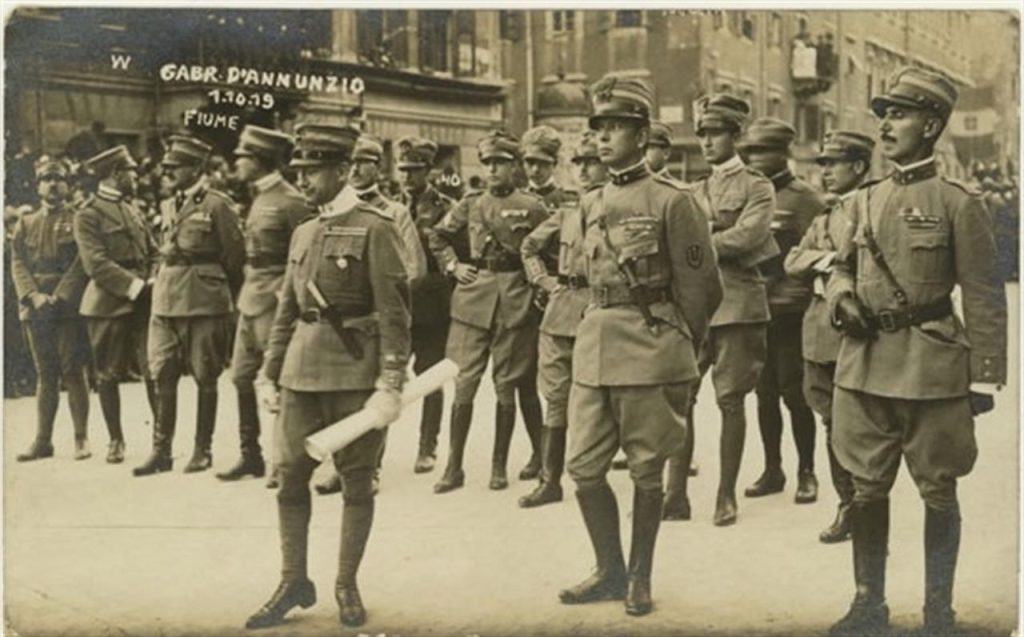
In 1919, fueled by vanity and nationalism, D’Annunzio led an insurgency with 186 unemployed and hate-filled “legionaries” to occupy the city and claim it as an independent, pro-Italy city-state with himself as its supreme ruler. D’Annunzio’s leadership didn’t last long; he was forced out of power by none other than Italy itself in 1920.
Bezinović aims to reckon with D’Annunzio’s complicated legacy on both sides of the Italo-Croatian border with “Fiume o Morte!” He also, just as importantly, cuts the failed despot down to size.
Walking through a vibrant farmer’s market in present-day Rijeka, Bezinović asks passers-by whether they know who the man was — some have no idea, others are quick to label D’Annunzio a fascist, and others aren’t willing to make such sweeping statements, noting that he was also a “great poet and lover.”
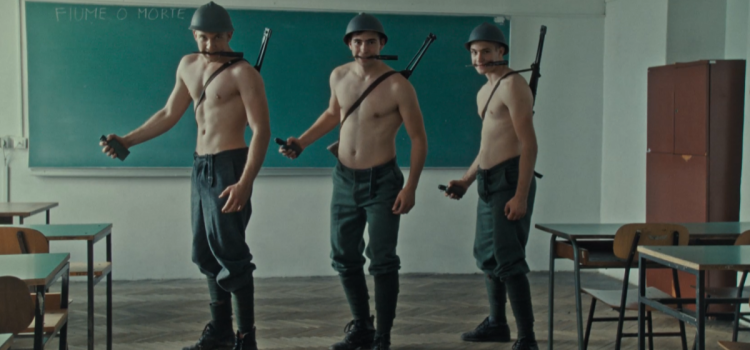
Bezinović reveals that he’s making a film about D’Annunzio’s coup, and he hires non-actor residents of Rijeka (including plumbers, musicians, and professors, some recruited directly from that farmers market, and at least one pet dog) to play every role and provide the film’s dry-humored narration, with several bald men recruited to play the (in)famously hairless D’Annunzio.
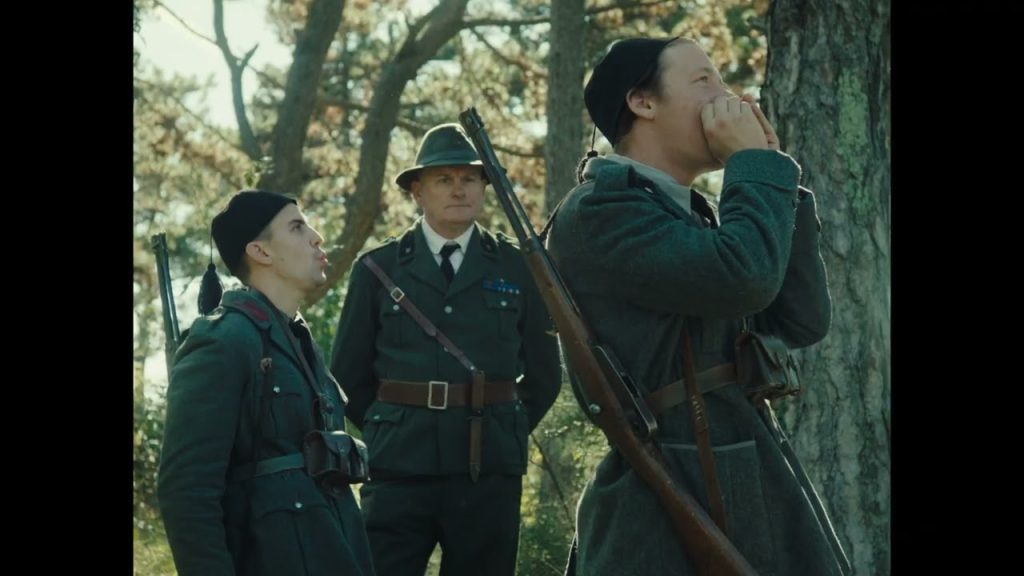
The historical reenactments themselves (which take up the bulk of “Fiume o Morte!”) treat D’Annunzio with the respect he deserves – that is, none at all. Performed with period-accurate costumes, keen attention to framing (Gregor Božič’s cinematography is beautiful), and a limited budget encouraging bucketloads of mocking comedy, Bezinović replicates scenes and tableaus from thousands of photographs and video footage documenting D’Annunzio’s “heroic” coup with a winking, anachronistic twist.
“Fiume o Morte!” jumps back-and-forth between these “grandiose” historical documents and a considerably less impressive present. The goofy yet faithful reenactments (in the same locations) seem out of place within the colorful hustle and bustle of modern-day Rijeka.
A photo of D’Annunzio speechifying before hundreds of onlookers turns into an aged non-actor revealed (via a slow zoom-out) to be speaking to an audience of two family members. A high-stakes meeting between generals concludes with D’Annunzio walking uphill to play rock music with his band as trucks leisurely drive by on their way to storm the city.
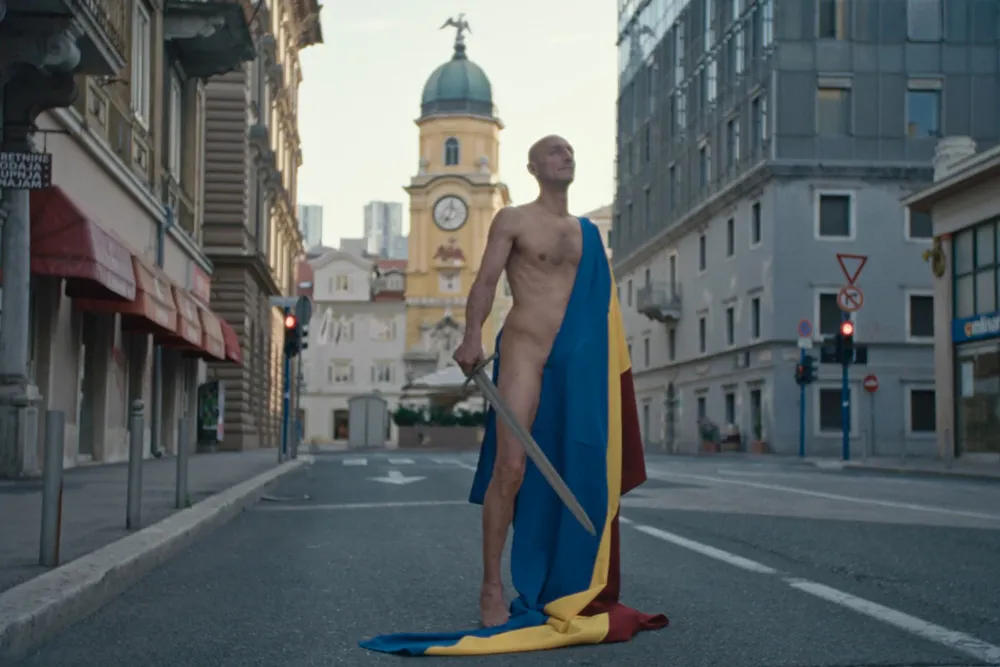
Some photos and videos — like a sword-wielding D’Annunzio posing naked draped with the Fiume flag, or homoerotic revelry on the beach with his unemployed legionaries — barely need exaggeration at all in the present-day. Sometimes onlookers stop to take pictures, others essentially ask “What the Hell are you doing?”
The reenactments are absurd and satisfyingly savage, emphasizing the ridiculousness of D’Annunzio’s occupation and putting his story in the hands of the community he attempted to suppress; a violent past juxtaposed by a resilient present that has endured and, as Bezinović keenly points out, is still grappling with D’Annunzio’s legacy and broader society’s continued cozying up to his fascist ideals.
Indeed, although “Fiume o Morte!” is often a breezy, immensely enjoyable viewing experience (particularly charming when narration highlights the backgrounds of each featured member of the ensemble), Bezinović never loses sight of the barbarity of D’Annunzio’s self-imposed mission, and the consequences of his violently prejudiced enterprise that helped pave the way for Kristallnacht.
Bezinović is selective about what he chooses to recreate, in certain moments relying entirely on historical artifacts instead of reenactments to drive home the oppressiveness of D’Annunzio’s rule and the tragic consequences for the (especially non-Italian) citizenry, as well as painting clear parallels between then and now.
Not only do we get a clear picture of D’Annunzio’s hubris and failures, but also a spirited portrait of Rijeka and its diversity, and caustic reminders of how his memory lives (and, in terms of younger generations, dies) among the populace. Just nearby in the Italian city of Trieste, for example, statues are continuing to be erected of the bald buffoon to this day, more celebratory than critical.
“Fiume o Morte!,” then, works as an irreverent history lesson, a reclamation of storytelling by the community he claimed he conquered, and an example of how nationalism and pride distort the truth. And that art, liberating in its creative freedom, has the ability to both entertain and educate, empowering those whose stories were brushed over by forces of evil.
This is a masterful documentary that’s enlightening and downright ingenious – an absolute must-watch that stands tall among the year’s best films thus far.
“Fiume o Morte!” Is a 2025 documentary directed by Igor Bezinovic. It was the official submission of Croatia for the ‘Best International Feature Film’ category of the 98th Academy Awards in 2026. It is 1 hour and 52 minutes run time. It can be seen at the Webster Film Series on March 8. Alex’s Grade: A+
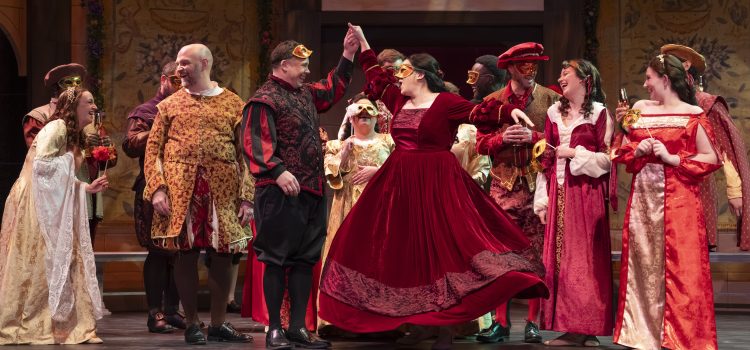
Opera succeeds when theater, singing, and orchestra move together. Winter Opera St. Louis brought those forces into satisfying alignment with Charles Gounod’s “Roméo et Juliette,” closing its season with a production that carried Shakespeare’s familiar tragedy with immediacy and emotional force.
Gounod’s 1867 opera, with a libretto by Jules Barbier and Michel Carré, keeps its focus firmly on the young lovers rather than the feud that surrounds them. That emphasis places unusual weight on the title roles, and Winter Opera delivered with a compelling pair.
Tenor Taylor Comstock sang Roméo with youthful ardor and a clear, lyrical tenor that expanded in power as the music climbed into the upper register. Opposite him, soprano Megan Barrera offered a Juliette of brightness, agility, and growing emotional depth.
Her “Je veux vivre” waltz sparkled with buoyant phrasing and easy coloratura, and she navigated the role’s demanding succession of arias and duets with clarity of tone and precise French diction.
Taylor-Comstock-Nathan-Whitson-Megan-Barrera. Photo by Dan Donovan.
Together they projected the impulsive youth at the heart of the story, allowing Gounod’s long love duets to unfold with warmth and urgency.
Director John Stephens guided the drama with clarity and focus. The turning point arrived in the duel between Mercutio and Tybalt, staged with sharp dramatic energy as Roméo’s intervention sealed the opera’s tragic course.
The final scene, shaped with intimate restraint, carried the emotional weight of the evening.
The supporting cast added vivid character and vocal strength. Baritone Kenneth Stavert filled Mercutio with swagger, wit, and striking physical vitality, relishing the playful brilliance of the Queen Mab scene.
Marc Schapman’s Tybalt burned with fierce intensity, while Jacob Lassetter brought warmth and authority to Capulet. Raphaella Medina charmed as Stéphano, and Emily Moore animated the role of Gertrude with lively presence. The ensemble throughout sang and acted with admirable cohesion.
In the pit, conductor Edward Benyas shaped the score with sensitivity to its lyrical sweep, balancing orchestra and voices so that Gounod’s melodic lines could bloom freely.
The chorus, prepared by Scott Schoonover, sang with clarity and strength, particularly in the somber lament that follows the duel.
Taylor Comstock and Marc Schapman as Romeo and Tybalt. Dan Donovan photo.
Scott Loebl’s flexible scenic design and Jen Blum-Tatara’s richly colored costumes reinforced the divided world of the rival houses while allowing the drama to move fluidly from celebration to tragedy.
The result proved deeply affecting and a fitting close to Winter Opera’s season. Performances at this level make a persuasive case for opera at an intimate scale, where music, voices, and story meet the audience directly.
Winter Opera’s “Roméo et Juliette” was performed on Feb. 27 and March 1 at the Kirkwood Performing Arts Center.
Megan Barrera as Juliette and Emily Moore as Gertrude. Photo by Dan Donovan.
Far less lively than its premise promises, director John Patton Ford’s “How to Make a Killing” has a sturdy dramatic framework but forgets to have much fun along the way — it’s an Eat-the-Rich satire that commits the unfortunate sin of being dull.
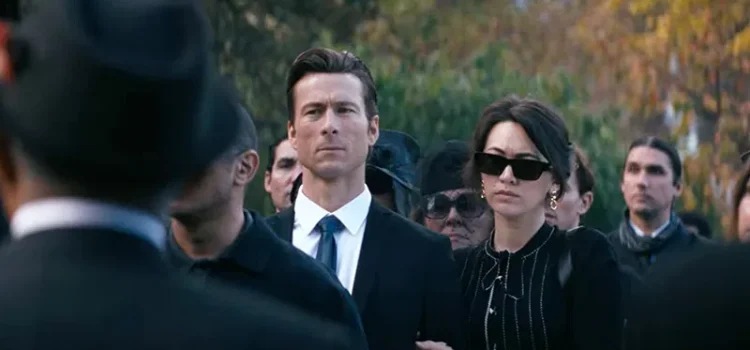
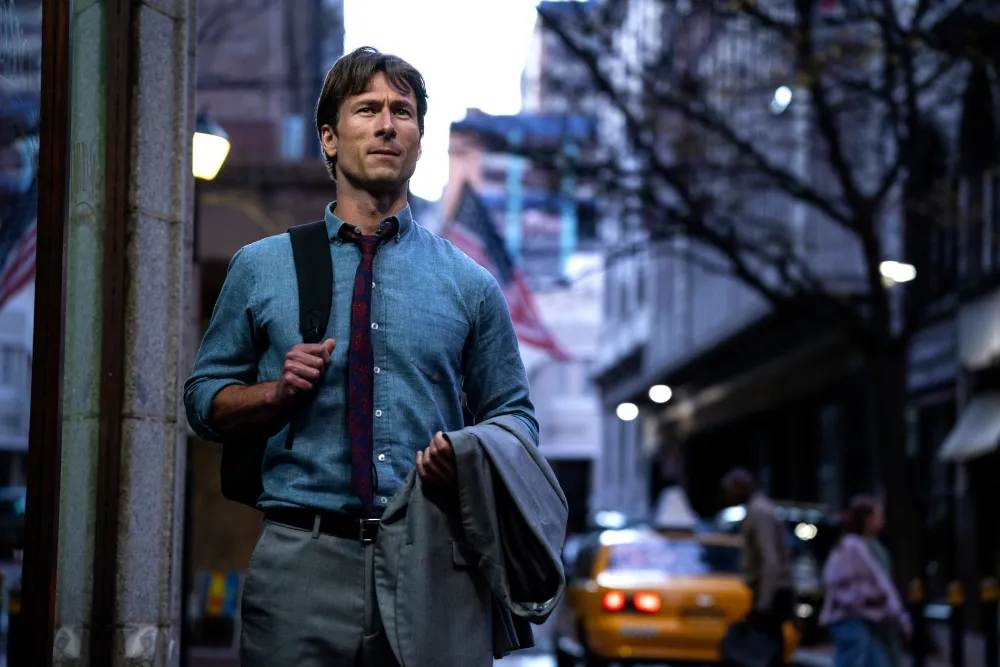
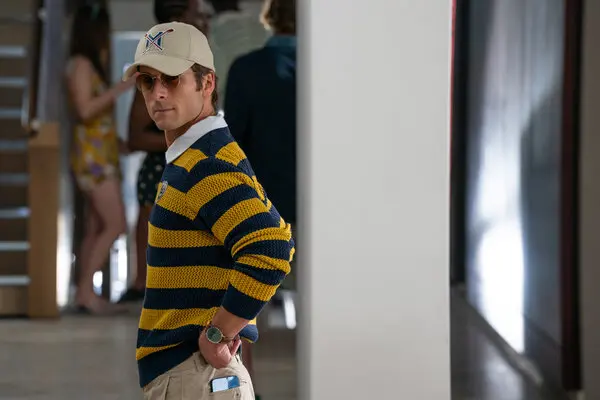
Inspired by the 1949 film “Kind Hearts and Coronets,” “How to Make a Killing” centers around Becket Redfellow (Glen Powell), a man on death row with four hours until execution who relays his life story to a priest (Sean C. Michael). The film, guided, er, dictated, by Becket’s narration, jumps back and forth in time.
Becket, with a wry smile, insists that his story is a “tragedy,” as he reveals that his family has a 28 billion dollar fortune that he was willing to kill his seven other relatives to acquire. For Becket, it’s personal.
His mother was banished from the family by the mysterious patriarch Whitelaw (Ed Harris) after becoming pregnant with Becket as a teenager with a man of “lower class,” who quickly disappeared from the scene.
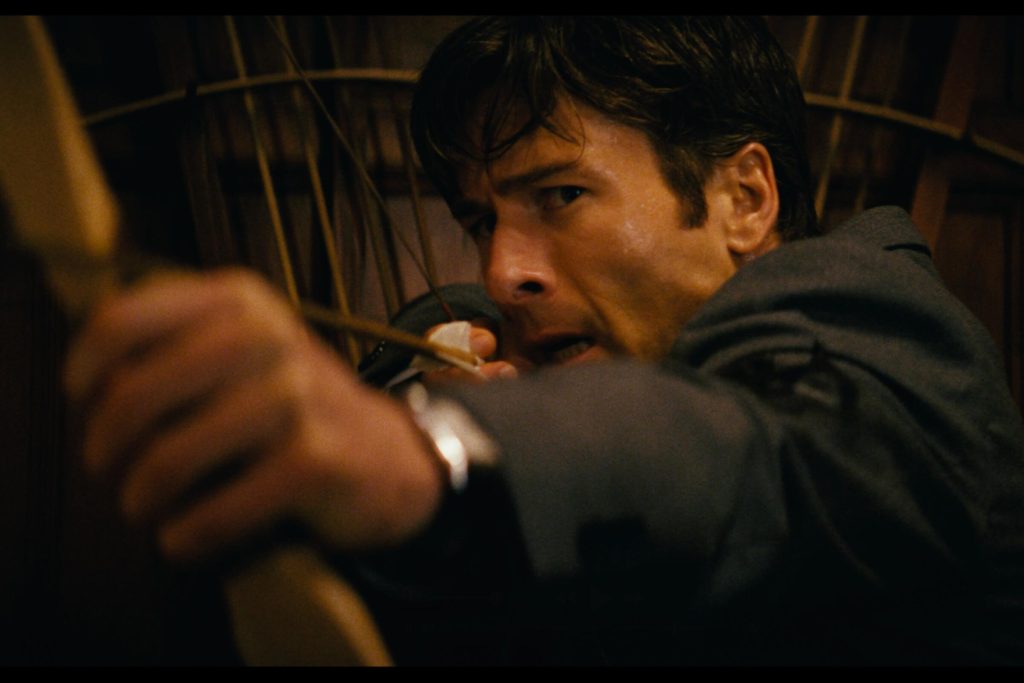
She raised Becket in a working class New Jersey neighborhood, occasionally immersing him in rich-adjacent activities like archery (featuring Chekhov’s bow and arrow), and, until her dying day, insisting that Becket has a legal claim to the Redfellow fortune and that he “deserves” it.
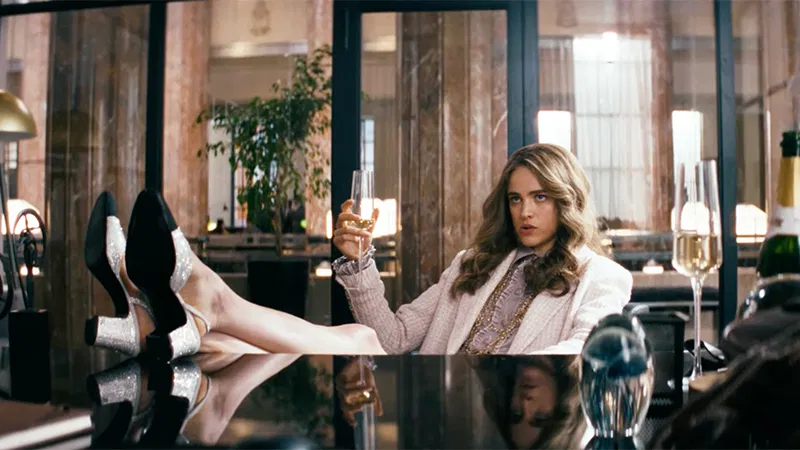
It’s at one of these functions that a young Becket meets the uber-wealthy Julia Steinway (later played by Margaret Qualley). The two are drawn to each other, although they drift apart as they grow up in different social spheres.
In present-day New York City (before his arrest), Becket works at a men’s suit store and runs into Julia, who strikes up a flirtation (even though she’s engaged), and reminds him that he is a Redfellow.
After being abruptly demoted, and recognizing the sad unfairness of his current non-uber-wealthy living situation, Becket decides to take action, setting out to eliminate his relatives and do away with most of his morality.
The group includes party boy Taylor (Raff Law), smug goofball artist Noah (Zach Woods), “philanthropist” Cassandra (Bianca Amato), Richard-Branson-esque McArthur (Alexander Hanson), rock star megachurch pastor Stephen (Topher Grace), and Becket’s surprisingly kind uncle Warren (Bill Camp) who hires Becket to work at his brokerage firm, plus the intimidatingly shady Whitelaw (Harris).
Quite a few folks to get through, but Becket’s greed and hunger for retribution motivate him, to the detriment of his personal relationships and sanity.
There’s a recipe for a crackling, twisted little thriller here, but Ford’s film is frustratingly milquetoast, possessing the skeleton of a strong narrative without putting in the work to give its story poignancy, momentum, or memorably crazy set pieces.
“How to Make a Killing” feels restrained as Becket flies further off the deep end, taking the easy way out instead of leaning into the lunacy, with derivative social commentary and subplots clunkily smashed together. It’s a shame, because the foundation is there. Powell remains an appealing leading man who brings charisma in spades.
Still, he feels underutilized, as Ford’s screenplay jumps through time erratically and often resorts to blatant exposition dumps (via Becket’s prison-set narration) that attempt to streamline the film while robbing it of textural detail.
Powell’s performance is sturdy enough on its own merits, particularly when the film slows down to briefly highlight his twisted satisfaction at his various killing schemes (which occur, puzzlingly, mostly off-screen) and to develop his relationship with the beautiful Ruth (Jessica Henwick), who is first attached to Noah.
Henwick and Powell have great chemistry, yet Ford treats their dynamic as more of a plot device than anything else — the tension between happiness/comfort and the pesky pull of greed and revenge.
It’s a conflict rendered too schematic to pack much emotional punch, worsened by dialogue that spells out Becket’s “choice” in eye-rollingly obvious fashion.
Qualley, to her credit, understands the assignment more than most of the ensemble, leaning into her character’s femme-fatale cartoonishness, periodically appearing to encourage Becket to continue his murderous mission and attempt to seduce him (for love or for the money?).
f only the rest of “How to Make a Killing” was as committed to the bit as Qualley who, regardless of whether you love or hate her performance, is definitely making choices and helping to momentarily excavate the film from generic territory.
Perhaps the biggest issues with Ford’s film revolve around its “tell, don’t show” philosophy. We don’t really feel Becket’s inner turmoil, nor do we fully buy why he feels compelled to push forward even when his life seems pretty damn good, all things considered. Nor do we get any flashy moments of R-rated violence, odd considering that the film is indeed called “How to Make a Killing.”
Ford’s film does have eye-catching production design and stylistic use of light and shadow. But its conclusions are largely standard, a morality tale with a clearly telegraphed destination, and a laissez-faire approach to distinctive storytelling.
“How to Make a Killing” is a 2026 dark comedy-psychological thriller directed by John Patton Ford and starring Glen Powell, Margaret Qualley, Ed Harris, Bill Camp, Jessica Henwick, Zaff Law, Zach Woods, Bianca Amato, Topher Grace, and Alexander Hanson. It’s run time is 1 hour, 45 minutes, and it is rated R for language and some violence/bloody images. It opened in theatres on Feb. 20. It became available on video on demand March 30 and on DVD/Blu-Ray June 8. It began streaming on HBO Max June 19. Alex’s rating: C.
Furious and scattershot, director Gore Verbinski’s madcap sci-fi parable “Good Luck, Have Fun, Don’t Die” has numerous incisive ideas about humanity’s dependence on technology but muddles them with a heavy dosage of smug humor.
One cannot accuse Verbinski of not being ambitious, though, with his latest effort bringing to mind a range of films including “Groundhog Day,” “The Terminator,” and “Everything Everywhere All At Once.” The film takes place in a near-future in which humanity’s addiction to technology has created a society of apathetic, homogenous-seeming beings doing nothing to stop society’s descent into tech company servitude.
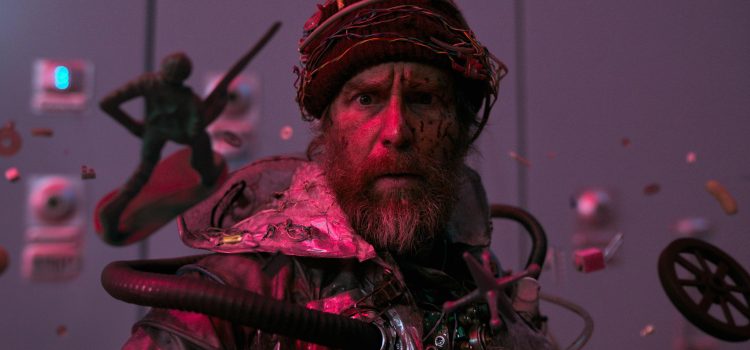
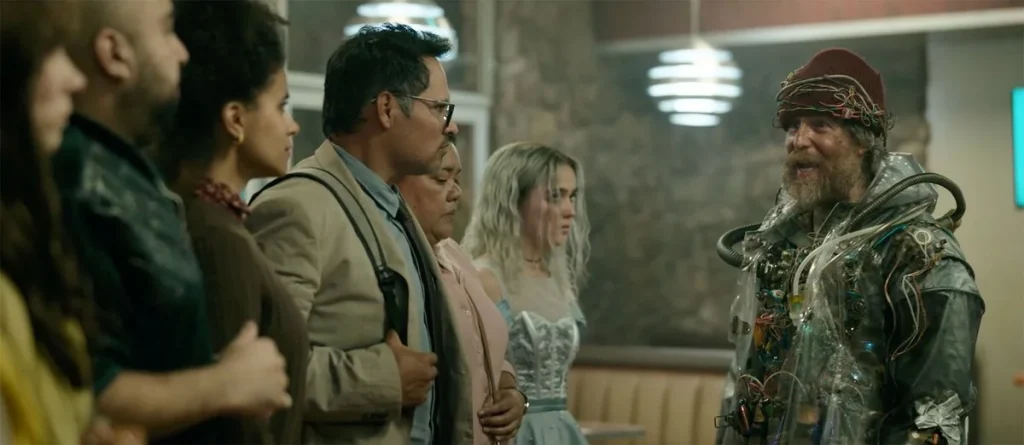
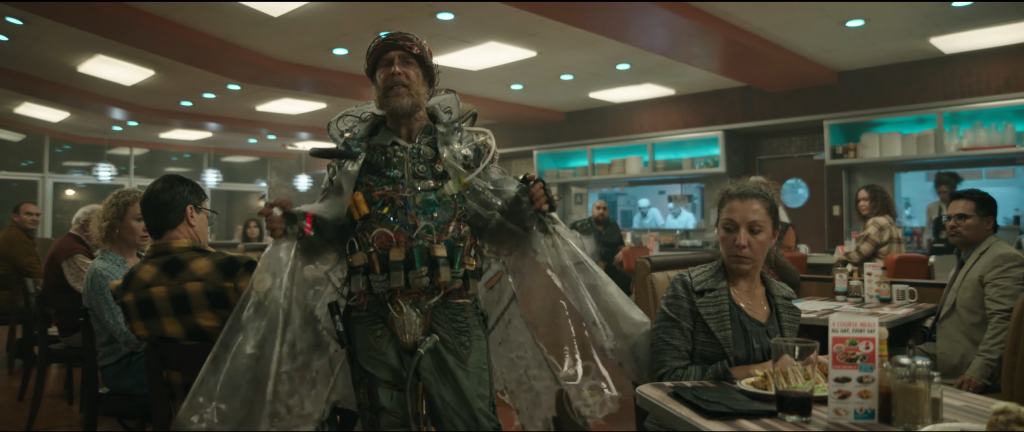
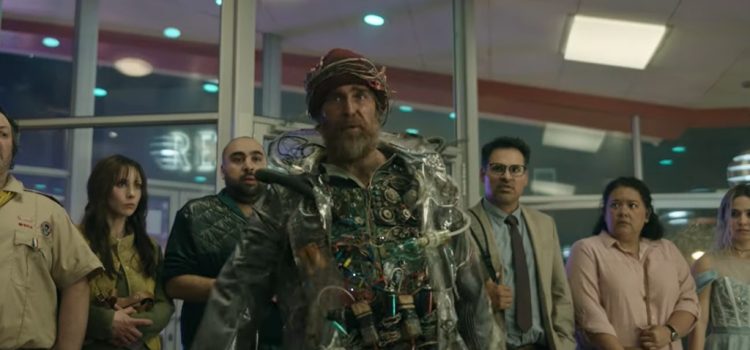
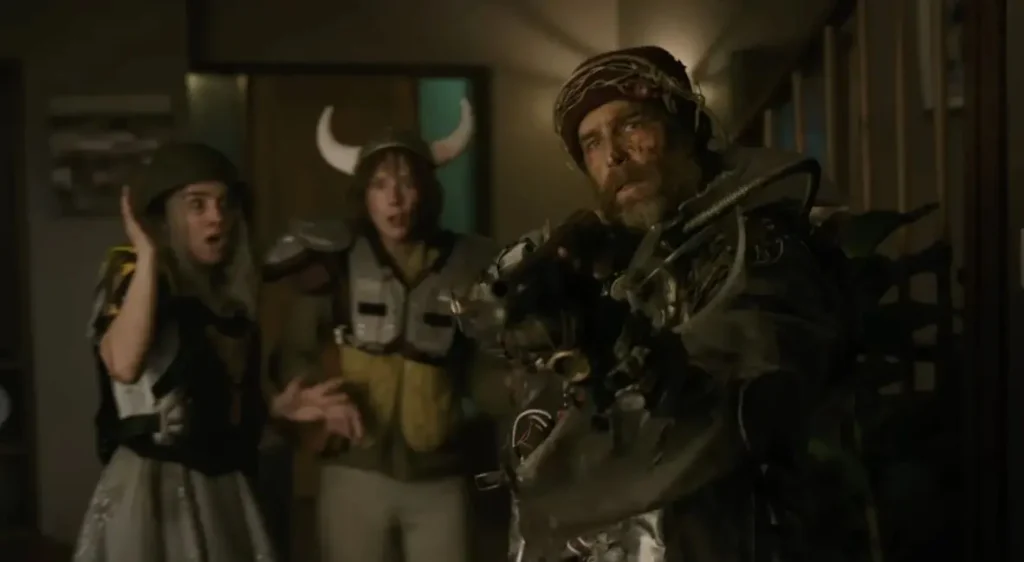
We open with an extended sequence featuring a disheveled, sardonic Man From the Future (Sam Rockwell) bursting into Norm’s Diner in Los Angeles in search of people to join him on an epic quest to prevent the AI apocalypse. He claims to have a bomb strapped beneath his transparent raincoat and launches into a speech about how technology has ruined modern life, insisting that time is of the absolute essence.
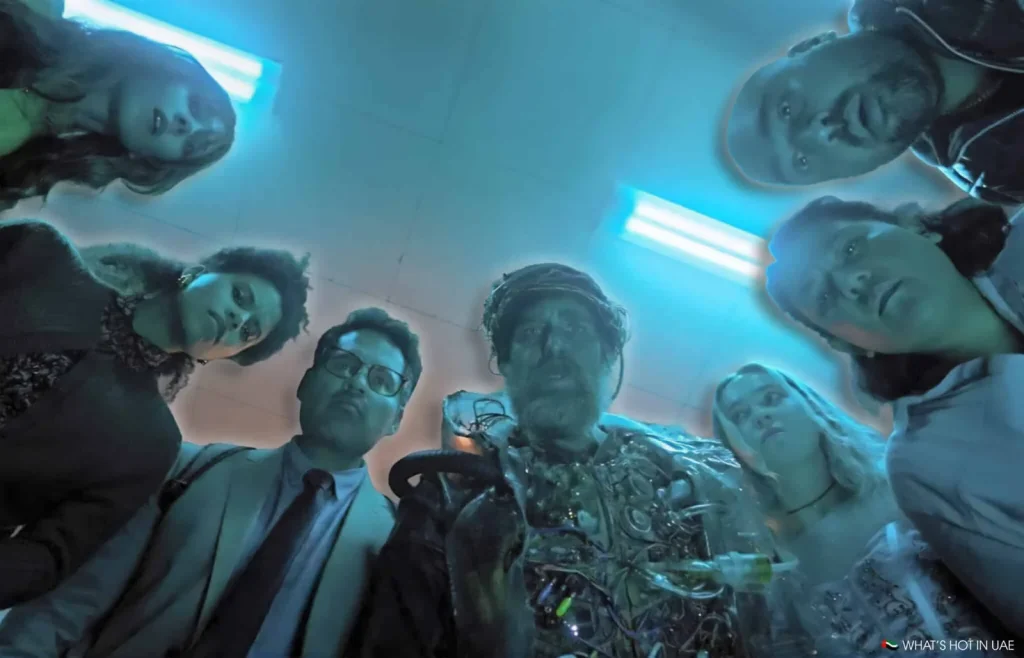
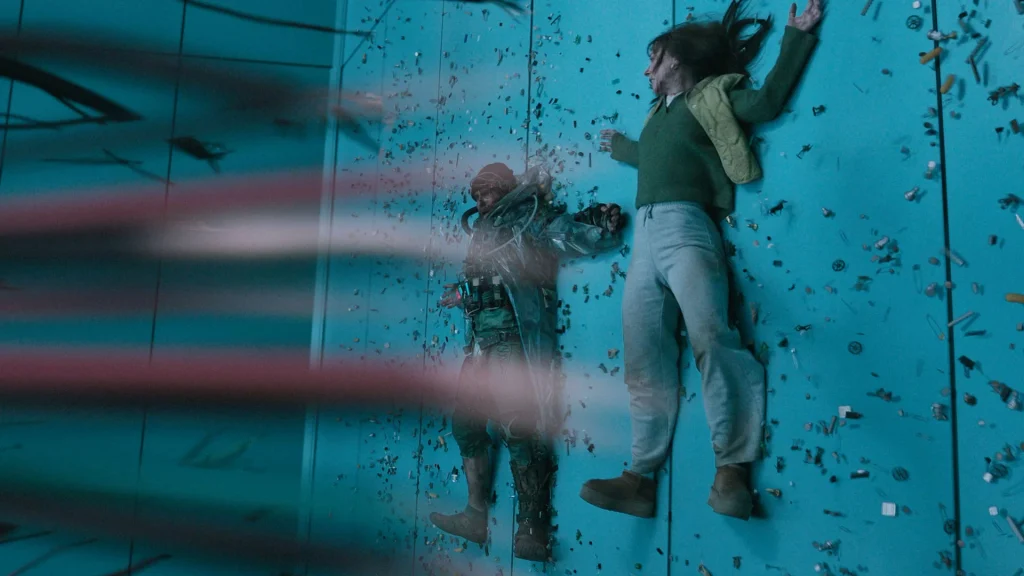
This isn’t the Man’s first rodeo, though; it’s actually his 117th attempt with this same batch of disbelieving patrons. All of his previous 116 attempts have ended in death for everyone involved (except him), with the Man “resetting” and trying to find the right combination of people necessary to complete his mission. This time could be different, though.
The group the Man pseudo-forces to participate includes Mark (Michael Peña) and Janet (Zazie Beetz), a couple going through a rough patch who recently started new jobs as high school teachers. They are increasingly disturbed by their students’ obsession with their smartphones and cynical detachment from the outside world, even during a school shooting, which is treated like “just another day.”
There’s also Susan (Juno Temple), a mother who lost her son in that same shooting and whose grief is brushed away — there is, as a squad of local mothers tells her, a company that specializes in creating clones of children who died in school shootings. Yikes.
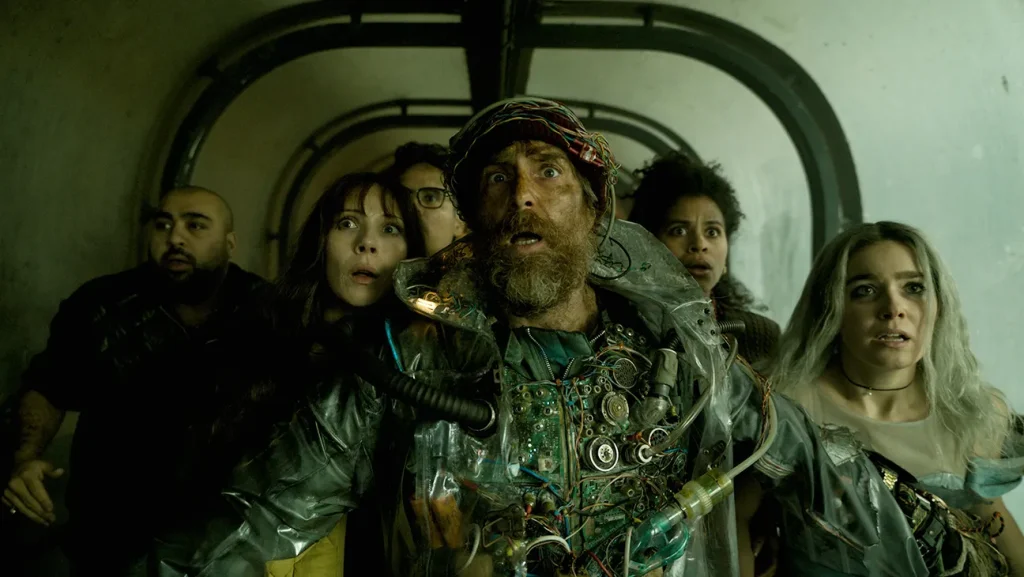
There’s Ingrid (Haley Lu Richardson), a severely depressed woman wearing an off-brand Disney princess costume who is literally allergic to Wi-Fi and smartphones. Along with a few other people who aren’t given much meaningful character development, the Man and his team embark on an increasingly loony journey.
Mixing madcap sci-fi action with a decidedly nihilistic streak, “Good Luck, Have Fun, Don’t Die” is alternately amusing and exhausting over its 135-minute runtime. For all of Verbinski and screenwriter Matthew Robinson’s sharp thoughts on our technological hellscape (did you see how many SuperBowl ads were about AI?), there’s a shakiness to the film that draws you in and subsequently pushes you away.
The film mines plentiful deadpan humor from the populace’s matter-of-fact reactions, whether it be judgy, entitled high schoolers glued to their phones, or Susan’s newly-cloned kid who is “ad-supported,” all while nobody is taking action to turn things around.
Even so, the film can’t decide between championing these idiosyncratic, reluctant heroes and reveling in the tech-addicted nastiness that surrounds them. Poignant moments are offset by edgelord, shock-value humor that is deeply proud of itself and leaves a cold aftertaste.
Rockwell is the perfect choice to play this snarky antihero. He’s goofy and sometimes callous but strong in his convictions, with an increasing desperation creeping in as he nears closer to finally stopping the horrors of an AI-controlled future.
The rest of the cast aren’t anywhere near as dynamic to watch as Rockwell, but they get the job done, effectively emphasizing their feelings of displacement with an environment that refuses to recognize their empathy and, indeed, their humanity.
Verbinski and Robinson take ample time to provide backstory for the “core group,” structured in “Black Mirror” -esque flashbacks that periodically break up the immediate action of the Man and co. escaping from Norm’s and venturing to their next objectives.
This vignette structure works well enough (albeit padding the runtime to an excessive degree), and helps illuminate the personal costs of living in this reality that’s not all that dissimilar from our own. Less impactful are the labyrinthine multiversal shenanigans that arise in the finale, difficult to follow and messy in a decidedly hand-made way.
“Good Luck, Have Fun, Don’t Die,” then, is a rickety experience that’s still impossible to discount. Verbinski and Robinson take rightful aim at the devices and companies that are hijacking our attention and transforming us into passive, homogenous consumers rather than informed people with agency over our own lives.
The crafts, too, are noteworthy, especially James Whitaker’s energetic cinematography and a techno score by Geoff Zanelli that pulses with rambunctious life.
Verbinski and Robinson are clearly interested in sounding a 5-alarm fire about doing something now rather than waiting until all hope is lost. The messiness of living in the real world, the film says, is worth fighting for, even when the digital one offers an illusion of safety and happiness.
There’s definitely merit to that message in 2026, although “Good Luck, Have Fun, Don’t Die” is ultimately a mildly entertaining, pitch-black yell at the Cloud.
“Good Luck, Don’t Die, Have Fun” is a 2025 sci-fi action-adventure horror comedy directed by Gore Verbinski and starring Sam Rockwell, Juno Temple, Haley Lu Richardson, Michael Pena, Zazie Beetz, Georgia Goodman, and Asim Chaudhry. It is rated R for pervasive language, violence, some grisly images and brief sexual content and runs 2 hours, 14 minutes. Opens in theatres Feb. 13. Alex’s Grade: B-.
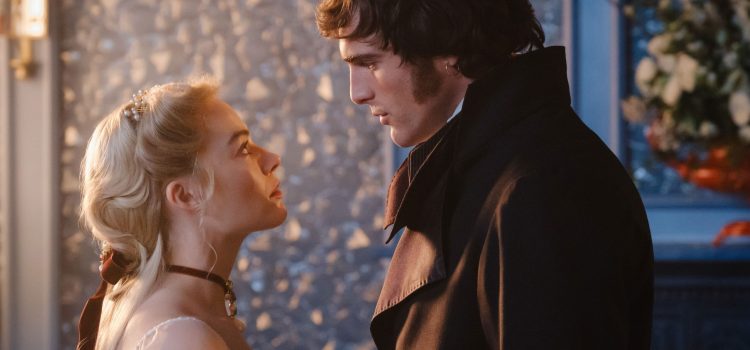
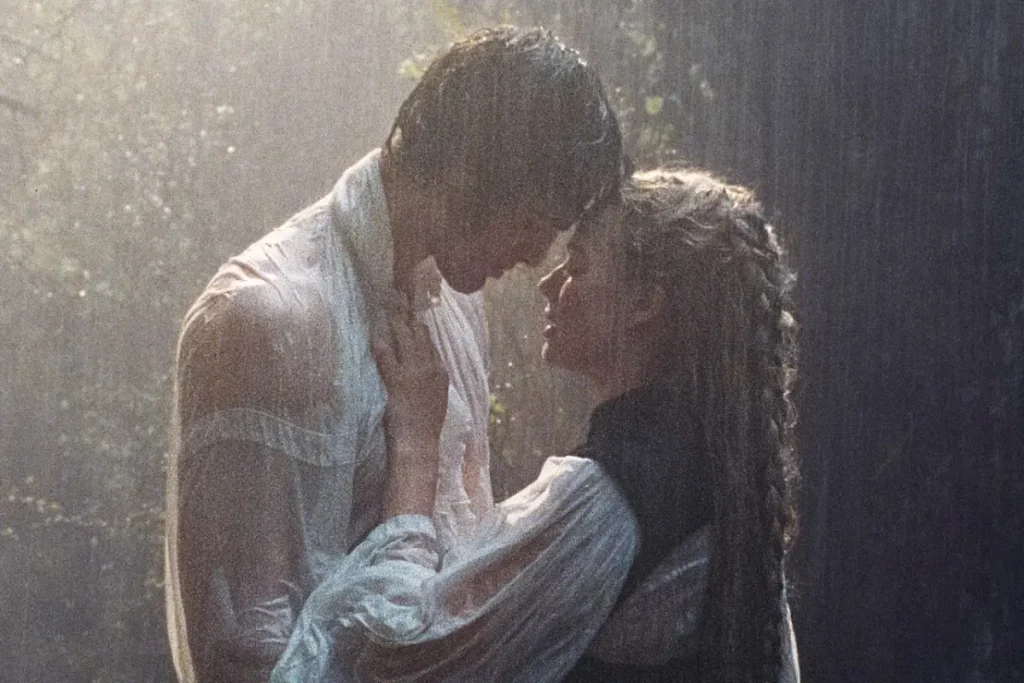
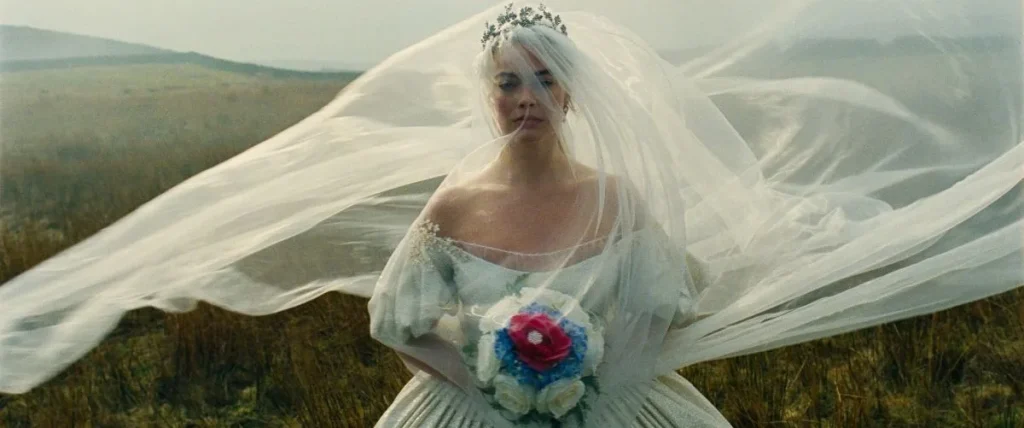
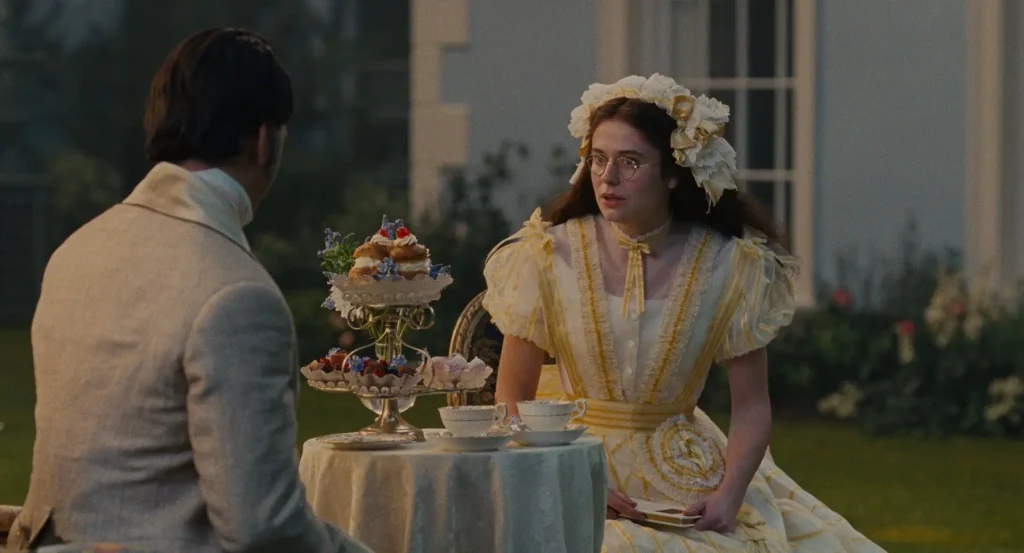
Visually stunning but emotionally empty, “Wuthering Heights” is an abomination for fans of the classic gothic romance, a disservice to Emily Bronte’s dark source material about eternal love, longing, hurtful pride and ruthless revenge.
The 1847 novel took place on the harsh Yorkshire moors. The impoverished, abused Heathcliff, adopted into the affluent Earnshaw family around 1771, works manual labor, and forges a special bond with the privileged, petulant Catherine.
However, writer-director Emerald Fennell claims it’s not an adaptation, but a bold and sexy interpretation of how the book made her feel when she read it at age 14. Maybe she could have changed the title to avoid less-than-flattering comparisons?
Fennell’s spin is edgy excess as she favors kinky bodice-ripping sexual compulsion over the book’s spiritual obsession that lingers long after reading. The emotional heft that the novel delivered for 180 years is lacking,
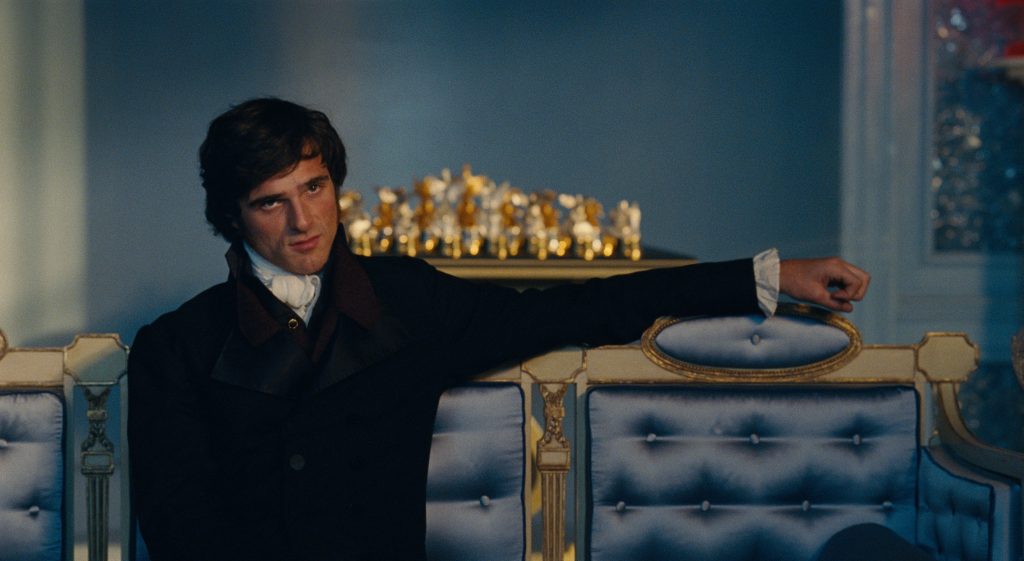
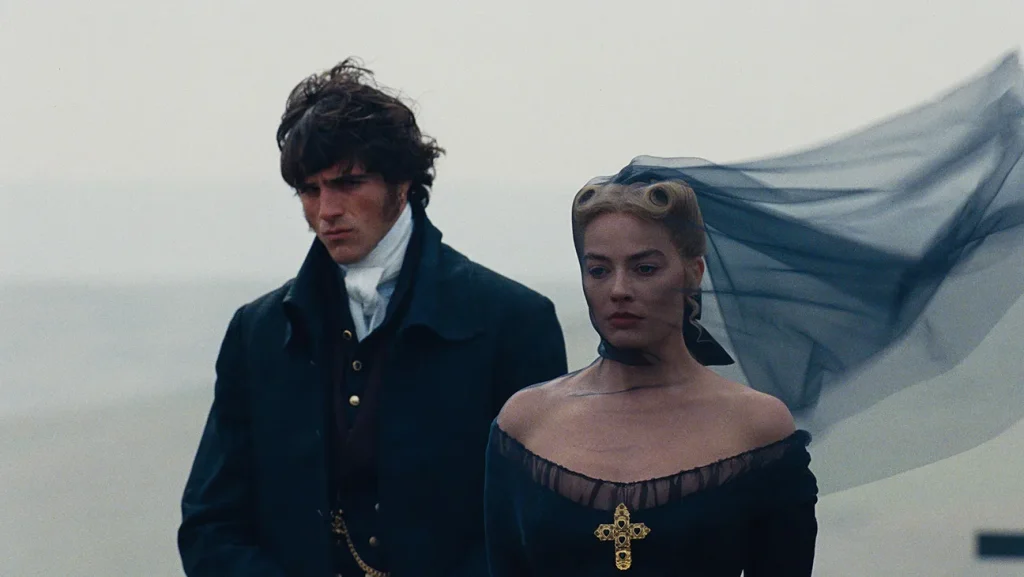
Australians Margot Robbie and Jacob Elordi are pretty people who are magnetic on screen and talented Oscar-nominated actors.
Although Robbie, at 35, is too old for her character, and Elordi’s modern casting is controversial because he’s not a person of color, they display a spark as the doomed lovers — refined, selfish Catherine and rough, tormented Heathcliff.
In this salacious version, the heavy lifting required for such complicated characters in what would be considered a toxic and manipulative relationship in today’s world isn’t important.
Treated as an outcast, Heathcliff is described by Bronte as a “dark-skinned gypsy in aspect” and “dirty, ragged, black-haired,” so speculation that he was black or brown-skinned continues.
Playing the young roles, Brits Owen Cooper (Emmy winner for “Adolescence”) and Charlotte Mellington, excel at establishing the characters’ demeanors.
In previous screen portrayals of grown-up Heathcliff – Laurence Olivier in 1939, Timothy Dalton in 1970, and Ralph Fiennes in 1992, with Richard Burton in a 90-minute DuPont Show of the Month in 1958 and Tom Hardy in a two-part series on Masterpiece Theatre in 2009 — all were white.
Only one – James Howson, a black actor, portrayed the brooding anti-hero in a 2011 film by director Andrea Arnold. So, the debate continues.
The tone is troubling too – Elordi is never savage or a brute to Robbie, and she’s not nearly as wild as the book depicts Cathy. Their relationship, so-called “forbidden,” was thwarted because of societal constraints in the Victorian Era.
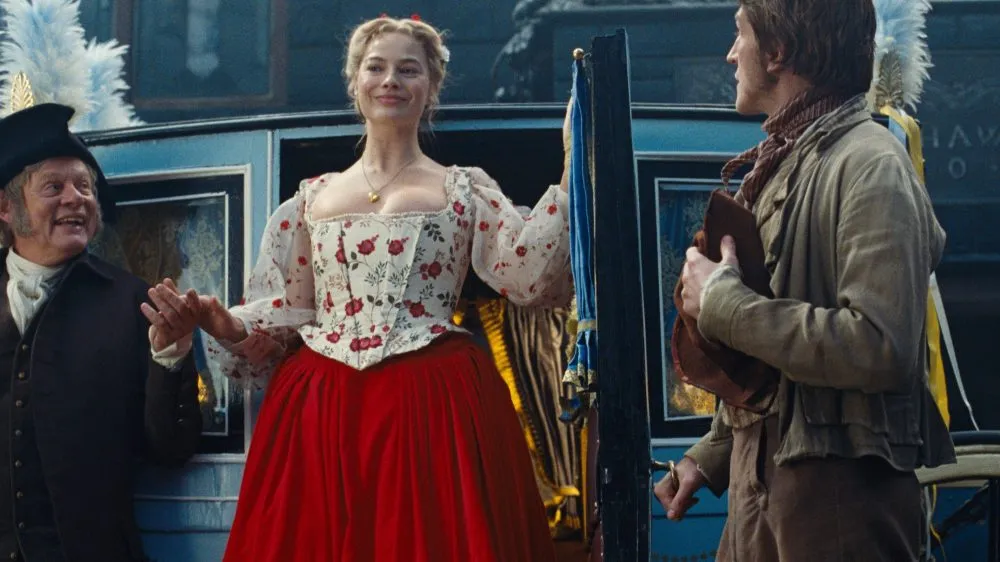
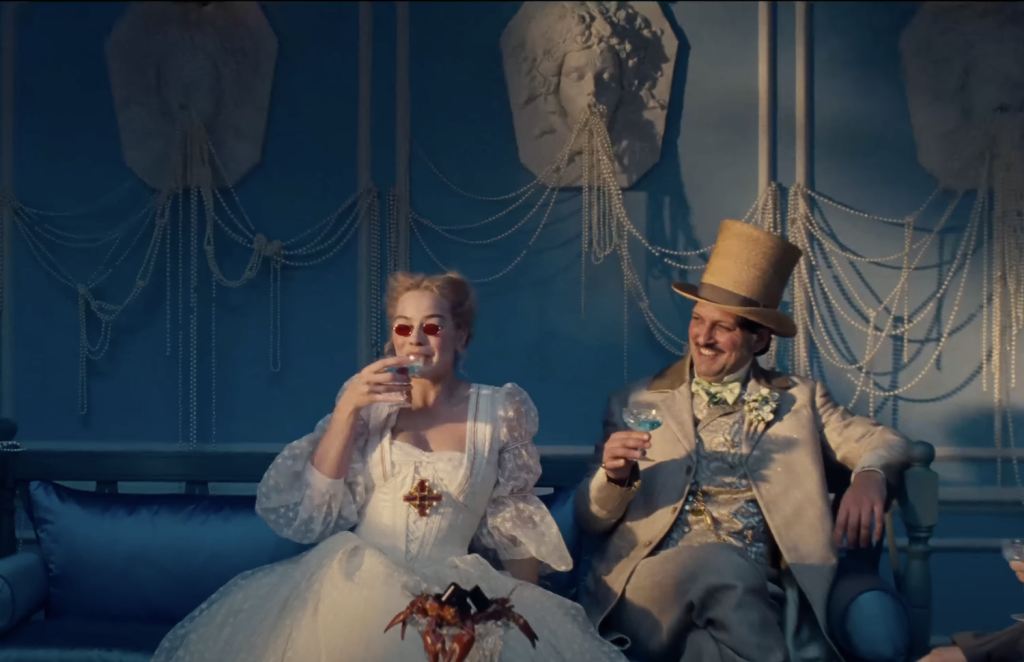
Fennell gussied up the look with ready-for-influencers’ glossiness that is distracting and merely decorative — and at times, not period-appropriate.
The shiny surface spotlights the crafts over substance, foregoing the book’s deeper meaning about twisted, destructive intergenerational consequences because Fennell cut out the second half.
She has reduced this timeless tale to a tedious 2 hours, 16 minutes of fan fiction, with too many scenes reminiscent of 1990s perfume ads, complete with.artsy shadows and peculiar attitudes.
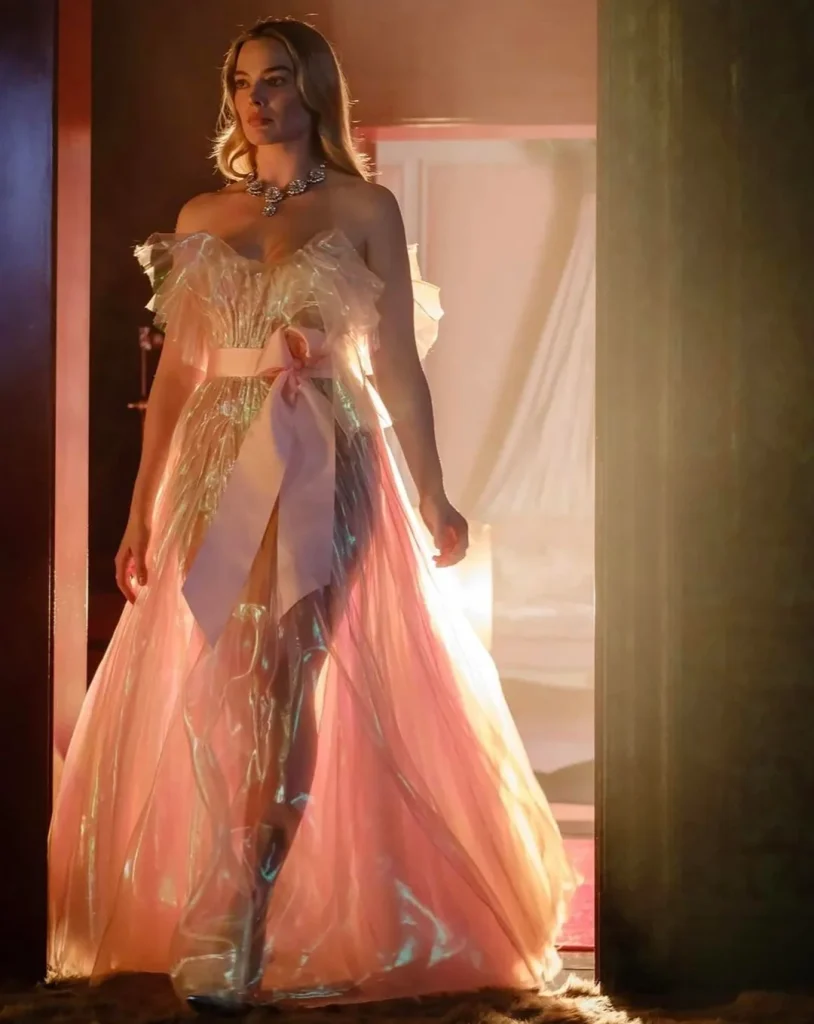
Costume designer Jacqueline Durran goes increasingly over-the-top with Catherine’s opulent, outlandish outfits – including an iridescent cellophane dress accented with a large pink bow, as if she’s a gift for her new husband. How meta!
She and production designer Suzie Davis get carried away with a color palette emphasizing red and pink. An odd collection of leeches on the wall of Catherine’s palatial dainty pink-and-freckled bedroom is a ridiculous misuse of the era’s medical customs.
Oscar-winning cinematographer Linus Sandgren (“La La Land”) emphasizes unrelenting weather elements to convey the windy, rainy and foggy conditions of the rugged moors, employing impressionistic lighting and sweeping long takes to heighten the gritty geographic-specific realism.
When Cathy marries aristocratic Edgar Linton (Shazad Latif) of neighboring estate Thrushcross Grange for financial stability, as her gambling drunkard father (Martin Clunes) has frittered away their fortune, a devastated Heathcliff feels betrayed and leaves, only to come back five years later a rich man.
After he buys Wuthering Heights, Heathcliff later seeks revenge on everyone who has wronged him (although the film misses the mark here by not continuing that storyline). As soulmates, he and Catherine maintain an intense and tumultuous relationship, more sexually explicit here than the 18th-century book.
Spitefully, he marries Edgar’s sheltered, child-like sister Isabella (a terrific Alison Oliver). This sadistic-masochistic relationship is the film’s most troubling insertion, next to the shocking hanging scene that opens the film as a sexually arousing public event (things you can’t unsee).
Known for her provocative, twisted takes on relationships (“Promising Young Woman,” “Saltburn”), Fennell has established herself as someone with a fresh, unique vision. In this strange misfire, the mood is more important than the message, and her tinkering has cut out some crucial characters or revised them in ways that don’t make sense.
She eliminated Catherine’s bully brother Hindley, who was cruel to Heathcliff while the dad was kind, changed the parents’ narratives, and dropped the second half of the book, among other puzzlers.
Therefore, characters aren’t haunted by the tragic past, and the supernatural elements aren’t brought up. That’s a huge part of this story. Fennell didn’t want to go the distance, and because of that, the character development is scattered.
Fennell has made Nelly Dean, the maid who is more of a Heathcliff ally in the book, the villain here, and is slyly played by the superb Oscar-nominated actress Hong Chau as someone wounded and lashing out (Mrs. Danvers, anyone?). It’s another confusing element.
In her Oscar-winning screenplay for “Promising Young Woman,” Fennell presented an original view on gender disparity, and “Saltburn” was an intriguing class clash, a twisty take on “The Talented Mr. Ripley,” both ramping up shocks and dropping jaws — effective contemporary pieces that kickstarted conversations (and brisk business for the novelty candle “Jacob Elordi’s Bathwater”).
The frenzy/firestorm continues here with a polarizing work, but this time it’s rooted in a beloved book. Does the original intent come through for the uninitiated, who aren’t familiar with the star-crossed lovers’ tragedy that continues to fascinate?
What will be the lasting impressions? It seems disposable, save for.bizarre images of dog collars, messy broken eggs, mountains of gin bottles, scarred flesh, pig’s blood, voyeurism, eccentric dolls, and lots of ribbons.
To add to its surreal aesthetic, Charli XCX, a pop star known for her synth-electro beats, has created a modern techno soundtrack.
In its favor, Fennell kept some of the most revered quotes in: “Whatever our souls are made of, his and mine are the same,” “I cannot live without my life! I cannot live without my soul!” and “I have not broken your heart—you have broken it; and in breaking it, you have broken mine.”
If an adaptation – say Baz Luhrmann’s “Romeo + Juliet” and “The Great Gatsby” — brings a dynamic energy to the moral complexities of a moment in time – then we can accept the changes, but when one ignores the psychology in favor of spectacle, it’s merely a parade of ‘strike-a-pose’ cosplay scenes.
Call me a romantic traditionalist, but this ‘loosely based’ adaptation is cringy, turgid, unnecessary and interminable.
“Wuthering Heights” is a 2026 period drama romance directed by Emerald Fennell and starring Margot Robbie, Jacob Elordi, Hong Chau, Shazad Latif, Alison Oliver, Martin Clunes, Owen Cooper and Charlotte Mellington. It is rated R for sexual content, some violent content and language and runs 2 hours, 16 minutes. It opens in theaters Feb. 13. Lynn’s Grade: D.
A science fiction action-adventure horror comedy are many genres to cram into one anti-artificial intelligence film, but Sam Rockwell’s bonkers’ performance makes “Good Luck, Have Fun, Don’t Die” an interesting commentary for our time.
Rockwell plays a “Man from the Future” who walks into Norm’s Diner in Los Angeles to recruit patrons to join him on a one-night quest to save the world from the terminal threat of a rogue artificial intelligence.
Disheveled and wearing a clear plastic raincoat, he alarmed diners who think he’s crazy and he flings their phones around and warns of an upcoming apocalypse. Whoa.
The unnerving snarky satire by Matthew Robinson gives Rockwell the ball to slam-dunk, and his trademark fast-talking, high-energy goofiness is worth paying attention to as he cautions earthlings to put down their phones and focus on what is happening in the world.
As the “Man from the Future,” the eccentric Rockwell screams to a diner patron: “Progress is only progress if it makes things better! Otherwise, it’s a mistake!” and this is the film’s theme – that the human cost of technology obsession and unbridled AI will be loss of connection and mental health.
At what price are we willing to sacrifice what makes us human? People whose existential dread is fueled by society’s inability to shut off screens for any length of time may experience more anxiety about perpetual distraction ruining everything.
And it’s not subtle at all. This chaotic cautionary tale gets real about school shootings and teachers’ inability to educate rude, sarcastic and apathetic teenagers in unhinged scenarios.
Director Gore Verbinski is not afraid to take risks, for he’s made “The Ring,” the original trilogy of “The Pirates of the Caribbean” and the Oscar-winning animated film “Rango.” After a 10-year break, he’s back with his quirky visual style and maintains a manic pace, even though the message’s momentum eventually wanes.
A series of backstories on characters that Rockwell’s enlists “to save society” gives strong actors like Michael Pena (Mark), and Zazie Beetz (Janet) as teachers, Haley Lu Richardson (Ingrid) as a birthday party princess, Juno Temple (Susan) as a grieving mother, Georgia Goodman (Marie), and Asim Chaudhry (Scott) as a ride-share driver an opportunity to craft distinct personalities, but they aren’t given much time to develop any depth.
The lack of explanation on character behaviors and situations ultimately hurts the film’s reception, as does the unrelenting frenzy and the overall bleak attitude. The jokes stop being funny.
Composer Geoff Zanelli, production designer David Brisbin and costume designer Neil McClean all brought their A-game to this strange, trippy production that bears closer resemblance to a cocktail of “Terminator 3: Rise of the Machines,” “Alice in Wonderland,” “The Creator,” “The Mitchells vs. The Machines,” and “The Wizard of Oz” as the film unfolds.
Messy but relevant, and overlong at 2 hours, 14 minutes, “Good Luck, Have Fun, Don’t Die” is well-meaning about brain rot and hive minds, and benefits from a bizzaro star turn by Rockwell.
The Oscar-winning actor thrives on weirdness, and he merrily goes down Verbinski’s virtual reality rabbit hole. The director takes big swings that become visual overload as the clock runs out, but the point of view is original.
“Good Luck, Have Fun, Don’t Die” is a fidget spinner for our time, and forces us to pay attention.
“Good Luck, Don’t Die, Have Fun” is a 2025 sci-fi action-adventure horror comedy directed by Gore Verbinski and starring Sam Rockwell, Juno Temple, Haley Lu Richardson, Michael Pena, Zazie Beetz, Georgia Goodman, and Asim Chaudhry. It is rated R for pervasive language, violence, some grisly images and brief sexual content and runs 2 hours, 14 minutes. Opens in theatres Feb. 13. Lynn’s Grade: B.
Fans of whodunits who’ve never seen Ira Levin’s clever tale of murder and betrayal should have a good time in the cozy confines of Tower Grove Abbey as “Deathtrap” unfolds with its scathing wit and intricate surprises.
Ira Levin, author of “Rosemary’s Baby” and “The Stepford Wives,” knows his way around a suspenseful shocker, and his 1978 play “Deathtrap” holds the record for longest running comedy thriller on Broadway.
It ran for more than four years — 1,793 performances, which is a remarkable accomplishment. Fun fact: It was Victor Garber’s first major role on Broadway (as Clifford). A film adaptation starring Michael Caine and Christopher Reeve followed in 1982. Its only revival was in London’s West End in 2010 that featured Simon Russell Beale and Jonathan Groff.
Besides its ingenious construction, the dark comedy is also highly theatrical, peppered with artistic merit in-jokes and catty remarks about show business, talent and success – plus snarky gossip on friends and neighbors in upscale Westport, Conn. (The lead’s favorite play is “Angel Street,” which is a sly nod to the film “Gaslight.” Chew on that).
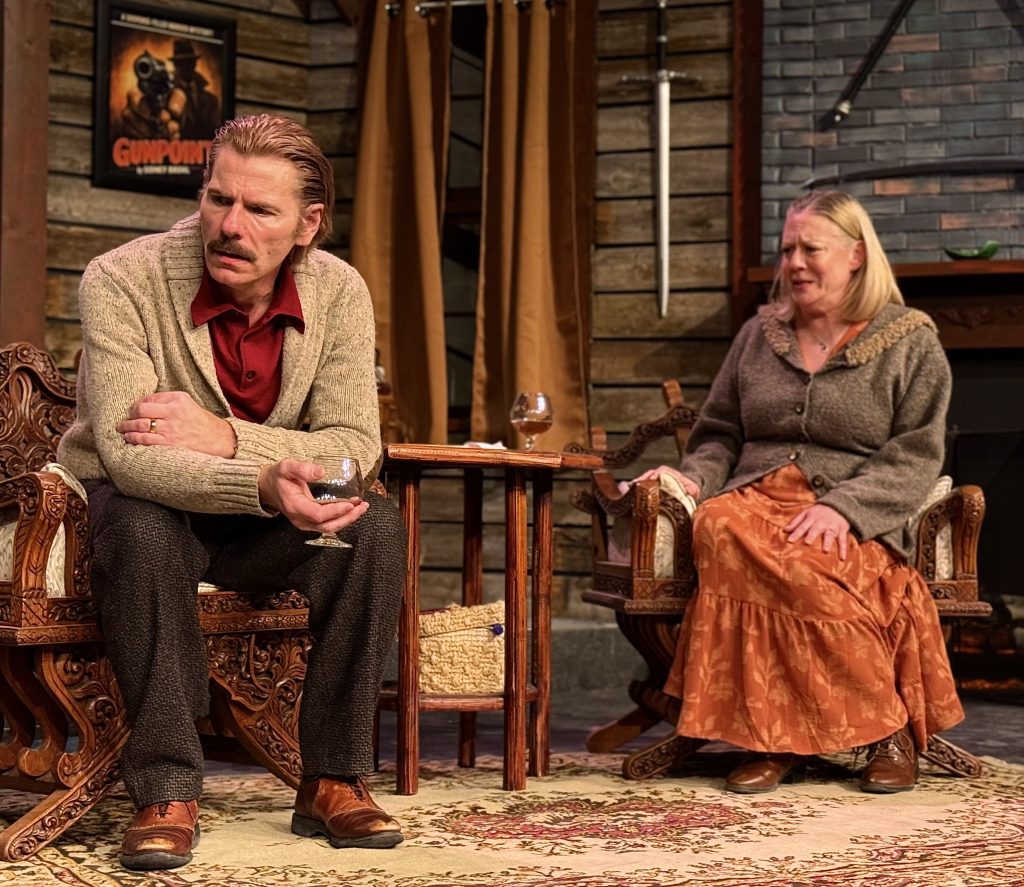
Stephen Peirick and Anne Vega as the Bruhls. Photo by Stray Dog Theatre.
Sidney Bruhl (Stephen Peirick), a once successful playwright, hasn’t had a hit in a long time. He reads a play by Clifford Anderson (Victor Mendez), a former student at one of his writing seminars, and tells his wife Myra (Anne Vega) about how envious he is of this young inexperienced man’s craft. He predicts “Deathtrap” will be a sure-fire hit and make Anderson very rich.
Casually, he jokes about a ‘what if” scenario – he could get away with murder if he timed it just right and then claimed the work as his own. His sleuthing skills could hatch a foolproof crime.
Myra, naturally, is horrified. He laughs at his audacity, but is he really showing his devious nature? Let’s just say the plot thickens and evil lurks.
Covering his tracks, Sidney lures the talented pupil to his country home, and they dissect writing mechanics, particularly when plotting mysteries. Sidney is a condescending mentor to Clifford’s boyish hero worship.
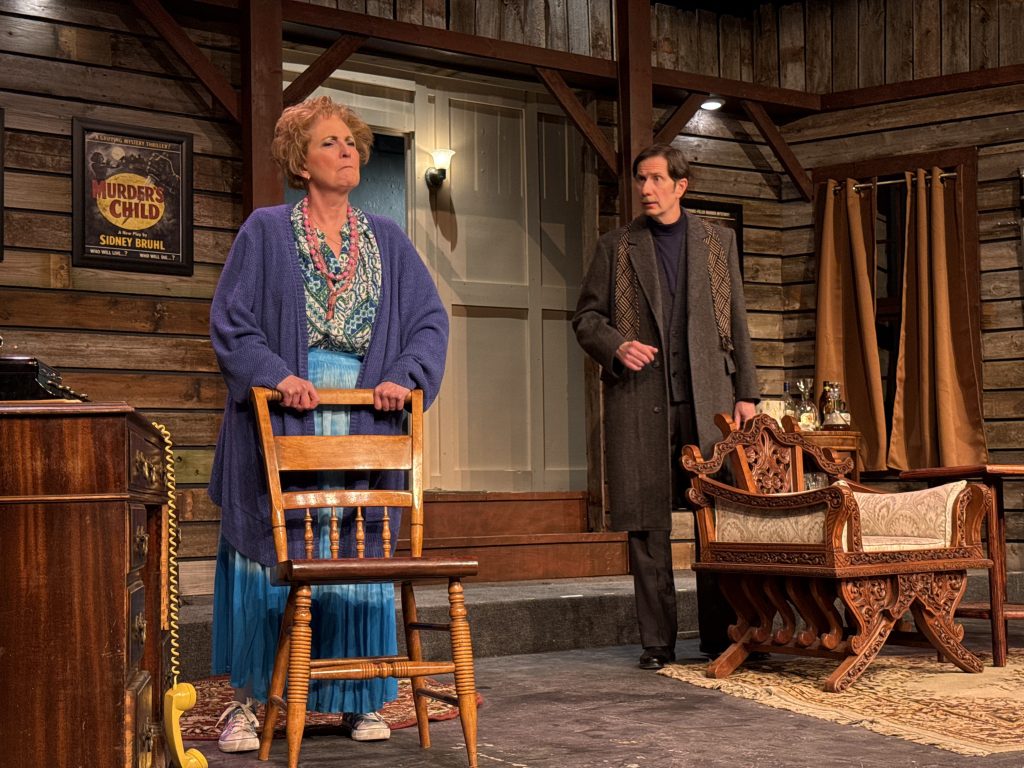
In small but integral supporting roles, Liz Mischel is a psychic neighbor Helga ten Dorp and David Wassilak is attorney friend Porter Milgrim.
Liz Mischel and David Wassilak as psychic neighbor and attorney friend. Photo by Stray Dog Theatre.
The only way this plot works in the 21st century is to keep the setting in the past — where people still use typewriters, carbon paper and landlines, without any digital accessories. So, a few of the cultural references are dated, but don’t detract. Levin has thrown in a dark and stormy night for good measure.
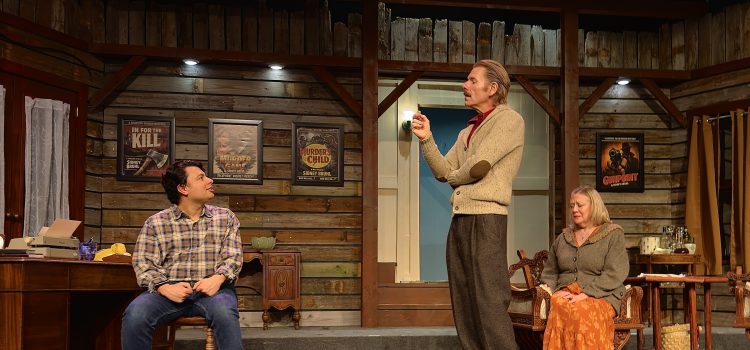
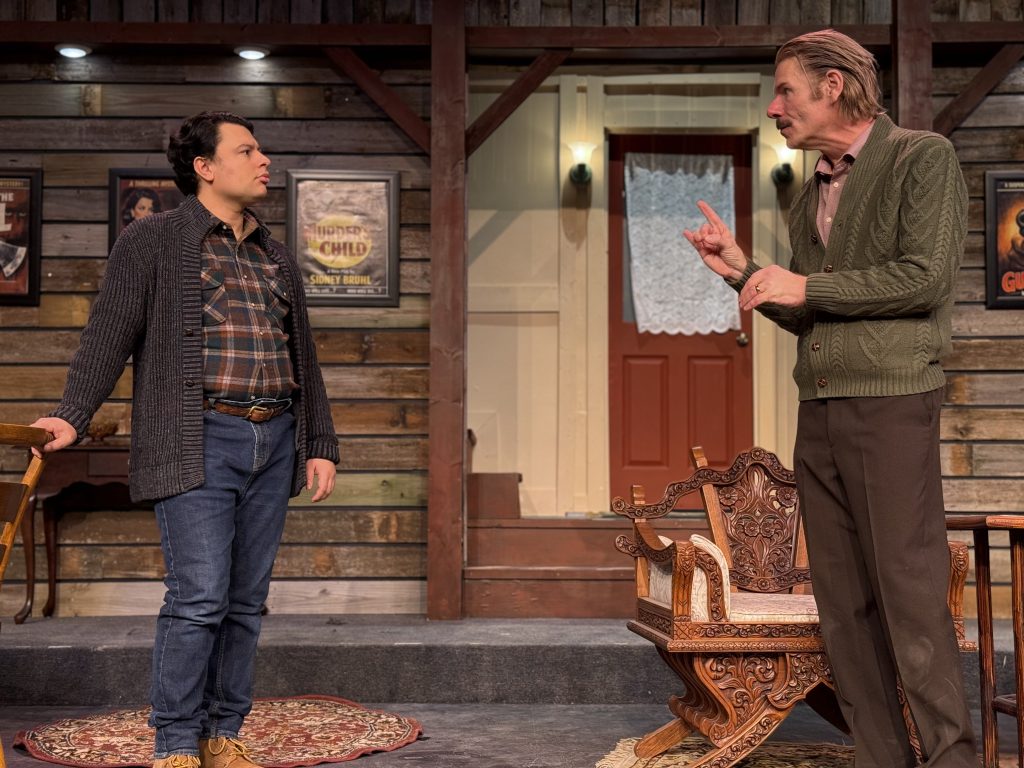
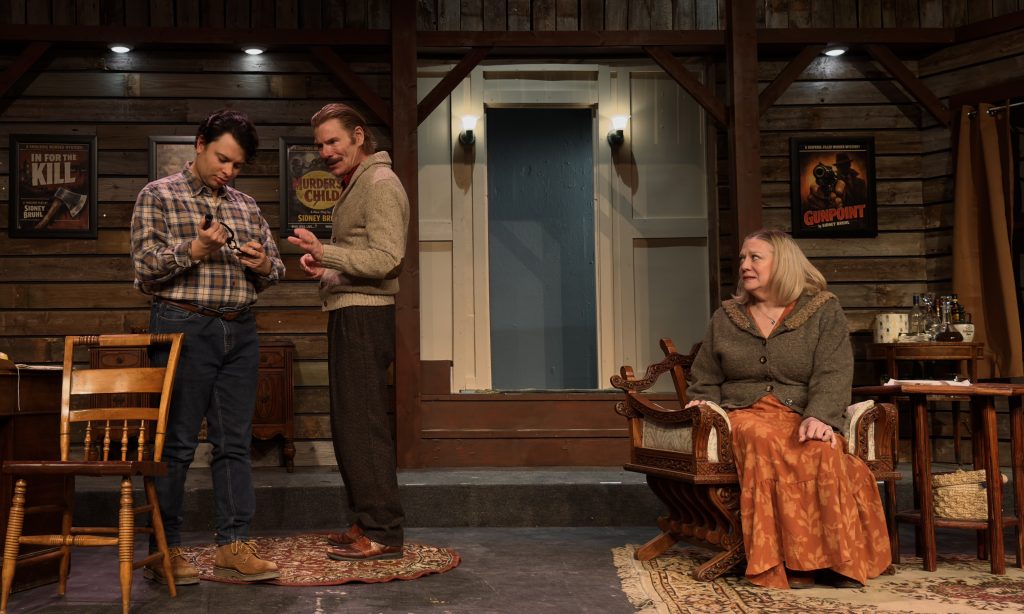
The technical elements are superb, providing an unsettling atmosphere for the disturbing behavior about to happen. Rob Lippert’s striking scenic design makes the bad vibes come alive — a rustic study renovated from a stable, with framed theatrical ‘window cards’ that are Bruhl’s greatest hits and reflect classic film noir posters.
A prominent display of antique weapons, a collection of props from his hit shows, includes gruesome pieces that look like from “Games of Thrones” and the board game Clue — guns, axes, swords, knives, crossbow, club, morning star and handcuffs.
Tyler Duenow’s lighting design is effective and precisely timed while Justin Been’s sound design adds another layer of eeriness. He’s always spot-on with his music interlude choices.
VIctor Mendez as Clifford Anderson and Peirick. Photo by Stray Dog Theatre.
While the mood changes, the characters are one-dimensional, so the performers are one-note, and that makes investing in their welfare difficult. Peirick, a dedicated all-in leading man, is the insufferable blowhard Sidney.
The pompous playwright is written as the smartest guy in the room and never lets you forget it, but he is supposed to have some charm, although it’s not apparent on stage. Peirick exaggerates his dialogue while pontificating on writing and human behavior to such an extent that the affectation is stretched out, affecting the show’s pace.
As Clifford, Mendez depicts earnestness but isn’t as convincing when his deception becomes apparent. And that façade needs to slowly crumble, from eager to underhanded.
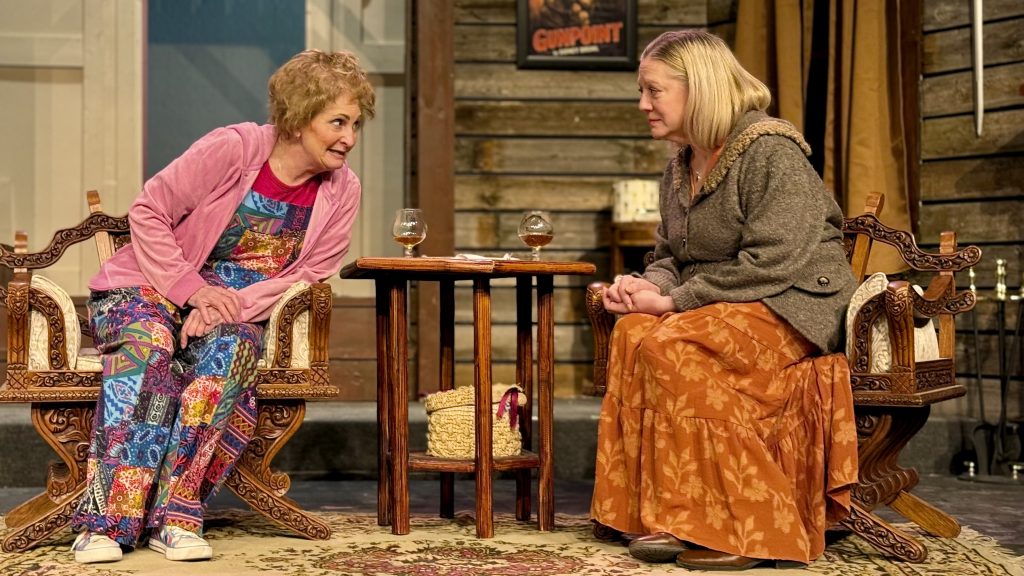
While loving and supportive, Myra is described as sophisticated and upper-class but Vega, despite showing her sweetness, is dressed frumpily. Vega is the show’s conscience and projects that well.
Liz Mischel and Anne Vega. Photo by Stray Dog Theatre.
Mischel is ideally suited as the flamboyant psychic with an elaborate Dutch accent and a colorful wardrobe, because the over-the-top character wants to always pull focus to her. Think Madame Arcati in “Blithe Spirit.”
Wassilak is his customary professional self as Sidney’s shrewd attorney and Westport, Conn. friend.
The tangled web indicates people are never what they seem to be, some more conniving than others. And there are enough developments to keep everyone guessing through two acts.
Director Gary F. Bell uses shadows and light to punctuate this very smart murder mystery, and his crisp execution of the twists and turns is noteworthy, steadily building tension.
Yet craft is everything in this 48-year-old chestnut, because the designs are as important as the shocks.
Mendez, Peirick and Vega. Photo by Stray Dog Theatre.
For those of us who’ve seen it multiple times, you anticipate the turns so you see the cracks, and it’s no longer as fascinating, but for newbies, it’s a huge crowd-pleaser. Murmurs went through the audience when key revelations happened.
The genre piece may not have aged as well as say an Agatha Christie ‘s “The Mousetrap” or Anthony Shaffer’s “Sleuth,” but as an examination of the seven deadly sins through a modern human nature lens, remains entertaining.
Stray Dog Theatre presents “Deathtrap” Feb. 5-21, Thursdays through Saturdays at 8 p.m. and Sundays Feb. 8 and 15 only at 2 p.m. Performances take place at Tower Grove Abbey, 2336 Tennessee in Tower Grove East. For more information: www.straydogtheatre.org.
This production contains the use of replica weapons and firearms, loud noises, and flashing lights. The play is nearly 3 hours in length, with one 10-minute intermission.
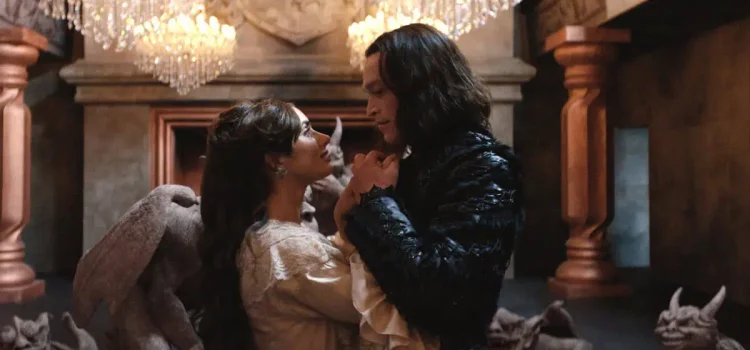
By Lynn Venhaus Maybe you think that if you’ve seen one Dracula movie, you’ve seen them all, “Nosferatu” and other spin-offs included? Quite the contrary, with this latest take on the classic vampire story more focused on gothic romance and less on gory horror.
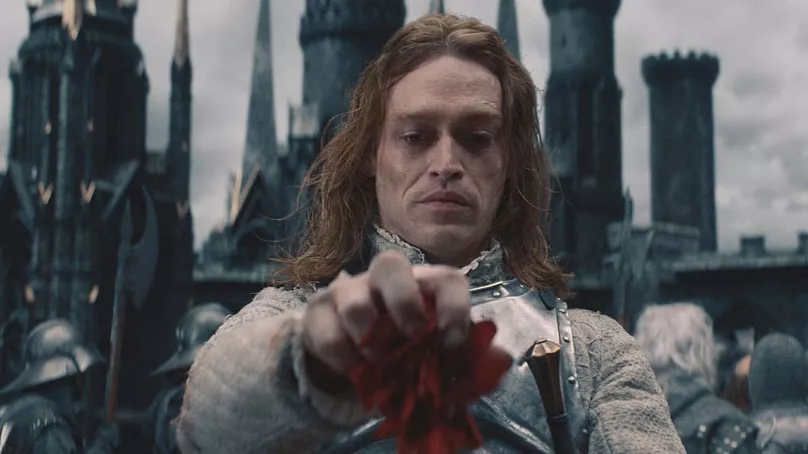
But of course, there will be blood — and heads roll. What a mysterious revision Luc Besson’s “Dracula” is, taking concepts from Bram Stoker’s 1897 novel but going in multiple overwrought directions instead.
The director, known for such global action hits as “Leon: The Professional” and “La Femme Nikita,” not to mention producing the “Taken” and “Transporter” franchises, created an unusual scenario, although extravagant battle scenes bookend the film with mayhem.
Besson’s visual flair, as noted in his films “The Fifth Element” and “Valerian and the City of a Thousand Planets,” is the film’s strongest suit, stylistically framing the traditional story with grandeur – namely, the opulent production design by Hugues Tissandier and lavish period costumes by Corinne Bruand.
As screenwriter, he took a major creative license. The result is a strange brew of folklore, desire, silliness and gargoyles come to life. Dracula’s quest is to find his lost love, for he’s miserable and melancholic without his adored wife, who was slaughtered in front of him.
After all, he’s been mourning for four centuries. It’s unclear how he expects to find her – another freshly minted vampire, resurrected or reincarnated? But a stronger emotional core is what Besson attempted. Danny Elfman added both bombast and urgency to his lush film score.
Originally called “Dracula: A Love Tale,” the ambitious reinvention freely mimicked the kitschy melodrama that made the cult soap opera “Dark Shadows” so irresistible in the late 1960s.
But Besson, who took this project very seriously, created a philosophical Vlad as he roamed the earth, inventing a fragrance to be his calling card for seduction. So, is he a perfume designer too?
Because of that twist, powdered and porcelain-skinned heavy-breathing socialites can’t resist him in exotic continental locations.
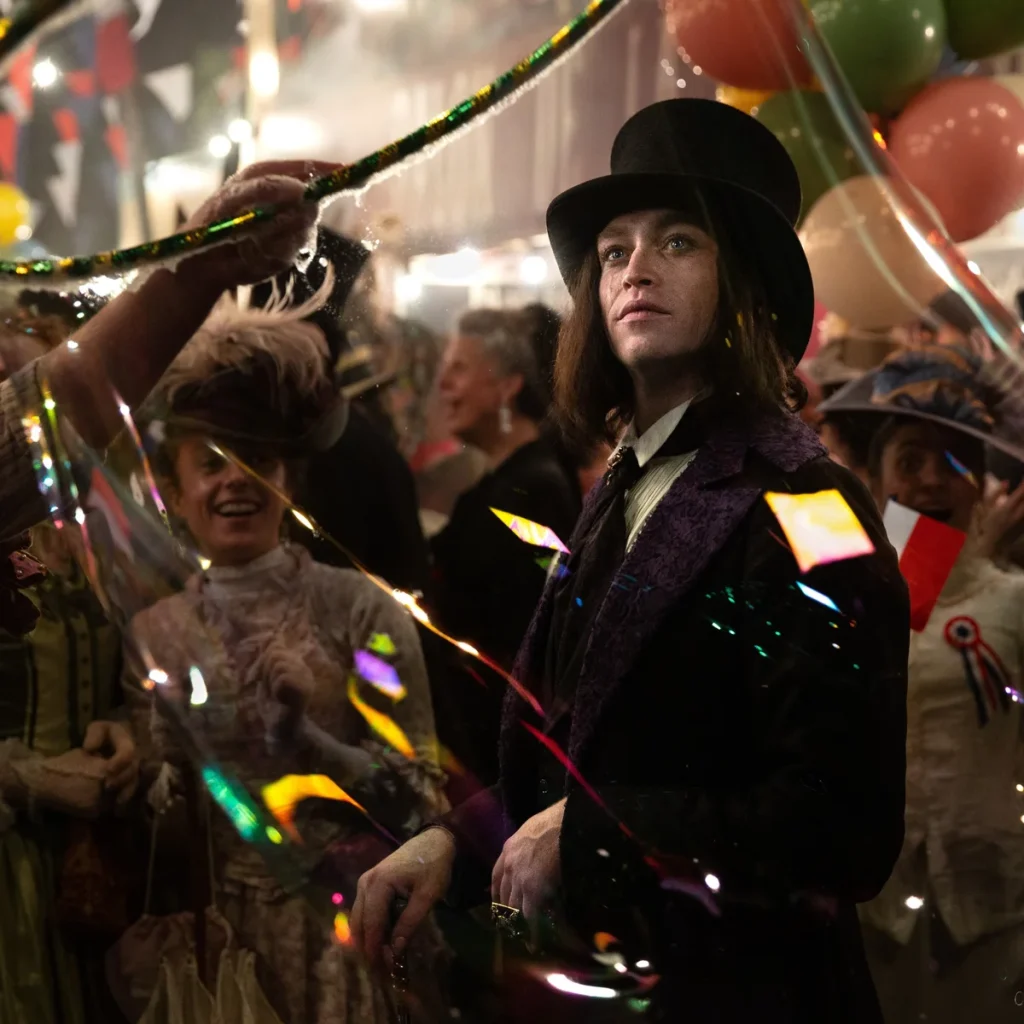
Caleb Landry Jones is an intriguing Prince of Darkness. The character actor known for playing Banshee in “X-Men: First Class,” as Red in “Three Billboards Outside Ebbing, Missouri” and an Armitage in “Get Out,” leaned into the flamboyance and the mannered speech in a gravelly whisper as he doubled-down on the lovesick nobleman.
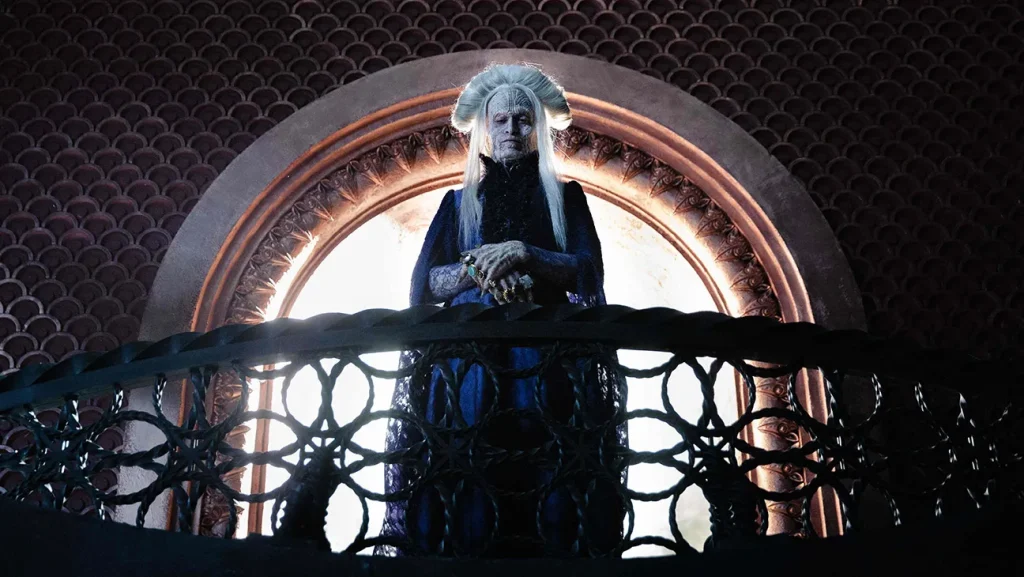
His version varied from the iconic portrayals by Gary Oldman, Christopher Lee and Bela Lugosi to make the role his own. He transformed into many looks, from Middle Ages armor to high-society top hats, from swaggering royal to grotesque old man.
He and Zoe Bleu, as both Elisabeta and Mina, have a zesty chemistry. Bleu resembles her mother, actress Rosanna Arquette, and is now fourth generation of the famous acting family.
In one of the more bizarre scenes– that prolonged the inevitable – Dracula ravished a nunnery. Those poor unfortunate souls. His obsession is relentless, and as Besson detours, the film gets wackier.
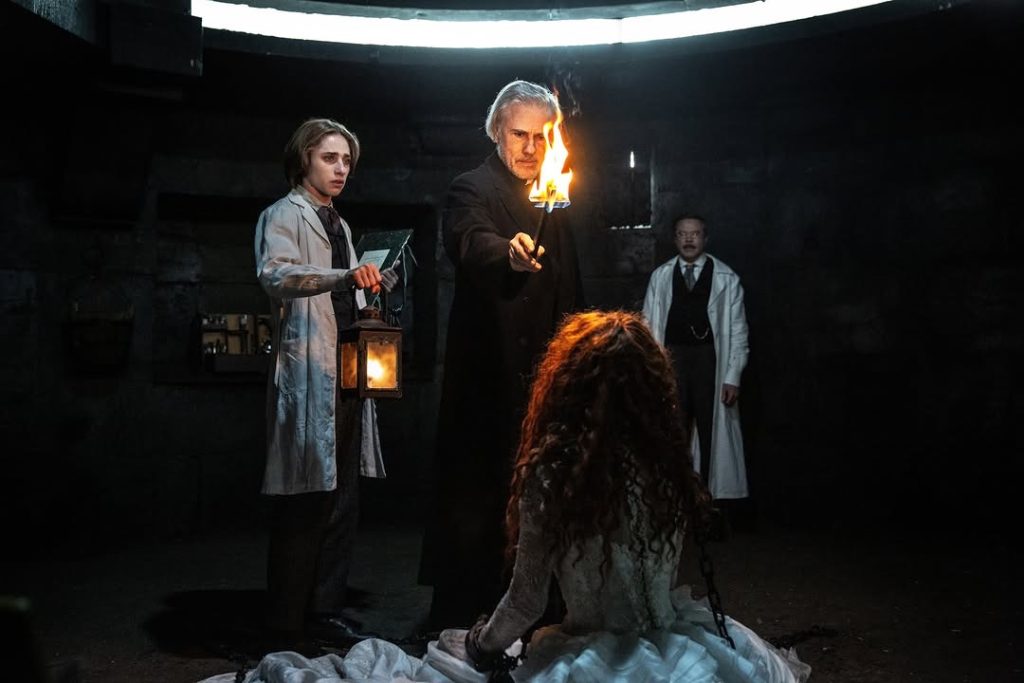
But some key figures remain or are similar to the original. Instead of including vampire slayer Van Helsing, two-time Oscar winner Christoph Waltz played a Vatican-appointed priest. He attempts to save Vlad from damnation. Fresh off his appearance in Guillermo del Toro’s “Frankenstein,” he played the role matter-of-factly.
Ewens Abid is an earnest Jonathan Harkin, a lawyer who visited the count in the castle (and Mina’s fiance). David Sheets is Henry Spencer, whose fiancé Maria (a maniacally giggly Matilda De Angelis), went crazy at their wedding, and he’s still in shock.
Maria was institutionalized at a deeply unsettling insane asylum, and Besson created a disturbing tableau every time we went there, mixing primitive psychology with the supernatural. By now, Dracula looks like the Babadook.
To rid the world of this demon, we have a battle extraordinaire with cannons and animated gargoyles called to duty. (Think the flying monkeys in “The Wizard of Oz.”)
Because we’re accustomed to “What We Do in the Shadows” and the Twilight movies, one wonders how far the mythology can be stretched.
After 2 hours, 9 minutes, it’s time to let him go. There have been around 30 Dracula movies produced, becoming a pop culture staple for 100 years, so where this lands in public opinion, only time will tell. This “Dracula” will go down as a one-of-a-kind, though.
“Dracula” is a 2025 supernatural horror romance written and directed by Luc Besson and starring Caleb Landry Jones, Zoe Bleu, Christoph Waltz, Ewens Abid, David Sheets and Matilda De Angelis. It is rated R for violence, some gore and sexuality, and its run time is 2 hours, 9 minutes. It opens in theatres Feb. 6. Lynn’s Grade: C.
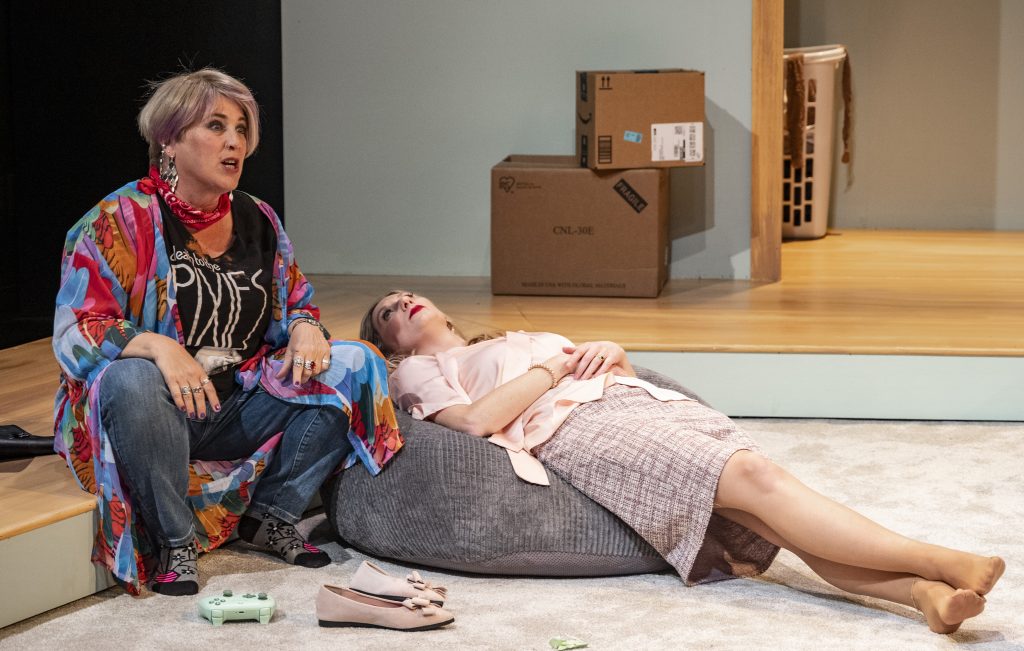
A very special comedy, “Myth of the Ostrich,” is an absolute laugh riot, thanks to the triple treat of actresses who deliver heartfelt and hilarious portrayals of three distinct personalities, aided by the deft direction of Jane Paradise.
In Upstream Theater’s U.S. premiere of Canadian playwright Matt Murray’s playful and poignant story of assumptions, first impressions and flipping broad stereotypes, this Dream Team works smoothly in tandem.
For 90 minutes, the action-packed, chatty narrative is a marvel of physical slapstick, sharp timing, and landing punch lines effortlessly. But it also has something to say about understanding our differences with empathy and forging the unlikeliest connections, which is a timely takeaway.
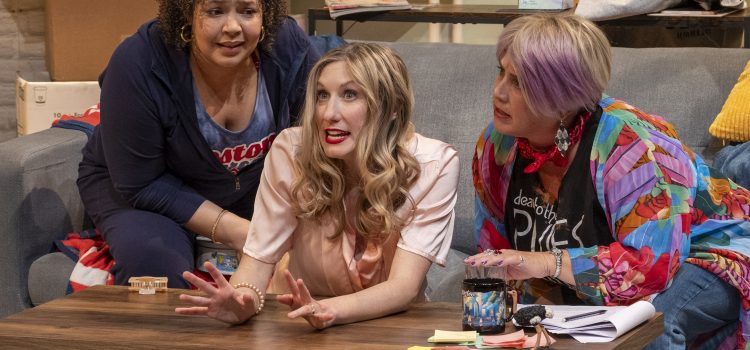
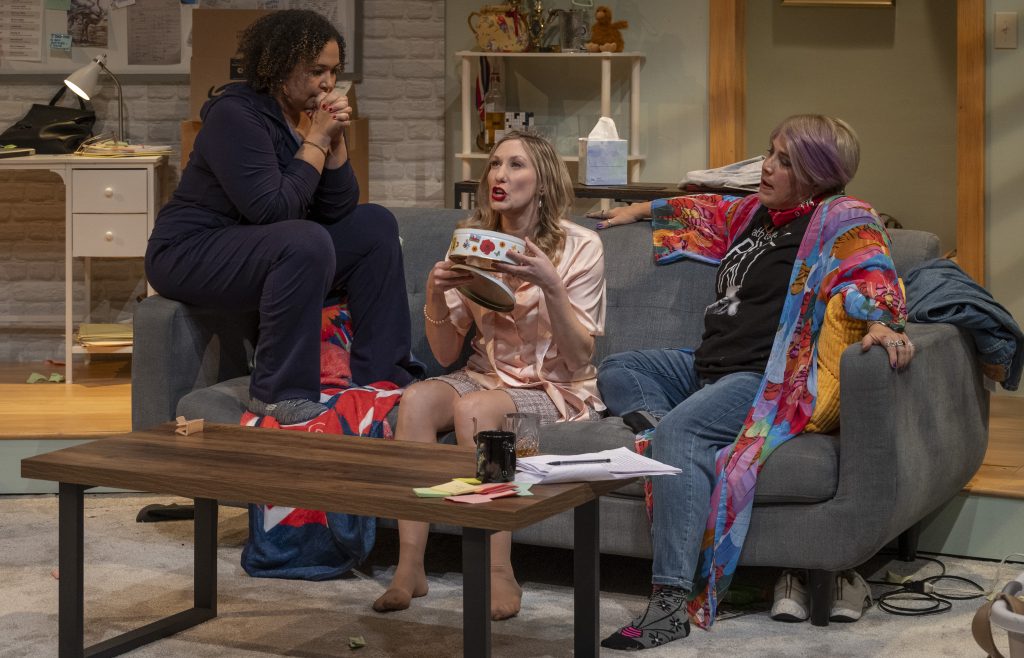
As Holly, a harried single mom writer, Wendy Renee Greenwood is expecting her best friend Cheryl (Pamela Reckamp) to stop by her humble Boston abode. They’re both loud and messy, with Cheryl the more unfiltered and free-spirited, with a typical ‘Southie’ accent, but Holly seems a more level-headed voice of reason, not as impulsive as Cheryl..
Wendy Renee Greenwood and Pamela Reckamp. Photo by Patrick Huber.
Reckamp and Greenwood have an easy chemistry together, appearing naturally as friends who’ve known each other for a long time. They start off with a condescending, flippant tone as they listen to Pam talk about herself. But they’re not caricatures, and that’s a sincere development between these three.
Jennelle Gilreath Owens, who often stands out on local stages, adept at comedy, drama and musicals, is a revelation as Pam, a transplant from a small town in Wisconsin who is a sheltered stay-at-home mom. She nails this character, in her ‘Minnesota Nice’ accent, proper appearance and social grace. She must convey confusion, vulnerability, fear and anxiety while portraying a more relaxed, comical side because of things beyond her control.
Pam comes by unannounced to introduce herself because she found a note her son Evan wrote to Holly’s Jody. She wants to talk about the kids, being teens coming of age, and how they spend so much time together.
Pam and Holly are both good moms, no debating that – they care and are concerned – but they have different approaches. Holly is horrified Pam read the note, thinking that’s intrusive. Pam is feeling out of sorts with the move – her husband took a new job with a law firm – and she’s trying to make sense of her son, who seems more distant.
Pamela Reckamp and Jenelle Gilreath Owens. Photo by Patrick Huber.
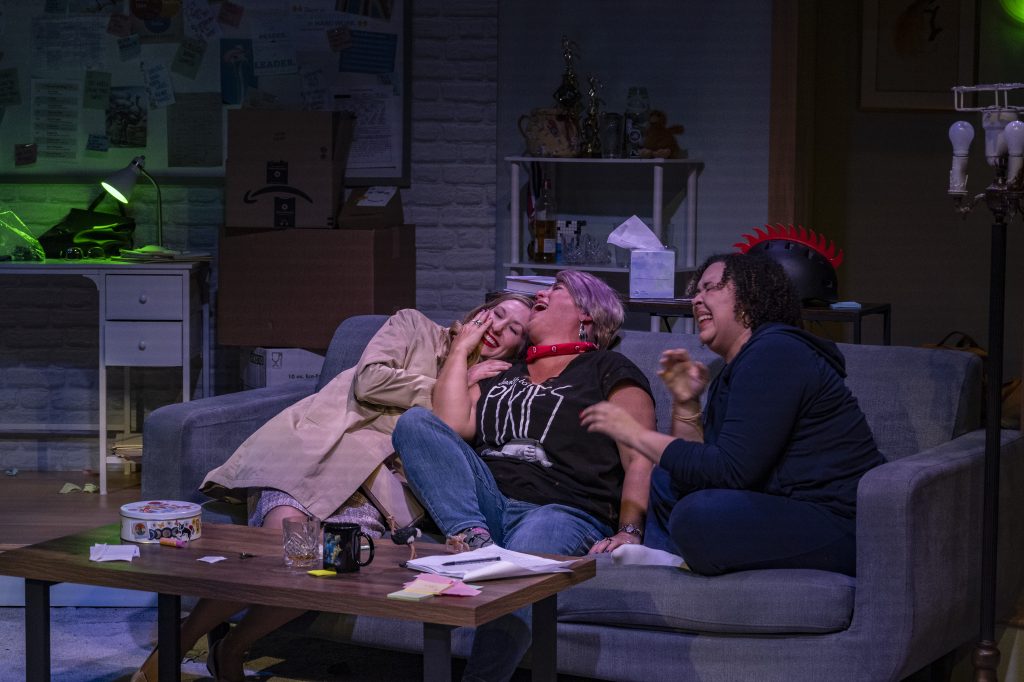
Because of unexpected developments, which is best left as a surprise twist, an afternoon social call turns from polite to raucous for side-splitting laughs. Think Lucy and Ethel plus one, for high-jinks ensue as secrets, lies and tea are spilled.
Murray’s well-constructed script has ebbs and flows, and the discoveries are logical – while the physical element is farce, the dialogue is rich in compassion and wit — and candor. At a time when fear of others is rampant, it’s refreshing to see three very different women learn about each other and overcome prejudice.
Murray’s play, which really deserves more attention from American audiences, was first produced in 2014 at the Toronto Fringe Festival. Grateful to Upstream Artistic Director Philip Boehm for seeing this play at a sold-out performance in Warsaw, Poland, and bringing it here.
During one of the most dismal winters on record, it was a breath of fresh air to be at The Marcelle Theatre Sunday for a sold-out matinee on a day that was below freezing temperatures with a brutal wind chill, warmed by the audience’s gleeful amusement. (After several performances cancelled opening weekend because of heavy snowfall).
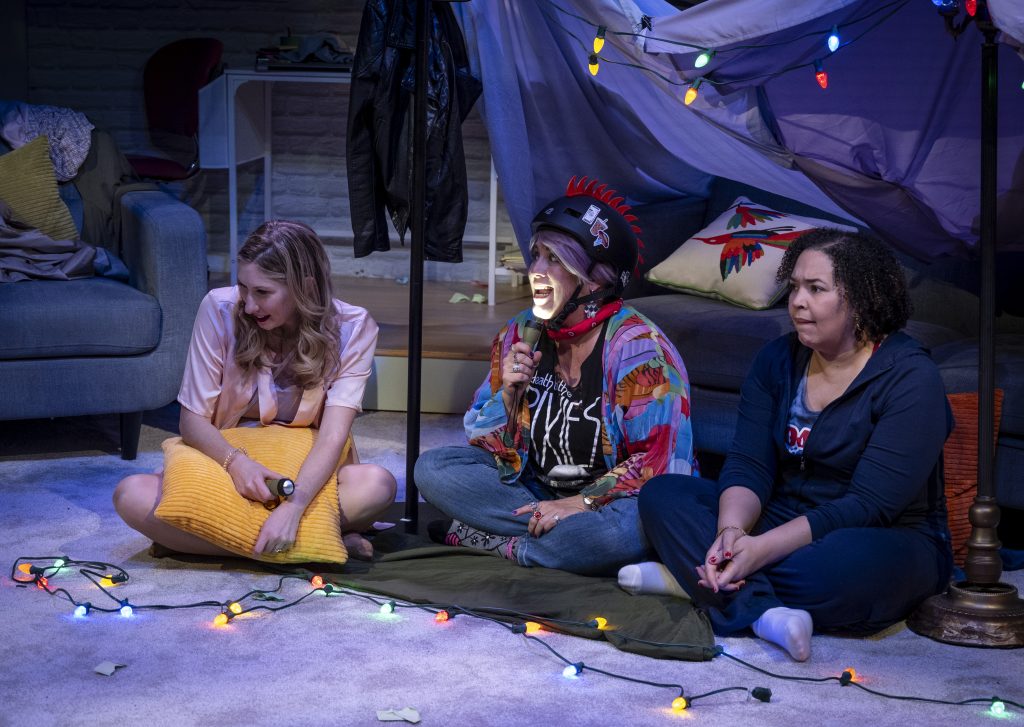
A blanket fort.Photo by Patrick Huber.
The entertaining production is also boosted by expert craftsmen – Denisse Chavez’ always excellent lighting design, Ellie Schwetye’s careful sound design, Michele Friedman Siler’s ideal costume design, and Patrick Huber’s lived-in set design.
The MVP just may be dialect coach Lauren Roth for the actress’ flawless character accents.
The beauty of this play is at first you might not talk to any of these women at the PTA meeting, but after getting to know them, you’d go out for coffee or a beer with them. Come for the laughs, stay for the growth. After all, “Myth of the Ostrich” reminds us that one can’t judge a book by its cover.
And if women who don’t look as put together as another ‘type’ can show you the way, this is a victory for all women and those who follow different beats.
Upstream Theater presents “Myth of the Ostrich” by Canadian playwright Matt Murray, Jan. 29 through Feb. 8. Thursday, Friday and Saturday performances are at 7:30 p.m. and Sunday at 2 p.m. at The Marcelle in Grand Center, 3310 Samuel Shepard Dr. For more information: www.upstreamtheater.org
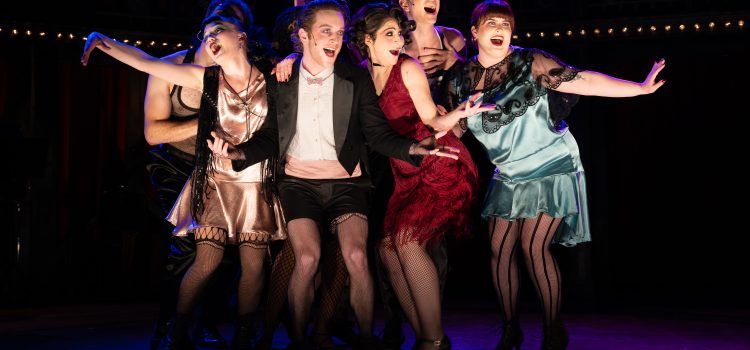
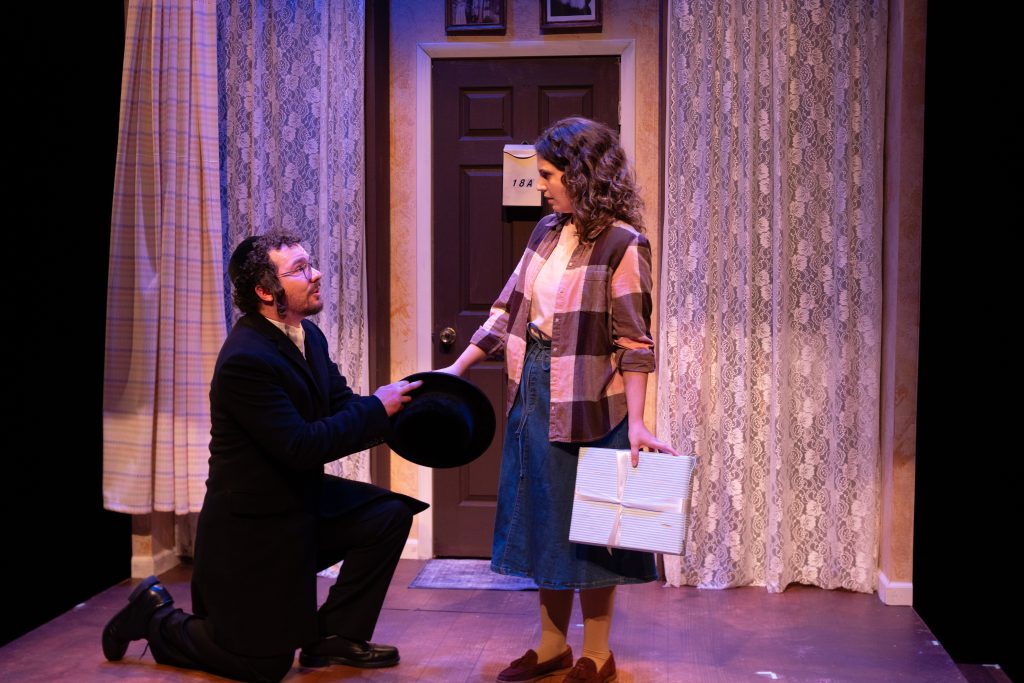
New Jewish Theatre’s ‘Cabaret” tops shows with 13 nominations Event March 23 Will Honor Outstanding Work in Local Professional Theater in 2025
ST. LOUIS, February 3, 2026 – The Repertory Theatre of St. Louis (The Rep), with 38 nominations covering six different productions in the 2025 calendar year, leads the field at the 13th annual St. Louis Theater Circle Awards. “Cabaret,” which was performed by New Jewish Theatre, garnered the most nominations for an individual production with a total of 13. In all, 38 local, professional productions representing 20 theater companies received at least one nomination.
The annual gala will take place on Monday, March 23, 2026, at the Loretto-Hilton Center for the Performing Arts, 130 Edgar Road on the campus of Webster University, home of The Rep.
Tickets at $23 apiece ($20 plus a $3 processing fee) are available at The Rep’s web site www.repstl.org ticket link. https://www.repstl.org/events/detail/st-louis-theatre-circle-awards The Rep’s box office number is 314-968-4925. Tickets will also be available at The Rep’s box office one hour before the ceremony, which will start at 7:30 p.m. Doors will open at 6:30 p.m. for a one-hour ‘Happy Hour,’ with beverages and snacks available for purchase.
Nominees in 34 categories will vie for honors covering comedies, dramas, musicals and operas produced by local professional theater and opera companies in the calendar year 2025. Approximately 87 productions were considered for nominations for this year’s event.
Additionally, there will be three special awards. Opera Theatre of Saint Louis will be honored for 50 years of operatic excellence that have brought the company local, national and international recognition. Wayne Salomon, a founding member of Theatre Project Company, will be recognized with a lifetime achievement award for his contributions to the St. Louis theater community. Bob Trump, head draper of The Rep, who retired in 2025, will be lauded for 40 years of work in The Rep’s costume shop.
The Muny last autumn asked that it not be considered for any nominations for the 2025 calendar year. Reluctantly, the St. Louis Theater Circle has honored The Muny’s request.
The nominees for the 13th annual St. Louis Theater Circle Awards are:
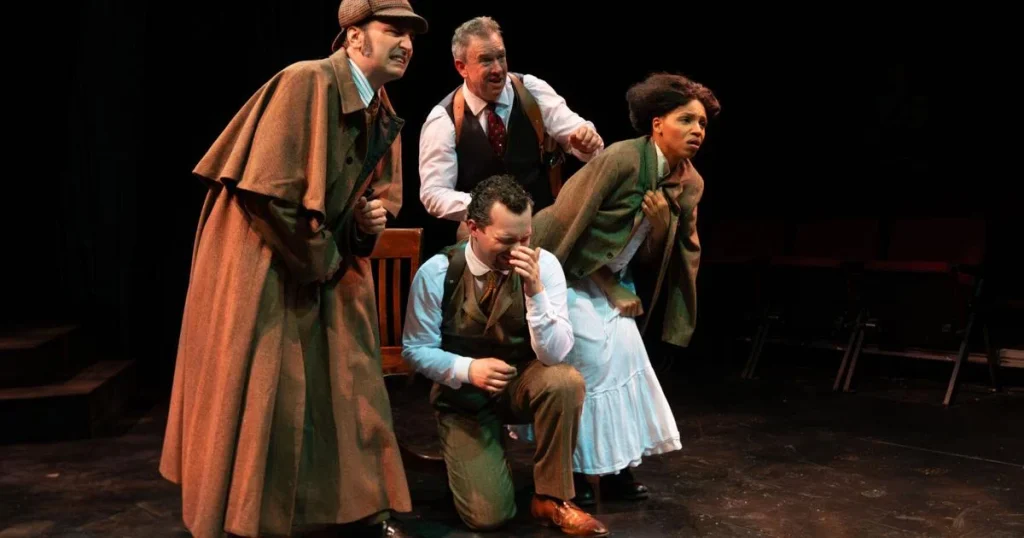
Baskerville. New Jewish. Photo by Jon Gitchoff.
Outstanding Supporting Performer in a Comedy, Female or Non-Binary Role
Nancy Bell, “Emma,” The Repertory Theatre of St. Louis Lindsey Grojean, “The Curious Savage,” Stray Dog Theatre Lize Lewy, “Emma,” The Repertory Theatre of St. Louis Alicia Revé Like, “Ken Ludwig’s Baskerville: A Sherlock Holmes Mystery,” New Jewish Theatre Essence Anisa Tyler, “Clyde’s,” The Repertory Theatre of St. Louis
Outstanding Supporting Performer in a Comedy, Male or Non-Binary Role
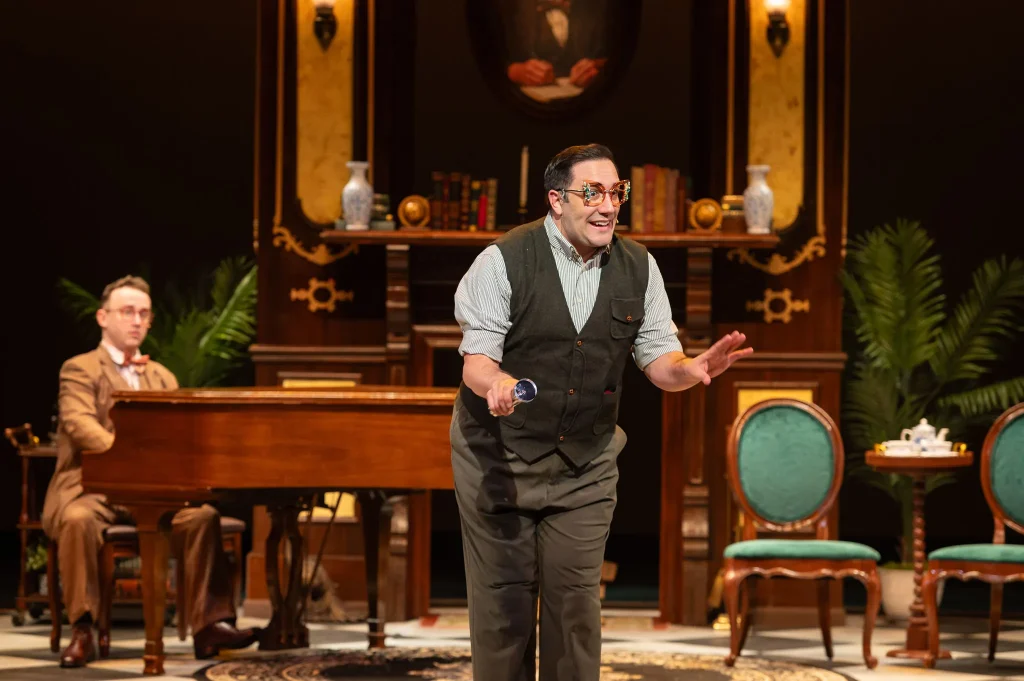
Louis Reyes McWilliams, “Emma,” The Repertory Theatre of St. Louis Michael James Reed, “Ken Ludwig’s Sherwood: The Adventures of Robin Hood,” The Repertory Theatre of St. Louis Jacob Schmidt, “Romeo & Zooliet,” St. Louis Shakespeare Festival Sean C. Seifert, “Ken Ludwig’s Baskerville: A Sherlock Holmes Mystery,” New Jewish Theatre John Wilson, “Ken Ludwig’s Baskerville: A Sherlock Holmes Mystery,” New Jewish Theatre
Outstanding Performer in a Comedy, Female or Non-Binary Role
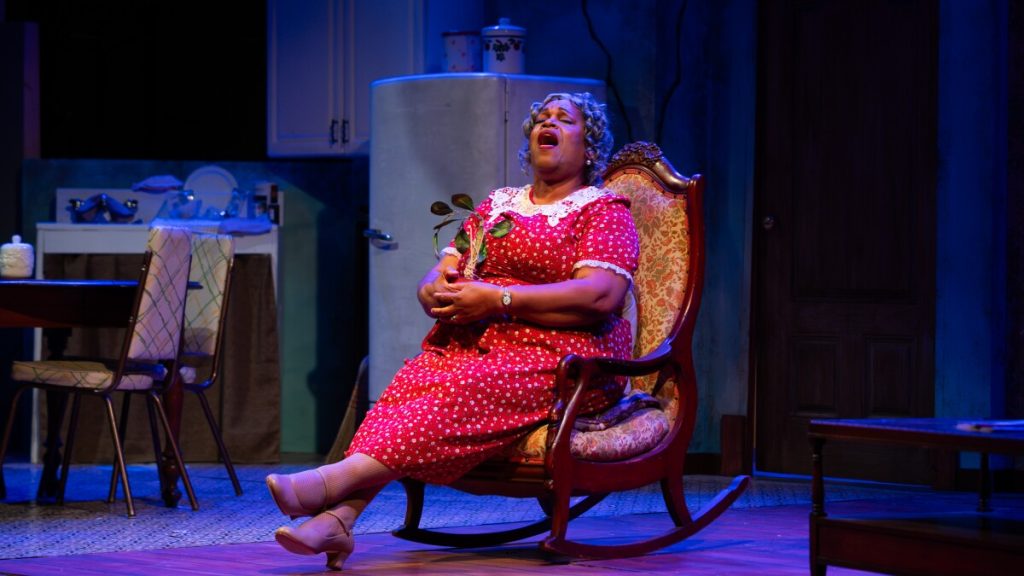
Michelle Hand, “The Search for Signs of Intelligent Life in the Universe,” St. Louis Actors’ Studio Heather Matthews, “The Beauty Queen of Leenane,” Albion Theatre Company Andrea San Miguel, “The Cottage,” The Repertory Theatre of St. Louis Adelin Phelps, “Emma,” The Repertory Theatre of St. Louis Phyllis Yvonne Stickney, “Clyde’s,” The Repertory Theatre of St. Louis
Outstanding Performer in a Comedy, Male or Non-Binary Role
Jordan Coughtry, “The Cottage,” The Repertory Theatre of St. Louis Nick Freed, “The Minutes,” Stray Dog Theatre Gary Glasgow, “Two Jews Walk into a War: A Comedy,” New Jewish Theatre Ron Himes, “Clyde’s,” The Repertory Theatre of St. Louis Bryce A. Miller, “Ken Ludwig’s Baskerville: A Sherlock Holmes Mystery,” New Jewish Theatre
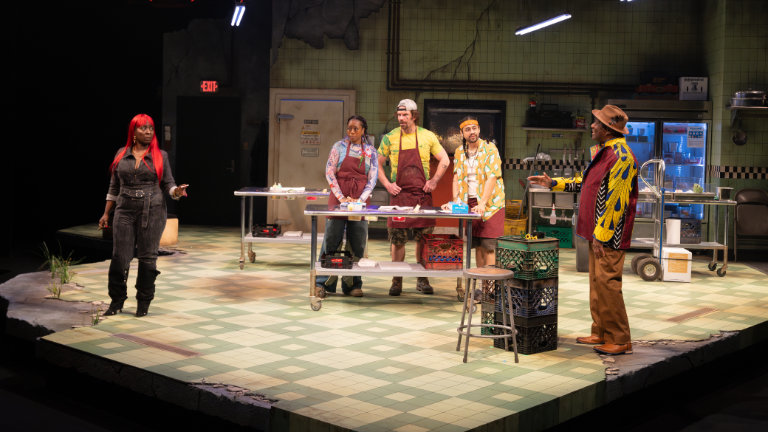
Clyde’s. The Rep. Photo by Jon Gitchoff.
Outstanding Lighting Design in a Play
Denisse Chavez, “Hamlet,” St. Louis Shakespeare Festival Jayson M. Lawshee, “Athena,” The Repertory Theatre of St. Louis Jason Lynch, “Emma,” The Repertory Theatre of St. Louis Matthew McCarthy, “A Streetcar Named Desire,” Tennessee Williams Festival St. Louis Christina Watanabe, “Clyde’s,” The Repertory Theatre of St. Louis
Outstanding Sound Design
Jimmy Bernatowicz, “Athena,” The Repertory Theatre of St. Louis Kareem Deanes, “Two Jews Walk into a War: A Comedy,” New Jewish Theatre Tre’von Griffith, “The Brothers Size,” The Repertory Theatre of St. Louis John Gromada, “Emma,” The Repertory Theatre of St. Louis Ellie Schwetye, “Professor House,” Contraband Theatre
Outstanding Costume Design in a Play
Oana Botez, “Hamlet,” St. Louis Shakespeare Festival Dorothy Marshall Englis, “Emma,” The Repertory Theatre of St. Louis Renee Garcia, “The Cottage,” The Repertory Theatre of St. Louis Tracey Newcomb, “I Have Been Here Before,” Albion Theatre Company Michele Friedman Siler, “The Heidi Chronicles,” New Jewish Theatre
The Heidi Chronicles. New Jewish Theatre. Photo by Jon Gitchoff.
Outstanding Set Design in a Play
Jean Kim, “Clyde’s,” The Repertory Theatre of St. Louis Robert Mark Morgan, “The Cottage,” The Repertory Theatre of St. Louis Scott C. Neale, “Hamlet,” St. Louis Shakespeare Festival Scott C. Neale, “Romeo & Zooliet,” St. Louis Shakespeare Festival Margery Spack & Peter Spack, “Emma,” The Repertory Theatre of St. Louis
Outstanding Supporting Performer in a Drama, Female or Non-Binary Role
Jade Cash, “The Wanderers,” New Jewish Theatre Sarah Chalfie, “Hamlet,” St. Louis Shakespeare Festival Jennifer Ikeda, “Hamlet,” St. Louis Shakespeare Festival Isa Venere, “A Streetcar Named Desire,” Tennessee Williams Festival St. Louis Maggie Wininger, “The Wanderers,” New Jewish Theatre
Outstanding Supporting Performer in a Drama, Male or Non-Binary Role
Grayson DeJesus, “Hamlet,” St. Louis Shakespeare Festival Ron Himes, “Radio Golf,” The Black Rep Donald Jones Jr., “The Brothers Size,” The Repertory Theatre of St. Louis Bryce A. Miller, “The Wanderers,” New Jewish Theatre Reginald Pierre, “Hamlet,” St. Louis Shakespeare Festival
Outstanding Performer in a Drama, Female or Non-Binary Role
Mara Bollini, “Frankie and Johnny in the Clair de Lune,” Stray Dog Theatre Wendy Renée Greenwood, “The Wanderers,” New Jewish Theatre Michelle Hand, “Meet Me at Dawn,” Upstream Theater Lizi Watt, “Meet Me at Dawn,” Upstream Theater Donna Weinsting, “With,” St. Louis Actors’ Studio
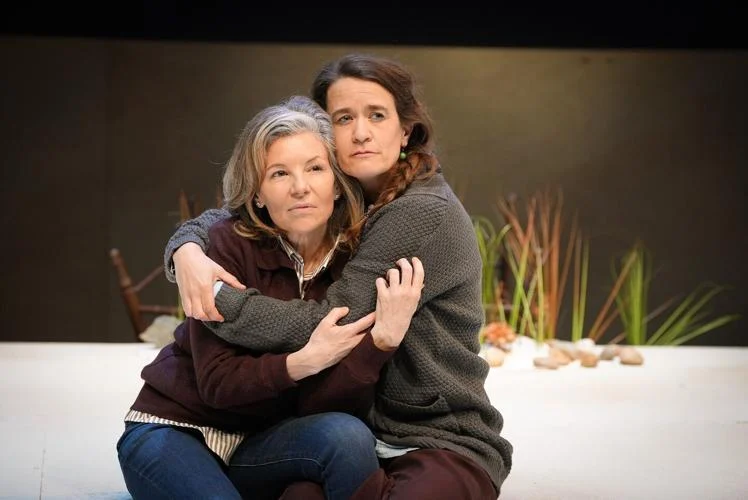
Meet Me at Dawn. Upstream Theater. Photo by ProPhotoSTL
Outstanding Performer in a Drama, Male or Non-Binary Role
Nic Few, “The Brothers Size,” The Repertory Theatre of St. Louis Michael Khalid Karadsheh, “Hamlet,” St. Louis Shakespeare Festival Christian Kitchens, “The Brothers Size,” The Repertory Theatre of St. Louis Joel Moses, “The Wanderers,” New Jewish Theatre Whit Reichert, “With,” St. Louis Actors’ Studio
Outstanding New Play
“John Hughes Your Own Adventure,” by Joseph Garner, Chris “Mr.” Jones, Rob McLemore, Suki Peters, and Ben Ritchie, Cherokee Street Theatre Company “The Pavement Kingdom: A Clinic Escort Play,” by Courtney Bailey, Chorus of Fools “Romeo & Zooliet,” by Jennifer Joan Thompson, St. Louis Shakespeare Festival Professor House,” by Jacob Juntunen, Contraband Theatre “Scream, Echo. Scream.,” written and produced by Summer Baer
Outstanding Achievement in Opera
Christopher Alden, “Don Pasquale,” Opera Theatre of Saint Louis Susanne Burgess, “Don Pasquale,” Opera Theatre of Saint Louis John Gerdes, “The Second Hurricane,” Stray Dog Theatre Daniel Scofield, “Salome,” Union Avenue Opera Leonard Slatkin, “A Midsummer Night’s Dream,” Opera Theatre of Saint Louis
Outstanding Production of an Opera
“A Midsummer Night’s Dream,” Opera Theatre of Saint Louis “Don Pasquale,” Opera Theatre of Saint Louis “My Fair Lady,” Union Avenue Opera “The Second Hurricane,” Stray Dog Theatre “This House,” Opera Theatre of Saint Louis
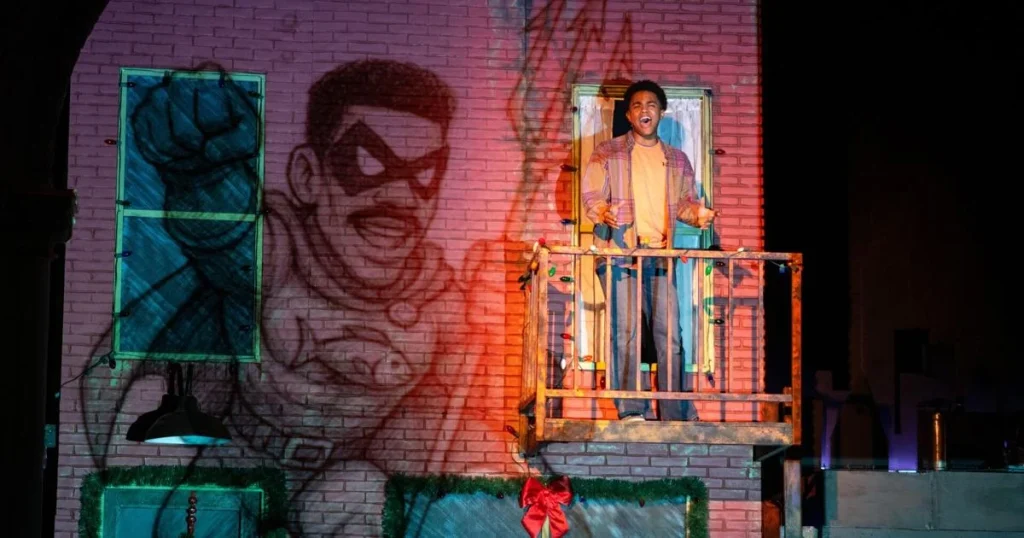
Superhero. Stray Dog Theatre.
Outstanding Musical Director
Jeremiah Ginn, “Murder for Two,” Stages St. Louis Mallory Golden, “Superhero,” Stray Dog Theatre Carter Haney, “Cabaret,” New Jewish Theatre Jermaine Manor, “Raisin (The Musical),” The Black Rep David Nehls, “Beautiful: The Carole King Musical,” Stages St. Louis
Outstanding Choreographer
Kirven Douthit-Boyd, “Raisin (The Musical),” The Black Rep Kirven Douthit-Boyd, “The Brothers Size,” The Repertory Theatre of St. Louis Ellen Isom, “Cabaret,” New Jewish Theatre Lisa Shriver, “Austen’s Pride,” Stages St. Louis Jennifer Werner, “Beautiful: The Carole King Musical,” Stages St. Louis
Outstanding Projections or Special Effects
Justin Been, “Superhero,” Stray Dog Theatre Kareem Deanes, “The Heidi Chronicles,” New Jewish Theatre Kareem Deanes, “The Wash,” The Black Rep Michael Curry Design, “Romeo & Zooliet,” St. Louis Shakespeare Festival Joe Taylor, “Dollhouse by Three Manufacturers,” Equally Represented Arts (ERA)
Outstanding Supporting Performer in a Musical, Female or Non-Binary Role
Kailey Boyle, “Beautiful: The Carole King Musical,” Stages St. Louis Marsiya Miller, “Legally Blonde, The Musical,” Tesseract Theatre Company Jane Paradise, “Cabaret,” New Jewish Theatre Dianica Phelan, “Austen’s Pride,” Stages St. Louis Sarah Polizzi, “Rock of Ages,” Stray Dog Theatre
Outstanding Supporting Performer in a Musical, Male or Non-Binary Role
Dave Cooperstein, “Cabaret,” New Jewish Theatre Aaron Fischer, “Superhero,” Stray Dog Theatre Aaron Fischer, “Cabaret,” New Jewish Theatre Dustin Petrillo, “Madam,” Fly North Theatricals David Socolar, “Beautiful: The Carole King Musical,” Stages St. Louis
Murder for Two. Stages St Louis. Photo by Phillip Hamer.
Outstanding Lighting Design in a Musical
Tony Anselmo, “Raisin (The Musical),” The Black Rep Denisse Chavez, “Cabaret,” New Jewish Theatre Tyler Duenow, “Superhero,” Stray Dog Theatre Jason Lyons, “Austen’s Pride,” Stages St. Louis Sean M. Savoie, “Beautiful: The Carole King Musical,” Stages St. Louis
Outstanding Set Design in a Musical
Peter Barbieri, “Beautiful: The Carole King Musical,” Stages St. Louis Ann Beyersdorfer, “Murder for Two,” Stages St. Louis David Blake, “Cabaret,” New Jewish Theatre Bradley Rohlf and Colin Healey, “Madam,” Fly North Theatricals Rob Lippert, “Superhero,” Stray Dog Theatre
Outstanding Costume Design in a Musical
Sam Hayes, “Madam,” Fly North Theatricals Colleen Michelson, “Rock of Ages,” Stray Dog Theatre Johanna Pan, “Beautiful: The Carole King Musical,” Stages St. Louis Emily Rebholz, “Austen’s Pride,” Stages St. Louis Michele Friedman Siler, “Cabaret,” New Jewish Theatre
Outstanding Performer in a Musical, Female or Non-Binary Role
Brianna Kothari Barnes, “Beautiful: The Carole King Musical,” Stages St. Louis Sarah Gene Dowling, “Superhero,” Stray Dog Theatre Olivia Hernandez, “Austen’s Pride,” Stages St. Louis Anita Michelle Jackson, “Raisin (The Musical),” The Black Rep Hailey Medrano, “Cabaret,” New Jewish Theatre
Anita Jackson. Raisin. The Black Rep. Phillip Hamer photo.
Outstanding Performer in a Musical, Male or Non-Binary Role
Jabari Boykin, “Superhero,” Stray Dog Theatre Rafael DaCosta, “Bat Boy,” New Line Theatre Jeremiah Ginn, “Murder for Two,” Stages St. Louis Dan Hoy, “Austen’s Pride,” Stages St. Louis Spencer Davis Milford, “Cabaret,” New Jewish Theatre
Outstanding Ensemble in a Comedy
“Clyde’s,” The Repertory Theatre of St. Loui “Emma,” The Repertory Theatre of St. Louis “Ken Ludwig’s Baskerville: A Sherlock Holmes Mystery,” New Jewish Theatre “The Cottage,” The Repertory Theatre of St. Louis “Romeo & Zooliet,” St. Louis Shakespeare Festival
Outstanding Ensemble in a Drama
“Hamlet,” St. Louis Shakespeare Festival “I Have Been Here Before,” Albion Theatre Company “The Brothers Size,” The Repertory Theatre of St. Louis “The Wanderers,” New Jewish Theatre “The Wash,” The Black Rep
Outstanding Ensemble in a Musical
“Austen’s Pride,” Stages St. Louis “Beautiful: The Carole King Musical,” Stages St. Louis “Cabaret,” New Jewish Theatre “Raisin (The Musical),” The Black Rep “Superhero,” Stray Dog Theatre
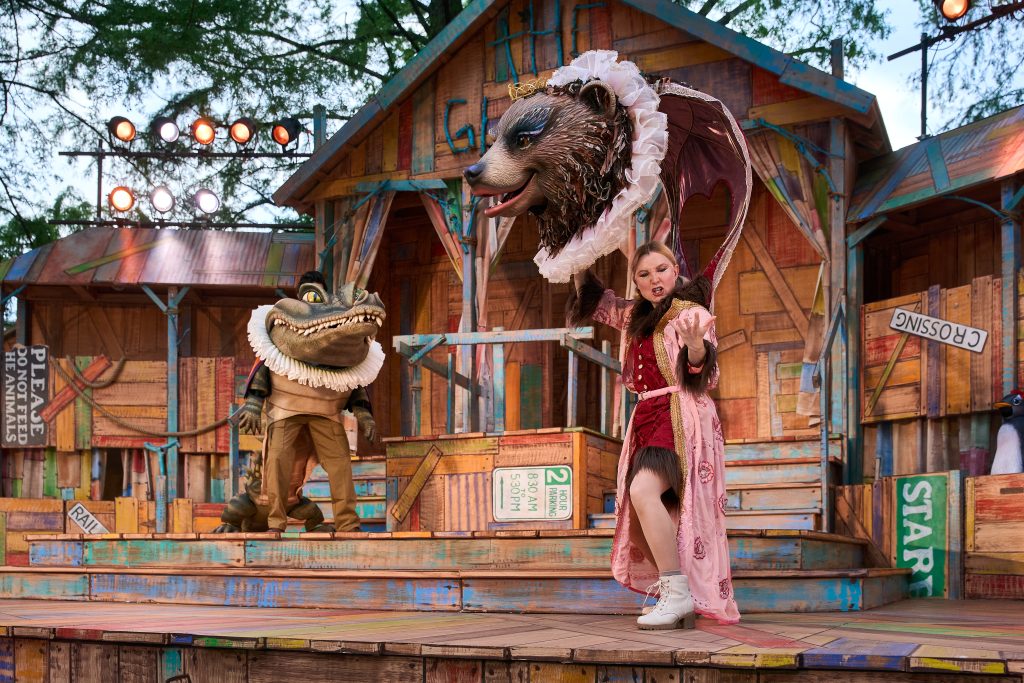
Romeo and Zooliet. St Louis Shakespeare Festival. Photo by Phillip Hamer.
Outstanding Director of a Comedy
Risa Brainin, “The Cottage,” The Repertory Theatre of St. Louis Tracy Brigden, “Emma,” The Repertory Theatre of St. Louis Josiah Davis, “Clyde’s,” The Repertory Theatre of St. Louis Tom Ridgely, “Romeo & Zooliet,” St. Louis Shakespeare Festival Nisi Sturgis, “Ken Ludwig’s Baskerville: A Sherlock Holmes Mystery,” New Jewish Theatre
Outstanding Director of a Drama
Nancy Bell, “Athena,” The Repertory Theatre of St. Louis Annamaria Pileggi, “With,” St. Louis Actors’ Studio Robert Quinlan, “The Wanderers,” New Jewish Theatre Michael Sexton, “Hamlet,” St. Louis Shakespeare Festival Jacqueline Thompson, “The Brothers Size,” The Repertory Theatre of St. Louis
Outstanding Director of a Musical
Justin Been, “Superhero,” Stray Dog Theatre Igor Goldin, “Austen’s Pride,” Stages St. Louis Michael Kostroff, “Murder for Two,” Stages St. Louis Rebekah Scallet, “Cabaret,” New Jewish Theatre Jennifer Werner, “Beautiful: The Carole King Musical,” Stages St. Louis
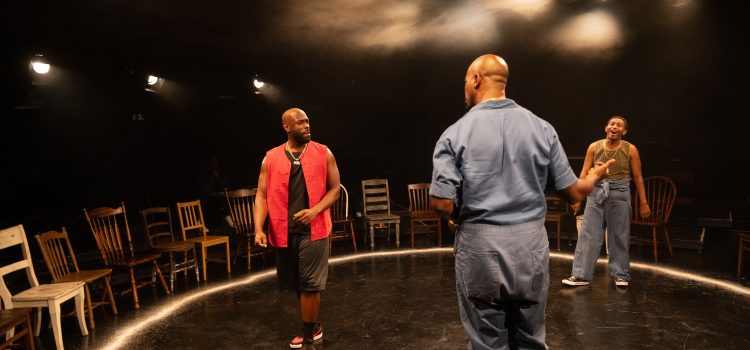
The Brothers Size. The Rep. Photo by Jon Gitchoff.
Outstanding Production of a Comedy
“Clyde’s,” The Repertory Theatre of St. Louis “Emma,” The Repertory Theatre of St. Louis “Romeo & Zooliet,” St. Louis Shakespeare Festival “The Beauty Queen of Leenane,” Albion Theatre Company “The Cottage,” The Repertory Theatre of St. Louis
Outstanding Production of a Drama
“Hamlet,” St. Louis Shakespeare Festival “Meet Me at Dawn,” Upstream Theater “The Brothers Size,” The Repertory Theatre of St. Louis “The Wanderers,” New Jewish Theatre “With,” St. Louis Actors’ Studio
Outstanding Production of a Musical
“Austen’s Pride,” Stages St. Louis “Beautiful: The Carole King Musical,” Stages St. Louis “Cabaret,” New Jewish Theatre “Raisin (The Musical),” The Black Rep “Superhero,” Stray Dog Theatre
The Wanderers. New Jewish Theatre. Photo by Jon Gitchoff.
Special Award for Lifetime Achievement
Wayne Salomon, early member and associate artistic director of Theatre Project Company, St. Louis theater community educator, director, actor
Milestone Anniversary
Opera Theatre of Saint Louis, for its 50th anniversary as an opera of local, national and international acclaim
Special Award for Lifetime Achievement
Bob Trump, Head Draper at The Repertory Theatre of St. Louis, retired in 2025 after 40 years of work in The Rep’s costume shop
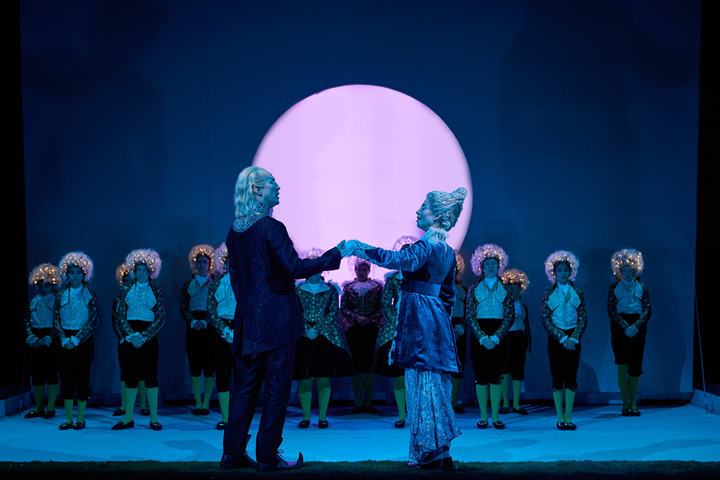
A Midsummer Night’s Dream. Opera Theatre of St. Louis. Photo by Eric Woolsey.
The mission of the St. Louis Theater Circle is simple: To honor outstanding achievement in St. Louis professional theater. Other cities around the country, such as Boston, Chicago, Los Angeles, Philadelphia, San Diego, San Francisco and Washington, D.C., pay tribute to their own local theatrical productions with similar awards programs.
Active members of the St. Louis Theater Circle include Chas Adams (PopLifeSTL.com, St. Louis Arts Scene on Substack, STL Stage Snaps); Mark Bretz (LadueNews); Rosalind Early (St. Louis Post-Dispatch); Tina Farmer (Mound City Messenger); Michelle Kenyon (snoopstheatrethoughts.com, St. Louis Arts Scene on Substack); Gerry Kowarsky (Two on the Aisle, HEC Media); Chuck Lavazzi (St. Louis Arts Scene on Substack, Stage Left blog, Chuck’s Culture Channel on YouTube); Rob Levy (Broadwayworld.com, Review STL, The Arts STL); James Lindhorst (Broadwayworld.com, St. Louis Arts Scene on Substack; Lynn Venhaus (PopLifeSTL.com, KTRS); and Bob Wilcox (Two on theAisle, HEC Media). Eric Kenyon, director of The Chapel venue, is group administrator.