(RE)Imagine 2024-2025 Launches with Free Tickets for St. Louis Youth, World Premieres, and a Dazzling Movers & Shakers Ball

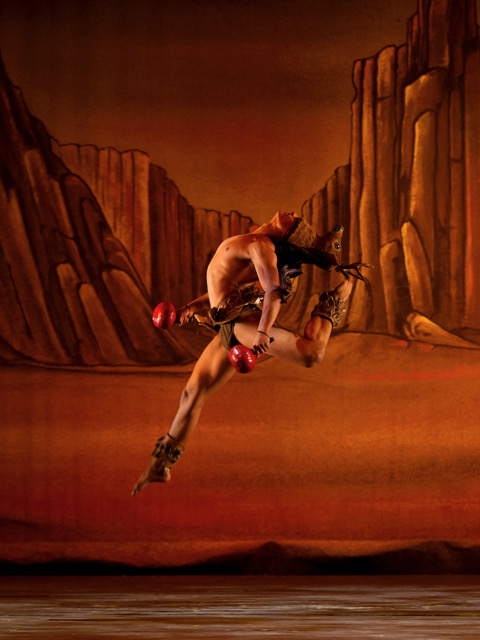
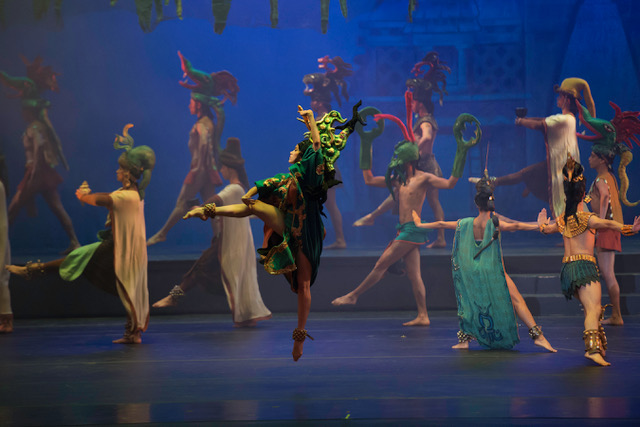
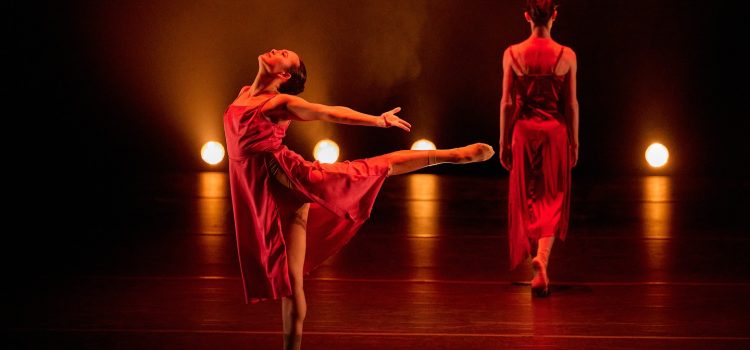
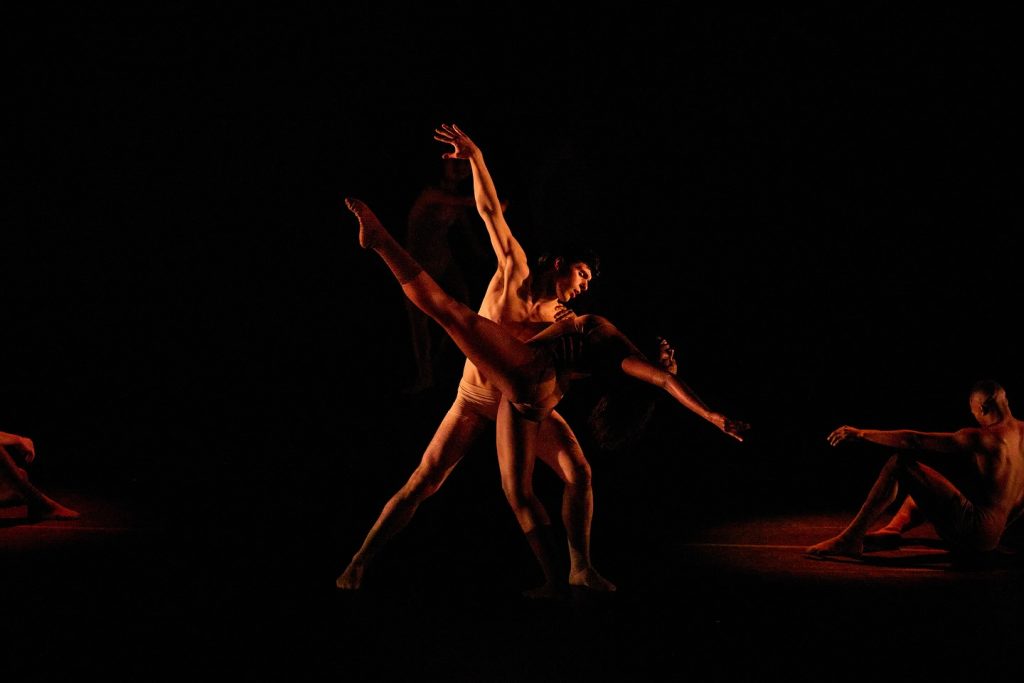
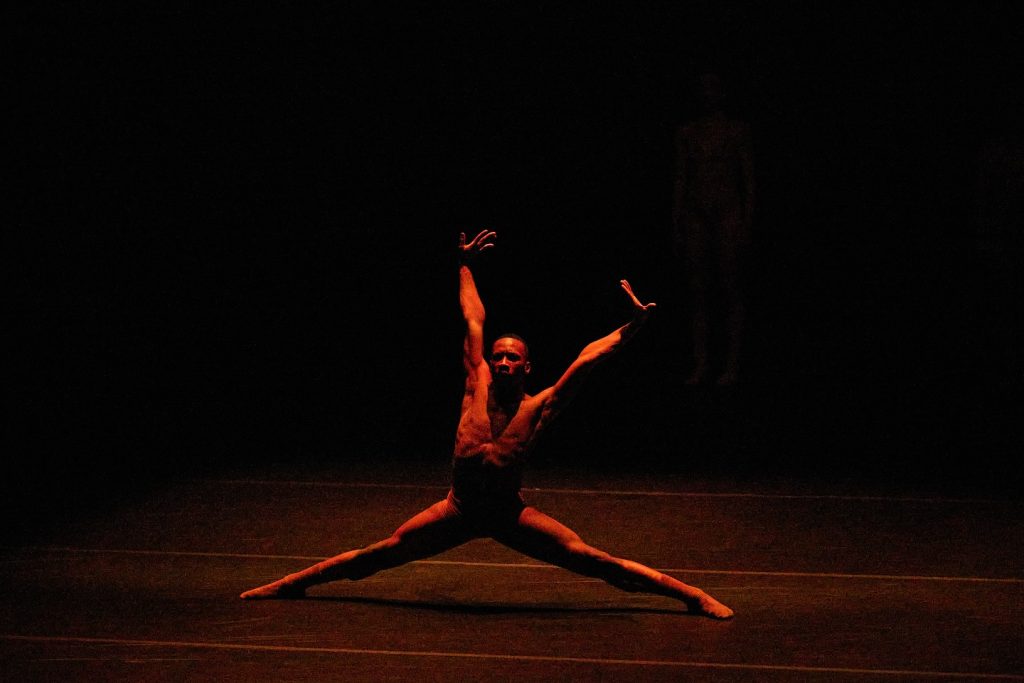
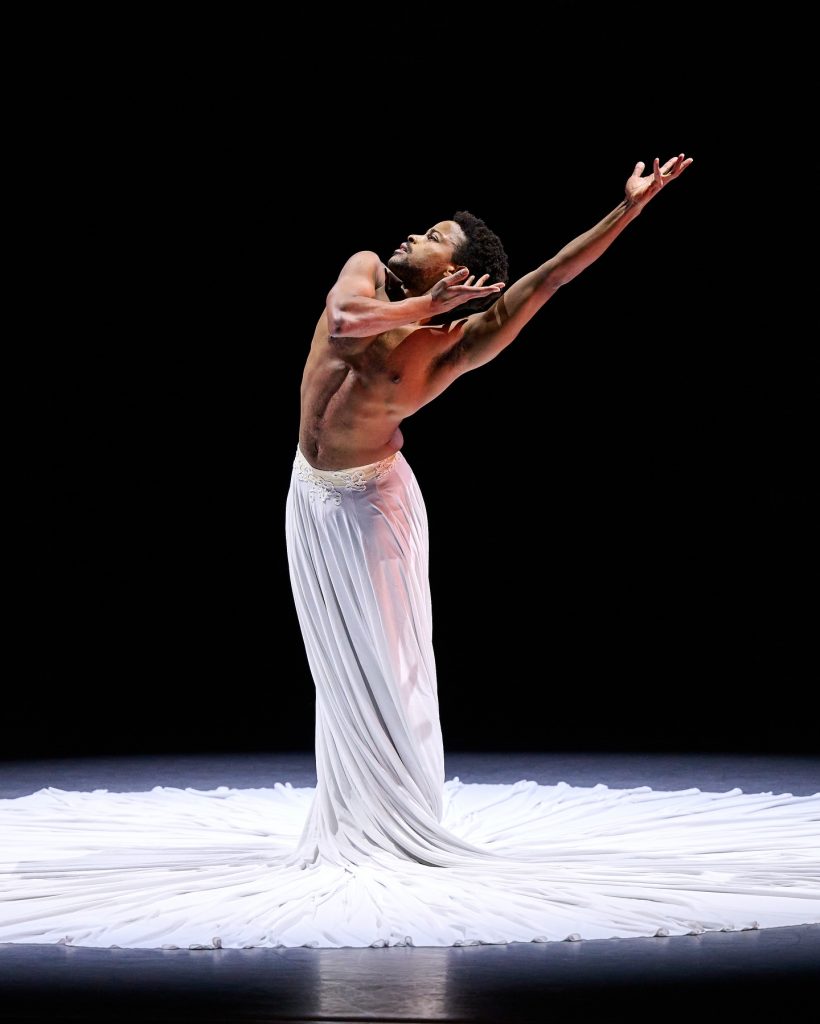
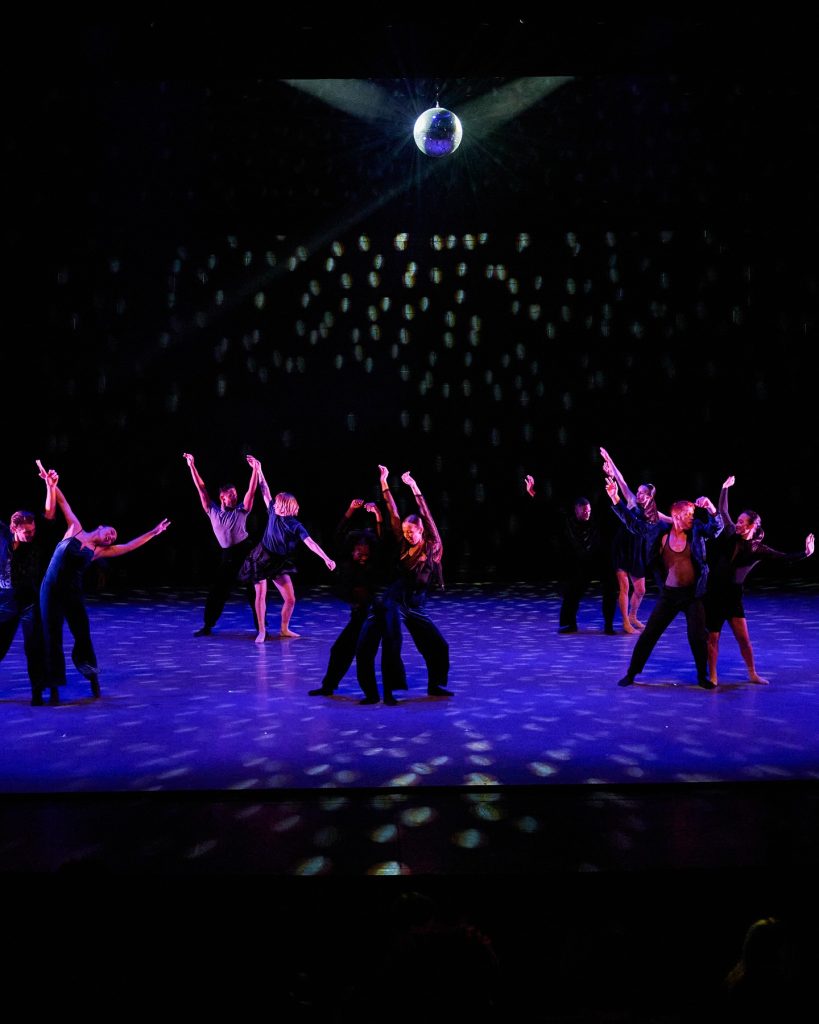
Saint Louis Dance Theatre (STLDT) is thrilled to unveil its highly anticipated 2024-2025 season, (RE)Imagine, marking a bold new era for the company and a celebration of the vibrant spirit of St. Louis. As part of its commitment to accessibility and community engagement, STLDT is proud to launch a pilot community outreach program, in collaboration with the City of St. Louis and the Youth Development Collaborative, a Mayor Jones initiative, by offering complimentary tickets to the season opening (RE)Claim fall concert series to St. Louis City youth. Up to 100 tickets per eligible performance will be distributed to youth-serving programs.

“We must champion world-class art experiences for our youth. These encounters ignite creativity, fuel innovation, and ultimately build a brighter future for our city,” said Lakesha Robinson, Senior Advisor for Children, Youth, and Families for the city of St. Louis.

“Through this pilot program, we aim to inspire St. Louisans to believe that world-class dance is not only possible in our city but accessible to all,” said Erin Warner Prange, Executive Director of STLDT. “Through movement, we tell the diverse stories that shape us—no history lesson or training required. It’s a universal language that builds a more welcoming and vibrant St. Louis for everyone to call home and visit, no matter their experience with concert dance.”

The season kicks off with a spectacular opening weekend of unique performances each night, beginning with the (RE)Claim fall concert from October 24-27 at COCA’s Catherine B. Berges Theatre. The festivities peak at the glamorous Movers and Shakers Ball on Saturday, October 26th, a dazzling evening of dining, dancing, and celebration at 560 Music Center and COCA, including tickets to the evening performance as part of the Ball. The final performance of the weekend on October 27, culminates a triumphant weekend of dance.

(RE)Claim showcases a captivating blend of world premieres, company premieres, and iconic works that illuminate the human experience through movement. Acclaimed guest artist Jamar Roberts, known for his “uncommon force and originality” (Dance Magazine), contributes a world premiere alongside the world premiere, For Love’s Sake, by STLDT Artistic Director Kirven Douthit-Boyd.

The weekend program also features the company premiere of Robert Battle’s poignant duet Unfold, José Limón’s timeless solo Chaconne performed with live music by a St. Louis Symphony Orchestra soloist, and Come…The sun doesn’t wait by Omar Román De Jesús, showcasing the company’s versatility and dedication to preserving dance legacies while also supporting emerging voices. This diverse repertoire, featuring artists from varied backgrounds and generations, underscores STLDT’s ambition to become the most diverse and inclusive dance company in the Midwest.

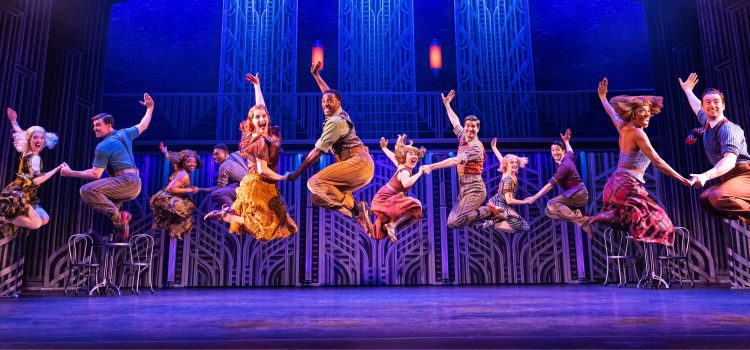
The remainder of the (RE)Imagine season continues this celebration of inclusive artistry, featuring the Ellington/Strayhorn Nutcracker in December, the (RE)Build winter concert in February, the Tour de Dance progressive dining and dancing showcase in March, and the (RE)Fine spring concert in May.

“This season is a testament to the transformative power of dance, and our belief that when there is more representation in the room, more art is possible,” said Kirven Douthit-Boyd, Artistic Director. “Audiences will witness the brilliance that emerges when diverse voices and experiences converge on stage. We are committed to providing world-class dance to St. Louis by pushing boundaries, pursuing artistic excellence, and ensuring that more of our community feels represented and inspired by the stories we tell through movement.”

About Saint Louis Dance Theatre 

Saint Louis Dance Theatre is a premier professional dance company blazing new trails by interweaving the Gateway City’s storied legacy into boundary-pushing contemporary performances. Combining world-class artistry with a bold vision, Saint Louis Dance Theatre champions inclusivity, collaboration, and artistic excellence. This fusion of purpose and passion positions Saint Louis Dance Theatre as a beacon for the spirit of St. Louis in every performance.

With a grand vision of elevating St. Louis as a nationally recognized arts destination, Saint Louis Dance Theatre aims to deepen connections locally while showcasing the region’s pioneering creative force on a national scale. For more information, visit stldancetheatre.org.

Artistic Director Kirven Douthit-Boyd

(RE)Claim Fall Concert Details

  • Dates: October 24-27, 2024
  • Venue: COCA’s Catherine B. Berges Theatre, 6880 Washington Avenue St. Louis, MO 63131
  • Program A (Oct 24-25):
  • Movers & Shakers Ball Program (Oct 26):
    • For Love’s Sake by Kirven Douthit-Boyd (Excerpt)
    • Unfold by Robert Battle (Company Premiere)
    • World Premiere by Jamar Roberts
  • Program B (Oct 27):
    • Come…The sun doesn’t wait by Omar Román de Jesús
    • Unfold by Robert Battle
    • For Love’s Sake by Kirven Douthit-Boyd (World Premiere)
    • World Premiere by Jamar Roberts
  • Tickets: Available at https://www.stldancetheatre.org/reclaim-fall-concert

Pilot Community Outreach Program Details: 

  • Participating youth-serving programs can receive up to 25 complimentary tickets on a first-come first-served basis for the (Re)claim Fall Concert series performances:
    • Thursday, October 24th – 7:30 p.m.
    • Friday, October 25th – 7:30 p.m.
    • Sunday, October 27th – 2:00 p.m.
    • Sunday, October 27th – 7:30 p.m.
  • All performances will take place at COCA’s Catherine B. Berges Theatre, 6880 Washington Avenue St. Louis, MO 63131
  • Up to 100 tickets per evening will be available to youth-serving programs within the city of St. Louis.
  • To request tickets, please email [email protected].
  • Tickets are valid only for the specific performance for which they are redeemed and cannot be exchanged or transferred.
  • Ticket availability is subject to capacity and cannot be guaranteed.

Movers and Shakers Ball Details:

  • Date: October 26, 2024
  • Locations: 560 Music Center & COCA
  • Time: 5:00 pm – 10:15 pm
  • Co-chairs:
    • Rhonda and Carlton Adams
    • Francesca DeStefane
  • Host Committee:
    • Shereen Fischer
    • Andrea Slavik
    • Denise Thimes
    • Tyeler Hood

Tickets and Information: https://www.stldancetheatre.org/movers-and-shakers-ball

Facebook Comments

By Alex McPherson

Frenetic, scattershot, and thoroughly self-absorbed, director Jason Reitman’s “Saturday Night” might satisfy those nostalgic for the early days of “SNL,” but fails to make a name for itself on its own merits.

Presenting itself as a fictionalized version of the stressful 90 minutes leading up to the original “Saturday Night Live” (originally called “Saturday Night”) broadcast in October 1975 at Studio 8H, Reitman’s film revolves around Lorne Michaels (Gabriel LaBelle), the show’s executive producer and ringleader. Michaels remains insistent on the show’s potential while having little idea as to what it actually is.

Co-creator Dick Ebersol (Cooper Hoffman) is increasingly worried about how things will pan out, trying to reason with the ever-resistant Michaels as the cramped, claustrophobic halls of Studio 8H buzz with both excitement and growing fears of potentially spectacular failure. There’s also a llama, for some reason.

All the while, a group of unruly, up-and-coming comedians — including the arrogant yet charismatic Chevy Chase (Cory Michael Smith), Dan Aykroyd (Dylan O’Brien), Garrett Morris (Lamorne Morris, no relation), John Belushi (Matt Wood), plus several talented women such as Gilda Radner (Ella Hunt), Laraine Newman (Emily Fairn), and Jane Curtin (Kim Matula) that the film mostly treats as afterthoughts — prepare to go on-air, confronting their own mini-crises and doubts as the clock ticks, ticks, ticks toward showtime, and the history books.

Tempers run hot (the pretentious Belushi and Chase butt heads, and Belushi hasn’t even signed his contract yet), people are stoned out of their minds, lights are falling on-stage, the sound system’s busted, head writer Michael O’Donoghue (Tommy Dewey) is spewing acerbic barbs at anyone and everyone questioning his scripts, and rival late-night host Milton Berle (J.K. Simmons, typically strong) is, quite literally, waving his dong around.

Gabrielle LaBelle, Kaia Gerber and Cory Michael Smith.

NBC executive Dave Tebet (Willem Dafoe) is observing the whole production from afar, egging on Lorne with smug anticipation of his passion project’s downfall, as the whole endeavor is a pawn in NBC’s contract dispute with Johnny Carson.

Suffice to say, the stakes are high, at least in the context of these characters, who don’t yet know that SNL will wildly succeed and become a cultural institution. Watching as a casual fan of the iconic program, though, “Saturday Night” is curiously devoid of surprise, or insight, or, even, laughs. There’s way too much smugness in Reitman’s retelling of this “revolution in comedy.” The film appeals to mainstream cinema’s obsession with callbacks at the expense of telling a story worth investing in.

Still, despite its emptiness, “Saturday Night” features dynamic performances from an ensemble doing an at-times-scarily convincing job at portraying their real-life counterparts. LaBelle brings a nervous, stubborn energy that’s simultaneously inspiring and pathetic, barely tamping down Michaels’ anxiety over his passion project’s success (or downfall, but we already know it’s going to be a success).

Hoffman is typically excellent as Ebersol, channeling his father’s capacity for emotional release during a pivotal scene in the latter half of the film.

Cory Michael Smith is an obvious standout as Chase, conveying the man’s arrogance and insecurity (and hilarity) in a way that demands attention, whether we like it or not. O’Brien makes a mark with his brief screen time as Aykroyd. Morris brings some much-needed pathos as his character questions his purpose and reason for being there as the only Black cast member. Wood does what he can with Belushi, with Reitman and co writer Gil Kenan highlighting his drug use and fickleness (mostly as a punchline) — making Belushi’s will-he-won’t-he arc both semi-poignant and weirdly uncomfortable, given Belushi’s later tragedy.

Gabriel LaBelle as Lorne Michaels.

The rest of the cast — including the ever-reliable Rachel Sennott as Michaels’ then-wife, Rosie Shuster, Jon Batiste in a small-yet-memorable appearance as Billy Preston, and seemingly a million other recognizable faces playing various recognizable faces, with Nicholas Braun doing double duty as punchline-ready interpretations of Andy Kaufman and Jim Henson — are perfectly adequate, but not exactly given much to sink their teeth into narratively with their limited screen time.

Indeed, “Saturday Night” ultimately reveals itself to be little more than a carnival ride of memories and irritating dialogue that — when it’s not replicating famous jokes and sketches — takes advantage of 20/20 hindsight to constantly pat itself on the back.

Reitman and co-writer Gil Kenan’s script takes an Aaron-Sorkin-esque approach in its witticisms, fast pace, and at-times blatant sentimentality as it literally clicks down the moments until showtime, incorporating as many famous gags as possible that loyal viewers are expected to get excited about. Some barbs and vignettes amid the chaos are amusing, and “Saturday Night” is never less than watchable, if usually superficial.

Cory Michael Smith as Chevy Chase.

Eric Steelberg’s textured, 16mm cinematography weaves throughout the studio’s sweaty interiors, faithfully recreated with attention to period detail in sets and costuming, making plentiful use of long takes and whip-pans.

The film careens from one easter egg to another — complete with its own pseudo laugh track of characters cracking up; the film desperately begs us to laugh along with them. Batiste’s percussion-laden score, combined with Nathan Orloff and Shane Reid’s editing, helps create a fittingly frantic, albeit artificial, sense of paranoia that highlights the film’s construction as an allegedly off-the-rails roller coaster that’s never truly allowed to chart its own path.

It’s fine: There’s just not much there beyond the film playing to viewers’ nostalgia. And maybe that’s acceptable for those who’d like to coast on the associated dopamine rush. Myself, however, not so much. “Saturday Night” is never bad (far from it), but it never ascends beyond average — a self-congratulatory tribute to the groundbreaking show in a puzzlingly vanilla framework.

“Saturday Night” is a 2024 comedy based on a true story, directed by Jason Reitman, and starring Gabriel LaBelle, Cooper Hoffman, Willem Dafoe, Corey Michael Smith, Lamorne Morris, Rachel Sennott, Matt Wood, Dylan O’Brien, Ella Hunt, Kim Matula, Emily Fairn, Nicholas Braun, Jon Batiste, Tommy Dewey and JK Simmons. It is rated R for language throughout, sexual references, some drug use and brief graphic nudity and the run time is 1 hour, 49 minutes. It opened in theaters Oct. 11. Alex’s Grade: C

Facebook Comments

By Lynn Venhaus

The unpredictable Not Ready for Prime Time Players would go on to become household names. A shaggy group of irreverent writers would ignite a counterculture revolution with their parodies of contemporary culture and sharp political satire. And a young and scrappy Canadian would lead the inspired chaos of a late-night live sketch comedy show into showbiz history when “Saturday Night” premiered on Oct. 11, 1975.

With “Saturday Night Live” about to celebrate 50 years on television, it’s the right time to revisit the show’s frenetic start in NBC’s Studio 8H in Rockefeller Plaza. Writer-director Jason Reitman’s dramatic comedy finds the beating heart in this runaway train ride depicted in the 90 minutes leading up to the inaugural broadcast.

Along with co-writer Gil Kenan, their “based on a true story” captures the frenetic pace and the backstage lunacy that forever changed late-night comedy. It was a “big bang” that redefined the television landscape, and while a mini-series could do the origin story justice, this focused narrative framework succeeds in pulling back the curtain.

In a kinetic snapshot of what happened that fateful wild and crazy night, Gabriel LaBelle anchors the best ensemble cast of the year as the confident producer Lorne Michaels.

LaBelle, who was impressive as young Steven Spielberg in “The Fabelmans” two years ago, plays the driven big dreamer who believes in his instincts and the largely unknown cast’s talents. He’s the calm circus ringleader in the eye of the storm amidst the gusty winds threatening to blow it all down.

Gabriel LaBelle, center, as Lorne Michaels

From the start, Michaels has produced all but five years of the show, leaving in 1980 when Jane Curtin, Garrett Morris, Laraine Newman and Gilda Radner were the last original cast members to depart, and returning for the 1985-86 season.

He started out as a comedy writer whose credits included “Rowan & Martin’s Laugh-In” and now oversees a vast empire of last-night television and feature films. Michaels’ first wife, Rosie Shuster, is portrayed by a sharp Rachel Sennott as an integral force, both as a writer and someone putting fires out.

As the clock counts down to the live launch, there isn’t time for in-depth character portrayals; instead, we get snippets of familiar personality traits from those emerging stars Dan Aykroyd (Dylan O’Brien), Gilda Radner (Ella Hunt), Laraine Newman (Emily Fairn), Jane Curtin (Kim Matula) and Garrett Morris (Lamorne Morris, no relation), with Chevy Chase (Cory Michael Smith) and John Belushi (Matt Wood)’s well-documented egos and clashes getting more screen time.

The seven actors quickly convey their quirks and foreshadow the stars they would become. Standouts here include O’Brien as a minutiae devotee and big flirt Aykroyd, Emmy-winning Morris as the underused Morris — a multi-hyphenate perplexed at his inclusion, and Smith as quick-witted, arrogant and self-absorbed Chase, the show’s first break-out movie star.

The women, understandably, are trying to find their place in the boys’ club, which is representative of those early years.

The nostalgia factor is big here for longtime fans of the show, especially those of us who watched the first episode in real time (My college roommates and I tuned in, presumably because we were big George Carlin fans, for we did not recognize the others, except for Billy Preston because he played with The Beatles). A film by Albert Brooks? Jim Henson and his Muppets?

Now, fans of the National Lampoon Radio Hour (1973 – 1974) were familiar with cast members Chevy, Belushi and Gilda. Its creator, Michael O’Donoghue, a jaded, cynical anarchist, went on to be SNL’s cutting-edge head writer for three years. His tussles with the network censors’ red pens must have been headache-inducing.

Reitman’s condensed depiction of legendary writers Al Franken, Tom Davis, Alan Zweibel, and Herb Sargent (Tracy Letts!) is noteworthy. While not all sketch development is accurate timeline-wise, the inclusion of Aykroyd’s Julia Child parody where she gushes blood from a cut artery during a taping of “The French Chef” is a good one to mention – and so is the construction workers’ gender reversal cat calls with Aykroyd as the objectified — even though both were on later shows.

Reitman’s reverence for all things SNL is admirable – and understandable, for it continues to be a force in the cultural zeitgeist. His father, Ivan, directed Aykroyd and Bill Murray in 1984’s biggest box-office hit “Ghostbusters” and other movies featuring alumni.

Jason Reitman’s previous comedies “Juno” and “Up in the Air” showed much potential, so it’s nice to see him navigate this incredible moment in time and do so with a clear-cut vision and savvy casting choices.

Fellow nepo baby (in a good way) Cooper Hoffman, Philip Seymour Hoffman’s son, is a perfect foil as ambitious Dick Ebersol, rocking the polyester suits as the late-night director of programming. (He’d later go on to produce SNL after Michaels’ left.)

Portraying the old guard is Willem Dafoe as humorless network vice president of talent relations Bob Tebet, who’d be happy to run another Johnny Carson “Tonight Show” re-run instead.

Nicholas Braun as Andy Kaufman

In small but essential roles, musical wunderkind Jon Batiste plays musical guest Billy Preston and Nicholas Braun (Emmy-nominated Cousin Greg on “Succession”) astutely characterizes up-and-coming Andy Kaufman’s brilliant schtick and as a naïve but talented puppeteer Jim Henson, clearly ahead of his time.

Matthew Rhys, Emmy winner for “The Americans,” is a snarling George Carlin who does not want to play nice with others in sketches.JK Simmons swoops in to steal his scenes as cantankerous old-guard comic Milton Berle, representing a different generational style.

Batiste also composed the propulsive original music score, which adds to the fast-paced freewheeling vibe. Reitman’s go-to cinematographer Eric Steelberg offers insight into the adrenaline rush while Jess Gonchor’s production design overstuffs Studio 8H plausibly.

An engaging whirlwind representing a collaborative creative process that sparked a comedic revolution, “Saturday Night” takes us back to an extraordinary leap of faith that resonates today. No need to give us a roadmap of the past half-century because we know the rest of its remarkable history.

Lamorne Morris as Garrett Morris.

Notes: To learn more, “Live from New York: The Complete, Uncensored History of Saturday Night Live as Told by Its Stars, Writers, and Guests,” first published in 2002, is a definitive oral history by James Andrew Miller and Tom Shales.

Two documentaries on the short, brilliant and troubled lives of two of the show’s biggest stars, “Belushi” (2020) and “Love, Gilda” (2018) are available to watch on subscription streaming services, and for digital rental.

“Saturday Night” is a 2024 comedy based on a true story, directed by Jason Reitman, and starring Gabriel LaBelle, Cooper Hoffman, Willem Dafoe, Cory Michael Smith, Lamorne Morris, Rachel Sennott, Matt Wood, Dylan O’Brien, Ella Hunt, Kim Matula, Emily Fairn, Nicholas Braun, Jon Batiste, Tommy Dewey and JK Simmons. It is rated R for language throughout, sexual references, some drug use and brief graphic nudity and the run time is 1 hour, 49 minutes. It opened in theaters Oct. 11. Lynn’s Grade: A-.

Facebook Comments

By Lynn Venhaus

Neither a hatchet job nor a puff piece, “The Apprentice” is another familiar take on the American Dream that leads to great wealth, meteoric success, and moral quagmires.

More than anything, this origin story is a study of power – how people get it, what they do with it, how they try to hold on to it, and how it can be lost. Director Ali Abbasi looks inside power structures and systemic corruptible institutions, and he shows how family influences our formation.

Featuring two iconic 20th century figures, the film only hints at a political future, but all the furor pre-release is a sad commentary on our divisive partisan landscape.

The time period is only focused on the 1970s and 1980s, starting out in 1973 New York City, when Manhattan was scuzzy and Queens was rougher, a rotting Big Apple that was desperate for a makeover.

Determined to emerge from his powerful father’s shadow and make a name for himself in Manhattan real estate, aspiring mogul Donald J. Trump (Sebastian Stan) is in the earliest days of his career when he encounters the man who will become a game-changer for him — political fixer Roy Cohn (Jeremy Strong).

Seeing promise in the young buck, the influential attorney teaches his new acolyte how to amass wealth and power through deception, intimidation, and media manipulation. And the rest, as they say, is history.

Sebastian Stan as young Donald J. Trump.

Stan effectively portrays an eager-to-please social climber who is in awe of how ruthless and flamboyant Cohn is. Their mentor-pupil relationship is the flip side of Mr. Miyagi and Daniel in “The Karate Kid.”

Their alliance is portrayed with great gusto by Stan, who easily slips into the skin of the future 45th U.S. president during his hedonistic days as a swinging bachelor, first with little of the bluster he’d later develop, and then subtly transforms into a mover and a shaker who enjoys status and celebrity — and sucking up all the oxygen in the room.

Emmy and Tony Awards-winning Jeremy Strong is chilling as the amoral ultimate power broker. Cohn eventually becomes a tragic figure as he succumbs to AIDS. To see Strong maneuver through the upper echelon of NYC society and see how he manipulates people for his own gain is as fascinating as watching a magician’s tricks.

Cohn’s three cardinal rules: “Admit nothing, deny everything. Attack, attack, attack. You claim victory and never admit defeat” are reinforced in boardrooms, courtrooms and private dining rooms.

They become Trump’s playbook as he transforms from notorious real estate magnate Fred Trump’s ambitious son to confident major player in the elite Manhattan circles that he desperately wanted to be part of, craving the spotlight.

The demanding Fred Trump Sr., played with cunning by Martin Donovan, has little patience for his second-born son’s exploits, and even less tolerance for his oldest son Fred Jr.’s decision to be a TWA airline pilot and not join the family business. He disdained any sign of weakness.

The screenplay by Gabriel Sherman, a veteran journalist who has chronicled Trump for Vanity Fair, focused on how Cohn schooled his protégé, only to have his greatest admirer turn his back on him years later at his most vulnerable. He’s specific about the psychology behind the butterfly emerging from the cocoon.

Sherman, who wrote the fact-based script in 2017, has dramatized events that are considered historical records. It is not propaganda from any side and is familiar enough to those who follow the news so that it really doesn’t offer anything new other than a character study with shades of the Corleone family saga peeking through at times.

Abbasi presents an interesting climb to the top scenario and zeroes in on influences that shaped this polarizing figure in a realistic way. It’s not flattering, but rather an attempt to understand how someone is molded into their public persona.

By capitalizing on the ’70s and ’80s excesses, the glitz and glamour is recognizable in Aleksandra Marinkovich’s meticulous — and sometimes gaudy — production design and Laura Montgomery’s colorful vintage costume design. Lensed by Kasper Tuxen, the film presents that signature bright-lights, big-city landscape where both Cohn and Trump flourished, and the soundtrack’s throbbing beats are reminiscent of the hip dance club scene.

People who already have their minds made up about the film may have issues with the point of view, and those who enjoy delving into psychology will find much to debate, especially in the more disturbing revelations.

While the film’s potency is in the two primary actors’ fearless performances, the supporting cast excels at not being caricatures. Just as Donovan nails papa Fred, Maria Bakalova doesn’t hit a false note as Ivana, Donald’s first wife and mother to three of his children, whom he tires of after she demonstrates a spidey sense for business.

Sebastian Stan and Jeremy Strong as Trump and Cohn.

Catherine McNally is a supportive mom as Mary Anne Trump, and Charlie Carrick is sympathetic as the troubled alcoholic Freddy Trump Jr. Famous figures include Ian D. Clark, who looks and sounds like former NYC Mayor Ed Koch, Mark Rendall as politically savvy advisor Roger Stone, and Bruce Beaton has one memorable scene as Andy Warhol at a party.

The film may have an uphill climb because of all the controversy surrounding it, but “”The Apprentice” succeeds in giving us a layered portrait of a man always in the news who everyone has an opinion about, one way or the other.

“The Apprentice” is a 2024 dramatic historical biography directed by Ali Abbasi and starring Sebastian Stan, Jeremy Strong, Maria Bakalova, Martin Donovan, Charlie Carrick, Catherine McNally, Ian D. Clark, Mark Rendall and Bruce Beaton. It is rated R for sexual content, some graphic nudity, language, sexual assault, and drug use and the run time is 2 hours. It opened Oct. 11 in St. Louis. Lynn’s Grade: B.

Facebook Comments


Awards Ceremony to Air Live on E! and Stream Next Day on Peacock; Chelsea Handler returns to host.

The Critics Choice Association (CCA) has announced that the 30th annual Critics Choice Awards will air live on E! on Sunday, January 12, 2025 from 7:00-10:00 pm ET / PT and will be available the next day on Peacock. Additionally, E! will air a one hour red carpet pre-show ahead of the telecast from 6:00-7:00 pm ET / PT.

Comedian, television host, six-time New York Times best-selling author and advocate Chelsea Handler will return as host for the third consecutive year. The star-studded awards show will once again be held at the Barker Hangar in Santa Monica and will continue its combined film and television awards format, honoring the best in cinematic, televised, and streaming achievement.

“We’re thrilled to be working with E! to present our landmark 30th annual Critics Choice Awards,” said CCA CEO Joey Berlin. “With the incredible Chelsea Handler returning as our host, we know this special 30th anniversary show is going to be our biggest and best show yet, and we couldn’t be more excited to be airing the show live on E! and available to stream on Peacock next day.”

“E!’s longstanding tradition being part of many of Hollywood’s biggest nights celebrating achievements across all of pop culture makes it the perfect home for the Critics Choice Awards,” said Jen Neal, Executive Vice President, Live Events and Specials, NBCUniversal Entertainment. “With Chelsea returning to E! as host of the telecast, this award show will be one of the most anticipated events of the season, and we look forward to partnering with the CCA in honoring Hollywood’s biggest stars across film and television.”

“Returning for the third year to host the Critics Choice Awards has been made even sweeter knowing it will now air on E!,” said Chelsea Handler. “I feel like I’m returning to my birthplace.”

TV nominations for the annual event will be announced on Thursday, December 5, 2024, while film nominations will be announced on Thursday, December 12, 2024.

Chelsea Handler is a comedian, television host, six-time New York Times best-selling author and advocate whose humor and candor have established her as one of the most celebrated voices in entertainment and pop culture. After a strong seven-year run as the host of E!’s top-rated Chelsea Lately, a tenure in which she was the only female late-night talk show host on-air, she launched her documentary series Chelsea Does followed by her talk show Chelsea on Netflix in 2016. She has penned six New York Times best-selling books, five of which have reached #1, including 2019’s Life Will Be the Death of Me.

In 2021, she launched her iHeartRadio advice podcast, Dear Chelsea, and embarked on the Vaccinated and Horny Tour, bringing her sensational stand-up set to over 90 cities with 115 shows across North America and winning “The Comedy Act of 2021” at the People’s Choice Awards. Following the success of her 2020 HBO Max comedy special Evolution, which earned Chelsea a GRAMMY nomination for Best Comedy Album, Handler made her return to Netflix with her critically acclaimed 2022 comedy special Revolution.

Handler also made two celebrated, back-to-back turns as host of the Critics Choice Awards in 2023 and again in 2024. Handler is currently on her stand-up tour, Chelsea Handler: Live. Most recently, she kicked off her Las Vegas residency Chelsea at the Chelsea at The Cosmopolitan, making history as the venue’s first female comedian residency.

The Critics Choice Awards are bestowed annually to honor the finest in cinematic and television achievement. Historically, they are the most accurate predictor of Academy Award nominations. The 30th annual Critics Choice Awards show will be executive-produced by Bob Bain Productions and Berlin Entertainment. The Critics Choice Awards are represented by Dan Black at Greenberg Traurig, LLP.

Sponsors of the Awards include FIJI Water and Milagro Tequila.

Follow the 30th annual Critics Choice Awards on Twitter and Instagram @CriticsChoice and on Facebook/CriticsChoiceAwards. Join the conversation using #CriticsChoiceAwards.

“Oppenheimer” won at last year’s event.

About the Critics Choice Association (CCA)

The Critics Choice Association is the largest critics organization in the United States and Canada, representing more than 600 media critics and entertainment journalists. It was established in 2019 with the formal merger of the Broadcast Film Critics Association and the Broadcast Television Journalists Association, recognizing the intersection between film, television, and streaming content. For more information, visit:

www.CriticsChoice.com.

About E!

E! is the only global, multi-platform brand for all things pop culture airing original series including breakout hit “House of Villains” and popular acquired comedy series. The “E! News” brand is the leading multi-platform publisher delivering breaking entertainment news and pop culture coverage 24/7 across linear, EOnline.com and all digital and social media. The brand’s programming slate includes “E! News” and “E! News’ The Rundown” on Snapchat. “Live from E!” covers signature red carpet events, keeping fans connected to their favorite stars on pop culture’s biggest nights and the “People’s Choice Awards” celebrates the best in pop culture and is the only award show for the people, by the people. E! is part of the NBCUniversal’s Entertainment portfolio which includes NBC, Bravo, E!, Oxygen True Crime, SYFY, Universal Kids, USA Network and Peacock. For more information, visit EOnline.com.   

Facebook Comments

By Lynn Venhaus
A profoundly moving documentary, “Super/Man: The Christopher Reeve Story” focuses on the impactful life of the legendary actor, and how his activism for spinal cord injury treatments and disability rights changed many lives after his near-fatal horse-riding fall.

He played an iconic superhero in four movies – the best-ever take on the Man of Steel/Clark Kent starting with 1978’s “Superman,” and became a real-life hero after that life-altering event on May 27, 1995.

At age 42, he had become not only a global superstar but also an accomplished equestrian. A fluke accident occurred when his horse stopped, and he was paralyzed from the neck down. He would live for 10 more years, and supported by family and friends, became a beacon of hope and a profile in courage.

He died on Oct. 10, 2005, and left a tremendous legacy to uphold. His fiercely devoted wife, Dana, tragically lost her life to cancer just five months later, at age 44. His sons Matthew and Will, and daughter Alexandria are tireless advocates for The Christopher and Dana Reeve Paralysis Foundation. Their interviews illuminate this documentary in a warm and motivating way.

Filmmakers Ian Bonhôte and Peter Ettedgui spotlight Reeve’s struggles and his accomplishments, fluidly weaving a treasure trove of archival footage and never-before-seen home movies, which stresses the loving relationships he forged in his short lifetime.

In a sincere, non-exploitive way, they use Reeve’s own voice, from his narration of his 1999 autobiography, “Still Me,” and many clips of his wife Dana, a true force of positivity, carrying on in the worst of times.

A portrait of his early years learning his craft emerges through such talking heads as Jeff Daniels, Glenn Close, Susan Sarandon and Whoopi Goldberg, and his friendship with Robin Williams, his roommate at Juilliard.

Williams’ closeness was widely known in Hollywood, but to those unfamiliar with their beautiful bond, it’s tearjerking. If you haven’t started crying by the time Williams is shown delivering Reeve’s eulogy, get the tissues ready.

The directors do not flinch when showing Reeve’s battles as a quadriplegic, but also highlight his achievements during periods of tremendous adversity. After his emotional appearance onstage at the 1996 Academy Awards, Reeve resumed his career – both in front of and behind the camera.

Dana and Christopher Reeve.

Until his final breath, he remained a loving father and husband, and a dedicated activist – there always seemed to be hope with the Reeves. His passion and celebrity have helped raise $140 million for spinal cord research, and that work is helping advance treatments today, and strive for more health access and ‘able-ism.’

While the film is as open-hearted as possible, it does not lionize the actor – and presents conflicts and controversies, but also, remarkably, his growth as a human being post-tragedy. Overall, it’s powerful, inspiring, and supremely poignant.

“Super/Man: The Christopher Reeve Story” shows us the best of humanity at the lowest, most fateful times. Sure, it’s sad – the audience was in tears at the Sundance premiere, hailing it with a standing ovation. Yet, it’s heartwarming too — you feel the joy people had knowing what he accomplished in 52 years. And the work that continues in his name.

“Super/Man: The Christopher Reeve Story” is a 2024 documentary co-directed by Ian Bonhôte and Peter Ettedgui. It is rated PG-13 for some strong language and thematic elements, and runtime is 1 hour, 44 minutes. It opens in theatres on Oct. 11. Lynn’s Grade: A.

Christopher Reeve’s children Matthew, Alexandria and Will.

Facebook Comments

Featuring dramatic recitations from the pen of the master of mystery and macabre, “An Evening of Edgar Allan Poe” will take place at Waterloo’s historic Peterstown House at 6:30 p.m. on Sunday, Oct. 13.

Listen as historic interpreter and actor Anne Louise Williams shares some of the author’s most memorable works. Anne has performed in New York, Philadelphia, Richmond, and throughout the Saint Louis region. She will recite from memory several selections, including:
“The Black Cat”
“The Tell-Tale Heart”
“The Cask of Amantillado”
“The Oval Portrait”
“Morella”
“The Masque of the Red Death”
“The Fall of the House of Usher” (abridged)
“The Raven”
“Annabelle Lee”
And other poems.

Edgar Allan Poe

Best known for his poetry and short stories, Poe was an American writer, poet, editor, and literary critic who gained fame during the early 19th century.. He was born in Boston, the second child of actors, on Jan. 19, 1809, and died under mysterious circumstances in Baltimore at age 40 on Oct. 7, 1849 (both cause of death and circumstances leading up to it).

After enlisting in the Army in 1827, he published his first collection of poems. When he failed as an officer cadet at West Point, he decided to become a writer, and switched to prose.

He worked for literary journals and periodicals, and became known for his literary criticism, moving between Baltimore, Philadelphia and New York City. At age 27, he married Virginia Clemm, his 13-year-old cousin, and she died of tuberculosis in 1847. He published his poem “The Raven” to instant success in 1845.

Known for his impact on literature throughout the world, his writings are part of popular culture in art, photography, music, movies and television. The Mystery Writers of America present the annual Edgar Awards for distinguished work in the mystery genre.

This event is for ages 17+. Ticket pricing: $16 per person in advance, $20 per person at the door

Please send us a private message to purchase tickets. Phone is 618-939-4222 and email is: [email protected]. You may also visit us Saturday and Sunday between 1 p.m. and 4 p.m. on Oct. 12 and 13 to purchase and pick-up tickets. Those are the regular visiting hours, or by appointment.
50% of the proceeds will benefit the Peterstown Heritage Society (501c3), and to go towards the preservation of the Peterstown House.

The Peterstown House, 275 N. Main St., Waterloo, IL.

Peterstown House is the last remaining-intact stage stop along the Kaskaskia-Cahokia Trail and Waterloo’s first museum. The colonial saltbox building was constructed in the mid-1830s. then an addition was placed on its north side around the 1860s. Emory Peter Rogers, who first owned the house, and bought it for back taxes for $4.

The house was later an inn and stagecoach stop along the Kaskaskia-Cahokia Trail, the first road in Illinois, which connected the French settlements at Kaskaskia and Cahokia. In the late 19th century, the Peterstown House became a social hall. 

The Peterstown Heritage Society operates a museum in the house, with exhibits featuring antique furniture and artifacts of the mid-1880s as well as other pieces from different eras. The original room is laid out as a early 18th century country store. Two log cabins, both over 100 years old, have been relocated to the property. It was listed on the National Register of Historic Places on Nov. 16, 1977.

The Peterstown Heritage Society was formed in 1973 after the Monroe County Historical Society found out the historic building was slated to be razed by the property’s new owner.

According to President Andrew Juelfs, the group would not be around 51 years later if it weren’t for all of the hard-working volunteers that saved the building from demolition. “They put a lot of blood, sweat and tears into the initial restoration and creation of our beautiful museum,” he said.

“Our volunteers still keep us going strong! If you are passionate about the preservation of historic places, history and/or museums, please consider volunteering your time with us. It takes people like you to keep us going,” Juelfs said.

For more information, visit the website: peterstownheritagesociety.org.

Facebook Comments

The Regional Arts Commission of St. Louis (RACSTL), in partnership with Continuity, is excited to invite filmmakers, creators, motion visual, and media artists to apply for a grant of up to $100,000 in its latest initiative, the St. Louis Film Project.

The St. Louis Film Project is part of the ARPA for the Arts Tourism Recovery grants and is modeled after the successful St. Louis Mural Project. It aims to foster a vibrant local film and media arts scene by investing a total of $500,000 in local creators and bringing together film/TV and content enthusiasts, industry professionals, and the public for screenings, panel discussions, and networking opportunities.

The grant application opens on Monday, Oct. 7, 2024. Submissions are due on Friday, Nov. 15, 2024, and grants will be awarded by Friday, Jan. 24, 2025. Filmmakers/creators can review the grant guidelines carefully on the RACSTL or Continuity website.

“We’re excited to provide a platform where our local filmmakers can shine,” said Vanessa Cooksey, President and CEO of RACSTL, and Kyle Montgomery, TITLE of Continuity, in a joint statement. “The St. Louis Film Project is more than just a grant program and screening event—it’s a celebration of the rich storytelling and creative expression right here in St. Louis. We believe this program will inspire other film
investors to support our efforts to elevate the narrative about St. Louis through the power of cinema.”

With the help of a panel of experts, RACSTL and Continuity will select up to seven (7) creators to receive unrestricted grants of up to $100,000 for their projects. The St. Louis Film Project will highlight a diverse selection of films/content and TV episodes, all produced by creators in St. Louis.

In addition to grants and film screenings, The St. Louis Film Project will host a variety of events intended to promote awardees, create industry access, and elevate St. Louis as a hub for creatives, including:

  • Curated Events: Engage with filmmakers, creators, media artists, industry experts, and critics in insightful conversations about the art and craft of filmmaking and overall content creation.
  • Q&A Sessions: Interact with the finance and legal experts to identify other funding sources, such as Missouri Film Tax Credits.
  • Networking Opportunities: Meet fellow filmmakers, creators, motion visual, media artists, and industry professionals.

Learn more at https://www.continuitystl.org/stlfp.

Facebook Comments

A visual feast with a soulful narrative to back it up, director Chris Sanders’ “The Wild Robot” is a rousing, if not completely unmitigated, success for mainstream animation.

Based on the book by Peter Brown, Sanders’ film takes place in a perhaps-not-so-distant future affected by environmental catastrophe, where artificial intelligence robots (created by a company called “Universal Dynamics”) assist humans with day-to-day tasks within the sleek cityscapes that remain. During a typhoon, one of Universal Dynamics’ cargo ships crashes on a remote island, dumping out its robotic occupant, ROZZUM-7134 (voiced by Lupita Nyong’o) in a strange land. “Roz,” as she’s later called, is a robot with a sleek, long-armed, vaguely ominous design who is immediately viewed as a “monster” by the island’s exclusively non-human inhabitants. After translating the local animals’ languages, she clumsily advertises her services to any and every critter she lays eyes on, who don’t take kindly to her outreach. Chaos ensues.

After a harrowing encounter with a bear (voiced by Mark Hamill) in which Roz tumbles from a cliffside, she ends up destroying a goose nest, killing the parent and cracking the unhatched eggs, except for one — bearing the wide-eyed, cute-as-a-button gosling who is later named Brightbill (first voiced by Boone Storm, then by Kit Connor). Brightbill imprints on her, seeing Roz as his mother. Brightbill also, conveniently, destroys Roz’s emergency transponder, which is the only ticket back home to the safety of sterilized automation.

Unsure what to do with this unfamiliar being following her around, Roz eventually bumps into a family of hilariously morbid possums, whose mother (Catherine O’Hara) “tasks” Roz with parenting Brightbill. Thus, Roz takes on her most challenging objective yet — helped along by a mischievous yet sympathetic fox named Fink (Pedro Pascal) — of teaching Brightbill to learn to feed himself, swim, and fly, in preparation for southbound migration come Winter. As time passes, Roz also develops a love for Brightbill that grows beyond her programming. She turns into an increasingly sentient being, powered by her previously-repressed heart, and ultimately brings her newfound family together to fight for their survival in a (sometimes) unforgiving world.

Indeed, “The Wild Robot” — reportedly the last in-house animated production from Dreamworks Studios — maintains an emotional purity that’s a breath of fresh air in our current times. Starting small and adding layer upon layer, Sanders’ film weaves numerous themes — the joys and travails of parenting, the search for purpose in an unfamiliar world, the rewards of breaking from tradition to follow one’s own path, and cooperation as an essential tool for survival — into a (mostly) cohesive whole, complemented by breathtaking animation and a stellar voice cast.

It’s difficult to do justice to the painterly, vibrantly alive animation on display here — eschewing naturalism for a more impressionistic, storybook quality that resembles hand-crafted concept art brought to life. Crisp sunsets blanket tree-covered skylines in warm hues, fog drenches imposing cliffsides kissed by turbulent (immaculately well-animated) waters, and multicolored butterflies wrap around tree trunks, unleashing vibrant splashes of fluttering wings upon takeoff. The visuals pair beautifully with Kris Bowers’ score, which lends a fitting sense of grandiosity to the well-choreographed set-pieces.

Character designs, rough around the edges in the best way possible, eschew photorealism for emotion and narrative symbolism: Roz’s appearance evolves as she evolves, becoming scratched and stained as a new life opens before her, gradually operating by her own designs rather than what’s been preordained for her. The various critters that surround her, both big and small, are bursting with personality, voiced by an exceptional cast that doesn’t throw in big names just for the sake of it. Each of these characters inhabits the same environment, side-by-side but in their own little worlds, not yet realizing that working together determines their survival.

As Roz raises the young Brightbill in her own unconventional ways — her robotic behaviors and inputs are mirrored by Brightbill, which “other” him from his peers — “The Wild Robot” overcomes its predictability with heart and charm to spare. Sanders and Brown’s screenplay buffets its occasionally heavy-handed messaging and slapstick humor with a sense of melancholy, and finally, of hope in the power of kindness, understanding, and community.

Nyong’o poignantly conveys Roz’s changing thoughts and mounting existential panic, lending emotional heft to Roz’s internal and external changes. “The Wild Robot” is ultimately Roz’s story, not Brightbill’s, zeroing in on the sacrifices of raising a child, the anxiety of releasing that child into the world, and embracing a new “home” far separated from her corporate, dystopian beginnings. It’s frustrating that the film’s uneven pacing doesn’t quite do justice to Roz’s arc, not fully allowing pivotal scenes in the latter half space to breathe and becoming schematic as a result.

Connor tugs heart-strings as the unconventional yet resilient Brightbill struggles to fit in and, over time, recognizes the deep love that his surrogate mother has for him. Pascal is nearly unrecognizable as the rascally, surprisingly complex Fink who’s looking for his own sense of belonging. Matt Berry is wryly funny as Paddler the beaver, while Bill Nighy as an elder goose named Longbill, is typically dignified but saddled with the screenplay’s more explanatory (a.k.a. eye-rolling) dialogue.

The finale — chaotic, action-packed, and delivering emotional moments that are easy to see coming — is too tidy and beholden to modern sensibilities, neglecting the film’s otherwise graceful attention to world-building and character development. It also requires a distracting suspension of disbelief in the denouement. 

Still, the otherwise exceptional storytelling on display overshadows most hiccups down the road. There’s real merit to Sanders’ direct call for unity going into an uncertain future. It’s the kind of soulful, all-ages experience we need more of right now, one that pairs spectacular visuals with a heartfelt story to match.

“The Wild Robot” is a 2024 animated family comedy-drama-science fiction film directed by Chris Sanders and stars Lupita Nyong’o, Pedro Pascal, Kit Connor, Boone Storm, Matt Berry, Bill Nighy, and Mark Hamill. It is rated PG for action/peril and thematic elements, and its runtime is 1 hour, 42 minutes. It opened in theaters September 27. Alex’s Grade: B+.

Facebook Comments

By Lynn Venhaus

Perceptively directed and thoughtfully acted, “Trayf” is an ode to friendship, an exploration of faith and tradition, and finding one’s own path to enlightenment.

New Jewish Theatre’s St. Louis premiere of Lindsey Joelle’s 2018 play is noteworthy for its heart and humor, but also in the painstaking care that they have used in sharing this story.

One need not be an expert or be all that familiar with Jewish customs to enjoy this warm and winsome story of young men at crossroads.

The universal coming-of-age theme has specific elements to seamlessly educate in an insightful way about an ultra-Orthodox sect of Judaism — Chabad Hasidism.

Director Aaron Sparks has masterfully interpreted the material so that we witness how these two 18-year-olds have been shaped by their religious teachings. Joelle’s dialogue snaps and crackles, and the convincing actors make it pop with peppy patter and engaging portrayals.

Spencer Sickmann, Jacob Schmidt and Bryce Miller. Photo by ProPhotoSTL.

Best friends Schmuel and Zalmy grew up in Crown Heights in Brooklyn, New York. It’s the summer of 1991. Together, they drive a Chabad “Mitzvah Tank” in borough neighborhoods as lamplighters, to zealously spread their faith. They’re ready to take on the world, but they discover they have much to learn.

The pair are similar but have different personalities, and dynamic duo Jacob Schmidt and Bryce Miller convey a deep commitment to each other, their families and their community. They are funny in their exchanges, for Joelle’s wit sparkles, and their enthusiasm is refreshing.

As Schmuel, Miller is an absolute, a by-the-book guy who doesn’t veer off course, and who is always guided by the principles of faith. He is fervent about his beliefs.

He doesn’t grasp Zalmy’s yearning, his curiosity about the secular world. Why would his childhood friend not be content with the way things always have been and want to learn more?

As Zalmy is beguiled by the modern world and the freedom to broaden his horizons, Schmidt has a childlike wonder about him, like “The Little Mermaid” Ariel and her fascination with all things above the sea, on land.

Schmuel is disapproving. Life is following the rules, not seeing how they can break them. He’s not open to Zalmy’s desires and temptations. They may be growing apart, but they still love each other.

The conversations are candid, and a tad irreverent, indicating both are naïve They share their innermost thoughts on sex and romance and express their fears and doubts. There is always that nagging feeling that they don’t fit in as they go about their journeys.

Schmuel wants them to have the exact same experiences, but Zalmy’s interest in other music, roller-skating and wearing blue jeans is blasphemous to Schmuel.

One day, a charismatic stranger tells them he just learned that his father was Jewish and wants to learn more about Judaism. Spencer Sickmann plays Johnathan, who works at a music store, and gives Zalmy samples of the latest music.

While teaching him about their faith, Zalmy is enamored with Johnathan’s lifestyle. He has a girlfriend. He wears jeans and cool T-shirts, perfectly selected by costume designer

Annie Zigman, Bryce Miller. Photo by ProPhotoSTL.

Sickmann, who always disappears into a role, had taken a break from the stage before returning to direct at the LaBute New Play Festival this past summer. He was last seen in NJT’s “My Name is Asher Lev” in 2020, right before the pandemic shut social activities down. He is reunited with the “Asher Lev” director Aaron Sparks.

He becomes pals with both young men, but spends more time with Zalmy, who is conflicted about the strict rules of his faith, while Johnathan has given up a lot of his secular customs, including breaking up with his girlfriend Leah. As played by Annie Zigman, she has one scene discussing how Johnathan has changed because of their teachings.

Schmuel is jealous of Johnathan and Zalmy’s bond, and there are reflections by each on their growth.

The play is full of music – both the Orthodox religious music that Schmuly and Zalmy love, as well as the mainstream music that Jonathan introduces to Zalmy, and highlights the connection of music to religious experience. Sound designer Kareem Deanes gets it right.

It is set in the summer of 1991 – just prior to the Crown Heights riots that took place in August of that year.  The play shows the Chabad community before it was changed by those events.

The Crown Heights riot was a race riot that took place from August 19 to August 21, 1991, in the Crown Heights section of Brooklyn, New York City. Black residents attacked Orthodox Jewish residents, damaged their homes, and looted businesses. It was caused by the collision of a Chabad motorcade with Guyanese children, killing one. The statistics are sobering: 129 arrested and injuries to 152 police officers and 38 civilians.

The play is described as “a road-trip bromance that is a funny and heartwarming ode to the turbulence of youth, the universal suspicion that we don’t quite fit in, and the friends that see us through.”

The story is lived-in, and the conflicts are genuine, with Sparks at the helm. He’s the son of Zelda Sparks, who was the director of cultural arts at the J for many years

It is directed by Aaron Sparks, who was last at NJT for My Name is Asher Lev in 2020, the last production at NJT before COVID shut everything down.  Aaron is also the son of Zelda Sparks, who was the Director of Cultural Arts at the J for many years, so this is a homecoming for him to direct this play in the community that raised him.

The creative team’s work also stands out, with Lily Tomasic’s grid-like set and functional Mitzvah Tank, lit well by lighting designer Michael Sullivan.

The yearning for connection and the importance of community is palpable, with the acting ensemble in top form.

New Jewish Theatre presents “Trayf” Thursdays at 7:30 pm, Saturdays at 4 and 8 pm and Sundays at 2 pm from Sept. 12 through Sept. 29. It is 95 minutes without intermission. Performances take place at the SFC Performing Arts Center, 2 Millstone Campus Drive. Tickets are available by phone at 314.442.3283 or online at newjewishtheatre.org. For more information: jccstl.com/arts-ideas/new-jewish-theatre/current-productions.

Photos by Jon Gitchoff, ProPhotoSTL.

Facebook Comments