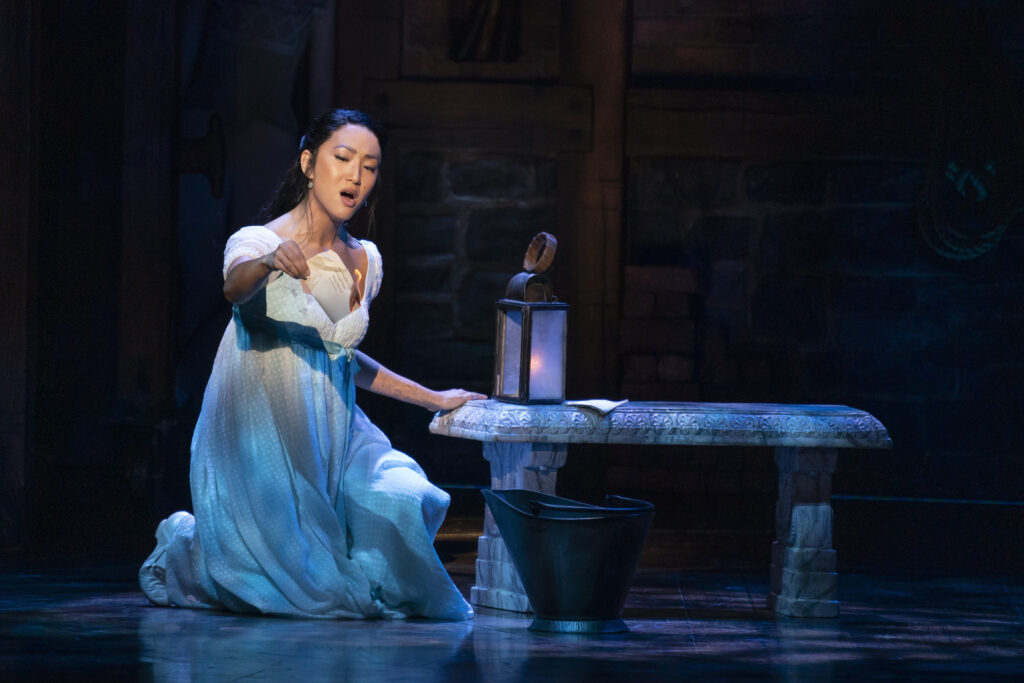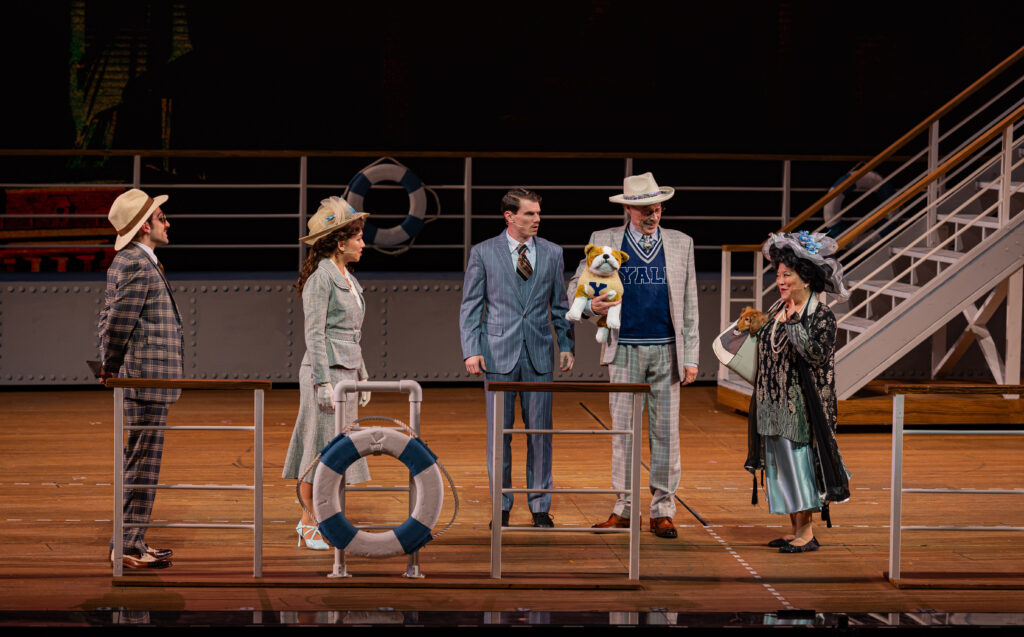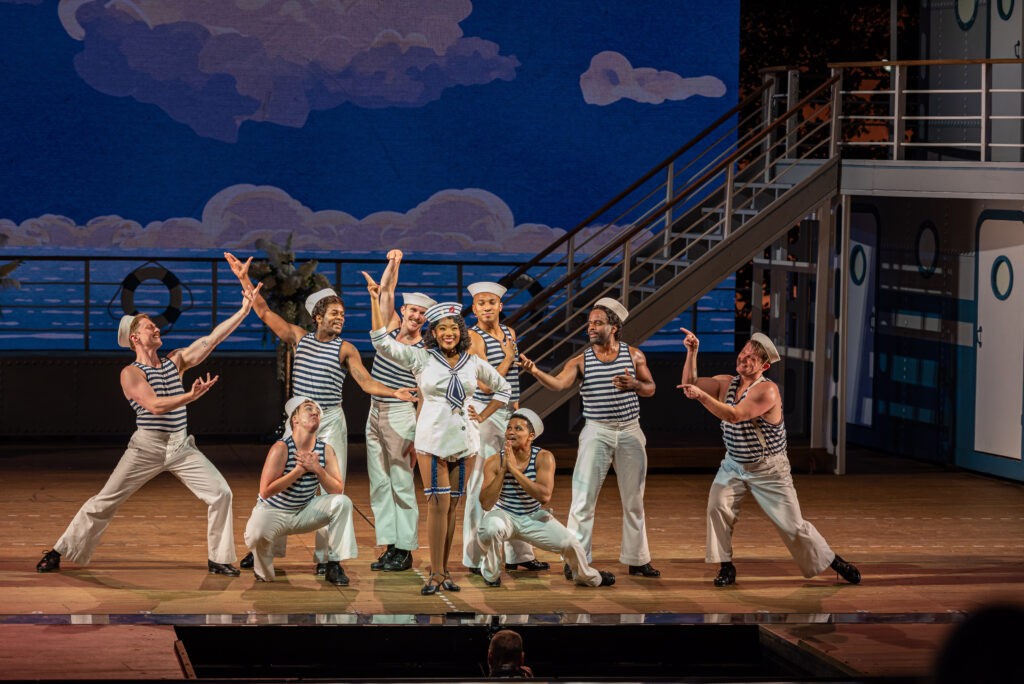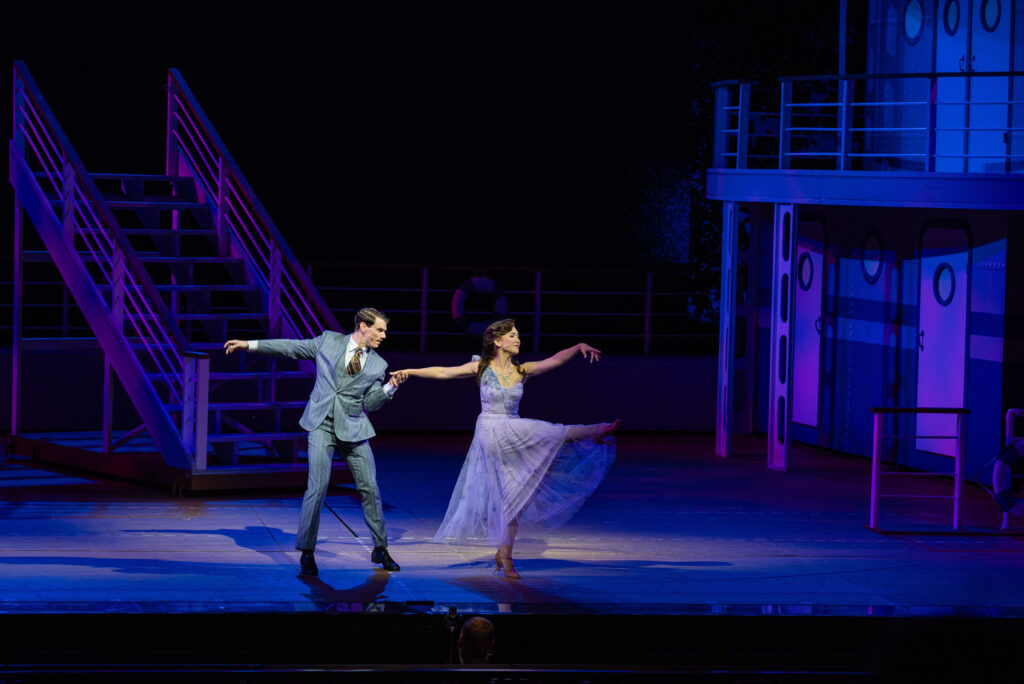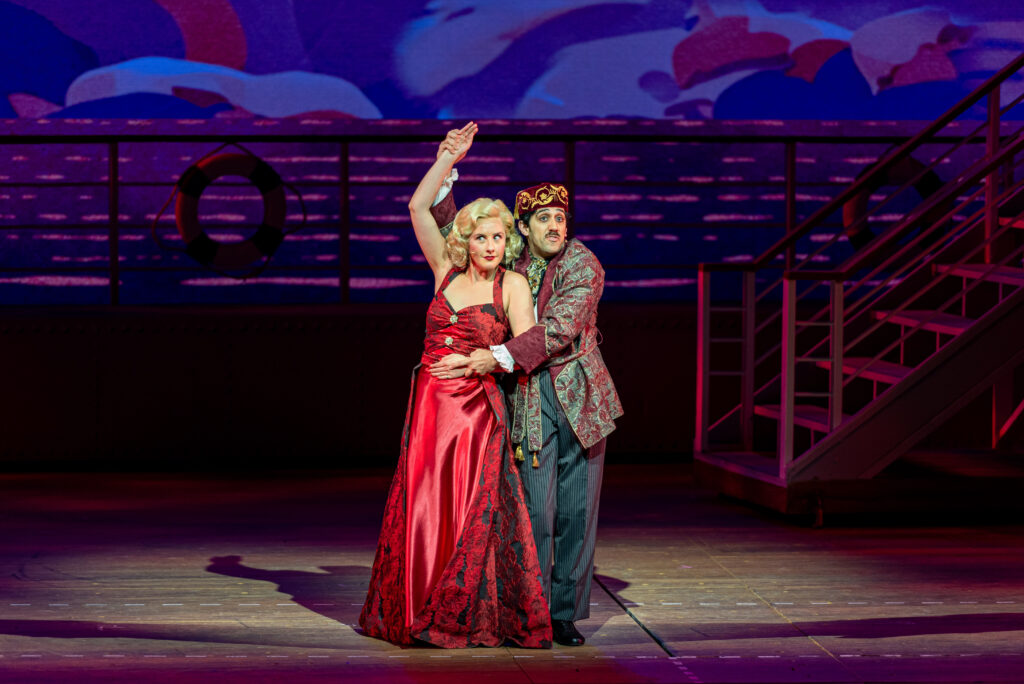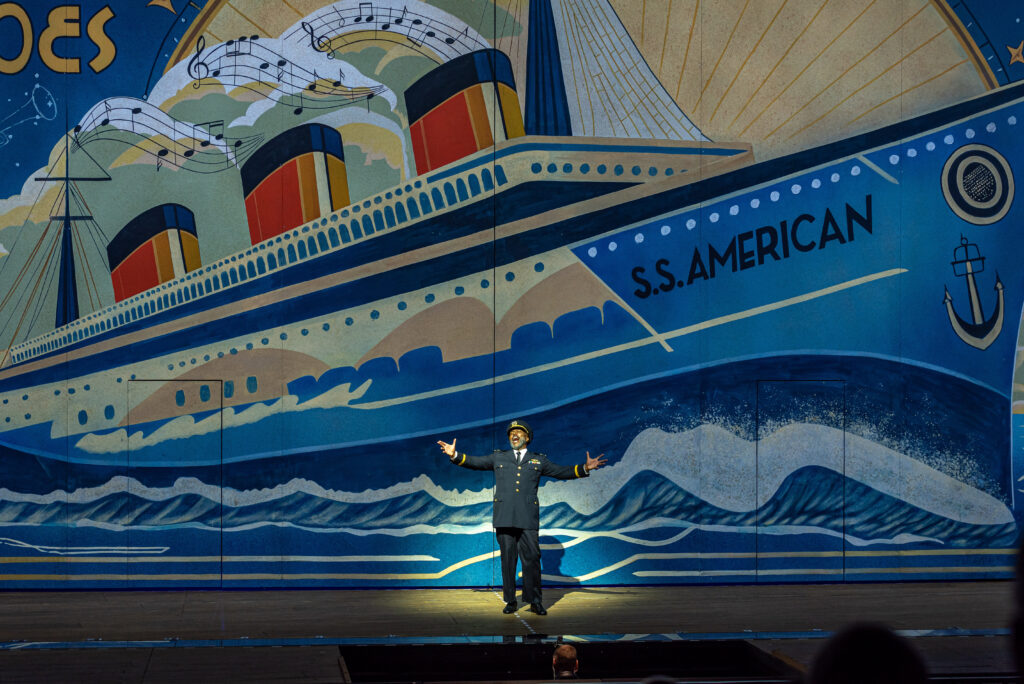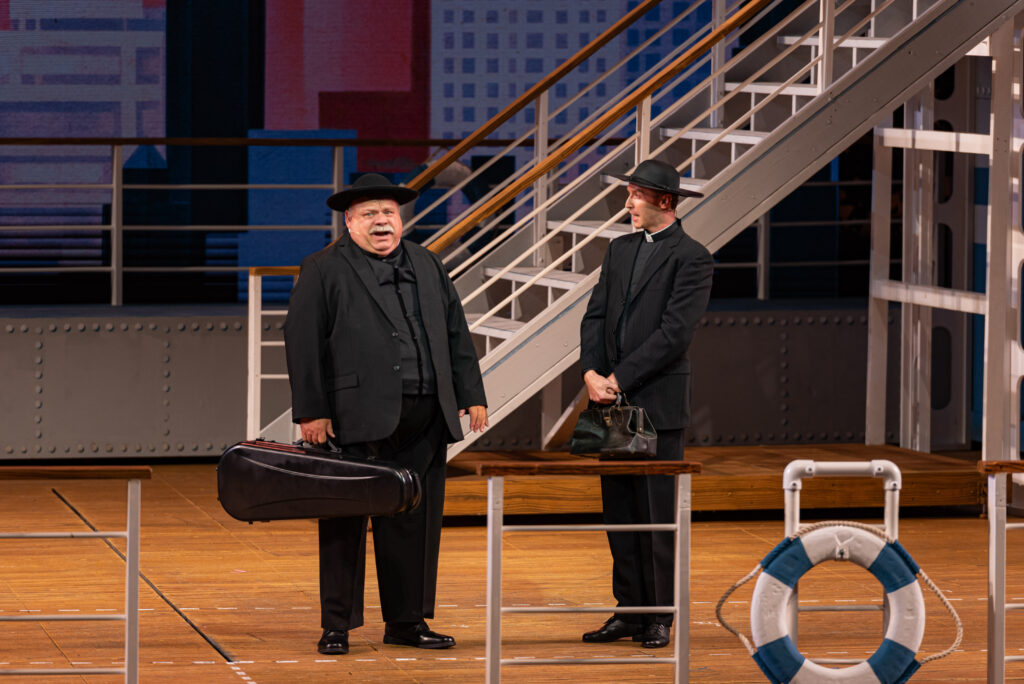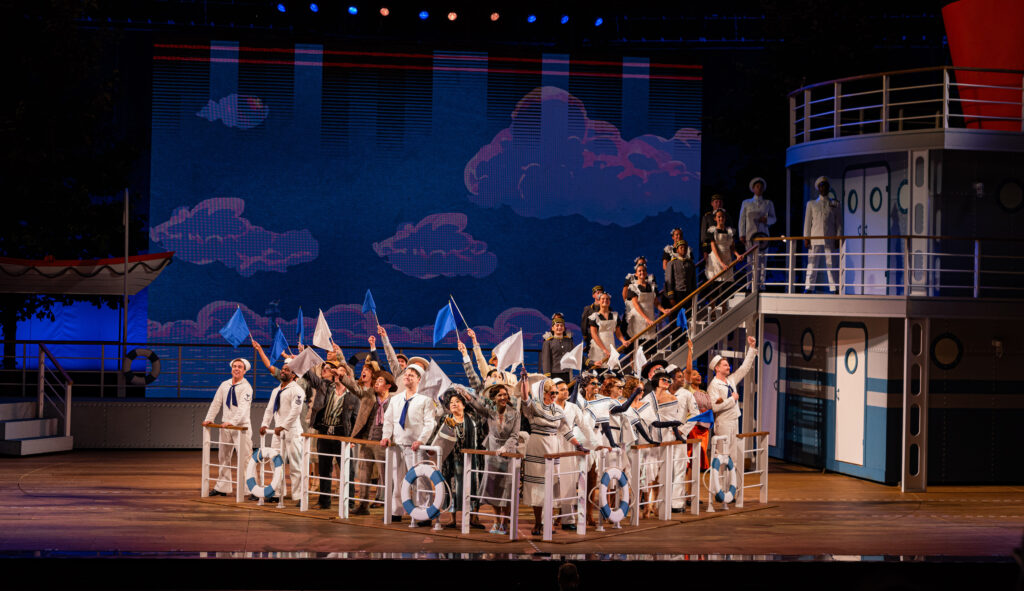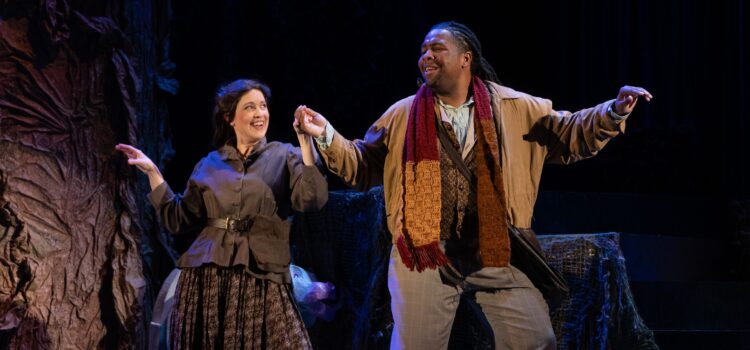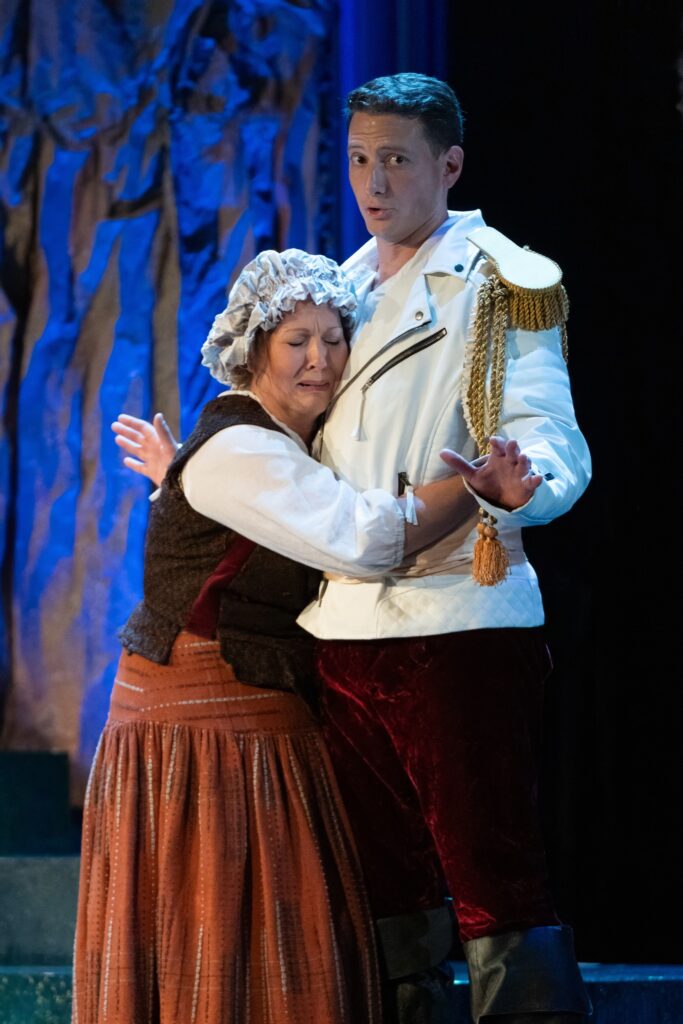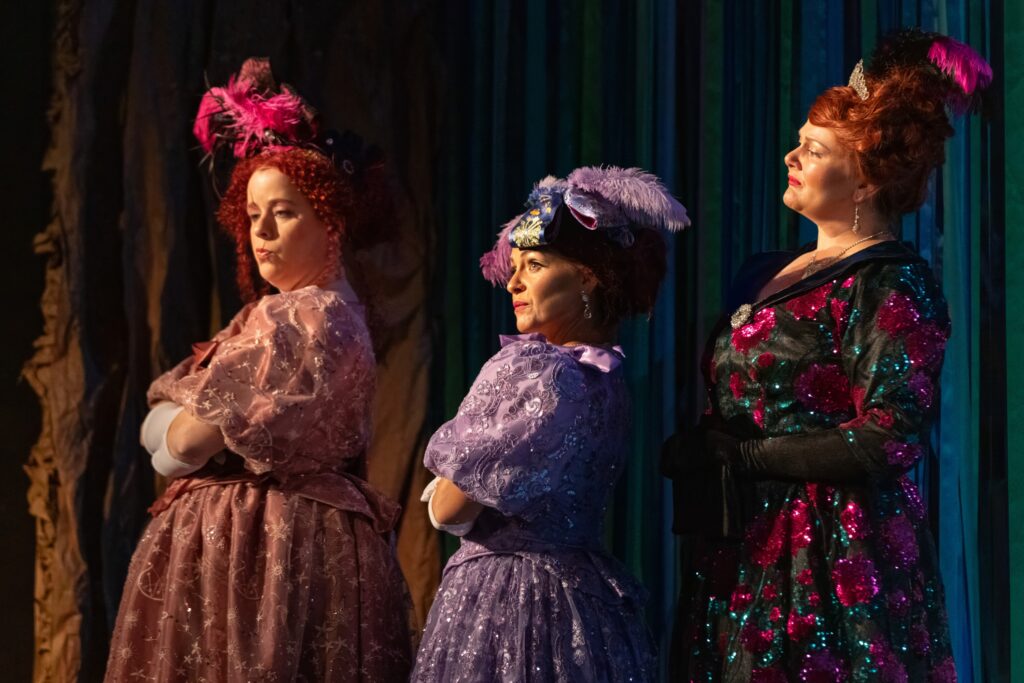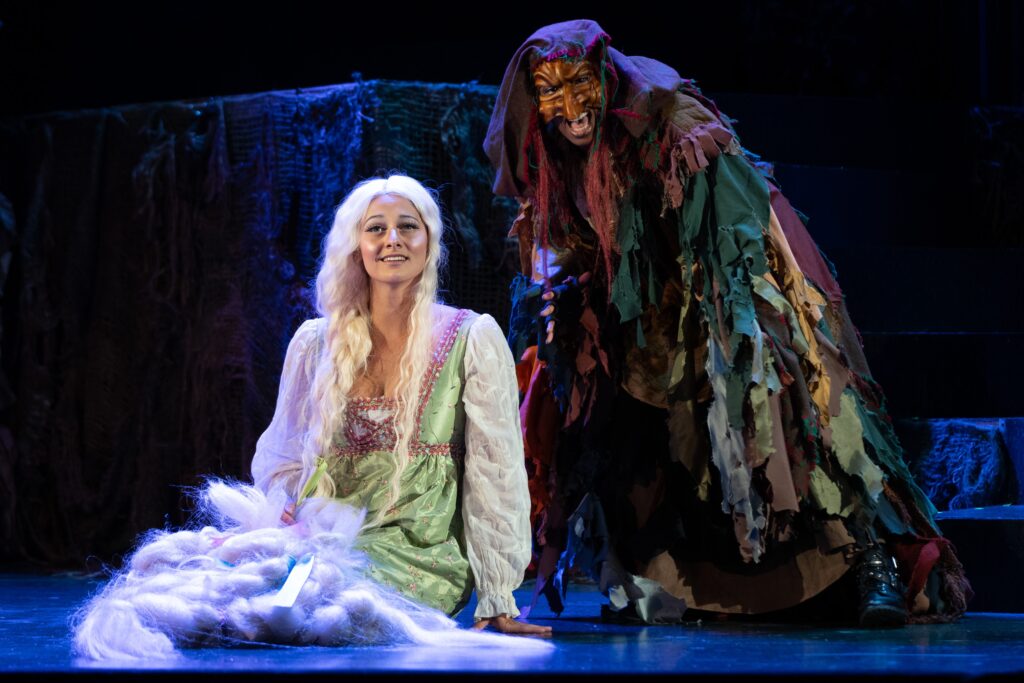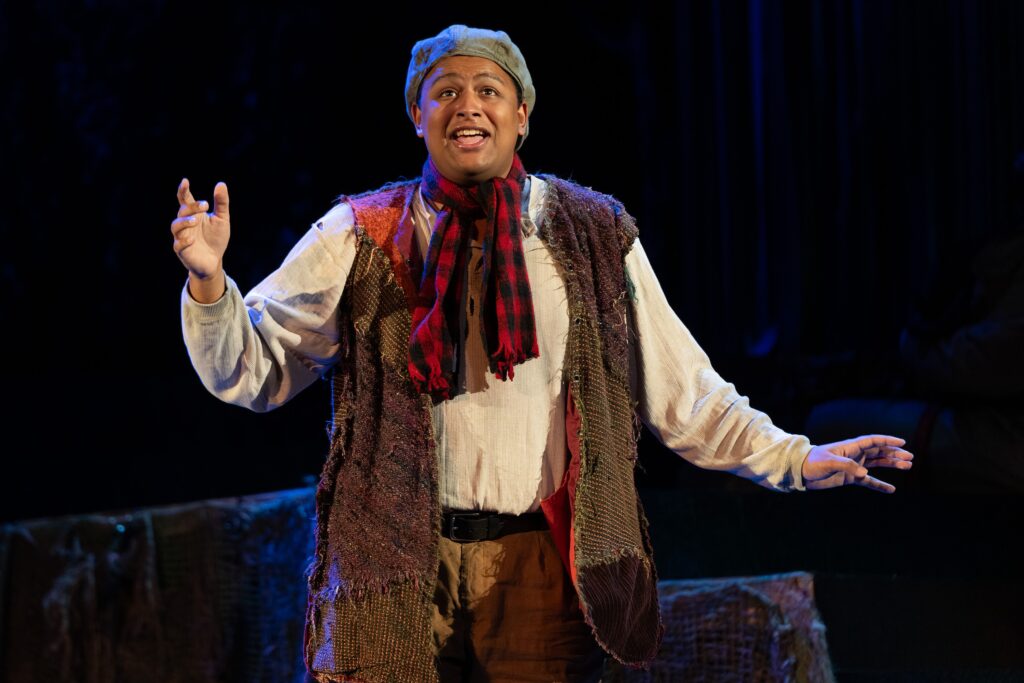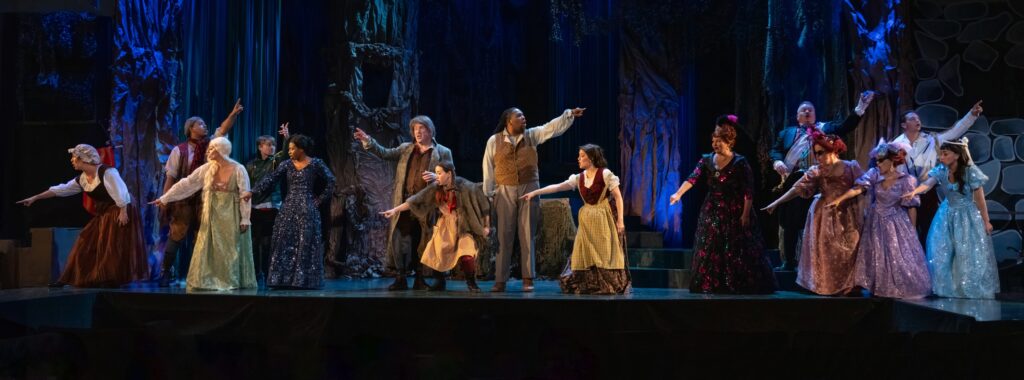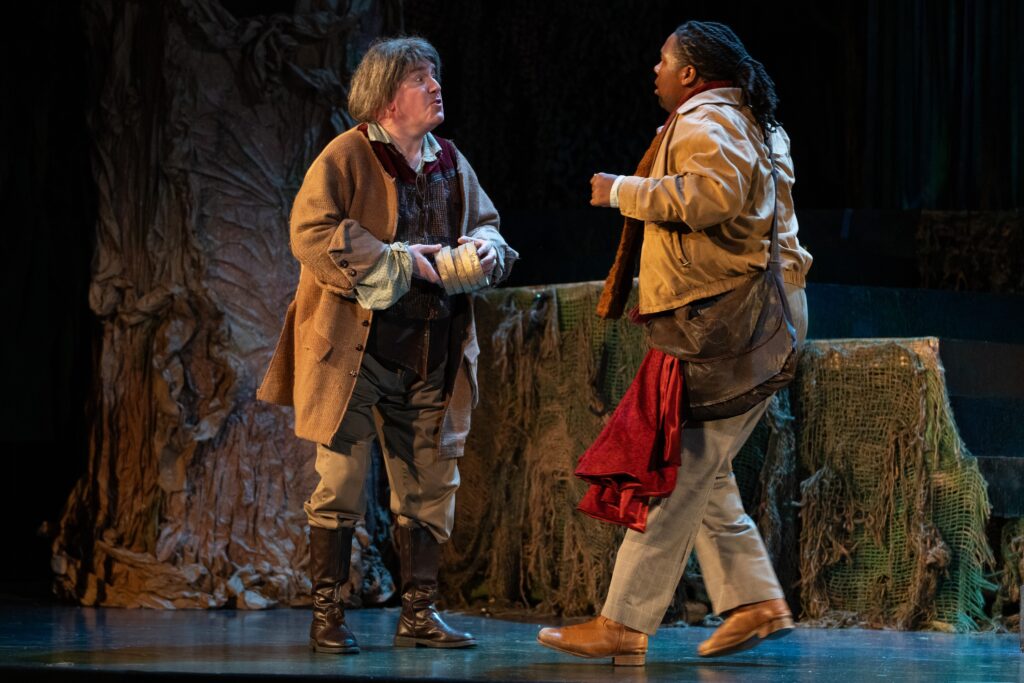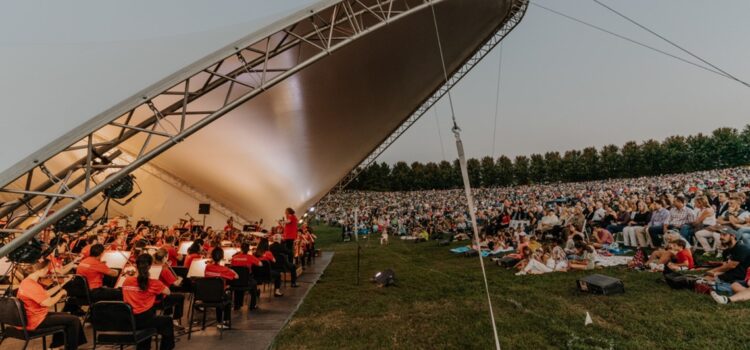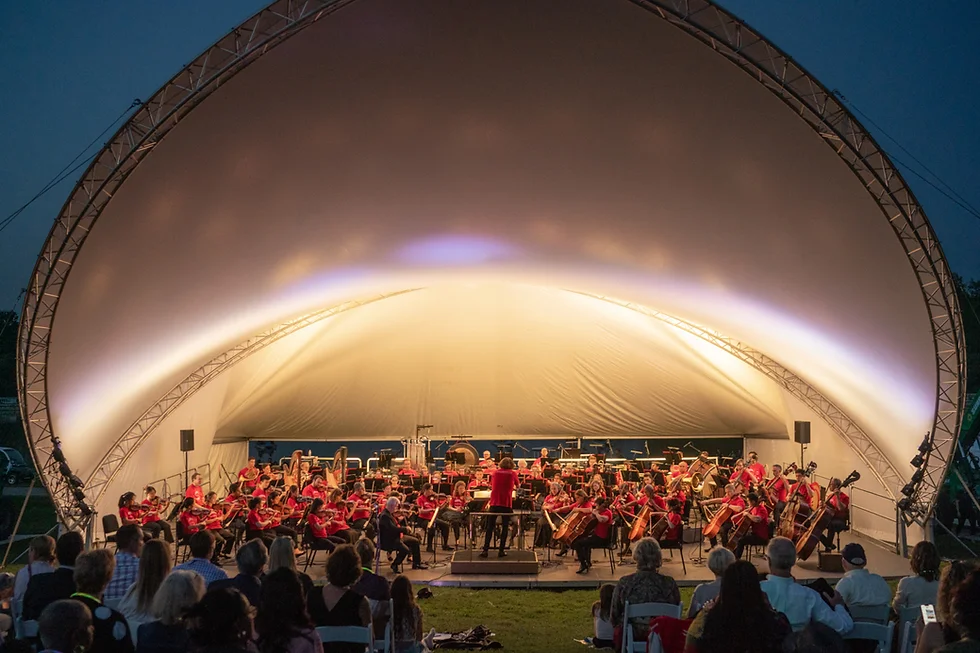
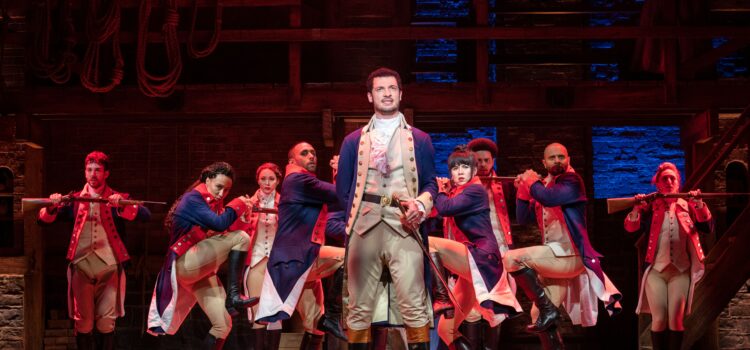
The Muny has announced its full cast, design and production teams for Les Misérables, which opens the theatre’s 106th season and runs June 17-23 on the James S. McDonnell Stage in Forest Park.

“We are ready to storm the barricade of Muny 106 with this beautiful musical,” said Muny Artistic Director & Executive Producer Mike Isaacson. “The cast, crew and artistic team are striving to create a production you’ll remember for a lifetime.”

Joining the previously announced John Riddle (Jean Valjean), Jordan Donica (Javert), Teal Wicks (Fantine), Red Concepción (Thénardier), Jade Jones (Madame Thénardier), Ken Page (The Bishop of Digne), Emily Bautista (Éponine), Gracie Annabelle Parker (Cosette), Peter Neureuther (Marius), James D. Gish (Enjolras), Kate Kappel (Little Cosette), Grace Moore (Young Éponine) and Will Schulte (Petit Gervais/Gavroche) are Lee H. AlexanderLeah BerryPatrick BlindauerMatías De La FlorChris HunterDan KlimkoÁngel LozadaDaniel Brooks McRathSydni MoonGrant PaceSarah PansingNicholas PattariniTim QuartierShelby RingdahlMatt RosellGrace Marie RusnicaLiv ShivenerSydney ShortCecilia SnowKyle TimsonNoah Van Ess and Annie Zigman. The company also will be joined by the Muny Kids and Muny Teens Youth Ensemble.

The Les Misérables creative team is led by Director Seth Sklar-Heyn, with Choreographer Jesse Robb, Music Director James Moore and Associate Musical Director Michael Horsley.

The production includes Associate Choreographer Paige Parkhill, Scenic Designer Ann Beyersdorfer, Costume Designer Gail Baldoni, Lighting Designer Jason Lyons, Co-sound Designers John Shivers and David Patridge, Video Designer Shawn Duan, Wig Designer Ashley Rae Callahan and Production Stage Manager Willie Porter.

The Telsey Office is the official casting partner of The Muny.

As previously announced, 20 singers from the St. Louis Symphony Chorus will join the company as the supernumerary chorus for “Do You Hear the People Sing?,” “One Day More” and “Finale: Do You Hear The People Sing? (Reprise).” The singers are Nicholas BashawAnnemarie Bethel-PeltonRachel ButtramLaurel DantasMary DonaldLea FrostMegan GlassJohn HergetMatthew JellinekJei Mitchell EvensHannah NelsonBrian PezzaValerie ReichertGreta RosenstockPaul RunnionMatthew StansfieldPhilip TouchetteRobert ValentineNicole Weiss and Tristan Wood. Members of the St. Louis Symphony Chorus will appear as a courtesy and in partnership with the St. Louis Symphony Orchestra.

The Muny artistic staff includes Artistic Director & Executive Producer Mike Isaacson, Associate Artistic Director Michael Baxter, Production Manager Tracy Utzmyers and Music Supervisor Michael Horsley.

Here is John Riddle singing “Bring Him Home’ in rehearsals at The Muny, with music director James Moore accompanying him on piano.
https://youtu.be/t33Cj8KB7g8?si=BM-_IyQ3AQVz5QBg

Principal Cast Bios

JOHN RIDDLE (Jean Valjean) received a St. Louis Theater Circle Award for his performance of Anatoly Sergievsky in last season’s production of Chess. Other Muny: Disney’s The Little MermaidTitanicShow BoatLegally Blonde and others. Broadway: The Visit (OBC), Frozen (OBC) and Raoul in the final company of The Phantom of the Opera. Off-Broadway/NY: Cal Hockley in Titanique the Musical (Lortel nomination), The Secret Garden in Concert (Lincoln Center), Cinderella’s Prince in Into the Woods (Town Hall). National tour: Evita. Regional: Kennedy Center, Long Wharf Theatre, Goodspeed, Pittsburgh Civic Light Opera, Casa Mañana, Naples Opera. Other: Cincinnati Pops Orchestra, American Pops Orchestra.

JORDAN DONICA (Javert) most recently starred as Sir Lancelot in the Lincoln Center Theater production of Camelot, for which he received a Tony Award nomination. He originated the role of Freddy Eynsford-Hill in the Tony-nominated My Fair Lady (Lincoln Center Theater) and starred as Raoul in Broadway’s The Phantom of the Opera. New York City Center Encores!: Into the Woods (Rapunzel’s Prince). Tour: Hamilton (first national tour, Marquis de Lafayette/Thomas Jefferson, SF/LA companies). Concerts: Washington National Opera, Pasadena Symphony, The New York Pops (Carnegie Hall), Indianapolis Symphony and Lincoln Center Theater’s Camelot. Featured performer at the American Songbook Hall of Fame. TV: Jordan Chase in the CW’s Charmed. Directing: The Exonerated in conjunction with the Center on Wrongful Convictions, Little Prints by Anna Mulhall.

TEAL WICKS (Fantine) On Broadway, Teal originated the roles of Lady in The Cher Show, Mary Barrie in Finding Neverland and Emma Carew in the revival of Jekyll & Hyde. She made her Broadway debut as Elphaba in Wicked after playing the role to critical acclaim in Los Angeles and San Francisco. Off-Broadway and across the US, Teal has created lead roles in The Ballad of Little Jo (Two River Theater), The Blue Flower (Second Stage/A.R.T.), Piece of My Heart: The Bert Berns Story (Signature Theatre NYC), The Life of the Party (TheatreWorks, with Andrew Lippa) and Fahrenheit 451 (59E59). TV/streaming appearances include The Peripheral (Amazon), The Night Agent (Netflix), NCIS: New Orleans, EvilElementaryThe Good WifeChicago Justice.

RED CONCEPCIÓN (Thénardier) Broadway: Chicago (Amos Hart). National/International tours: Miss Saigon (The Engineer, US national and UK/Ireland tours). Asian and Philippine credits: Priscilla, Queen of the Desert (Adam/Felicia; Manila and Singapore; Gawad Buhay Outstanding Male Lead in a Musical and Aliw Award for Best Actor in a Musical), Equus (Alan Strang), The Normal Heart (Tommy), Annie (Rooster), Rodgers & Hammerstein’s Cinderella (Lionel), West Side Story (A-rab) and more.

JADE JONES (Madame Thénardier) The Muny: Disney & Cameron Mackintosh’s Mary PoppinsThe Color Purple. Off-Broadway: Vanities. Regional: Disney’s Beauty and The Beast (Belle), A.D. 16, The Amen CornerMacbethInto the WoodsThe Wiz110 in the ShadeSweeney ToddSchool Girls; or, The African Mean Girls Play. TV: Chicago P.D., Cinderella: The Reunion, A Special Edition of 20/20 (ABC).

KEN PAGE (The Bishop of Digne) has performed in over 45 shows on the Muny stage. Ken is widely known as the voice of Mr. Oogie Boogie in the classic Disney/Tim Burton animated film The Nightmare Before Christmas. He has performed the score live at The Hollywood Bowl, Barclays Center NY, LA’s Banc of California Stadium, Glasgow, London (SSE Arena, Wembley), Dublin and Tokyo. Film: DreamgirlsTorch Song TrilogyAll Dogs Go to Heaven and more. Ken made his Broadway debut in the all-Black revival of Guys and Dolls as Nicely-Nicely Johnson (Theatre World Award). Other Broadway: Cats (Old Deuteronomy, OBC video/film cast), Ain’t Misbehavin’ (OBC, LA, Paris, Drama Desk Award for Best Actor, Grammy Award cast album), The Wiz (Lion). London’s West End: Children of Eden (Father, OLC), My One and Only in Concert (London Palladium). Mr. Page’s solo concert, Page By Page, was released on CD (LML Music). He is the recipient of a Lifetime Achievement Award from the Manhattan Association of Cabaret Artists (MAC), Project One Voice/Black Theatre and the St. Louis Arts Foundation.

EMILY BAUTISTA (Éponine) made her Broadway debut in the 2017 revival of Miss Saigon, where she understudied the lead role of Kim. She later returned to the role full time on the first national tour. In between the Broadway and touring productions of Miss Saigon, Emily took on the role of Éponine in Cameron Mackintosh’s North American touring production of Les Misérables. Following her time on tour, Emily made her London debut in the world premiere of Vanara: The Legend in the lead role of Ayla. On television, she is recognized for her role as Elodie on Pretty Little Liars: Original Sin. Additionally, Emily has made notable appearances in films The Compound (2021) and Which Brings Me to You (2023).
GRACIE ANNABELLE PARKER (Cosette) Regional: Guys and Dolls (Sarah Brown, The Carnegie), Brigadoon (Fiona, Wagon Wheel), Legally Blonde (Ensemble). Gracie is a recent graduate of the University of Cincinnati College-Conservatory of Music, BFA musical theatre.

PETER NEUREUTHER (Marius) Regional: Newsies (Jack Kelly) at the Warsaw Federal Incline Theater. Peter is a recent graduate of the University of Cincinnati’s College-Conservatory of Music (CCM).
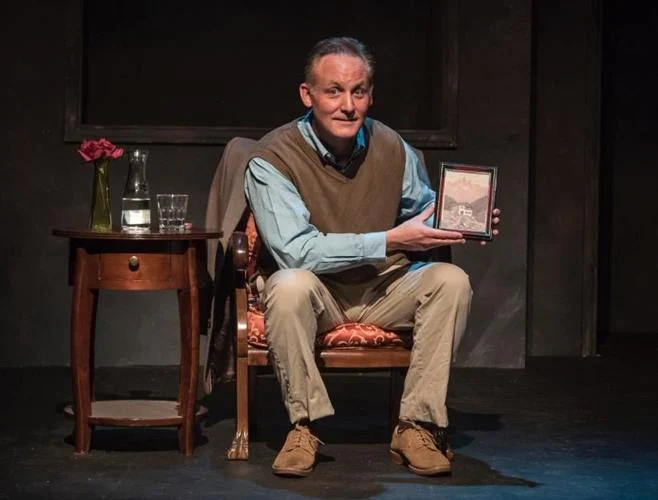
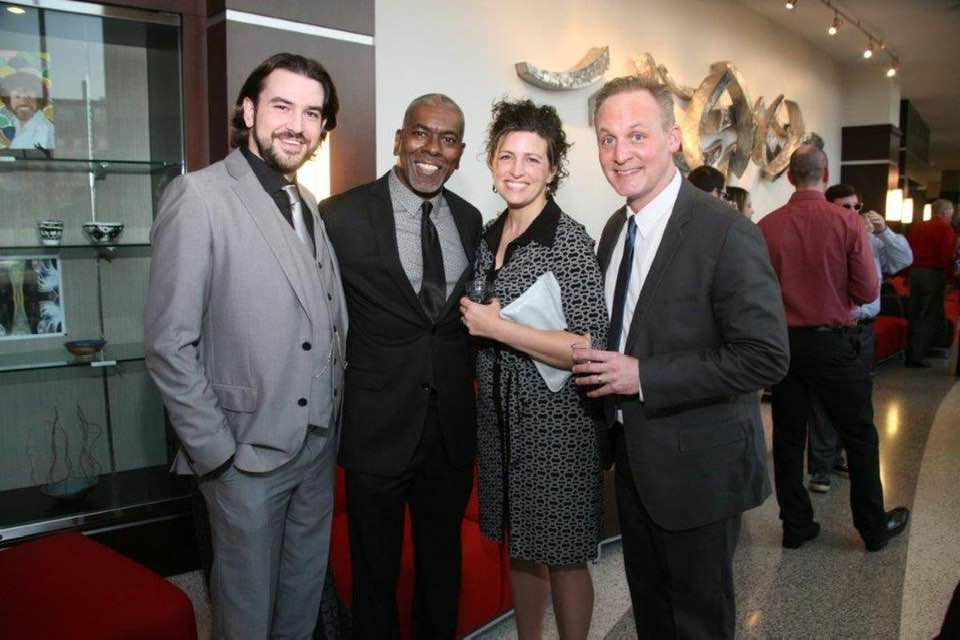
JAMES D. GISH (Enjolras) Broadway: Wicked (Fiyero). Off-Broadway: The Light in the Piazza (Fabrizio, New York City Center Encores!), The Jerusalem Syndrome (Mickey Rose, York Theatre, OOBC). National tours: Beautiful (Gerry Goffin), Les Misérables (Feuilly). Recent regional: Daddy Long Legs (Jervis, Phoenix Theatre Co.), West Side Story (Tony), Newsies (Jack Kelly) and The Toxic Avenger (Toxic Avenger).

KATE KAPPEL (Little Cosette) was last seen at The Muny in The Sound of Music (Gretl von Trapp) and in the Youth Ensemble of Joseph and the Amazing Technicolor Dreamcoat and Sister Act. Kate is 12 years old and just finished the sixth grade at South City Catholic Academy in St. Louis. She is a vocal student at Lisa Christine Studios and learns dance at the Professional Dance Center, where she is a member of the Ensemble competition team. Kate is a member of the Muny Kids and Muny Holiday troupes.

GRACE MOORE (Young Éponine) is 10 years old and is going into fifth grade, where she sings with her school choir and is a student house leader. Grace studies dance at Performing Arts Centre. She performs with the competition team and is a classroom helper. She studies voice with Kelly Stinnett Studios.

WILL SCHULTE (Petit Gervais/Gavroche) made his Muny debut in the Youth Ensemble of Beauty and the Beast last summer and is so excited to be performing with the Muny Kids touring troupe this summer. Will has also performed with Gateway Center for Performing Arts and was most recently seen as Kassim in Aladdin Jr. at his school. Will studies voice with Katie Kopff and also enjoys playing tennis. He will be attending St. Louis University High School in the fall.

Les Miz Broadway revival 2014

About the Show

Les Misérables previously was produced at The Muny in 2007 and 2013. The show includes music by Claude-Michel Schönberg and lyrics by Herbert Kretzmer, with a book by Alain Boublil and Claude-Michel Schönberg. Set against the backdrop of post-Revolutionary France and based on Victor Hugo’s 1862 novel, this celebrated musical follows the journey of Jean Valjean, an ex-convict seeking a fresh start, and his relentless pursuer, Javert. Its powerful songs and thrilling story of love, passion, sacrifice and redemption have been beloved the world over for generations.

Performances of Les Misérables begin at 8:15 p.m. nightly, June 17-23. Single-performance tickets and season tickets are on sale now at muny.org, by calling (314) 361-1900 or at the Muny Box Office in Forest Park.

To learn more about the Muny production of Les Misérables and the show’s history, visit muny.org/show/les-mis. For actor headshots, show logos, video and other assets, visit the Muny Press Room at muny.org/press.

Season 106 at The Muny also includes Dreamgirls (June 27-July 3), Disney’s The Little Mermaid (July 8-16), Fiddler on the Roof (July 19-25), Waitress (July 30-Aug. 5), In the Heights (Aug. 9-15) and Anything Goes (Aug. 19-25).

About The Muny

The Muny’s mission is to enrich lives by producing exceptional musical theatre, accessible to all, while continuing its remarkable tradition in Forest Park. As the nation’s oldest and largest outdoor musical theatre, we welcome more than 350,000 theatregoers each summer for seven world-class productions. Now celebrating 106 seasons in St. Louis, The Muny remains one of the premier institutions in musical theatre. For more information, visit muny.org.

Facebook Comments

By CB Adams

I shouldn’t admit this, but during the intermission at opening night of Opera Theatre of St. Louis’ production of “La Bohème,” I thought of Cher.

I should have been madly scribbling notes about all of the salient aspects of this Puccini classic, as all good reviewers should, but instead I was thinking of Cher’s performance as Loretta Castorini in the movie “Moonstruck.” Specifically, the scene when she’s discussing her experience having just attended “La Bohème.”

“I was surprised…” she says. “You know, I didn’t really think she was gonna die. I knew she was sick.”

The “she” is Mimi, and if Loretta had seen lyric soprano Katarina Burton’s performance, she might have realized that Mimi really was gonna die. That’s because Burton maintains a tightly controlled, authentic simplicity that draws attention to Mimi’s inner life and emotional journey. That journey is imbued with a subtle-but-persistent death-hauntedness – starting with a small, foreshadowing cough as she makes her entrance in the first act.

Moisés Salazar as Rodolfo and Katerina Burton as Mimì in Giacomo Puccini’s “La bohème.” Photo © Eric Woolsey

The specter of death makes Burton’s performance of Mimi’s deterioration compelling, tragic and all the (tragically) sweeter, especially her love and tribulations with Rodolfo. I hesitate to write that line because I’ve become more than bit disillusioned with the whole dying heroine trope. You know, “Terms of Endearment,” “Steel Magnolias,” “Hope Floats,” “Beaches,” etc., etc.

It’s to Burton’s credit that I suspended my dislike for this narrative device. Her voice conveys the necessary subtle nuances and delivers Puccini’s demanding melodies with a beautiful legato and emotional depth. She is a convincing actress who genuinely portrays Mimi’s joy, love and eventual (inevitable) suffering.

That was enough to win me over to Team Mimi – as was her chemistry with Rodolfo. The dynamic of this duo in their duets and emotional scenes provides a satisfying balance in these interactions.

If Burton’s Mimi foreshadows her journey with a small cough, Moisés Salazar’s’ Rodolfo faces his journey’s climax with the catch of his throat when he realizes Mimi has died. Salazar’s performance provides many confident and fine moments, but it is at that catch of the throat that rang the truest, most human and genuine. It’s also the moment that makes clear his journey of loss is just beginning.

Salazar exhibits a powerful and expressive tenor voice that ably conveys lyrical tenderness, dramatic intensity and a palpable emotional connection and chemistry with Mimi, enhancing the romantic and tragic dimensions of their relationship. His acting abilities enlivened his Rodolfo’s youthful ardor and eventual despair​.

Brittney Renee achieves another bit of opera theater magic in the final act. In the first three, Renee delivers a Musetta who displays the requisite range of confident liveliness and flamboyance with a touch of naughtiness (Café Momus, anybody?). But it’s her act of kindness toward Mimi in fourth act that most humanizes the character. Renee’s compassion adds genuine depth to the role.

Thomas Glass as Marcello, Titus Muzi III as Schaunard, Moisés Salazar as Rodolfo, and André Courville as Collins in Giacomo Puccini’s “La bohème.” Photo © Eric Woolsey

Great chemistry is a hallmark of this cast, especially among the Bohemians – Thomas Glass as Marcello, André Courville as the philosopher, Collins, and Titus Muzi III as Schaunard. Collectively and individually, their vocal abilities combined with seamless ensemble singing, maintains harmonic unity, but it is in their camaraderie and musical interplay provides the necessary chemistry to drive much of the opera’s emotional and narrative depth​.

Proof that there are no small roles in theater is found in the minor character Parpignol, the toymaker and vendor who makes his one and only appearance in Act II. Levi Adkins inhabits the character who contributes to the effervescence of the abundant, bustling Christmas Eve scene.

Most memorable is his Napoleonic hat, red and white jacquard pantaloons and backpack drum, thanks to the efforts of costume designer Amanda Seymour as well as wig and makeup designers Krystal Balleza and Will Vicari.

Another memorable costume is notable for a very different reason. It’s Mimi’s periwinkle blue coat and purse in Act II. As Mimi opens her heart to Marcello outdoors, they interact in the cold outdoors. The way Burton clings to that handbag while standing in a coat that is too light for such cold, reveals volumes about the uncomfortable state of her character.

It’s moments like this when the collective efforts of the cast, director Michael Shell, set design (Takeshi Kata) and lighting design (Marcus Doshi) align to elevate a small moment.

Moisés Salazar as Rodolfo and Thomas Glass as Marcello in Giacomo Puccini’s “La bohème.” Photo © Eric Woolsey

The members of members of the St. Louis Symphony Orchestra consistently provide terrific performances for OTSL performances – so much so that it’s easy to forget how important the music is. For “La Bohème,” the musicians, under the direction of José Luis Gómez, exquisitely convey the depth of characters’ sentiments and enhance the immersion in the poignant narrative.

As a member of the “chestnuts club,” opera’s “La Bohème” is like ballet’s “The Nutcracker” and can be counted on to put cheeks in seats. The regular appearance of a “La Bohème” of this quality should be celebrated because the opera stands up well to repeated viewings (and listenings) and is a good “gateway” to the artform. It’s like pressing replay, pulling on a favorite sweater or meeting a friend for lunch.

And, to invoke Cher once more, it makes me believe yet again  “…in life after love..”

“La Bohème” is part of Opera Theatre of St. Louis 2024 repertory season continuing through June 30 at the Loretto-Hilton Center on the Webster University campus. For tickets or more information visit www.opera-stl.org.

Brittany Renee as Musetta and Thomas Glass as Marcello in Giacomo Puccini’s “La bohème.” Photo © Eric Woolsey

Cover photo: Brittany Renee as Musetta in Giacomo Puccini’s “La bohème.” Photo © Eric Woolsey

Facebook Comments

By Lynn Venhaus

Whether you have a family that always puts the ‘fun’ in dysfunctional or is going through a temporary rough patch, you will find something relatable in Lila Rose Kaplan’s crowd-pleasing comedy-drama “We All Fall Down.”

Nowhere is an extended family’s quirkiness more apparent that at a holiday gathering, and this setting is a Passover seder with the Jewish but non-practicing Steins coming together.
 
The territory navigated is both familiar and foreign. When the playwright’s wit, director Rebekah Scallet’s finesse, and the cast’s crisp comic timing percolate on all cylinders, it’s splendid.

Yet, there is a busyness that comes across as somewhat annoying. The seven characters are all pre-occupied, with the parents and two grown adult children overstuffed with personality peculiarities, and the three guests underdeveloped. Perhaps some trimming would have made it feel less congested.

While the resolution is heartfelt, it doesn’t feel as genuine or as earned as it could be, for the relationships are complicated, and the revelations feel rushed.

As we all know, often when people try too hard to make a celebration joyful, it fails to meet expectations because of uncooperative moving parts.

Add befuddlement as to why this festival is happening now when it’s never been a big deal, which adds a layer – and everyone is in various degrees of a tizzy.

While psychologist and family therapist mom Linda (Mindy Shaw), history professor dad (Alan Knoll), yoga instructor daughter Ariel (Hailey Medrano), feminist activist-educator daughter Sammi (Bridgette Bassa), sarcastic aunt Nan (Jenni Ryan), a sweet but sensitive friend Bev (Bethany Barr) and an efficient assistant Ester (Taijha Silas) are preparing for this specific meal with their own ‘to-do’ lists, wackiness ensues, and universal truths give way.

Mindy Shaw, Hailey Medrano. Photo by Jon GItchoff.

In Judaism, Passover commemorates the Hebrews’ liberation from slavery in Egypt, sparing the first-born of the Israelites on the eve of the Exodus. There are specific rituals handed down through generations, and Kaplan deftly explains traditions to those of us not in the know.

Those of other faiths can identify with their own heritage’s touchstones while the evergreen themes of people growing older, and children growing up strike chords.

The ensemble meshes well, conveying all the stress, resentments and aggravations that a holiday represents, but also their unique family dynamic and relationships. As in real life, a delicate balance between mothers, fathers, daughters and sisters is always shifting.

Sunrise, sunset
Swiftly fly the years
One season following another
Laden with happiness and tears

Knoll, whose performances are always lived in and first-rate, has shaded Saul with convincing layers, coming across at first as good-natured but concealing a troubled soul.

His memory is fading, and he’s confused, disconnected, and not understanding what’s happening, although he’s trying to cling tight to his routines.

His patterns are being interrupted by all the hubbub, and glimpses of what’s happening begin to be noticed by the others when they start paying attention. Most everyone is in their own little bubble and must eventually find the compassion they need at this moment. Frustrated, he won’t admit or can’t come to terms with his cognitive decline.

Alan Knoll, Bridgette Bassa, with Jenni Ryan in background. Photo by Jon Gitchoff.

Those who’ve witnessed a loved one lose parts of themselves through Alzheimer’s disease or other forms of dementia can recognize the symptoms that Kaplan astutely presents.

A flustered, frantic melodramatic wife and mother, Linda is played as a demanding perfectionist with nervous energy by the lissome and facile Mindy Shaw.  

This bossy control freak and bestselling author has a hidden agenda that keeps everyone guessing as to why she’s going to all this trouble. She’s a little kooky dressing up in costumes and flitting about.

Her two daughters, with secrets of their own, are focused on their problems and not why their dad may have retired early, why he’s drinking so much, or why mom’s making the signature dishes for what an old neighbor describes as “Jewish Easter.”

As adult daughters, Bassa and Medrano affect a realistic sibling rivalry and dissatisfaction with their current paths. Intelligent and limber performers, Bassa and Medrano bounce off each other like women with a history, and their rhythm is naturalistic.

There is an undercurrent of tension that may be connected to their mother’s book “Mothering Difficult Children”,” which is a hoot.” (What a great title!).

Ryan plays Saul’s outspoken sister, Aunt Nan, a part that seems straight out of sitcom land, as does Barr’s Bev, an empty nester who once lived across the street.

Silas has a nice turn as Linda’s graduate assistant who is tasked with singing “The Four Questions,” and does so beautifully.

Taijha Silas as Ester. Photo by Jon Gitchoff.

The two-story suburban home setting designed by Andrea Ball is a marvel of functionality and comfort. The kitchen is stocked with all the necessary ingredients and tools to make Kugel and matzo balls, and the girls’ childhood bedroom becomes an oasis (as does a bathroom).

The technical design work is as admirable as ever, with Michael Sullivan’s lighting design and Michelle Friedman Siler’s costume design both stellar components. Cecille “Cece” Entz’ prop work is noteworthy — an appealing mix of years of clutter.

Ellie Schwetye’s sound design is always significant, and this time her mix tape choices are interesting — especially the specific “War of 1812 Overture” that’s in the script.

Kaplan crafted this play with heart. Originally produced in 2020 in Boston, this presentation is the regional premiere in St. Louis. She has a flair for tackling issues from a woman’s point of view, which is refreshing. However, the tone shifts several times, which happens when the material is both a comedy and a drama.

Scallet, also the artistic director, has helmed this show in a light-hearted way, even though the theme is heavy – parents must be taken care of even when you can’t take care of yourself

She and the playwright met years ago when Scallet was directing Kaplan’s play “Catching Flight,” which was part of a new play development program, and became friends.

The main takeaway is that traditions should be appreciated and familial love is the foundation of life. Whatever our families are going through, we can lean on each other for comfort and strength. All families deal with loss, lose their way, and re-emerge with new customs, yet never forgetting those who have passed.

Memories are made, and passed on through generations — simple yet profound.

Alan Knoll, Jenni Ryan. Photo by Jon Gitchoff.

The New Jewish Theatre presents “We All Fall Down” from May 30 to June 16 at the JCCA’s Wool Studio Theatre, 2 Millstone Campus Drive, St. Louis. The play is 95 minutes without an intermission. Performances are Thursdays at 7:30 p.m., Saturdays at 4 and 8.p.m., and Sundays at 2 p.m. Individual tickets are $27- $58. Tickets are available by phone at 314.442.3283 or online at newjewishtheatre.org.

Special Note: Scallet will host two additional talkbacks with show audiences on Saturday, June 14 following the 4 p.m. performance, and on Thursday, June 6, following the 7:30 p.m. performance.

Photo by Jon Gitchoff.
Facebook Comments

By Lynn Venhaus

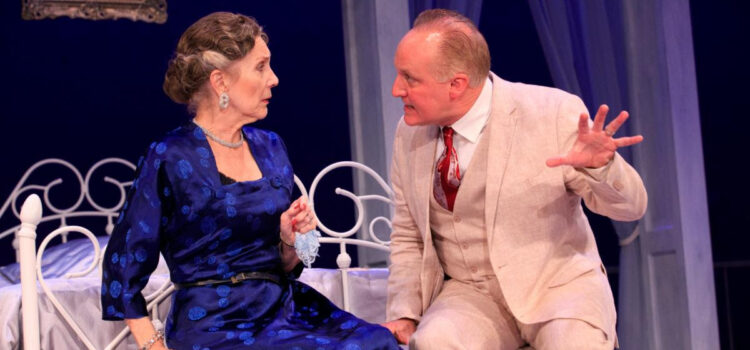
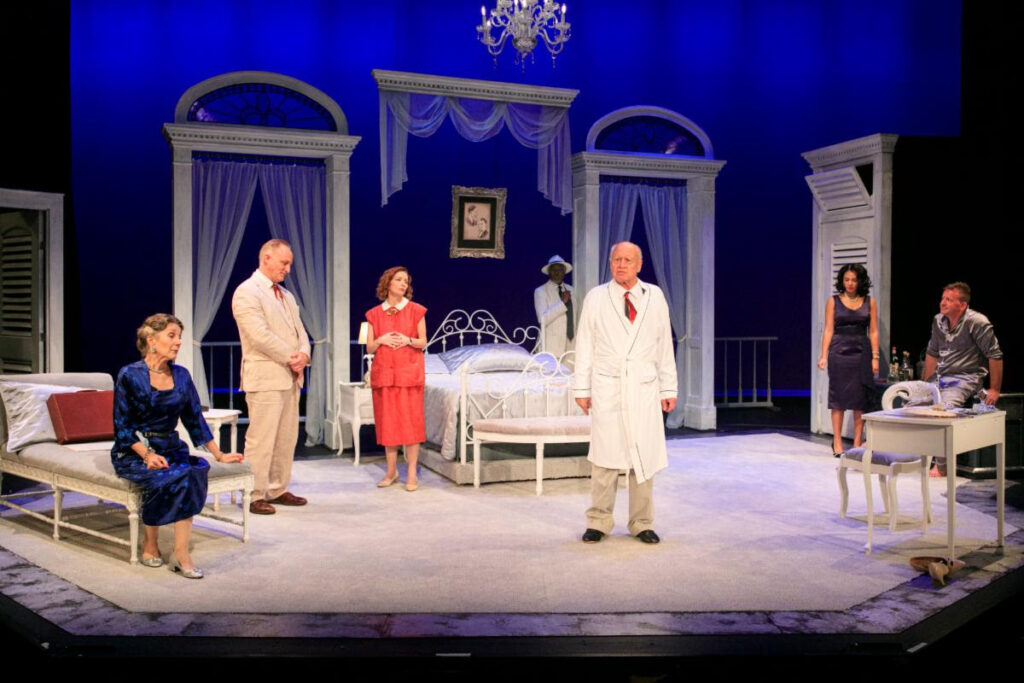
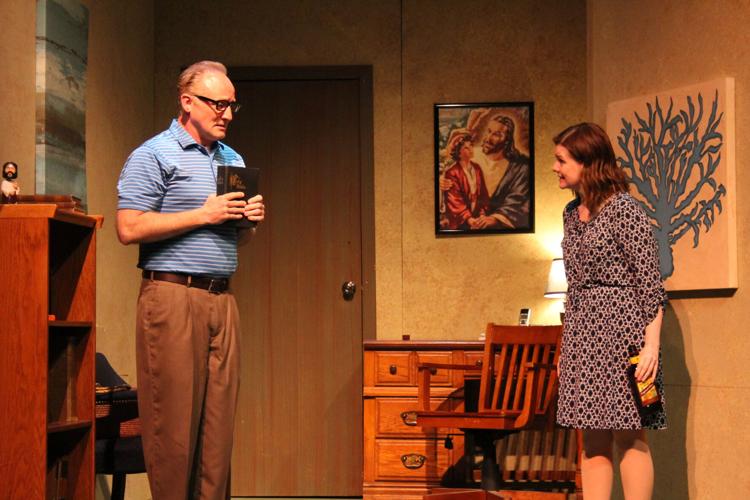
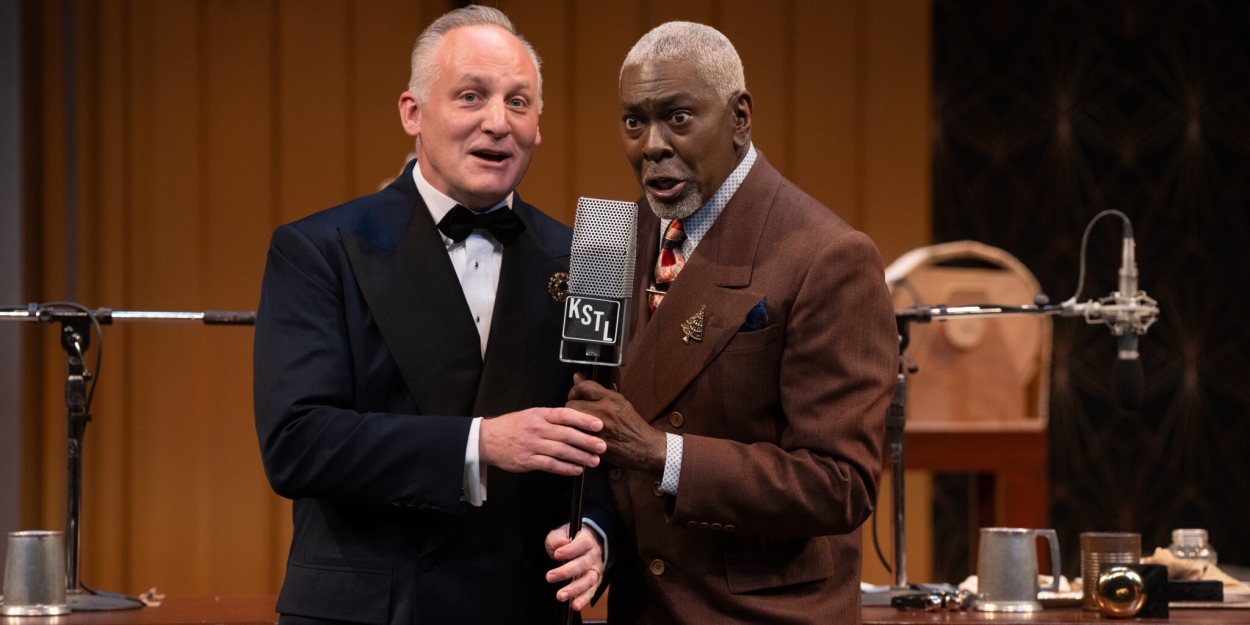
Throughout a long and illustrious career as a professional actor and director, Alan Knoll has been a steady and appreciated presence in St. Louis regional productions. This year, he’s as busy as ever, appearing as flawed dads in two plays — “We All Fall Down” and “August: Osage County,” and directing an acclaimed drama — “Red” — later this summer.

Knoll estimates he has been in more than 150 productions, with his current turn as Saul Stein, a retired history professor, in “We All Fall Down,” now playing at New Jewish Theatre through June 16.

“It appears to be around my 153rd show since I started acting ‘professionally’ right after college. That doesn’t include the many shows I did at St. Mary’s High School, St. Louis University, and all those little gigs I took right out of school that didn’t pay a little something,” he said.

The parts of Saul Stein and Charlie Aiken Sr. this year have been enriching, he said. He has moved easily between comedic and dramatic parts, with occasional forays into musicals.

“This is the year of the family dramedy for me, for sure. Playing Saul Stein in ‘We All Fall Down’ at the New Jewish Theatre took me down an unexpected road of reflecting on my own dad and what he went through at the end of his life. Playing Charlie Aiken in ;August: Osage County” gave me the opportunity to reflect on my successes and failures in raising my wonderful son,” he said.

Alan plays retired history professor Saul Stein in “We All Fall Down,” with Jenni Ryan (back) and Bridgette Bassa (right). Photo by Jon Gitchoff.

The New Jewish Theatre’s production will be its first in St. Louis, after it made its debut in 2020 at Boston’s Huntington Theatre. It illustrates the joys and heartaches of growing older, growing up, and growing to understand the value of tradition.

Mindy Shaw plays Saul’s wife Linda, a brilliant but dramatic matriarch, who wanted to bring her secular family together for their first-ever Passover seder. But as the night continues, the occasion goes from funny to poignant. The play reminds us how culture, personal identity, and family are intricately woven.

“Even with my next project, directing “Red” for the New Jewish Theatre, the play has that father-son dynamic. It brings up strong memories of me as both the son and the father,” he said.

A bonus of being in family-centered plays is the connections you make, he noted.

“The secret no one tells you about acting is every time you do a show you gain a family.  And when that show is about a family, those gained relationships can be even more intense,” he said.

As God.

He last appeared on the Wool Studio Theatre in 2018, playing the Almighty in “An Act of God.”

Knoll has worked with multiple companies in St. Louis, including The Black Rep, The Repertory Theatre of St. Louis, The Muny, St. Louis Actors’ Studio, Upstream Theater and Imaginary Theatre Company, and the defunct Insight Theater Company, Dramatic License Productions, HotCity Theatre, Muddy Waters Theatre Company and Theater Factory..

He has also worked extensively over the years at Arrow Rock Lyceum Theatre, which is one of Missouri’s oldest professional regional theatres, and about 160 miles from St. Louis. His wife of 26 years, Laurie McConnell, became the marketing director there in 2023, and they moved from their Dogtown neighborhood to the quaint village of Arrow Rock.

He received Kevin Kline Award acting nominations for “It’s a Wonderful Life” and “Conversations with My Father.” Besides acting, he has been nominated for directing Neil Simon’s autobiographical comedies “Brighton Beach Memoirs” and “Broadway Bound” at New Jewish Theatre by the St. Louis Theater Circle Awards.

He has also appeared in several films, including as a prison warden in 2023’s “Penitentia,” and in the 1998 mini-series “A Will of Their Own” as a reporter, which was shot in St. Louis.

Despite his busy schedule, he graciously gave us his time to answer our Take Ten questionnaire.

With Steve Isom in “Wittenberg” at Upstream Theater.

Take Ten Q&A

1. What is special about your latest project?

“Lila Rose Kaplan’s family comedy/drama is just great. I didn’t realize it would be so special to me, but in rehearsing it, it has become a role that is very close to my heart. It has made me reflect on my own dad and what he was going through toward the end of his life.”

2. Why did you choose your profession/pursue the arts?  

“It was the only thing I felt comfortable doing! As a kid, I was pretty lonely and isolated, not very happy at all. At St. Mary’s High School, I met Rich Contini, the drama teacher, which changed the trajectory of my life. That continued at SLU under the guidance of Alan Hanson, Robert Butler and Wayne Loui.”

3. How would your friends describe you?  

“What friends?
I guess as an easy-going nice guy. I hope so anyway. I have a sense of fairness and I make them laugh. Also, if you need to know who won Best Supporting Actor in 1942, I’m faster than Google.”

Alan Knoll as the U.S. president in “November” at St. Louis Actors’ Studio.

4. How do you like to spend your spare time?

“What is this spare time you speak of? Reading, watching old movies, finding a streaming show for us to become obsessed with, walking our rescue pooch, Truman.”

5. What is your current obsession?

“Abbott Elementary and running from cicadas.” 

6. What would people be surprised to find out about you?

“I’m very shy.”

7. Can you share one of your most defining moments in life? 

“Marrying the best girl in the world, Laurie McConnell.”

8. Who do you admire most? 

“I would have to say my wife, Laurie McConnell. She’s amazingly talented and so sweet to everyone. She always becomes a rockstar at whatever she does, whether it’s in her radio career, her acting career or her marketing career. I don’t know how she does it.”

9. What is at the top of your bucket list? 

“Travel, because I have done very little of it. Touring the UK (or whatever it’s called since Brexit) is a dream of mine.”

Alan and wife Laurie McConnell. Provided photo.

10. How were you affected by the pandemic years, and anything you would like to share about what got you through and any lesson learned during the isolation periods? Any reflections on how the arts were affected? And what it means to move forward?

“2020 was scheduled to be one of my best years.   I had acting and directing gigs lined up all over the place.  None of that happened.  Of course, this nothing compared to the millions who lost their lives.

Laurie and I got through it by teaching ourselves to cook and visiting with our neighbors over the fence in the back yard.  6 feet apart of course.  It reminded us of our inter-connectedness and how we’re not in this alone.

The St Louis arts scene was terribly affected.  All the theatres shut down and some never came back. Patrons got out of the habit ongoing to the the theatre and we’re still trying to fix that.”


11. What is your favorite thing to do in St. Louis?

This is my hometown, but now that I don’t live here, it’s fun to see the city and all it has to offer with fresh eyes.  Forest Park, Ted Drewes, hanging out with my son in the Bevo neighborhood, Imo’s pizza, smelling the hops emanating from the brewery where my Dad worked for forty years.  I love my hometown and the Cardinals…….even this year!


12. What’s next?

“Directing “Red” for the New Jewish Theatre, then performing in “Noises Off” at the Arrow Rock Lyceum Theatre, then a long nap.”

Playing a priest in “Flanagan’s Wake” at the Playhouse at Westport. The run was cut short by the pandemic shutdown in March 2020.

More About Alan Knoll

Name: Alan Vincent Stephen Knoll
Age: My wife Laurie says I act like I’m 12
Birthplace: St Louis
Current location: Home base, Arrow Rock, Mo.  Currently working in St Louis.
Family: Laurie McConnell & Ben Knoll
Education: Bachelor’s degree from Saint Louis University
Day job: Dog walker (just mine….unpaid)
First job:  Dishwasher at Al Smith’s restaurant on Grand, 7 Meramec in South St Louis
First play or movie you were involved in or made: My first play was the Caine Mutiny Court Martial.  I was a sophomore in high school.
Dream job/opportunity: I really want to play Willy Loman in “Death of a Salesman”
Awards/Honors/Achievements: The late, great Riverfront Times named me Best Actor as George in “Who’s Afraid of Virginia Woolf?”
A Woody award as a best supporting actor for the Black Rep’s “Intimate Apparel.” A Piglet Award for directing “Putnam County Spelling Bee” for St. Louis University.
Being enough of a working actor to earn a pension from Actor’s Equity.
Favorite quote/words to live by: Dying is easy, Comedy is hard — Edmund Gwenn
A song that makes you happy: “Gimme Shelter” – The Rolling Stones

The ensemble cast of The Rep’s “August: Osage County.” Alan is in the foreground, center.
Facebook Comments

Editor’s note: This review originally appeared in the Belleville News-Democrat on Oct. 10, 2010. We are running this review because of its resurgence streaming on Netflix.

By Lynn Venhaus
For the News-Democrat

What It’s About: In a clash of acting titans, two powerhouses go mano a mano in “The Judge,” an over-stuffed yet unpredictable dysfunctional family-legal drama.

Oscar winner Robert Duvall (“Tender Mercies”) is a respected judge who squares off with his estranged son Hank, played by Oscar nominee Robert Downey Jr. (“Tropic Thunder”), who reluctantly oversees his defense during a murder trial.

Hank is a slick Chicago lawyer who reunites with his small-town Indiana family after his mother dies. His older brother Glen (Vincent D’Onofrio) was a promising ball player whose career prospects were cut short after an accident. His younger brother Dale (Jeremy Strong) is a developmentally disabled adult living at home.

The tension is thick, underlining simmering resentments and long ago cold shoulders. You’ll find out why when we head into the courtroom, when the cantankerous dad is accused of a hit-and-run accident he doesn’t remember.

Performances: The joy of watching Robert Duvall create an authentic senior citizen to add to his august body of work is reason enough to see this relentlessly hyped film. Add the always electric Robert Downey Jr. and sparks fly.

Since “Iron Man” in 2008, Downey has spent considerable time being action hero Tony Stark, a great screen presence with his jocular manner and rapid-fire verbal riffs. He carries off sarcastic humor like few can, and you know he will make you laugh.

But the guy has serious acting chops. Since his first Oscar nomination for “Chaplin” in 1992, he left the Brat Pack movies behind, and has delivered interesting work (“Zodiac,” “The Soloist,” “Wonder Boys”), fulfilling the promise of his breakout “Less Than Zero” (1987).

So, “The Judge” is one of his smart roles, a touch of scoundrel, but also a smidgeon of the lost boy. The only drawback is that he talks so fast during frequent motor-mouth deliveries that he can’t always be understood.

They are joined by always intriguing Billy Bob Thornton as smug prosecutor Dwight Dickham, noteworthy Vincent D’Onofrio (“Law and Order: Criminal Intent”) and Vera Farmiga, under-utilized as the girl who got away. There is also a surprising turn from Dax Shepard (“Parenthood”) as a bumbling, inexperienced trial lawyer.

What Works: While the characters each have dense backstories, this story is too sprawling. The film is at its best when focusing on the complexities of father and son relationships.

Janusz Kaminski’s cinematography has a nostalgic feel to it, warmly lit to evoke memories of days past. The score by Thomas Newman is appropriately wholesome, with the surprise of Willie Nelson singing Coldplay’s “The Scientist” over the credits

What Doesn’t Work: Director David Dobkin (“The Wedding Crashers”) is in over his head. He is heavy-handed, cramming way too much in multiple story threads, and then under-serving the genuine moments. He needed to pick a tone and stick with it, and his pacing was poor. There is no value whatsoever in being more than two hours’ long.

Vera Farmiga, as Hank’s ex-girlfriend who runs the local diner, seems to be a contrived convenience, and was extraneous to the plot.

Dobkin is responsible for the story that the screenplay by Nick Schenk and Bill Dubuque (“Gran Torino”) is based on, and felt the need to insert tornado-like weather as a metaphor. Oh boy.

Substituting picturesque Massachusetts for bucolic Indiana wouldn’t have been that jarring had it not been for the green mountains on view. Say what? Filmmakers might have researched topography of Indiana.

“The Judge” is the kind of film that is entertaining despite being emotionally manipulative. And the performances keep you watching.

Stars: Two and a half
Director: David Dobkin
Starring: Robert Duvall, Robert Downey Jr., Billy Bob Thornton, Vincent D’Onofrio, Vera Farmiga, Leighton Meester
Rated: R for language including some sexual references
Length: 2:21

Facebook Comments

By CB Adams

The poppy, exuberant experience of Opera Theatre of St. Louis’s production of “The Barber of Seville” begins well before the opening notes of the overture. Fluttering above Andrew Boyce’s beachy-colored set are a pair of scene-stealing neon lips.

There are more lips to come, from a version of Salvatore Dali’s Mae West red sofa, to the overhead toothy red lips made famous during the opening of the “Rocky Horror Picture Show” movie, and even to the inflated labia on the Lipps Inc. “Funkytown” album cover.

As Count Almaviva, pretending to be Lindoro, sings to Rosina in the first act, “…your name is on my lips, and you are in my thoughts, from early dawn till late at night.” Those lines perfectly sum up the premise for “The Barber of Seville” while merriment and mayhem ensue until the last moment in this comic opera.

Boyce’s set design and Marcus Doshi’s lighting give us a Seville, Spain by way of Ibiza and Miami. Their less-is-more approach places a premium on the details, such as the canary yellow wall with a simple balcony and hand-operated openings, the Moorish-patterned floor, and a ruby-red barber chair shaped like an upturned hand.

L to R: Nathan Stark as Dr. Bartolo, Patrick Carfizzi as Don Basilio, Hongni Wu as Rosina, Andrew Morstein as Count Almaviva, Justin Austin as Figaro, and Chase Sanders as Berta/Notary in Gioachino Rossini’s “The Barber of Seville.” Photo © Eric Woolsey

The minimalist set is the perfect backdrop to the more-is-more approach of Linly Saunders’s costumes and the wigs and makeup provided by Krystal Balleza and Will Vicari. At the risk of a spoiler alert, the entrance of a character wearing outrageously large, billowing pantaloons is one of the performance’s best moments.

Also noteworthy is the way stage director and choreographer Eric Sean Fogel makes great and clever use of Doshi’s lighting on the small cast to create shadowplay that exponentially increases the chaos during certain key scenes. 

All of the singers in this production deliver their characters with technical prowess, theatrical flair, spot-on comedic timing and expressive acting that match the opera’s humor and complexity.

Justin Austin provides a plucky, charismatic Figaro that is equal parts Austin Powers, Artful Dodger, and Placido Domingo. Nathan Stark’s overbearing Dr. Bartolo shares DNA with both Daddy Warbucks and Big Daddy.

During Count Almaviva’s arias, Andrew Morestein confidently sings Rossini’s virtuosic runs with a seamless blend of lyrical beauty and vocal acrobatics. Hongni Wu dazzles as an assertive Rosina, particularly in the demanding coloratura passages that require precision and agility.

Justin Austin as Figaro and Nathan Stark as Dr. Bartolo in Gioachino Rossini’s “The Barber of Seville.” Photo © Eric Woolsey

As the conniving Don Basilio, Patrick Carfizzi’s booming bass commands the stage, especially during his aria about the joys of spreading malicious gossip.

Yet another highlight of this performance is, of course, the music. Under the direction of Jonathan Brandani, the St. Louis Symphony captures Rossini’s vibrant, playful melodies filled with dynamic rhythms and memorable, spirited tunes. Adding another layer of enjoyment is the clear translation under the coaching of English diction specialist Erie Mills.  

Performances, in English with projected English text, continue through June 29th at the Loretto-Hilton Center on the Webster University campus. For more information, consult the OTSL website: https://opera-stl.org/

Cover photo by Eric Woolsey

Justin Austin, Andrew Morstein and Hongnu Wu. Photo by Eric Woolsey
Nathan Stark as Dr. Bartolo and Andrew Morstein as Count Almaviva in Gioachino Rossini’s “The Barber of Seville.” Photo © Eric Woolsey
Facebook Comments

By Lynn Venhaus

Another thunderous full-throttle fever dream from visionary filmmaker George Miller, “Furiosa: A Mad Max Saga” repetitively smashes and crashes a megaton of souped-up vehicles in a savage and dusty post-apocalyptic world.

That loud and noisy thrill ride is expected in the prequel to Miller’s ambitious fourth foray nine years ago – “Mad Max: Fury Road,” which continues his gritty, grungy, and gruesome sci-fi world he created in 1979.

Filmgoers enthralled with this high-on-carnage, low-on-story dystopian adventure will again be dazzled by the extraordinary stunt work, eye-popping aerial feats, and the stunning visual effects as survivors’ barrel through the Australian Wasteland.

Nevertheless, Miller’s reliance on more CGI than its predecessor makes this action spectacle’s excess mind-numbing, accompanied by a grating music score composed by Tom Holkenborg that sounds like an incessant cruise ship’s horn.

When clips from Fury Road play over the end credits, it’s another reminder of how much better and epic it was.

After all, the 2015 film earned 10 Academy Award nominations, and won six – for costume design, film editing, production design, sound mixing, sound editing, and makeup and hairstyling. (This one may duke it out with “Dune, Part Two” in technical categories, however.)

Not to take anything away from the efforts of Anya Taylor-Joy, who is terrific, and so is her remarkable young counterpart, Alyla Browne, in creating the backstory of Imperator Furiosa, the mysterious and fierce warrior who was memorably played by Charlize Theron in the Fury Road installment.

With her striking appearance – shaved head and missing part of one arm, she teamed with Tom Hardy’s Max Rockatansky against the evil Immortan Joe and his War Boys to rescue five imprisoned brides.

Taylor-Joy, who proves her mettle as an action star, is a captivating middle piece in the puzzle established by Browne’s astonishing turn that deftly sets the table for the faster, more furious grown-up.

The youngster was snatched from The Green Place of Many Mothers, and had no choice but to become a rebel, disguising herself as a male, saying little, and staying sharp. In fact, the character only has 30 lines of dialogue for 2 hours and 28 minutes.

The technical elements are first-rate, with Simon Duggan’s cinematography an outstanding achievement, as is the gnarly production design by Colin Gibson, who created “Fury Road” – and that Australian classic “Priscilla, Queen of the Desert.” Costume Designer Jenny Beavan, who has won three Oscars, including one for “Fury Road,” continued her punk aesthetic.

But there is little freshness to this dystopian adventure now being told for the fifth time. The resolution takes too long, and the plot holes are obvious in the script, co-written by Miller and Nico Lathouris.

While a movie is only as good as its villain, Dr. Dementus is not a strong one, despite showy antics from a nearly unrecognizable Chris Hemsworth. He’s a preening and pompous buffoon who acts like a carnival barker and controls Gastown with his marauding biker boys.

The supporting cast is nondescript and interchangeable, except for Tom Burke as Praetorian Jack, who becomes Furiosa’s ally. This movie is the first one without Mad Max, although there is a brief cameo that means nothing.

Increasingly more brutal, the Mad Max series began 45 years ago, when a little-known Mel Gibson portrayed the cop whose wife and daughter are murdered by a biker gang. As the world fell in a future Australia, he came a drifter roaming through the bleak radioactive desert.

The 1979 film, which dubbed Gibson’s voice for an American audience, helped usher in the Australian New Wave.

A superior “The Road Warrior” followed in 1981, establishing Miller as an action force. By then in the sci-fi plot, society had broken down to such an extent, after war, a ruined environment, and critical resources in short supply, that it’s survival of the fittest, and an unsettling barbaric culture.

The third film, 1985’s “Mad Max: Beyond Thunderdome,” was the weakest, yet Tina Turner’s performance as Aunty Entity was impressive. It wasn’t until 30 years later that Miller revisited this landscape.

Miller has directed them all with bombast, which is quite a departure from his beloved Oscar-winning animated film “Happy Feet” and Oscar-nominated “Babe” and its joyous sequel “Babe: Pig in the City.”

If you’re still interested in watching the Mack Truck war rig and tricked-out dune buggies as bodies pile up amid the swirling dust, “Furiosa” is meant for you. However, my eyes glazed over.

Sure, the wild stunts are appealing — those acrobatic polecats are still tremendous additions as we drive full-speed-ahead into a hopeless world.

“Furiosa: A Mad Max Saga” is a 2024 sci-fi action adventure directed by George Miller and starring Anya Taylor-Joy, Chris Hemsworth, Alyla Browne, Tom Burke, and. It is rated R for sequences of strong violence, and grisly images, and the runtime is 2 hours, 28 minutes. It opened in theatres May 24. Lynn’s Grade: C-

Facebook Comments

February 2025 will mark the beginning of St. Louis Actors’ Studio’s 17th season, themed “Something Old Something New.” The season includes productions of Eugene O’Neill’s masterwork “Long Day’s Journey Into Night,” to be directed by renowned theater artist Austin Pendleton, and a new work by playwright Carter W. Lewis starring local legends Whit Reichert and Donna Weinsting.

“We are very excited about the offering for our 17th season, and to be working with Carter Lewis and Austin Pendleton again,” says William Roth, Founder and Artistic Director. “Carter’s plays have been featured in our LaBute Festival and Austin has come to STLAS to teach master classes.”

Austin Pendleton

Long Day’s Journey Into Night
By Eugene O’Neill
Directed by Austin Pendleton
February 7-23, 2025

O’Neill’s autobiographical masterwork, winner of the 1957 Pulitzer Prize for Drama, is an unflinchingly honest portrayal of addiction in a dysfunctional Connecticut family, and will be directed by STLAS friend and Broadway actor/director Austin Pendleton.

“A magnificent and shattering play.” – New York Post
“O’Neill’s masterpiece… What never ceases to astonish is the dizzying emotional contradiction of O’Neill’s characters. Within a tight classical structure, they bounce around like pinballs between reality and illusion.” – The Guardian
“A stunning theatrical experience.” – New York Herald-Tribune
“O’Neill’s most beautiful play.” – New York Daily News 

Donna Weinsting

With
By Carter W. Lewis 
Directed by Assoc Artistic Director Annamaria Pileggi
April 4-20, 2025 
Starring:
Whit Reichert* and Donna Weinsting*

Whit Reichert

Clifford and Minnie devolve into a world of humorous, but ultimately heartbreaking minutiae as they navigate a blizzard, a dead son, a rat in the kitchen and worse; in order to hold on to a bit of control over their personal end of life decisions.

The couple enlists their derelict son to obtain Death With Dignity drugs from the state of Oregon, but due to an accident on the highway, the plan goes hysterically and tragically array. As a result, Minnie and Clifford cling to daily tasks as they slowly get cut off from the world by a blizzard and disconnected utilities. Their enduring love fuels them through an obstacle course of each day’s events.

11th Annual LaBute New Theater Festival
July 11-27, 2025

Tony Nominated Playwright Neil LaBute returns to host his award winning One Act Festival.

*Member Actors’ Equity Association

ABOUT ST. LOUIS ACTORS’ STUDIO

St. Louis Actors’ Studio is one of the leading professional theatres in the St. Louis. area, producing a four-show season of plays at our 97-seat Gaslight Theatre. STLAS collaborates with renown director, screenwriter and playwright Neil LaBute to produce the LaBute New Theater Festival each July in St. Louis and each January in New York City. The festival is a one-act play competition for emerging professionals and high-school writers. For more information and ticket sales, visit stlas.org.

Facebook Comments

By Alex McPherson

Director Jane Schoenbrun’s “I Saw the TV Glow” is a dreamlike, thought-provoking, and emotionally gutting experience that’s at once personal and universal — an exploration of loneliness, art, escapism, and repression within a reality that’s its own kind of nightmare.

The year is 1996. We follow Owen (first played by Ian Foreman, then Justice Smith), a seventh-grader in a small, nondescript suburb that Shoenbrun frames like a dreary purgatory.

Owen lives a sheltered existence with his overprotective parents (played by Danielle Deadwyler and an exceptionally creepy Fred Durst). His father exerts a tight grip on the household, shunning Owen for his unconventional interests. Owen needs an escape, and he eventually finds it through a television set.

One evening, while wandering around his local high school (fittingly called “Void High”) waiting for his mother to cast a ballot for a local election, Owen finds ninth-grader Maddy (Brigette Lundy-Paine) reading an episode guide for a TV show called “The Pink Opaque.”

The supernatural serial is an homage to “Buffy the Vampire Slayer” and features two girls, Tara and Isabel, who communicate via the astral plane. They fight various “monsters of the week,” with the all-powerful Mr. Melancholy pulling the strings and watching over them as a garish face on the moon. 

Maddy — wry, severe, and enduring a troubled home life— quickly strikes up a friendship with Owen, and Owen sneaks over to Maddy’s house for a sleepover to watch the show: he’s hooked. Maddy and Owen find “The Pink Opaque” to be an escape from reality: they’re outcasts who connect to the characters’ isolation, confusion, and eventual empowerment. They’re both stuck in a limbo that’s suffocating their developing minds and bodies, only finding solace via their heroes on the other side of the screen.  

Flash forward two years, and Owen continues to use “The Pink Opaque” as a way to cope with his trauma and gradually develop his sense of self, with Maddy leaving VHS recordings of each episode in Void High’s darkroom for him to take home.

Owen and Maddy’s obsession with the show grows, tragedy strikes, and the lines between reality and fantasy blur to increasingly psychedelic effect, as “The Pink Opaque” bleeds off the screen into Owen’s lived experience. He grapples with his true identity amid the weight of suffocating societal pressures and the rapid passage of time.

Indeed, “I Saw the TV Glow” is a disturbing and bleakly existential watch. Schoenbrun, in their second feature film, has a distinctive cinematic voice – presenting a story that’s both easy to become invested in and difficult to fully parse, evoking familiar themes in ways that prove constantly surprising, unsettling, and, at times, bewildering.

 It’s a film that refuses to explain itself and leaves the door open to different interpretations, particularly during its head-spinning conclusion. This is an obviously personal story for Schoenbraun, one that’s rendered in an uncompromising, polarizing style that says as much through its mood-setting as through dialogue.

Their approach allows us to feel what the characters are feeling as they drift through their nebulous environment, even as they themselves are unsure how to process what’s going on.

“I Saw the TV Glow,” in its patient, Lynchian rhythms, establishes a palpable sense of dread from its opening moments, as Schoenbrun and cinematographer Eric K. Yue thrust us into a wasteland where a sense of dreariness practically leaks off the screen – a dark, neon-infused, almost alien world that Owen and Maddy inhabit as outsiders unsure of life’s meaning.

Schoenbrun twists seemingly inviting spaces into symbols of malaise and menace despite their seeming banality, further emphasizing Owen’s alienation and perceived sense of “otherness.” This world represents an abyss that’s willing to swallow Owen and Maddy whole if they don’t fight to break free from its spell. 

The Pink Opaque, too – depicted in authentic detail with title cards, music, acting, and lo-fi effects from the era –- is both alluring and sinister. Owen and Maddy form a connection to another world that’s dictated by the whims of showrunners and networks; a dangerous reliance on an external source to find comfort in a place that’s all too willing to take it away.

Suffice to say, “I Saw the TV Glow” is quite a depressing watch, interspersed with moments of dry humor and supernatural imagery that may or may not be taking place in traditional “reality.”

We’re seeing the world through Owen’s eyes – portrayed by Foreman and Smith with a haunted melancholy giving way to mounting existential panic – and his truth is yearning to be embraced; the question is, will he realize it before his depression and dysphoria consume him? 

As the film progresses down its increasingly head-spinning path, “I Saw the TV Glow” maintains a grim momentum, as Owen wages an internal battle against prejudiced norms and his seeming lack of agency.

The evocative, thematically resonant soundtrack enhances the proceedings, furthering the sense that Owen and Maddy are living in a dream, and years swiftly pass while his conflict stays the same, visualized in sterling makeup work.

The real horror of “I Saw the TV Glow” is a battle of identity, of being reliant on technology and consumable entertainment for discovering who we are, rather than forging one’s own path in a dark, depressing world.

It’s a relevant message, if not an especially uplifting one – easy to connect to regardless of background. Owen’s, and Schoenbrun’s, stories may be unique to them, but few films in recent memory are as unsettling, poignant, or conversation-starting as “I Saw the TV Glow.” Whether or not you can get on board with its story and style, it’s an experience that won’t be easily forgotten.

“I Saw the TV Glow” is a 2024 horror-drama directed by Jane Schoenbrun and starring Ian Foreman, Justice Smith, Bigette Lundy-Paine, Danielle Deadwyler and Fred Durst. It is rated PG-13 for violent content, some sexual material, thematic elements and teen smoking and runtime is 1 hour, 40 minutes. It opened in theaters May 17. Became available Video on Demand on June 14 and DVD on July 30. Alex’s Grade: A.

Facebook Comments

By Lynn Venhaus
On the surface, “IF” looks warm and fuzzy, a relatable story about the power of imagination and how it affects our childhoods. And while there is much to like about the film, the whimsy doesn’t quite live up to the magic it strives to capture.

While being imaginative and heartfelt, it is also sad and dark, which may confuse parents of young children who are unaware of the story’s tragic elements. The 12-year-old heroine, Bea, who has been through some things, faces another potential heartbreak.

Writer-director John Krasinski, who knocked it out of the park with his “A Quiet Place” films, was inspired by his two daughters to make a live-action Pixar movie, and the ambitious concept is a dandy one.

Yet I struggled to make sense of this alternate reality, for the logic doesn’t seem to be there, even in a fantasy. Lonely Bea, dealing with loss and staying with her grandmother while her dad is in the hospital, meets neighbor Cal, who sees abandoned imaginary friends. 

Cal serves as a matchmaker of sorts, finding new pals for IFs to hang around with, and be useful, for their previous childhood buddies grew up. Think of him as the guardian of the portal. He enlists the earnest and creative Bea.

Cailey Fleming is heart-tugging as a guarded Bea, and warms to Carl, wonderfully played by Ryan Reynolds, who appears more vulnerable than his usually jovial characters. His trademark snappy patter is here, but he’s also some emotional heft to display.

As a human, he blends into the visual effects with flair, standing out in two scenes that wow – a splashy dancing sequence and one where he materializes from a painting.

Reynolds’ agility goes a long way in liking Cal, and his story arc that comes full circle in the third act just might bring a tear to your eye, like it did mine. In fact, my tissue got a workout, like when I watched Pixar’s “Coco” and “Toy Story 4.”

The point about the need for human connection is well-taken, particularly after living through the global coronavirus pandemic. The central theme of the film is loss and grief, and the opening montage is comparable to the start of Pixar’s “Up.”

I can’t recommend this for children under 8, and don’t think a PG-rating is enough warning. If you take young children, be prepared to address some heavy questions.

And there are a few disconcerting choices – Bea walks to a bodega late at night alone, and we’re talking New York City (OK, Brooklyn, but…) and grandma (Fiona Shaw) is apparently OK with her wandering the city by herself.

Granted, we can’t shield our children from life’s cruel blows, and even classic Disney films feature death – Mufasa in “The Lion King” and the momma deer in “Bambi” come to mind – but this film’s marketing makes it look like shiny, happy people having fun.

Nevertheless, the all-star voice cast delivers funny and charming characterizations of various creatures, including Steve Carell as Blue, a gentle Muppet-like giant, and Phoebe Waller-Bridge as a cartoonish Betty Boop named Blossom.

In less substantial but full of personality vocal performances are Krasinski’s wife Emily Blunt as an excitable unicorn, Amy Schumer as a high-strung gummy bear and George Clooney as a spaceman (remember “Gravity”?). In his final role, Louis Gossett Jr. is a wise Teddy bear.

Christopher Meloni plays one of the more animated characters, Cosmo, and the who’s who of Hollywood includes Brad Pitt, Matt Damon, Blake Lively, Matthew Rhys, Jon Stewart, Maya Rudolph, Sam Rockwell, Awkwafina, Bill Hader and Keegan Michael-Key. Outstanding talent is assembled, but with so many, not everyone gets moments to shine, more like snippets.

Alan Kim, whose breakthrough role was in “Minari,” plays Benjamin, a hospital patient who befriends Bea, and it’s a sweet, but underdeveloped character

The film does have a striking fairy tale-storybook glow to it, courtesy of cinematographer Janusz Kaminski, who has worked with Steven Spielberg since 1993 and won Oscars for “Schindler’s List” and “Saving Private Ryan.”

Jess Gonchor’s production design is also noteworthy, especially using Coney Island as a fantastic playground for the IFs, as well as a nifty retirement home. Gonchor, longtime collaborator with the Coen Brothers, also created the striking set design for “White Noise,” another difficult world to build. He previously worked with Krasinski on “The Quiet Place, Part II.”

Jenny Eagan’s costume design is delightful, and the army of special and visual effects wizards dazzle with their playfulness.

Krasinski’s heart is in the right place, and the intention is admirable, if not the execution. While the third act redeems the storyline to an extent, the movie fails to live up to expectations, which is a letdown, given the enormous amount of talent involved.

“IF” is a 2024 comedy-drama-fantasy written and directed by John Krasinski, starring Ryan Reynolds, Cailey Fleming, Fiona Shaw, Steve Carell, Alan Kim and Krasinski. Rated PG for thematic elements and mild language, its runtime is 1 hour, 44 minutes. Opens in theatres May 17. Lynn’s Grade: C

Facebook Comments