By Alex McPherson

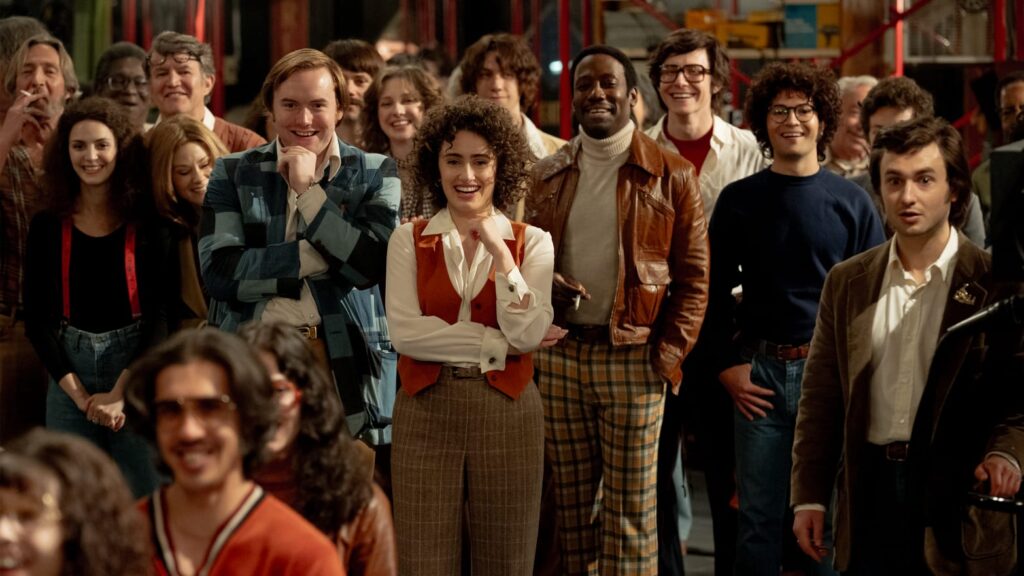
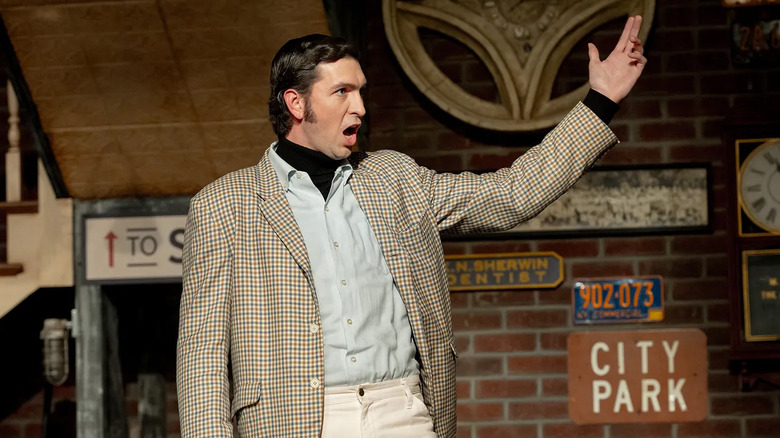
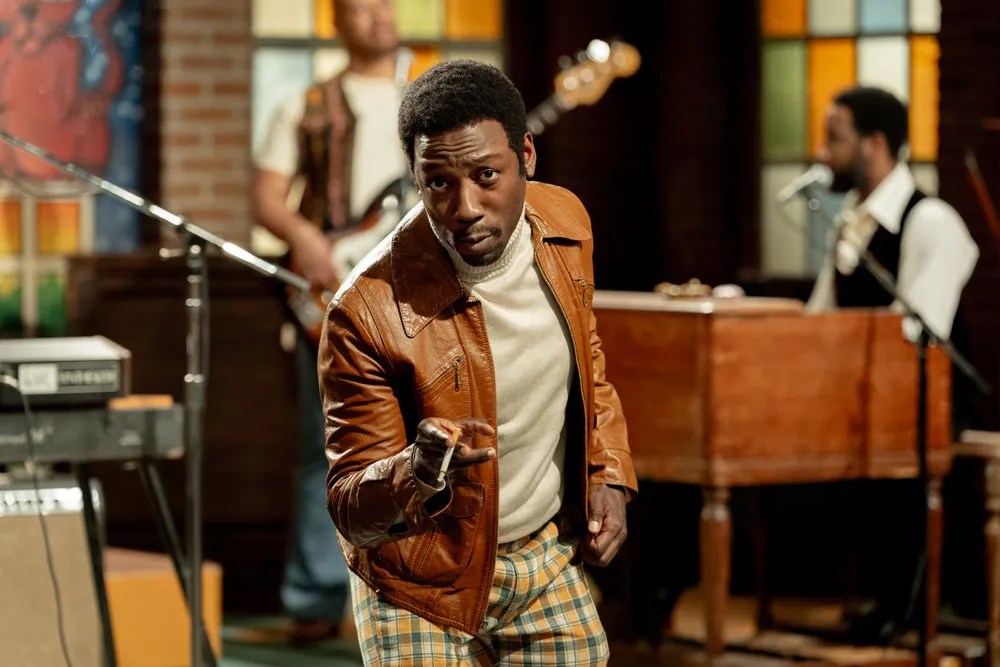
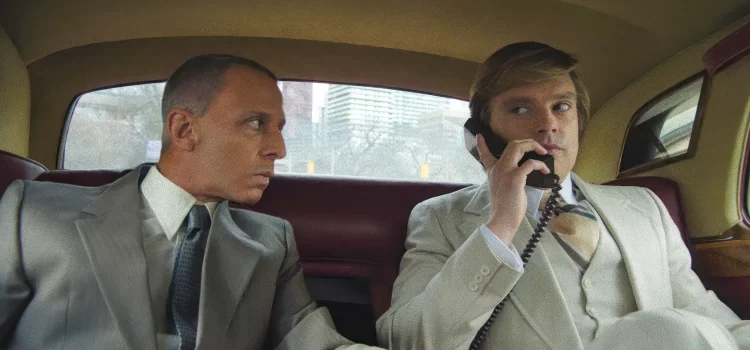
Richly atmospheric and suspenseful, yet frustratingly conventional, director Jeff Nichols’ “The Bikeriders” can’t quite connect its engaging performances and visceral thrills with a story that’s on the same level.

Nichols’ film is inspired by a book of the same name by acclaimed photographer Danny Lyon (a version of him is played here by Mike Faist). It begins in the mid-1960s and charts the story of the Vandals, a fictionalized Chicago motorcycle club of ragtag, chopper-loving misfits.

They come together to drink, fight, and assert dominance over their territory, like an idiosyncratic family that’s alternately affectionate and combative. As they ride down the open road, engines blasting in their ears, they’re in their own powerful element.

Led by the brooding and volatile Johnny (Tom Hardy), a truck driver and family man who was inspired to form the group after seeing Marlon Brando in “The Wild One,” the Vandals aren’t an outright “gang,” although threats of violence are ever-present if anyone’s ego is threatened.

Rather, they’re  like-minded souls looking for a sense of community and freedom from what mainstream society expects of them. They’re just willing to engage in the occasional beat down and destruction of property if the mood or situation calls for it.

Their makeshift brotherhood simultaneously satiates a need for togetherness and an outlet to embrace their (often misguided) sense of “manliness.” The rough-and-tumble crowd includes, among others, a mechanic named Cal (Boyd Holbrook), a perpetually drunk outcast named Zipco (Michael Shannon), and a man named Cockroach (Emory Cohen) who prides himself on eating bugs.

There’s also the tatted-up, enigmatic, and stereotypically handsome chap named Benny (Austin Butler), who mild-mannered Cathy (Jodie Comer) – the film’s narrator – falls for after stumbling into him and the Vandals at a local bar and marries soon after.

“The Bikeriders” largely unfolds through photographer Danny’s interviews with Cathy and various members of the Vandals. Cathy, with a sarcastic, amused, but exasperated attitude, brings us into the Vandals’ orbit as an outsider.

Through flashbacks, she takes us through her experiences from her initial lusty courtship with Benny, to the group’s evolution and de-evolution over time, as a new generation — partly symbolized by The Kid (a frighteningly effective Toby Wallace) —  threatens Johnny’s reign and risks transforming the Vandals into a different beast altogether. 

Cathy also battles with Johnny over Benny’s soul, as Benny (a wildcard prone to impulsive behaviors) is forced to choose between his life as a Vandal and his future with Cathy. All the while, Nichols presents a nostalgic vision of the past, attempting to help us empathize with a troubled but misunderstood group on the margins of American society.

Indeed, “The Bikeriders” tries to tackle quite a bit during its 116 minute runtime — perhaps too much for its own good. For all the immaculate scene-setting, compelling performances, and armrest-gripping moments of suspense, Nichols’ film is ultimately a surface-level portrait of its subjects. 

Despite this, however, the film is consistently entertaining, coasting on the strength of its performances and  “Goodfellas”-lite conceit to deliver scenes of smoke-filled machismo, camaraderie, and wry humor mixed with bursts of startlingly graphic violence that keeps us on our toes moment-to-moment. 

Julie Monroe’s editing is alternately breezy and jagged, reflecting the film’s juxtaposition of fantasy and reality, confidence and vulnerability — letting us sit in on exchanges that could go from peaceful to shocking at any given moment.

These scenes are counterbalanced by Kathy’s narration that finds absurdity, childishness, as well as poignancy in the Vandals’ efforts to maintain a semblance of control over not only their territory but their individual lives.

Nichols clearly has a reverence for the Vandals, but he’s careful to not overly romanticize them; their fierce dedication builds a group identity that’s both freeing and limiting, should they ever decide to leave.

The actors, across the board, take big swings that almost always pay off, barring some questionable accents that veer into cartoonish from time to time. Comer definitely goes for it, and while her performance will likely prove divisive, her delivery and narration is a good fit for Nichols’ screenplay, which buoys its darker edges with sarcastic humor that effectively takes the Vandals down to size. Cathy, naive though she sometimes is, takes no bullshit, and is willing to stand up to Johnny to fight for Benny’s safety.

Butler provides the bulk of the film’s eye-candy as Benny, portraying the film’s mysterious rebel-without-a-cause. We don’t learn much about Benny or his past, but he’s clearly damaged, looking for a way to express himself and make his mark on the world, a troublemaker with a thirst for danger whose worldview is slowly shifting with the introduction of Cathy into his life.

Benny is pulled back and forth between fantasy and reality, danger vs. safety, the thrill of the unknown vs. the security of Cathy. Butler suitably commands attention even with his limited dialogue, brimming with pure, unadulterated star power that Nichols happily emphasizes, particularly in his sizzling first scenes with Comer.

Johnny, with a nasally drawl and intimidating physique that Hardy expertly embodies, lashes out against any threat to his power, partly because he knows the Vandals cannot last without his guidance, and that his reign is nearing its end. There’s much pathos to be found here, brought to life by Hardy, as Johnny fights (scarily, in some cases) to hold onto the group as it threatens to slip through his fingers.

Hardy gives the film’s standout performance, lending Johnny a melancholy beneath his tough exterior and communicating his inner turmoil in a much subtler fashion than the screenplay permits the rest of the characters.

Through Johnny’s arc, “The Bikeriders” reveals itself to be a meditation on masculinity, on the affectionate yet unsustainable bonds that hold these men together as they attempt to outrun their problems on the open road, motorcycle engines blaring, even as reality and changing times are right on their heels. 

With Nichols’ confident, classically-inspired direction in full swing — featuring freeze frames, time jumps, and tactile, lived-in cinematography by Adam Stone that admires the motorcyclists without shying away from their brutality — “The Bikeriders” is always engaging in-the-moment, but, when the sheen of star power wears off, the story’s ultimate simplicity is revealed. 

It’s disappointing that, in the rearview mirror, so many side characters are reduced to archetypes that function more as ideas and symbols than tangible human beings. This is made more frustrating by a screenplay that lacks the depth necessary to explore their psyches and help us feel their motivations on a more memorable level. 

It’s difficult, for example, to buy Kathy’s continued devotion to Benny. Framing the film through her perspective (at a remove) also misses an opportunity to explore the Vandals’ heights and struggles with more depth. The film claims to celebrate Lyon’s journalistic efforts (with a one-note performance from Faist that’s more irritating than involving) whilst cramming the diverse stories of its subjects into a neat, tidy, sub two-hour film for a mass audience. 

Viewers well-versed in crime film tropes can predict beat-for-beat where the plot is headed, sending its individually compelling (but largely underdeveloped) characters down a formulaic road, as well as zeroing in on a relationship that’s difficult to become fully invested in. This is all at the expense of a more balanced portrait of characters worthy of closer looks that wouldn’t want to be pigeonholed into convention in the first place.

These issues hold “The Bikeriders” back from greatness, and make it somewhat superfluous in the crowd of films of its ilk that have come before. But there’s enough directorial craft and potentially awards-worthy acting on display that it’s still difficult to resist.

‘The Bikeriders’ is a 2023 crime drama directed by Jeff Nichols and starring Tom Hardy, Austin Butler, Jodie Comer and Michael Shannon. It is rated R for language throughout, violence, some drug use and brief sexuality, and the run time is 1 hour, 56 minutes. It opened in theatres June 21. Alex’s Grade: B.

Facebook Comments

By Lynn Venhaus

Dream roles, meet dream cast. The highest caliber of vocal excellence on display cannot be understated, for this third mounting of “Les Miserables” at the Muny shimmers with glorious voices.

In the iconic roles of fugitive ex-convict Jean Valjean and his relentless pursuer Inspector Javert, Broadway veterans John Riddle and Jordan Donica surpassed their powerhouse reputations with a fiery tango as the obsessive adversaries.

Riddle, a Muny standout who won the St. Louis Theater Circle Award last year for his tour de force in “Chess,” and Donica, Tony Award nominee as Lancelot in ‘Camelot,” wowed in all aspects.

Let’s put it this way: If they sang the words to websites’ terms and conditions, you’d listen intently to every phrase before clicking ‘accept.’

With his pure, exquisite tenor and nuanced falsetto, Riddle’s stunning rendition of the showstopping emotional ballad “Bring Him Home” ranks among the most heartfelt Muny moments of all time, and his impassioned “Who Am I?” was breathtaking. His performance had to have pierced everyone’s hearts all the way to the back row.

Jordan Donica, John Riddle. Photo by Phillip Hamer.

Donica’s rich baritone intensity on “Stars” and “Soliloquy” depicted Javert’s inner turmoil.

They are the lightning to the chorus’ thunder, as the sprawling ensemble’s lush harmonies soared into the beautiful summer night of June 18.

And the Muny audience – 7,700 on Tuesday – leaned in, its affection palpable. (And more than a few misty eyes noticeable). You could have heard a pin drop during its 2 hours and 45 minutes runtime.

The epic scope of this stirring sung-through adaptation of Victor Hugo’s 1,463-page novel from 1862 on post-Revolutionary France makes for a challenging and daunting production, especially for a Muny-sized version.

With its massive cast, towering multi-level set revolving on the turntable, and complex story to tell, the revered classic requires everyone involved to be at the top of their game.

While a show of this magnitude isn’t without flaws, the achievement of pulling off one of the grandest musicals ever represents the Muny at its finest. Previous acclaimed productions were in 2007 and 2013, and that one remains burned in my brain as among the best.

John Riddle sings “Bring Him Home.” Photo by Phillip Hamer.

First, this is “Les Miserables.” Beloved. Adored. Claude-Michel Schönberg’s and Alain Boublil’s musical sensation started a landmark world-wide run in London in 1985 before it came to Broadway in 1987, packing houses for 16 years. It was revived in 2006 and 2014.

Over three decades, it has been seen by 130 million people in 53 countries and is the sixth longest-running Broadway musical of all-time. Currently, a U.S. national tour is underway.

Fun fact: This company’s director Seth Sklar-Heyn, music director James Moore and choreographer Jesse Robb are the core artistic team behind that current tour. Sklar-Heyn is also executive producer of all “Les Miz” companies in the U.S., on behalf of the legendary impresario Cameron Mackintosh.

The basics are thus: French peasant Jean Valjean served nineteen years for stealing a loaf of bread for his sister’s starving child, and breaks his parole. He is aided by a merciful bishop in Digne (Ken Page) and makes a fresh start, but is hunted by Javert.

Redeeming himself, he has assumed a new identity as Monsieur Madeleine, a wealthy factory owner and mayor of Montreuil-sur-Mer.

Eventually, a group of young idealistic students attempt to overthrow the government at a barricade in Paris. It’s 1832 and the city is in upheaval because General Lamarque, the only official who seems to care about the poor, is about to die.

The Paris Uprising battle scenes are powerful and dramatic, crystallizing several of the plot points.

Emily Bautista in the 2024 Muny production of “Les Misérables.” Photo by Phillip Hamer

There are many moving parts, by virtue of the dense story’s blend of revolution and romance, good and evil. While I’m a fan, some of the subplots can be confusing if you aren’t overly familiar with the source material.

A prerequisite is reading the show synopsis, which takes up a full page in the Muny program. Trust me, you need it. It can be overwhelming for newbies and if it’s been awhile since you saw it, doesn’t hurt to refresh.

It races through many years and multiple locations, so buckle up. One needs to focus on who is propelling the plot forward, and there are times when you can’t necessarily spot that character right away because of the busyness.

For instance, I don’t think this staging made Fantine’s predicament clear in a crowded factory scene, nor was an artistic choice for Javert’s death (spoiler alert) as effective as what I’ve seen before.

Photo by Phillip Hamer.

No matter if it’s your second time or 12th, there are certain expectations every fan has. Not all interpretations can satisfy pre-conditioned notions in one’s head, but no one can quibble with the enthralling vocals.

While most shined in their solo moments, the actors’ emoting varied. Fantine has limited time to establish her plight as a desperate and destitute single mom, although Teal Wicks superbly delivered a touching “I Dreamed a Dream,” if not nailing the role’s set-up.

Red Concepcion and Jade Jones as the Thenardiers were not as funny as they could have been, for a show in need of the broad comic relief that “Master of the House” and “Beggars at the Feast” provides. They were less buffoonish and more pathetic.

A major crowd-pleaser was scene-stealer Will Schulte as the streetwise urchin Gavroche, endearing in his number “Look Down.” Another youngster, Kate Kappel, sweetly sang “Castle on a Cloud” as hopeful Little Cosette.

The young performers acting as rebels were among the most impressive – especially poignant Emily Bautista as the tragic Eponine and James D. Gish a revelation as devoted Enjolras.

She tugged at our heartstrings with “On My Own” and Gish was all vigor and verve in his zealous commitment to the cause in “Red and Black,” “Do You Hear the People Sing?” and the rousing showstopper “One Day More.”

From left: Noah Van Ess, Dan Klimko, Peter Neureuther and the company of the 2024 Muny production of “Les Misérables.” Photo by Phillip Hamer

Cosette, Fantine’s daughter now living with Valjean, and student leader Marius’ love story is told ardently – with Gracie Annabelle Parker and Peter Neureuther the dashing couple. Marius’ mournful “Empty Chairs at Empty Tables” gets to me every time.

The company of 77 sings their hearts out. Twenty members of the St. Louis Symphony Chorus — soprano, alto, tenor and bass-baritone — joined 35 professional actors and 22 local youth performers on stage (and backstage)

The sumptuous, assured musical direction and conducting by virtuoso James Moore is significant. Working with Schonberg’s music score and lyrics by Herbert Kretzmer, from original French text by Alain Boublil and Jean-Marc Natel, he is using new orchestrations from Christopher Jahnke, Stephen Metcalfe and Stephen Brooker.

Moore’s body of work – 12 shows at the Muny– has been distinctive, bringing out the shadings in Stephen Sondheim’s “Sweeney Todd,” “West Side Story” (fervent Leonard Bernstein-level!)  and “Gypsy,” but his efforts leading an epic “Les Miz” delivers an extraordinary aural treat. Special mention of associate music director Michael Horsley whose contributions are important.

And the exceptional 25-member orchestra, whose musicality is peerless, brings out all the feelings in this music. As a native of Belleville, Ill., I must mention recently deceased Bellevillian Vicky Smolik, who played trumpet in the Muny orchestra for 45 years. This opening production is dedicated to her memory.

Photo by Phillip Hamer.

From the bombastic opening chords and the score’s rich repetitive motifs, through the robust anthems, yearning expressions and tender love songs, the orchestra has produced numerous chill-inducing moments.

DirectorSklar-Heyn has made sure a zippy pace is maintained. Praise must be heaped on the stage manager Willie Porter and her three assistant stage managers Sarah Azizo, Eric Elz, and Joshua Vinik for the smooth flow of action.

The ace technical wizards included lighting designer Jason Lyons, scenic designer Ann Beyersdorfer, video designer Shawn Duan, and sound designers John Shivers and David Patridge.

Gail Baldoni’s costume design was mostly gritty, with class distinctions for the lavish wedding attire, nobility and military uniforms, and Ashley Rae Callahan’s wig design coiffed the characters’ appropriately.

“Les Miz” celebrates courage, conviction and community, and its recurring themes are timeless. You can see why it endures and feel how passionate both the performers and the audience are about it in this Muny opener to the 106th season.

The Muny presents “Les Misérables” at 8:15 p.m. nightly, June 17-23 on the outdoor stage in Forest Park. The show is 2 hours, 45 minutes, with an intermission. For more information, visit www.muny.org.

Teal Wicks in the 2024 Muny production of “Les Misérables.” Photo by Phillip Hamer
Facebook Comments

By CB Adams

I won’t bury the lede: I wanted to like Opera Theatre of St. Louis’ production of “Galileo Galilei” more than I did. I had high expectations.

I appreciate the compositions of Phillip Glass, especially “Einstein on the Beach,” “Akhnaten” and the soundtrack to the documentary “Koyaanisqatsi.” I find mesmerizing (and hypnotic in the best way) his minimalist compositions, intricate structures and innovative fusion of classical and contemporary elements.

His talents (he wrote something like 25 operas), combined with Mary Zimmerman’s and Arnold Weinstein’s as co-librettists, as well as OTSL’s high artistic standards, set my expectation meter to high.

And yet, at the completion of the 90-minute performance (with no intermission), my first thought/best thought was “so close and yet so far.” Sort of like the way I imagine Galileo felt sometimes staring at the heavens through his rudimentary telescope – with the moon and stars appearing so close that he could – almost but not quite – touch them. A matter of reach versus grasp.

Is this a “bad” production? Of course not. Is this a “great” or even “good” production? The answer to that depends on how you define a fulfilling opera experience. If you like your opera narratives to didactically follow the highlights of a famous person’s life story (one act with 10 titled scenes in this case) with the dramatic depth of a History Channel documentary, then “Galileo Galilei” might be for you.

From L to R: Jared Werline as Cardinal 3, Elijah English as Cardinal 1, Robert Mellon as Cardinal 2, Hunter Enoch as Pope Urban VIII, Paul Groves as Older Galileo, and Gabriela Linares as Scribe in Philip Glass’ “Galileo Galilei.” Photo © Eric Woolsey

This episodic, highlight-reel depiction of Galileo’s complex relationship with the Catholic Church, his personal struggles and his enduring quest for scientific truth was like watching his travails through a remote telescope. As such, we can’t get below the surface to understand Galileo at a more meaningful, microscopic level. We get facts, not empathy.

However, the narrative structure itself was as intriguing as it was innovative. I don’t know of any other opera that presents its story backwards. That structure called to mind “The Curious Case of Benjamin Button” (the movie, not the short story by F. Scott Fitzgerald) and the novel “Time’s Arrow” by Martin Amis.

“Galileo Galilei” begins with the scientist as an old, blind, regretful man under house arrest, then follows his life in reverse order, and ends with him peering through a telescope as a hopeful boy. At the risk of being too literal and not allowing enough artistic license, that concluding scene was jarring because that telescope hadn’t yet been invented yet – by way of Hans Lippershey – so how could the boy be using one?

Yet, the tone of the final scene is impactful and lasting. History and time have proved Galileo right, and one would hope that today he would feel vindicated. As the great man himself once wrote, “The Bible shows the way to go to heaven, not the way the heavens go.”

And, there’s a certain irony in the fact that “the middle finger of his right hand—has been housed at various museums in Italy since at least the first half of the 1800s. The purloined vertebra ended up at the University of Padua, where Galileo taught from 1592 to 1610,” according to History.com.

Vanessa Becerra as Maria Celeste and Sean Michael Plumb as Younger Galileo in Philip Glass’ “Galileo Galilei.” Photo © Eric Woolsey

Portraying Galileo’s story in reverse is genius and puts the focus on hope rather than despair or tragedy. We see the hopeful beginning, not the seemingly defeated end. Amis in “Time’s Arrow” explores the storytelling potential of this approach. In the opening scene of “Galileo Galilei” there’s a resonance of Amis’ line, “We are prisoners of our own past, forever chasing the echoes of what has already happened.” And when exploring the themes of this opera, Glass, Zimmerman and Weinstein could very well have been thinking of Amis when he wrote “We understand time only in retrospect” and “Time is not linear, but a vast web of interconnected moments.”

Also praiseworthy is OTSL’s commitment to providing newer operas. Even if the sum of “Galileo Galilei” doesn’t synergistically exceed its individual parts, it’s a worthy experience to see how creatively and flexibly the opera form continues to be. I enjoy being exposed to all of the theatrical experiences provided by operas old and new – and everything in between.

Additionally, this opera is an interesting choice because it highlights – yet again – that science deniers have been around for a long, long time. To quote Amis again, “The present is the result of the past, and the foundation for the future.” Not exactly a reassuring or hopeful thought in this context. Revealing such prescience is definitely on the “plus side” of OTSL’s “Galileo Galilei.”

One playful sidenote to this production: in one scene (and the director’s notes) we learn that Galileo’s father, Vincenzo Galilei, was a founding member of the Florentine Camerata, which was responsible for the creation of the first operas in the final years of the Renaissance. It’s not often you leave an opera learning a factoid like that.

This production, under the stage direction of James Robinson (OTSL’s artistic director), is overtly, baroquely theatrical. At first glance, the staging appears inventive and dynamic as it attempts to breathe life into 17th century Italy. And with the quick pacing, that may be enough. But reflecting on the performance afterward, the staging deflects attention from the general lack of empathy for Galileo. There’s not time in this opera to feel deeply for him as a well-developed, multi-dimensional character. Don’t cry for me, Inquisition.

L to R: Kathleen O’Mara as Duchess Christina, Lucie Evans as Marie de Medici, Sean Michael Plumb as Younger Galileo, and Michelle Mariposa as Maria Maddalena in Philip Glass’ “Galileo Galilei.” Photo © Eric Woolsey

Another layer of this production’s theatricality are its costumes by Marco Piemontese. The costumes blend historical authenticity and artistic creativity to reflect the Renaissance era’s attire while incorporating modern elements that complement Glass’ minimalist score.

Piemontese’s meticulous attention to detail is generally impressive, but  there are two off-putting characters whose white, puffy costumes beg for comparison to both Oompa Loompas from “Willy Wonka and the Chocolate Factory” and the Stay-Puft Marshmallow Man of “Ghostbusters” fame. Perhaps I just have an overactive associative visual mental library.

Allen Moyer’s choices for set the set design are praiseworthy for their inventiveness and clever support for the intricate choreography (provided by Sean Curran), crisp lighting (Eric Southern) and scene changes. His choices, including a compact proscenium arch that’s essentially a stage upon the stage, are also questionable for making the OTSL’s already modestly sized stage seem even smaller.

I can argue both sides of this choice. But the unsparing set made me yearn at times for the  Lucca Christmas market scene in OTSL’s recent production of “La Boheme.”

The set’s small size keeps your attention well-focused on the elements of the opera, especially when the video projections by Greg Emetaz are presented. One of the highlights of this production is the amusing animation that “explains” Galileo’s “law of fall” about how gravity causes all objects, regardless of their mass, to fall at the same rate. Imagine how hard it would be to visually represent such a concept in an opera context.

Conversely, the small proscenium arch/stage can feel visually constricting, and the action can seem unrelenting. More than once, I felt anxious because I feared that if my eye wandered, I would miss something important. And that fear was not unwarranted.

Center: Paul Groves as Older Galileo in Philip Glass’ “Galileo Galilei.” Photo © Eric Woolsey

“Galileo Galilei” is mostly an ensemble performance (some in the cast sing multiple roles). There are four primary roles: Galileo (old and young), Maria Celeste (his devoted daughter) and the Cardinal Inquisitor. Collectively, These roles require a diverse range of vocal talents, from the introspective and reflective singing of the older Galileo to the youthful energy of the younger characters and the authoritative tones of the Inquisitor.

The ensemble in this production consistently delivers a rich tapestry of vocal expressions throughout the opera – or as much as they can wring from this libretto. There are no signature moments (or arias) in this opera, and thus no character, other than Galileo (either old or young) that really stand above the others.

As the older Galileo, tenor Paul Groves evenly delivers a nuanced portrayal of a man who reflects on his life and achievements with a mix of regret and pride. Sean Michael Plumb as the younger Galileo powerfully reveals his character’s early passion and curiosity, especially when interacting with other key figures.

Vanessa Becerra sings a very lovely Maria Celeste. Becerra’s controlled performance conveys Maria’s deep love and admiration for Galileo, especially during his trial by the Inquisition, as well as her internal conflicts and struggles with illness.

L to R: Hunter Enoch as Simplicio, Jennifer Kreider as Sagredo, Paul Groves as Older Galileo, and Sean Michael Plumb in Philip Glass’ “Galileo Galilei.” Photo © Eric Woolsey

“Galileo Galilei” makes extensive use of a chorus that represents a range of characters from fellow scholars to members of the Church, supporters and skeptics. The chorus members often sing falsetto, ostensibly to emphasize the intellectual, philosophical or “otherworldly” aspects of the opera. This use of falsetto, through no fault of the singers, was more squirm-worthy, amorphous and cerebrally detracting than effective. 

Glass was the primary draw for me with “Galileo Galilei.” Though not for everyone’s taste (and certainly not for those who prefer more traditional opera styles), his minimal style characterized by repetitive musical motifs, can be propulsive, emotional and poetic.

For those who are not Glass fans or who aren’t familiar with his style, this libretto might feel stagnant with overly repetitious themes and phrase. Musically, “Galileo Galilei” is a choose-your-own musical adventure.

“Galileo Galilei” is no “Akhnaten” or “Einstein On the Beach,” but it is not disappointing either, especially when as well played by the orchestra (with members of the St. Louis Symphony) and well directed Kwamé Ryan. There were many moments when I wished I could close my eyes and just listen to the score.

“Galileo Galilei’ is a mixed bag, but it’s still worth seeing. But keep some context in mind. This opera is best enjoyed as a cerebral and intellectual exercise rather than an emotional or cathartic experience. With a short run time and quick scenes (comparatively), effective use of multimedia, solid singing and costumes rivaling those at the Met Gala, this is an interesting quarter of the OTSL’s four-part festival.

“Galileo Galilei” is part of Opera Theatre of St. Louis 2024 repertory season continuing through June 29 at the Loretto-Hilton Center on the Webster University campus. For tickets or more information visit www.opera-stl.org.

Paul Groves as Older Galileo and Vanessa Becerra as Maria Celeste in Philip Glass’ “Galileo Galilei.” Photo © Eric Woolsey

Cover photo: L to R: Kathleen O’Mara as Duchess Christina, Lucie Evans as Marie de Medici, Sean Michael Plumb as Younger Galileo, and Michelle Mariposa as Maria Maddalena in Philip Glass’ “Galileo Galilei.” Photo © Eric Woolsey

Facebook Comments

By Lynn Venhaus

Winning performances enliven a slickly produced “Ripcord” that sprinkles poignant moments among well-executed broad physical humor.

In the vein of classic sitcoms like “The Golden Girls” and the evergreen Neil Simon smash hit “The Odd Couple,” Stray Dog Theatre’s latest play is relatable because of a finely tuned ensemble convincing in a clash of temperaments and wills.

This 2015 comedy from the acclaimed playwright David Lindsay-Abaire is not as emotionally gut-wrenching as his Pulitzer-Prize winning drama “Rabbit Hole,” or as piercing as his social commentary “Good People,” but its familiar beats entertain.

Last year’s Tony winner for Best Book and Score (Lyrics) of a Musical for “Kimberly Akimbo,” Lindsay-Abaire has adapted “Shrek” and “Cinderella” into hit musicals with a populist flair.

Sprightly Annie Bayer and Jan Mantovani play the two warring widows at the center of this good-natured work, keeping a brisk pace with graceful movements and snappy banter.

Matt Anderson, Donna Parrone, Jan Mantovani. Photo by John Lamb.

Mantovani is delightful as an endlessly chipper Marilyn whose sunniness annoys the perpetually grouchy Abby (Bayer), her new roommate at an assisted living center. They deliver zingers with aplomb as their differences and life stories emerge.

However, because Abby is such a prickly personality and unrelentingly dour, Bayer’s character comes across as more one-note, but she will have opportunities to provide some backstory context to her behavior.

It’s obvious from how it’s written that one is immediately drawn to the agreeable Marilyn and unsympathetic to the constantly complaining Abby, who doesn’t play well with others.

When Abby exhausts the conventional means to have Marilyn moved to a different room, the pair lay their cards on the table. They make a bet with each other, with the prize this plum second-floor real estate. Marilyn can have the bed closest to the window overlooking a park if Abby makes her angry, and she’ll move out if she can scare Abby.

The dirty tricks escalate – some hurtful and mean – until a winner is declared. While the sweet-and-sour duo play off against each other well, it is the addition of sharp supporting players that swiftly moves the story along.

Victor Mendez is the pleasant aide Scotty, an aspiring actor, who connects the dots to the facility’s staff and procedures. Donna Parrone is Marilyn’s loving daughter, Colleen, and Matt Anderson is her goofy but well-meaning husband Derek. They’re supportive and assist with the schemes.

Jan Mantovani, Jeremy Goldmeier. Photo by John Lamb.

Anderson and Parrone also humorously double as part of a very theatrical trio of actors trying to frighten people at a bargain-basement haunted house. Jeremy Goldmeier joins them in this wildly overzealous troupe. He also adroitly flips the switch as Benjamin, Abby’s estranged son.

Their expert comic timing is a plus as slapstick-y shenanigans are nimbly staged.

Gary F. Bell skillfully directs in a light-hearted style, emphasizing humorous exchanges and surprising developments. The pranks look fun to pull off, and the actors keep the action fresh and the element of surprise genuine.

Rob Lippert’s set design depicts a standard double-bed room, with ubiquitous institutional décor, and has smoothly indicated scene changes involving a haunted house and skydiving experience.

Costume designer Colleen Michelson has selected appropriate casual attire for each character, and Tyler Duenow’s lighting design is effective.

Of special note is Justin Been’s sound design, which is a tad more complicated than one would think, given the play’s simple senior living setting. But he masterfully weaves in authentic sounds incorporating skydiving and a dramatic spooky scenario, not to mention a music score that compliments the story.

The cast engages and the crew’s efforts to polish this production are evident. The play may lack the substance featured in Lindsay-Abaire’s other works, but it satisfies because of an earnest team caring to make it personal.

Stray Dog Theatre presents “Ripcord” from June 6 to June 22, on Thursdays through Fridays at 8 p.m., with a special matinee at 2 p.m. on Sunday, June 16, at the Tower Grove Abbey, 2336 Tennessee Avenue, Saint Louis, MO 63104. Gated Parking.

Tickets: Adults $35 / Seniors (65+) & Students $30 (Cash/Checks/All Major Credit Cards). Additional Information and Ticket Reservations: Call (314) 865-1995 or visit www.straydogtheatre.org. Box Office/Will Call opens 1 hour prior to performance. Tower Grove Abbey is a “general seating” theatre.
Matt Anderson, Victor Mendez, Jan Mantovani, Annie Bayer. Photo by John Lamb.
Facebook Comments

By Lynn Venhaus
Alternating light humor with traumatic memories, “Treasure” never really comes together as an effective homeland revisit by a Holocaust survivor and his well-meaning daughter.

An uncomfortable odd couple road trip feels leaden and disjointed, which is disappointing given the two gifted performers and an acclaimed team behind this misfire.

Adapted from the 1999 semi-autobiographical novel, “Too Many Men” by Lily Brett, “Treasure” stars Lena Dunham as a deeply unhappy divorced New York journalist who has taken her widowed father to his homeland.

As Ruth Rothwax, Dunham thinks a look back into family history will help her connect to her father, Edek, a wonderfully genial Stephen Fry. For reasons clear to everyone but his daughter, Edek is a reluctant guide, and indifferent to seeing historical sights and places that remind him of his past family life.

There is a great pain there that is barely delved into — honestly. I mean, how does one get past that? (And there have been countless movies addressing those topics with far greater depth).

This attempt to add humorous situations feels forced. The pair clearly exasperate each other. It’s 1991 and Edek’s wife has been dead for about a year. He still considers his daughter’s ex-husband a friend and can’t understand why they are no longer married.

Not wanting to take a train, he hires a taxi driver, Stefan, to be their chauffeur. He’s played with a droll sense of humor by the terrific Polish actor Zbigniew Zamachowki, a veteran of the “Three Colors” films – Red, White and Blue.

As the pair bicker, their differences are stark – dad is an extrovert and daughter is an introvert. He loves to have a good time and engage people in conversation; she’d rather be reading.

Traveling through Poland provides a rich sense of history, most of it unpleasant. Ruins are everywhere, recalling a time of Nazi occupation and the fall of the Iron Curtain in a country that hasn’t recovered nor has reconciled with its past. The production design by Katarzyna Sobanska and Marcel Slawinski effectively portrays the complexities. They worked on the stunningly atmospheric Polish films “Ida” (Oscar winner for Best International Feature) and “Cold War.”

Director Julia von Heinz’s heart is in the right place, but the script she has co-written with her husband and frequent collaborator John Quester never really fleshes out the relationships in an engaging way.

That’s not to say there aren’t moments of devastating poignancy, especially when Edek returns to his family’s home, a childhood memory before they were rounded up and sent to Auschwitz-Birkenau.

The family currently living there is defensive and downright hostile, lying that they don’t have anything left of Edek’s family, but he discovers their possessions tucked away in places.

The most stunning – and horrific – footage is Edek’s return to the death camp, now a tourist site. Of course, it conjures up the trauma and the ghosts of what happened there. The wide shots of rows and rows of barracks remains a powerful testament to men’s inhumanity to man.

That’s tough for anyone, let alone the character revisiting the scars, and having the scabs ripped off.

The most puzzling aspect of this storytelling is to bring up tiny details about Ruth’s neuroses but only provide snippets without much context – her marriage issues, her eating disorder, self-tattooing numbers. We don’t ever get a sense of Edek’s wife and Ruth’s mother, either.

Dunham and Fry appear to genuinely connect, but something about this template doesn’t elevate the relationship beyond the tropes. Dunham, who hasn’t done much acting since ending her popular “Girls” series on HBO, and Fry, a beloved British multi-hyphenate, do what they can with the underwritten roles.

Trying to understand the Holocaust’s effect on her family and the focus on heritage is a noble gesture, but not sure that experience is enough to sustain this as a film. It sputters when it tries to be sentimental.

“Treasure” is a 2024 comedy-drama directed by Julia von Heinz and starring Lena Dunham and Stephen Fry. It is rated R for language and run time is 1 hour, 51 minutes. It opened in select theatres June 14. Lynn’s Grade: C-.

Facebook Comments

By Lynn Venhaus

Something is noticeably off-kilter as “Woman in Mind” embarks on an exploration of mental illness, an unusual dramedy from one of England’s most highly regarded playwrights, Alan Ayckbourn.

Albion Theatre, which specializes in works centered in the United Kingdom, tackles another complex production with elan. With its rigorous roles and uncommon style, “Woman in Mind” has a higher level of difficulty to pull off than last year’s amusing Ayckbourn black comedy “Absent Friends.”

But as with all their shows, they attract a top-tier ensemble, and this one’s a well-modulated unit – with each performer standing out in their debuts with the company.

Director Robert Ashton keeps the audience on their toes, for this play is told from a subjective first-person perspective. The imaginary world is vividly presented.

Ayckbourn, who has written 90 plays, has often toyed with conventional structures and crafted eccentric characters, many of whom are going through relationship difficulties and are at a crossroads.

He is fond of presenting class and gender discrepancies, with his quirky wit, and this one tackles certain failures to address mental health before it reaches crisis level.

Word is that “Woman in Mind” draws from his mother’s nervous breakdown and his estranged relationship with his son. In any case, it feels authentic despite the absurdities, and some outlandish swerves later in the narrative.

Written in 1985, the play is set in a home’s backyard garden in a small town south of London, and a loveless marriage is the springboard to how neglect manifests madness.

The main character, Susan, appears dazed and confused after falling while doing yardwork, initially conked on the head by a rake. Never leaving the stage, Emily Baker is compelling as she expresses every fleeting emotion when trying to figure out what has happened to her.

Emily Baker, Matt Hanify and Ryan Lawson-Maeske. Photo by John Lamb.

It’s a tour de force performance, for Baker adroitly alternates between a surreal dream life and a grim nightmarish reality. While a brain injury is no laughing matter, how Ayckbourn handles the tonal shifts is interesting.

Miserable spouses have been key components to social commentaries the women’s liberation movement of the 1970s produced in films such as “Diary of a Mad Housewife,” “An Unmarried Woman,” and “Alice Doesn’t Live Here Anymore,” and one could draw similarities here.

Ayckbourn is actually bold and daring when revealing the two very different scenarios as supporting characters are introduced. We see what Susan sees and hears what she does, and the blurred lines are striking.

Danny Brown’s thoughtful performance as Bill Windsor, Susan’s concerned, caring doctor, triggers the red flags. The hallucinations are played for laughs, not unlike a vintage screwball comedy.

When an attentive husband, a jovial brother and an adoring daughter show up, acting more like characters in a modern prescription drug commercial or referencing a 1960s TV family sitcom, the unreal atmosphere is intriguing.

It helps that Isaiah Di Lorenzo, in jaunty Cary Grant mode, and Joseph Garner, as an exaggerated version of beloved Brit comic actor Terry Thomas, willingly chew the scenery playing the fantasy husband Andy and cheerful sibling Tony. Both forces of nature on local stages, their performances always entertain and usually have a surprise element.

The expressive relationship dynamics point to Susan’s unhappiness. Sarah Vallo plays the fantasy daughter Lucy in the image of a perky, agreeable debutante that appears to be her mum’s best friend.

Joseph Garner and Emily Baker. Photo by John Lamb.

These idealistic images contrast sharply with the real people causing her pain. Matt Hanify plays her dull and self-absorbed husband Gerald, a vicar, as an unaffectionate stick-in-the-mud, and Ryan Lawson-Maeske is her tone-deaf son Rick, an ungrateful selfish adult who hasn’t communicated with his mother since he joined a cult, but now is free.

From her point of view, neither are willing to give her what she craves, and their lack of compassion has led to Susan’s breaking point.

These are unsympathetic roles convincingly portrayed by Hanify and Lawson-Maeske. But in another twist, they offer some harsh truths about Susan’s failings as a wife and mother that add another layer of dysfunction.

In a comic relief role, Susan Wylie is Muriel, Susan’s sister-in-law who often acts as a housekeeper, equal parts exasperated and daffy. And her culinary mishaps are hilarious. She is obsessed, however, with her deceased husband.

Because a nervous breakdown is a central theme, one imagines an unsettling and disturbing conclusion is inevitable, a la Tennessee Williams, rather than a happy musical comedy ending.

Aiding the creeping darkness is fine technical work from the creative staff. Michelle Zielinski’s lighting design and Jacob Baxley’s sound design enhance the moods while Tracey Newcomb’s costume choices match the personalities involved.

Erik Kuhn’s straightforward scenic design simply depicted a tidy garden, and he also oversaw the crisp tech work. Gwynneth Rausch’s ace work in multiple roles – assistant director, stage manager, and props – is again commendable.

The play, at about 2.5 hours plus intermission, becomes tedious with nonsensical gibberish in the final stretch as we toggle back-and-forth between a heightened reality and an increasingly wild series of events surrounding Lucy’s wedding that indicates David Lynchian weirdness.

But Baker’s mesmerizing performance showcases her keen intelligence and grasp of the character’s requirements, and that level of difficulty is not unlike a marathon runner, for the stamina on display is extraordinary.

After establishing herself as one of the more accomplished performers in town, she took a hiatus several years ago for all the right reasons, and now is back on the boards. It’s an exciting leading role return that should not be missed.

Joseph Garner, Danny Brown and Isaiah Di Lorenzo. Photo by John Lamb.

Albion Theatre presents “Woman in Mind” June 7 – 23 weekends at the Kranzberg Black Box, with performances at 8 p.m. Friday and Saturday, and at 2 p.m. on Sunday.  For more information, visit www.AlbionTheatreSTL.org.

Facebook Comments

By Lynn Venhaus
Nearly 10 years after Pixar Animation Studios raised the bar again with a mind-bending and rib-tickling “Inside Out,” which became an instant classic, a clever sequel thrusts our now 13-year-old heroine Riley into red-alert puberty.

While not as innovative as the original, “Inside Out 2” offers a relatable take on very raw and very real adolescent emotions. An all-star cast, including some returning voices, delivers the same tempo and tone that made the first so endearing.

Both films emphasize that life’s ups and downs are teachable moments, and that’s an admirable focus as the filmmakers try to be faithful to the projects’ goals.

Perhaps no year in our lives is as anxious and awkward as being 13 is. Oh, those raging hormones and their unpredictable effect. I mean, who would ever want to repeat it? We remember, and this universal theme is a rich one.

The sequel connects as an amusing look back for parents and perhaps either as a cautionary tale for what’s ahead with their pre-teen offspring or a reminder of what their grown children were like back then.

Because Riley is dealing with those quicksilver ever-changing emotions, Anxiety, Embarrassment, Envy and Ennui are an imaginative addition. The boredom expressed by Ennui is the funniest running gag.

That fuels a turbo-charged narrative mixing with the already prominent voices in her head — the color-coded network of Joy, Fear, Anger, Sadness and Disgust. That results in a hyper-kinetic energy that feels very busy.

Although the animated comedy-drama-fantasy’s zippy excursion into a teen trying to navigate fitting in while also wanting to stand out does humorously hit all the identifiable pitfalls.

An avid hockey player, Riley (Kensington Tallman) hopes to make the team in high school and enthusiastically attends an exclusive-invite summer camp under the discerning eye of Coach Roberts (Yvette Nicole Brown).

Her dedication and work ethic are admirable, but she struggles to keep her old classmates Grace and Bree (Grace Lu and Sumayyah Nuriddin-Green) close while trying to be pals with the star player Val Ortiz (Lillimar), part of the cool kids’ squad.

It appears that she has a lot to learn, as do the emotions guiding her thoughts and movements. With the original five trying to hold on to control in a command center undergoing changes, the mind games escalate.

Amy Poehler’s perky Joy is in a mad rush to obtain order while Maya Hawke’s jittery fast-talking Anxiety fights to take over. She has brought along three inspired characters — Envy (Ayo Edibiri), Embarrassment (Paul Walter Hauser) and Ennui (Adele Exarchopoulos) to ramp up the pressure. And they are hilarious.

This fab five includes memorable turns from two regulars — Lewis Black as tightly wound Anger and Phyllis Smith as mopey Sadness. Also returning are Riley’s well-meaning parents, voiced by Kyle MacLachlan and Diane Lane.

Without skipping a beat, Tony Hale replaced Bill Hader as the fidgety Fear and Liza Lapira took over from Mindy Kaling as sassy Disgust. Another notable addition is June Squibb as Nostalgia.

The first one benefitted from co-writer and co-director Pete Docter using his personal experience of moving his family from Minnesota to San Francisco. The issues that came with a new home and new school resonated.

A master visual storyteller, Docter is only executive producer on this. However, co-screenwriter Meg LeFauve, who was part of the 2016 Oscar-nominated writing team, has returned. Dave Holstein is a new writer, and Kelsey Mann is the first-time director.

Mann’s previous three Disney films – “The Good Dinosaur,” “Lightyear” and “Onward” were among my most disappointing efforts of the past 10 years. I didn’t think the concepts worked. However, the points about children inevitably growing up comes together here with its can’t-miss interesting characters..

This sequel concentrates on an uncharted period of development in Riley’s maturation, while maintaining a clear focus on her life’s bigger picture – her belief system and that she is a good person. Her strongest attributes are kindness, compassion and level-headedness..

Midway, this journey gets bogged down with an overly complex hunt — yet the introduction of sarcasm is ingenious. as are characters in a vault. Stealing the show is Ron Funches as “Bloofy,” a popular children’s TV cartoon character, and his accessory, Pouchy, voiced by James Austin Johnson of “Saturday Night Live” fame.

NEW EMOTIONS — Disney and Pixar’s “Inside Out 2” returns to the mind of newly minted teenager Riley just as new Emotions show up. Envy (voice of Ayo Edebiri) and Ennui (voice of Adèle Exarchopoulos) are ready to take a turn at the console. © 2024 Disney/Pixar.

Besides an impressive use of state-of-the-art technology for a visually stunning bright palette, the best feature is the cast’s sharp comedic skills, which are showcased as they nimbly deliver quick-witted dialogue.

Although heartfelt, the sequel isn’t the misty-eyed tug on emotions that the original was. Still, its sincerity goes a long way in making this film work.

“Inside Out 2” is a 2024 animated family comedy-drama-fantasy directed by Kelsey Mann and stars Amy Poehler, Maya Hawke, Lewis Black, Tony Hale, Phyllis Smith, Ayo Edebiri, Grace Lu, June Squibb, Sumayyah Nuriddin-Green, Yvette Nicole Brown, Kyle MacLachlan, Diane Lane and Kensington Tallman. It is rated PG for thematic elements and run time is 1 hour, 36 minutes. It opened in theaters June 14. Lynn’s Grade: B.

Facebook Comments

The Repertory Theatre of St. Louis (The Rep) is holding a first of its kind Prop Sale June 26 – 28, 2024 at the Lemp Brewery Warehouse (3500 Lemp Ave, St. Louis, MO 63118).

For over 50 years The Rep has procured its collection of theatrical props, and with over 16,000 square feet of prop storage stuffed to the rafters, it is time for items to find new loving homes so the theater can make room for new and exciting acquisitions.

The Rep’s Prop Sale is perfect for antique aficionados, theater history fans, and those looking for the next conversation piece for their home. Everything from pink flamingos to carousel horses, jukeboxes, Singer sewing machines, HUNDREDS of chairs, a 5-piece cheetah luggage set, even a prop Tommy Gun in a violin case and so much more are available at can’t beat it prices. 

Own a part of theatre history and find the one thing you never knew you always wanted!  

Located at the Lemp Brewery Warehouse spaces (3500 Lemp Ave, St. Louis, MO 63118), the Prop Sale is open to the public the following dates and times:

Wednesday, June 26, 12 – 7pm
Thursday, June 27, 12 – 7pm
Friday, June 28, 8am – 3pm
Saturday, June 29, 8am – 3pm

All sales are final and sold in “as is” condition.  Payment by cash or credit card preferred.  All sales are cash and carry, items will not be held for pickup without full payment and must be removed from the warehouse the day of purchase. 

For further questions, please contact The Repertory Theatre of St. Louis Props Department at [email protected].

Facebook Comments

New Renderings Show Additions to the St. Louis Wheel Park

New amusement rides are set to open at St. Louis Union Station on Memorial Day weekend 2025. The expansion at the family entertainment destination is part of owner Lodging Hospitality Management’s (LHM) ongoing commitment to enhancing the entertainment offerings at the historic attraction. .

NEW RIDES, GAMES & CONCESSIONS

Guests can look forward to an exhilarating array of new rides, including:

  • Mini Spinning Coaster: A thrilling coaster, themed as a train, celebrates the rich railway heritage of St. Louis Union Station. This ride promises to deliver twists, turns, and fun for the whole family. The coaster reaches a height of 22 feet and has 16 seats.
  • Pirate Ship: A classic amusement ride that will take guests on a swashbuckling adventure, swinging high above the park and offering spectacular views. The Pirate Ship ride will stand at 48 feet 6 inches high and has 42 seats.
  • Wave Swinger: An exciting swing ride themed to pay homage to the 1904 St. Louis World’s Fair, this ride will elevate guests to new heights with a thrilling and breezy experience perfect for all ages. The Wave Swinger will be 43 feet 6 inches high and seats 64.

Midway Games

Complementing these new attractions, a selection of classic carnival games will be introduced, enhancing the nostalgic, family-friendly atmosphere of the Wheel Park. Guests can test their skills and win prizes in a variety of games.

Concessions

To complete the experience, new concession booths will offer a range of fan-favorite snacks and treats. From classic carnival fare to sweet indulgences, there will be something to satisfy every craving as visitors explore the expanded entertainment area..

PROJECT TIMELINE AND LOCATION

Construction for this project will begin in January 2025, with anticipated completion by Memorial Day weekend 2025, just in time for the summer season. The new attractions will be situated adjacent to the iconic St. Louis Wheel on the south end of Union Station, within the vibrant Wheel Park area, which already boasts popular attractions such as the Carousel and Mini Golf course. St. Louis-based PGAV Destinations is providing Wheel Park architectural design.

ABOUT ST. LOUIS UNION STATION

The new rides at St. Louis Union Station will join the St. Louis Aquarium, 200-foot-tall St. Louis Wheel, the St. Louis Ropes Course, the St. Louis Carousel, the 18-hole St. Louis Mini-Golf course, Selfie Express and the A-Maze-Ing Mirror Maze as St. Louis Union Station’s attractions. The historic landmark also offers the St. Louis Union Station Hotel, a Curio Collection by Hilton. Restaurants at Union Station include the soccer-themed The Pitch Athletic Club & Tavern, Train Shed, Soda Fountain, 1894 Cafe and The Station Grille. Opened in 1894, St. Louis Union Station was the biggest and busiest train terminal in the nation. Union Station, a National Historic Landmark, celebrates its 130th anniversary in fall 2024. More information on Union Station is available at www.stlouisunionstation.com or on social media @unionstationstl.

ABOUT LODGING HOSPITALITY MANAGEMENT

Union Station’s owner, Lodging Hospitality Management (LHM), is dedicated to providing exceptional hospitality experiences. With a diverse portfolio of hotels, meeting and event venues, real estate, visitor attractions and restaurants, and a commitment to innovation, LHM continues to enhance the appeal of St. Louis for visitors and residents. 

St Louis Union Station. Photo provided.
Facebook Comments

By Lynn Venhaus

Need a vacation? Escape to Forest Park’s Shakespeare Glen for an idyllic summer treat, for “As You Like It” is a robust, refreshing tonic that celebrates the restorative powers of art, love, and nature.

An absolutely perfect vehicle for the St. Louis Shakespeare Festival’s annual offering, this 1623 romantic comedy is fun and frisky.

It’s been 20 years since it was last performed on the mainstage, and one of the playwright’s most accessible.

Sprinkling her magic fairy dust, director Nancy Bell demonstrates why she is a master interpreter of the Bard. A creative genius, she stamps every project with esprit and has a firm grasp of iambic pentameter.

In much the same way she has engaged audiences by transforming classics into easy-to-understand mashups in past local Shakespeare in the Streets projects, she maintains a breezy and playful atmosphere.

The festival’s former playwright-in-residence, she wrote the vigorous “Remember Me” performed outdoors in Maplewood, “Blow Winds!” downtown, “Good in Everything” in Clayton, “The New World” in Benton Park West, and the St. Louis Theater Circle Award winners for Best New Play “The World Begun” in Old North St. Louis and “Old Hearts Fresh” in The Grove.

Christian Thompson, Wali Jamal.. Photo by Phillip Hamer.

To further illustrate a point about embracing change in “As You Like It,” Bell’s adaptation is a liberating antidote to a stuffy and strait-laced patriarchal Gilded Age.

A scintillating ensemble conveys a more laid-back, accepting merry band of brethren – well, emphasis on a sisterhood – once action shifts to the Forest of Arden.

The contrasts couldn’t be sharper when imperious Duke Frederick – ever-reliable Joel Moses in high-handed wickedness, banishes his sister Duchess Senior, a feisty Michelle Hand, from the royal court. Oh pshaw!

Defiantly, the Duchess flees to the Forest of Arden, where she discovers exile can be rejuvenating. It’s another memorable performance from the inspired Hand.

Also thriving in this pastoral setting is the Duchess’ daughter Rosalind, a clever girl who disguises herself as a man, Ganymede. After all, this is Shakespeare, so of course the plot includes mistaken identities.

Caroline Amos is poetry in motion as Rosalind, sprinting across the stage with boundless energy. She is matched by the delightful Jasmine Cheri Rush as her loyal cousin-best friend Celia, the Duke’s daughter. Rush has returned for a second year, after playing Olivia in last summer’s “Twelfth Night.”

Bianca Sanborn, Michelle Hand, Riley Carter Adams, Beth Bombara. Photo by Phillip Hamer.

Rosalind falls in love with affable landowner Orlando, also displaced, and Christian Thompson is a charmer as her heroic object of affection, if a bit dim because he doesn’t suspect anything unusual.

In fairness, he’s pre-occupied trying to stay one step ahead of his scheming brother Oliver (Greg Cuellar), who is not very nice – as in trying to get his sibling killed.

Their lives become topsy-turvy, with thankfully Orlando having a change of heart, and the sweet Celia zeroes in on him.

Further wackiness ensues with the introduction of effervescent Ricki Franklin as bawdy Touchstone, a clownish character. Franklin’s a bright addition for the second year in a row, a scene-stealer last summer as Dame Toby Belch in “Twelfth Night,” a gender-bending turn that earned her a St. Louis Theater Circle Award,

Delivering one of Shakespeare’s most famous soliloquys, “All the world’s a stage…,” the mellifluous Wali Jamal earned applause immediately after reciting the passage so eloquently. He plays Jaques, a solitary and gloomy man who leans towards the melodramatic.

The multi-generational cast includes familiar and fresh faces, notably local treasure Joneal Joplin, who was in the festival’s first Forest Park show, “Romeo and Juliet,’ in 2001. He returns for his seventh one as Adam, a devoted servant of Sir Rowland de Boys, who is Oliver and Orlando’s father.

Jasmine Cheri Rush, Caroline Amos. Photo by Phillip Hamer.

Making her festival ensemble debut is winsome young teen Riley Carter Adams, a seasoned performer on local stages with television credits. She is listed as “young lady.”

Romance is on the mind of several characters. Kathryn A. Bentley is a likable shepherd Corin, a sage advisor to Silvius, who is not listening. CB Brown is endearing as the lad in need of guidance, for he’s in pursuit of Phoebe, who only has eyes for Rosalind (Ganymede).

Molly Wennstrom is spirited as the unpleasant but lovestruck shepherdess, whose course is altered by Touchstone’s interesting moves. Phoebe’s due for a rude awakening.

Two of the goofiest characters are Isaiah Henry as William, a simple, unsophisticated country boy crushing on goatherder Audrey, humorously played by Bianca Sanborn.

In a crowd-pleasing turn, St. Louis professional wrestler Lenny Mephisto, aka Maniacal Mephisto, is pitted against Orlando as Charles, a wrestler in the duke’s court.

The wrestling match is well-staged, thanks to savvy fight and intimacy choreographer Rachel Flesher, and Cuellar, who also is fight captain.

Lenny Mephisto, Christian Thompson wrestle. Photo by Phillip Hamer.

Captivating music is an integral part of this vibrant tableau, with an original score performed live on stage by local musician Beth Bombara in the role of faithful friend Amiens. Joining her are Sam Golden on viola and mandolin and percussionist Jeremy Reidy.

Scenic Designer Scott C. Neale, whose work has always astonished on the outdoor stage in Shakespeare Glen, has created a striking bucolic setting that is reminiscent of an old-timey illustrated picture book. Its reveal earned a hearty round of applause.

Among his six previous designs, you may recall his stunning set for “Antony and Cleopatra” in 2015 and “Henry IV and V” the year before.

As is customary, the technical work is superb, with distinct work by lighting designer Denisse Chavez and costume designer Dottie Marshall Englis. Sam Gaitsch choreographed buoyant moves, and props manager Taylor Laine Abs kept the accessories simple.

The unpredictability of working with live farm animals is evident with a goat and a sheep from D Bar S Ranch, which amused the crowd May 31. Apparently, from new accounts, they are adjusting to life in the spotlight.

Bianca Sanborn, Ricki Franklin. Photo by Phillip Hamer.

With its exuberant and energetic cast having a swell time on stage, that translates into one of the most enjoyable Shakespeare Festival’s mainstage efforts to date.

Due to their high standards, the festival has grown into the largest free outdoor Shakespeare play between the coasts. It’s a well-deserved achievement, and this supremely entertaining effort is not to be missed.

The festival is one of the best things about living in the St. Louis metropolitan region, and we are so very fortunate to be able to smile on a summer night under the stars in Forest Park.

St. Louis Shakespeare Festival presents “As You Like It” from May 29 to June 23, Tuesday through Sunday, at 8 p.m., free in Forest Park (Shakespeare Glen). https://stlshakes.org/production/as-you-like-it/

Shakespeare in the Park is free to attend, no reservations or tickets required for any of the performances. But every night a small number of reserved chairs and blanket spots are available for purchase – directly supporting the Festival’s mission and year round programming. Find your favorite spot: in the blanket-only section, box seats for up to six guests or general single-chair reservations.

CB Brown, Molly Wennstrom, Caroline Amos, Jasmine Cheri Rush. Photo by Phillip Hamer.
The company. Photo by Phillip Hamer.
Facebook Comments