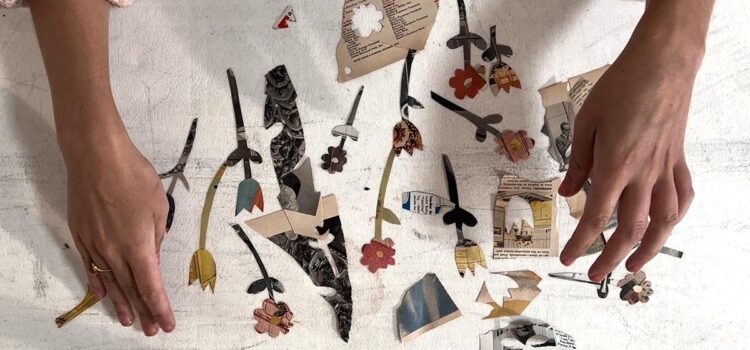
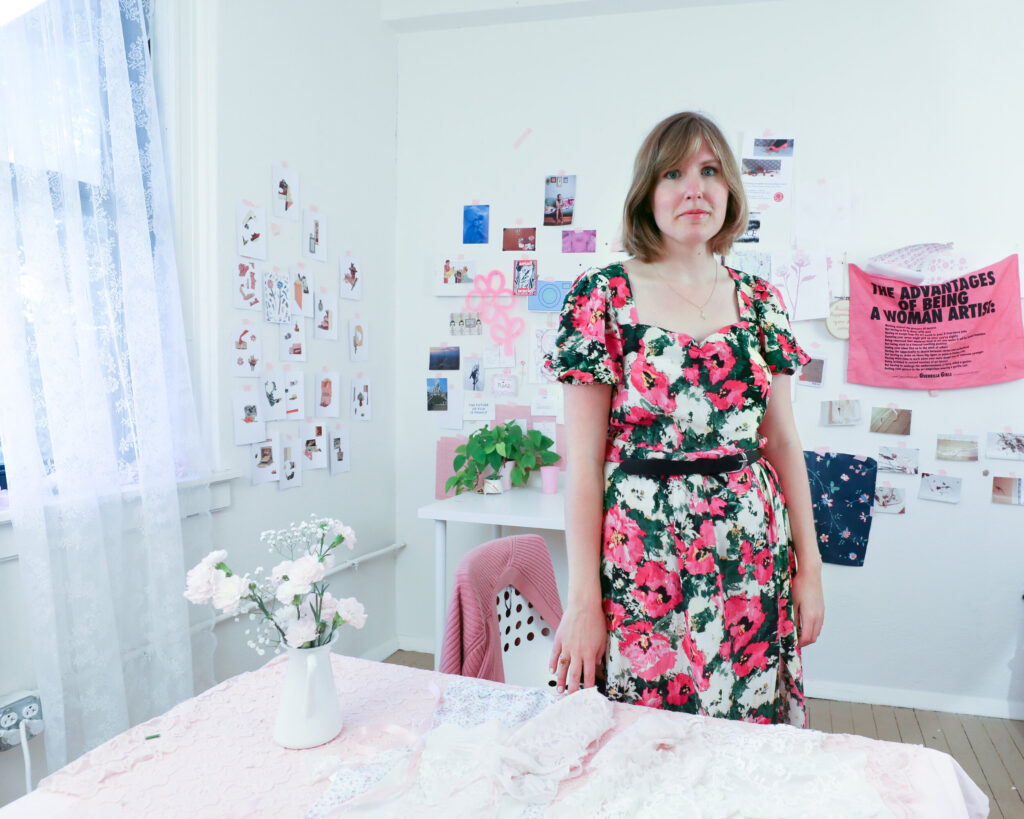
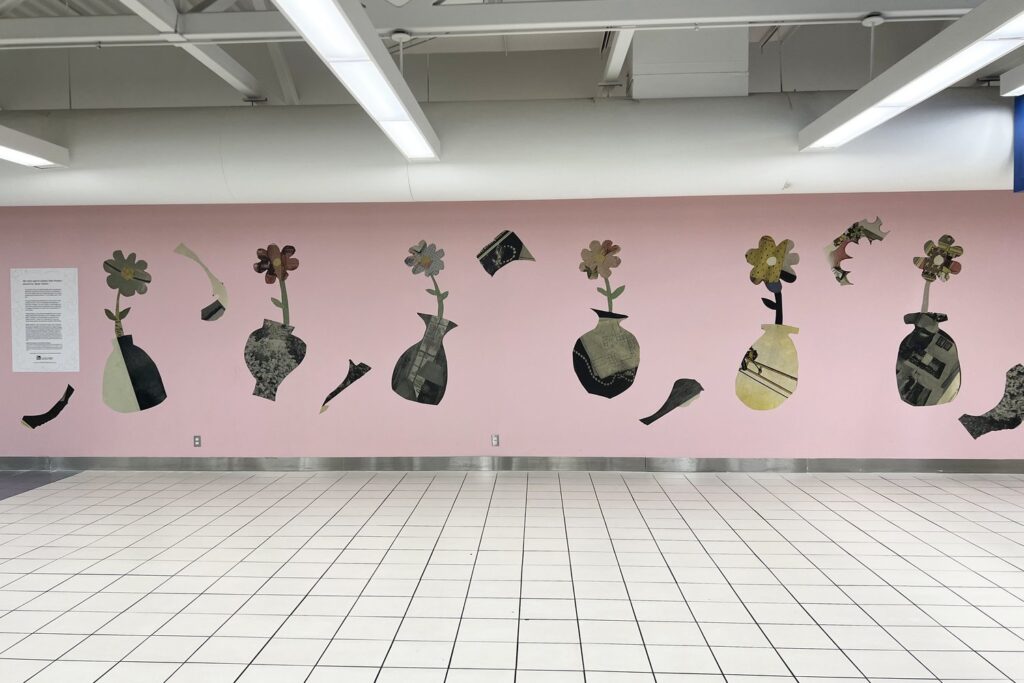
By Lynn Venhaus A working artist who explores femininity in visuals ranging from collages to short films, Taylor Yocom is one to watch — and on the move, so it seems fitting that Lambert International Airport has displayed her art — an installation “My mom said to always have flowers around.”
Flowers are a focus, a fashion statement, and part of her signature style. Her recent 19-minute film, “These Flowers Are For You,” won Best Experimental Film at the St. Louis Filmmakers Showcase in July, and is among the short films being screened at the St. Louis International Film Festival.
It has been doing well on the festival circuit. In fact, last week, her film screened in three places, from Iowa to Iceland — at the Flat Earth Film Festival in Iceland and the Des Moines Underground Film Festival in addition to SLIFF (Sunday, Nov. 12, 7:15 p.m., as part of the shorts program “Showcase I,” Alamo Drafthouse 3).
Describing it as her most ambitious film to date, it depicts Yocom’s experience of being matched as a bone marrow donor. She narrates her emotional journey and artistic process of grappling with the ethics of making work for, and about, a stranger.
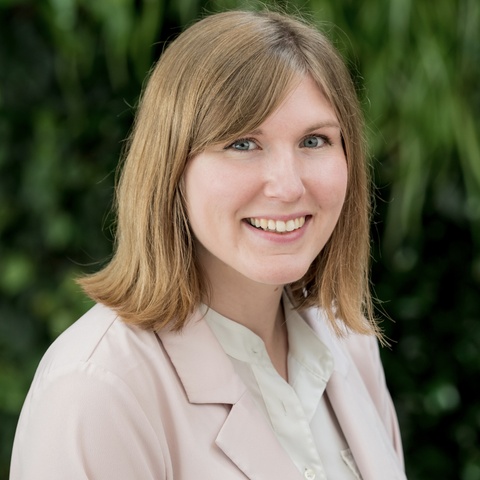
2020-03-11—Portraits of Sam Fox School of Design & Visual Arts staff members.
Her previous short films touch on issues of femininity, the idea of craft and artistic labor amid a pandemic, and revisiting a project recollecting Maria Schneider’s sexual harassment on the set of “Last Tango in Paris” — “Just because!” – 3 minutes, which screened at the Citygarden; “Flowers/distance” – 8 minutes; “That floral wallpaper” – 13 minutes; and “In Paris, I tango for Maria (take 2) – 9 minutes.
The art at Lambert — in the Southwest Airlines Terminal, was on a 60-foot pink wall, and installed in April 2022.
Taylor was born in Des Moines, Iowa, and holds a BFA in Photography from the University of Iowa and an MFA in Visual Arts from Washington University’s Sam Fox School of Design & Visual Arts.
Her work has been exhibited and screened in venues across North America, including Indie Memphis, FilmDiaryNYC, The Kansas Union Gallery, and the Montreal Feminist Film Festival. She has artist books and zines in collections across the country, including Rutgers University, the MOMA Library and Washington University. Her residencies include ArtFarm Nebraska and Internationale de Arts in Paris.
For more information, visit her website: www.tayloryo.com
Take Ten Q and A with Taylor Yocom
(Editor’s note: This was written during the St. Louis Filmmakers Showcase last summer)
1. What is special about your latest project?
My latest film is about my journey of being matched as a bone marrow donor, the artistic documentation of that journey, and my own self reflection of the ethics of making work about a stranger. I was matched to donate to a woman who had leukemia like my maternal grandma that I never got to meet. Going through this process and making this film was an unexpected way to get closer to my mom and learn about her experience with her mother during her final days. 2. Why did you choose your profession/pursue the arts?
I am currently an artist and filmmaker working in photography, collage, fibers, and film. I always was “crafty” as a kid and started to really take art seriously when I navigated towards photography and art in college. I would spend Friday nights at my typewriter and stack of magazines, making collages, and would bring my film camera to parties. Taking classes for fun turned into a minor, which turned into a major, and then I went to grad school for my MFA in Visual Art at the Sam Fox School of Design & Visual Arts at Washington University in St. Louis.
3. How would your friends describe you?
Upbeat, always working on a project, most likely wearing a floral dress and talking about my cat too much.
4. How do you like to spend your spare time?
“I built my own loom and now enjoy weaving and watching ‘Sex and the City’ on repeat at my studio.
5. What is your current obsession?
This $7 bag of very good gummy bears I got on sale at Schnucks! On a more serious note, I’m diving into learning about jacquard weaving and just devoured the book “Thread Ripper” by Amalie Smith.
6. What would people be surprised to find out about you?
I was on the debate team in high school.
7. Can you share one of your most defining moments in life?
I was registering for classes during freshman year and thought “why not?” and took the last slot for an art class,
8. Who do you admire most?
Ah, so many! Within the arts I would definitely choose Moyra Davey, the filmmaker and artist. She has a very smart, poetic yet research-driven practice and lives in the art-writing-film world in an impactful way.
9. What is at the top of your bucket list?
Make a feature-length film.
10. How were you affected by the pandemic years, and anything you would like to share about what got you through and any lesson learned during the isolation periods? Any reflections on how the arts were affected? And what it means to move forward?
I was very privileged to be able to work from home during that time with minimal financial impact, so I want to acknowledge that not everyone had that luxury. As for the arts, for me, I took it as an opportunity to slow down and focus on the act of making. I think there was more of an appreciation for art-for-arts-sake and the power of beautiful and moving objects to create meaning in our lives. 11. What is your favorite thing to do in St. Louis?
I love getting lost in the galleries at SLAM and also visiting Moonshine the horse in Tower Grove Park.
12. What’s next?
I received a RAC grant to go to Vancouver to learn Jacquard weaving! I am working on patterns I’ve drawn that are based on floral patterns I’ve found in vintage periodicals at the Dowd Illustration Research Archive here. I’ll be making them into tapestries!
Photo by Kalaija Mallery
More About Taylor Yocom
Age: 30 Birthplace: Des Moines, Iowa Current location: St. Louis: Education: MFA in Visual Art at the Sam Fox School of Design & Visual Arts at Washington University in St. Louis, BFA in Photography from the University of Iowa First movie you were involved in or made: In Paris, I tango for Maria (take 2) was my first short film Favorite jobs/roles/plays or work in your medium? I love films by Agnes Varda. Awards/Honors/Achievements: Bustle Upstart Awardee in 2016, Residency at Cite Internationale des Arts in 2018 Favorite quote/words to live by: Anything from Julia Cameron A song that makes you happy: Dancing Queen by Abba
“My mom said to always have flowers around” artwork by Taylor Yocom in installation at Lambert International Airport Terminal 2, April 2022.
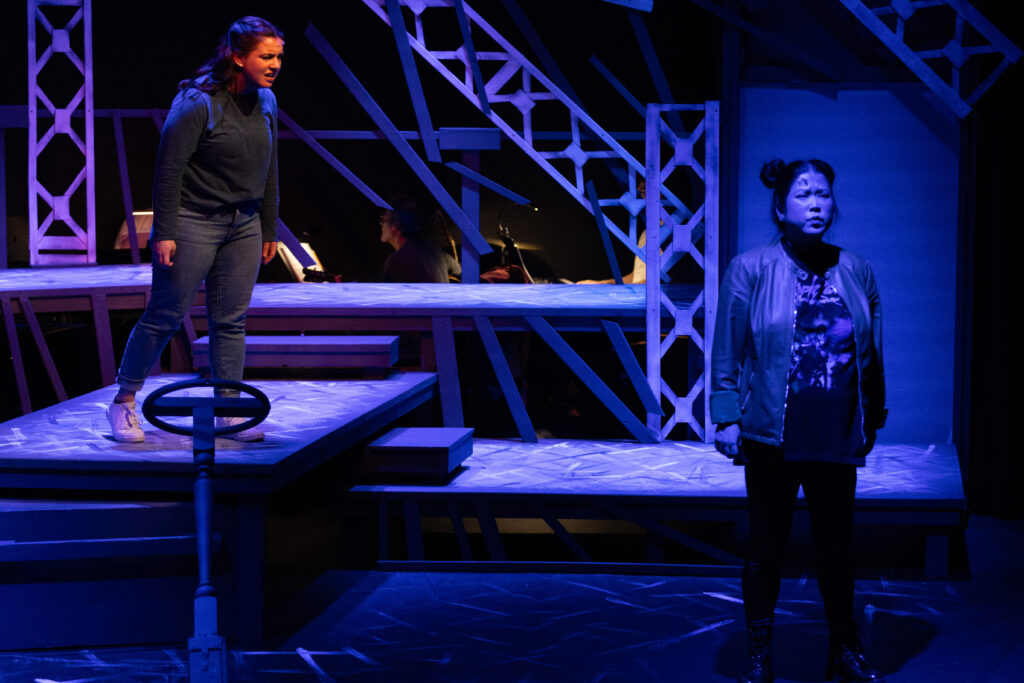
An 18-year-old girl in a car. Life looms large at that age, so much ahead, not much in the rear-view mirror. Is she ready to embark on her journey?
The expertly produced “The Mad Ones” from Tesseract Theatre captures those feelings –that yearning for experiences and the exhilaration of the possibilities about the road ahead, but also wanting to leave the past behind. And regrets, we’ve all had a few.
The show, first produced in 2017, formerly known as “The Unauthorized Biography of Samantha Brown,” focuses on that moment when you prepare to leave home – off to college or work or other adventures – and the memories that flood your brain during a turning point. What does Samantha do when people around her give advice? And how can she move on when certain things hold her back?
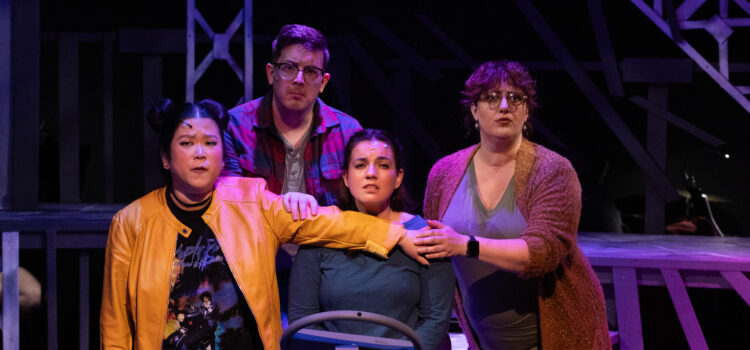
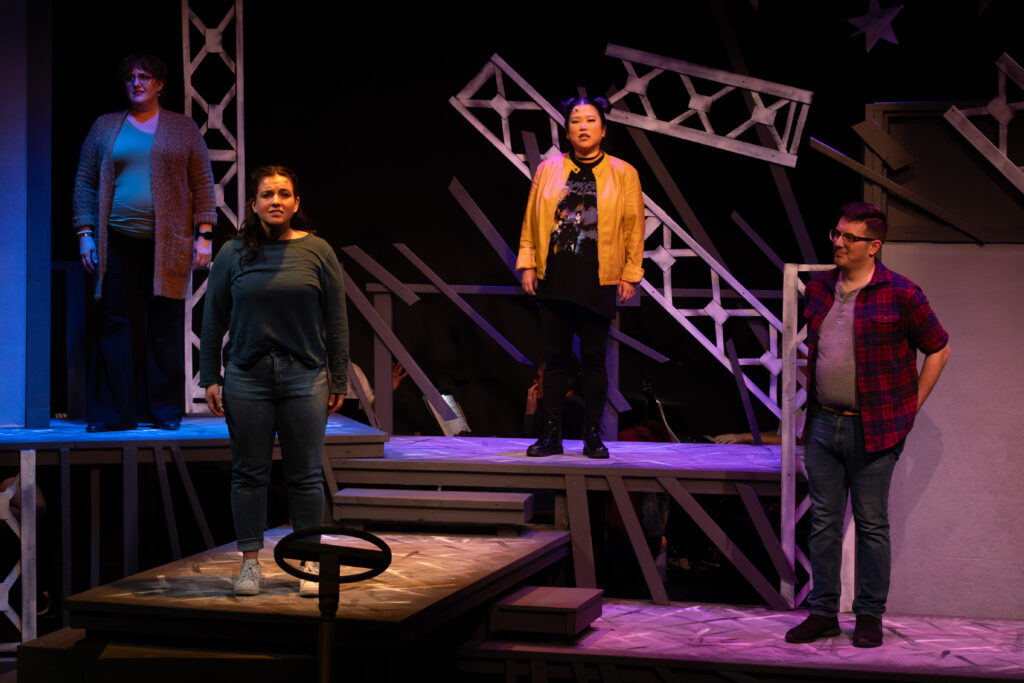
Ensemble. Photo by Florence Flick
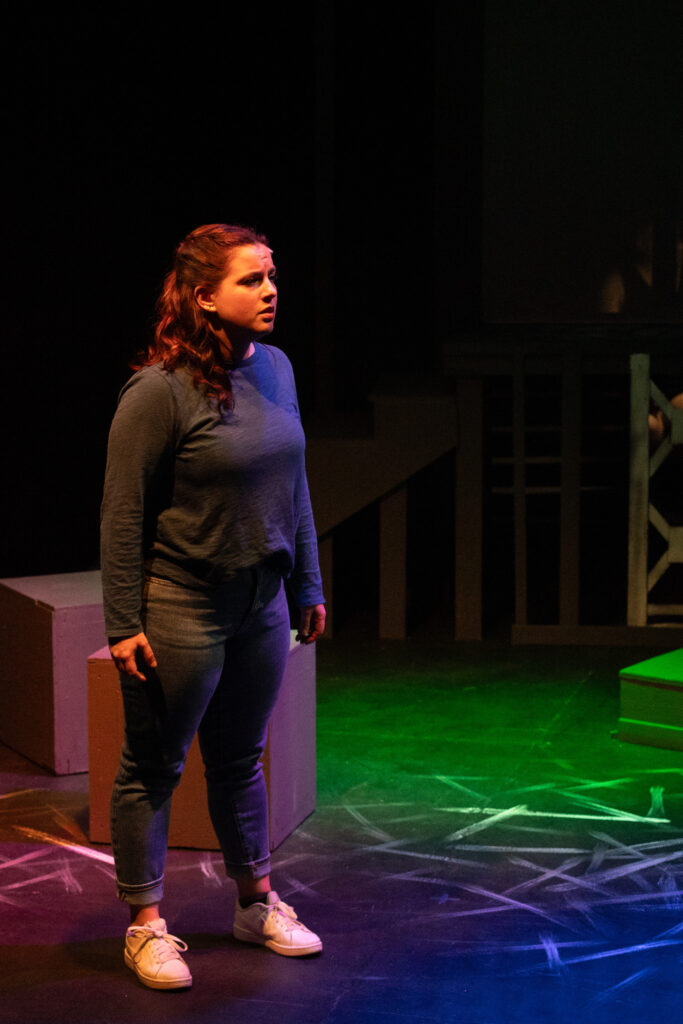
As besties Samantha and Kelly, Melissa Felps as the smart one and Grace Langford as the wild one sing their hearts out in Kait Kerrigan and Bree Loudermilk’s off-Broadway musical theatre sensation. This contemporary drama is laced with humor and isn’t going for easy answers or tying things up neatly, but rather a process of discovery, which can feel overwrought because of the intense material.
This four-person show taps into choices, grief, and loss, and how the detours of life just force us off the road – even when we’re just getting started. Three of the four performers make their Tesseract debut, in line with the company’s mission to include fresh voices and new perspectives. (Langford was seen earlier this year in “The Last Five Years.”)
While Felps and Langford, both tremendous belters, are a dynamic duo as the oh-so-dramatic BFFs, Sarah Gene Dowling as Sam’s mom Beverly and Cody Cole as Sam’s boyfriend Adam are also noteworthy.
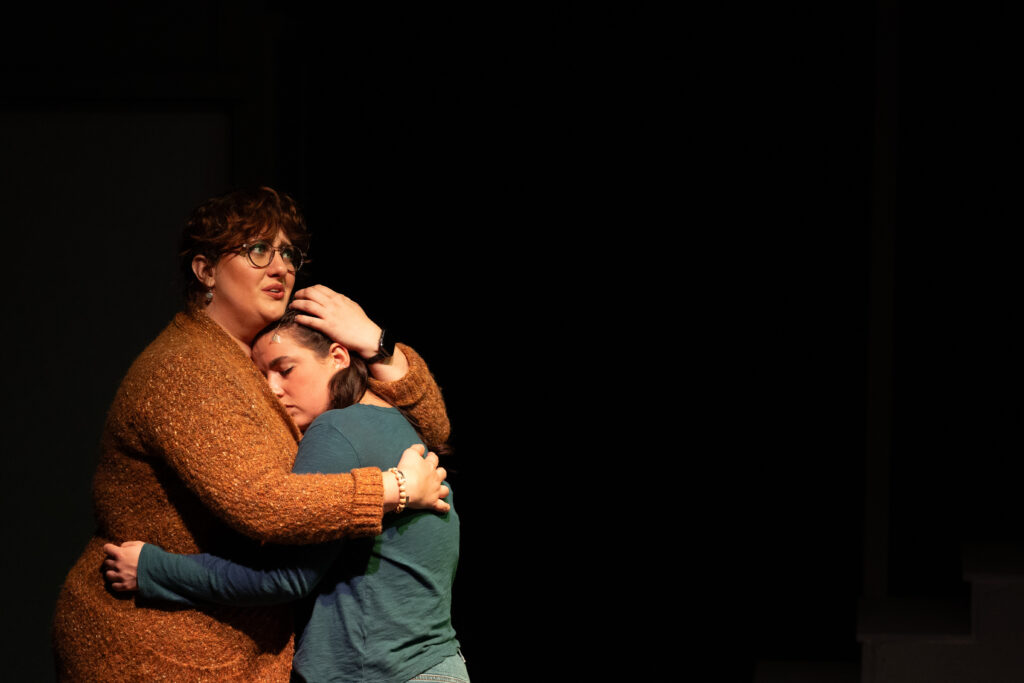
Dowling conveys warmth and wisdom as sometimes overbearing Beverly, strong in her touching “Miles to Go” solo, and zealous in “I Know My Girl” accompanied by the ensemble. Cole, while not on stage that much, works to make dim-bulb Adam more than the one-note character as written. His “Run Away with Me” reveals a tender side.
Sarah Gene Dowling and Melissa Felps. Photo by Florence Flick.
The characters are rather sketchily drawn, but the performers work overtime to make them relatable. The book could use some tweaking – as the non-linear story arc can be clunky in disclosure and sometimes murky.
However, the propulsive songs are exceptionally expressive, and the ensemble delivers them with a deeply felt commitment, especially “Moving On,” “Drive” and “Remember This.” They have fun introducing themselves in “We’re Just in Your Head.”
Once dialed in, the production is more than crossroads and “On the Road” references (title included). No need for spoiler alert– but expect life to happen while they’re busy making other plans.
Felps, in her best performance to date, exhibits plenty of verve, but also frets in the way that teenage girls do, with moms and boyfriends to deal with – and with a pesky live-wire best friend judging her decisions and nudging her out of her comfort zone.
Her poignant delivery of “The Girl Who Drove Away” and “There Was a Party” aptly captures her impassioned but sensible valedictorian character, while she excels in the duets, smoothly collaborating with her partners.
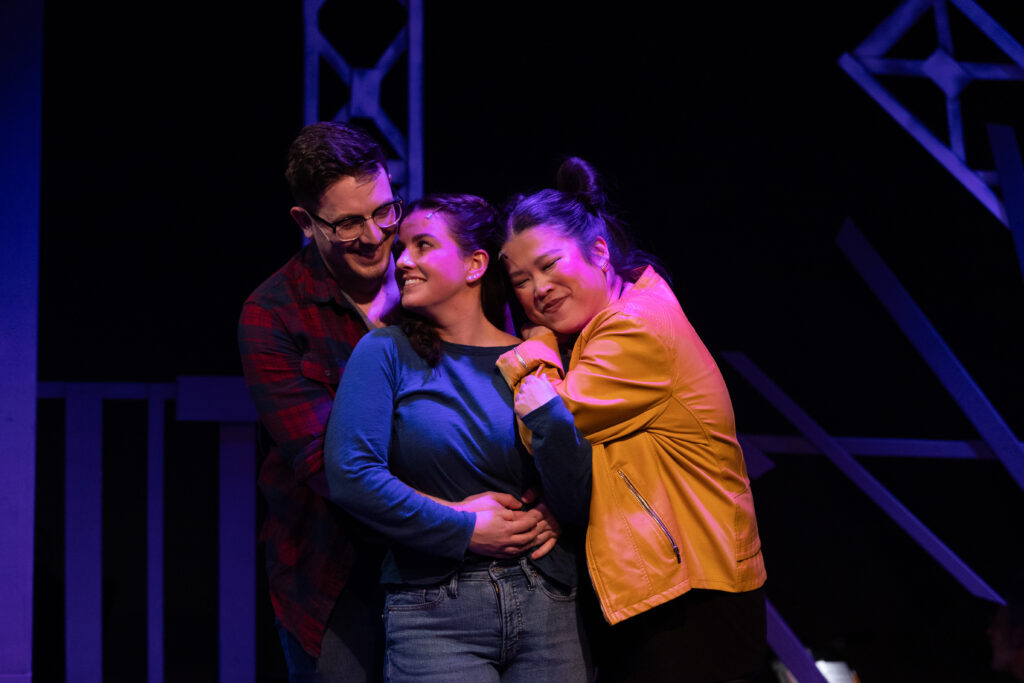
With Cole as the not-as-intelligent beau, the couple is playful in “Simple as That,” funny in “The Proposal,” and sweet and hopeful in “Say the Word.”
The mother-daughter relationship is humorously captured in “My Mom Is a Statistician” while she’s learning to drive, a running plot point.
Cody Cole, Melissa Felps, Grace Langford. Photo by Florence Flick.
But the calling card here is puckish Langford and earnest Felps’ stupendous harmony. Their heartfelt vocals are best in a song grappling with life’s blows – “Ordinary Senior Year,” and revisiting memories and dreams in “Freedom.” They really have fun with “Top Ten” – you must listen to the lyrics. (A dig about Sting’s musical?! Hilarious. More Sting jokes to come (?!)
Both high-spirited actresses have worked together before, in a regional production of “Urinetown” in summer 2022, and they have an easy chemistry that allows their characters to resonate emotionally. The two singers reach a zenith with their power in “Go Tonight” (written as a shouting match, it seems – some of the bombastic delivery could have been more nuanced to mix up the intensity).
Lyricist Kerrigan and composer Loudermilk’s musical has inspired a cult-like following, in a similar way that “Dear Evan Hansen” did in 2017. As this work has been in development for many years, several numbers went viral on YouTube. More than 15,000 pieces of digital music from the score have already been sold since 2009.
The work of high-octane director-choreographer-performer Kevin Corpuz, a big fan of Kerrigan-Loudermilk, always has an energy to it, and in his directorial debut, has maintained a noticeable momentum in The Marcelle space. The staging, to use a driving reference (that are plentiful in this show), has muscular power.
Music Director Joe Schoen’s interpretation of the score has both a fleetness and a sleekness to it, with Schoen conducting and playing keyboard, and superb sound from Adam Rugo on guitar, Chuck Evans on violin, and Zach Neumann on a second keyboard.
The creative crew has contributed to outstanding production values – Jacob Baxley on sound design, Brittanie Gunn on lighting design, and Todd Schaefer’s striking scenic design that allows a fluidity, while Stage Manager Sarah Baucom keeps the action smooth.
Photo by Florence Flick.
Gunn, co-founder and creative director, and Corpuz, also creative director, are ushering in a new era at the 12-year-old Tesseract that promises to be exciting as they reach new goals with musical productions and continue their commitment to new voices with their summer play festival.
“The Mad Ones” is a crowd-pleasing choice after positive response to “Kinky Boots,” “Ordinary Days,” and “The Last Five Years,” yet still taking risks and meeting challenges. Next up is “The Inheritance,” the 2020 Tony Award winner for Best Play, in April, New Musical Summer Fest in July, and the musical “Anastasia” in November 2024.
In the iconoclastic words of Jack Kerouac: “The only people for me are the mad ones, the ones who are mad to live, mad to talk, mad to be saved, desirous of everything at the same time, the ones who never yawn or a saw a commonplace thing, but burn, burn, burn like fabulous yellow roman candles exploding like spiders across the stars.”
Tesseract Theatre Company presents “The Mad Ones” Nov. 3-12, with performances on Fridays and Saturdays at 8 p.m. and Sundays at 4 p.m. at The Marcelle, 3310 Samuel Shepard Dr, St. Louis, 63103, in Grand Center. The show is 1 hour, 40 minutes, without intermission. For more information, visit the website: www.tesseracttheatre.com
Melissa Felps as Samantha. Photo by Florence Flick
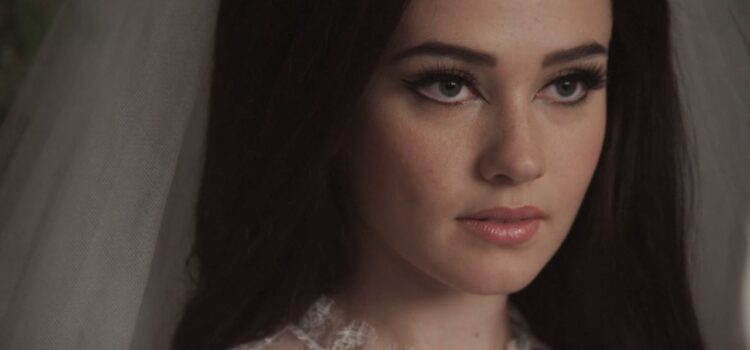
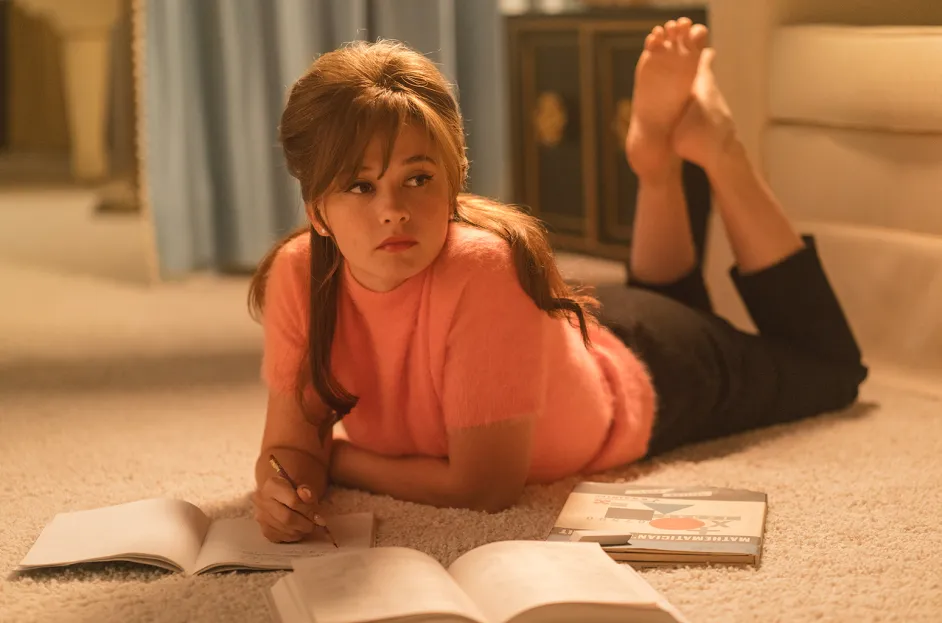
Stylistically resonant with absorbing performances from Cailee Spaeny and Jacob Elordi, director Sofia Coppola’s “Priscilla” is emotionally removed, eschewing a deeper dive into its subject’s headspace for dreamlike stasis with little payoff and, ultimately, not much of note to say.
Based on the book “Elvis and Me” by Priscilla Presley (who also executive-produced the film), Coppola’s adaptation charts the whirlwind romance between young Priscilla (Spaeny) and the insecure, hip-gyration-loving King of Rock and Roll himself (Elordi). We’re introduced to 14-year-old Priscilla (then Beaulieu) in 1959, when she’s a high school student living with her parents (Ari Cohen and Dagmara Dominczyk) on a U.S. Air Force Base in Wiesbaden, Germany. A chance encounter at a diner leads to her being invited to a house party hosted by 24-year-old Elvis, who’s currently serving in the Army.
Priscilla is thrilled and, after battling her anxious, apprehensive parents, is allowed to attend. Once she arrives at the party in Bad Nauheim, which the film frames like a moody jazz club radiating from the powerful man at its center, Elvis (again, 10 years Priscilla’s senior) almost immediately falls for her; she reminds him of home.
Thus begins their deeply problematic courtship. Elvis leaves Germany for The States, which tears the crestfallen Priscilla apart: she spends her days anxiously awaiting letters and calls, daydreaming through classes and growing increasingly jealous hearing about Elvis’s tabloid headlines involving other women. In 1963, she’s summoned to Graceland, indulging in extravagance (and prescription drugs, instigated by Elvis) with his posse of rowdy friends who became known as the Memphis Mafia.
After returning to Germany, she and Elvis convince her parents to let her move to Graceland to finish her senior year of high school. Everything seems like a fairy tale in Priscilla’s eyes, at least at the beginning, but deep cracks begin to form in their relationship. Denied intimacy and manufactured to be Elvis’s porcelain doll of a wife, Priscilla is sapped of independence – trapped in a glossy cage with an emotionally unintelligent artist grappling with his own identity at the expense of hers, until she decides that she’s had enough.
Indeed, “Priscilla” is a depressingly bleak look at a relationship steeped in toxic behaviors and feelings of claustrophobia. While Coppola effectively conveys the story’s saddening atemporality, in which Priscilla’s lack of development reflects her captor’s attempts to mold her, the intentionally distant approach backfires. The film jumps erratically through time without meaningful buildup to Priscilla’s rebellion, or, oddly, real insight into who she is and hopes to be.
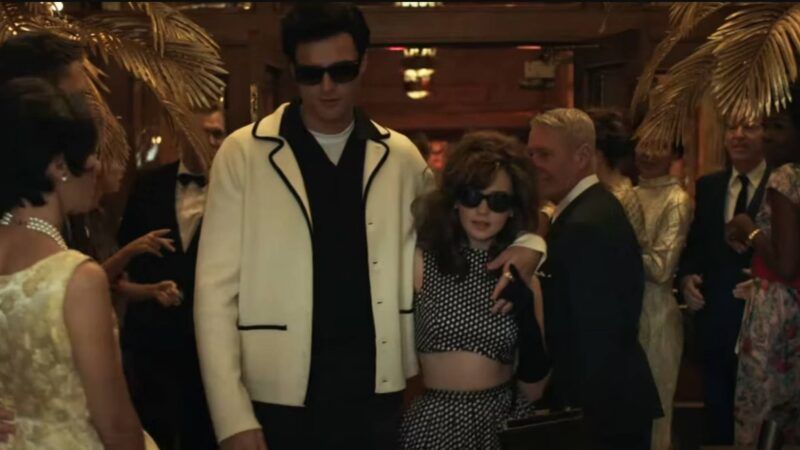
The performances, however, are difficult to fault, even when delivering Coppola’s occasionally clunky dialogue. Spaeny precisely embodies Priscilla’s wide-eyed youthfulness and growing maturity. We observe her longing, euphoria, and disillusionment with a celebrity she’s idealized and who has trapped her in cycles of loving and abuse, tenderness and chaos. “Priscilla” is largely framed through her eyes, as we watch her enduring situations where others talk at her and she, often nonverbally, emotes multitudes through subtle facial expressions and body language. Stacy Battat’s costume design further helps emphasize Priscilla’s separation from her past and from her true self, fashioned to appease Elvis’s demands. Her frustration and yearning is efficiently portrayed by an actor deserving of all the accolades (hopefully) headed her way.
Elordi is similarly effective, taking a far different approach than Austin Butler’s flamboyant (and highly entertaining) turn in Baz Luhrman’s 2022 biopic, “Elvis.” Elordi nails Elvis’s voice and physique, towering over Spaeny in an on-the-nose reminder of their age gap and power dynamic. Elordi’s Elvis is charismatic, trouble-making, and selfish, a victim of stardom grappling with his own image and expectations forced on him by people like Colonel Tom Parker.
While “Priscilla” is more focused on his direct interactions (or lack thereof) with Priscilla, we infer outside drama and betrayal through conversations Priscilla overhears and headlines she reads. The victimization and mental struggles that Elvis experiences seep into his personal life. He might love Priscilla on some level, but sees her as someone to be controlled. Elvis holds her back to retain her purity, perhaps as a way for him to appease his own regrets and status as a sex symbol while he lives a life of stardom singing and acting in Hollywood (sleeping with many women along the way).
With such committed performances from Spaeny and Elordi, it’s a shame that “Priscilla” is such a cold viewing experience – which might be the point. This is a dark story of fantasy brought down to earth, less about empowerment than disempowerment.
The film’s first half unfolds like a dream, hazy and ethereal, as Sarah Flack’s editing conveys the whirlwind romance with a sense of inertia that Priscilla finds difficult to break free from. What starts out as unexpected, surprising, and thrilling devolves into tedious cycles of mistreatment and placation. We feel for Priscilla, mostly thanks to Spaeny’s acting, but the film’s second half sags due to Coppola’s seeming refusal to dig deeper into Priscilla’s psyche; more based on vibes than genuine insight as the years tick by and Priscilla becomes a bride and mother.
Frequent Coppola collaborator Philippe Le Sourd’s cinematography is murky and cloudy, echoing Priscilla’s stagnation – never drawing too much attention to Tamara Deverell’s period-accurate set design. Coppola frequently resorts to montages to depict the passing years, emphasizing how little has changed in Priscilla’s fraught situation.
This minimalist approach to Priscilla’s rebellion is muted to a fault. There’s little crescendo to her final decision, besides viewers knowing from the outset that she eventually divorces Elvis. As a result, Coppola’s restrained approach to the material seems like checking off boxes instead of organically telling a story about one woman’s resilience in the face of adversity. The reasons Priscilla continues to stay with Elvis are complex and worthy of exploration, though the film holds her at arm’s length.
Combined with a jarringly abrupt ending and a soundtrack that too often tries to sell emotions through lyrics (with no Elvis tunes in the lineup), “Priscilla” stays afloat thanks to the magnetic performances of its two leads. For Spaeny and Elordi, especially Spaeny, “Priscilla” is worth a look, but it remains a missed opportunity for a filmmaker capable of greatness.
“Priscilla” is a 2023 drama directed by Sofia Coppola and starring Cailee Spaeny, Jacob Elordi, Ari Cohen, and Dagmara Dominczyk. It is rated R for drug use and some language, and runs 1 hour, 50 minutes. It opened in theaters November 3. Alex’s Grade: B-
Think of it as ‘80s performance art meets a ‘60s Be-In. An experimental “happening” play, “White Rabbit, Red Rabbit” by Nassim Soleimanpour, is being presented by the Black Mirror Theatre Company for a brief four-performance run just to do something different.
And unique it is – interactive with the audience and performed without a set, director, or rehearsals. A different actor reads the script cold – for the first and last time – at each performance, and their name goes on a list so that they can never perform it again.
If it sounds fringy, it appeared at the St. Louis Fringe Festival in 2021.
When he was 29, Soleimanpour was forbidden to leave his country, Iran. He can’t leave because he is a conscientious objector who has refused to take part in mandatory military service. Barred from travel, he turned his isolation into an absurdist theatrical experience that brings actor and audience together through uncharted terrain.
But above all, it’s his voice, coming through different actors.
On opening night, Jarek Templeton was the actor who opened the script that had been sealed in a manila envelope and given to him by producer Michelle Zielinski. He then read the pages in a folder as instructed. He immediately took control and guided audience members on what they had to do, and he performed the actions the playwright requested.
Because of its unusual structure, the focus is on how the performer handles the on-the-fly aspect and tapping into the innovative playwrighting. The audience was game – applauding and participating when called upon.
On Friday, Evan Turek will be the actor, Dorothy LaBounty on Saturday, and Ellie Schwetye on Sunday.
Part comedy, part drama, the playwright is involved in each production – he communicates with notes to the people involved in putting on the show. They were told 48 hours before the show to have water on stage, and two glasses.
It may start out light-hearted, or a bit daffy, but included are some serious topics to mull over. Because of its spontaneity, the less you know going in, the better.
The Black Mirror’s earnest commitment to creating interesting theater took a leap forward with this intriguing concept.
The Black Mirror Theatre Company presents “White Rabbit/Red Rabbit” on association with Aurora Nova Productions and Boat Rocker Entertainment Nov. 2-5 p.m. at 7 p.m. Thursday, Friday, and Saturday, and 2 p.m. on Sunday at The Chapel, 6238 Alexander Drive, St. Louis, MO 63105. For more information, visit blackmirrortheatre.org
More information is also available” https//www.facebook.com/WhiteRabbitRedRabbit
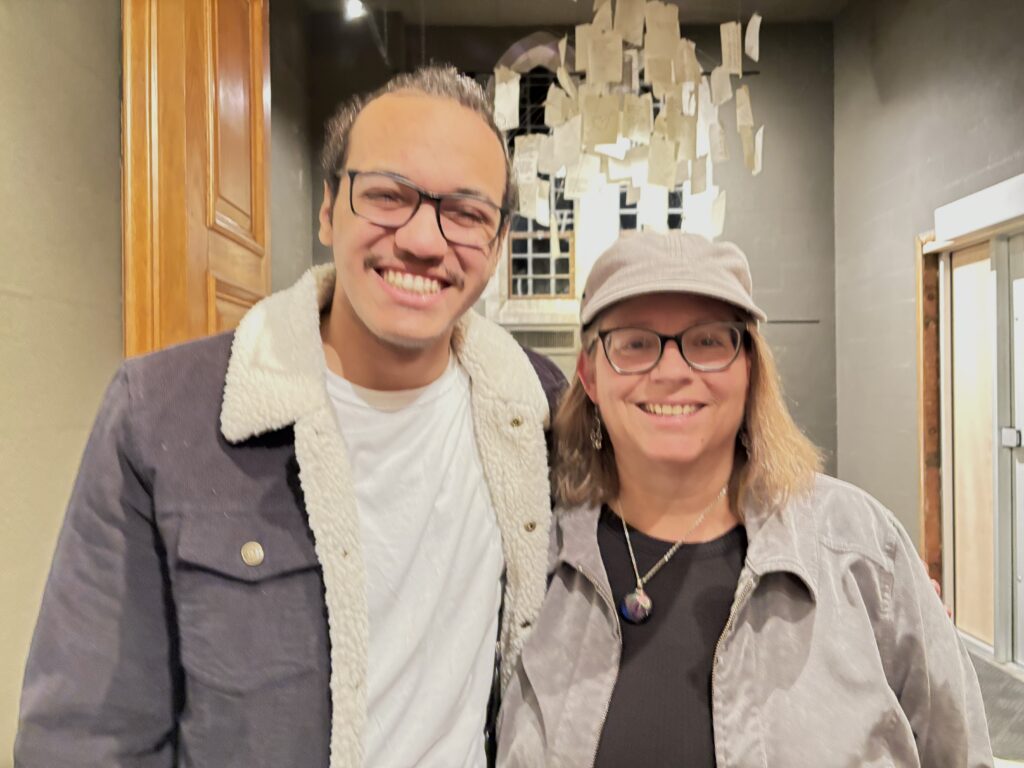
Jarek Templeton, Michelle Zielinski after first performance. Photo by Lynn Venhaus.
“Mindgame” is one of those clever psychological thrillers that keeps you guessing through two acts, as the twists and gasps mount.
Set in an experimental maximum-security asylum for the criminally insane, a feeling of dread permeates the drab walls of Fairfields, which is located in an isolated part of the English countryside. In the director’s office, you can only imagine what horrors are on the other side of the door.
The program notes state that “nothing is what it seems.”
The 1999 play written by Anthony Horowitz is a rather verbose exercise, but the tension builds as we question who is legit and who is unhinged, and why the psychopaths who live undetected next door send chills up our spines.
It takes place in the summer at the turn of the 21st century, hence the modern references instead of the dated Agatha Christie-Arthur Conan Doyle tropes.
When Act One begins, a journalist has an appointment to see the director in hopes of gaining permission to interview a notorious serial killer named Easterman for a true-crime book. Easterman’s terrifying string of murders were grisly – and we’ll hear about them in more detail. Would you go near Hannibal Lecter or Ed Gein?
We will also hear about more cases, and while Easterman is fictional, the other stories are based on real murderers. For instance, sadist Andrei Chikatilo who is mentioned killed more than 50 women and children.
As presented by Albion Theatre, “Mindgame” is a tour de force for its two leading actors, Chuck Winning and Nick Freed, who are reminiscent of Michael Caine and Laurence Olivier going toe to toe (or head-to-head) in the brilliant 1972 film “Sleuth,” which was based on Anthony Shaffer’s Tony-winning play. (Fun fact: Both were so captivating that they were nominated for Oscars, losing to Marlon Brando for “The Godfather.”)
The third cast member, Nicole Angeli, is Nurse Paisley, and as always, she delivers a multi-layered performance in a smaller supporting, but pivotal, role.
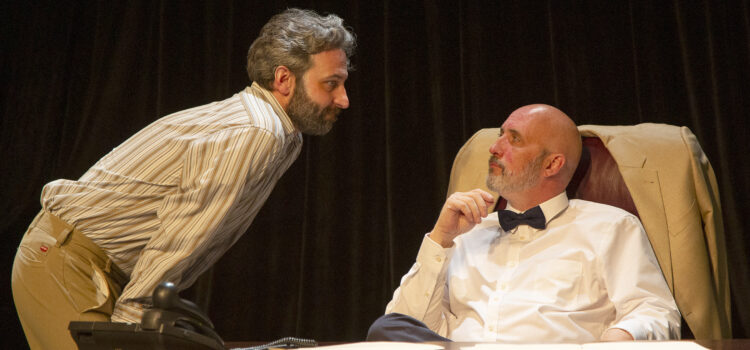
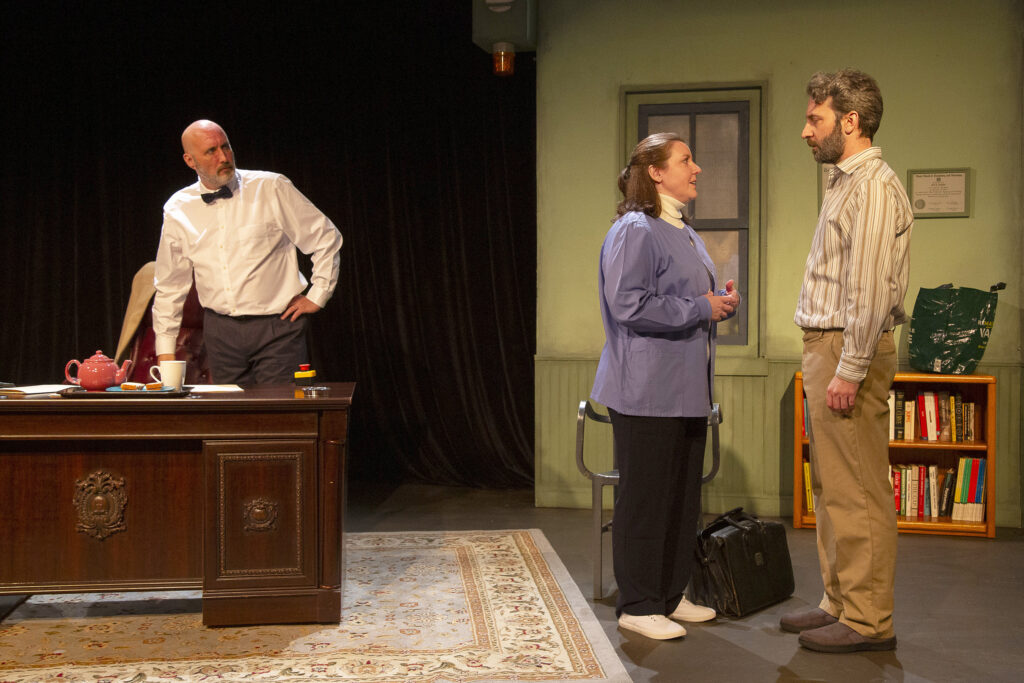
Winning, Angeli and Freed. Photo by John Lamb
Winning, as Doctor Farquhar, and Freed, as writer Mark Styler, are on stage nearly the whole time, and work so well together that it’s like watching a 5-set tennis match at the Wimbledon finals, such are the nimble verbal volleys and quicksilver shifts of power between their characters.
Earlier this year, both actors stood out in Albion’s second play, “The Birthday Party.” As a pair of menacing villains, Winning was a revelation and Freed, who moved here from Chicago, made a stunning debut.
Winning’s Farquhar is garrulous, pompous, and brainy, displaying contempt for the patients and superiority in his psychoanalysis and therapy skills. When he pontificates about his perception of how to treat the mentally ill, Winning’s hot-air blathering teeters on that fine line between ridiculous and expertise.
Freed’s Styler is confident, cocky, and skeptical at first, then increasingly unsettled by the surroundings and peculiar behaviors. His instincts are finely tuned as his moods change.
The play is elaborate in how it threads the needle from point A to point B – and that can get a little tedious as dynamics flip. However, the actors hold our attention and bring out the best in each other as scene partners, and Robert Ashton ups the ante with his adroit direction.
In British slang, the mystery’s a corker, and Ashton, a nimble theater veteran with a flair for crisp and purposeful staging, masterfully controls the suspense.
To give more away would be to spoil the plot, and the fun part of being in the audience is the discovery. Because you know something’s not quite right, and deceit and delusions are there for the deducing.
It’s a credit to all involved that they never tip us off, stay in the moment and do not anticipate what’s ahead, making us fascinated by what’s unfolding.
The technical sight and sound work are also sharp, with Erik Kuhn the tech director and set designer, and an expert fight choreographer. Eric Wennlund’s lighting design is both functional and artful while Jacob Baxley’s sound design adds layers of fright. Stage Manager and Assistant Director Gwynneth Rausch keeps the danse macabre taut.
It’s only Albion’s fourth show, and they have impressed with their well-staged productions featuring strong performances and outstanding production values. Founded in 2022 to explore the rich history of playwrighting in Britain, with regular trips across the sea to Ireland, they not only entertainan audience, but strive to inform them of the social, political, and cultural influences of the time. So far, they are nailing every facet of the archetypes of a good drama/comedy.
One thing is always a given – that the accents will be spot-on, and the trio’s work here is superb. Albion provides a word and phrases guide for us in their programs, too.
If you like hair raised and minds bent, this is a dandy way to spend 2 hours and 15 minutes.
Chuck Winning as Dr Farquhar. Photo by John Lamb.
Albion Theatre presents “Mindgame” by Anthony Horowitz from Oct. 20 to Nov. 5 at the Kranzberg Arts Center, 501 N. Grand in Grand Center. Performances are Friday and Saturday at 8 p.m. and Sunday at 2 p.m. For more information, visit www. albiontheatrestl.org.
Stylish, cerebral, and laced with pitch black humor, director David Fincher’s “The Killer” uses its deceptively simple narrative to uncover a thoughtful, albeit nihilistic, character study with a top-notch performance from Michael Fassbender.
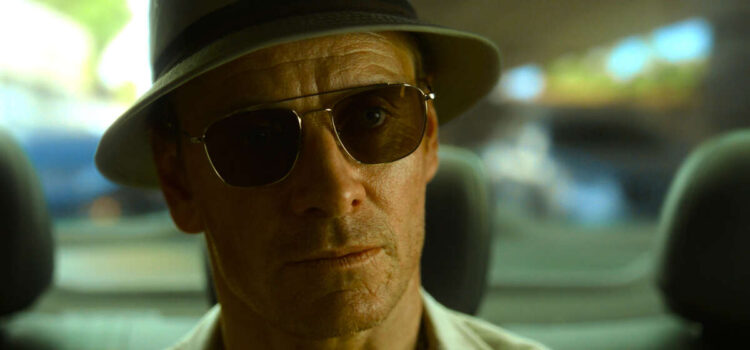
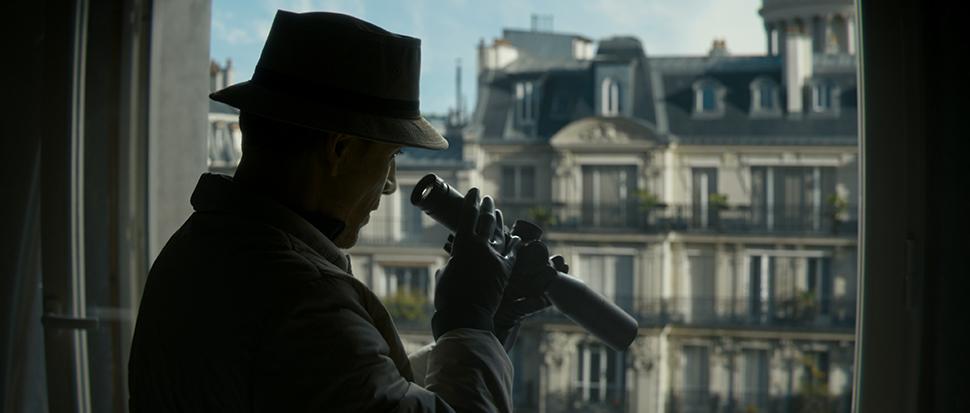
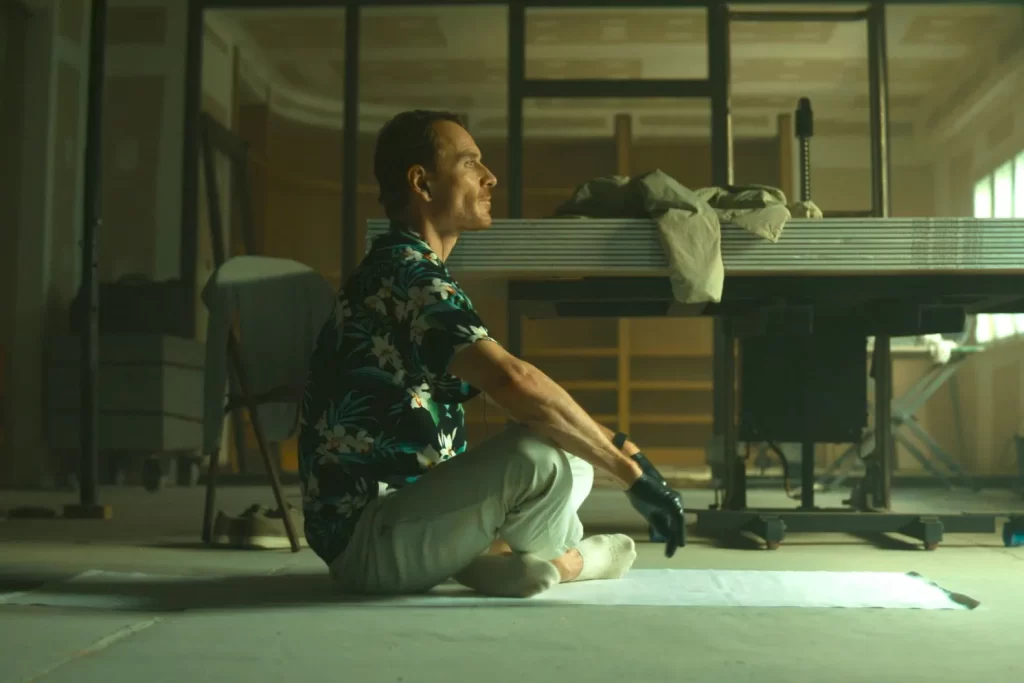
Fincher’s film, based on a graphic novel by Alexis “Matz” Nolent, opens with a montage of various killing tools and settles on the titular nameless hitman (Fassbender), who is waiting for the right time to kill a wealthy target in Paris. He’s a cold, calculating, pretentious sociopath, who bides his time doing yoga, grabbing McDonalds, listening to the Smiths, reflecting on his craft, and waxing philosophical about the meaninglessness of existence, all while dressed (intentionally) like a German tourist.
His methodical elimination of targets is nothing personal; they’re little more than a speck in the pot of overcrowded humankind. He’s also devilishly resourceful, possessing seemingly limitless amounts of I.D.s with the names of ‘70s and ‘80s sitcom characters, and making use of all the modern conveniences and technology of our time (Amazon delivery stands out) to seamlessly weave throughout our world sans detection. If you see him, it’s already too late.
He’s set up in a WeWork space across the street from the target’s hotel room, since apparently (as his internal monologue explains) Airbnbs tend to have too many cameras. “Stick to the plan,” “Anticipate, don’t improvise,” “Empathy is weakness” are common phrases The Killer repeats to himself, closely monitoring his heart rate via FitBit to ensure maximum efficiency. He’s a well-oiled killing machine, a true master in the art of assassination. Until, well, he misses his shot, and takes out a sex worker instead.
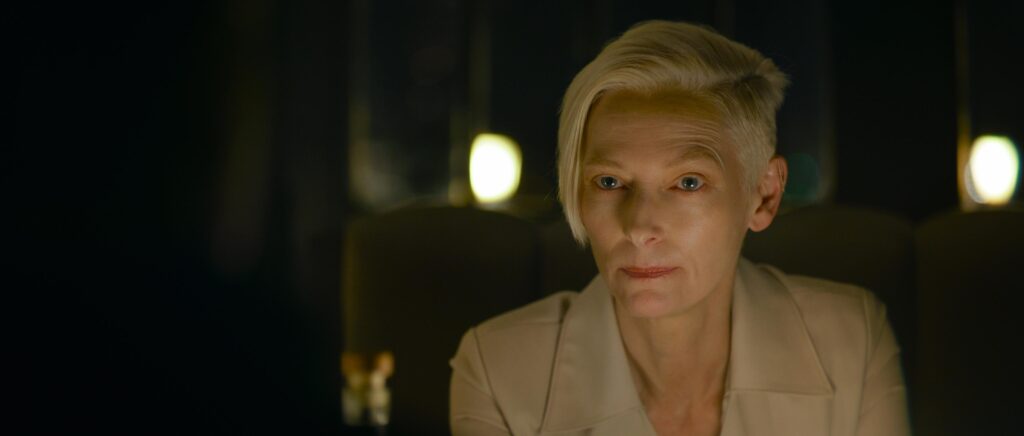
Tilda Swinton in “The Killer”
The Killer makes a quick escape (thinking to himself “WWJWBD: What Would John Wilkes Booth Do?”), and the target gets to live another day. Goons are promptly dispatched to The Killer’s beachside house in the Dominican Republic — leaving his girlfriend, Magdala (Sophie Charlotte), within an inch of her life. Driven as much by revenge as by his own ego, our allegedly apathetic protagonist embarks on a globe-trotting mission to find out who’s responsible and murder them, plus any unlucky bystanders who get involved. But no matter what he tells himself, and his effectiveness at navigating our always-online reality, he’s still fallible: a monster thriving on delusion, insisting he’s above humanity while never being able to fully outrun his own.
Oscillating between suspenseful, shocking, and (dare I say it) laugh-out-loud funny, “The Killer” thrills and provokes from start to finish. This isn’t a particularly new story, but Fincher’s approach mines poignancy from a familiar template, immersing viewers into the mind of a villain and cutting him down to size — a character that’s easy to root against, but impossible to look away from, brought to life with Fincher’s characteristic panache.
Anyone who’s seen a Fincher joint before (“Fight Club,” “The Social Network,” or the regrettable “Mank,” for example) knows his films overflow with style, and “The Killer” is no different. Erik Messerschmidt’s crisp cinematography frames The Killer’s routine with distant, precise remove, sometimes blending him into shadows, to reflect his “professional” demeanor. The largely static camerawork changes to handheld as The Killer’s improvisational instincts kick in and panic rears its head.
Additionally, Trent Reznor and Atticus Ross’s score pulses like a heartbeat as The Killer weaves through his surroundings like a parasite, evading detection at every turn, buzzing with discordant rhythms at moments of peril, such as during a cartoonishly destructive brawl later on that rivals the brutality of skirmishes in “John Wick: Chapter 4.”
Ren Klyce’s sound design is absolutely impeccable, with diegetic sounds (like the ring of an employee check-in kiosk or the bang of a ferry’s ramp locking into place) turned up to the max: nuisances that momentarily distract our titular assassin from his quest for vengeance. Suffice to say, the film is a sensory treat.
Fassbender’s performance is brilliantly tuned into the character’s cynicism and deliberate procedures. His stoic facial expressions belie a seemingly soulless husk — someone who’s devoted his whole life to his career without any interest or care for humanity, at least as far as he tells himself, but Fassbender subtly conveys his cracking facade as the story progresses.
His narration (from a strong screenplay by Andrew Kevin Walker) is sardonic, cruel, pop-culture-savvy, and at times very funny, but also reflective of his internal torment. His mantras are pushed to their limits, especially when interacting with unlucky bystanders in the wrong place at the wrong time. He has the skills to make it out of any deadly encounter, but at what cost?
Indeed, much of the unpredictability of “The Killer,” despite its familiar setup, comes down to contrast and dissonance. There’s something darkly comedic, and compelling, about being immersed into the mind of such a straight-laced character, observing his pain-staking preparations for the next hit, and seeing reality coming back to bite him, daring and/or forcing him to break from routine. Fincher plays around with this idea, too: moments of levity and endearment traditionally found in these types of stories aren’t present here; opportunities for redemption are tangled tantalizingly close and unceremoniously (often graphically) dashed.
Fincher barely spends any time with Magdala either — a non-issue because vengeance for her isn’t The Killer’s primary motivation. What really matters is maintaining his carefully cultivated lifestyle and self-image, scarred by his humiliating mistake in Paris that set this whole fight-for-life into motion. He knows the drill as well as anyone, but (through pride and desire to remain on the planet he has such apathy for) refuses to accept it.
This idiosyncratic approach ensures that even if we think we know where “The Killer” is headed, we really don’t, not unlike the protagonist’s own predicament. Memorable appearances from Charles Parnell, Kerry O’Malley, and Tilda Swinton underscore this, unfolding in ways running the gamut of emotions.
Ultimately, “The Killer” is thrilling, amusing, and even moving to some degree, especially considering Fincher’s own reputation as a perfectionist. The Killer may have the tools to escape any situation, and maintain his own status, but can one really live without embracing life’s uncertainties?
This is one of 2023’s finest films thus far, much deeper than it initially seems, and deserving of the big screen treatment. Stick to the plan. Anticipate, don’t improvise. And don’t wait for Netflix, if at all possible.
“The Killer” is a 2023 action crime thriller directed by David Fincher and starring Michael Fassbender, Tilda Swinton, Charles Parnell and Kerry O’Malley. It is rated R for strong violence, language and brief sexuality, and runs 1 hour, 58 minutes. It opened in selected theaters on Oct. 27 and will stream on Netflix starring Nov. 10. Alex’s Grade: A+
Glory be, I have accomplished one of my life’s goals: Published author.
Although writing is a solitary pursuit, it took many other people to help me get to this point. This has not been an easy journey, but ultimately fulfilling, and cathartic, during a very rough — yet resilient — year. The best thing is that along the way, I have met my fellow contributors from across the country – and these are wise, warm women, all over 50, with not only something to say, but special people that have been a pleasure to get to know better.
We’re all part of our astonishing friend and visionary Marqueeta Curtis-Haynes’ book: “Ageless Glamour Girls: Reflections on Aging” that will be published on Dec. 5, and pre-sales are now underway. We’re hitting social media and local media during the next 36 days, and will gather together for a live group Zoom the night it is officially out that anyone can join, too, and celebrate with us..
My chapter is titled: “You Are Not Alone: Dealing with Grief and Loss.”
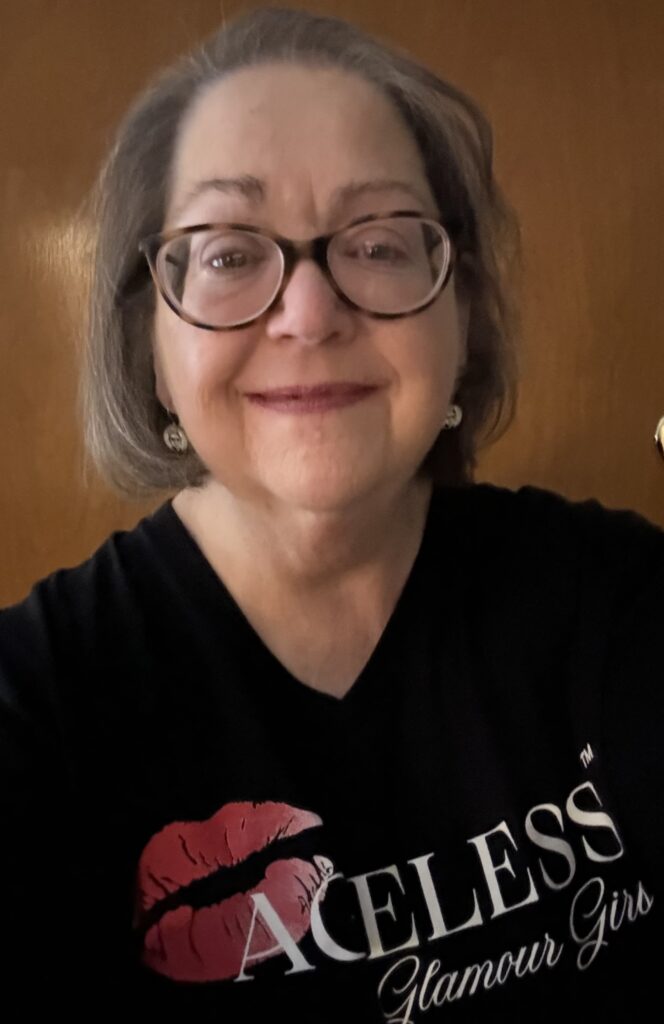
Lynn Venhaus (wearing my AGG T-shirt and my RBG earrings).
Talk about an abundance of life lessons! Turning pain into purpose has been one of my goals since my oldest son died nearly five years ago. It’s been a process navigating grief after Tim passed, then my brother Matt nine months later, and then my dear uncle/father figure last year. I have reached an age where by now, many other family members and friends have passed, and it can be overwhelming, especially when there are more empty chairs at every holiday and special occasion.
While I struggle to make sense of the world and summon the courage to just keep on keeping on, I thought that if I shared this very personal experience, it may help others. I hope it’s relatable and lets people know they’re not crazy or alone. It’s my raw, real story, and I don’t pretend to be an expert.
Marqueeta is a former colleague, a native of East St. Louis, Ill., and a force of nature. She lives in Florida now, and we reconnected through Facebook. She has an Ageless Café page, too, and you will be immediately captivated by her sunny spirit.
As fledgling reporters, we worked together at the Journal Newspapers of Southern Illinois, part of the Suburban Journals of Greater St. Louis – I want to say 1980-81 (and even played together on a benefit basketball team that will remain one of our most ‘what were we thinking?’ experiences that we can laugh about now).
She left our dingy Fairview Heights newsroom to go into broadcast writing — St. Louis TV news (KMOX then – Channel 4) then onto the big dream of CBS News in NYC, and other career opportunities, while I moved on to O’Fallon Progress, then my dream job at the St. Louis Globe-Democrat, and after that folded, Belleville News-Democrat, Centralia Sentinel, and other stops along the way while raising two sons..
She is such a game-changer and I’m so glad the world’s going to know her name. As we older women know, there is something about our journey that is worth talking about – especially in a world that wants to dismiss us. We have survived, thrived and lived to tell about it.
When Marqueeta asked me and 12 other women to share our stories, I figured there would be power in this endeavor. Here is how she described her quest::
“Still on a mission to become a vehicle to help women manage aging, I created Ageless Glamour Girls. (I cover the origin of the name, in my chapter. My vision was and still is today, to provide a platform in which women of a certain age (50+), can “gather,” to get and share information on various topics, including caregiving, finances, second acts, menopause, plastic surgery, dementia, sexual health, and everything else from finding love to finding the best mascara that stands up to hot flashes. Our goal is to inform, inspire, empower, motivate, and yes – entertain.”
Recently, when she announced this achievement, she called her co-authors “some of the most fierce and inspirational women ever!”
She said she is a better woman because of it. I feel that way too.
This has been a year where I confronted my own mortality (twice), which changes one in many ways. And while writing my chapter this spring/summer, I somehow learned more about myself too. That chapter was one of the hardest things I ever had to write, but I accomplished it, overcoming doubts. If I can reach people, it will have been worth re-living some dark days.
I finally articulated this feeling on Tim: “What I miss most is seeing the world through his eyes.”
Maybe something else I wrote will resonate with a reader.
I am thrilled to join Lisa Bedian, Cheryl Collier, Sandi Badash, Ciriaca Yolanda, Maria Gonzalez, Karen Lindauer Herlands, Dionne Jones, Melinda Rinzivillo, Marian R. Featherson, Wendy Campbell, Patricia Desamours, Leah Irene Victoria, and Marqueeta. There are a few of us based in St. Louis, so you’ll likely see us together promoting it.
It’s quite a collection. The women write, straight from the heart, about leaps of faith, careers, being a mom, grandma, second and third acts, and weathering change and storms. Among the chapters are “The Unicorn: A Journey of Grace, Healing and Rarity Grace,” “Butterflies,” “The Positives of Being 87,” “The Antidote to Aging is Belonging” and “Finding Joy.”
And it’s been terrific to work with our very patient publisher Germaine Miller-Summers.
If you are interested in ordering a copy now, the $24.99 includes fees, taxes, and shipping. It will be available later on Amazon (after it’s published), and we’ll have more information as the date gets closer. To reserve your book, you can scan the QR code, or hit the link in the bio, or cut/paste right here: https://90daybookcreation.com/ageless-glamour-girls
On Dec. 5, after the world-wide release, you’ll be able to chat with us ageless glamour girls that evening at our Virtual Zoom Launch. If it’s anything like our Zoom chat “happy hours,” I guarantee laughs and sparkling conversation. This has truly turned into a team effort.
My heart is filled with gratitude. I have so many people to thank – first and foremost Marqueeta, for her support, guidance and encouragement when I really needed it.
Here’s my acknowledgement that I wrote for the book. I am sure I didn’t thank nearly enough people, but we had a limit as to what we could say (of course, with 14 co-authors!): I’d add my nephews, nieces, colleagues and so many people I’ve connected with through my writing.
“These past five years have been a difficult journey, but also one of insight, connection and comfort. I am grateful to my sisters Julie Modde and Mary Clare Gastro and their spouses Dean and Ken — we are Zipfel Strong!, my son Charlie Venhaus and his wife Maria and her Gencev family, his dad Bob Venhaus and family, my dearest friends and family members, and the many people in Tim’s life who loved him so much. Because we knew him, we have been changed for good, and will forever share that bond.” – Lynn Venhaus
As always, we want to engage with others, so feel free to send me your thoughts and reactions. Onward and upward, and thank you for taking the time to read something I wrote.
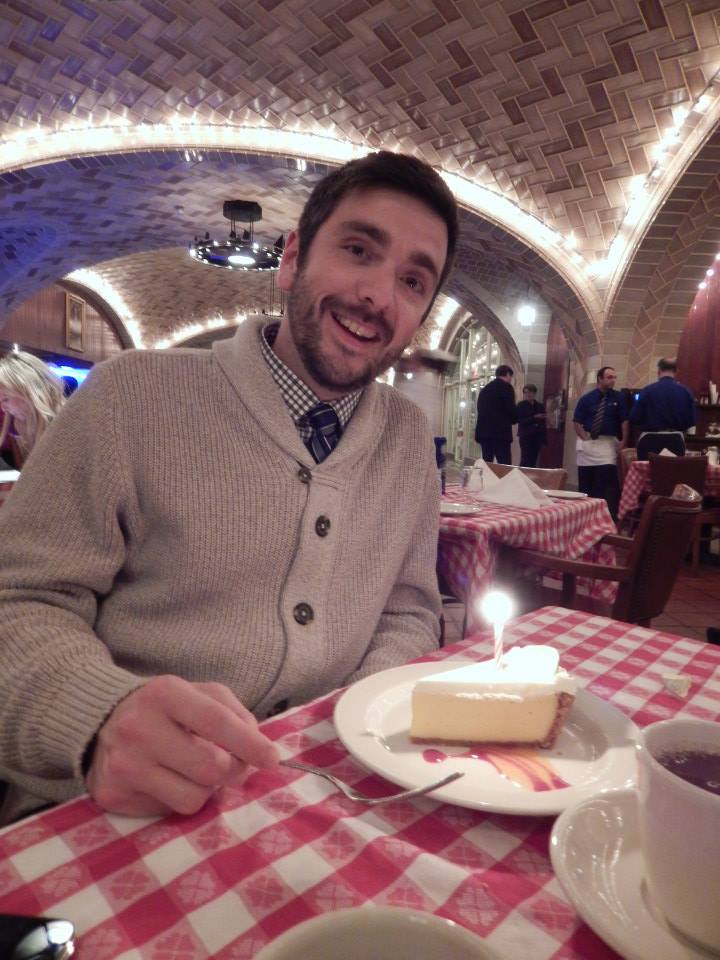
Timothy Robert Venhaus, Dec. 2, 1984 – Dec. 9, 2018. This photo is from Dec. 2, 2014, enjoying a slice of Key Lime Pie on his 30th birthday at the Grand Central Oyster Bar & Restaurant, New York City.
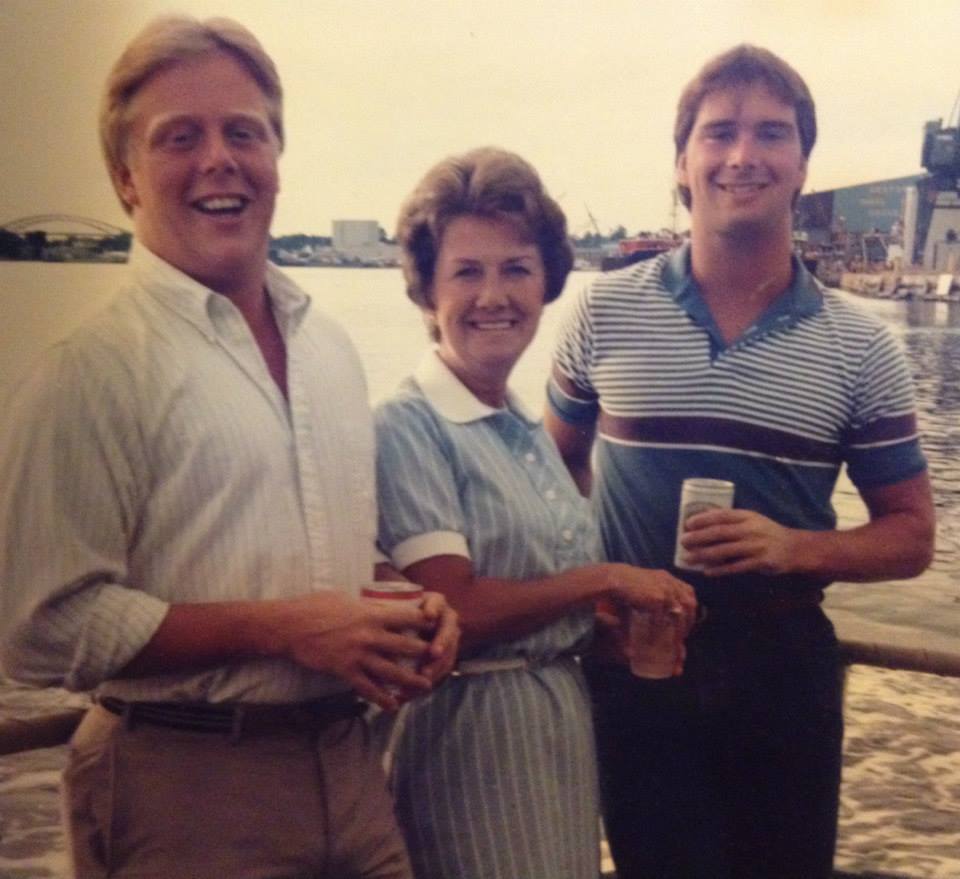
My brothers, Mike Zipfel and Matt Zipfel, flanking my mom on a family trip to Portsmouth, NH in August 1985. My mother, Rosemary Zipfel, died on July 7, 2001, at age 70, from lung cancer. My brother Matt, on right, died at age 59, suffering from a terminal illness, Multiple System Atrophy, on Aug. 31, 2019. My brother Mike, on left. hasn’t been seen since Jan. 6, 2005, in the Dallas, Texas, area. He would have turned 65 on Oct. 26, 2023.My Aunt Shirley, who passed in 2014, and Uncle Charlie, who died in July 2022. Photo at a family wedding in 1989.
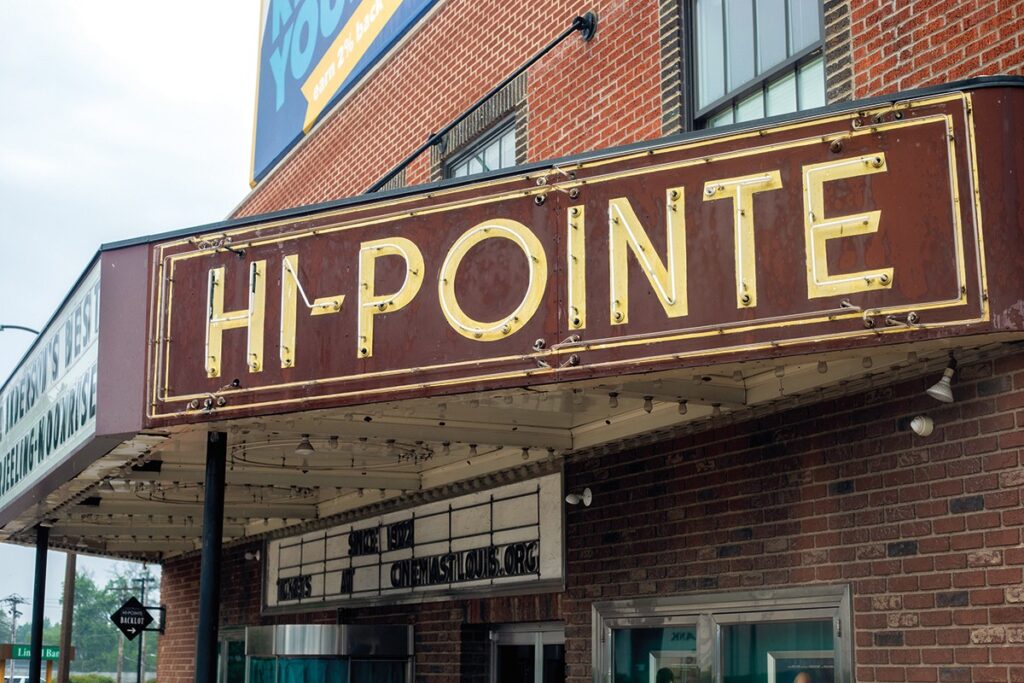
Cinema St. Louis is thrilled to unveil the 32nd Annual Whitaker St. Louis International Film Festival (SLIFF), set to captivate audiences from November 9th to 19th at the historic Hi-Pointe Theatre, CSL’s new forever home, as well as at multiple venues across the city including the Alamo Drafthouse, Webster University, Washington University and more.
CSL’s centerpiece event, is a world-class international film festival that exhibits films from around the globe and attracts between 25,000 and 31,000 patrons annually. Offering its 32nd edition in 2023, the fest presents 278 films over 11 days in November. Featured work includes shorts, documentaries, foreign-language works, American independents, restorations/revivals, and studio art-film releases. More than 100 filmmakers, documentary subjects, scholars, and critics attend the fest, participating in post-film discussions, master classes, and seminars. In 2019, SLIFF was included among USA Today’s 10 Best Film Festivals.
Highlights of this year’s fest include:
SLIFF’s Opening Night Party on 11/9 at the Hi-Pointe, where the fest will celebrate 50 Years of Hip-Hop in St. Louis, as explored through both film and music
Signe Baumane on hand to accept this year’s Women in Film Award at a showing of her newest film, “My Love Affair with Marriage” on 11/11
La Passion de Dodin Bouffant” (Taste of Things), Cannes award winner for director Trần Anh Hùng, starring Juliette Binoche, Pierre Gagnaire, Jan Hammenecker, and Benoît Magimel, serves as France’s official submission for Best International Feature for the 96th Academy Awards in 2024 and will screen on 11/12 at the Hi-Pointe Theatre
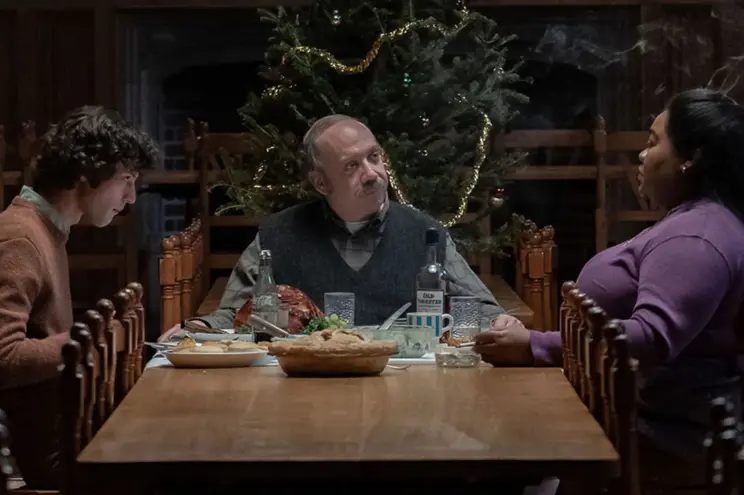
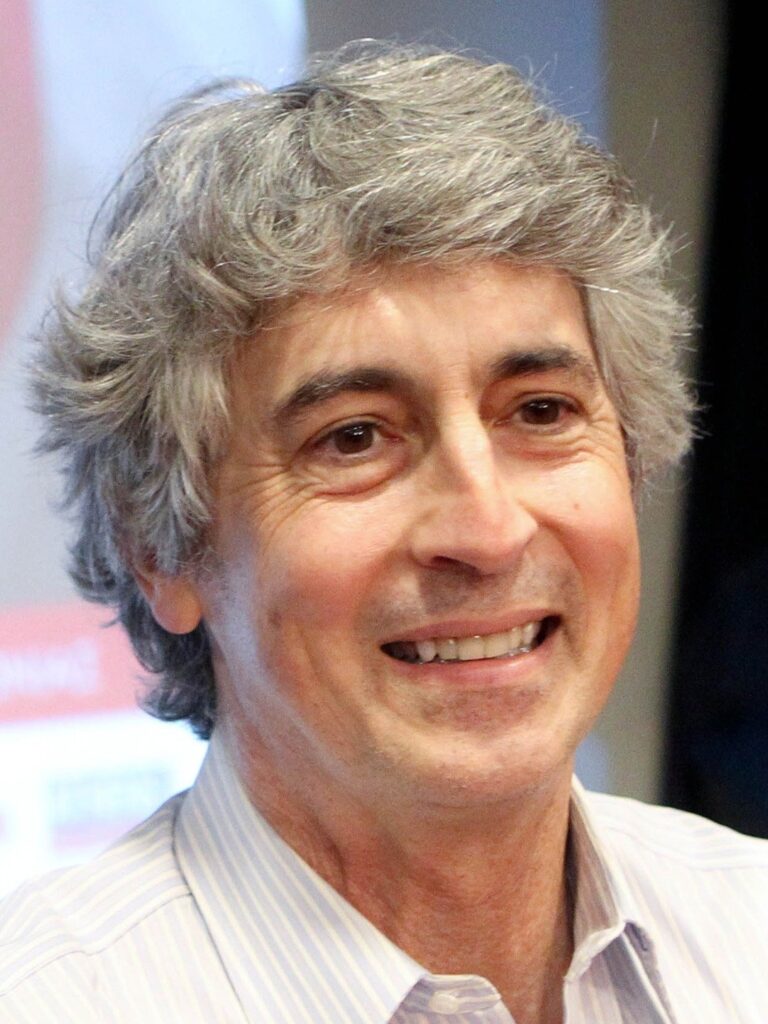
Director Alexander Payne to receive the Lifetime Achievement Award, while showcasing not only his newest film on 11/14, “The Holdovers,” but also his modern classic, “The Descendants,” on 11/15
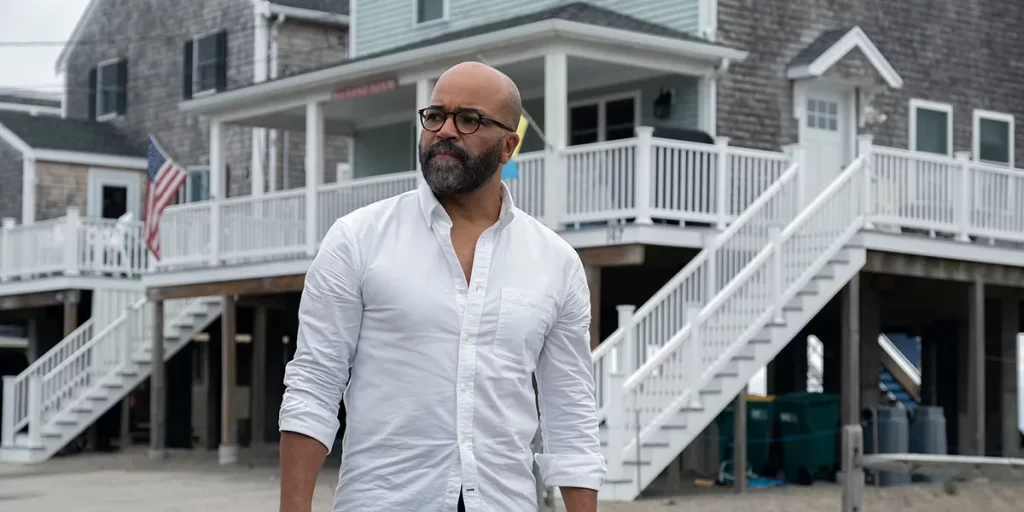
A screening of The TIFF 2023 People’s Choice Award winner, “American Fiction,” on 11/17, directed and written by Cord Jefferson, co-starring St. Louis’s favorite son, Sterling K. Brown.
Highlighting the lives of the LGBTQ+ community, SLIFF’s QFest Spotlight Film, “All of Us Strangers,” from Searchlight Pictures, the critically acclaimed romantic drama written and directed by Andrew Haigh, starring Andrew Scott, Paul Mescal, Jamie Bell, and Claire Foy, will close the festival on 11/19
The festival will culminate on Sunday, November 19th, with the much-anticipated Awards Party, featuring an insightful conversation with Reginald Hudlin, during which he will be bestowed with a Lifetime Achievement Award.
Reginald Hudlin
The festival kicks off on Thursday, November 9th, celebrating 50 Years of Hip-Hop with a tribute to the Hi-Pointe Cafe’s pivotal role in shaping hip-hop’s history, showcasing the city’s significant influence in its evolution. Attendees will be treated to a cocktail reception, engaging conversations, and a special screening of the 1990 film, “House Party,” directed by East St. Louis’ own, Reginald Hudlin.
CSL’s Executive Director, Bree Maniscalco, shared, “As we celebrate our first festival at the Hi-Pointe Theatre, we wanted to pay tribute to the H-Pointe neighborhood and honor those who made Hip-Hop what it is today. Mondays at the Hi-Pointe Cafe holds a special place in many people’s hearts, and we’re looking to bring it back to kick things off in style for this year’s Fest.”
This year’s festival promises a variety of exclusive events, screenings, enlightening post-film Q&A sessions, and illuminating masterclasses dedicated to addressing industry-relevant topics. SLIFF received an impressive 2,419 submissions, marking the festival’s 32nd anniversary with record-breaking enthusiasm. SLIFF’s dedicated team of programmers, hailing from diverse backgrounds, meticulously curated a selection of 278 remarkable films that underscore the transformative power of cinema.
The lineup includes 54 captivating narrative features, 52 thought-provoking documentary features, and an astounding 172 short films, all part of its prestigious Oscar-qualifying annual Shorts Competition. These films delve deep into a spectrum of compelling themes, ranging from art, the environment, human rights, and racial equity, to name just a few. What’s more, they authentically represent perspectives from 32 countries, encompassing an astounding 39 native languages, ensuring that SLIFF remains a truly international celebration of storytelling through film.
The Holdovers
FILM SPOTLIGHTS
SLIFF serves as a cinematic beacon, illuminating the big screen with a diverse array of films that might otherwise remain hidden gems, waiting to be discovered by local audiences. As the festival unfolds, St. Louis becomes a vibrant hub for filmmakers from far and wide, with many making their inaugural visit to the city. In this dynamic atmosphere, the city buzzes with the infectious energy and passion that only the power of film can generate.
● Documentary Spotlight: Sponsored by Mary and Leon Strauss, this spotlight will screen 130 films, including “Sorry/Not Sorry,” an examination of Louis C.K.’s, comeback and the unseen effects of this on the women who spoke publicly about the sexual harassment accusations in 2017; “Chasing Chasing Amy,” the complex legacy of Kevin Smith’s Chasing Amy (1997, also screening at SLIFF) on LGBTQ+ people and its life-saving impact on director Sav Rodgers; “We Dare to Dream,” follows athletes on their journey to become part of the refugee Olympic team; “Nathan-ism,” a tender portrayal of an artist’s distinctive viewpoint on his war assignment, coupled with his impassioned yearning for self-expression.; and “Omoiyari,” follows Kishi Bashi when a media interview links the Muslim ban and the immigration crisis at the USA-Mexico border with the incarceration of Japanese-Americans during WWII.
● French Language Spotlight: Sponsored by the Jane M. and Bruce P. Robert Charitable Foundation, this spotlight will feature 16 feature and short films celebrating St. Louis’ Gallic heritage and France’s cinematic legacy. Leading the spotlight is “La Passion de Dodin Bouffant” (Taste of Things), Cannes award winner for director Trần Anh Hùng, starring Juliette Binoche, Pierre Gagnaire, Jan Hammenecker, and Benoît Magimel, serves as France’s official submission for Best International Feature for the 96th Academy Awards in 2024.
● New Filmmakers Forum: SLIFF’s longest-running juried award, highlighting first-time narrative feature filmmakers whose works truly stand out.
● Oscar-Qualifying Shorts Competition: SLIFF is one of 63 Oscar-accredited short film competitions worldwide, making filmmakers who win a “Best of” at SLIFF, eligible for an Academy Award nomination.
○ Across 11 documentary shorts programs, audiences will witness the global impact of art, the nuances of the Black experience, the damage done by society’s broken systems, the power of indigenous lands, the thrill of high-stakes sports, the state of the average workday, the importance of sustainability, the plight of immigrants worldwide, the spectrum of sexuality, the reality of living with disabilities, and the untold stories of remarkable St. Louisans.
○ This year’s selection of narrative short films strives to highlight the vast array of global voices in contemporary cinema. Twenty languages are represented, and over half come from female filmmakers. Three highlights of the fifteen total programs are “Beyond Pedro,” a slate of shorts from emergent Spanish filmmakers, “Pan-Asia Stories,” and “Joy in Latinx Representation.” Elsewhere, adventurous genre fans will find new kinds of horror with “A New Kind of Blood” and eye-popping, mind-bending animation from around the world with “Transmission.” Of course, area films and filmmakers are well represented in the narrative shorts selections, with two programs featuring the best of the 2023 St. Louis Filmmakers Showcase, held by Cinema St. Louis this past summer.
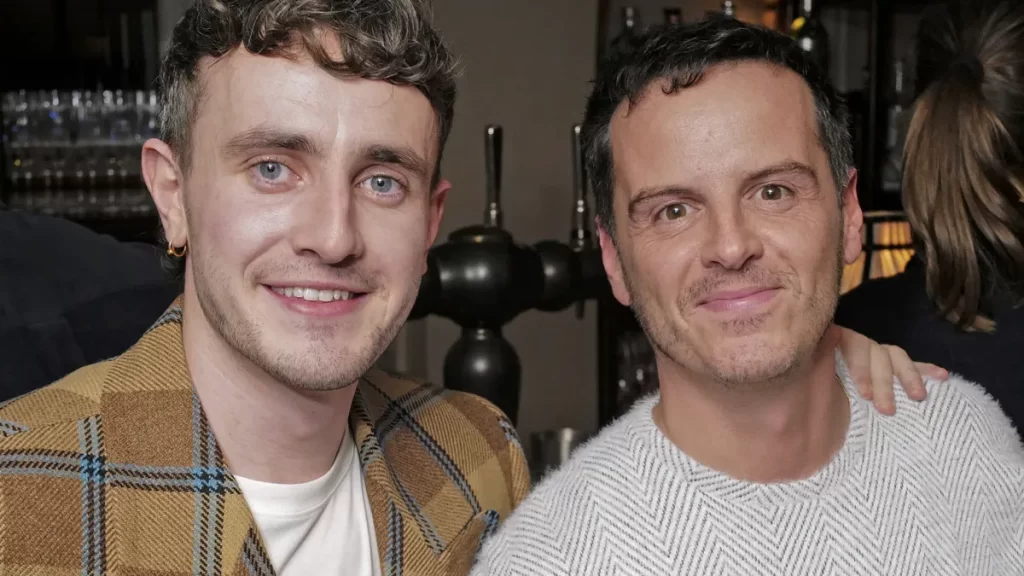
Paul Mescal, Andrew Scott in “All of Us Strangers”
● QFest Spotlight: A collection of films that spotlight the lives of LGBTQ people while celebrating queer culture. Films include “All of Us Strangers,” from Searchlight Pictures, the critically acclaimed romantic drama written and directed by Andrew Haigh, loosely based on the 1987 novel Strangers by Taichi Yamada. The film stars Andrew Scott, Paul Mescal, Jamie Bell, and Claire Foy; “Glitter & Doom,” a fantastical summer romance musical told with the iconic tunes of legendary American Folk music duo the Indigo Girls; and “Housekeeping for Beginners,” the Official submission of North Macedonia for the Best International Feature Film category of the 96th Academy Awards in 2024.
● Race in America Spotlight: For the last 10 years, SLIFF’s Race In America programming has reflected the frustrations of African Americans in response to the events in Ferguson. While this mission continues, the Spotlight will also draw attention to building community, fostering dialogue, and creating a platform for real societal change. To maximize these objectives, all of the 14 programs are offered for free thanks to support from the Trio Foundation of St. Louis. Films include “The Space Race,” which explores the experiences of the first Black astronauts through decades of archive film and interviews in a reflective illumination on the burden of breaking barriers; “Razing Liberty Square,” chronicling residents who fight to save their community from climate gentrification; “Ellis,” the first feature-length documentary about Ellis Marsalis Jr. and the Marsalis Music Family. This screening will pay tribute to the late St. Louis Post-Dispatch Theater Critic (former film critic), Calvin Wilson, with a portion of ticket proceeds donated to his alma mater, Northwest High School’s Performing Arts department; “Black Barbie,” the story behind the first Black Barbie; and “Kenyatta Do Not Wait Your Turn,” from Al Roker, an inspiring film that follows a self-described “poor, gay, Black man from North Philly” on his historic run for the U.S. Senate.
● Studio Spotlight: Star-filled highlights include “All Dirt Roads Taste of Salt,” an American drama film, written and directed by Raven Jackson, starring Charleen McClure, Moses Ingram, Reginald Helms Jr., Zainab Jah, Sheila Atim, and Chris Chalk; “American Fiction,” an American satirical comedy-drama film directed and written by Cord Jefferson based on the 2001 novel Erasure by Percival Everett, starring Jeffrey Wright, Tracee Ellis Ross, Erika Alexander, Leslie Uggams, Sterling K. Brown, Myra Lucretia Taylor, John Ortiz, Issa Rae, and Adam Brody; “The Holdovers,” an American comedy-drama film directed by Alexander Payne, starring Paul Giamatti, Da’Vine Joy Randolph, and Dominic Sessa; “Maxine’s Baby,” a documentary about Tyler Perry; and “Taste of Things,” (La Passion de Dodin Bouffant), directed by Trần Anh Hùng, starring Juliette Binoche, Pierre Gagnaire, Jan Hammenecker, and Benoît Magimel, is sure to leave audiences hungry for more and serves as France’s official submission for Best International Feature for the 96th Academy Awards in 2024.
SLIFF is pleased to honor the following for their incredible contributions to film: ● Reginald Hudlin, a distinguished American film screenwriter, director, producer, and accomplished comic-book writer, hails from the vibrant cultural tapestry of East St. Louis. His cinematic repertoire boasts an impressive array of works, including notable titles such as “Marshall,” “The Black Godfather,” and “Sidney,” each contributing to his renowned status in the industry. On the closing night of the SLIFF, which falls on Sunday, November 19th, Hudlin will engage in an enlightening interview, offering audiences a captivating insight into his illustrious career, and he will be bestowed with a highly deserved Lifetime Achievement Award, an accolade reflecting his enduring influence.
● Alexander Payne, a luminary in American cinema, is a prominent film director, screenwriter, and producer celebrated for his illustrious career, including directorial gems such as “Sideways,” “Election,” and “Nebraska,” each a testament to his mastery of the craft. On Tuesday, November 14th, at the Hi-Pointe Theatre, audiences will have the rare opportunity to delve into the creative genius of Payne with his latest cinematic creation, “The Holdovers.” This screening is an occasion to honor Payne with a well-deserved Lifetime Achievement Award. On Wednesday, November 15th, at the Hi-Pointe Theatre following a screening of his 2011 cinematic masterpiece, “The Descendants,” Payne will engage in an enlightening conversation, led by former CSL Executive Director Cliff Froehlich. In a poignant gesture of solidarity, a portion of the ticket sales from this screening will be donated to the Hawaii People’s Fund, an organization dedicated to offering direct aid in the aftermath of Maui’s wildfire devastation.
● Signe Baumane, an extraordinary talent from Latvia now rooted in the creative hub of Brooklyn, Baumane emerges as a multifaceted powerhouse in independent filmmaking, artistry, writing, and animation. With an illustrious career, she has crafted 16 acclaimed animated shorts that have earned her numerous awards and accolades, solidifying her place as a luminary in the field. Her groundbreaking animated feature debut, “Rocks in My Pockets,”
impressed SLIFF audiences in the past, and audiences this year will be entertained by her latest cinematic offering, “My Love Affair with Marriage.” Her film will screen at the Hi-Pointe Theatre on Saturday, November 11th, where she will be honored with the prestigious Women In Film Award, a testament to her unwavering dedication and the inspiring stories she brings to life through her craft.
American Fiction
TICKETS & PASSES
Tickets are now on sale:
● All Access Pass (admits two): $500 / CSL Members $400
● VIP Pass (admits one): $350 / CSL Members $300
● 20-Film Pass: $250 / CSL Members $200
● 10-Film Pass: $130 / CSL Members $100
● 6-Film Pass: $80 / CSL Members $60
Not a CSL Annual Member? In addition to discounts at SLIFF, members receive year-round benefits, sure to please every type of movie lover. Learn more and become a member here: https://cinemastlouis.org/membership.
VENUES
The festival will showcase films and special events across multiple centrally-located venues throughout the St. Louis area:
Alamo Drafthouse Cinema, located at 3700 Forest Park Ave, Saint Louis, MO 63108 Arkadin Cinema & Bar, located at 5228 Gravois Ave, St. Louis, MO 63116 Contemporary Art Museum, located at 3750 Washington Blvd., St. Louis, MO 63108 The Foundry Art Center, located at 520 N Main Center, St Charles, MO 63301 Hi-Pointe Theatre, located at 1005 McCausland Ave., St. Louis, MO 63117
Hi-Pointe Backlot Theatre, located at 1002 Hi-Pointe Pl., St. Louis, MO 63117 St. Louis Public Central Library, located at 1301 Olive St., St. Louis, MO 63103
Washington University, Brown Hall Auditorium, located at Centennial Greenway, St. Louis, MO 63105
Webster University, Moore Auditorium, located at 470 East Lockwood Ave., Webster Groves, MO 63119
SPONSORS
Title Sponsor: Whitaker Foundation
Sustaining Sponsors: Albrecht Family Foundation, Chellappa-Vedavalli Foundation, Coolfire Studios, Jane M. & Bruce P. Robert Charitable Foundation, Ward & Carol Klein, Nancy & Ken Kranzberg, Missouri Arts Council, Missouri Division of Tourism, Missouri Film Office, National Endowment for the Arts, Regional Arts Commission, Mary Strauss, Trio Foundation of St. Louis, William A. Kerr Foundation
Presenting Partners: Alamo Drafthouse Cinema, Arkadin Cinema & Bar, Contemporary Art Museum St. Louis, Eventive, Film & Media Archive at Washington University Libraries, Film & Media Studies Program at Washington University, Foundry Art Centre, St. Louis Public Library, St. Louis Public Radio, Webster University Film Series
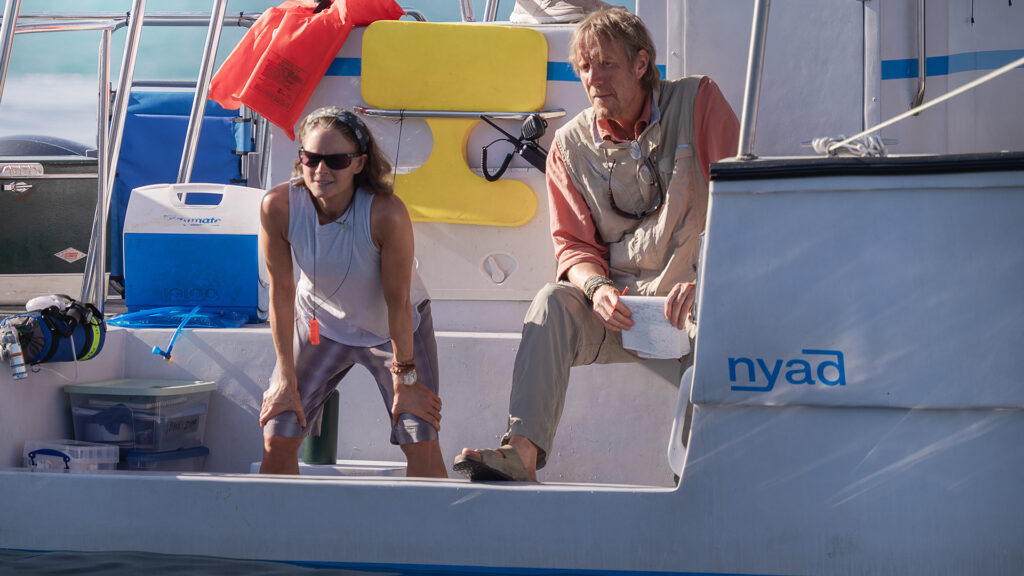
Two remarkable – and impressively tough — actresses showcase their considerable skills in “Nyad,” which concerns a four-year chapter in the distance swimmer’s life when she is in her 60s, and it’s not all smooth sailing.
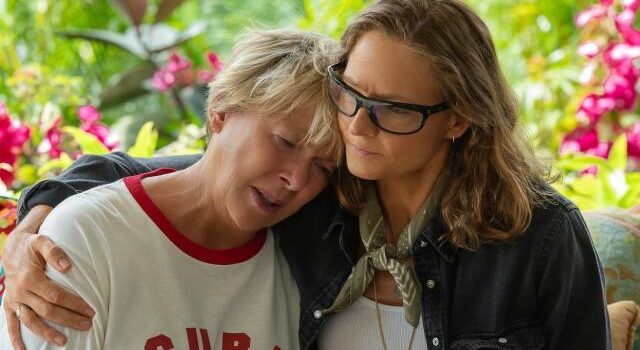
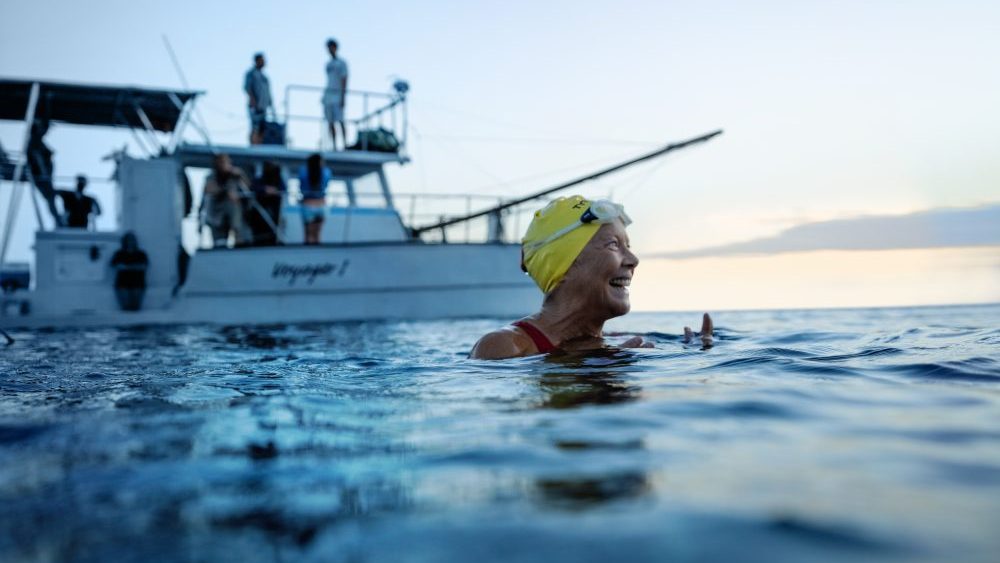
Three decades after she gave up marathon swimming for a prominent career as an analyst and commentator for ABC Sports, Diana Nyad (Annette Bening) returns to an obsession: the “Mount Everest” of swims, a 110-mile trek from Cuba to Florida. At the age of 60, in 2010, with the help of her best friend and coach Bonnie Stoll (Jodie Foster) and a dedicated sailing team, she commits to achieving this lifelong dream of an open ocean swim without a shark cage.
Nyad isn’t your typical inspiring poster girl athlete. She’s prickly, selfish, bossy, and stubborn. She infuriates those around her. Yet, she has the grit and determination to shake things up and make a big impact, so she makes a riveting film subject, and Bening gets under her skin to see what makes her tick. And roar.
Another fine point is that she’s living in a world ready to dismiss her at age 60, and she’s not about to do that: “Hold On!” is a terrific theme for this day and age. So, she’s complex and flawed, and the film doesn’t sugar-coat any of it. Bravo!
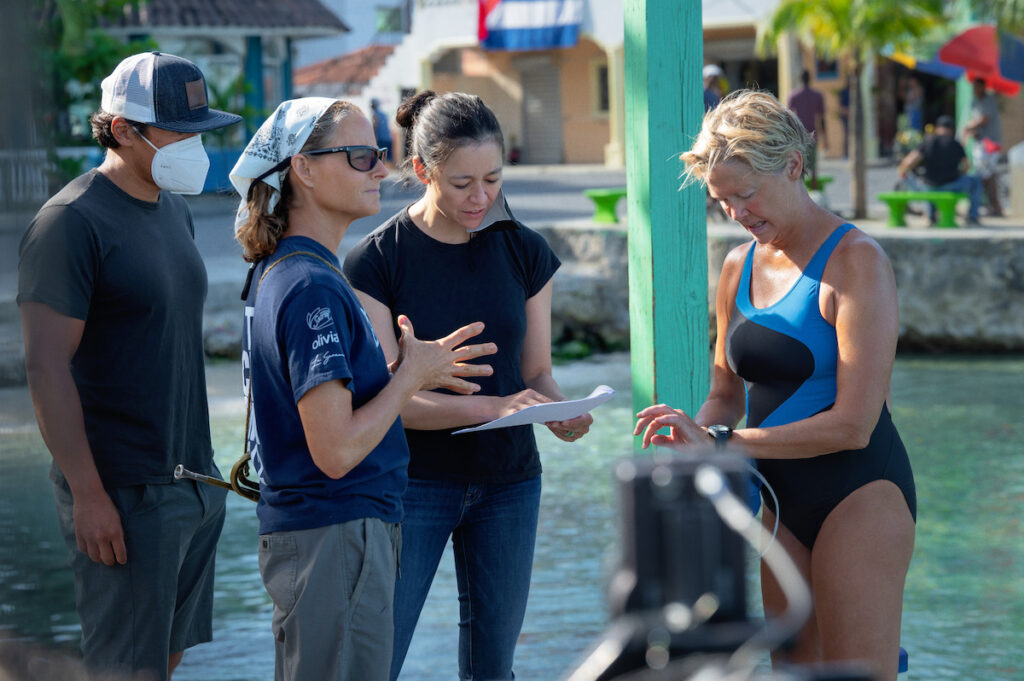
In their narrative feature debut, co-directors Jimmy Chin and Elizabeth Chai Vasarhelyi, who won an Oscar for Best Documentary with “Free Solo” in 2018, move from the heights to the depths with consummate know-how. This is a solid effort from the pair, who are natural storytellers.
They are aided by exceptional cinematography by Claudio Miranda, who won an Oscar for his shimmering work in “Life of Pi.” He can make the ocean appear either stunningly beautiful or dark and ominous with tremendous flair. And composer Alexandre Desplat captures the grandeur of nature as well as the dangers in the music score’s emotional beats.
It’s a tough story to tell because of its demanding physical requirements. Screenwriter Julia Cox has adapted the story from Nyad’s memoir, “Find a Way,” and archival footage helps explain her previous open water swims triumphs and challenges. At age 28, she had failed to accomplish the very dream she set out to achieve at age 60, and this single-minded pursuit makes people around her doubtful.
During the 103-mile swim, she faces such dangers as box jellyfish, sharks, unpredictable weather, changing currents – and she’s her own worst enemy when she doesn’t listen to and heed advice.
The stamina she exhibits is admirable, but the movie focuses on more than physical health, including her inner battles with emotional and mental health, which is an important element, given her bull-in-a-China-shop personality.
Flashbacks to her childhood reveal some trauma, which adds to the understanding of why she goes to extremes.
Bening, whose range has been noteworthy in a long career, in such Oscar-nominated roles as “The Grifters,” “The Kids Are Alright,” “Being Julia” and “American Beauty” – but the Academy Award has eluded her those four times. She could get nominated for this performance, but it’s not a shoo-in among heavy competition this year.
Now, Foster, who has won two – for “The Accused” and “The Silence of the Lambs,” hasn’t been working as much in recent years, and it’s invigorating see her give this character her all. She started as a child in the business, and her strengths as an actress have only grown.
As Bonnie, she conveys how exasperating it is to be Diana’s friend, but she does share such traits as fierceness and being driven by dreams. However, they are mainly opposites – she’s compassionate and listens, while Diana is self-absorbed and hard-headed.
However, they love each other as friends, which comes through. Both are lesbians, but not in a relationship.
Her crazy quest is made possible through a team of dedicated crew members, led by Rhys Ifans as navigator John Bartlett, and he is always a pleasure to watch in movies. The real expedition had about 40 people, such is the difference between fiction and non-fiction.
What is gripping are the struggles with the elements, as it’s key to our emotional investment, as we see them give everything they have.
This is a sturdy biopic that gives two great actresses an opportunity to shine – and look in the mirror and say “Find a Way.”
“Nyad” is a 2023 biopic directed by Jimmy Chin and Elizabeth Chai Vasarhelyi and starring Annette Bening, Jodie Foster and Rhys Ifans. It is rated PG-13 for thematic material involving sexual abuse, some strong language and brief partial nudity, and the run time is 2 hours, 1 minute. It is in select theatres Oct. 25, and streaming on Netflix Nov. 3. Lynn’s Grade: B+
Throughout history, class wars have ended badly for many people, overt often for people in the lower class, and less so for the ruling class.
But class never matters when people show you their true selves.
Such is the complicated “Bitter Fruit,” a 2018 social commentary-human drama by Argentinian playwright Hector Levy-Daniel, “El Fruto mas amargo,” which has been translated from Spanish by Philip Boehm.
Boehm, Upstream Theater’s artistic director, wanted to bring it here for the U.S. English language premiere, so he not only translated but also directed it in a deliberately mysterious way.
Since 2005, two-thirds of the plays Upstream has produced have been U.S. or world premieres, with the goal to not only “move you” but “move you to think.” And they always do. This is a play to mull about, for at its center is a logical question on identity that has dramatic consequences. How can you deny who you really are, and what does that say about us as a society?
The playwright’s focus on identity crisis has roots in Argentina’s Dirty War, when from 1974 to 1983, an estimated 9,000 to 30,000 were killed by the state, or disappeared, in a right-wing effort to eliminate leftist political adversaries, including writers, students and journalists. Others were imprisoned.
Their children were not always killed, and sometimes, they were put up for adoption or given to supporters of the right wing.
There are children born during this period that don’t know their real identities because they were adopted by their captors and given new lives. They either discover this fact or never know the truth, but there isn’t any justice or peace amid the inequality that rages, along with political corruption.
According to the play’s notes, about 500 children were affected and the Argentine government is still sorting it out after years of protests from grandmothers.
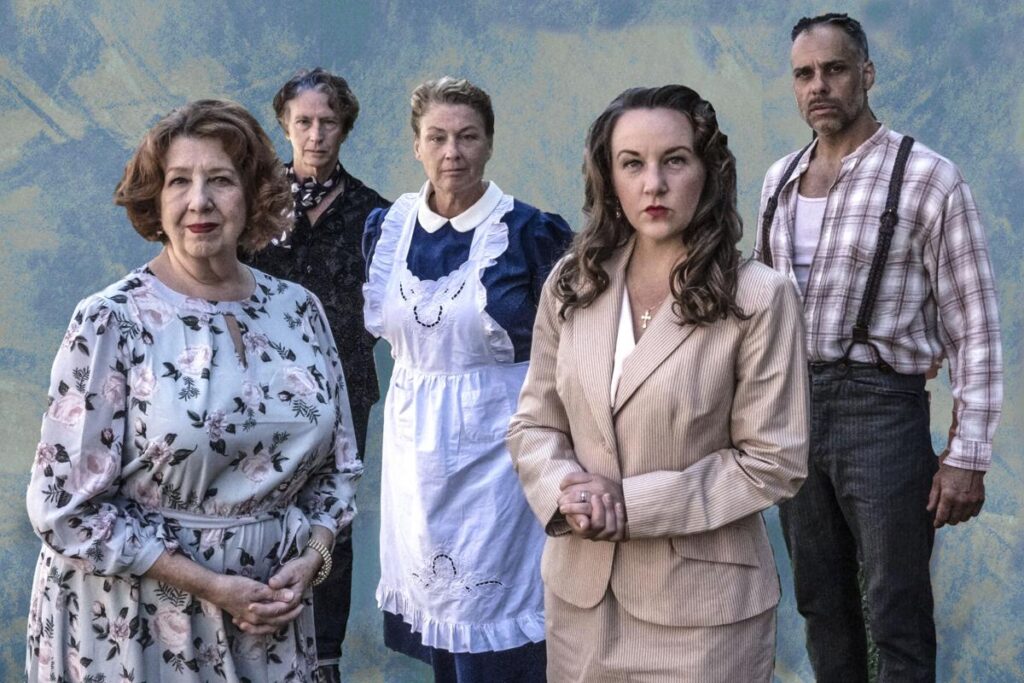
In this quietly devastating production, a committed cast provides complex portraits of people representing different factions of entitlement and insincerity, of loss and lies.
However, as good as actresses Jane Paradise, Jennifer Theby-Quinn and Michelle Burdette Elmore are, all members of the Actors’ Equity Association, they are not Latino women, and they are playing characters named Luisa, Maria, and Teresa respectively.
Isaiah Di Lorenzo has a small but important supporting role as Pedro Coltinari, the labor representative in factory negotiations, and in flashbacks, as Maria’s teenage paramour. He establishes his character’s pure heart and breaking point in only a few scenes.
None of the four identify as Hispanic — although the play never specifically states Argentina or alludes to the Dirty War, and there are no accents used, so…but it is perplexing, and does raise questions.
If it’s vague on purpose, so be it. Nevertheless, these days, people tend to notice whitewashing. It may not be as egregious as, say Laurence Olivier as “Othello” and John Wayne as Genghis Khan in “The Conqueror,” but it is something that crossed my mind, especially given Upstream’s commitment to shows with global themes involving marginalized people.
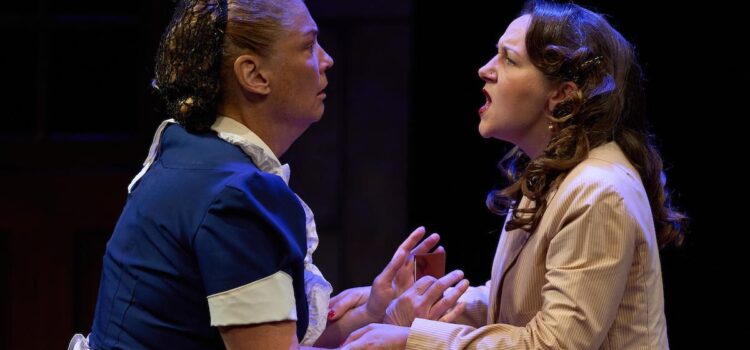
Set in a mansion, it’s late night or early morning, depending on your perspective, and a new maid, Luisa (Paradise), is up to prepare her mistress some tea, as requested as she waits for her daughter. Upon arrival home, haughty Maria, demands to know who this interloper is in her home.
As played coldly by Theby-Quinn, Maria is a cruel woman who has no qualms about making people feel inferior in her presence. She lacks compassion and a conscience, brought up in wealth, sheltered from the world. She is now running her father’s cotton mill with a tight fist and a disdain for the workers. They are in financial trouble, and Maria is tough about negotiations. Her mother, Teresa (Burdette Elmore) is clueless (or is she?).
Yet, once upon a time, Maria fancied a local boy, someone beneath her in social status, and those scenes reflect a person she used to be but is far removed from now.
Teresa, who was kept in the dark about that relationship, is oblivious to other behaviors and sentiments as well, and Michelle Burdette Elmore portrays her as if she’s firmly entrenched in a bubble — and a bit la-di-da.
Luisa’s gaze is a tad too intense for Maria, who is threatened by the new maid, for she views her as a spy who has infiltrated the home on behalf of the workers in the factory. Paradise’s gut-wrenching performance is the show’s highlight.
As tension increases – especially with suspicious deaths, and characters smolder, the secrets, deceptions, and denials are slowly disclosed.
Another of the show’s high points is original instrumental music performed by guitarist Lliam Christy. The minimalist scenic design by Patrick Huber represents a small portion of a large estate, with ornate touches to indicate affluence, darkly lit by Steve Carmichael to reflect shadows. Costume designer Michele Siler selected outfits according to economic status.
The playwright challenges memory and how sacrificing love shows true colors. It’s not an easy play to understand. Because one is off-guard, it is hard to relate to – however, Paradise’s performance as a crushed woman who has lost everything is haunting. Nevertheless, it brings attention to a tragic, dark time involving innocent children – and is that ever over?
Upstream Theater presents the US premiere of “Bitter Fruit,” by award-winning playwright Héctor Levy-Daniel in a translation by Philip Boehm, Oct. 13 through Oct. 29. It is 1 hour, 30 minutes, without intermission. Performances are Thursday through Saturday at 8 p.m., and at 7 p.m. Oct 15 and 2 p.m. Oct.22 and 29, and take place at the Marcelle Theatre, 3310 Samuel Shepard Dr. in Grand Center. For more information: www.upstreamtheater.org, For tickets, visit: https://www.metrotix.com/events/detail/upstream-theater-bitter-fruit