By CB Adams

Harmony is a slippery thing. It can emerge from two bodies moving together, a dozen moving in apparent opposition, or a piece of music that seems determined to drive everyone onstage mad. Kirven Douthit-Boyd explored all three possibilities in Saint Louis Dance Theatre’s “Fall Series” at the Touhill, assembling five works, including two world premieres, into an evening whose pleasures extended well beyond the individual dances. The choreography had its own rhythms, and so did the programming.

“Elements of Harmony” is the company’s 2026–27 season theme, and Douthit-Boyd has taken it somewhere more interesting than the title might suggest. The evening moved from the tangled emotions of boyhood to an operatic expression of erotic bliss, from Kandinsky’s abstractions to dancers circulating like the jeweled innards of an expensive watch, before ending in a peculiar world where Ravel, Magritte and human folly kept one another company.

A curious assortment on paper. Onstage, an exceptionally well-judged conversation, given eloquence by dancers whose versatility is one of Saint Louis Dance Theatre’s considerable assets.

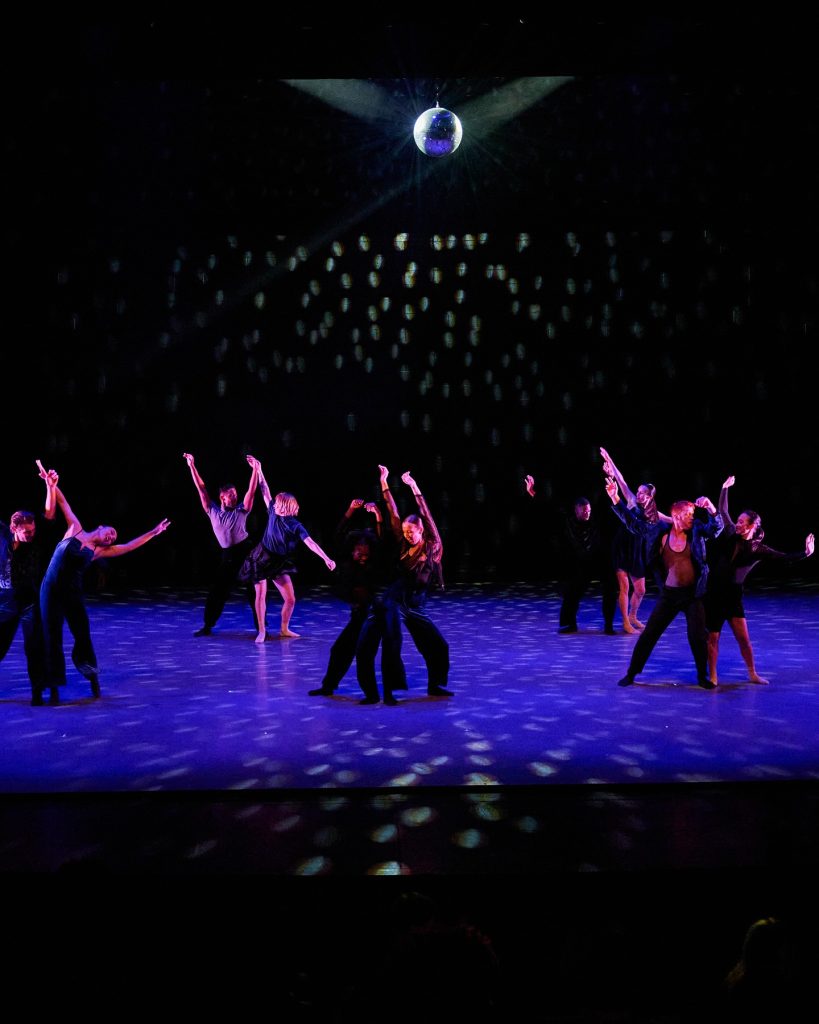
Keerati Jinakunwiphat’s world premiere “Sands of Time” was the stronger of the two new works, exploiting the Touhill’s expansive stage and the company’s athletic resources. Soft pastel lighting lent the space a beachy atmosphere, while dancers passed through shifting arrangements that occasionally recalled the promenading figures of “Sunday in the Park With George.”
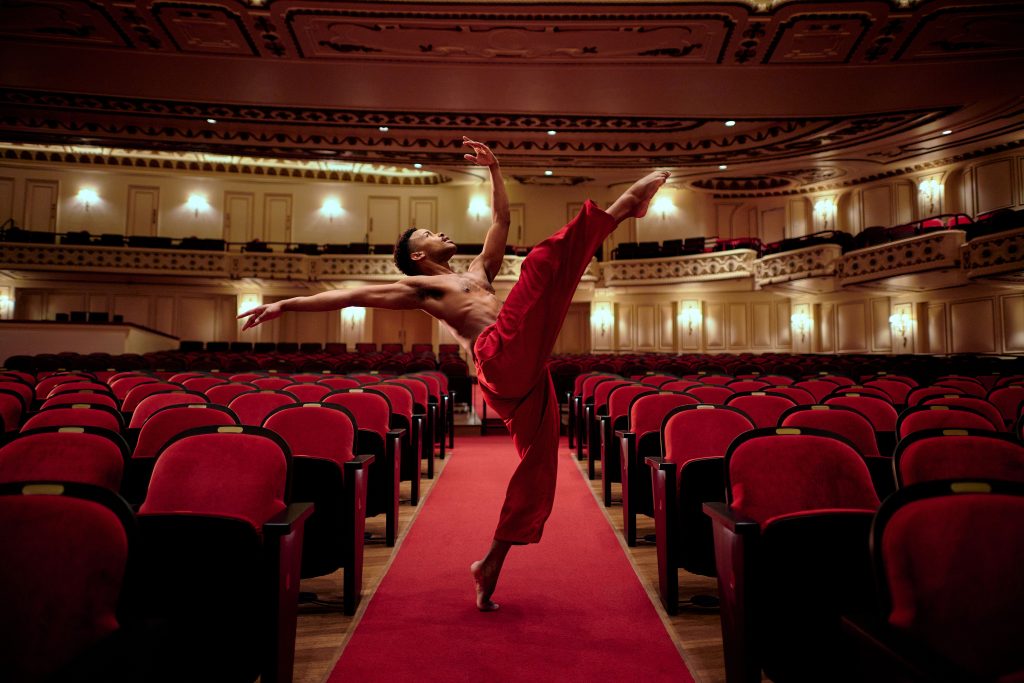
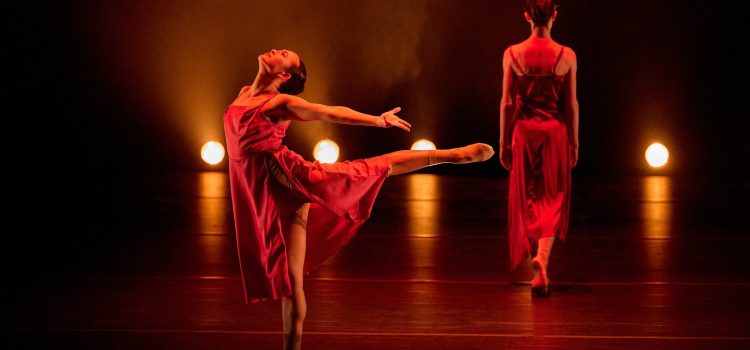
Keenan Fletcher at the Touhill.

Then the formations tightened, loosened and recombined, the dancers moving like the jeweled workings of an elaborate watch. Jinakunwiphat worked them hard, with intricate partnering and intersecting trajectories demanding split-second coordination. Yet one of the work’s boldest moments came when both music and movement ceased for an extended interval.

The stillness seemed to suspend time itself. In a dance devoted to time’s passage, Jinakunwiphat understood the expressive possibilities of stopping the clock.

Robert Battle’s “Unfold” approached harmony from the opposite direction, finding its expressive power in the smallest gestures. Two dancers, their movements tightly held and unfolding with almost excruciating deliberation, seemed to inhabit a different measure of time from Leontyne Price’s soaring rendition of “Depuis le jour” from Gustave Charpentier’s opera “Louise.”

Price’s voice filled the theater while the dancers expressed volumes through a shift of weight, the slow extension of a limb, the space maintained between two bodies. Physical intimacy and longing coexisted in a choreography whose economy made every gesture count. Saint Louis Dance Theatre has performed this five-minute pas de deux before, and I never tire of watching its dancers inhabit it.
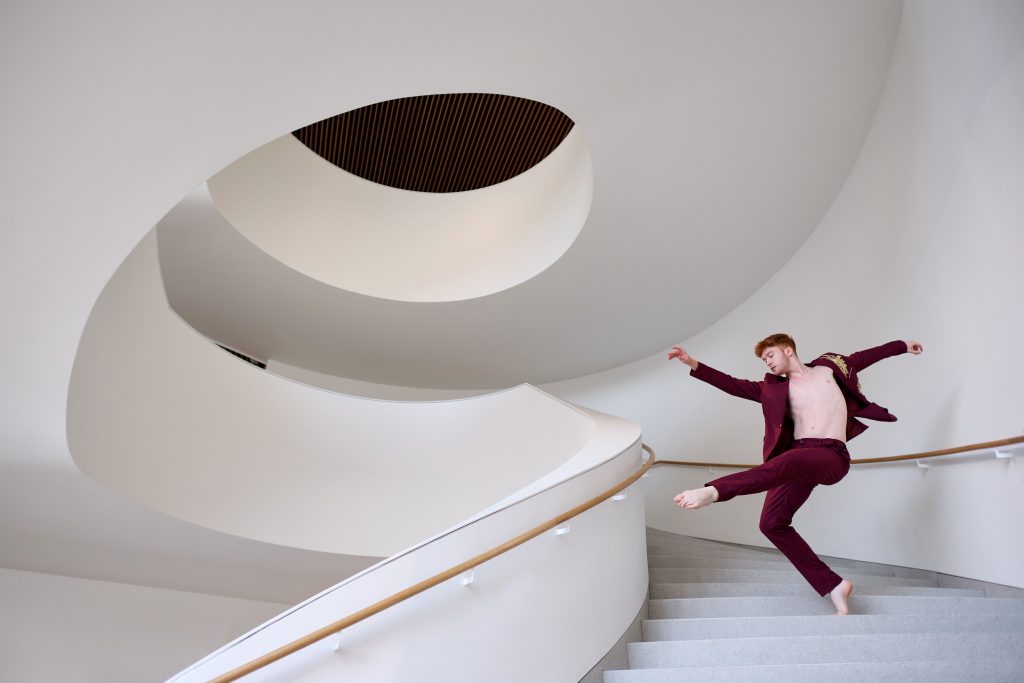
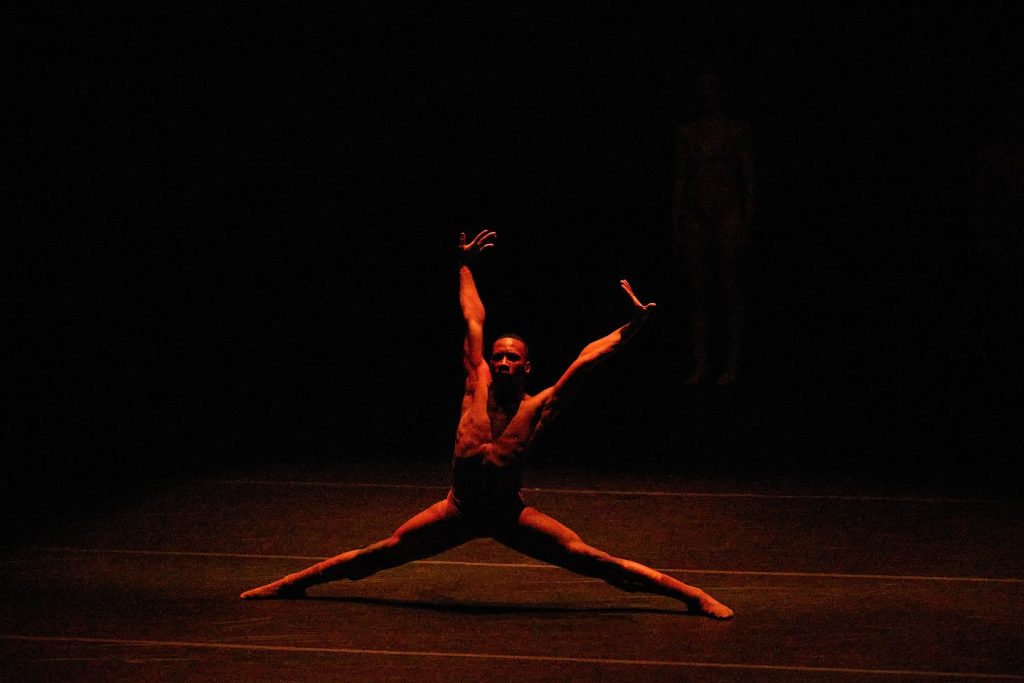
Spencer Everett.

Douthit-Boyd’s own “Kandinsky (Picture Studies Excerpt)” took harmony into another artistic dimension. Ekphrasis in motion, it began with Wassily Kandinsky’s painting “Rose with Gray,” continued through Adam Schoenberg’s orchestral composition and arrived at choreography for three dancers wearing tops suggestive of modernist canvases.

The score’s angularity found expression in shifting geometries and sharply articulated gestures. Painting, music and movement made agreeable companions, although the choreography occasionally wandered into familiar contemporary-dance territory. Perhaps the complete work offers more surprises. The excerpt made its point and departed at about the right moment.

Rena Butler’s world premiere “BOYS” took on the formidable task of translating Rick Moody’s short story, which packs something approaching a novel’s worth of life into the experiences of twin boys, into dance. Butler widened the lens to examine masculinity, intimacy and identity, tracing the passage from boyhood to manhood through tenderness, conflict and the weight of societal expectations.

The choreography pursued the story’s compression of time and experience, though its episodes lacked the connective tissue that gives Moody’s prose its cumulative emotional force.
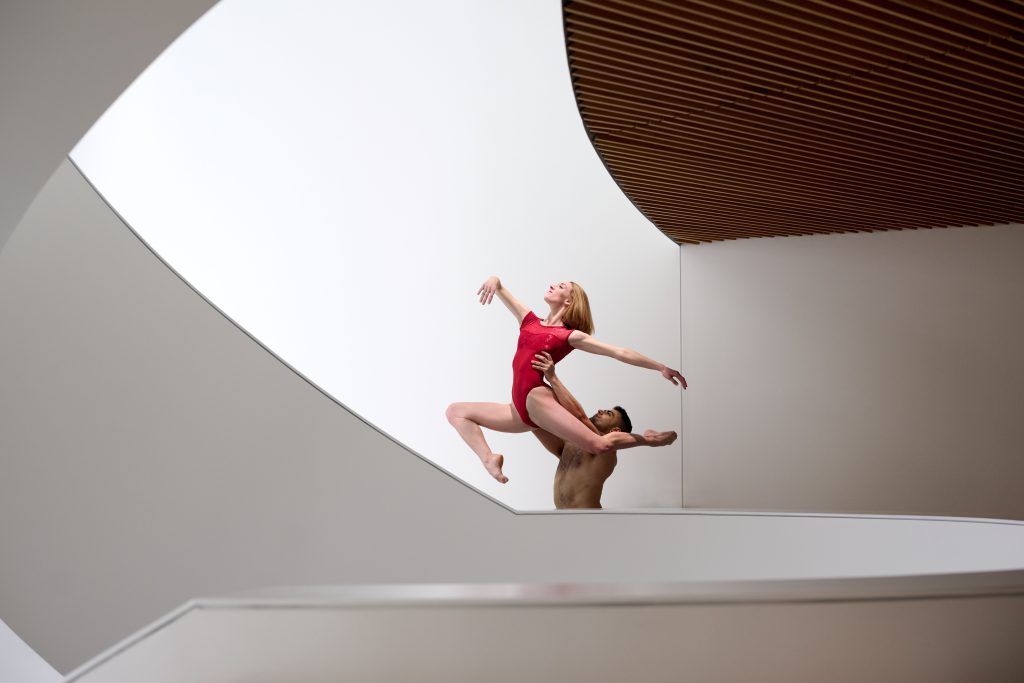
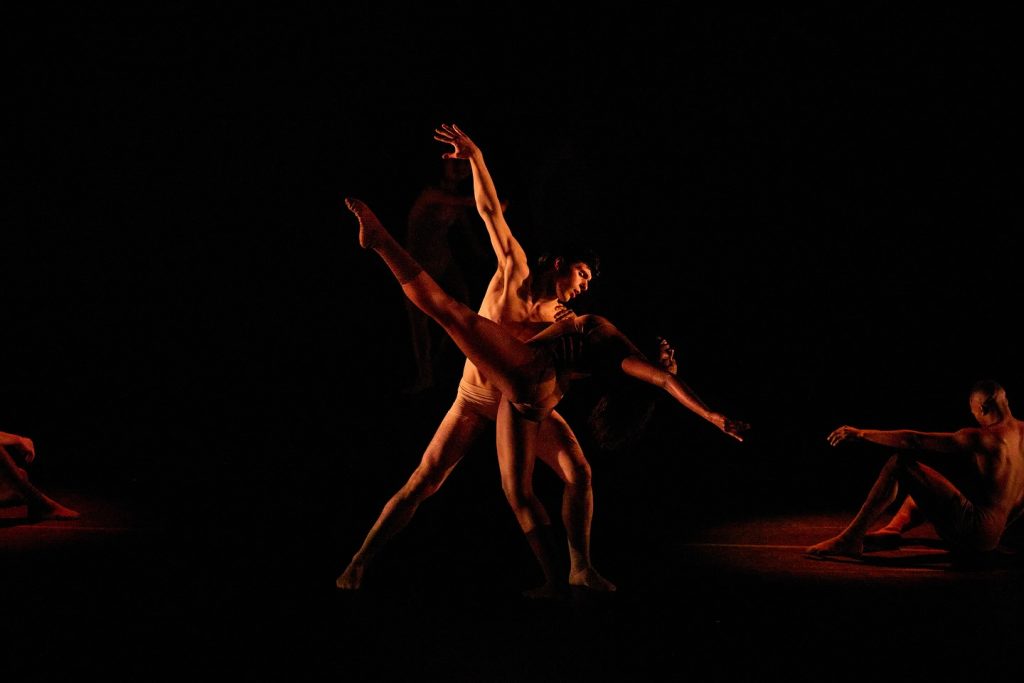
Molly Rapp and Sergio Comacho.

Muffled narration compounded the problem. Much of the spoken text disappeared into the soundscape, and the British accent seemed an odd choice for such a distinctly American story. The dancers brought conviction to Butler’s exploration of synchronicity and dissonance, but the work’s narrative and theatrical elements struggled to cohere. An ambitious premise, still searching for its fullest expression.

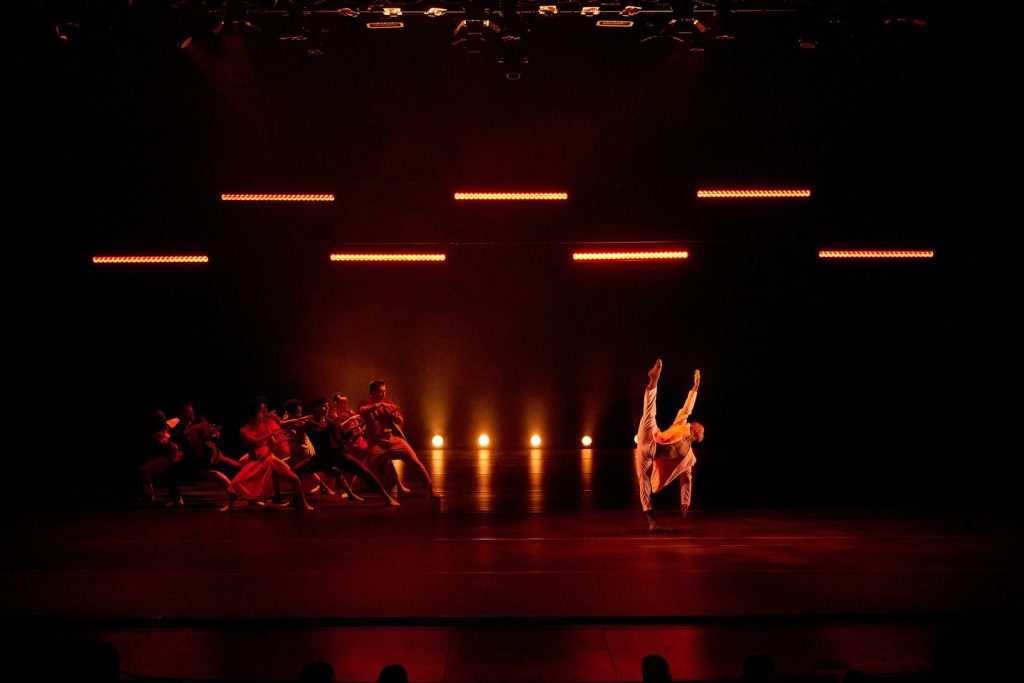
Johan Inger’s “Walking Mad” offered perhaps the evening’s most exhilarating exploration of harmony and dissonance. Set initially to Ravel’s “Boléro,” it introduced nine dancers, a large movable wall and a world in which Magritte might have collaborated with a vaudeville troupe after a particularly strange evening out.

The wall became an endlessly adaptable partner. Dancers climbed it, leaned against it and maneuvered around it as comedy shaded into aggression, flirtation into something more troubling. Inger’s choreography made apparent disorder look spontaneous, though its precision was evident in every carefully calibrated encounter.

And then, just as Ravel’s “Boléro” approaches its familiar orchestral explosion, Inger pulls the plug. Silence. The dancers’ frantic activity stops, leaving the audience suspended between the climax it anticipated and the stillness it receives. From that rupture emerges a quiet, melancholy epilogue set to Arvo Pärt’s minimalist piano composition “Für Alina.”
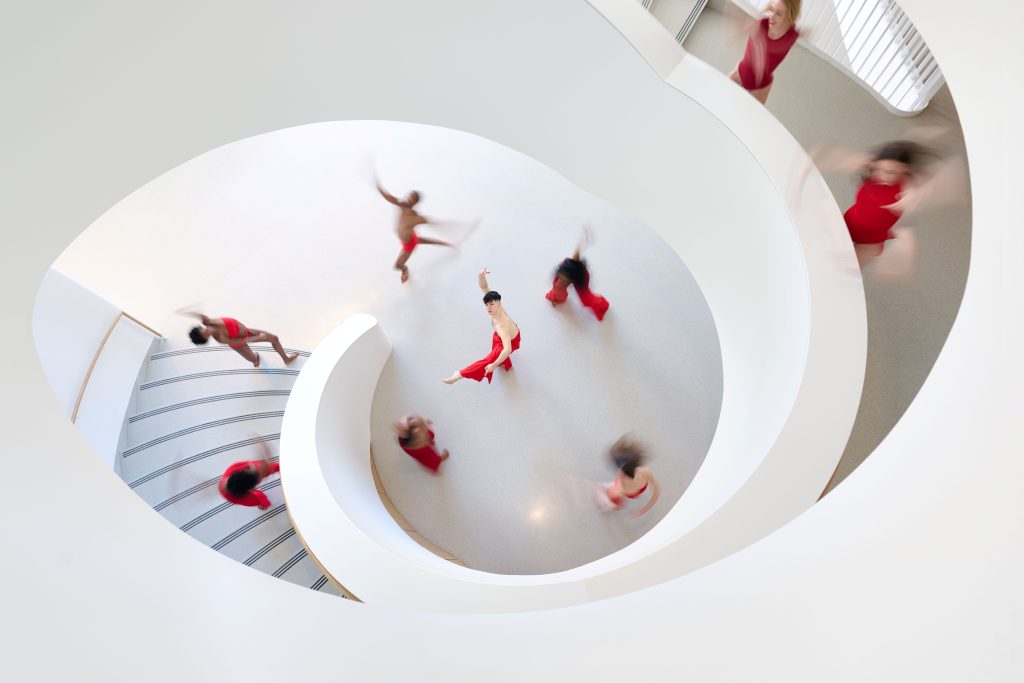
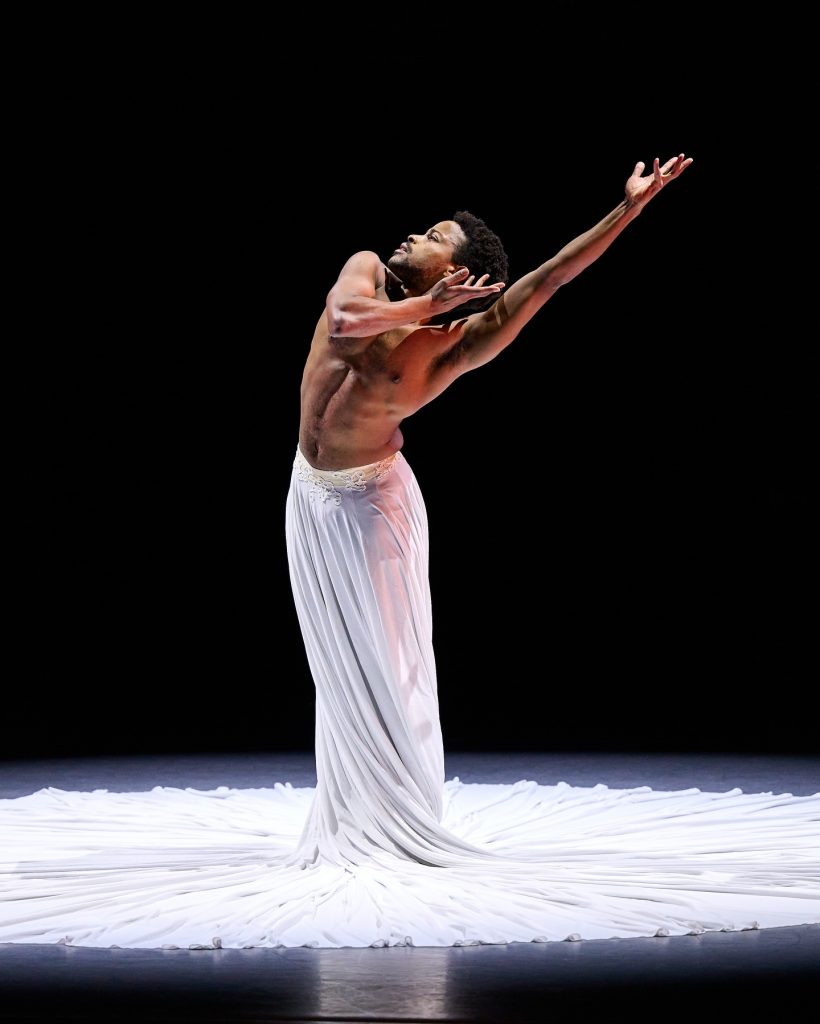
Angel Khaytyan

The theatrical commotion gives way to an intimate encounter in which tenderness and vulnerability emerge from the absurdity. The dancers navigate the change with an expressive control equal to their earlier exuberance.

Twice during the evening, music and movement came to a halt. Two choreographers, two silences, each making its own point. Douthit-Boyd’s programming gave those moments an unexpected kinship, just as his dancers found common ground among five disparate choreographic languages. Harmony, it turns out, sometimes depends on knowing when to stop.

Saint Louis Dance Theatre presented “Fall Series,” part of its 2026–27 “Elements of Harmony” season, Oct. 24–25 at the Blanche M. Touhill Performing Arts Center on the University of Missouri–St. Louis campus.

Photo Credit Pratt & Kreidich
By CB Adams

With winter waning and March’s “in like a lion, out lamb” (or its inverse) in mind, thoughts turn to what spirit animal could best represent the experience of Saint Louis Dance Theatre’s (RE)BUILD, February 27-March 2?

To represent the excellence created and curated by the company’s artistic director, Kirven Douthit-Boyd, the butterfly is an apt spirit animal because it is associated with sensitivity and transformation, as well as lightness and freedom associated with playfulness. The  delicate and whimsical nature aligns with an artistic, fluid spirit that embraces change with joy and beauty—expressed individually in the four pieces presented as well as the collective narrative told across the performances.

A group of butterflies is called a kaleidoscope that is an apt description of the Program B (one of four in the series of performances) on March 1: “Unfold” by Robert Battle, “Good Grief” by Jamar Roberts, “For Love’s Sake” by Douthit-Boyd and “Sechs Tӓnze” by Jiří Kylián.

Serving almost the same role of a symphony or opera overture, Battle’s 10-mnute “Unfold” (2007) set the early tone for the performance. “Unfold” is a powerful and evocative contemporary dance duet that explores the complexity of a romantic relationship. The work is set to Leontyne Price’s emotional rendition of “Depuis le jour” from Charpentier’s opera “Louise,” enhancing the emotional intensity of the piece.

The duet follows the journey of two individuals navigating a deep, poignant connection. Lily Cong, in her performance, stood out with a remarkable display of flexibility and control, particularly in her extreme backbends, which added a layer of vulnerability to her character. Her graceful, arching movements created a visual contrast to her partner, Keenan Fletcher, who portrayed a man lost in his memories, clinging, perhaps, to a past love.

Fletcher’s performance complemented Cong’s with a sense of longing and melancholy, as his slow, deliberate movements evoked the feeling of someone caught between holding on and letting go. One striking moment came when Cong, in a slow développé, lifted her toes to the sky in perfect synchronicity with Price’s high note. This moment of convergence highlighted the delicate connection between the dancers, and Battle’s careful choreography avoids overstating the emotional resonance.

Next was “Good Grief” by choreographer Roberts, recognized for his tenure with the Alvin Ailey American Dance Theater and described in “Dance Magazine” as “a choreographic voice of uncommon force and originality.” Roberts is known for skillfully incorporating jazz elements into his choreography, blending them with modern dance to create emotionally resonant performances.

“Good Grief” is set against a rich and diverse musical landscape, featuring the evocative music of Oded Tzur, Petros Klampanis and Nitai Hershkovits. One of the recurring strengths of Saint Louis Dance Theatre is the superb and noteworthy music choices. Numerous songs and compositions have made their way from the program notes to my personal playlists and never fail to stand alone as well as conjure the vibe of the dances with which they are paired.

The music of “Good Grief” is no exception, featuring “Tzurkauns,” “Miniature 3,” “Miniature 1” and “Miniature 2” from the album “Here Be Dragons” by Oded Tzur, an Israeli tenor saxophonist who integrates Indian classical music with jazz. Tzur uses microtonal techniques and fluid transitions to craft introspective, storytelling compositions. His phrasing often—and pleasingly—resembles that of a flutist—not surprising because he studied Hindustani classical music with Bansuri flute master Pandit Hariprasad Chaurasia.

The piece also included “Single Mother,” performed by Tzur, joined by  Petros Klampanis, a Greek bassist and composer, and Nitai Hershkovits, an Israeli pianist. Their music blends jazz, classical and world influences, creating a deeply emotional and resonant soundscape that enhances the choreography’s themes of sorrow, resilience and transformation. Klampanis infuses his jazz foundation with Mediterranean and Balkan folk elements, creating intricate, melodic arrangements rich in texture and rhythm. Hershkovits brings a dynamic and versatile touch, blending jazz, ambient, fusion and funk with technical precision and emotional depth.

The ensemble of Saint Louis Dance Theatre dancers for “Good Grief” featured Angel Khaytyan, Demetrius Lee, Jada Vaughan, Spencer Everett, Jessie Yero, AJ Joehl, Megan Rancour, Madalyn Bailey, Sergio Camacho and Will Brighton. Together, the dance’s flowing narrative—delivered in a seamless, almost hypnotic progress of group and solo scenes—is a deeply expressive journey, guiding the movement with waves of reflection, tension and catharsis.

“For Love’s Sake,” choreographed by Douthit-Boyd is a contemporary dance piece that premiered during the (RE)CLAIM: concert in fall 2024. This work is a profound exploration of love as a form of resistance, highlighting the transformative power of human connection amidst adversity. Through a blend of movement, music and visual storytelling, the piece delves into themes of intimacy, vulnerability and the enduring strength found in unity.

Douthit-Boyd’s choreography masterfully combines fluid, expressive movements with moments of intensity and stillness, reflecting the complexities of love in its various forms—romantic, platonic and communal. Dancers for the March 1 performance were Fletcher, Lee Nyna Moore, Khaytyan, Joehl, Brighton, Cong and Rancour. They vividly portrayed the struggle, resilience and ultimate triumph of human connection, delivering a poignant and immersive experience.

Another key element of “For Love’s Sake” is its carefully curated soundscape, featuring samples from a diverse array of artists, including Imani Uzuri, Zero 7, Heather Clark and Mark Isham. This eclectic mix of soul, electronica, ambient and cinematic sounds enriches the piece, providing a textured auditory backdrop that enhances the emotional impact of the performance. The piece also draws inspiration from Hum, a sound work by Montreal-based artist Hajra Waheed, known for its layered voices and meditative sonic textures.

These influences are intricately woven into the dance, evoking a sense of longing, resilience and solidarity. Having experienced this piece multiple times since its premiere, I can state confidently and accurately that, by integrating these musical and conceptual elements, Douthit-Boyd has created a multidimensional experience by creating a space of reflection and emotional engagement. In a world often divided by struggle and discord, the piece serves as a powerful reminder that love, in all its forms, remains a revolutionary force.

(RE)BUILD concluded with a delightful shift in tone delivered by Kylián’s witty “Sechs Tänze,” a 1986 piece set to Mozart’s lively and humorous “Six German Dances” (KV 571). The piece was a company premiere and marked the first time that a work by Kylián has been performed in St. Louis.

Kylián, born in Prague in 1947, is a renowned contemporary dance choreographer known for his innovative and expressive works. The artistic director of Nederlands Dans Theater since 1976, his choreography often requires dancers to possess a high level of technical precision and emotional depth. His works blend minimalist movements with moments of intense emotional release, challenging dancers to explore new ways of expressing themselves physically.

To the company’s credit and growing reputation and credibility within the dance world, Shirley Esseboom, a ballet master for Kylián Productions, was in St. Louis to work  with Saint Louis Dance Theatre’s dancers—Fletcher, Camacho, Khaytyan, Lee, Jessie Yero, Molly Rapp, Cong, Arpège Lundyn, Brighton, Isaiah Valentin, Spencer Everett, Vaughan and Joehl. The company dancers proved—one in all—that they were adept at both classical and contemporary techniques and capable of executing Kylián’s complex movements while conveying deep emotional narratives.

“Sechs Tänze” subtly explores deeper themes about life and performance and features eccentric, whimsical movements, alternating between joyful group dances and sudden pauses. This blend of absurdity and stillness kept the audience engaged and laughing, perfectly complementing Mozart’s playful music. The unpredictable nature of the performance, with its physical comedy and unexpected juxtapositions, created a fun and infectious atmosphere.

“Sechs Tänze,” performance should be essential viewing for anyone who perceives modern dance as enigmatic or exclusive. While the piece exudes a playful atmosphere, it also subtly echoed the entire program’s theme of life’s absurdity, a thread that connected all three works in the program. It was a fitting conclusion to a program that consistently returned to the themes of life’s brevity, beauty, impermanence and complexity.

Saint Louis Dance Theatre’s (RE)BUILD was performed at the Catherin B. Berges Theatre at the  Center of Contemporary Arts (COCA’s) February 27 through March 2.

All photos by Pratt and Kreidich