
By CB Adams
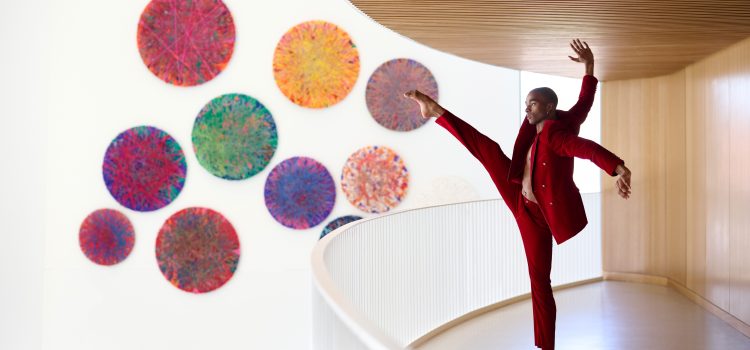
Harmony is a slippery thing. It can emerge from two bodies moving together, a dozen moving in apparent opposition, or a piece of music that seems determined to drive everyone onstage mad. Kirven Douthit-Boyd explored all three possibilities in Saint Louis Dance Theatre’s “Fall Series” at the Touhill, assembling five works, including two world premieres, into an evening whose pleasures extended well beyond the individual dances. The choreography had its own rhythms, and so did the programming.
“Elements of Harmony” is the company’s 2026–27 season theme, and Douthit-Boyd has taken it somewhere more interesting than the title might suggest. The evening moved from the tangled emotions of boyhood to an operatic expression of erotic bliss, from Kandinsky’s abstractions to dancers circulating like the jeweled innards of an expensive watch, before ending in a peculiar world where Ravel, Magritte and human folly kept one another company.
A curious assortment on paper. Onstage, an exceptionally well-judged conversation, given eloquence by dancers whose versatility is one of Saint Louis Dance Theatre’s considerable assets.
Keerati Jinakunwiphat’s world premiere “Sands of Time” was the stronger of the two new works, exploiting the Touhill’s expansive stage and the company’s athletic resources. Soft pastel lighting lent the space a beachy atmosphere, while dancers passed through shifting arrangements that occasionally recalled the promenading figures of “Sunday in the Park With George.”
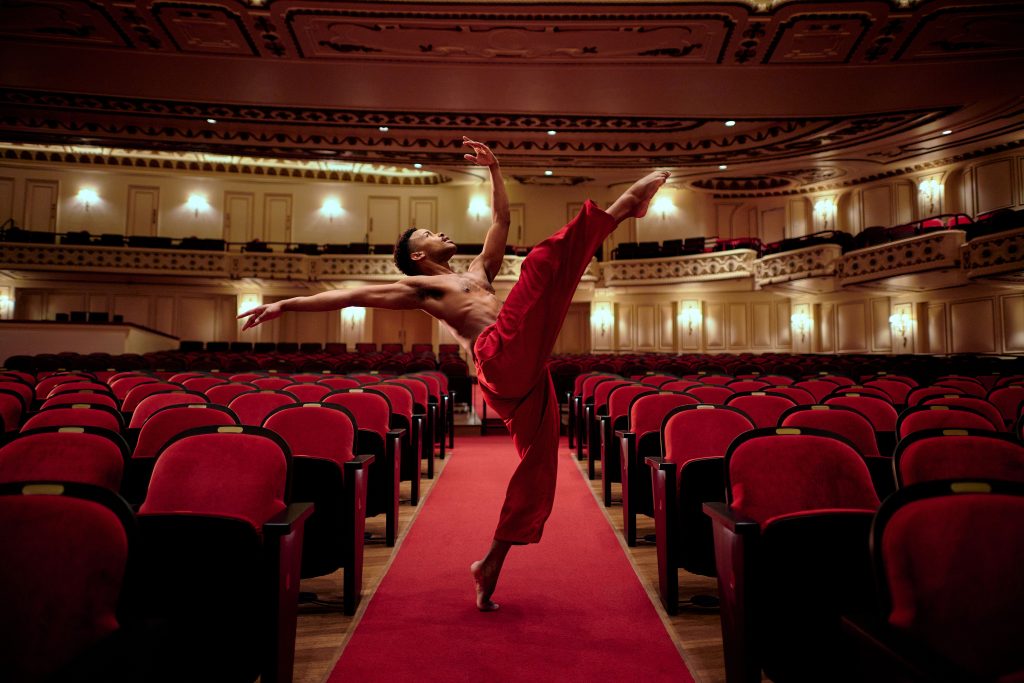
Then the formations tightened, loosened and recombined, the dancers moving like the jeweled workings of an elaborate watch. Jinakunwiphat worked them hard, with intricate partnering and intersecting trajectories demanding split-second coordination. Yet one of the work’s boldest moments came when both music and movement ceased for an extended interval.
The stillness seemed to suspend time itself. In a dance devoted to time’s passage, Jinakunwiphat understood the expressive possibilities of stopping the clock.
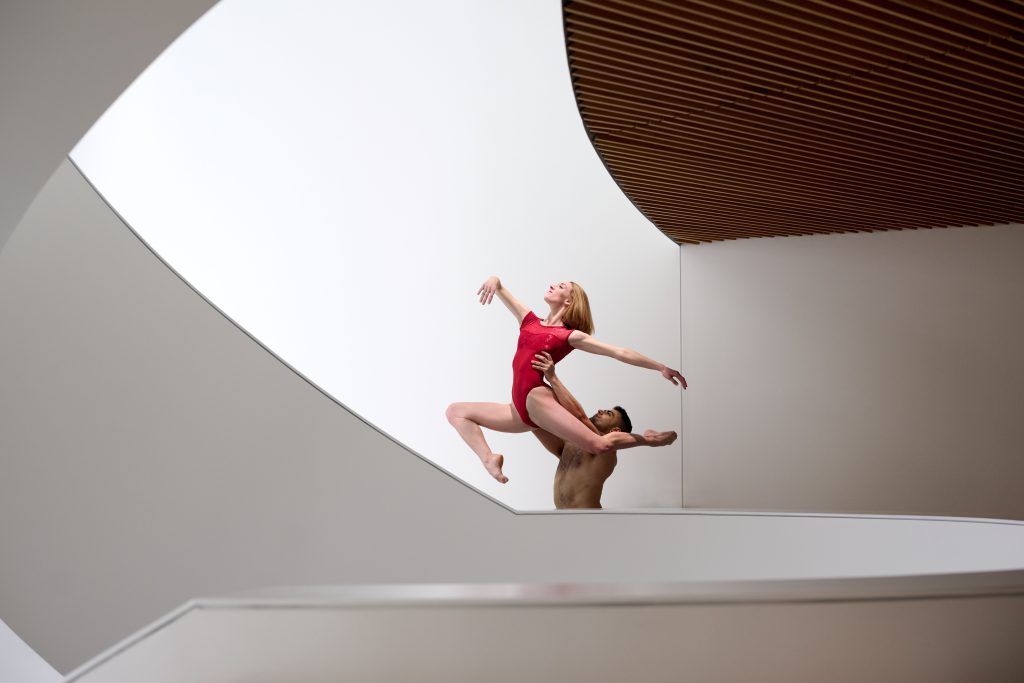
Robert Battle’s “Unfold” approached harmony from the opposite direction, finding its expressive power in the smallest gestures. Two dancers, their movements tightly held and unfolding with almost excruciating deliberation, seemed to inhabit a different measure of time from Leontyne Price’s soaring rendition of “Depuis le jour” from Gustave Charpentier’s opera “Louise.”
Price’s voice filled the theater while the dancers expressed volumes through a shift of weight, the slow extension of a limb, the space maintained between two bodies. Physical intimacy and longing coexisted in a choreography whose economy made every gesture count. Saint Louis Dance Theatre has performed this five-minute pas de deux before, and I never tire of watching its dancers inhabit it.
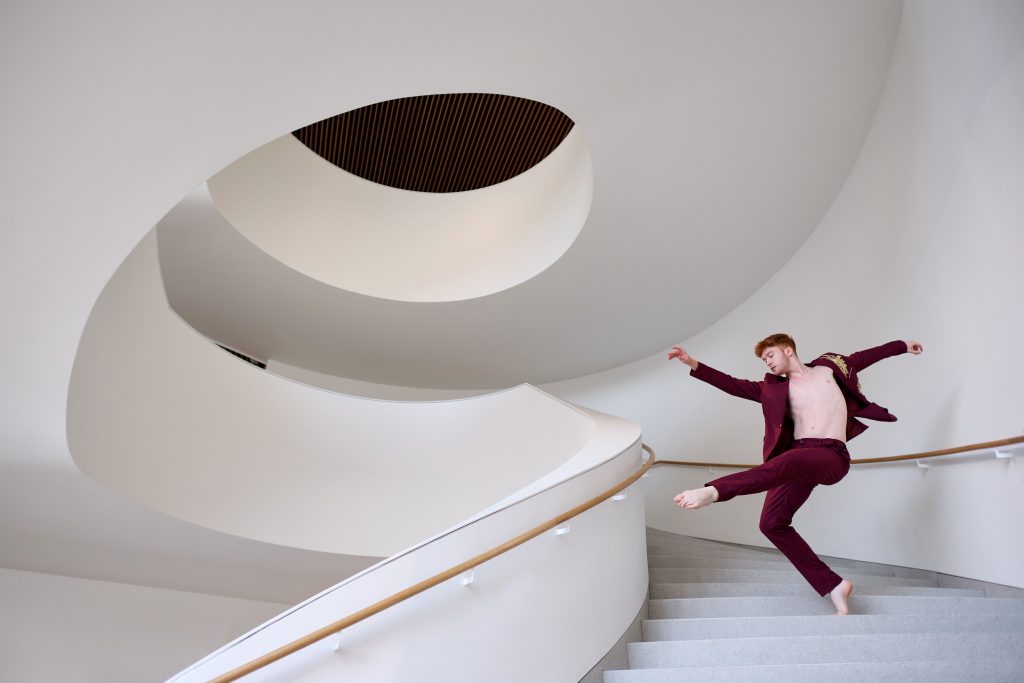
Douthit-Boyd’s own “Kandinsky (Picture Studies Excerpt)” took harmony into another artistic dimension. Ekphrasis in motion, it began with Wassily Kandinsky’s painting “Rose with Gray,” continued through Adam Schoenberg’s orchestral composition and arrived at choreography for three dancers wearing tops suggestive of modernist canvases.
The score’s angularity found expression in shifting geometries and sharply articulated gestures. Painting, music and movement made agreeable companions, although the choreography occasionally wandered into familiar contemporary-dance territory. Perhaps the complete work offers more surprises. The excerpt made its point and departed at about the right moment.
Rena Butler’s world premiere “BOYS” took on the formidable task of translating Rick Moody’s short story, which packs something approaching a novel’s worth of life into the experiences of twin boys, into dance. Butler widened the lens to examine masculinity, intimacy and identity, tracing the passage from boyhood to manhood through tenderness, conflict and the weight of societal expectations.
The choreography pursued the story’s compression of time and experience, though its episodes lacked the connective tissue that gives Moody’s prose its cumulative emotional force.
Muffled narration compounded the problem. Much of the spoken text disappeared into the soundscape, and the British accent seemed an odd choice for such a distinctly American story. The dancers brought conviction to Butler’s exploration of synchronicity and dissonance, but the work’s narrative and theatrical elements struggled to cohere. An ambitious premise, still searching for its fullest expression.
Johan Inger’s “Walking Mad” offered perhaps the evening’s most exhilarating exploration of harmony and dissonance. Set initially to Ravel’s “Boléro,” it introduced nine dancers, a large movable wall and a world in which Magritte might have collaborated with a vaudeville troupe after a particularly strange evening out.
The wall became an endlessly adaptable partner. Dancers climbed it, leaned against it and maneuvered around it as comedy shaded into aggression, flirtation into something more troubling. Inger’s choreography made apparent disorder look spontaneous, though its precision was evident in every carefully calibrated encounter.
And then, just as Ravel’s “Boléro” approaches its familiar orchestral explosion, Inger pulls the plug. Silence. The dancers’ frantic activity stops, leaving the audience suspended between the climax it anticipated and the stillness it receives. From that rupture emerges a quiet, melancholy epilogue set to Arvo Pärt’s minimalist piano composition “Für Alina.”
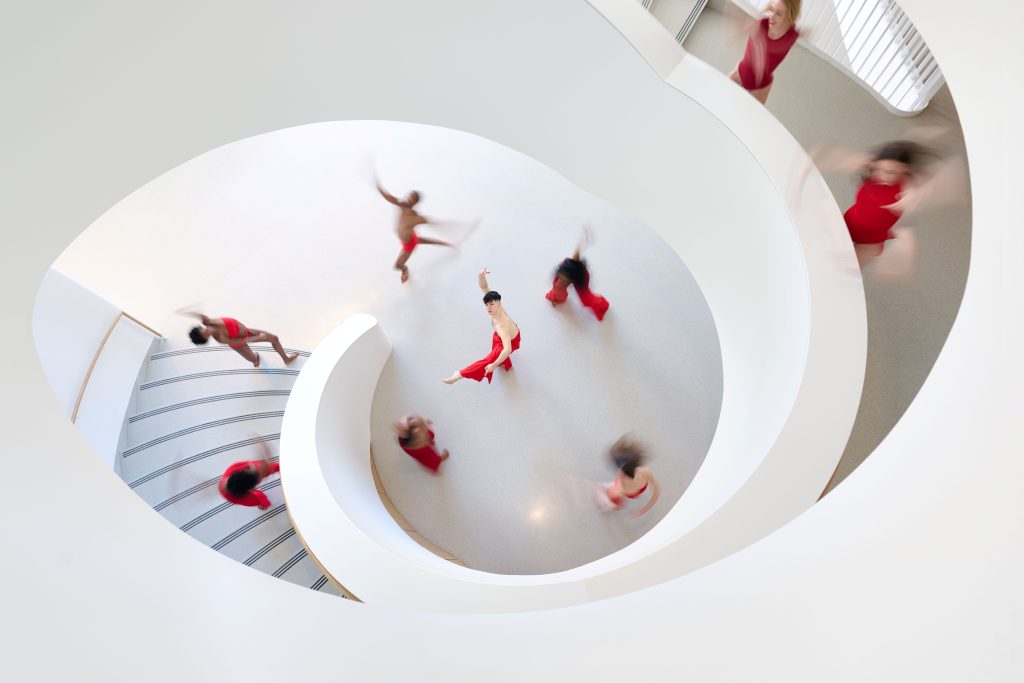
The theatrical commotion gives way to an intimate encounter in which tenderness and vulnerability emerge from the absurdity. The dancers navigate the change with an expressive control equal to their earlier exuberance.
Twice during the evening, music and movement came to a halt. Two choreographers, two silences, each making its own point. Douthit-Boyd’s programming gave those moments an unexpected kinship, just as his dancers found common ground among five disparate choreographic languages. Harmony, it turns out, sometimes depends on knowing when to stop.
Saint Louis Dance Theatre presented “Fall Series,” part of its 2026–27 “Elements of Harmony” season, Oct. 24–25 at the Blanche M. Touhill Performing Arts Center on the University of Missouri–St. Louis campus.
Photo Credit Pratt & Kreidich
CB Adams is an award-winning fiction writer and photographer based in the Greater St. Louis area. A former music/arts editor and feature writer for the St. Louis Globe-Democrat, his non-fiction has been published in local, regional and national publications. His literary short stories have been published in more than a dozen literary journals and his fine art photography has been exhibited in more than 40 galley shows nationwide. Adams is the recipient of the Missouri Arts Council’s highest writing awards: the Writers’ Biennial and Missouri Writing!. The Riverfront Times named him, “St. Louis’ Most Under-Appreciated Writer” in 1996.