By CB Adams

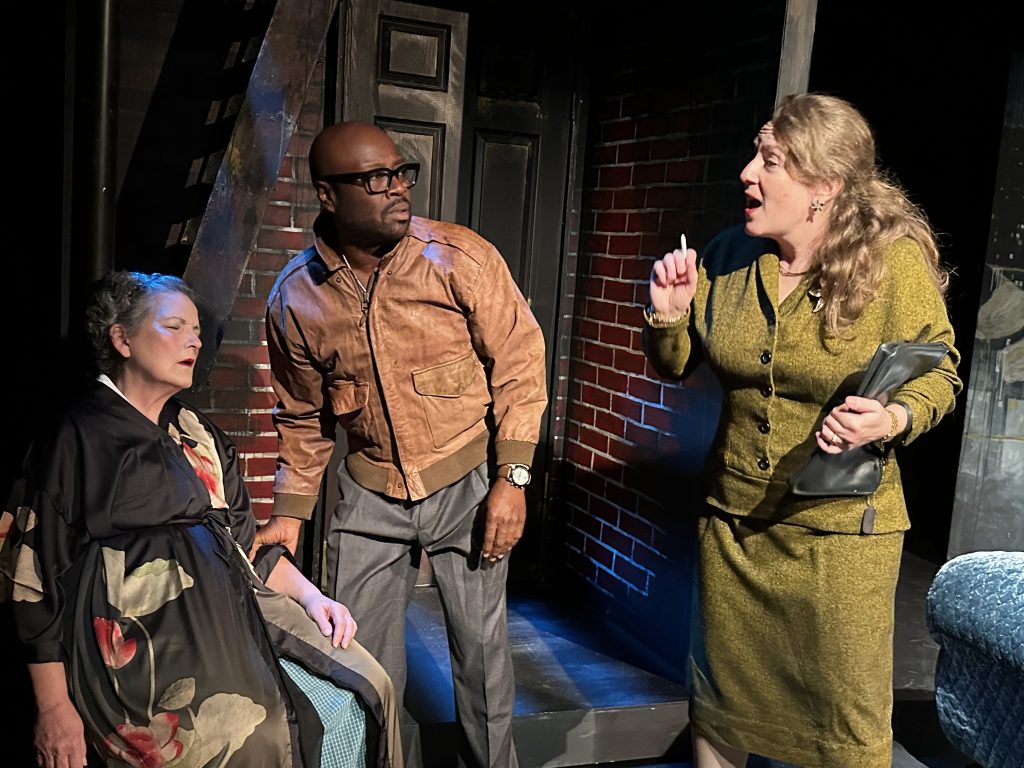
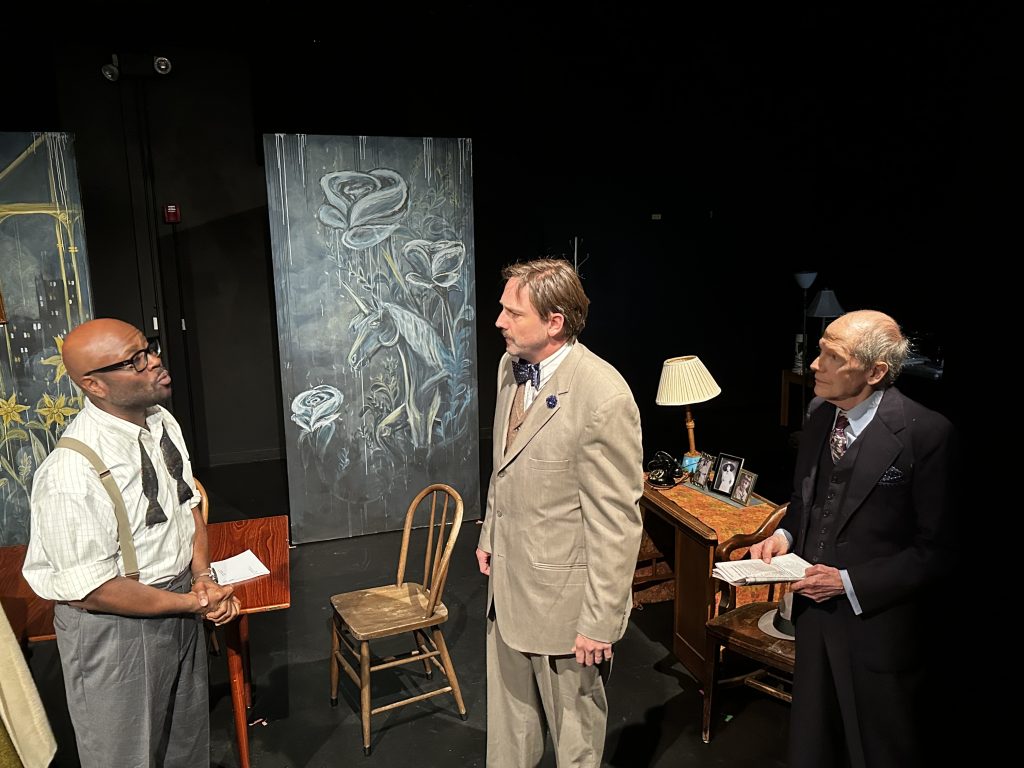
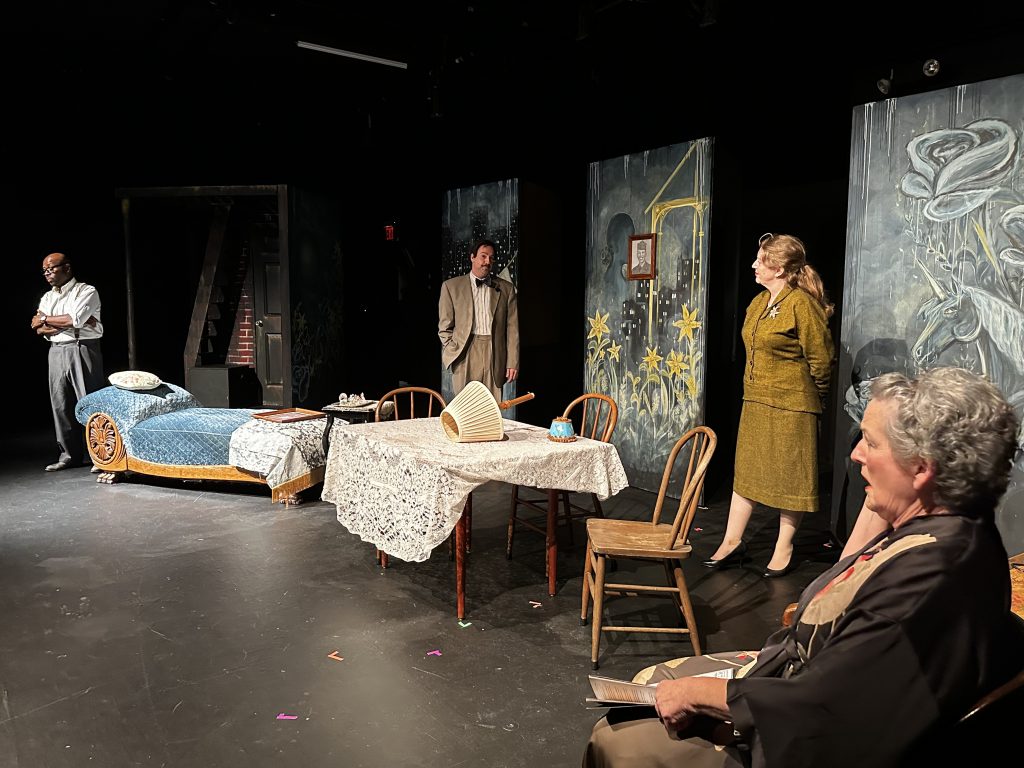
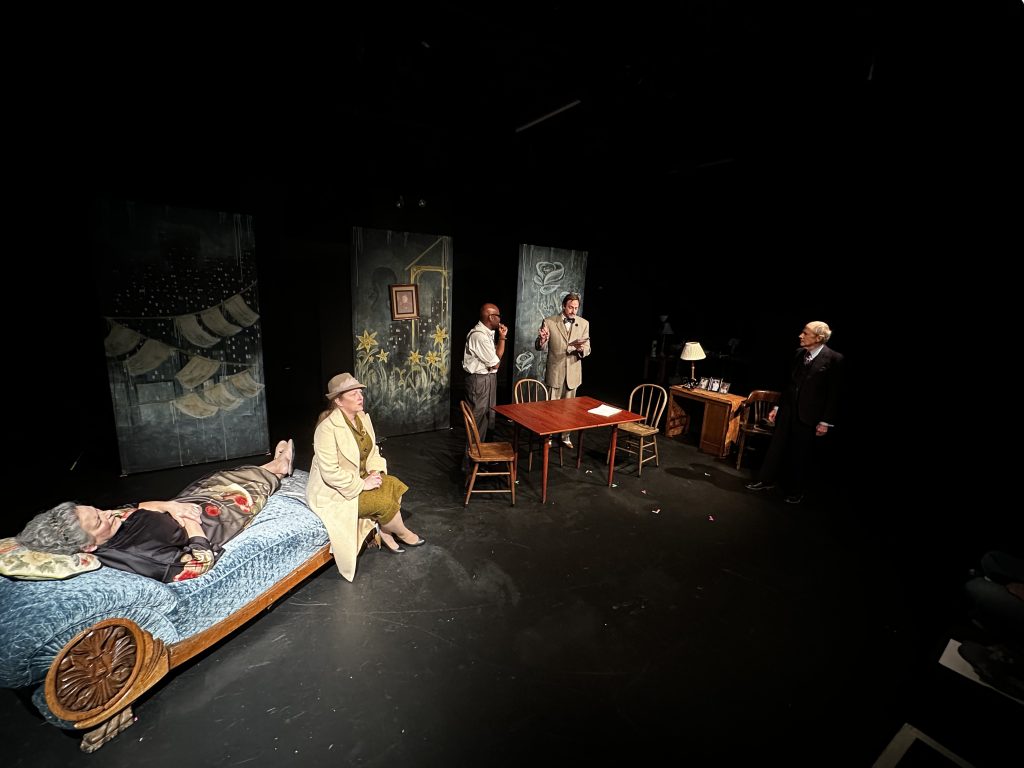
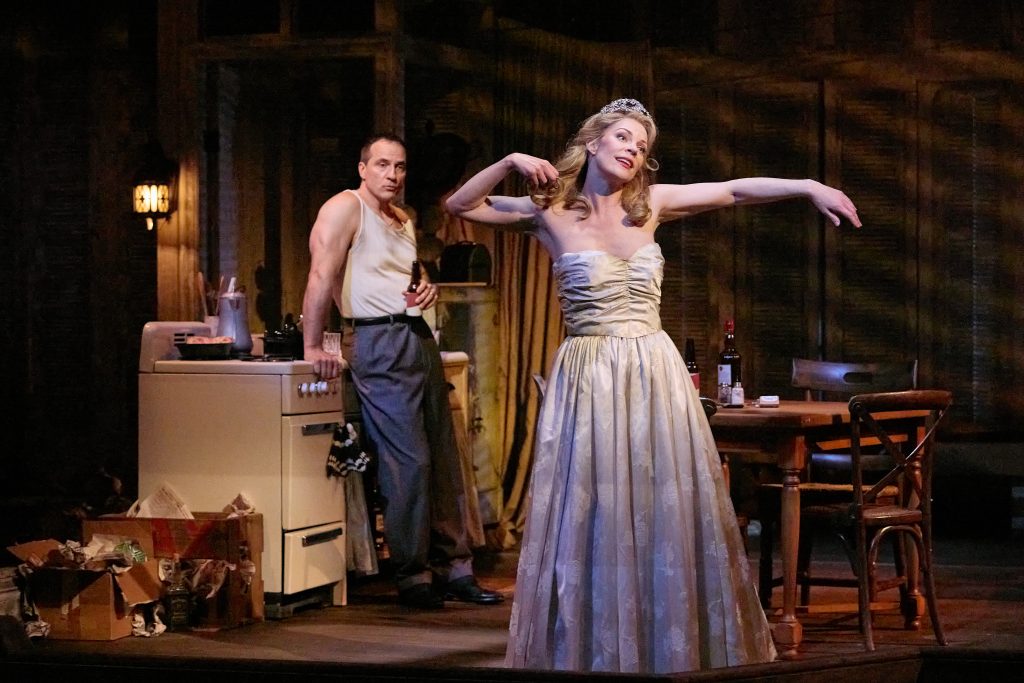
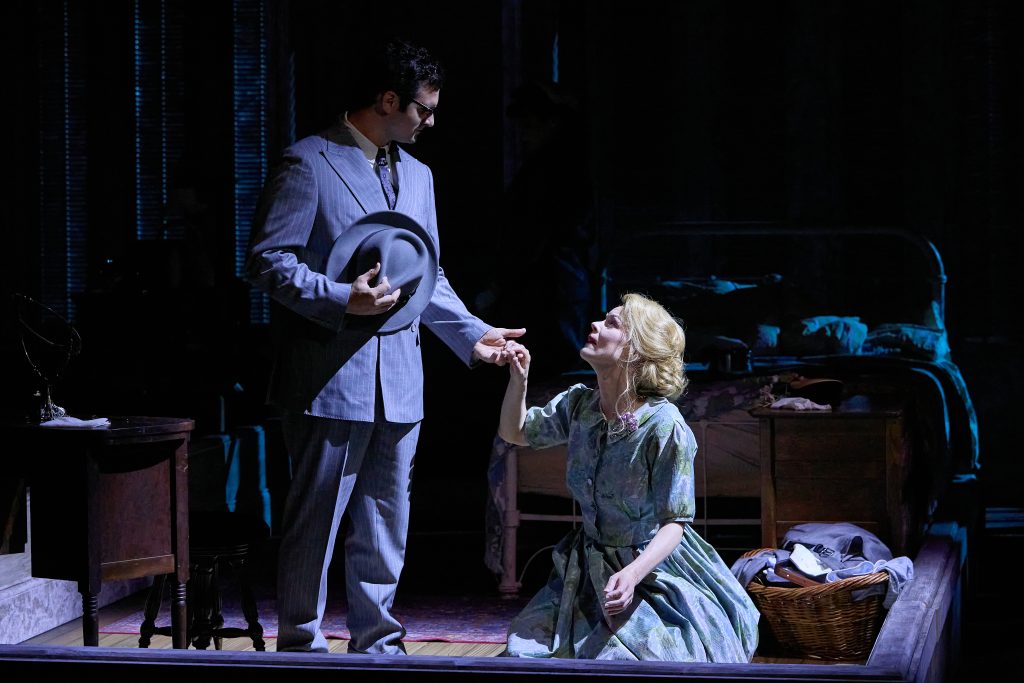
Tennessee Williams Festival St. Louis has lavished Branden Jacobs-Jenkins’ “Appropriate” with an extraordinary amount of artistry, care and, yes, love. Director Benny Sato Ambush and company expend all three in service to the script, then leave it to the audience to decide what to carry away. A production this accomplished leaves the play nowhere to hide.

What emerges is a play about the corrosive nature of secrets and what happens when excavation produces more questions than certainty. The horrifying photographs discovered among a dead father’s possessions provide the catalyst, while foreshadowing something still more disturbing and revelatory. What they unleash within his surviving family becomes the play.

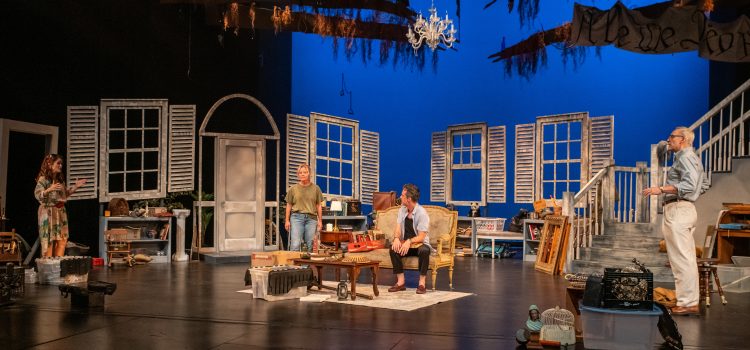
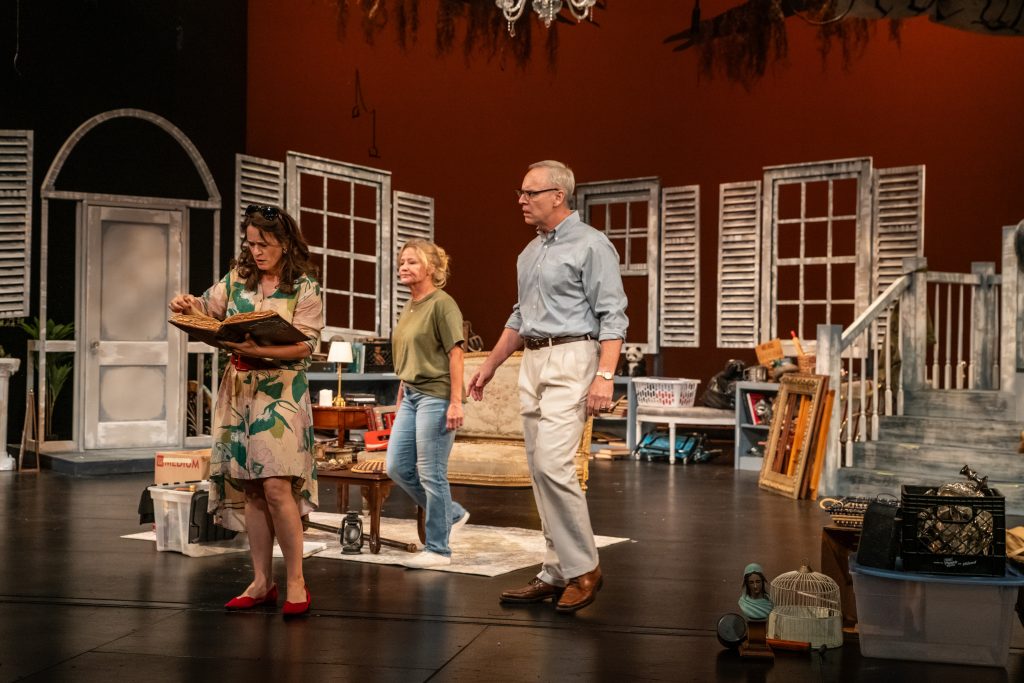
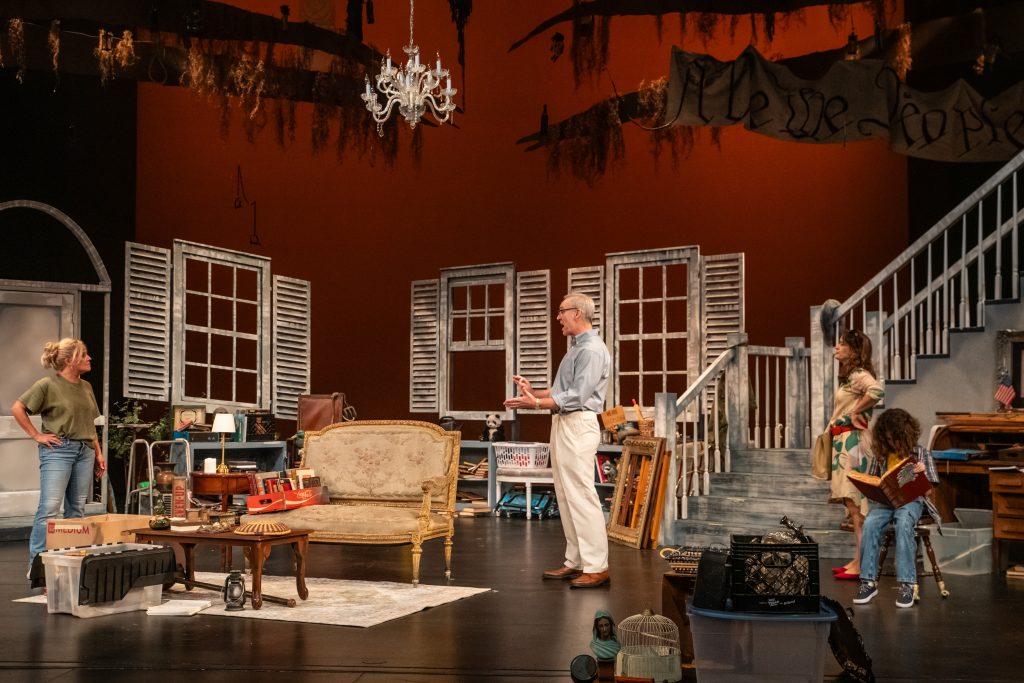
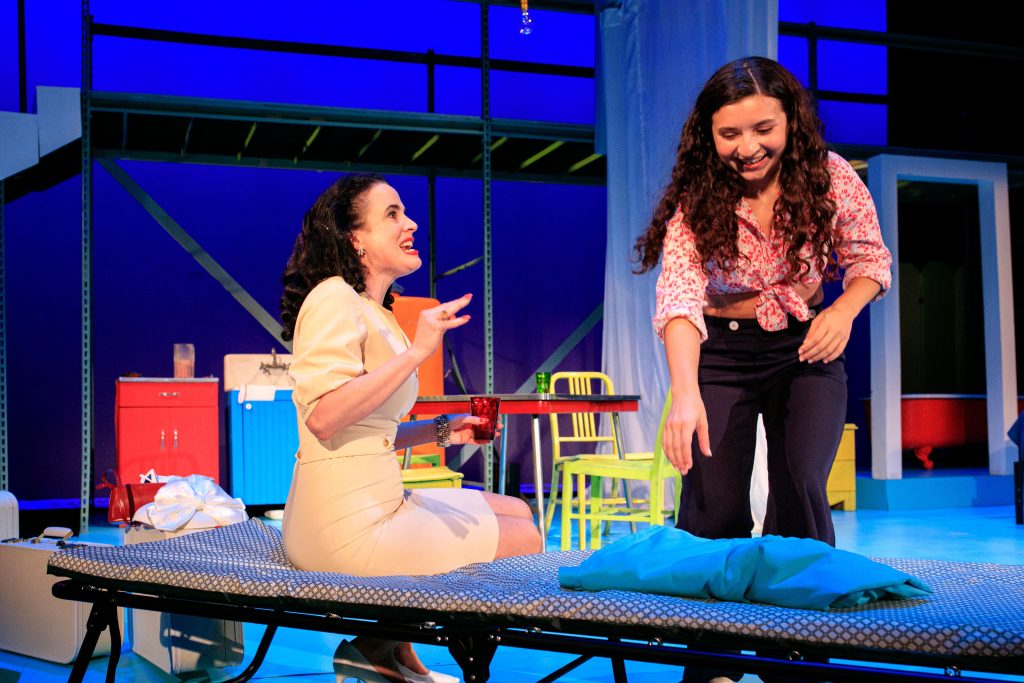
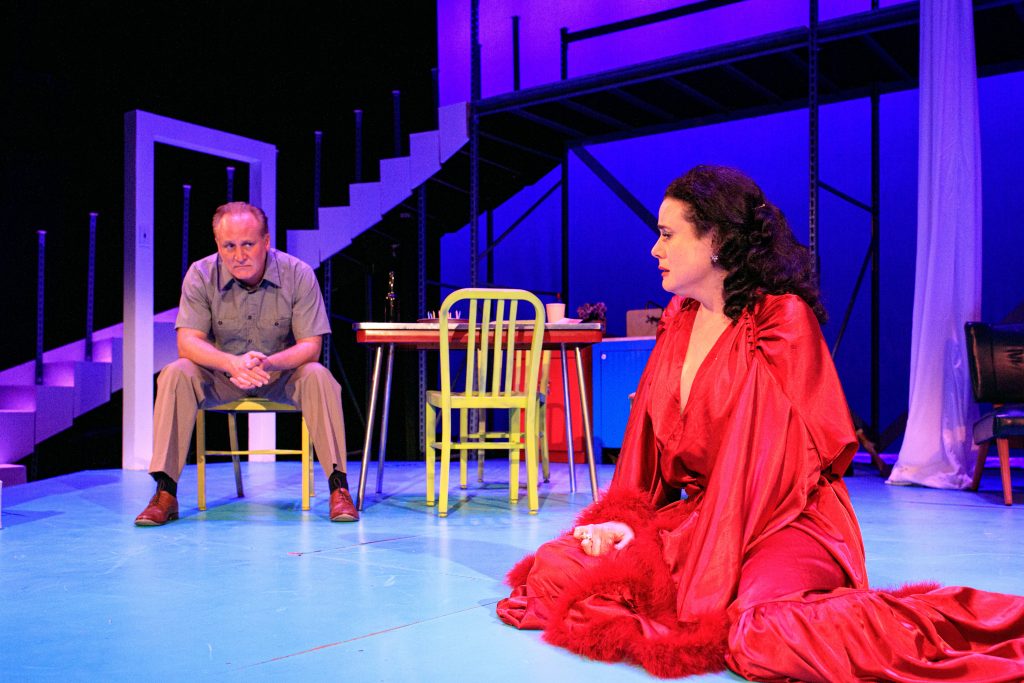
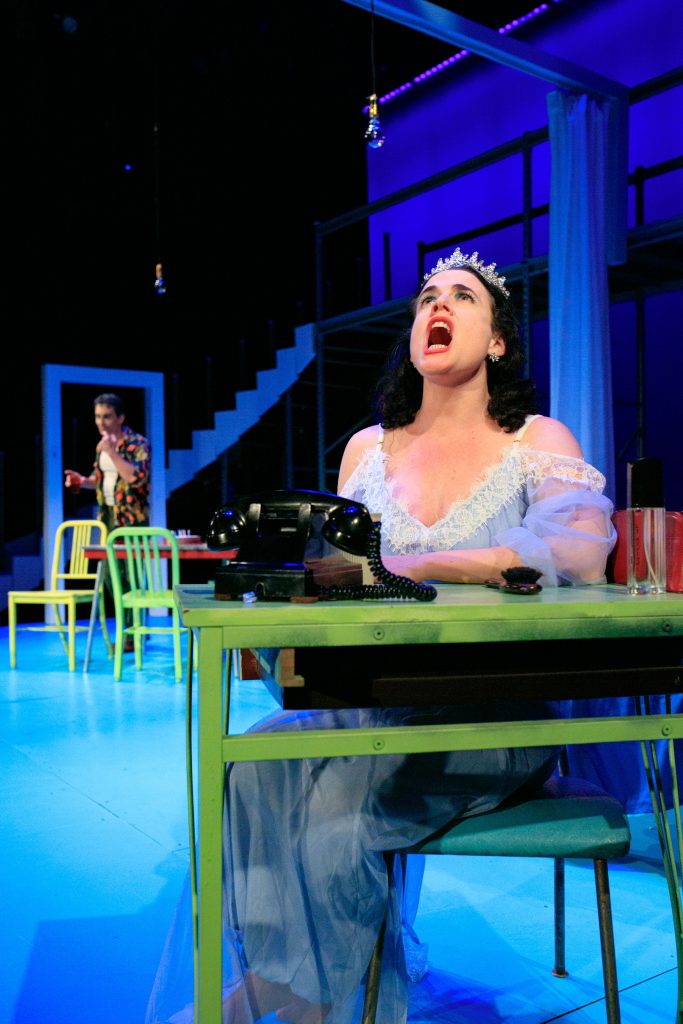
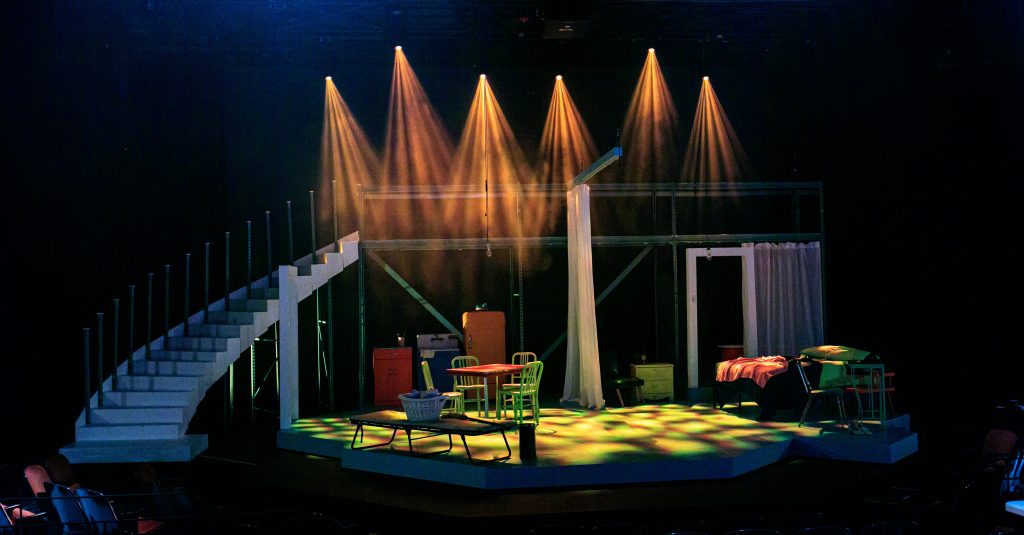
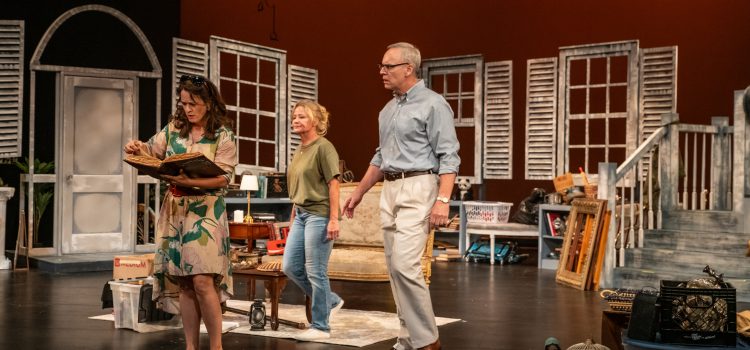
The Lafayettes, a white Southern family, have gathered at their late father’s crumbling Arkansas plantation house to empty it, sell it and presumably get on with their lives. Scenic and lighting designer Matthew McCarthy’s cluttered house looks in need of repair—hell, beyond repair—much like the family temporarily occupying it. The place is simultaneously familiar and foreign to them, an ambiguity Ambush mines throughout.

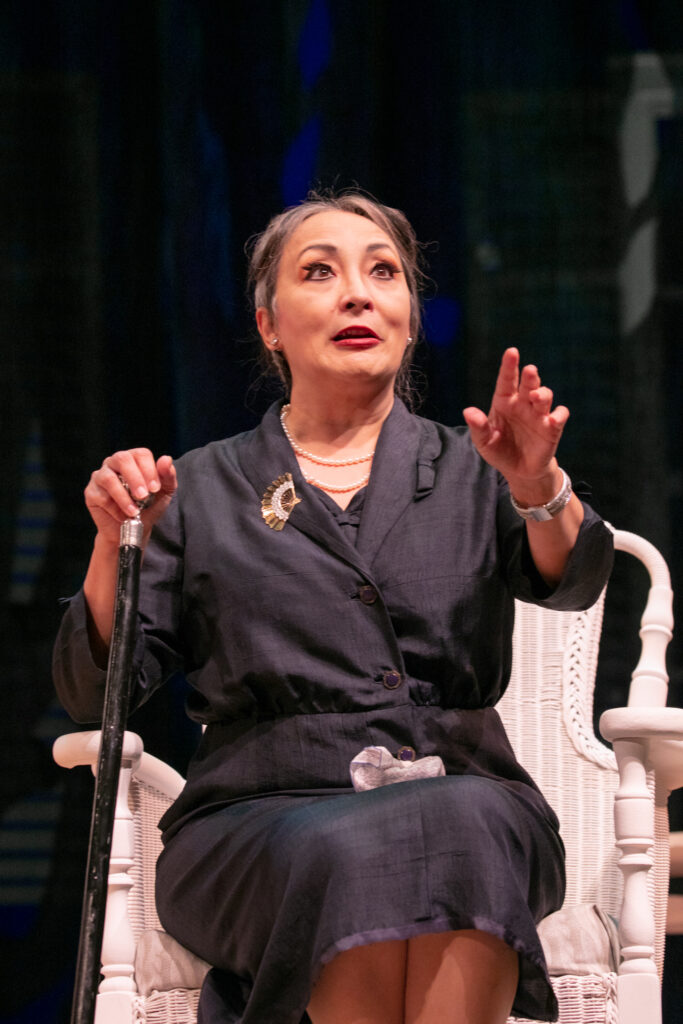
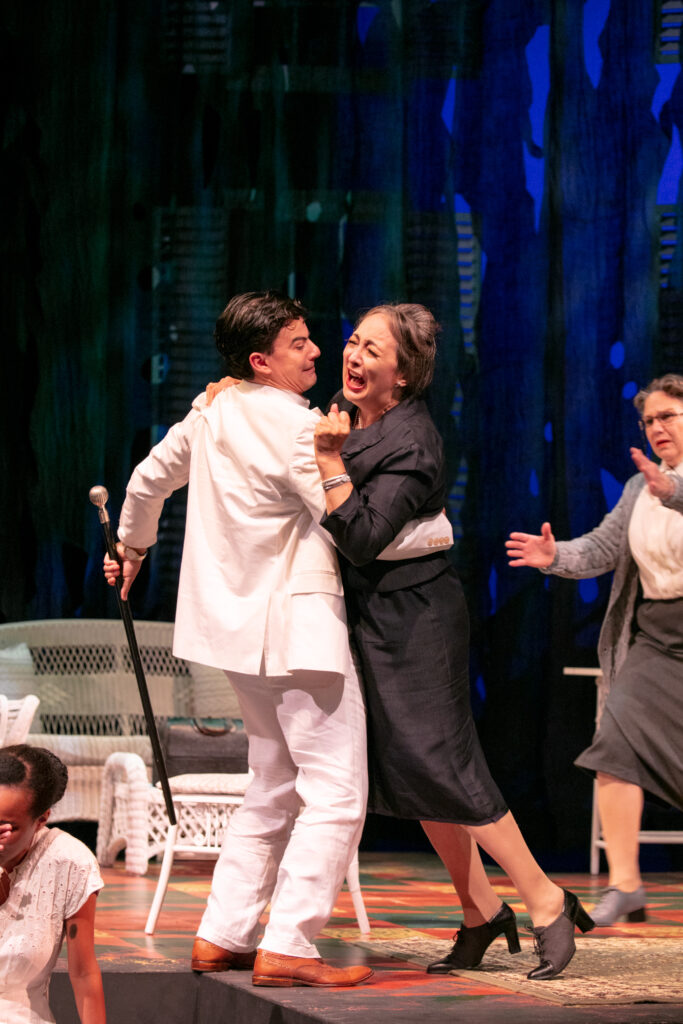
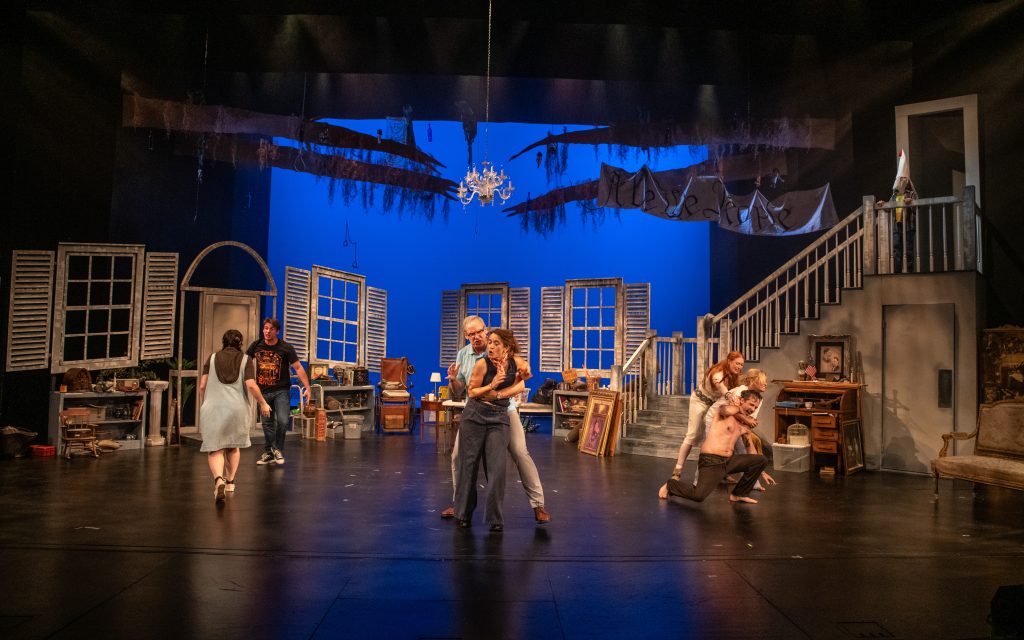
So does his exceptional ensemble. This is a family of old wounds and long memories of psychic bruises, and Jacobs-Jenkins knows where to press. Eventually everyone presses back. Fights are notoriously difficult to stage convincingly, and fight choreographer Shaun Sheley engineers this one so that accumulating hostility makes violence feel inevitable even as its eruption arrives as a shock. Bodies collide, years of grievance turn physical, and the production lands one of its most difficult moments.
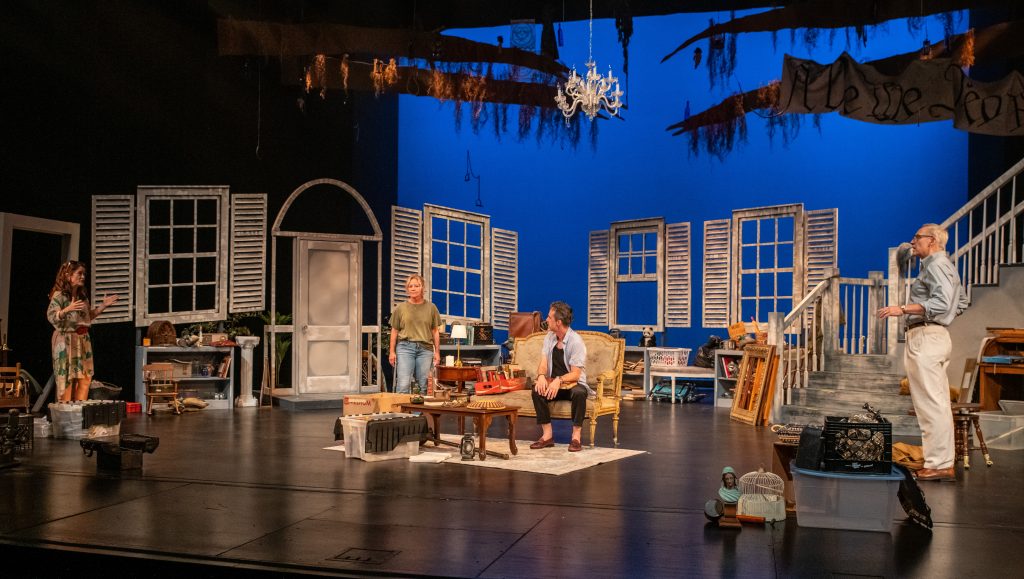
Jilanne Marie Klaus makes Toni’s anger intelligible while allowing its ugliness full rein. Her grievances have calcified into an understanding of sacrifice, loyalty and what she believes she is owed. By Toni’s climactic declaration, Klaus has made clear how she arrived there, even as Toni reveals how far those grievances have carried her.

Joel Moses spends significant stage time bare-chested as Franz attempts to lay bare the man he believes he has become. Moses turns a faux-baptism and Franz’s pleas for understanding into blistering acts of self-revelation. Then Frank’s past resurfaces, forcing the family to contend with the man he was and the man claiming to stand before them now.

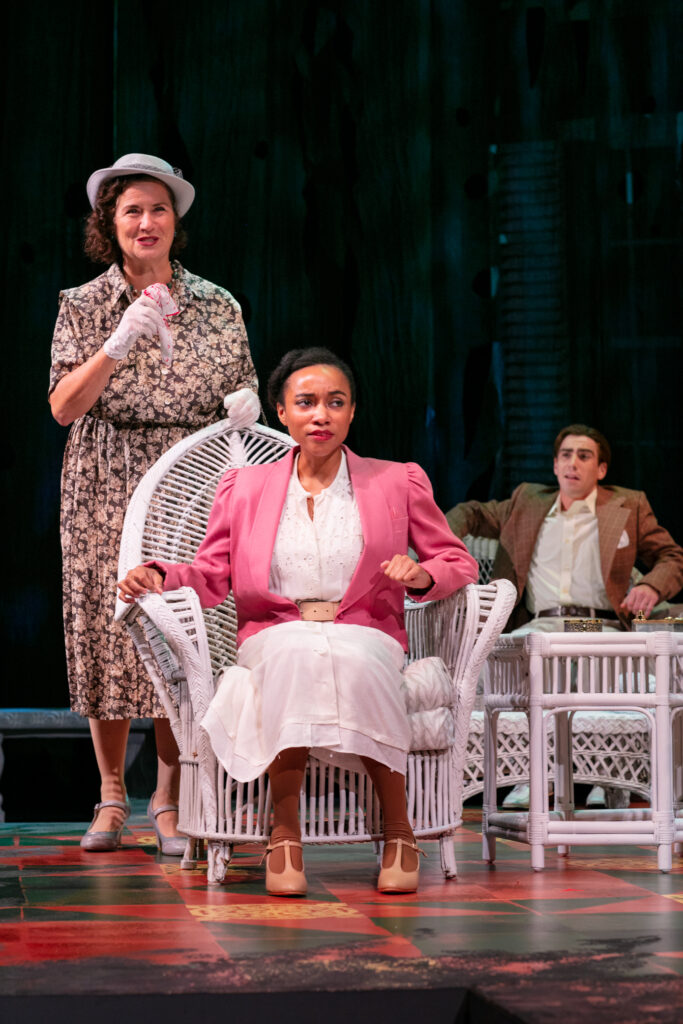
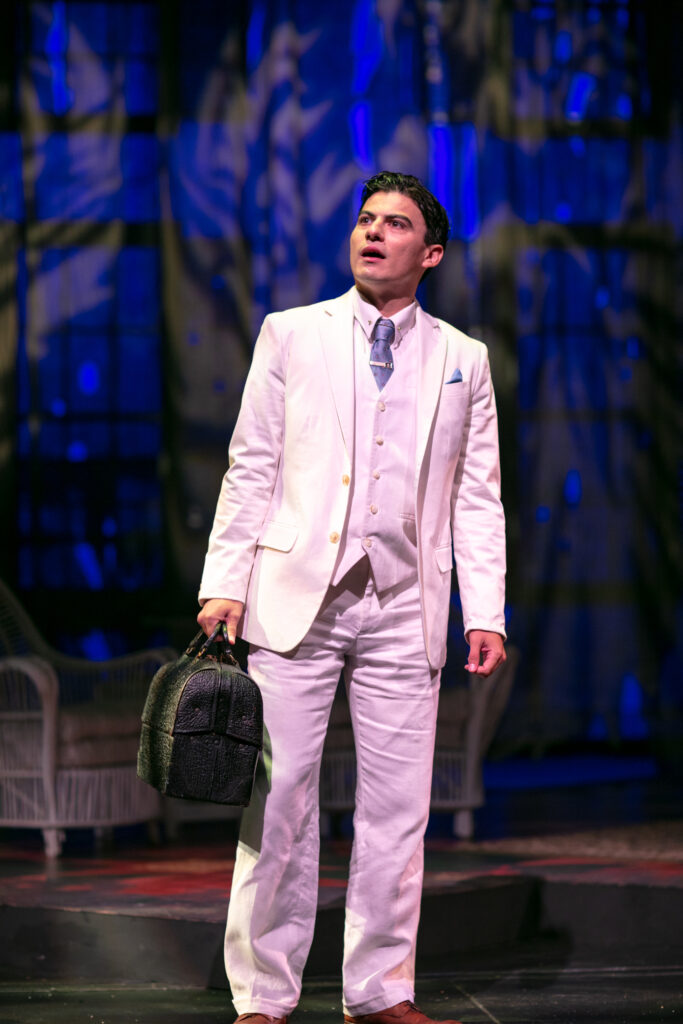
Michael James Reed begins with Bo’s recognizable silhouette—the tightly wound New Yorker juggling a threatened career, wife and children while hoping to dispatch his family obligations—and gradually opens him to something more vulnerable. In the aftermath of the violence, Reed brings Bo both home and not-home, allowing believable tears to reveal another dimension of a man whose competence has carried him only so far.

The women reveal different constructions of womanhood as the house strips away first impressions. Lizi Watt tightly unwinds Rachael scene by scene, moving the exasperated wife and in-law toward grievances and moral claims she fully earns. Maggie Newstead-Adams lets River arrive in full crunchy-granola, woo-woo New Age space-cadet mode, then deftly reveals deeper waters beneath the family’s assumptions about softness, youth and femininity.
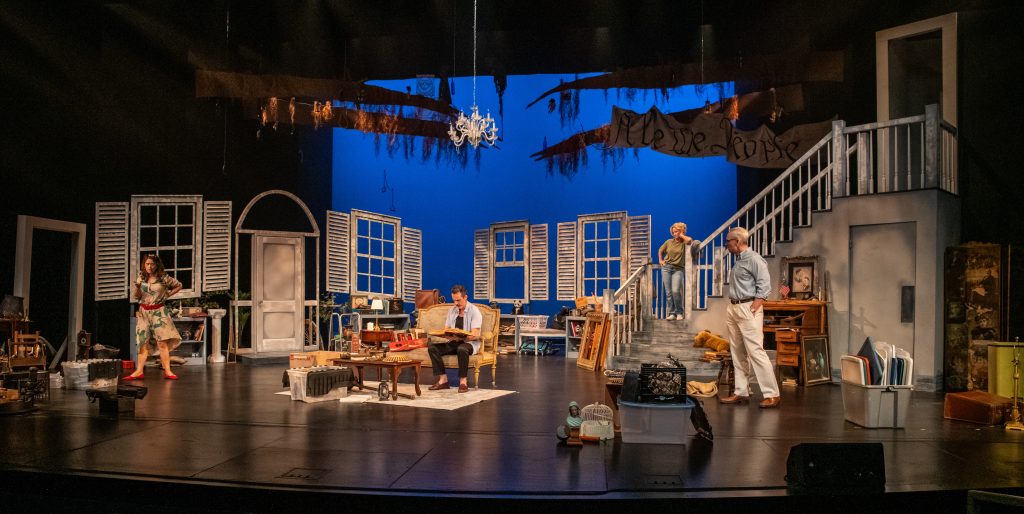
The next generation is already carrying things forward. Braden Phillips makes Rhys a kind of put-upon horny Boo Radley opposite Ainsley Hammond’s naive teenage-rager Cassidy, while the youngest child innocently supplies one of the evening’s consequential revelations about the grandfather none of them fully knew.

Then there is the album.

It looks almost like a revered family Bible, a hefty, timeworn volume expected to preserve births, deaths and generations of Lafayette history. Instead, its pages contain photographs documenting horrific racial violence against Black Americans. Ambush stages this grotesque inversion of a family keepsake almost as another character, introducing the book with a held moment in a spotlight. It passes from revulsion to fascination and something more uncomfortable: prurience, that human impulse to gawk, the same one that slows traffic as drivers looky-loo through their windows at a fatal crash.

The album gets deliberately submerged in an attempt at erasure, then returns waterlogged to center stage as the family contemplates what it might fetch. The progression grows more grotesque: horror becomes curiosity, human suffering becomes collectible, and finally someone puts a price on it.
There is something here of Tim O’Brien’s “The Things They Carried,” his collection of linked stories about the physical and emotional burdens carried by soldiers in Vietnam. Call these the things they inherited: the Lafayettes return carrying old grievances and discover their dead father has left them much more to carry.

That inheritance also explains why “Appropriate” belongs at a Tennessee Williams festival. Jacobs-Jenkins has acknowledged borrowing from Williams and other American dramatists. That is the Tennessee Effect at work: inheritance put back to work, absorbed, altered and extended. “Appropriate” might be what happens when Big Daddy from “Cat on a Hot Tin Roof” is already dead and buried—or is he? The patriarch is gone, but the house, the inheritance, the secrets and the damage remain.

Sound designer Mary Robinson’s insistent cicadas and ghostly whispers make the world beyond the house almost another presence. Ambush opens that world further in his culminating historical montage, where Robinson’s sound carries us from the secrets of one Southern family into the larger history of racial violence in America. Different people in the audience inevitably receive that history from different starting points. The production can put the same history before everyone. It cannot make that history equally remote—or equally revelatory—to everyone.

Walking toward the parking lot afterward, one woman supplied perhaps the most appropriate curtain line:

“I feel like we need a debrief.”
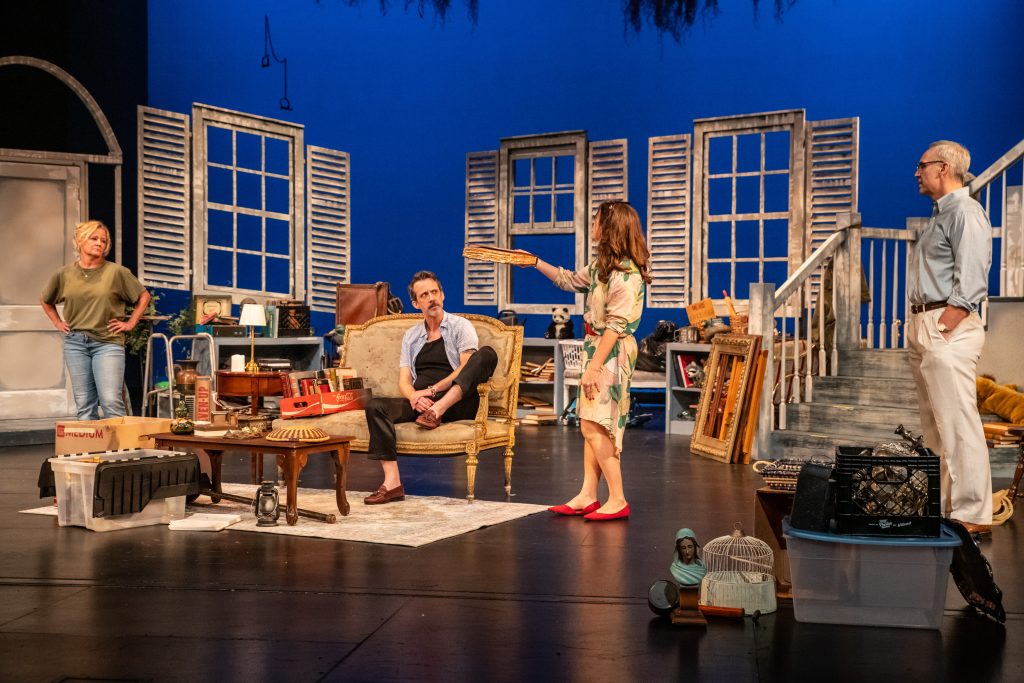
Tennessee Williams Festival St. Louis’s production of Branden Jacobs-Jenkins’ “Appropriate” runs through Sept. 27 at the Catherine B. Berges Theatre at COCA, with remaining performances Sept. 25–27. For tickets and more information, visit twstl.org.
By Lynn Venhaus

With its complex characters, fractured family dynamic and multi-layered storyline, Branden Jacobs-Jenkins’ explosive drama “Appropriate” has much to unpack.

At their peak, a powerhouse local cast takes us on an unsettling, unforgettable journey, for their characters aren’t prepared for all the emotional baggage that will spill out. Well-cast and well-rehearsed, this production showcases intense immediate realism.

Dark secrets will be revealed, forever shaking the family. Think of it like a bandage being ripped off an open wound – repeatedly. The atmosphere is combustible – a marvel of sight, sound, imagery and tension under Benny Sato Ambush’s direction.

The cicadas are loudly buzzing on a hot, muggy summer night in rural southeast Arkansas when three Lafayette siblings converge to settle their late father’s estate. The clutter in the decaying plantation home is as profound as the anxiety as they prepare for an estate sale.

This is not a warm family reunion – interactions are awkward, bitter and contentious. This play, first performed in 2013 and then off-Broadway a year later, was revived in 2023 to much acclaim. Its power is intact, reminding us of systemic racism and unconscious bias when it’s hard to confront as legacy.

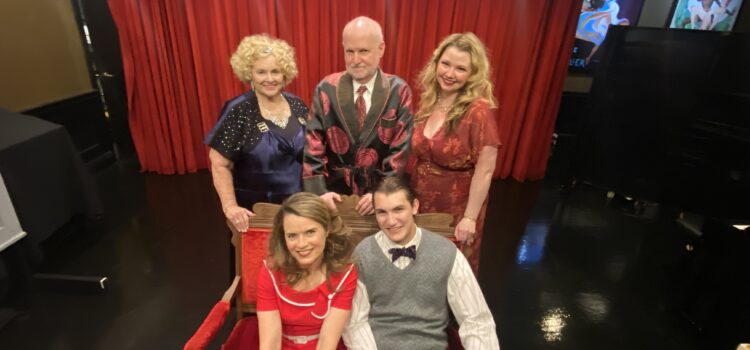
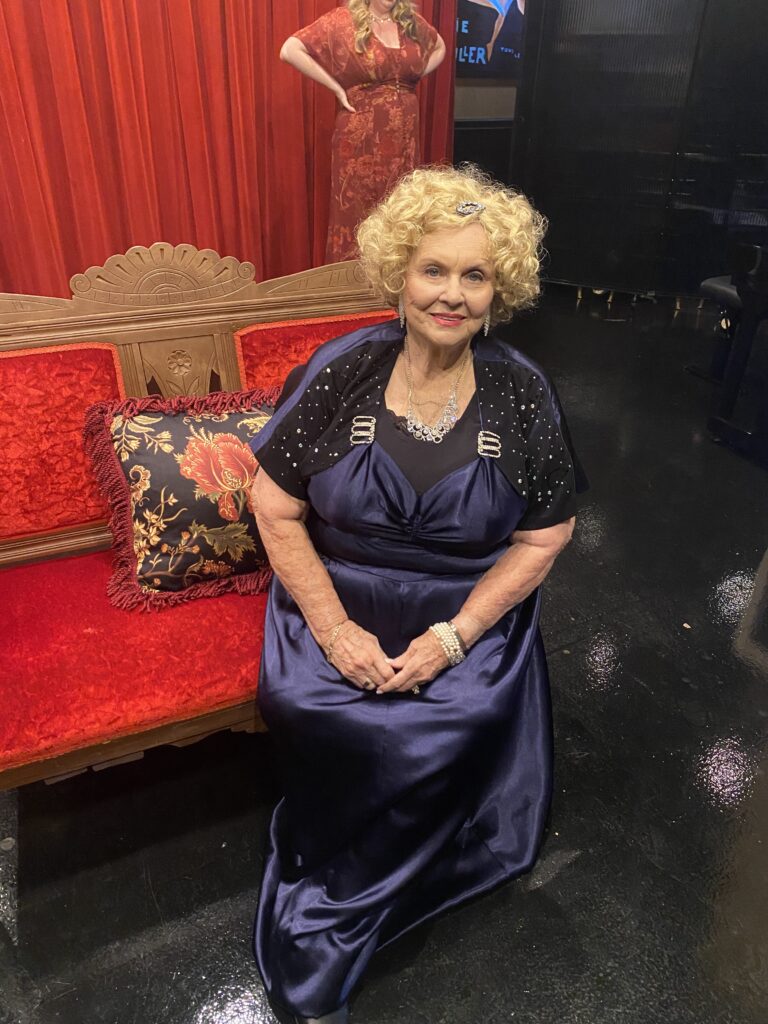
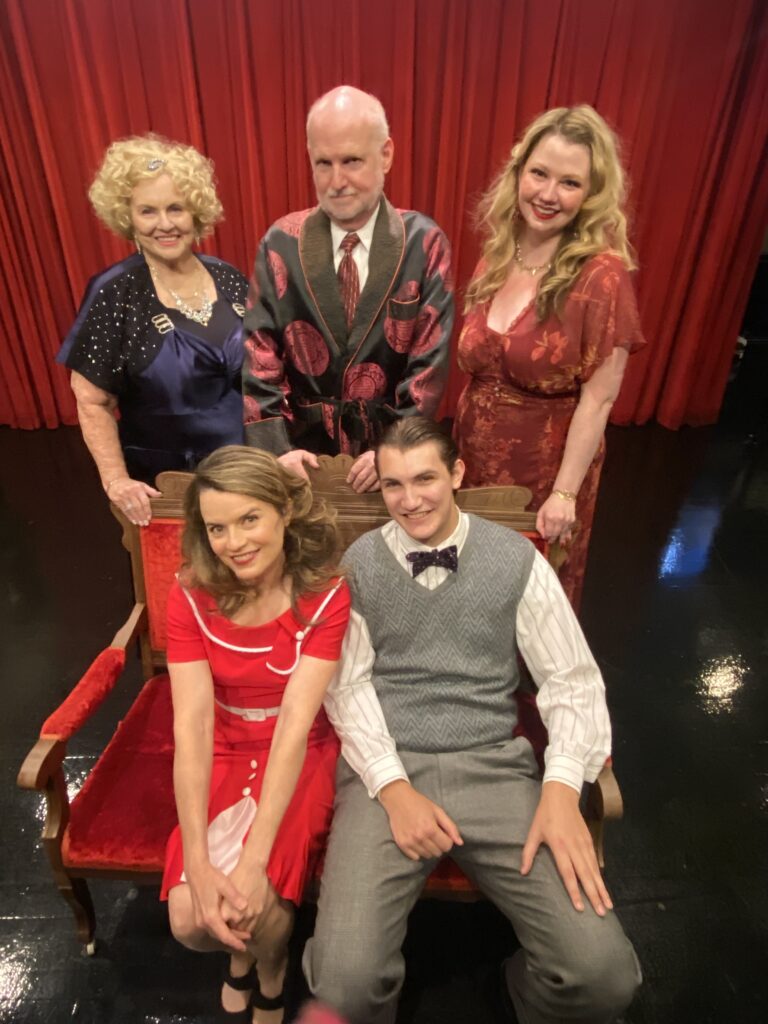
The Lafayette siblings – Jilanne Marie Barnes, Joel Moses, and Michael James Reed, with Lizi Watt holding photo album.

Wayward son Francois “Frank” (Joel Moses), who now calls himself “Franz,” is seeking redemption after years of addiction and bad behavior. He drove there from Portland with his eccentric young fiancé, River (Maggie Newstead-Adams).

Stressed-out eldest sister Antoinette “Toni” (Jilanne Marie Barnes) considers him toxic and won’t extend an olive branch. Brother Beauregard “Bo” (Michael James Reed), an attorney like their father, is expecting to take charge like he always does, but Toni is the executor. They all bicker incessantly.

Bo’s wife, Rachael (Lizi Watt), and their two precocious children, Cassidy (Ainsley Hammond) and Ainsley (Aviv Giancola-Poremba), came from New York City, thinking of this as an educational trip. Toni’s troubled son Rhys (Braden Phillips) is present. These are flawed relatives with enough intergenerational trauma for an eight-episode limited series.

“Appropriate,” with all the intentional meanings of that word, will delve into race, identity, and historical legacy. As the patriarch’s despicable past is discovered, the evidence can’t be ignored or denied. How family members deal with a photo album of graphic lynchings and other disgusting emblems of a vicious white supremist adds to the uncomfortable territory.

The playwright, who has won two Tony Awards, a Pulitzer Prize for Drama, and an Obie Award, has a natural command of how people interact and converse. His dense dialogue combines caustic wit with raw pain and sharp contemporary insight – and yes, phrases will shock.

Not a fun family reunion.

Joel Moses’ Franz is this deeply vulnerable bundle of insecurities, trying to show the better person he has become, but his siblings can’t let go of their hurtful memories about his decadent past and their resentful feelings. Unlocking a pitiable black sheep as only he can, Frank is another masterful performance by one of St. Louis’ finest actors.

Joining him in top-tier reliability is Michael James Reed, who is, without fail, always at the top of his game. He provides interesting layers to the complicated Bo, Ivy League-educated and successful.

At first, it feels like Bo checked out of caring about his family a long time ago. His main concern is the corporate ladder, and he appears to be the family “fixer.” Money-centered, he’d monetize the dad’s hateful artifacts in a heartbeat. But he’d love to distance himself from this tarnished past; he just wants to recoup all the funds he spent caring for dear old dad and get back to Manhattan.

Jilanne Barnes’ Toni is tired. Exhausted by life, her short straw, and trying to fix broken things that can’t be repaired, she is unpleasant for 95% of her stage time. That is heavy for an actress, and Barnes’ meets the challenge. Toni sacrificed and deeply cared for her father. She refuses to sully his memory.

Shrill and spiteful, she has alienated most everyone there, especially Bo’s Jewish wife Rachael. First impressions on the sister-in-law are that she’s a typical affluent status-conscious mother, trying to control the outside world’s influence on her children.

Estate sale preparation not going smoothly.

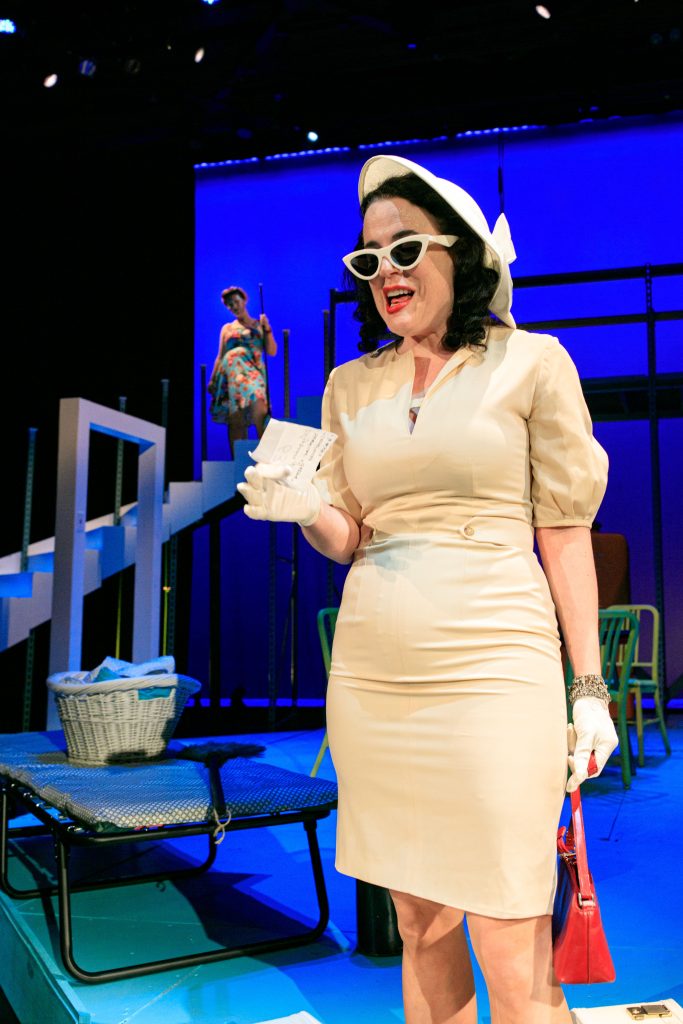
Lizi Watt displays Rachael’s buttons that Toni keeps pushing, with antisemitic name-calling, and it gets ugly — “August: Osage County” nasty. Fight choreographer Shaun Sheley’s work is noteworthy.

Most surprising is Maggie Newstead-Adams’ nuanced portrait of River. She presents herself as New Age and is derided for her ‘hippy-dippy’ qualities. Assuming she’s a stereotype, she proves herself to be wise beyond her 23 years and compassionate. Newstead-Adams’ poise among all the other acclaimed talent is impressive.

Spiritually, she is most attuned to the ghosts haunting this old plantation. Mary Robinson’s impeccable sound design announces the spirits’ eerie presence, as the family talks about the two graveyards on the property – one white, one with black slaves (without headstones).

When the third generation finds disturbing relics of their bigoted grandfather, the sins of the past erupt. As the program points out: “Walls remember what a family chooses to forget.”

By society’s standards, Daddy — Ray Lafayette — was a highly successful, highly educated man. He lived in Washington D.C. for a time, during a lauded legal career, and chose to return to the ancestral homestead, with thoughts of turning it into a bed-and-breakfast.

What secrets does Daddy have in that photo album?

Toni and Frank both refer to his mental deterioration, but the moral decay is something the family is loathe to address. But they start to peel back time, remembering behaviors. An all-white cast, dealing with the reality of historical racism, examines how the past haunts the present, and the bigger picture that it represents.

The outstanding artisans connected with this complicated production have crafted a stunning, crumbling Southern Gothic setting. The ambience is immediate, and so are the bad vibes. Matthew McCarthy’s richly appointed set design, complimented by Mikhail Lynn’s meticulous prop design, plunges us into this dilapidated structure, with the family’s despair emanating from every junk-filled corner.

McCarthy also designed effective lighting, and Ethan Dudenhoeffer was a wizard as technical director. Abby Pastorello’s costume design captured every character’s personality with terrific verve.

To reduce commentary about “Appropriate” can point out the obvious — a dysfunctional family in deep denial, which could stamp Tennessee Williams’ “The Glass Menagerie” and other landmark plays in the same way. That is why it’s not hard to see this connection that the Tennessee Williams St. Louis Festival chose to pivot with — “The Tennessee Effect” as this 11th year’s theme. It’s, well, appropriate.

Big brother will man-splain.

The takeaways are plentiful. We can only try to do better when we know better. If we aren’t willing to have discussions, where does society go?

In “Appropriate,” there is no tidy ending, no way to wrap up with a soothing bromide or suppress this legacy. The two-act dark drama is raw, unflinching, and damning of white fragility.

Some inheritance. They should be hot and bothered. And so should we.

The Tennessee Williams Festival presents the St. Louis premiere of “Appropriate” Sept. 17-27. Performances take place at the Berges Theatre at COCA in University City. For more information: twstl.org

By Lynn Venhaus

The rich legacy of Tennessee Williams has become a major point of pride in St. Louis, where he spent his formative years. For 10 years, we’ve embraced the Tennessee Williams Festival St. Louis, and rediscovered a new appreciation for the great American playwright.

Therefore, an original work about the dramatic and sometimes humorous events leading up to the Broadway premiere of his autobiographical “The Glass Menagerie,” a game changer in many ways, is worth diving back into the Williams lore.

An earnest “Tenn” by Aaron Scully takes us back to the ‘before’ – nervous investors, stressed-out playwright, unreliable leading lady, and major jitters by others involved.

But all those can and will be overcome, and who really matters are two people who fiercely believed in the play and playwright – namely talent agent Audrey Wood and director/producer Eddie Dowling.

They were life-changing contacts for Williams, and as played by Kelli Rao and Kevin Bailey, convey the necessary passion and support he needed to succeed. Without them, he would never have catapulted from obscurity to fame.

Dorothy LaBounty, Kevin Bailey and Kellie Rao. Photo by Brad Slavik.

In addition, Dowling steps onto the stage as dreamer Tom Wingfield, the character based on the author himself. Tom yearns for a different life, writing for a living and away from his family and mundane job in a shoe warehouse.

The events, presented as vignettes, start in 1939 and lead up to opening night on Dec. 26, 1944, in Chicago, then on Broadway on March 31, 1945. Scully frames it as Tennessee’s memories about his memory play, a clever premise. For his take, he has pared it down to a six-person ensemble.

After an earlier staged reading, First Run Theatre has produced this full-length play, meticulously mounted in the Kranzberg Arts Center, with cozy and concise period details in costumes, set, mannerisms and props (the vintage typewriter is a beat-up beaut). Granted, the production is low budget, but that also gives it an intimate feel.

Matt Newlin anchors the backstage drama as Tennessee, fiercely protective of his work, but fretful that the play based on his life would have the same fate as his earlier flop, “Battle of Angels.”

His Tenn is a genteel Southern gentleman, soaking up experiences and commenting on what’s happening, showcasing the playwright’s trademark wit and insecurities. Scully captures those aspects of the character well, and Newlin depicts him as a sympathetic creative that you root for to succeed.

Bailey, Newlin and Charles Huevelman. Photo by Brad Slavik.

Dorothy LaBounty deftly portrays the alcoholic actress Laurette Taylor, who drew rave reviews immortalizing Williams’ histrionic mother Edwina as the character Amanda Wingfield, a faded Southern belle who is ill-equipped to deal with harsh financial conditions in a small St. Louis apartment in the late 1930s.

Giving this story a sense of gravitas are Kyle Reeves as Donald Windham, Williams’ partner, and Charles Huevelman as the financier Louis Singer, who balks at putting more funds into the show.

A notable absence is an actress playing Laura, who is modeled after Tenn’s fragile sister Rose. In the opening, Newlin explains that there are 12 scenes, not in chronological order, and not everyone that was involved is part of the process.

For a modest production, set designs are an essential part of this storytelling, and set designer Brad Slavik, the producer and board president, has crafted an ambitious scenic tableau, with a fire escape, restaurant, hotel room, stage and other settings.

Three hard-working stagehands Mike True, Phoebe Carlson and Lilly Holland are busy changing settings, which can be cumbersome to the play’s flow.

‘Tenn’ at First Run Theatre. Photo by Brad Slavik.

With costume designer Lauren Smith Beardon’s retro outfits, lighting designer Mike Gasparich’s illumination, and props manager A. Merkt adding old-timey lamps, they set the scenes well. Rachel St. Pierre was a scenic painter and Jenn Ciavarella the technical director, with Addie McGrath and Lilly Holland sound designers.

Before the Tony Awards were created in 1947, the New York Drama Critics’ Circle awarded “The Glass Menagerie” the Best American Play in 1945. For Tenn, the rest, as they say, is history. He went on to win two Pulitzer Prizes for Drama with “A Streetcar Named Desire” 1948 and “Cat on a Hot Tin Roof” in 1955.

Inspired by the world around him, Tenn made his mark with his poetic realism. His understanding of the human condition, his ability to highlight outsiders, misfits and eccentrics, and his focus about love, understanding, compassion and kindness, made him singular.

All his works are about loss – the summer, beauty, youth, love – and yes, glass animals. None of these things last very long.

Born Thomas Lanier Williams III in 1911 in Mississippi, he moved to St. Louis when he was 8 because his father, a traveling shoe salesman, was promoted at the International Shoe Company. St. Louis was a very polluted bustling industrial town in the 1920s and 1930s.

He was the second of three children born to a hot-tempered, hard-drinking Cornelius Coffin Williams and his neurotic wife, Edwina Dakin, who was frustrated in a bad marriage.

His sister Rose (1909-1996) was schizophrenic and institutionalized for the remainder of her life after a botched lobotomy in 1943. His brother Dakin (1919-2008) was an attorney who lived in Collinsville for years.

His family life was miserable, but he was ambitious and yearned for adventure. His restlessness took him away, but his roots here are significant. The family moved several times, and Williams attended both Soldan and University City high schools.

College included stints at University of Missouri-Columbia from 1929 to 1931 and Washington University in 1936, before earning a degree at the University of Iowa, then heading to New York City.

He also lived in Provincetown, Mass.; New Orleans; and Key West, Fla. Williams died Feb 25, 1983, in New York City, at age 71, and is buried in a family plot in Calvary Cemetery in St. Louis.

LaBounty, Rao, Bailey, Newlin and Huevelman. Photo by Brad Slavik

Scully is stingy with historical details, relying on the audience to know about the play and Williams’ backstory. Sure, the play is classic and iconic, but what about those unfamiliar?

What is missing here is the ‘how’ and ‘why’ the play was heralded. Perhaps characters rehearsing some of the scenes, to demonstrate Williams’ verbal dexterity, his emotional honesty, and his psychological profiles? Audiences connected to his memorable characters, and we should get a sense of that.

(I’ve since learned, after a Q&A with the author, that he originally wanted to use lines from “The Glass Menagerie,” but because of copyright issues, could not.)

From Newlin, we do get a sense of his idealistic passion, and Bailey’s fervent portrayal of Dowling as the guiding light, is a standout. Director Julie George-Carlson has thoughtfully staged this glimpse into the past.

Elia Kazan, who directed several of Williams’ iconic stage and film productions, described him as thus: “Everything in his life is in his plays, and everything in his plays is in his life.”

The story here feels incomplete, and I left wanting more, for Williams is as fascinating of a character as the fictional ones he created. “Tenn” focuses solely on the backstage drama that results in a triumphant theatrical achievement.

As a work in progress, “Tenn” illuminates a key aspect of Williams’ luster.

“Make voyages. Attempt them. There is nothing else,” Williams wrote in his 1953 play “Camino Real.”

First Run Theatre is presenting “Tenn” from July 31 through Aug. 9, Friday and Saturday at 8 p.m., and Sunday at 2 p.m., at the Kranzberg Arts Center, 501 N. Grand, St. Louis MO. The two-act play has one 15-minute intermission. For tickets and information, please visit www.firstruntheatre.org.

Patricia Racette’s production finds operatic scale, emotional truth and remarkable balance in Williams’s enduring tragedy.

By CB Adams

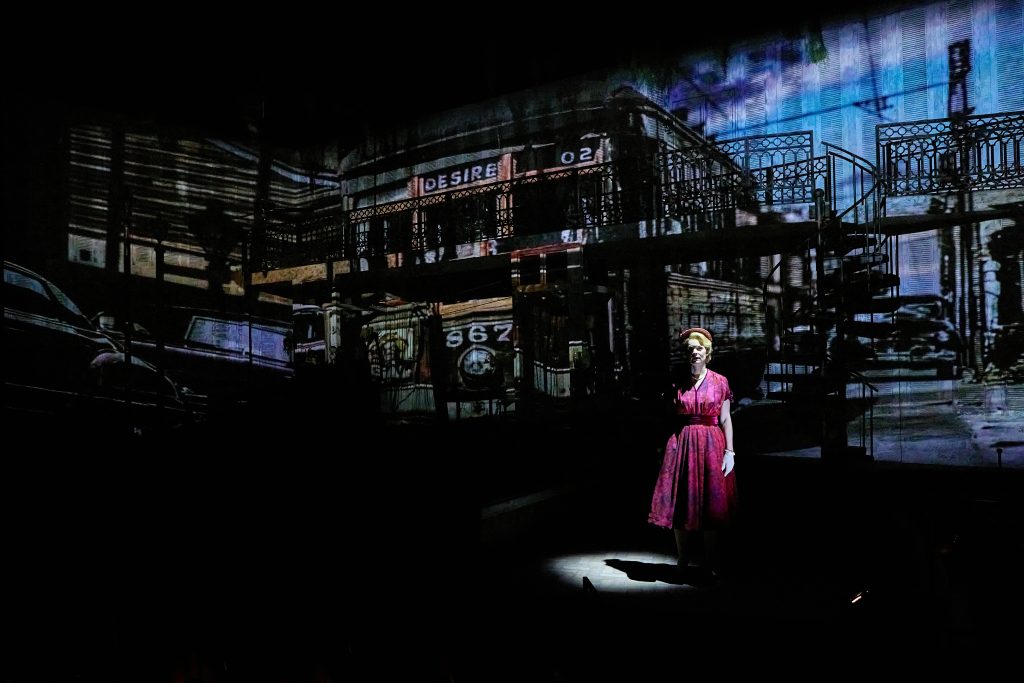
Andrew Boyce’s scenic design announces Opera Theatre of Saint Louis’s intentions before a note is sung. Towering walls of weathered white shutters dominate the stage, instantly evoking New Orleans while suggesting something more confining.

Projected across those walls, a black-and-white montage culminates in a huge streetcar lumbering toward the audience with the slow, inexorable force of a locomotive.

It is a striking image and an honest one. We know where this story is headed. Racette and Boyce embrace that inevitability from the outset. There is no attempt to disguise the destination. Some productions try to improve the classics. This one trusts one.

André Previn’s opera, with a libretto by Philip Littell, remains remarkably faithful to Williams’s play. Racette embraces that faithfulness as an artistic choice. She trusts Williams’s characters, conflicts and hard-earned understanding of human weakness. The result never feels preserved under glass.

Blanche DuBois (Sara Gartland) arrives in New Orleans. Photo by Eric Woolsey.

Daniela Candillari leads the St. Louis Symphony Orchestra with equal command. Previn’s score moves beneath the action like an unseen current, deepening tension and longing without overwhelming the drama unfolding onstage. Candillari maintains an ideal balance between pit and stage. The orchestra remains firmly in service to the story.

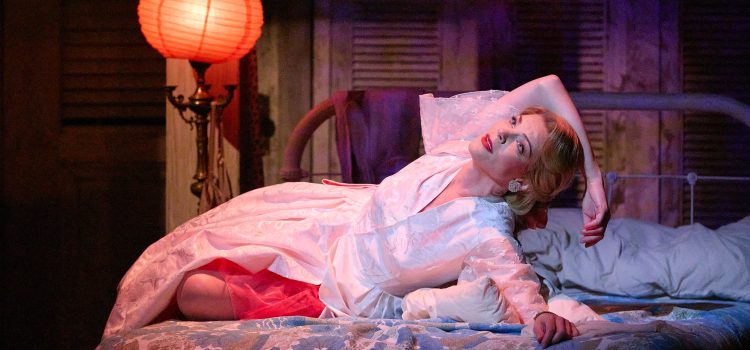
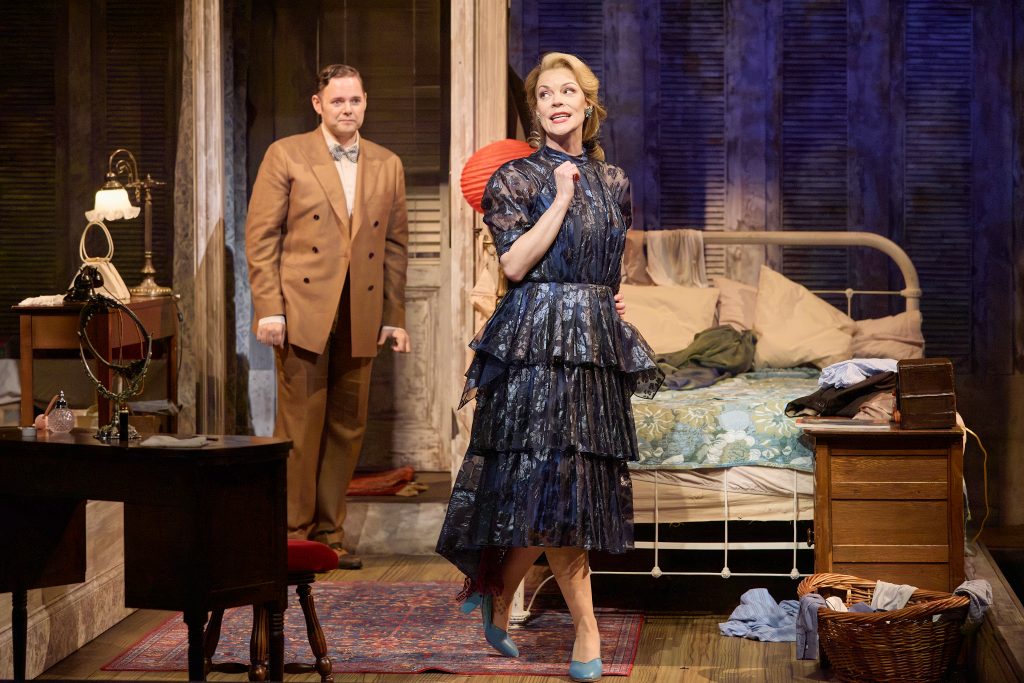
The production’s dramatic engine is the ongoing contest between Sara Gartland’s Blanche DuBois and David Adam Moore’s Stanley Kowalski. They spar like star pugilists across Williams’s language and Previn’s score, each encounter carrying as much psychological force as vocal power.

Gartland captures Blanche’s contradictions without simplifying them. Under Racette’s careful guidance, her Blanche remains vain, vulnerable, manipulative, frightened, self-aware and self-deluding, often simultaneously.

Moore faces the equally difficult task of making Stanley more than a brute. He succeeds. Stanley’s eventual victory remains disturbing, but Moore preserves enough magnetism and humanity to make it believable.

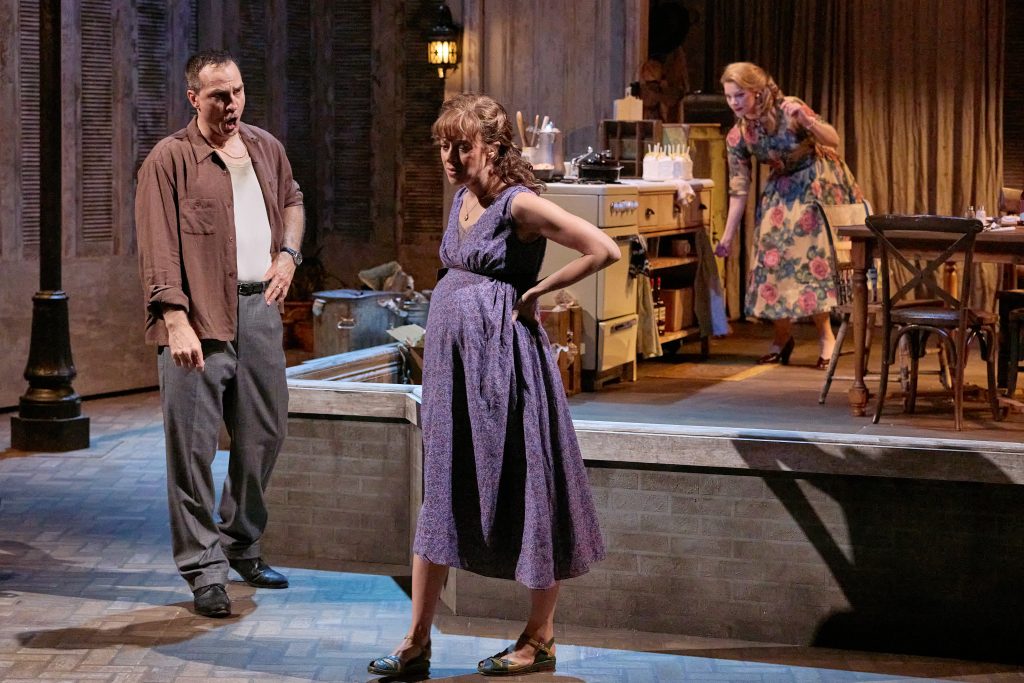
(L to R) David Adam Moore as Stanley, Lauren Snouffer as Stella, and Sara Gartland as Blanche in “A Streetcar Named Desire.” Photo by Eric Woolsey.

Racette allows Stanley’s appeal to remain visible even when his behavior becomes reprehensible. His spoken dialogue, used sparingly throughout the opera, sharpens the realism of the surrounding music rather than interrupting it.

Just as important is Lauren Snouffer’s Stella. More than a participant in Blanche and Stanley’s struggle, she becomes the emotional fulcrum of the evening, giving equal weight to Stella’s love for Blanche, desire for Stanley and determination to survive the impossible position in which she finds herself.

The relationship between the sisters is rendered with uncommon care, while Stella’s marriage to Stanley remains equally persuasive. Those relationships feel lived-in rather than merely dramatic.

Boyce’s towering shutter walls evoke New Orleans architecture while functioning as a kind of emotional enclosure. At times they resemble prison bars, at others the walls of memory closing around Blanche. Their scale is distinctly operatic, creating a world far larger than the cast occupying it.

Blanche (Sara Gartland) flirts with the smitten Harold “Mitch” Mitchell. Photoby Eric Woolsey.

Yet Gartland, Moore, Snouffer and their colleagues fill that space through voice, presence and sharply defined characterizations. They do not merely survive the set. They complete it. In a production with relatively few principals, there is nowhere to hide. Every performer must command the space. They do.

The supporting cast contributes significantly to that achievement. Bille Bruley’s Harold Mitchell brings warmth and humanity to the role, while Ashlyn Brown’s Eunice provides an earthy, clear-eyed counterpoint to Blanche’s unraveling. Her nurturing support of Stella reinforces one of the production’s central relationships and helps ground the emotional reality of Elysian Fields.

The ensemble consistently strengthens Williams’s world. Kim Stanish is especially memorable as the Nurse in the final scene. Her prolonged struggle to restrain Blanche avoids melodrama and instead underscores the heartbreaking finality of the character’s collapse, a moment Racette allows to linger rather than rush past.

Blanche (Sara Gartland) begins to unravel under Stanley’s (David Adam Moore) menacing presence. Photo by Eric Woolsey.

The production’s scenes of violence and sexual assault are staged with careful restraint. Racette, intimacy coordinator Delaney Piggins and fight choreographer Shaun Sheley convey the ugliness of Stanley’s actions with just enough physical detail to communicate their impact without lapsing into sensationalism.

The projections prove equally effective throughout the evening. Most haunting is the appearance of Blanche’s young husband, whose portrait looms over the stage just as relentlessly as his memory looms over her life.

Throughout the evening, projections become another actor in the drama, carrying memory and desire across Boyce’s towering walls. By the time Blanche reaches her final music, Gartland and the production have earned every note of it.

“A Streetcar Named Desire” continues at Opera Theatre of Saint Louis through June 26 at the Loretto-Hilton Center on the Webster University campus as part of OTSL’s 2026 Festival Season. Ticket information, performance schedules and additional production details are available on the Opera Theatre of Saint Louis website.

A shattered Blanche (Sara Gartland) is gently led away by a doctor (Erik DeMario). Photo by Eric Wooley.

By Lynn Venhaus

A bold, ambitious “A Streetcar Named Desire” is the centerpiece in this year’s 10th annual Tennessee Williams Festival St. Louis.

A contemporary interpretation of the playwright’s most iconic work nearly 80 years after his masterpiece stunned Broadway audiences, director Michael James Reed asks us to look at the Pulitzer Prize and Tony-winning drama with fresh eyes. He prefers the term ‘reconstruction’ instead of ‘deconstruction,’ and that is what he delivers.

Already a relic from the past, fading and fragile Southern belle Blanche DuBois arrives at her sister Stella’s doorstep, to stay at her run-down two-room flat. Stella’s brutish working-class husband Stanley Kowalski isn’t aware of her visit and, immediately agitated, locks horns with his attention-seeking sister-in-law.

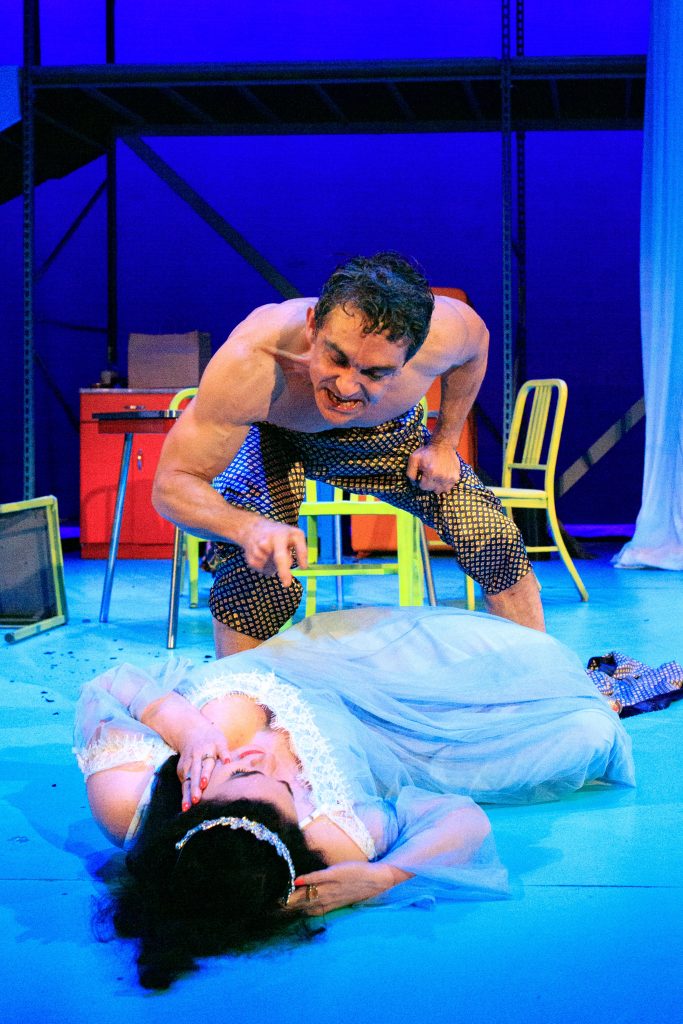
Over the course of the stifling summer, tempers flare, and Stanley becomes increasingly volatile, his bullying obsessive, while Blanche unravels – her displacement, discomfort and disorders adding to her breakdown. Stanley’s verbal and physical abuse becomes too much, leading to sexual abuse.

Todd D’Amour and Beth Bartley. Suzy Gorman photo.

This doomed power play leaves wreckage from a predator and prey situation, for Blanche appears like a frightened caged animal, her feminine wiles no longer effective.

Her final line, as she clings to a gentle doctor (David Wassilak) escorting her away: “I have always depended on the kindness of strangers” is shattering.

The cast portrays these indelible roles through a lens that is both rooted in Tennessee Williams’ dysfunctional framework and then Reed’s challenge to bring something different to their characterizations.

Some of the choices go outside the lines of our perceptions — with Todd D’Amour’s tightly wound abusive Stanley displaying pathological cruelty, Beth Bartley’s grittier desperate Blanche masking her many indignities, and Isa Venere’s younger Stella enabling and helpless. Think of it as an American horror story in retrospect.

As the local festival has amplified the past 10 years, Williams’ works are about loss in some way – of beauty, love, youth, identity and/or way of life, and this manifests through a range of characters developed during a career spanning 50 years, from the 1930s to his death in 1983 at age 71. After “The Glass Menagerie” made him a rising star in 1944, he opened 14 plays on Broadway from 1947 to 1980.

This is the first time that I really felt Williams’ own torment, of how humiliating it was for him to work with bullies like Stanley at the International Shoe Company during his formative years here, at a time when he was not free to express his sexuality and there was a very specific masculine ‘standard’ in society, not to mention another variation on his beloved sister Rose, mentally challenged at a time it was not understood. His own feelings poured out in these characters.

Looking back today, one sees societal changes colliding in Williams’ most famous work –the new South vs. the past, and women’s evolution regarding gender roles.

Post-war America, during this long, hot summer on Elysian Fields Street, adjacent to the French Quarter of New Orleans, we feel the heat. Sometimes, the atmosphere feels suffocating without any relief, while other times it feels like the tension is so thick and volatile, it could combust.

In that setting, the raw intensity seeps through, revealing harsh truths and emphasizes Williams’ timeless themes of illusion, trauma, power, control, and desire, and when reality hits head-on, how it changes expectations.

Beth Bartley and Isa Venere. Photo by Suzy Gorman.

After the play debuted to a thunderous 7-minute standing ovation on Dec. 3, 1947, it was adapted into an acclaimed Academy Award-winning film in 1951, with three of the four principals reprising their roles– Marlon Brando, Kim Hunter and Karl Malden, but Vivien Leigh as Blanche instead of Jessica Tandy.

Let’s face it, comparisons are inevitable, and “Streetcar” continues to be performed around the globe, never out of view. Andre Previn’s 1998 opera is part of Opera Theatre of St. Louis’ line-up next summer and a 2022 London play revival transferred to off-Broadway earlier this year for a limited run starring acclaimed Irish actor Paul Mescal, who won an Olivier Award as Stanley, and Spanish-British actress Patsy Ferran as Blanche.

The roles are demanding because they can easily go over-the-top into caricatures. After all, their indelible work has been exaggerated into comic archetypes in pop culture for decades.

Bartley’s panicked Blanche reunites with her sister, and Venere’s Stella, goes into caretaker mode, even when she learns that their family estate, Belle Rive in Laurel, Mississippi, has been lost to creditors.

Eric Dean White and Beth Bartley as Mitch and Blanche. Photo by Suzy Gorman.

A traumatized Blanche recalls taking care of their dying relatives without help. She says she has taken a leave of absence from teaching high school literature because her nerves are so frayed. Bartley and Venere share a comfortable chemistry.

Enter suspicious, coarse and crude Stanley. D’Amour isn’t imposing, nor is he articulate. With mumbled lines, he’s hard to understand and harder to relate to, and that’s unfortunate because it throws the balance off.

Stella, caught in the middle, must try to keep the peace between the warring factions, but she is ineffective. She and Stanley share a tempestuous sexual attraction, and his aggressive domestic violence is despicable (never acceptable, no matter what era, but being a batterer fits his offensive personality).

While Stanley seethes, Blanche makes herself at home, languishing in the bathtub, lounging in their shabby quarters, secretly drinking, and putting on her Southern Belle airs.

With her fanciful ways, she attracts an admirer — Stanley’s war buddy and poker-playing friend, Harold “Mitch” Mitchell (Eric Dean White), a bachelor who lives with his ailing mother. A raging Stanley will destroy that tender union after uncovering Blanche’s scandalous secrets back home.

Photo by Suzy Gorman

Trembling like an older, needier Judy Garland, whom she resembles, and acting delusional like the moody narcissistic Norma Desmond in “Sunset Boulevard,” Bartley is heart-breaking living out a fantasy life while she is clearly in decline. Now that we know more about mental health, it’s obvious Blanche has Histrionic Personality Disorder.

It’s a devastating portrait, and she also reveals a skilled manipulator, who has managed to survive using the theatrical tools in her toolbox.

As Mitch, White shows his sweet side, and two lonely people find comfort in each other. She’s flirtatious while she tells tall tales, and he’s smitten. When he confronts Blanche with what he’s discovered about her many liaisons and seductions in her hometown, though, his anger is visible – he’s done with being a nice guy.

The other supporting characters are lived-in examples of the area – top-shelf veterans Emily Baker and Isaiah DiLorenzo are their loud neighbors (and landlords) Eunice and Steve, who live upstairs. DiLorenzo and Wassilak are the two cast members that were in the festival’s award-winning 2018 “Streetcar” production.

Jeremiah King is a young collector, Cedric Leiba Jr. is another poker player, and Gwynneth Rausch is a nurse. Offstage, Jocelyn Padilla voices a flower collector. She also served as the intimacy coordinator. Jack Kalan was the fight choreographer.

Both Matthew McCarthy’s moody lighting design and Phillip Evans’ sound design are strong in this production, with dramatic illuminations and a discordant cacophony and jazzy-blues music adding to the atmosphere.

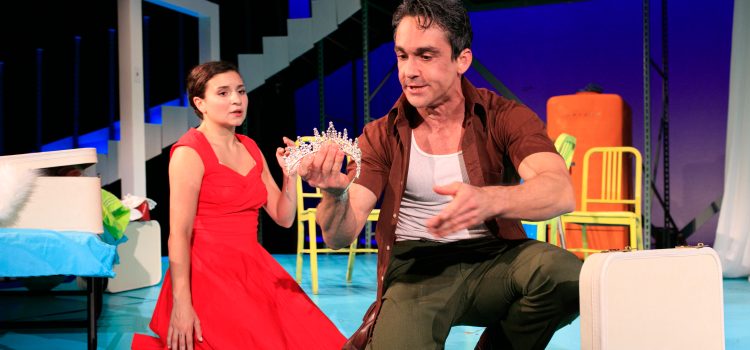
Two elements puzzled me. For a story that emphasizes claustrophobia in such small quarters, the set design did not appear so. Patrick Huber favored a nod to mid-century modern décor, with a neon palette more suited to another era or pre-school, that was stretched out on the Grandel stage.

Shevare Perry’s costume design for most of the cast worked fine, but Blanche’s daytime outfits appeared misfitting and Stella’s pants in the opening scene were jarring. Blanche’s flouncy nightgowns and bright red satin robe were just right.

Perhaps those choices were all in keeping with tossing out pre-conceived notions for this production.

Set design by Patrick Huber, lighting design by Matthew McCarthy. Photo by Suzy Gorman.

“A Streetcar Named Desire” maintains its power in Williams’ vivid poetic realism and lyrical dialogue that continues to captivate. While I prefer more emotionally charged character renderings, which was what Blanche aimed for, instead of a detached one like Stanley and Stella, these were choices made for a different take. In real life, D’Amour and Bartley are married.

Williams’ view of outsiders, of deeply flawed humans, continues to resonate some 80 years later, and that’s worth celebrating.

The Tennessee Williams Festival presents “A Streetcar Named Desire” Aug. 7 – 17 at the Grandel Theatre in Grand Center. For more information, visit www.twstl.org

Blanche DuBois (Beth Bartley). Photo by Suzy Gorman.

By Lynn Venhaus

Imagine the Grand Center Arts District almost a century ago as a glittery hub of movie theatres, dance halls, restaurants and hotels. Now be transported to those days through the lens of a young Tennessee Willams in a smart, thoughtful and charming presentation, “Life Upon the Wicked Stage.”

When the future Pulitzer-Prize winning playwright was finding his place in the world, as an aspiring writer in St. Louis, he was drawn to the moving pictures of the 1920s and 1930s. With stars in his eyes and a vivid imagination, he wrote short stories and one-acts where he wondered what it would be like to be famous and in show business.

Threading songs of vaudeville together in a stylish program featuring his theatrical slice-of-life one-acts “In Our Profession,” “The Magic Tower” and “The Fat Man’s Wife,” the Tennessee Williams Festival has taken a novel approach to storytelling while spotlighting Grand Center as a vibrant part of the St. Louis arts community.

This pitch-perfect cast is under the astute direction of Brian Hohlfeld, who helmed the masterful “The Glass Menagerie” in 2021 and excelled in radio play presentations “Something Spoken.”

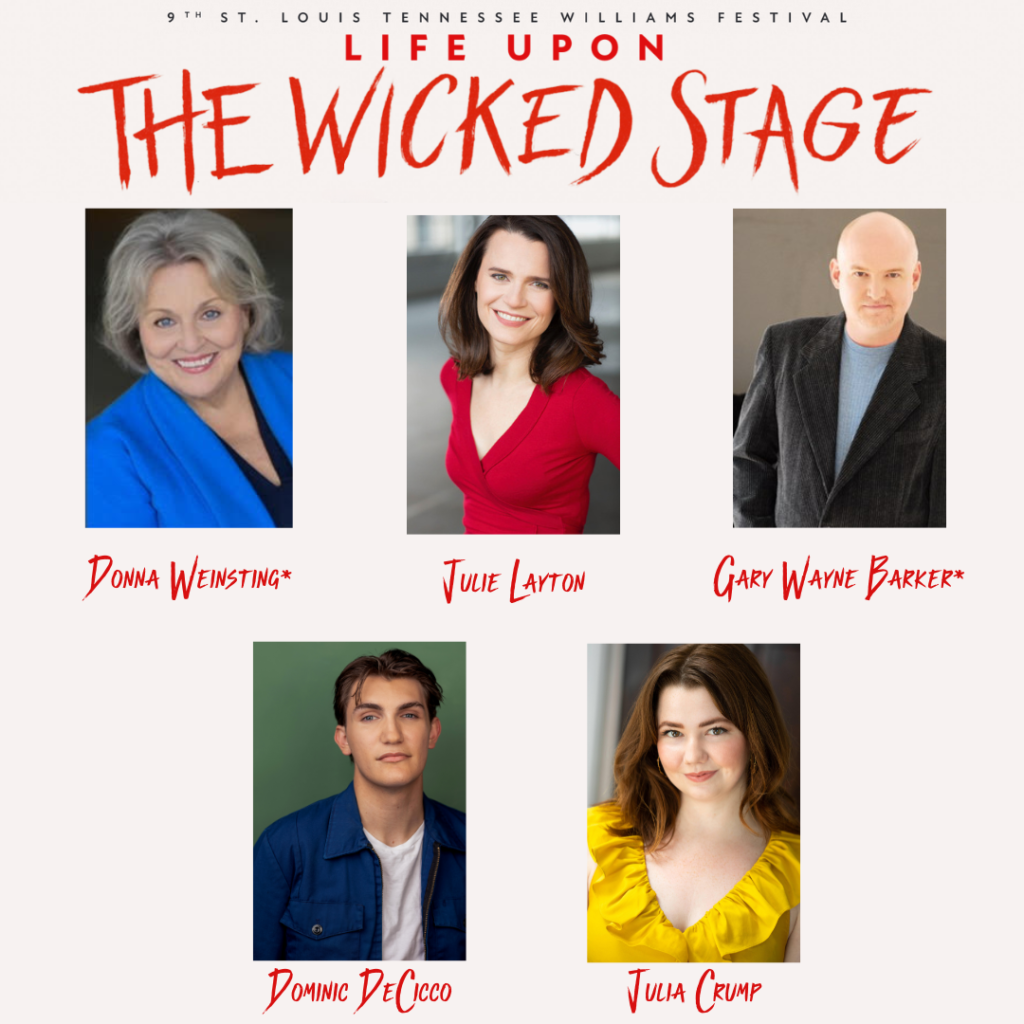
They are convincing in taking us back to a golden era: Julie Layton, Gary Wayne Barker, Dominic DeCicco, Julia Crump and Donna Weinsting appear like characters out of “Stage Door,” with lovely vintage outfits expertly assembled by costume designer Teresa Doggett.

Gary Wayne Barker, Julie Layton in “Life Upon the Wicked Stage.” Photo by Cynthia Prost.

During the past nine years, the festival has been built around a theme or location specific to Williams’ life in St. Louis and other influences on his world-renowned career. Dreamer Tom Williams must have felt at home among the avant-garde artists and smoky jazz clubs in midtown, identifying with the hopes and restlessness of showbiz folks.

One of the most enriching aspects of this unique local festival is showcasing his lesser-known one-act plays, and we can witness an artist developing his voice, and this collection is splendid.

That impact of the popular entertainment of his youth, and his desire to be a part of the glamorous life, is evident in these richly textured depictions staged simply in an intimate retro setting.

In these three curated one-acts, he has fashioned erudite backstage dramas about the nomadic life of touring performers, its toll on private lives, and a more jaded look at those with long-established careers.

In this trio, Julie Layton’s remarkable portrayals as Annabelle, during phases of the character’s life as an actress, is the person that connects them all. (Poetic license used in keeping the same female protagonist, but it works well).

As she slips into this woman’s particular periods with ease, she deftly conveys different emotional needs as the role dictates. Layton was part of two very popular festival works, the St. Louis Theater Circle Award-winner “A Lovely Sunday for Creve Coeur” and “Will Mr. Merriwether Return from Memphis?” in 2017, along with an earlier appearance as Annabelle in “The Rooming House Plays.”

Gary Wayne Barker, Julie Layton, Dominic DeCicco. Photo by Cynthia Prost.

In “In Our Profession,” Layton is a ditzy, needy ingenue who clings to an older gentleman, an exasperated Richard superbly embodied by Barker, who is not prepared for Anabelle’s overstepping her boundaries by pushing him to marry her after only one night together in St. Louis.

She sees him as a ticket to stability, her chance to get off the road. He tries to free himself from her clutches. Dominic DeCicco is his naïve neighbor Paul, whom she takes an immediately liking to, which complicates her plans. If only her desire for escape was that easy.

In the middle one, “The Magic Tower,” Annabelle is a lovesick newlywed who is married to a struggling starving artist, Jim, sweetly played by DeCicco. She’d like to shut out the world with a fantasy life in their dismal studio apartment but reality intrudes.

Weinsting is their landlord Mrs. Fallon, trying to collect overdue rent, and two friends also stop by with a proposal of their own — Crump is her chorus-girl pal Babe and Barker is Mitch, who is part of the touring company she left. Will she come down to earth?

Donna Weinsting. Photo by Cynthia Prost.

In the final work, “The Fat Man’s Wife,” Annabelle comes full circle as a cynical former actress who married a prominent producer, Joe (Barker). It’s New Year’s Eve, 1938, and she embodies a sophisticated Lauren Bacall-type, whose flirtation with a promising young playwright Dennis (DeCicco) during a party, spills over to a quarrel at home.

The hotshot stops by to try to convince her to run away with him while her husband is having a clandestine tryst. Will she opt for a tantalizing unknown adventure or her routine life of luxury?

This is the strongest of the three and all displays Williams’ keen psychological insight into dashed hopes and dreams, and mismtched couplings. They each offer fascinating different perspectives about gypsy entertainers and the uncertainties they face.

The Curtain Call Lounge, which is operated by the Fox Theatre next door, is a savvy venue choice, for with its bygone era décor, it harkens back to that time when vaudeville and moving pictures were still flourishing on that Grand Boulevard strip.

With a natural vocal delivery, Crump and Weinsting sing standards, with Weinsting distinctly presenting the showstopper “I’m Still Here,” Stephen Sondheim’s 1971 classic from “Follies” about the resilience of longtime chanteuses and their rollercoaster ride in show business.

Both Crump and Weinsting were part of the TWStL’s first season’s triumphant “The Rooming House Plays” in 2016 and Crump notably has made an impression in “You Lied to Me About Centralia,” “The Rose Tattoo,” and “Stairs to the Roof.”

Songs include “Skylark,” “My Blue Heaven,” “Side by Side,” “Pennies from Heaven” and “Some of These Days,” with esteemed music director Tom Clear accompanying on piano.

Spencer Lawton keeps things on point as the stage manager, and the entire effort revitalizes Williams’ earlier works in a most appealing way. The attractive production elements endear and the performances are irresistible.

This is a wonderful way to spend an afternoon seeing the legendary playwright develop his unmistakable style right here in St. Louis, which will hopefully deepen appreciation for his considerable gifts.

The cast of “Life Upon the Wicked Stage.” Photo by Cynthia Prost

The Tennessee Williams Festival St. Louis presents “Life Upon the Wicked Stage” in eight performances, at 1 p.m. and 4 p.m. Saturdays and Sundays, Aug. 10 and 17 and Aug. 11 and 18 at the Curtain Call Lounge, 521 N. Grand Blvd 63108. The bar is open during performances. Tickets are available through MetroTix. Parking is available at a discount in the Fox Garage (mention the festival for the sale price). For more information, visit www.twstl.org.

By Lynn Venhaus

Avarice, malice and mendacity. Those words that Tennessee Williams used so eloquently to imply grown-ups behaving badly in “Cat on a Hot Tin Roof” demonstrate his brilliant command of the English language. His way with words, referred to as “poetic realism,” is always the most enduring part of his staged plays.

“Living with someone you love can be lonelier than living entirely alone if the one you love doesn’t love you,” says Margaret, aka Maggie the “Cat.”

And thus, Williams struck an abundant gold vein with his reflections on loss and longing, and how we cling to illusions to survive.

In a delectable story of big drama, big money and big lies, Williams has tightly woven a web of deceit, a Southern Gothic excursion into an American dysfunctional family, 1950s style.

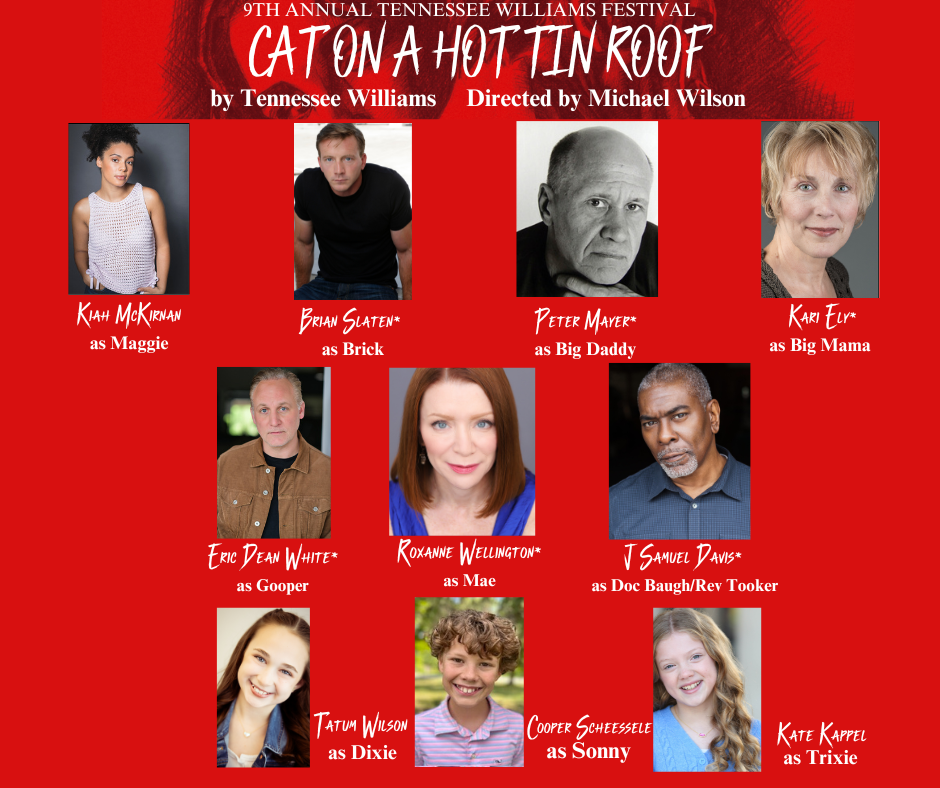
At the plantation home of cotton tycoon Big Daddy (Peter Mayer), the Pollitt family is gathered for his 65th birthday celebration. He and his wife, Big Mama (Kari Ely), think he’s free of cancer but the real diagnosis is dire. Things unravel from there, with secrets and revelations in rapid succession over the course of an evening.

The mood is a seething, simmering stew of sexual desire, spurned affection, power trips, greed, toxic relationships and lies they tell each other.

One of Williams’ most popular works, “Cat on a Hot Tin Roof” won the Pulitzer Prize for Drama in 1955 and has received multiple revivals on Broadway over the years, including a 2013 staging with Scarlett Johansson as Maggie, and a 1990 version with Kathleen Turner.

Times change, rendering some of his subjects quaint and old-fashioned, but his characters always make a lasting impression even when the social mores he highlights are no longer as consequential or controversial. With his unmistakable vivid writing, he captures a specific time and place like few have.

Williams turned his short story, “Three Players of a Summer Game,” into this classic gem, which supposedly was his personal favorite. The play was adapted into a 1958 film starring Elizabeth Taylor and Paul Newman that earned six Oscar nominations including Best Picture. Granted, they cast a big shadow.

Photo by Suzy Gorman.

In a unique approach by director Michael Wilson, the narrative unfolds as a deliberately theatrical setting.

He has created a prologue where local treasure J. Samuel Davis appears in the audience as “The Writer,” telling of a young Tom “Tennessee” Williams’ early years working at the International Shoe Company in St. Louis and taking the ‘stairs to the roof’ (the name of his first play) to write his short stories.

The ensemble, dressed in black as stagehands, brings the set pieces on stage, and the play begins as they return as the troubled Pollitts.

Not that I know this for certain, but Wilson appeared to pay homage to the way Williams worked with his longtime director-collaborator Elia Kazan, in what they described as “plastic theatre,” in which they heightened awareness of events to open the audience to more abstract ideas.

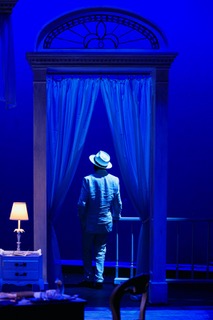
James Wolk’s evocative set seems dream-like on the fringes, and nightmarish in the claustrophobic bedroom. Williams did allude to ghosts, and people who lived there before – as evident in a hanging portrait. Lighting designer Matt McCarthy adds to the ethereal mood.

The epochal Maggie is a smart, scrappy, stunningly beautiful debutante who grew up poor and married into a family of money. She has been hardened by the in-laws’ power-grabbing chess games, but she has learned to swim in a sea of sharks and will fight for what she thinks she deserves.

Her handsome all-American football hero husband Brick has decayed into a numb alcoholic who doesn’t care about anyone or anything.

Reeling from his best friend Skipper’s suicide, Brick is consumed by despair, regrets and rumors. He appears repulsed by his wife, which seems to aggravate her desire for attention. His busybody family knows every detail of the childless couple’s personal life – or think they do.

Photo by Suzy Gorman.

In a long scene that establishes their marital discord, Maggie prattles on, trying to engage her distant husband in conversation, but we can tell this is going to be a fruitless attempt. Resembling a young Natalie Wood (who starred in Williams’ film adaptation “This Property Is Condemned), actress Kiah McKirnan rushed through her opening lines and was difficult to understand.

However, she gets more forceful in acts two and three as tension mounts, and she needs to make her moves to secure her future.

Wearing the provocative iconic white satin slip recreated by costume designer Teresa Doggett, and moving gracefully, McKirnan appears to be the archetypal Maggie.

Slaten’s Brick doesn’t say much or move like a former athlete, but with a broken ankle and one crutch, he capably navigates the bed-sitting room, his hobbled body betraying him, and his pain palpable.

His outbursts are well-timed for maximum impact. This is a difficult role because of calibrating external and internal conflicts, and while Slaten doesn’t look like the stereotypical golden boy turned disappointment, he delivers the intensity.

Once upon a time, the couple must have been like the idealized bride and groom figurines on top of a wedding cake. But those days are long gone – and they both realize it, which tinges this play with sadness.

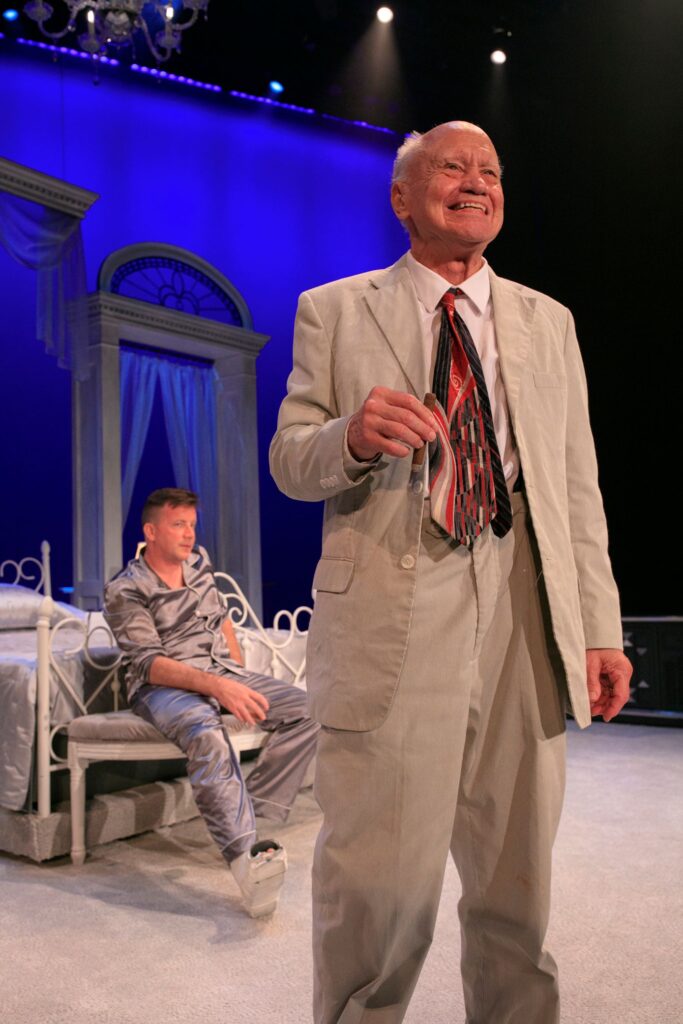
When Mayer arrives on stage as the bombastic Big Daddy, the show kicks into high gear. He throws his whole body into this role with impressive gusto. The interactions between the blustery braggart and his favorite son are the best in this production, and his profane rants against family members are welcome comic relief.

Surprisingly, he has tender advice for Brick: “One thing you can grow on a big place like this more important than cotton—is tolerance—I have grown it.” There appears to be real affection between the two.

Slaten and Mayer. Photo by Suzy Gorman

Mayer is matched in intensity by Kari Ely as Big Mama, adding more emotional depth than the role is written. It’s a pleasure to see such local legends play off each other on stage – as they are married in real life.

Ely, who has been unforgettable as tough women Martha in “Who’s Afraid of Virginia Woolf?”, Regina in “The Little Foxes,” and Violet in “August: Osage County,” all at the St. Louis Actors’ Studio, makes this role her own, bringing out the heartbreak and strength of a character that had been easily dismissed before. Their performances are the chef’s kiss of this production, and set the rhythm in motion.

Eric Dean White, whose consistent professionalism makes him a terrific addition to any local stage, is superb as the calculating, scheming Gooper, a slick lawyer who tag teams with his devious wife Mae, aka “Sister Woman,” to block out his brother Brick and Maggie from inheriting Big Daddy’s massive estate. His delivery is smooth and shrewd.

Roxanne Wellington nails the vindictive and insincere opportunist Mae, conveying an ugly sanctimonious streak. She must get this crack in: “He never carried a thing in his life but a football and a highball,” adding a fake laugh.

They are the indulgent parents of the notorious “no-neck monsters” that get on Maggie’s last nerve. Youngsters Kate Koppel, Tatum Wilson, and Cooper Scheessele are lively in their portrayals of three of their five children (and one is on the way).

Maggie displays some humor too, retorting: “Dixie, Trixie, Buster, Sonny, Polly! —sounds like four dogs and a parrot … animal acts at a circus.”

Photo by Suzy Gorman

Davis returns as a doctor and a minister in supporting roles.

Wilson, who is reverent regarding Williams, directed the acclaimed Cicely Tyson-starring “The Trip to Bountiful” on Broadway in 2013, and the subsequent film a year later. He benefits from a potent ensemble who understands the defining message is that people are better together than apart.

Unfortunately, in a play that talks so much about communication, the Grandel’s sound system was a hindrance on the left side, so I recommend sitting right or center. None of the performers are wearing microphones in that small thrust stage space. Sitting on the left side, in the seventh row, on opening night, I had difficulty hearing, especially because the cast is often staged in profile.

The sound issues have happened before at The Grandel, as a production of “Kinky Boots” last summer by Tesseract Theatre Company, was marred. This is always a shame because obviously much attention went into the production details. Perhaps sound designer Phillip Evans can crack the code.

In a conscientious retelling of one of Williams’ best works that emphasizes his compassion for misfits and fragile souls, we are reminded of his impact on storytelling and our broader view of the world.

In their ninth year, the Tennessee Williams Festival St. Louis furthers their commitment to celebrate the artistry and influence of the playwright who called St. Louis home during his formative years.

Photo by Suzy Gorman

The Tennessee Williams Festival St. Louis presents “Cat on a Hot Tin Roof” from Aug. 8 to Aug. 18 at The Grandel Theatre in Grand Center, with performances at 7 p.m. Thursday through Saturday, and Sunday matinees at 3 p.m. Tickets are on sale through Metrotix. Additional information and Festival event details can be found at twstl.org.

Post-show commentary will be conducted by Resident Scholar, Tom Mitchell, on Sunday, Aug. 12 and Thursday Aug.15.

Parking: Guest parking is available at the Fox Garage for $5 (3637 Washington Ave, St. Louis, MO 63108). Please, tell the attendant you are with the Tennessee Williams Festival to receive a discount.

“I’m determined to do it–and nothing’s more determined than a cat on a tin roof–is there? Time goes by so fast. Nothin’ can outrun it.” – Maggie, “Cat on a Hot Tin Roof,” Tennessee Williams

“The last eight seasons HAVE gone by so fast – it is hard to believe how much we have grown,” explains Carrie Houk, Tennessee Williams Festival St. Louis’ Executive Artistic Director. “This year we happily return to our home – Grand Center.  In addition to bringing you the play you have all been waiting for, we celebrate Grand Center Theatre District with a little song, a little dance, a little seltzer down the pants!  As Mrs. O’Fallon exclaims in The Magic Tower – “You show people!  Always putting on an act!” That’s what we do and we cannot wait to share our wares with you.”

This year’s TWStL will give center stage to Tennessee Williams’ Cat on a Hot Tin Roof directed by award-winning Michael Wilson at The Grandel Theatre in Grand Center August 8-18.

“I am thrilled to return to St Louis – the city which had such a profound impact on the life and work of Tennessee Williams – for its 9th Annual eponymous Festival to direct its centerpiece production, an all-new revival of his Pulitzer Prize winning and arguably most popular play, CAT ON A HOT TIN ROOF. “ – Wilson, Director

Michael Wilson is an American stage and screen director working extensively on Broadway, Off-Broadway, and at the nation’s leading resident theaters. He made his screen directorial debut with the 2014 Lifetime/Ostar television film adaptation of Horton Foote’s The Trip to Bountiful, which was nominated for two 2014 Emmy Awards and six 2015 NAACP/Image Awards. On Broadway, Wilson directed the 2013 Tony Award-winning revival of The Trip to Bountiful starring Cicely Tyson.

Other Broadway productions include the 2012 Tony nominated revival of Gore Vidal’s The Best Man (starring James Earl Jones, Angela Lansbury, Candice Bergen); the Tony nominated Best Plays Dividing the Estate; and Enchanted April. Internationally, he directed both parts of Tony Kushner’s Angels in America for the 1995 Venice Biennale. He directed the acclaimed Los Angeles premiere of the musical Grey Gardens: starring Betty Buckley and Rachel York for CTG/Ahmanson Theater at the Music Center.

This Pulitzer Prize winning drama follows the story of the Pollitts, a wealthy southern family whose history of greed and deception looms overhead as the imminent death of the family’s patriarch approaches. Siblings and spouses go head-to-head to secure the Pollitt fortune, weaving an overwhelming web of mistruths.

Post-show commentary will be conducted by Resident Scholar, Tom Mitchell, on Sunday Aug. 12 and Thursday Aug. 15.

“Life Upon the Wicked Stage / Celebrating Grand Center Theatre District – Then and Now” will be the focus for three one-act plays with music directed by former St. Louisan Brian Hohlfeld:

  • “In Our Profession”
  • “The Magic Tower”
  • “The Fat Man’s Wife”

Almost 100 years ago, what we now call Grand Center in St. Louis was the place to go for entertainment. Vaudeville was struggling but still popular…double-features (with live acts in between) played all day at The Fabulous Fox and Missouri theaters…music poured from dance halls and clubs…and the hotels were packed with the touring casts of last year’s Broadway’s hits.

Young Tom Williams soaked it all up.

In celebration of the history and the continuing charm of Grand Center, TWStL will present “Life Upon the Wicked Stage” taking place upstairs at The Curtain Call Lounge just steps from the bustling streets and locations where much of the action takes place.

“Like the rest of the theatre-going public, Tom was intrigued by what went on backstage, a world he would soon become familiar with, and imagined what the lives of the nomadic show-folk must be like. He brings them to life with affection and bemusement in these one-acts all set in the 1930s and portrays the ups and downs of a career in show-biz. In these early plays, Williams, still finding his voice, is clearly influenced by the plots and styles of the movies he would have seen on this very street, bringing the experience full circle,” explains Houk.

The theatrical but intimate setting of the Curtain Call is perfect for a program about show-biz. Like a “mini-jukebox musical,” “Life Upon the Wicked Stage” features songs from the period to evoke the era of Vaudeville and the type of entertainment Tom would have encountered in his Grand Avenue outings long, long ago…

Director Hohlfeld has been writing for feature films and television animation for over 35 years, with projects at Paramount, Universal, Warner Brothers, Tri- Star, Columbia, Disney, and Hasbro Studios. As a producer and writer, he has been nominated for four Daytime Emmy Awards and twice for a Humanitas Award, winning once for the Disney Jr. show he created My Friends Tigger and Pooh.

Hohlfeld started his career in St. Louis as an actor and playwright with the Theatre Project Company and the St. Louis Rep. For the St. Louis Tennessee Williams Festival, he directed the memorable on-site production of The Glass Menagerie as well as several one-acts onstage and as part of the radio series “Something Spoken,” in collaboration with Classic 107.3.

The following panels – which will further shed light upon the themes of the Festival – will take place at The Grandel.

  • Secrets of Tennessee’s Stage Directions
  • The Wicked Stage: 1930s Theatre and Performances in St Louis
  • Cat on a Hot Tin Roof: Revision upon Revision

Other Festival events include:

  • Reading of “Stella for Star” an adaptation of the first award-winning story by the young Tom

Williams curated by TWSTL Scholar Tom Mitchell

  • A Walking Tour: Grand Center Theatre District, Then and Now… led by Mitchell
  • Late Night Open Mic “Life Upon the Wicked Stage”

“Festival audiences are in-store for our best programming ever!” exclaims Board Chair Ted Wight.  “Cat on a Hot Tin Roof is one of Tennessee William’s most popular plays that will delight the audience with intriguing theater.”

Tickets are on sale through Metrotix. Additional information and Festival event details can be found at twstl.org.

‘A Streetcar Named Desire’ in 2018 won seven awards from the St Louis Theater Circle.

About the Festival

In 2014, award-winning producer, casting director, actor, and educator Carrie Houk produced Williams’ Stairs to the Roof with such success that the ongoing annual Festival was established. The Festival, which aims to enrich the cultural life of St. Louis by producing an annual theater festival and other artistic events that celebrate the artistry and life of Tennessee Williams, was named the Arts Startup of the Year Award by the Arts and Education Council at the 2019 St. Louis Arts Awards. In its eight iterations since 2016, the Festival has attracted thousands to its readings, panel discussions, concerts, exhibitions, and productions, has reached hundreds of young people through its educational programming, and has garnered 13 awards from the St. Louis Theater Circle and was recently nominated for a  St. Louis Theater Circle awards for Outstanding Performer in a Drama, Female or Non-Binary Role for 2023’s Suddenly Last Summer.

Tennessee Williams and Anna Magnani on a Roman holiday filming “The Rose Tattoo”

About Tennessee Williams

Born Thomas Lanier Williams III in 1911 in Mississippi, Williams moved to St. Louis at age seven, when his father was made an executive with the International Shoe Company (where the City Museum and the Last Hotel are now located). He lived here for more than two decades, attending Washington University, working at the International Shoe Company, and producing his first plays at local theaters. He credited his sometimes-difficult experiences in St. Louis for the deeply felt poetic essence that permeates his artistry. When asked later in life when he left St. Louis, he replied, “I never really left.” Most people are familiar with the famous works that have garnered multiple Pulitzer Prizes, Tony Awards, and Academy Awards, such as The Glass Menagerie, A Streetcar Named Desire, Cat on a Hot Tin Roof and Suddenly Last Summer. He also wrote hundreds of additional plays, stories, essays, and poems, many of which are only now seeing the light of day as his estate permits greater access. He is today considered by many leading authorities to be one of America’s greatest playwrights.

By Lynn Venhaus

Featuring an indelible performance by Naima Randolph as the traumatized Catharine Holly in an impeccably staged “Suddenly Last Summer,” this year’s Tennessee Williams Festival St. Louis’ centerpiece created a vivid atmospheric contemplation on mental health, homophobia, and the truth.

These topics often associated with the playwright are still thought-provoking in contemporary times, some 66 years after he wrote it in New York City and first presented off-Broadway in 1958 as a 90-minute one-act, double-billed with “Something Unspoken.”

One of Williams’ most haunting and lyrical works, “Suddenly Last Summer” is best known for the melodramatic 1959 movie starring three future legends –Elizabeth Taylor as Cathy and Katherine Hepburn as Violent Venable, both Oscar-nominated for their performances, and Montgomery Clift as Dr. “Sugar,” and those shadows loom large.

The screenplay, a Williams’ collaboration with Gore Vidal, differs from the play in opening it up to show scenes at the beach, and other scenes, characters, and subplots were added. This being through a ‘50s lens, they had to remove explicit references to homosexuality. It’s a different world today in terms of taboos, although people still use each other, and issues raised persist.

Lisa Terejo by Suzy Gorman

However dated the material, director Tim Ocel doesn’t downplay the inferences. He is a master at interpreting Williams’ artistry, making it relatable for a modern audience.

Along with producer Carrie Houk, a master caster and the festival’s executive producer, he has put together a powerhouse ensemble, who brings to life many dark elements of human nature – including greed, deception, delusion, desire, desperation, and dominance.

Just as he did in a stunning “A Streetcar Named Desire” in 2018 and meticulous “The Night of the Iguana” in 2019, both at The Grandel, Ocel’s retelling is fresh and visionary, emphasizing the horror of a tragic death that is framed like a fascinating murder mystery and gripping courtroom drama.

Oh, what a tangled web we find the Venable family in when they reinforce lies over truth. At the domineering matriarch’s mansion in the affluent Garden District of New Orleans in 1936, brain surgeon Dr. Cukrowicz, aka “Dr. Sugar,” is summoned there to review her niece’s case.

Through her wealth, the bitter Violet hopes to keep Cathy institutionalized and have a lobotomy performed, so that a scandalous family secret won’t be exposed. She has kept her in a private mental asylum since she returned from Europe.

Violet’s cherished son, Sebastian, a closeted gay poet, has been brutally killed while on vacation in Spain, accompanied by his cousin instead of Mommie dearest. The circumstances are unclear, and no one believes Cathy’s horrific account. Locked away against her will, she has been further victimized by her treatment. Now, she can not only reveal the ugly truth but be spared more damage.

Randolph is spellbinding as she recounts the details of a summer holiday at Cabeza de Lobo to those assembled, led by an always stellar Bradley Tejeda as Dr. Sugar, who skillfully guides the proceedings as he gently probes a vulnerable and broken Cathy.

Cathy knows she is being manipulated, and after being injected with a truth serum, weaves a riveting account of being a decoy to attract young boys for the predatory Sebastian’s exploitation. She was used just like they were, but instead of earning sympathy, she’s trying to be suppressed by everyone.

Photo by Suzy Gorman

Dr. Sugar’s not entirely convinced Cathy is insane, but at stake is a large donation to his psychiatric research from Mrs. Venable.

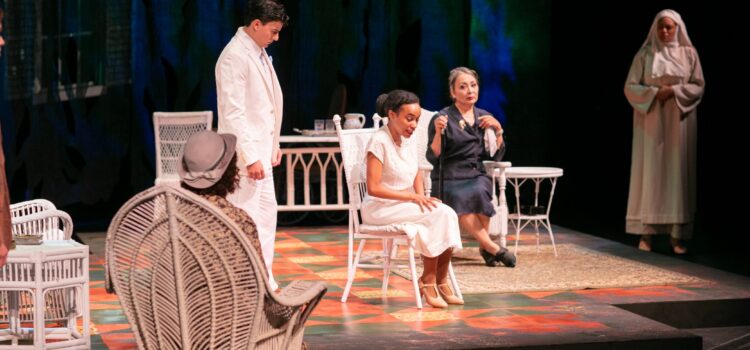
Tejeda, brilliant as Tom in 2021’s outdoor “The Glass Menagerie” and comical as Alvaro in last year’s “The Rose Tattoo,” is cool and calm in a crisp white suit, fully aware of the evil in the Venable’s jungle-garden, where his interrogation takes place.

Lisa Tejero deftly commands the stage as the controlling Mama Bear who makes her late husband’s family feel small in her presence, ready to pounce on those she considers duplicitous and weak. She will do whatever it takes to preserve her son’s legacy, even if it is fiction.

Clad in black and using a cane as a scepter, Tejero displays cunning in all interactions, as well as impatience and aggravation when things don’t go her way. She also conveys selfishness, an appalling lack of civility as a socialite and less-than-gracious hostess.

Cathy’s mother and brother, Mrs. Holly and George, eager to not have anything interfere with the $100,000 inheritance bequeathed by Sebastian in his will, are trying not to act anxious, but their true colors emerge. Rengin Altay as the fretful in-law, and Harrison Farmer, as her ambitious son, comfortably service Williams’ script in these stock characters.

In other supporting roles are Bethany Barr as Violet’s accommodating assistant Miss Foxhill, and Ieshah Edwards as the not-so-compassionate Sister Felicity.

Of course, Williams would name characters Venable and Felicity, as he mines his life for a sad exploration of horrible human behavior.

Photo by Suzy Gorman

The production team has enhanced the Southern gothic moods, with captivating lighting design by Matthew McCarthy, evocative set design by James Wolk, and polished period costume design by Dottie Marshall Englis. Henry Palkes’ original music score, this third for TWSTL, adds so much texture to these productions.

What is missing in Williams’ play is the protagonist, and it is up to the cast to flesh out Sebastian, and all his contradictions, through the filters of his mother and cousin. The actors conjure up graphic images through their ability to craft a portrait through language.

Many of Williams’ tortured soul characters face moral dilemmas, either as prey or predator, to survive in an unforgiving world. Randolph’s unnerving portrait of a victim shatters the norms, which is what Williams so often does.

While her performance leaves a lasting impression, that’s not the only memorable aspect. The nuance and craft have left their mark on this eighth annual festival, which continually surprises with new ways and different angles to Williams’ storytelling.

The Tennessee Williams Festival St. Louis presents “Suddenly Last Summer” Sept. 7 – 17, with Thursday through Saturday performances at 7:30 p.m. and Sunday matinees at 3 p.m. in the Catherine B. Berges Theatre at COCA, University City. For more information, visit www.twstl.org

Photos by Suzy Gorman

Bradley Tejeda by Suzy Gorman

By Lynn Venhaus
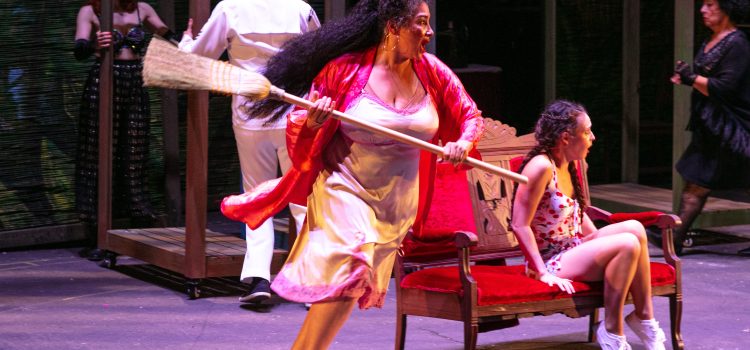
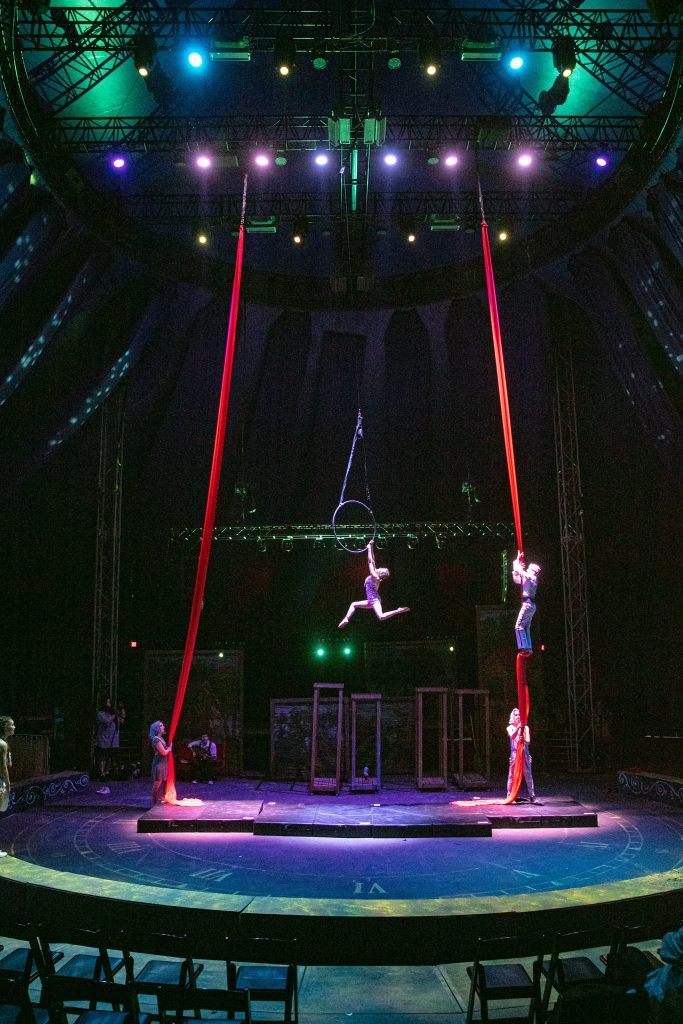
Emphasizing romantic symbolism along with its operatic life and death themes, an unconventional production of Tennessee Williams’ “The Rose Tattoo” is cleverly staged inside a Big Top ring, re-imagined as an Italian circus — complete with aerialists, animals, singers, musicians, and clowns.

The 1951 play is this year’s centerpiece for the seventh annual Tennessee Williams Festival St. Louis, one of my favorite not-to-be-missed events since 2016.

The Mississippi-born playwright, who spent his formative years in St. Louis, came to prominence in the 1940s, and in the decades following, cemented his place as one of the most significant playwrights of the 20th century. The festival celebrates his influence and art through his enduring works and early writings.

Always a detailed retrospective with speakers, education components, readings, films, tours and more, the fest’s fresh looks have a way of bringing out further insights during its 10-day schedule.

A bold and risky move, the exaggerated flourishes — while cinematic and reminiscent of Fellini fantasies — aren’t necessary to convey the heart of the matter, which is love in a time of chaos and the push-pull of grief, desire, and hope.

While the amusing accoutrements add to the production’s overall uniqueness, Williams’ poetic flair remains at center stage.

The nimble ensemble slips into the colorful characters that are part of an Italian immigrant community on the Mississippi gulf coast.

Williams’ play, which premiered in Chicago in 1950, became his fourth New York produced piece in 1951 after “The Glass Menagerie,” “A Streetcar Named Desire” and “Summer and Smoke.” It is his only one to win a Tony Award for Best Play.

Williams adapted the three acts for the movie in 1955, perhaps best known as the vehicle for which Anna Magnani won an Academy Award. The film was nominated for eight Oscars, also winning for cinematography and art direction.

Magnani, once described as the “volcanic earth mother of Italian cinema,” was a friend of the playwright. He wrote the part for her, considered her “the most explosive emotional actress of her generation.” But, thinking her English wasn’t up for the stage, she declined – and four years later, it was her first English language film role.

The earthy Serafina Delle Rose is an indelible heroine – suffering but not silent. Maureen Stapleton originated the role on Broadway, and Maria Tucci (1966), Mercedes Ruehl (1995) and Marisa Tomei (2019) played the tempestuous widow in subsequent revivals.

Under the Big Top, professional actress and academic Rayme Cornell commands the space as the fiery Sicilian seamstress.

Let’s face it, as written, both she and love interest Alvaro could be construed as antiquated over-the-top ethnic stereotypes. Chalk it up to dated material from 70 years ago. So, she and Bradley J. Tejeda walk a tightrope in dialect delivery.

Serafina is a complicated woman. Williams knows how to set up pain and passion, that’s for sure. Happily married to virile truck driver Rosario, Serafina discloses she is pregnant with her second child and that a rose tattoo appeared on her breast the night of conception, albeit temporary.

We never see Rosario but learn he ran black-market cargo for the mob underneath bananas and cheated with the delectably-named Estelle Hohengarten (Rachael Fox, on horseback). His life ends badly – shot, then his 10-ton truck crashes and bursts into flames.

Plunged into mourning, miscarriage, and misery, Cornell glowers, wails, and rages. In a well-worn pink slip, she deteriorates as a bitter recluse, refusing to face reality. A shrine to the Blessed Virgin Mary gives her sustenance.

You can’t tell by intermission, but “The Rose Tattoo” is a departure from Williams’ signature dramas. Considered more light-hearted, it still has his emotional whiplash.

Deep sorrow eventually yields to comedic interplay when a chance flirtatious encounter is life-changing.

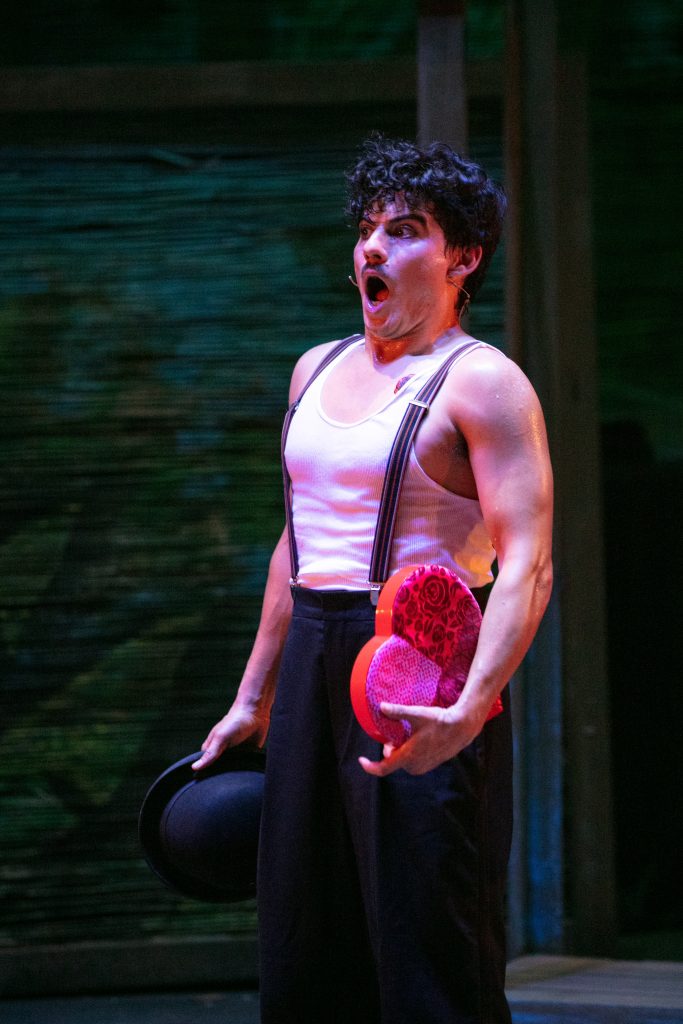
That’s when the charming Tejeda swoops in as Alvaro Mangiacavallo, a buffoonish truck driver, and the play blossoms in his presence.

Tejeda, a New York-based actor and Yale School of Drama alum, has made his mark on local stages – first at St. Louis Shakespeare Festival in “Love’s Labour’s Lost” in 2019 and then the radio plays when the festival pivoted in 2020.

Last year, he brought both a sweetness and restlessness to Tom Wingfield, an extraordinary performance in the triumphant production of “The Glass Menagerie” outside at the Central West End apartment where Williams once lived.

Bradley J Tejeda as Alvaro. Photo by Suzy Gorman.

As Alvaro, he demonstrates his prowess in physical comedy, channeling Charlie Chaplin in looks and expressions, acrobatic in slapstick and darting around the set. It’s a splendid performance, injecting the play with a needed boost of vitality.

He easily won over the audience, especially when he joked that his last name Mangiacavallo means “eat a horse.”

“It’s a comical name, I know. Maybe two thousand and seventy years ago one of my grandfathers got so hungry that he ate up a horse. That ain’t my fault,” he said, eliciting laughter.

Serafina describes him as having a clown’s face on her late husband’s body. Even with their skilled performances, Cornell and Tejeda do not spark any sensuality.

But the young couple revealing an attraction that blooms into love does. Valentina Silva, memorable in Metro Theater Company’s “Last Stop on Market Street” last winter, plays Serafina’s smart, sheltered, and neglected 15-year-old daughter, Rosa Delle Rose, with youthful elan.

Stifled by her mother during the three years since her father’s accident, Rosa rebels, wanting to go out and have some fun. You feel her yearning for freedom, eager to take flight.

She is infatuated with a wholesome sailor, Jack Hunter, who was immediately smitten with the vivacious teen at a school dance. Oliver Bacus, who is quickly making a name for himself on local stages, seen last month in The Midnight Company’s seismic “Rodney’s Wife,” eloquently delivers Williams’ distinct dialogue.

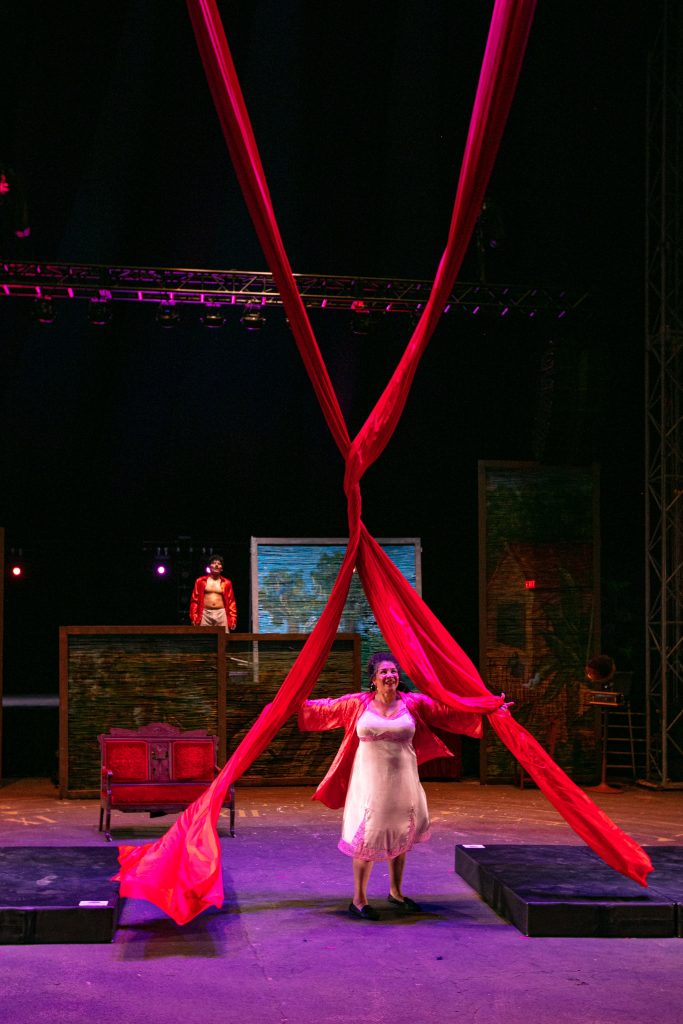
Their innocent love story is a catalyst for Serafina to change, to let go, and that is illustrated by aerialists Annika Capellupo, Natalie Bednarski, Sage McGhee and Maggie McGinness of On the Fly Productions, with choreography by owner Jason Whicker. It is a lovely, graceful sight — but does this illuminate or distract?

The aerialists use satiny scarlet ribbons of fabric, which is the shade of a shirt Serafina is sewing, requested by her husband’s mistress to give her “wild like a gypsy” beau on their one-year anniversary, which is the last day he’s alive.

So much of Williams’ writing deals with symbols – consider the rose itself, with red buds a sign of romance, love, beauty, and courage. Here, it is a symbol of new beginnings too.

Understanding Williams’ dreams and desires has always been part of the fest, and the focus on Italy explores how visiting the country, soon after his first wave of success, was restorative to his psyche.

Giddy with fleeting joy and discovery of his new happy place, Williams dedicated his “love-play to the world” to his partner, Frank Merlo, an Italian American from New Jersey who served in the U.S. Navy during World War II: “To Frankie in Return for Sicily.” They met in 1948 in Provincetown, Mass., and spent 15 years together. Merlo died of lung cancer at age 43 in 1963 while Williams lived to age 71, passing in 1983.

The supporting cast captures the local flavor, and the quirky people he immortalized on paper.

Assunta, Serafina’s friend with psychic abilities, is played by Carmen Garcia with an air of mystery. She senses that “something wild is in the air.” Holly Maffitt is the “Strega,” considered a traditional witch, because the fates are part of this narrative.

Tyler White, a lively presence whenever on The Black Rep’s stage, is delightful as part of the neighborhood’s gossipy hens, as is Julia Crump as perky busybody Bessie.

Harry Weber is both teacher Miss Yorke and Father De Leo, the community’s strict moral gatekeeper.

The always fun to watch Mitchell Henry-Eagles enlivens the proceedings as an accordion-playing salesman and a doctor. Tony Viviano occasionally pops up to sing.

They serve as a Greek chorus of sorts, observing, moving in and out. Director David Kaplan likes to keep the players in motion, engaging the audience, and breaking the fourth wall.

Kaplan is well-versed in Williams’ aesthetic as one of the preeminent interpreters of his works. He is the curator and co-founder of the Provincetown Tennessee Williams Festival, now in its 17th year.

St. Louis experienced his perceptive vision in the dynamic “The Rooming House Plays,” four short plays he staged in the Stockton House, a local Victorian mansion, for the 2016 inaugural fest.

Williams’ works on longing and loss always move me more when we are in close quarters or exposed to a different canvas, so that I can feel the lyricism, make a specific connection. So, the cavernous Big Top was a challenge, but the cast’s immersion helped considerably.

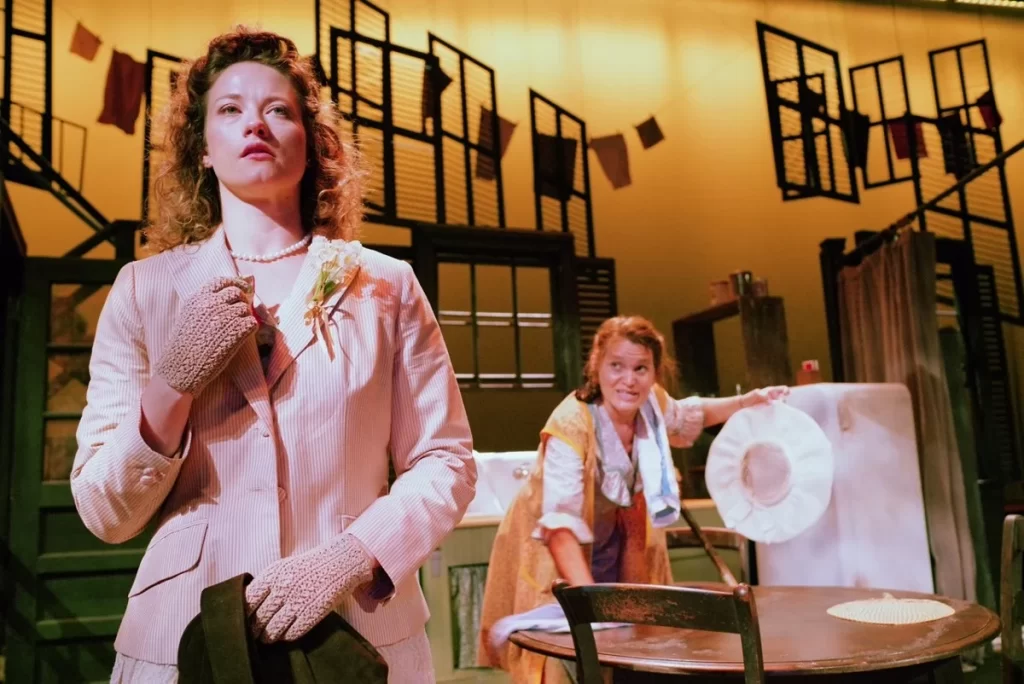
James Wolk’s innovative set brought out an entirely new dimension, using multiple frames and shutters to stand in for doors and windows. The versatility punctuated the scenes, and the cast, adept at quick changes, did not lose a beat. Obviously, well-rehearsed, and efficient work by all.

The sound, however, had some issues Friday but was worked out. Designer Nick Hime engineered the sound and operated the board.

Jess Alford’s lighting design made use of dusky twilight in the early evening. Michele Friedman Siler’s thoughtful costume design differentiated the characters, and she effectively mixed textures.

This daring production has many moving parts, including four goats and a horse, which is difficult to pull off smoothly, and the esprit de corps is apparent. Stage Manager J.M. Bock and assistant stage manager J. Myles Hesse kept it flowing smoothly.

Williams was fascinated by the ebb and flow of time, which is a major component here. Between 1948 and 1959, he had seven plays produced on Broadway. This early one, however, is one of the few happy endings – because they found love in a hopeless place.

The Tennessee Williams Festival St. Louis presents “The Rose Tattoo” Thursdays through Saturdays at 7:30 p.m. and Sundays at 3 p.m. through Aug. 28 at The Big Top in Grand Center, 3401 Washington Avenue. For more information and tickets, visit www.twstl.org, and for a complete schedule of events.

The schedule includes a free showing of “The Roman Spring of Mrs. Stone,” based on Williams’ novel which he adapted for the screen in 1961, starring Vivien Leigh and Warren Beatty. It will take place at 8 p.m. on Wednesday, Aug. 24, at St. Ambrose Church on the Hill, 5130 Wilson Avenue.     

A Bocce Tournament starts at noon on Saturday, Aug. 27, at the Italia-America Bocce Club, 2210 Marconi Avenue.