
By CB Adams
Tennessee Williams Festival St. Louis has lavished Branden Jacobs-Jenkins’ “Appropriate” with an extraordinary amount of artistry, care and, yes, love. Director Benny Sato Ambush and company expend all three in service to the script, then leave it to the audience to decide what to carry away. A production this accomplished leaves the play nowhere to hide.
What emerges is a play about the corrosive nature of secrets and what happens when excavation produces more questions than certainty. The horrifying photographs discovered among a dead father’s possessions provide the catalyst, while foreshadowing something still more disturbing and revelatory. What they unleash within his surviving family becomes the play.
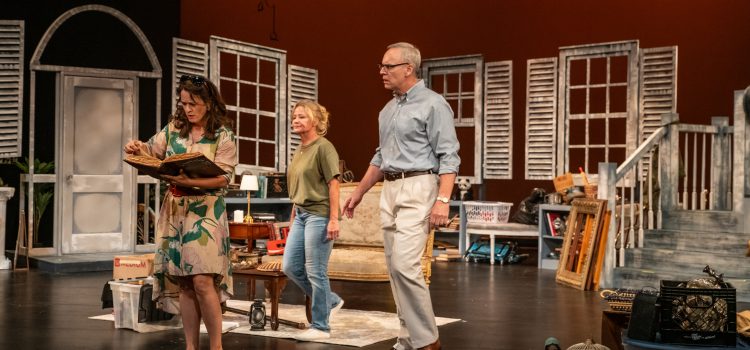
The Lafayettes, a white Southern family, have gathered at their late father’s crumbling Arkansas plantation house to empty it, sell it and presumably get on with their lives. Scenic and lighting designer Matthew McCarthy’s cluttered house looks in need of repair—hell, beyond repair—much like the family temporarily occupying it. The place is simultaneously familiar and foreign to them, an ambiguity Ambush mines throughout.
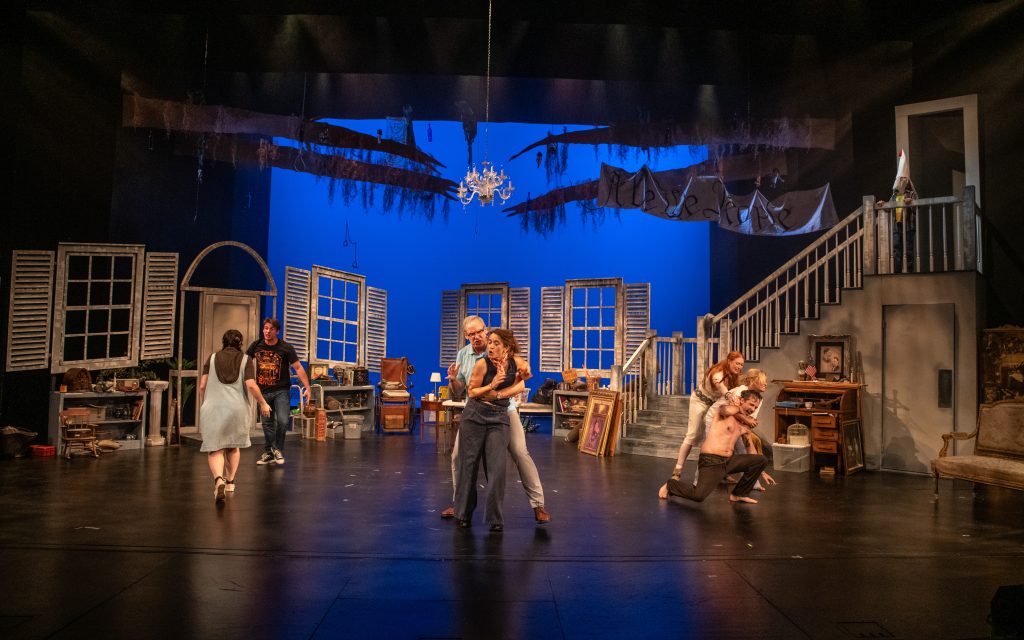
So does his exceptional ensemble. This is a family of old wounds and long memories of psychic bruises, and Jacobs-Jenkins knows where to press. Eventually everyone presses back. Fights are notoriously difficult to stage convincingly, and fight choreographer Shaun Sheley engineers this one so that accumulating hostility makes violence feel inevitable even as its eruption arrives as a shock. Bodies collide, years of grievance turn physical, and the production lands one of its most difficult moments.
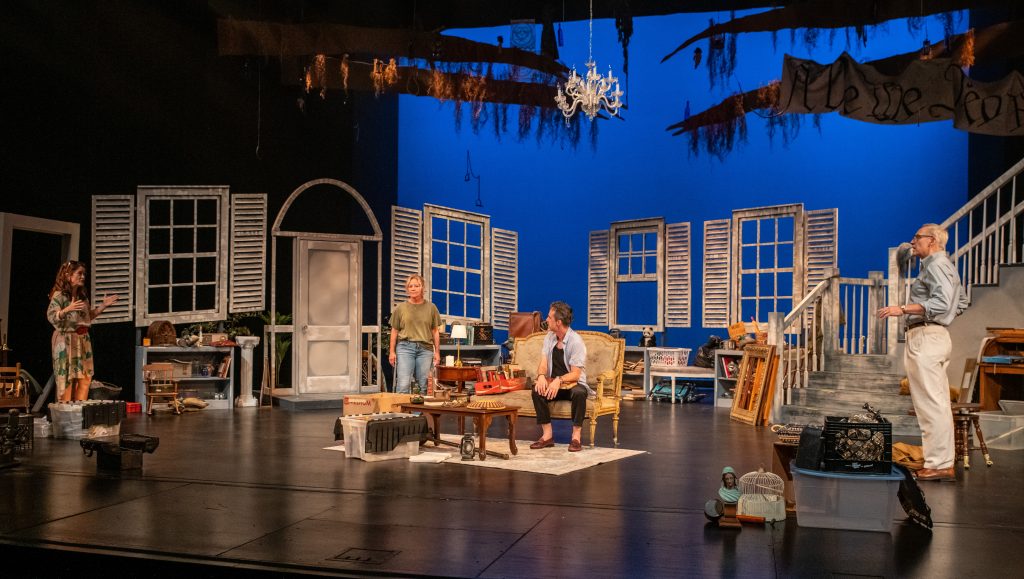
Jilanne Marie Klaus makes Toni’s anger intelligible while allowing its ugliness full rein. Her grievances have calcified into an understanding of sacrifice, loyalty and what she believes she is owed. By Toni’s climactic declaration, Klaus has made clear how she arrived there, even as Toni reveals how far those grievances have carried her.
Joel Moses spends significant stage time bare-chested as Franz attempts to lay bare the man he believes he has become. Moses turns a faux-baptism and Franz’s pleas for understanding into blistering acts of self-revelation. Then Frank’s past resurfaces, forcing the family to contend with the man he was and the man claiming to stand before them now.
Michael James Reed begins with Bo’s recognizable silhouette—the tightly wound New Yorker juggling a threatened career, wife and children while hoping to dispatch his family obligations—and gradually opens him to something more vulnerable. In the aftermath of the violence, Reed brings Bo both home and not-home, allowing believable tears to reveal another dimension of a man whose competence has carried him only so far.
The women reveal different constructions of womanhood as the house strips away first impressions. Lizi Watt tightly unwinds Rachael scene by scene, moving the exasperated wife and in-law toward grievances and moral claims she fully earns. Maggie Newstead-Adams lets River arrive in full crunchy-granola, woo-woo New Age space-cadet mode, then deftly reveals deeper waters beneath the family’s assumptions about softness, youth and femininity.
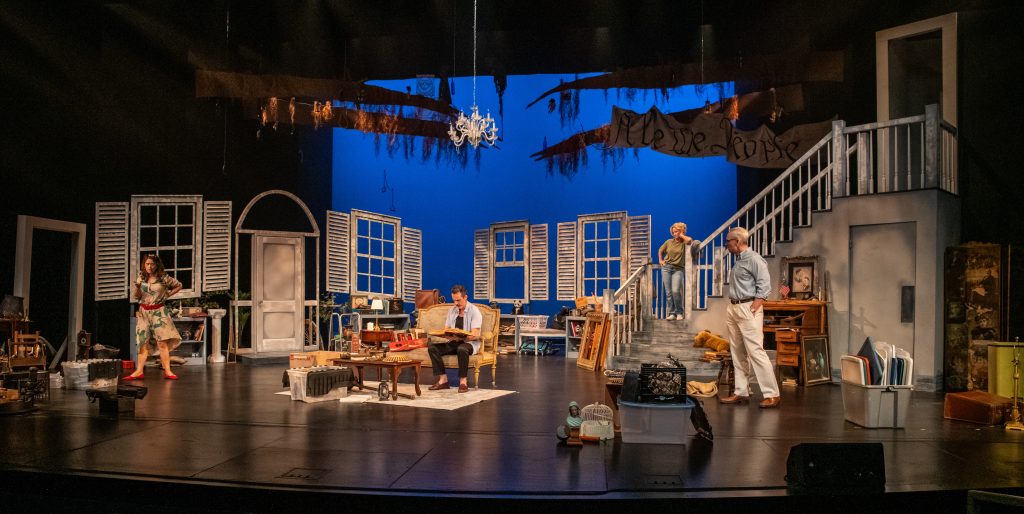
The next generation is already carrying things forward. Braden Phillips makes Rhys a kind of put-upon horny Boo Radley opposite Ainsley Hammond’s naive teenage-rager Cassidy, while the youngest child innocently supplies one of the evening’s consequential revelations about the grandfather none of them fully knew.
Then there is the album.
It looks almost like a revered family Bible, a hefty, timeworn volume expected to preserve births, deaths and generations of Lafayette history. Instead, its pages contain photographs documenting horrific racial violence against Black Americans. Ambush stages this grotesque inversion of a family keepsake almost as another character, introducing the book with a held moment in a spotlight. It passes from revulsion to fascination and something more uncomfortable: prurience, that human impulse to gawk, the same one that slows traffic as drivers looky-loo through their windows at a fatal crash.
The album gets deliberately submerged in an attempt at erasure, then returns waterlogged to center stage as the family contemplates what it might fetch. The progression grows more grotesque: horror becomes curiosity, human suffering becomes collectible, and finally someone puts a price on it.
There is something here of Tim O’Brien’s “The Things They Carried,” his collection of linked stories about the physical and emotional burdens carried by soldiers in Vietnam. Call these the things they inherited: the Lafayettes return carrying old grievances and discover their dead father has left them much more to carry.
That inheritance also explains why “Appropriate” belongs at a Tennessee Williams festival. Jacobs-Jenkins has acknowledged borrowing from Williams and other American dramatists. That is the Tennessee Effect at work: inheritance put back to work, absorbed, altered and extended. “Appropriate” might be what happens when Big Daddy from “Cat on a Hot Tin Roof” is already dead and buried—or is he? The patriarch is gone, but the house, the inheritance, the secrets and the damage remain.
Sound designer Mary Robinson’s insistent cicadas and ghostly whispers make the world beyond the house almost another presence. Ambush opens that world further in his culminating historical montage, where Robinson’s sound carries us from the secrets of one Southern family into the larger history of racial violence in America. Different people in the audience inevitably receive that history from different starting points. The production can put the same history before everyone. It cannot make that history equally remote—or equally revelatory—to everyone.
Walking toward the parking lot afterward, one woman supplied perhaps the most appropriate curtain line:
“I feel like we need a debrief.”
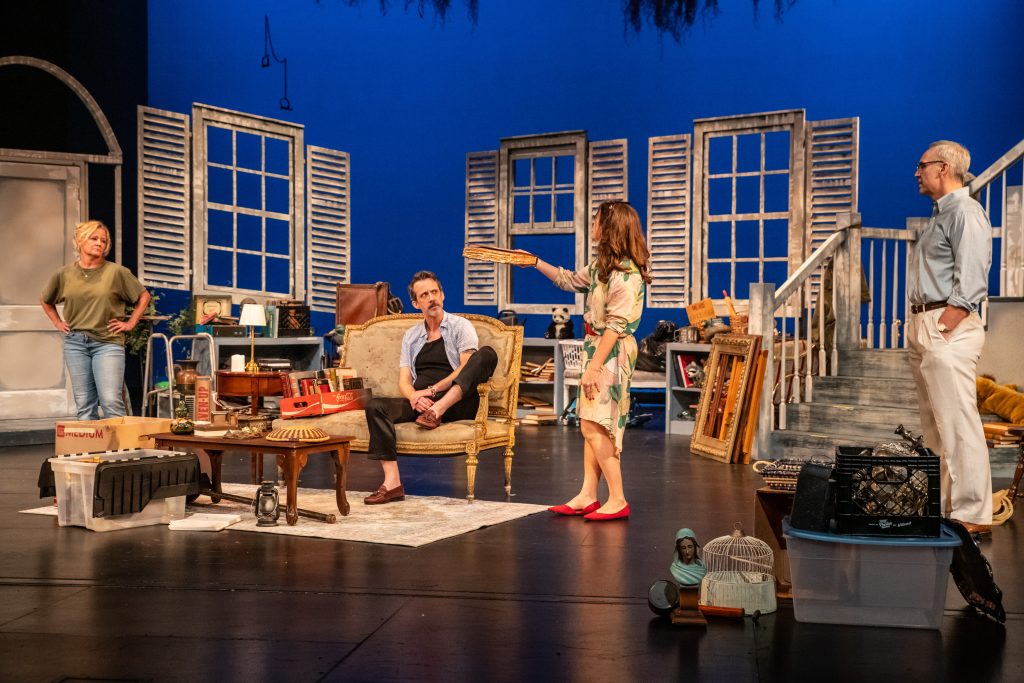
Tennessee Williams Festival St. Louis’s production of Branden Jacobs-Jenkins’ “Appropriate” runs through Sept. 27 at the Catherine B. Berges Theatre at COCA, with remaining performances Sept. 25–27. For tickets and more information, visit twstl.org.
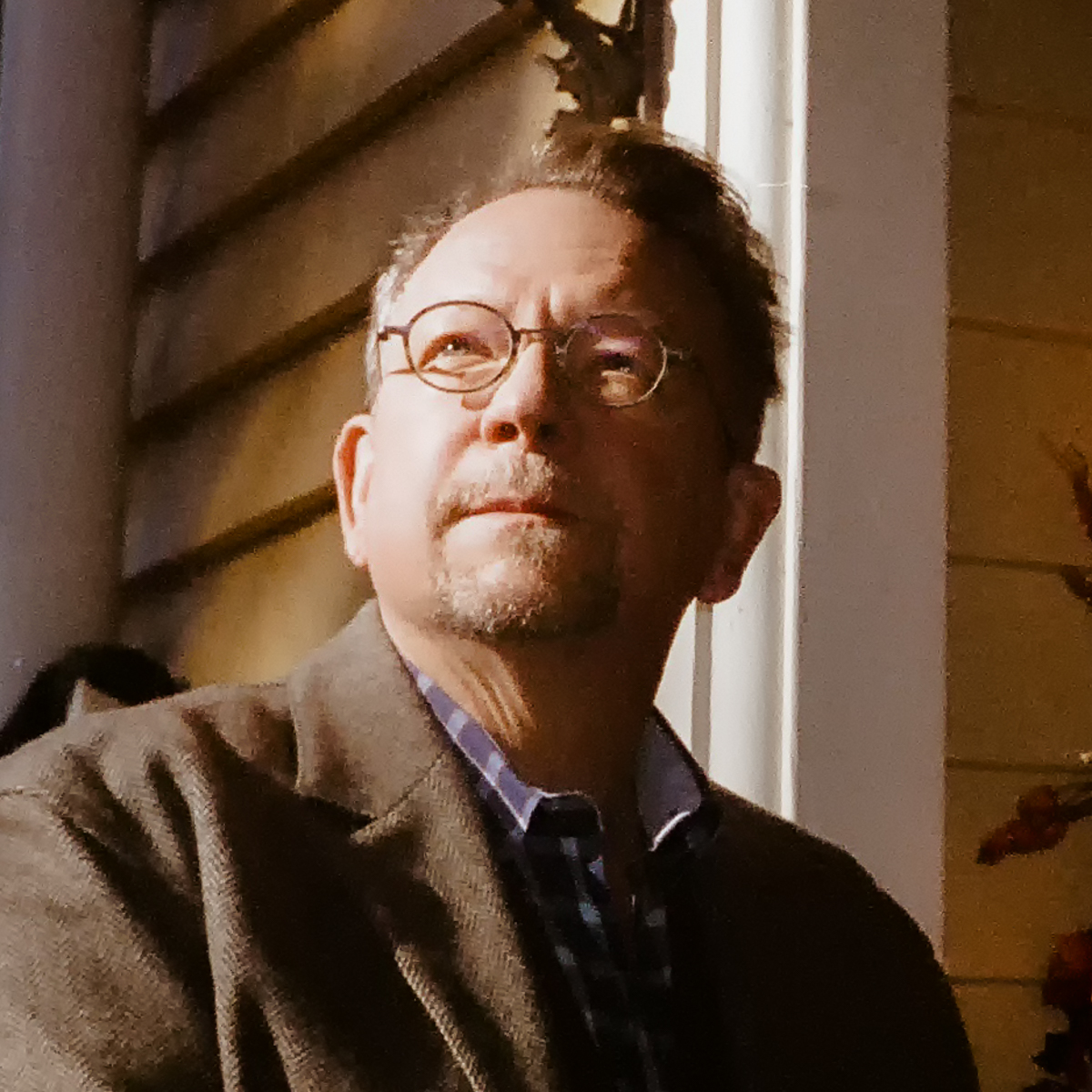
CB Adams is an award-winning fiction writer and photographer based in the Greater St. Louis area. A former music/arts editor and feature writer for the St. Louis Globe-Democrat, his non-fiction has been published in local, regional and national publications. His literary short stories have been published in more than a dozen literary journals and his fine art photography has been exhibited in more than 40 galley shows nationwide. Adams is the recipient of the Missouri Arts Council’s highest writing awards: the Writers’ Biennial and Missouri Writing!. The Riverfront Times named him, “St. Louis’ Most Under-Appreciated Writer” in 1996.