By CB Adams

Tennessee Williams Festival St. Louis has lavished Branden Jacobs-Jenkins’ “Appropriate” with an extraordinary amount of artistry, care and, yes, love. Director Benny Sato Ambush and company expend all three in service to the script, then leave it to the audience to decide what to carry away. A production this accomplished leaves the play nowhere to hide.

What emerges is a play about the corrosive nature of secrets and what happens when excavation produces more questions than certainty. The horrifying photographs discovered among a dead father’s possessions provide the catalyst, while foreshadowing something still more disturbing and revelatory. What they unleash within his surviving family becomes the play.

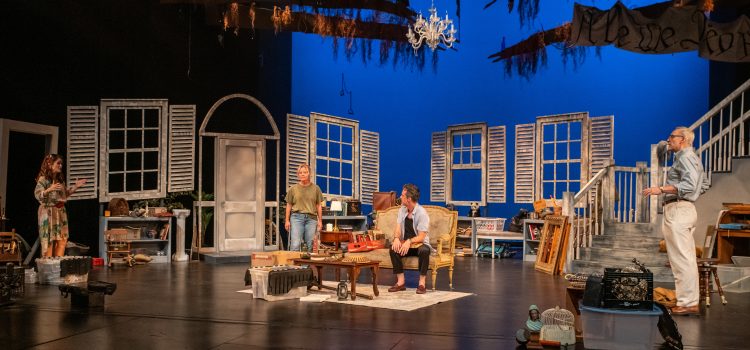
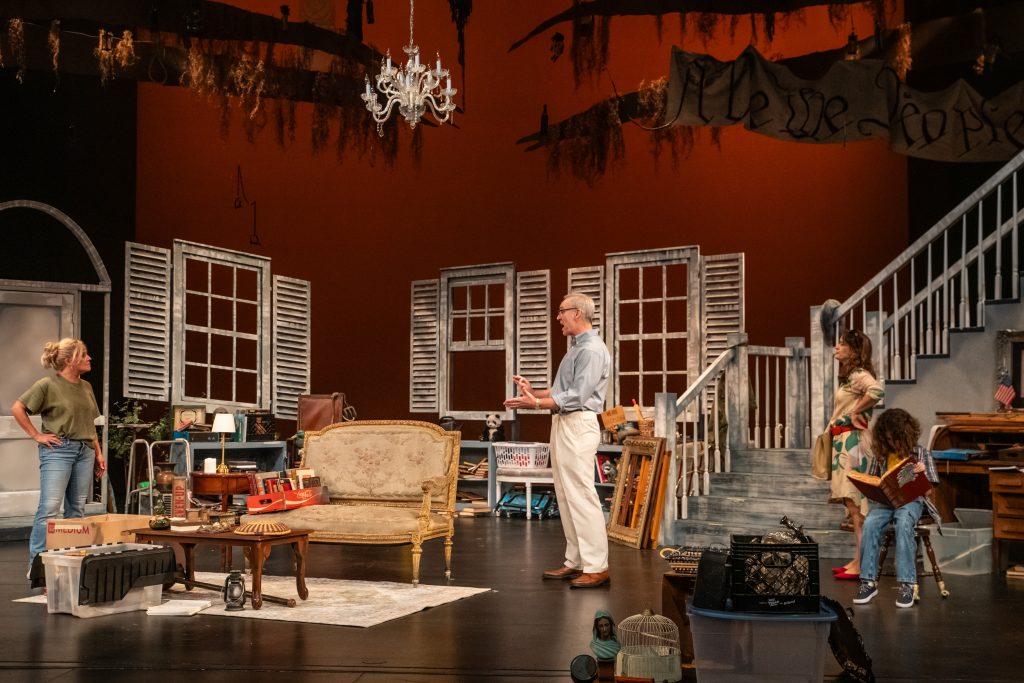
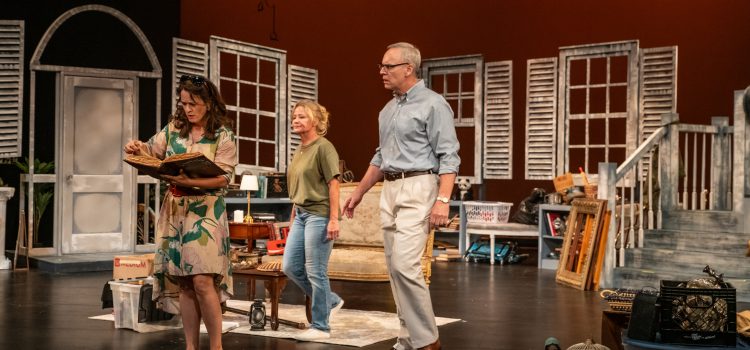
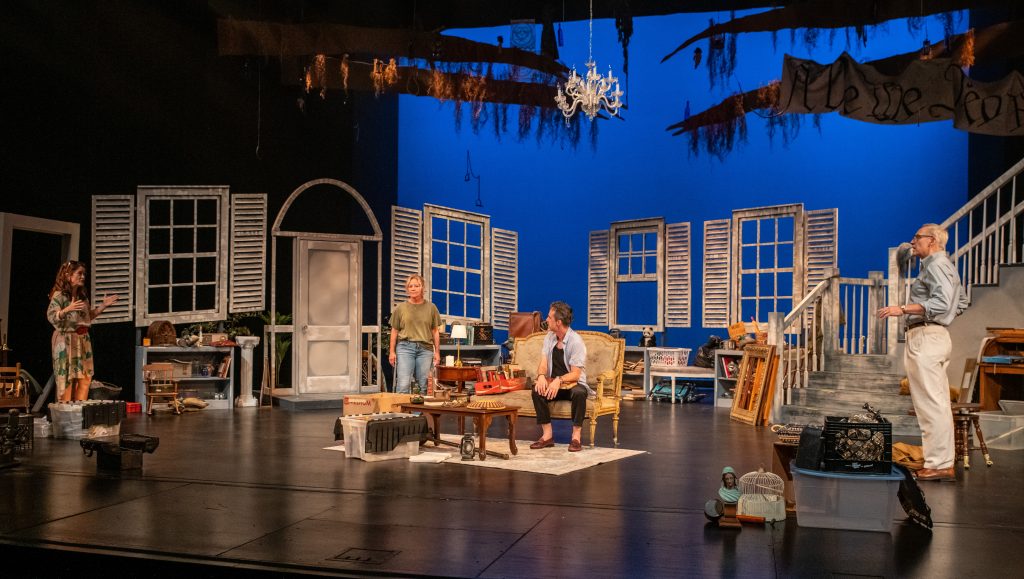
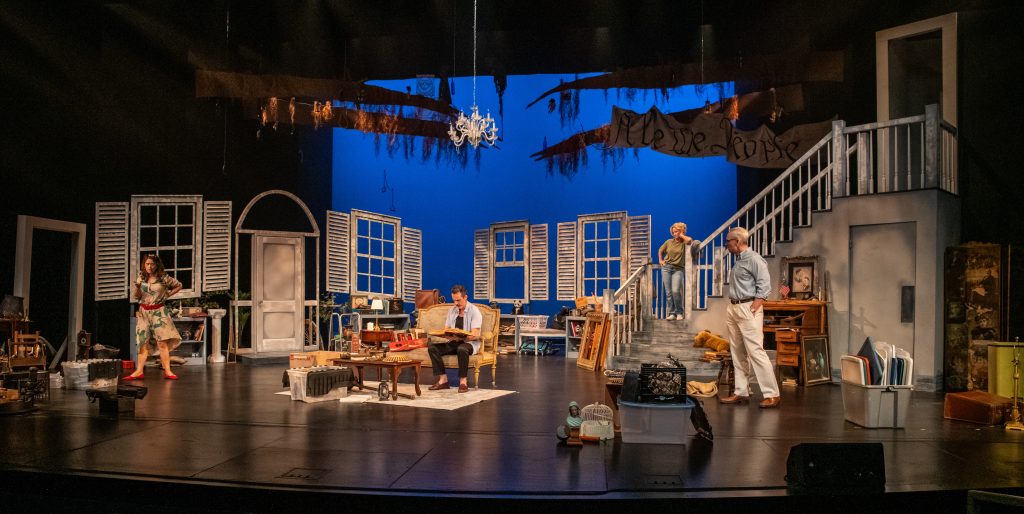
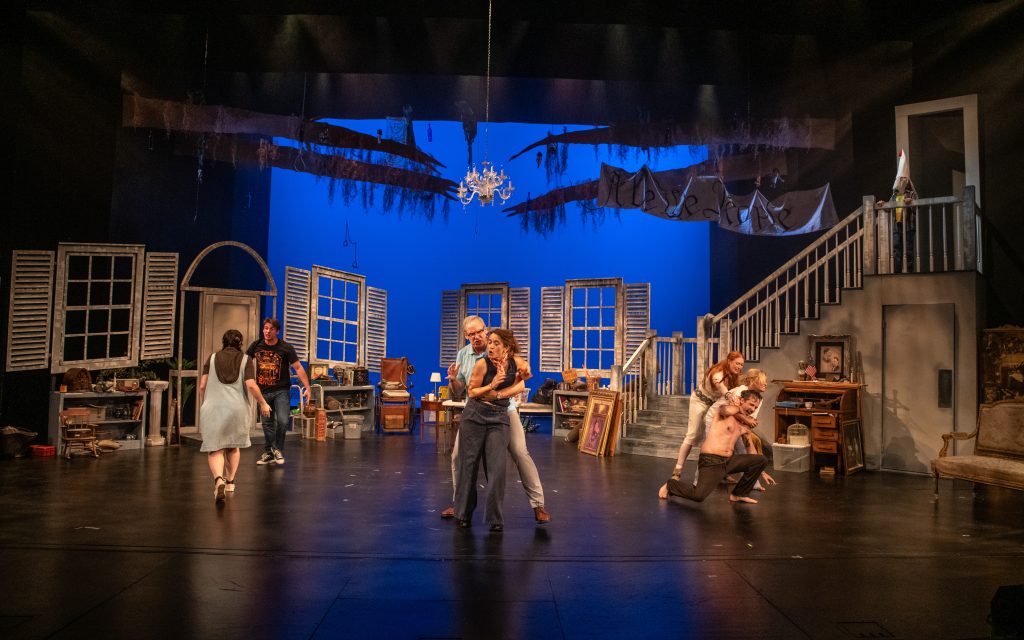
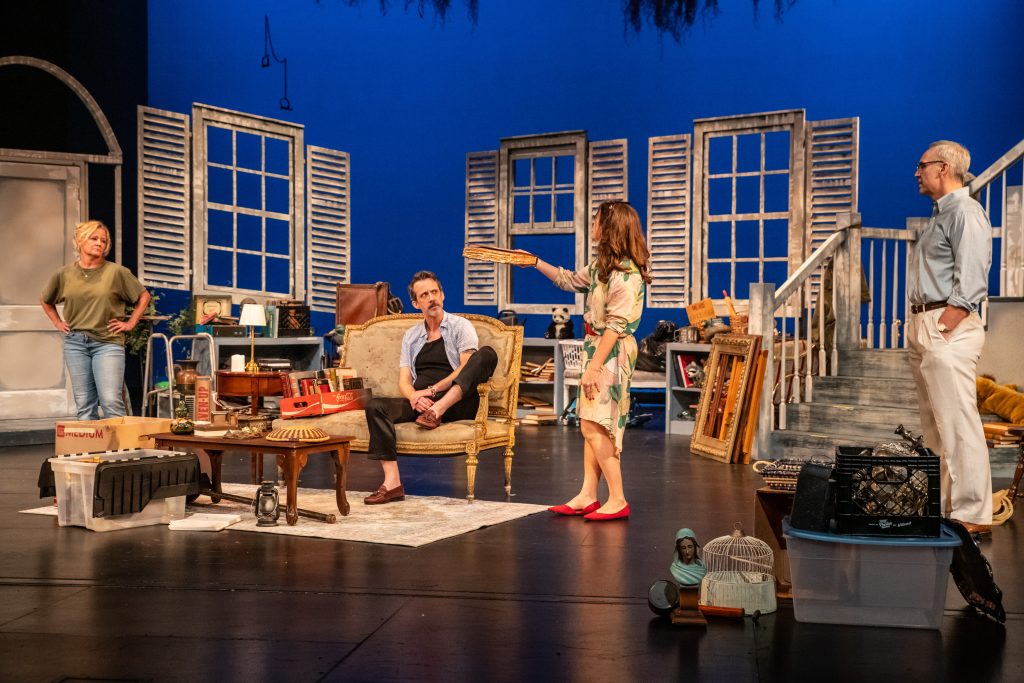
The Lafayettes, a white Southern family, have gathered at their late father’s crumbling Arkansas plantation house to empty it, sell it and presumably get on with their lives. Scenic and lighting designer Matthew McCarthy’s cluttered house looks in need of repair—hell, beyond repair—much like the family temporarily occupying it. The place is simultaneously familiar and foreign to them, an ambiguity Ambush mines throughout.

So does his exceptional ensemble. This is a family of old wounds and long memories of psychic bruises, and Jacobs-Jenkins knows where to press. Eventually everyone presses back. Fights are notoriously difficult to stage convincingly, and fight choreographer Shaun Sheley engineers this one so that accumulating hostility makes violence feel inevitable even as its eruption arrives as a shock. Bodies collide, years of grievance turn physical, and the production lands one of its most difficult moments.
Jilanne Marie Klaus makes Toni’s anger intelligible while allowing its ugliness full rein. Her grievances have calcified into an understanding of sacrifice, loyalty and what she believes she is owed. By Toni’s climactic declaration, Klaus has made clear how she arrived there, even as Toni reveals how far those grievances have carried her.

Joel Moses spends significant stage time bare-chested as Franz attempts to lay bare the man he believes he has become. Moses turns a faux-baptism and Franz’s pleas for understanding into blistering acts of self-revelation. Then Frank’s past resurfaces, forcing the family to contend with the man he was and the man claiming to stand before them now.

Michael James Reed begins with Bo’s recognizable silhouette—the tightly wound New Yorker juggling a threatened career, wife and children while hoping to dispatch his family obligations—and gradually opens him to something more vulnerable. In the aftermath of the violence, Reed brings Bo both home and not-home, allowing believable tears to reveal another dimension of a man whose competence has carried him only so far.

The women reveal different constructions of womanhood as the house strips away first impressions. Lizi Watt tightly unwinds Rachael scene by scene, moving the exasperated wife and in-law toward grievances and moral claims she fully earns. Maggie Newstead-Adams lets River arrive in full crunchy-granola, woo-woo New Age space-cadet mode, then deftly reveals deeper waters beneath the family’s assumptions about softness, youth and femininity.
The next generation is already carrying things forward. Braden Phillips makes Rhys a kind of put-upon horny Boo Radley opposite Ainsley Hammond’s naive teenage-rager Cassidy, while the youngest child innocently supplies one of the evening’s consequential revelations about the grandfather none of them fully knew.

Then there is the album.

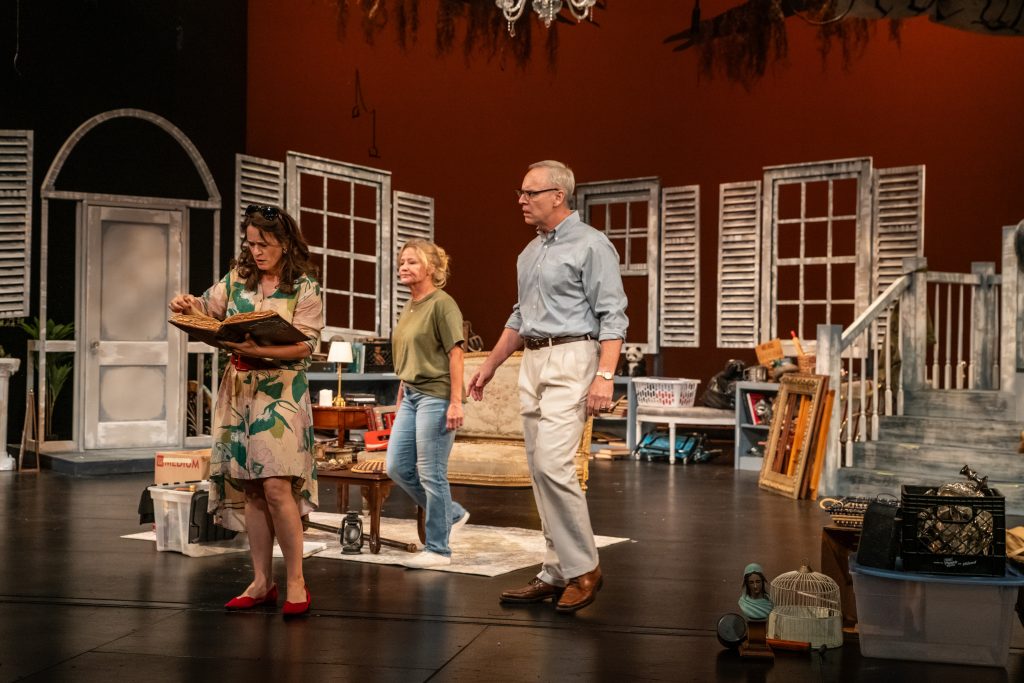
It looks almost like a revered family Bible, a hefty, timeworn volume expected to preserve births, deaths and generations of Lafayette history. Instead, its pages contain photographs documenting horrific racial violence against Black Americans. Ambush stages this grotesque inversion of a family keepsake almost as another character, introducing the book with a held moment in a spotlight. It passes from revulsion to fascination and something more uncomfortable: prurience, that human impulse to gawk, the same one that slows traffic as drivers looky-loo through their windows at a fatal crash.

The album gets deliberately submerged in an attempt at erasure, then returns waterlogged to center stage as the family contemplates what it might fetch. The progression grows more grotesque: horror becomes curiosity, human suffering becomes collectible, and finally someone puts a price on it.
There is something here of Tim O’Brien’s “The Things They Carried,” his collection of linked stories about the physical and emotional burdens carried by soldiers in Vietnam. Call these the things they inherited: the Lafayettes return carrying old grievances and discover their dead father has left them much more to carry.

That inheritance also explains why “Appropriate” belongs at a Tennessee Williams festival. Jacobs-Jenkins has acknowledged borrowing from Williams and other American dramatists. That is the Tennessee Effect at work: inheritance put back to work, absorbed, altered and extended. “Appropriate” might be what happens when Big Daddy from “Cat on a Hot Tin Roof” is already dead and buried—or is he? The patriarch is gone, but the house, the inheritance, the secrets and the damage remain.

Sound designer Mary Robinson’s insistent cicadas and ghostly whispers make the world beyond the house almost another presence. Ambush opens that world further in his culminating historical montage, where Robinson’s sound carries us from the secrets of one Southern family into the larger history of racial violence in America. Different people in the audience inevitably receive that history from different starting points. The production can put the same history before everyone. It cannot make that history equally remote—or equally revelatory—to everyone.

Walking toward the parking lot afterward, one woman supplied perhaps the most appropriate curtain line:

“I feel like we need a debrief.”
Tennessee Williams Festival St. Louis’s production of Branden Jacobs-Jenkins’ “Appropriate” runs through Sept. 27 at the Catherine B. Berges Theatre at COCA, with remaining performances Sept. 25–27. For tickets and more information, visit twstl.org.

By Lynn Venhaus

With its complex characters, fractured family dynamic and multi-layered storyline, Branden Jacobs-Jenkins’ explosive drama “Appropriate” has much to unpack.

At their peak, a powerhouse local cast takes us on an unsettling, unforgettable journey, for their characters aren’t prepared for all the emotional baggage that will spill out. Well-cast and well-rehearsed, this production showcases intense immediate realism.

Dark secrets will be revealed, forever shaking the family. Think of it like a bandage being ripped off an open wound – repeatedly. The atmosphere is combustible – a marvel of sight, sound, imagery and tension under Benny Sato Ambush’s direction.

The cicadas are loudly buzzing on a hot, muggy summer night in rural southeast Arkansas when three Lafayette siblings converge to settle their late father’s estate. The clutter in the decaying plantation home is as profound as the anxiety as they prepare for an estate sale.

This is not a warm family reunion – interactions are awkward, bitter and contentious. This play, first performed in 2013 and then off-Broadway a year later, was revived in 2023 to much acclaim. Its power is intact, reminding us of systemic racism and unconscious bias when it’s hard to confront as legacy.

The Lafayette siblings – Jilanne Marie Barnes, Joel Moses, and Michael James Reed, with Lizi Watt holding photo album.

Wayward son Francois “Frank” (Joel Moses), who now calls himself “Franz,” is seeking redemption after years of addiction and bad behavior. He drove there from Portland with his eccentric young fiancé, River (Maggie Newstead-Adams).

Stressed-out eldest sister Antoinette “Toni” (Jilanne Marie Barnes) considers him toxic and won’t extend an olive branch. Brother Beauregard “Bo” (Michael James Reed), an attorney like their father, is expecting to take charge like he always does, but Toni is the executor. They all bicker incessantly.

Bo’s wife, Rachael (Lizi Watt), and their two precocious children, Cassidy (Ainsley Hammond) and Ainsley (Aviv Giancola-Poremba), came from New York City, thinking of this as an educational trip. Toni’s troubled son Rhys (Braden Phillips) is present. These are flawed relatives with enough intergenerational trauma for an eight-episode limited series.

“Appropriate,” with all the intentional meanings of that word, will delve into race, identity, and historical legacy. As the patriarch’s despicable past is discovered, the evidence can’t be ignored or denied. How family members deal with a photo album of graphic lynchings and other disgusting emblems of a vicious white supremist adds to the uncomfortable territory.

The playwright, who has won two Tony Awards, a Pulitzer Prize for Drama, and an Obie Award, has a natural command of how people interact and converse. His dense dialogue combines caustic wit with raw pain and sharp contemporary insight – and yes, phrases will shock.

Not a fun family reunion.

Joel Moses’ Franz is this deeply vulnerable bundle of insecurities, trying to show the better person he has become, but his siblings can’t let go of their hurtful memories about his decadent past and their resentful feelings. Unlocking a pitiable black sheep as only he can, Frank is another masterful performance by one of St. Louis’ finest actors.

Joining him in top-tier reliability is Michael James Reed, who is, without fail, always at the top of his game. He provides interesting layers to the complicated Bo, Ivy League-educated and successful.

At first, it feels like Bo checked out of caring about his family a long time ago. His main concern is the corporate ladder, and he appears to be the family “fixer.” Money-centered, he’d monetize the dad’s hateful artifacts in a heartbeat. But he’d love to distance himself from this tarnished past; he just wants to recoup all the funds he spent caring for dear old dad and get back to Manhattan.

Jilanne Barnes’ Toni is tired. Exhausted by life, her short straw, and trying to fix broken things that can’t be repaired, she is unpleasant for 95% of her stage time. That is heavy for an actress, and Barnes’ meets the challenge. Toni sacrificed and deeply cared for her father. She refuses to sully his memory.

Shrill and spiteful, she has alienated most everyone there, especially Bo’s Jewish wife Rachael. First impressions on the sister-in-law are that she’s a typical affluent status-conscious mother, trying to control the outside world’s influence on her children.

Estate sale preparation not going smoothly.

Lizi Watt displays Rachael’s buttons that Toni keeps pushing, with antisemitic name-calling, and it gets ugly — “August: Osage County” nasty. Fight choreographer Shaun Sheley’s work is noteworthy.

Most surprising is Maggie Newstead-Adams’ nuanced portrait of River. She presents herself as New Age and is derided for her ‘hippy-dippy’ qualities. Assuming she’s a stereotype, she proves herself to be wise beyond her 23 years and compassionate. Newstead-Adams’ poise among all the other acclaimed talent is impressive.

Spiritually, she is most attuned to the ghosts haunting this old plantation. Mary Robinson’s impeccable sound design announces the spirits’ eerie presence, as the family talks about the two graveyards on the property – one white, one with black slaves (without headstones).

When the third generation finds disturbing relics of their bigoted grandfather, the sins of the past erupt. As the program points out: “Walls remember what a family chooses to forget.”

By society’s standards, Daddy — Ray Lafayette — was a highly successful, highly educated man. He lived in Washington D.C. for a time, during a lauded legal career, and chose to return to the ancestral homestead, with thoughts of turning it into a bed-and-breakfast.

What secrets does Daddy have in that photo album?

Toni and Frank both refer to his mental deterioration, but the moral decay is something the family is loathe to address. But they start to peel back time, remembering behaviors. An all-white cast, dealing with the reality of historical racism, examines how the past haunts the present, and the bigger picture that it represents.

The outstanding artisans connected with this complicated production have crafted a stunning, crumbling Southern Gothic setting. The ambience is immediate, and so are the bad vibes. Matthew McCarthy’s richly appointed set design, complimented by Mikhail Lynn’s meticulous prop design, plunges us into this dilapidated structure, with the family’s despair emanating from every junk-filled corner.

McCarthy also designed effective lighting, and Ethan Dudenhoeffer was a wizard as technical director. Abby Pastorello’s costume design captured every character’s personality with terrific verve.

To reduce commentary about “Appropriate” can point out the obvious — a dysfunctional family in deep denial, which could stamp Tennessee Williams’ “The Glass Menagerie” and other landmark plays in the same way. That is why it’s not hard to see this connection that the Tennessee Williams St. Louis Festival chose to pivot with — “The Tennessee Effect” as this 11th year’s theme. It’s, well, appropriate.

Big brother will man-splain.

The takeaways are plentiful. We can only try to do better when we know better. If we aren’t willing to have discussions, where does society go?

In “Appropriate,” there is no tidy ending, no way to wrap up with a soothing bromide or suppress this legacy. The two-act dark drama is raw, unflinching, and damning of white fragility.

Some inheritance. They should be hot and bothered. And so should we.

The Tennessee Williams Festival presents the St. Louis premiere of “Appropriate” Sept. 17-27. Performances take place at the Berges Theatre at COCA in University City. For more information: twstl.org

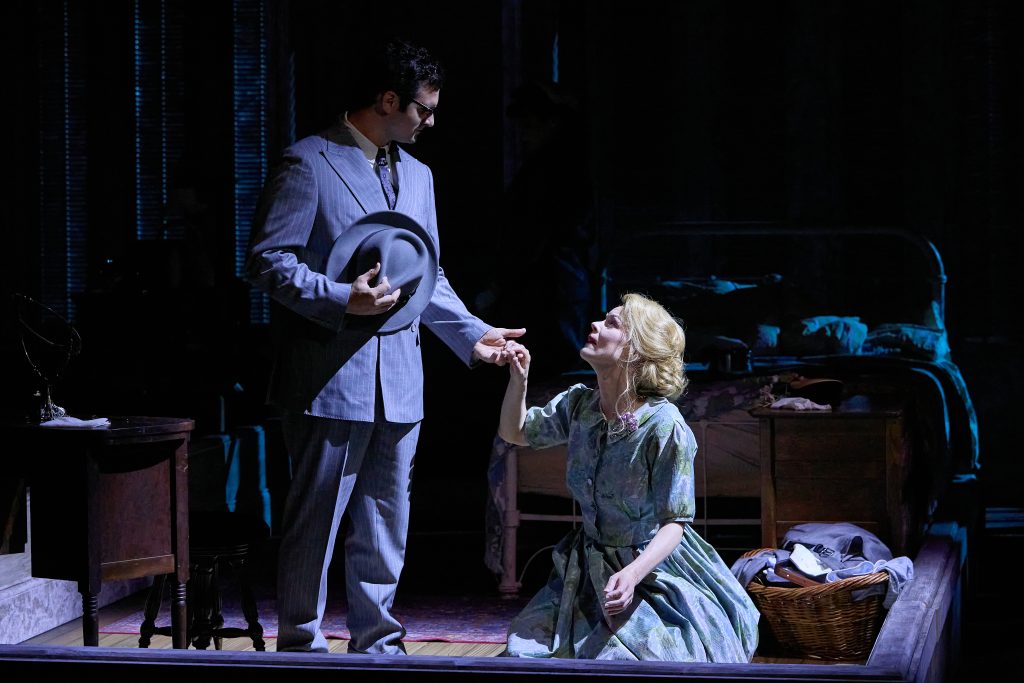
Patricia Racette’s production finds operatic scale, emotional truth and remarkable balance in Williams’s enduring tragedy.

By CB Adams

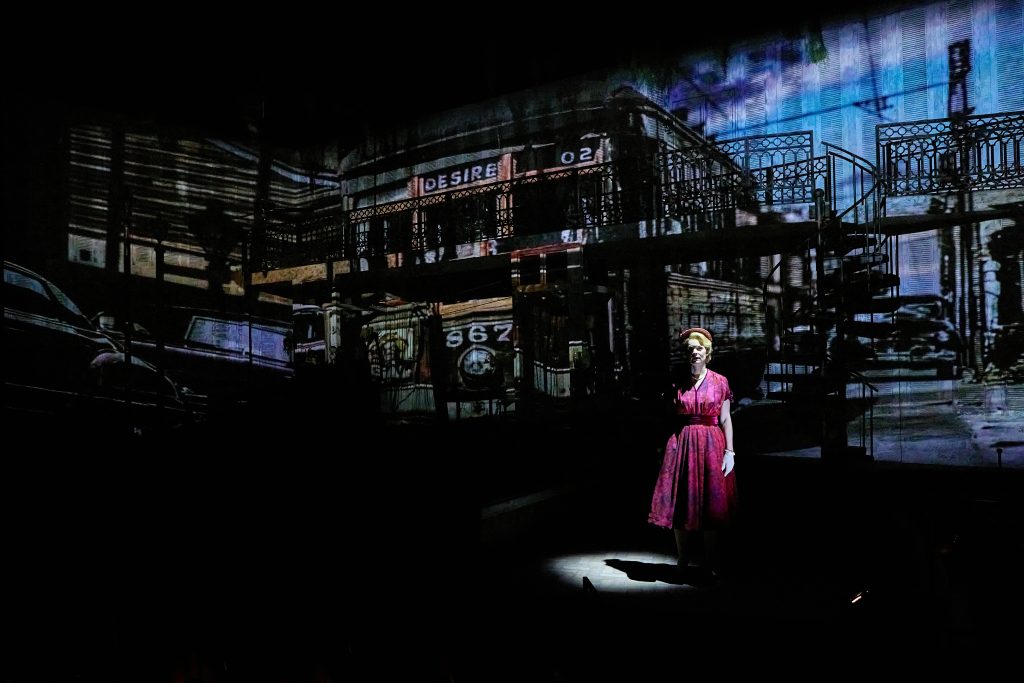
Andrew Boyce’s scenic design announces Opera Theatre of Saint Louis’s intentions before a note is sung. Towering walls of weathered white shutters dominate the stage, instantly evoking New Orleans while suggesting something more confining.

Projected across those walls, a black-and-white montage culminates in a huge streetcar lumbering toward the audience with the slow, inexorable force of a locomotive.

It is a striking image and an honest one. We know where this story is headed. Racette and Boyce embrace that inevitability from the outset. There is no attempt to disguise the destination. Some productions try to improve the classics. This one trusts one.

André Previn’s opera, with a libretto by Philip Littell, remains remarkably faithful to Williams’s play. Racette embraces that faithfulness as an artistic choice. She trusts Williams’s characters, conflicts and hard-earned understanding of human weakness. The result never feels preserved under glass.

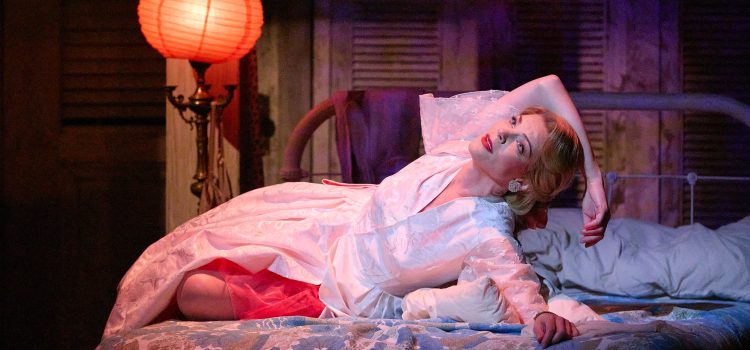
Blanche DuBois (Sara Gartland) arrives in New Orleans. Photo by Eric Woolsey.

Daniela Candillari leads the St. Louis Symphony Orchestra with equal command. Previn’s score moves beneath the action like an unseen current, deepening tension and longing without overwhelming the drama unfolding onstage. Candillari maintains an ideal balance between pit and stage. The orchestra remains firmly in service to the story.

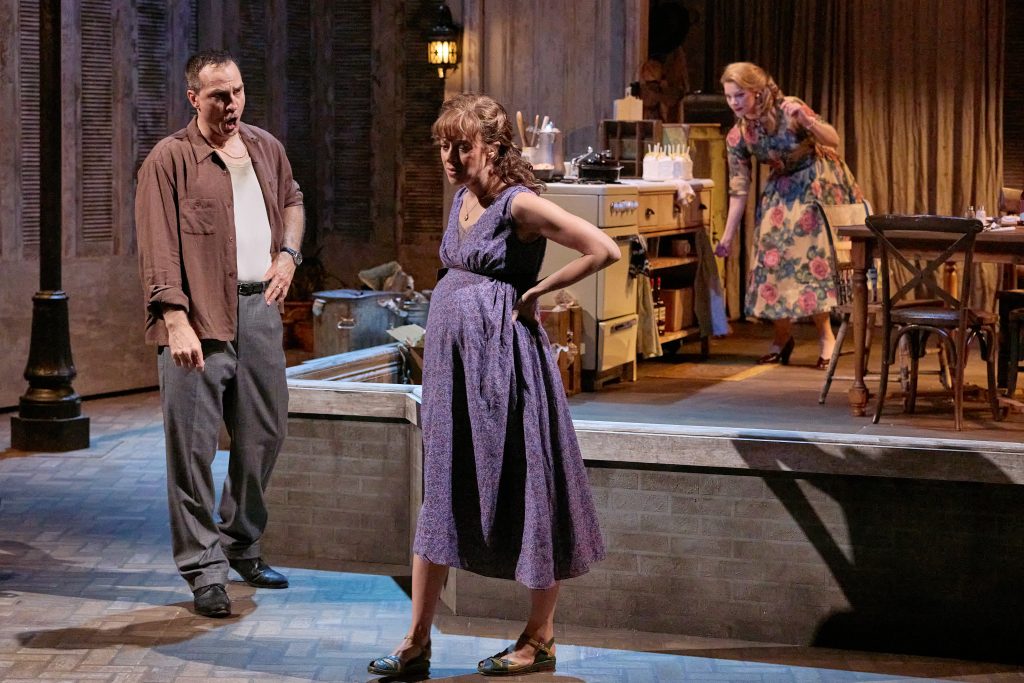
The production’s dramatic engine is the ongoing contest between Sara Gartland’s Blanche DuBois and David Adam Moore’s Stanley Kowalski. They spar like star pugilists across Williams’s language and Previn’s score, each encounter carrying as much psychological force as vocal power.

Gartland captures Blanche’s contradictions without simplifying them. Under Racette’s careful guidance, her Blanche remains vain, vulnerable, manipulative, frightened, self-aware and self-deluding, often simultaneously.

Moore faces the equally difficult task of making Stanley more than a brute. He succeeds. Stanley’s eventual victory remains disturbing, but Moore preserves enough magnetism and humanity to make it believable.

(L to R) David Adam Moore as Stanley, Lauren Snouffer as Stella, and Sara Gartland as Blanche in “A Streetcar Named Desire.” Photo by Eric Woolsey.

Racette allows Stanley’s appeal to remain visible even when his behavior becomes reprehensible. His spoken dialogue, used sparingly throughout the opera, sharpens the realism of the surrounding music rather than interrupting it.

Just as important is Lauren Snouffer’s Stella. More than a participant in Blanche and Stanley’s struggle, she becomes the emotional fulcrum of the evening, giving equal weight to Stella’s love for Blanche, desire for Stanley and determination to survive the impossible position in which she finds herself.

The relationship between the sisters is rendered with uncommon care, while Stella’s marriage to Stanley remains equally persuasive. Those relationships feel lived-in rather than merely dramatic.

Boyce’s towering shutter walls evoke New Orleans architecture while functioning as a kind of emotional enclosure. At times they resemble prison bars, at others the walls of memory closing around Blanche. Their scale is distinctly operatic, creating a world far larger than the cast occupying it.

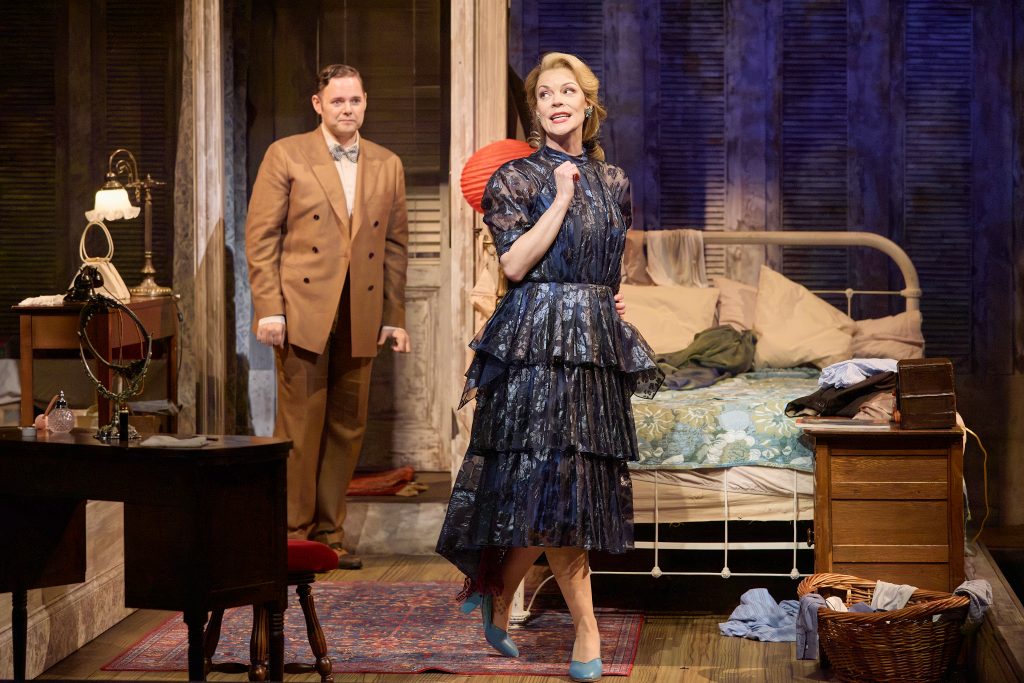
Blanche (Sara Gartland) flirts with the smitten Harold “Mitch” Mitchell. Photoby Eric Woolsey.

Yet Gartland, Moore, Snouffer and their colleagues fill that space through voice, presence and sharply defined characterizations. They do not merely survive the set. They complete it. In a production with relatively few principals, there is nowhere to hide. Every performer must command the space. They do.

The supporting cast contributes significantly to that achievement. Bille Bruley’s Harold Mitchell brings warmth and humanity to the role, while Ashlyn Brown’s Eunice provides an earthy, clear-eyed counterpoint to Blanche’s unraveling. Her nurturing support of Stella reinforces one of the production’s central relationships and helps ground the emotional reality of Elysian Fields.

The ensemble consistently strengthens Williams’s world. Kim Stanish is especially memorable as the Nurse in the final scene. Her prolonged struggle to restrain Blanche avoids melodrama and instead underscores the heartbreaking finality of the character’s collapse, a moment Racette allows to linger rather than rush past.

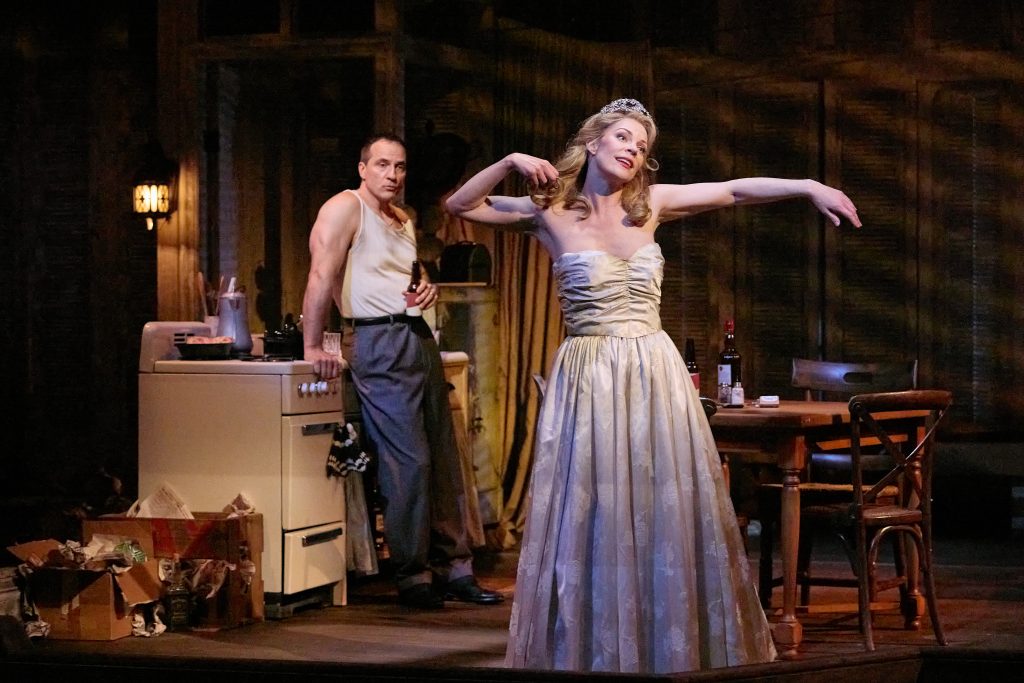
Blanche (Sara Gartland) begins to unravel under Stanley’s (David Adam Moore) menacing presence. Photo by Eric Woolsey.

The production’s scenes of violence and sexual assault are staged with careful restraint. Racette, intimacy coordinator Delaney Piggins and fight choreographer Shaun Sheley convey the ugliness of Stanley’s actions with just enough physical detail to communicate their impact without lapsing into sensationalism.

The projections prove equally effective throughout the evening. Most haunting is the appearance of Blanche’s young husband, whose portrait looms over the stage just as relentlessly as his memory looms over her life.

Throughout the evening, projections become another actor in the drama, carrying memory and desire across Boyce’s towering walls. By the time Blanche reaches her final music, Gartland and the production have earned every note of it.

“A Streetcar Named Desire” continues at Opera Theatre of Saint Louis through June 26 at the Loretto-Hilton Center on the Webster University campus as part of OTSL’s 2026 Festival Season. Ticket information, performance schedules and additional production details are available on the Opera Theatre of Saint Louis website.

A shattered Blanche (Sara Gartland) is gently led away by a doctor (Erik DeMario). Photo by Eric Wooley.