
By Lynn Venhaus

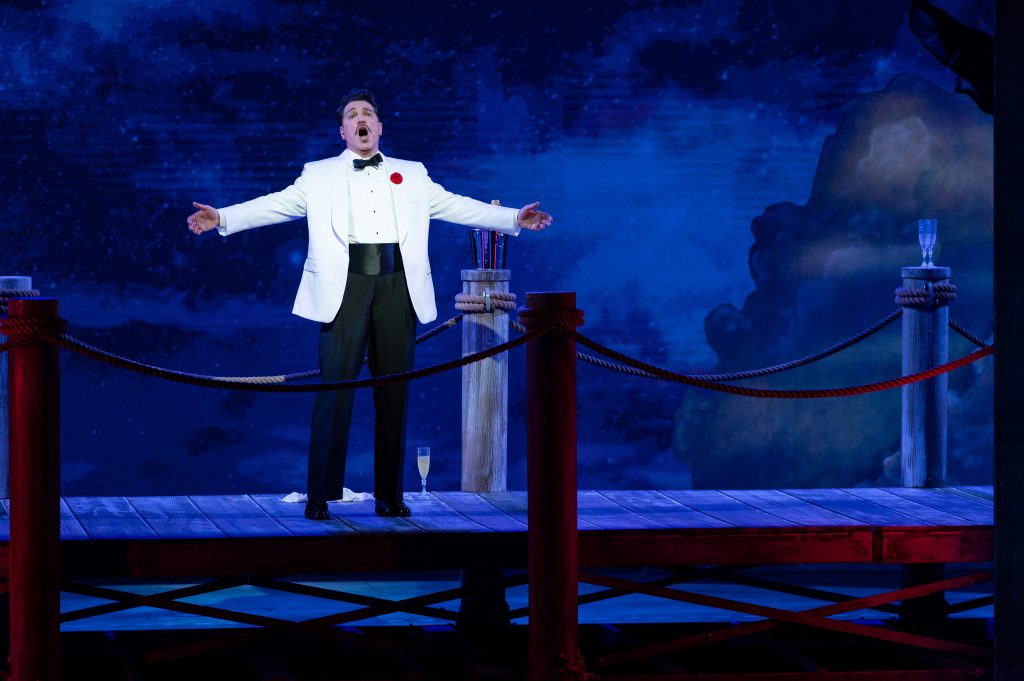
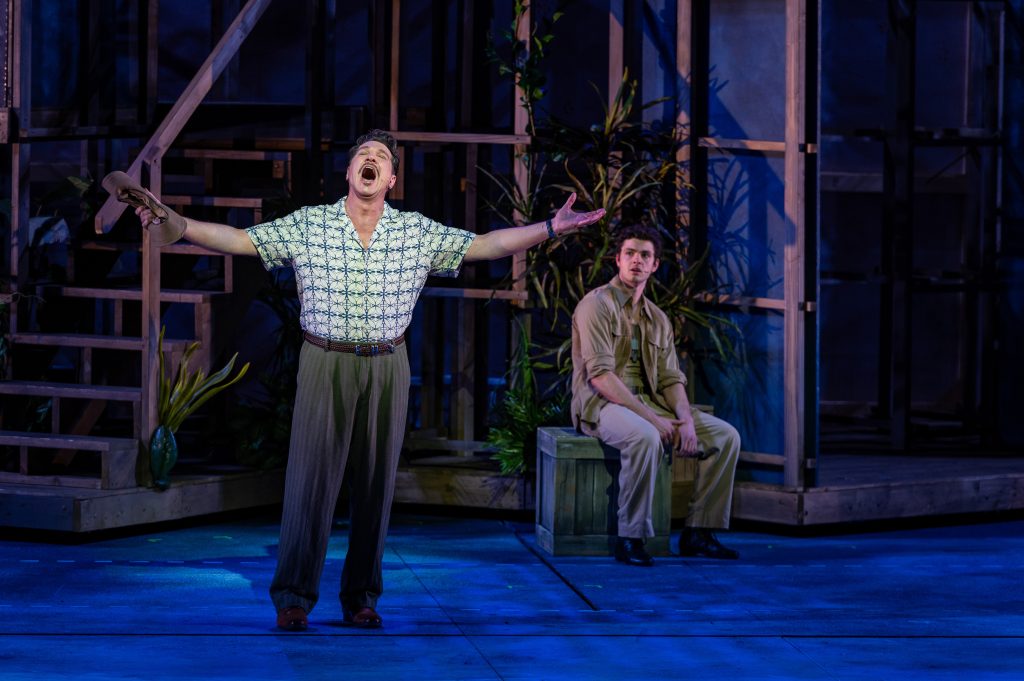
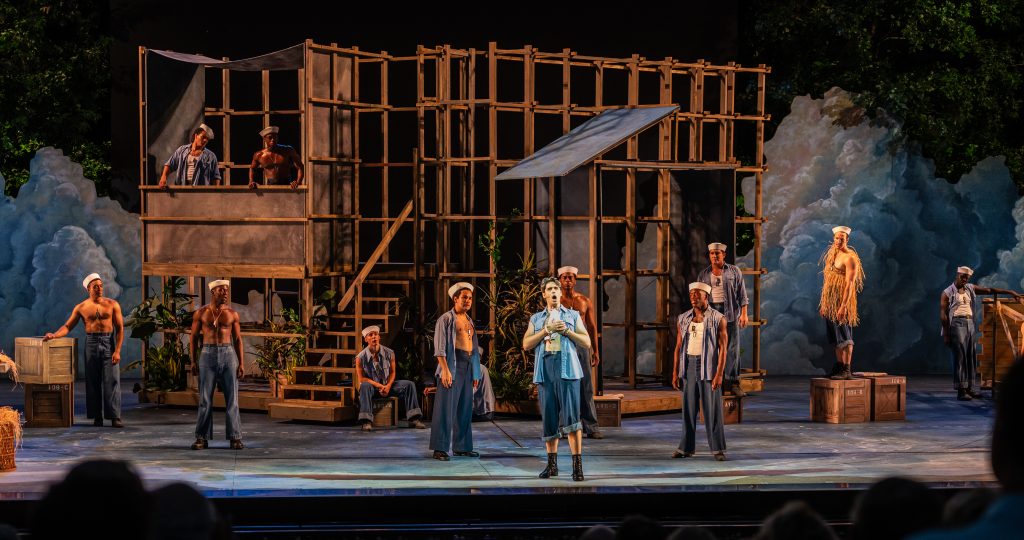
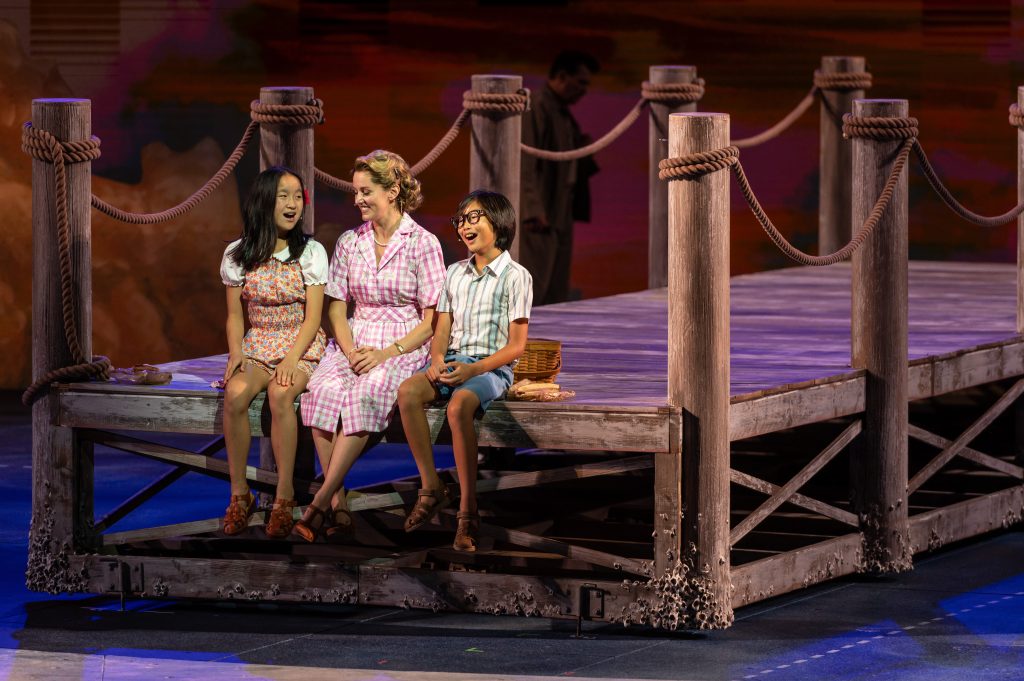
A refreshing breeze is blowing through the cozy confines of the Tower Grove Abbey in Stray Dog Theatre’s ambitious youth opera, “The Second Hurricane,” and it’s a breath of fresh air.

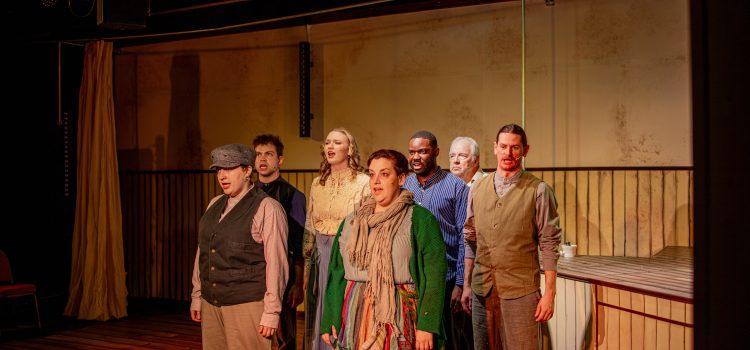
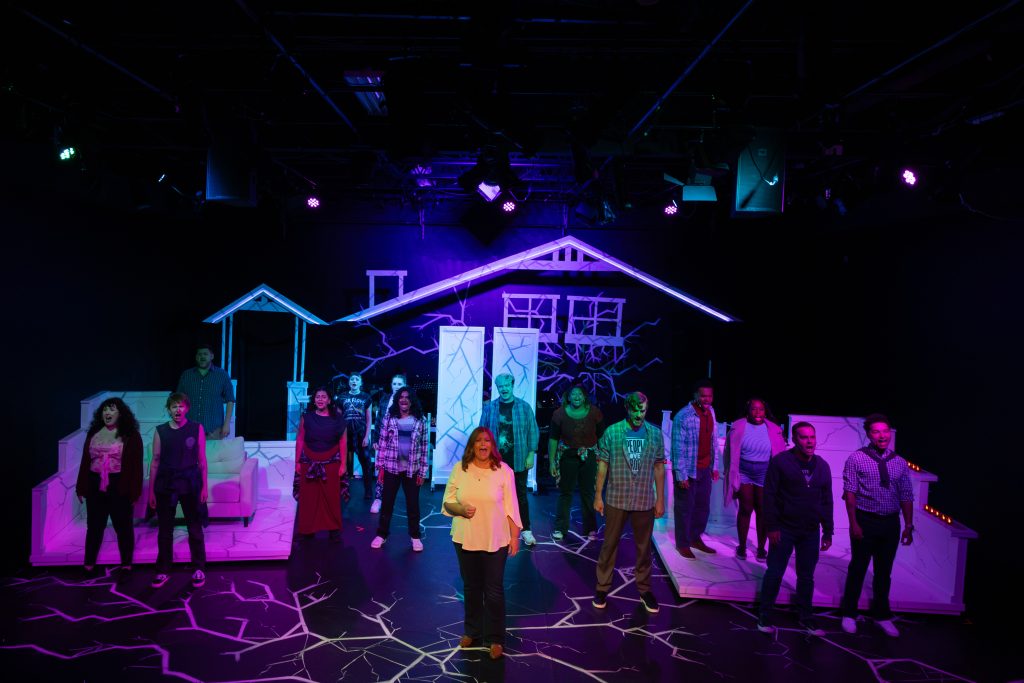
An earnest, well-rehearsed ensemble – 12 youth choir members and 11 adult choir members accompanied by a 12-piece orchestra, are unified in song and spirit in this rarely performed piece by Aaron Copland, flawless in their harmonies and heartfelt interpretation.

The remarkable young performers are as poised and polished as the adults are, and the entire effort is impressive. Director Gary F. Bell and Music Director John Gerdes strived for the highest level of excellence of all involved, and their dedication shows.

Copland is known as the Dean of American Music for his distinct musical identity that evokes the American landscape and spirit. One of the most influential composers of the 20th century, he wrote this opera, his first, in 1937, specifically for schoolchildren.

During a career that spanned 60 years, Copland incorporated jazz, folk and classical music in his traditional themes, shaping an American voice, and connecting deeply with audiences.

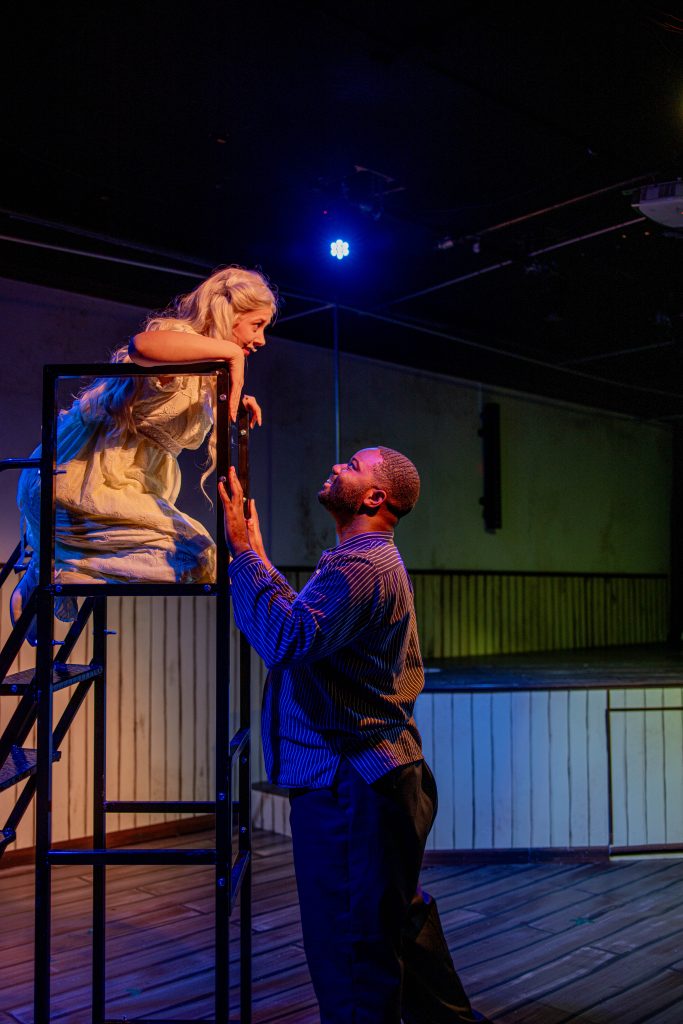
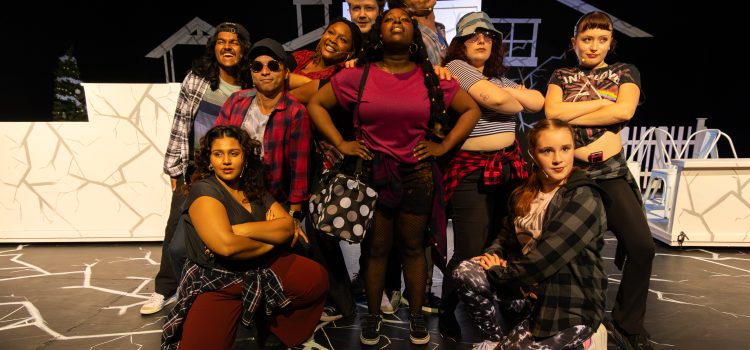
The dynamic dozen – the mighty musicians of “The Second Hurricane.” Photo by Stray Dog Theatre.

Perhaps you’ve heard “Fanfare for the Common Man,” a 1942 orchestral piece commissioned as a tribute to World War II soldiers; “Rodeo,” a 1942 ballet choreographed by Agnes de Mille honoring the American West that includes the very recognizable “Hoe-Down” (Remember the “Beef. It’s What’s for Dinner” ad campaign?); and his symbolic 1944 ballet “Appalachian Spring” that features the iconic “Simple Gifts” melody. He won an Oscar for the film score to “The Heiress,” among other accolades.

Bell, a longtime fan, was part of the opera’s revival in 1985 for the composer’s 85th birthday celebration. Then a 21-year-old artist living in New York City, Bell was honored to be cast in the production at the Henry Street Settlement, its original site, and met Copland, who died five years later.

His impact on Bell was significant, and the SDT artistic director said this opera is very personal to him.

Inspiring this ensemble to achieve their full potential was important, and Gerdes, a respected local musician and educator, also attained new artistic heights with the choirs and conducting the superb orchestra. They both carried this off with precision and perseverance.

The entire creative cast and crew executed Stray Dog’s first opera splendidly with an appreciation of the material, and emotional storytelling that resonates. An unmistakable feeling of community and its American essence is apparent.

The libretto by poet Edwin Denby was written specifically for young people and set during the Great Depression. It’s succinct and matter of fact, without frills or flourishes.

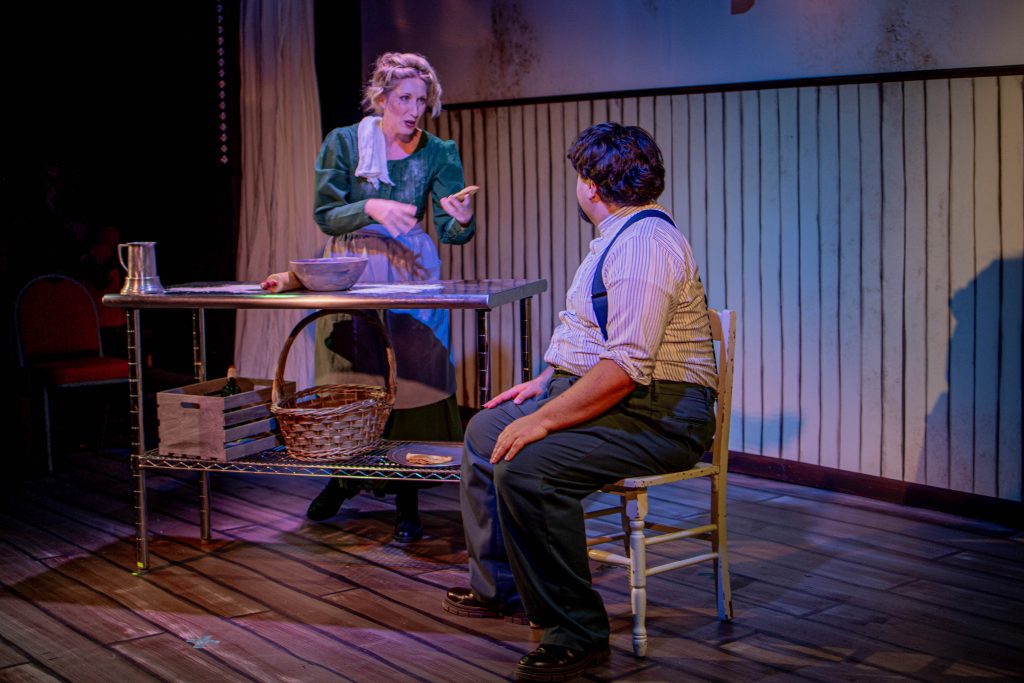
The accomplished adult choir. Photo by Stray Dog Theatre.

The program notes describe the time and place as: “A small Middle West town following a devastating hurricane in the 1930s. We start in a local high school and move to a rise in ground in a waste country near a great river.”

Inspired by a true story, a group of enthusiastic high school students volunteered to help with delivering supplies to victims of a recent hurricane. Little do they realize the dangers involved, for they are in harm’s way as the weather forecast predicts the possibility of a second hurricane.

With their different personalities and social hierarchy, the students tussle with each other, not agreeing much on duties and strategies. But faced with another natural disaster, frightened and with little resources as they’re stranded on a remote island, they learn to work together, cooperating and demonstrating courage and tolerance.

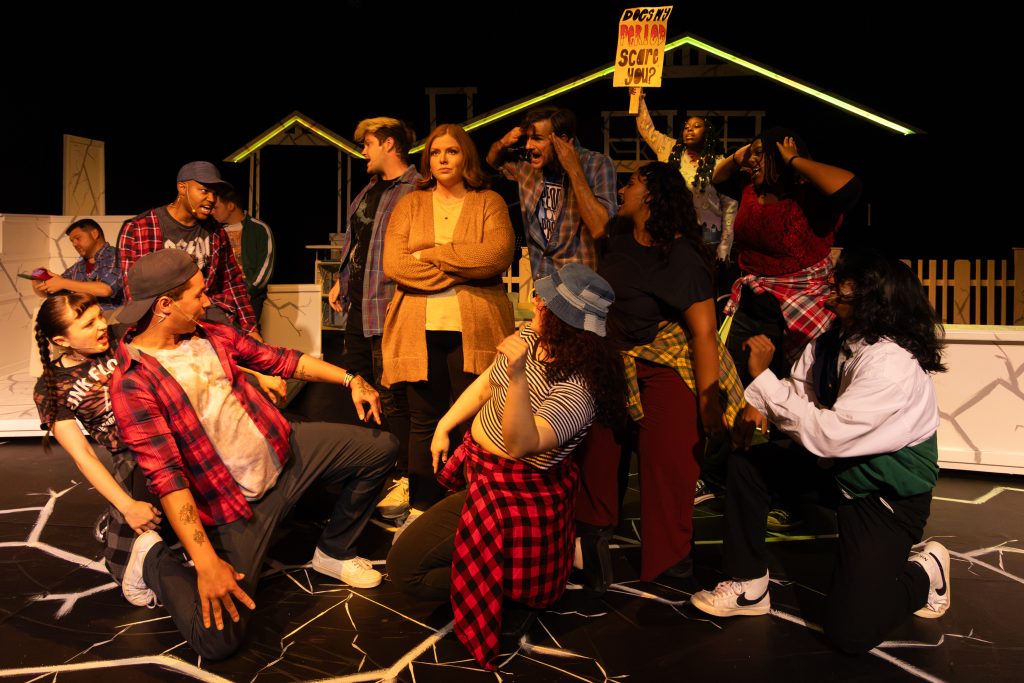
It’s a terrific lesson on teamwork. The six students on the rescue mission include Nadja Kapetanovich as top of the class Queenie, Bryn Sentnor as determined Gwen, Jabari Boykin as brainy Lowrie, Soren Carroll as new kid Butch, Wesley Balsamo as bully Fat, and Ben Hammock as Gyp, Fat’s younger brother. Cece Mohr plays Jeff, a country boy they discover living in a rural area.

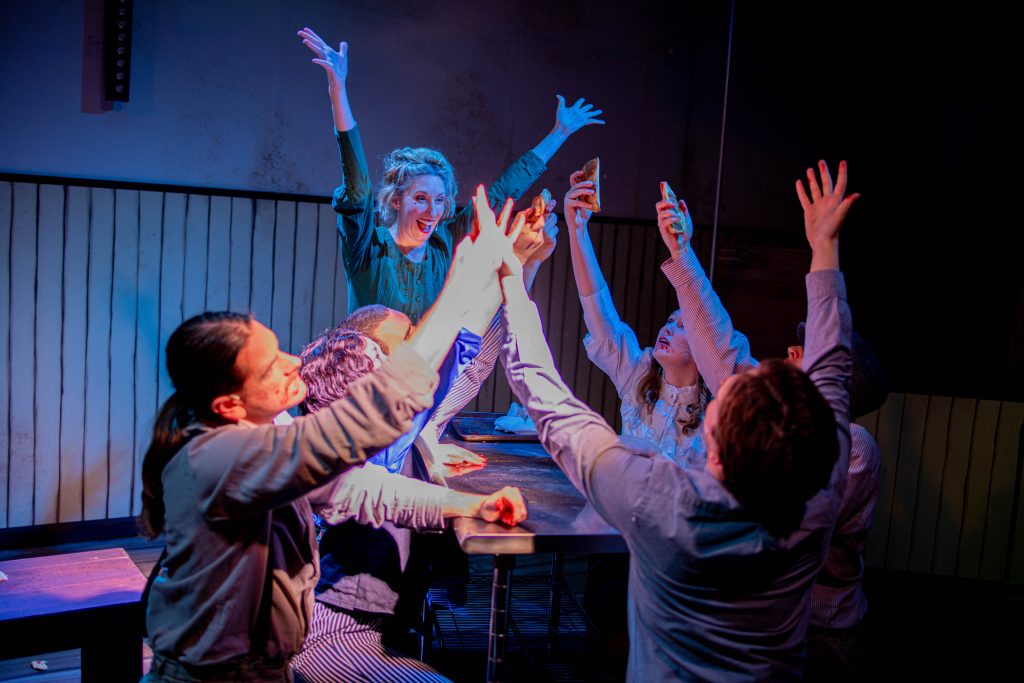
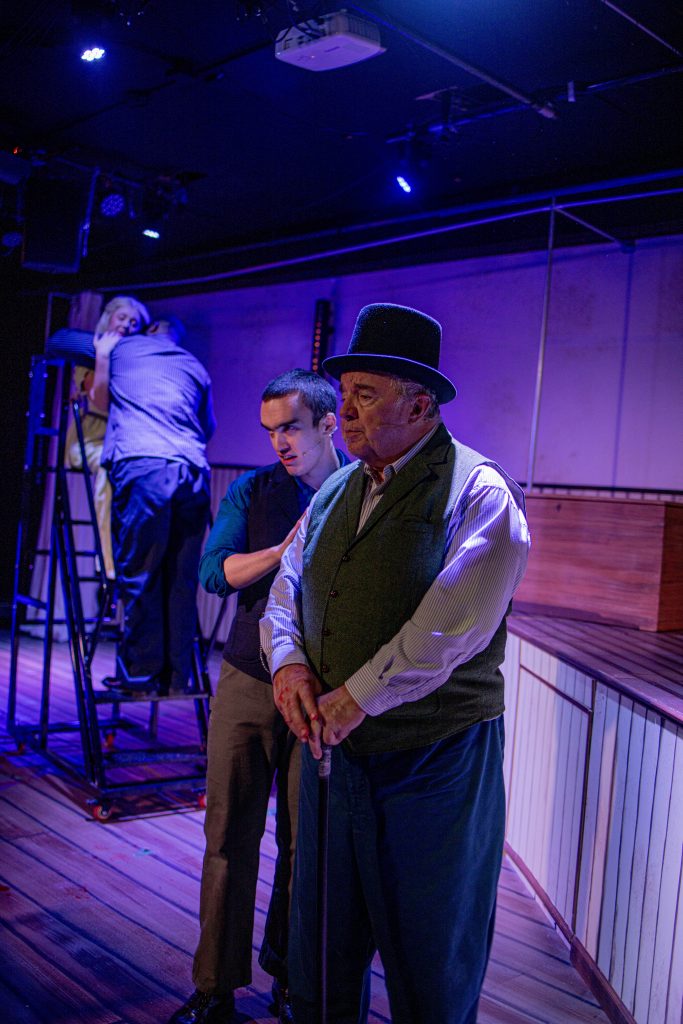
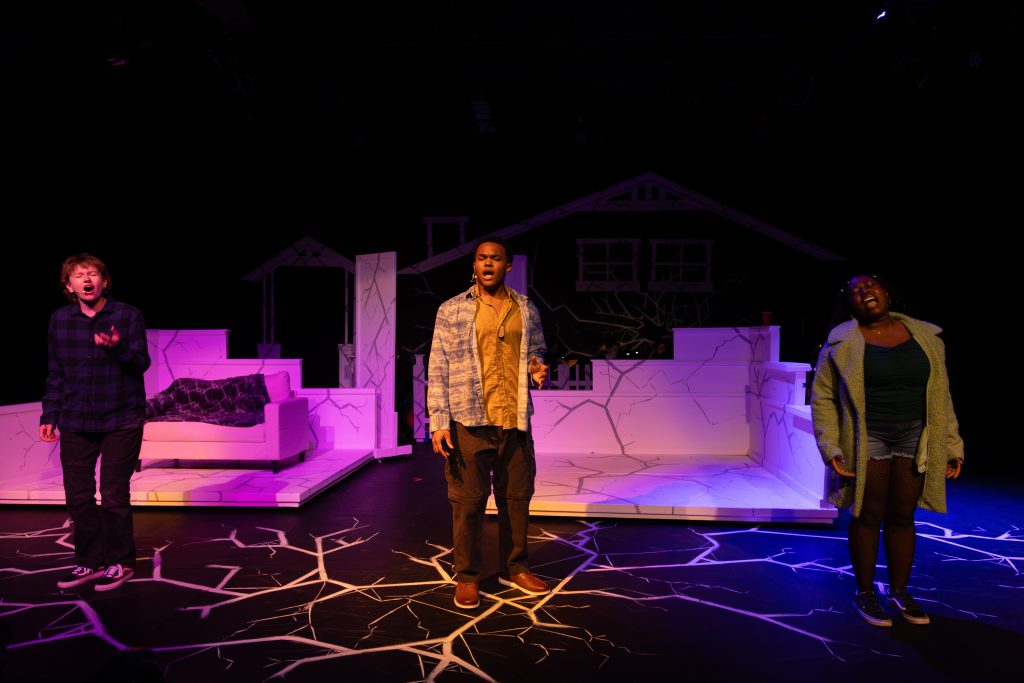
Nadja Kapetanovich performs “Queenie’s Song.” Photo by Stray Dog Theatre.

They are bolstered by new friendships and a sense of belonging, and there’s tangible relief and gratitude from the parents.

The other expressive, self-assured students that shine in the chorus include Eliana Bryson, Margot Carroll, Abby Donald, Sydney Fendler, Sierra Hale and Ava Hettenhausen.

Demonstrating substantial technical skill, the adult choir includes Madeline Black, Leah Bryson, Jacob Cowley, Gansner, Rebecca Hatlelid, Lizzie Klemm, Brittany Kohl, Jess McCawley, Chris Moore, Jan Niehoff and Terrell Thompson. Kohl acts as the school principal and Niehoff as an aviator, Miss Maclenahan (she’s nearly unrecognizable, swallowed up in a cumbersome coat and hat).

From a first-row perch, Gerdes guides the 12 accomplished musicians to create a stirring sound and passionately interpret Copland’s music.

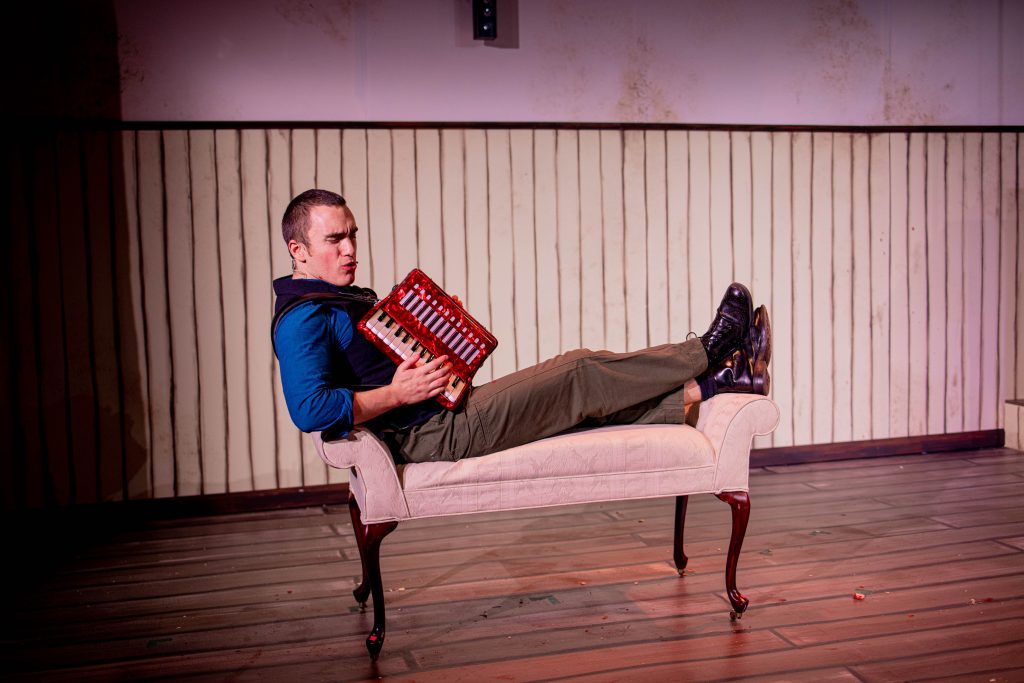
Jabari Boykin, Soren Carroll, Bryn Sentnor, Wesley Balsamo, and Ben Hammock. Photo by Stray Dog Theatre.

The cohesive musicians, behind the singers on stage, are– Helen Bednara, bassoon; Mo Carr, violin 2; Andrea Clark, flute; Jill Hamill, viola; Bill Howells, trombone; Michaela Kuba, double bass; Emily Mehigh, clarinet; Paul Rueschhoff, cello; G Schmiedeke, violin 1; Brandon Lee Thompson, oboe; Deborah Thuet, percussion; and Chris Dressler and Larry Levin each play trumpet at select performances.

Costume designer Colleen Michelson collected numerous print dresses for the period looks, and some of the boys wear overalls to reflect their rural life. Sarah Gene Dowling designed wigs for several singers. Tyler Duenow designed the lighting and Justin Been again created impeccable sound, simulating weather and making the music fill the theater.

Ava Hettenhausen, Sierra Hale, and Sydney Fendler

The two-act musical is only an hour, and the numbers are mostly presented as choral pieces, but four youngsters deliver moving and memorable solos.

Displaying clear, crisp and confident tones, Wesley Balsamo, Ben Hammock, Nadja Kapetanovich and Cece Mohr are affecting in their songs, simply titled with their characters’ names. Their stage presence is notable, too.

“The Second Hurricane” appears to be a rewarding collaborative experience, where everyone seemed to bring out the best in each other.

Stray Dog Theatre presents the Aaron Copland opera “The Second Hurricane” Aug. 7 – 30, Thursdays through Saturdays at 8 p.m., with Sunday matinees at 2 p.m. on Aug. 10, Aug. 17 and Aug. 24 at the Tower Grove Abbey, 2336 Tennessee Avenue. For more information or for tickets, visit the website, www.straydogtheatre.org.

Box Office/Will Call opens 1 hour prior to performance. Tower Grove Abbey is a “general seating” theatre. The opera is 1 hour long, with an intermission.

Rebecca Hatlelid, Lizzie Klemm, and Jess McCawley

By Lynn Venhaus

A bold, ambitious “A Streetcar Named Desire” is the centerpiece in this year’s 10th annual Tennessee Williams Festival St. Louis.

A contemporary interpretation of the playwright’s most iconic work nearly 80 years after his masterpiece stunned Broadway audiences, director Michael James Reed asks us to look at the Pulitzer Prize and Tony-winning drama with fresh eyes. He prefers the term ‘reconstruction’ instead of ‘deconstruction,’ and that is what he delivers.

Already a relic from the past, fading and fragile Southern belle Blanche DuBois arrives at her sister Stella’s doorstep, to stay at her run-down two-room flat. Stella’s brutish working-class husband Stanley Kowalski isn’t aware of her visit and, immediately agitated, locks horns with his attention-seeking sister-in-law.

Over the course of the stifling summer, tempers flare, and Stanley becomes increasingly volatile, his bullying obsessive, while Blanche unravels – her displacement, discomfort and disorders adding to her breakdown. Stanley’s verbal and physical abuse becomes too much, leading to sexual abuse.

Todd D’Amour and Beth Bartley. Suzy Gorman photo.

This doomed power play leaves wreckage from a predator and prey situation, for Blanche appears like a frightened caged animal, her feminine wiles no longer effective.

Her final line, as she clings to a gentle doctor (David Wassilak) escorting her away: “I have always depended on the kindness of strangers” is shattering.

The cast portrays these indelible roles through a lens that is both rooted in Tennessee Williams’ dysfunctional framework and then Reed’s challenge to bring something different to their characterizations.

Some of the choices go outside the lines of our perceptions — with Todd D’Amour’s tightly wound abusive Stanley displaying pathological cruelty, Beth Bartley’s grittier desperate Blanche masking her many indignities, and Isa Venere’s younger Stella enabling and helpless. Think of it as an American horror story in retrospect.

As the local festival has amplified the past 10 years, Williams’ works are about loss in some way – of beauty, love, youth, identity and/or way of life, and this manifests through a range of characters developed during a career spanning 50 years, from the 1930s to his death in 1983 at age 71. After “The Glass Menagerie” made him a rising star in 1944, he opened 14 plays on Broadway from 1947 to 1980.

This is the first time that I really felt Williams’ own torment, of how humiliating it was for him to work with bullies like Stanley at the International Shoe Company during his formative years here, at a time when he was not free to express his sexuality and there was a very specific masculine ‘standard’ in society, not to mention another variation on his beloved sister Rose, mentally challenged at a time it was not understood. His own feelings poured out in these characters.

Looking back today, one sees societal changes colliding in Williams’ most famous work –the new South vs. the past, and women’s evolution regarding gender roles.

Post-war America, during this long, hot summer on Elysian Fields Street, adjacent to the French Quarter of New Orleans, we feel the heat. Sometimes, the atmosphere feels suffocating without any relief, while other times it feels like the tension is so thick and volatile, it could combust.

In that setting, the raw intensity seeps through, revealing harsh truths and emphasizes Williams’ timeless themes of illusion, trauma, power, control, and desire, and when reality hits head-on, how it changes expectations.

Beth Bartley and Isa Venere. Photo by Suzy Gorman.

After the play debuted to a thunderous 7-minute standing ovation on Dec. 3, 1947, it was adapted into an acclaimed Academy Award-winning film in 1951, with three of the four principals reprising their roles– Marlon Brando, Kim Hunter and Karl Malden, but Vivien Leigh as Blanche instead of Jessica Tandy.

Let’s face it, comparisons are inevitable, and “Streetcar” continues to be performed around the globe, never out of view. Andre Previn’s 1998 opera is part of Opera Theatre of St. Louis’ line-up next summer and a 2022 London play revival transferred to off-Broadway earlier this year for a limited run starring acclaimed Irish actor Paul Mescal, who won an Olivier Award as Stanley, and Spanish-British actress Patsy Ferran as Blanche.

The roles are demanding because they can easily go over-the-top into caricatures. After all, their indelible work has been exaggerated into comic archetypes in pop culture for decades.

Bartley’s panicked Blanche reunites with her sister, and Venere’s Stella, goes into caretaker mode, even when she learns that their family estate, Belle Rive in Laurel, Mississippi, has been lost to creditors.

Eric Dean White and Beth Bartley as Mitch and Blanche. Photo by Suzy Gorman.

A traumatized Blanche recalls taking care of their dying relatives without help. She says she has taken a leave of absence from teaching high school literature because her nerves are so frayed. Bartley and Venere share a comfortable chemistry.

Enter suspicious, coarse and crude Stanley. D’Amour isn’t imposing, nor is he articulate. With mumbled lines, he’s hard to understand and harder to relate to, and that’s unfortunate because it throws the balance off.

Stella, caught in the middle, must try to keep the peace between the warring factions, but she is ineffective. She and Stanley share a tempestuous sexual attraction, and his aggressive domestic violence is despicable (never acceptable, no matter what era, but being a batterer fits his offensive personality).

While Stanley seethes, Blanche makes herself at home, languishing in the bathtub, lounging in their shabby quarters, secretly drinking, and putting on her Southern Belle airs.

With her fanciful ways, she attracts an admirer — Stanley’s war buddy and poker-playing friend, Harold “Mitch” Mitchell (Eric Dean White), a bachelor who lives with his ailing mother. A raging Stanley will destroy that tender union after uncovering Blanche’s scandalous secrets back home.

Photo by Suzy Gorman

Trembling like an older, needier Judy Garland, whom she resembles, and acting delusional like the moody narcissistic Norma Desmond in “Sunset Boulevard,” Bartley is heart-breaking living out a fantasy life while she is clearly in decline. Now that we know more about mental health, it’s obvious Blanche has Histrionic Personality Disorder.

It’s a devastating portrait, and she also reveals a skilled manipulator, who has managed to survive using the theatrical tools in her toolbox.

As Mitch, White shows his sweet side, and two lonely people find comfort in each other. She’s flirtatious while she tells tall tales, and he’s smitten. When he confronts Blanche with what he’s discovered about her many liaisons and seductions in her hometown, though, his anger is visible – he’s done with being a nice guy.

The other supporting characters are lived-in examples of the area – top-shelf veterans Emily Baker and Isaiah DiLorenzo are their loud neighbors (and landlords) Eunice and Steve, who live upstairs. DiLorenzo and Wassilak are the two cast members that were in the festival’s award-winning 2018 “Streetcar” production.

Jeremiah King is a young collector, Cedric Leiba Jr. is another poker player, and Gwynneth Rausch is a nurse. Offstage, Jocelyn Padilla voices a flower collector. She also served as the intimacy coordinator. Jack Kalan was the fight choreographer.
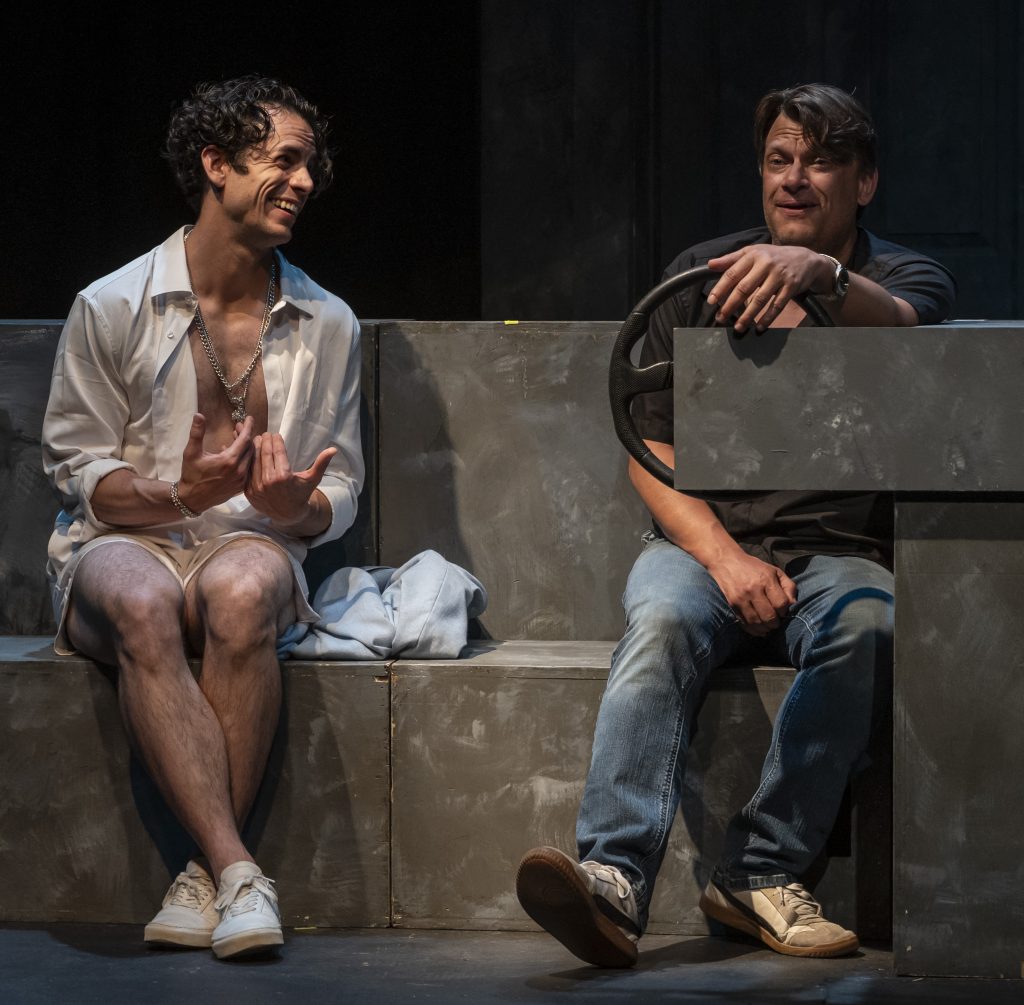
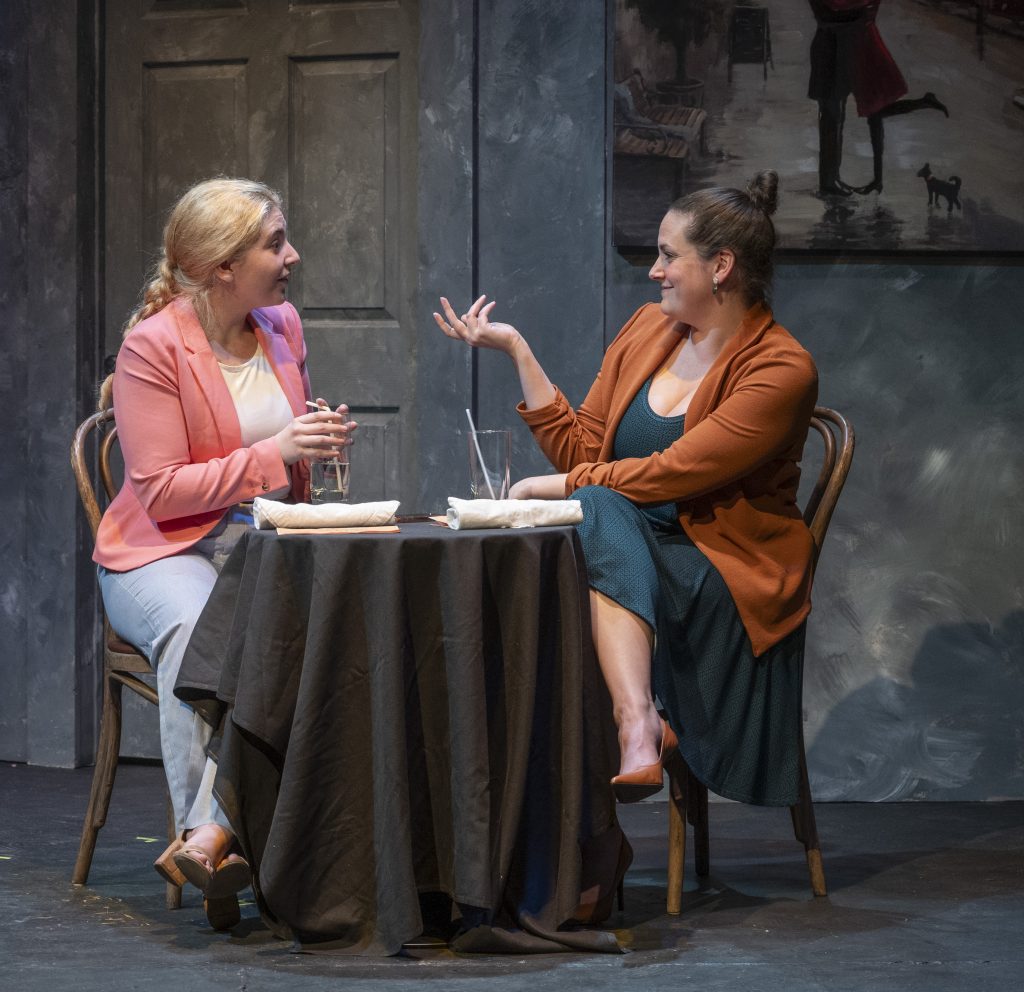
Both Matthew McCarthy’s moody lighting design and Phillip Evans’ sound design are strong in this production, with dramatic illuminations and a discordant cacophony and jazzy-blues music adding to the atmosphere.

Two elements puzzled me. For a story that emphasizes claustrophobia in such small quarters, the set design did not appear so. Patrick Huber favored a nod to mid-century modern décor, with a neon palette more suited to another era or pre-school, that was stretched out on the Grandel stage.

Shevare Perry’s costume design for most of the cast worked fine, but Blanche’s daytime outfits appeared misfitting and Stella’s pants in the opening scene were jarring. Blanche’s flouncy nightgowns and bright red satin robe were just right.

Perhaps those choices were all in keeping with tossing out pre-conceived notions for this production.

Set design by Patrick Huber, lighting design by Matthew McCarthy. Photo by Suzy Gorman.

“A Streetcar Named Desire” maintains its power in Williams’ vivid poetic realism and lyrical dialogue that continues to captivate. While I prefer more emotionally charged character renderings, which was what Blanche aimed for, instead of a detached one like Stanley and Stella, these were choices made for a different take. In real life, D’Amour and Bartley are married.

Williams’ view of outsiders, of deeply flawed humans, continues to resonate some 80 years later, and that’s worth celebrating.

The Tennessee Williams Festival presents “A Streetcar Named Desire” Aug. 7 – 17 at the Grandel Theatre in Grand Center. For more information, visit www.twstl.org

Blanche DuBois (Beth Bartley). Photo by Suzy Gorman.

By Lynn Venhaus

Release the serotonin! The Muny goes big with the glitzy, grand feel-good musical “La Cage Aux Folles” that will make you laugh, gasp and cheer as you walk away uplifted.

The ensemble’s ebullience was a joy to behold. Bon Voyage as we head for entertaining escapades in Saint-Tropez.

Over-the-top is the intention of this pizzazzy production — a gleaming spectacle overflowing with vibrant energy, a bonhomie spirit, snazzy style, rousing renditions of composer-lyricist Jerry Herman’s optimistic score, all layered with Harvey Fierstein’s sharp farcical humor.
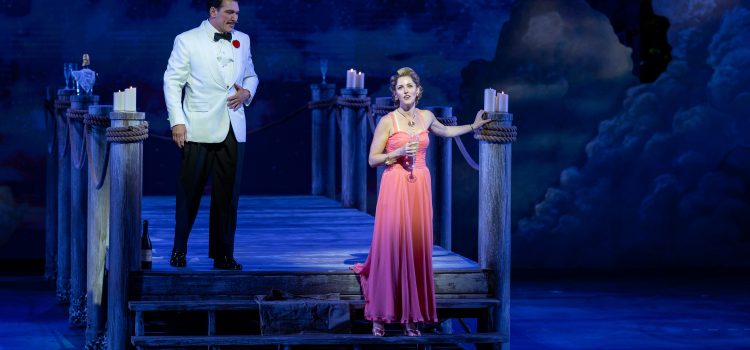
I’m not sure who was having more fun – the actors on stage or the audience. From the opening introduction on, the crowd was eager to be delighted, its mood palpably upbeat.

I was swept away by two of Broadway’s biggest and brightest stars, Norm Lewis as Georges and Michael James Scott as Albin, who make a dynamic duo, their sumptuous vocals soaring into the full-moonlit night. They appeared to be having the best of times.

Michael James Scott (left) and Norm Lewis in the 2025 Muny production of “La Cage aux Folles.” Photo by The Muny | MaryKatherine Patteson

They headline a cohesive cast that’s as committed to excellence as they are – limber in movement, bold and beautiful in appearance, and luminous in song and dance.

Directed with poise and finesse by Marcia Milgrom Dodge, this musical appeals not only in richly textured vocals, but visually with its mélange of Vegas showgirl looks, nods to Moulin Rouge, broad comedy, and dazzling French Riviera setting.

The “Guess Who’s Coming to Dinner?” premise starts with suave Georges, who owns a drag club in the South of France and is in a committed relationship of 20 years with the flamboyant Albin, who is the club’s star drag queen, Zaza.

Georges’ anxious son Jean-Michel (Mason Reeves) pops in for a big favor – he asks that his father pretend to be straight for one night, and his mother figure hidden away, because his fiancé’ Anne (a posh, likable Cameron Anika Hill) has parents that are ultra-conservative. He has invited them to visit.

The priggish future father-in-law Edouard Dindon (Terence Archie) is a well-known right-wing politician opposed to the LGBTQ+ community, and his uptight wife Marie (Allison Blackwell) is all about status. Exposing the same-sex couple could lead to the headline-making shutdown of La Cage Aux Folles (French translation: “The Cage of Madwomen.”)

From left: Troy Iwata, Cameron Anika Hill, Mason Reeves, Terence Archie and Allison Blackwell in the 2025 Muny production of “La Cage aux Folles.” Photo by The Muny | MaryKatherine Patteson

The virtuoso Lewis, who commands any stage with his deep baritone, is silky smooth in his tender solo ballads – the reflective “Song in the Sand” and heart-tugging “Look Over There.” A renowned Broadway veteran, he’s also starred in films, TV and on global stages.

Scott, a graduate of The Conservatory at Webster University who is currently playing the Genie in “Aladdin” on Broadway, is a comedic gem as Albin, radiating theatricality and deep devotion to his family, doting on Jean-Michel.

So, he is hurt by having to pretend he is not gay because he proudly accepts himself. As the initial plan falls apart, he shows he’s willing to compromise, a selfless gesture.

Scott brings down the house with his defiant declaration “I Am What I Am,” a powerfully sung anthem that closes Act One with a flourish. The ovation was deafening.

In another signature song, “The Best of Times,” he solos and leads the group in a sing-along that expands from the actors to the audience, about living happily in the present, a catchy, melodic tune with hopeful meaning that closes the show.

Meghan Murphy in the 2025 Muny production of “La Cage aux Folles.” Photo by The Muny | Emily Santel

Nevertheless, chaos escalates, and hilarity ensues. No matter how many times I’ve seen the movies or the musical gales of laughter are unleashed, and this time was no exception.

The “Masculinity” sight-gag number where Albin tries to act macho, as coached by Georges, is side-splitting, and as the charade eventually collapses in precise physical comedy “Dishes (Cocktail Counterpoint)” provides more belly laughs.

Herman, the legendary composer behind “Hello, Dolly!” and “Mame,” wrote songs that combined humor and heartfelt emotions.

The show features sweet and sentimental moments, with passionate emphasis on acceptance, people trying to hold on to their dignity while others would like to strip it away, and what it means to be a family.

At first sight, I fell in love with the original 1978 French film “La Cage aux Folles,” which was adapted from the same-titled farce by Jean Poiret in 1973. So, when director Mike Nichols teamed up with his old comedy partner Elaine May for a 1996 American remake starring Robin Williams and Nathan Lane, they struck comedic gold with “The Birdcage.” The beloved film has made nearly $200 million at the box office.

The lavish Broadway musical first appeared in 1983, ran for 1,761 performances over more than four years, and was nominated for nine Tony Awards, winning six. It also won for its bigger, bolder revivals in 2004 and 2010.


The Muny premiered the larger-than-life romp in 1986, and now, 39 years later, it’s back with the elaborate splash the largest outdoor theater masters so well.

For her 10th Muny show, Dodge, who imbued a vintage vaudeville vibe to her “Anything Goes” production last summer, leans into the comic calamities in Fierstein’s script, and benefits from a game supporting cast with slapstick expertise.

Norm Lewis (left) and Michael James Scott in the 2025 Muny production of “La Cage aux Folles.” Photo by BreAnna Kay Creative

Troy Iwata, a scene stealer as clog-dancing Ogie in last summer’s “Waitress,” again stops the show with his laugh-out-loud hijinks as Jacob, the couple’s temperamental butler who identifies as the maid. His physical comedy, particularly with the guests’ luggage, combined with his zesty one-liners, are highlights.

Also adept at crisp comic timing is Michael Hartung, who is the nightclub stage manager Francis. This is his 12th Muny show.

In her Muny debut, vivacious Meghan Murphy is chic restaurateur Jacqueline, working the sequins, and providing a solution for a potential scandal. Also making their Muny debuts are the pair playing the pompous Dindons, and Archie and Blackwell dive into their characters’ transformations with glee.

The sparkling ensemble features Leah Berry, Patrick Blindauer, Michael Di Leo, Kylie Edwards, Julia Feeley, Aaron Graham, Cory Hammond, Owen Kent Ing, Madison Johnson, Brian Liebson, Michael Milkanin, Kaylee Olson, Vincent Ortega,  Gordon Semeatu, Duncan B. Smith, Cooper Stanton, Kodiak Thompson, YaYa Vargas, Kyle White, Jonah D. Winston –that includes the sensational Les Cagelles, along with the Teen Ensemble Jayden Jones, Keira Leung, Adaeze Loynd, and Jack Mullen.

The company of the 2025 Muny production of “La Cage aux Folles.” Photo by The Muny | MaryKatherine Patteson

Richard J. Hinds’ inspiring choreography is the cherries on top of a banana split, with flashy promenades and an eye-popping can-can. The dozen “Les Cagelles” are the super-deluxe gender-bending showstoppers – in their rainbow-hued extravagant costumes and glittering headdresses designed by Bobby Pearce, who evidently knows how to make an entrance.

Their looks were enhanced by Tommy Kurzman’s wig designs and makeup designer Heather Aurora Hardin’s bright palette choices.

Music Director Darryl Archibald elegantly conducted the largest Muny orchestra of the season, and their lush sounds captured the score’s emotional resonance as well as its optimistic fervor. Jim Tyler is credited with the orchestrations, and Don Pippin supervised music and arranged vocals. G Harrell arranged dance music.
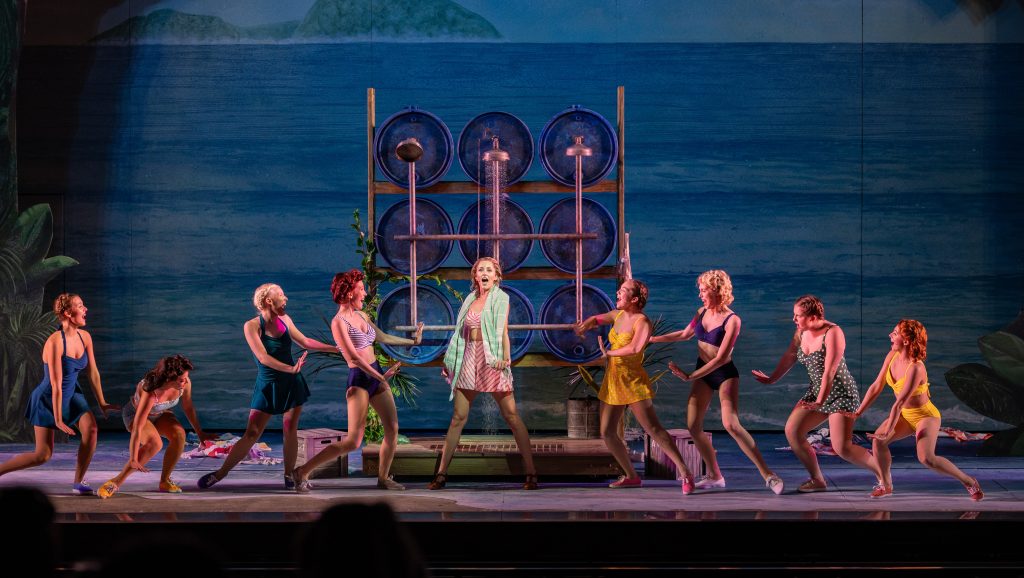
The stellar creative team collaborated on a 42-year-old show that could be considered an old-fashioned traditional musical – but its freshness and lively interpretation is everlasting. Matthew Buttrey’s scenic design featured ornate risque décor and an austere church-like atmosphere for deep contrasts, while Jason Lyons’ colorful lighting design added glamour, and Kylee Loera and Greg Emetaz video designs filled in locale flavor

Terence Archie and the company of the 2025 Muny production of “La Cage aux Folles.” Photo by The Muny | MaryKatherine Patteson

With its thoughtful themes of family, acceptance and tolerance, this warm and wonderful show is not just flashy fluff, but also shines with authenticity..

In a world that doesn’t always value diversity in families, this musical amplifies real family values. After all, love is love is love is love.

The Muny presents “La Cage Aux Folles” from Aug. 8 to 14 nightly at 8:15 p.m. on the outdoor stage in Forest Park. Its runtime is 2 hours and 30 minutes with a 15-minute intermission. With its adult themes and situations, it is considered suitable for adults and teenagers. For more information, visit www.muny.org.

.

The company of the 2025 Muny production of “La Cage aux Folles.” Photo by The Muny | Emily Santel

By Lynn Venhaus

With words of wit and strong female leads, “Austen’s Pride” has promise to fulfill its potential, coinciding with the literary world’s preparations to celebrate Jane Austen’s 250th birthday on Dec. 16.

In its pre-Broadway tryout at Stages St. Louis, a charming, refined cast, with shrewd, fluid direction by Igor Goldin, re-imagines Austen’s most acclaimed work, “Pride and Prejudice” as a double narrative.

The music, however, is a mixed bag — with a few emotionally connecting songs, but most lack depth, have unmemorable melodies, and aren’t necessary to advance the story.. It’s the musical’s weakest element. If reworked, the production could be a fine straight drama, laced with humor, of course.

Considered one of the most important and influential novelists in English literature, Austen crafted memorable characters through her use of irony, humor and realism, and critiques of a patriarchal structure during her lifetime.

She died at age 41 and achieved more fame posthumously for her six novels. Her insightful writing about the everyday lives of women in the 18th and 19th centuries has appealed across generations and cultures.

Therefore, distilling her famous characters into a 2-hour, 30-minute musical was an ambitious undertaking. Lindsay Warren Baker and Amanda Jacobs, who wrote the music, lyrics and book, are faithful to her personal growth story arcs, even if they can’t offer more depth and nuance like a novel does.

Dan Hoy as Darcy and Cole Thompson as Charles Bingley. Photo by Philip Hamer.

The musical’s premise is that after the success of “Sense and Sensibility,” the happy publisher wants another work from Austen. At the urging of her supportive sister Cassandra (Dianica Phelan), Jane begins re-working “First Impressions,” which she had already started.

As she writes, the characters spring to life. Austen converses with them and thinks aloud about her process, thus beginning her own journey of self-discovery.

The tag team of an engaging Olivia Hernandez as the whip-smart author and Delphi Borich as uncompromising Elizabeth Bennet are the driving force here.

Their “When I Fall in Love” is a captivating duet, as Borich and Hernandez’s enchanting voices blend beautifully.

Your fondness for Austen’s works may factor into your reaction to this work in progress that’s headed on tour to several American cities, with St. Louis the first stop from July 25 to Aug. 24.

The Bennet Family and Mr. Collins. Photo by Philip Hamer.

In September, the show will travel to Charlotte, N.C.; Memphis, Tenn.; Newport News, Va.; The Villages in Florida; Oxford, Ala.; Owensboro, Ky.; and Waterbury, Conn.  More dates may be announced. Right now, there is no timetable for Broadway, but producer R. Erin Craig is working on that goal.

The musical debuted in March 2019 at A.C.T. of Connecticut, then opened that October in Seattle at the 5th Street Theatre, which has developed other Broadway-bound shows, including “Mrs. Doubtfire.” A one-night-only concert version at Carnegie Hall was performed by eminent Broadway veterans on June 29, 2023.

Austen’s timeless themes of love, family and societal expectations, combined with her sly feminist-leaning social commentary, endure.

Women had limited options, so marriage could improve their social standing and economic security. (Keep in mind the historical context, for these characters are products of their time).

Olivia Hernandez as Jane Austen and Delphi Borich as Elizabeth Bennet. Photo by Philip Hamer.

Elizabeth Bennet, the second of five daughters, has an older sister and three younger. Her growing relationship with reserved aristocrat Fitzwilliam Darcy propels the story, while Jane’s romance with the good-natured Charles Bingley, and her younger sister Lydia’s dalliance with disgraced George Wickham, are subplots. Elizabeth rejects the self-important clergyman Mr. Collins’ proposal, thus causing upheaval.

Those not entranced by the Bennet girls’ romantic entanglements and squabbles should be able to grasp the story without a primer.

As the sarcastic and disengaged father, Kevyn Morrow has a fitting solo “Silly Girls.” Critical of others, his favorite is Lizzy. He delivers the best zinger: “Your mother will never see you again if you do not marry Mr. Collins… and I will never see you again if you do.”

Other notable men include a delightful Cole Thompson as the smitten Bingley, Michael Burrell as a charming but untrustworthy Wickham, and Paul Castree as the pompous Collins.

Completing the close-knit Bennet family are Addie Morales as Jane, Sarah Ellis as Mary, Cali Noack as Catherine “Kitty,” and Kate Fahey as Lydia.

Kate Fahey as Lydia. Photo by Philip Hamer.

Mrs. Bennet’s social-climbing pretentious, tactless and foolish ways and the two youngest daughters’ giggly immaturity have always annoyed, and the actresses playfully exaggerate those traits.

Besides Mary, Ellis plays Bingley’s sister Caroline and the Bennet girls’ aunt Mrs. Gardiner, with Castree also Mr. Gardiner. Several other performers have multiple roles, including Noack as Georgina Darcy and Luttrell as Tom Lefroy. The cast assumes all their roles with aplomb.

The well-prepared ensemble includes Travis Anderson, Matt Gibson, Keith Johnson, and Drew Tanabe as Redcoats, Brett Rawlings and Graham Keen (Dance Captain) as swings, and Abigail Isom, Jazmin Gorsline, and Caroline Santiago Turner as standbys.

With Colin Firth forever etched as Darcy in the 1995 mini-series, it was harder to accept Matthew Macfadyen in the outstanding 2005 film, but like Dan Hoy here, he grew on me. Because of Darcy’s aloof and arrogant demeanor, it takes awhile to warm up anyway.

Darcy, Jane and Lizzy. Photo by Philip Hamer.

As for the music, the lack of steady catchy melodies is problematic. Most are indistinguishable from each other.

However, that’s not to say that there aren’t a few songs that stand out, for Hoy gorgeously sings Darcy’s “Fine Eyes,” and he poignantly duets with Hernandez on “The Portrait Song.”

In “My Poor Nerves,” Sally Wilfert displays her skills as a nimble comedienne. She also doubles as the insufferable Lady Catherine de Bourgh.

But Lydia’s flirty “I Can’t Resist a Redcoat” must be cut. OK, in that era, girls married in their early teens, but a 15-year-old singing it nowadays is cringey.

So dubbed the Regency era in British history, which spanned 1795 to 1837, that period is often romanticized as a time of elegance and social refinement. Costume designer Emily Rebholz created sumptuous vintage apparel, with impressive ballroom finery. Tommy Kurzman’s hair and wigs designs further illustrated the 19th century look.

Ballroom dance. Photo by Philip Hamer.

Choreographer Lisa Shriver’s authentic ballroom dances are a high point as well. Music director Sheela Ramesh emphasized the elegance in Jacob’s orchestrations. She conducted a 9-piece orchestra: Reagan Casteel on keyboard, Fiona Brickey on violin, Eileen Burke on oboe, Marcia Erwin on cello, Lea Gerdes on woodwinds, Stephen Hanrahan on French horn, Adam Anello on bass, and Chris Traylor on drums and percussion, with Ramesh on keyboard and Carrie Benton Smith filling in on keyboard at certain performances.

The distinctive style in architecture and art is depicted simply by scenic designer Josh Zengen, more of a suggestion, with minimal objects representing the Bennet country estate Longbourn House, Darcy’s Pemberley and Charles Bingley’s residence Netherfield Park. The video backgrounds augment the minimalist set, showcasing the lush countryside.

Jason Lyons’ lighting design and Phillip Peglow’s sound design are integral to the overall effect, crisp and precise. The director, choreographer, scenic and lighting designers were all attached to the 2019 version, too.

Despite being technically proficient, the show lacks the consistent spark a musical should produce, mainly because it’s too long and has too many songs that sound the same.

For the love story to succeed, Darcy must overcome his pride, and Elizabeth must overcome her prejudice. That’s good advice for everyone moving forward, no matter what generation, fact or fiction.

Photo by Philip Hamer.

.Stages St. Louis presents “Austen’s Pride” from July 25 to Aug. 24 at the Kirkwood Performing Arts Center. For more information on Austen’s Pride, please visit StagesStLouis.org

By Lynn Venhaus
Spotlighting attitude and intrigue, a still-vivacious “Madam” has been nipped, tucked, and excised into a promising female-forward musical focused on womanhood’s advancement in this third go-round.

At the center is a fascinating account of Eliza Haycraft, one of St. Louis’ most notorious businesswomen, who ran a brothel and was known for her philanthropy in the late 19th century.

Born in 1820, Haycraft arrived destitute in St. Louis at age 20. She couldn’t read or write. Eventually, she bought commercial and residential property, then rented it back out.

A champion of ordinary folk, she was loved by the public, helping the poor and offering financial aid. During and after the Civil War, she supported widows and orphans affected.

The opening song, a statement, “Empire” touts her achievements building her business, and Haycraft became the wealthiest local woman during the Reconstruction Era. The tribute is the show’s catchiest earworm and emphasizes modern sensibilities.

“Madam” takes place during the last year of her life – Haycraft died in 1871 at age 51. She still had enough gumption to fight to be buried in Bellefontaine Cemetery. (She won, but to date, her grave doesn’t have a headstone).

Kimmie Kidd as Eliza Haycraft. Photo by Cady Bailey.

But despite the passage of The Social Evils Act of 1870 making her business legitimate for a brief time, she was shut out of polite society, even with the town’s upper crust, political bigwigs and business scions her patrons. Ye olde double standard.

In fact, the law was detrimental to the women – denied habeas corpus (unlawful detention) to women arrested for prostitution and had a fee/tax instituted, not to mention unlimited police power to search homes and people. Aren’t we having this discussion now about who has control over women’s bodies?

The women who worked for Eliza that she nurtured and took good care of get more attention this go-round. Their personal experiences are woven in, and Haycraft seems more of a supporting – but integral – role.

As she has in all three versions, Kimmie Kidd owns the role, and commands the stage. Kidd is well-known for her star power on local stages, and she shines here as a smart, pragmatic, trailblazing woman. She has two richly textured solos – “Friends” and “Dinner for One.”

Kidd knows how to sashay and make her mark. She also joins her girls in a robust “The Grateful Imposter” finale.

Taken under her wing are a spunky quartet – Adrienne Spann as gutsy Billie, Lillian Cooper as naïve Tennie, Avery Lux as agreeable Ripley, and Rachel Bailey as jaded Calista bring sass and spirit to the working girls.

Rachel Bailey as Calista. Photo by Cady Bailey.

They are also devoted to Eliza, as their song “It’s Because of Eliza” indicates. Haycraft empowered them by allowing them to refuse service to anyone. She had three simple rules: Respect, Consent and Pay Up Front. She also believed “No debts among women.”

They support themselves through prostitution but assert independence at a time when they have few legitimate rights. Girl power ahead of its time, and this show leans into that.

Adrienne Spann, whose star is on the rise, brings ambitious Billie to vivid life in such songs as “Another Fence” and her solo “Joy.” Her character is a composite of historically strong women, including an escaped slave who disguised herself as a man to fight in the Union Army.

Rachel Bailey has found a niche in playing outspoken, sagacious women, and Calista is a bold version of that. Her spidey sense is revealed in an exchange with Mercy that leads to the new number, “La Fille Evanouie.”

Think of Calista as the tough-love mom with a world-weary view of life, but ever the intuitive and shrewd woman looking out for herself.

With Calista, the feisty group numbers include “Special,” “The Great Imitator,” “It Feels So Good” and “Another Pastime.”

Adrienne Spann sings “Another Fence.” Photo by Cady Bailey.

The young Tennie and Ripley appear to be squabbling, but through their journey, grow up under the ladies’ influence. Their characters are not as distinct as the others, but Lillian Cooper and Avery Lux are energetic, enthusiastic performers.

The new downtrodden kid in town, actress Mercy Jones, is hiding a secret, but Madam takes a shine to her, and she ingratiates herself into the quarters. They all have one thing in common, though – dreaming of a better life.

Jade Cash is mysterious as Mercy – we are kept off-guard but sense her conflicted nature. She announces her intentions in her solos “Man with Money” and “Star.” She joins the working girls for the playful “Love is Work.”

When she has a change of fortune in the second act, she joins the girls in the opener “Mercy’s Empire.”

Unbeknownst to the other girls, Mercy is the sister of The Benefactor, an over-the-top villain modeled after dastardly vaudeville archetypes. In a departure from his usual likable protagonist roles, Dustin Petrillo oozes unctuousness, no scruples detectable.

He lusts after the downtown property so he can amass more power through the St. Charles Street real estate, and resorts to nefarious tactics. Petrillo is dynamic – and depraved — in “All the Money in the World” and duets with Kidd in the power play “All of This Goes Away.”

Dustin Petrillo as The Benefactor. Photo by Cady Bailey.

Accomplished composer Colin Healy and his dedicated creative partner, multi-faceted Bradley Rohlf, have rewritten, reworked and re-mounted the musical at their Greenfinch Theater and Dive Bar for Fly North Theatricals.

It’s Healy’s sixth original musical, and he not only wrote the music, infusing the score with St. Louis-flavored blues and jazz, but also the lyrics and book.

After a workshop at COCA, the musical was staged in 2019 at the Bluff City Theater in Hannibal, Mo., which commissioned the work. Fly North mounted it here in January 2020 at the .Zack.

This update has slashed six songs and reconfigured others to make the show tighter. While the vocalists harmonize well, one of the drawbacks was the sound was too loud for the space during Saturday, July 26, presentation.

That, and this current reliance on singers trying to be powerful when in fact it becomes a cross between screaming and belting, or ‘screlting,’ to the detriment of pleasant-sounding melodies.

The repetitive nature of this new direction detracts from the likable performers’ commitment to their parts, not to mention strain on voices.

The streamlined musical numbers also benefit from Cady Bailey’s choreography, with an exceptionally skilled Lux standing out as a well-trained dancer.

While the songs have strong rhythmic hooks and clever lyrics, the book could still use some tweaking. A few plot threads are muddled, including Calista’s illness (real or fake?) , what is so attractive about Eliza’s location and some unanswered questions in a desire to wrap the show up.

Jade Cash as Mercy Jones. Photo by Cady Bailey

In the two previous versions, Mercy and The Benefactor were husband and wife. This version is stronger by making them siblings.

For this production, director Sam Hayes keeps the pace brisk, the women alert and enabled, and makes sure each has moments to shine.

As costume designer, too, they also adorned the characters in eye-catching finely textured outfits and finery that enhances the show’s visual appeal.

Healy is the musical director and Rohlf is the technical director and lighting designer. Both worked on the set design, which created a homey, cozy feel with a parlor and bedroom for Calista in the intimate space.

Katie Orr painted the set with its intricate stencil work, Kel Rohlf gathered the period props, and Dizzy Funke was production and stage manager, with Dereis Lambert production assistant and light board operator. Aslyn Damerval was the dramaturg and Rhiannon Creighton the intimacy coordinator.

Shining a spotlight on a prominent but little-known 19th century woman, “Madam” is an alluring musical that draws potency from its modern parallels. The one-of-a-kind Haycraft is worth researching to find out more about a well-lived life.

A lovingly crafted piece presented with sincerity and obvious talent, one hopes it finds a way to flourish and prosper, much like the title character deserved.

Fly North Theatricals presents “Madam” from July 25 to Aug. 10, with performances at 7:30 p.m. Thursday through Saturday and 2 p.m. Sunday at the Greenfinch Theater and Dive Bar, 2525 Jefferson Avenue. For more information, visit www.flynorth.org.

By Lynn Venhaus
Behold! Honoring the men who went before, who blazed a trail with silly spoofs and non-stop nonsensical gag reels not seen in 31 years, “The Naked Gun” has returned in a goofy reboot that’s a chip off the old block.

With more jokes landing than missing, and a reverence for the formula that worked before, the new filmmakers honor the loony legacy. Led by producer Seth McFarlane, writer-director Akiva Schaffer and his two co-writers Dan Gregor and Doug Mand, they keep the jokes rapid-fire and the humor absurd and politically incorrect.

Fans of the previous trilogy, the gold standard “Airplane!” that created an entire parody sub-genre in 1980, and the short-lived TV show “Police Squad!”, can rejoice. The spirit of Frank Drebin lives!

Oscar nominee Liam Neeson has the special set of skills to pull off Frank Jr., following in his dad’s harebrained footsteps. Neeson has fun mocking his action hero persona, using the same deadpan delivery that earned Nielsen high praise from Roger Ebert, describing him as “the Olivier of spoofs.”

He and Pamela Anderson, who plays the femme fatale/love interest Beth Davenport with impressive verve, go full throttle in their scenes together, as their predicaments get wackier. They appear to be having a swell time hamming it up. Hilarity ensues especially during rom-com weekend montage that’s snowballs o’ fun, and there are some visual double entendres NSFW. (It is PG-13).

The dandy character actor Paul Walter Hauser is a good sport playing Frank Jr’s partner, Ed Hocken Jr., and he’s the son of original castmate played by George Kennedy, another revered character actor.

Oscar winner for “Cool Hand Luke, Kennedy starred in the ‘70s “Airport” disaster movies that sparked the spoofs in 1980 — the funniest movie ever made, “Airplane!” A full circle moment.

The cast also includes CCH Pounder as the exasperated police chief and Danny Huston in fine form as the villainous industrialist Richard Cane. Singer Busta Rhymes is a bank robber in one interrogation scene, and Weird Al Yankovic, who had cameos in the three previous films, shows up here, too.

While Davenport’s brother’s murder is centerpiece to the story that uses film noir tropes, the plot doesn’t matter. Everybody’s trying hard to make people laugh, and it comes across.

That said, with the focus on so much silliness, the inconsequential plot runs out of steam. Even with its 85-minute runtime, it’s time to wrap – and that’s a sweet surprise, how briskly paced the film is.

With time-honored classic comedic elements, mixed in with modern jabs and some fresh takes, this is a franchise worth rebooting.

All hail for the ZAZ team of comic geniuses David Zucker and his brother Jerry Zucker, and the late Jim Abrahams, who died last year. (God rest ye, merry gentleman). In their cultural phenomenon “Airplane!”, the trio laid the foundation for this daffy treasure trove of sight gags, clever non sequiturs, funny sendups and an off-color joke or two.

Their trilogy included 1988’s “The Naked Gun: From the Files of Police Squad!”, 1991’s “The Naked Gun 2 1/2: The Smell of Fear,” and 1994’s “Naked Gun 33 1/3: The Final Insult.”

Employing Leslie Nielsen as the oblivious detective Frank Drebin back then was a master stroke. A big surprise in the smash hit “Airplane!” as a doctor who comes to passengers’ aid after they’re struck with food poisoning, Nielsen was enlisted for ZAZ’s ahead-of-its-time TV police procedural satire “Police Squad!” It was cancelled after six episodes on ABC in 1982.

Before ZAZ unlocked a comic gem, Nielsen was a serious dramatic actor and made over 100 films during his 60-year career, including “Forbidden Planet” and “The Poseidon Adventure.” That all changed in 1980, and he had a terrific second act with schtick, laughing all the way to the bank.

Schaffer’s keen comedic skills, honed as one third of The Lonely Island team of Andy Samberg and Jorma Taccone, helped strike comic gold before. Namely, many “Saturday Night Live” specials, and he helmed the funniest film of 2022 “Chip ‘n Dale: Rescue Rangers,” and one of the most hilarious of 2016 “Pop Star: Never Stop Never Stopping.”

Along with Gregor and Mand, who collaborated with Schaffer on ‘Chip ‘n Dale,” and were staff writers on “How I Met Your Mother,” they embrace the zaniness that went before and put their wits to cracking as many jokes as possible, even if they are tasteless or misfire. The pop culture references come fast and furious.

That’s brave, irresistible, and welcome. The timing is right to allow your brain to have a vacation and just laugh out loud. Did they say that? Yes, yes, they went there, and it’s refreshing.

“The Naked Gun” is a 2025 comedy directed by Akiva Schaffer and starring Liam Neeson, Pamela Anderson, Paul Walter Hauser, CCH Pounder and Danny Huston. It’s runtime is 1 hour, 25 minutes, and it’s rated PG-13 for crude/sexual material, violence/bloody images and brief partial nudity. It opened in theatres on Aug. 1. Lynn’s Grade: B+

By Lynn Venhaus

Deeply personal and profoundly moving, “Dear Evan Hansen” grabs our hearts and doesn’t let go.

Sensitively presented by director Rob Ruggiero and perceptively told by an emotionally engaged cast in its powerful Muny and Midwest regional debut, the musical is anchored by an astounding Michael Fabisch, who immediately wins us over as the awkward outcast Evan.

In his star-making turn, the captivating Fabisch, who played Evan on the most recent national tour, projects vulnerability and a remarkable range of feelings as an anxious high school senior struggling to fit in.

He is in nearly every scene — his physical stamina as impressive as the emotional depth he expresses in the signature songs “You Will Be Found,” “For Forever,” “Words Fail,” and “Waving Through a Window.”

Through a series of unfortunate events, Evan finds himself entangled in a web of lies after a troubled classmate’s suicide, which spirals out of control.

Rob McClure (left) and Michael Fabisch in the Muny production of “Dear Evan Hansen.” Photo by The Muny | Emily Santel

When you first hear that everything is based on a lie, you may have a ‘wait – what?’ reaction. However, Evan’s hard-fought journey of self-discovery resonates. He makes mistakes, and there are consequences, but ultimately, there is hope.

The story asks us not to judge Evan but understand why he created this charade — to comfort a grieving family. Forgiveness is a powerful tool here too.

The spotlight on the anonymous and anti-social Connor Murphy has a beneficial outcome — The Connor Project, a viral movement for inclusion, that grew from the students’ efforts.

Statistics tell us loneliness is at an all-time high. A National 4-H Council survey found that seven out of 10 young people say they struggle with mental health issues. I think this musical can save lives, and if it helps someone reach out, what a wonderful result. It is certain to spark conversations.

From left: Michael Fabisch, Bryan Munar and Joshua Bess in the Muny production of “Dear Evan Hansen.” Photo by Phillip Hamer

Even during an intense summer heat wave, a highly attentive audience leaned in, rapt. Sensing that the musical connected to each person in some way, no matter what age, I was struck by the hush of the engaged crowd – except for a few overheard sniffles here and there (understandable, and with me, unavoidable).

Try getting through “So Big/So Small,” a heart-melting vocal by Jackie Burns, who plays Evan’s caring single mother Heidi.  Her husband left when Evan was 7 and has a whole new life in Colorado. She addresses her shortcomings in this tearjerker.

Burns, Broadway’s longest running Elphaba in “Wicked,” is raw and real in her portrayal of Evan’s hard-working, exhausted mom, juggling her job as a nurse’s aide, school classes to become a paralegal, and trying to provide for her son but not always being there for him.

“I knew there would be moments that I’d miss
And I knew there would be space I couldn’t fill
And I knew I’d come up short a million different ways
And I did
And I do
And I will”

Pass the tissues. Not only does this song foster empathy, but the entire show can be viewed as therapeutic/cathartic – and necessary. Oh, the dialogues to follow in homes across America.

Michael Fabisch and Jackie Burns in the Muny production of “Dear Evan Hansen.” Photo by The Muny | Emily Santel

The show is universally relatable because of its themes of mental health, grief, social anxiety, fear of being alone, yearning for acceptance, and understanding how others feel invisible or unvalidated for who they are.

While the high school setting conveys both despair and wanting to please in an overwhelming digital age, the adults are affected too, as they do ‘adulting’ in an ever-changing playing field where the goal posts keep moving.

Everybody seems to be trying to do the right thing and find their place in the world, flaws and all. That is why the cast’s ability to depict frustration, confusion and joy is felt, landing in every corner of the Forest Park seats. Who wouldn’t want an opportunity for reinvention?

An ensemble peppered with fresh faces and seasoned principal performers tugs hard at the heartstrings as their impassioned voices unite in splendid harmonies. The Act One closer, “You Will Be Found” is an anthem we always need, but more so in our contemporary cold, cruel world.

Standing out in supporting roles – and making their Muny debuts – are Joshua Bess as the anonymous and aggressive Connor, whose apathy may have masked a cry for help, Afra Sophia Tully as his sister Zoe, and Bryan Munar as tech whiz Jared, a family friend who reluctantly helps Evan become an internet sensation.

Savy Jackson in the Muny production of “Dear Evan Hansen.” Photo by Phillip Hamer

Savy Jackson, last year’s Ariel in “The Little Mermaid,” is charming as the cheerful over-achieving Alana. Rob McClure, in his ninth Muny show, and his real-life wife Maggie Lakis, also a Muny vet, portray Connor’s parents Larry and Cynthia, pain and sorrow etched on their faces.

Pairing with Fabisch, Bess is light-hearted in “Sincerely, Me,” Tully has a tender duet in “Only Us.” and McClure sentimental in “To Break in a Glove.”

A fusion of musical theatre and pop, the score by composer Benj Pasek and lyricist Justin Paul is well-integrated into the recognizable story by Steve Levenson.

Golden boys Pasek and Paul, the latest EGOT winners (20 and 21st), earned Tonys and a Grammy Award for “Dear Evan Hansen,” an Oscar for “City of Stars” from “LaLa Land,” and the primetime Emmy for the song “Which of the Pickwick Triplets Did It?”, from “Only Murders in the Building” in the episode “Sitzprobe.”

With its beautiful imagery of an idyllic day, indelible poetry about friendship, and haunting melody, “For Forever” hits hard. While it’s a total fabrication from Evan to soothe the Murphys in mourning, it emphasizes Evan’s aching desire for connection.

Michael Fabisch (center) and members of the company of the Muny production of “Dear Evan Hansen.” Photo by The Muny | Emily Santel

The Muny concept for this show works well – not overpowering with razzle-dazzle but letting the identifiable story with its unforgettable characters be the focus. Ruggiero, in directing his 11th show, has a knack for staging on the outdoor space, and his insight influences the production’s vibrant tempo.

A 17-member cast, with eight principal characters and including “virtual community voices”  – Kaley Bender, Vera Brown, Alex Daspit, Spencer Davis Milford, Zoe Brooke Reed, Essence Anisa Tyler, Noah Van Esse, and Oscar Williams, is expanded to include a 24-person teen ensemble on stage and eight vocalists offstage.

The projection technology, its depiction of social media, and setting the scene locations, helps illustrate the isolation – and the intimacy. Michael Schweikardt’s sleek scenic design, paired with Kevan Loney’s video design, is a terrific visual landscape.

Eschewing the need to open up scenes, Ruggiero has pared them down instead – dining room, bedrooms, school computer lab – with human interaction, strikingly illuminated by lighting designer Rob Denton.

John Shivers and David Patridge’s sound design was effective in its integration of electronic communication as well as delivering crisp vocals in musical numbers.

Michael Fabisch and Afra Sophia Tully in the Muny production of “Dear Evan Hansen.” Photo by Phillip Hamer

Music director Roberto Sinha strategically used sumptuous strings and mastered poignant orchestrations by Alex Lacamoire, while Justin Paul’s vocal arrangements added emotional heft. How can you not fall in love with that score?

Costume designer Joseph Shrope outfitted the characters in age-appropriate casual attire, and of course, Evan wore his trademark polo shirts.

The musical, which opened on Broadway in December 2016, won six of the nine Tony Awards it was nominated for in 2017, including Best Musical, Best Book of a Musical, Best Original Score, Best Actor in a Leading Role in a Musical (Ben Platt as Evan), Best Featured Actress in a Musical (Rachel Bay Jones as Heidi), and Best Orchestrations.

It ran on Broadway until Sept. 18, 2022, for nearly six years, including 1,672 regular performances and 21 previews.

Because of its enduring and extraordinary impact, the musical remains a timeless, moving experience. Emphasizing truth, the Muny’s adaptation is worthy of your time and attention – for it speaks from the heart straight to the heart. You are not alone.

The Muny presents “Dear Evan Hansen” July 28 – Aug. 3 on the Forest Park outdoor stage. For more information or tickets, visit www.muny.org.

The company of the Muny production of “Dear Evan Hansen.” Photo by Phillip Hamer

By Lynn Venhaus

Live, laugh, learn – and love. All of it is there in “Two Jews Walk into a War,” in which two last-standing men navigate a tightrope between saving their world and giving up in a most despairing location – the last remaining synagogue in war-torn Kabul, Afghanistan.

You may not think that sounds remotely humorous, but this disarming comedy is warm, illuminating, touching and very funny.

The New Jewish Theatre’s polished production benefits from veteran actors Gary Glasgow as Ishaq and Chuck Winning as Zeblyan, showcasing their sharp comedic timing, enhanced by the company’s impeccable technical work.

Like the title implies, the play harkens back to a vintage entertainment era, like the Borsch Belt and Catskills comedic circuit, not to mention Neil Simon. Jewish comedians flourished in nightclubs during those times. But it’s not jokey in a stand-up way, it just reminds us how humor is often used in times of great distress.

The humor here, however, is laced with hope and faith, too, and touches on our desire to contribute to society during our lifetime, and the importance of heritage and religious freedom.

Gary Glasgow and Chuck Winning. Photo by Jon Gitchoff.

The thoughtful production is based on a remarkable true story. Playwright Seth Rozin discovered that there were in fact just two Jewish people left in Afghanistan where there once had been a population of 30,000+.

Reading about them in the New York Times, that dynamic between these two last-standing Jews intrigued Rozin, for they hated each other, and convinced him that there was comic gold to be mined from this relationship—and he was right.

He gave the characters different names, but their true natures shine through in the two actors’ lived-in portrayals. The angle here is that their intense dislike of the other is because of very different personalities and temperaments, not to mention a wide age gap. They kept their distance until circumstances forced them to work together for survival.

That’s where they come to a détente – sort of. Oh, they still bicker, tempers flare, and their one-upmanship about who has suffered more is funny. Ah, gallows humor – a handy tool for getting by.  

The men are an amusing odd couple, but eventually, they bond, and it’s realistic. Their Judaism binds them, and uniting in their beliefs is more important than their petty squabbles.

The synagogue interior. Photo by Jon Gitchoff.

While the meticulously detailed abandoned synagogue by scenic designer Lily Tomasic is a tribute to religious traditions, and now a haven despite taking hits, the flawless sound design by Kareem Deanes and Michael Sullivan’s lighting design captures the dangers outside of living in the Taliban-controlled city.

Bullets spray, bombs explode, a mosque’s call to prayer can be heard, and chaos reigns. As a contrast, scene changes feature upbeat Klezmer and Middle Eastern music interludes. The transitions are also smooth, so shout-out to stage manager Patrick Siler.

The devout Ishaq, self-appointed caretaker of the crumbling synagogue, observes every Jewish ritual and law and is perturbed by what he views as Zeblyan’s casual regard for his faith, among other traits.

Glasgow projects piety and a need to always be ‘right’, while Winning needles him, like a kid asking “Why?” all the time. Ever a skeptic, he’s fine with disagreeing with Ishaq at every opportunity. Plus, his swagger rubs the elder the wrong way.

The difference in their sizes also lends itself to a chuckle, in a Laurel and Hardy, Abbott and Costello way. Zeblyan, a carpet merchant, is more cosmopolitan, and is still working in the city. He orders lattes at Starbucks and visits an internet café. He’s given an iPod by a customer, and convinces Ishaq to listen, although the elder does not take to modern tunes.

Photo by Jon Gitchoff.

Their interactions are lively and engaging, so when they tackle more serious issues — mourning the loss of their community, and their fears and anger about what has transpired, you share their heartfelt concerns.

Their parents were friends and in search of a better life, moved their families to Afghanistan when the two men were young. They are used to hardships, for their families were Holocaust refugees. Zeblyan’s wife and children have since moved to New Jersey, leaving him alone in Kabul; Ishaq was never married.

Their common ground occurs when they agree they must have a Torah, the sacred scroll that contains the first five books of the Bible. They no longer have one. Ishaq will recite, for he knows it by heart, while Zeblyan will transcribe. Hand-written on parchment, it must be perfect, which triggers funny sight gags and more verbal sparring.

The purpose? Ishaq hopes to recruit a rabbi so they can convert an Afghani woman to Judaism and then marry one of them and begin repopulating Jews in Afghanistan. That is a tall order, but this drives them to work daily on this project.

That leads to pondering about why certain things were excluded from this ancient holy text. Ishaq, the expert, has a different interpretation than Zeblyan, who is questioning the loopholes, especially about sex. These are learned men having frank discussions, with the younger getting a little risque.

Gary Glasgow as Ishaq. Photo by Jon Gitchoff.

Understanding the tenets of our individual faiths are never easy, and those debates here are as interesting as they are humorous, for both men realize they must carry their heritage forward – it is a necessary duty.

Under the assured direction of Aaron Sparks, who had a medical situation that led to artistic director Rebekah Scallet stepping in to help, the production’s precision is notable. The two actors, always at the top of their game, are well-suited to work in tandem, and their scenes together are sharp, with smooth coordination.

Sparks and Scallet’s top-notch team, which also included Michele Friedman Siler’s costumes, strengthened the engrossing storytelling.

Both performers, experienced actors in Shakespeare plays, are adept at wordplay, and keep us riveted as this inspiring story unfolds. This two-hander is quite challenging, and their strength was significant. It’s more physical than one would suspect, too.

Resilience in the face of overwhelming odds is admirable, and in today’s world, the story takes on more urgency and heroism. As Winston Churchill famously said: “When you’re going through hell, keep on going.” The ‘Never Give Up’ message is always important.

That spirit is at the heart of New Jewish’s revealing production, where I learned and laughed – a lot.

Chuck Winning as Zeblyan. Photo by Jon Gitchoff.

New Jewish Theatre presents “Two Jews Walk into a War” from July 24 to Aug. 10, with performances Thursdays at 7:30 p.m., Saturdays at 4 p.m. and 8 p.m., and Sundays at 2 p.m. in the SFC Performing Arts Center, 2 Millstone Campus Drive. The runtime is 1 hour, 30 minutes without intermission. For more information: jccstl.com/arts-ideas/new-jewish-theatre/current-productions.

By Lynn Venhaus

Virtuoso vocals and transfixing tangos propel the Muny’s grand-scale stylized and dramatic “Evita,” the Andrew Lloyd Webber and Tim Rice classic.

Featuring three of the most expressive voices to grace the outdoor stage this or any season, Katerina McCrimmon is the titular character, Paulo Szot is Argentinian president Juan Peron and Omar Lopez-Cepero is narrator Che, the historic revolutionary born in Argentina. The musical goes through her meteoric rise to power and influence as Argentina’s First Lady.

Through their stunning renditions of the signature songs, the trio earns the audience’s awe and admiration. Notable for their commanding stage presence, technical skills and strong delivery, they flourish in the imposing setting.  

Also standing out were tenor Daniel Torres as the charming Magaldi in “On This Night of a Thousand Stars,” and mezzo-soprano Sabrina Santana poignant as Peron’s mistress, whose heart-tugging “Another Suitcase in Another Hall” is one of the evening’s highlights.

The glamourous and charismatic Evita, who died tragically of cervical cancer at age 33 in 1952, grew from humble beginnings to beloved icon. Marrying Peron in 1945, she became a populist leader after his election in 1946, later described as the “Spiritual Leader of the Nation.”

Paulo Szot and Katerina McCrimmon in the 2025 Muny production of “Evita.” Photo by The Muny | Emily Santel

The story starts in 1934 when the poor Maria Eva Duarte was 15. As Evita, she championed the rights of the working class, women and the poor, establishing social programs and instrumental in women’s suffrage. But she also had her detractors, not accepted by the aristocracy.

McCrimmon, who is skilled at bringing the house down, for she toured as Fanny Brice in the most recent revival of “Funny Girl” and her rendition of “Don’t Rain on My Parade” was a highlight of the Fox 2024-2025 Broadway season.

With her tour-de-force delivery, she creates a magical Muny moment with the showstopper “Don’t Cry for Me Argentina.” Image-wise, she’s breathtaking in a shimmering flouncy white ballgown with silver sparkles, standing poised on a stately balcony/staircase representing Casa Rosada, the government seat.

With customary finesse, the Muny’s execution is nearly flawless. Innovative director Josh Rhodes, who also choreographed, had a specific vision and meticulously followed through, collaborating with the associate director and choreographer Lee Wilkins. Natalia Nieves-Melchor is the assistant choreographer and dance captain.

Omar Lopez-Cepero in the 2025 Muny production of “Evita.” Photo by The Muny | Emily Santel

Rhodes’ flair for incorporating novel ideas was evident in “Chess” two years ago, and now, this time.

McCrimmon and Szot are a good match together, first paired in “I’d Be Surprisingly Good for You.” Tony winner as Emile de Becque in Bartlett Sher’s acclaimed 2008 revival of “South Pacific,” his rich, warm baritone is powerful in “The Art of the Possible,” “A New Argentina,” and shows range in the tender “She Is a Diamond.”

A bona fide star in three previous Muny shows, Omar Lopez-Cepero is an exceptional Che. As a cynical commentator, he snarls, he scowls, he expresses his disdain for Evita’s opportunistic and manipulative ways. And his songs are just as passionate.

He’s an observer, Greek chorus, challenger and critic on stage most of the time. Lopez-Cepero’s intensity comes through singing “Oh What a Circus,” “High Flying Adored,” “The Chorus Girl Hasn’t Learned,” “The Money Kept Rolling In” and “Dice Are Rolling,” among others.

Members of the company of the 2025 Muny production of “Evita.” Photo by Phillip Hamer

Lopez-Cepero was memorable in “On Your Feet!”, “The Unsinkable Molly Brown” and “Paint Your Wagon” in recent years, and he owns this role, making his performance unforgettable.

Best of all is music director Ben Whiteley’s brilliant orchestrations and conducting. He has brought out vivid colors in the musical imagery through captivating use of instrumentations.

He exuberantly captures Latin rhythms, jazz influences and pop melodies in the anthemic score.

Each orchestra piece stands out, thanks to the top-shelf skills of the 24-piece orchestra. Their work is exquisite from “A Town Square in Buenos Aires” through 26 more compositions to the finale “Lament.”

Sabrina Santana and Omar Lopez-Cepero in the 2025 Muny production of “Evita.” Photo by Phillip Hamer

Sound designers David Patridge and John Shivers also enhanced the aural experience.

Adam Koch’s majestic scenic design, accompanied by Paige Seber’s moody lighting design, and Steven Royal’s distinct black-and-white video design, all Muny debuts, create an immersive regal tableau. Fun fact: 20 years ago, Koch was a young assistant stage designer at the Muny. Welcome back!

One of the most eye-catching elements is world-class tango dancers Junior Cervila and Noelia Guerrero – you can’t take your eyes off them. Cervila choreographed the tango-infused numbers.

They are mesmerizing in their first act introduction, then “Waltz for Eva and Che,” the finale, and most beautifully presented in the bittersweet ballad “You Must Love Me.”

From left: Katerina McCrimmon, Noelia Guerrero and Junior Cervila in the 2025 Muny production of “Evita.” Photo by Phillip Hamer

Written by Webber and Rice for the 1996 film adaptation, it not only became a stand-alone hit for Madonna, but also won Best Original Song at the 1997 Academy Awards. It has since been incorporated into the show.

 “Rainbow High,” where McCrimmon directs her transformation so that she can be adored and their ‘savior,’ ramping up the “star quality,” is also impressive, as is a feisty, playful “Buenos Aires.”

An articulate 20-person ensemble, representing different social classes, becomes a community, and their movements represent a changing cultural landscape – Rhodes’ vibrant choreography spotlights the country’s sociopolitical changes.

Andrés Acosta, Leyla Ali, Marissa Barragán, Leah Berry, Patrick Blindauer, Jordan Casanova, Marilyn Caserta, Junior Cervila, Devin Cortez, Nicholas Cunha, Kyle de la Cruz Laing, Daniel Alan DiPinto, Kylie Edwards, Noelia Guerrero, Natalia Nieves-Melchor, Zibby Nolting, Arnie Rodriguez, Leann Schuering, Trevor Michael Schmidt, Sharrod Williams and Noah Van Ess are featured – in celebration and in mourning. An ensemble of ten Muny Kids and eight Muny Teens are also incorporated. Shout-out to stage manager Kelsey Tippins.

Omar Lopez-Cepero and the company of the 2025 Muny production of “Evita.” Photo by Phillip Hamer

First-time costume designer Brian Hemesath brings considerable show business credentials with him – Three-time Emmy winner for “Sesame Street,” 100 digital shorts for The Lonely Island on SNL 2002-2015 and work on Spielberg’s “West Side Story” and John Wick films.

His timeline for Evita’s evolution from peasant to model, radio star, actress and First Lady is a mix of flashy and classy. Wig designer Kelley Jordan’s work is exemplary, complimenting his various looks.

The alluring presentation is not the issue. Webber and Rice’s storytelling is the show’s weakest aspect. Partly because throughout time, Eva has become a historical footnote, and many are not familiar with her controversial story.

Katerina McCrimmon and Omar Lopez-Cepero in the 2025 Muny production of “Evita.” Photo by Phillip Hamer

Is she a heroine or a villainess? It’s up to you to decide, but the musical’s format is hampered by unsympathetic viewpoints. You also may need a tutorial before you go, if you are unaware of the backstory.

This is not to say that the cast isn’t impassioned, because they are, and are fully committed to giving their all. They try very hard to make it an inspirational touchstone.

I’ve always found this musical cold – even though I invariably admire the performers. After seeing a national tour at the Fox Theatre in 2015 and an equal parts gritty and elegant presentation at the Repertory Theatre of St. Louis in 2018, I’m still waiting for the show to give me a reason to care.

Members of the company of the 2025 Muny production of “Evita.” Photo by Phillip Hamer

Nevertheless, the Muny’s creative teams’ craftsmen and artists have premiered one of the most dazzling productions with precision and clarity. Rhodes and company are authentic in historical context.

(Full disclosure, outside of “Jesus Christ Superstar,” not the biggest fan of Webber-Rice’s main claims to fame. I feel they are more about spectacle and bombast than an emotional investment. I hope for something to move the needle but so far not yet. So, there is that.)

Their ambitious and very theatrical sung-through musical “Evita” became a sensation first in London in 1978, starting with a rock opera concept, transferring to Broadway a year later and becoming the first British musical to win the Tony in 1979.

It made stars of its leads, Patti LuPone and Mandy Patinkin, who won Tony Awards (show nominated for 11, won 7).

From left: Katerina McCrimmon, Daniel Torres, Omar Lopez-Cepero and members of the company of the 2025 Muny production of “Evita.” Photo by Phillip Hamer

A 1996 movie starred Madonna and Antonio Banderas, and a 2012 Broadway revival starred Ricky Martin. London’s West End has revived the musical five times, including a current Jamie Lloyd interpretation starring Rachel Zegler.

The Muny debuted the show in 1985, and reprised it in 1989, 1996 and 2001. So, it’s been 24 years since a fresh take.

With its superlative all-around singers and their polished stage presence, “Evita” is a stylish whirl of dance and recognizable musical numbers.

The Muny presents “Evita” July 18 -24 at 8:15 p.m. nightly at the outdoor stage in Forest Park, 1 Theatre Drive.The musical is 2 hours, 20 minutes with an intermission. For more information, visit www.muny.org

.

Katerina McCrimmon in the 2025 Muny production of “Evita.” Photo by Phillip Hamer