By Lynn Venhaus
Noteworthy for different perspectives and original approaches, a mostly female-forward selection of one-act plays are the highlights of this year’s LaBute New Theater Festival.

Another interesting development is a noticeable female and non-binary presenting team on stage and behind the scenes crew that offer crisp performances and assured contributions. And that’s no dig to the men’s expertise. It’s refreshing to see uncommon fresh voices involved.

The festival, now in its 11th year, and established in 2013, is a unique collaboration between St. Louis Actors’ Studio and Neil LaBute, the renowned playwright, screenwriter, and director of theater and film.

This innovative endeavor introduces and supports new work from across the country. LaBute not only lends his name, but he is part of a 10-member panel that selects the plays from hundreds of submissions, often emerging professional playwrights, and from a vast swath of locations.

This year’s most outstanding work is a gripping sci-fi horror thriller in the vein of the best “Twilight Zone” anthologies called “TEOTWAWKI.”

More than an acronym used by R.E.M. in a song about “The End of the World as We Know It (And I Feel Fine),” this panicky doomsday piece written by two-time finalist Aleks Merilo of Palo Alto, Calif., has taut, carefully crafted layers that have a palpable urgency.

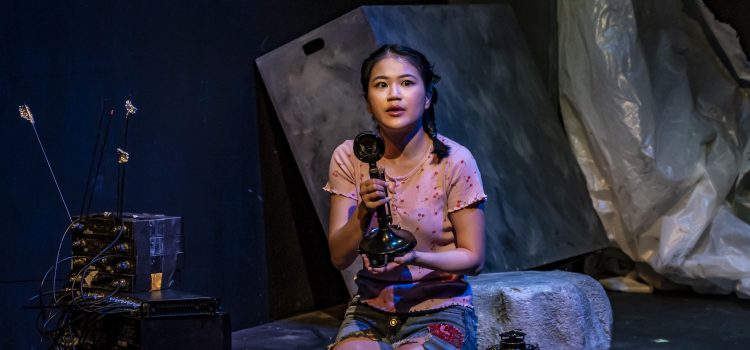
 Deftly directed by Bryn McLaughlin, she effectively builds suspense in a haunting and satisfying way. Sarah Wilkinson is pitch perfect as the spunky, scared, sweet young woman trying to find someone still alive. Every day, she talks on a ham radio, desperately trying to locate fellow survivors.

The likable Wilkinson, a St. Louis Theater Circle Award winner who continues to show her versatility on stage – in primarily musicals and comedies, now adds chilling drama to her growing list of credits.

This terrifying snapshot of a catastrophic event that has led to the collapse of modern society lingers, and Wilkinson is a standout in the introductory piece, and in two others.
Four of the one-acts that follow are uniformly solid, a potent mix of edgy whip-smart farce, audacious parody of corporate greed, cynical tone-deaf privilege on display during daily commutes to work, and a modern poignant reflection on human chemistry and connection.

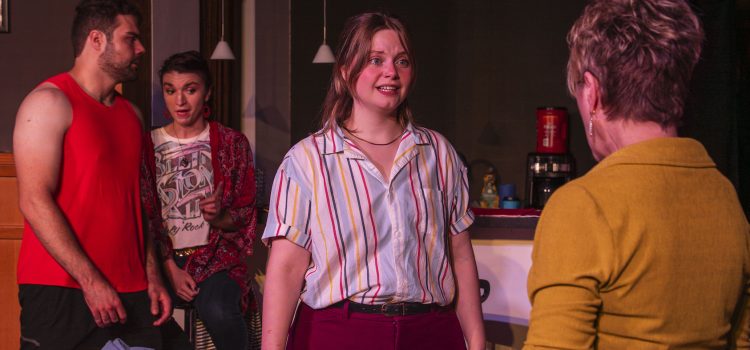
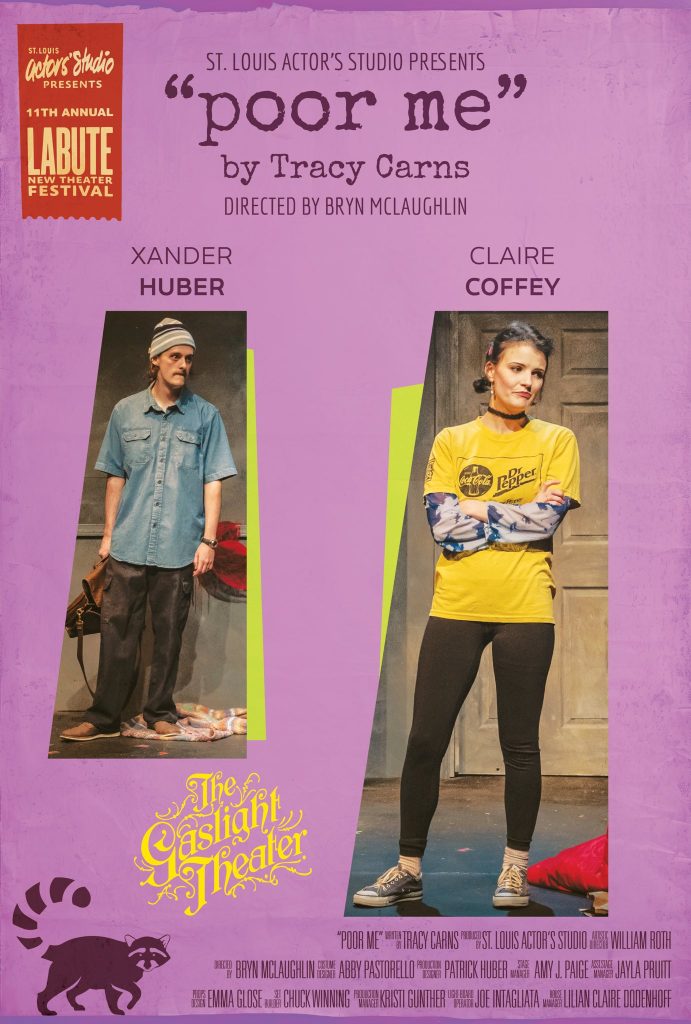
The one that didn’t quite land in the way it was intended was a rather whiny two-hander, “Poor Me,” by Tracy Carns of New York, who pitted former roommates and supposed friends in the awkward position of one having to tell the other to vacate a residence.

Despite savvy performances from Claire Coffey as defiant Cleo and affable Xander Huber as a nervous, reluctant Tad, the play focuses on a self-absorbed laid-off marketer who is squatting in an apartment building owned by Tad’s father.

She used to live there with Tad and his girlfriend, her friend, but now they are expecting a baby and have since moved away. Cleo’s still there, despite nudges and pleadings, the apartment building is going to be renovated, and they need her to find another place.

She is adamant about staying. Refusing the ultimatum, it’s a frustrating standoff where you have little sympathy for either party, even with Huber’s hangdog expression, especially after revelation of some ugly truths. However, the ending, which appears tacked on, is a head-scratcher.

Coffey, effortlessly poised, excels in three other works – “Hungry Women,” “Carpool” and “Scenes from a Bookstore,” as do the other shrewd performers.
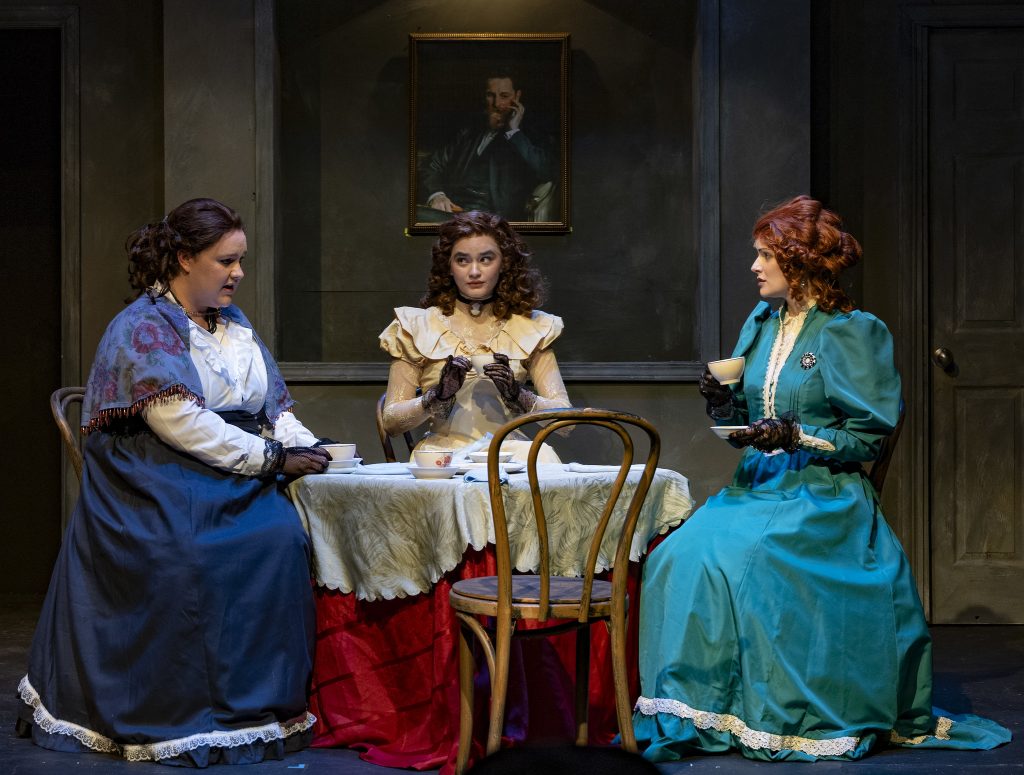
Reagan Posey-Mank, MacLean Banner and Claire Coffey in “Hungry Women.” Photo by Patrick Huber

A cross between “The Gilded Age” and “Yellowjackets,” “Hungry Women” is an unusual satirical look at widows contending with being on their own and going through a famine. Four women, all in well-to-do finery, meet for lunch, and reveal the horrors that have upended their lives.

While explanations aren’t that much a part of Melissa Maney’s witty flip of gender expectations and feminism enlightenment, the quartet of amenable actresses are primed to be brave and fervent.

Maney, of Hillsborough, N.J., gives the actresses meaty roles to have fun with, and Wilkinson again confidently shines in the part of Vic, requiring moxie and swagger — big determined energy.

MacLean Banner and Reagan Posey-Mank are newcomers to the Gaslight Theatre, and as Mary and Eden, project congeniality with Wilkinson and Coffey as Ruth (also newbies) in their dressy layers and coiffed hairstyles. Special mention to costume and wig designer Abby Pastorello for the period pieces.
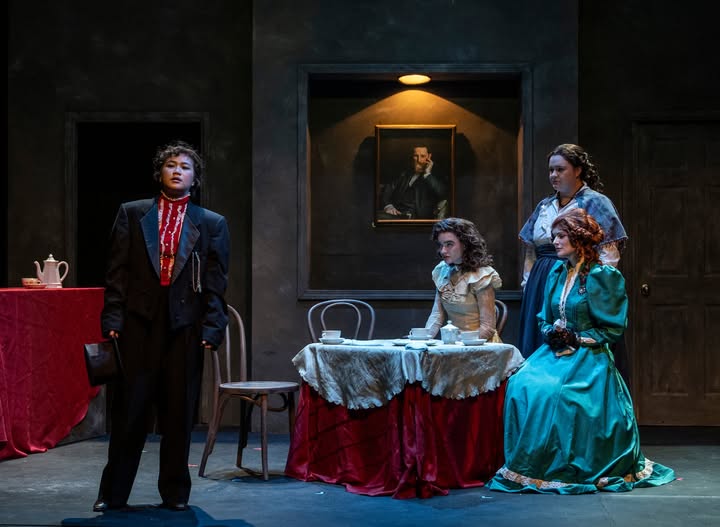
Sarah Wilkinson as Vic with Blanner, Posey-Mank and Coffey. Photo by Patrick Huber.

The mannered housewives have fun feigning shock at some morally outrageous developments and make their transformations believable.

Director Avery Harrison leaned into the pearl-clutching humor, and the performers boldly followed suit.

Banner, a formidable presence as Disney princesses in big splashy musicals and an insightful director of youth group summer productions, flexes different instruments in her toolbox in three of the one-acts.

Taylor Crandall and MacLean Blanner in “Scenes from a Bookstore.” Photo by Patrick Huber.

She is most impressive as a young wife and mother in Neil LaBute’s “Scenes from a Bookstore.” She and Tyler Crandall have convincing chemistry as two people who may share a history and unexpectedly reconnect in a Hudson Valley bookstore.

LaBute has slyly built a ‘will they or won’t they’ dynamic as the two keep running into each other, some obviously planned encounters. She has taken a part-time job there as the play unfolds.

The charismatic Crandall and naturally appealing Banner offer nuanced portraits of these two, coyly named “Him” and “Her.” Coffey, who easily fits into an elegant female role, plays ‘the’ wife, “She,” who drops into the business. Think of it as a relationship lens in the manner of Ingmar Bergman’s intimate “Scenes from a Marriage,” with much implied and less spoken aloud.

McLaughlin directed this layered work without ever tipping the scales. It may be a conversation-sparker afterwards, as it’s the last piece in this thought-provoking line-up. LaBute contributes a one-act every year.

The play also has precise technical cues too, and production manager Kristi Gunther, set and lighting designer Patrick Huber, and props designer Emma Glose seamlessly communicated the times and dates as the story progressed.
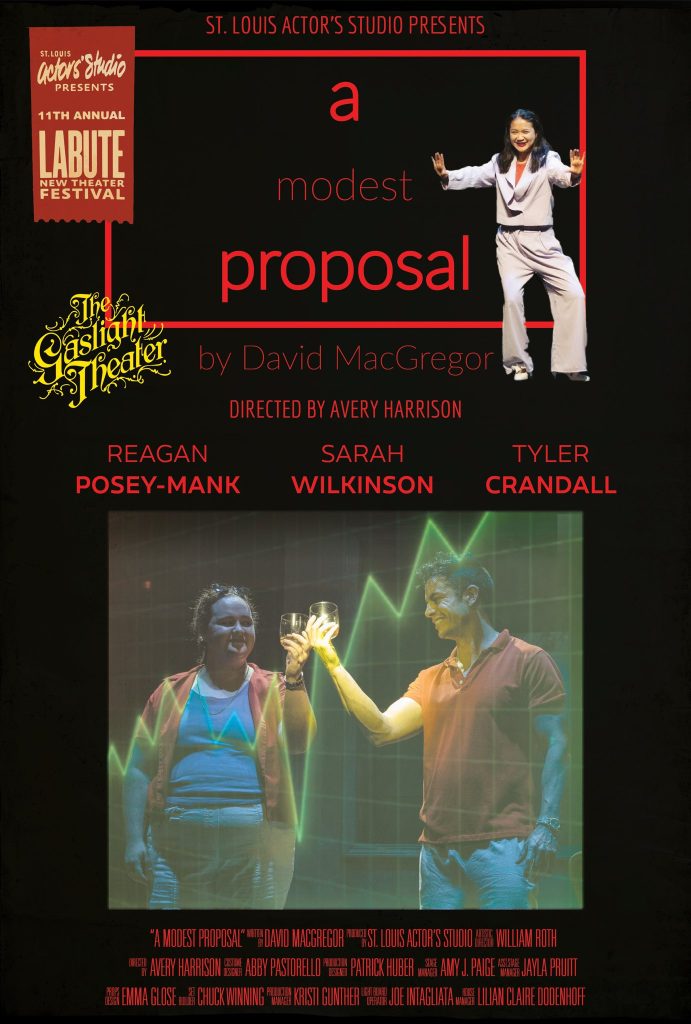
A laugh-out-loud audacious work is “A Modest Proposal” by David MacGregor of Howell, Mich. Smoothly helmed by Harrison in a nondescript office, MacGregor humorously ratchets up the out-of-control disparity between the haves and the have-nots.

A feisty self-assured consultant, played with relish by Wilkinson, proposes something so absurd as a solution to their bottom-line profitability that the egomaniac bosses, Crandall as an arrogant CEO and Posey-Mank as a condescending CFO, are seriously considering it.

Under Harrison’s distinctive direction, Wilkinson is smooth and silky as the persuasive salesman whose far-fetched plan is guaranteed to push buttons.
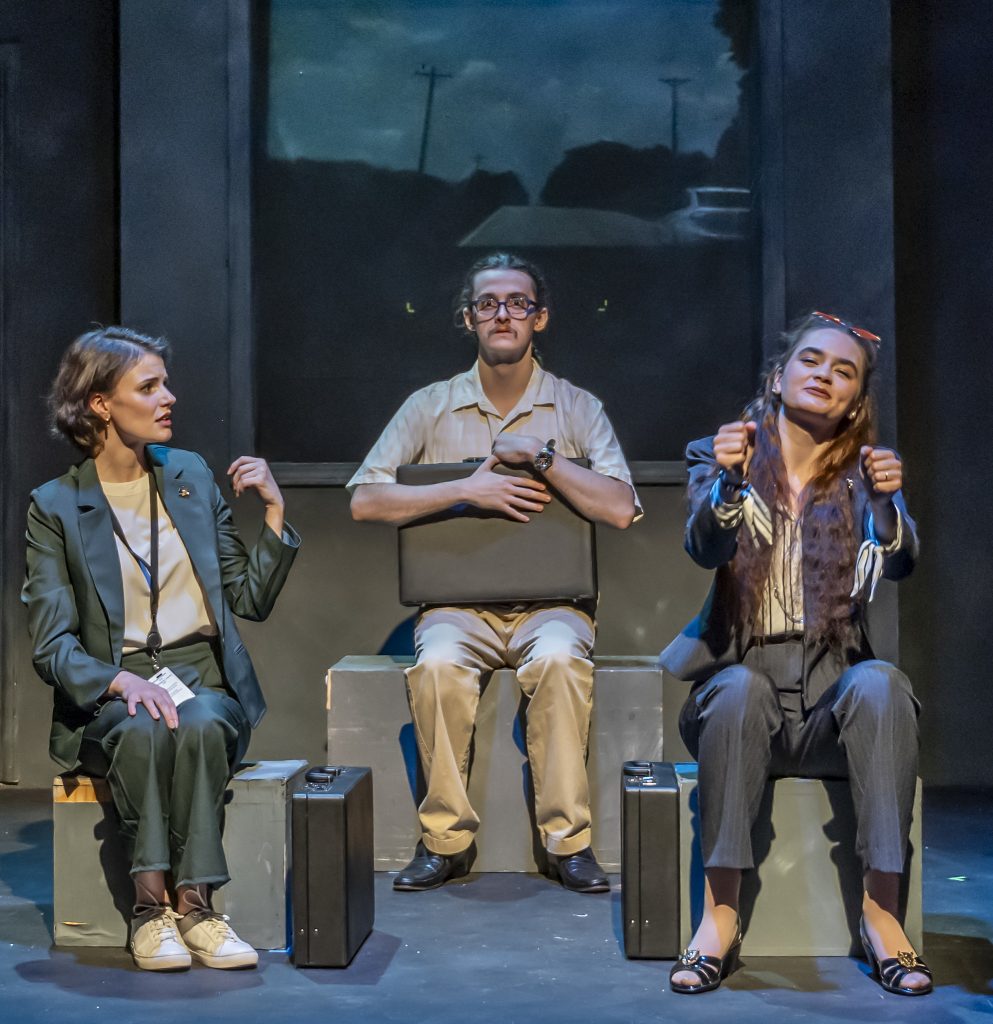
Claire Coffey, Xander Huber and MacLean Banner in “Carpool.” Photo by Patrick Huber.

Dave Carley’s script for “Carpool” is subtle, taking a familiar routine and enlivening it with co-worker interactions. Banner is the driver, known as A, Coffey is riding shotgun, known as B, and Huber is a mostly silent uncomfortable intern whose expressions speak volumes.

Then, Carley, from Ontario, Canada, adds some quirky twists, and director Harrison shapes it to be an amusing, off-beat piece.

A benchmark of this year’s festival is the quality of the performers and the writing, and these artists adroitly worked together.

Stage manager Amy J. Paige and her assistant Jayla Pruitt efficiently move things along, and the team pitches in for quick, minimal set changes, usually with splendid needle drops.

In the always intriguing festival’s annual execution, the contemporary pieces are stimulating, with authentic characters created by writers who have something to say, engagingly acted and modestly presented in The Gaslight Theatre’s intimate black box. This year’s offerings demand attention.

St. Louis Actors’ Studio presents the 11th annual LaBute New Theater Festival July 11 to 27, with performances at 8 p.m. Thursday through Saturday and at 3 p.m. on Sundays at The Gaslight Theater on North Boyle in the Central West End. General admission tickets are available via Ticketmaster or at the theater box office one hour before show time. For more information, visit www.stlas.org.
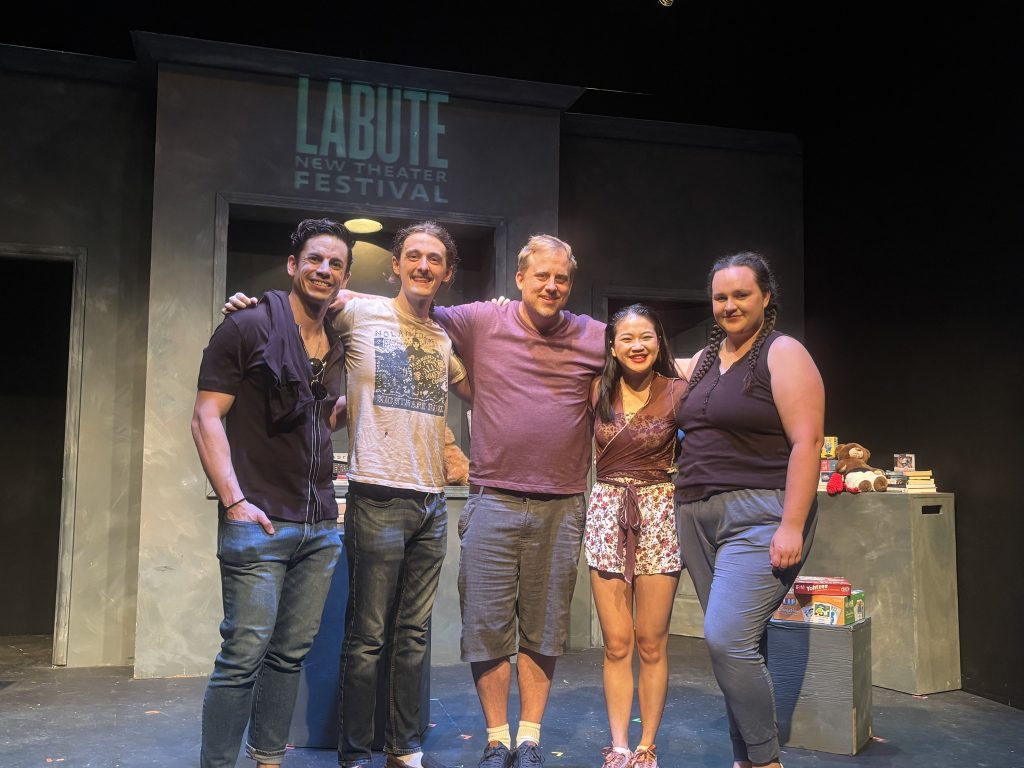

Tyler Crandall, Xander Huber, Sarah Wilkinson and Reagan Posey-Mank pose with playwright Aleks Merilo (center) at LaBute Festival. Photo by Patrick Huber.

By Lynn Venhaus

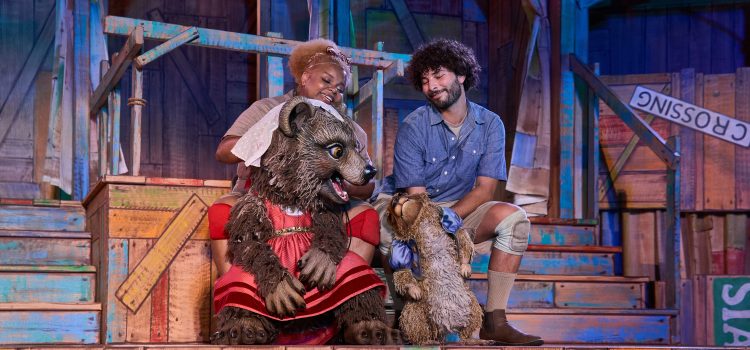
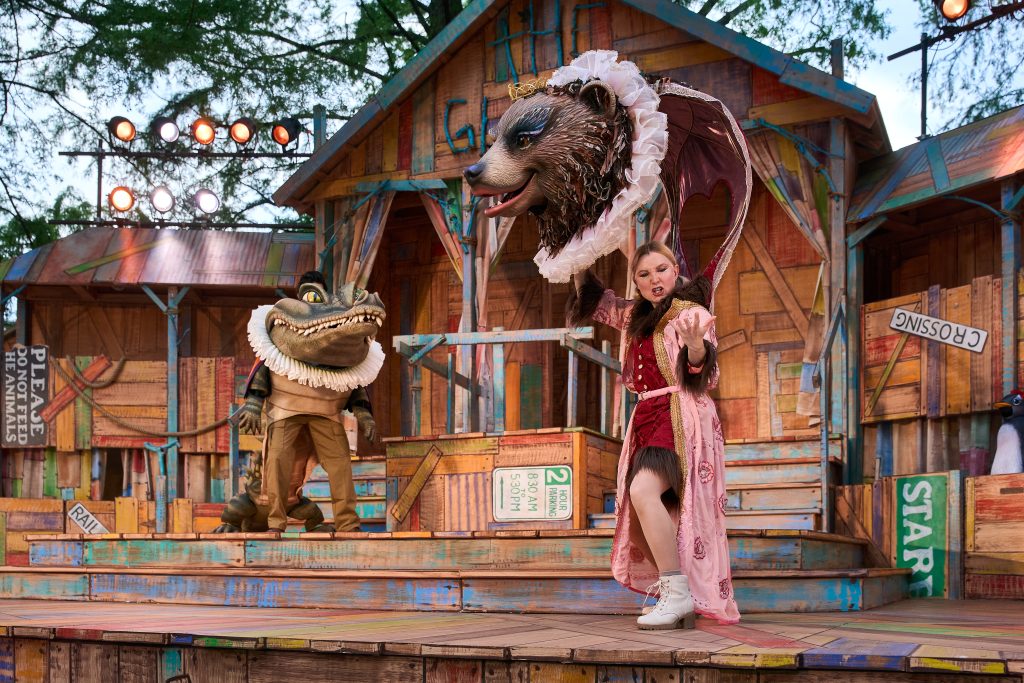
A grizzly bear, crocodile, prairie dog, red panda, and tiger dance into a party in Zoorona, and we get a bouncy beat, a perky vibe, and a bright-eyed and bushy-tailed family-friendly adaptation of Shakespeare’s classic love story, revived as “Romeo and Zooliet.”

After all, what’s in a name? “That which we call a rose by any other name would smell as sweet.” What if the animal kingdom put on their own show in the friendly confines of a public zoo?

This inspired first-ever collaboration between St. Louis Shakespeare Festival and the Saint Louis Zoo is staged in a grassy, wooded valley area known as “Historic Hill,” between the sea lions and Cat Country on the zoo’s south side.

It is an enchanted setting on a midsummer night, and even a rain delay and sound glitch on Friday, July 11, couldn’t dampen the enthusiasm and enjoyment, particularly of the young and the young at heart.

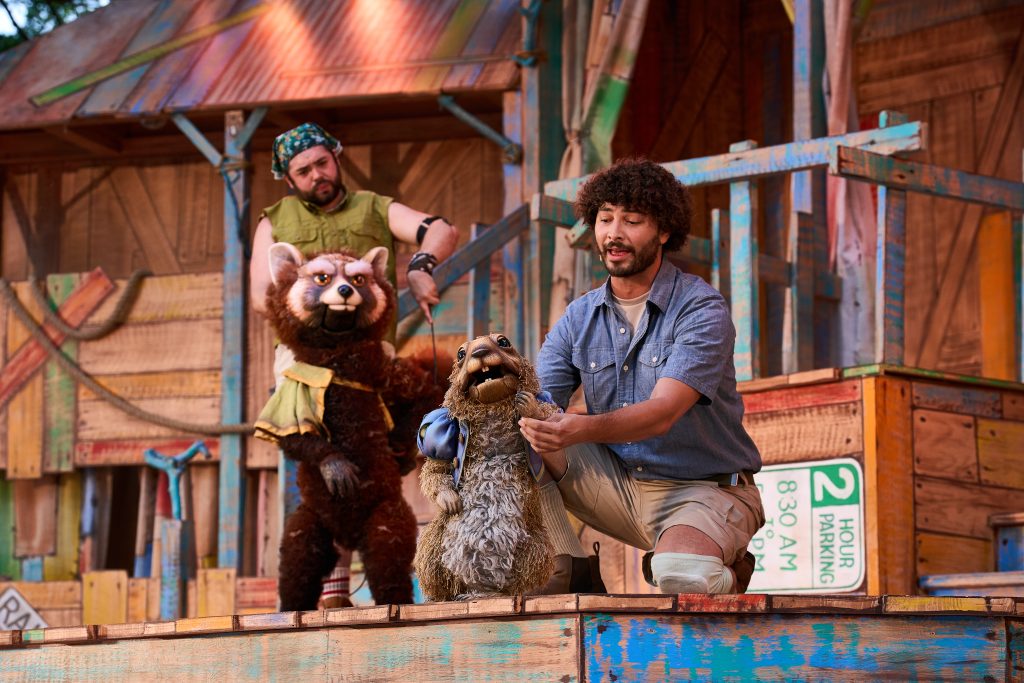
Ingeniously camped in a performance space named “The Glowb,” clever large custom-made animal puppets cavort in their make-believe habitats, courtesy of Shakespeare-trained actors nimbly operating their characters while they provide the voices and the movements.

Ryan Omar Stack and Nisi Sturgis. Photo by Theo R Welling.

The synergy between playful puppeteers is uplifting, especially when you have a tale aimed at young audiences that is an ode to friendship. (In crossing the biological divide, no animals were harmed in this charming presentation).

The tragic-free conflict, created with wildlife behaviors in mind, is that cuddly bear cub Juliet, an omnivore who leans towards being a vegetarian, becomes best friends with adorable prairie dog Romeo, an herbivore who eats plants.

They don’t mind their differences and want to spend time together without their friends and families interfering. Those colorful characters are not feuding; they’re just from different clans.

Playwright Jennifer Joan Thompson’s imaginative script, based on a 2015 graphic novel, “The Stratford Zoo Midnight Revue Presents Romeo and Juliet,” which was written by Ian Lendler and illustrated by Zack Giallongo, takes flight in this delightful zoo setting.

An exuberant Ricki Franklin, a master interpreter of Shakespearean iambic pentameter, is the sweet Juliet seeking a best buddy. Franklin is a two-time winner of the St. Louis Theater Circle Award for performer in a supporting role for “Twelfth Night” and “As You Like It,” two recent outdoor productions in Shakespeare Glen, and her vibrant stage presence is welcoming.

Jacob Schmidt and Jordan Moore. Photo by Theo R. Welling.

Agile Jordan Moore plays nice Romeo, smitten with Juliet in a way where it’s the platonic version of “Did my heart love till now? forswear it, sight! For I ne’er saw true beauty till this night,” and wants to hang out after they dance.

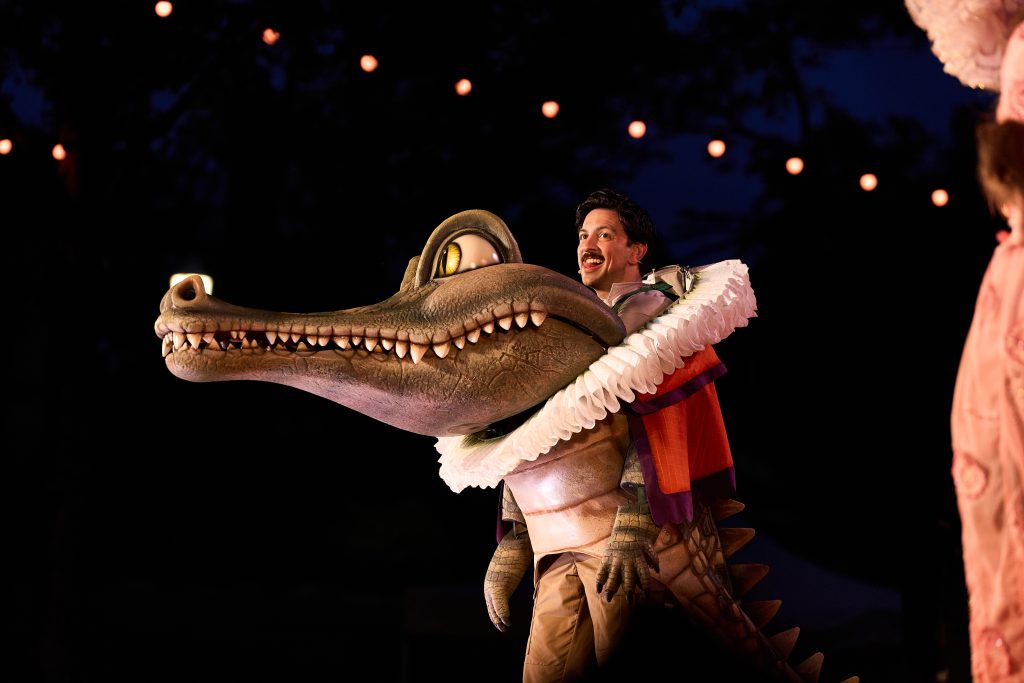
Juliet’s controlling mom, Lady Capulet, has other ideas — to have a play date with Paris, a smarmy crocodile with ulterior motives, for he sees a meal ticket. Nisi Sturgis’s suppleness in moving with an enormous bear apparatus above her head is impressive.

Adroit Ryan Omar Stack cunningly delivers his double entendre lines, trying to cover up his hearty appetite. He also portrays the prince, who is a sage sea lion (and easily distracted by balls!)

Zookeepers have gone home for the evening, and assorted critters come alive for fun and adventure. The remarkable puppets were designed and fabricated by Michael Curry Design. They collaborated with Julie Taymor for incredible “The Lion King” puppets, so no wonder these are striking in detail.

All the characters are animals that can be found in the Saint Louis Zoo – and on your way in and out, you can watch the prairie dogs’ antics as they go about their evening.

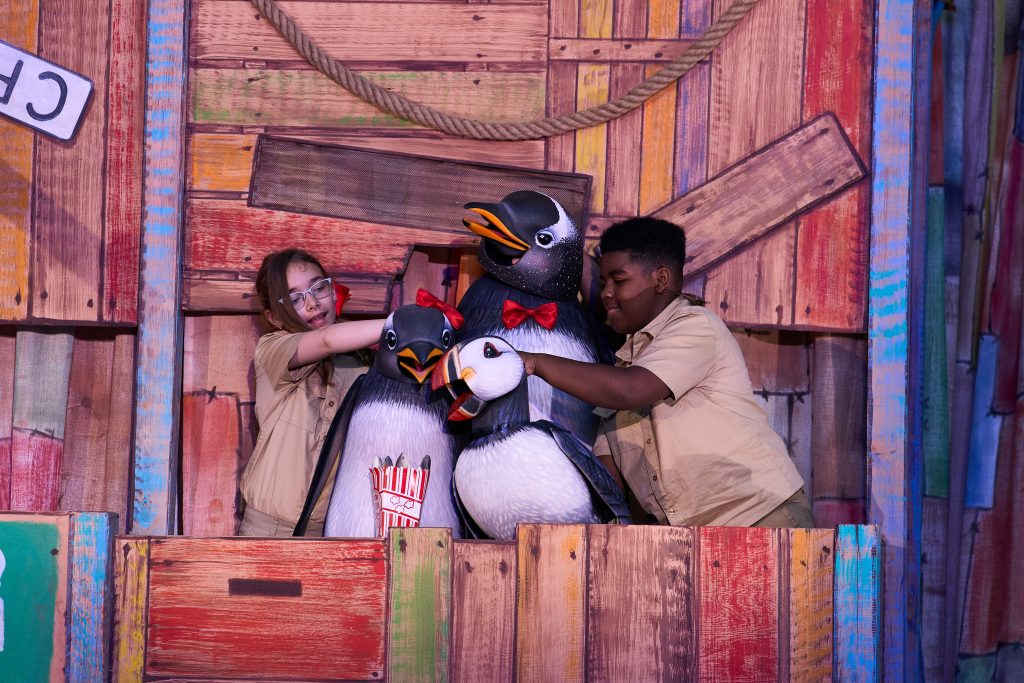
Narrators are a penguin, their offspring, and a puffin. Bryce Cleveland is Puff, Genevieve Mazzoni is Penny. Rian Page and Sophie Stogsdill are also listed in the program.

An animated Jacob Schmidt is a gleeful Mercutio, ready to dance, but he clashes with Juliet’s cousin, Tybalt (the always vivacious Rae Davis). He’s more laid back, she’s friskier – but they both are protective of their pals.

Schmidt also makes a comical entrance as an ambling tortoise, Friar John, ready to dispense his wisdom. He’s quite a crowd-pleaser.

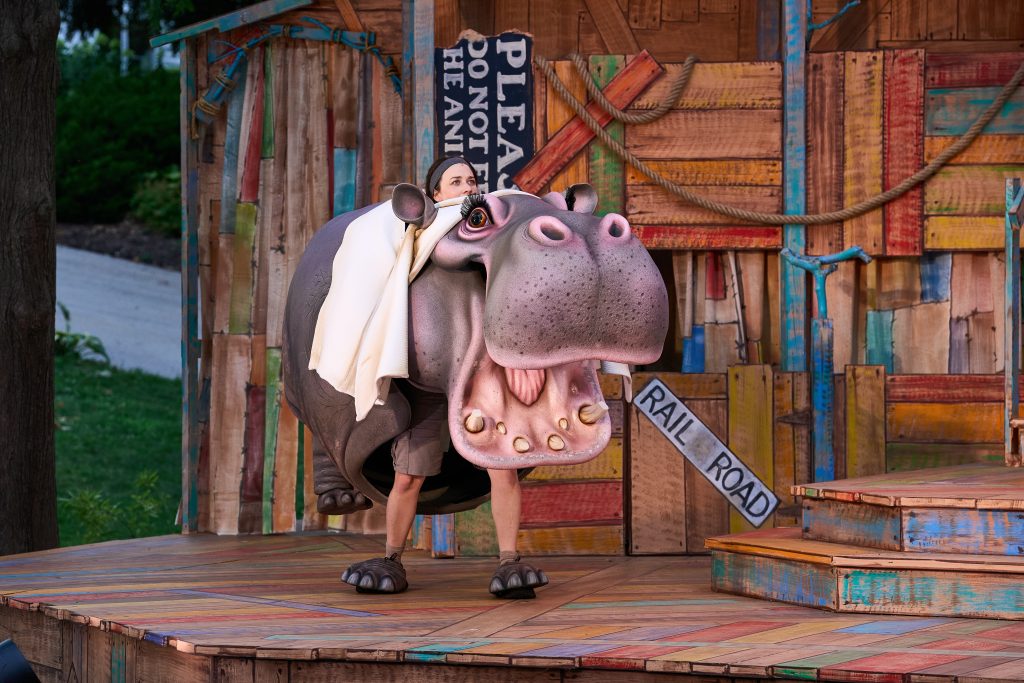
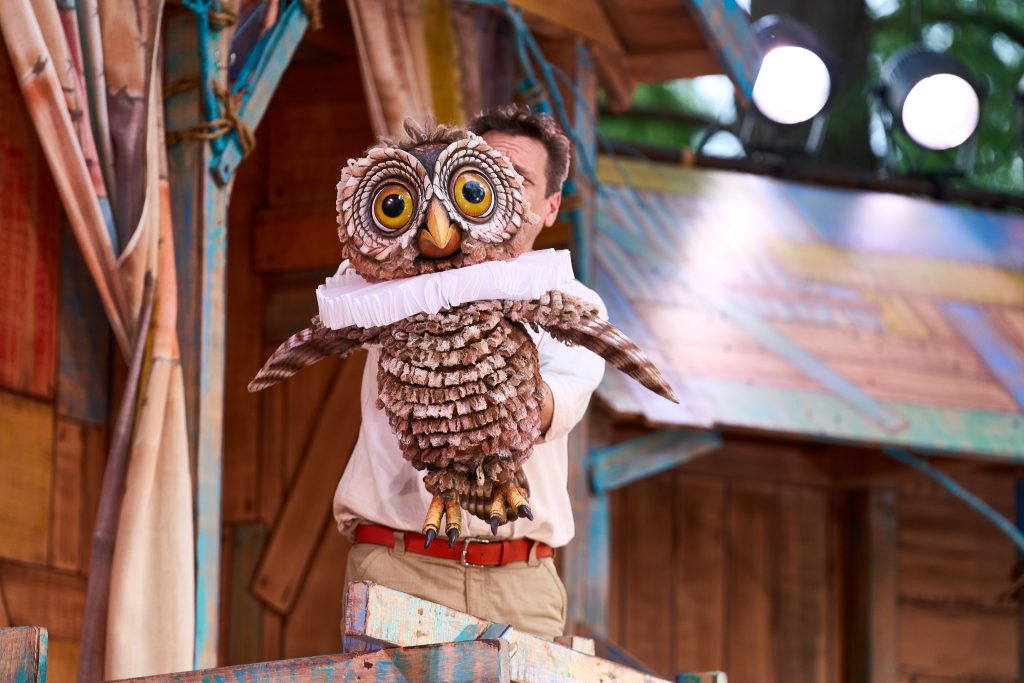
The mellifluous Jeff Cummings is Friar Lawrence, a wise owl, while Olivia Scicolone is a marvel of motion as a hippo, who is quite limber as Juliet’s fussy nurse.

Rising stars Charlie Mathis and Daisy Held are the capable swings throughout the run.

Scenic designer extraordinaire Scott C. Neale has fashioned a rustic performance space that’s part clubhouse, treehouse, campground and stage – with interesting nooks and crannies for the animals to pop in and take off from.

Jesse Klug’s lighting design incorporates fairy lights, and their illumination elicited ‘aws’ from the crowd.

Costume designer Rachel Adorno, in tandem with Caitlin McLeod, associate costume designer and additional puppet fabrication, give the animals distinct personalities – including sparkly masks for the party scene, to convey the whimsy. Eric Barnes managed the props.

With his keen eye for detail and his zest for high-spirited, fun-filled action, producing artistic director Tom Ridgely has helmed this show laser-focused on cheerful entertainment for all ages, especially wide-eyed youngsters.

Ridgely, as he always does, has included exceptional creatives on this show’s roster. His team included producer Colin O’Brien, associate producer Ryan Jeffery, stage manager Sarah Luedloff and assistant stage manager Britteny Henry.

Olivia Scicolone

The 80-minute show includes catchy pop tunes, with a sensational signature song “Just Like Romeo and Zooliet,” the show’s own interpretation of a song first recorded in 1964 by The Reflections.

It has been re-arranged by music supervisor Jeffrey “JQ” Oaiyum, and sung by JQ and Kiley B. Moore, with background vocals by Sophie Dimitroff and trumpet playing by Marques Carroll.

JQ is part of The Q Brothers, which have been involved in several shows presented here by the St. Louis Shakespeare Festival. A Chicago composer, he also works on the Emmy-winning Hulu series “The Bear.”

The peppy music numbers are choreographed by Sam Gaitsch, and Steve Ptacek did a terrific job with sound design. Zev Steinrock choreographed the fights.

Jeff Cummings.

While it’s briskly performed and pleasantly presented, “Romeo and Zooliet” is a massive undertaking, so no small feat for all involved to create such a magical, purposeful experience.

With an entire village of artisans, Ridgely good-naturedly directed this groundbreaking attempt to unite two different worlds, and we’re the better for it.

If you’re like me, you’ll leave grinning ear to ear, hearing little tots giggling being the best sounds of all on a summer’s eve. (And it’s not every day you hear barking sea lions ready to go to bed).

St. Louis Shakespeare Festival presents “Romeo and Zooliet” Tuesdays through Sundays at 7:30 pm from July 8 through Aug. 17. Performances take place at the Historic Hill in the St. Louis Zoo. For more information: stlzoo.org.

Rehearsal photos by Theo R Welling

Ryan Omar Stack as Paris.

By Lynn Venhaus

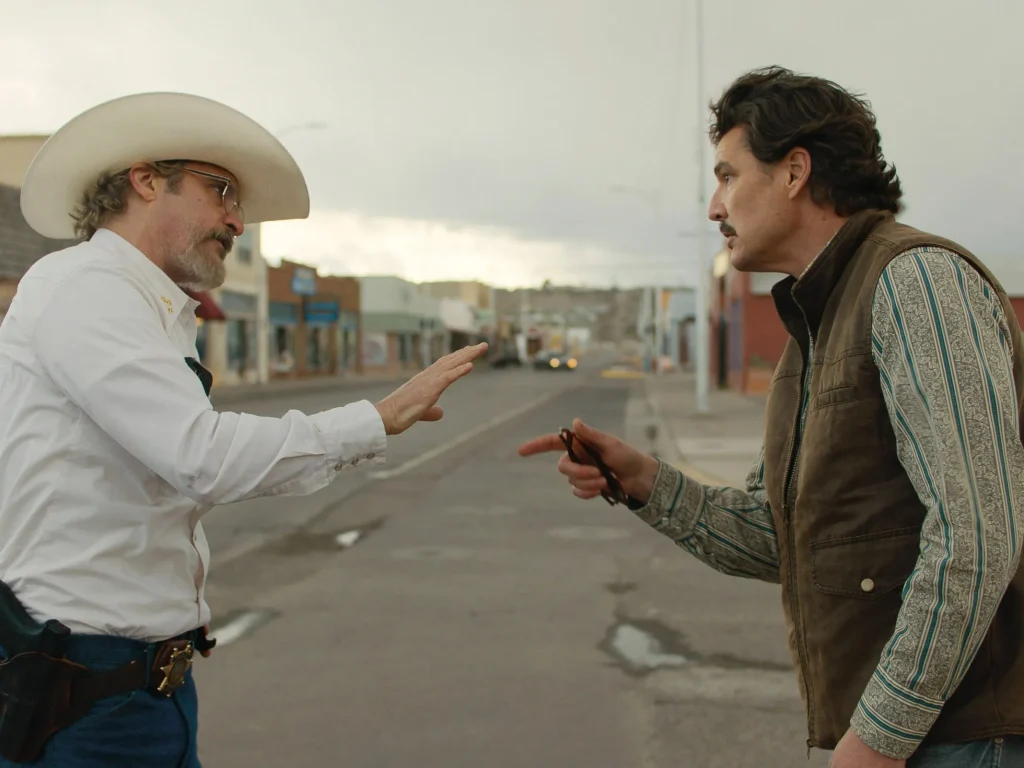
Self-indulgent claptrap, “Eddington” is an interminable contemporary western-dark comedy that writer-director Ari Aster can’t figure out how to end, nor has he given us any reason to care about what happens, presenting an overstuffed, confusing narrative involving a laundry list of anxiety-inducing crackpot-isms.

Pick a lane, dude. Aster, not a director whose work I have ever admired – or understood, has attempted to give us a snapshot of a small town dealing with the uneasiness of the coronavirus shut-down.

The tagline is “Hindsight is 2020.” Clever and worthy of looking back five years later. But he’d rather muddy up a narrative with stray targets, weak plot threads and aim for grievances that may or not be effective.

So, instead of an incisive account, we try to figure out the purpose of various peculiar characters who are in a disconcerting series of opaque situations.

At times, it captures that paranoid feeling of those uncertain early days of the pandemic, and the unnerving isolation and fear, but Aster mostly fritters away any clarity by tossing too many things together, mostly lightning rods that can stir things up.  

Namely, the unhoused, anti-maskers, conspiracy theorists, racists, privileged white kids grappling with societal issues, Black Lives Matter supporters, national outrage over George Flood’s inexcusable death, fear-mongering media, social media feeding frenzies, vapid influencers, anarchists, ‘Antifa’ supporters, white supremists, red state hysteria, QAnon believers, pedophiles, predators, bureaucratic small-town officials, small business owners, indigenous people’s lands, law enforcement, guns, state mandates, corporate greed, and those profiting off human misery.

Not to mention public health attempts to stop the spread of a rampant virus that wants to destroy us, and those whose lack of disregard for fellow humans under the guise of individual rights is reckless. 

But consequences matter little in Aster’s lawless world where good people are trying to maintain an order and are met with lack-of-information resistance.

Aster’s plots tend to meander but usually have a common denominator – things that can spin quickly out of control. Like he did in the idiosyncratic nearly unwatchable “Beau Is Afraid,” he ratchets up absurdities as people go through personal crises and makes a mockery of real issues.

His horror dramas “Midsommar” and “Hereditary” were designed to shock, and I can’t figure out his intentions here. He likes to be weird just because in his world, rules of form, function and ordinary behavior don’t apply, so he throws things on screen to see what sticks.

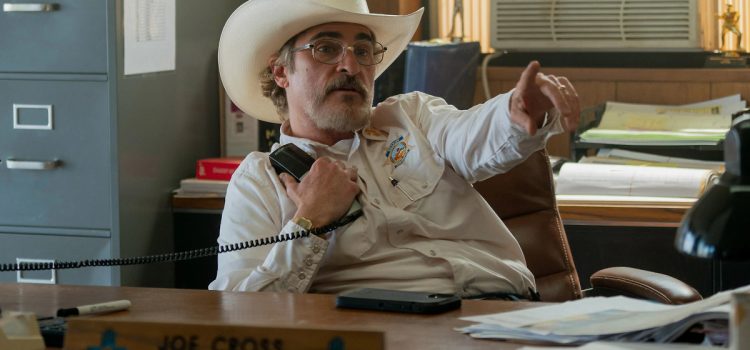
Oscar-winning Joaquin Phoenix delivers his customary commitment to character in an excellent performance as Sheriff Joe Cross, whose life is about to unravel in predictable and unexpected ways.

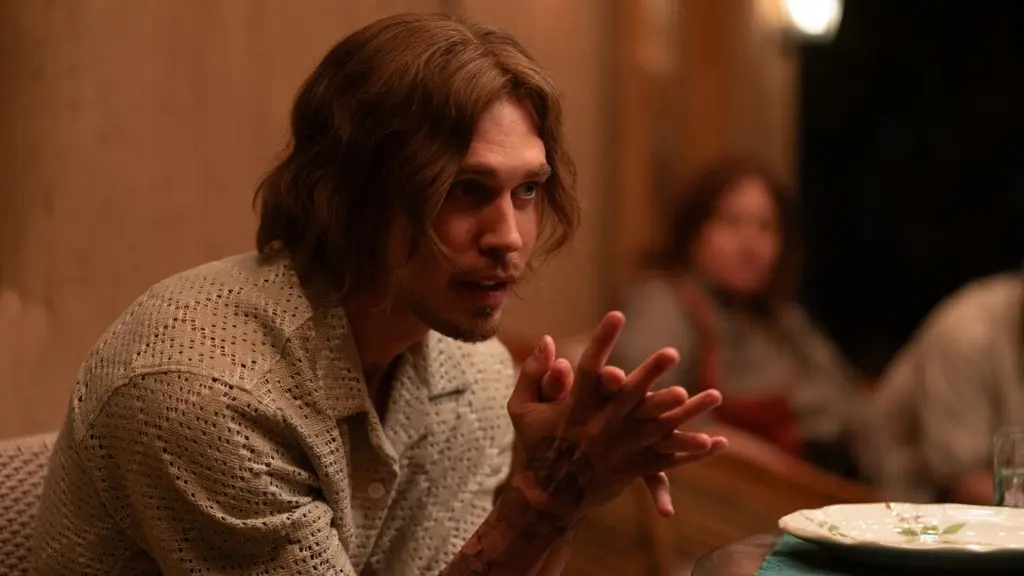
Most frustrating of all is that Aster wastes a strong collection of talent – including Austin Butler, barely making a blip as Vernon Jefferson Peak, a charismatic evangelical zealot type preaching about evil authoritarians and what he perceives to be injustices to the common man. He has amassed many followers through viral videos and in-person rallies.

One of his fans is Cross’s wife, Louise (an underused Emma Stone), who has had some sort of mental health trauma that makes assimilation into society difficult.

 She has a controlling mother who lives with them during the shutdown, interfering with their marriage and their beliefs, and spreads wack-a-doodle theories suspicious about the government. Deidre O’Connell is the meddling mom Dawn. An opportunist, her character does a 180 when it’s beneficial to her.

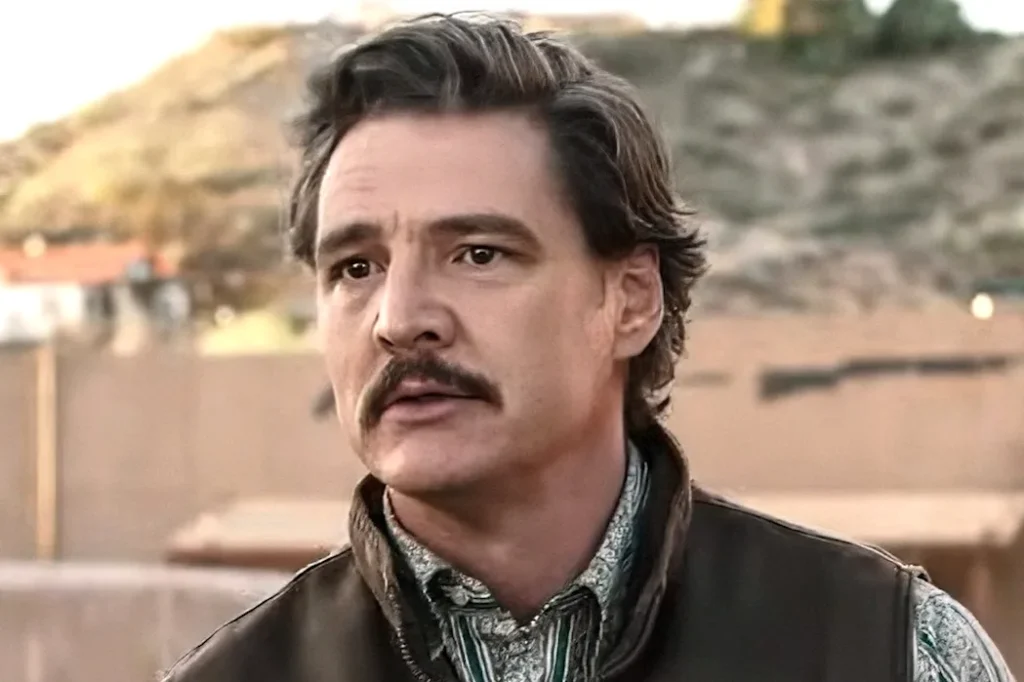
Pedro Pascal is measured as the popular and successful mayor, Ted Garcia, who is raising his teenage son Eric (Matt Gomez Hidaka) on his own. 

His son and his friends, eager to hang out, disobey social distancing rules and get involved in the Black Lives Matter protests. His friend Brian (Cameron Mann) is always filming on his phone for Instagram, trying to get ‘gotcha’ videos.

Garcia runs a bar, and is open to a tech company coming to his fictional tiny town of about 2500 people for future jobs.

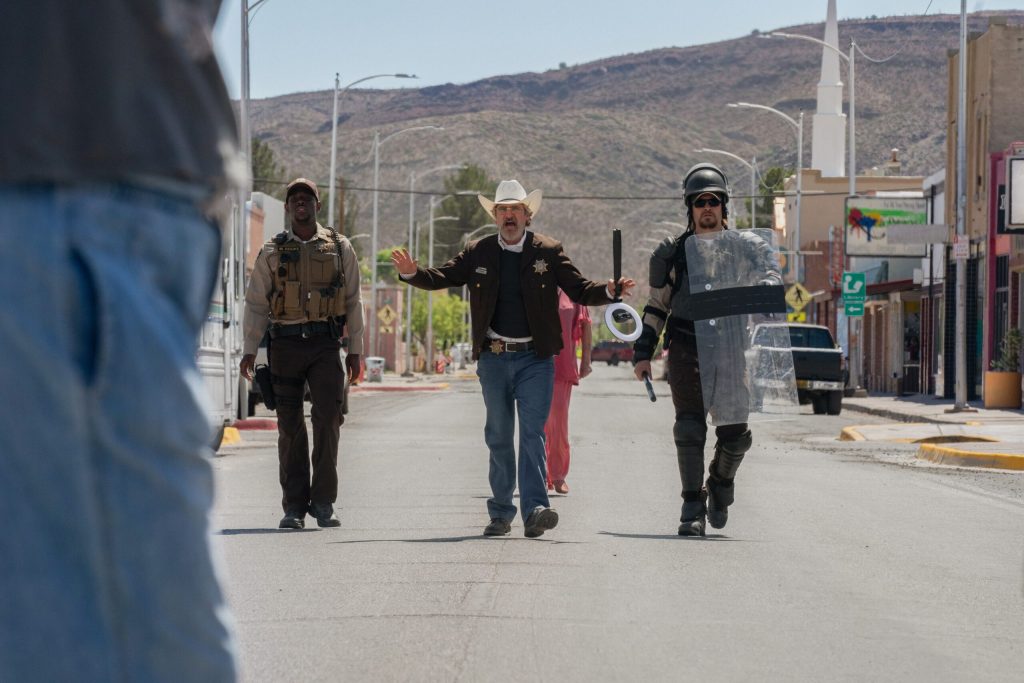
He now must deal with a challenger, Joe, whose mayoral run is often viewed as comical and a nuisance. His two deputies, Michael (Micheal Ward) and Guy (Luke Grimes, who played the beloved Kayce Dutton on “Yellowstone”) are loyal and steadfast, and try to maintain peace. But are also directed by a boss with ulterior motives.

Then, there is this shady group of unnamed operatives that come to town with wreaking havoc on their minds. No explanation here as to who they are.

The town becomes a battleground for free speech and heightens racial tensions.

And the list of plot threads goes on, and on and on. The movie should have culminated in a never-ending shootout where the asthmatic, illness-impaired sheriff survives many automatic bullets and mayhem for a later end result that is hard to believe, but not in Aster’s world view.

Outside of a few skilled performers making good impressions in these daffy offbeat roles, this movie has little to offer if you seek a satisfying story. 

Why I maintained hope that this movie would not be a senseless bloodbath with little effect is beyond me. Enter at your own risk.

“Eddington” is a 2025 dark comedy – contemporary western directed by Ari Aster and starring Joaquin Phoenix, Pedro Pascal, Emma Stone, Austin Butler, Deirdre O’Connell, Luke Grimes, Micheal Ward, Cameron Mann and Matt Gomez Hidaka. It is rated R for strong violence, some grisly images, language, and graphic nudity. Its run time is 2 hours, 28 minutes. It opened in theatres July 18. Lynn’s Grade: D

By Lynn Venhaus

If your family is friends of Bill W., you can relate to the messy Morans in Colin McLaughlin’s humorous original play, “Pride and Joy.”

However, no matter what level of experience you have with a family of strong personalities who eagerly share their judgmental opinions, you may recognize common traits inherent to those folks related to each other in the Midnight Company world premiere.

Like so many others, they don’t really seem to be connected at times but are inextricably linked as more layers are peeled off. Hence, the similarities to typical American middle-class parental units with idiosyncrasies (don’t we all?).

St. Louis playwright McLaughlin takes a light-hearted look at the emotional and argumentative Morans, who are focused on putting the fun in dysfunctional. A top-flight ensemble takes off with the homegrown material and runs at breakneck speed with it.

Think of it in the same vein as a very special episode of a family sitcom popular in the ‘70s and ‘80s, before Dr. Phil’s “How’s that workin’ for ya?” and Dr. Drew’s Celebrity Rehab.

Director Carl Overly Jr. has cleverly framed the presentation like a television program, complete with TV theme songs playing before the show starts, With such a spry cast, he deftly sets the scene and conveys a lived-in atmosphere easily.

The youngest daughter Sam has invited the family over to her cramped apartment for an intervention, but she is not yet there when they arrive, wondering who the person in need of one is. Is it the dad, who seems to be an imbiber where it may impede his life? Is it the pot-smoking daughter Maggie?

To their surprise, it is their hostess, Sam. She has harbored this secret, and has announced she is sober for three weeks, and is working on the Alcoholics Anonymous program. All worth learning about and supporting.

In this role, newcomer Sarah Lantsberger is endearing as anxious Sam tries to maintain order, but her family isn’t good at following directions. Loud and opinionated, they make it more about themselves. Whose intervention is this, exactly?

Sharp, smart performers who are renowned for crafting authentic characters appear to have a personal history with others from the start. Mom Mary Margaret is Lavonne Byers, one of the true legends of local theater and three-time St. Louis Theater Circle winner for lead performances.

She rarely does comedy but is a master at timing and is always present in every role. You know who this mom is immediately. And of course, she is scurrying around Sam’s apartment, picking up laundry and tidying up.

She and Joe Hanrahan, who plays the rumpled, grouchy, defensive dad Mike, have worked together before, so they are comfortable in a cramped space trying to dispense wisdom to their strong-willed brood.

Hanrahan, the artistic director of The Midnight Company, has always been open to collaborating with a gifted mix of young performers, and engages well with fearless artists, often associated with SATE, ERA, and the St. Louis Fringe Festival.

Oldest daughter Maggie, a ‘type’ of new-age pot-smoker prone to pontificating, is played by seasoned veteran Alicen Moser, another flexible performer. With her family, Maggie is a tad prickly and guarded, but you sense she could contribute more to the mental health goals if applied.

Jayson Heil once again demonstrates his versatility as the jerky, self-centered brother Jay, quick to criticize others and be a disagreeable sort. You get the feeling he didn’t play well with others as a child, let alone his sisters.

Heil, recently seen in “Cabaret,” “First Date” and winner of the St. Louis Theater Circle Award for “All My Sons,” all at New Jewish, is a casual cross between a know-it-all and a slacker as Jay, forced to be somewhere he’d rather not and loathe to confront family memories.

Photo of Lavonne Byers and Joe Hanrahan by Todd Davis

With all their nutty qualities and hang-ups, you can tell there is fertile ground for the characters to dig into, especially in a 12-step program. McLaughlin’s dialogue allows them to convey a shorthand with each other. And the performers are quick verbally and physically to further color the family interactions.

As people familiar with dime-store psychology frequently do, they all talk in self-help books’ psychobabble. Mom is religious, using her faith when it’s convenient while the rest of the family dismisses her outspoken reverence for the son of God.

So, is there a point besides shining a light on a quirky family who needs to break some patterns and establish healthier practices? Hopefully, the intention is to share the universality of family enablers, personal struggles leading to self-medication, self-absorbed people having a change of heart and showing they care for each other when you don’t think they are capable of it?

And not lose sight of that handy mechanism, humor. While some of the characters exhibit traits common in a family with substance abuse issues, a few moments of levity don’t seem to fit as family members deal with their own issues and how it relates to the family dysfunctional dynamic.
So, little digs here and there are just their way of accepting – or not – their habits and excuses. They have some encouraging breakthroughs instead of denial, which leads to a sense of relief that there is hope here.

Yet, there are a few actions that negate that (Maggie’s weed consumption acceptance, dad retrieving a hidden flask…is this a joke? Has nothing changed?). Leave it at hopeful, not thinking “well, maybe not…”

This is a very personal, heartfelt show that means a lot to the playwright, director, cast and crew. It’s obvious in the work that was put into it, and the satisfaction in having it ring true to patrons.  

Photo by Kristina Schall DeYoung

Chuck Winning’s set is a cozy blend of form and function, rendering a young woman’s first apartment, and utilizing the Chapel’s performance space well, while Tony Anselmo’s lighting design suits the material well. Costume designer Liz Henning’s casual attire simply shows each character’s personality.

Art that can entertain, amuse and call people to action is joyous to behold. One doesn’t have to be preachy or melodramatic to get points across. And that’s the beauty of connecting through live theater

The fact that we can all sit in a darkened theater and laugh at the foibles we see in ourselves, and how we each can change the things we can is a powerful message.

Therefore, any opportunity to provide some helpful tools is always welcome (just as triggering messages are).

In that spirit, I would be remiss, after years of advocacy, personal tragedies, a long list of documented dire consequences for generations of alcohol and substance abuse, and much therapy for the remaining family members, not to mention that there is a genetic component that factors in understanding, communication and progress.

Public service announcement: St Louis Alcoholics Anonymous https://aastl.org/ and St Louis Al-Anon: https://www.stl-al-anon.org/

No one is ever alone.

 “God, grant me the serenity to accept the things I cannot change, the courage to change the things I can, and the wisdom to know the difference.” – Serenity Prayer

Photo of Alicen Moser and Sarah Lantsberger by Todd Davis

The Midnight Company presents the world premiere production of Colin McLaughlin’s “Pride and Joy” July 10 through July 26. Thursdays, Fridays and Saturdays at 7:30 p.m., and Sundays, July 13 and 20, at 3 p.m. at The Chapel, 6238 Alexander Drive.  For more information: midnightcompany.com

.

By Lynn Venhaus

What superhero fatigue? With clear-eyed focus and a reverence for the comic book mythology, writer-director James Gunn has restored Superman to his altruistic roots, his stranger-in-a-strange-land dilemmas, and the always necessary spirit of fun and adventure this beloved symbol needs to possess.

Most important of all, this iconic American superhero, first seen in an Action Comics book in 1938 (later DC), is decency personified – kind and untarnished humanity, universalistic. In this new direction, he is not invincible, but he stands tall for all the right reasons.

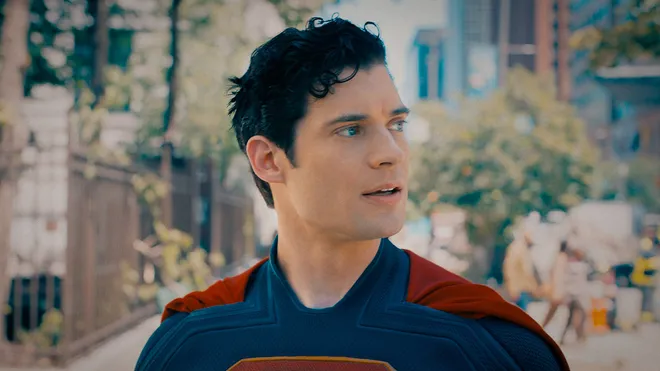
The result is the best “Superman” film since “Superman II” in 1982 and the best on-screen characterization of both the man and the myth since Christopher Reeve donned the red cape. David Corenswet’s heartfelt portrait of the noble Kryptonian trying to save the world from constant nefarious threats is a genuine beacon of goodness.

David Corenswet

Corenswet is captivating in ways the wooden Henry Cavill in the darker “Man of Steel” and Zack Snyder’s “Justice League” films, and Brandon Routh, one and done in the 2006 ‘Superman Returns,” could never be.

Corenswet projects everything you want in a Superman – strong, selfless, hopeful, honorable, loyal and caring.

In Gunn’s bold world-building, Metropolis is a place where robots, metahumans and ‘pocket universes’ converge, and a fragile geopolitical society is easily manipulated by megalomaniac tech billionaires with power-mad intentions.

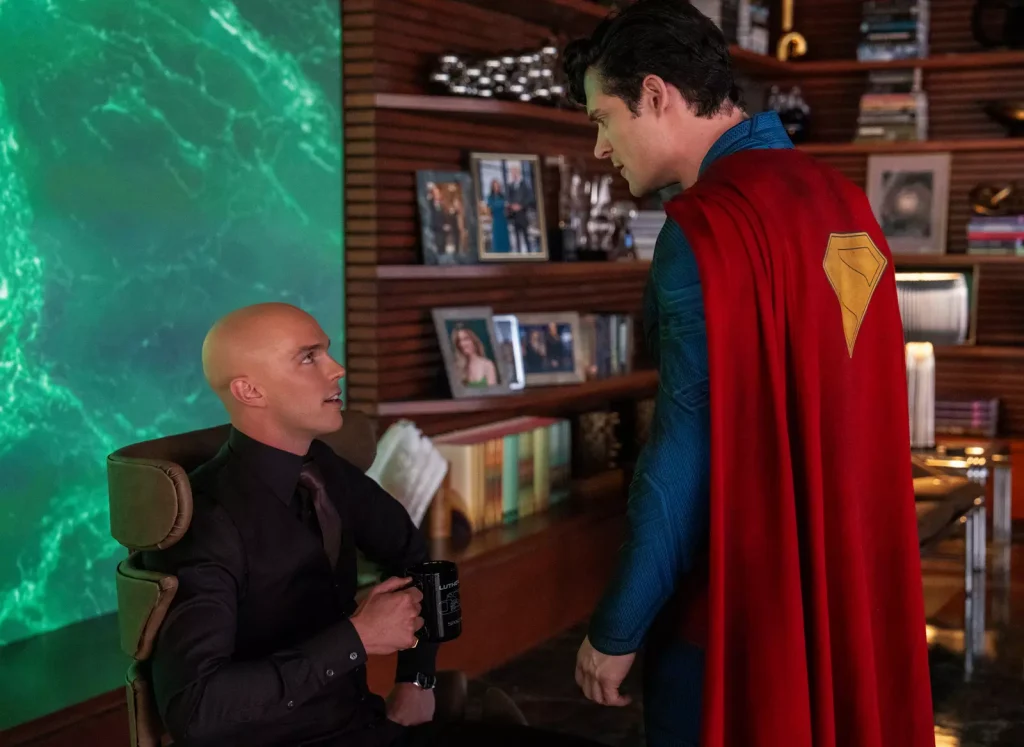
Such is the latest rendering of super-villain Lex Luthor. Nicholas Hoult tears into the ruthless, selfish nature of a sociopath with gusto. His wealth gets him far, and he’s trying to control the media and the public image of the alien “Kryptonian” as the perpetual outsider, raising suspicions about his intentions. A corrupt slimeball, he doesn’t care about truth, nor justice, and has acolytes and syncophants at his beck and call.
Nicholas Hoult is Lex Luthor.

As is customary, an epic battle of good vs. evil is at the heart of this, and sure, all the state-of-the-art computer-generated visual effects are on display – fancy gizmos, shiny tools, strange creatures and weird synthetic forces built to be killing machines. However, it seems less video-game action to convey the mayhem in this go-round.

Those familiar with this fantastical universe will recognize characters the casual fan won’t, but that doesn’t detract. In recent years, Marvel has lost its way because the movies required homework, but not in this DCU case. It’s easy to get up to speed about the “Justice Gang” metahumans.

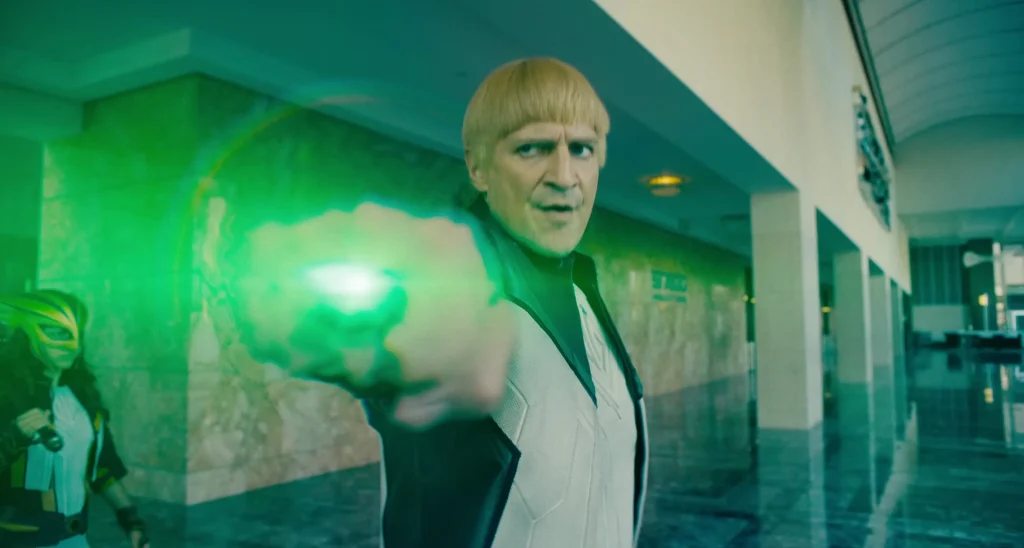
The addition of Green Lantern (a hilariously cocky Nathan Fillion), sarcastic Hawkgirl (easily annoyed Isabel Merced) and impatient Mister Terrific (amusing Edi Gathegi) is fun because the actors are convincing, as is an unrecognizable Anthony Carrigan (“Barry”) as Metamorpho. Superman does most of the heavy lifting, but he can’t be everywhere, and that’s when the support shows up.

Nathan Fillion as Guy Gardner, aka The Green Lantern.

Gunn, from St. Louis, wears his comic book heart on his sleeve. He gets it. You feel how much he cares about getting this right, about making a Superman for a new age, yet holding the values we’ve always believed him to represent.

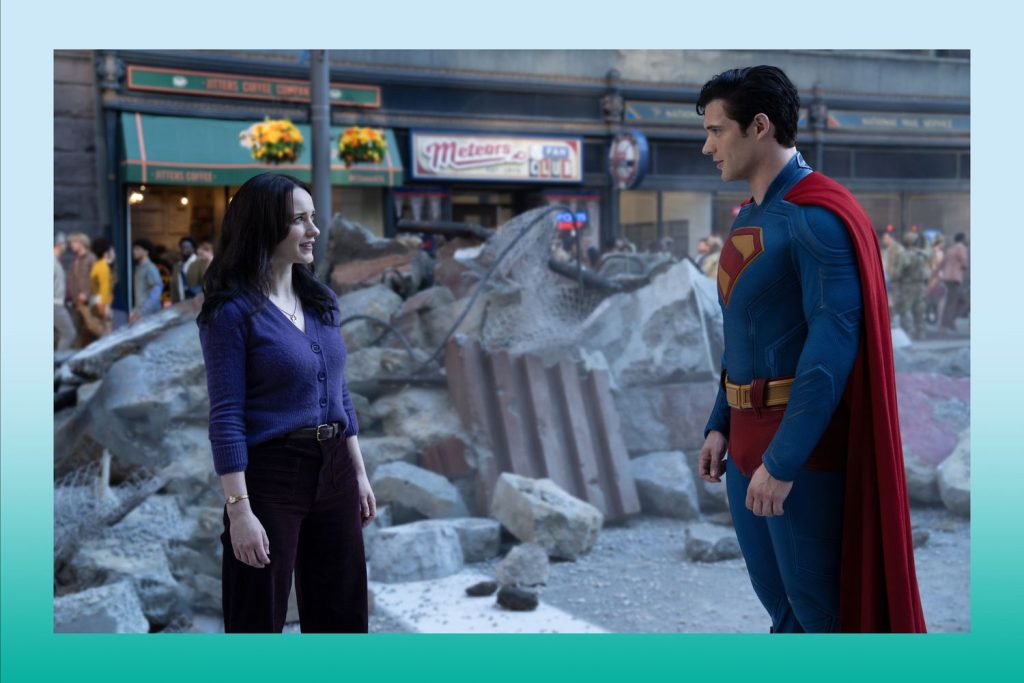
Gunn doesn’t get bogged down in origins, plopping us into a fully realized crazy modern world that keeps the Daily Planet staff busy with chaotic breaking news. Lois Lane and Clark Kent are already a ‘sorta thing,’ although not public, and the chemistry between Rachel Brosnahan as the crackerjack reporter and Corenswet as the earnest Clark is palpable.

Their testy interview scene is a dandy way to introduce their relationship, as she struggles to reconcile his two ‘sides,’ raises uncomfortable ethical questions.

Meeting his adoptive parents, Martha (Neva Howell) and Jonathan (Pruitt Taylor Vince) Kent, at their Kansas farm is illuminating. Making them older works, and in their minimal screen time, tug at the heartstrings as the loving mortals who raised their special kid.

Pruitt Taylor Vince is Pa Kent, talking to his son, Clark (David Corenswet.

Superman’s inner torment is exacerbated when a glitchy tape of his parents on Krypton, Jor-El and Lara (Bradley Cooper and Angela Sarafyan) is restored by Luthor’s henchmen and used to cast aspersions on ‘the immigrant.’ He loses the faith of many fans, now suspicious. Or in today’s lingo, basically “cancelled.”

How does he get back in the public’s good graces, especially when he’s incarcerated in a shady maneuver by Luthor?

The plot thickens, with Luthor intending to profit from a war — Boravia plans to invade Jarhanpur. The international consequences as well as life-threatening danger in America are colliding in a high-stakes way.

Meanwhile, the Daily Planet is investigating Luthor’s business dealings, and Jimmy Olsen (Skyler Gisondo) has an inside source. The newspaper staff is suitably articulate, skeptical and trustworthy, with Wendell Pierce as no-nonsense editor Perry White and ex-SNL Beck Bennett as sportswriter Steve Lombard.

Rachel Brosnahan is Lois Lane.

By the time Lex is throwing everything in Superman’s path, including look-a-like clones, lethal bad girl The Engineer (María Gabriela de Faría) and a gigantic glitch in the cosmos, our bloodied and battered Superman valiantly is tasked with taking care of the world order – and sanity – for at least a little while until the next DC Universe adventure.

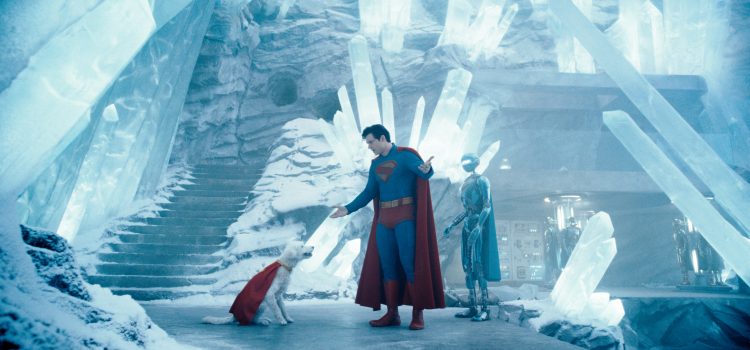
Entertaining new additions include a frisky superdog Krypto who often misbehaves, helpful robots in the Fortress of Solitude who are as likable as C-3P0, and comforting use of John Williams’ original 1978 “Superman” theme through composers David Fleming and John Murphy . There are some fun cameos and plentiful Easter Eggs too. Will Reeve, son of Christopher Reeve, is a reporter.

Gunn, who helmed all three “Guardians of the Galaxy” films plus 2021’s “The Suicide Squad,” has made the visuals pop, the aerial flying zippy, and the story interesting. Henry Braham, the cinematographer he used for those aforementioned films, is back with a clear understanding of the assignment.

Although, in fairness, by the time we’re seeing multiple battling clones, bombardment of raptors in the sky, and crumbling infrastructures, the film needed to wrap up – and do so quickly.

Nevertheless, this thrilling new direction bodes well for franchise-building, which DC Studios heads Gunn and Peter Safran are intent to do.

With heart, hope and humor, Gunn faithfully honors the inspiring “‘Superman’ legacy, first created by Jerry Siegel and Joe Shuster, with an unwavering integrity and optimism.

This Superman believes in the goodness of mankind, and the importance of kindness in an increasingly hostile, cruel and cold world. To be reminded of what Superman has always meant in pop culture, and how he’s captured our fancy for nearly eight decades, is a remarkable feat.

While the film may not be perfect, this “Superman” comes close to redefining the superhero’s place in our hearts and imaginations. And it checks all the boxes as a splendid summer blockbuster.

“Superman” is a 2025 fantasy-action-adventure-superhero film written and directed by James Gunn and starring David Corenswet, Rachel Brosnahan, Nicholas Hoult, Nathan Fillion, Isabel Merced, Wendell Pierce, Skyler Gisondo, Sara Sampaio, Anthony Carrigan, Edi Gathegi, Alan Tudyk, and Beck Bennett. Its run time is 2 hours, 9 minutes, and it’s rated PG-13 for violence, action and language. It opened in theatres July 11. Lynn’s Grade: A.

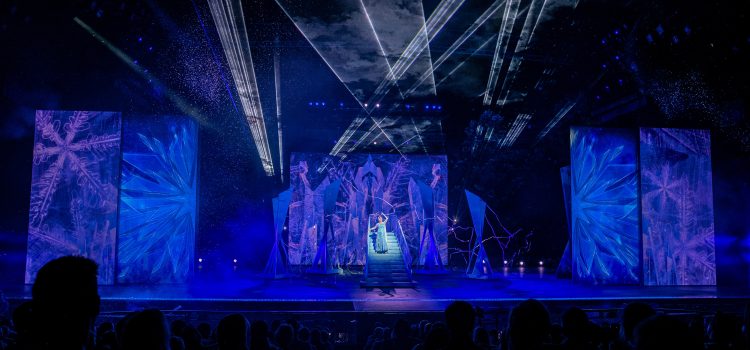
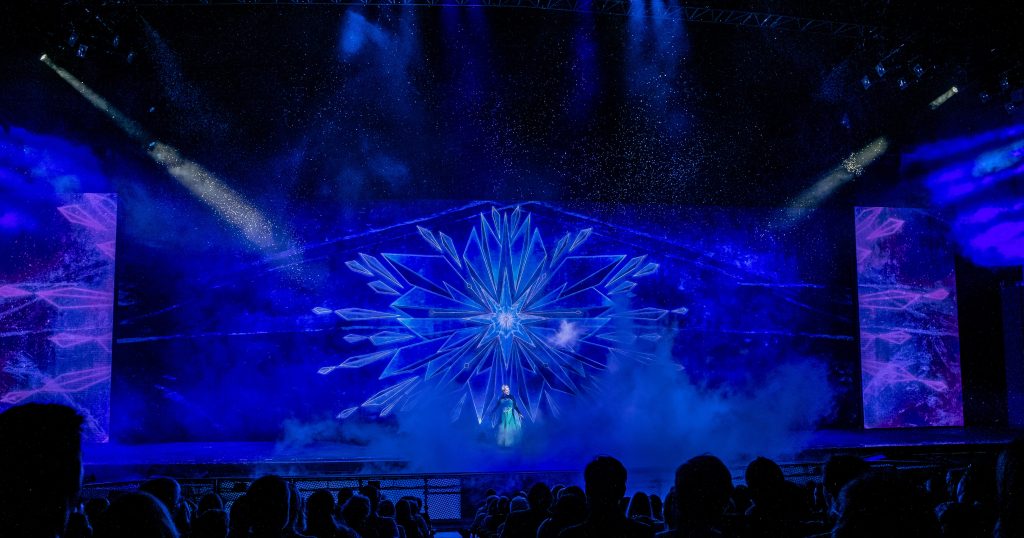
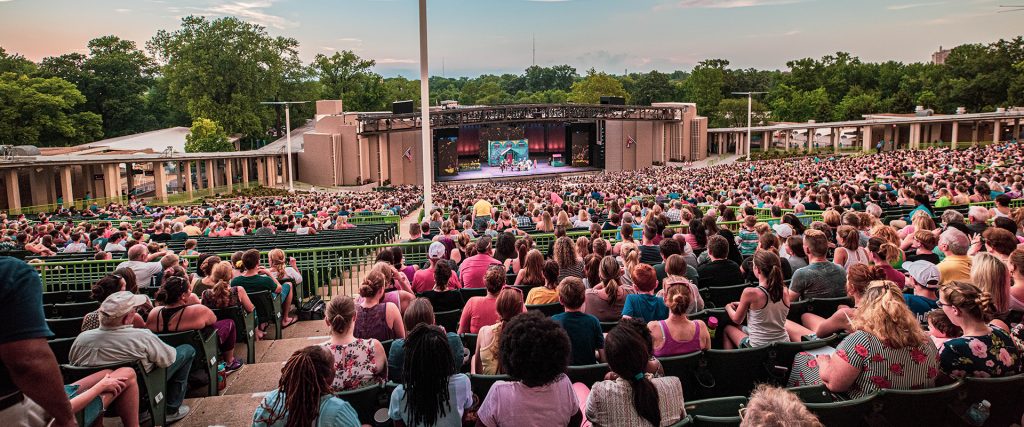
When Disney’s Frozen opened Sunday night on the James S. McDonnell Stage in Forest Park, the production debuted cutting-edge digital mapping projections, lasers and other technologies never before used at The Muny.

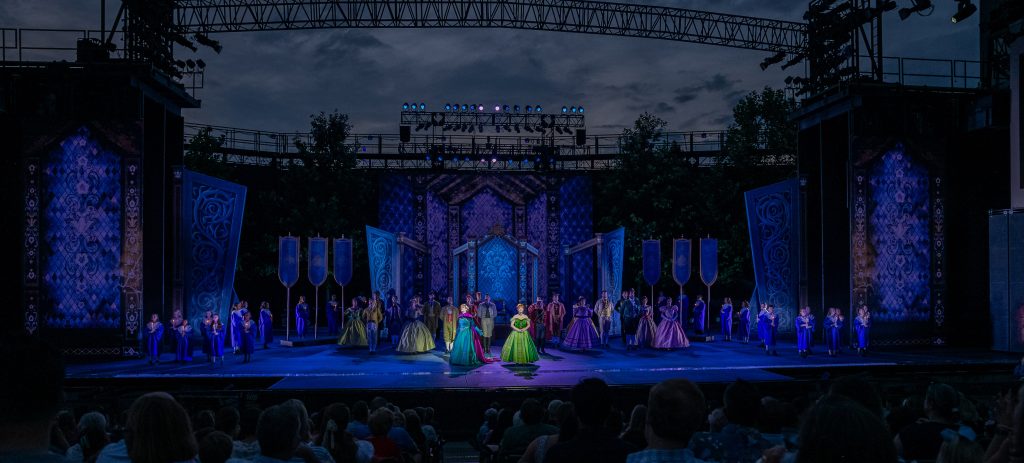
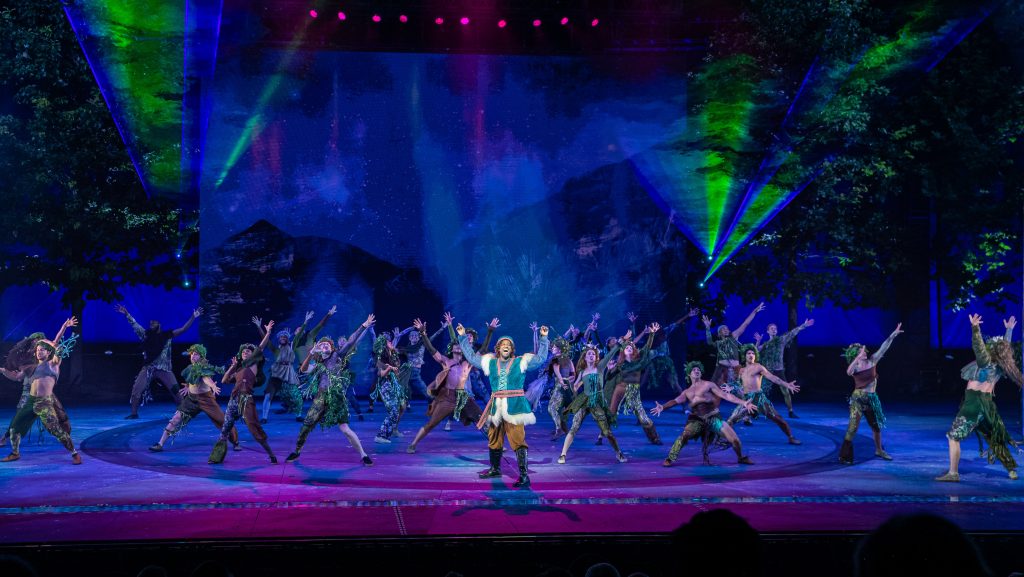
These stunning, cinematic innovations blend seamlessly with The Muny’s three existing LED walls, hand-painted scenery and other more traditional storytelling techniques to transport theatregoers to the kingdom of Arendelle.

The Muny premiere of Disney’s Frozen is presented by Edward Jones and runs through July 14. Performances begin at 8:15 p.m. nightly.

“This is Muny history — it’s another game changer for the kind of storytelling we’re able to do,” said Muny Artistic Director & Executive Producer Mike Isaacson. “I’m so grateful to our lighting department, led by Rob Denton, our set designers and our creative team for their two-year effort on this production. I’m gobsmacked by the results. St. Louis must come see this magical creation.”

🎥 Watch video from opening night of Disney’s Frozen

Digital mapping projection transforms ordinary surfaces into dynamic display areas by projecting video or other visual content onto them. For Disney’s Frozen, four 40,000-lumen laser projectors at the back of the theatre are used to create snow, ice, wind and other effects on the booms, stage floor and other pieces of scenery designed by Tijana Bjelajac. The two sets of booms — The Muny’s handpainted backdrops that open and close — are 72 feet wide and 23 feet high.

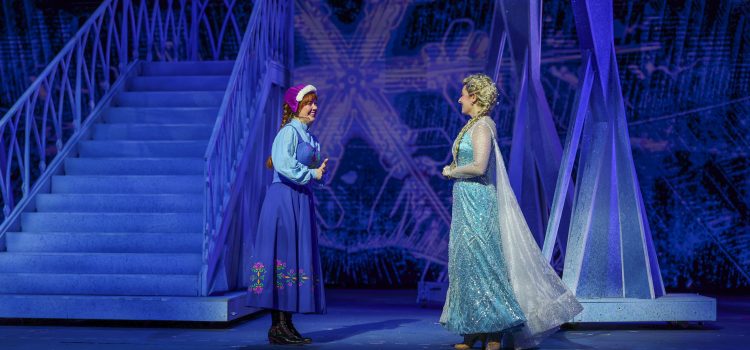
Hannah Corneau in the Muny production of Disney’s “Frozen.” Photo by Phillip Hamer

“On a Broadway show, projectors are typically about 20,000 lumens,” said Rob Denton, lighting department lead at The Muny. “But these projections are traveling a distance of about 400 feet, and the images are being laid on top of one another to achieve the intensity we need to be visible before sunset.”

The use of projections at The Muny has been in the works for about two years, and the technology is integrated with existing onstage automation systems — the digital images are able to track the movement of the booms, the turntable and other elements.

In addition to projections, four powerful lasers — positioned onstage and focused on structures at the back of the theatre — help to underscore key magical moments in the production. These lasers are significantly brighter than those typically seen in theatrical or concert settings.

Because The Muny sits beneath multiple flight paths for nearby airports, the use of lasers required approval from the Federal Aviation Administration.

“We’ve known for a few years that Disney’s Frozen was coming down the pipeline, so we took steps early to hit the benchmarks we needed to be able to pull this off,” Denton said. “It’s exciting that we’re ready to make that leap and that we have the right production to debut this technology.”

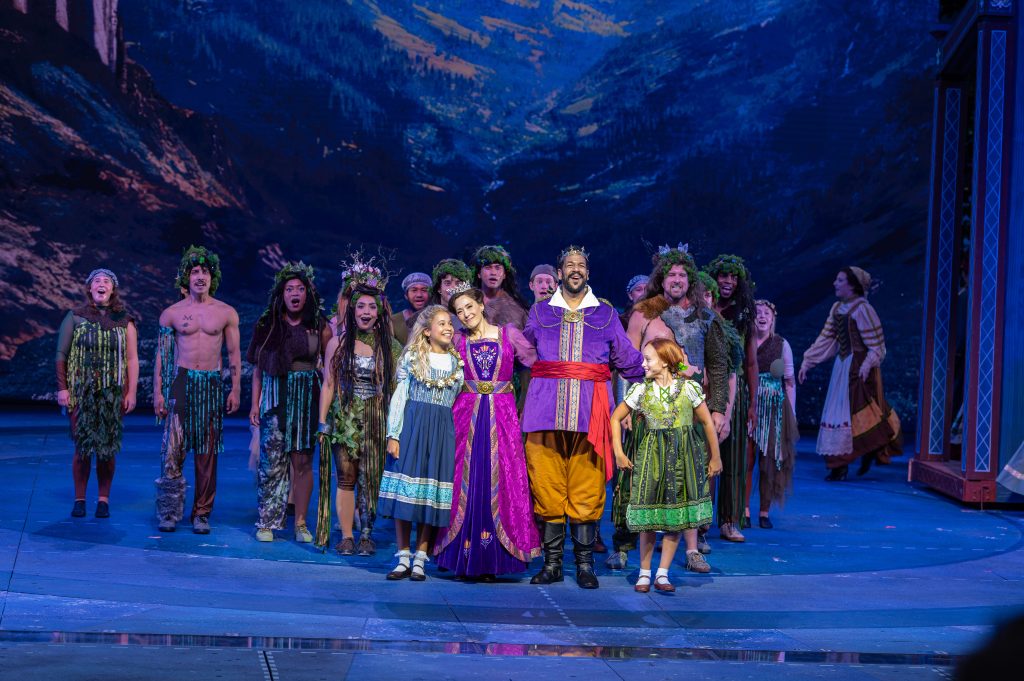
The company of the Muny production of Disney’s “Frozen.” Photo by Phillip Hamer

The lighting/video team for the Muny production of Disney’s Frozen includes Jason Lyons (lighting designer), Kylee Loera (projection/video designer), Rob Denton (laser designer, lighting department lead), Benji Arrigo (video department lead), Chelsea Zalikowski (projection associate), Zavier Taylor (associate video designer) and Shelby Loera (associate lighting designer).  

Disney’s Frozen is led by John Tartaglia (director). The Muny artistic staff includes Mike Isaacson (artistic director & executive producer), Michael Baxter (associate artistic director) and Tracy Utzmyers (director of production). 

Projectors were rented from St. Louis-based Gateway Studios & Production Services. Lasers are rented from Squeek Lights.

The successful introduction of projections and lasers in Disney’s Frozen opens the door to incorporate this technology in future Muny productions.

Over the years, The Muny has continually evolved with the times and technology — from pioneering a revolutionary 48-foot turntable in 1930 to installing its first LED wall in 2012, and culminating in a 2018 stage rebuild that introduced three LED walls, automation tracks to move scenery, and a cutting-edge lighting system designed to deliver both grand spectacle and intimate storytelling. In 2024, the sound system was upgraded, ensuring that each note of every show is crystal clear — from the boxes to the free seats.

Hannah Corneau in the Muny production of Disney’s “Frozen.” Photo by The Muny | Emily Santel

About Disney’s ‘Frozen’

Full of magic and humor, Disney’s Frozen features beloved songs from the Oscar-winning 2013 film, along with a dozen new songs written for the stage. In the kingdom of Arendelle, sisters Anna and Elsa grow increasingly distant. When Elsa becomes queen and her hidden powers spiral out of control, she flees, plunging the kingdom into an eternal winter. Determined to bring Elsa home to the castle, Anna embarks on an epic adventure with friends. It’s a powerful tale of sisterhood, acceptance and the meaning of true love. Disney’s Frozen includes music and lyrics by Kristen Anderson-Lopez and Robert Lopez, with a book by Jennifer Lee.

Season 107 at The Muny also includes Evita (July 18-24), Dear Evan Hansen (July 28-Aug. 3), La Cage aux Folles (Aug. 8-14) and Jersey Boys (Aug. 18-24).

Single-performance tickets start at just $21 and are on sale now at muny.org or metrotix.com, by calling (314) 534-1111 and at the Muny Box Office, located at 1 Theatre Drive in Forest Park.

A 20% group discount is available for parties of 15 or more. To start the free reservation process, visit muny.org/groups or call (314) 595-5708.

Visit muny.org/frozen to read content notes and more for Disney’s Frozen; watch In Focus , a Muny original series; and hear Muny Unscripted, a new podcast available exclusively on Spotify. 

About The Muny

Now in its 107th season in St. Louis, The Muny — the recipient of the 2025 Regional Theatre Tony Award — is a 501(c)(3) nonprofit dedicated to producing exceptional musical theatre that is accessible to all, continuing its remarkable tradition in Forest Park. As the nation’s oldest and largest outdoor musical theatre, The Muny welcomes more than 300,000 patrons each summer for seven world-class productions under the stars. Learn more at muny.org, and follow along at facebook.com/munytheatre , instagram.com/themuny and youtube.com/themunytv.

By Lynn Venhaus

With groundbreaking visual effects and enough eye-popping sparkle to elicit thunderous roars, the Muny premiere of Disney’s “Frozen” delivers a magical spectacle.

Master storyteller John Tartaglia reimagined the stage musical to capture more of the animated film’s childlike wonder, and the Muny manufactured snow, and incorporated lasers, video projections and resplendent radiance in unprecedented ways

Elsa’s exhilarating rendition of the signature bestselling award-winning song, “Let It Go,” is achieved in such a dazzling presentation that it should induce chills. The Muny’s team has topped themselves, blending in visual storytelling through digital technology as Elsa builds her ice castle and determines to set her own course.

Feeling an electric surge, the awestruck audience reacted enthusiastically to the spellbinding number with loud cheers and a buzzy wowed ovation. Talk about an extraordinary Muny moment – and what a powerhouse vocalist Hannah Corneau is!

Maliah Strawbridge (left) and Isla Turner in the Muny production of Disney’s “Frozen.” Photo by The Muny | Emily Santel

As a beloved director and often go-to for the annual kid-friendly show (last year’s shimmering “The Little Mermaid,” 2023’s grand “Beauty and the Beast,” and 2022’s sweet “Mary Poppins,” among others), Tartaglia also captivates by drawing out the heart and humor as part of the razzle-dazzle.

To bring this fantasy-adventure to life, the Muny’s stars shine as bright as the icy kingdom of Arendelle, where princesses Elsa and Anna were forced to be separated because of the oldest sister’s unexplained chilling powers she can’t control.

The Oscar-winning film that became an instant Disney classic in 2013, loosely based on Hans Christian Andersen’s 19th century Danish fairy tale “The Snow Queen,” was instead about the power of sisterly love, self-acceptance and facing your fears. Animator and screenwriter Jennifer Lee deservedly won an Oscar for her take, and was Tony nominated for the book.

The stage adaptation opened on Broadway in 2018, its run cut short by the pandemic in 2020. While the film featured seven and a half songs, the original award-winning songwriting team of Kristen Anderson-Lopez and Robert Lopez wrote 14 new ones for this version.

Bobby Conte, Patti Murin, and Hannah Corneau in the Muny production of Disney’s “Frozen.” Photo by The Muny | Emily Santel

A standout last year as Hodel in “Fiddler on the Roof,” Corneau is luminous as conflicted Elsa while Patti Murin demonstrates her flair for comedy as vivacious Anna, recreating the role she originated on Broadway.

They offer a portrait of towering female strength and powerful connection, and blend beautifully in “For the First Time in Forever” and “I Can’t Lose You.” Both can belt, adding emotional intensity.

Equally enchanting are the spunky adolescents playing young Elsa and Anna – Maliah Strawbridge and Isla Turner, themselves rays of sunshine who perform “Let the Sunshine In,” “A Little Bit of You,” and “Do You Want to Build a Snowman” with aplomb.

Now grown and facing an eternal winter, newly crowned Queen Elsa is frightened and in hiding while loyal sister Anna searches for her. The youngest sister teams up with a rugged mountain man Kristoff, his faithful reindeer Sven, and the adorable snowman Olaf. It’s easy to warm up to these characters.

From left: Patti Murin, Jared Gertner, Ryan Lambert and Nathaniel Mahone in the Muny production of Disney’s “Frozen.” Photo by The Muny | Emily Santel

The too-good-to-be-true charismatic Prince Hans is played by Bobby Conte, whose luxuriant tenor is always memorable. It’s a welcome return after some big shows on the Muny stage – as Enjolras in 2013 “Les Miserables,” and Bob Gaudio in 2018’s “Jersey Boys,” and Edgar Rutledge in “1776,” and “Paint Your Wagon,” both in 2019, before appearing on Broadway as PJ in the gender-flipped revival “Company” and Cousin Kevin in last year’s revival of “The Who’s Tommy.”

His introduction is the charmer “Hans of the Southern Isles” and then engaging with smitten Anna in “Love Is an Open Door,” plus the darker “Monster” and “Colder by the Minute.”

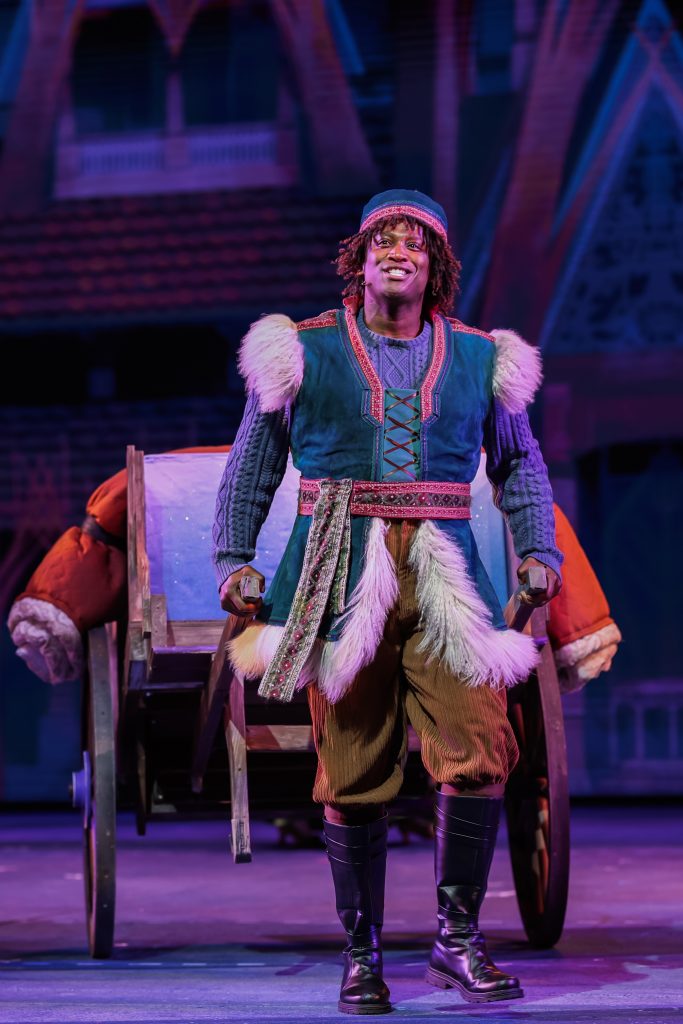
High-spirited Jelani Remy makes a noteworthy debut as Kristoff, both charming and funny. He buoyantly sings “Reindeer(s) Are Better Than People” with Sven and “What Do You Know About Love?” with Anna.

The wizardry of Eric Wright at Puppet Kitchen means that Andrew A. Cano as Sven and Kennedy Kanagawa as comical Olaf endear themselves to young and old alike, stealing a scene or two. Olaf’s anthem “In Summer” is as joyful as that lovable warm hugger is.

Jelani Remy in the Muny production of Disney’s “Frozen.” Photo by The Muny | Emily Santel

Scenic designer Tijana Bjelajac has created a winter wonderland that glistens with blue and silver backdrops, and you also feel like you are in the fresh mountain air – in the July summer heat! (What magic trick or illusion did she use? Remarkable!). She also fashioned a palatial living space as well.

Those also sprinkling the pixie dust were video designer Kylee Loera, whose work here is her finest hour, topping her previous fine achievements; lighting designer Jason Lyons’ exquisite illuminations – and Northern Lights; and sound designers David Patridge and John Shivers, whose work never sounded better.

The lighting/video team  included Rob Denton (laser designer, lighting department lead), Benji Arrigo (video department lead), Chelsea Zalikowski (projection associate), Zavier Taylor (associate video designer) and Shelby Loera (associate lighting designer).  

Costume designer Robin L. McGee, who has put her award-winning stamp on the past two “The Little Mermaid” productions as well as “Mary Poppins,” “Aida,” and “The Beauty and the Beast,” has an affinity for dressing Disney princesses, aided by fine work from wig designer Ashley Rae Callahan.

Elsa’s glittery ice blue satin gown is a stunner. Working with a primary palette of blues and greens, McGee and her team have crafted elegant ballgowns, warm winter wear, royal finery, military uniforms, townsfolk attire, and the naturalistic “Hidden Folk.” Plus hats, gloves, mittens, scarves and coats.

The Hidden Folk are based on Scandinavian folklore – “huldufolk,” and are mystical, animalistic creatures, led by parental figures Grand Pabbie (Chris Stevens) and Bulda (Cecilia Snow). In the stage version, they replaced the rock trolls from the film.

Jelani Remy (center) and the company of the Muny production of Disney’s “Frozen.” Photo by Phillip Hamer

Also standing out are hilarious Jared Gertner as Duke of Weselton, a cross between Austin Powers and Dr. Evil, and Ann Sanders and Jonah D. Winston regal as Queen Iduna and King Agnarr of Arendelle, Anna and Elsa’s parents.

The vibrant ensemble is joined by a 13-member teen ensemble and a 29-member youth ensemble. Tartaglia knows how to stage a large group and make it fluid. After all, he managed to place 85 people in a robust “Be Our Guest” two summers ago, which had, in addition to oversized cutlery, fireworks.

Bobby Conte and Patti Murin in the Muny production of Disney’s “Frozen.” Photo by The Muny | Emily Santel

He also directed exceptional versions of “Tarzan,” “Seussical” and “Annie,” and starred as the Cat in the Hat, the Genie in “Aladdin,” and won the St. Louis Theater Circle Award for Supporting as Pseudolus in “A Funny Thing Happened on the Way to the Forum.” The actor-writer-director-puppeteer could survive on his wit alone but thank goodness he knows how to extract the very best from everyone involved.

(Casting update: As of July 8, Tartaglia has taken over the role of Oaken, who leads the ensemble in ‘Hygge!,” a musical number opening the second act as a replacement for the original actor who is recovering from an injury.).

Darryl Archibald, who flawlessly conducted a 32-piece orchestra for last season’s triumphant “Fiddler on the Roof,” returns to bring out this score’s velvety textures. He even wrote a special overture that is heard first at the Muny.

Some of the musical numbers felt like superfluous padding when I saw the (underwhelming) national tour at the Fox in November 2022. However, choreographer Patrick O’Neill has injected more whimsy and playfulness, and the dance numbers are entertaining overall.

Special mention to the team guiding the magic-making — Mike Isaacson (artistic director & executive producer), Michael Baxter (associate artistic director) and Tracy Utzmyers (director of production). 

I felt like a child again, catching a snowflake in my hand, and taking in the frosty opulence, the wonderment of the virtuoso creative contributions and the cast’s splendid vocal strengths.

The Muny’s marvel of next-level tech meets old-fashioned storytelling, “Frozen” will melt hearts and can bring out the kid in all of us.

Hannah Corneau in the Muny production of Disney’s “Frozen.” Photo by Phillip Hamer

The Muny presents “Disney’s Frozen” July 6-14 at 8:15 p.m. nightly on the outdoor stage in Forest Park. The show is 2 hours, 20 minutes with intermission. Concessions are cashless payments. Preshow entertainment starts at 6:45 p.m. The theatre opens at 7:30 p.m. For more information, visit www.muny.org

The company of the Muny production of Disney’s “Frozen.” Photo by Phillip Hamer

By Lynn Venhaus

With nostalgic nods to “Jaws,” “Alien” and the 32-year-old peerless original, the thunderous roar of the dinosaurs returns in “Jurassic World: Rebirth,” a super-deluxe summer blockbuster that gets the franchise’s thrills back on track.

With its cartoonish “Jurassic World” theme park trilogy concluded, this new direction means the Jurassic series can endure with fresh faces and a new reason to get near the vicious hulking beasts that have terrorized moviegoers since Steven Spielberg’s classic “Jurassic Park” in 1993.

Still the best of the seven, the equally majestic and macabre original has influenced this latest chapter in large and small ways. For one, screenwriter David Koepp, who adapted Michael Crichton’s brilliant bestselling novel and his sequel “The Lost World” for the films, has returned. This retake is an improvement but still has some clunky storytelling by virtue of the genre formula.

Five years after the events in “Jurassic World: Dominion” (2022), an expedition heads to isolated equatorial regions to extract DNA from three massive prehistoric creatures in water, land and sky for a groundbreaking medical breakthrough, financed by Big Pharma.

Koepp, who wrote the first “Mission Impossible” film in 1996, two of the “Indiana Jones” sequels, and the recent whip smart “Black Bag,” has remarkably made us almost forget the ludicrous “Dominion” and the ridiculous “Fallen Kingdom.”

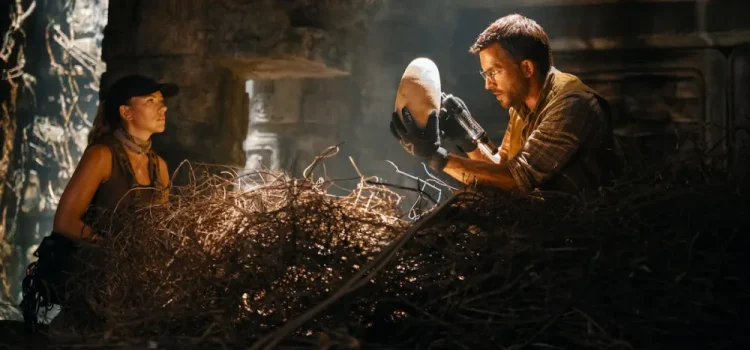
Philippine Velge dangling off the boat while a Mosaurus snaps.

The only thing we need to recall is that dinosaurs became part of daily life on the planet again, after millions of years of extinction, but their novelty lost its appeal, and they were banished to islands near the Equator to not further imbalance the ecosystem. Travel there is forbidden. Well, then!

That’s where our fearless crew is headed, well-funded by the big bad Big Pharma guys who want enough DNA samples to concoct a heart disease drug that could extend lives. What’s a few run-ins with carnivores?

Rupert Friend is Martin Krebs, the callous company man overseeing the expedition, and makes this haughty executive an easy guy to dislike. Ye olde greed cliches abound.

The theme remains “It’s not nice to fool Mother Nature.” And boy do they here.  As in all the films, being anywhere near hungry predators remains a dicey proposition, only now they’ve ramped up the peril by having genetically modified hybrid dinosaurs roam, hatched at a now-destroyed research lab on the tropical island Ile Saint-Hubert in the Atlantic Ocean.

This is blamed on InGen’s insatiable need to give the short-attention-span public new exhibits at the theme parks. So, you know exactly where this is headed.

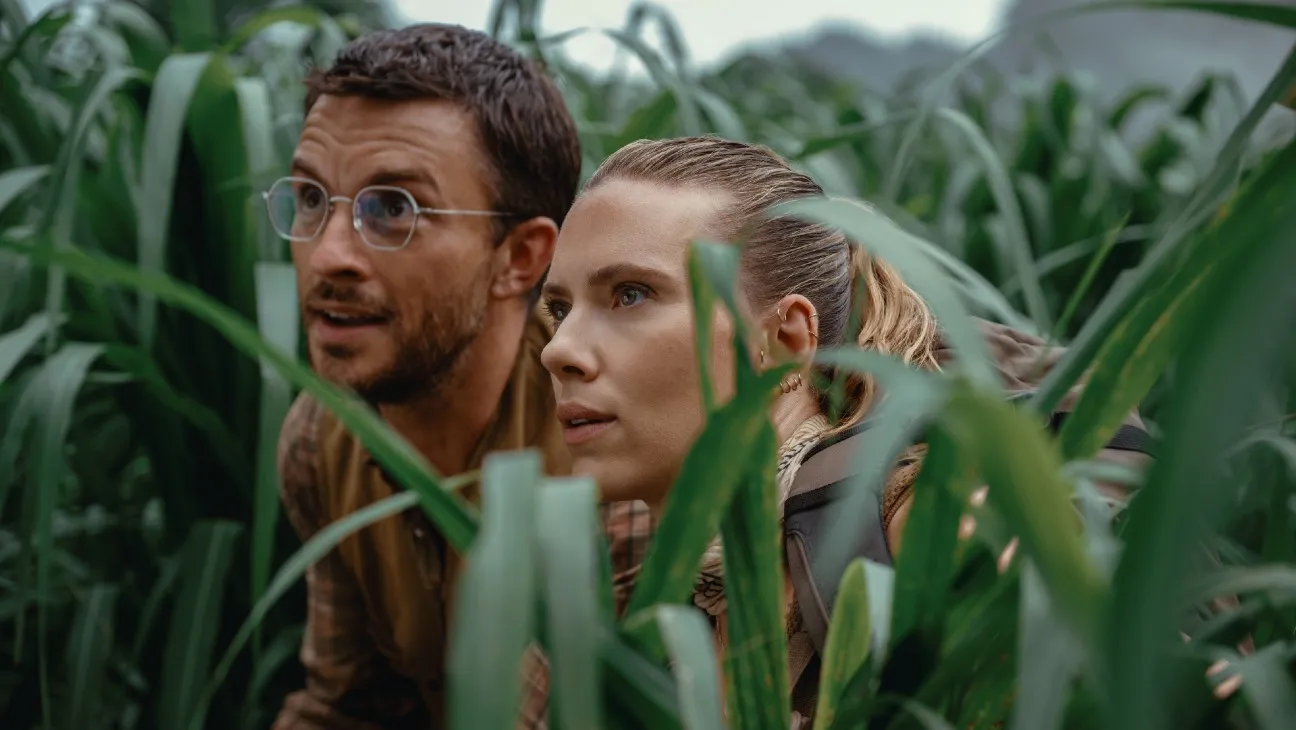
Jonathan Bailey, Scarlett Johansson

In intense “Black Widow” mode, Scarlett Johansson is resourceful Zora Bennett, a special ops mercenary enticed by the promise of a big payday, no strings attached.

Both appealing performers, she works well with Jonathan Bailey as Dr. Henry Loomis, a brainy paleontologist who is used to being in a museum, not in the field. They make a formidable team without a hint of romance to distract. They have jobs to do!

Bailey is a longtime stage actor who excels in all his high-profile screen roles ever since his breakout as Anthony in “Bridgerton” in 2020. He smoothly delivers the scientific knowledge and rattles off dinosaur statistics for much of the story’s exposition. He also states he studied under Dr. Alan Grant, a bow to Sam Neill’s character.

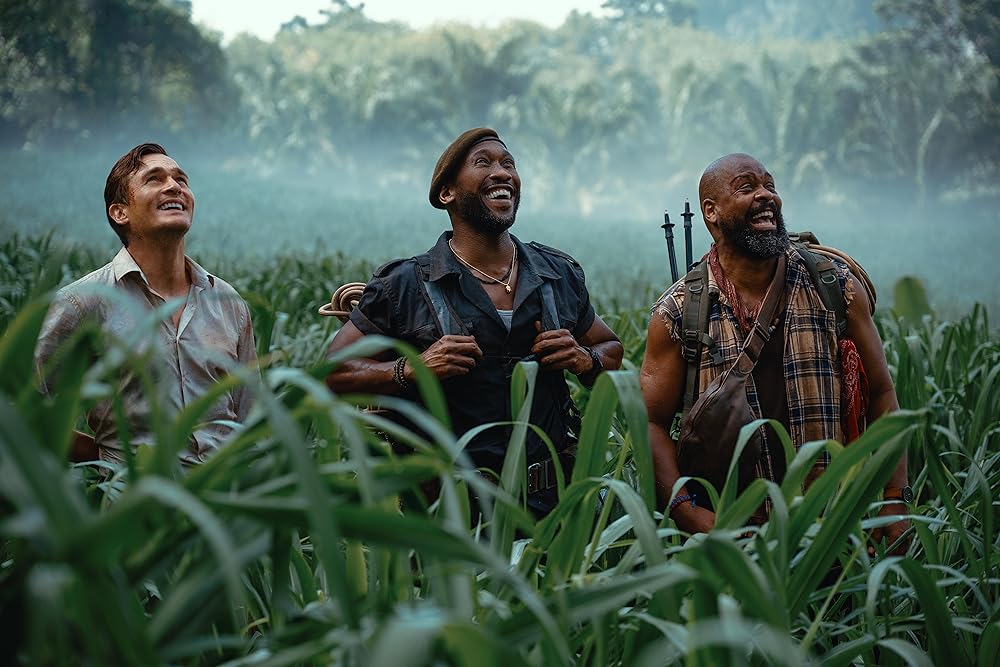
Two-time Oscar winner Mahershala Ali appears in his first blockbuster franchise as Suriname-based boat captain Duncan Kincaid, who shares a past with Zora. While he makes every movie better, there is little character development here. Only little snippets of backstories emerge.

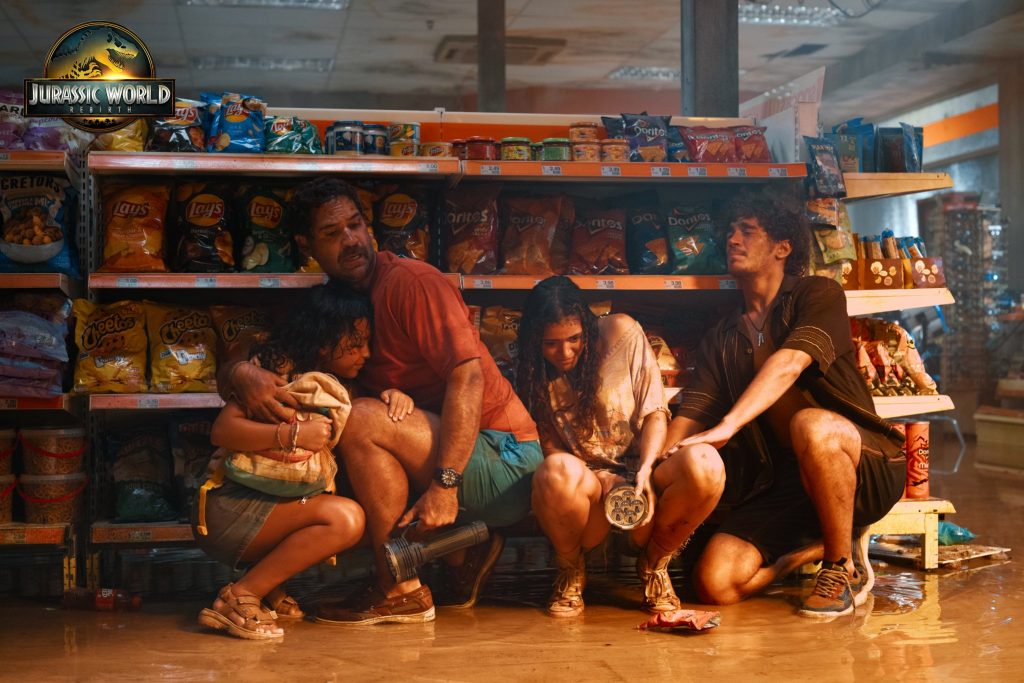
After all, the dinosaurs are the stars. A secondary plot involves a dad Reuben Delgado (Manuel Garcia-Rulfo), his two daughters – Luna Blaise as 18-year-old Teresa and Audrina Miranda as 11-year-old Isabella, and Teresa’s slacker boyfriend Xavier (David Iacono). They are traveling by boat for a family vacation but shipwrecked by a terrorizing colossal Mosasaurus. Talk about a Sharknado situation!

Audrina Miranda, Manuel Garcia-Rulfo, Luna Blaise and David Iacono.

Meant to inject humor and heart into the proceedings, this group is rescued by the others, and thus, a strange alliance forms as they wind up on the island instead of headed back to civilization. Philippine Velge and Bechir Sylvain are part of Duncan’s crew, and Ed Skrein is a security chief on the dino-hunter team.

After a treacherous ocean journey, surviving in the jungle is one of close calls and hidden dangers lurking, and yes, it gets repetitive. We’ve been trained to accept this premise, especially characters being chomped in gruesome ways and children in peril that heightens our anxiety and fear. If you go, you know this – no surprises.

Among the frightening creatures are the semi-aquatic Spinosaurus, Pteranodon with 12-18 feet wingspans, the truly scary mutant Distortus Rex (D-Rex), who is a major antagonist, and these large flying creatures called Quetzalcoatlus. Dilophosaurus and Velociraptors return for brief aggravation.

There are some moments of sweetness, however. Bella adopts a baby Aquilops, a herbivore she named Dolores. Loomis and Zora come across a field of Titanosaurus with extra-long tails that is reminiscent of the original scene in “Jurassic Park” when Grant, Ellie Sattler and Ian Malcolm first see a Brachiosaurus, complete with swelling John Williams’ score.

Rupert Friend, Mahershala Ali, Bechir Sylvain.

Composer Alexander Desplat incorporates Williams’ memorable score throughout here.

Director Gareth Edwards, a CGI-effects specialist who helmed a “Godzilla” in 2014 and “Rogue One: A Star Wars Story” in 2016, is in his wheelhouse here, crafting stunning visuals and delivering thrills with a familiar story. People who’ve worked with him before return to do their magic – cinematographer John Mathieson and editor Jabez Olssen. The stunt work is also exemplary.

Certain to be a crowd-pleaser, strongly recommend leave children under 8 at home, even if they “like” dinosaurs. This movie features grisly deaths and scary life-threatening scenarios.

It is what it is. “Jurassic World: Rebirth” is fan service and a finely assembled action-adventure engineered to entertain.

 “Jurassic World: Rebirth” is a 2025 sci-fi action-adventure directed by Gareth Edwards and starring Scarlett Johansson, Mahershala Ali, Jonathan Bailey, Rupert Friend, Manuel Garcia-Rulfo, Luna Blaise, David Iacono, Audrina Miranda, Philippine Velge, Bechir Sylvain, and Ed Skrein. Its run-time is 2 hours, 14 minutes and rated PG-13 for intense sequences of violence/action, bloody images, some suggestive references, language and a drug reference. It opened in theatres July 2. Lynn’s grade: B.

By Lynn Venhaus

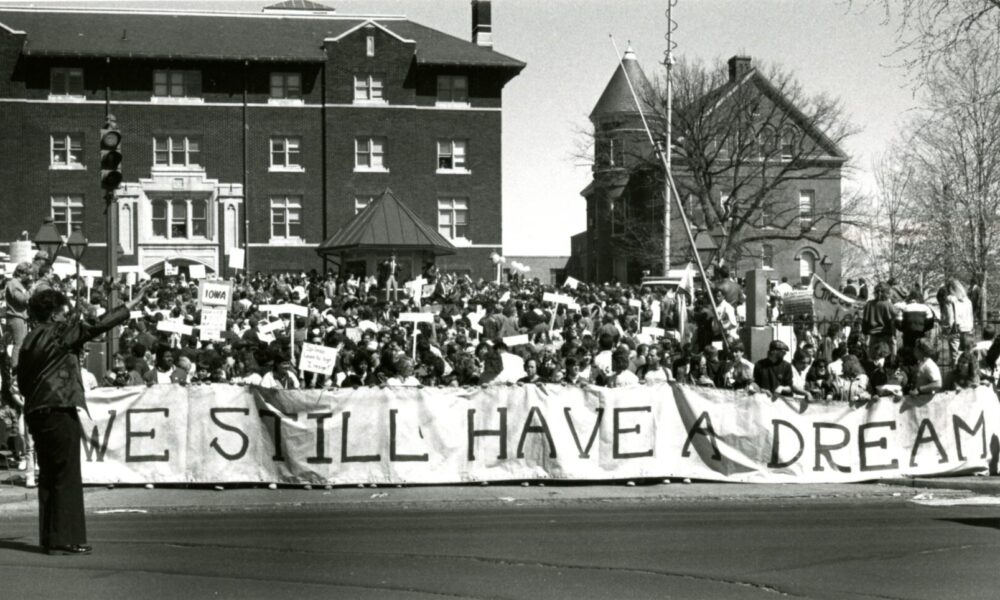
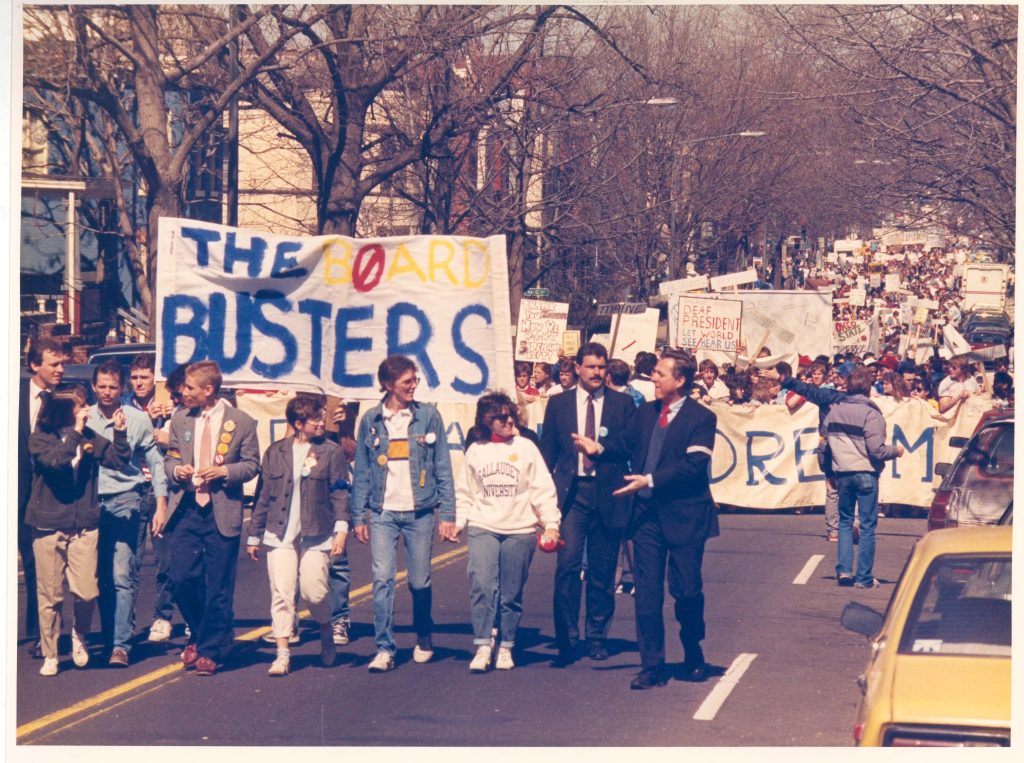
Angry about being dismissed, ignored and treated differently, deaf students had enough after yet another example of prejudice, so 37 years ago, they rose up in unison and forced the hearing world to listen.

The documentary “Deaf President Now!” is a fascinating look back at a little-known civil rights movement that had lasting impact for people with disabilities. Filmmakers Nyle DiMarco and Davis Guggenheim, as passionate as the student leaders they interviewed, recount a tumultuous time at Gallaudet University in 1988.

The student-led protest resulted in a turning point at the school, established in 1864 – the only U.S. college with a total deaf/hard of hearing student population — but also for deaf rights and representation, and in a broader sense, changes for others considered ‘disabled.’

The protests began after the Gallaudet board of trustees appointed a hearing person who did not know sign language, Elisabeth Zinser, as the next president. Two deaf candidates were finalists as well — Irving King Jordan, a dean at the school, and Harvey J. Corson, director at the American School for the Deaf in Hartford, Conn.

The students demanded that its first deaf president be appointed instead and shut down the campus for a week, from March 6 to 13.

The case gained national media attention after the new president, who had been president at University of Idaho, and Greg Hlibok, the leader of the student revolt, appeared on ABC’s “Nightline” – and afterwards, more support came from far and wide.

The board acquiesced, leading to the resignations of the board president, Jane Bassett Spihlman, clearly tone-deaf, who had stated: “Deaf people are not ready to function in a hearing world.”

When Zinser resigned, candidate I. King Jordan, who was hearing-impaired, was appointed. (He served for 18 years, and since then, they’ve always had a deaf president.)

Co-directors DiMarco, a deaf activist and the first deaf contestant to win “America’s Next Top Model” and “Dancing with the Stars” back-to-back, and Oscar-winner Davis Guggenheim, who was born in St. Louis, have deftly assembled interviews and archival footage to chronicle a pivotal moment in time.

Four of the main student organizers are interviewed, using sign language while others do voice-overs of what they say: Bridgetta Bourne-Firl, Jerry Covell, Tim Rarus, and Hlibok.

Student Leaders Tim Rarus, Bridgetta Bourne-Firl, Greg Hlibok, and Jerry Covell.

Guggenheim, who won many awards for his climate-change documentary “An Inconvenient Truth,” directed such acclaimed films as “Waiting for Superman,” “He Named Me Malala,” and “Still: A Michael J. Fox Movie.”

He and DiMarco use different techniques to establish what the hearing-impaired world goes through day in and day out, including silence. Through their clear understanding of the subject matter, they evoke empathy and bring out emotions that deepen our knowledge.

The students, who joined with alumni and faculty to lead the non-violent protest, tell their experiences while signing in ASL, and four voice-over actors speak for them. Abigail Marlow, Paul Adelstein, Tim Blake Nelson and Leland Orser relay the responses.

The way the 1 hour, 40-minute film is constructed is riveting, leading to a few surprises, and ultimately a satisfying wrap. Winner of the Audience Award at the 2025 SXSW Film Festival, “Deaf President Now!” is now streaming on Apple TV+.

Coverage of the game-changing protest and personal accounts of the ingrained prejudice of hearing people is certain to fire you up. To hear their plight is to react strongly to the injustices. And the snobby and elitist board president and others of wealth and privilege who act superior.

The deaf have a word for those clueless, arrogant people – “audists.”

The co-directors used some photo doubles when needed in recreations, and had a couple young people stand in for earlier versions of leaders – Charlton Hlibok and Danila Maucere as Greg and Bridgetta.

The outcome is earned, gratifying and its ripple effect is remarkable. Two years after their protest, the American Disabilities Act was passed

The deaf point of view is perceptive and the deaf community, proud of who they are, is inspiring. They stood up together and proved how valuable their voices were, making four demands that were met. And their backstories, about how much they have overcome, is illuminating for those of us in the hearing world.

. This story is dramatic and compelling, a real triumph.

Tim Rarus today.

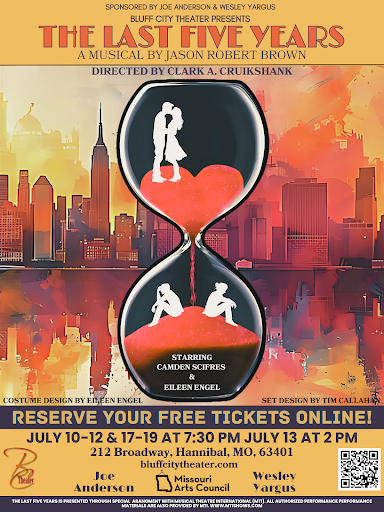
Before it became a feature film starring Anna Kendrick and Jeremy Jordan, The Last Five Years began as a stirring stage musical that was hailed as one of the 10 best shows of 2001 by Time magazine. Told through inventive and heartrending songs, The Last Five Years is a two-person show that navigates the ins and outs — and beginning and ending — of a marriage.

Written by Tony Award-winning composer Jason Robert Brown (Parade), this Drama Desk Award winner is the story of a couple’s five-year relationship, from the thrilling pangs of new love to their final separation. There is, however, a twist: the husband retells the relationship from beginning to end, while the wife relates their story in reverse. The two characters’ emotional timelines converge only once — at their wedding in the middle of the show. he Last Five Years

Performances are July 10-12 and July 17-19 at 7:30 p.m. and at 2 p.m. at July 13 at the Bluff Street Theater, Hannibal, Mo. Tickets are free and should

Camden Scifres of New York City

Camden Scifres is playing Jamie Wellerstein and Eileen Engel is Catherine Hiatt. The musical is directed by Clark A. Cruikshank, with music direction by Randon Lane. The costume design is by Eileen Engel and the set design by Tim Callahan.

The theater’s artistic director is Jayme Brown.


The show is performed in the 90-seat theater and has been free admission since 2021. Concerned with the national decline in attendance at live performances of all kinds, Bluff City Theater made the decision to eliminate the financial barrier to attendance as a means of attracting greater audience diversity.  The loss in paid admissions is offset by an increase in personal donations, corporate sponsorships, grants and other fundraising activities.

The show is recommended for audiences age 13 or older. The running time is 90 minutes without intermission.

The off-Broadway show received four nominations from the Drama Desk Awards – Outstanding Orchestrations, Set Design (Beowulf Boritt), Outstanding Actor in a Musical (Norbert Leo Butz) and Outstanding Actress in a Musical (Sherie Rene Scott).

For more information, visit https://bluffcitytheater.com or call Tel: 573.719.3226.

Eileen Engel of St. Louis

“Let it in and it knocks you back on your heels. Just like love.” — Rolling Stone

“Bittersweet and nearly perfect, Brown has come up with a winning combination of music and book…” — Variety

“Music, words, and performance meld into a spectrum of clashing emotions…”- New York Times

About Bluff City Theater
Bluff City Theater is based in Hannibal, Mo., and was founded in 2013. It is the brainchild of Joe Anderson and Wesley Yargus.

An artist-driven theater company we place an emphasis on literary works that bridge the gap between books and stage. While not exclusively limited to literature, our goal will be to explore the written word through stage adaptation.
While we are primarily a producing company, we may from time-to-time present other works consistent with our artistic mandate. We seek to enhance the quality of life for residents of North-Eastern Missouri and Western Illinois by producing high-quality performances employing the best actors, directors, musicians and technicians available in an intimate setting. We commit ourselves to developing new works as well as reviving old favorites, especially those that may be forgotten, under-performed or under-appreciated.
First and foremost, we seek to entertain but our mandate extends to educating audiences and fostering a larger discussion around the works and their themes and an appreciation of the role live theater plays in propagating ideas and public discourse. As an ancillary to the primary goals, we partner with the larger arts community to, when appropriate, foster a broader exploration of themes using other forms like lecture, film and the visual arts.
As of 2024, BCT has produced 40 plays including three world-premieres, two American premieres of foreign works, one outdoor production and three environmental productions where local landmarks were transformed, temporarily, into performance spaces.
Directors come from across North America. Our professional actors, while primarily St. Louis-based have also come from Los Angeles, New York City and Toronto. For at least one production a year, we put local children and youth on stage with professionals.

The renovated theater, at right.