By Lynn Venhaus

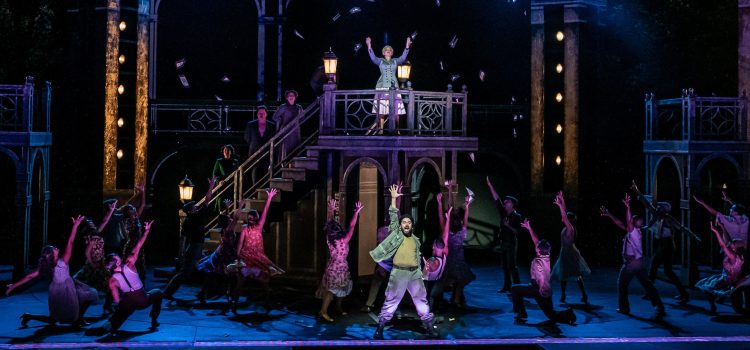
A spirited Muny debut that is tailor-made for that grand stage, “Bring It On: The Musical” is a marvel of motion that takes place in the cutthroat world of competitive cheerleading.

An engaging combination of original music, exhilarating dance, spunky multi-skilled performers, slick craftsmanship and a relatable finding-your-place story will win you over.

The sociable story is a teen rivalry set in two diverse socio-economic high school cultures that takes a page from “Legally Blonde” and “Mean Girls,” among others, The popular 2000 movie that inspired it starred Kirsten Dunst and Gabrielle Union, grossed $90 million worldwide and sparked five direct-to-video sequels and a TV movie.

Fun fact: Screenwriter Jessica Bedinger pitched the idea as “Clueless” meets “Strictly Ballroom” after becoming obsessed with cheer competitions on ESPN and having experience as a former music journalist covering hip-hop artists.

Taylor Sage Evans, Kennedy Holmes and Jonalyn Saxer. Photo by Phillip Hamer.

Full of pep, elaborate steps and impressive biceps, the acrobatic achievements are quite a spectacle, and 16 of the nation’s most elite college cheerleaders from the University of Kentucky are part of the energetic ensemble. The school has won 24 national championships.

Count me impressed. Their gasp-inducing athletic leaps, lifts and tumbles choreographed by cheer consultant Ryan Martin O’Connor, Kentucky head coach, combined with Jennifer Weber’s high-octane choreography, are thrilling.

While cheerleaders are a staple of film narratives since the 1950s, it is rarely the focus of traditional musical theater.

Enter a team of Broadway heavyweights who saw its appeal through a different lens – adding a hip-hop beat to a standard musical format, with other modern flourishes. Tony winners Lin-Manuel Miranda and Tom Kitt teamed up for the music, Miranda and Tony nominee Amanda Green collaborated on the lyrics, and Tony winner Jeff Whitty wrote a very funny libretto.

The Truman squad of Regine Sophia, Saxer, Katie Riedel and Evans. Photo by Phillip Hamer.

Back then, Mike Isaacson, the Muny’s executive producer and artistic director, co-produced the show with Kristin Caskey for Fox Partners, which premiered in Atlanta in 2011 and earned a 2013 Tony Award nomination for Best Musical and so did choreographer Andy Blankenbuehler, who also directed.

Missouri native Taylor Louderman and Adrienne Warren, who would later win a Tony as Tina Turner, starred as Campbell and Danielle, Jason Gotay was Randall, and Ariana de Bose made her Broadway debut as Nautica.

When it played at the Fabulous Fox in spring 2012 before its Broadway engagement, I was surprised at how enjoyable it was. With its crisp and snappy dance moves and lively performances, it seemed like a perfect fit for stages.

While a challenging commitment, the show has transferred seamlessly to the Muny’s canvas because of the entire creative team’s dedication to getting it right, from Denis Jones’ briskly paced direction to Caite Hevner’s imaginative video designs that add much to the storytelling.

Kennedy Holmes (left) and Jonalyn Saxer in the 2025 Muny production of “Bring It On: The Musical.” Photo by Phillip Hamer

Jones, who has helmed 11 shows at the Muny and won three St. Louis Theater Circle awards, has a knack for presenting spry, ebullient shows performed gracefully with remarkable precision.

However, this show is fortified by perky performances and a perennial thoughtful message about friendship. What’s more important than winning? Purpose, self-worth and valuing true-blue relationships.

Saxer is Campbell, a sweet but driven cheerleader who is popular at Truman High School. Her main goal is to be captain and lead the team to Nationals. However, her dreams are dashed when she must transfer high schools because of redistricting.

She’s now at Jackson High School, where the cheerleading squad was disbanded. She convinces some skeptical students that competitive cheerleading would be their ticket to bigger dreams and more opportunities.

Katy Geraghty (center) and members of the company of the 2025 Muny production of “Bring It On: The Musical.” Photo by Phillip Hamer

She confidently delivers ballads, such as “What I Was Born to Do.” But when she has doubts or shows determination – “One Perfect Moment,” “What Was I Thinking” or even crazy-worry “Something Isn’t Right Here,” that’s when her character’s colors come out.

The clever Whitty, whose irreverent humor helped create “Avenue Q,” has altered the original conflict, dropped and brought in characters and injected Millennial speak.

He added a ruthless schemer “All About Eve” subplot, or more appropriate, “All About Eva,” a two-faced sophomore who masterminds her ascension into cheerleading royalty while orchestrating others’ demise.

Making her Muny debut as villainous Eva, Taylor Sage Evans, who was a standout as the replacement Anne Boleyn in the national tour of “Six” during the Fabulous Fox run in January, is the bouncy plastic blonde wannabe. She reveals her true colors in “Killer Instinct” and “Eva’s Rant.”

From left: Kennedy Holmes, Jonalyn Saxer, Aj Paramo and Ayla Ciccone-Burton in the 2025 Muny production of “Bring It On: The Musical.” Photo by Phillip Hamer

While there is much fresh talent to applaud, one of the obvious hallmarks of Muny summers are returning artists who have come back again and again to our “alone in its greatness” experience.

If actors describe Muny shows as “summer camp,” then “Bring It On” is a triumphant homecoming for Kennedy Holmes, who became a star on that stage over the past 10 years.

A Muny Kid, her big break came as Little Inez in “Hairspray” in 2015, and in recent years, she was in “Dreamgirls” and “Beautiful: The Carole King Musical” (as Little Eva). At age 14, she was an early standout on Season 15 of “The Voice” in 2018, but at the finale, came in fourth – the youngest finalist ever (she was robbed!). She’s been in demand ever since.

Jonalyn Saxer and Bryce Williams in the 2025 Muny production of “Bring It On: The Musical.” Photo by Phillip Hamer

Now 20 and a student at USC, she’s a poised leading lady as Danielle, the ‘crew’ dance team chief at Jackson High. Talk about a Muny moment! It’s so gratifying to see her easily slip into this role that requires her to be a fluid hip-hop dancer and master the vivacious pop and hip-hop lyrics by Miranda and Green..

Saxer, who was an appealing Peggy Sawyer in Jones’ “42nd Street” here in 2016, works well with Kennedy as they navigate their differences, singing together superbly in the touching “We’re Not Done.” Among her credits are multiple Broadway shows, the first national tour of “Mean Girls” and the 2021 Spielberg film of “West Side Story.”

In a scene-stealing performance, Katy Geraghty, as Bridget, is the wackiest sidekick this side of Ethel Mertz. She also endears as a girl who was an ‘outsider’ all her life but finally fits in at her new school.

Geraghty is quickly becoming a Muny favorite, after her hilarious turn as Sister Mary Patrick in “Sister Act” two summers ago. (She was also impressive as Little Red in the 2022 Broadway revival of “Into the Woods.”)

Saxer, Holmes, Geraghty. Photo by Philip Hamer.

Another memorable Muny performer with 11 shows here, Sean Harrison Jones plays Steven, a Truman cheerleader and Campbell’s boyfriend. He was in the original Broadway cast of “The Outsiders,” in “Hamilton” on Broadway and national tour, and was Action in the 2021 film of “West Side Story.”

With his easy-going demeanor and soaring tenor, Bryce Williams stands out as Randall, a popular Jackson student and DJ who befriends Campbell. They share a lovely duet “Enjoy the Trip.” It’s an impressive Muny debut, and he’s still in college.

When Campbell’s first day at the new school is chaotic, the “Do Your Own Thing” number firmly establishes the rules and draw the lines. “Move!” is a savvy directive. Music director Anne Shuttlesworth never lets up.

The scenes at Jackson are where the show gets into a rhythmic groove, and the opening second act number “It’s All Happening” is a rousing fired-up anthem.

The company of the 2025 Muny production of “Bring It On: The Musical.” Photo by Phillip Hamer

Supporting players who added much sass and satire were Katie Riedel as the golden girl Skylar, a spot-on Paris Hilton imitation, with terrific comic timing. One of her zingers in an a-ha moment — “Omigod, everyone’s gone through all this, like, personal growth, but I’m exactly the same person I was a year ago. Oh well! I like myself. Always did.”

In contrast, Regine Sophia is a sunny Kylar (real name Inez), who hangs with Skylar.

Danielle’s posse includes Nautica and La Cienega – and Ayla Ciccone-Burton and AJ Paramo are a dynamic duo. Randall’s buddies Twig and Cameron are winsomely played by Kevin Trino Perdido and Brandon O’Neal Bomer.

Special recognition must go to dancer Bailey “Bailrok” Munoz, who wowed the crowd with a spectacular breakdance routine in the Leprechaun mascot outfit during “Friday Night, Jackson.” Munoz won “So You Think You Can Dance” competition show in Season 16, the only breakdancing winner in the show’s 18 seasons.

Dancer Bailey Munoz as the mascot with members of the company of the 2025 Muny production of “Bring It On: The Musical.” Photo by Phillip Hamer

Weber, who was Tony nominated for “& Juliet,” has designed choreography as vibrant as O’Connor’s vigorous cheer routines. Those numbers, including “Bring It On,” “Legendary,” “Crossing the Line” and the finale “I Got You” are dazzling.

To allow for the splashy dance numbers, Ann Beyersdorfer’s scenic design is masterful fluidity and function, efficiently mobile for the major cheer numbers, too. Jason Lyons’ harmonious lighting designs set the scenes and the sound work of John Shivers and David Patridge was clear and cohesive.

Continuing effective design work, Tristan Raines’ costumes were conducive to movement and represented high school fashions while Ashley Rae Callahan’s wig designs blended in well.

With its disarming good-time vibe, “Bring It On” pops with personality, energizing with uplift and inspiration – and is just so darn much fun.

Surprise guests on Wednesday night! From left: Mike Isaacson, Kwofe Coleman, Amanda Green, Lin-Manuel Miranda and Tom Kitt with the company of “Bring It On: The Musical.” Photo by The Muny | Emily Santel

The Muny presents “Bring It On: The Musical” June 16 – June 22 nightly at 8:15 p.m. in Forest Park. The musical is 2 hours and 10 minutes long, with one intermission. For more information, visit www.muny.org

This review is based on Tuesday’s rain-shortened one-act performance and Thursday’s full production

The company of the 2025 Muny production of “Bring It On: The Musical.” Photo by Phillip Hamer
Facebook Comments

By Lynn Venhaus

With the physicality of silent film actors and the verbal dexterity of Abbott & Costello, a delightful duo cavorts with glee for a quick-witted, fast-paced musical comedy, “Murder for Two.”

The rollicking romp that opened Stages St. Louis’ season showcases Jeremiah Ginn in a stunningly agile tour de force as a dozen murder suspects and Ian Fairlee as the eager small-town police officer who wants to get ahead in the department. Could he make detective by solving this case?

The actors are also deft pianists who tickle the ivories while they’re coaxing the audience to laugh at their foibles, for this work includes a dozen songs.

The premise is a surprise birthday party for Great American Novelist Arthur Whitney, thrown by his wife Dahlia, a fretful, melodramatic Southern belle straight out of a Tennessee Williams play. Everybody in attendance is a suspect, all 12 of them.

Joe Kinosian, who wrote the music and co-wrote the book with Kellen Blair, who also wrote the lyrics, borrows the format from old-fashioned murder mysteries. Think Agatha Christie’s one-room setting filled with possible suspects, but then add the wacky charm of a sketch comedy troupe.

The twist of eccentric characters, so prevalent in parodies, such as the 1985 film “Clue” and the 1976 Neil Simon spoof “Murder by Death,” creates a fertile playground for the two actors.

The colorful characters are distinguished through Ginn’s remarkable quick-changes and sleight of hand techniques – whether it’s a pair of glasses, a dance movement, a hat or an accent shift.

Memorable suspects include the deceased’s flustered wife, snooty ballerina Barrette Lewis, the blabby town psychiatrist Dr. Griff, Dahlia’s niece – a pushy forensics student – Steph, bickering married couple (and next-door neighbors) Barb and Murray Flandon, peculiar gung-ho firefighter Henry Vivaldi, and a boys’ choir. Some are too nonplussed about a cold-blooded murder committed right in front of them. Hmmm…

Ginn’s vocal flexibility as he moves between characters’ dialogues is quite something, managing to keep them all distinct. The boys in the choir sounds straight out of a Bowery Boys movie/Little Rascals short, which is obvious in the song “A Lot Woise” sung by Timmy, Yonkers and Skid.

Ian Fairlee as Marcus. Photo by Phillip Hamer.

As the fledgling detective Marcus Moscowicz, Fairlee gains the audience’s sympathy in rapid exchanges with his boss, his silent partner Lou, and others on the phone. He wants to do everything by the book, as outlined in his funny “Protocol Says” number.

Ginn’s sprightly delivery gets a workout in the ‘company’ numbers – “It Was Her,” “So What If I Did?” and “Process of Elimination.”

The story, heavy on true crime tropes, liberally adds daffy shenanigans as Marcus tries to narrow down who’s the killer and what could have been the motive. We learn the ‘who’ is immaterial to finding out why. You think you sorta know from the get-go — but you may be surprised because your hunch could be the infamous ‘red herring’ employed in so many mysteries.

The reveal is anti-climactic because the whodunit is secondary to the pair’s goofy antics. Ginn is so animated, he could be a live-action figure at Disney World, reminiscent of vaudeville clowns of a different era. He and Fairlee nimbly volley back and forth like tennis pros if they were ‘50s era Dean Martin and Jerry Lewis.

Ginn, who was a part of the New York cast, blends his considerable skills in dance, song and obviously has dealt with ‘seltzer down his pants.’ He is masterful in switching accents, like Peter Sellers did playing multiple characters in films like “Dr. Strangelove” and “The Pink Panther.”.

Fairlee and Ginn. Photo by Phillip Hamer.

While Ginn has the showier roles, Fairlee is as adept with the comic timing in a cagey part. They play off each other well.

Director Michael Kostroff maintained high energy during both acts, and brought out the ingenuity of the work, using as many resources as possible in that confined space.

Ann Beyersdorfer’s sly set, designed to be an author’s mansion in New England, is a well-appointed canvas for the nifty surprises galore, a nod to the Clue game board and every remote country estate where spooky things happen. She has given the actors room to dash around and broaden the action to outside..

And when it’s time for Dahlia’s big show-stopping number, “Steppin’ Out of the Shadows,” a humorous ridiculously over-the-top extravaganza, that’s when Stages ramps up the fun.

The show, which won Chicago’s Jefferson Award for Best New Musical in 2011, was developed at the Chicago Shakespeare Theater, then later produced on Broadway.

Jeremiah Ginn, as Dahlia. Photo by Phillip Hamer.

Because the cleverly constructed play entertains with slapstick, sight gags and slick technical effects, it seems natural to present at mystery dinner-theaters and for inoffensive school plays (never mind that murder is in the title and a few off-color remarks that can be altered.) This show would have been a major crowd-pleaser on the Goldenrod Showboat in its heyday. (Stages’ wildly popular production of the comedy “Clue” — their first-ever non-musical in 2023 was not only an audience hit but an awards magnet).

While both Ginn and Fairlee are skilled pianists, the music isn’t really necessary. They are enjoyable in the roles, with or without the music. And deliver the songs with aplomb. Ginn also served as music director.

The rest of Stages’ tip-top team makes the production flow smoothly. Sean M. Savoie’s lighting always enhances the settings, especially in a mystery where lights suddenly go out and things go bump in the night. Hankyu Lee’s sound design was sharp without any issues. Costume coordinator Erica Jo Lloyd kept up with all the shifts that helped define the characters.

With its zesty vaudeville-style humor, the energetic pair come across as looney, and they’re tuneful, so what’s not to enjoy?

Stages St. Louis presents “Murder for Two” from May 30 to June 29 in the Ross Family Theatre at the Kirkwood Performing Arts Center. .210 E. Monroe Ave. For more information or tickets, visit www.stagesstlouis.org.

Facebook Comments

By Lynn Venhaus

One of the big-bang bursts in musical theater history, “Rent” is why transformative composer Jonathan Larson endures 30 years after his masterwork spoke to the dreamer in all of us.

Therefore, it’s disappointing when people entrusted to perform his deeply emotional and vocally demanding songs fall short because of repeated off-key issues.

After producing “Rent” in 2014, New Line Theatre has brought it back 11 years later as its 100th show, a milestone achievement in its 33 years. Artistic director Scott Miller, an early Rent-head, enthusiastically co-directed, with assistance from associate artistic director Chris Moore, who also amiably played good-natured anarchist Tom Collins.

Using Puccini’s opera “La Boheme” as his template, Larson set his Gen X characters in New York City’s East Village in the 1990s as they struggled with life, love and HIV/AIDS over the course of a year.

As a struggling artist for many years, Larson knew the world he wrote about, which was based on a concept by Billy Aronson. For making their doubts, anxiety and commitments relatable, emphasizing community and connection, Larson posthumously won the Pulitzer Prize for Drama.

He won three of the show’s four Tony Awards (Musical, Book, Score and Actor in a Featured Role – Wilson Jermaine Heredia as Angel Dumott Schunard) out of 10 nominations.

Tragically, Larson did not live to see the first Off-Broadway preview performance, because he died that day — Jan. 25, 1996, after suffering an aortic dissection. He was 35.

While intentions are noble, because this treasured show resonates with so many, the noticeable aural flaws marred this production’s overall effectiveness. The rock opera’s celebrated reputation, inevitable expectations and music challenges are hard to live up to if key performers can’t stay in tune.

These shortcomings made me wonder what rehearsals were like because the band is sensational, and some of the singers’ soar, but voices allowed to make repeated mistakes didn’t adjust or correct before opening. This performance was a week later.

As is customary, the New Line band was outstanding. Musicians John Gerdes on bass, Clancy Newell on drums, Adam Rugo and Zack Kempen on guitar, and music director Randon Lane and Jason Eschoflen on keyboards were a major asset. But they couldn’t be miracle workers rescuing in-trouble vocalists every time, no matter how often they tried.

Corrinna Redford and Nathan Mecey as Mimi and Roger, with Chris Moore as Tom Collins. Photo by Jill Ritter Lindberg.

“Rent” features various musical styles. The biggest hurdle were those singers who relied on belting to convey their emotions, but unable to stay on key, wound up screeching,

Corrinna Redford, who played exotic dancer-junkie Mimi Marquez, was erratic vocally and pushed out of her range in “Out Tonight” and “Goodbye Love.” They were messy, breathy and undisciplined, as was “Your Eyes.”

Shouting less, which resulted in a softer interpretation, helped in “Without You” and “I Should Tell You.” Portraying her love interest Roger, Nathan Mecey often went flat when they sang together, thus trying to achieve their spark was difficult.

As lovestruck Collins, Moore fared the best delivery-wise — a sweetly romantic “I’ll Cover You” shared with Angel (and later his heartbreaking reprise) and a hopeful, melodic “Sante Fe.”

With Aarin Kamphoefner as Angel, they displayed the most chemistry of the couple pairings. To their credit, starting with their introduction “You OK, Honey?,” then becoming the positive and compassionate pair did not seem like a stretch.

Chris Moore singing “I’ll Cover You” reprise, with Angel in background. Photo by Jill Ritter Lindberg.

Angel, a street musician and drag queen afflicted with AIDS, is the glue that holds all her friends together. She is such a vibrant life force that when Kamphoefner didn’t go full ebullient RuPaul, you wanted more oomph because she is the life of the party, especially in “Today 4 U” and “Happy New Year.” However, Kamphoefner gave the role its necessary warmth, and was achingly vulnerable in “Will I?”

A too-large circular centerpiece restricted movement, which didn’t help when it came time for the pivotal “Contact,” because Angel’s death was less impactful staged that way, pulling focus away.

In a different choice, he remained on stage afterwards, wearing a white-cream pants ensemble. Usually, Angel’s absence is a big hole that you feel, not see.

As roommates/best friends, aspiring documentary filmmaker Mark Cohen (J. David Brooks) and struggling musician and ex-junkie Roger Davis are tasked with delivering the show’s most dynamic numbers, including “Rent,” which started fine because of the cohesive band’s skills, but veered off-key.

As written, Mark is nerdy and quirky, and Brooks showed the brainy side, if not the skepticism. Roger is complicated because of recent traumas and initially more withdrawn. It’s a tough role to nail, and if there are vocal irregularities, that’s hard to overcome.

Jazmine Kendela Wade and J David Brooks as Joanne and Mark. Photo by Jill Ritter Lindberg.

The grand statement “What You Own” could be a vibrant exclamation —although an ongoing issue of their blocking behind the oversized table/platform hampered their delivery, for in that intimate confine, they seemed farther away, especially Roger

While bouncy Sarah Lueken, as self-centered Maureen Johnson, is appealing, capitalizing on being a flirt and using her sexuality, daring and sass, her big number “Over the Moon” could have been bolder and more defiant.  The cow print pants were inspired.

As Maureen’s Harvard-educated lawyer girlfriend Joanne Jefferson, Jazmine Kendela Wade was confident, but their song interpretations weren’t convincing.  

Because of Brooks’ foot injury, “Tango: Maureen” couldn’t be performed as expected, a playful dance, and “Take Me or Leave Me” lacked verve as well as pitch..

Aaron Tucker played an undistinguished Benjamin Coffin III, former friend turned foe who owns Mark and Roger’s building, married well, and had a fling with Mimi. It’s a stock villain character whose purpose is to advance several conflicts.

Brittany Kohl in ensemble.

Several fine singers played multiple roles  — as parents, marginalized citizens on the streets, AIDs patients, muggers, employers – and understood the complex demands of the music.

Both blending in and standing out were Rafael Da Costa, Lauren Gottreu, Chelsie Johnston, Brittany Kohl, Gabriel Scott Lawrence, Sofia McGrath, Tawaine Noah, and Rachel Parker. Lawrence and Noah were exceptional in “Will I?”

All performers projected earnestness and conviction, often giving off spirited summer camp energy in the ensemble numbers like “La Vie Boheme.”

But when it came time to express yearning, fear, and gut-wrenching sadness, it was not uniform in fervor, and supporting players brought more of the potency in those company numbers.

The signature piece “Seasons of Love” had some wobbly phrasing, but most soloists brought out its potency, especially daCosta and Noah. At first, it was hard to discern who was singing because of their placement.

The set, designed by Todd Schaefer, was a similar set-up that resident set designer Rob Lippert came up with when the first New Line “Rent” was staged at Washington University’s South Campus Theatre (the former CBC High School), which was effective. This tabletop swallowed up so much stage, it made transitions difficult.

Designers adding their personal touches to the overall effect included Zach Thompson, costumes; Ryan Day, sound; and Ryan Thorp, lighting.

The show is meant to be a celebration of life. In 2025 America, AIDS is no longer a death sentence, but because “Rent” captures a specific harrowing time and place, it can feel timeless and universal with its life-and-death themes.

Having seen Puccini’s opera twice, it was interesting to find out how the “Rent” characters closely resembled it – except in a different century and country, Paris in 1830.  

Sarah Lueken as Maureen. Photo by Jill Ritter Lindberg.

As a longtime fan who has seen “Rent” at least 12 times, starting with the first national tour in 1997, and experiencing chill-inducing Adam Pascal and Anthony Rapp reprise their roles in a 2009 national tour that remains one of the greatest highlights of my theater-going life, it is distressing to hear missteps.

New Line’s shaggy, raw, imperfect production still features moments so dear and emphasizes the evergreen message of “Measure your life in love.”

The cast believed in the dignity and acceptance aspect, that I’m certain of — if only they had devoted more effort to be in tune in service of that glorious score.

The rough spots hampered reaching the heights we expect with “Rent.” Had they all found their voices, this would have been a memorable show for all the right reasons.

New Line Theatre presents “Rent” May 30 – June 21, with Thursday through Saturday performances at 8 p.m. at the Marcelle Theatre, 3310 Samuel Shepard Drive. The musical contains adult content and language and deals with explicit sexual situations. For more information, visit www.newlinetheatre.org

Corrinna Redford and Nathan Mecey as Mimi and Roger. Photo by Jill Ritter Lindberg.
Facebook Comments

By Alex McPherson

Kinetic, daring, and pulsing with soulful energy, director Danny Boyle’s magnificent “28 Years Later” is a post-apocalyptic coming-of-age story staggering in its narrative and stylistic craftsmanship.

The action takes place 28 years after the second outbreak of the Rage Virus — a disease that spreads in mere seconds through bodily fluids and turns people into rabid, blood-spewing monsters. We follow Spike (Alfie Williams), a 12-year-old boy living in an uninfected colony on Holy Island off the northeast coast of England.

The Virus has been pushed back from Continental Europe, leaving the people within the quarantined British Isles to fend for themselves. Surrounded by naval patrols, they can only reach the Virus-stricken mainland by crossing a heavily-fortified tidal causeway. The colony itself, maintained with a strict set of rules, roles, and a belief system that prioritizes “killing the Infected,” lacks doctors and modern amenities. It’s  regressive in its culture and seemingly caught in a state of limbo as the inhabitants wait out the apocalypse. 

Going on a “hunting” expedition on the mainland is seen as a rite of passage for the youth of Holy Island, and now it’s Spike’s turn. His father, Jamie (Aaron Taylor-Johnson), a skilled hunter and hard-partier, plans to accompany him on the trip and wants Spike to follow in his footsteps; Spike isn’t sure if he wants to go down the same path. Jamie is desensitized to the world’s violence, taking a matter-of-fact approach to killing the Infected and serving his role in the community.

Alex Williams and Jodie Comer.

Spike’s tender-hearted mother, Isla (Jodie Comer), is bed-ridden, suffering from a mysterious illness that causes frequent bouts of disorientation and confusion, and the village has no means of diagnosing or curing her. Jamie ultimately sees Isla as a burden, so Spike takes on the role of looking after her and tries everything in his power to help her recover. Isla, alienated from her people physically and morally, is strongly against Spike going to the mainland, but there’s no real choice. It’s the expectation, so it has to be done.

Once Spike and Jamie cross the causeway, the village prepares for Spike’s Welcome Back party. All does not go exactly to plan, though. Spike and Jamie have a few hairy run-ins with the Infected, including rotund worm-eaters and an imposing, very naked “Alpha” that has increased brains and brawn.

Spike also sees a fire in the distance — signaling the whereabouts of the “crazy” Dr. Kelson (Ralph Fiennes), who Jamie almost refuses to acknowledge and seems frightened of. But Kelson might have the cure for Isla’s illness. In fact, he might be her only hope of survival.

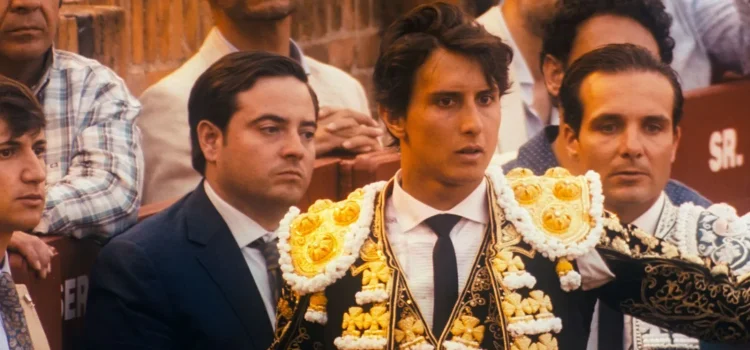
It’s clear from the outset that Boyle, reteaming with “28 Days Later” writer Alex Garland, isn’t out to make a standard “zombie” film here. He’s more interested in upending conventions, daring viewers to get on its deranged and oddly sentimental wavelength. Boyle’s film is unabashedly singular in the bold swings it takes with nearly every element of its construction. 

Aaron Taylor-Johnson and Alfie Williams

“28 Years Later” wraps its blood-soaked yarn in social commentary on hate versus love, tradition vs. independence, isolation, and coming to terms with reality, while doing one’s part to honor the lives and memory of those we hold dear. It also encourages the act of looking beyond the stories we’re told to make our own futures. All the while “28 Years Later” remains a gory (at times shockingly so) post-apocalyptic horror film with a healthy dash of dry, British humor sprinkled throughout.

There’s a lot to chew on here, and Boyle/Garland keep the film moving at a breathless clip. On a purely visceral level, “28 Years Later” is punishing in the best way. Boyle’s signature punk rock direction maintains a propulsive momentum, and Anthony Dod Mantle’s cinematography — largely filmed with iPhones, sometimes making use of a 20-camera rig that’s perfect for pseudo-bullet-time Infected kill-cams — heightens moment-to-moment intensity through its gritty, rough-hewn quality.

It establishes an off-kilter atmosphere that underlines just how twisted the world has become, capturing the vast claustrophobia of the mainland with a sense of hard-fought promise and restless uneasiness that can turn to chaos at any moment. 

The masterful score by Young Fathers initially seems anachronistic, yet perfectly complements the film’s messy but deeply poignant core — a particular highlight during the terrifying opening sequence, which juxtaposes the Teletubbies with a rural community being torn apart and reborn by the Infected.

Ralph Fiennes as Dr. Kelson

The film’s style is eclectic and jittery, yet intentional every step of the way, as Boyle weaves in subtle and, well, not-so-subtle symbolism to establish this world of regressive norms, disease, and callous cruelty. It all effectively connects with Spike’s rushed transition into adulthood, and the frantic yet courageous steps Spike takes to become his own person.

Indeed, there’s plenty of harrowing escapes and bloody carnage in “28 Years Later”, but like “28 Days Later” before it, and unlike the Juan Carlos Fresnadillo-directed “28 Weeks Later,” Boyle and Garland remain focused on character above all else. Moments of levity and warmth are unearthed amid the desolation.

The film, at times, resembles a tug-of-war between these disparate tones, as Isla (vividly portrayed by Comer) reveals humane, even sensitive sides of Spike and the world they inhabit. 

By the time Kelson shows up — one of Fiennes’ greatest performances — Boyle and Garland prime us to embrace the unexpected, finding slivers of humanity amid his temples of skulls. Boyle and Garland encourage us to get on the film’s level; whether we can go along with the last act’s emotional trajectory is as much a test for us as it is for Spike. Luckily, with the exceptional performances across the board — especially newcomer Williams — it’s easy to become swept up in the film’s rush of emotion.

Spike and Dr. Kelson

At the end of the day this is a story of a boy and his family — Spike’s disillusionment with the traditions passed down to him, and his gradual realizations of the need to confront his fears, including the inevitable pull of Fate and the importance of love amid an environment pervaded by hatred of the Other.

Not all of the film’s big swings will land for everyone, notably its unhinged final moments that set up future sequels. But “28 Years Later” is still an unforgettable viewing experience. Boyle and Garland prove, once again, that they can find thrilling new avenues into genres we think we know inside out — crafting one of the strongest, most exhilaratingly unusual films of 2025 thus far.

“28 Years Later” is a 2025 horror movie directed by Danny Boyle and starring Aaron Taylor-Johnson, Jodie Comer, Alfie Williams, Ralph Fiennes and Jack O’Connell. The run time is 1 hour, 55 minutes and Rated R for strong bloody violence, grisly images, graphic nudity, language and brief sexuality. The movie opened in theatres June 13. Alex’s Grade: A+
Facebook Comments

By Alex McPherson

Overflowing with self-importance that threatens to drown out its several competent elements, director Mike Flanagan’s “The Life of Chuck” is neither as profound nor as poignant as it thinks it is — a film so carefully-composed that genuine, earned emotion is ultimately left as an afterthought.

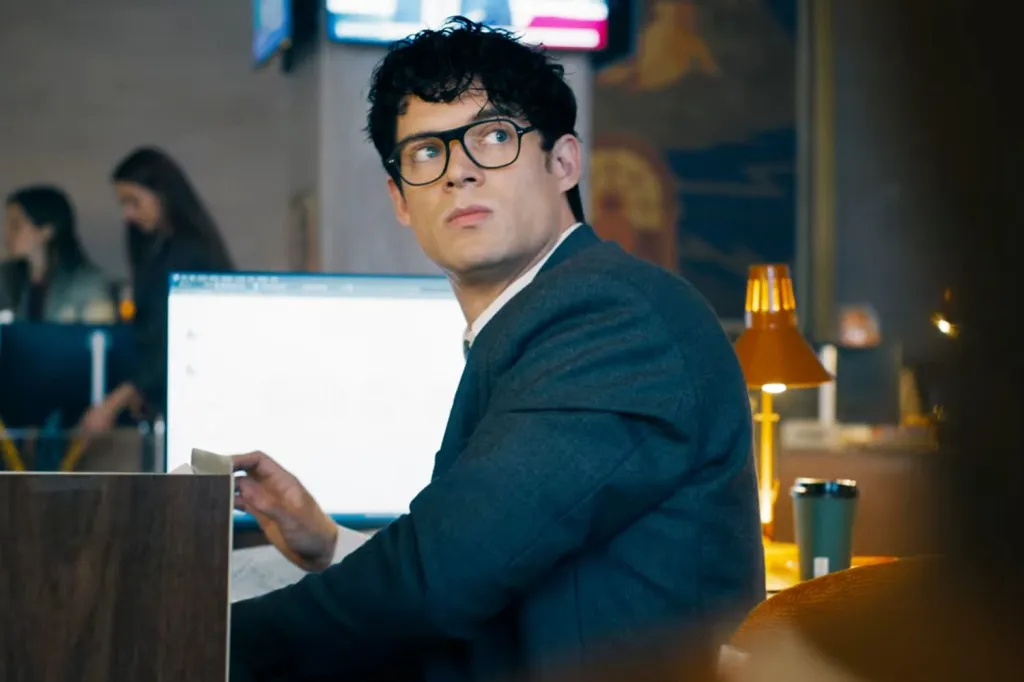
Based on the Steven King novella of the same name, Flanagan’s latest begins with the horror-inflected Act 3: the end of the universe as we know it. Chunks of California are breaking off into the ocean, Florida is underwater, fires engulf the Midwest, and the Internet is out. Posters and advertisements are plastered everywhere thanking a sharply-dressed Chuck Krantz (Tom Hiddleston) for “39 great years!” Nobody has a clue who Chuck is. 

We follow Marty Anderson (a typically soulful Chiwetel Ejiofor), a devoted but increasingly exhausted middle school social studies teacher and fan of Carl Sagan. Marty is a cool-headed, empathetic person unwilling to accept that it’s the actual “end of the world.”

At parent-teacher conferences — as attendance continues to decline in school — he helps console anxious parents who aren’t sure what to do amid it all; one of them (David Dastmalchian) bemoans the loss of PornHub. Humanity, more generally, seems to be on a slow walk towards Armageddon, with the majority resigned to their fate.

Marty reconnects with his ex-wife, Felicia Gordon (Karen Gillan), an overworked ER nurse whose department has become known as “The Suicide Squad.” Marty and Felicia see a last chance to bond before the universe is snuffed out; not even Marty’s hopeful view of Sagan’s cosmic calendar can dissuade him from preparing for The End.

Mia Sara, Mark Hamill and Cody Flanagan.

Jump to Act 2. Adult Chuck is a jaded accountant on a business trip in downtown Boston. While walking down a bustling street, Chuck sees a talented but underappreciated busker (real-life drummer Taylor Gordon a.k.a. The Pocket Queen) and gets to dancing — Chuck has quite the moves. 

A crowd gathers to watch and gawk at Chuck/Hiddleston, including Janice (Annalise Basso), a woman whose boyfriend broke up with her moments earlier through text. She starts dancing with Chuck, and, for a brief time, they’re both able to escape their demons and live in the moment.

Afterwards, Chuck looks wistfully off into the distance, reminiscing about his life and, as narration from Nick Offerman reminds us, his fleeting remaining time alive.

Act 1 takes us back to Chuck’s childhood — he’s portrayed by Cody Flanagan, Benjamin Pajak, and Jacob Tremblay. Chuck experiences family tragedy and life’s ups-and-downs with his grandparents Albie and Sarah (Mia Sara and Mark Hamill).

Benjamin Pajak as schoolboy Chuck.

He also discovers his love of dance while grappling with a rushed transition into adulthood, becoming fascinated with the strange “ghost” in the locked room upstairs that deeply frightens Albie.

Needless to say, there’s a lot going on in these three chapters, but, at the same, there’s not much to chew on. Individual scenes and performances break through the prevailing schmaltz, but for a story ostensibly about the importance of spontaneity and of living in the moment, “The Life of Chuck” paints a canvas both messy and overwrought, remaining thoroughly full of itself from start to finish. Several characters like to spout a phrase coined by Walt Whitman: “I contain multitudes” — the same, it must be noted, does not apply to this film.

It starts off strongly enough, though. Flanagan’s roots as a horror director shine through in Act 3 — establishing an eerie tone from the get-go with darkly comedic dialogue and an atmosphere of existential malaise and hopelessness. It’s a bit hokey, sure, but intriguing, with its end-of-the-world happenings not seeming all that implausible.

The conclusion is surprisingly dark, too, especially given distributor Neon’s saccharine marketing campaign. Flanagan’s directing is precise, carefully-composed, and efficient, knowing how to play us for sudden jolts of fear and bursts of unexpected (R-rated) humor.

There’s also real truth to how “The Life of Chuck” depicts humanity’s fatigue and fatalism given today’s horrors off-screen. If only the film committed more to the mystery: Acts 1 and 2 excise most of the story’s compellingly dark and off-kilter threads to embrace sentimentality and ponderous storytelling.

Jacob Tremblay as older teenage Chuck.

Indeed, much like Chuck and Janice’s exuberant dancing — which Flanagan and cinematographer Eben Bolter present with toe-tapping, quick-cut pizazz — the rest of “The Life of Chuck” feels too precious, too precisely-tailored to tug at the heart strings, and oddly-structured, content to explain rather than let viewers put the pieces together themselves.

And, in the end, “The Life of Chuck” is far from revelatory in its views on “the universe contained within us all,” leaning into directorial showmanship to conventional ends.  

Hallmark-card-worthy sentiments are rendered in faux-Spielbergian fashion, with hints of supernatural suspense, supported by a warmly inspirational score from The Newton Brothers and an ensemble that breathes warmth, if not necessarily depth, to characters slotting into Flanagan’s film like cogs in a well-oiled machine. 

Narration from Nick Offerman — presumably reading direct passages of King’s text — interrupts scenes to explain characters’ thoughts and navigate the story’s various time jumps. While this choice helps create a storybook feel, it’s limiting, given the story’s segmented structure (focusing on “big moments” in Chuck’s life).

Nuance is swapped for clarity and brevity — cutting out seemingly crucial connective tissue between Acts 1 and 2 — plus a near-worshipping of King’s source material: a short story expanded to feature length.

Hiddleston is great as usual, albeit not given all that much screen time, adding a sense of mournful reflection to Chuck’s later years as he’s made aware of the small joys in life once again. The younger actors portraying Chuck in Act 1 effectively convey both Chuck’s youthful naivete and gradual coming-of-age.

Sara and Hamill give the film’s most convincing, lived-in performances, with Hamill in particular getting the chance to engage in some Oscar-friendly speechifying, as the alcoholic, superstitious Albie counters young Chuck’s idealism around dance/the arts with a more pragmatic view on what lies ahead.

This excellent ensemble — including other notable turns from Matthew Lillard, Carl Lumbly, and Samantha Sloyan — coupled with Flanagan’s meticulous style of framing and sharp (but not organic) dialogue boosts the film above mediocrity. So long as one doesn’t think too hard about its existential musings, “The Life of Chuck” goes down easy enough.

But despite a compellingly unusual beginning and a handful of well-crafted sequences scattered throughout, it never fully takes flight. At the end of the day, it’s all trying too hard: irritatingly manufactured and only fitfully involving.

“The Life of Chuck” is a 2024 science fiction-fantasy-drama directed by Mike Flanagan and starring Tom Hiddleston, Mark Hamill, Mia Sara, Benjamin Pasak, Jacob Tremblay, Cody Flanagan, Karen Gillan, Chiwetel Ejiofor, and Matthew Lillard. Its run time is 1 hour, 51 minutes, and it is rated R for language. It opened in theatres June 6. Alex’s Grade: C+.

Facebook Comments

By Lynn Venhaus

Long admired as a versatile performer among the regional theater community, actress Emily Baker’s recent return to the stage has been met with universal acclaim.

In March, she won Outstanding Performer in a Comedy, Female or Non-Binary Role. as Susan in Albion Theatre’s “Woman in Mind” from the St. Louis Theater Circle.

In the Alan Ayckbourn play, she portrays a woman who has suffered a mental breakdown and has developed a vivid fantasy world. In her real life, she is neglected wife who is estranged from her son. By contrast, in her imagination, she is happy and successful with a perfect family who adores her.

One critic described her 2024 performance as “a tragicomic tour de force,” another called it “richly realized.”

Her virtuoso work as Heidi Holland in New Jewish Theatre’s “The Heidi Chronicles” (May 29 – June 15), portraying the feminist art historian from the 1960s to 1980s, has been hailed as showing “commanding poise and self-confidence,” and displaying “strength, vulnerability and intelligence.”

The Pulitzer Prize and Tony Award-winning play by Wendy Wasserstein was directed by Ellie Schwetye and starring Joel Moses, Will Bonfiglio, Kelly Howe, Courtney Bailey, Ashwini Arora, Joshua Mayfield and Paola Angeli.

“The Heidi Chronicles” at New Jewish Theatre. Photo by Jon Gitchoff.

As Heidi wrestles with questions of identity, success, and fulfillment during a time of profound societal transformation, Wasserstein’s work offers a powerful look at a generation’s evolving ideals and the personal cost of progress.

“I am delighted to be working at New Jewish again with this awesome group of people,” she said.

Baker described this special project as a way to relate to her parents’ experiences.

“My parents lived through the time periods in ‘The Heidi Chronicles’ at about the same age as Heidi, so I was excited about the prospect of learning more about my parents and the times by discussing the play with them. I really enjoy when a play gives you the ability to dig deep, not only into the character but also your own life and family,” she said.

Baker has returned to New Jewish Theatre for the first time since 2015, in which she played Patricia in “Sight Unseen” opposite her husband, Aaron Orion Baker, one of her favorite roles.

He played a now-famous artist who visits his ex-girlfriend in hopes she has a painting he’d like to include in an exhibit. She and her husband both resent his presence, for he treated her shabbily, and she hasn’t forgotten that she was a ‘sacrificial shiksa.” As they say, the plot thickens.

Emily Baker, at right, with her husband, Aaron Orion Baker, at left, in “Sight Unseen.”

Baker has worked with St. Louis Actors Studio, Upstream Theater, St. Louis Shakespeare, West End Players Guild, the former Muddy Waters Theatre Company and That Uppity Theatre Company, among others.

A favorite part is Ivy, Violet Weston’s daughter who stayed to take care of her mother, in “August: Osage County,” which was performed by STLAS in 2017.

Among her portrayals at St. Louis Shakespeare, she played the title role in “The Further Adventures of Hedda Gabler,” Ariel in “The Tempest,” and Penelope in “The Odyssey.”

She won her first St. Louis Theater Circle Award as Gretchen in the comedy “Boeing Boeing” at the former Dramatic License Productions in 2013. A German airline stewardess, Gretchen isn’t aware that pilot Bernard has two other fiancées.

After a hiatus to raise daughter Evelina, she has returned to acting in satisfying roles. Next up is playing Eunice, one of Stella’s friends and neighbors, in the Tennessee Williams Festival St. Louis’s “A Streetcar Named Desire,” which will be presented Aug. 7 – 17 at the Grandel Theatre in St. Louis.

The New Jewish Theatre presents “The Heidi Chronicles” from May 29 to June 15 at the Wool Studio Theater, 2 Millstone Campus Drive, Creve Coeur, Mo. Performances are on Thursdays, Saturdays, and Sundays. There is an additional show on Wednesday, June 4. Show times and tickets are available online at newjewishtheatre.org or by phone at 314.442.3283. NJT’s 2025 Season is generously sponsored by Mary Strauss. The play is 2 hours and 15 minutes long, with a 15-minute intermission.

As Susan in “Woman in Mind” with Isaiah DiLorenzo as her ‘imaginary husband.’

Q & A with Emily Baker

1. Why did you choose your profession/pursue the arts?

I am a teacher/school librarian and actor.  I knew I was interested in acting pretty early on.  I also believed that I would enjoy working in education from a pretty early age.  Both of those avenues involve connecting to people and sharing a bit of yourself with them.  I think that’s what interests me most about both career paths.

2. How would your friends describe you?

My friends describe me as passionate, empathetic, creative, intuitive, helpful, and kind.

3. How do you like to spend your spare time?

I love nature.  I enjoy walking at the Missouri Botanical Gardens with my family, hiking, and gardening.  I also enjoy reading, especially classics like Jane Austen and Shakespeare. 

4. What is your current obsession?

I’m obsessed with Duluth Trading Company’s Heirloom Overalls.  They come in so many colors and patterns.  I currently own seven pairs and I’m probably not done.

5. What would people be surprised to find out about you?

I’m an only child.  Most people are surprised to find that out.  I guess I don’t fit the mold of a typical only child.

As Heidi Holland in “The Heidi Chronicles” at New Jewish Theatre. Photo by Jon Gitchoff.

6. Can you share one of your most defining moments in life?

Becoming a mother changed my life forever.  There was a period of time where I was unsure if I would get the chance to be a mom.  Being a parent is a beautiful, frustrating, rewarding, and tiring job, but I’m so thankful I get the opportunity to learn and grow as a human with my daughter.

7. Who do you admire most?

It’s too hard to choose one person.  The traits I admire most in humanity are perseverance, compassion, and optimism.

8. What is at the top of your bucket list?

Traveling more abroad.  I’d like to see Spain, Greece, Italy, and get back to Scotland (it’s my favorite place on earth).  My daughter is fascinated with the Northern Lights so I feel a trip somewhere where we can really see them clearly is in our family’s future, too.  I would travel often if I had the time and money to do so.  Seeing new places gives you perspective and helps you understand yourself and the world better.

9. What is your favorite thing to do in St. Louis?

I have to pick two.  Visiting Forest Park and going thrift shopping.  There is so much to do in Forest Park — much of which is free — and it’s so close.  And with thrift shopping, you never know what you might find.  It’s kind of like a treasure hunt.  I can do it for hours, hopping around to different ones.

10. What’s next?

I’ll be playing Eunice in “A Streetcar Named Desire” with the Tennessee Williams Festival St. Louis later this summer.

Emily Baker as Ivy Weston, with Meghan Baker as Barbara and Kari Ely as Violet, in St. Louis Actors’ Studio’s “August: Osage County.” Photo by Patrick Huber.

Name: Emily Baker
Age: (optional) 42
Birthplace: St. Louis
Current location: St. Louis
Family: Aaron Orion Baker, Evelina and Thief (our 90-pound dog)

Emily Baker and Maggie Wininger in Kate Chopin’s “The Awakening” by STLAS.


Education: BA in Theatre and English (Truman State University), Master of Arts in Education (Truman), and Master of Library and Information Science (Mizzou)

Day job: Middle and High School Librarian and Technical Theatre Teacher and Director in the Maplewood Richmond Heights School District.

First job: My first job was developing contact sheets of photo negatives at my dad’s photo studio when I was 13.


First play or movie you were involved in or made: I played the duck (no lines other than quacking) in a staging of the classical music piece “Peter and the Wolf” by Sergei Prokofiev when I was 6 or 7.

Favorite jobs/roles/plays or work in your medium?  Ivy in “August: Osage County” (St. Louis Actors’ Studio), Solange in “The Maids” (Upstream), Patricia in “Sight Unseen” (New Jewish), Gretchen in “Boeing Boeing” (Dramatic License Productions) and Susan in “Woman in Mind” (Albion).

Dream job/opportunity: My dream roles are mostly Shakespearean.  I’d love to play Beatrice in “Much Ado About Nothing” and Lady Macbeth in “Macbeth.”

Awards/Honors/Achievements
: I’ve been the recipient of two St. Louis Theatre Circle Awards (Gretchen in “Boeing Boeing” and Susan in “Woman in Mind”).

Favorite quote/words to live by: “Whatever can anyone give you greater than now, starting here, right in this room, when you turn around?”  – William Stafford from the poem, “You Reading This, Be Ready.”

A song that makes you happy: “How Do You Feel” by Jefferson Airplane 

Photo at right: Emily Baker with Will Bonfiglio during rehearsals for “The Heidi Chronicles”.

Ben Ritchie and Emily Baker in “All in the Timing” at St Louis Actors’ Studio in 2014. Photo by Patrick Huber.
Facebook Comments

By Lynn Venhaus

“Cause the boy with the cold hard cash
Is always Mister Right
‘Cause we are living in a material world
And I am a material girl ” — Madonna

Writer-director Celine Song’s savvy and shrewd spin on modern relationships confronts expectations – and gender politics — without irony.

“Materialists,” her highly anticipated follow up to 2023’s acclaimed Oscar-nominated “Past Lives,” frames a romantic triangle with Song’s experience working at a dating service while she was trying to get her playwrighting career off the ground.

With her keen understanding of male-female dynamics, she presents an honest yet somewhat cynical look exploring intangible romantic love vs. a transactional business deal. Look at all the lonely people! Where do they all come from?

Apparently, many of them are in Manhattan. Another 100 people just got off the train in a city of strangers, some come to work, some to play.

John (Chris Evans), a scruffy still-struggling actor whose main hustle is cater waitering, once lived with and loved Lucy (Dakota Johnson), who ditched acting for the performance artistry of a dating service.

Lucy is a smart single woman whose success as a matchmaker is judged by how many engagements she’s facilitated – whether they ‘checked a lot of boxes’ for lonely, hopeful souls believing in happily ever after, or just satisfying hook-ups.

No longer content to look for love the old-fashioned way, well-heeled New Yorkers put their trust and money into this dating service called Adore. They do the math.

Adore is a carefully curated luxury service where employees work the algorithms, selling happiness like advertising agencies market the sizzle instead of the steak.

In their shallow look for Mr. or Ms. Right, these eager-to-mingle clients draft rigid non-negotiables to Lucy, hoping she will make their largely unattainable dreams come true.

Women discuss height, hairline and salary while men concern themselves with age and BMI. Much of the film’s humor is derived from people’s shopping lists.

While attending two clients’ wedding, Lucy meets Harry (Pedro Pascal), the groom’s suave brother who works in private equity and lives in a $12 million penthouse. Cha-ching. Taking milady out on the town to the ritziest places, he attentively shows her a lavish lifestyle that she could only once fantasize about.

Basically, he’s what they call in the dating biz a “unicorn,” a perfect match. But will the tug from the imperfect one who got away be too much for Lucy to resist? Security vs. uncertainty…Hmmm.

That’s the rom-com rub, but of course, Song isn’t going to go down the road often traveled. She brings fresh insight and an interesting perspective about commitment – even though we are conditioned to reach for the stars.

There is also a sobering subplot involving a dating hopeful named Sophie (Zoe Winters) who hasn’t had any luck moving past the first date. She is disillusioned by the whole mating ritual, and must deal with a scary situation.

The charisma is considerable with Evans and Pascal the as suitors. I’ve always been more lukewarm about Johnson – after all, she won a well-deserved Razzie last year for “Madame Web.” But just as she was in “Peanut Butter Falcon” and “Cha Cha Real Smooth,” she is dialed in and believable, a pleasant surprise.

The movie is book-ended with a caveman courtship in ancient civilization, so the point is made, but in present day, most couples don’t need to unite a kingdom or settle through land and livestock. Point taken, but really, exploring the modern dilemmas works just fine.

Not as profound or lyrical as “Past Lives,” but nonetheless an interesting point of view, “Materialists” charms with its simple straightforward vision.

“Materialists” is a 2025 romantic comedy-drama written and directed by Celine Song and starring Dakota Johnson, Chris Evans, Pedro Pascal and Zoe Winters. Its run time is 1 hour, 56 minutes and it is rated R for language and brief sexual material. It opened in theatres June 13. Lynn’s Grade: B+
Facebook Comments

By Lynn Venhaus

“Moonlight and love songs are never out of date” …”As Time Goes By”

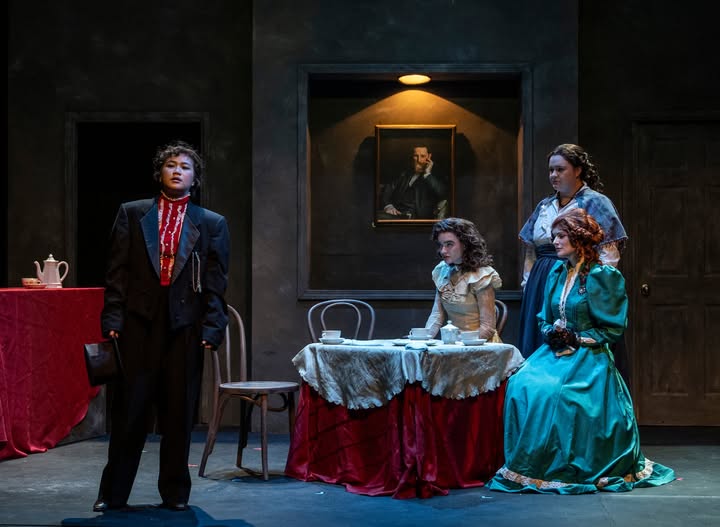
Stephen Peirick and Mara Bollini act their hearts out in a complicated love story about damaged souls making a connection in Terence McNally’s perceptive “Frankie and Johnny in the Clair de Lune.”

McNally, who won five Tony Awards during a six-decade career and was nicknamed “The Bard of America,” had a keen ear for dialogue – the way ‘real’ people talk. Even if characters are New Yorkers, you can universally identify with their joys and sorrows.

Frankie, a waitress, and Johnny, a short-order cook, work at the same diner. After several weeks of mutual attraction, they finally hook up for a date that turns into a passionate all-nighter back at her apartment. Their sexual activity is heard, not seen, but discussed in detail, and some nudity is involved.

Their thought-provoking post conversations are full of sly observances, remarkable coincidences, laughter, explicit language – and need for sustenance, not only her craving a cold leftover meatloaf sandwich or using his knife skills to prepare a Western omelet.

Stephen Peirick and Mara Bollini. Photo by Sarah Gene Dowling.

Unfiltered Johnny is a loquacious fellow – even quotes Shakespeare – but there is some darkness hinted at, while Frankie is more guarded, not so quick to reveal her life story. It’s obvious, with their real ages 41 and 48, that their experiences include so-called baggage and battle scars, but what they choose to share is heartfelt.

This relatable working-class pair do not expect fairy tale fantasy endings, after failures and faults have piled up over the years, but wanting fulfillment instead of only sexual pleasure is brought up in conversation.

McNally, who died in 2020, also had a gift for creating a community, exchanging ideas and presenting ways to deal with change, as his plays “Master Class,” “Love! Valour! Compassion!” and “Mothers and Sons” demonstrate, as do his books for musicals “Ragtime,” “Kiss of the Spider Woman,” and “The Full Monty.”

In this hopeful yet realistic look at elusive love, he wants the audience to ponder if they could heal after expressing their feelings and make a stronger commitment despite the difficulties.

The play, celebrated in both its off-Broadway run in 1987 and later Broadway and revival, starred acting luminaries Kathy Bates and F. Murray Abraham, Michael Shannon and Audra McDonald, and Edie Falco and Stanley Tucci as the titular characters.

A much-maligned 1991 movie adaptation, directed by Garry Marshall, starred Michelle Pfeiffer and Al Pacino. It was criticized for the stars being “too attractive” to play ordinary roles, and was described as lacking depth.

The best thing about Stray Dog’s carefully crafted production is its intimacy, and that has much to do with the performances from two veteran actors who are brave enough to expose their vulnerabilities, with physicality, good comic timing and frankness.

Director Gary F. Bell approaches the mature-themed material in his customary straightforward manner, steadily and clear-eyed. He also designed suitable costumes for a casual date and lingerie.

Savvy sound designer Justin Been punctuates the evening with a fine selection of classical music, including Claude Debussy’s beloved “Clair de Lune,” which means “moonlight” in French.

The soothing, ethereal piano piece conjures up gentle imagery and sums up the couple’s longing. It’s a perfect coda for an emotional rollercoaster ride.

Photo by Sarah Gene Dowling.

Johnny is smitten in a hopeless romantic way, wanting more than a one-night stand, and eager to rush in, which Frankie is wary of, for she is not so sure she’s ready for his intensity. Their push and pull are the crux of the two-act play.

Because we’re in the post-#MeToo era, and “no means no,” as it should, some of the actions are problematic (the play is set in the 1980s). If it was a contemporary piece written today, they would not have moved on to a second act, and I think concerns about Johnny’s attempted manipulation of Frankie would be raised.

So, there is that. She wanted him to leave, said so a couple times, and he wanted to stay. His directness seems more uncomfortable than persuasive. Women’s safety should always be at the forefront of storytelling in 2025. Therefore, this is a period piece that can get cringy 38 years later.

After that troublesome exchange, it appears that she willingly changed her mind because we would have had a very different outcome. As truths are tdivulged, more of a growing closeness can be felt.

Johnny’s desire for a genuine love connection and Frankie’s hesitant steps to trust again are moments of sweet tenderness – but that appearance of pressure that wound up being worked through took some suspension of belief, truth be told.

The two actors have worked together several times, including superbly as the iconic bickering married couple George and Martha in “Who’s Afraid of Virginia Woolf?,” which was staged at Stray Dog in 2023. There is little comparison to those dynamics..

Their ease with each other helps convey their loneliness, aspirations and fears. Peirick and Bollini, both likable performers, display comfortable chemistry.

This demanding two-hander requires a great deal of stamina and ‘heavy lifting,’ because they are on stage for the entire 2 hours and 15 minutes, so this accomplishment is commendable.

Photo by Sarah Gene Dowling.

The creative team’s naturalistic designs are good assets to tell this comedy-drama. Bell also designed the set, a well-worn one-room studio walk-up in Manhattan, in the Hell’s Kitchen neighborhood. However, it can become claustrophobic over the course of a long night.

Tyler Duenow’s lighting design illuminates the pillow talk with different lamps or keeps everybody in the dark during the more ‘delicate’ moments. He also streams moonlight and the breaking dawn during the times they reference the moods and the music.

Stage managers Justin Been and his assistant Aasrith Veerapaneni keep things moving.

On one hand, “Frankie and Johnny in the Claire de Lune” is a product of its time. Its pragmatic look at relationships still offers a glimmer of hope. Overall, the characters resonate, largely due to the engaging efforts of Peirick and Bollini. In today’s vernacular, they play people who want to be seen and heard in a valuable way.

It’s still the same old story
A fight for love and glory
A case of do or die
The world will always welcome lovers
As time goes by
,
— Herman Hupfield

Stray Dog Theatre presents “Frankie and Johnny in the Clair de Lune” June 5 through June 21 at the Tower Grove Abbey, 2336 Tennessee Avenue. The performances are Thursday through Saturday at 8 p.m., with special Sunday matinees at 2 p.m. on June 8 and 15. The show contains mature language, adult situations, flashing lights, discussion of abuse, and nudity. Viewer discretion is advised. For more information: straydogtheatre.org

Sarah Gene Dowling Photo.
Facebook Comments

By CB Adams

Opera Theatre of Saint Louis has always balanced reverence for tradition with a bold embrace of innovation, and its 50th anniversary season is no exception. The world premiere of “This House,” a new commission, looks squarely at the present and future of American opera (through and examination of the past), while the season’s revival of Donizetti’s “Don Pasquale” casts a backward glance—albeit through a sharply contemporary lens.

In remounting the company’s inaugural production from 1976, director Christopher Alden returns not with nostalgia, but with a bracingly modern aesthetic that reimagines the comic core of “Don Pasquale” as a meditation on aging, delusion and desire.

Alden, known for his psychologically incisive and visually stylized productions, sets the action in a Rococo-inspired espresso bar (by way of Botero and Fellini) populated by grotesque old men—figures who mirror the titular character’s absurd longing for youth. The setting is witty and revealing, a hallmark of Alden’s work, and it allows the production to comment on the opera’s themes without sacrificing its buoyant charm.

Sheri Greenawald, who played Norina in the original 1976 staging, returns in a newly created role as the espresso bar proprietor and faux notary. Though the role is modest in scale, Greenawald’s presence is quietly commanding, and her final duet with Susanne Burgess adds a poignant, intergenerational resonance to the production.

Susanne Burgess as Norina with (L to R) Sheri Greenawald as the Notary, Kyle Miller as Dr. Malatesta, and Patrick Wilhelm as the Waiter in Don Pasquale. Photo by Eric Woolsey

The creative team is uniformly strong. Marsha Ginsberg’s set and costume designs are richly evocative, from the frescoed walls and oversized granite-patterned floor to the exaggerated silhouettes that underscore the opera’s farcical elements.

Krystal Balleza and Will Vicari’s wigs and makeup heighten the grotesquerie, while Eric Southern’s lighting and the inventive use of video and shadow in Act Three add layers of visual storytelling. Seán Curran’s choreography, particularly in the Act Two finale, is a kinetic delight, echoing the protagonist’s unraveling psyche with physical wit.

One of the most striking aspects of this production is its use of English—a choice that proves both practical and profound. While operas often lose some of their musicality or nuance in translation, this Don Pasquale gains immediacy and clarity, allowing the humor and emotional stakes to land with unforced precision with an English translation by Phyllis Mead. The vernacular enhances accessibility as well as also deepens the audience’s connection to the characters’ foibles and desires.

This aligns with a long-standing debate in American opera circles, dating back (at least) to 1908 when critic Henry Krehbiel observed that opera in America would remain “experimental” until “the vernacular becomes the language of the performance and native talent provides both works and interpreters.”

(L to R) Patrick Carfizzi as Don Pasquale and Kyle Miller as Dr. Malatesta in Don Pasquale. Photo by Eric Woolsey

More than a century later, Opera Theatre of Saint Louis proves the prescience of Krehbiel’s vision. By embracing English, the company underscores its commitment to making opera a living, breathing art form—rooted in tradition, yet unmistakably of the moment.

This linguistic approach also distinguishes OTSL within the broader St. Louis opera landscape. While OTSL performs exclusively in English to foster immediacy and inclusivity, Union Avenue Opera often presents works in their original languages, preserving the musical and cultural authenticity of the repertoire. Winter Opera St. Louis similarly favors original-language performances, particularly in its focus on classic Italian and French works.

Together, these companies offer a rich spectrum of operatic expression—balancing accessibility with tradition—and contribute to a vibrant, multilingual arts scene that reflects the diversity and sophistication of St. Louis’s theater and entertainment culture.

Musically, the production is anchored by Kensho Watanabe’s elegant conducting of the St. Louis Symphony, which brings Donizetti’s score to life with warmth and precision. The orchestra does more than underscore the action; it articulates its momentum, its pauses, its turns.

Sheri Greenawald as the Notary in Don Pasquale. Sheri played Norina in OTSL’s first-ever production of the same title on May 22, 1976. Photo by Eric Woolsey

Far from a passive presence in the pit, it engages in a dynamic exchange with the stage—less an accompaniment than a co-author of the drama. Watanabe’s sensitivity to the singers and the comic pacing of the bel canto style is evident in the subtle dynamics and impeccable timing throughout.

The chorus, under Andrew Whitfield, is a comic force in its own right, first as leering old men and later as a chorus of women under Norina’s rule.

Among the principals, Patrick Carfizzi’s Don Pasquale is a masterclass in comic timing and pathos. He brings clarity and vocal lucidity to the role, embodying the pompous bachelor with a mix of bluster and vulnerability. Kyle Miller’s Malatesta is a charismatic schemer, his bold baritone matched by an energetic, almost acrobatic stage presence.

The ongoing sight gags with his pork pie hat were a nice touch of visual whimsy and an indication of the level of attention to detail that reveals the production’s quality (that is, they sweated the details).

Susanne Burgess (center) as Norina with members of the chorus in Don Pasquale. Photo by Eric Woolsey

Charles Sy’s Ernesto offers a sweet, lyrical tenor that soars in his serenade to Norina, a moment of romantic magic that culminates in a duet of sublime beauty. As Norina, Susanne Burgess dazzles with a performance that is both vocally virtuosic and emotionally grounded.

Her coloratura passages are delivered with effortless charm, and her comedic instincts are as sharp as her high notes are stratospheric. If forced to choose from the cast, Burgess’ performance was a knock-out, stand-out.

Adding to the comic texture is baritone Patrick Wilhelm in a delightful turn as the waiter-servant-factotum. His silent antics—managing Norina’s extravagant gown, delivering messages with canine devotion, and bouncing through scenes with Chaplinesque flair—contribute to the production’s surrealist tone.

That surrealism is further amplified by Alden’s visual wit: Don Pasquale perched Edith-Ann-like (ala the vintage “Rowan & Martin’s Laugh-In” television show) in an oversized chair; a veiled Sofronia wheeled in on a dessert cart like a birthday surprise; and a lavish shopping spree that name-drops every luxury brand from Armani to Ferrari.

Norina’s ritzy entourage spans a spectrum of chic identities, and her redecorating spree replaces Pasquale’s furnishings with pastel sectionals, which he and Malatesta later use to build a childlike fort.

Ernesto’s serenade is staged with a projected silent film of the lovers strolling through a wooded glen, and silhouette play cleverly underscores the shifting power dynamics—Pasquale literally diminished in Norina’s towering presence.

(L to R) Susanne Burgess as Norina and Charles Sy as Ernesto in Don Pasquale. Photo by Eric Woolsey

At one point, the cast unfurls a banner reading “VIVA LA RESISTENZA,” a gesture that flirts with political commentary but is so deftly woven into the scene that it feels both subversive and theatrically organic—especially as it culminates in the mummy-like wrapping of Sheri Greenawald’s character, blurring the line between satire and stagecraft.

This Don Pasquale is a vivid example of theatrical reinvention. It bridges past and present, celebrating five decades of OTSL’s forward-looking vision. At the risk of sounding highfalutin, this production exemplifies Regietheater—director’s theater—a mode of staging that has become ubiquitous across the global opera landscape.

Yet ubiquity does not guarantee success. What distinguishes this production is how deftly Christopher Alden wields the tools of Regietheater to craft a theatrical experience that is as intellectually stimulating as it is viscerally entertaining. In his hands, Donizetti’s comedy becomes something richer, stranger and altogether more delightful. It’s a production not to be missed.

Opera Theatre of St. Louis’ production of “Don Pasquale” continues in repertory at the Loretto-Hilton Center of Performing Arts at Webster University through June 29. For more information, visit https://opera-stl.org.

(L to R) Patrick Wilhelm as the Waiter and Kyle Miller as Dr. Malatesta in Don Pasquale. Photo by Eric Woolsey


Facebook Comments

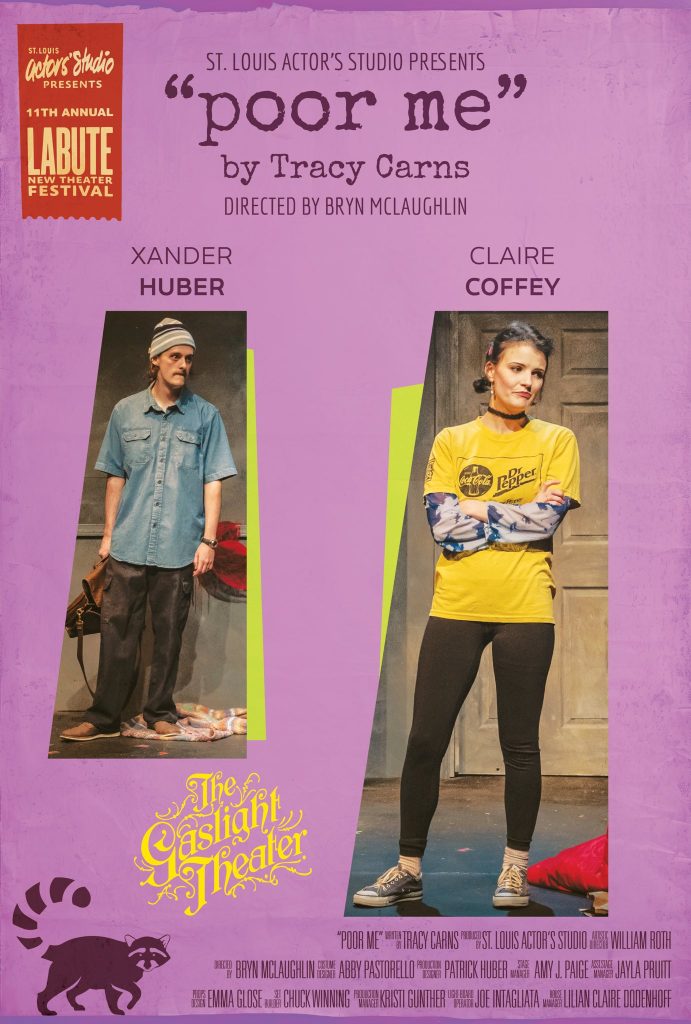
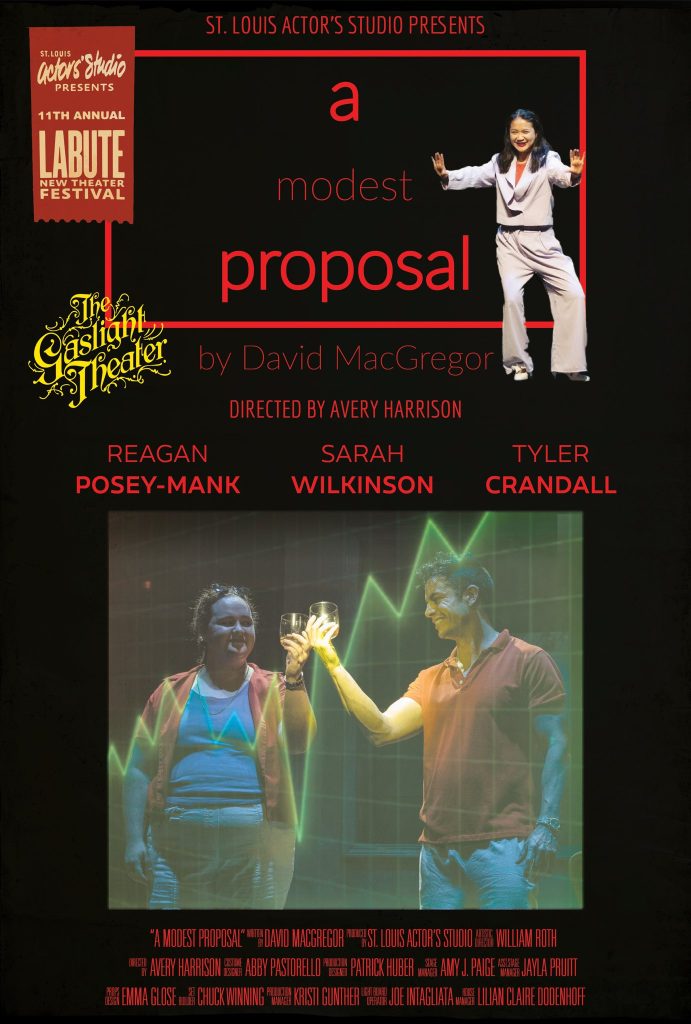
 St. Louis Actors’ Studio (STLAS) is pleased to present the 11th Annual LaBute New Theater Festival celebrating new works by emerging professional playwrights July 11-27 at The Gaslight Theater. STLAS received hundreds of submissions worldwide and selected five one-act pieces to be produced on the stage at The Gaslight Theater, along with another new piece by esteemed film director, screenwriter and playwright Neil LaBute, the festival’s namesake who also serves on its creative team. This year’s productions include the following works/playwrights:

  • Teotwawki by Aleks Merilo (two-time finalist) of Tacoma, Wash.
  • Poor Me by Tracy Carns of New York, N.Y.
  • A Modest Proposal by David MacGregor of Howell, Mich.
  • Carpool by Dave Carley of Ontario, Canada
  • Hungry Women by Melisa Maney of Hillsborough, N.J.
  • Scenes from a Bookstore by Neil LaBute

Tickets are now available for the LaBute New Theater Festival via Ticketmaster or at the theater box office one hour before show time. Performances are Thursday, Friday and Saturday evenings at 8 p.m. and on Sundays at 3 p.m. General admission tickets are $65 each plus fees, $60 each plus fees for students with valid ID and seniors 65+. For more information, visit stlas.org or email [email protected].

One of last year’s. one-act plays “Love in the Time of Nothing” by Jayne Hannah won Outstanding New Play from the St Louis Theater Circle. Shown here are Greg Hunsaker and Jane Paradise. Patrick Huber photo.

About St. Louis Actors’ Studio

St. Louis Actors’ Studio was founded to bring a fresh vision to theatre in St. Louis. Housed in The Gaslight Theater in historic Gaslight Square, STLAS is committed to bringing engaging theatrical experiences to our community of actors, writers, producers, filmmakers and all patrons of the arts; and to provide a strong ensemble environment to foster learning and artistic expression. St. Louis Actors’ Studio, through the use of ensemble work, will explore the endless facets and various themes of the human condition by producing existing and original collaborative theatre. For more information, visit stlas.org

Facebook Comments