
By Lynn Venhaus
Taut and tense, “JOB” is an unsettling psychological thriller that will spark a broad spectrum of conversations. While the play’s hot-button issues can be debated infinitely, with few clearcut agreements emerging – one thing is constant: outstanding, riveting acting.
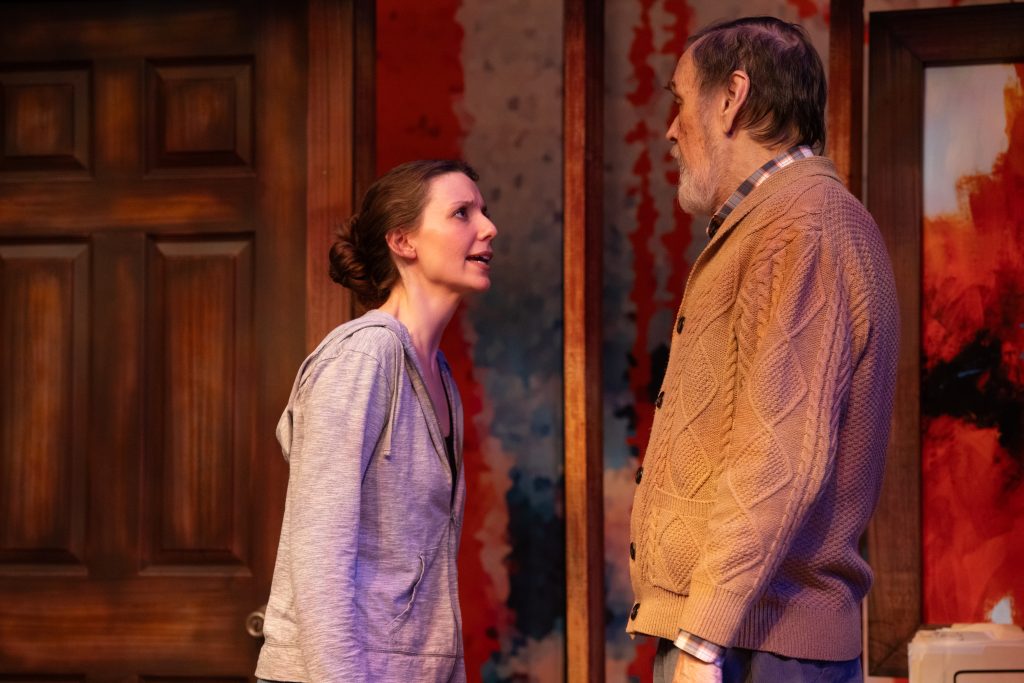
The brilliant performances by John Contini and Kristen Lindvedt are among the best of this or any year.
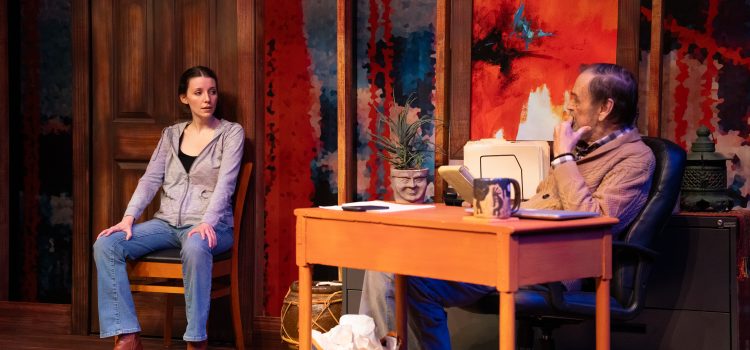
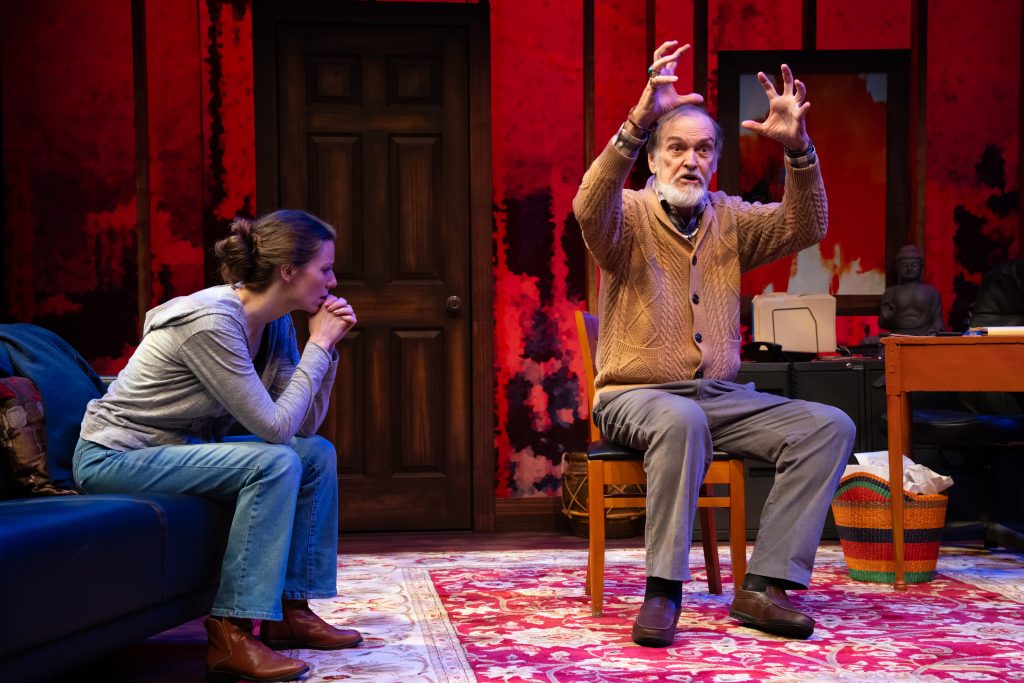
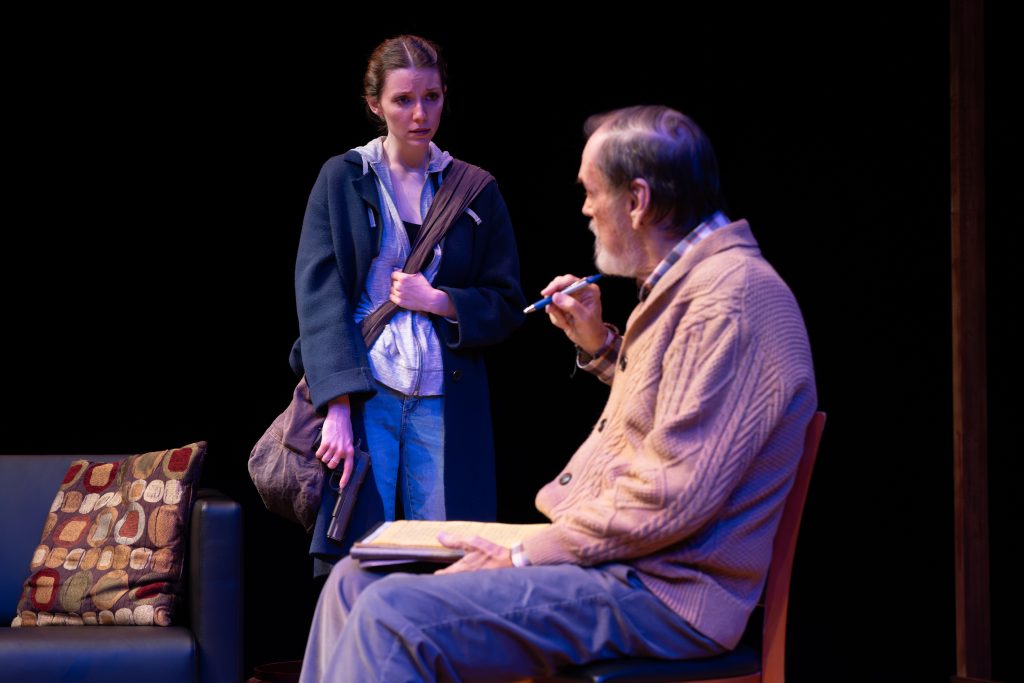
With his customary gravitas, Contini plays Loyd, a crisis therapist, who is assigned to treat Jane, a tech worker who has had a public breakdown, which was shared by a coworker in a video that went viral. She wants her job back, but the company will only reinstate her if she is approved to do so by a licensed therapist.
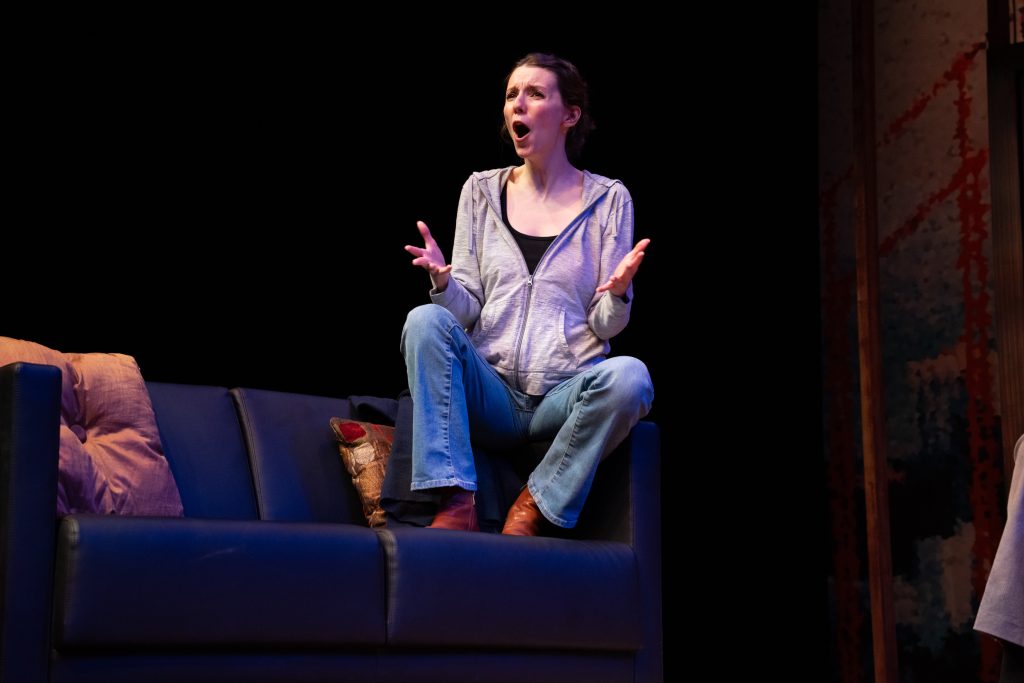
Lindvedt, who asserted herself as a memorable Cinderella in New Jewish Theatre’s “Into the Woods” in 2023 and as the ingenue in “All My Sons” in 2024, both at New Jewish Theatre, is a revelation as self-obsessed Jane. She is defiant, defensive, scared, terrifying, arrogant, aggressive and annoying, showing a wide range of emotions.
First-time playwright Max Wolf Friedlich asks: What is the human cost of living online?
Meant to be ambiguous, this 90-minute two-hander takes place in January 2020, during an on-edge therapy session. It ran on Broadway in 2024 following successful off-Broadway engagements.
Clearly agitated, Jane has shown up in a San Francisco office, and this evaluation is going to be anything but routine. Uncomfortable twists and turns are ahead, and this complex character study is very much a generational face-off, between a Baby Boomer and a Millennial.
Their identities and worldview clash – she’s part of the digital-savvy tech culture and he grew up idealistic with a hippie aesthetic. But there is so much more to explore about the psychological toll of the internet, mental health, and job burnout – perhaps too much to cover in a mere 90 minutes.
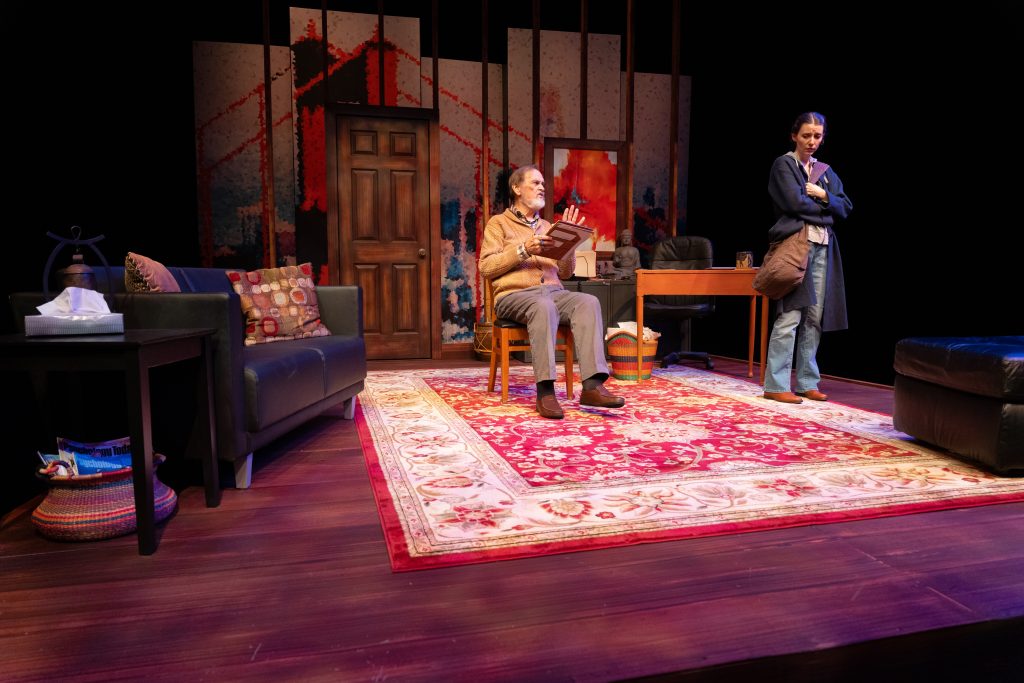
Scenic designer C. Otis Sweezey’s well-pointed set is where the claustrophobic confrontation takes place as the power play shifts, momentum and moods swing, and anxieties rise.
The conversation is absorbing as the pair settle into an uneasy rhythm – intelligently discussing life and technology, but with an apparent nervousness — a threat of violence is present.
Jane attempts to explain her meltdown as reaction to her intense job moderating extreme online and often criminal content. Yet, her job gives her life meaning, and she takes it very seriously, almost obsessively. (What happens when your job may not be healthy for you?)
How we connect online, through computers, smartphones and social media, raises questions on guilt and innocence, truth and lies, responsibility and apathy.
How does our media consumption affect our world view, and do we feel a responsibility to fight the injustices that we see and hear about daily? Should we help people who need it the most? How do we know what’s real?
We expect this somber drama to be divisive, but what is most surprising is how emotionally devastating it can be. With a sense of urgency, director Annamaria Pileggi has discovered relatable nuggets in a dark landscape.
Friedlich was inspired by real-life experiences, after meeting a professional content moderator whose job required reviewing disturbing online content. What happens when people assume the internet is anonymous? What happens to people adversely affected by cyberspace?
Bleak and disturbing, the play dredges up the underbelly of content – the filth that seeps onto screens, and there aren’t any easy answers, especially here. Are we seeing visions that are only in Jane or Loyd’s minds? What are these bizarre images that are conjured between flashes of light?
The artistic ambition is carried out through exceptional lighting design by Michael Sullivan and sound design by Kareem Deanes, which amplifies the city’s street sounds – and then other audio, but questions arise. Is it a sonic landscape of online engagement?
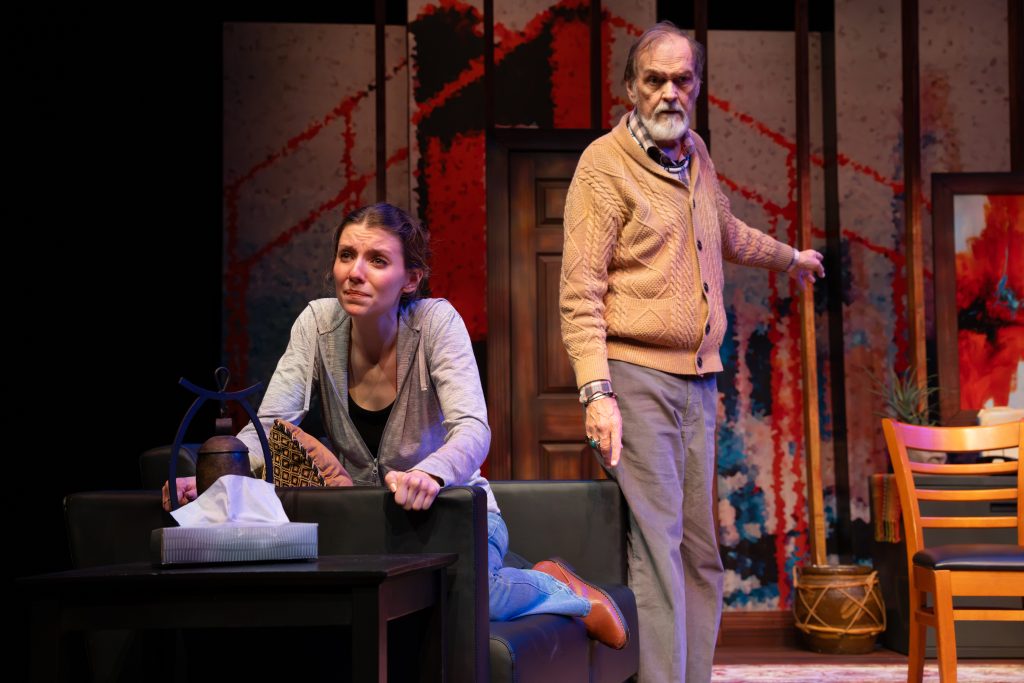
Early on, horrifically, we hear the viral video, not seen. Jane’s screams aren’t something you’ll forget anytime soon. Imagine grappling with shocking, violent, depraved images and how shattering it could be to your psyche.
We may not get easy answers we’re looking for, because after all, the lines between perception and reality are blurred. Ultimately, Friedlich’s theatrics aren’t satisfying because actions are neither clear nor conclusive.
He has magnified society’s issues without addressing where do we go from here. Whether someone is talked down from the ledge will always be a sticking point. And both are unreliable narrators.
The big reveal seems implausible, especially if you’ve been paying close attention to the details. What price are we willing to pay to live online?
Some modern playwrights who’ve pulled the rug out from under us include David Harrower in “Blackbird,” which Pileggi shrewdly directed for St. Louis Actors’ Studio. The audience sat in stunned silence then — and now.
I thought of that unsettling play during this one, feeling jittery and expecting the other shoe to drop, and my similar queasy reaction to “Small Engine Repair” by John Pollano, which has shocking twists as well. (However, no one has attempted to stage that one regionally).
Nevertheless, bravery abounds with this pair, who elevate each other, and make this a tour-de-force not to be missed.
New Jewish Theatre presents “Job” Thursdays at 7 p.m., Saturdays at 2 p.m. and 7 p.m. and Sundays at 2 p.m. from Aug. 6 through Aug. 23. Performances take place at the SFC Performing Arts Center, 2 Millstone Campus Drive. For more information: https://jccstl.com/arts-ideas/new-jewish-theatre/current-productions/
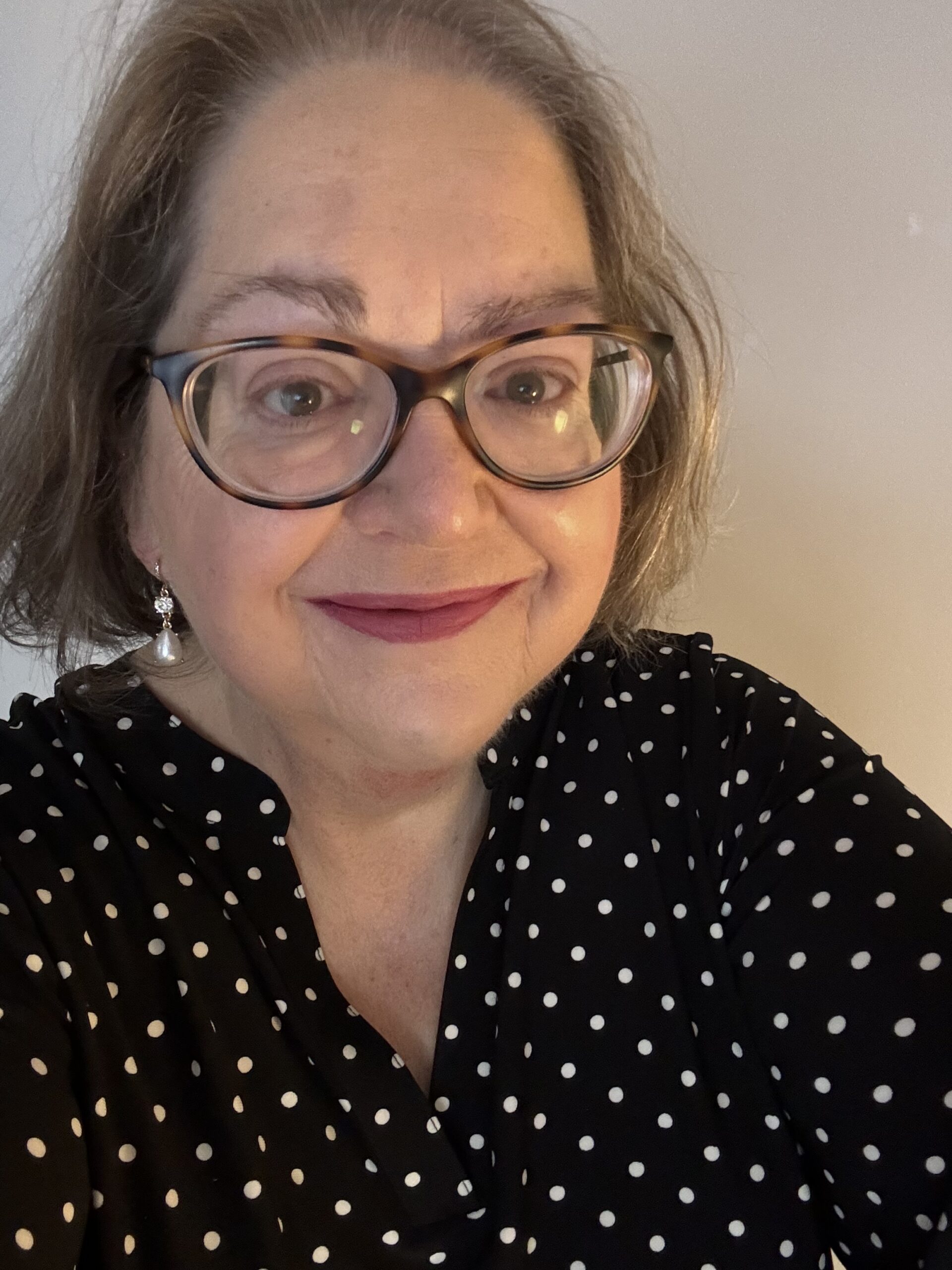
Lynn (Zipfel) Venhaus has had a continuous byline in St. Louis metro region publications since 1978. She writes features and news for Belleville News-Democrat and contributes to St. Louis magazine and other publications.
She is a Rotten Tomatoes-approved film critic, currently reviews films for Webster-Kirkwood Times and KTRS Radio, covers entertainment for PopLifeSTL.com and co-hosts podcast PopLifeSTL.com…Presents.
She is a member of Critics Choice Association, where she serves on the women’s and marketing committees; Alliance of Women Film Journalists; and on the board of the St. Louis Film Critics Association. She is a founding and board member of the St. Louis Theater Circle.
She is retired from teaching journalism/media as an adjunct college instructor.