
By Lynn Venhaus

I’ll take a big ol’ slice of Live Your Life pie, please and thank you.

The winds of change were blowing at the Muny this week, a welcome force like the powerful fans cooling the audience. From my vantage point, “Waitress” was a breath of fresh air.

The musical equivalent of comfort food has delivered a tasty combination of love, hope and inspiration since its Broadway debut in 2016.

Blazing trails, the musical’s Muny and Midwest regional premiere opened as an intimate slice-of-life heart-tugger. Scores of young women filled seats, and it was refreshing to see this show’s next generations appeal.

They can be inspired by this show by women about women – and most importantly, believe in their dreams and their voice.

Patrons were greeted with a cozy, comfortable stop on the open road, where down-home folks gathered at picnic tables for eggs, coffee, and a slice of expert baker Jenna Hunterson’s delicious pies, an inviting rustic tableau – complete with cars parked on stage.

With its big heart baked into a buttery shell, the production moves with an appetizing naturalism.

As Jenna made magic out of flour, butter and sugar, so did the ceiling-breaking all-female creative team — Lili-Anne Brown directing her third show here after rattling the rafters with “The Color Purple” and “Rent”; first-time music director Andra Velis Simon; and choreographer Chloe O. Davis.

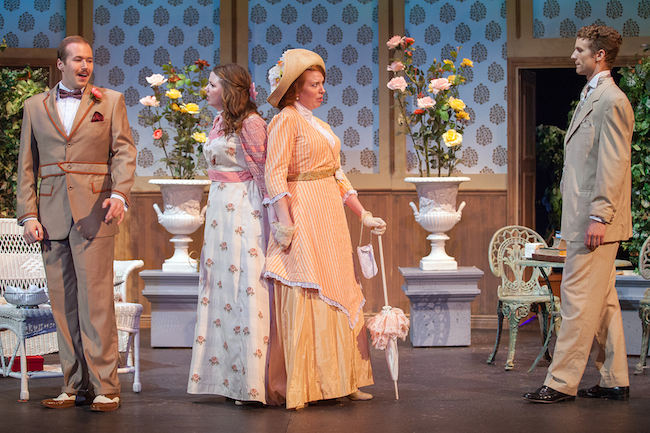
From left: Nicole Michelle Haskins, Lissa deGuzman and Jessica Vosk in the 2024 Muny production of “Waitress.” Photo by Phillip Hamer

A sturdy ensemble, representing a small-town milieu, was outfitted in work and casual attire by costume designer Raquel Adorno.

In an interesting twist, they moved in unison to “What’s Inside” and “Opening Up,” creating a rhythm that would reflect ultramodern sensibilities, thanks to Davis’ sleek choreography.

Some nifty touches include the chorus clapping like flamenco dancers to add beats to the robust duet “Bad Idea” that ends Act I. (And will be stuck in your head the rest of the night).

Taking a closer look, my fellow theatergoers, means “Waitress” is one of the two most recent contemporary hits produced at the Muny. In the pandemic-shortened 2021 season, “On Your Feet! The Story of Emilio & Gloria Estefan” played six years after it ran on Broadway in 2015, and “Waitress” arrives nine years after it opened.

Take note, those who complain about the lack of variety or too-few 21st century pieces. (2025 season survey now online (www.muny.org/showsurvey).

Talk about an auspicious Muny moment!

The biggest draw is pop star Sara Bareilles’ perceptive score, with its catchy hooks and poignant lyrics, but also the female empowerment story evokes warm feelings about family, friends, and the people who carry us through tough times.

Bareilles, a Gen X singer-songwriter and actress, has been a hit-record making machine since 2007, and her piano-based pop soul music has sold more than 3 million albums and 15 million singles.

Jessica Vosk and Clevant Derricks in the 2024 Muny production of “Waitress.” Photo by Phillip Hamer

Her fresh sounds flavor the lives of these ordinary people, and Simon’s conducting brings out the music’s luscious beats.

The joy for the material is substantial, led by a tactile and plucky tight trio of waitresses. In a rural Southern setting, sassy Becky (Nicole Michelle Haskins) and nerdy Dawn (Lissa deGuzman) plus silky-smooth Jessica Vosk as self-doubting Jenna — make Joe’s Diner their home away from home.

Each bona fide stars, they form an ‘all for one’ attitude like those rogue French musketeers, holding on to dreams and keep each other going, displaying beautiful harmonies in “A Soft Place to Land” and a spirited “The Negative.”

Jenna is surprised by an unplanned pregnancy, for she feels trapped in an unhappy marriage to the controlling, abusive Earl (Ben Crawford). Boss Joe (Tony winner Cleavant Derricks) tells her about a pie-baking contest with a hefty grand prize, and that gives her hope for a fresh start.

She also begins a startling affair with her doctor, Dr. James “Jim” Pomatter (Devin DeSantis). The show’s adulting is complicated, with Becky getting frisky at work with grouchy Cal (Jonah D. Winston) and Dawn finding true love online with eccentric soulmate Ogie (Troy Iwata).

Devin DeSantis and Jessica Vosk in the 2024 Muny production of “Waitress.” Photo by Phillip Hamer

These aren’t your typical romantic entanglements, and this isn’t your usual musical template. It’s for mature audiences, and this creative team hasn’t messed with the candid storytelling. (I’d rate it PG-13, suitable for teens but not youngsters).

Based on writer-director-actress Adrienne Shelly’s 2007 independent film starring Keri Russell, Nathan Fillion and Andy Griffith as Joe, it touches on a fierce sisterhood and their thorny problems.

(A tragic note: The creator Shelly was murdered in 2006 before the film was released. A construction worker who had been working in her office apartment building was convicted of first-degree manslaughter. Her husband gave writer Jessie Nelson some of his wife’s notes to use for the adaptation.)

The Muny’s fearless female force leans into the friendship bonds just as the original’s rare historic team did – besides Bareilles and Nelson, Diane Paulus was the director and Lorin Latarro choreographer. (First ever musical to have women in top four slots).

The feisty women characters, who are tangy in conversations and occasionally curse, are ones you root for, and even though Jenna’s life is a hot mess, they will eventually concoct their own recipes for success.

These are women who don’t think they deserve their dreams, but oh, as the comedy and drama unfold, we see the power of community lift them up.

Kaitlyn Louise Smith (left), Jessica Vosk and the company of the 2024 Muny production of “Waitress.” Photo by Phillip Hamer

If there is one overarching theme this season it is “Community.” How fortunate we can celebrate the things that unite us, from the potent cries for mercy and freedom in “Les Miserables,” the aspirations to be somebody in “Dreamgirls,” the enchanting world of make-believe in “The Little Mermaid” where fairy tales come true, and the unwavering bonds of faith and family in “Fiddler on the Roof.”

And now, with “Waitress,” you detect that important sense of community that never goes out of style – and especially with fired-up women. As Eleanor Roosevelt so eloquently put it: “A woman is like a tea bag – you can’t tell how strong she is until you put her in hot water.”

Because of their bodies, women have their own specific viewpoints on pregnancy, and the female-centric jokes are amusing in “Club Knocked Up” and “The Contraction Ballet.”

Yes, the Muny goes there, honestly. The frank subject matter regarding relationships is a risk that reflects moving the needle forward, like “The Color Purple,” “Rent,” “Kinky Boots,” “Sweeney Todd,” “Chess,” and even “Young Frankenstein” did when they finally arrived on the Muny stage.

And kudos for the insight on how pregnant women walk, move and look that adds authenticity to the performances.

Vosk, so impressive last summer in “Chess” and two years ago as the Narrator in “Joseph and the Amazing Technicolor Dreamcoat,” is a powerful, emotional vocalist in the upper echelon of professional talent. As Jenna, she shows vulnerability and resolve.

When she lovingly tells her baby girl, “We’re going to be happy, little girl, and not just happy enough” – you believe in Jenna’s tremendous strength – and she does too.

Her soul-baring “She Used to Be Mine” is a stunner, the show’s knockout punch. And the motherhood anthem, “Everything Changes,” stands out too, with an uplifting company reprise.

From left: Lissa deGuzman, Jessica Vosk and Nicole Michelle Haskins in the 2024 Muny production of “Waitress.” Photo by Phillip Hamer

“Waitress” ran for four years on Broadway, from 2016 to 2020, with 33 previews and 1,544 performances. It was nominated for four Tony Awards, including Best Musical, but that was the year “Hamilton” was the runaway train, winning 11.

After seeing the 2007 movie, a national tour at the Fox Theatre in 2019 and the filmed version of its 2021 limited engagement return, which came out in December 2023 (and is available on digital platforms), I’ve increased my appreciation on subsequent viewings. I’ve always been captivated by the score and the performances, but still think the book has some problems, particularly the awful Earl character.

Lazy, selfish, and brutish, he’s such an insufferable jerk without any redeeming qualities that it can be difficult waiting for Jenna to act in her best interest. Ben Crawford, entirely sympathetic as The Beast last year in “Disney’s Beauty and the Beast,” accomplishes quite a reversal by going full junkyard dog mean.

Dr. Pomatter, the dreamy OB/gyn, is married to a perfectly fine woman who is working her residency at the hospital; therefore, the infidelity is a sticking point. The show glosses over the consequences of cheating, and trust. We’re not talking Disney princesses. (Although she did win him over with her Mermaid Marshmallow Pie).

“Waitress” isn’t the first musical to address married people fooling around. (Hello, “The Bridges of Madison County,” “A Little Night Music,” and “Into the Woods,” to name a few.) It’s those gray areas of life…real people problems, rooted in reality that creates endless plot variations. After all, misery loves company.

And then there is that very human spice that brings passion to the forefront when added to the mix.

Jessica Vosk and Devin DeSantis in the 2024 Muny production of “Waitress.” Photo by Phillip Hamer

DeSantis, whose velvety tenor pairs well with Vosk’s commanding range, delivers their misbehaving dilemma duet “Bad Idea” superbly and continues to display his conflicted heart in “You Matter to Me.” Their connection is palpable, sprinkled with heat, and reduced through conscience-wrangling.

The humor satisfies and sustains the show. Flaky Ogie’s numbers “Never Ever Getting Rid of Me” and “I Love You Like a Table” show off Troy Iwata’s impeccable comic timing. He’s a fun fireball on stage, stealing every scene he is in, and delightful when paired with DeGuzman. They embrace their peculiarities, endearing them to the audience.

Nicole Michelle Haskins, who won a St. Louis Theater Circle Award for her role as Sofia in “The Color Purple” in 2022, is forceful as the tart-tongued Becky. Her comedic timing is also flawless. And Winston, funny as all-bark-no-bite Cal, is a formidable foil for her.

The renowned Cleavant Derricks finds the sweet spot between the curmudgeonly crusty customer Joe and the compassionate boss Joe, delivering a moving “Take It from an Old Man.” Derricks won a Tony Award for originating the role of James Thunder Early in “Dreamgirls.”

The arrival of Lulu in the final scene is the full-circle cherry on top, with charming Torri Tripoli sparkling as the light of Jenna’s life.

Also noteworthy were Patricia Jewel, a real gem, as quippy Nurse Norma and dance captain Kaitlyn Louise Smith as Jenna’s mother (in flashback).

Troy Iwata, Lissa deGuzman and the company of the 2024 Muny production of “Waitress.” Photo by Phillip Hamer

A marvel in motion, Wilson Chin’s ingenious set design, combining diner, doctor’s office, and the Hutcherson home is as eye-catching as it is functional. Smoothly turning for each transition, his interesting take on freeing up a diner’s interior added much to the atmosphere.

Chin’s making his Muny debut, but his stunning set for “Angel Street” at The Repertory Theatre in St. Louis in 2015 won a St. Louis Theater Circle Award.

Lighting designer Heather Gilbert enhanced the cordial feeling, with festive lights strung for a distinctive look.

Cravings for pie are inevitable, and video designer Mike Tutaj, new to the Muny, dispenses pie recipes on clever menu ticket graphics. Getting Out of the Mud Pie is just one of many innovative takes on the American classic dessert. Sure, she makes an apple version, but with cocoa chiffon and rose petals.

I believe, like Gary Johnson, Glen Powell’s character in the Netflix movie “Hit Man,” who says “All pie is good pie”  as his signature opening statement. Food always brings people together, and so does live theater – hence, the earthy alchemy of “Waitress.”

And dessert alert, as a special treat, the Muny has teamed up with Ted Drewes to offer Jenna’s Apple Pie Concrete only this week at the concession stands. Another St. Louis institution making its debut.

Ben Crawford and Jessica Vosk in the 2024 Muny production of “Waitress.” Photo by Phillip Hamer

A theater insider note: Another confectionary delight was added to the script when the musical returned to Broadway in 2021 for a limited engagement (filmed at this time to release as a movie musical) – “A Big Ol Slice of Live Your Life Pie.”

That is a tribute to the late actor Nick Cordero, who originated the role of Earl on Broadway. He died in July 2020 at the age of 41 after a brutal fatal battle with COVID-19. His song “Live Your Life” became an anthem, and that reference is now included for all companies.

A bountiful feast for the eyes and ears, “Waitress” is a pleasant pop experience with enough zip to sweeten a sweltering summer night. This production has effectively created common ground for an enduring theme of community, and what a delightful spritz it is..

The Muny presents “Waitress” July 30 – Aug. 5 at 8:15 p.m. nightly at the outdoor stage in Forest Park. For more information, visit www.muny.org.

The company of the 2024 Muny production of “Waitress.” Photo by Phillip Hamer
Facebook Comments

By Lynn Venhaus

The adage: “Write what you know” is never far from Mariah Richardson’s creative process.

The local playwright and educator decided for her latest work, she would address caregivers. She has known this world – for 10 years, she took care of her mother, who died in 2012, and then her brother was special needs, and she helped care for him “my whole life,” until his death in 2021.

However, for her play, “The Caregiving Project: Who’s Taking Care of Momma?” she expanded upon her experience by interviewing real St. Louis caregivers – both unpaid family members and paid professionals.

“It’s their stories that I am highlighting because they really connect us all,” she said.

Richardson, who also directs and acts, has written 12 plays, two children’s books, and written, directed and produced four short films. Her children’s animated series, “Drawn In,” ran for a season and was locally produced at Nine PBS in St. Louis. She was the staff writer and lead voice.

Mariah, second from left, with voice actors from PBS’s “Drawn In.” Provided photo.

The local theater company Bread and Roses Missouri is presenting her latest original play.

“This production is a powerful exploration of the challenges of caregiving, a vital issue impacting countless individuals and families,” said executive director Emily Kohring. “It highlights the lack of support in our society for this essential work.”

Three performances are set for Friday and Saturday, Aug. 2 and 3, at the St. Louis Shakespeare Festival Rehearsal Hall, 3333 Washington Ave. St. Louis, MO 63103. Showtimes are at 7 p.m. on Friday and at 3 p.m. and 7 p.m. on Saturday.

The company is offering free admission, although reservations are strongly encouraged. To reserve tickets, visit: https://www.showtix4u.com/event-details/85280

“It’s more than just a performance; it’s a call to action to recognize and support the caregivers in our community. With the support of the National Endowment for the Arts, the Arts & Education Council’s Arts and Healing Initiative, and the Regional Arts Commission, tickets are free,” Kohring said.

The play tells the story of Lacy, a woman trying to balance the demands of her children, her full-time job, and a mother in the early stages of dementia.

“Lacy is trying to juggle it all. Some days she manages, and other days it all feels like too much. Her kids need her care, her mom needs her care – but who’s taking care of Lacy? When Lacy finds a support group for caregivers, she discovers a community of people with their own unique stories of the challenges and the joys of caring for other people,” Richardson said.

“Through Lacy’s journey and her connection with a support group for caregivers, we explore the challenges and joys of caring for others and pose the crucial question: ‘Who’s taking care of the caregivers?’” Kohring said.

Kohring described the play as “heartfelt and powerful, a deeply moving and insightful look into the lives of caregivers.”

“While nearly every person at some point in their lives will either need to provide care to somebody, or will be the person who needs care, the work of caregiving is often rendered invisible. Workplace and government policy rarely provides caregivers with the support or resources they need. Paid caregivers are most often working for low wages in less-than-ideal conditions,” she said.

Ricki Franklin in rehearsal for “The Caregiver Project.” Photo provided.

“We created this project to amplify the voices and concerns of caregivers through the most powerful medium we know–storytelling,” Kohring added.

“The McKinsey Global Institute estimates that the U.S. economy loses up to $840 billion annually in economic output due to the suppression of women in the labor force caused by the lack of caregiving support,” she noted.

“This is a particularly exciting project for us as we received funding from the National Endowment for the Arts to make this production possible. Caregiving, though incredibly rewarding, is often undervalued and unsupported.

“We hope that this production brings to light the immense personal and economic challenges faced by caregivers and we hope to foster crucial conversations about the support systems they need,” she said.

Because the company believes in the urgency of this work, the play is also being made available this fall to organizations and groups.

“We will come to groups, and the play can be performed in a multi-purpose room, auditorium, church basement or any space where a group of people can gather,” Kohring said.

To contact Kohring to discuss scheduling a performance, she can be reached by emailing: [email protected]

The play is directed by longtime local theater educator and artist Deanna Jent, who is familiar with this terrain.

Her original play, “Falling,” was produced off-Broadway in 2012, and was presented by Mustard Seed Theatre, which she had founded at Fontbonne University in 2007 and was the artistic director for over 12 years. In St. Louis, it won a Kevin Kline Award in 2012 as Best New Play.

The family drama was based on her experience as a parent of an autistic child, and the struggles the family goes through.

Jent, who taught theater at Fontbonne for 29 years, now works as a chaplain at St. Louis University Hospital.

Jent is the author of three adaptations of novels into plays: “Till We Have Faces” by C.S. Lewis, “Pride and Prejudice” by Jane Austen, and “Imaginary Jesus” by Matt Mikalatos. She adapted “Winds of Change” for Shakespeare in the Streets in 2022, and wrote “Bosnian/American: Dance for Life.”

She has directed for the Illinois Shakespeare Festival, Shakespeare Festival St. Louis Touring Company, New Jewish Theatre and the Orange Girls. She won a St. Louis Theater Circle Award for directing the musical “All Is Calm: The Christmas Truce of 1914.”

She received a BFA from Illinois Wesleyan University and a Ph.D. in theatre from Northwestern University. She and her late husband Steve are the parents of three children.

The play stars three local actresses: Ricki Franklin, Leslie Wobbe, and Michelle Dillard.

Playwright Richardson, who wrote the 2021 Shakespeare in the Streets production “The Ville: Avengence!” is currently a full-time assistant professor at St. Louis Community College – Florissant Valley.

Mariah Richardson in her play, “Delilah’s Wish,” at Metro Theater Company in 2011.

For Metro Theater Company, her original play “Delilah’s Wish” was a touring production in 2011. It was about an 8-year-old girl in old North St. Louis who spends a challenging year depending on people in her neighborhood while her mother is serving in the military in Iraq. Geared towards grades 2 to 12, it dealt with diversity, tolerance and acceptance.

She developed a children’s book series based on that play and has been working on turning it into an animated cartoon series.

“I have eight episodes of a short-form kids show on YouTube, “Delilah Shares Our World.” I want to find partnerships to grow it and eventually show episodes all over the world. It’s a bit of geography and a bit of history and showcases a kid talking about what they love about where they live.”

Metro Theater Company also produced her original play, “Brave, Bold, Curious!” in 2022.

Richardson received a bachelor’s degree in communications from the University of New Mexico and an MFA from Smith College in playwriting.

In St. Louis, she previously taught mass communications from 2005 to 2013, moved to Los Angeles, and then returned to teach in 2015.

“The Ville: Avengeance!” at the Annie Malone Children & Family Service Center in 2021. Photo St. Louis Shakespeare Festival.

The theater company, Bread and Roses Missouri, amplifies and elevates the stories of working people through art, performance, and activism. They believe that cultural and creative expression are a means to effect deep and lasting social change, Kohring said.

The company organizes and produces arts and humanities events, exhibits and workshops for and about workers and their families.

“We strive to empower participants and educate audiences. Through the arts we envision a world that achieves an economic base benefitting the entire community,” Kohring said.

Take Ten Questions with Mariah Richardson

1.What is special about your latest project?

Mariah L Richardson

“Having been a caregiver for many years (my mind in her last ten years of life and my special needs brother throughout my life), Emily thought I was a good fit for the project.”

2. Why did you choose your profession/pursue the arts?

“After more than 40 years in this business, the reason is varied depending on the where I am in the timeline. In the beginning, as an actor, I wanted to ‘be somebody.’ I was as a poet, always, and I felt like I had something to say. As a playwright, I want to share messages and inspire. I have always enjoyed being in the arts and felt it was the safest way for me to express the many facets of myself.”

3. How would your friends describe you?

 “Funny, kind, hardworking, intelligent, and I will say what others are afraid to say, authentic.”

4. How do you like to spend your spare time?

“I love TV: well written sitcoms and dramas, documentaries, and true crime.”

5. What is your current obsession?

“Getting Kamala elected.”

6. What would people be surprised to find out about you?

“That I love to fly kites.”

7. Can you share one of your most defining moments in life?

“When I was 33 and I understood when it was said that Jesus suffered for the world. ( I have always been on a spiritual path and first, I used the teachings of Christianity for guidance.) I was living in Oakland, California, and I was approached by a woman who asked me for 35 cents. I couldn’t imagine why when 35 cents is nothing. And I understood that people expect so little when they could have so much if they could see themselves as worthy. I have battled with feelings of unworthiness, and that encounter opened my eyes and set me on the path to seeing myself as deserving of good things and knowing that what I believed I was worthy of would become manifest whether good or bad.”

8. Who do you admire most?

“I admire anyone who knows how to truly forgive.”

9. What is at the top of your bucket list?

“A trip down the Nile, Northern Lights in Alaska, be financially free. “

10. How were you affected by the pandemic years, and anything you would like to share about what got you through and any lesson learned during the isolation periods? Any reflections on how the arts were affected? And what it means to move forward?

“The pandemic was good for me, overall. My day job went online, and I was able to walk in Forest Park daily. It was tough for those producing live theatre, but as a writer I could work from home. I know the importance of self-reflection and being quiet. I naturally have work and downtime in equal measure when I can. This is what got me through the pandemic, and I miss how quiet the world got.”

11. What is your favorite thing to do in St. Louis?

“I am a tourist in my hometown of St. Louis, and I love finding out about it, mostly through food and cultural events around town.”

Mariah’s play “Brave, Bold, Curious!” at Metro Theater Company in 2022. Photo by Jennifer A. Lin.

Cover photo by Lynn Venhaus at St Louis Community College – Forest Park.

Facebook Comments

By CB Adams

Union Avenue Opera’s concert version of Giuseppe Verdi’s “Aida” seems to have taken its cue from George Bernard Shaw when he wrote: “An opera may be allowed to be extravagantly expensive in its ornament, but its foundation must be plain and simple.” The key words are foundation, plain and simple –  and that’s where this “Aida” shines.

Instead of the traditional fully staged production – replete with costumes, props and lighting effects – the concert format puts the singers. voices and the orchestra in the spotlight. With minimal staging, the singers focus more on their vocal delivery, leading to stronger vocal performance from the chorus to the leading characters. It’s all about the voices, and this production delivers a satisfying, intimate and powerful hybrid rendition of Verdi’s masterpiece.

And with fewer distractions from sets and costumes, the audience is freer to concentrate on the orchestration and musical nuances – both of which conductor Scott Schoonover delivers exquisitely. This concert format relies on vocal performances, and this production delivers the best in the cast and the orchestra.

“Aida” is work of great musical sophistication and this production elevates Verdi’s innovative instrumentation, such as his use of the oboe d’amore and the bass trumpet to add distinctive tonal colors that are unique to this opera.

Principals Limmie Pulliam, Todd Payne, Melody Wilson. Photo by Dan Donovan.

It also highlights his complex orchestration that blends instruments in unexpected ways to create rich textures, including the delicate string passages and the interplay between woodwinds and brass in the Prelude that set the tone for the opera’s dramatic narrative.

The pared down concert also reveals Verdi’s dynamic and rhythmic variations such as the sudden changes from pianissimo to fortissimo that transition from dramatic moments, such as the transitions between Aida’s introspective arias and the bombastic public scenes.

The role of the chorus is often overlooked or mentioned late in a review, but the chorus for this “Aida”  deserves first mention. The large ensemble is on stage throughout the performance and serves as both an imposing physical and vocal backdrop to the goings on of the main tragic love triangle between Aida, an Ethiopian princess enslaved in Egypt, Radamès, the Egyptian military commander she loves, and Amneris, the Egyptian princess who is in love with Radamès.

The chorus often punctuates the performance with a full-throated, impressive punch with an impressive contrast to the solos and quieter moments.

Impressive, too, are the secondary parts of Ramfis, the High Priest, Amonasro, King of Ethiopia and father of Aida, and Gran Sacerdotessa, sung by Jacob Lassetter, Lloyd Reshard and Danielle Yilmaz, respectively. Among these excellent performances, Yilmaz’s is especially noteworthy for the relatively small role that plays a crucial part in setting the scene for the opera’s grand ceremonial moments.

Marsha Thompson and Melody Wilson. Photo by Dan Donovan.

Yilmaz’s vocal purity and clarity, her expressive delivery and vibrant stage presence all combine to enhance the spiritual and mystical dimensions of the production. She intones her lines with a crystalline quality, providing a contrasting texture to the more robust voices of the principal characters. Her delivery of lines like “Immenso Fthà” felt otherworldly and imbued with a sense of ritualistic importance.

Bass-baritone Reshard commands the stage as Amonasro, with a powerful and still soft-edged voice that effectively conveys his anger. As Ramfis,  Lassetter delivers his character with resonant vocal authority and depth, strong dramatic presence and gravitas.

For instance, in the Act 1 temple scene, he delivered Ramfis’s invocations and blessings with solemnity and a sense of ritualistic importance, which set the spiritual tone of the scene. In the final judgment scene, his calm, authoritative demeanor contrasted with the emotional turmoil of the other characters.

In the title role, soprano Marsha Thompson delivers a rich and satisfying performance of Aida with a powerful-yet-lyrical voice that conveys the character’s deep emotional turmoil, torn between love for Radamès and loyalty to her homeland. Her nuanced portrayal (including some theatrical hand and eye movements) captures Aida’s inner strength and vulnerability, delivering her arias with tenderness and intensity, particularly in the poignant “O patria mia.”

Tenor Lemmie Pulliam displays an impressive range as Radamès. Wearing a dramatic sash, he has a commanding stage presence and vocal power that delivers a profound depth to the role. His ability to convey Radamès’s inner conflict and heroic stature with both emotional intensity and technical precision, makes his performance a standout with an effective blend of dramatic prowess and lyrical beauty.

Lloyd Reshard and Marsha Thompson/ Dan Donovan Photography.

Amneris is the archetypal jealous diva with a heart of ice, and Melody Wilson weaves that personification seamlessly with the other characters. Wilson invites the audience to love to hate her as a royal drama queen whose idea of a fun includes thwarting her rivals and flaunting her power.

Wilson brings emotional complexity to Amneris, capturing her conflicted feelings of jealousy, power, and vulnerability. This adds layers to the character, making her more than just a scheming antagonist.

Beneath these characters – physically and aurally – is the orchestra, which shines with Schoonover’s adept and subtle directing. The orchestral accompaniment often provides a subtle underscoring that enhances the emotional context without overpowering the singers.

Although there are moments when the orchestra sonically overshadowed the singers (it must be difficult not to become overly enthusiastic when performing Verdi’s music), mostly it supports and enriches the vocal lines and confidently delivers Verdi’s score.

This can be particularly noted in the quieter, more introspective moments of the opera, where the orchestra’s role is to support and enrich the vocal lines.

The opera concert format was a good choice for Union Avenue. The modestly sized venue at Union Avenue Christian Church would have been challenging to put on a full production of “Aida.” The concert format is a nice change of pace that placed a premium on the singers. performances.

The result is an intimate and powerful interpretation of the opera that is distinguished by  vocal artistry and dramatic expression with just the right amount of costuming and theatrically.

Union Avenue Opera’s “Aida” runs July 26, 28, and through Aug. 3 at Union Avenue Christian Church. Visit  https://unionavenueopera.org for ticket information.

The company of “Aida in Concert.” Photo by Dan Donovan.
Facebook Comments

By Lynn Venhaus

“What do you see?”

The opening line of “Red” establishes the essence of this brilliant fact-based drama by John Logan.

An invigorating portrait of abstract expressionist Mark Rothko focuses on the singular artist at a crossroads in his career. An astounding Christopher Harris has vividly sketched this mercurial icon with intense physicality and quicksilver verbal jousting.

Rothko, a Russian immigrant who arrived at Ellis Island in 1913 with his Jewish family when he was 10, was known for his uncompromising nature, ambition, obsessiveness, and troubled, restless mind.

In the 1950s, he rose to prominence in the ephemeral art world, and now is considered one of the most influential artists of the 20th century. But as his celebrity grew, so did his doubts about artistic integrity.

From 1949 to 1970, he rose to fame for his minimalist soft-edged, shaded rectangular color blocks on unframed canvases – such as “Lavender and Mulberry,” “Yellow Over Purple,” “Four Darks in Red” and “Orange and Tan,” which produced a variety of emotional responses.

Christopher Harris, as Rothko, and Dustin Petrillo as Ken. Photo by Jon Gitchoff.

Through these infinite variations of vibrant divergent color blocks, he opened the power of raw emotions. Striving for depth, he employed layering in painting, and through his bold techniques for color, size and space, he crafted a signature style.

He was sensitive to harsh criticism that abstract art could be painted by 5-year-olds, as this fictional play indicates he was motivated by ideas and mindful of his legacy.

Harris’ Rothko alternates between reflection, frustration and pontification. Wanting to remain relevant and create a memorable work for posterity, yet irked by the monetary reason that went against his principles, he second-guessed a major decision.

He had accepted the largest commission in modern art history – $35,000, his first, from the deep-pocketed Seagrams to produce four large murals to hang in their building at the elite Four Seasons. The new place would become Manhattan’s poshest restaurant.

The time is 1958-59 and the place is a former gymnasium remodeled into an art studio in the Bowery neighborhood of New York City.

Through blunt conversations with his employee Ken (a fictional character that’s a composite of multiple assistants the iconoclast had), he will change his mind. But that defining moment comes after the men have intense and fascinating discussions about art, artists and the drive to create.

Petrillo as the assistant. Photo by Jon Gitchoff.

As the eager and earnest assistant, the intuitive young actor Dustin Lane Petrillo delivers another perfectly calibrated performance, following his dynamic turn as Hamlet in St. Louis Shakespeare’s production earlier this year, and was exemplary as the title role in “The Immigrant” at New Jewish Theatre last fall, nominated for a St. Louis Theater Circle Award.

Ken is an aspiring artist and is at first colorless, but we see his shadings emerge as he adapts to the complex and mysterious Rothko’s demands, outbursts and temperament. His rigorous assignments are to mix paint, build frames, stretch canvases – and get lunch, go on errands and whatever else his difficult boss orders.

Over a two-year period, gaining confidence, he begins to challenge Rothko, believing art should reflect change. Rothko’s vulnerability seeps through his façade, and so does his torment.

The tortured artist couldn’t quite reconcile the motives connecting commerce and art, especially rampant corporate capitalism. He wrestled with the role of art in society – décor or thought-provoking?

With this two-hander, the actors are strongest in collaboration – and they must create paintings live on stage, which is both daunting and enthralling. They accomplish it with elan.

Petrillo and Harris. Photo by Jon Gitchoff.

They crafted a working relationship that alternated between tempestuous and harmonious, and the duo mesmerized for 90 minutes. You can feel them challenging each other, demonstrated by their mastery of the back-and-forth like they’re lobbing tennis shots in a Grand Slam final.

Harris. who has not only stage experience but also film, television and radio, was last seen in NJT’s “Life Sucks” in 2018. portraying Vanya in this comedic take on Chekhov’s play “Uncle Vanya.”

Taut direction by Alan Knoll makes this tightly controlled atmosphere engrossing. The comic relief is well-timed, and the material richly textured. Knoll had gracefully directed two triumphant Neil Simon comedies for NJT in recent years – “Brighton Beach Memoirs” and “Broadway Bound.” This show is a tall order, and he’s up to the demands, because to pull all of this together had to be an incredibly arduous task.

During this play, Rothko rails against the status quo, disparaging people who preferred safe pieces suited for “above the mantel,” revealing Rothko’s disdain for his contemporaries and the rising stars of pop art.

Battling depression his entire life, Rothko died by suicide in 1970. He was 66. The play does not include an epilogue, preferring to concentrate on that momentous two-year period of passionate creativity in the late 1950s.

He would go on to cancel the Seagram contract in 1960, and instead donated pieces to the Tate Gallery in London in 1966.

Well-researched and thoughtfully written by Logan, “Red” elevates art appreciation. He is meticulous in conveying Rothko’s strong scholarship in art history, bringing up the effect Rembrandt’s emotive use of light had on him when seeing one of the Dutch masters’ paintings, and other impactful pieces.

Harris. photo by Jon Gitchoff.

The visceral drama won the Tony Award for Best Play in 2010, taking home five other awards including one for Eddie Redmayne as Ken for Best Featured Actor in a Play. (Alfred Molina, who originated the leading role, lost to Denzel Washington for “Fences.”)

The St. Louis-based Fox Theatricals was among the Broadway producers. The Repertory Theatre of St. Louis presented the show in 2011, opening its 45th season soon after the play’s triumphs in London and NYC, and it hasn’t been professionally produced regionally since then.

Logan, whose lauded career includes writing plays for 10 years in Chicago before penning the screenplays “Any Given Sunday” in 1999, Ridley Scott’s “Gladiator” in 2000, Martin Scorsese’s “The Aviator” in 2004 and “Hugo” in 2011, the latter three all Oscar-nominated, and two James Bond films for Sam Mendes, “Skyfall” in 2012 and “Spectre” in 2015.

The New Jewish Theatre produced Logan’s chilling first play “Never the Sinner” about killers Leopold and Loeb in 2017.

Scenic designers Peter and Margery Spack, whose painstaking details often stun in breadth and scope in the Wool Studio, have transformed this pliable space into a functional work, with outstanding props collected by Katie Orr. They have replicated, with permission, Rothko-style canvases.

Studio. Photo by Jon Gitchoff.

The award-winning designers studied archival photos and accounts to recreate the studio as faithfully as possible in the theater, including an Adirondack chair Rothko favored.

Lighting designer Jayson M. Lawshee has expertly shut out natural light, per Rothko’s notorious edict, while sound designer Justin Smith has astutely selected mood music of preferred classical and period jazz pieces. Michele Friedman Siler, whose period costume designs are notable for their accuracy, outfits the two artists appropriately.

Rothko once wrote: “The tragic experience of catharsis is the only source of any art. Art is an adventure into an unknown world, which can be explored only by those willing to take risks.”

This inspired production honors risk takers and spotlights universal truths while presenting an interesting debate about the role of art in society. Featuring two robust performances and exceptional production values, “Red” should not be missed in this stellar environment.

This is not a rehash of your college modern art history class, and hurray for that distinction. The effort that went into every aspect of this stimulating show is obvious – and admirable.

Harris. Photo by Jon Gitchoff.

New Jewish Theatre presents “Red” July 25 through Aug. 11 in the SFC Performing Arts Centers’ Wool Studio Theatre, 2 Millstone Campus Drive, St. Louis. Performances are Thursdays at 7:30 pm, Saturdays at 4 and 8 pm, and Sundays at 2 pm. The show is 90 minutes without intermission. Tickets are available by phone at 314.442.3283 or online at newjewishtheatre.org. For more information: jccstl.com/arts-ideas/new-jewish-theatre/current-productions.

As a bonus event, scenic designer Margery Spack will give a presentation on her fascinating research into Rothko’s studio and the designers’ process in translating it for the NJT stage on Sunday, Aug. 4 following the 2 pm performance.

Facebook Comments

By Lynn Venhaus

After a triumphant cabaret at Blue Strawberry last month, singer-songwriter-actress Lisa Ramey will perform at The Dark Room on Friday, July 26.

The Dark Room show is part of Fresh Fridays, and starts at 8 p.m. at The Grandel, 3610 Grandel Square in St. Louis. For tickets ($15) — https://www.metrotix.com/events/detail/live-at-the-dark-room-lisa-ramey

She will be part of the Festival of Nations on Aug. 24.

She is in the cast of the upcoming “Ragtime” at Stages St. Louis that begins Sept. 20 through Oct. 1.

St. Louis-born and New York-based artist Lisa, who is known as contemporary soul and pop artist, competed on NBC’s award-winning “The Voice” in Season 16 in 2019, selected by John Legend for his team, where she made it to the live shows as part of the top 24.

Her debut album “Surrender” was released in 2020, and was named one of Good Morning America’s “Top 50 Albums of 2020.” She has performed live with Lauryn Hill and James Taylor, and was part of The Roots Jam Session, hosted by Questlove. She’s been involved with charity benefits, and has worked on political advocacy and social justice. She participated in The Virtual March on Washington, billed with Macy Gray and H.E.R.

She has been described as “exuding gritty soul and passion with a soul meets rock vibe that emphatically captures her roots.”

Her second album, “Broken Smile” re-imagined the songs and music sung by civil rights activist Ms. Fannie Lou Hamer.

She is focused on her music career, and writing new songs while she is home in St. Louis this summer. She plans to tour with new music that she’s been working on this year. Next up?

“Tour! Tour! Tour! It’s time to get this music up and in front of people,” she said.

She is available on Spotify, and streams have been going well.

“I have almost 33,000 listeners and over 600,000 streams,” she said.

For the latest, visit www.lisarameymusic.com.

Q & A with Lisa Ramey

1. What is special about your latest project?

For me it’s special because it’s the first time I am writing and releasing music without any limits. No one telling me how I should sing or what I should sing about. Total freedom in these new releases and I am loving it

2. Why did you choose your profession?

Destiny. I was made to do this. It makes more sense to have a job that pays every other week. With my job you never know when the money will come. It’s insane. I would not have chosen this but it’s my destiny. I don’t know any other way to happily exist.

3. How would your friends describe you?

Fun, energetic, great listener, moody, a vibe, loyal, dedicated to my craft, hardworking, unstoppable, limitless, authentic, love who I am and free!

4. How do you like to spend your spare time?

Beautiful drinks served in a gorgeous setting with the greatest foods. Making food and working out.

5. What is your current obsession?

Essential oils! I cannot get over how powerful they are

6. What would people be surprised to find out about you?

I was home-schooled from K-12th grade. I used to be known for my tap dance skills over anything else. I used to do musicals despite my voice not sounding like it. It took me a minute to get it off my vocal cords 😉 and I’m allergic to strawberries and apples.

7. Can you share one of your most defining moments in life?

When I realized that I didn’t need to prove anything to anyone. I’m really good at what I do, so let’s party. Don’t take anything too seriously. Especially yourself.

8. Who do you admire most?

Critical thinkers.

 
9. What is at the top of your bucket list?

Singing my songs all over earth at outdoor huge spaces where everyone knows my songs and sings with me. Whoa!

10. What is your favorite thing to do in your hometown?

Hang with my family and close friends at a house

Favorite quote/words to live by: There’s no crying in baseball -Tom Hanks in A League of their own

A song that makes you happy: It’s such a sad song but currently Zayns song “How If Feels” makes me have all the feels and I love it.

Facebook Comments

The Repertory Theatre of St. Louis is proud to present the return of the Steve Woolf Studio Series – Adventurous Theatre for Adventurous Theateregoers for the 2024/25 Season in the Emerson Studio of the Loretto-Hilton Center on the campus of Webster University. The two play series features a wickedly funny comedy, The Roommate by Jen Silverman running October 26 – November 17, 2024, and the fast-paced engaging play Athena by Gracie Gardner, January 15 – February 8, 2025.

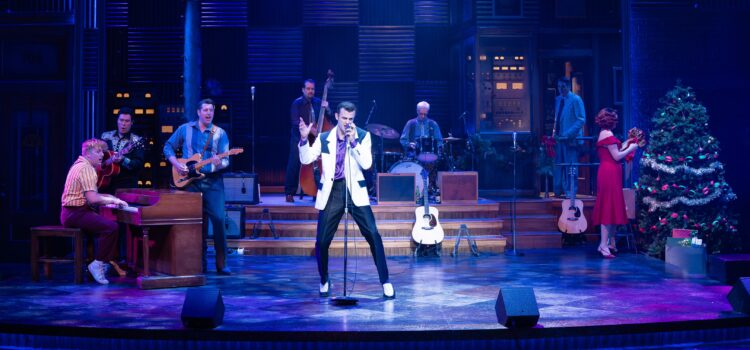
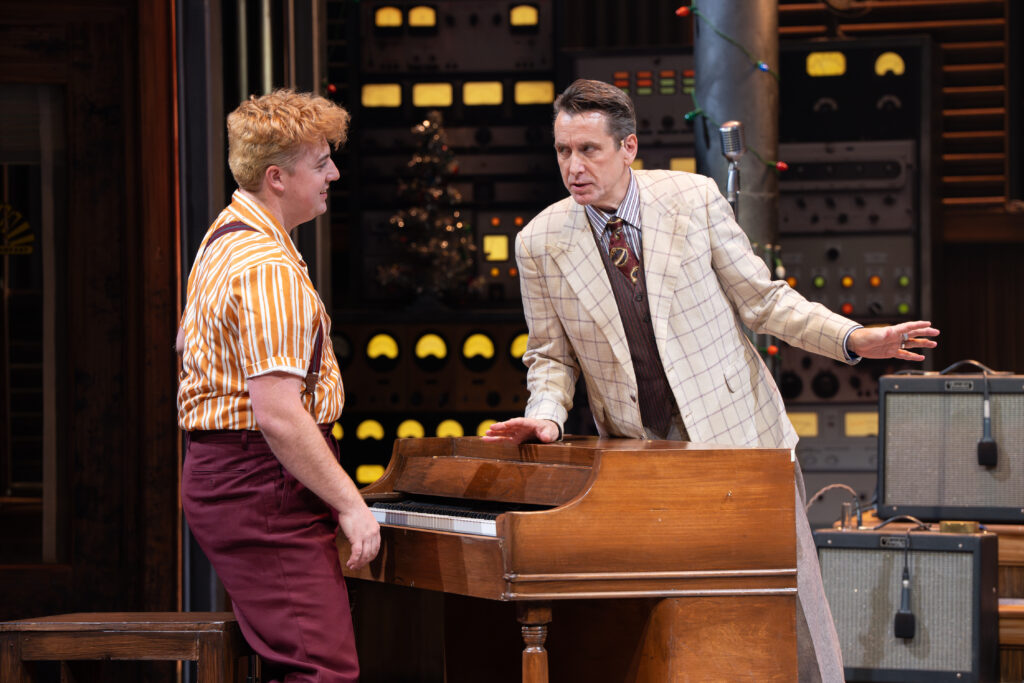
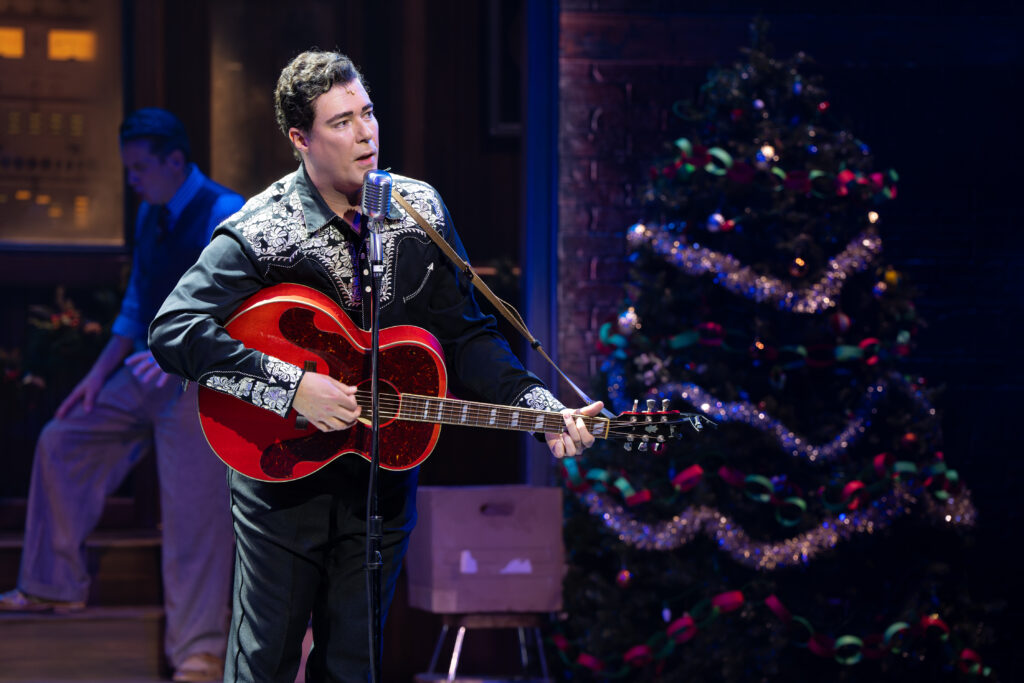
The Steve Woolf Studio Series is in addition to the previously announced Mainstage Season featuring the suspense thriller Dial “M” for Murder September 18 – October 13, 2024; the holiday musical Million Dollar Quartet Christmas in partnership with STAGES St. Louis,  December 4 – 22, 2024; Lynn Nottage’s Tony-nominated comedy, Clyde’s, February 5 – March 2, 2025; and the uproarious retelling of Ken Ludwig’s Sherwood: The Adventures of Robin Hood, March 19 – April 13, 2025 all performed at the Loretto-Hilton Center, in the Virginia Jackson Browning Theatre on the campus of Webster University. 

“Adventurous black-box theatre brimming with vital heart, humor and dramatic action flexes a different and exciting muscle of storytelling for our community to enjoy here again at The Rep. Bringing back that immersive, intimate communal experience with the Steve Woolf Studio Series thrills as I kick off my first season here as Artistic Director.” said Kate Bergstrom, Augustin Family Artistic Director.

“Our studio season demonstrates that coming of age can happen at any time in a person’s life-from 16 to 60, especially with a firecracker of a new “friend” in the mix. The Roommate and Athena feature strong female duos that must balance their own morals and survival instincts amidst the risk and reward of creating a human connection. These stories are funny and gut-wrenching all the while being ferocious and heartwarming. I can’t wait to welcome audiences back to the Studio as we go on this coming of age adventure together.”

Steven Woolf

“As The Rep continues to move forward, it’s important to look back to honor and celebrate the legacy of those before us,” said Danny Williams, Managing Director.  “Steve Woolf made an immeasurable impact on not only the theater, but the St. Louis community by encouraging theatergoers to take a risk with newer unknown plays and playwrights.  His risk was our reward as we continue his legacy with two contemporary and adventurous plays in our home at the LHC that will enrich our subscribers’ thirst for exceptional theatrical experiences.”

First in the series is The Roommate, directed by Rebekah Scallet, Artistic Director of New Jewish Theatre and features set design by Robert Mark Morgan a St. Louis-based multidisciplinary artist teaching stage design at Washington University, costume design by Lou Bird whose designs were featured in The Rep’s Clybourne Park and The Invisible Hand, lighting design by Jayson Lawshee whose recent work at COCA include Matilda and Billy Elliot, and sound design by Kareem Deanes who last worked on Gruesome Playground Injuries at The Rep.

In The Roommate, middle-aged Sharon, recently divorced and seeking a sensible roommate, opens her home to Robyn, a mysterious woman with a murky past. Entwining this unlikely duo’s lives in shared dish-duty and shady business, Jen Silverman takes us on an uproarious journey of self-discovery, secrets and revelations. Challenge societal norms, embrace the unexpected, and revel in the reinvention that only true friendship can spark in this dark comedy that proves coming of age can happen anytime, anywhere- even your own kitchen table!

Athena, directed by Kate Bergstrom in her studio directorial debut as Augustin Family Artistic Director, will feature competition and friendship going head to head with live fencing on the piste. In Gracie Gardner’s engaging new play, which was named a New York Times Critics’ Pick, characters Mary Wallace and Athena are brave, and seventeen, and fencers, and training for the Junior Olympics. They practice together, they compete against each other, they spend their lives together. They wish they were friends.

Cast and further creative team for both productions to be announced soon.

Leadership support for The 24-25 Steve Woolf Studio Series is generously provided by  Susan and Peter Tuteur, with additional production support  for Athena by Gwen and Paul Middeke and Ven and Cynthia Houts.

Subscriptions and single tickets are available online at repstl.org, over the phone 314-968-4925 or in person at the Loretto-Hilton Center Box Office  Tuesdays – Thursdays from 10:30-5pm.  Seating for the Studio Series is General Admission with subscribers given priority seating beginning 30 minutes prior to curtain. 

For more information, please visit repstl.org.

About the Playwrights:

Jen SilvermanThe Roommate
Jen is a New York-based playwright, novelist and screenwriter. Jen’s plays include Spain; Collective Rage: A Play in 5 Betties; The Moors; The Roommate; Witch and Highway Patrol. They have been produced off-Broadway, regionally across the US, and internationally in Australia, the UK, the Czech Republic, Switzerland and Spain. Jen is the author of the debut novel We Play Ourselves and the story collection The Island Dwellers; Jen’s next novel is forthcoming from Random House in 2024. Jen wrote The Miranda Obsession as a narrative podcast for Audible, starring Rachel Brosnahan. Jen is a three-time MacDowell Fellow and a member of New Dramatists. Honors include the Yale Drama Series Award and fellowships from the New York Foundation for the Arts, the Lower Manhattan Cultural Council, the National Endowment for the Arts and the Guggenheim. Jen also writes for TV and film.

Gracie Gardner, Athena
Gracie is an American playwright. With other works selected for Theatertreffen Stückemarkt in Berlin, premiered at Munich Volkstheater, and honored with the Relentless Award; it was developed by Less Than Rent at HERE Arts Center, and The Old Vic in London. Her play Athena (New York Times Critics’ Pick) was presented by The Hearth at JACK. Gracie is the recipient of the McKnight National Residency and Commission, an Ensemble Studio Theater Sloan Foundation Commission, the James E. Michael Award and the James Stevenson Prize, and she is a Samuel French OOB Festival winner. She’s a proud member of New Dramatists, Ars Nova Play Group and Youngblood, and she has received commissions from Clubbed Thumb, Manhattan Theatre Club and the Cincinnati Conservatory of Music.

ABOUT THE REPERTORY THEATRE OF ST. LOUIS

The Repertory Theatre of St. Louis (The Rep) is the region’s premiere theatre for compelling, award-winning theatrical experiences that entertain, engage, and illuminate audiences’ shared humanity. Founded in 1966, for more than five decades The Rep has sustained and built upon its commitment to artistic excellence by creating, developing, and curating adventurous new works and beloved classics from the most exciting emerging and established American voices. The Rep builds bridges within the St. Louis community and beyond by offering productions that allow audiences to see themselves and the stories that matter to them represented on stage, through the organization’s robust community engagement programs, and across its educational initiatives.

The Rep welcomes audiences with inspiring and expansive productions at several inviting stages across St. Louis including the Virginia Jackson Browning Theatre at the Loretto-Hilton Center for the Performing Arts and other venues around the St. Louis area. A thought leader in the national theatre landscape, The Rep is a dedicated partner with arts organizations in St. Louis and across the country, expanding audiences’ appreciation and understanding of the world through theatre. In December 2023, The Rep was named a Missouri Historical Theatre, which is awarded to theaters that contribute to tourism in Missouri, promote arts in its community and throughout Missouri, and has been operational for a minimum of 50 years. Visit www.repstl.org for details and follow @repstl.

Emcees Alan Knoll and Laurie McConnell with producer Ron Stevens at The Repertory Theatre of St Louis for a program during the pandemic, “Keep Arts Alive in St. Louis.” Photo provided.
Facebook Comments

By Lynn Venhaus
Propelled by personality and pizzazz, the very funny, very bloody and very meta “Deadpool & Wolverine” is an epic throwdown teaming two very different superheroes played by a pair of dynamic superstars.

Now a civilian, a listless Wade Wilson thinks his days as a morally flexible mercenary are behind him. But when his ‘homeworld’ faces an existential threat, he must suit up again as Deadpool and join an even more reluctant Wolverine to save his loved ones.

Full of Easter Eggs for comic book and superhero fans, another pleasant surprise is the clever casting, and a memorable soundtrack mix of sardonic needle drops. You likely have never heard Madonna’s “Like a Prayer” or The Goo-Goo Dolls’ “Iris” this way.

The plot, which is muddled and messy multiverse mayhem, is likely immaterial. One setting is The Void, apparently mentioned in Disney Plus’ “Loki” television series, and another is the often-used Time Variance Authority (TVA), a bureaucratic agency that monitors timelines in the multiverse.

Since appearing in Marvel Comics in 1986 and in “Loki” in 2021-23, the TVA regulates reality and swiftly acts on temporal anomalies. I don’t understand it either. Are we in the Matrix or out?

Time rips, worlds must be saved so that these anti-heroes can matter, the very tall and muscular pair bicker like they’re in a buddy cop movie, the fight scenes are mind-numbing repetitive, and the saucy innuendo and no-filter in-jokes comprise a hefty chunk of the 2 hour, 7-minute runtime.

Don’t think too hard and you can follow up with the MCU backstories later.

Director and co-writer Shawn Levy and his four credited co-writers Rhett Reese, Paul Wernick, star Ryan Reynolds and Zeb Wells have fun mocking the MCU – and new parent company Disney.

Reese and Wernick wrote the first two “Deadpool” movies (2016 and 2018) and Levy worked with Reynolds on the video game satire “Free Guy” in 2021 and the time travel family film “The Adam Project” in 2022. He also directed Jackman in “Real Steel” in 2011.

The fan service-focused writers aim for the audience to enjoy the comedic gifts of glib Reynolds, all in for the third time as Deadpool, aka “The Merc with the Mouth,” doing his signature fourth wall breaking and snappy repartee peppered with self-aware pop culture references.

This film is Wilson’s timeline, and I think we’re part of the portal that has discovered a grumpy version of Hugh Jackman’s Wolverine, the X-Men legend that he’s played 10 times on screen, and yes, was killed in 2017’s “Logan.”

If you haven’t seen a recent Marvel movie, they play loose with the multiverses, so really anything can happen – and does, as logic doesn’t matter.

Capitalizing on their viral social media faux feud, Reynolds and Jackman follow through with their odd-couple chemistry and amusing one-upmanship.

The charismatic duo, in frenemies mode, must use their specific sets of skills to thwart the foe, Cassandra Nova, Charles Xavier’s evil twin sister who benefits from telekinesis and telepathy.

Xavier is none other than the beloved Professor X, creator of the X-Men, and founder of Xavier’s School for Gifted Youngsters. Logan taught a new generation of mutants there.

A bald, glowering Emma Corrin, best known for portraying a young Lady Diana Spencer on “The Crown,” is an unpredictable and dull villain that appears stuck in a scorched earth dystopian scenario reminiscent of another popular sci-fi fantasy franchise. 

The heavily banged-up, scraggly heroes are joined by faces both familiar and fresh, and while mentioning cameos would be a frowned-upon spoiler, those actors really perk up the proceedings.

Supporting characters include Emmy-Award winner Matthew Macfadyen (Tom on “Succession”) as a mysterious TVA manager-enforcer Mr. Paradox, Rob Delaney as Wade’s cheerful co-worker Peter who is eager to help save the world, Morena Baccarin returns as Wade’s sweet ex-girlfriend Vanessa, and Leslie Uggams is Wade’s cantankerous blind roommate Al.

With a torrent of F-bombs unleashed throughout – more than a 100, this is the first Disney-sanctioned Marvel movie to be rated R, and it’s also because of its gory slice-and-dice fights and raunchy, foul-mouthed humor.

If you’ve seen the previous two self-aware “Deadpool” movies, it follows that subversive-found family template.

Deadpool, a comic book figure created by Rob Leifeld and Fabian Nicieza, was a soldier dying of cancer when offered a lifeline by a shadowy agency – experimented on, which left him horribly disfigured but able to rapidly heal. He first showed up in the X-Men Origins movie “Wolverine” in 2009, and the bromance began.

This is also the first time Wolverine is seen in his comic book yellow-and-blue suit in 24 years of live-action films, and costume designers Graham Churchyard and Mayes C. Rubeo nail it.

The versatile Jackman, who is at home on both a Broadway stage and stabbing people with his mutant’s retractable adamantium claws, is in prime physical condition, and can capably handle his gruff character’s brute strength and animalistic rage, not to mention rock the mutton-chop sideburns.

Wolverine, aka James “Logan” Howlett, has been part of the X-Men, X-Force, Alpha Flight, the Fantastic Four, and the Avengers. Depicted as a loner, he’s known for a long lifespan and therefore, many life experiences. Jackman has played the character since 2000.

We reviewers are contractually obligated not to give too much away in terms of spoilers, character development, cameos and major plot points, so this must suffice.

This film is going to be a huge box office champ, restoring the MCU’s luster after last year’s flops “Ant-Man vs. The Wasp: Quantumania” and “The Marvels,” so does it matter if it’s really a rough patchwork quilt, enlivened by zippy quips and two pros giving fans what they want?

I doubt that anyone is going to remember this plot, or comprehend it, once people get home. But they will recall laughing a lot – and a very sentimental homage to the Fox era of “X-Men” films over the closing credits.

“Deadpool & Wolverine” is a 2024 action-comedy-sci-fi movie directed by Shawn Levy and starring Ryan Reynolds, Hugh Jackman, Emma Corwin, Matthew MacFadyen, Morena Baccarin, Rob Delaney, and Leslie Uggams. It is rated R for strong bloody violence and language throughout, gore and sexual references and runs 2 hours, 7 minutes. It opened in theatres July 26. Lynn’s Grade: B-.

Facebook Comments

By Alex McPherson

With chaotically fun set pieces and an enjoyable performance from Glen Powell, director Lee Isaac Chung’s “Twisters” seemingly checks off all the boxes for a summer blockbuster treat, but it doesn’t surpass the 1996 original.

Set in the same universe of Jan de Bont’s “Twister,” but featuring a different set of characters filling in similar archetypes as before, Chung’s film begins with a flashback showing a bright-eyed group of Oklahoma college students — led by Kate Cooper (Daisy Edgar-Jones) — storm-chasing with the ultimate goal of “taming” a tornado.

In a surprisingly dark turn of events, Kate and her squad misjudge the type of tornado they’re dealing with (it’s an F5, not an F1), and tragedy ensues. The twister claims the lives of three of the group, including Kate’s boyfriend, Jeb (Daryl McCormick), with only Kate and tech wiz Javi (Anthony Ramos) managing to survive the ordeal. Both Kate and Javi are mentally scarred, and Kate, wracked with guilt, vows to leave her storm-chasing behind.

Five years later, Kate works as a meteorologist in Manhattan, going about her days deflated and depressed. That is, until Javi shows up, urging her to join his team of scientists researching tornadoes in Oklahoma. Javi works for Storm Par, a mobile radar company that may or may not have shady motives beneath their “for the greater good” appearance.

He offers Kate a short-term position on the team. She reluctantly accepts, recognizing that extreme weather events are becoming increasingly common — but neither Kate nor any other character mentions climate change outright. Thus, she’s back in the field, tagging along with some straight-laced scientists (one played by future “Superman” actor David Corenswet) hunting down the weather phenomena that’s both her passion and trauma manifested. 

Also on-the-scene is professional “Tornado Wrangler” and YouTuber Tyler (Powell), a rambunctious chap running into danger for “views,” with country music blasting nonstop. He’s joined by a band of tech-savvy nerds played by Sasha Lane, Katy O’Brien, and Tunde Adebimpe, among others, including Harry Hadden-Paton as a clumsy British journalist whose main purpose is comedic relief and not much else.

As both parties compete to reach the tornadoes first, Kate and Tyler develop an inevitable will-they-won’t-they romance. Both must confront their pasts, doubts, and motivations as they seek to make a difference in the world, and in each other’s lives, as they spout quippy dialogue and survive catastrophic incidents thanks to their plot armor.

Indeed, “Twisters,” like “Twister” before it, isn’t trying to be high art. But Chung, who directed 2020’s masterful “Minari,” still tries to inject pathos and stakes into the proceedings, tackling themes of trauma, rebirth, and corporate corruption amid the cheesiness and CGI-laden sequences of carnage. 

It’s a tonal mishmash that doesn’t quite work in Chung’s favor. “Twisters” lacks the commitment to make any meaningful statements on the topics it brings up — which, notably and puzzlingly, does not include climate change — and awkwardly sandwiches sincere attempts at poignancy between the more cartoonish and “thrilling” moments we expect. 

This is made all the more frustrating by the fact that Chung and screenwriter Mark L. Smith prove that they’re willing to address serious, albeit formulaic, ideas about managing trauma and capitalism’s nasty influence on morals. It turns out that the most important and obvious topic of all for this story — climate change — is too controversial for them. 

To make matters worse, “Twisters” ultimately embraces the idea of “conquering” nature more than understanding it, further reducing its premise to popcorn fluff that, by actively resisting taking a stand on much of anything beyond convention, is frustratingly, distractingly out-of-touch with our current moment.

That’s not to say all is lost, though. There’s still individual moments in “Twisters” that pop, and Powell’s star power is more than enough to make the film entertaining on its own lesser merits. 

Powell gives the film much-needed bursts of energy whenever he’s on screen, portraying a raucous individual who disguises his intelligence behind a rowdy, boyish veneer. With his well-sculpted physique and easy charisma, Powell steals the spotlight from Edgar-Jones who, to the film’s credit, portrays a strong, determined character in her own right, albeit one who seems to be in a completely different film from Tyler at certain points.

Kate is far less engaging to watch than Tyler, being saddled with a tragic backstory and comparatively bland personality. Edgar-Jones’ performance lacks impact as a result. The rest of the ensemble is uneven, with Ramos not quite being able to deliver Javi’s heavy-handed dialogue convincingly, and others are barely given enough time to register as fully-formed characters.

“Twisters” fares better in terms of pure production value, however. Cinematographer Dan Mindel artfully frames the Oklahoma prairies, even though there’s less dynamism to the camerawork here than de Bont’s previous effort.

Chung stages sequences of destruction effectively, especially in the opening minutes. He seems to take some glee in showing cars, buildings, and (usually unnamed) people being sucked up into their orbits. It’s loud, scary, and thrilling, for a while, but becomes repetitive as the film goes along.

When the storm has passed, “Twisters” is a decent-to-good experience, held back by its inconsistent tone. But what’s here suffices if we can turn off our brains and let deeper thought be swept away in the wind of mainstream entertainment.

“Twisters” is a 2024 action-adventure directed by Lee Isaac Chung and starring Glen Powell, Daisy Edgar-Jones, Anthony Ramos, Maura Tierney, David Corenswet, Brandon Perea, Sasha Lane, Tunde Adebimpe, Katy O’Brian and Harry Hadon-Patton. It is rated PG-13 for intense action and peril, some language and injury images, and run time is 2 hours and 2 minutes. It opened in theatres July 19. Alex’s Grade: B-.

Facebook Comments


By Lynn Venhaus

The Muny’s warm, wondrous and deeply affecting production of “Fiddler on the Roof” grabs your heart from the moment you hear a solo violin when an invigorated Adam Heller makes his entrance as Tevye and never lets us go.

An emotional powerhouse, this cherished musical premiered on Broadway 60 years ago, and remains beguiling with its universal story of faith and family that is both timeless and timely.

Since 1970, the Muny has staged this favorite 11 times, and while I haven’t been to all of them, I count at least six, and the current run will stand the test of time as one of its most uplifting and heartfelt.

This “Fiddler” is distinguished by an extraordinary ensemble, electrifying dance, life-affirming music, tender story and illustrious creative team.

With its everlasting theme of how our shared humanity unites us all, at this perilous time of oppression, tyranny and increased anti-Semitic hate crimes around the world, this version hits close to home.

Max Chernin and Samantha Massell in the 2024 Muny production of “Fiddler on the Roof.” Photo by Phillip Hamer

We are reminded why this resplendent musical not only has endured, but how it endears to new generations. The cultural heritage is emphasized in the book by Joseph Stein, and the sumptuous music by Jerry Bock and ardent lyrics by Sheldon Harnick indicate resilience, compassion, love and community.

Set in imperial Russia around 1905, the Jewish village of Anatevka is where Tevye the dairyman, his wife Golde and his five daughters live, and the show is based on tales in Yiddish by Sholem Aleichem.

Tevye values “the old ways” but is tested when his children want to pursue their own definition of happiness, and they confound him with their modern views on love and marriage.

Forced to deal with change while unsettling times are at hand, he and his family must seek new homes after being evicted by the czar’s edict, as the country is on the brink of revolution.

What parent doesn’t tear-up relating to “Sunrise, Sunset” or feel the palpable joy of Motel the Tailor (a sublime Max Chernin) in “Miracle of Miracles”? Who doesn’t have a big grin watching The Dream Sequence or the Wedding celebration?

Jill Abramovitz and Adam Heller in the 2024 Muny production of “Fiddler on the Roof.” Photo by Phillip Hamer

The second act songs always tug at my heartstrings – starting with Perchik’s elation “Now I Have Everything,” the touching Tevye-Golde duet “Do You Love Me?” and Hodel’s agonizing “Far from the Home I Love.” I started blubbering during the heartbreaking Chava sequence and tears continued to flow through the mournful “Anatevka” and that gut-wrenching exodus. That finale is eerily common in parts of the world today.

The plight of people making do, and that needing to belong, is part of this show’s appeal, and with hostile world conflicts heavy on our minds, the feelings well up automatically.

The casting is faultless, and to date this season, has been impeccable, so bravo, Michael Baxter, associate artistic director, for his guidance and instinctual eye.

Adam Heller is revelatory as Tevye. Oh, sure, Muny audiences love him – he was a dandy Herbie to his wife Beth Leavel’s Mama Rose in “Gypsy” in 2018 and St. Louis Theater Circle Award winner for his supporting performance as cuckolded husband Amos in “Chicago” in 2021. But here, he commands the stage as the larger-than-life lead, and is high-powered in song, dance and spirited line delivery. His comic timing is ideal.

From left: Hannah Corneau, Samantha Massell and Emerson Glick in the 2024 Muny production of “Fiddler on the Roof.” Photo by Phillip Hamer

Jill Abramovitz is a feisty foil as his hard-working wife Golde and holds her own as Heller’s scene partner. Her howl of pain at Chava’s rebellion and Tevye’s reaction pierces your heart.

Samantha Massell excels as dutiful eldest daughter Tzeitel who must challenge the rules for love, taking a big risk. She played Hodel in the most recent Broadway revival and is genuine in portraying these sisters changing their times. She has appeared in nine shows at the Muny, and these are her finest moments to date. She superbly layers Tzeitel’s hopes so that you feel her connections to her family and the love of her life.

Massell leads a delightful “Matchmaker,” and Hannah Corneau, as a fiery and devoted Hodel, and Emerson Glick, as a smart and caring Chava, demonstrate their bright vocal strengths as well. The trio add oomph to these women as they are adamant about their choices.

The family scene in “Sabbath Prayer” is poignantly staged, and the sweet younger daughters are played with relish by Ellie Schwartz (Shprintze) and Zoe Klevorn (Bielke).

Andrew Alstat and Emerson Glick in the 2024 Muny production of “Fiddler on the Roof.” Photo by Phillip Hamer

The eldest daughters’ life partners are terrific matches, too –besides Chernin as lovable Motel, Clay Singer is engaging as the fervid radical Perchik, and so is Andrew Alstat as the kind Russian soldier Fyedka. The men demonstrate they are skilled dancers as well.

Adding to the colorful cadre of villagers are Jeremy Radin as gruff butcher Lazar Wolf – outstanding in “To Life!”, Cheryl Stern hilarious as busybody Yente, Bob Amaral amusing as the respected Rabbi, and Zoe Vonder Haar as Motel’s mother Shaindel.

Susan J. Jacks and Blair Goldberg are quite a dynamic duo as Grandma Tzeitel and Fruma-Sarah in the Dream, always a highlight.

Max Chucker is a splendid Fiddler, and Jim Butz is imposing as a Russian constable, sympathetic to a certain extent.

The company of the 2024 Muny production of “Fiddler on the Roof.” Photo by Phillip Hamer

Bottle Dancers Ze’ev Barmor, Michael Bullard, Derek Ege, Michal Kolaczkowski, Nick Nazzard and Nick Raynor deliver a sensational crowd-pleaser during the festive wedding, and Bullard, Kolaczkowski and Raynor, along with Jonathan Bryant, are equally muscular in the Russian dance portion of “To Life!”

Of special note for this production is the fine work by fight choreographer Bart Williams, who worked on last season’s “West Side Story,” “Little Shop of Horrors” and Disney’s “Beauty and the Beast,” and the contributions of dialect and culture coach Barrie Kreinik, who was also in the ensemble and one of the solos in “The Rumor” gossip song.

The musical is so well-constructed that there isn’t a wasted song or a moment, not a false move. Director Rob Ruggiero, a master at deconstructing classic musicals, injects this version with a fresh outlook and renewed vigor.

Through his many shows in St. Louis, at both the Muny (“Sweeney Todd,” “West Side Story,” “Gypsy,” “Hello, Dolly!”, “South Pacific,” and “Oklahoma!” and others), and the Repertory Theatre of St. Louis (“Follies,” “Sunday in the Park with George” and “Evita” – St. Louis Theater Circle Awards for directing) his commitment to artistic excellence never wavers nor does his belief in the transformative power of the arts.

His expert touch is evident here, for every facet is a polished gem and seamless in its execution.

Hannah Corneau and Clay Singer in the 2024 Muny production of “Fiddler on the Roof.” Photo by Phillip Hamer

In his Muny debut, music director Darryl Archibald flawlessly conducts a robust 32-piece Muny orchestra, bringing out the score’s lush textures and punctuating the lovely, lyrical songs.

Noteworthy are concertmaster Tova Braitberg and eight violinists, who are exquisite in delivering every emotional beat, aided by three cellos, bass and a harp. (And of course, the gorgeous sounds blending woodwinds, trumpets, French horns, percussion, guitar, bassoon, flute, piccolo, clarinet, and drums.)

The exuberant and athletic choreography, based on the original 1964 work by Jerome Robbins, his final musical theater dance for Broadway, has been adapted for the Muny stage by Parker Esse, who did the same thing for the Muny’s transcendent “West Side Story” last year.

The creative team must be lauded for their efforts. The sparse effective set design by Tijana Bjelajac is a marvel of smooth flow, and striking atmosphere.

The layered Eastern European peasant looks of award-winning costume designer Alejo Vietti differentiates each character and captures the turn-of-the-century period and culture perfectly, as does Tommy Kurzman’s wig design.

Adam Heller in the 2024 Muny production of “Fiddler on the Roof.” Photo by Phillip Hamer

The lighting design by John Lasiter is crisp in definition, meticulously shifting Tevye’s inner thoughts and the show’s swift mood changes. The Dream sequence is particularly striking, and Kevan Loney’s creative video design adds a spooky element to ‘the nightmare.’. John Shivers and David Patridge’s sound design is immaculate.

The original Broadway production in 1964 was the first musical to surpass 3,000 performances and held the record for the longest-running musical on Broadway for nearly 10 years until “Grease” took over. Today, it is ranked 18th, with “The Phantom of the Opera,” “Chicago,” “The Lion King,” “Wicked” and “Cats” the top five.

Winner of nine Tony Awards in 1965, including best musical, score, book, direction and choreography, it has been revived five times – won a Tony for the 1990 revival starring Chaim Topol, who also starred in the critically acclaimed 1971 film that is known as one of the best musical-to-movie adaptations. The most recent triumph was a 2015 production starring Danny Burstein and directed by Bartlett Sher.

“Fiddler on the Roof” retains its zest, sincerity, charm and abundance of heart that made us fall in love with it the first time. There are moments that take your breath away. Did I mention how funny it is? It is one of those ‘forever Muny shows’ that is welcome any time, but chillingly relevant this summer.

Go. See. Enjoy. Now! (And bring tissues).

The company of the 2024 Muny production of “Fiddler on the Roof.” Photo by Phillip Hamer

The Muny presents “Fiddler on the Roof” from July 19 – 25 nightly at 8:15 p.m. at the outdoor stage in Forest Park. The production is 2 hours, 45 minutes, with a 15 minute intermission. For more information and tickets, visit www.muny.org.

The company of the 2024 Muny production of “Fiddler on the Roof.” Photo by Phillip Hamer
Facebook Comments

By Lynn Venhaus

With an urgency as a downward spiral sets in, the musical “Cascade’s Fire” focuses on a group of alienated, angry youth whose story relates to the Greek tragedy “Antigone.”

This original musical, with book and lyrics by St. Louis playwright Taylor Gruenloh and music by Kyle Wernke, is premiering locally as part of Tesseract Theatre Company’s New Musical Summer Fest.

Meant to be a mirror of our world with its current struggles, “Cascade’s Fire” unfolds like a doom scroll. Think a police drama procedural episode meets “Hadestown,” with a nod to disaffected, decadent “Less Than Zero” youth culture.

An earnest cast of eight play a group of college students in various degrees of conflict, with two performers acting as the narrators – Brittney Roberson as the female chorus and Chris Melton as the male chorus.

Melton capably sets the scene, and considering that he was a last-minute replacement, it’s a notable achievement. He grounds the show like an older, wiser brother. He delivers a soulful “Pressure.”

Roberson’s dialogue borders on sanctimoniousness, is delivered like a screed, increasing in volume and an accusatory tone that comes across as in-your-face finger-wagging. Sometimes, she’s lecturing us, other times, she is telling off characters. This is a female chorus that is a bit too strident as a cautionary tale.

With the issues facing the characters – destructive romantic entanglements, emotional dishonesty, fear, rejection, intimidation, suicidal and murderous thoughts, greed, coercion, sex abuse, and human rights violations – the level of distress starts at 11 and escalates from there.

There is little time to connect with the characters because, like they are, we are plunged into the deep end, and the lack of effective communication prevents anyone from resolving serious problems. (Which of course is the tragedy, but the audience needs to build empathy).

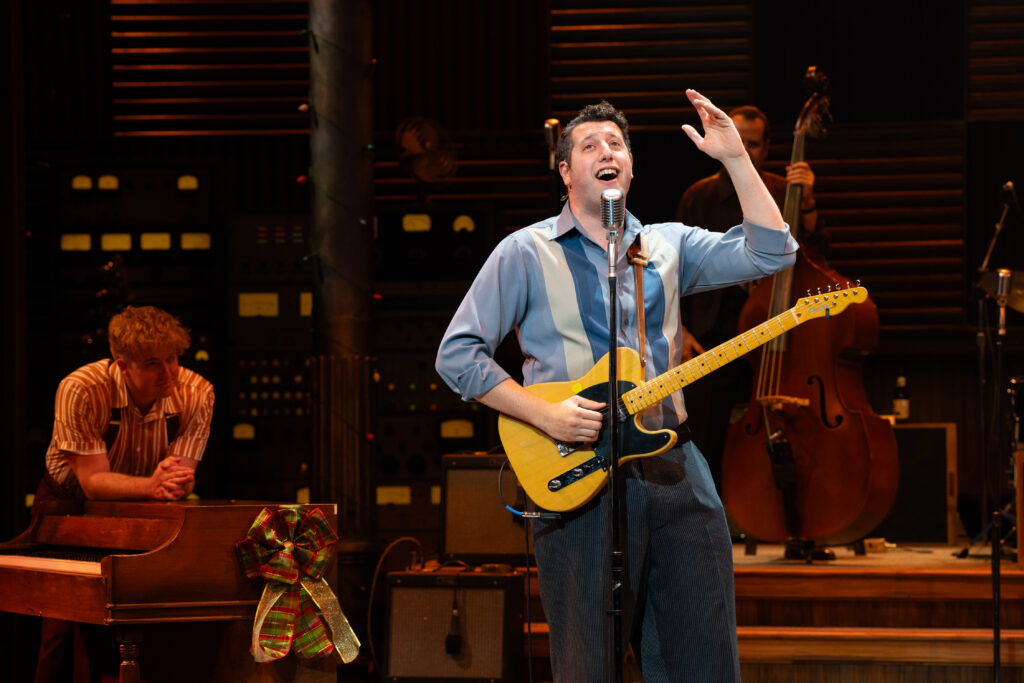
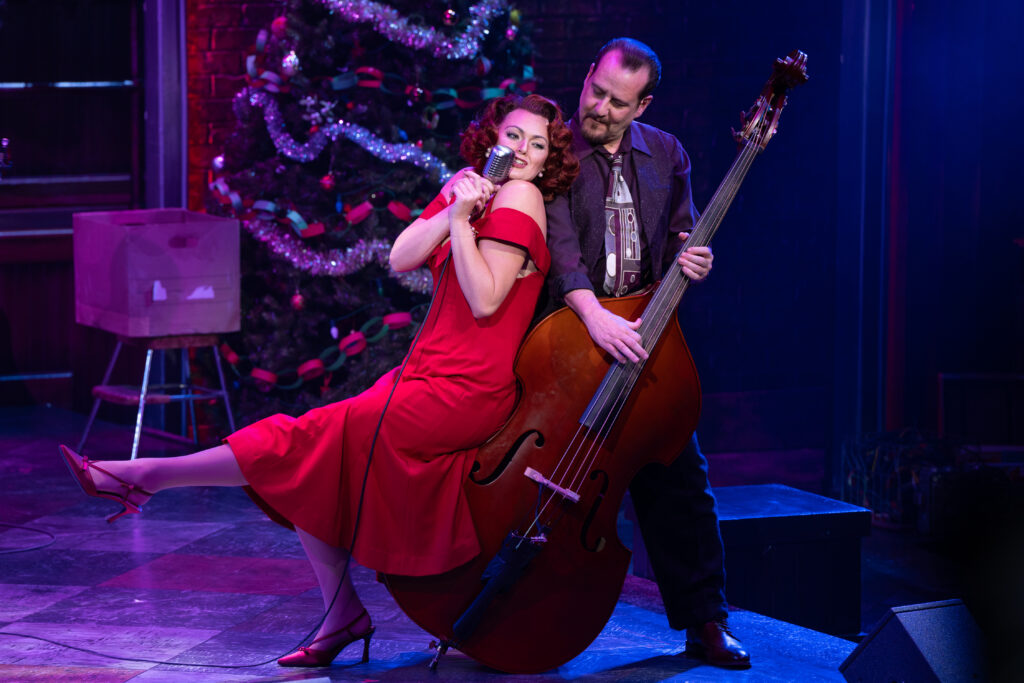
I can understand the female distress presented here, because it touches on serious themes that are present in the world today, and need addressing.

So, the tone starts dark, then grows more dramatic with its torrent of heated confrontations and lots of yelling. There is much handwringing, self-righteous defiance, and selfish, petulant and cruel behaviors.

Tender moments are brief, but a few songs offer another facet of the characters, and those numbers have something deeply personal to say.

Because ultimately the message is that we are not alone, and unified, we can turn things around – and that is something to grab onto, bracketed by the opening and closing number “Live or Die.”

Kampbell Hemeyer as Trinity, Jordan Ray Duncan as Robbie, Chris Melton, Male Chorus. Photo by Florence Flick.

Kampbell Hemeyer plays lost soul Trinity, whose crippling despair should evoke more heartbreak. Demonstrating vulnerability, she is an important thread to the time and space continuity. Her solo number is a bittersweet “A Girl Like Me” and sings the sensitive “Just Someone” with Robbie.

Ella Penico shows some gumption as confused and scared Olivia, who must realize doing the right thing is always the best choice. Her solo number “With Nobody” is a heart-tugger.

In the title role, Josie Schnelten is the determined and bitter Cascade, who is seeking revenge for several grievances. Her passion needs to ignite the others into action.

Schnelten has a strong stage presence, and it’s up to her to unite the characters fighting for humanity, or we are a lost cause.

Cascade has returned to her old university to investigate the mysterious death of Trinity, who is her ex-girlfriend. She is unsure of who to trust and now is uncovering a conspiracy that could burn the whole town down.

The smug morally bankrupt male characters Robbie (Jordan Ray Duncan) and Luke (Luke Goeckner) are up to their eyeballs in no-good horrible oppression, running a criminal enterprise. Their friend Dylan, played by David Pesoni, seems caught in the middle.

A love triangle, Cascade joins Robbie and Trinity on a tender “Looking at You,” and then Luke on “Time” and Dylan on “Hurt.”

Robbie and Luke are tough roles, and the actors look too much alike, need to be better delineated so we can understand motivations, shifting sentiments, and how they affect mindsets.

The play is presented on a largely empty stage, and sound designer Sasha Bateman ensures everyone can be heard.

Ella Penico as Olivia, Luke Goeckner as Luke. Photo by Florence Flick.

Gruenloh directed his own play, and he employed a stylized structure that involves the other actors being on stage while action focuses on mostly couples’ scenes. Actors walk to their marks, and that presents a loose format. Occasionally, they will stand, like a chorus, reciting lines reminiscent of Greek mythology.

Gruenloh was inspired by Sophocles’ 441 B.C. work because, as he explains in the program, culture uses it time and again during eras of democratic uncertainty. He wrote it at a time of national fervor, attaching the concepts of tragedy and folly to the subject of tyranny.

In the 2400 years since, there have been hundreds of translations and adaptations commenting on the extreme political divide. This is certainly perfect timing for people to revolt against oppression and intolerance, and using youth as a conduit is an intriguing direction.

Gruenloh, who founded Tesseract Theatre Company in 2010 with friend Brittanie Gunn, is an accomplished playwright whose works have been produced across the country. He was the artistic director until 2022, and now Gunn and Kevin Corpuz are in charge.

Gruenloh’s drama “Adverse Effects” was a 2020 finalist in the ScreenCraft Drama competition, and he won the 2017 St. Louis Fringe Festival for his play “Hot for T. Rex.” His “Purple Heart City” was published by NextStage Press in 2021. He also acts and directs.

Gruenloh, who is an assistant professor of theatre at Missouri Science and Technology in Rolla, works well with Gen Z, and inspires the cast who convey a passion for the material and project. Building on that sincerity could really be a turning point, for how he tackles social justice issues is admirable.

Chris Melton as the Male Chorus (Narrator). Photo by Florence Flick.

What this cast lacks in life experience and theatrical training techniques, they compensate for with their enthusiasm and commitment. They appear to be open to the challenge of shaping this original material, which should be workshopped further to develop deeper connections and broader multi-generational appeal.

From the start, there is little reason presented to engage with characters – no immediate gateway to connect. We should feel their anguish and pain.

On July 19, opening night, several vocals were problematic at times. More coaching by music director Randon Lane would have been helpful.  

However, the finale reprising “Live or Die” is strong with pleasant harmonies. I’d like to become more familiar with Wernke’s and Gruenloh’s songs, for they had interesting melodies and lyrics from the heart.

The score is played solely on a piano, and the modern motifs reminiscent of rock operas and “Spring Awakening.” Wernke is also a professor at Missouri S&T.

The program does not include a list of the 11 musical numbers, but there are some standouts worth hearing again.

While ambitious and well-intentioned, “Cascade’s Fire” needs to be tighter, trimmer, and toned down with less shouting. It is not quite professionally polished for its close-up yet but has the potential to succeed with its drive and ideas.

Narrators Brittany Roberson, Melton. Photo by Florence Flick.

Tesseract Theatre Company presents “Cascade’s Fire” July 19, 20, 25, 26, 27 at 8 p.m. and July 28 at 4 p.m. at The Marcelle, 3310 Samuel Shepard Drive, in the Grand Center. It’s currently a one-hour and 50 minute one-act without intermission. For more information, visit https://www.tesseracttheatre.com/2024-summer-new-musical-festival

Josie Schnelten as Cascade, David Pesoni as Dylan, and Melton as Male Chorus Photo by Florence Flick.

Cover photo by Florence Flick.

Facebook Comments