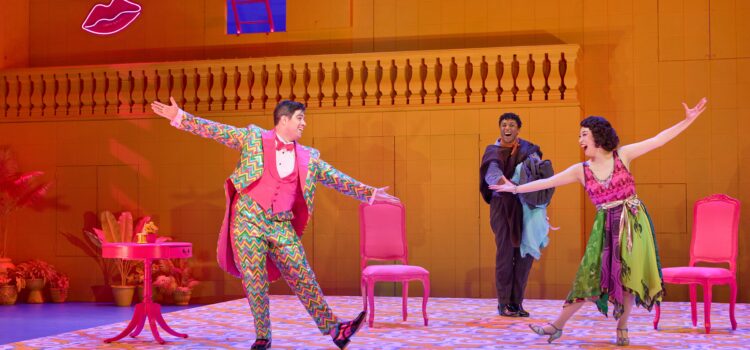
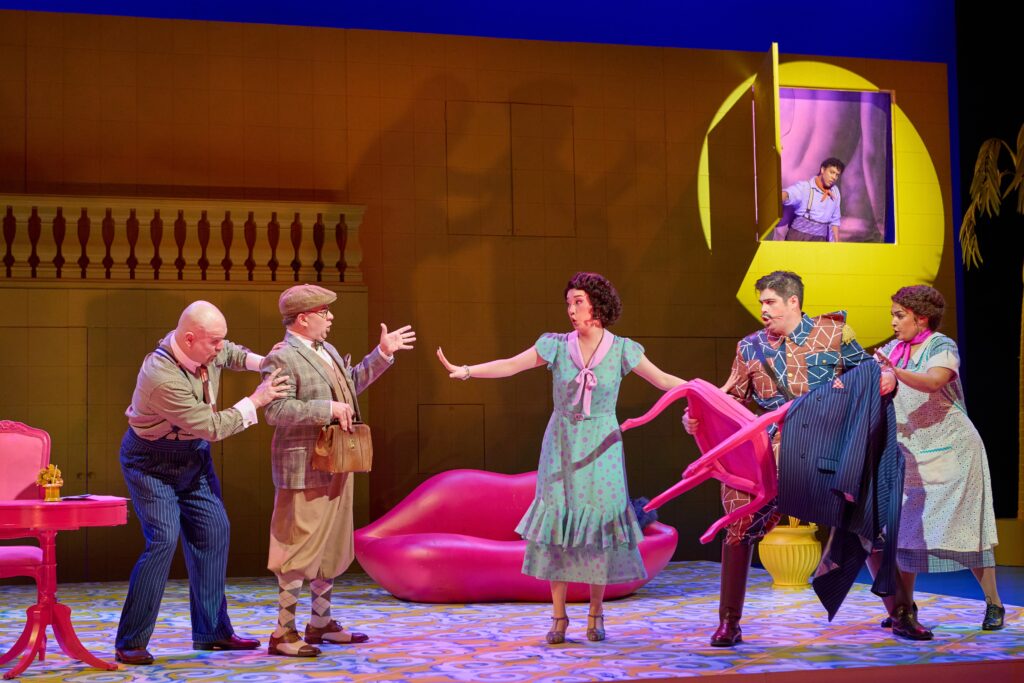
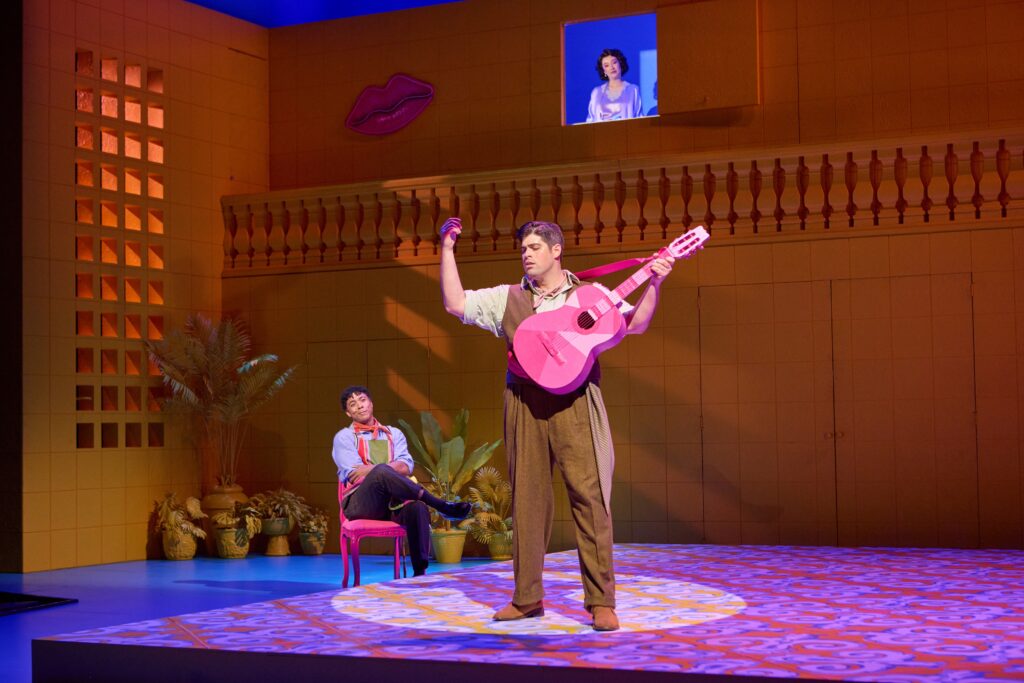
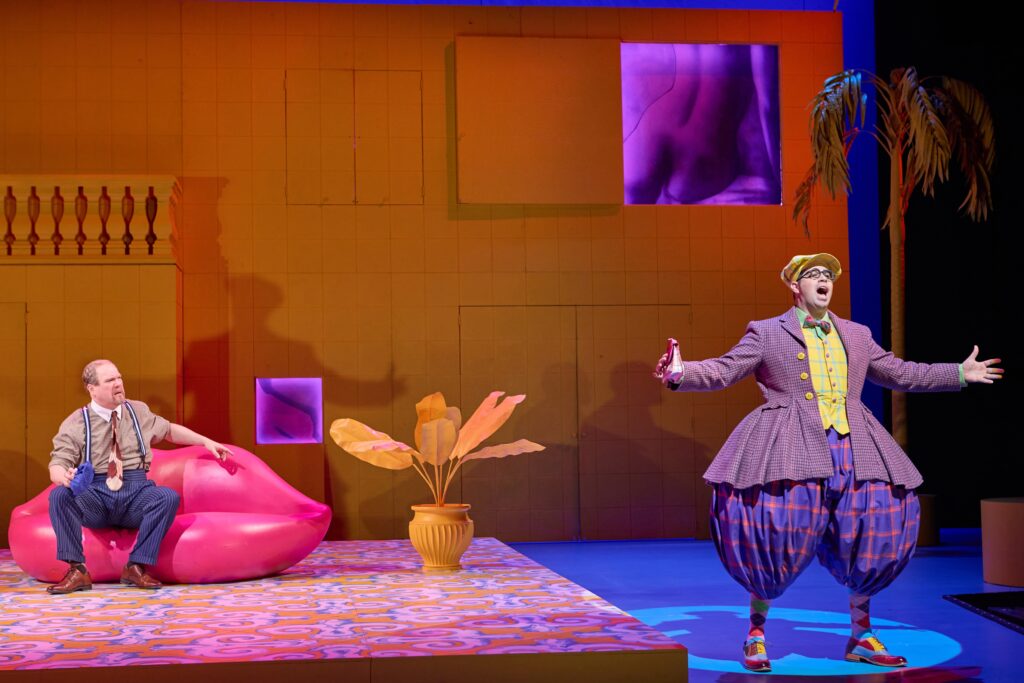
The poppy, exuberant experience of Opera Theatre of St. Louis’s production of “The Barber of Seville” begins well before the opening notes of the overture. Fluttering above Andrew Boyce’s beachy-colored set are a pair of scene-stealing neon lips.
There are more lips to come, from a version of Salvatore Dali’s Mae West red sofa, to the overhead toothy red lips made famous during the opening of the “Rocky Horror Picture Show” movie, and even to the inflated labia on the Lipps Inc. “Funkytown” album cover.
As Count Almaviva, pretending to be Lindoro, sings to Rosina in the first act, “…your name is on my lips, and you are in my thoughts, from early dawn till late at night.” Those lines perfectly sum up the premise for “The Barber of Seville” while merriment and mayhem ensue until the last moment in this comic opera.
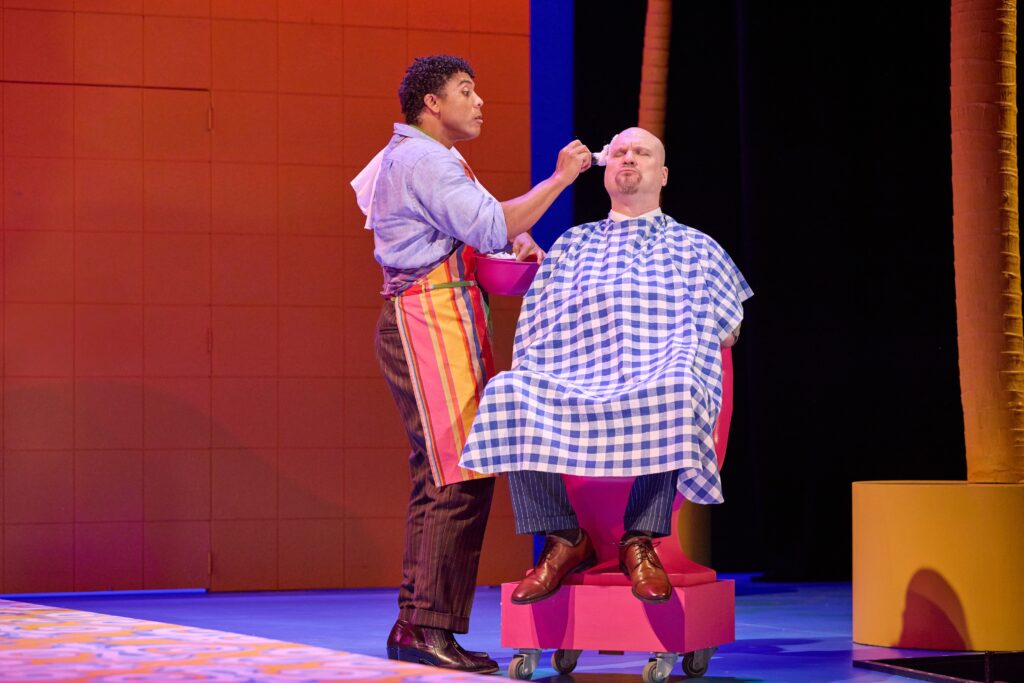
Boyce’s set design and Marcus Doshi’s lighting give us a Seville, Spain by way of Ibiza and Miami. Their less-is-more approach places a premium on the details, such as the canary yellow wall with a simple balcony and hand-operated openings, the Moorish-patterned floor, and a ruby-red barber chair shaped like an upturned hand.
The minimalist set is the perfect backdrop to the more-is-more approach of Linly Saunders’s costumes and the wigs and makeup provided by Krystal Balleza and Will Vicari. At the risk of a spoiler alert, the entrance of a character wearing outrageously large, billowing pantaloons is one of the performance’s best moments.
Also noteworthy is the way stage director and choreographer Eric Sean Fogel makes great and clever use of Doshi’s lighting on the small cast to create shadowplay that exponentially increases the chaos during certain key scenes.
All of the singers in this production deliver their characters with technical prowess, theatrical flair, spot-on comedic timing and expressive acting that match the opera’s humor and complexity.
Justin Austin provides a plucky, charismatic Figaro that is equal parts Austin Powers, Artful Dodger, and Placido Domingo. Nathan Stark’s overbearing Dr. Bartolo shares DNA with both Daddy Warbucks and Big Daddy.
During Count Almaviva’s arias, Andrew Morestein confidently sings Rossini’s virtuosic runs with a seamless blend of lyrical beauty and vocal acrobatics. Hongni Wu dazzles as an assertive Rosina, particularly in the demanding coloratura passages that require precision and agility.
As the conniving Don Basilio, Patrick Carfizzi’s booming bass commands the stage, especially during his aria about the joys of spreading malicious gossip.
Yet another highlight of this performance is, of course, the music. Under the direction of Jonathan Brandani, the St. Louis Symphony captures Rossini’s vibrant, playful melodies filled with dynamic rhythms and memorable, spirited tunes. Adding another layer of enjoyment is the clear translation under the coaching of English diction specialist Erie Mills.
Performances, in English with projected English text, continue through June 29th at the Loretto-Hilton Center on the Webster University campus. For more information, consult the OTSL website: https://opera-stl.org/
Another thunderous full-throttle fever dream from visionary filmmaker George Miller, “Furiosa: A Mad Max Saga” repetitively smashes and crashes a megaton of souped-up vehicles in a savage and dusty post-apocalyptic world.
That loud and noisy thrill ride is expected in the prequel to Miller’s ambitious fourth foray nine years ago – “Mad Max: Fury Road,” which continues his gritty, grungy, and gruesome sci-fi world he created in 1979.
Filmgoers enthralled with this high-on-carnage, low-on-story dystopian adventure will again be dazzled by the extraordinary stunt work, eye-popping aerial feats, and the stunning visual effects as survivors’ barrel through the Australian Wasteland.
Nevertheless, Miller’s reliance on more CGI than its predecessor makes this action spectacle’s excess mind-numbing, accompanied by a grating music score composed by Tom Holkenborg that sounds like an incessant cruise ship’s horn.
When clips from Fury Road play over the end credits, it’s another reminder of how much better and epic it was.
After all, the 2015 film earned 10 Academy Award nominations, and won six – for costume design, film editing, production design, sound mixing, sound editing, and makeup and hairstyling. (This one may duke it out with “Dune, Part Two” in technical categories, however.)
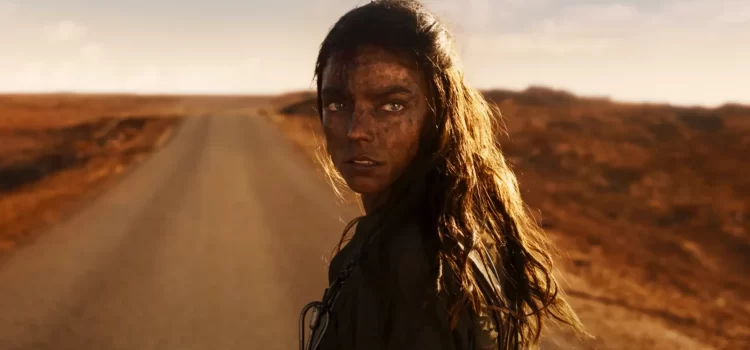
Not to take anything away from the efforts of Anya Taylor-Joy, who is terrific, and so is her remarkable young counterpart, Alyla Browne, in creating the backstory of Imperator Furiosa, the mysterious and fierce warrior who was memorably played by Charlize Theron in the Fury Road installment.
With her striking appearance – shaved head and missing part of one arm, she teamed with Tom Hardy’s Max Rockatansky against the evil Immortan Joe and his War Boys to rescue five imprisoned brides.
Taylor-Joy, who proves her mettle as an action star, is a captivating middle piece in the puzzle established by Browne’s astonishing turn that deftly sets the table for the faster, more furious grown-up.
The youngster was snatched from The Green Place of Many Mothers, and had no choice but to become a rebel, disguising herself as a male, saying little, and staying sharp. In fact, the character only has 30 lines of dialogue for 2 hours and 28 minutes.
The technical elements are first-rate, with Simon Duggan’s cinematography an outstanding achievement, as is the gnarly production design by Colin Gibson, who created “Fury Road” – and that Australian classic “Priscilla, Queen of the Desert.” Costume Designer Jenny Beavan, who has won three Oscars, including one for “Fury Road,” continued her punk aesthetic.
But there is little freshness to this dystopian adventure now being told for the fifth time. The resolution takes too long, and the plot holes are obvious in the script, co-written by Miller and Nico Lathouris.
While a movie is only as good as its villain, Dr. Dementus is not a strong one, despite showy antics from a nearly unrecognizable Chris Hemsworth. He’s a preening and pompous buffoon who acts like a carnival barker and controls Gastown with his marauding biker boys.
The supporting cast is nondescript and interchangeable, except for Tom Burke as Praetorian Jack, who becomes Furiosa’s ally. This movie is the first one without Mad Max, although there is a brief cameo that means nothing.
Increasingly more brutal, the Mad Max series began 45 years ago, when a little-known Mel Gibson portrayed the cop whose wife and daughter are murdered by a biker gang. As the world fell in a future Australia, he came a drifter roaming through the bleak radioactive desert.
The 1979 film, which dubbed Gibson’s voice for an American audience, helped usher in the Australian New Wave.
A superior “The Road Warrior” followed in 1981, establishing Miller as an action force. By then in the sci-fi plot, society had broken down to such an extent, after war, a ruined environment, and critical resources in short supply, that it’s survival of the fittest, and an unsettling barbaric culture.
The third film, 1985’s “Mad Max: Beyond Thunderdome,” was the weakest, yet Tina Turner’s performance as Aunty Entity was impressive. It wasn’t until 30 years later that Miller revisited this landscape.
Miller has directed them all with bombast, which is quite a departure from his beloved Oscar-winning animated film “Happy Feet” and Oscar-nominated “Babe” and its joyous sequel “Babe: Pig in the City.”
If you’re still interested in watching the Mack Truck war rig and tricked-out dune buggies as bodies pile up amid the swirling dust, “Furiosa” is meant for you. However, my eyes glazed over.
Sure, the wild stunts are appealing — those acrobatic polecats are still tremendous additions as we drive full-speed-ahead into a hopeless world.
“Furiosa: A Mad Max Saga” is a 2024 sci-fi action adventure directed by George Miller and starring Anya Taylor-Joy, Chris Hemsworth, Alyla Browne, Tom Burke, and. It is rated R for sequences of strong violence, and grisly images, and the runtime is 2 hours, 28 minutes. It opened in theatres May 24. Lynn’s Grade: C-
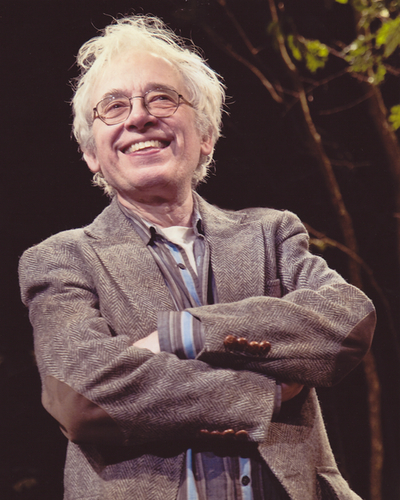
February 2025 will mark the beginning of St. Louis Actors’ Studio’s 17th season, themed “Something Old Something New.” The season includes productions of Eugene O’Neill’s masterwork “Long Day’s Journey Into Night,” to be directed by renowned theater artist Austin Pendleton, and a new work by playwright Carter W. Lewis starring local legends Whit Reichert and Donna Weinsting.
“We are very excited about the offering for our 17th season, and to be working with Carter Lewis and Austin Pendleton again,” says William Roth, Founder and Artistic Director. “Carter’s plays have been featured in our LaBute Festival and Austin has come to STLAS to teach master classes.”
Austin Pendleton
Long Day’s Journey Into Night By Eugene O’Neill Directed by Austin Pendleton February 7-23, 2025
O’Neill’s autobiographical masterwork, winner of the 1957 Pulitzer Prize for Drama, is an unflinchingly honest portrayal of addiction in a dysfunctional Connecticut family, and will be directed by STLAS friend and Broadway actor/director Austin Pendleton.
“A magnificent and shattering play.” – New York Post “O’Neill’s masterpiece… What never ceases to astonish is the dizzying emotional contradiction of O’Neill’s characters. Within a tight classical structure, they bounce around like pinballs between reality and illusion.” – The Guardian “A stunning theatrical experience.” – New York Herald-Tribune “O’Neill’s most beautiful play.” – New York Daily News
Donna Weinsting
With By Carter W. Lewis Directed by Assoc Artistic Director Annamaria Pileggi April 4-20, 2025 Starring: Whit Reichert* and Donna Weinsting*
Whit Reichert
Clifford and Minnie devolve into a world of humorous, but ultimately heartbreaking minutiae as they navigate a blizzard, a dead son, a rat in the kitchen and worse; in order to hold on to a bit of control over their personal end of life decisions.
The couple enlists their derelict son to obtain Death With Dignity drugs from the state of Oregon, but due to an accident on the highway, the plan goes hysterically and tragically array. As a result, Minnie and Clifford cling to daily tasks as they slowly get cut off from the world by a blizzard and disconnected utilities. Their enduring love fuels them through an obstacle course of each day’s events.
11th Annual LaBute New Theater Festival July 11-27, 2025
Tony Nominated Playwright Neil LaBute returns to host his award winning One Act Festival.
*Member Actors’ Equity Association
ABOUT ST. LOUIS ACTORS’ STUDIO
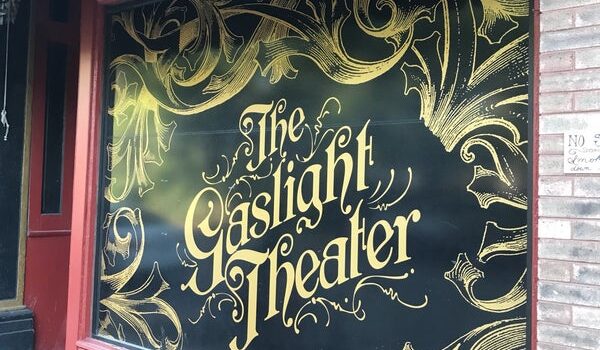
St. Louis Actors’ Studio is one of the leading professional theatres in the St. Louis. area, producing a four-show season of plays at our 97-seat Gaslight Theatre. STLAS collaborates with renown director, screenwriter and playwright Neil LaBute to produce the LaBute New Theater Festival each July in St. Louis and each January in New York City. The festival is a one-act play competition for emerging professionals and high-school writers. For more information and ticket sales, visit stlas.org.
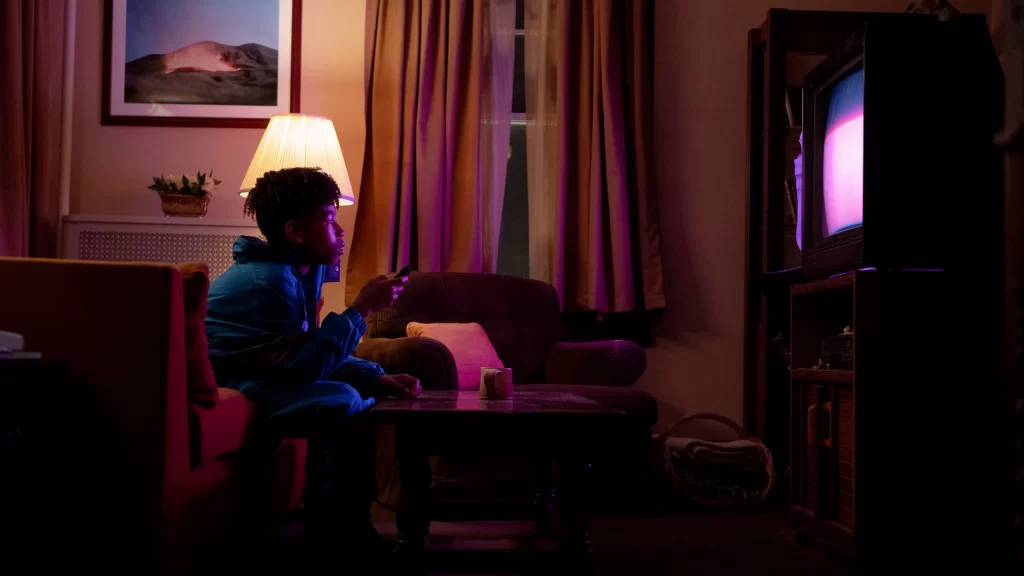
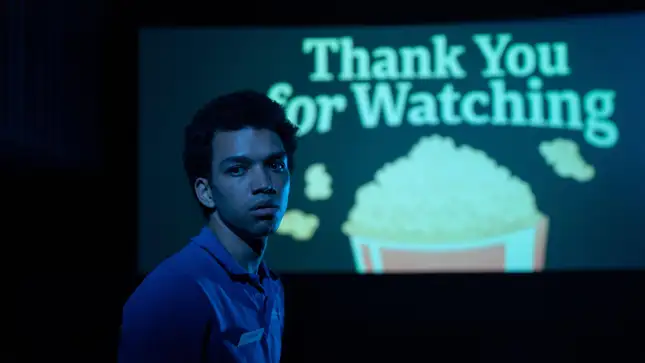
Director Jane Schoenbrun’s “I Saw the TV Glow” is a dreamlike, thought-provoking, and emotionally gutting experience that’s at once personal and universal — an exploration of loneliness, art, escapism, and repression within a reality that’s its own kind of nightmare.
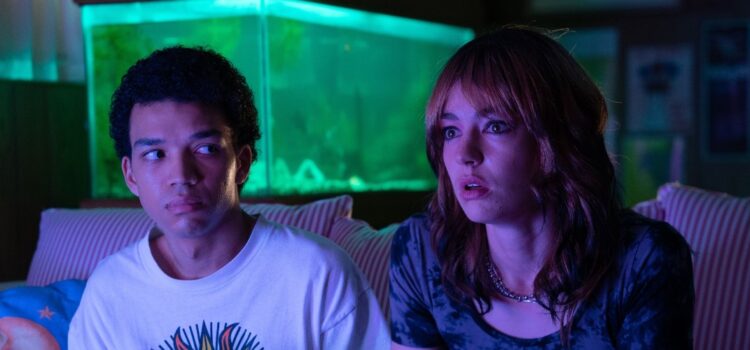
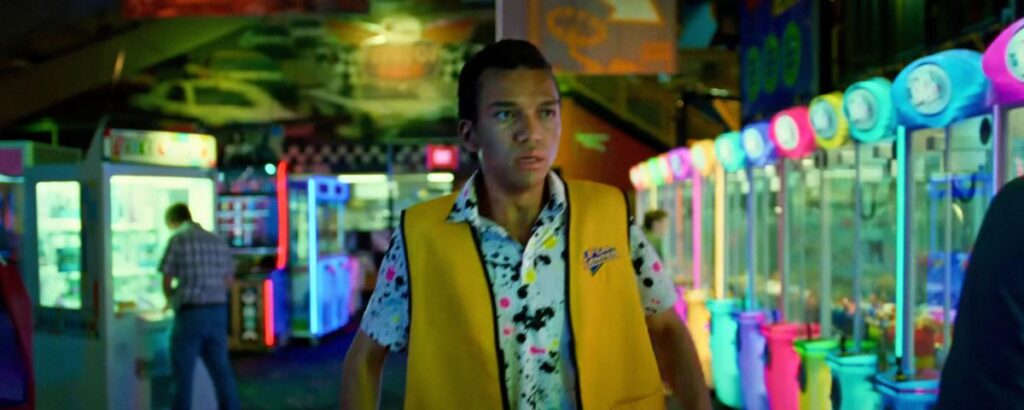
The year is 1996. We follow Owen (first played by Ian Foreman, then Justice Smith), a seventh-grader in a small, nondescript suburb that Shoenbrun frames like a dreary purgatory.
Owen lives a sheltered existence with his overprotective parents (played by Danielle Deadwyler and an exceptionally creepy Fred Durst). His father exerts a tight grip on the household, shunning Owen for his unconventional interests. Owen needs an escape, and he eventually finds it through a television set.
One evening, while wandering around his local high school (fittingly called “Void High”) waiting for his mother to cast a ballot for a local election, Owen finds ninth-grader Maddy (Brigette Lundy-Paine) reading an episode guide for a TV show called “The Pink Opaque.”
The supernatural serial is an homage to “Buffy the Vampire Slayer” and features two girls, Tara and Isabel, who communicate via the astral plane. They fight various “monsters of the week,” with the all-powerful Mr. Melancholy pulling the strings and watching over them as a garish face on the moon.
Maddy — wry, severe, and enduring a troubled home life— quickly strikes up a friendship with Owen, and Owen sneaks over to Maddy’s house for a sleepover to watch the show: he’s hooked. Maddy and Owen find “The Pink Opaque” to be an escape from reality: they’re outcasts who connect to the characters’ isolation, confusion, and eventual empowerment. They’re both stuck in a limbo that’s suffocating their developing minds and bodies, only finding solace via their heroes on the other side of the screen.
Flash forward two years, and Owen continues to use “The Pink Opaque” as a way to cope with his trauma and gradually develop his sense of self, with Maddy leaving VHS recordings of each episode in Void High’s darkroom for him to take home.
Owen and Maddy’s obsession with the show grows, tragedy strikes, and the lines between reality and fantasy blur to increasingly psychedelic effect, as “The Pink Opaque” bleeds off the screen into Owen’s lived experience. He grapples with his true identity amid the weight of suffocating societal pressures and the rapid passage of time.
Indeed, “I Saw the TV Glow” is a disturbing and bleakly existential watch. Schoenbrun, in their second feature film, has a distinctive cinematic voice – presenting a story that’s both easy to become invested in and difficult to fully parse, evoking familiar themes in ways that prove constantly surprising, unsettling, and, at times, bewildering.
It’s a film that refuses to explain itself and leaves the door open to different interpretations, particularly during its head-spinning conclusion. This is an obviously personal story for Schoenbraun, one that’s rendered in an uncompromising, polarizing style that says as much through its mood-setting as through dialogue.
Their approach allows us to feel what the characters are feeling as they drift through their nebulous environment, even as they themselves are unsure how to process what’s going on.
“I Saw the TV Glow,” in its patient, Lynchian rhythms, establishes a palpable sense of dread from its opening moments, as Schoenbrun and cinematographer Eric K. Yue thrust us into a wasteland where a sense of dreariness practically leaks off the screen – a dark, neon-infused, almost alien world that Owen and Maddy inhabit as outsiders unsure of life’s meaning.
Schoenbrun twists seemingly inviting spaces into symbols of malaise and menace despite their seeming banality, further emphasizing Owen’s alienation and perceived sense of “otherness.” This world represents an abyss that’s willing to swallow Owen and Maddy whole if they don’t fight to break free from its spell.
The Pink Opaque, too – depicted in authentic detail with title cards, music, acting, and lo-fi effects from the era –- is both alluring and sinister. Owen and Maddy form a connection to another world that’s dictated by the whims of showrunners and networks; a dangerous reliance on an external source to find comfort in a place that’s all too willing to take it away.
Suffice to say, “I Saw the TV Glow” is quite a depressing watch, interspersed with moments of dry humor and supernatural imagery that may or may not be taking place in traditional “reality.”
We’re seeing the world through Owen’s eyes – portrayed by Foreman and Smith with a haunted melancholy giving way to mounting existential panic – and his truth is yearning to be embraced; the question is, will he realize it before his depression and dysphoria consume him?
As the film progresses down its increasingly head-spinning path, “I Saw the TV Glow” maintains a grim momentum, as Owen wages an internal battle against prejudiced norms and his seeming lack of agency.
The evocative, thematically resonant soundtrack enhances the proceedings, furthering the sense that Owen and Maddy are living in a dream, and years swiftly pass while his conflict stays the same, visualized in sterling makeup work.
The real horror of “I Saw the TV Glow” is a battle of identity, of being reliant on technology and consumable entertainment for discovering who we are, rather than forging one’s own path in a dark, depressing world.
It’s a relevant message, if not an especially uplifting one – easy to connect to regardless of background. Owen’s, and Schoenbrun’s, stories may be unique to them, but few films in recent memory are as unsettling, poignant, or conversation-starting as “I Saw the TV Glow.” Whether or not you can get on board with its story and style, it’s an experience that won’t be easily forgotten.
“I Saw the TV Glow” is a 2024 horror-drama directed by Jane Schoenbrun and starring Ian Foreman, Justice Smith, Bigette Lundy-Paine, Danielle Deadwyler and Fred Durst. It is rated PG-13 for violent content, some sexual material, thematic elements and teen smoking and runtime is 1 hour, 40 minutes. It opened in theaters May 17. Became available Video on Demand on June 14 and DVD on July 30. Alex’s Grade: A.
By Lynn Venhaus On the surface, “IF” looks warm and fuzzy, a relatable story about the power of imagination and how it affects our childhoods. And while there is much to like about the film, the whimsy doesn’t quite live up to the magic it strives to capture.
While being imaginative and heartfelt, it is also sad and dark, which may confuse parents of young children who are unaware of the story’s tragic elements. The 12-year-old heroine, Bea, who has been through some things, faces another potential heartbreak.
Writer-director John Krasinski, who knocked it out of the park with his “A Quiet Place” films, was inspired by his two daughters to make a live-action Pixar movie, and the ambitious concept is a dandy one.
Yet I struggled to make sense of this alternate reality, for the logic doesn’t seem to be there, even in a fantasy. Lonely Bea, dealing with loss and staying with her grandmother while her dad is in the hospital, meets neighbor Cal, who sees abandoned imaginary friends.
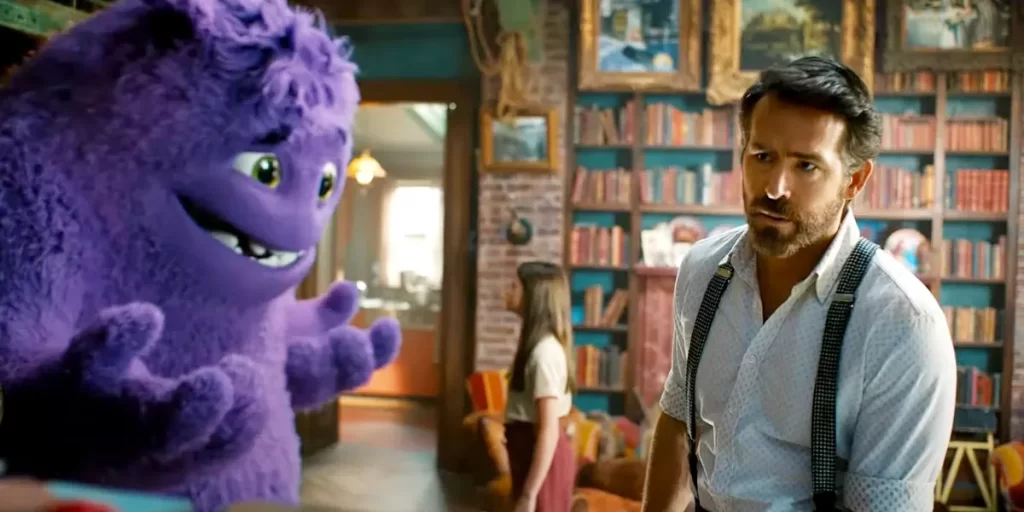
Cal serves as a matchmaker of sorts, finding new pals for IFs to hang around with, and be useful, for their previous childhood buddies grew up. Think of him as the guardian of the portal. He enlists the earnest and creative Bea.
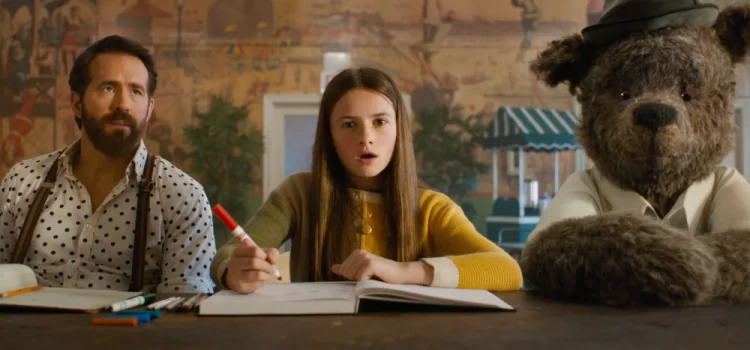
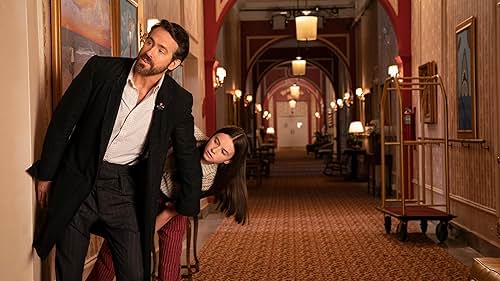
Cailey Fleming is heart-tugging as a guarded Bea, and warms to Carl, wonderfully played by Ryan Reynolds, who appears more vulnerable than his usually jovial characters. His trademark snappy patter is here, but he’s also some emotional heft to display.
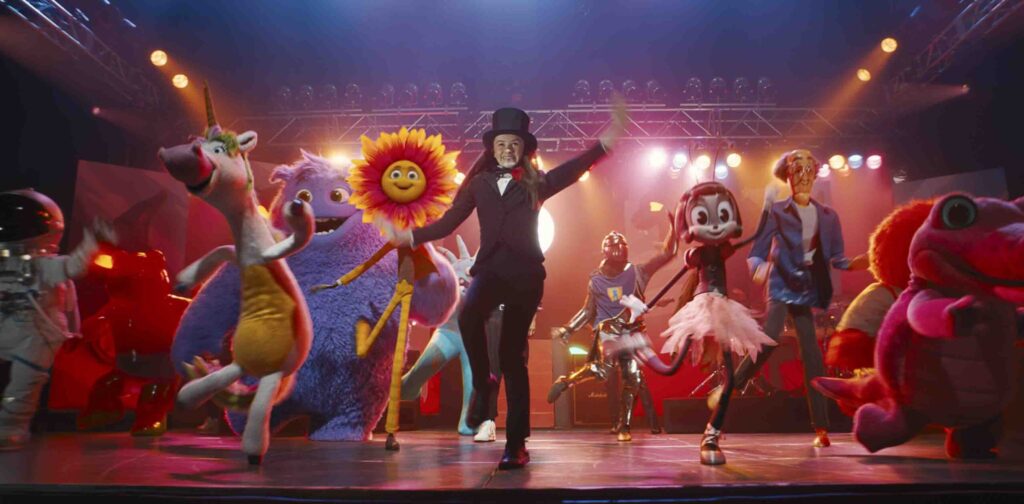
As a human, he blends into the visual effects with flair, standing out in two scenes that wow – a splashy dancing sequence and one where he materializes from a painting.
Reynolds’ agility goes a long way in liking Cal, and his story arc that comes full circle in the third act just might bring a tear to your eye, like it did mine. In fact, my tissue got a workout, like when I watched Pixar’s “Coco” and “Toy Story 4.”
The point about the need for human connection is well-taken, particularly after living through the global coronavirus pandemic. The central theme of the film is loss and grief, and the opening montage is comparable to the start of Pixar’s “Up.”
I can’t recommend this for children under 8, and don’t think a PG-rating is enough warning. If you take young children, be prepared to address some heavy questions.
And there are a few disconcerting choices – Bea walks to a bodega late at night alone, and we’re talking New York City (OK, Brooklyn, but…) and grandma (Fiona Shaw) is apparently OK with her wandering the city by herself.
Granted, we can’t shield our children from life’s cruel blows, and even classic Disney films feature death – Mufasa in “The Lion King” and the momma deer in “Bambi” come to mind – but this film’s marketing makes it look like shiny, happy people having fun.
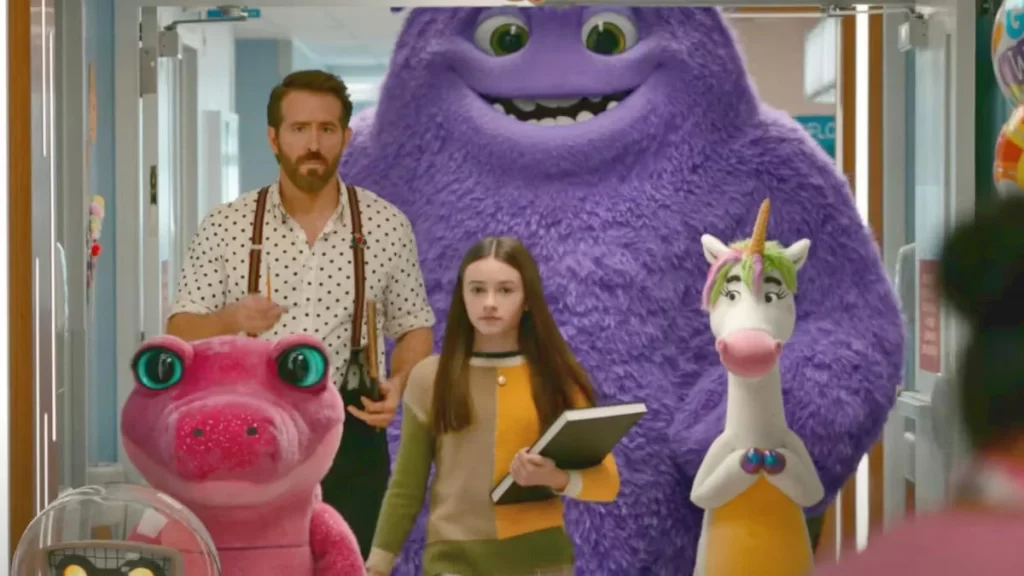
Nevertheless, the all-star voice cast delivers funny and charming characterizations of various creatures, including Steve Carell as Blue, a gentle Muppet-like giant, and Phoebe Waller-Bridge as a cartoonish Betty Boop named Blossom.
In less substantial but full of personality vocal performances are Krasinski’s wife Emily Blunt as an excitable unicorn, Amy Schumer as a high-strung gummy bear and George Clooney as a spaceman (remember “Gravity”?). In his final role, Louis Gossett Jr. is a wise Teddy bear.
Christopher Meloni plays one of the more animated characters, Cosmo, and the who’s who of Hollywood includes Brad Pitt, Matt Damon, Blake Lively, Matthew Rhys, Jon Stewart, Maya Rudolph, Sam Rockwell, Awkwafina, Bill Hader and Keegan Michael-Key. Outstanding talent is assembled, but with so many, not everyone gets moments to shine, more like snippets.
Alan Kim, whose breakthrough role was in “Minari,” plays Benjamin, a hospital patient who befriends Bea, and it’s a sweet, but underdeveloped character
The film does have a striking fairy tale-storybook glow to it, courtesy of cinematographer Janusz Kaminski, who has worked with Steven Spielberg since 1993 and won Oscars for “Schindler’s List” and “Saving Private Ryan.”
Jess Gonchor’s production design is also noteworthy, especially using Coney Island as a fantastic playground for the IFs, as well as a nifty retirement home. Gonchor, longtime collaborator with the Coen Brothers, also created the striking set design for “White Noise,” another difficult world to build. He previously worked with Krasinski on “The Quiet Place, Part II.”
Jenny Eagan’s costume design is delightful, and the army of special and visual effects wizards dazzle with their playfulness.
Krasinski’s heart is in the right place, and the intention is admirable, if not the execution. While the third act redeems the storyline to an extent, the movie fails to live up to expectations, which is a letdown, given the enormous amount of talent involved.
“IF” is a 2024 comedy-drama-fantasy written and directed by John Krasinski, starring Ryan Reynolds, Cailey Fleming, Fiona Shaw, Steve Carell, Alan Kim and Krasinski. Rated PG for thematic elements and mild language, its runtime is 1 hour, 44 minutes. Opens in theatres May 17. Lynn’s Grade: C
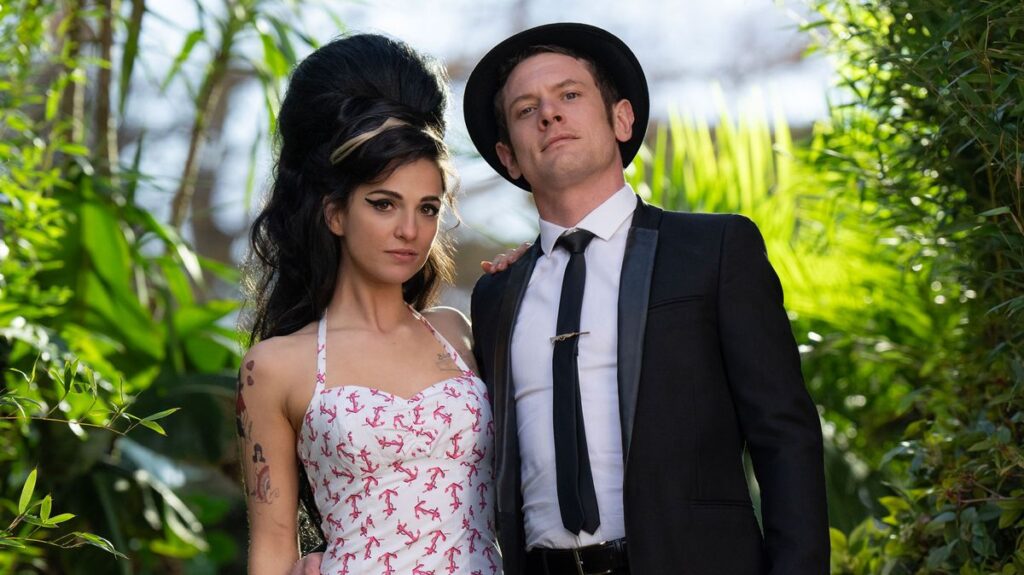
Featuring excellent performances from Marisa Abela and Jack O’Connell, but otherwise coming across as a surface-level retelling of singer Amy Winehouse’s tumultuous rise and fall, director Sam Taylor-Johnson’s “Back to Black” ultimately does little to justify its existence.
Taylor-Johnson’s film, which has the support of the Winehouse estate (unlike Asif Kapadia’s superior 2015 documentary “Amy”), is less an honest portrayal of the performer’s tragically short life than it is an attempt to rewrite history. It smooths over well-documented truths and packages them into rote drama that sacrifices nuance for miserablism.
“Back to Black” begins in Camden Town, London, in 2002, where the 18-year-old Winehouse – a rebellious, wry soul with a love of jazz – is a burgeoning talent, channeling old-school sounds to modern audiences and using music to express herself in the face of life’s challenges.
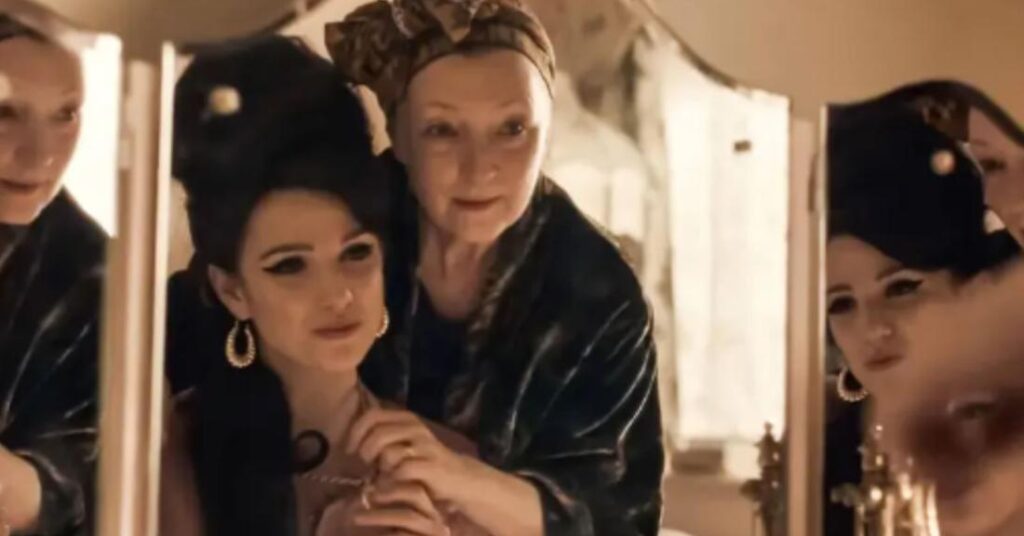
Her divorced parents Janis (Juliet Cowan, who gets a notably small amount of screen time) and Mitch (Eddie Marsan) recognize Amy’s undeniable skill, as does her loving grandmother Cynthia (a typically comforting Lesley Manville), who encourages her to pursue a music career. Before long, Amy does, thanks to her future band manager Nick Shymansky (Sam Buchanan) but, as Matt Greenhalgh’s screenplay smugly foreshadows, her downfall will soon follow.
Funny, passionate, and strong-willed, with a distinctive 50’s-60’s inspired style to boot, yet also an emotionally unstable, bulimic alcoholic, Amy is a force to be reckoned with – even though Taylor-Johnson neglects to give viewers much context into why she is the way she is. She insists to record label suits that she “ain’t no spice girl,” refusing to compromise on her songs and performances.
But when she begins an on-again, off-again relationship with handsome scumbag Blake Fielder-Civil (O’Connell), Amy spirals into further substance abuse and codependency as her stardom rises. It all eventually proves fatal: she’s a victim of fame, drug abuse, and bad actors feigning support while exacerbating her decline.
Marisa Abela and Jack O’Connell as Amy Winehouse and Blake Civil-Fielder
Addictions and personal life chaos aside, Amy was a one-of-a-kind talent that shouldn’t be reduced to a by-the-numbers biopic treatment. Unfortunately, Taylor-Johnson is not up to the task. What results is a puzzling experience that lacks insight, perspective, and purpose, other than to serve as an acting showcase and an attempt at whitewashing history into sanitized drama for the masses.
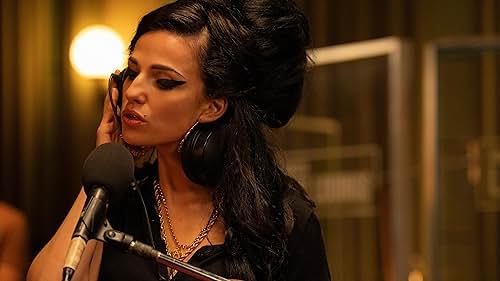
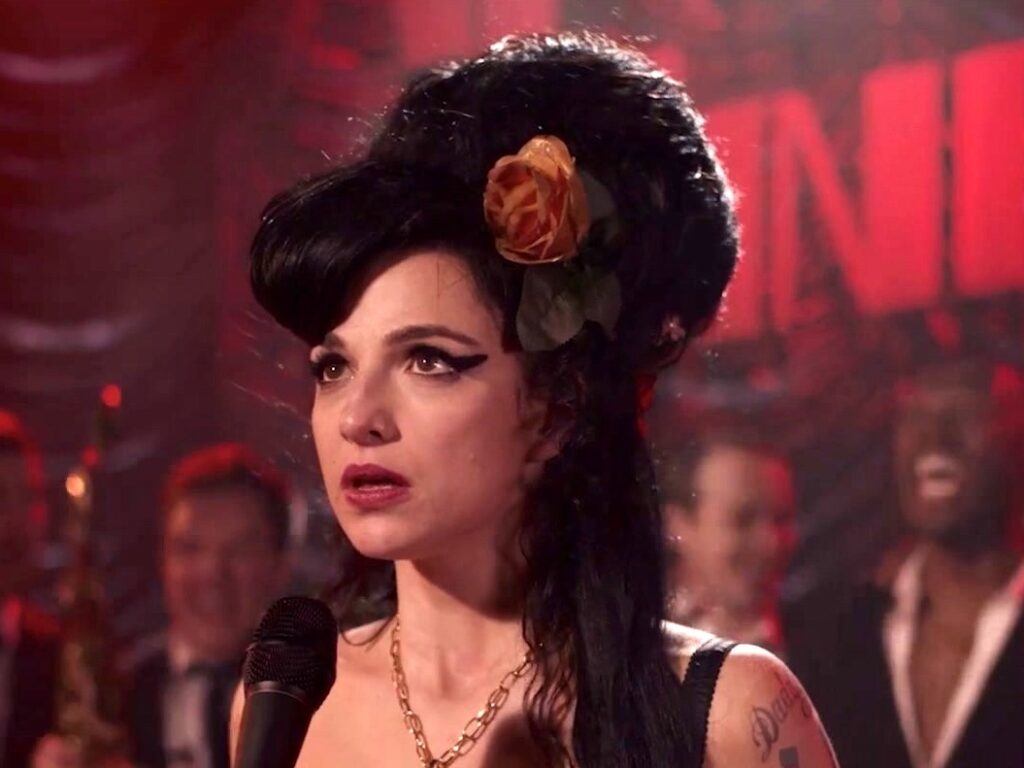
At least Abela gives it her all. She captures Amy’s inherent likability, volatility, and inner demons with an authentic attention-to-detail, commanding her every scene even when the script lets her down. Abela does her own singing for the film, too (with the standout being her titular “Back to Black”).
While Amy’s voice is impossible to recreate, Abela does a valiant job nonetheless, in the scattered moments that Taylor-Johnson actually foregrounds the music rather than Amy’s conflicts. Scenes of Amy’s creative process are half-baked – reduced to rushed, solitary brainstorming sessions – but Abela conveys a youthful, exuberant fervor that’s infectious and alluring.
O’Connell, too, is fittingly charismatic. Blake emanates bad boy vibes that Amy is immediately drawn to, despite the fact that Blake has a girlfriend when they begin their flirtation. Abela and O’Connell have great chemistry, and the early stages of their relationship are charming and playful, if tinged with the dark knowledge of the horrors to come.
Still, the film’s rushed pacing makes it difficult to fully buy into their bond – especially since Amy’s impulsive behaviors and attachment issues aren’t given enough context for us to understand where she’s coming from. Since Taylor-Johnson’s film focuses on a “snapshot in time,” primarily the period between the release of Amy’s first album, “Frank,” and the grammy-winning “Back to Black,” we don’t get much insight into her troubled childhood.
This is likely to save face for Mitch, who the film treats gingerly; his well-documented enabling of Amy’s vices and mental health struggles is downplayed, as is the decade during Amy’s youth in which he had an affair and wasn’t present in the household.
Blake is depicted both as a victim and a victimizer – seemingly powerless to resist Amy’s charms, but manipulating her to fuel his own addictions; his unpredictable behaviors do a number on Amy’s fragile psyche as their relationship becomes increasingly public and destructive. But “Back to Black” still posits that Amy introduced herself to heroin – an odd choice on Taylor-Johnson’s part that feeds into the film’s view of Amy as an unavoidable trainwreck, a person who was doomed from the start and who lacks the will to change.
Indeed, Taylor-Johnson characterizes Amy as a hopeless soul experiencing an inevitable decline, a victim of her own heart, rather than foregrounding Amy the artist. The music itself is almost an afterthought, a consequence of Amy’s inner turmoil rather than a genuine expression of her craft, as the film erratically jumps through time to the next big crisis in Amy’s life.
The portrayal of the media storm surrounding Amy, too, is just window-dressing; Taylor-Johnson doesn’t effectively capture the way her music grips the nation or the celebrity pressure that propels Amy further into oblivion, relying on merely workmanlike direction. The film even pulls its punches in the end, letting its troubled “heroine” drift offscreen, as if the film is too scared to depict the depths of her suffering.
For someone who wanted to be known for her music above all else, it’s downright irresponsible to frame her story like this — Taylor-Johnson molds Amy’s trauma into accessible entertainment. With Kapadia’s excellent documentary providing a far more meaningful portrait, “Back to Black” begs the question: why was this biopic necessary?
“Back to Black” is a 2024 biopic directed by Sam Taylor-Johnson and starring Marisa Abela, Jack O’Connell, Eddie Marsan, Lesley Manville and Sam Buchanan. It is rated R for drug use, language throughout, sexual content and nudity, and runtime is 2 hours, 2 minutes. It opened in theatres May 17. Alex’s Grade: C-
Single-performance tickets for all seven musicals in the 106th Muny season — and for John Legend: A Night of Songs and Stories With the St. Louis Symphony Orchestra — go on sale at muny.org starting at 9 a.m. Monday, May 20, at The Muny Box Office, 1 Theatre Drive in Forest Park.
It’s fast and easy to purchase tickets online using MetroTix, the only authorized vendor for Muny tickets. But buyers who visit the Muny Box Office in person May 20 will be able to learn more about each of this summer’s Broadway hits and sneak a peek at sketches by our design teams.
Box office guests who buy three or more single-performance tickets for the 106th season will be entered to win a VIP seat upgrade — with parking. Free In the Heights-inspired snow cones also will be available.
Only tickets for the 106th Muny season will be available at the Muny Box Office; tickets for John Legend: A Night of Songs and Stories With the St. Louis Symphony Orchestra must be purchased through MetroTix at muny.org.
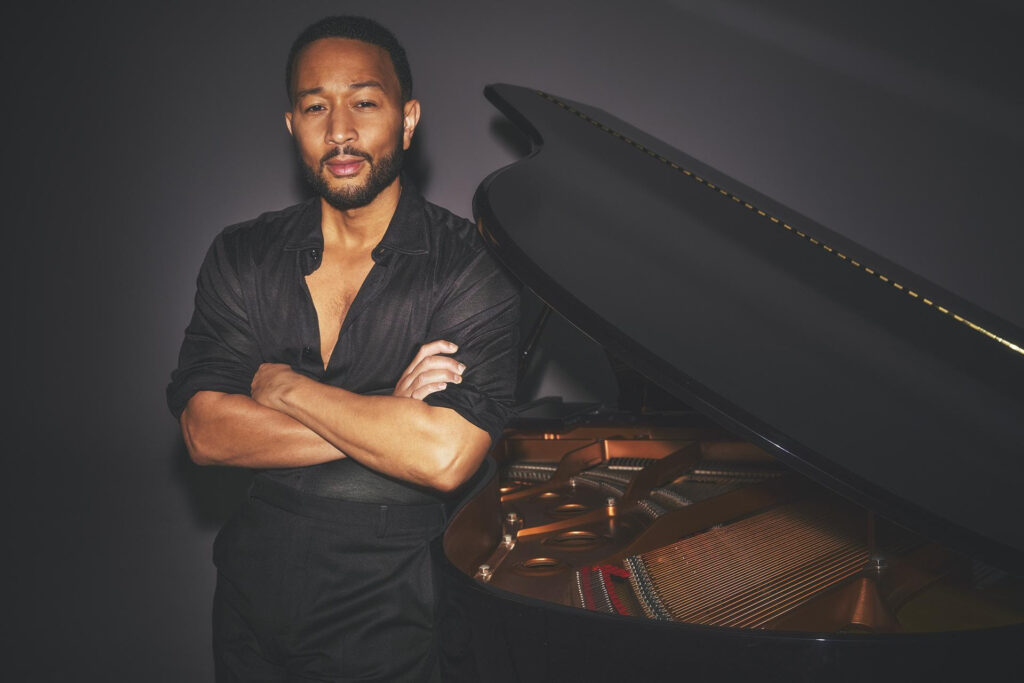
The Muny will present EGOT-winning, critically acclaimed, multiplatinum musician John Legend on its iconic James S. McDonnell Stage for John Legend: A Night of Songs and Stories With the St. Louis Symphony Orchestra at 8 p.m. Sept. 7.
Renowned for producing exceptional musical theatre, The Muny, in collaboration with the St. Louis Symphony Orchestra, revives a beloved tradition by presenting its first live concert in more than 30 years.
John Legend: A Night of Songs and Stories With the St. Louis Symphony Orchestrawill feature intimate reimaginings of Legend’s greatest hits (“All of Me,” “Ordinary People,” “Tonight”), unexpected stories from his life and career, and selections from his most recent release, LEGEND (“Nervous,” “Wonder Woman”). This concert is Legend’s first-ever performance with the SLSO.
Tickets for John Legend: A Night of Songs and Stories With the St. Louis Symphony Orchestra are $75-$300 and go on sale at 9 a.m. CT May 20 at metrotix.com and muny.org/johnlegend. Muny and SLSO subscribers can access a presale from 9 a.m. May 17 to 9 p.m. May 19 CT. MetroTix is the only authorized vendor of Muny tickets.
The Muny also will offer tickets for its famous “free seats.” Details will be announced.
“We have been eager but deliberate in recent years about creating the right opportunity to bring live concerts back into the Muny tradition, and the alignment of an icon like John Legend with one of the best orchestras in the world, the St. Louis Symphony Orchestra, is the perfect opening for this next chapter,” said Muny President & CEO Kwofe Coleman. “Generations of St. Louisans have memories of seeing legendary music acts on our magnificent stage, and I am excited to deliver this bit of nostalgia to our community at the end of our 2024 summer season.”
The last concert at The Muny was by the Moody Blues and Kansas in 1991. Other notable artists who have performed on the Muny stage include Whitney Houston, Patti LaBelle, Sting, Barry Manilow, Bob Dylan, the Allman Brothers and Hank Williams Jr.
“We are thrilled to partner with The Muny and the incredible John Legend for this truly not-to-be-missed performance,” said SLSO President & CEO Marie-Hélène Bernard. “This concert highlights the best St. Louis has to offer — the remarkable talents of our musicians on one of the most celebrated musical theatre stages in the country. This collaboration with The Muny is another milestone in our treasured partnership and elevates our shared vision of providing unique artistic experiences for the community.”
JOHN LEGEND
John Legend is an EGOT-winning, critically acclaimed, multiplatinum musician who has garnered 12 Grammy Awards, an Academy Award, a Golden Globe Award, a Tony Award and three Emmy Awards, among others.
Legend is one of only nineteen people in the prestigious EGOT club. Legend has released nine celebrated albums over the course of his career, including Get Lifted (2004), Once Again (2006), Evolver (2008), Love in the Future (2013), Darkness and Light (2016), A Legendary Christmas Deluxe (2019), Bigger Love (2020), LEGEND (2022), and most recently, LEGEND (Solo Piano Version) (2023). In 2022, his critically acclaimed Las Vegas Residency, “Love In Las Vegas,” took place at Zappos Theater at Planet Hollywood Resort & Casino.
Legend starred as Jesus in NBC’s JESUS CHRIST SUPERSTAR LIVE IN CONCERT in April 2018. That year, he was nominated for an Emmy Award for “Outstanding Lead Actor in a Limited Series or Movie” and won an Emmy as a producer in the “Outstanding Variety Special (Live)” category for the show. Legend joined THE VOICE as a coach for Season 16 (2019) and has returned for a number of seasons, most recently Season 25 (2024).
Beyond his music career, Legend, along with partners Mike Jackson and Ty Stiklorius, is a principal of Get Lifted Film Co., a production company which has developed projects with major networks including ABC, NBC, FOX, HBO, Showtime, Netflix, and FX. Get Lifted’s latest projects include the MAX documentary STAND UP AND SHOUT, Emmy Award-winning HBO documentary 1000% ME: GROWING UP MIXED, Paramount+ documentary LOUDMOUTH, PBS documentary RACIST TREES and the Netflix hip-hop competition series “RHYTHM & FLOW.” Their upcoming projects include NBC/Peacock’s BEFORE I LET GO, based on the New York Times Best Selling Author Kennedy Ryan’s book, and REVERB with Renée Elise Goldsberry attached to star; the film THE WAR & TREATY, inspired by real-life husband-and-wife Black country music stars Michael and Tanya Trotter; the TV adaptation of S.A. Cosby’s novel BLACKTOP WASTELAND; and the forthcoming Broadway-bound musical SOUL TRAIN.
In 2021, Get Lifted and Erik Feig’s PICTURESTART formed Picture LIFT, a joint venture focused on developing, producing and financing multiple films in the $10M range, featuring diverse filmmakers and inclusive casts. Get Lifted and Universal Studio Group’s UCP inked a first-look deal for unscripted series and an exclusive multi-year overall deal for scripted content. Additionally, Get Lifted recently renewed their first look feature documentary deal with HBO.
Aside from film, TV and theater, Get Lifted has partnered with Zando to form Get Lifted Books, which builds upon Get Lifted Film Co.’s mission of spotlighting stories from dynamic creatives. Their most recent acquisition, “Wild Life,” a memoir by National Geographic Explorer and ecologist Dr. Rae Wynn-Grant, published in April. Previous titles include “Rosewater,” by Liv Little, and “Black Love Letters,” which features a foreword by Legend.
Legend’s skincare line, Loved01, launched in 2023 and is available online and through CVS and Walmart. Loved01 is an effective and affordable unisex skincare brand formulated to treat the needs of melanin-rich skin.
As an activist, Legend launched FREEAMERICA in 2015 to change the conversation surrounding criminal justice policies and to end mass incarceration. Legend serves on the Board of Directors of Harlem Village Academies and Management Leadership for Tomorrow, and on the Advisory Boards for The Quattrone Center for the Fair Administration of Justice at the University of Pennsylvania Carey Law School and Teach for All.
THE MUNY
The Muny’s mission is to enrich lives by producing exceptional musical theatre, accessible to all, while continuing its remarkable tradition in Forest Park. As the nation’s oldest, largest outdoor musical theatre, we welcome more than 350,000 theatregoers each summer for seven world-class productions. Now celebrating 106 seasons in St. Louis, The Muny remains one of the premier institutions in musical theatre. For more information, visit muny.org.
ST. LOUIS SYMPHONY ORCHESTRA
Celebrated as one of today’s most exciting and enduring orchestras, the St. Louis Symphony Orchestra is the second-oldest orchestra in the country, marking its 145th year with the 2024/2025 season and its sixth with Stéphane Denève, the Joseph and Emily Rauh Pulitzer Music Director. Widely considered one of the leading American orchestras, the Grammy Award-winning SLSO maintains its commitment to artistic excellence, educational impact and community collaborations — all in service to its mission of enriching lives through the power of music. For more information, visit slso.org.
Best Performance Awards to Honor Community Theatre, Youth Productions June 30
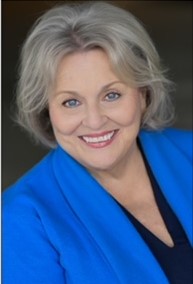
Local performer Donna Weinsting, who has been a popular figure on stage, in films and comedy clubs throughout St. Louis for 60 years, is this year’s Lifetime Achievement Award recipient from Arts For Life.
“I am beyond honored to receive this very special recognition, humbled and excited. I feel that this is a gift — to be acknowledged for something I have had a passion for nearly my entire life,” she said.
Donna Weinsting
Born Donna Collins, she grew up in St. Louis, and while her family moved several times, she landed in Oakville at age 13, and that is where she has lived ever since. She was first in a summer city park production of “Sleeping Beauty,” then a play in junior high.
“The die was cast and a 60-year career in acting and stand-up comedy was launched,” she said.
A graduate of Mehlville High School, she has never shied away from a challenge, playing leads as well as supporting and brief roles. She has performed in one-woman shows, played characters like Mr. Potter in “It’s a Wonderful Life,” Jabba the Hutt in “Star Wars,” and various animals in WiseWrite plays written by 10-year-olds.
The community theater organizations she has worked with include Clayton Community Theatre, Theatre Guild of Webster Groves, and the no longer active Affton Players.
She has been on the stages of the regional professional companies The Repertory Theatre of St. Louis, Max and Louie Productions, New Jewish Theatre, St. Louis Actors’ Studio, Slightly Askew Theatre Ensemble, Stray Dog Theatre, St. Louis Shakespeare, Tennessee Williams Festival St. Louis, Upstream Theater, West End Players Guild, and the shuttered Orange Girls, Insight Theatre, OnSite, and others.
She has appeared at the Bluff City Theater in Hannibal, Mo., Ozark Actors’ Theatre in Rolla, Mo., Arrow Rock Lyceum Theatre in Arrow Rock, Mo., Stages Houston and 59E59 Theatre Off-Broadway in New York as part of the LaBute New Theatre Festival.
Her honors include a Kevin Kline Award for Lead Actress, as Bessie in “From Door to Door” at New Jewish Theatre, St. Louis Theater Circle Award for Outstanding Actress as Iola in “Salt, Root and Roe” at Upstream Theater, and a St. Louis Theater Circle Award for Comedy Ensemble for “Jacob and Jack” at New Jewish Theatre, where she played both Ester and Hannah.
She is proud of those honors but her most treasured things are her two children, five grandchildren, eight great-grandchildren and her 63-year marriage to her high school sweetheart, Mike.
Next up is a one-act play, “The Magic Tower,” which is part of the Tennessee Williams Festival St. Louis production of “Life Upon the Wicked Stage” this August.
She will be shooting a movie in Springfield this fall called “Big Mike’s Cabin,” and has appeared in “Ethan and Edna” and “Doubting Thomas.”
Zion Thomas emcee
Tickets Available for Awards Ceremony
Tickets are now available for the Arts For Life’s 24th Annual Best Performance Awards for community theater recognition on Sunday, June 30 at the Keating Performing Arts Center at Kirkwood High School, 801 W Essex Ave, Kirkwood, MO 63122
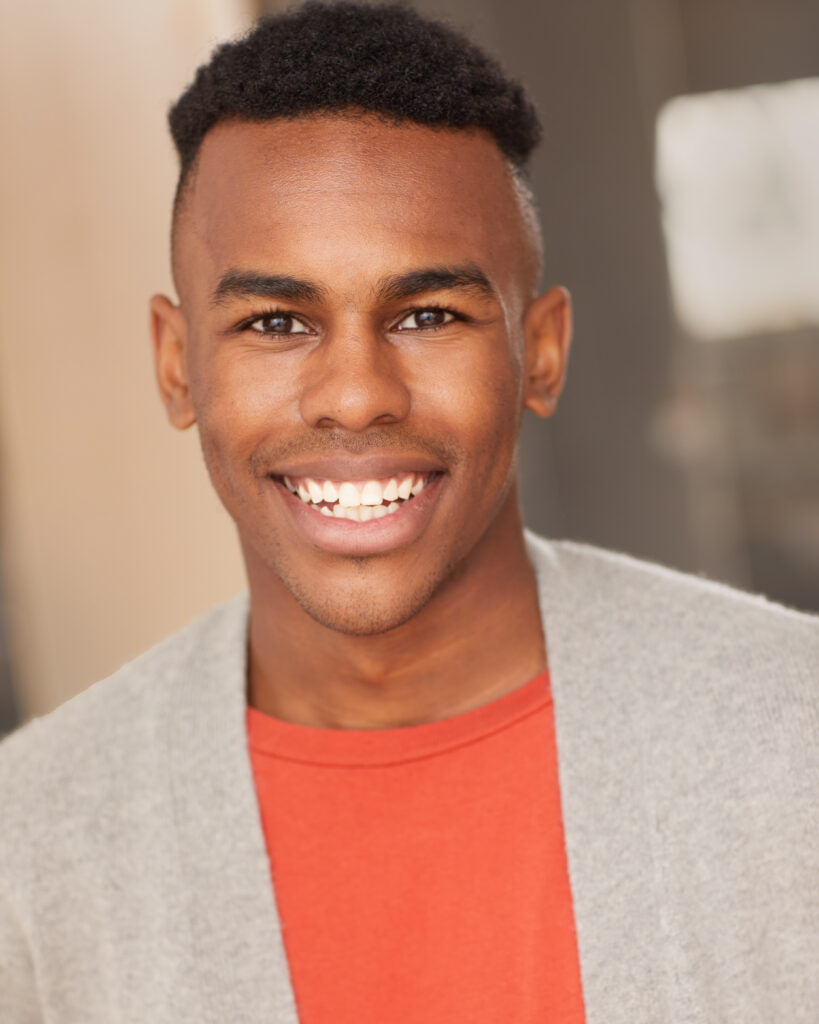
Zion Thomas will be the event’s master of ceremonies. A recent graduate of Case Western Reserve University, he is pursuing a career in film/TV.
Thomas served as the assistant director for GCPA’s “Ragtime,” and has performed the show twice — in the Union Avenue Opera production as part of the Harlem Ensemble last summer and was nominated for a St. Louis High School Musical Theatre Award for his performance as Coalhouse Walker Jr. at MICDS.
A GCPA alumnus, Thomas was BPA-nominated as Flick in “Violet” and played one of the adults in “Spring Awakening.”
Paul Pagano will serve as director. A native of St. Louis, he is the executive director and a co-founder of Gateway Center for the Performing Arts. He earned a bachelor’s degree in drama from Washington University and a master’s in theatre education from Fontbonne University.
A proud member of the Actors’ Equity Association since 2001, he has worked with The Muny, Stages St. Louis, HotCity Theatre, Guthrie Theatre, Utah Shakespeare Festival, and others. Besides teaching at GCPA, he has been an instructor at COCA, St. Louis University High School, and Stages Performing Arts Academy.
The ceremony will include performances from the top musicals nominated in the three Best Musical Production categories.
Paul Pagano will direct the awards ceremony
Act Two Theatre’s “The Drowsy Chaperone” and Monroe Actors Stage Company’s “How to Succeed in Business Without Really Trying” lead all musical productions with 17 nominations apiece.
Gateway Center for the Performing Arts has the most nominations with 31- for “Bare: A Pop Opera” (7) and youth productions “9 to 5: The Musical” (14) and “School of Rock” (10).
Seating is reserved. Please let us know which theatre group or individual you would like to sit with in the “notes to seller” section at checkout.
BPA tickets are $30 and are available online with a service fee of $2 added: https://arts-for-life-2.square.site/.
Reservations can be arranged via the mail. Make check payable to ARTS FOR LIFE and mail to PO Box 16426, St. Louis, MO 63125.
All BPA ticket orders will be held at the box office unless a self-addressed stamped envelope is included with the ticket order. If ordering for a group, please attach a list of individual names for box office pick-up.
Please contact us at [email protected] if you have any special seating needs. Handicapped seating is available.
Award Nominations
Nominations are listed on the website, www.artsforlife.org.
“These events recognize the incredible talent we have in St. Louis community theater and honor the passion and dedication of those who build this amazing and unique theatrical community,” said Mary McCreight, AFL president.
Participating groups included Act Two Theatre, Alpha Players of Florissant, Christ Memorial Productions, Crusader Players, Curtain’s Up Theatre, Dayspring Arts and Education, Gateway Center for the Performing Arts, Goshen Theatre Project, Hawthorne Players, KTK Productions, Looking Glass Playhouse, Monroe Actors’ Stage Company, O’Fallon Theatre Works, Spotlight Productions and Take Two Productions.
Arts For Life is a local not-for-profit arts organization dedicated to the healing power of the arts through its work with youth, the underserved, and the community, with its goal of “Making a Dramatic Difference.”
AFL is dedicated to promoting public awareness of local community theatre, encouraging excellence in the arts, and acknowledging the incredible people who are a part of it.
By Lynn Venhaus A daffy delight, “Spirits to Enforce” is a close encounter of the strange kind even in the make-believe world of theater.
This shouldn’t come as a surprise to anyone familiar with the eccentric work of The Midnight Company and visionary writer-director Lucy Cashion who specializes in the unconventional. Only this time, they are vessels for playwright Mickle Maher’s quirky concept.
Maher, a favorite of Midnight Company’s creative director Joe Hanrahan, has infused his absurd comedic caper with comic book stylings mixed with William Shakespeare characters.
Maher, co-founder of Chicago’s Theater Oobleck, his producing home for more than 30 years, is known for creating paradoxical works, often involving classic literature. Both Midnight Company, Cashion, and their assembled team are at home in this very original and unusual world.
The result is as wacky and clever as the Marx Brothers in “Duck Soup,” one of comedian Bob Newhart’s early telephone routines, the whimsical “The LEGO Batman Movie,” and the surreal comedy troupe The Firesign Theatre (popular in the ‘60s- ‘70s).
It definitely has an improvisational troupe vibe, but director Cashion has masterfully choreographed it like a dance/show choir/cheerleading competition where they are going for the gold.
And that care is exhilarating – and special. It’s apparent that this dozen worked incredibly hard on their precise movements and seamless execution. The kooky ensemble is a marvel of impeccable timing, crisp delivery, and a robust take-no-prisoners approach to their roles.
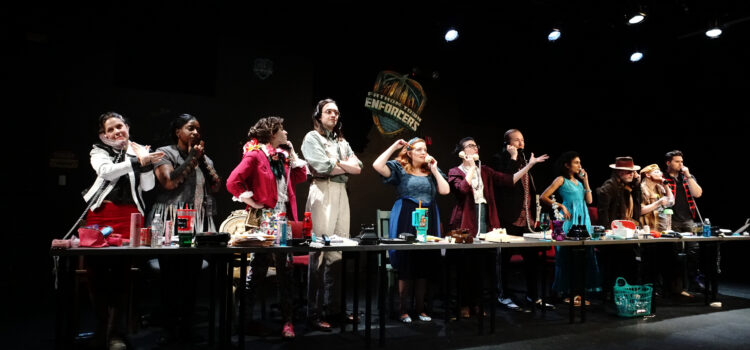
Twelve characters sit at a very long table, like at a telethon phone bank (pre-GoFundMe, Google it), and are tasked with raising money for a superheroes production of “The Tempest.” This is to save Fathom Town from Professor Cannibal and his band of evildoers.
While sitting in close proximity, they appear to be singular in purpose – their crimefighting mission. As a community, they are desperate to drum up support for this benefit performance, and their urgency and frustration are on full display. They project the manic energy and anxiety of an all-nighter when cramming for a college final.
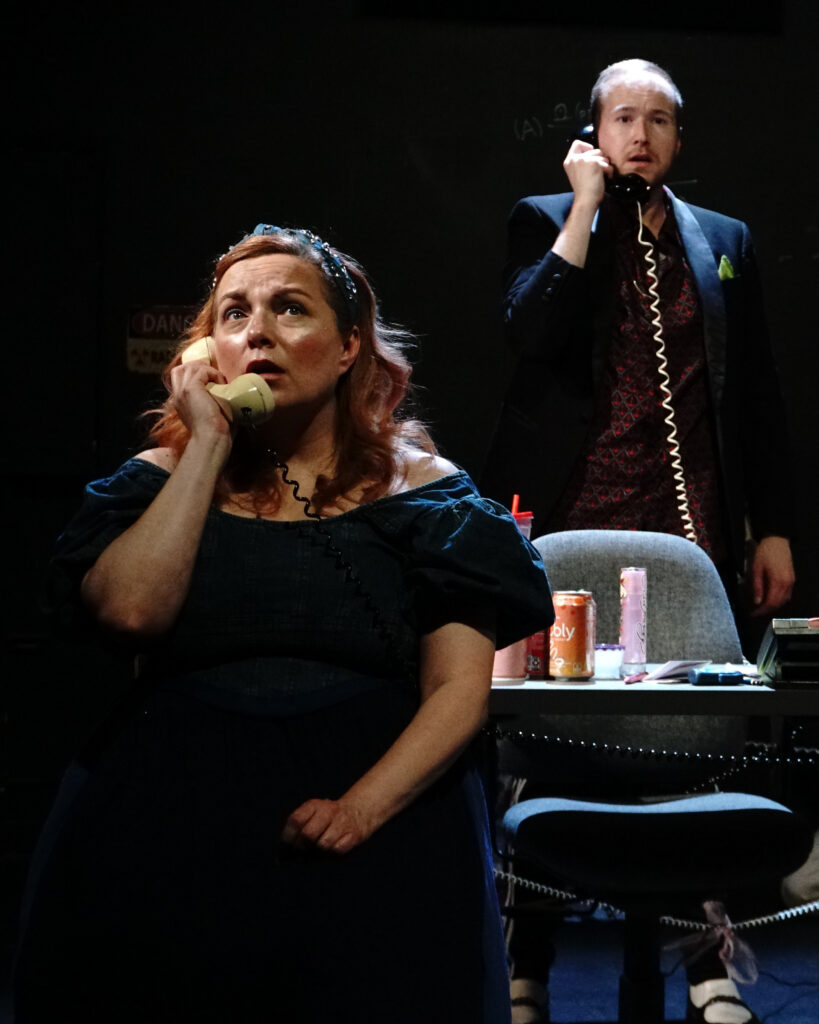
Photo by Joey Rumpell
The story is that they have finally imprisoned their arch nemesis, Professor Cannibal, and are keeping the city safe from fanged, venomous, ambulatory whales (go with it – anything can happen in those multiverses and ‘snaps,’ you know).
“The Tempest” is a tale of shipwreck and magic, explored on an enchanting island setting, with themes of betrayal, revenge, and family, so that adds another layer of interesting texture to the production.
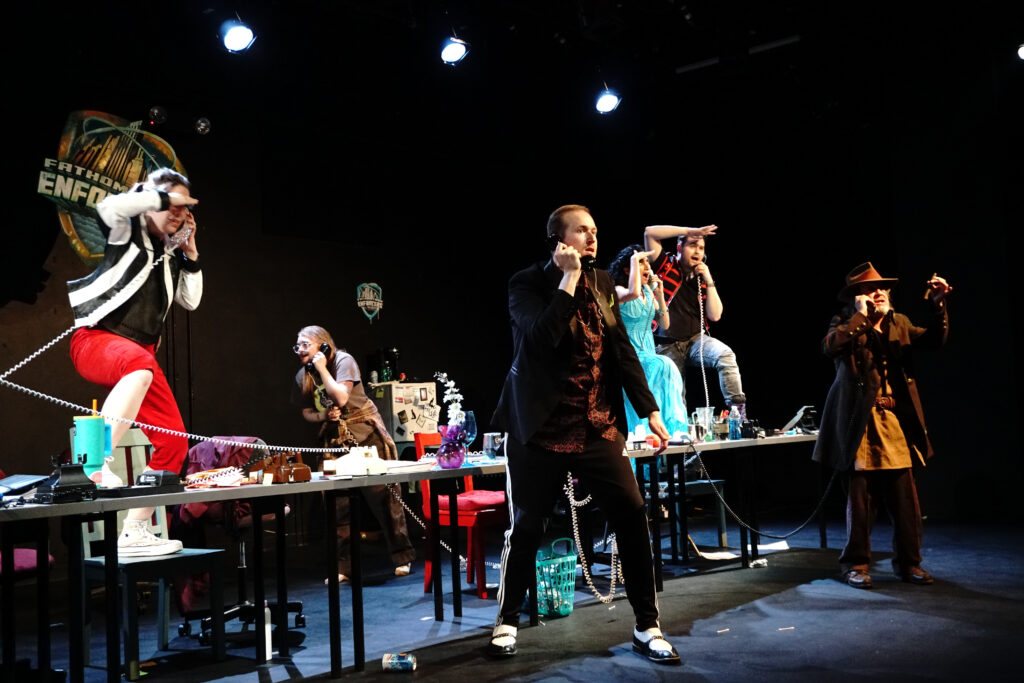
These Fathom City Enforcers are in a secret submarine, and the set-up, particularly with old-timey landline phones with extra-long cords, allows much physical humor to take place while they are skillfully weaving in hilariously constructed dialogue to be heard over the din.
The finely-tuned cast includes some of the most eternally gifted performers in local theater – and their names are followed by their secret identity, superhero identity and character in “The Tempest”: Will Bonfiglio, three-time St. Louis Theater Circle Award winner for comedic performances, as Emorie Lawson/Ariel; Rachel Tibbetts, also a Theater Circle Award winner, as Susan Tanner/Memory Lass/Miranda; Cassidy Flynn as Randell James/The Tune/Ferdinand; Miranda Jagels Felix as Donna Adams/The Silhouette/All Masque Characters; Alicen Moser as Cecily Gray/The Page/Prospero; Spencer Lawton as Dale Clark/The Intoxicator/Stephano; and Joe Hanrahan as Wayne Simon/The Untangler/Caliban.
They are joined by (fairly) newbies Ash Arora as Rebecca Lloyd/The Ocean/Gonzalo; Kayla Bush as Diana Blake/The Bad Map/Trinculo; Joey Taylor as Brad Allen/The Snow Heavy Branch; Ross Rubright as Craig Cale/The Pleaser/Antonio and Celeste Gardner as Oliver Kendall/Fragrance Fellow/Sebastian.
They all mesh in perfect harmony, jagged as it is to depict the stakes of saving the world from nefarious villains while they carry on phone conversations. Their agility with each other is a joy to witness.
The creative team is a league of its own too – costume designers Liz Henning and Eric Widner (the logo!), lighting designer Jayson Lawshee, and music by Joey Taylor. It’s all dandy work – and with the simple Batcave-like set, really adds to the atmosphere. All the office-type props provide the sight gags, too.
Stage Manager Jimmy Bernatowicz and assistant stage manager Morgan Schindler keep the flow brisk. It is presented without an intermission.
The Midnight Company has produced Maher’s “It Is Magic” and ‘The Hunchback Variations,” and their partnership is an enriching artistic endeavor.
Cashion’s superpowers, to create such an entertaining and enthralling show, are on full display here. And her merry band of good guys deliver — they are heroes for more than a day.
Photo by Joey Rumpell.
The Midnight Company presents “Spirits to Enforce” Thursdays through Saturdays at 8 p.m. through May 18 at The Kranzberg Black Box theatre in Grand Center. Ticket information is available at www.metrotix.com or for more information, visit www.midnightcompany.com
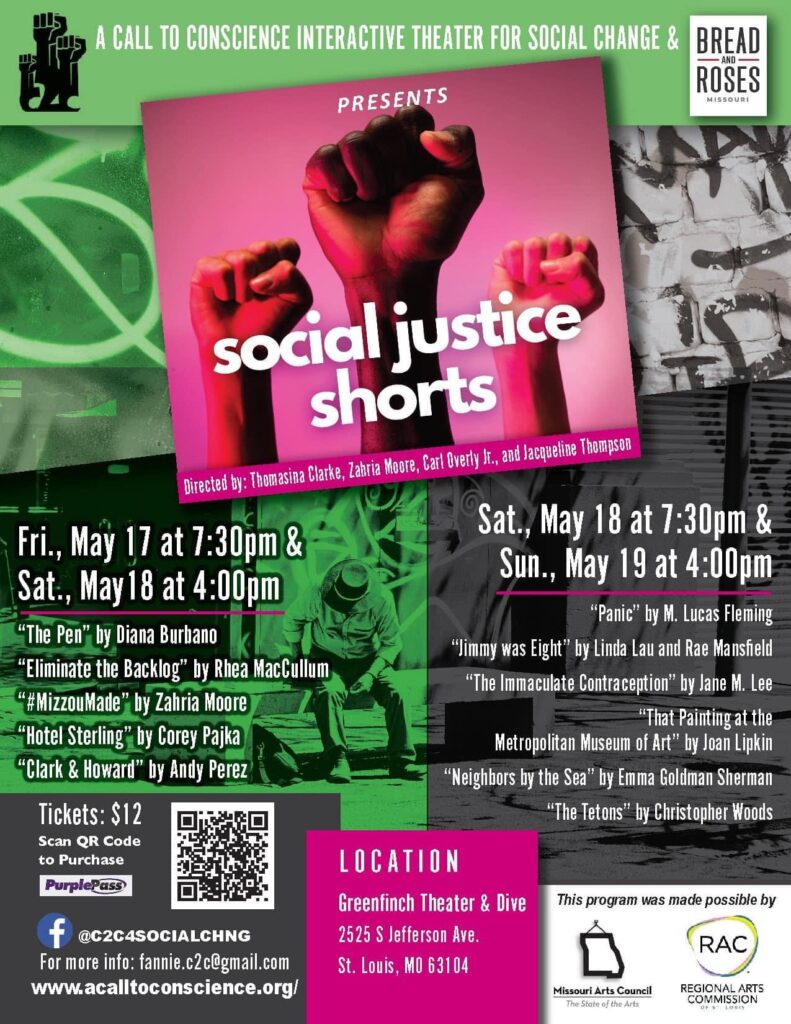
Bread and Roses Missouri and A Call to Conscience Interactive Theater for Social Change (C2C) are collaborating to present Social Justice Shorts.
Scheduled for May 17-19, 2024 at the Greenfinch Theatre & Dive, Social Justice Shorts is a one-act play festival featuring thought-provoking new narratives centered around themes such as racial equality, reproductive rights, poverty, gun violence, transgender rights, and more.
This dynamic event brings together 11 playwrights from across the country and features local St. Louis writers Joan Lipkin, Zahria Moore, Andy Perez, and M. Lucas Fleming.
“Bread & Roses and C2C believe in the power of storytelling to ignite change and amplify marginalized voices,” says Emily Kohring, Executive Director of Bread and Roses Missouri. “Social Justice Shorts provides a platform for playwrights to address pressing societal issues and inspire meaningful dialogue within our community.”
“C2C’s mission is to stir the conscience of our community and facilitate social change. The chosen plays facilitate a broad spectrum of viewpoints and foster discussions on significant societal matters that are in line with the company’s mission. Considering the present social and political climate, this festival presents an opportunity for the audience to actively engage and effect change.” says Fannie Lebby,
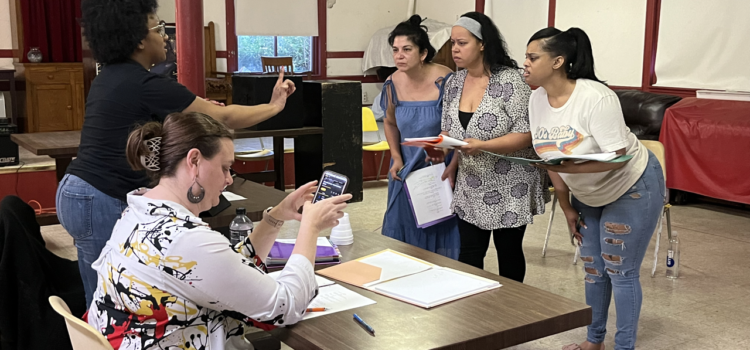
Rehearsal of social justice shorts. From left, Cheeraz Gormon, Alex Jay, and Jordan Braxton.
“It serves as a rallying cry for individuals to unite, advocate or their interests, and work towards the betterment of their community!!! To quote Augusto Boal: ‘The theater itself is not revolutionary: it is a rehearsal for the revolution.’ ASHAE! ASHAE!!!”
Social Justice Shorts represents a continuation of both organization’s commitment to using the arts as a catalyst for social transformation. Through this festival, the organization aims to foster empathy, dialogue, and action on issues that affect us all.
Performances: Friday, May 17 at 7:30 pm & Saturday, May 18 at 4 p,m, “The Pen” by Diana Burbano “Eliminate the Backlog” by Rhea MacCullum “Mizzou Made” by Zahria Moore “Hotel Sterling” by Corey Pajka “Clark & Howard” by Andy Perez
Saturday, May 18 at 7:30 p.m. & Sunday, May 19 at 4:00 p.m. “Panic” by M. Lucas Fleming “Jimmy was Eight” by Linda Lau and Rae Mansfield “The Immaculate Contraception” by Jane M. Lee “That Painting at the Metropolitan Museum of Art” by Joan Lipkin “Neighbors by the Sea” by Emma Goldman Sherman “The Tetons” by Christopher Woods
Tickets: https://www.greenfinchstl.com/tickets
ABOUT BREAD AND ROSES MISSOURI Bread and Roses Missouri emerged as a transformative force at the intersection of art and activism, rooted in the ethos of social justice and community empowerment. Originating as a project of Missouri Jobs with Justice (MO JwJ), Bread and Roses Missouri pioneered a platform for unity among community activists and union members through the medium of art. Led by visionary trailblazer Joan Suarez, Bread and Roses Missouri quickly evolved into an independent non-profit entity in 2015, charting a path toward deeper engagement with the community.
Cover photo: Rehearsals for Social Justice Shorts. (L) Director Zahria Imani Moore and Stage Manager Maria L. Straub. Actors (L to R) Christina Rios, Jocelyn Padilla, and Alex Jay.