
By Alex McPherson 

Vulgar, shocking, but irresistible, Damien Chazelle’s “Babylon” is a toxic love letter to cinema that’s impossible to look away from, even in its most extreme moments.

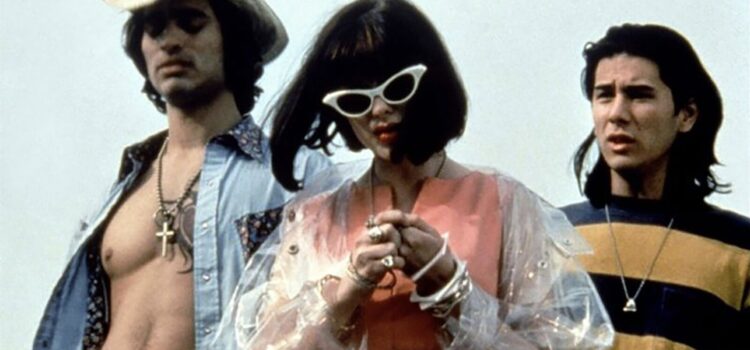
Chazelle’s three-hour extravaganza mostly takes place in Hollywood from the late 1920s to 1930s, following actors and below-the-line workers navigating a ruthless world of celebrity as the industry transitions from silent films to talkies.

We begin with Manuel “Manny” Torres (Diego Calva), a Mexican immigrant and aspiring filmmaker working odd jobs for studio bigwigs in the hopes of breaking into the industry himself, transporting an elephant to a party at a Kinescope executive’s mansion. While Manny and helpers try to push their oversized truck up a hill, the elephant proceeds to defecate all over them (the camera gives us an up-close look at the animal’s anus as it’s smeared in feces). Indeed, this outrageous moment accurately reflects the sort of gross-out humor prevalent throughout the entirety of “Babylon” — every type of fluid comes into play during the runtime.

The party Manny’s en route to is, unsurprisingly, completely insane, filmed in unflinching long takes by cinematographer Linus Sandgren. Drugs are plentiful, lewd sex acts take place wherever you look, and enthusiastic partygoers dance as a jazzy band (led by the established musician Sidney Palmer, earnestly played by Jovan Adepo) blares Justin Hurwitz’s jaw-droppingly amazing score. Plus, there’s that elephant. 

Amid the chaos, though, Manny meets the love of his life, a brazen, New Jersey-born starlet named Nellie LaRoy (Margot Robbie) who crashes the gathering , and who — in between snorting a seemingly never-ending supply of cocaine — draws enough attention to herself that she scores her first film role (the original actor overdosed that night).

Brad Pitt and Diego Calva

Despite any and all red flags, it’s love at first sight for Manny — they’re both outsiders in search of something greater than themselves. In attendance as well is Jack Conrad (Brad Pitt), an alcoholic, womanizing actor who’s made his career in silent films. Manny is tasked with driving him home the next day, and Jack helps him score some assistant jobs on sets. 

As the years tick by and these passionate souls experience soaring highs and cacophonous lows amid the changing tides of entertainment and mental health, “Babylon” refuses to slow down or give viewers time to process the crazy narrative on display.

By juggling so many characters — each encountering different facets of Hollywood’s less-than-glamorous side — the film can’t quite give each of them time to fully sink in, but the tonal whiplash ultimately works to its benefit. By the end, I felt beat up. But just like the ravenous cravings that drive the characters back to the silver screen, I wanted more.

As you can tell, “Babylon” isn’t for everyone. The full-throttle nature of Chazelle’s film will undoubtedly turn off many viewers — but lack of restraint is the point. With hectic editing jumping between characters and years, camerawork full of whip pans, zooms, and dolly shots (calling to mind the early work of Paul Thomas Anderson), and Hurwitz’s aforementioned dynamic music, the film is a near-overwhelming sensory overload.

Scenes of depravity and carnage are accompanied by those showcasing the movie-making process. We see Jack and Nellie shine in their element, all while film crews suffer in the background (some with injuries, or worse) — illustrating the blood, sweat, and tears going into the art we might take for granted. One extended scene featuring Nellie acting on a set that’s trying (and often failing) to record sound smoothly, is sweaty, intense, and darkly hilarious. 

Jean Smart as Elinor St John

The screenplay, by Chazelle, opts for broad satire most of the time, with humor that only sporadically lands. The skewering of studio bigwigs and working conditions is a bit much, to say the least. But again, the brutality serves to underline the idea of cinema being an art we’re drawn to through thick and thin — the power of images being an all-encompassing force of escape and transformation, visualized in the brilliantly trippy ending.  

These characters, with varying degrees of privilege, are swept up into a system that chews them up and spits them out as very different people. They’re shells of who they once were, having sacrificed their well-being for the purpose of entertainment. Manny ascends the corporate ladder, but loses part of his cultural heritage in the process, having to adapt to increasingly repressive policies.

Jack, crestfallen, struggles to accept his dimming star power, and Nellie (with Robbie fully in command of her craft), is chasing the next high (even if that means “fighting” a snake). She’s undeniably talented, yet deeply insecure stemming from a vague yet turbulent childhood and grappling with a misogynistic public sphere.

Li Jun Li plays Lady Fay Zhu and Jovan Adepo (back right) plays Sidney Palmer in Babylon from Paramount Pictures.

Palmer and Lady Fay Zhu (Li Jun Li) contend with racist attitudes, forcing them to “change” to find success. It’s all rather depressing in the end, and it’s true that a more focused approach would have given “Babylon” additional emotional weight, but it effectively shows lives in flux, spiraling toward harsh reckonings.

Also worth noting are smaller turns from Jean Smart as an intelligent yet unhinged gossip columnist named Elinor St. John, a stressed-out Flea as a studio fixer, and Tobey Maguire as a skin-crawling mob boss James McKay. The whole ensemble — some heavily exaggerated, others more down-to-earth — perfectly fits this wild-and-woolly tale.

This is a maximalist, boundary-pushing, and meaty film to digest. Overstuffed though it is, “Babylon” is a thrill to watch, with assured direction and style out the wazoo. Fair warning, though: if you have a weak stomach, avoid at all costs.

“Babylon” is a 2022 drama written and directed by Damien Chazelle and starring Brad Pitt, Margot Robbie, Diego Calva and Jean Smart. It is rated R for strong and crude sexual content, graphic nudity, bloody violence, drug use, and pervasive language and the runtime is 3 hours, 9 minutes. It opened in theaters Dec. 23. Alex’s Grade: A-

Facebook Comments

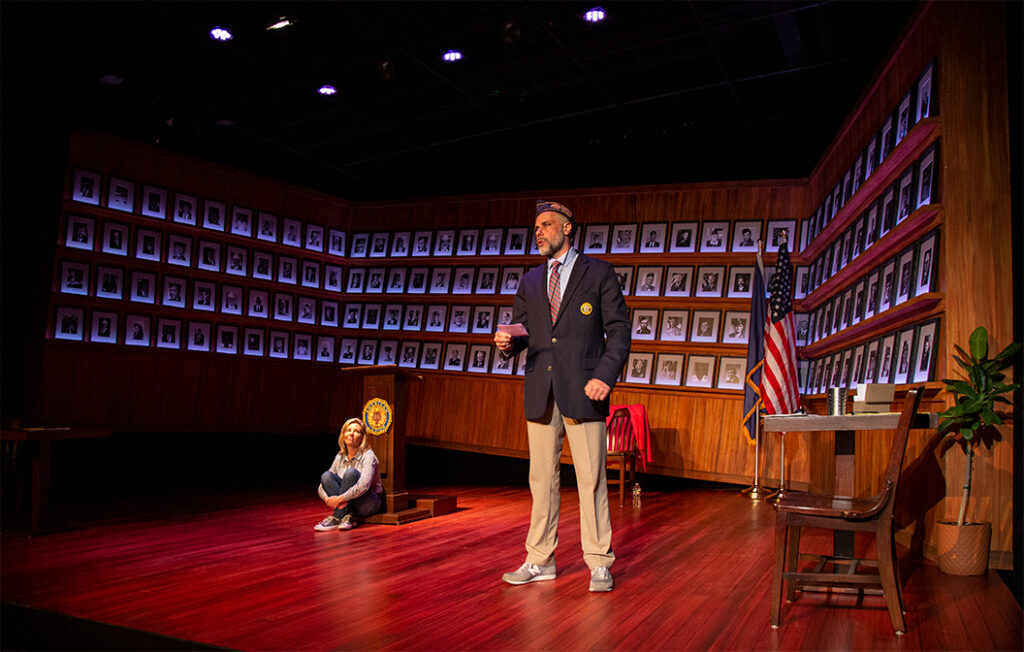
Playwright Heidi Schreck’s highly impactful and timely memoir, What the Constitution Means to Me, winner of Best American play, and finalist for the Pulitzer Prize, opens Max & Louie Productions upcoming 2023 theatrical season, running at The Marcelle Theatre, April 6-23rd in St. Louis..

When in the Course of human Events it becomes necessary to recover from the fatigue and grief that we have all experienced, Max & Louie Productions presents the opportunity to feel uplifted, to galvanize, and to explore just what the Constitution means to You,” said Stellie Siteman, Producing Artistic Director.

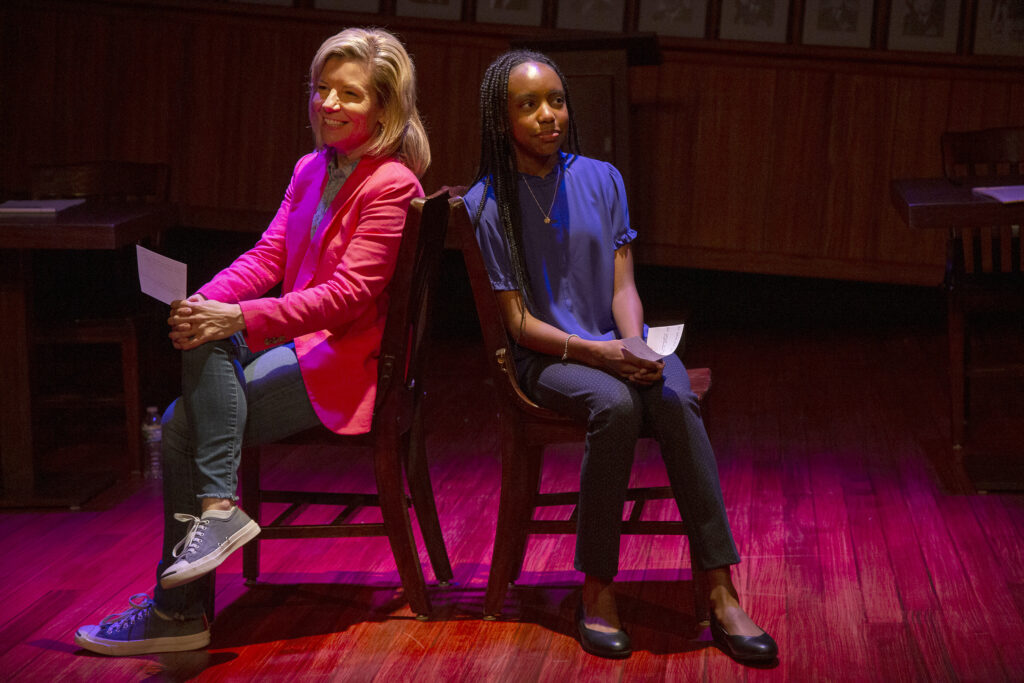
This boundary-breaking play breathes new life into our Constitution and imagines how it will shape the next generation of Americans. Fifteen-year-old Heidi Schreck earned her college tuition by winning Constitutional debate competitions across the United States. What the Constitution Means to Me is inspired by the prompt she received on these tours: draw a personal connection between your life and the Constitution. Actor Michelle Hand brilliantly resurrects Schreck’s teenage and present self to trace the profound relationship between four generations of women in her family and the founding document that shaped their lives, digging into its beauty, aspirations, contradictions, and failures.

The cast includes Michelle Hand, Joel Moses, Riley Carter Adams, Aislyn Morrow, and Maahi Saini.

Nancy Bell Directs.

Critic’s Pick! “Brilliantly Crafted Show, Harrowing, Funny, and Humane, that accesses the political through the deeply personal. A Masterful Act of Storytelling.” – New York Magazine

What the Constitution Means to Me will run at the Marcelle Theatre, 3310 Samuel Shepard Drive, Saint Louis, Missouri 63103. Free secured parking.

The dates of the production are April 6- April 23, 2023. Tickets are now on sale at maxandlouie.com or by phone at Metrotix (314) 534-1111.  Tickets are priced from $15-$50

Max & Louie Productions has received its Missouri ArtSafe certification. To ensure that we may create safely, present safely, and attend safely we pledge to Covid-19 Safety Protocols which patrons are encouraged to view at Max & Louie Productions’ website at www.maxandlouie.com

Actors/Director Bio’s and Headshots  

Michelle Hand* (Heidi) is delighted to work with this creative team to finally put the skills she honed as a middle-school debater in the Bellarmine Speech League to good use. More recent stage appearances include Mrs. Cratchit in A Christmas Carol at The Repertory Theater of St. Louis, Sugar in Tiny, Beautiful Things at Max & Louie Productions (St. Louis Theater Circle Award Nomination) and Mrs. Bennett in Pride and Prejudice at the Repertory Theater of St. Louis (St. Louis Theater Circle Award Nomination). She is so grateful for the many opportunities she has had in the span of her career, from co-founding the Orange Girls Theater Company, to appearing in the Off-Broadway premier of Day of the Dog, to collaborating with the great companies, the great actors, and the great theater artists of St. Louis in over 40 productions.  Thank you for your continued support of this community.  This one is for Basil.

*Member of Actors’ Equity

Joel Moses (Legionnaire) St. Louis credits include The Christians (West End Players), Bronte Sister House Party (SATE), Laughter on the 23rd Floor (New Jewish Theatre), The Zoo Story, and The Dumb Waiter (St. Louis Actors’ Studio). He spent several years with the Organic Theater Company in Chicago where favorite performances included Picasso at the Lapin Agile, Emilie: la Marquise du Chatelet Defends Her Life Tonight, The Diviners, and playing the title role in King Ubu.

Other Chicago credits include work with First Folio Theatre, Assassination Theater, 16th Street Theater, Theatre Y, and Stage 773. He received his MFA in Acting from Northern Illinois University and studied abroad at the Moscow Art Theatre. This is Joel’s first appearance for Max & Louie Productions!

Riley Carter Adams (Debater) is a 7th grader at John Burroughs School. When she was seven, Riley created her first YouTube vlog channel, Black and Girly with Miss Riley. She has performed in a plethora of youth and equity theatre productions on several stages with COCA, Gateway Center for Performing Arts, Kirkwood Youth Theatre, Ignite Theatre Company, Union Avenue Opera, The Black Rep, The Rep, and The Muny. In 2019, Riley made her television debut in a recurring role in a Showtime Original series entitled On Becoming a God in Central Florida, co-executive produced and starring Kirsten Dunst and executive produced by George Clooney. 

In 2020, she starred in the local Nine PBS sensation A New Holiday, directed by Brian Owens and co-written with Sophia Stephens.  Riley currently voices the character of the effortlessly brave, Nevaeh Campbell, in the animated series, Drawn In, a collaboration between nine PBS and Lion Forge animation. She was featured in The Muny’s 104th season casts of Camelot and The Color Purple and starred as Matilda in COCA’s summer mainstage production of Matilda the Musical and in the New Jewish Theatre’s World Premiere of The Bee Play, as Paris. Riley enjoys writing in her journals, drawing, reading, learning new vlogging techniques from her favorite YouTubers, and spending time with her family and friends.

Aislyn Morrow She/They (Debater) attends Grand Center Arts Academy and will graduate in May 2023. She has appeared in Godspell, as Morgan, Milk Like Sugar as Myrna Desmond and in She Kills Monsters as Lilith Morningstar/Lilly, at Grand Center Arts Academy and most recently, Our Town at the Sun Theatre all directed by Michael Musgrave-Perkins.

She has also appeared in A Year with Frog and Toad, as Lizard, Squirrel, and Mole, with Fly North Theatricals, directed by Colin Healy, and in Ranked- A New Musical, as Jacquie, at COCA, directed by Grace Austin. When she’s not performing in theatre or musical theatre, Aislyn enjoys being the cheer captain of Titans Cheer Team at Confluence Preparatory Academy.

Maahi Saini (Debater) attends MICDS and is in 8th grade. She has appeared in two MICDS plays Happiest Day in Moneyville USA and A Collection of Aesop’s Fables.  Maahi has multiple public speaking awards, most coming from a foundation called NSF (North South Foundation), where they are given a prompt one minute before they speak. “It’s called impromptu for a reason!” 

She enjoys playing volleyball and squash and watching every sport possible especially ice hockey and football. Maahi enjoys spending time with friends and creating and editing video content. Maahi has always had a passion for drama and is so grateful for this opportunity!

Nancy Bell (Director) is an award-winning actor, director, and playwright with a body of working spanning thirty years. Her plays Blow Winds, Remember Me, The World Begun, Good in EverythingOld Hearts Fresh, and The New World were produced at Shakespeare Festival St. Louis, where she served as Playwright-in-Residence. Elsewhere, her plays have been developed or produced in California, New York and elsewhere.

As a performer, she has worked at Manhattan Theatre Club, New York Theatre Workshop, Ensemble Studio Theatre, Old Globe Theatre, South Coast Repertory, Geffen Playhouse and dozens of others nationally. Among many other TV and film credits, she appeared on Star Trek Voyager and as Susan Bates on the long-running soap Guiding Light. 

As a director, she has worked at Shakespeare Festival St. Louis, the New Jewish Theatre, St. Louis Actors Studio, COCA, and elsewhere. Nancy is Associate Professor of Theatre at Saint Louis University. www.NancyEllenBell.com  

Facebook Comments

By Lynn Venhaus

The promising new direction of the Westport Playhouse as a live entertainment venue bodes well for the future, and the one-woman holiday show, “The Twelve Dates of Christmas,” appeals to merry revelers.

Actor/playwright Ginna Hoben wrote this personal comedy that was first performed in 2010, and it’s a heartfelt and humorous chronicle of her dating hits and misses during a calendar year.

After starting out the mega-holiday season with Thanksgiving at her family’s home in Ohio, the lead character Mary must endure the humiliation of seeing her fiancé kiss his co-worker on national television during the Macy’s Thanksgiving Day Parade. This is after he bailed on the trip, saying he was ill.

Oh, the horror of the life you expected vs. the real world is the gift that keeps on giving during the Christmas holiday and beyond. And those pesky female relatives that offer advice or judgment or know better.

Mary is an actress, and obviously a drama queen, sharing her rocky journey. The versatile Jennifer Theby Quinn dials it up to 11 sometimes to depict the jilted, bitter, and frustrated single woman. She does find the funny in the pathos – I mean, you kinda sorta must for survival.

She conveys a gamut of emotions, as she allows herself to jump back into the dating world. Some of the romances are weird, creepy, absurd, and comical, which leads to cynicism, but there are glimmers of hope – and more heartbreak.

The material lends itself to broad interpretations, and in its format, is not as polished as the Hallmark Channel rom-coms, yet there are nuggets of recognition in the hook-ups.

When fate intervenes in a good way, Theby-Quinn is at her best in the quieter, more touching moments — those heart-on-sleeve confessions, and revelations where she is at her most natural.

The genuine encounters with a charming little boy playing Tiny Tim in a production Mary is in are designed to tug at the heartstrings. And Theby-Quinn is effective in depicting the sweetness she experiences dealing with such an innocent 5-year-old. You can feel your heart melt as hers does (and she differentiates the characters well).

A sunny presence, Theby-Quinn is energized by the audience and works hard to engage them. To keep the show lively, director Lee Anne Mathews has kept her moving all over the stage so it’s not as boxed in as other solo shows.

That’s a lot of stamina for 90 minutes, and it’s a demanding run as well (nearly a month). She’s a tenacious trouper, familiar with the space, after playing Kate Monster in “Avenue Q” in 2019 and Fiona in “Flanagan’s Wake” in early 2020, then forced to shut down during the coronavirus lockdown.

Theby-Quinn is one of the most skilled performers in St. Louis, impressive in dramas, comedies, and musicals, earning two St. Louis Theater Circle Awards and multiple nominations.

She can plum more emotional depths, given tougher material, as these lightweight vignettes are designed to mostly elicit laughs and resonate. (But does an actress in the big city? Of course – because she’s as exhausted as other single women — “One hundred and twenty-five jackasses it takes to meet one decent man!” is my favorite line. We can all empathize).

Single women who have been unlucky at love and those who have had good relationships that didn’t work out, can understand Mary’s quest for Mr. Right. Perhaps the material would be more endearing if there was a guy to tango with, but Mary ‘s tasked with performing other characters (about a dozen) vocally, and that helps.

The snazzy production values – a large LED screen adds perky images and clever animated artwork from master video designers Margery and Peter Spack – help to open it and add to the storytelling, instead of having a boxed-in feeling that can typically happen in solo shows.

It was late in the run when I saw it, and the sound was distorted at times, but according to colleagues who had seen it on different nights, it was just fine, no problems.

Jacob Baxley incorporates a fine mix of songs to enhance the holidays throughout the year, and Dan MacLaughlin’s lighting design adds warmth. Liz Henning is listed as a wardrobe consultant, and that’s always a good sign. Lenny Mink’s and Kurtis Gibbs’ video editing and photography enhances the show, as does Joel Wilper’s work as an audio/video technician.

One can understand the desire for a crowd-pleaser at this crazy-busy time of year when everyone’s trying to have a joyous holiday season, and that this is a tad overzealous in trying to ramp up the jolly.

But the sincerity and goodwill evident both on and off stage works in its favor.


“The 12 Dates of Christmas” runs from Nov. 25 to Dec. 23 at the Westport Plaza, in the Westport Plaza Business and Entertainment District. Because of COVID-cancellation at the run’s end, a special 2 p.m. performance on Dec. 30 has been scheduled and tickets available at the box office. For more information, visit www.thewestportplayhouse.com

Facebook Comments

By Alex McPherson

An exhausting film filled with compelling performances, director Darren Aronofsky’s “The Whale” exerts a vice-like grip throughout, reveling in both discomfort and emotional catharsis.

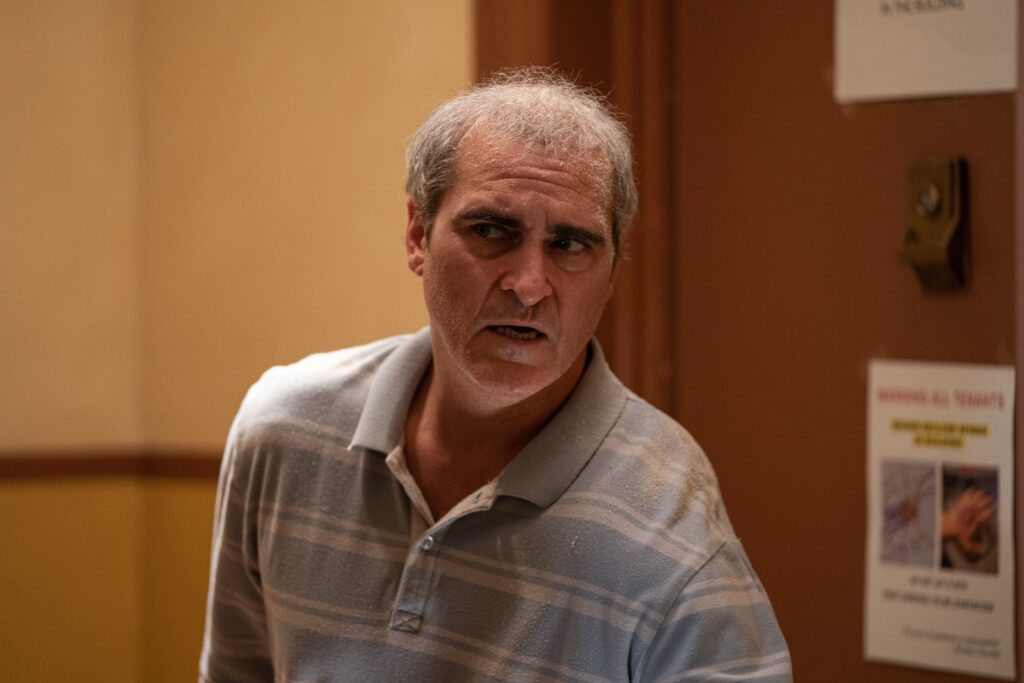
Adapted from a play of the same name by Samuel D. Hunter, who also wrote the screenplay, “The Whale” centers around Charlie (Brendan Fraser), a reclusive, morbidly obese English teacher giving remote lessons within a fetid apartment in Idaho during the 2016 presidential primaries.

Suffering from congestive heart failure, and refusing medical care, Charlie doesn’t have much time left — prompting this kind yet tormented soul to reflect on his mistakes and seek some semblance of inner peace. Above all else, he wants to reconnect with his estranged teenage daughter, Ellie (Sadie Sink), who prickles with rage and resentment at not only him, but the world at large. 

Eight years prior, Charlie abandoned Ellie and his then-wife, Mary (Samantha Morton) to be with his gay lover, Alan, who later passed away, leaving Charlie reeling with grief and practically eating himself into the grave. Charlie is looked after by his friend, Liz (Hong Chau), a nurse who shares a past with him and who is battling her own all-encompassing demons.

As the days tick by, Charlie frequently refers back to an essay one of his students wrote about “Moby Dick” — a blunt interpretation whose honesty affects him to his very core.

The stage is set for in-your-face melodrama, and “The Whale” certainly tries to make viewers feel as much as possible. Yet, despite the script’s heavy-handedness and cinematic flourishes that detract from its noble messages, Aronofsky’s film soars on the undeniable power of its performances. Fraser is marvelous, bringing tenderness to a character too often put in extreme situations. 

Indeed, Charlie is seemingly at battle with the film itself — a tug-of-war between empathy and cruelty. Aronofsky — known as a boundary-pushing filmmaker — has no qualms about putting him through the ringer from beginning to end. Despite a dreary, limited setting (enhanced by a claustrophobic aspect ratio), the near-constant punishment from the outside world, and his untenable condition, Charlie remains hopeful that he can help Ellie restore some faith in herself to weather their harsh world, and thereby right the greatest wrong in his own tragic life. 

With a fatsuit and strong makeup work, Fraser’s first impression is startling (even played to “horror” lengths at certain points), but his earnest line delivery brings sensitivity and sly humor to a character otherwise harshly defined. It’s difficult to overstate just how effective Fraser is here — even the most clumsy, heavy-handed soliloquies feel impactful thanks to his raw skill as a performer and his ability to convey meaning that isn’t always there in the screenplay.

The rest of the cast is exceptional as well, particularly Chau, who brings much-needed groundedness to the film’s increasingly melodramatic plot developments. Liz is a high-strung, enabling, and grief-stricken person herself — doing what she can for Charlie, while also neglecting to appreciate his last wishes.

Sadie Sink

Sink, on the other hand, is downright scary as Ellie, a teenager warped by cynicism and insecurity. It often seems like Sink, and the script, have Ellie dialed up to 11, which lessens the character’s authenticity and leans into exaggeration. Still, in the few moments where Ellie isn’t verbally abusing Charlie (or worse), viewers get glimpses beneath the facade, where some warmth and compassion remain. 

Also worth mentioning is Ty Simpkins, who plays Thomas, a church missionary who keeps showing up at Charlie’s doorstep and wants to “save” him before the end-times. Like most of the people Charlie interacts with, Thomas doesn’t have his best interests at heart, and “The Whale” emphasizes Charlie’s personal salvation over prejudiced, preordained constraints.

Aronofsky’s film is far less successful, though, in its translation from stage to screen. This isn’t a subtle film by any means, and blunt symbolism abounds — notably in how Charlie’s weight can function as a metaphor for his regrets, and how the film paints parallels between his body and that of the White Whale in “Moby Dick.” Moments where Aronofsky and cinematographer Matthew Libatique showcase the depths of Charlie’s desperation stand out as unnecessary and demeaning, inserted for shock value at his expense.

Ironically, the sequences where “The Whale” is most like a stage-play are where it works best — pleading for viewers’ sympathy, sacrificing emotional nuance, and giving the ensemble plenty of opportunities to loudly declare their awards-worthiness. Strange though this dichotomy is, it remains engrossing.

Less than the sum of its parts, albeit absorbing throughout, “The Whale” is worth watching as an acting showcase and an examination of ideas in a dramatic framework that’s seemingly, fascinatingly at war with itself.

“The Whale” is a 2022 drama directed by Darren Aronofsky and starring Brenda Fraser, Sadie Sink, Hong Chau and Ty Simpkins. It’s rated R for some language, some drug use and sexual content and has a 1 hour, 57 minutes runtime. It opened in select theaters Dec. 21. Alex’s Grade: B

Facebook Comments


By Lynn Venhaus
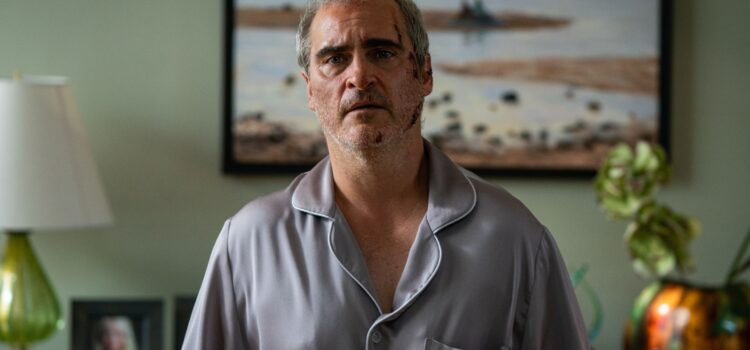
Brendan Fraser is heartbreaking and haunting as a morbidly obese recluse with mental and physical health problems in the difficult-to-watch “The Whale.”

He’s a reclusive English teacher who has an opportunity to reconnect with his estranged teenage daughter (Sadie Sink).

As Charlie, he is attracting year-end awards attention, and deservedly so. It’s a stunning, brave performance from Fraser, possibly his best. He depicts this bruised man as a gentle soul whose tragic flaw was caring too much in a disingenuous environment.

Now 54, he has been acting for three decades. Deemed a heartthrob in his 20s after such films as “George of the Jungle” and “The Mummy,” his varied career has included comedies (“Airheads,” “Encino Man”), dramas (“Gods and Monsters,” “Crash”), TV (“The Affair” and “Trust”), and voice-over animation work (King of the Hill,” “The Simpsons”). Most recently, he’s been playing Cliff Steele on the HBOMax series “Doom Patrol.”

While wearing prosthetics to make him look like a 600-lb. man, Fraser allows us to see the hurting human being inside. Charlie is dying and can’t stop eating himself to death – it’s a choice.

Shots of his girth, his inability to move without assistance, and a trapped, confined, lethargic existence where he shuns easier mobility are painful and sad.

The remarkable transformation was crafted by makeup artist Adrien Morot, who was Oscar nominated for “Barney’s Version,” and has worked on the 2019 “Pet Sematary” reboot and “X-Men: Days of Future Past,” among his credits.

“The Whale” is a bleak adaptation of a play by Samuel D. Hunter on how a character gets into his current predicament because of loss, guilt, and love. The amount of self-loathing makes it painful to witness, but Fraser is never not authentic.

Confined to a run-down two-bedroom home that reflects how frozen in time the lead character is, Charlie has not been able to get past his lover’s suicide years earlier. He has shut himself off from society, hidden away in a grief cocoon of his own making.

A learned man, as reflected by crammed bookshelves, with an academic career – he teaches online English classes, he offers to write his estranged daughter’s high school assignments. He is desperate to reconnect with her, and it becomes a shot at redemption.  

Sadie Sink

As played by Sadie Sink, Ellie is a sullen, snarling, and angry teen who lashes out at everyone, especially her father, whom she blames for many of his failings, and hers. Her dad left when she was 8 years old, because he had fallen in love with one of his students.

The plot connects more dots, because nurse Liz, in a tough-love performance from Hong Chau, has a history with Charlie.

She does not indulge in his solitary imprisonment, but at the same time, tries to be realistic about his death march.

The playwright obviously has an axe to grind about evangelicals and their quest for salvation. The religious ties are revealed slowly, but Thomas, a missionary from “New Life Ministries,” looking very similar to a Mormon, attempts a conversion. He’s adroitly played by Ty Simpkins, now grown-up, most known for being the older brother in “Jurassic World” and a kid in “Iron Man 3.”

He is not as innocent as he seems, but seems unfairly targeted by Ellie, who can’t hide her disdain — but the mocking is cruel.

The backstories get sorted out, but no encounter is a random one. Samantha Morton has another outstanding cameo (she is brilliant as an informant in “She Said”) as Charlie’s bitter ex-wife. The resentment is no longer simmering, it’s a full-on rolling boil.

A lot of yelling is directed at Charlie, and between mother and daughter, so the confrontations are blunt and in-your-face. You begin to understand why Charlie wants to be left alone. Why deal with the messiness of humanity?

The playwright, who wrote the film adaptation, set the play in Mormon country in Idaho, and belabors the point repeatedly. 

The theme doesn’t vary that much from director Darren Aronofsky’s familiar darker and often nihilistic films (“Requiem for a Dream,” “Black Swan,” “Mother!”).

Brendan Fraser

You can see its stage roots showing, and the author clumsily connects Herman Melville’s “Moby Dick” obsession to the situation facing Charlie, while the evangelical ties are also heavy-handed.

Even though glimmers of hope emerge, when Charlie says: “Who would want me to be part of their life?,” it’s a gut-punch.

There are two gasp-worthy scenes – an eat-your-feelings binge that’s horrifying and a devastating reveal to students, that one must summon empathy and compassion or check out.

So much of the distressing story has a “too little, too late” tinge to it, adding to the feelings of regret and recrimination that permeate the space.

Because of the script’s complexities, you know that the ending won’t be a sweet, sappy resolution. Yet, the way it concludes is still unexpected.

Overall, “The Whale” is an unsettling and uneven work, marked by good performances that deserved better material.

“The Whale” is a 2022 drama directed by Darren Aronofsky and starring Brenda Fraser, Sadie Sink, Hong Chau and Ty Simpkins. It’s rated R for some language, some drug use and sexual content and has a 1 hour, 57 minutes runtime. It opened in select theaters Dec. 21. Lynn’s Grade: C.

Hong Chau in “The Whale”
Facebook Comments

By Lynn Venhaus

Loud, vulgar, and hollow, “Babylon” is an excessive look at nascent Hollywood without much to say and even less to feel despite its 189-minutes run time.

The drama traces the rise and fall of multiple characters during the silent-to-talking pictures era in early Hollywood, focusing on uninhibited decadence and depravity.

Meant to both celebrate Tinsel Town as a dream factory and to pull back the curtain on a morally bankrupt culture, “Babylon” is a cumbersome mess from writer-director Damien Chazelle, who has crafted pretty images – and some disgusting things that you can’t unsee — in a story without heart or soul.

Chazelle, the youngest Best Director in Oscar history for “La la Land,” when he was 32, has tackled a behind-the-scenes look at aspiring hopefuls in the industry before. But while that opus had characters you cared about and was sprinkled with pixie dust, the five storylines in this frenzied panorama are callous caricatures of ambition and downward spirals.

Brad Pitt appears to be on automatic pilot as hard-drinking matinee idol Jack Conrad, a suave player with a trail of ex-wives. Margot Robbie is dialed up to 11 as coarse New Jersey-born Nellie La Roy, a combative, self-destructive starlet. Newcomer Diego Calva stands out as dreamer Manny Torres, who becomes useful as a studio ‘fixer’ but is unfinished as a character. Jovan Adepo is gut-wrenching as Sidney Powell, a black bandleader facing demeaning requests – in a too-brief storyline. And Jean Smart has one showy scene as Elinor St. John, a powerful gossip columnist modeled after Hedda Hopper and Louella Parsons, but otherwise her performance is perfunctory.

Tobey Maguire

That results in a very busy scenario, with a sprawling cast. Tobey Maguire has an unsettling cameo as a degenerate who thrives on sleaze. And blink and you’ll miss Olivia Wilde as one of Jack’s wives, Katherine Waterston as one of his soon-to-be ex’s, Max Minghella as Irving Thalberg and Chloe Fineman as Marion Davies.

The opening 30-minutes are a shocking display of debauchery – those squeamish about bodily fluids, you are warned — and it gets worse from there, but is there anything new to say in concentrating on bizarre grotesqueness and cocaine-fueled party guests?

If you are familiar with Kenneth Anger’s tawdry tattletale, “Hollywood Babylon,” published in 1959 but so controversial that it was unavailable 1965-1975, and its follow-up in 1984, then you’ve read about the headline-grabbing bad behavior of fame-seekers in that era.

The film begins in 1926, then depicts how the change to talkies affected the business. In perhaps the best scene, the problems in the transition wreak havoc on a set with La Roy the ingenue. Frustration leads to more belligerent actions and escalating tirades, and a casualty happens that’s treated so cavalierly, it’s just hard to wrap your head around the attitudes.

The film’s assorted narcissists, posers, and hangers-on — people who may have sold their souls and are drawn, like moths to a flame, to the star-making machinery – eventually burn out or fade away. But Chazelle cheats us with an unsatisfactory wrap-up of their fates in a puzzling finale.

A stunning presence on screen, Robbie demands attention as someone who craves the spotlight but loses her luster when she has too many walks on the wild side. She has played complicated women before – Tonya Harding in “I, Tonya” and Harley Quinn in “Suicide Squad” and “Birds of Prey,” but it’s hard to muster sympathy for such an unlikable character as vainglorious Nellie.

Take away the outrageous examples of living out loud and the gross-outs (projectile vomit, bone-crunching rat-eating, kinky sex acts and funhouse freaks), “Babylon” is hard to figure out the endgame. Why should we care?

Technically, the artisan work is first-rate. Justin Hurwitz’s jazzy propulsive score captures the hedonistic time while cinematographer Linus Sandgren goes big on a grandiose scale, as does production designer Florencia Martin. The man-made opulence contrasts with the undeveloped Southern California hillsides that the cinema pioneers used for their sandboxes and playgrounds.

Above all, disappointment rests with Chazelle, who needed to get out of his own way – and pick a lane. You can’t have it both ways. He demonstrated such a flair for imaginative storytelling in “Whiplash,” “La la Land,” and “First Man,” that “Babylon” made me angry. He took the joy out of make-believe, which is his point, I suppose, but made it repulsive.

We need the magic of movies as an escape from cruel everyday realities, to engage us with flights of fancy. “Babylon” collapses from the weight of its ambition, a nihilistic abyss. It’s a colossal waste of time, talent, and money.

“Babylon” is a 2022 drama written and directed by Damien Chazelle and starring Brad Pitt, Margot Robbie, Diego Calva and Jean Smart. It is rated R for strong and crude sexual content, graphic nudity, bloody violence, drug use, and pervasive language and the runtime is 3 hours, 9 minutes. It opened in theaters Dec. 23. Lynn’s Grade: D.

Margot Robbie plays Nellie LaRoy and Diego Calva plays Manny Torres in Babylon from Paramount Pictures.
Facebook Comments

By C.B. Adams

Unlike Uncle Ebeneezer, I don’t think of the holiday season as “A poor excuse for picking a man’s pocket every twenty-fifth of December!” In fact, as I have metaphorically buttoned my great-coat to the chin and headed out into the St. Louis holiday entertainment marketplace, I have been amazed at the plenteous plenitude of choices, from sacred to secular. I have willingly reached into my pocket and supported as many of these offerings as my wallet – and attention span – allowed.

In the final week of the frantic Big Day Fun Run came the fluffy flutternutter confection known as “Elf the Musical” for performances at the Fabulous Fox. There’s much proclaimed about Christmas being for children, but there’s a small dearth of holiday entertainment specifically for the tykes and tots (“Violent Night” and “Bad Santa” anyone?) And, that list gets even grinchier when you also want something that has meaning, depth and resonance for young and old alike.

If  “Elf” had a wish list, it’s the latter niche that the musical adaptation of the 2003 movie would like to hold. It would like to be the Big Gift but turns out to be only a stocking stuffer. Ah, if only Buddy’s proclamation, “The best way to spread Christmas cheer is singing loud for all to hear,” weren’t so childishly naïve.

In the spirit of the holiday and transparency, I’ll admit that “Elf” has never been one of my top holiday entertainments. I endured repeated viewings as my sons were growing up, and I have always found the first half of “Elf” to offer the promise of a fulfilling, satisfying holiday movie that desperately wants to live up to the old Rankin/Bass animated specials that inspired screenwriter David Berenbaum.

But it’s merely derivative and adds up to a modest movie experience — that great snowball fight sequence notwithstanding (sadly not included in the musical). To borrow a phrase from that old Bentsen/Quayle vice presidential debate, I know Rankin/Bass and you, “Elf,” are no Rankin/Bass.

All the promise set up in the first half of the plot becomes mired in yet another holiday plot involving daddy issues Think about it: “Rudolph,” “Christmas Story,” “The Gathering,” and, I can even make the case for, “Meet Me In St. Louis.” What saved the movie was the stellar cast, and not just the man-child goofiness of Will Ferrell. “Elf the Musical” poses the same challenge with its clunky plot, wooden dialogue, generically forgettable songs and spotty, non-potty humor.

Throughout the Dec. 20th opening night, I repeatedly found myself rooting for the cast to save the show from itself – “C’mon, you can do it!” Much of that expectation unavoidably falls onto the lead character, Buddy. Cody Garcia’s Buddy is tall, gangly in a fun Jack Skellington sort of way and charmingly, smartly innocent. Their performance was not at all haunted by the Spirit of Buddy Past – Will Ferrell. With clownishly curled shoes and wrinkled tights, Garcia makes Buddy the character that connects with the young and young at heart. They were fun to watch, and it was a shame that their performance stood out even more just because of the lesser performances of their fellow performers.

Mark Fishback portrayed a flat Santa who lacked good joke timing and who couldn’t decide whether to be a grouchy Ed Asner, bumbling John Ratzenberger or rockin’ Kurt Russell type of not-so-jolly ole St. Nick. Christopher Robert Smith as Buddy’s biological father figure was bland and banal rather than a sharp, cynical foil to his son’s sugary sparkle. He definitely needed to channel some James Caan. Additionally, his dance moves were too much Mr. Roboto and not enough Christopher Walken. There was no authentic chemistry among most of the other characters, including between Caitlin Lester-Sams as Buddy’s stepmother and Jaxon James as his half-brother.

Other than Garcia, the other glittering performance was provided by Tieisha Thomas as Buddy’s love interest and a fellow Macy’s employee, Jovie. In addition to her nuanced, sassy-but-lonesome performance, her “Never Fall in Love (with an Elf)” was one of the best – and best-delivered – songs of the evening.

As a musical, the show’s tunes (Matthew Sklar, composer, Chad Beguelin, lyricist) aren’t bad, but they suffer from too-few moments of sustained wit and froth. Again, they disappoint by not living up to their potential. The exceptions were the opening “Happy All the Time,” “Sparklejollytwinklejingley” and the aforementioned  “Never Fall in Love (with an Elf).” Another was “Nobody Cares About Santa” with its chorus line of kvetching department store Santas.

My mixed-bag reaction to “Elf the Musical” may, similar to Scrooge’s “undigested bit of beef, a blot of mustard, a crumb of cheese, a fragment of underdone potato,” be caused by my expectation. As author Anne Lamott has said, “Expectations are resentments waiting to happen.”

I wanted to enjoy it more and I hoped it would improve upon the movie’s weaknesses. Perhaps my expectations were too high or off mark. Why did I think cold spaghetti with maple syrup had to be both delicious and nutritious? I may be, to borrow a line from Buddy, “a cotton-headed ninny muggings.”

But I’ll leave it to a youngster sitting behind me to have the last word. As Santa concluded his narration of Buddy’s life, he ends with “And they lived happily ever after.” To which the youngster (definitely under five) replied (in his outside voice), “I knew he was gonna to say that.”

Performances of “Elf the Musical” at the Fabulous Fox run Dec. 20-24. Show times are Tuesday through Friday evenings at 7:30 p.m. and Thursday, Friday and Saturday afternoons at 1 p.m. Tickets on sale now at MetroTix.com or by calling 314-534-1111. For more information, visit www.fabulousfox.com

Facebook Comments

By Lynn Venhaus

One of the most entertaining films of the year, “Glass Onion: A Knives Out Mystery” is a spellbinding and stylish whodunit that satisfies from start to finish.

Southern detective Benoit Blanc (Daniel Craig) travels to Greece to peel back the layers of a mystery involving a new cast of colorful suspects.

Names will be dropped, drinks will be spilt, airs will be deflated, and secrets divulged in a saucy blend of clever comedy and a tough-to-crack mystery from the fertile mind of writer-director Rian Johnson.

Johnson, who helmed the first “Knives Out” in 2019, has kicked this one up a notch. The original’s time-honored chamber formula of a rich old patriarch’s demise that revealed his family’s fissures set in an old-timey mansion was one of the most critically acclaimed and popular hits that year.

Johnson goes bigger in this sequel, and it’s better than the first. He weaves an impressive yarn that’s thoroughly plausible, aided by a tight ensemble that’s at the top of their game.

The location is luxe, a private island in Greece that’s the home of tech billionaire Miles Bron, deftly played by Edward Norton. He has invited his college friends who knew him when – and each of them owes their careers, and their well-heeled lives, to him. They get together every year, and this time, it’s for an elaborate murder mystery game where he will be the victim.

Glass Onion: A Knives Out Mystery (2022). (L-R) Kate Hudson as Birdie, Leslie Odom Jr. as Lionel, Kathryn Hahn as Claire, Edward Norton as Myles, Jessica Henwick as Peg, Madelyn Cline as Whiskey and Dave Bautista as Duke. Cr. Courtesy of Netflix © 2022.

Come to find out, these folks do have reasons to be on the enemy list – and for them to each have a motive to dispense him, too. There to throw a wrench into the proceedings is Benoit Blanc – “the world’s greatest detective” – who has inexplicably landed an invitation.

Now playing the sharp Southern sleuth for the second time, Daniel Craig is as smooth as a craft cocktail at a swanky soiree. He oozes smarts and charm, carrying the film with much authority. It’s a terrific performance, much more lived-in than the first time we met him.

Miles’ estate is as ostentatious as possible, and the guests live large. The pre-fame buddies are an assorted box of chocolates with surprises inside. Kate Hudson hasn’t been this good in a while as flaky conniver Birdie Jay, a former supermodel now lifestyle influencer whose assistant Peg, well-played by Jessica Henwick, prevents her cancellation multiple times.

Beefy Dave Bautista, Drax the Destroyer in “The Guardians of the Galaxy” franchise, is a lunkhead wild card here. He’s a social media star, a men’s rights advocate who is always packing heat. He also has a sassy hot girlfriend, “Whiskey,” played by Madelyn Cline.

Mixing business with politics is steely Kathryn Hahn as a Connecticut governor now running for the Senate, Claire Debella.

Closest to Miles’ inner circle is sharp-dressed scientist Lionel Toussaint, Leslie Odom Jr. as more of a silent observer here. He’s responsible for making Miles’ tech ideas work.

GLASS ONION: A KNIVES OUT MYSTERY (2022) Janelle Monáe as Andi. Cr: John Wilson/NETFLIX

Along comes Andi Brand, a never-better Janelle Monae, whom everyone is shocked to see there. She was Miles’ former business partner who was shut out in a messy corporate break-up. She is moving in mysterious ways, raising more questions than answers.

The plot thickens in such a beguiling way, with interesting twists, and a parade of fun cameos keeps the film breezy.

Johnson, Oscar nominated for original screenplay for the first one, is a frontrunner in this year’s awards season, only this time, it’s for adapted screenplay. He demonstrates a flair for piecing intricate puzzles together and a firm grasp of building vivid characters.

The film is meticulously crafted in other ways. Jenny Eagan’s costume designs pop and are playful – especially Birdie’s dazzling rainbow gown and Benoit’s seersucker swim set. Rick Heinrichs’ production design is a marvel of glass, artsy-fartsy nouveau riche bric-a-brac, and luxury resort accoutrements. And Nathan Johnson’s music score captures the shifting moods perfectly.

The whodunit may be set in a remote location, but it’s not cut off from the world, and Johnson’s jabs at the 1% and vapid celebrity culture land with fine precision.

A nice touch is Johnson’s homage to Angela Lansbury, who played widowed mystery writer and amateur detective Jessica Fletcher on “Murder, She Wrote” for 12 seasons, and legendary composer Stephen Sondheim, who penned the 1973 mystery film “The Last of Sheila” with Anthony Perkins, and was known for his obsession with games and puzzles. They show up in cameos, and the film is dedicated to the two. Touche.

“Glass Onion” is a fun romp, surely setting up another sequel. In the meantime, Johnson has given us something to savor, a bright spot in an already dreary winter.

“Glass Onion: A Knives Out Mystery” is a 2022 mystery comedy-drama written and directed by Rian Johnson. It stars Daniel Craig, Edward Norton, Janelle Monae, Kate Hudson, Dave Bautista, Kathryn Hahn, Leslie Odom Jr., Jessica Henwick and Madelyn Cline. Rated PG-13 for strong language, some violence, sexual material and drug content, it runs 2 hours, 19 minutes. It began streaming on Netflix Dec. 23. Lynn’s Grade: A.

Facebook Comments

ST. LOUIS (December 16, 2022) – The Repertory Theatre of St. Louis (The Rep)- the leading regional arts theatre in the Midwest- welcomes Reggie D. White as Associate Artistic Director. 

White brings more than two decades of theatre experience, including over 10 years of expertise as an award-winning artist, educator and arts advocate. He made his Broadway debut in Matthew López’s Tony Award-winning epic, The Inheritance. With an extensive background acting in New York, Off-Broadway, in regional theatre and internationally, White showcases his plethora of experiences both on and off the stage through his writing and directing work. 

White’s play, In Case You Hadn’t Heard: A Conversation Between America’s Past and Its Promise premiered last spring at Bay Street Theatre, and he is currently co-writing a play with Lauren Gunderson (America’s Most-Produced Living Playwright). His directing credits include work at the Atlantic Theater Company, The Public, Bay Street Theater, The Williams Project, and PlayGroundSF. 

Most recently he has served as the Artistic Director and faculty member at the Atlantic Acting School in New York, NY.

White is a resident artist at Vineyard Theatre, a founding member of the multi-generational theatre collective- The Commissary- and a founding company member with The Williams Project, a living-wage theatre company. He is also a recipient of the Colman Domingo Award, The TCG Fox Fellowship, the TBA Titan Award, the RHE Artistic Fellowship and an NCAAP Theatre Award nominee.

“Reggie D. White is a transformative emerging thought leader in our field. He brings a joyful, innovative, and imaginative spirit of collaboration in his wide-ranging experience as a creative, producer, educator, and community connector,” said Hana S. Sharif, Augustin Family Artistic Director. “I could not be more excited to welcome Reggie’s  talents to St. Louis and his strategic insight to The Rep as we enter this great new era of artistry.”

White will make his directorial debut in St. Louis helming a Stephen Sondheim review at The Rep in early 2023 and will join an Artistic Department that includes fellow Associate Artistic Director/Director of New Work, Becks Redman, and is led by accomplished artistic leader, director, playwright and producer, Hana S. Sharif.  

“I’m so excited to spread my wings as an arts leader at an institution as well loved by its community as The Rep is,” said White. “I’ve been finding myself pulled in this direction quite a bit over the last 5 years and have always felt a tension with my own art-making. But with this role, I’ll have the opportunity to keep making the kind of theatre I’ve always dreamed of making, while also being able to shape and mold the why and how it gets made.”

Within his role as Associate Artistic Director, White will will support line producing mainstage, site-specific, and community arts programming, artistic strategic planning, and creative community engagement.

About The Repertory Theatre of St. Louis

The Rep is the St. Louis region’s most honored live professional theatre company. Founded in 1966, The Repertory Theatre of St. Louis is a fully professional theatrical operation belonging to the League of Resident Theatres, The League of St. Louis Theatres and is a constituent member of Theatre Communications Group, Inc., the national service organization for the not-for-profit professional theatre. Visit www.repstl.org for more, and find The Rep on FacebookTwitterInstagram and YouTube.

Facebook Comments

By CB Adams

On the 1988 U2 album “Rattle and Hum,” singer Bono introduced the band’s cover of “Helter Skelter” by saying, “This is a song Charles Manson stole from the Beatles. We’re stealing it back.” Although “Helter Skelter” may seem a strange way to begin a review of the St. Louis Symphony Orchestra’s Dec. 15 performance of A Gospel Christmas, it’s actually an apt comparison. The tsunami of seasonal carols and jingles that retailers start blasting in early fall threatens to steal our attention from the hymns and ecclesiastical music that examines – if not downright proclaims – the “reason for the season.”

A show like A Gospel Christmas aims to steal back holiday music – at least for one performance a year. The songs, like Michael Lawrence’s “Carol of Christmas,” Camille Saint-Saens’ “Praise Ye, the Lord of Hosts,” and the traditional “The First Noel” resonate more fully than songs about flying reindeer, mommy kissing Santa Claus or little fir trees who cry so much.

To borrow a quote from Stephen Hill, the host of the long-running radio program Hearts of Space, hymns “engage us on a deeper, more internal level when we simply open ourselves to the sound and listen with the heart.”

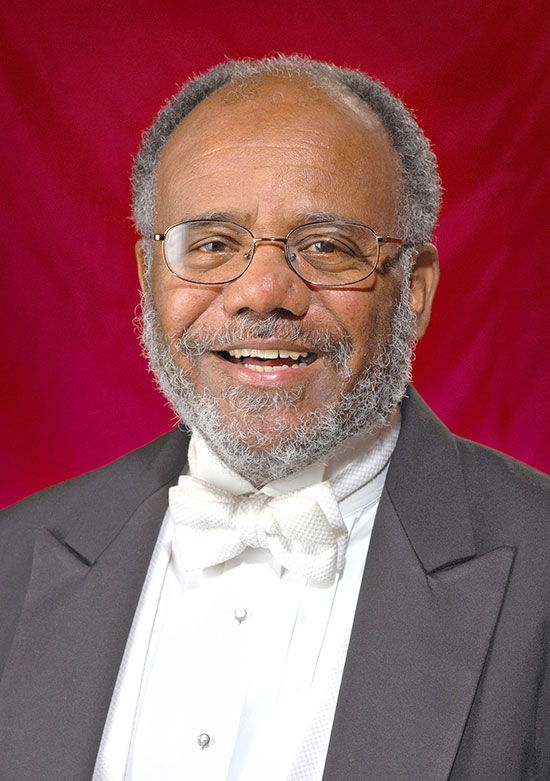
Kevin McBeth

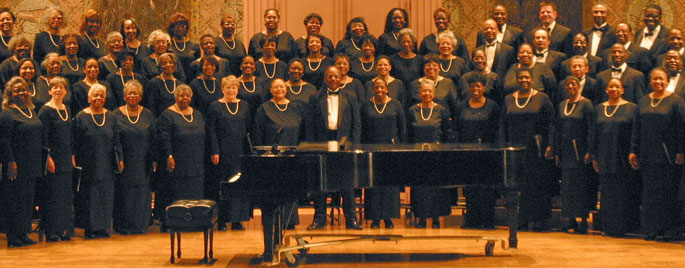
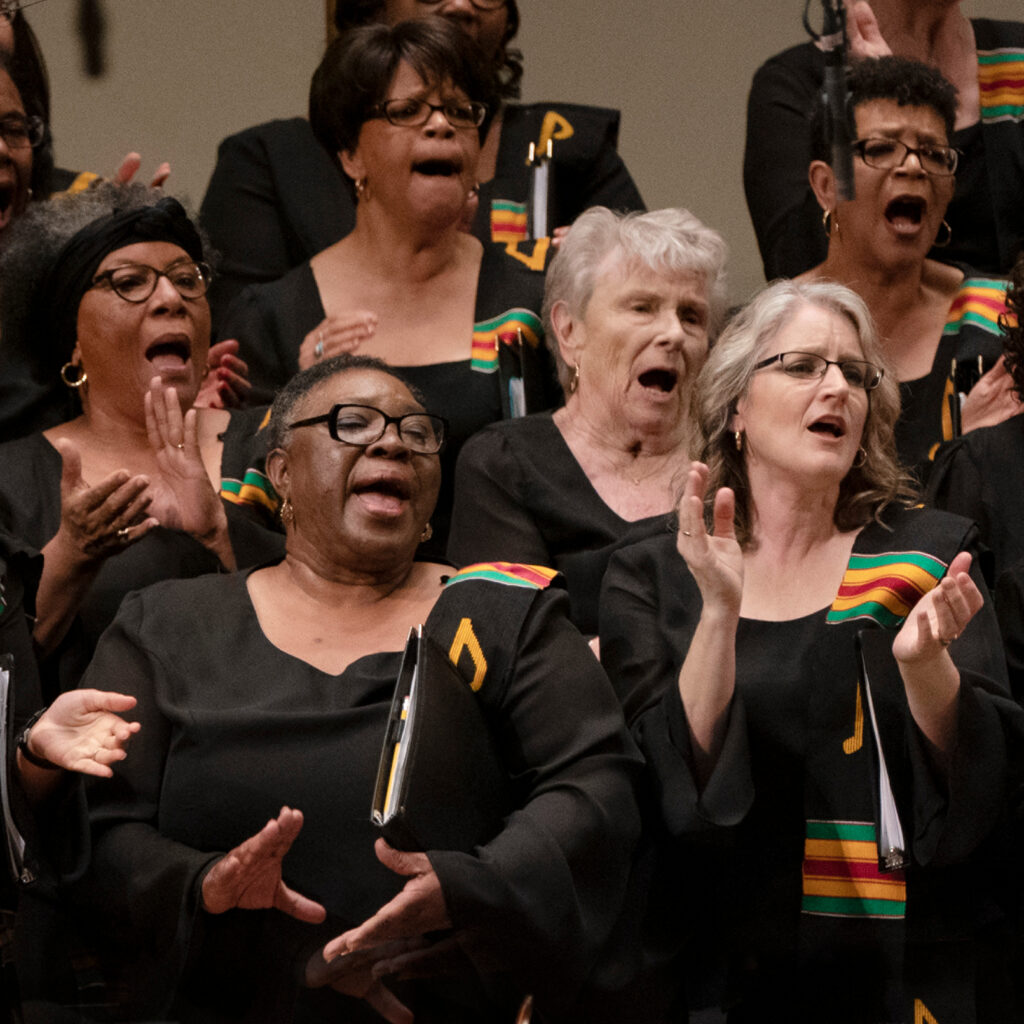
There’s an unmatched power and vibrancy of human voices raised en masse, and the St. Louis Symphony IN UNISON Chorus transformed Powell Hall into a sanctuary of soulful celebration. Conducted by Kevin McBeth, A Gospel Christmas was really three concerts woven into one. The IN UNISON Chorus provided the lion’s share of performances with songs that included the “Hallelujah” from Handel’s Messiah: A Soulful Celebration,” the traditional “Beautiful City” and Kirk Franklin’s “Silver and Gold.”

Among all the excellent voices contributing to IN UNISON, the program included outstanding solos by several members, including soprano De-Rance Blaylock who performed “God Rest Ye Merry Gentleman” and countertenor Tai Oney who performed “Mary Had A Baby.” “Praise Ye, The Lord of Hosts” from Saint-Saëns’ “Christmas Oratorio” received a rousing performance from IN UNISON’s Men’s Glee Club.

Early in the show, McBeth announced that IN UNISON’s founding director, Dr. Robert Ray, had passed away that day. Ray led the ensemble from its formation in 1994 through 2010 and shaped its distinct sound as it evolved into an essential choral group in the region. The evening was dedicated to Ray and celebrated his vision for the chorus, many members of which come from the IN UNISON Program partner churches.

Shelea

The second concert within a concert was a sprinkling of songs by American singer, songwriter and pianist Sheléa Frazier, known professionally by the single moniker Sheléa. With a reputation as a “singer’s singer,” Sheléa has also portrayed gospel singer Dorinda Clark Cole in the 2020 Lifetime biopic, “The Clark Sisters: First Ladies of Gospel.”

Both the IN UNISON Chorus and Sheléa could have carried the show singly, the combination, along with the SLSO, provided a lively cadence and welcome variety of material. Sheléa sauntered easily through chestnuts like Mel Torme’s “The Christmas Song” and Vince Guaraldi’s “Christmas Time Is Here” as well as one of her own compositions, the delightful “Don’t Wanna Wait ‘Til Christmas.”

Balancing out the program was the SLSO, which swelled Powell with wordless wonders such as the traditional “Overture of Joy (A Christmas Melody)” and Hugh Martin’s “Have Yourself A Merry Little Christmas.”

In this season of aural plentitude, A Gospel Christmas provided a welcome respite from the jingle-jangle of more commercial holiday music – made all the more precious by both its impressive quality and one-night-only scarcity. I was reminded of an Elton John quote, “When in doubt, write a hymn.” To which I would add, “And then sing it out loud.” By the end of A Gospel Christmas, I felt that I had been satisfyingly “churched” and yearned to shout out, “Say amen, somebody!”

Facebook Comments