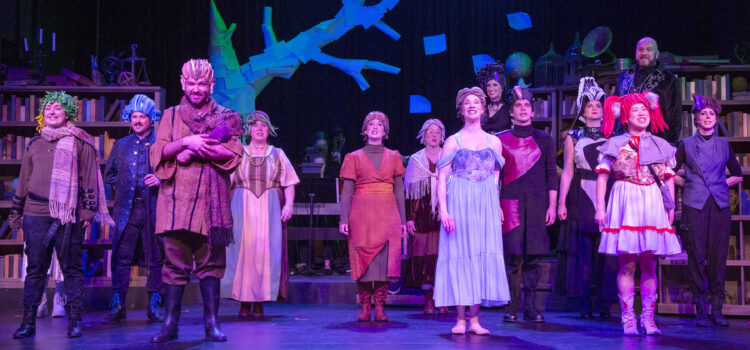
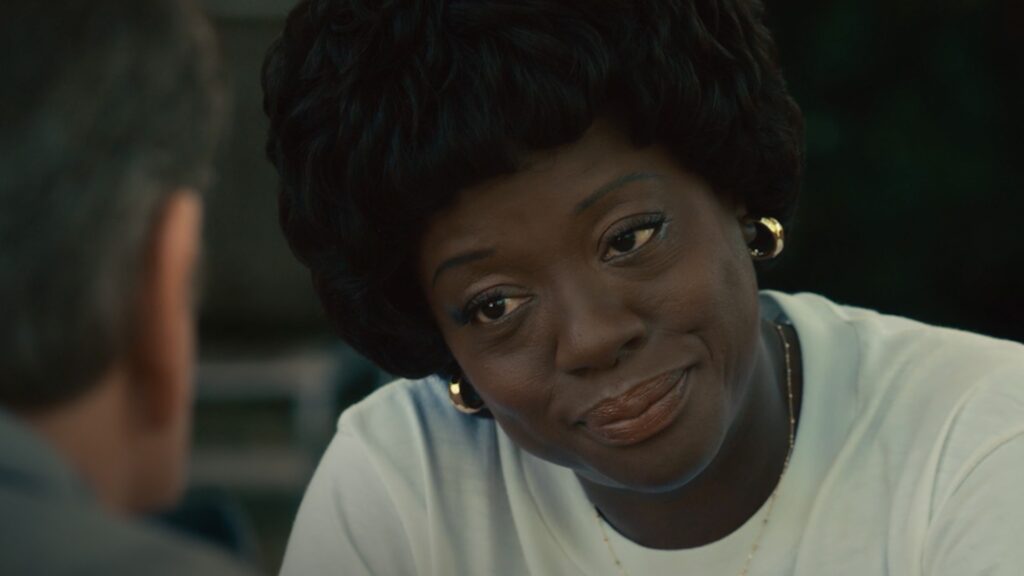
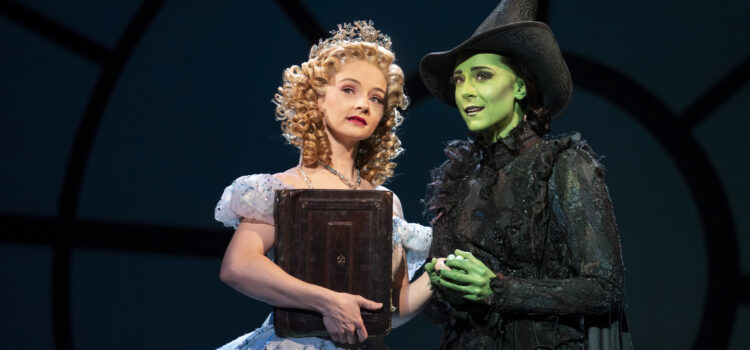
Feeling lucky,St. Louis theatergoers? WICKED has announced a lottery ticket policy in St. Louis playing at the Fabulous Fox Theatre from April 12 – May 7. The Fabulous Fox will be partnering with the digital ticket lottery platform Lucky Seat. Participants will have a chance to win $25 tickets for the run at the Fabulous Fox. A limited number of tickets will be available.
Participants must have a Lucky Seat account to participate in the lottery. The lottery is now open and will close at 10:30 a.m. on Friday, April 14 for tickets to performances April 18-23. Subsequent digital lotteries will begin at 11:00 a.m. each Friday and close the following Friday at 10:30 a.m. for the upcoming week’s performances. Winners will have a limited window to purchase and claim their tickets.
Tickets are subject to availability. Limit of two tickets per patron. In some cases, tickets may be partial view and, while every effort will be made to seat multiple seats together, there is a chance that seats may be split up. Tickets can be picked up at the Box Office at the Fabulous Fox with a photo ID starting two hours before the performance time.
Performances of WICKED at the Fabulous Fox run April 12 – May 7. Show times are Tuesday through Saturday evenings at 7:30 p.m., Saturday afternoons at 2 p.m., Sunday afternoons at 1 p.m. and Sunday evenings at 6:30 p.m. There will also be a matinee performance on Thursday, April 13 at 1:00 p.m.
The Broadway blockbuster WICKED surpassed Cats on Tuesday, April 11th to become the 4th longest-running production in Broadway history. This fall, WICKED is celebrating its 20th Anniversary on Broadway.
Winner of over 100 international awards including the Grammy Award® and three Tony Awards®, WICKED has been performed in over 100 cities in 16 countries around the world (U.S., Canada, United Kingdom, Ireland, Japan, Germany, Holland, Australia, New Zealand, Singapore, South Korea, The Philippines, Mexico, Brazil, Switzerland and China) and has thus far been translated into six languages: Japanese, German, Dutch, Spanish, Korean and Portuguese. WICKED has been seen by over 60 million people worldwide and has amassed over $5 billion in global sales.
In addition to the Broadway production, WICKED in North Americahas enjoyed unprecedented record-breaking sit-down engagements in Chicago, where it ran for nearly four years; Los Angeles, where it ran for two years; and San Francisco, where it ran for nearly two years, as well as two North American Tours.
The Broadway sensation WICKED looks at what happened in the Land of Oz…but from a different angle. Long before Dorothy arrives, there is another young woman, born with emerald-green skin, who is smart, fiery, misunderstood, and possessing an extraordinary talent. When she meets a bubbly blonde who is exceptionally popular, their initial rivalry turns into the unlikeliest of friendships…until the world decides to call one “good,” and the other one “wicked.”
With a thrilling score that includes the hits “Defying Gravity,” “Popular” and “For Good,” WICKED has been hailed by The New York Times as “the defining musical of the decade,” and by Time Magazine as “a magical Broadway musical with brains, heart, and courage.” NBC Nightly News calls the hit musical “the most successful Broadway show ever.”
Based on the novel by Gregory Maguire, WICKED has music and lyrics by Stephen Schwartz, and a book by Winnie Holzman. The production is directed by Tony Award winner Joe Mantello with musical staging by Tony Award winner Wayne Cilento. WICKED is produced by Marc Platt, Universal Stage Productions, The Araca Group, Jon B. Platt and David Stone.
New Line Theatre, “the bad boy of musical theatre,” announces its 32nd season of adult, alternative musical theatre, including the wild musical comedy JESUS & JOHNNY APPLEWEED’S HOLY ROLLIN’ FAMILY CHRISTMAS, at the Grandel Theatre, Nov. 30-Dec. 16, 2023; followed by the deliciously outrageous SWEET POTATO QUEENS, at the Marcelle Theater, Feb. 29-March 23, 2024; and the season closes with the epic Gothic romance DRACULA, at the Marcelle Theater, May 30-June 22, 2024.
Auditions for the 2023-24 season will be held June 12 and 19, 2023, at the Marcelle Theater. For more info, click here.
SEASON TICKETS
Season tickets are on sale now, and single tickets will go on sale in September. New Line’s fall show will be at the Grandel Theatre, and the other two shows will be in the company’s home, the Marcelle Theater, in Grand Center, St. Louis’ arts district.
To order season tickets for the three mainstage shows, Jesus & Johnny Appleweed’s Holy Rollin’ Family Christmas, Sweet Potato Queens, and Dracula, go to http://www.newlinetheatre.com/purchase/index.php.
There are three kinds of subscriptions. The First Look Subscription contains tickets for only the Thursday preview for each show. These tickets cannot be exchanged for other dates. Each Regular Subscription includes one ticket for each show in the season. You can use each ticket for any performance date during the run of that show. Each Flex Subscription includes three Flex tickets that you can use at any time for any show during the entire season — use all three tickets for one show or spread them out over the season, however you want! The deadline for ordering season tickets is October 30, 2023.
THE 2023-2024 SEASON
JESUS & JOHNNY APPLEWEED’S HOLY ROLLIN’ FAMILY CHRISTMAS World Premiere Nov. 30-Dec. 16, 2023 Grandel Theatre
What happens when a family’s secrets are all revealed on one outrageous, pot-fueled Christmas Eve in 1959?
Poor Harry Goodson is about to find out, as he’s visited overnight by his dead twin brother Gerald, Jesus Christ, Sandra Dee, and Johnny Appleweed, and he finally learns what his family already knows, that the answer to all his problems is marijuana!
A wacky companion piece to the unintentionally hilarious 1936 scare film Reefer Madness, this new musical is a tongue-in-cheek response to the War on Drugs, a comic look at what a little pot and a little truth can do to a normal, average, Midwestern, American family at mid-century, just as America plunges into the chaos of the 1960s.
The New Line production will be directed by Scott Miller and Chris Kernan, with music direction by Brett Kristofferson, costume design by Sarah Porter, scenic design by Rob Lippert, lighting design by Matt Stuckel, and sound design by Ryan Day.
What’s the best medicine for feeling beat up by the world?
Get ready for the outrageous, high-powered, Southern rock musical that tells the true story of “Boss Queen” Jill and her closest friends in Mississippi, and how they learn to grab life by the sequins, feathers and tiaras to live their lives out loud, on their own terms.
This new musical is based on the wildly successful Sweet Potato Queens books by New York Times bestselling author Jill Conner Browne, with music by pop icon Melissa Manchester, lyrics by hit country songwriter Sharon Vaughan, and a book by Rupert Holmes (The Mystery of Edwin Drood).
A New Line subscriber saw the show in L.A. and brought it to the attention of New Line Artistic Director Scott Miller, who decided it was a perfect fit for New Line. There are currently six thousand registered Sweet Potato Queens chapters in over twenty countries around the world.
The New Line production will be directed by Chris Kernan and Scott Miller, with choreography by Kernan, costume design by Sarah Porter, scenic design by Rob Lippert, lighting design by Matt Stuckel, and sound design by Ryan Day.
Produced by arrangement with Theatrical Rights Worldwide, New York.
DRACULA Regional Premiere May 30-June 22, 2024 Marcelle Theater
How much would you give up for love?
Broadway songwriter Frank Wildhorn (Bonnie & Clyde, Wonderland, Jekyll & Hyde) delivers his most epic score for this riveting, fast-paced, Gothic rock opera, faithful to the iconic novel but with some unexpected twists and turns.
As much a tragic love story as a thriller, this terrifying and passionate retelling of the famous story dives deep into the powerful, shattering emotions of these characters and these complicated relationships, as only musical theatre can. For Dracula, Wildhorn reunites with his Bonnie & Clyde lyricist Don Black, for one of the wildest and most emotional rides you’ve had in the theatre in a long time.
Once again, New Line will take a show that was badly served in New York and savaged by the critics, strip it down, take it seriously, and prove what a powerful piece of theatre it can be when it’s focused on human emotions instead of flashy special effects. Since its debut, the show has become an international sensation in productions around the world.
The New Line production will be directed by Scott Miller and Chris Kernan, with music direction by Dr. Jenna Lee Moore, choreography by Kernan, costume design by Sarah Porter, scenic and lighting design by Rob Lippert, and sound design by Ryan Day.
Produced by arrangement with Music Theatre International, New York.
New Line Theatre is a professional company dedicated to involving the people of the St. Louis region in the exploration and creation of daring, provocative, socially and politically relevant works of musical theatre. New Line was created back in 1991 at the vanguard of a new wave of nonprofit musical theatre just starting to take hold across the country.
New Line has given birth to several world premiere musicals over the years and has brought back to life several shows that were not well served by their original New York productions. Altogether, New Line has produced 95 musicals since 1991, and the company has been given its own entry in the Cambridge Guide to American Theatre and the annual Theater World. New Line receives support from the Regional Arts Commission, the Missouri Arts Council, a state agency, the Kranzberg Arts Foundation, and the Grand Center Arts District.
New Line continues its partnership with the Webster University Department of Music and their Bachelor of Music in Music Direction for Musical Theatre degree program.
TWStL 2023: “Tennessee Williams: A World of Light and Shadow”
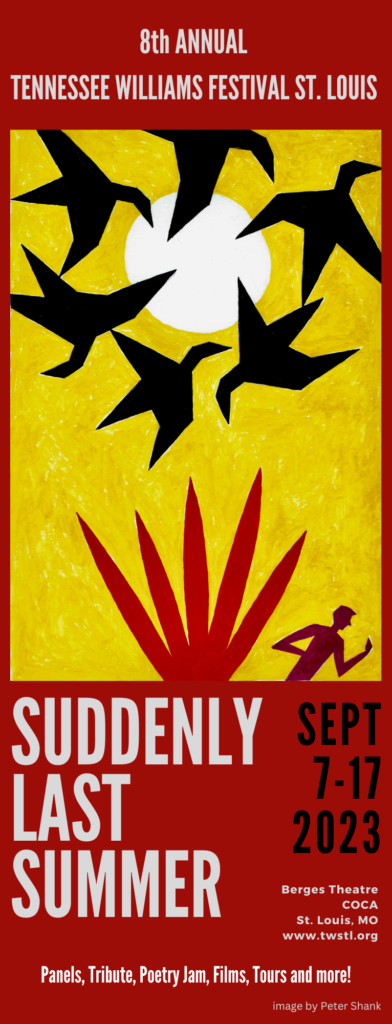
Tennessee Williams St. Louis Expands to Year-Round Programming with8th Annual Festival Returning September 7-17
“We lived in a world of light and shadow . . . But the shadow was almost
as luminous as the light.” Violet Venable, Suddenly Last Summer
“Fantastic to proceed back into light for our 8th Annual Tennessee Williams Festival (TWStL),” states Carrie Houk, TWStL Executive Artistic Director. “Although there certainly have been shadows in our midst the last few years, we have found that those shadows provided valuable challenges and gave us the ability to produce some of our brightest, most creative work.”
This year’s fall Festival will give center stage to Suddenly Last Summer, a drama by Pulitzer Prize-winning American playwright Williams, directed by award-winning director, Tim Ocel at the Catherine B. Berges Theatre at Center of Creative Arts (COCA) on September 7-17.
“Suddenly, Last Summer – like A Streetcar Named Desire before it – is drenched in Southern Gothic humidity, sex, passion, and insanity. It threatens tyranny and lobotomy. It talks of God and man; is man’s selfish nature an imitation of a cruel God? Tennessee Williams’ poetic-prose is working at an extremely high level in this play, revealing tormented souls and aching hearts the way great music reveals the unspeakable.” – Tim Ocel, Director
This fresh retelling of Suddenly Last Summer, first performed in 1957, focuses on the life and death of closeted gay poet Sebastian Venable, who is brutally murdered while on a trip to Italy with his cousin Catharine. After the recent tragedy, Mrs. Venable will stop at nothing to keep her son’s (and her own) secrets safe. Generally accepted as a modern-day horror story, this play has autobiographical roots from Williams’ own family life.
Post-show commentary will be conducted by Thomas Mitchell, TWStL’s Festival Scholar, to encourage audiences to go beyond their first impressions of the performance and to engage in dialogue about the larger themes of the play. Mitchell will provide historical and cultural context and identify topics of humanistic concern that might be raised by Williams’ writing.
“University City Years” will be a focus for the fall Festival. In addition to the Williams family living in U. City from 1926-1937, “The University City community has welcomed us with open arms beginning with a valuable partnership with COCA and the beautiful Catherine Berges Theatre in addition to the full support of the University City mayor, Terry Crow, who will be hosting the reading of “Something Unspoken” in the grand entry of his magnificent home on Delmar,” explains Houk.
Originally performed as a curtain raiser for Suddenly Last Summer and billed as the “Garden District Plays,” Something Unspoken features Brenda Currin and Julie Layton, reprising their roles from the Classic 107.3 radio performance. The play will be performed site-specifically at the magnificent home of University City Mayor, Terry Crow, on Delmar prior to select Suddenly Last Summer performances at COCA.
The following panels which will further shed light upon the themes of the play and draw connections between Williams’ life in St. Louis and his artistry, will take place at COCA.
—The Civil Rights Era, Tennessee Williams and St. Louis – Discussion of significant events during the civil rights years of the 1950s and 1960s as they were felt in St. Louis and reflected in the work of Tennessee Williams.
—Tennessee’s “Madness” – expanding on the themes in Suddenly Last Summer, this discussion includes topics such as How was mental health understood at the time of the play and how did psychological challenges impact Williams’s life? How was “madness” used as a weapon against women, artists, and the LGBTQ community?
— University City as Inspiration to a Young Writer – The Williams Family moved to U-City when Tom was a teenager, beginning his writing “career.” This panel with consider the influence of the city’s colorful history, amazing architecture, and impressive education in the 1920s when Williams was a youth.
Other events include:
Workshop Reading of The Vengeance of Nitocris
Book Signing & Discussion of Tom Mitchell’s new publication of Williams’ short stories: Caterpillar Dogs: and Other Early Stories
A Walking Tour of University City
Late Night Beatnik Jam at Blueberry Hill
TW Tribute featuring cast members & favorite STL actors
Film screening of Cat on a Hot Tin Roof in collaboration with Cinema St. Louis
Before the Tennessee Williams Festival St. Louis (TWStL) returns this fall, the organization will kick off its eighth year with a reprise of their Something Spoken radio series late April and an intimate cabaret performance and fundraiser early summer.
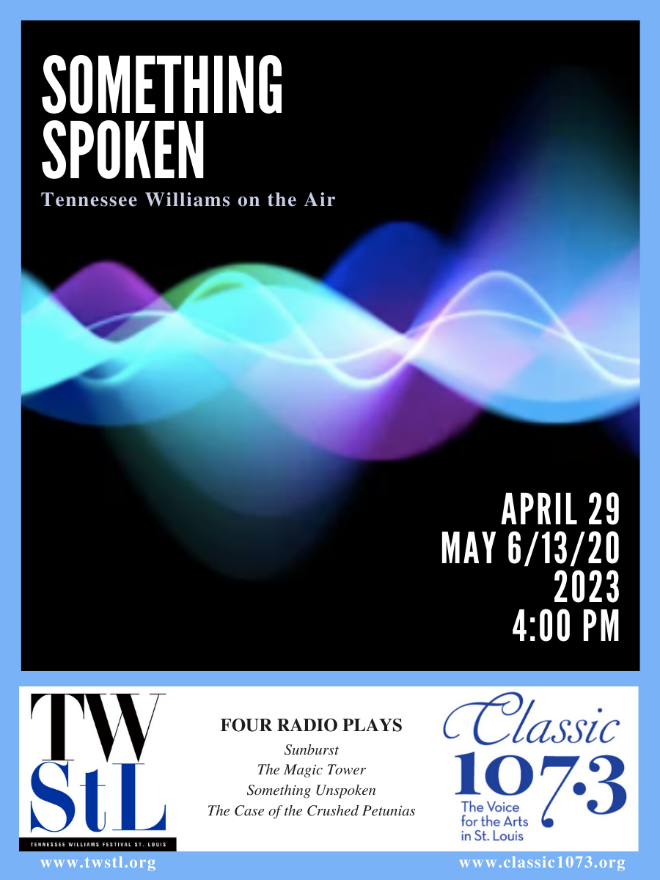
“Something Spoken: Tennessee Williams on the Air” will air April 29, May 6, 13, 20 at 4:00 PM on Classic 107.3 (live and online). This installment will feature four one-act plays by Williams directed by Brian Hohlfeld & Tom Mitchell along with a commentary by TWStL scholar in residence Tom Mitchell following each episode. The episodes will reprise in the summer on August 5, 12, 19, 26.
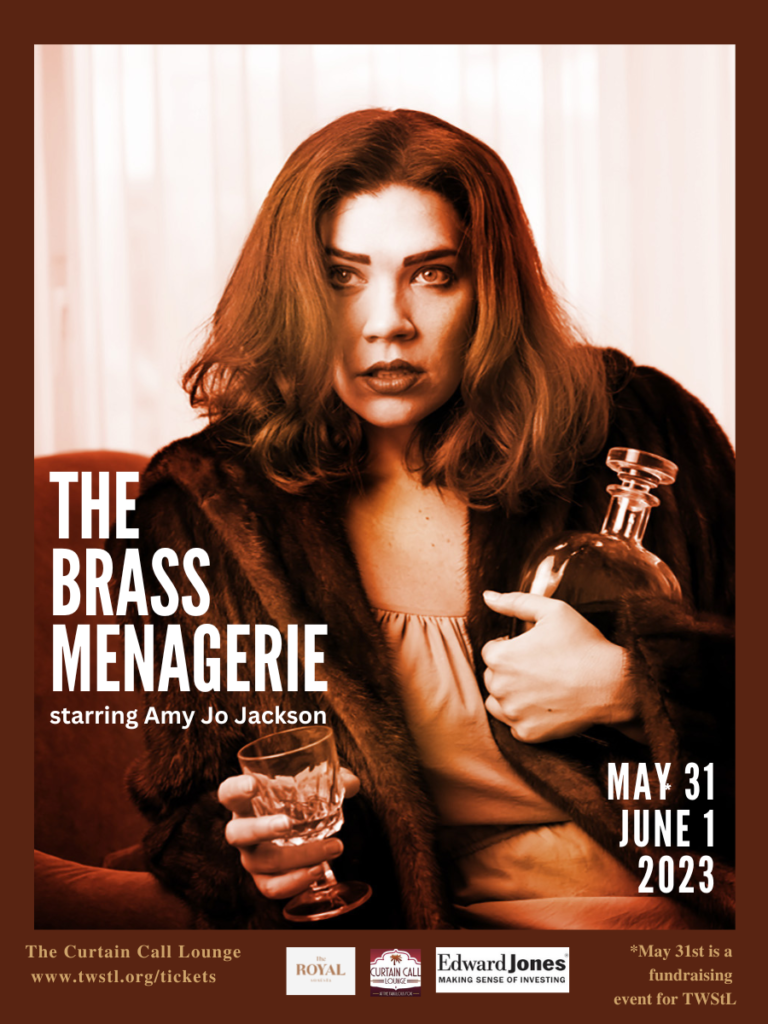
Amy Jo Jackson
On May 31, at 7:30pm, a fundraiser performance of The Brass Menagerie cabaret with Amy Jo Jackson – a campy romp through the women of Tennessee Williams…in SONG! will be presented at The Curtain Call Lounge in Grand Center. TWStL is delighted to bring “this beautifully realized piece of work” – winner of a 2022 Bistro Award – to St. Louis. If you’ve ever wondered what it would be like to hear Blanche DuBois, Maggie the Cat or the Wingfields sing through their plays, wonder no longer – Amy Jo Jackson is here to bring all of the charm and vivacity, vivacity and charm that the South demands to these iconic women. An additional public performance will take place June 1st at 7:30pm.
Additional events and locations to be announced in the coming weeks. Festival event details can be found at twstl.org.
About the Festival
In 2014, award-winning producer, casting director, actor, and educator Carrie Houk produced Williams’ Stairs to the Roof with such success that the ongoing annual Festival was established.
The Festival, which aims to enrich the cultural life of St. Louis by producing an annual theater festival and other artistic events that celebrate the artistry and life of Tennessee Williams, was named the Arts Startup of the Year Award by the Arts and Education Council at the 2019 St. Louis Arts Awards.
In its seven iterations since 2016, the Festival has attracted thousands to its readings, panel discussions, concerts, exhibitions, and productions, has reached hundreds of young people through it’s educational programming, and has garnered 13 awards from the St. Louis Theater Circle and was recently nominated for six St. Louis Theater Circle awards for 2022’s The Rose Tattoo.
Tennessee Williams
About Tennessee Williams
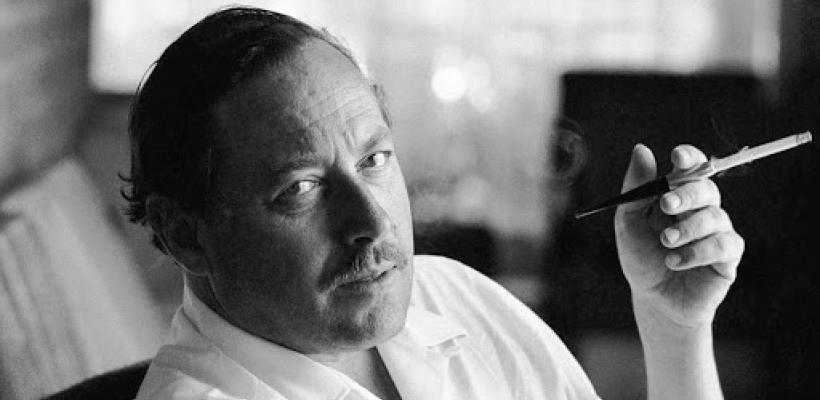
Born Thomas Lanier Williams III in 1911 in Mississippi, Williams moved to St. Louis at age seven, when his father was made an executive with the International Shoe Company (where the City Museum and the Last Hotel are now located). He lived here for more than two decades, attending Washington University, working at the International Shoe Company, and producing his first plays at local theaters. He credited his sometimes-difficult experiences in St. Louis for the deeply felt poetic essence that permeates his artistry. When asked later in life when he left St. Louis, he replied, “I never really left.” Most people are familiar with the famous works that have garnered multiple Pulitzer Prizes, Tony Awards, and Academy Awards, such as The Glass Menagerie, A Streetcar Named Desire, Cat on a Hot Tin Roof and Suddenly Last Summer. He also wrote hundreds of additional plays, stories, essays, and poems, many of which are only now seeing the light of day as his estate permits greater access. He is today considered by many leading authorities to be one of America’s greatest playwrights.
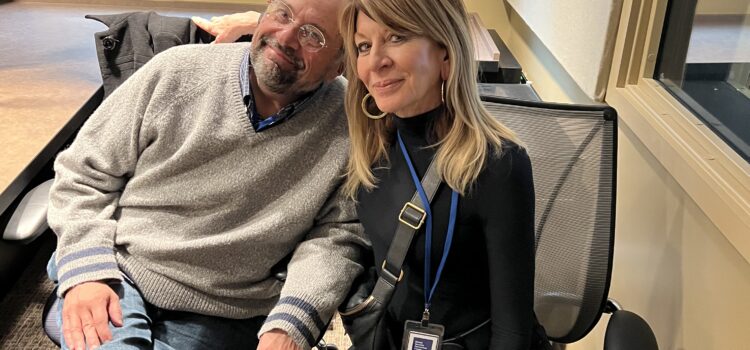
Cover Photo: Brian Hohlfeld and Artistic Director Carrie Houk working on “Something Spoken,” four radio plays by Tennessee Williams
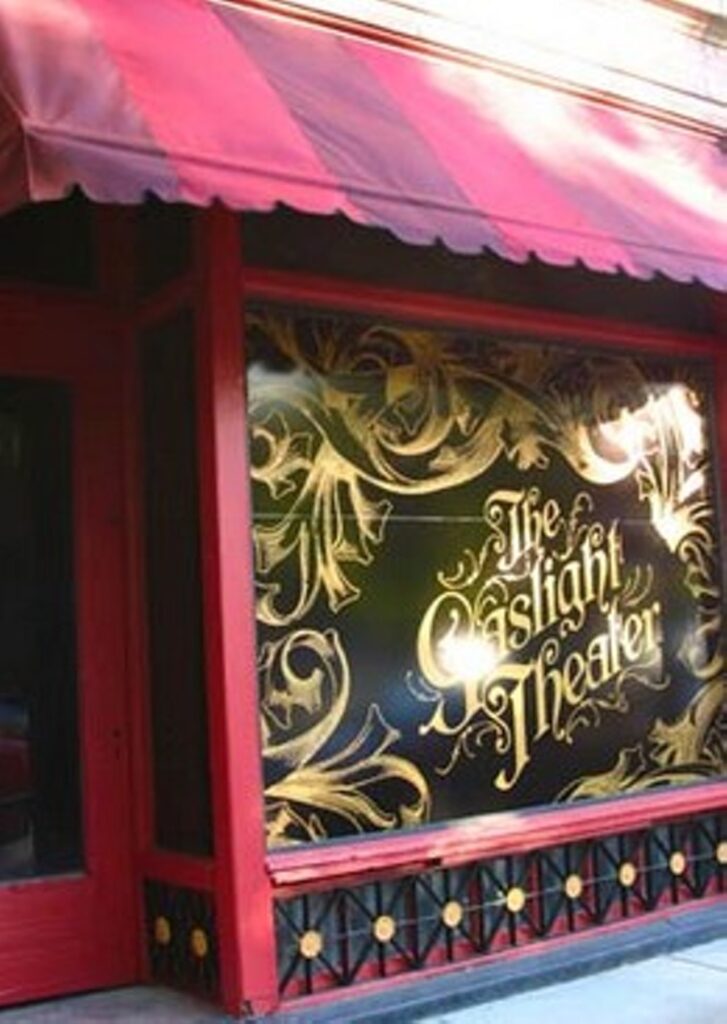
St. Louis Actors’ Studio (STLAS) is pleased to announce its thrilling16th Season at The Gaslight Theater – ‘A Way Forward,’ including the following productions:
Liza Birkenmeier
Dr Ride’s American Beach House by Liza Birkenmeier, October 6-22, 2023: Directed by Associate Artistic Director Annamaria Pileggi, STLAS is proud to present this play by friend and Actor/Playwright Liza Birkenmeier. Birkenmeier last performed on the STLAS stage as Una in BLACKBIRD and has gone on to become a successful playwright in New York.
Dr Ride’s American Beach House is an intimate snapshot of queer anti-heroines. On the eve of Dr. Sally Ride’s historic space flight, four women with passionate opinions and no opportunities sit on a sweltering St. Louis rooftop, watching life pass them by.
Barrymore, By William Luce, December 1-10, 2023:
A two-week limited engagement directed by Erin Kelley, Barrymore featuresstalwart St. Louis actor John Contini’s return to the STLAS stage to reprise the role in which Christopher Plummer won a Tony for his portrayal of John Barrymore. Each act begins with a stunning entrance onto a stage that the legendary actor has rented to prepare for a comeback performance of Richard III. Barrymore jokes with the audience, spars with an offstage prompter, reminisces about better times, and does delicious imitations of his siblings Lionel and Ethel.
Copenhagen by Michael Frayn, February 9-25, 2024:
This winner of three Tony® Awards is directed by Wayne Salomon. In 1941, German physicist Werner Heisenberg went to Copenhagen to see his Danish counterpart, Niels Bohr. Together they had revolutionized atomic science in the 1920s, but now they were on opposite sides of a world war.
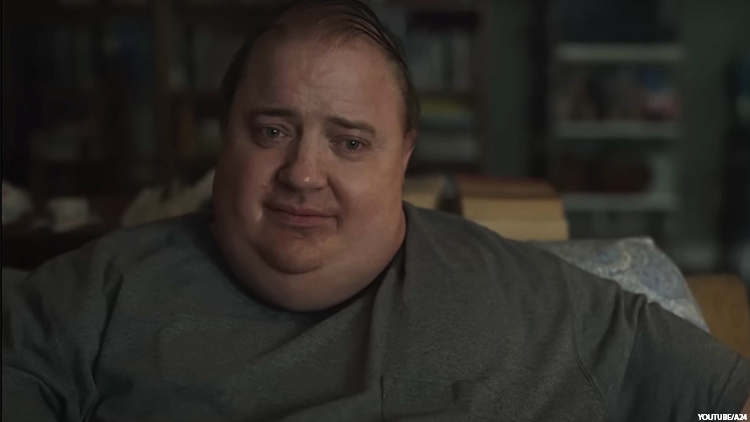
Brendan Fraser, Oscar winner for “The Whale”
The Whale by Samuel D. Hunter, April 5-21, 2024:
Now an Academy Award® Winning Film, The Whale, directed by Associate Artistic Director Annamaria Pileggi, stars Artistic Director William Roth as an obese recluse, hiding away from the world and slowly eating himself to death as he is given one last chance at redemption.
LaBute New Theater Festival, July 2024:
In the return of STLAS’ month-long festival, renowned playwright Neil LaBute will delight audiences with his own new story along with the winning submissions from emerging high school and professional playwrights.
“This is a very exciting and diverse season,” says Artistic Director WIlliam Roth. “Producing a fantastic play by St. Louis’ own Liza Birkenmeier, the return of John Contini, who has been with us from day one, and welcoming Erin Kelley to our directing ranks. Each of the plays this season examines human failings, hopes and dreams as we all look for ‘A Way Forward’.”
STLAS appreciates the support of its diverse corporate sponsors including McCormack Baron Salazar, Missouri Arts Council, Regional Arts Commission, The Clifford Willard Gaylord Foundation and the Rex Foundation.
For subscriptions and individual ticket info, visit stlas.org.
About St. Louis Actors’ Studio
St. Louis Actors’ Studio was founded to bring a fresh vision to theatre in St. Louis.
Housed in The Gaslight Theater in historic Gaslight Square, STLAS is committed to bringing engaging theatrical experiences to our community of actors, writers, producers, filmmakers and all patrons of the arts; and to provide a strong ensemble environment to foster learning and artistic expression.
St. Louis Actors’ Studio, through the use of ensemble work, will explore the endless facets and various themes of the human condition by producing existing and original collaborative theatre. For more information, visit stlas.org.
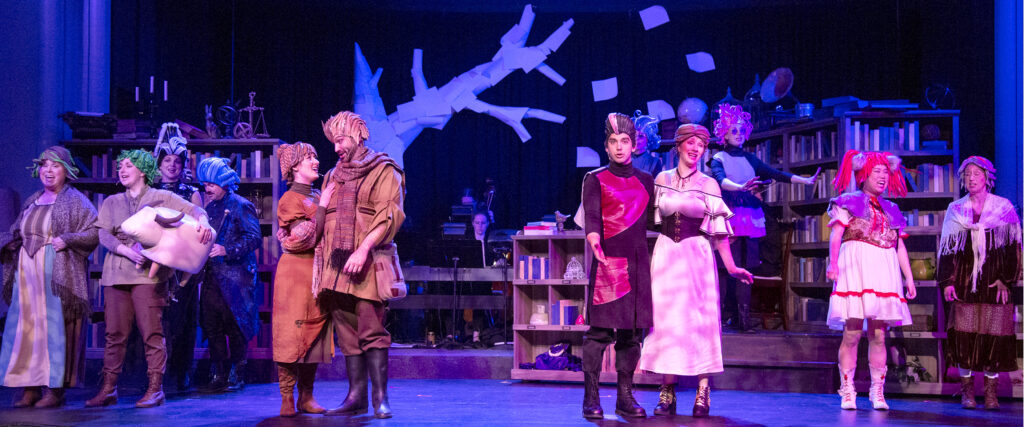
Stephen Sondheim’s lush and richly layered score is flawlessly presented by music director Leah Schultz and an extraordinary 12-piece orchestra, with touching ensemble harmonies to match, setting apart Stray Dog Theatre’s fresh and clever “Into the Woods.”
Since the musical was first produced in 1986 before going to Broadway the next year, audiences have found new ways to see the message behind this beguiling gem: No one is alone.
Starting with its deceptively simple concept featuring familiar fairy tale characters interacting, the second act swerves into much darker territory. For they are desperately seeking happily ever after, but not transforming their lives until they change their selfish, foolish, and childish ways. But eventually, hope emerges after harsh occurrences.
The roster from Brothers Grimm and Charles Perrault’s centuries-old literary works includes Little Red Riding Hood, Cinderella, Jack and the Beanstalk, Rapunzel, and the childless couple from Thumbelina.
The themes involving parents and children touch on responsibility, morality, and the consequences of wishes to beautiful, emotional effect. (I expect to get misty-eyed in multiple scenes.)
“Nice is different than good.” It is a very grown-up tale that becomes more profound with each viewing and the passage of time, yet its structure isn’t predictable. The complexities of this insightful tale resonate 26 years later, which has been crucial to this show’s staying power.
That’s the genius of Sondheim’s collaboration with book writer and director James Lapine. They both won Tony’s – for score and book – but that year the top prize went to “The Phantom of the Opera.”
(If we’re mentioning prizes, the 2002 revival won the Tony for Best Musical Revival, a London West End revival in 2010 won the Olivier Award, and the most recent Encores! revival in 2022 that was so popular it extended its run multiple times, closing on Jan. 8, won the Grammy Award for Best Musical Theatre Album – and expect Tony nominations this spring.) Clearly a show that gets better with age, as long as the humanity is displayed.
Before Disney revised fairy tales, many were dark, and upon second glance, it’s not all cuddly forest animals and talking birds. However, director Justin Been recognized the whimsy and the playfulness, which he focuses on, with some snark. That helps considerably on the small intimate stage – yet he does not gloss over the less-than-merry, adding that necessary depth.
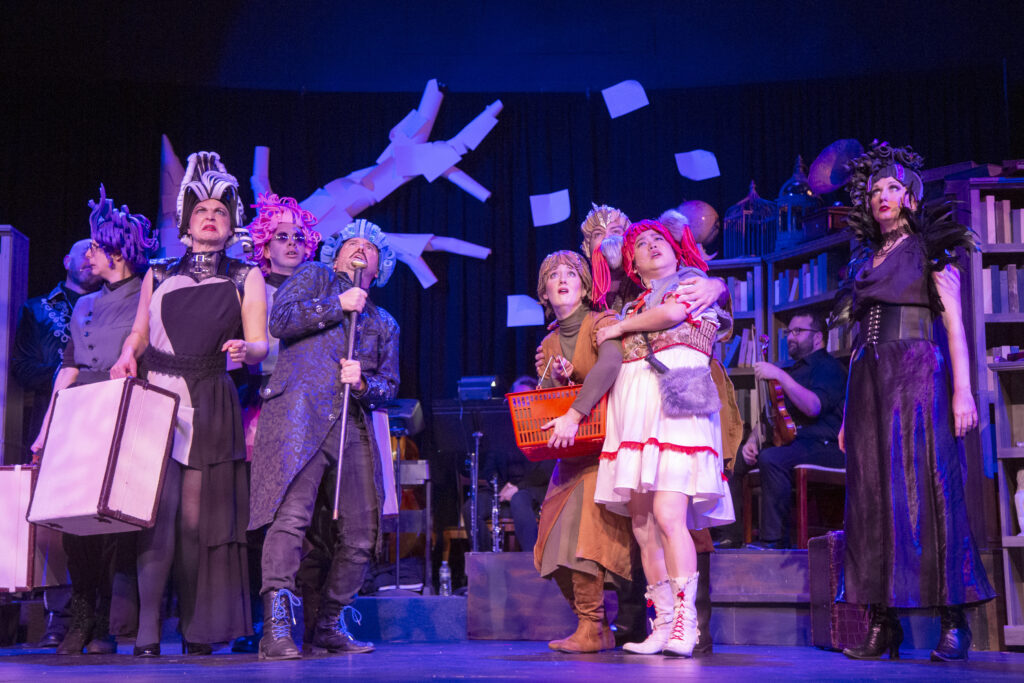
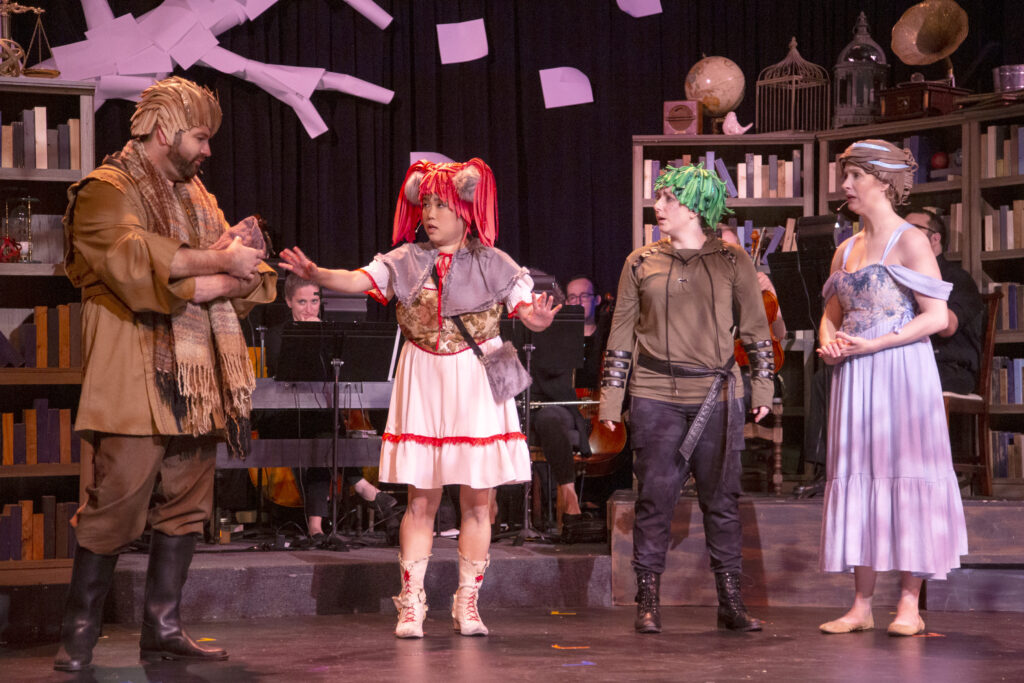
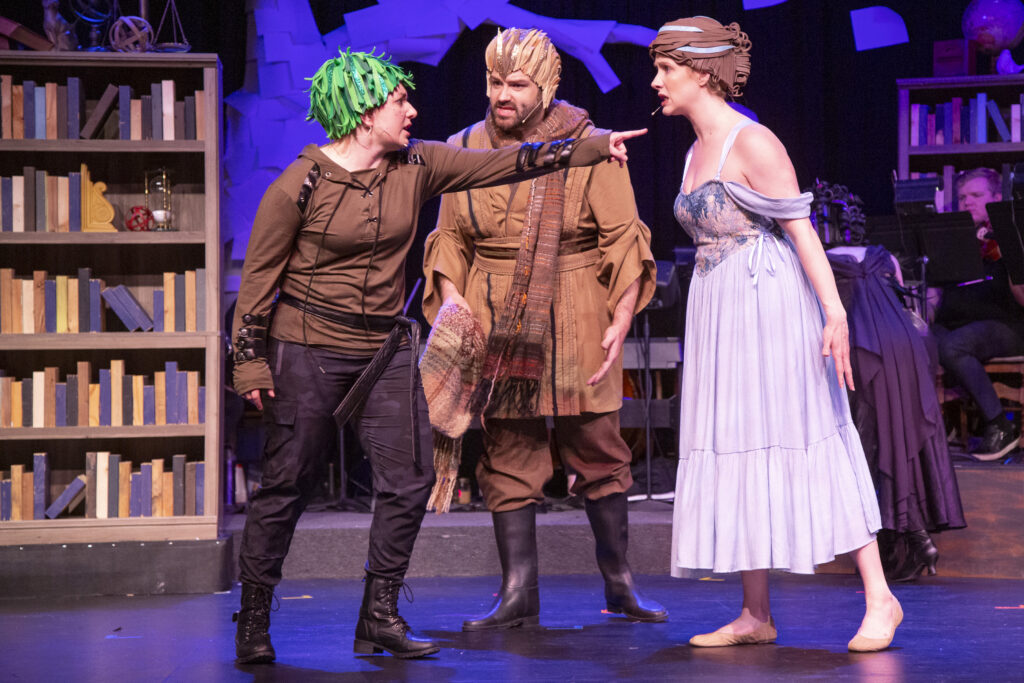
The library setting, with well-placed bookshelves, designed by Been and Dominic Emery, gives it a different perspective. The program lists the place as “an old library on the fringes of our memory.” And the time – “Maybe yesterday, could be tomorrow.” Been’s staging adroitly moves the characters physically to convey their power plays. And they leap off the pages, as this cast has no trouble breaking the fourth wall.
The narrator (Jon Hey) introduces four groups of characters – Cinderella (Maggie Nold) wishes to go to the festival, Jack (Shannon Lampkin Campbell) wishes that his cow Milky White would give milk, a baker and his wife (Tyler Luetkenhaus and Margaret Stall) want to have a baby, and Little Red Riding Hood (Grace Langford), wants to visit her grandmother.
The baker’s neighbor is a witch (Jennelle Gilreath Owens) who has been pulling the strings from bitterness. A curse she cast has made them infertile because his father stole her vegetables, including magic beans. Her own mother cursed her, making her old and hideous. In turn, she took the baker’s father’s child, Rapunzel (Dawn Schmid).
The Witch makes a deal – bring her four ingredients “the cow as white as milk, the cape as red as blood, the hair as yellow as corn, and the slipper as pure as gold” in three days’ time – and she’ll reverse it.
And we’re off “Into the Woods” on the rugged journey, where there is more chicanery afoot. Nobody is who they appear to be. Will they find out if what they’ve always wished for is what they truly want? They will lie, cheat, and steal to achieve their goals, but when the going gets tough, realize they must work together. The characters learn that they must carry each other, or the show will not resonate as deeply.
The 14-member cast fluidly follows its course, with some roles typically doubled. Most display crisp comic timing and strong vocals at the same time, although some characters aren’t that amusing (Jack’s mom, the tragic Rapunzel, and the rather generic roles of Granny and Cinderella’s Mother).
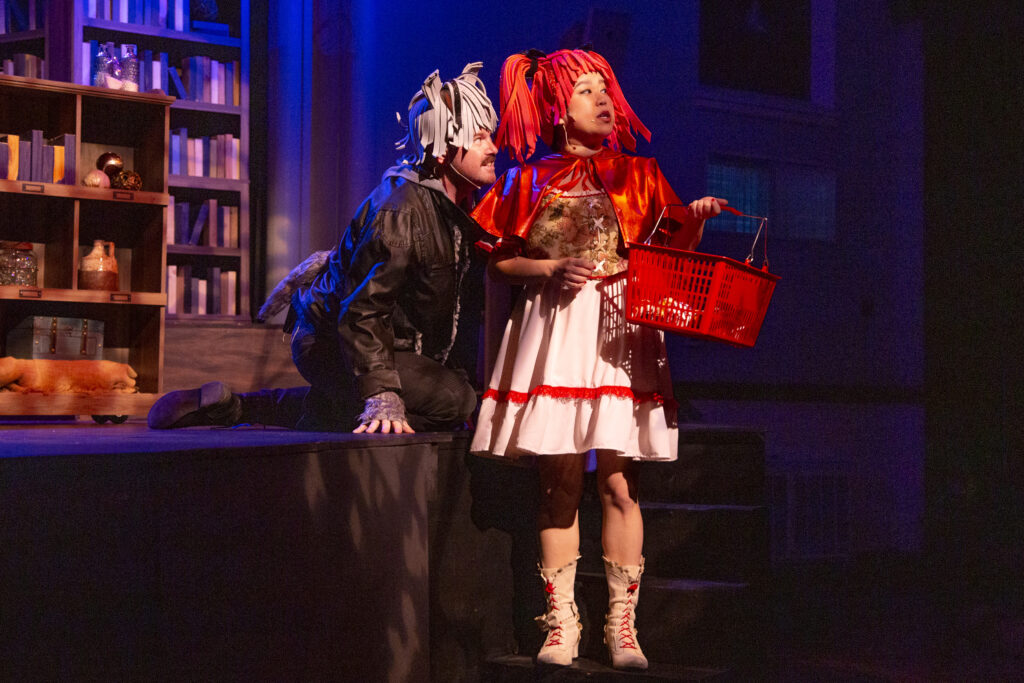
The Wolf, Little Red. Photo by John Lamb
As the petulant Little Red Riding Hood, Grace Langford brings out the girl’s brattiness, and then learns some things: “I Know Things Now.”
The ever reliable and assured Jon Hey plays both the Narrator and the Mysterious Man, who slithers out of owning up to responsibility. And his occasional jig must be a nod to Rumplestiltskin.
This time, though, Cinderella’s Prince and the Wolf, are played by separate characters. Agile Drew Mizell and animated Sarah Polizzi humorously step into the princes (Cinderella’s and Rapunzel’s) and as Cinderella’s awful stepsisters Florinda and Lucinda. It may be stunt-casting, but it works.
In fact, the broader the comedy, the more fun the performer has. It’s a treat to see comical Michael Wells return to the Tower Grove Abbey stage in multiple roles, for he is deliciously wicked as the Wolf (“Hello, Little Girl”), then portray Cinderella’s father, Prince’s steward and make hilarious sound effects as the crying baby.
The splendid Jennelle Gilreath Owens takes a more cynical, less menacing approach to the diva role of the Witch, which suits her, delivering a disconcerting “Last Midnight” and dynamic “Children Will Listen.” Her dialogue stings – especially such memorable lines as “I’m not good; I’m not nice; I’m just right” and “I was just trying to be a good mother.”
Other standouts include Tyler Luetkenhaus and Margaret Stall as the Baker and Baker’s Wife, both making noteworthy debuts. They breezily sail through “It Takes Two,” while their signatures “Moments in the Woods” and “No One Is Alone” are superb.
Bringing out the baker’s flaws, Luetkenhaus adds a layer of deceit that’s not always there, and you sense that the couple is truly working through their issues as the characters. It’s not always as superficial as some of the other characterizations. They delve into the hearts and minds.
Shannon Lampkin Campbell is a spunky yet naive Jack the Giant Killer, robust in “Giants in the Sky.” Been has moved the physical confrontation between the giant’s wife, steward and Jack’s mom (Laura Lee Kyro) offstage, which accounts for less fireworks. Yet, Milky White is as funny as ever, with its goofy, squatty, small appearance.
Photo by John Lamb
Just as she showed in “A Little Night Music,” Madeline Black has a regal bearing and her speech pattern accents the haughtiness of Cinderella’s stepmother. Granny and Cinderella’s mother are handled competently by Jennifer Clodi, who also voices the frightening Giant and his livid Wife.
The princess roles are capably filled by Dawn Schmid as distraught Rapunzel and Maggie Nold as tormented Cinderella, bringing out their characters’ insecurities.
The ensemble appears to be having fun together and has the silky-smooth voices to meet their major moments. It’s such a pleasure to hear the sublime Sondheim sung as intended.
Schultz has conducted the orchestrations by Jonathan Tunick with expert finesse, nimbly leading Marie Brown and Paul Rueschhoff on cello (alternating performances), Mo Carr on trumpet, Chuck Evans on viola, Steve Frisbee on violin, John Gerdes on horn, Lea Gerdes on flute, piccolo and reed, Mike Hanson on percussion, Ian Hayden on reed, and M. Joshua Ryan on bass through Sondheim’s recurring motifs. They are strategically placed among the bookshelves, a savvy touch.
Sarah Gene Dowling’s colorful wig design enhances the fantasy storybook world, pairing well with Eileen Engel’s character-appropriate costume design.
Jacob Baxley’s sound design is crystal clear, and Tyler Duenow’s lighting design effectively sets the moods.
And because the songs are so exquisitely rendered, moments will linger. The second act is aural perfection, connecting the story threads into a magical experience that is awe-inspiring.
Photo by John Lamb
Stray Dog Theatre presents “Into the Woods” March 30 – April 22 at 8 p.m. Thursdays through Saturdays, with additional performances at 2 p.m. on Sunday, April 2 and Sunday, April 16, at the Tower Grove Abbey, 2336 Tennessee Avenue, Saint Louis, MO 63104. Gated Parking. Additional information and ticket reservations: Call (314) 865-1995. Visit www.straydogtheatre.org.
The 3/31, 4/7, 4/14, and 4/21 performances will be presented with ASL interpretation by students from Southwestern Illinois College. ASL interpreted performances are suitable for audience members who are Deaf, deafened, or have hearing loss. They can also be valuable for people who are learning ASL.
Audio Description: The 4/16 performance will be Audio Described by MindsEye. Audio Described performances are suitable for audience members who are blind or partially sighted. Please note that if you are interested in participating in the audio description of this performance you will need to call the Box Office to order your ticket. Please announce that you would like to reserve a pair of headphones for the Audio Description.
Venue: Webster University’s Winifred Moore Auditorium in Webster Hall, 470 E. Lockwood Ave.
Tickets: Tickets are $15 for general admission; $12 for students and Cinema St. Louis members. Webster U. students are admitted free. Advance tickets can be purchased through the Cinema St. Louis website.
Passes: Two types of passes are available: Five-Film Passes are $65, $50 for CSL members; All-Access Passes are $120, and $95 for CSL members.
The 15th Annual Robert Classic French Film Festival — sponsored by Jane M. & Bruce P. Robert Charitable Foundation and co-presented by the Webster Film Series — celebrates St. Louis’ Gallic heritage and France’s cinematic legacy. This year’s featured films span the decades from the 1920s through the 1990s, offering a revealing overview of French cinema.
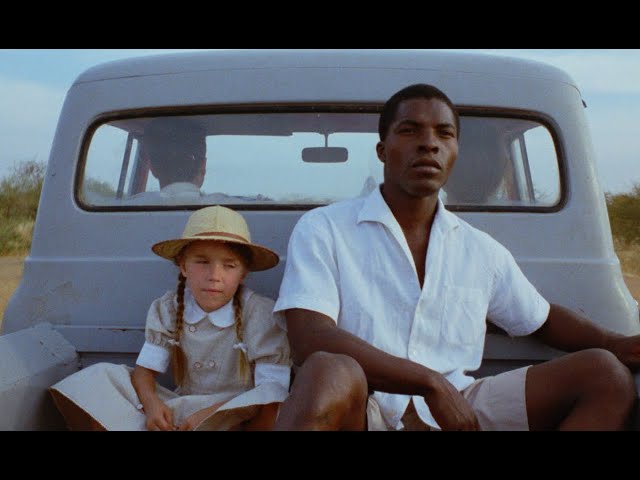
The fest annually includes significant restorations, and this year is no different, touting a brand-new restoration of Claire Denis’ “Chocolat,” which is the filmmaker’s debut feature. The fest also screens the seldom seen “Martin Roumagnac” in a new restoration, starring Marlene Dietrich and Jean Gabin in a riveting crime thriller.
Every program features introductions and discussions by film or French scholars and critics. All films are in French with English subtitles.
The Jane M. & Bruce P. Robert Charitable Foundation is the event’s title sponsor. This festival is co-presented by the Webster Film Series.
Free parking is available in the lots both in front of and behind Webster Hall; no permits are required on weekends.
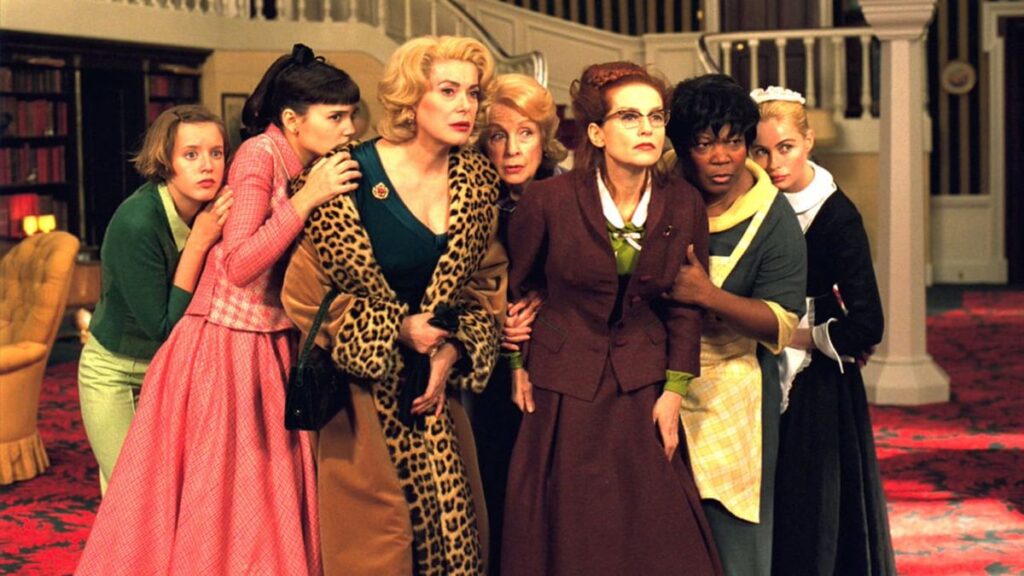
8 Women, 2002
FILM SCHEDULE
For film synopses, see the CSL website
Friday, April 14, 7:30 PM
Pierrot le fou
Jean-Luc Godard, France, 1965, 110 min., color, French, DCP
Intro and discussion by Pete Timmermann, director of the Webster U. Film Series and adjunct professor of film studies at Webster U.
Sponsored by Jane M. and Bruce P. Robert Charitable Foundation
Intro and discussion by Jessica Pierce, St. Louis-based filmmaker.
Sunday, April 23, 7:30 PM
The Wing or the Thigh/L’aile ou la cuisse
Claude Zidi, France, 1976, 104 min., color, French, Blu ray
Intro and discussion by Salim Ayoub, the Jane M. and Bruce P. Robert Endowed Professor in French and Francophone Studies and director of the Centre Francophone at Webster University.
Friday, April 28, 7:30 PM
Le Magnifique
Philippe de Broca, France/Italy/Mexico, 1973, 95 min., color, French, DCP
Intro and discussion by Jean-Louis Pautrot, professor of French and in the Department of Languages, Literatures and Cultures at Saint Louis University.
Fat Girl, 2001
Saturday, April 29, 7:30 PM
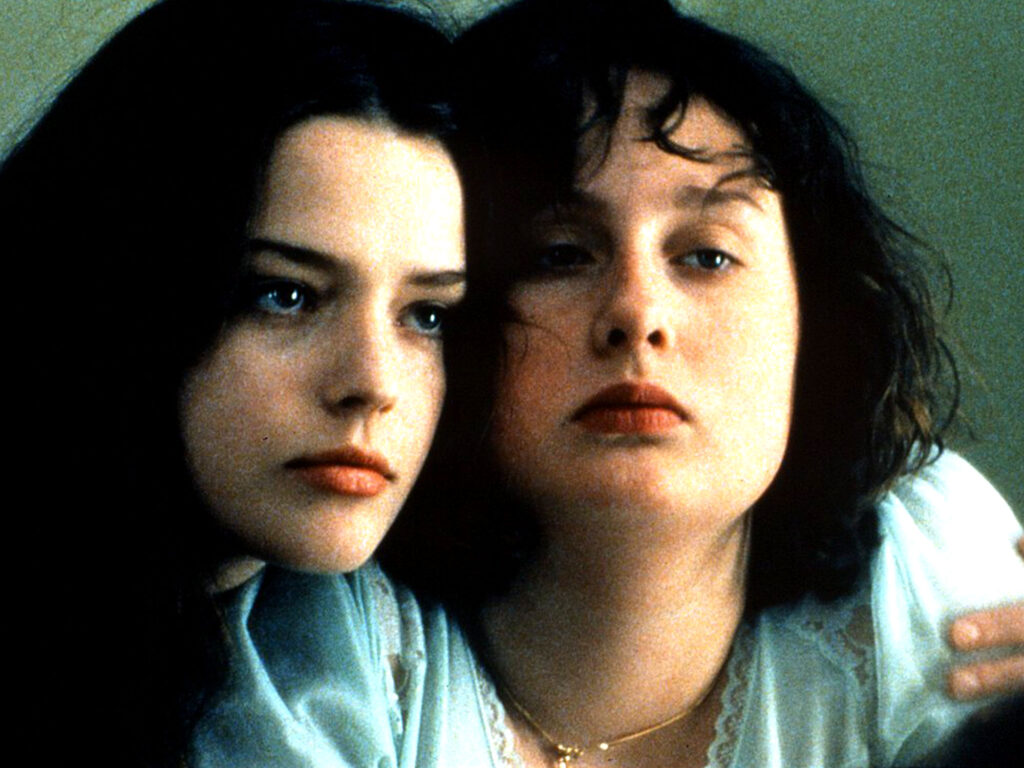
Fat Girl
Catherine Breillat, France/Italy, 2001, 86 min., color, French, English & Italian, Blu ray
Intro and discussion by Andrew Wyatt, film critic and Managing Editor of The Take-Up.
Sunday, April 30, 7:30 PM
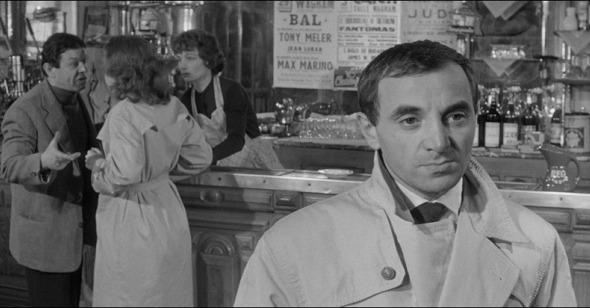
Shoot the Piano Player
François Truffaut, France, 1960, 81 min., black & white, French, Blu ray
Intro and discussion by Cliff Froehlich, former executive director of Cinema St. Louis and adjunct professor of film studies at Webster University.
Sponsored by Jane M. and Bruce P. Robert Charitable Foundation
Amanda McMichael to host the eighth annual event April 15
Amanda McMichael will be the master of ceremonies for the eighth annual Theatre Mask Awards, which will be presented on April 15, sponsored by Arts For Life. Tickets must be ordered by April 10.
Through the nonprofit organization AFL, the TMAs have honored drama and comedy plays since 2015.
“Arts For Life provides a community recognition program. These events recognize the incredible talent we have in St. Louis community theater and honor the passion and dedication of those who build this amazing and unique theatrical community,” said Mary McCreight, AFL president.
This year’s TMAs includes a luncheon menu starting at 11 a.m., with doors open at 10:30 a.m., on Saturday, April 15, at Andre’s Banquet Center South, 4254 Telegraph Road, St. Louis.
Cocktail attire is suggested. Seating will be eight per table, and seating assignments will be available at the entrance.
Tickets, including full brunch, are $28 each, with a $2 fee if you purchase tickets online. Here is the link for purchase or to download a form to mail-in: https://artsforlife.org/2023-ceremony-tickets
The buffet menu includes chicken parmesan, roast beef, cavatelli con broccoli, Italian potatoes, salad, rolls, brownies, soft drinks, and coffee. Only a cash bar is available. There is an ATM machine on the premises.
McMichael won the TMA in 2020 for Lead Actress in a Comedy, for Act Two Theatre’s “Plaza Suite,” which was performed in 2019. She has participated and is supportive of local community theater, and is also a small business owner, of Once Upon a Time, in St. Charles’ historic business district.
Award Nominations
For the TMAs, the Hawthorne Players in Florissant received 18 nominations for “A Curious Incident of the Dog in the Night-time” (10) and “Picnic” (8), leading all St. Louis area – metro-east Illinois community theater groups.
The O’Fallon Theatre Works had 16 for TMAs – “We Have Always Lived in the Castle” (8) and “Shakespeare in Love.”
The Kirkwood Theatre Guild had 15 TMA nods for “Calendar Girls” (11) and “Cat on a Hot Tin Roof” (4).
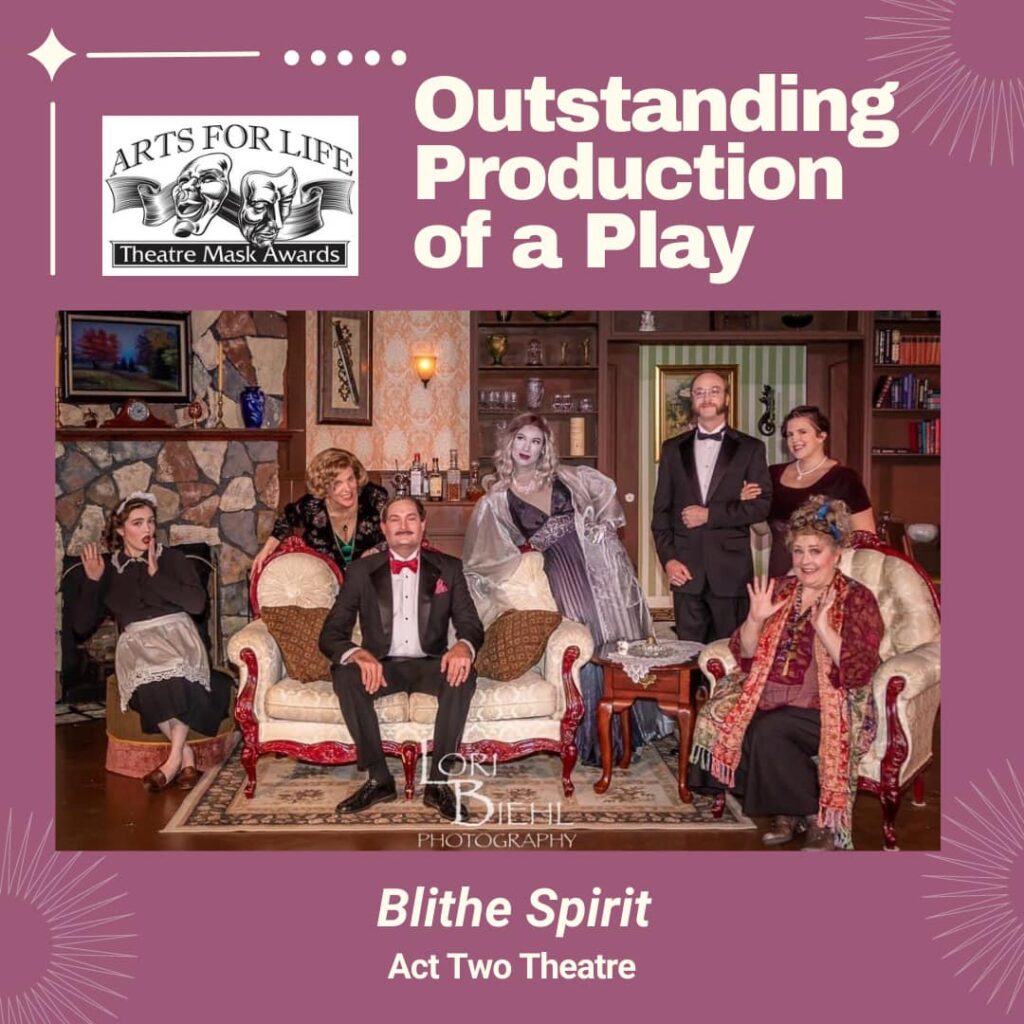
Act Two in St. Peters 12 TMA nods for “Arsenic and Old Lace” (10) and “Any Number Can Die” (2).
Monroe Actors Stage Company in Waterloo, Ill., earned eight nominations for “Moon Over Buffalo” (4), “Footlight Frenzy” (3) and “Night Must Fall” (1).
The Theatre Guild of Webster Groves received six for “A Few Good Men” (5) and “Farce of Habit” (1). Goshen Theatre Project in Collinsville, Ill., earned four for the comedy “Puffs.” Wentzville Connection Theatre earned four for “The Dinner Party.” Clayton Community Theatre earned three nominations – “Broadway Bound” (2) and “Uncommon Women and Others” (1). KTK had one nomination for “The Gingerbread Lady.”
Nominations are listed on the website, www.artsforlife.org.
Arts For Life is a local not-for-profit arts organization dedicated to the healing power of the arts through its work with youth, the underserved, and the community, with its goal of “Making a Dramatic Difference.”
AFL is dedicated to promoting public awareness of local community theatre, encouraging excellence in the arts, and acknowledging the incredible people who are a part of it.
More information is on the website about the 23rd Best Performance Awards on July 2 at 2 p.m. at the Florissant Performing Arts Center. The BPAs have honored musical theater in community and youth productions since AFL’s founding in 1999.
A heart-warming and speedily paced adventure that respects its source material, “The Super Mario Bros. Movie” succeeds as enjoyable, family-friendly entertainment, elevated by a committed ensemble and the directors’ understanding of the franchise’s expansive possibilities.
Quirky, inseparable brothers Mario (Chris Pratt) and Luigi (Charlie Day) operate a newly opened plumbing business in Brooklyn, trying to make a name for themselves and live up to the expectations of their judgmental father (Charles Martinet). After a hilariously unfortunate incident on their first job involving a pissed-off pooch and explosive collateral damage, the brothers decide to prove themselves by attempting to fix a sewer issue that is wreaking havoc on the populace above.
Alas, this doesn’t go according to plan. Mario and Luigi are sucked via a “warp pipe” into the vibrant, fittingly nonsensical Mushroom Kingdom. Luigi is separated en route and sent tumbling towards the malevolent domain of King Bowser (Jack Black), who has just acquired the all-powerful “Super Star,” seeking to rule the world with his army of Koopas, Goombas, Bullet Bills, and Boos (am I getting all that right?). Bowser also wants to marry Princess Peach (Anya Taylor-Joy), a fearless leader commanding a legion of cutesy Mushroom people.
Thrown into this colorful universe of floating boxes, edible powerups, and traversable pipes out the wazoo, Mario is determined to rescue his dear brother. He eventually teams up with Peach, Toad (Keegan Michael-Key), Donkey Kong (Seth Rogen), and others to save the Kingdom and, as always, leave the door open for future sequel films. To combat Bowser, Mario must be brave, cooperative, and persistent. He can’t let other’s negative perceptions of his capabilities affect him because, by golly, this lovable plumber has to find his brother.
Indeed, “The Super Mario Bros. Movie” isn’t trying to be high art or tell a dramatically impactful story. This is a whimsical, action-packed, fast-moving, easter egg-filled watch. It falls victim to generic clichés from time to time, but maintains a lively sense of fun from start to finish. Directors Aaron Horvath and Michael Jelenic don’t overdose on nostalgia or low-brow humor — crafting a film that isn’t groundbreaking by any stretch, yet one that put a bounce in my step leaving the theater.
First, let’s address the elephant in the room. Much has been debated about Pratt taking on the role, but it turns out the toxicity was unwarranted. As the lead, Pratt is perfectly fine and inoffensive, using a slightly naturalistic tinge to Mario’s traditional accent that allows for range and doesn’t distract from the experience itself. His generally more grounded delivery (apart from moments of terror where he yells “Mamma Mia!” in extravagant fashion) works well with the fish-out-of-water narrative, letting the wacky supporting characters stretch their wings and lean into the absurdity.
Day is excellent as Luigi, albeit sidelined for a good portion of the runtime. He and Pratt have satisfying chemistry, and the screenplay (by Matthew Fogel) foregrounds their sense of brotherly love, giving “The Super Mario Bros Movie” an emotional throughline. This element could have been strengthened by a few additional scenes showing their background together, but there’s enough there to latch onto, and a handful of genuinely poignant moments sprinkled throughout to supplement the zanier ones.
Taylor-Joy brings characteristic dignity to Peach, despite some eye-rolling dialogue regarding her budding romance with Mario and heavy-handed, though welcome, pivot towards empowerment. Peach certainly doesn’t need “saving” this time around. Michael-Key showcases his usual great comedic timing, and Rogen (with his instantly recognizable laugh) is a hoot, selling Kong’s impulsiveness, goofiness, and insecurity. The real star of the film, though, is Black, who imbues Bowser with a deranged, unpredictable, entitled rage — especially apparent in a couple of over-the-top musical numbers, with Black belting out ridiculous lyrics with his whole heart. It’s both amusing and somewhat off-putting — perfect for a nefarious villain.
The film’s visuals, as expected from Illumination, are dazzling: bright, crisp, and filled with minute details that fans of the games will eat up — not aiming for realism in any sense and all the better for it. From far-reaching vistas of giant, candy-colored mushrooms, to a floating castle scorched by fire, and a road/race track on a rainbow, “The Super Mario Bros. Movie” quickly ferries viewers through various locales, never stopping long to smell the roses. Directors Horvath and Jelenic pack in as much as they can during the 92-minute runtime, which remains a blessing and a curse; the film moves too fast for its own good, shepherding viewers at a clip that proves draining by the finale.
The film’s cinematography creatively emulates the games’ style, too, recreating iconic left-to-right platforming, brawls, and surprisingly violent vehicular carnage with camerawork that glides through the craziness, crisply presenting the action from characters’ perspectives. Similarly, Brian Tyler’s score effectively reworks familiar Mario tracks to accentuate pivotal moments.
While still a bit top-heavy on slapstick comedy, the film’s self-aware humor mostly lands, maintaining a sense of good-naturedness (with one enjoyably nihilistic exception that I won’t spoil) that should please youngsters and prompt occasional giggles from older folks. Gamers who grew up with the characters are sure to get a kick out of certain sequences, such as a power-up-filled face-off between Mario and Donkey Kong.
“The Super Mario Bros. Movie” falls prey to sensory overload in the last act — becoming numbing and predictable amid the destruction — and the film’s pervasive ‘80s needle drops are a strange, tired choice, but the film wholeheartedly succeeds where it counts. Initial skepticism aside, it’s surprisingly engaging, and, after HBO’s “The Last of Us,” another example of a video game adaptation done right.
“The Super Mario Bros. Movie” is a 2023 animated comedy-fantasy directed by Aaron Horvath and Michael Jelenic and starring Chris Pratt, Charlie Day, Seth Rogen, Jack Black, Charles Martinet, Anya Taylor-Joy and Keegan-Michael Key. The run time is 92 minutes and it is Rated PG for action and mild violence. It opened in theaters April 5. Alex’s Grade: B
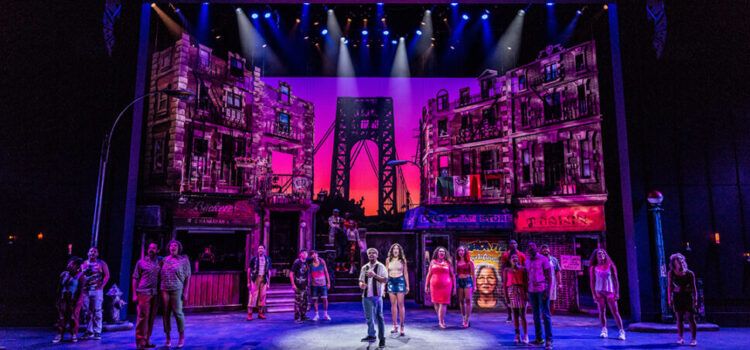
By Lynn Venhaus Stages St. Louis’ “In the Heights,” a jubilant celebration of culture, community, and connection, won six awards, including Outstanding Musical Production, Music Director, Choreography, Set Design, Costume Design (tie) and Ensemble in a Musical, at the St. Louis Theater Circle Awards Monday.
Their world premiere of “The Karate Kid – The Musical” won Outstanding Lighting Design for a total of seven, and Jack Lane, retired executive producer, announced the musical is Broadway-bound in 2024.
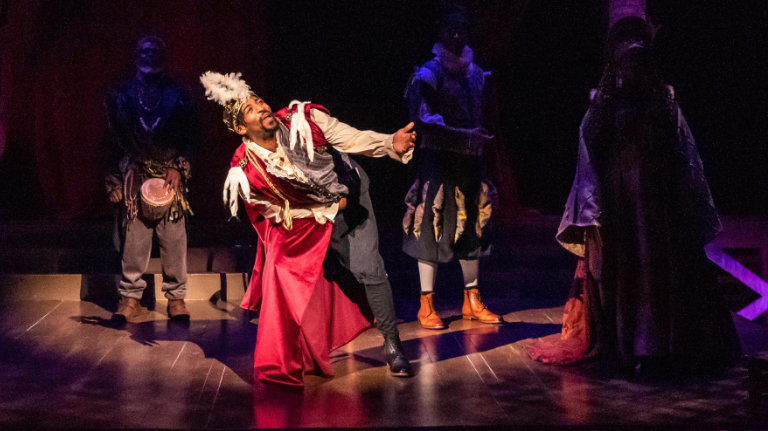
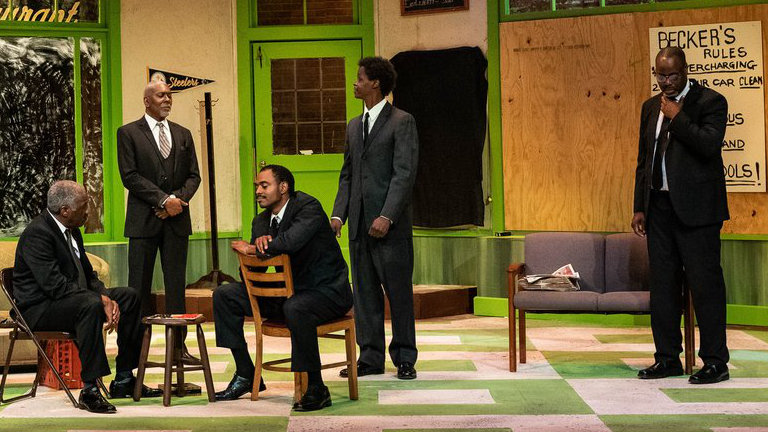
Seven is what The Black Repertory Theatre of St. Louis amassed for four productions: August Wilson’s “Jitney” (2 – Outstanding Production and Ensemble), “Behind the Sheet,” (2 – tie for Outstanding Production – Drama and Best Director), “The African Company Presents Richard III” (1 – Supporting Performer, Male or Non-Binary, Cameron Jamarr Davis) and “Dontrell, Who Was Kissed by the Sea” (2 – Lighting Design and Sound Design).
Brian McKnight accepted on behalf of The Black Rep and described founder Ron Himes as a man “who has vision.”
The Muny, SATE (Slightly Askew Theatre Ensemble), and West End Players Guild each won four at the 10th Annual Theater Circle Awards, which recognized achievements in comedies, dramas, musicals and operas.
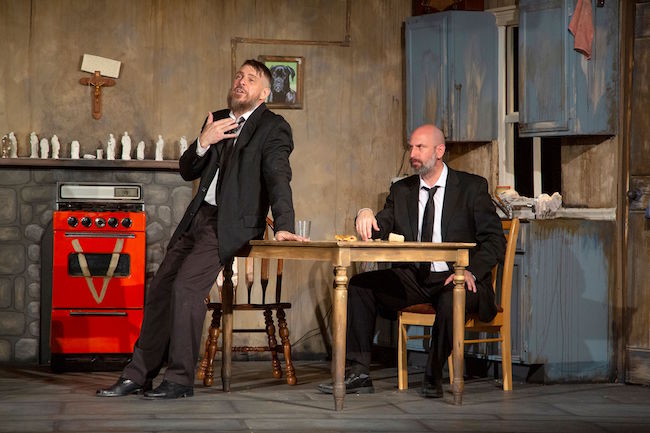
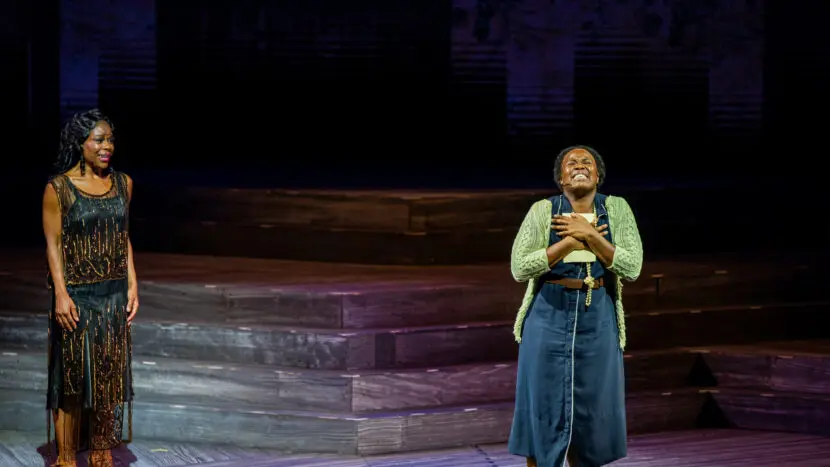
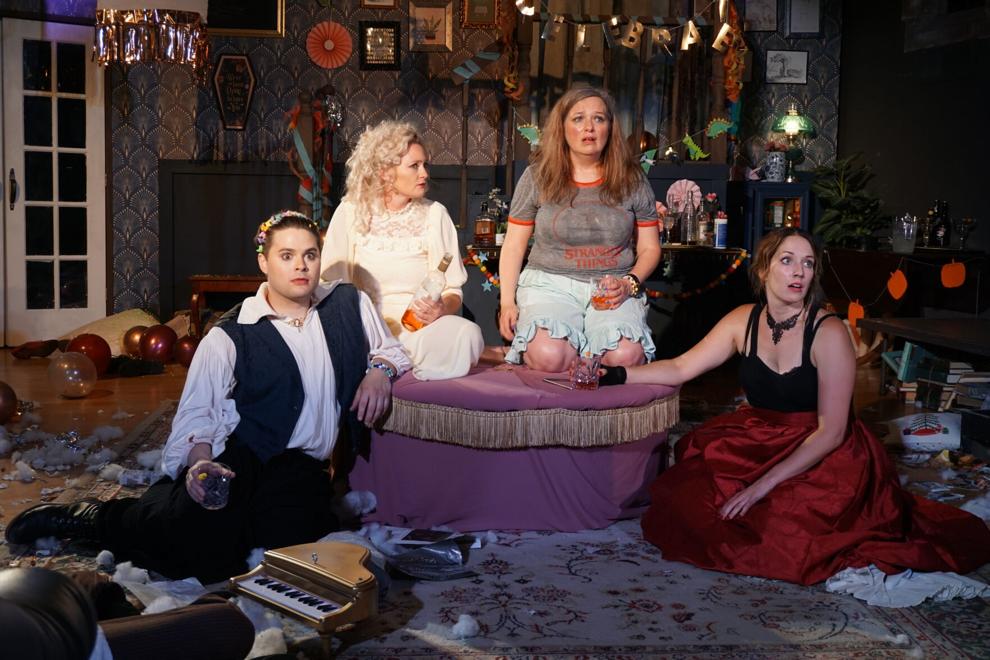
SATE’s original play “Bronte Sister House Party” won 4 (Best New Play, Outstanding Comedy Production, Comedy Ensemble and Supporting Performer Male or Non-Binary Role). “The Color Purple” at The Muny won 3 – Leading Performer, Female or Non-Binary in a Musical, Supporting Performer, Female or Non-Binary, and Costume Designer while Martin McDonagh’s “The Lonesome West” won 3 – Leading Performer, Male or Non-Binary, Supporting Performer, Female or Non-Binary, and Director Robert Ashton for the West End Players Guild.
For more than 10 years, the St. Louis Theater Circle has been presenting annual awards for regional professional theater, and resumed a live ceremony after virtual productions streamed by HEC Media online in 2020 and 2022 because of the coronavirus pandemic, cancelling 2021 (but including a few of those productions last year).
It was the first live ceremony since 2019, and held at the Repertory Theatre of St. Louis’s Loretto-Hilton Center on Webster University’s campus.
Approximately 90 productions were considered for this year’s event. Three productions – “Chicago” at the Muny, “A Christmas Carol” at The Rep, and “Head Over Heels” at New Line Theatre — were ineligible because the same production was presented within the last three years at the respective venues.
The Circle presented more than 30 categories for outstanding achievements from 2022, with 20 theater companies receiving nominations.
Nationally recognized playwright, theater producer, and long-time advocate for the arts Joan Lipkin was honored with a special award for lifetime achievement.
Records that evening included Joel Moses winning two acting awards in one night and Jennifer Theby-Quinn won her third acting award, joining Will Bonfiglio and Laurie McConnell as three-time winners.
Luis Salgado, who made “In the Heights” ‘pop’ with his spirited direction and vibrant choreography, accepted awards while praising the theater community in St. Louis. He and actor Ryan Alvarado, a nominee for playing Usnavi, flew in from New York City to attend .
Here are the awards given out April 3:
Cameron Jamarr Davis “The African Company Presents Richard III” at the Black Rep
Outstanding Supporting Performer in a Comedy, Female or Non-Binary Role: Hannah Geisz, “The Lonesome West,” West End Players Guild
Outstanding Supporting Performer in a Comedy, Male or Non-Binary Role: Joel Moses, “Brontë Sister House Party,” SATE
Outstanding Performer in a Comedy, Female or Non-Binary Role: Molly Burris, “Dear Jack, Dear Louise,” New Jewish Theatre
Outstanding Performer in a Comedy, Male or Non-Binary Role: Jason Meyers, “The Lonesome West,” West End Players Guild
Outstanding Lighting Design in a Play: Jasmine Williams, “Dontrell, Who Kissed the Sea,” The Black Rep
Outstanding Sound Design: Jackie Sharp, “Dontrell, Who Kissed the Sea,” The Black Rep
Outstanding Costume Design in a Play: Oona Natesan, “House of Joy,” Repertory Theatre of St. Louis
Outstanding Set Design in a Play (tie): Bess Moynihan, “Rodney’s Wife,” The Midnight Company and Josh Smith, “Much Ado About Nothing,” St. Louis Shakespeare Festival
Winner Jason Meyers, at right “The Lonesome West”
Outstanding Supporting Performer in a Drama, Female or Non-Binary Role: Rachel Tibbetts, “Rodney’s Wife,” The Midnight Company
Outstanding Supporting Performer in a Drama, Male or Non-Binary Role: Cameron Jamarr Davis, “The African Company Presents Richard III,” The Black Rep
Outstanding Performer in a Drama, Female or Non-Binary Role: Jennifer Theby-Quinn, “Iphigenia in Splott,” Upstream Theater
Outstanding Performer in a Drama, Male or Non-Binary Role: Joel Moses, “The Christians,” West End Players Guild
Joel Moses, “The Christians” at West End Players Guild
Outstanding New Play: “Brontë Sister House Party,” by Courtney Bailey, SATE
Outstanding Achievement in Opera: (tie) Thomas Glass, “Harvey Milk,” Opera Theatre of Saint Louis and Robert Mellon, “Falstaff,” Union Avenue Opera
Outstanding Production of an Opera: “A Little Night Music,” Union Avenue Opera
Outstanding Musical Director: Walter “Bobby” McCoy, “In the Heights,” Stages St. Louis
Outstanding Choreographer: Luis Salgado, “In the Heights,” Stages St. Louis
Outstanding Supporting Performer in a Musical, Female or Non-Binary Role: Nicole Michelle Haskins, “The Color Purple,” The Muny
Outstanding Supporting Performer in a Musical, Male or Non-Binary Role: Jeffrey Izquierdo-Malon, “Something Rotten!” New Line Theatre
Outstanding Lighting Design in a Musical: Bradley King, “The Karate Kid – The Musical,” Stages St. Louis
Outstanding Set Design in a Musical: Anna Louizos, “In the Heights,” Stages St. Louis
Outstanding Costume Design in a Musical: (tie) Samantha C. Jones, “The Color Purple,” The Muny and Brad Musgrove, “In the Heights,” Stages St. Louis
Anastacia McCleskey “The Color Purple” at The Muny
Outstanding Performer in a Musical, Female or Non-Binary Role: Anastacia McCleskey, “The Color Purple,” The Muny
Outstanding Performer in a Musical, Male or Non-Binary Role: Ben Davis, “Sweeney Todd,” The Muny
Outstanding Ensemble in a Comedy: “Brontë Sister House Party,” SATE
Outstanding Ensemble in a Drama: “Jitney,” The Black Rep
Outstanding Ensemble in a Musical: “In the Heights,” Stages St. Louis
Outstanding Director of a Comedy: Robert Ashton, “The Lonesome West,” West End Players Guild
Outstanding Director of a Drama: Ron Himes, “Behind the Sheet,” The Black Rep
Outstanding Director of a Musical: Bradley Rohlf, “Assassins,” Fly North Theatricals
“Bronte Sister House Party” won four Circle Awards
Outstanding Production of a Comedy: “Brontë Sister House Party,” SATE
Outstanding Production of a Drama: (tie) “Behind the Sheet,” The Black Rep and “Jitney,” The Black Rep
Outstanding Production of a Musical: “In the Heights,” Stages St. Louis
Special Award: Joan Lipkin, for lifetime achievement
The St. Louis Theater Circle was formed the summer of 2012 and began awarding excellence in regional professional theater in 2013. No touring, community theater or school productions are considered.
Current embers of the St. Louis Theater Circle include Steve Allen, stagedoorstl.com; Mark Bretz, Ladue News; Bob Cohn, St. Louis Jewish Light; Tina Farmer, KDHX; Rob Levy, Broadwayworld.com; Michelle Kenyon, snoopstheatrethoughts.com and KDHX; Gerry Kowarsky, Two on the Aisle (HEC-TV); Chuck Lavazzi, KDHX; Judith Newmark, judyacttwo.com; Lynn Venhaus, PopLifeSTL.com and KTRS Radio; Bob Wilcox, Two on the Aisle (HEC-TV); and Calvin Wilson, St. Louis Post-Dispatch. Eleanor Mullin, local actress and arts supporter, is group administrator.
The mood was extraordinary, and, in Joan Lipkin’s words, we could feel the “palpable joy” for each other. The speeches were heartfelt, and I wish we had them on record. It was truly “celebratory revelry.”
The Black Rep was a winner for four separate shows in the same year, an a back to back winner for August Wilson, as last year’s drama production was “Two Trains Running”)
We discovered we had two different Josh Smiths nominated — the one for Shakepeare’s Italian villa who won for “Much Ado About Nothing” was not the same for the carnival in “Ride the Cyclone.”
Happy the ‘tribe’ had so much fun — and the fellowship was really special. Hope the feedback continues to be positive.
GO SEE A PLAY!
“Jitney” Best Drama Production and Best Dramatic Ensemble
Let’s hear it for the risk-takers. A fascinating underdog story about a game-changing move in corporate America that revolutionized celebrity endorsements is personality-driven, thanks to an all-star cast and savvy script in “Air.”
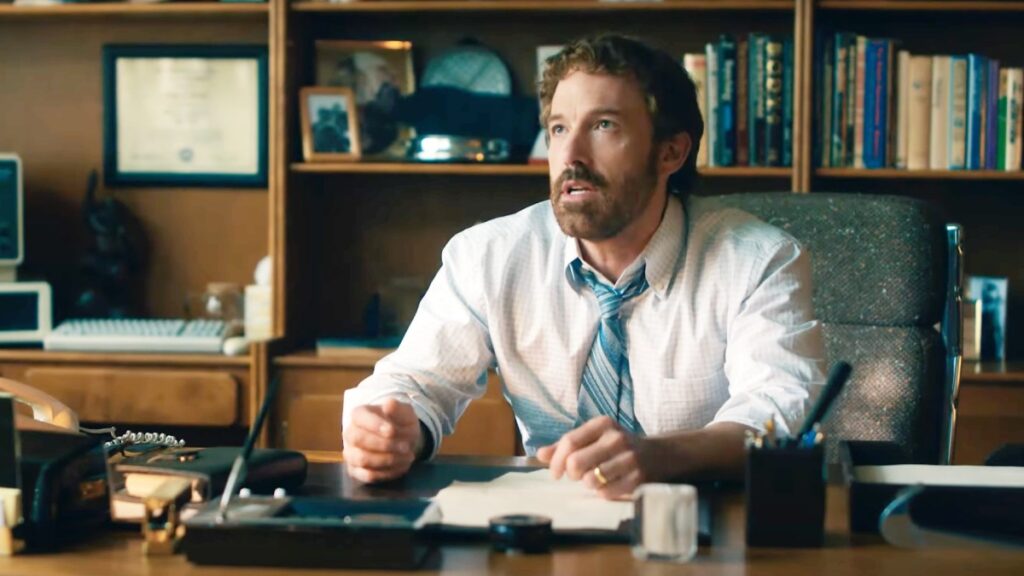
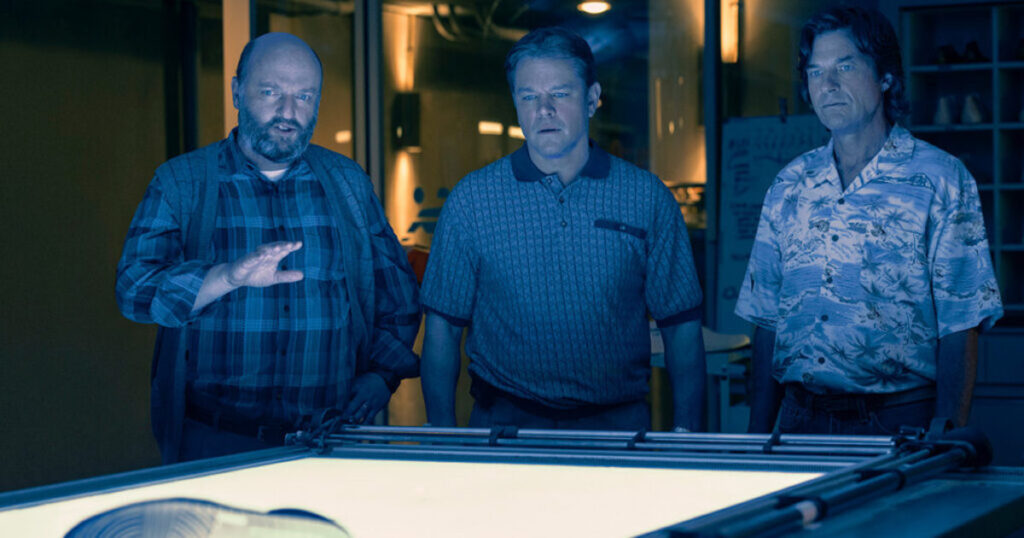
How Nike was victorious in courting then-NBA rookie Michael Jordan for a shoe campaign in 1984 is told through the eyes of Nike staffers, especially marketing executive Sonny Vaccaro (Matt Damon), advertising manager Rob Strasser (Jason Bateman), shoe designer Peter Moore (Matt Maher), and co-founder and chairman Phil Knight (Ben Affleck).
Tightly constructed, Alex Convery’s first-time screenplay highlights the key elements — a growing niche footwear market; the arrival of the greatest player of all-time, Michael Jordan, on the professional basketball scene; a protective mother’s fierce negotiations; and a think-outside-the-box company located near Portland, Ore. This inspired-by-true-story is an energetic, entertaining film with a lasting impression — and not only for sports fans.
In his first directorial effort since 2016’s lackluster “Live by Night,” Ben Affleck is back to triple-threat greatness, shepherding this crowd-pleaser with smart moves and a keen sense of time and place. After all, his storytelling is on fine display in “Argo,” “The Town,” and “Gone Baby Gone,” too.
Ben Affleck as Nike co-founder and chairman Phil Knight
With considerable skill, he steeps what’s essentially a story of contract maneuvers and phone calls into a culture-defining era, from Knight zipping his purple Porsche with his personalized license plates into the Beaverton headquarters after a run, to Vaccaro buying his Wheaties in a Mary Lou Retton-Olympics box and a Sports Illustrated at the mini-mart.
The year is 1984, and the movie is drenched with a kicky ‘80s soundtrack of MTV classics that sets the mood, and quick news-and-photo montages encapsulates the Reagan years.
At the time, third-best Nike was known for its running shoes, and the upstart company viewed themselves as renegades, while entrenched Adidas and Converse were known for their basketball lines.
In 1984, Jordan left North Carolina after his junior year and was third in the NBA draft, going to the Chicago Bulls. His ability to leap and slam-dunk gave him the nickname “Air Jordan,” which Nike capitalized on as an innovator — and a lasting global brand. It’s a remarkable American ingenuity story.
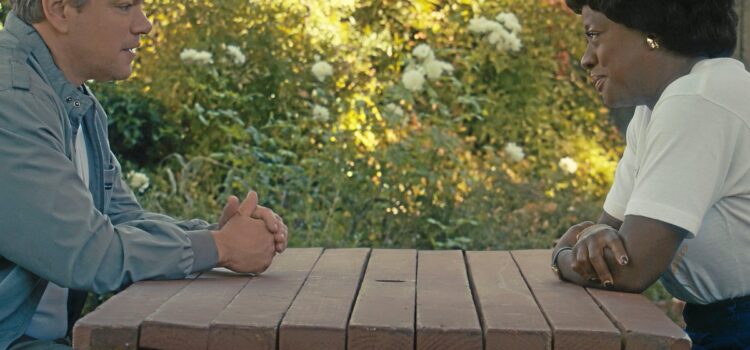
As Sonny Vaccaro, Matt Damon is forceful and earnest about having a hunch about Jordan and following it through with bold aggressive moves. Sonny develops a special relationship with MJ’s Mom, Deloris Jordan (Viola Davis), that is instrumental in sealing the deal. Damon’s character is as appealing as he was in “Ford v Ferrari,” that likeable real-life guy committed to his convictions and smart enough to carry his plan through
In a small but pivotal role, Davis is masterful as the mom whose belief in her son changed celebrity endorsements and deals for athlete’s families.
Before making the film, Affleck said Michael Jordan had one request – that Davis play his mother. His father, James, is genially played by Davis’ real-life husband, Julius Tennon. Affleck focuses on the close relationship Michael had with his parents, and Davis and Tennon depict it beautifully.
Affleck also decided to have an actor play Michael only as a physical presence, preferring to use archival footage, and that works – creating more of a mythology around this larger-than-life mortal. Damian Young is credited but has no dialogue.
Relationships are key to this story’s success, and the long legendary friendship of Damon and Affleck elevates the story as well. Oscar winners for screenplay in “Good Will Hunting,” this is their 20th collaboration, and their first pairing since the underrated “The Last Duel” in 2021 is as dynamic as ever. Word is that they both contributed rewrites to Convery’s original screenplay, and they have an unmistakable rhythm/shorthand with each other.
With its folksy charm and crackling dialogue, “Air” delivers a well-acted and written story that appeals beyond the sports market. It’s a dream team of natural actors defining these colleagues so that we can celebrate their considerable achievements.
Matt Maher, Matt Damon, Jason Bateman
Chris Tucker is well-suited to play Howard White, one of the inspiring former college players on Nike’s roster who helped Air Jordan take flight. He developed relationships with young athletes, including Jordan. Marlon Wayans is seen briefly as Olympics basketball coach George Reveling, who coached Jordan the summer of 1984, and that powerful scene is an important foundation piece. Jordan did not want them left out of his story.
Chris Messina plays Jordan’s bulldog agent David Falk with fiery abrasive bluster.
Matt Maher, who works frequently with Ben and Casey Affleck, deftly portrays the genius shoe designer Peter Moore, who also designed the icon symbol of Jordan taking flight.
It’s a collaborative effort, indicative of a workplace drama-comedy, and gives the real-life people their due for their efforts. Even though we know what happened — but not the particulars per se — we still are enthralled by all the developments. The results-wrap-up is truly remarkable, how such a deal had tremendous ripple effects and outcomes.
It’s early yet, but “Air” is likely sturdy enough to be among the last movies standing at year’s end and will make my short list for Top Ten. Yes, it’s that meaningful, fun and enjoyable.
“Air” is a 2023 sports biopic drama directed by Ben Affleck that stars Affleck, Matt Damon, Jason Bateman, Chris Tucker, Chris Messina, Viola Davis, Julius Tennon, and Marlon Wayans. It is Rated R for language and run time is 1 hour, 52 minutes. Movie opened in theaters on April 5. Lynn’s Grade: A.


 What happens when a family’s secrets are all revealed on one outrageous, pot-fueled Christmas Eve in 1959?
 What’s the best medicine for feeling beat up by the world?
 How much would you give up for love?