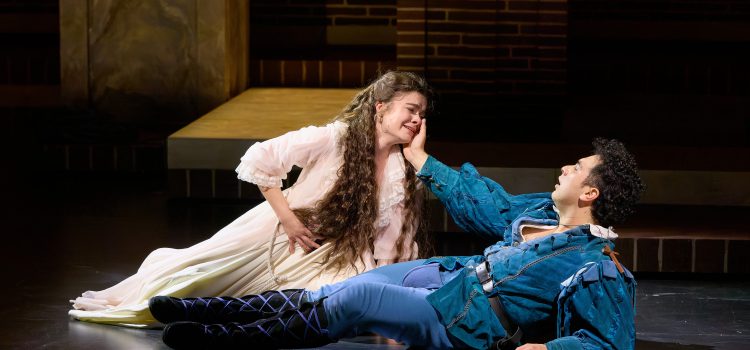
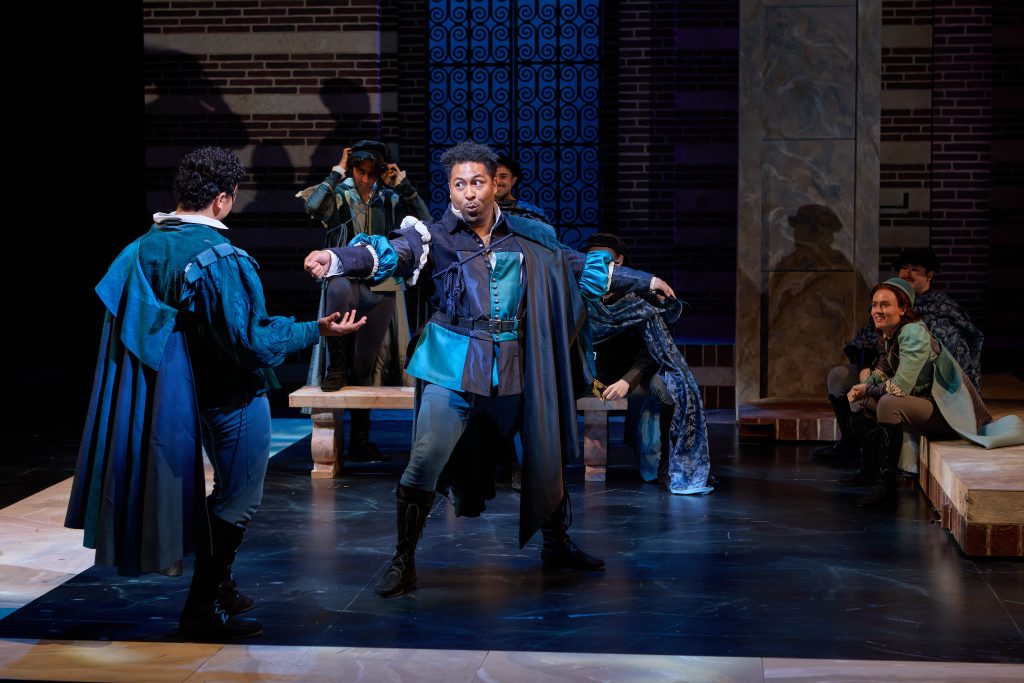
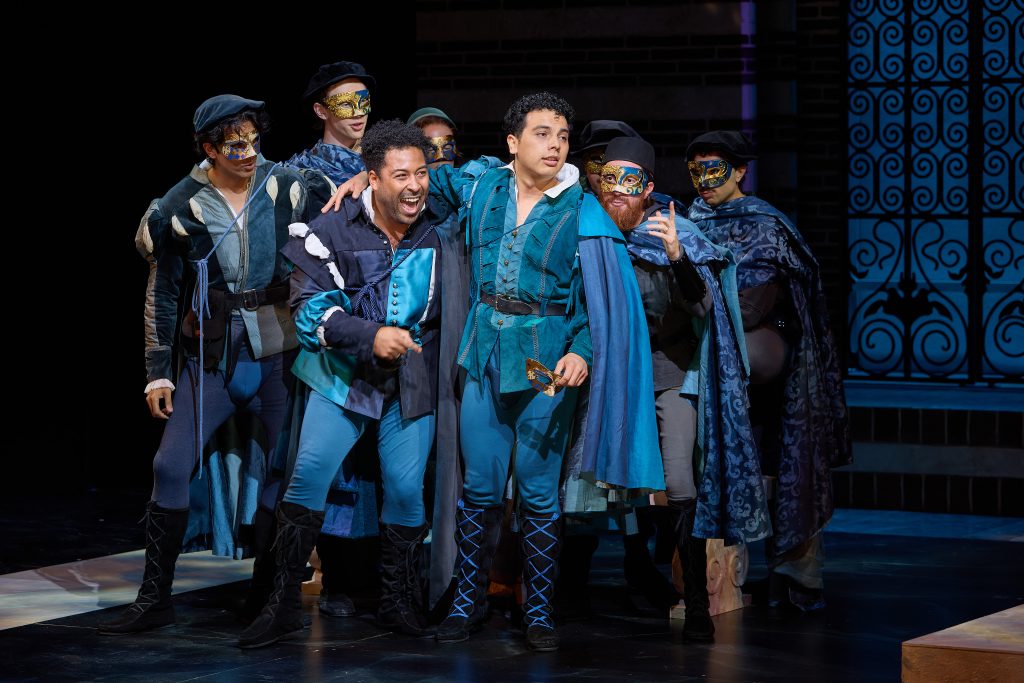
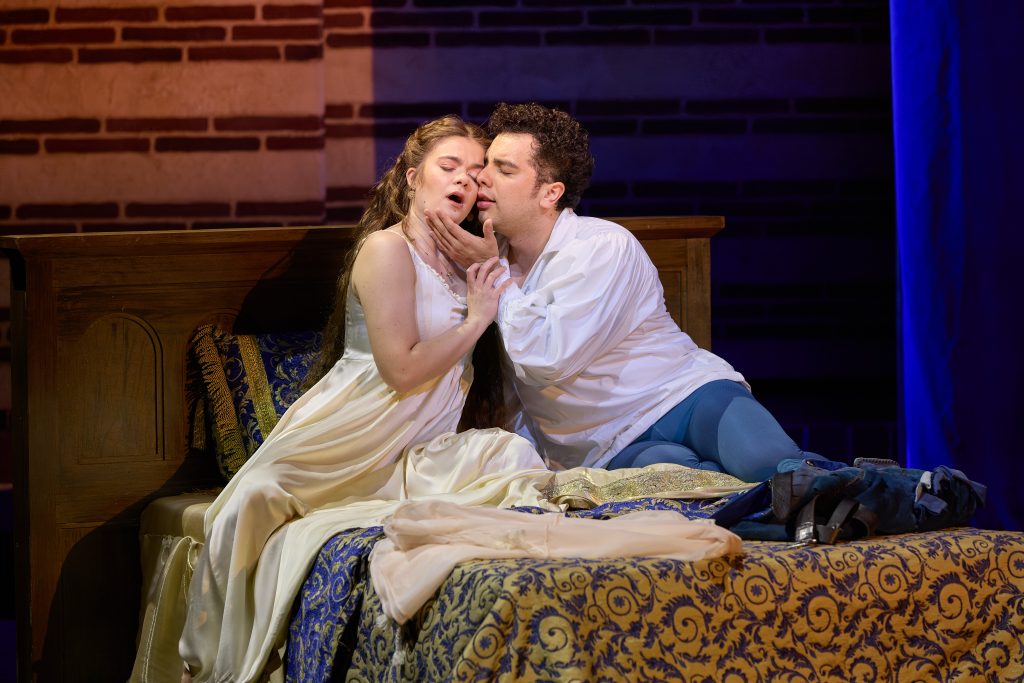
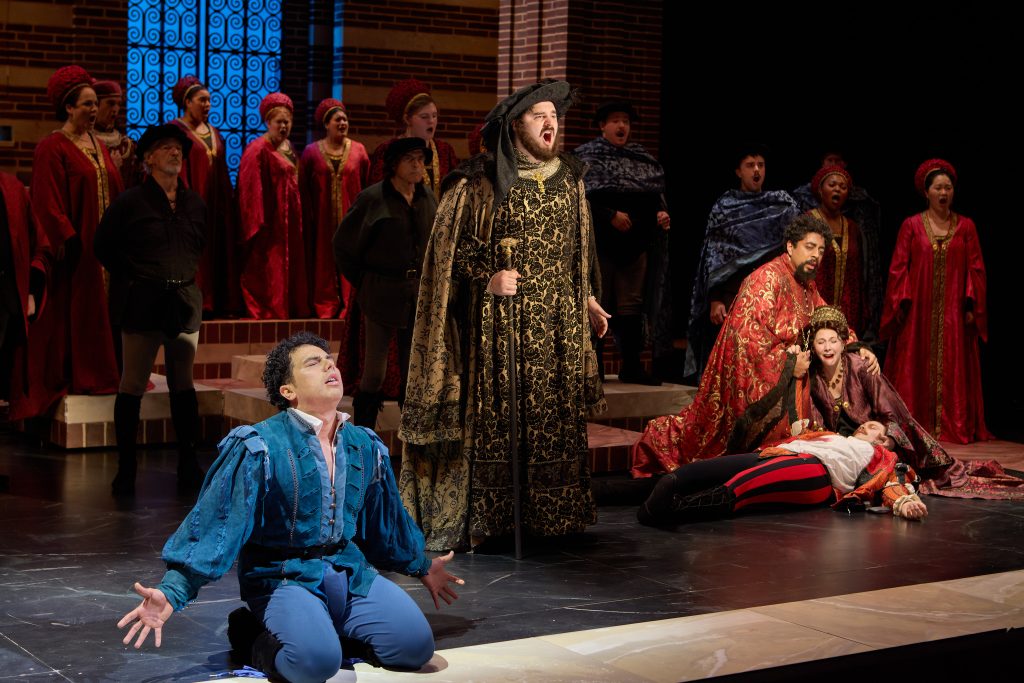
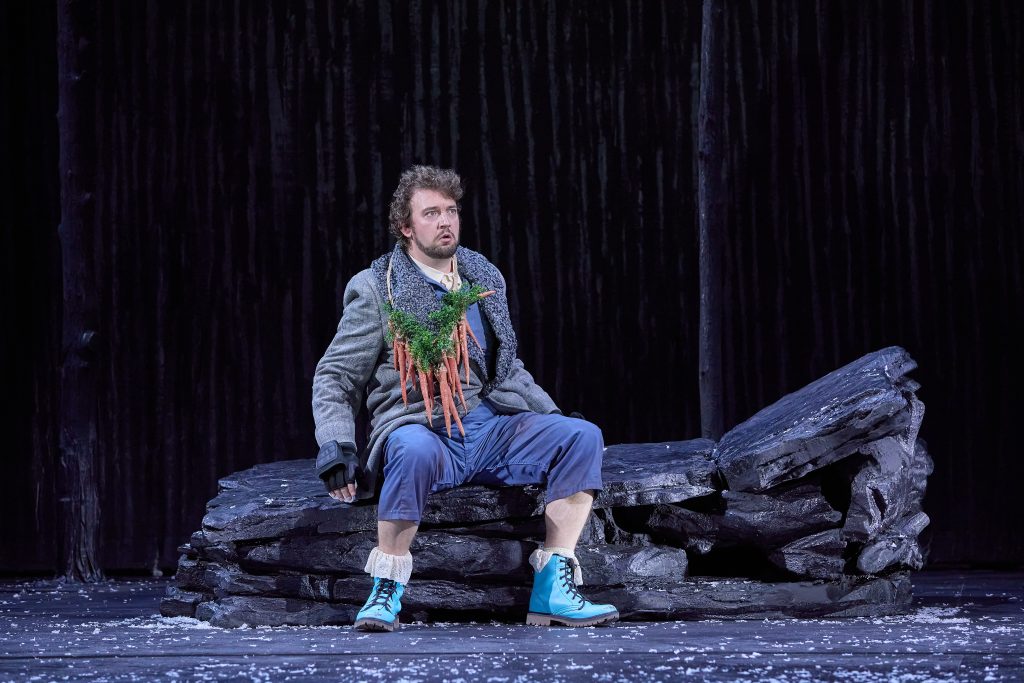
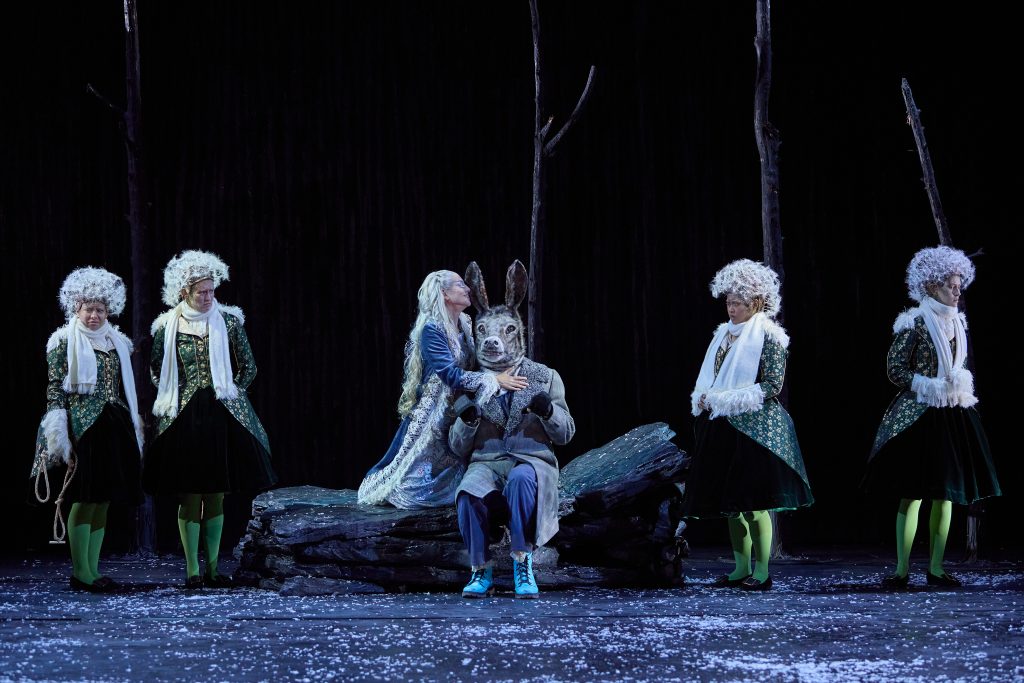
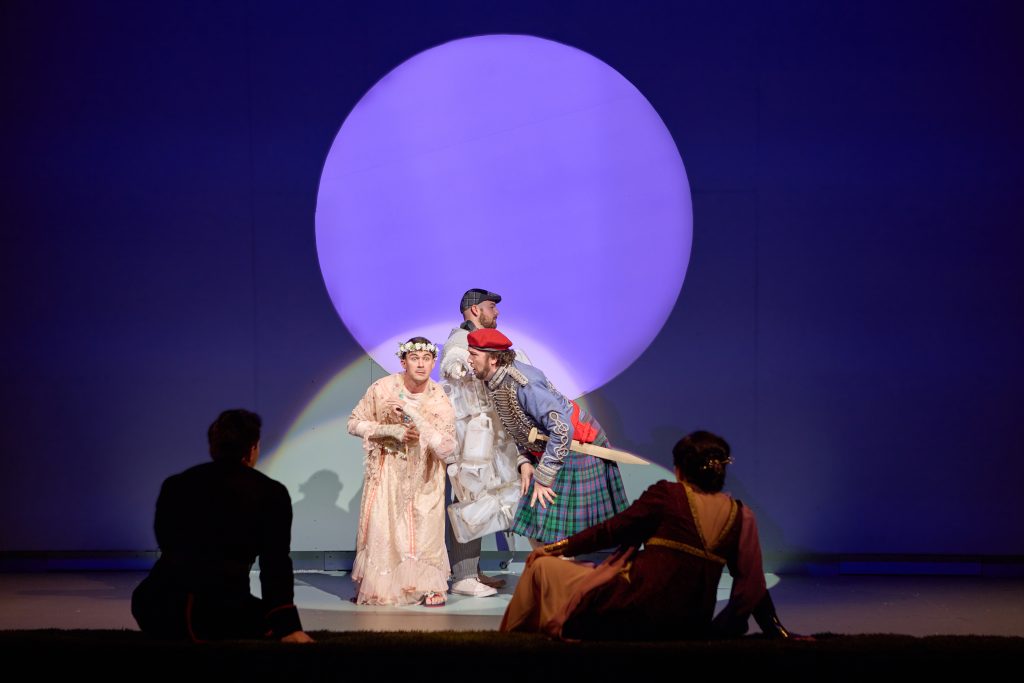
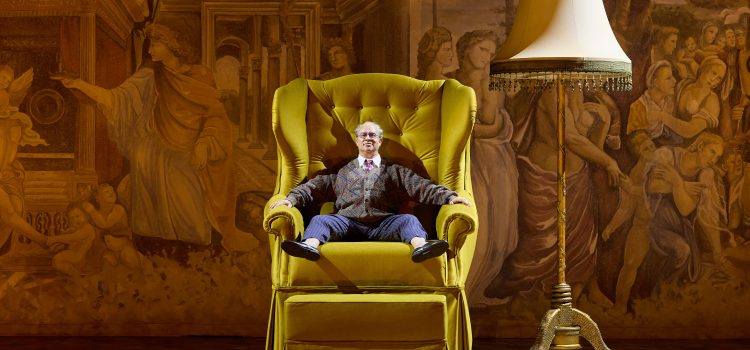
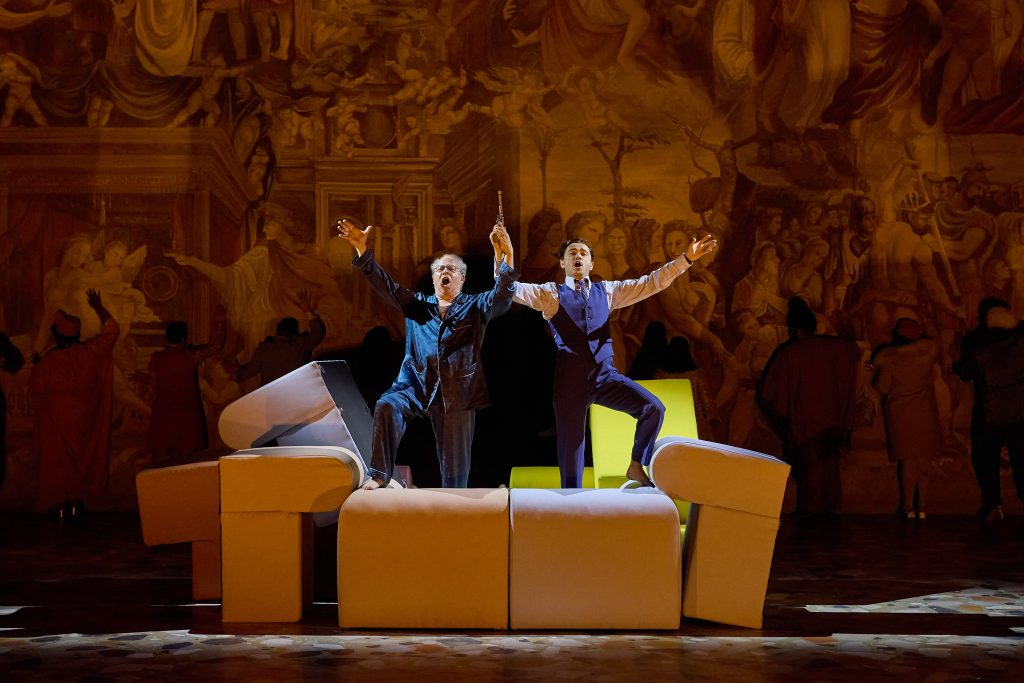
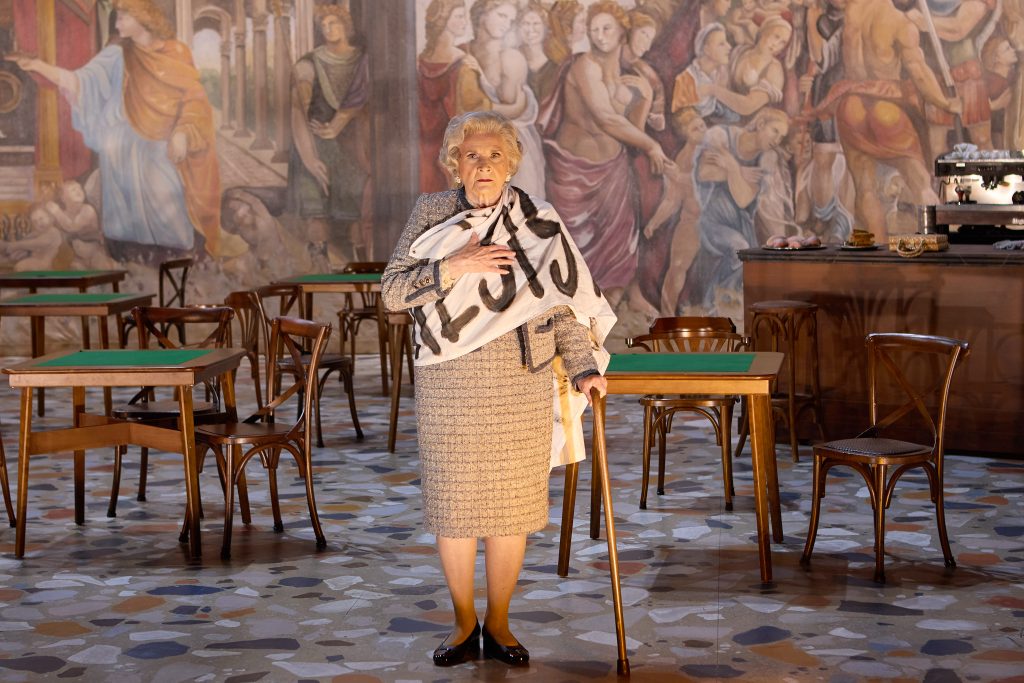
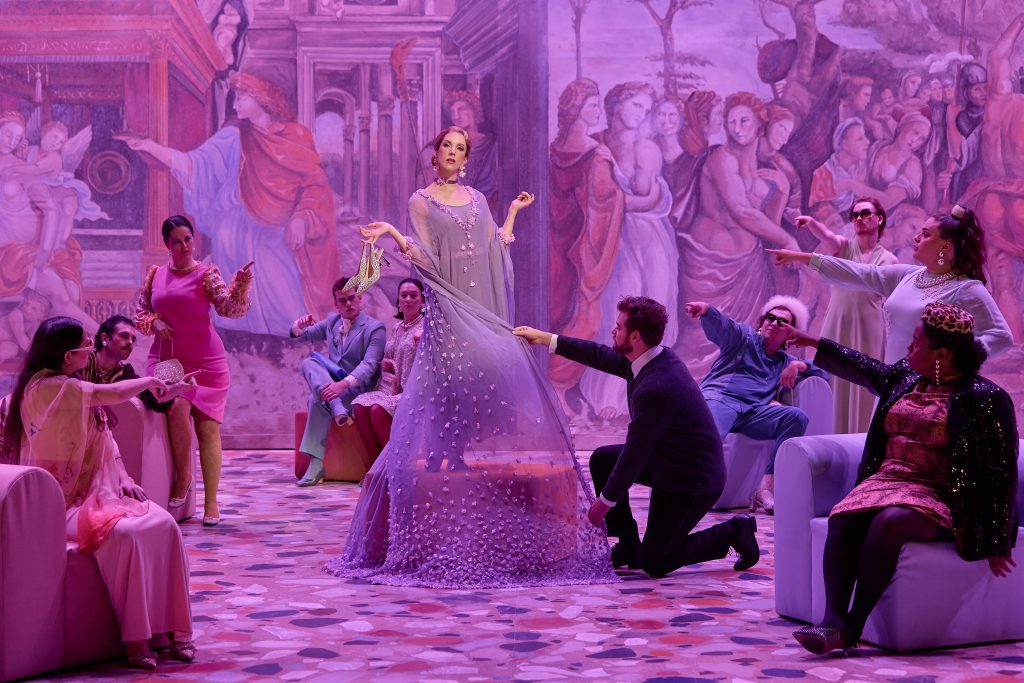
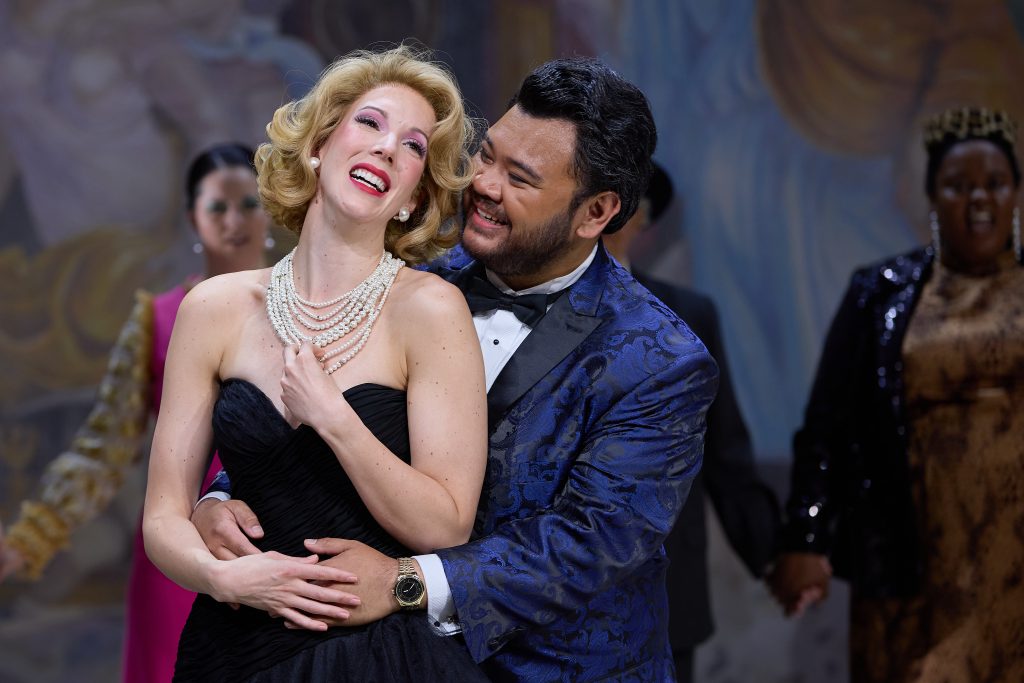
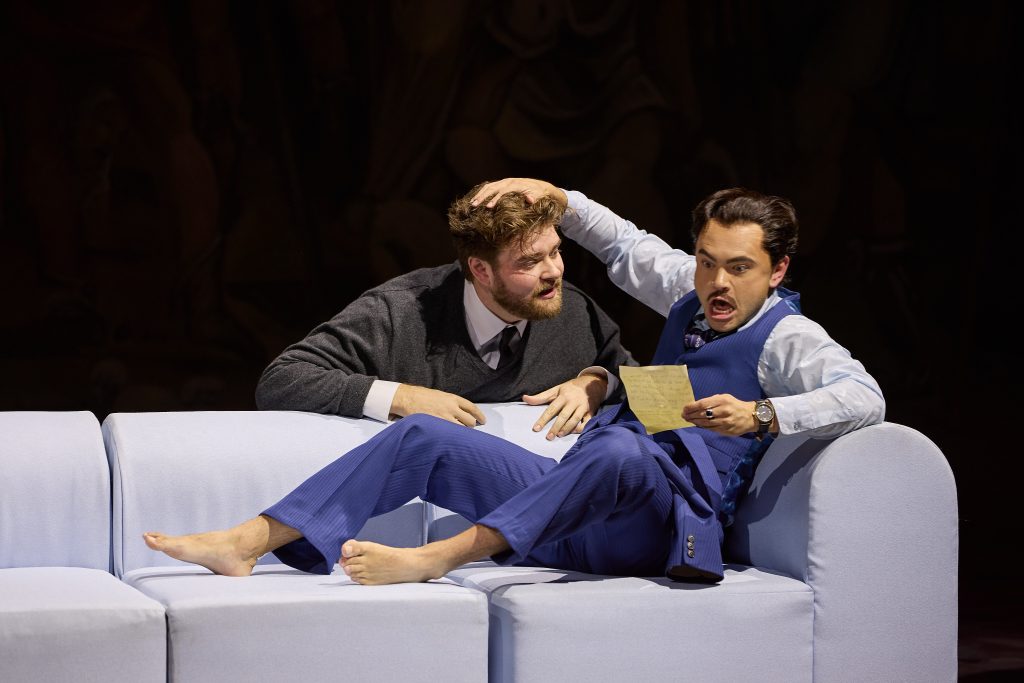
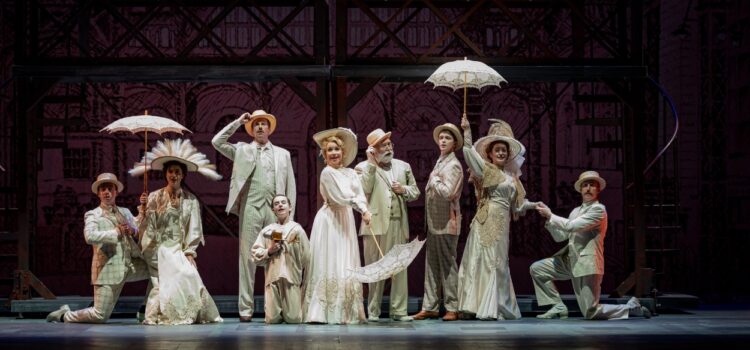
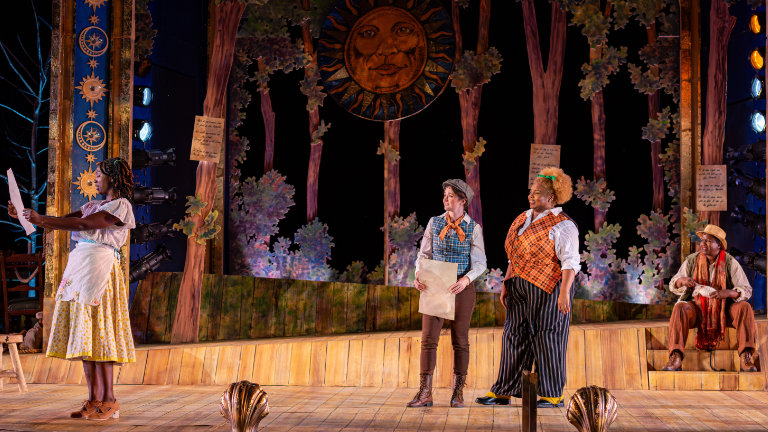
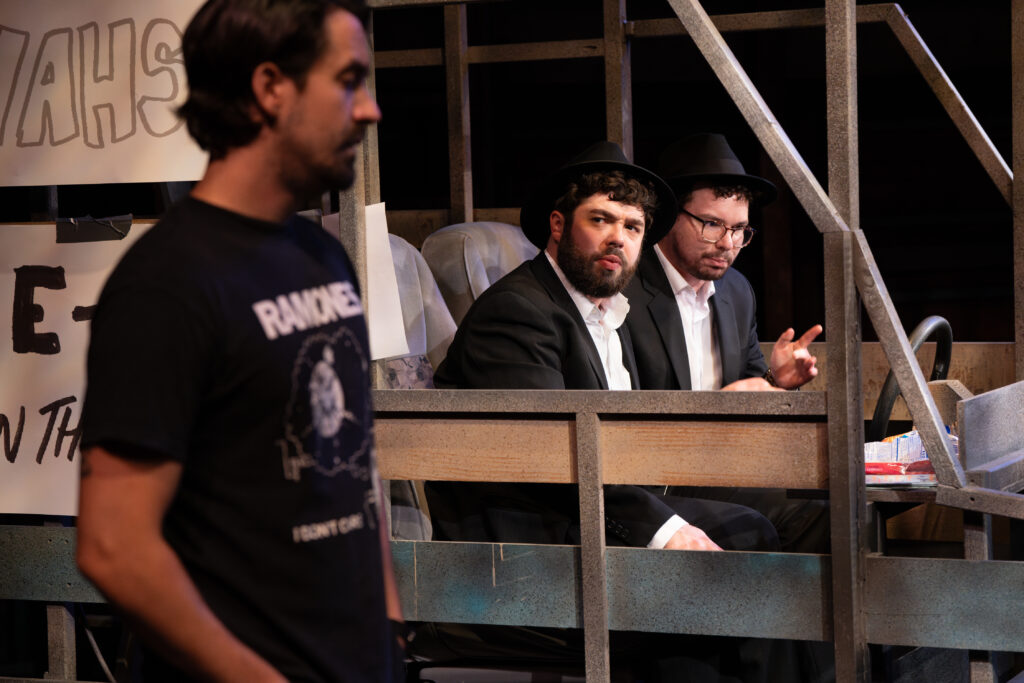
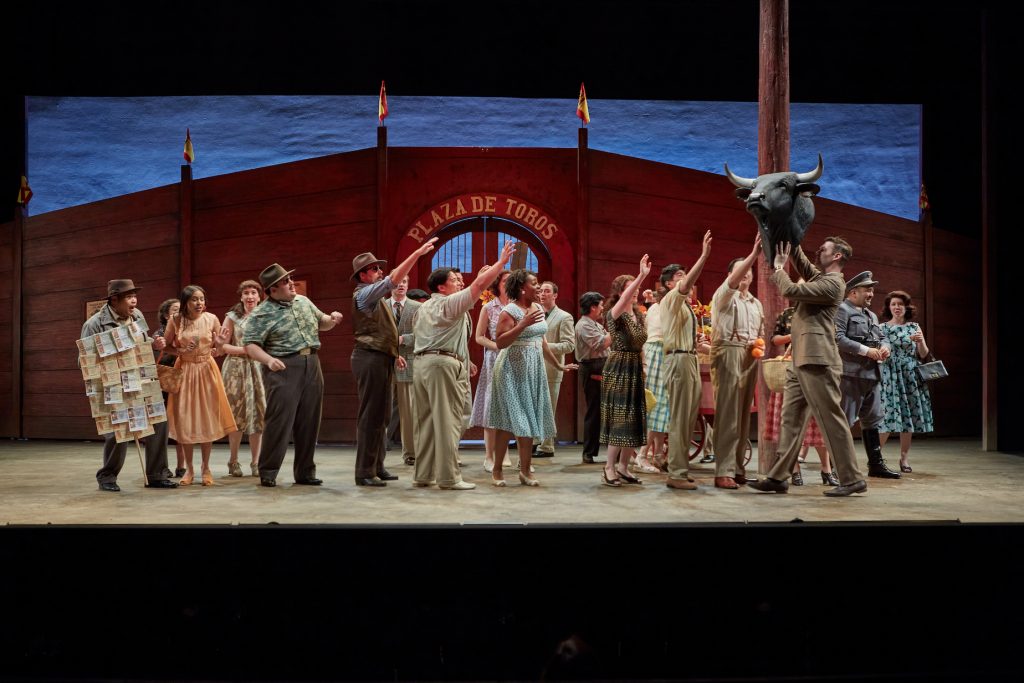
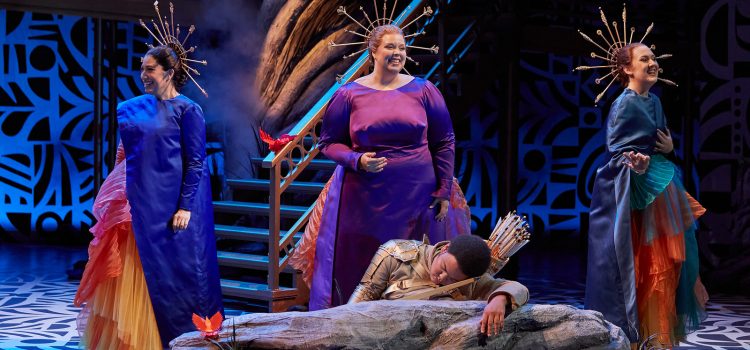
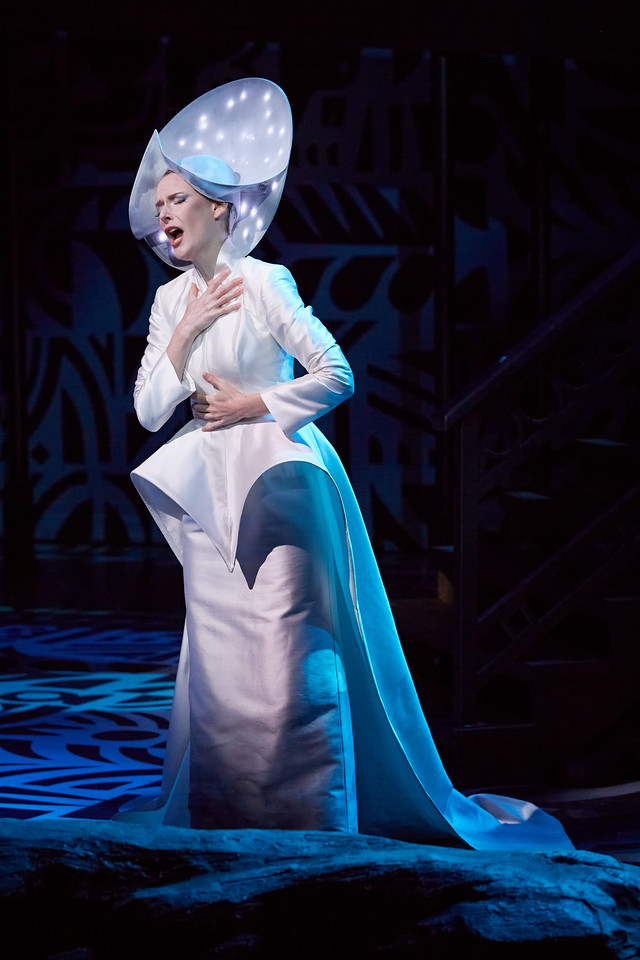
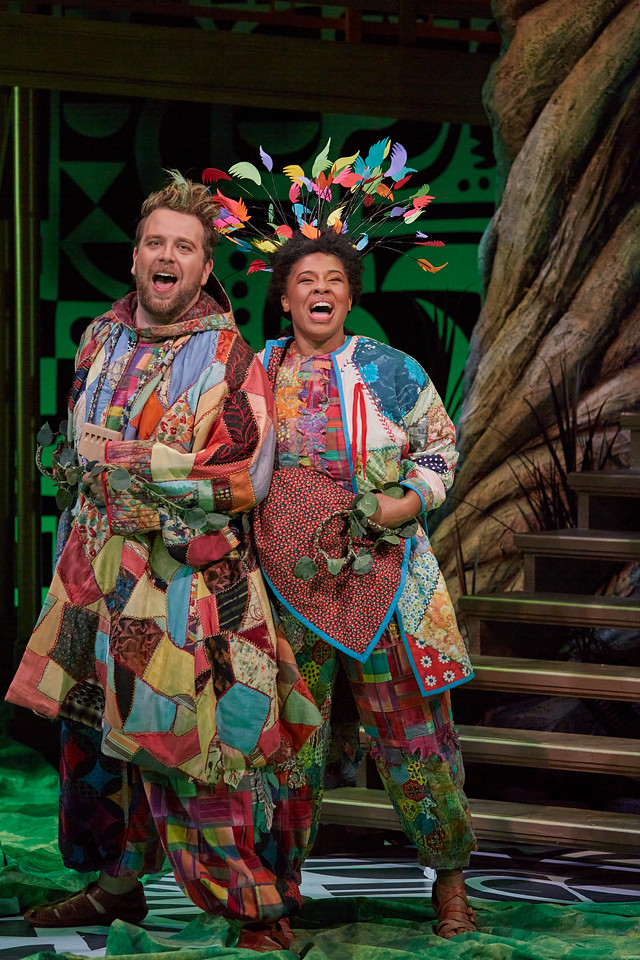
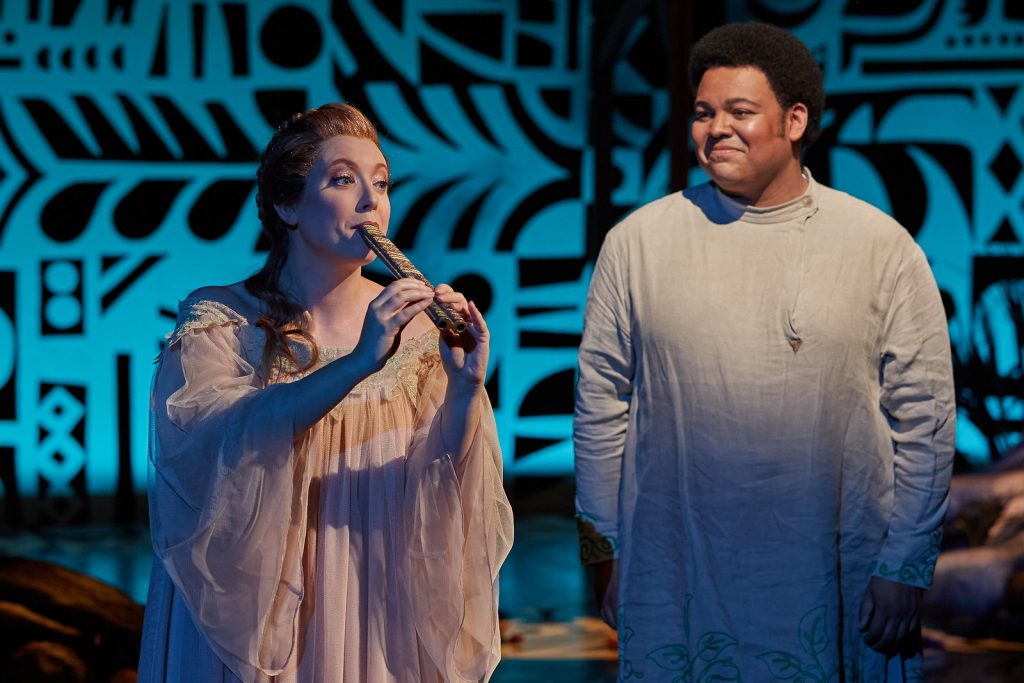
Opera Theatre of Saint Louis closes its 2026 festival season with a production of Charles Gounod’s “Romeo and Juliet” that understands exactly what makes the opera work.
Director Keturah Stickann, conductor Ramón Tebar and a superb cast place the relationship between the young lovers at the center of the evening. Every scene, every duet and nearly every design choice serves that relationship, allowing the opera’s final moments to land with uncommon emotional force.
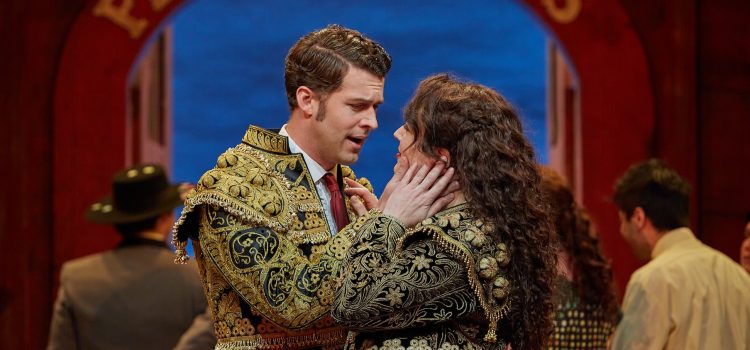
Emma Marhefka and Leonardo Sánchez establish that foundation from their first encounter at the Capulet ball. Over the course of four duets, attraction deepens into devotion, devotion deepens into intimacy and intimacy collides with tragedy. By the opera’s final moments, the fate of Romeo and Juliet feels like a personal loss.
Although the opera bears the lovers’ names, this production finds its emotional center in Juliet. Marhefka charts the evening’s most significant journey, carrying Juliet from youthful exuberance and certainty toward hard-won understanding. Her buoyant “Je veux vivre” captures a young woman delighted by life’s possibilities and confident in her place within them.
Marhefka uses the aria to establish the emotional ground beneath the entire performance. Experience, loss and consequence gradually reshape that confidence, and Marhefka traces every step of the transformation.
Sánchez proves an ideal partner in that journey. His clear, ardent tenor and openhearted stage presence ground Romeo’s devotion in genuine feeling. He also captures the impulsiveness that repeatedly transforms emotion into action and action into consequence. Together, Marhefka and Sánchez accomplish the production’s central task. They make the relationship real.
Stickann follows the emotional architecture that Gounod built into the score. The four great duets become milestones in the relationship’s evolution. At the ball, attraction arrives with the force of discovery.
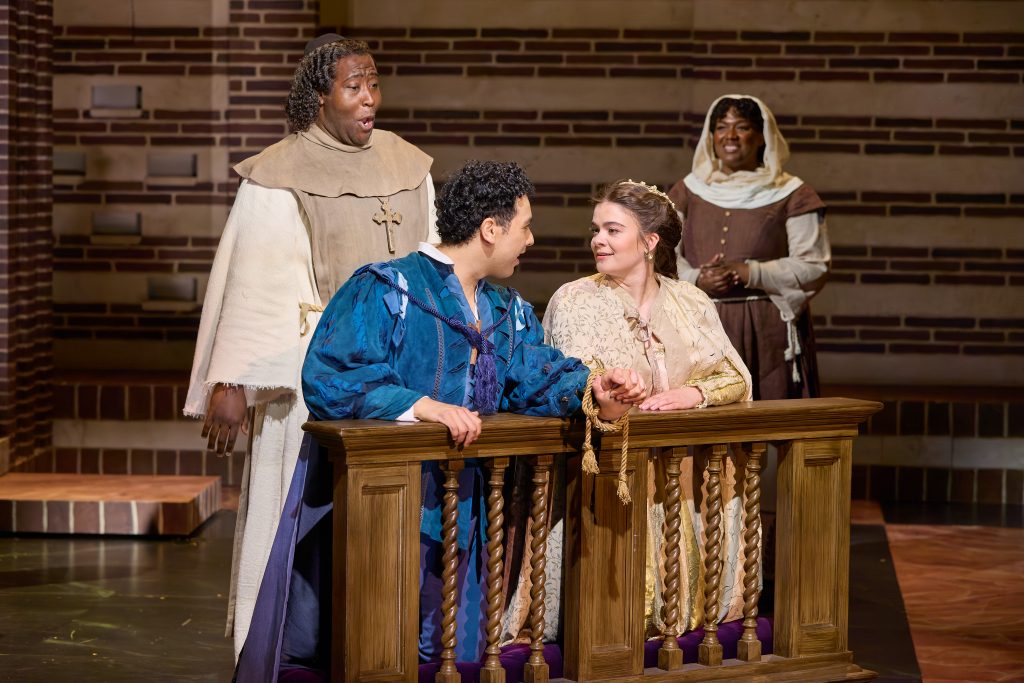
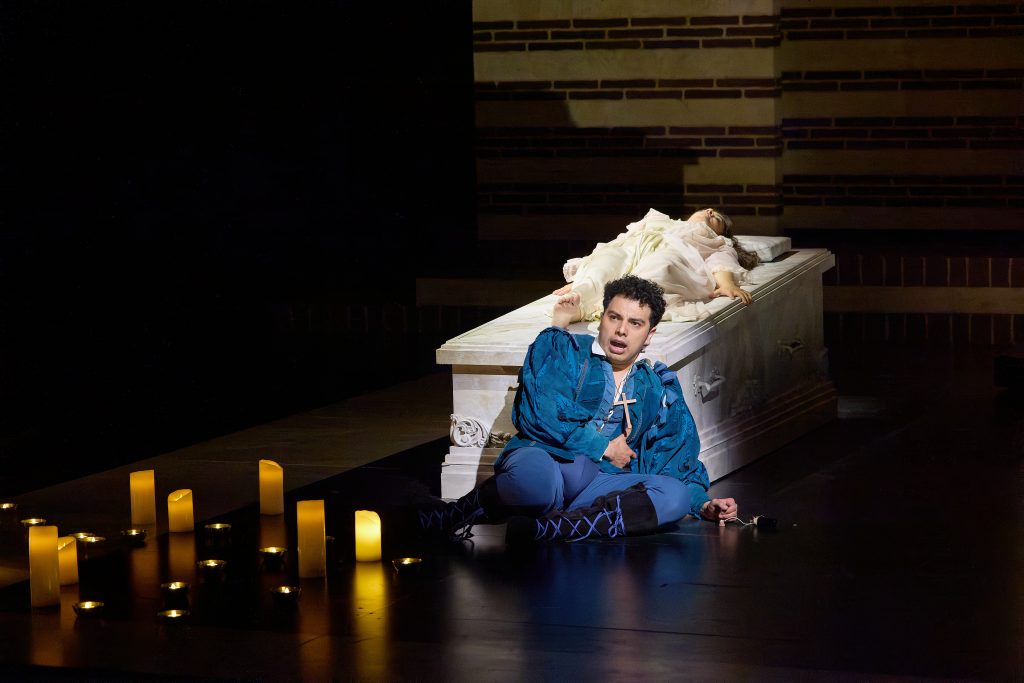
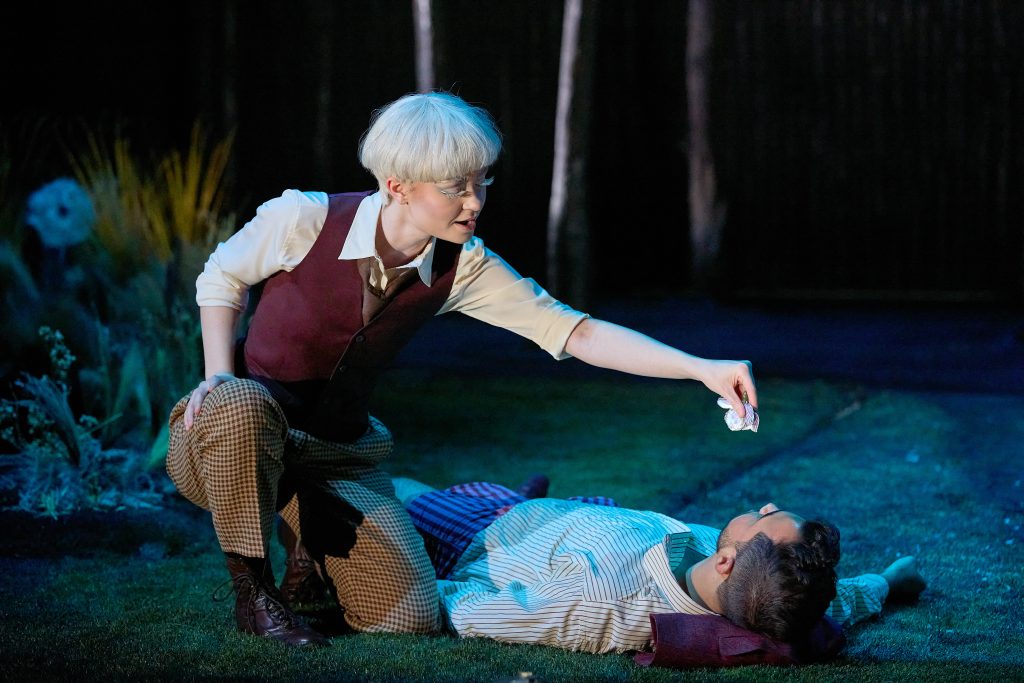
At the balcony, discovery deepens into commitment. In the bedroom, longing yields to intimacy. In the tomb, intimacy confronts consequence. Marhefka and Sánchez make each stage feel earned, allowing the relationship to grow before our eyes rather than simply advancing it from one familiar scene to the next.
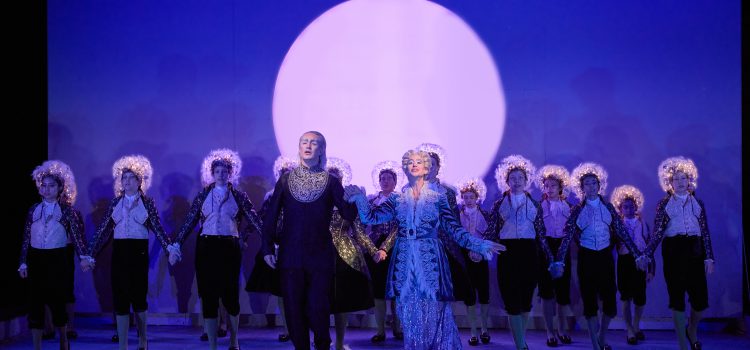
The masked ball pulses with youthful energy. Seán Curran’s choreography fills the stage with movement while Marhefka and Sánchez create an immediate connection that feels spontaneous and authentic.
The balcony scene narrows the world around them. Family loyalties, social obligations and old grievances lose their hold as the lovers construct a private universe of their own making. They move forward with complete certainty. They trust feeling to overcome circumstance.
The bedroom scene reveals the relationship at its fullest expression. The lovers move beyond longing and into intimacy. Reality waits outside the room. Neither lover recognizes how quickly it will arrive.
By the tomb scene, reality has arrived in full. The final duet devastates because the production earns it. Marhefka and Sánchez carry the emotional weight of everything that came before. The audience mourns two people rather than two symbols.
The supporting cast defines the forces pressing against that increasingly fragile private world. Benjamin Taylor’s Mercutio embodies the exuberance the production spends its first act celebrating and its remaining acts dismantling.
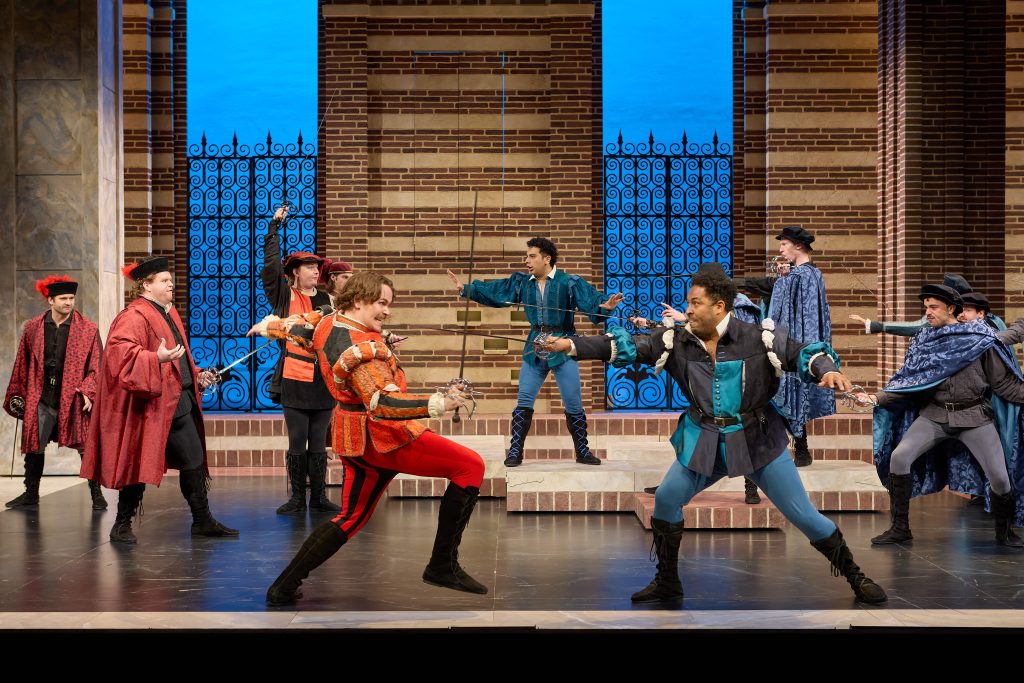
His Queen Mab scene sparkles with wit, confidence and youthful vitality. His death shifts the emotional temperature of the evening and signals that the world surrounding the lovers has begun to harden.
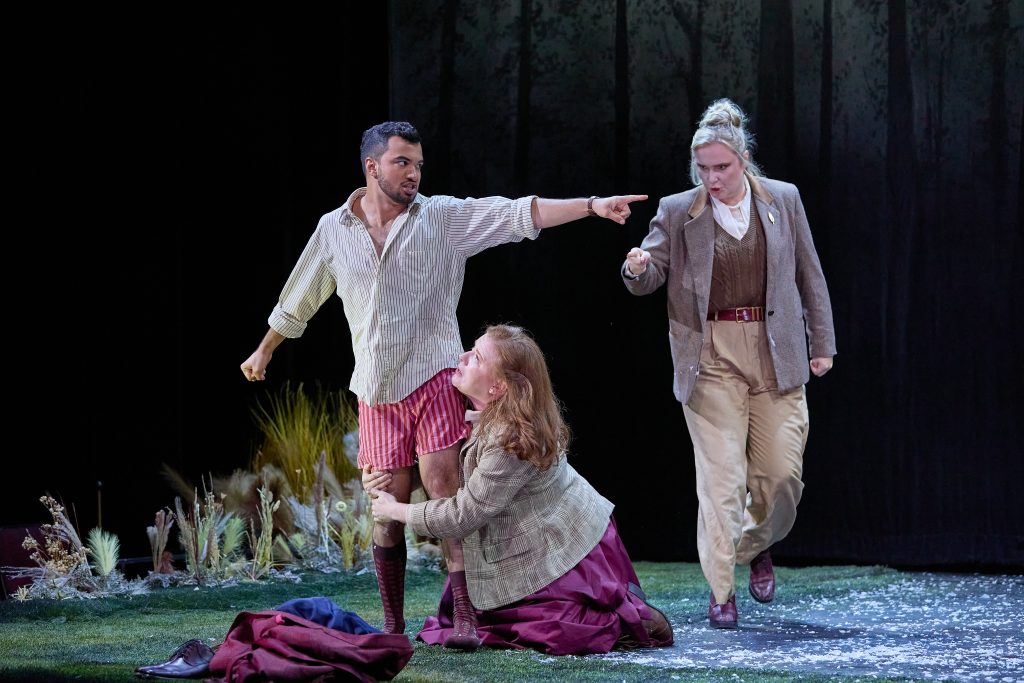
Micah Perry’s Tybalt burns hot and fast. His bright tenor matches a temperament that seems incapable of imagining a future beyond the next insult, challenge or grievance. The emotions arrive with the same force as his blade. Perry captures the moment when youthful certainty hardens into catastrophe.
Nicholas Newton gives Friar Laurence the confidence of a man who believes wisdom and planning can master events. The opera steadily exposes the limits of that confidence.
Vinicius Costa commands the stage as Lord Capulet, embodying the expectations and obligations that increasingly constrain Juliet’s choices. The certainty of the older generation proves no more reliable than the certainty of the younger one.
Edmond Rodrigues brings quiet steadiness to Benvolio, while Veronica Siebert’s spirited Stephano, Imara Ashton’s warm Gertrude, Jason Edelstein’s authoritative Duke of Verona, Cole Bellamy’s Paris, Julia Mariah Johnson’s Lady Capulet and Kevin Douglas Jasaitis’ Gregorio give shape and texture to the world surrounding the lovers.
Tebar understands that Gounod often advances the drama by suspending it. Again and again, the orchestra creates moments in which time seems briefly to stop and attention narrows to the emotional lives of the lovers. Tebar draws feeling from melody, phrasing and texture rather than sheer volume. The St. Louis Symphony Orchestra illuminates the drama without overwhelming it.
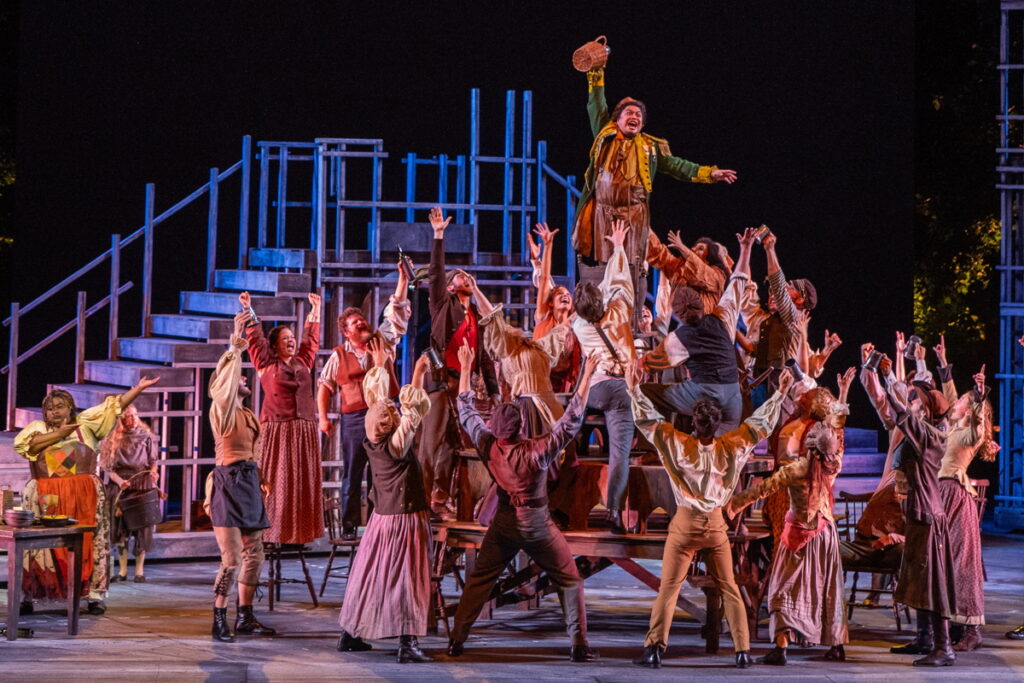
Stickann’s collaborators reinforce the production’s focus on emotional clarity. Scenic designer Liliana Duque Piñeiro embraces fluidity and metaphor. At first glance, the set’s broad expanse of masonry and geometric forms resembles a public swimming pool emptied of water.
As the evening unfolds, however, its logic reveals itself. Steps, balconies, platforms and even convenient toe holds for Romeo gradually emerge from the design, creating a flexible environment for the opera’s succession of intimate encounters. Large movable columns continually reshape the playing space, suggesting both a divided society and shifting emotional terrain.
Their movement occasionally draws attention to the mechanics of the staging, but never enough to pull the audience from the drama. The architecture rarely competes for attention. Instead, the eye naturally returns to the performers and Robert Perdziola’s richly colored costumes.
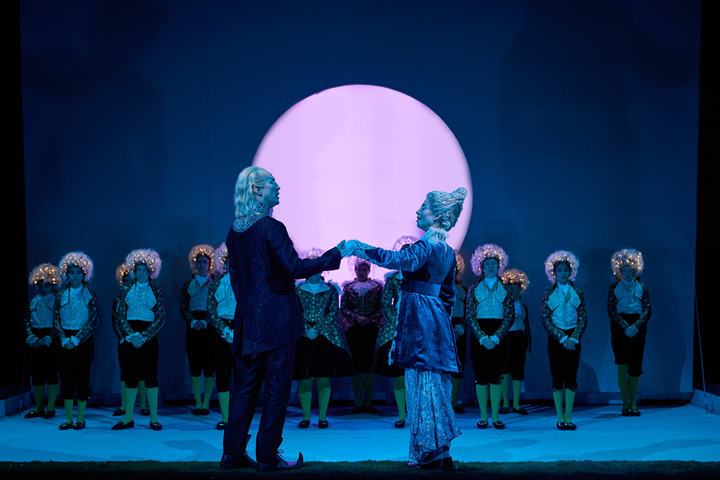
Costume designer Robert Perdziola externalizes the feud through color. The Montagues inhabit a world of blue while the Capulets move through shades of red, rose and violet. The visual contrast immediately clarifies the barriers the lovers spend the evening attempting to cross.
Eric Southern shapes mood and focus through light, while Andrew Whitfield’s chorus establishes the conflict that shadows the lovers from the opening moments.
The achievement of OTSL’s “Romeo and Juliet” lies in how completely it earns its emotional ending. By the time the lovers reach the tomb, the exuberance that animated the ball has collided with the realities waiting outside the lovers’ private world. The story remains familiar. The ending still hurts.
“Romeo and Juliet” runs June 7-26 at Opera Theatre of Saint Louis. The production concludes OTSL’s 2026 festival season, which features all four productions in rotating repertory at the Loretto-Hilton Center on the campus of Webster University. For tickets and additional information, visit Opera Theatre of Saint Louis at opera-stl.org.
CB Adams is an award-winning fiction writer and photographer based in the Greater St. Louis area. A former music/arts editor and feature writer for the St. Louis Globe-Democrat, his non-fiction has been published in local, regional and national publications. His literary short stories have been published in more than a dozen literary journals and his fine art photography has been exhibited in more than 40 galley shows nationwide. Adams is the recipient of the Missouri Arts Council’s highest writing awards: the Writers’ Biennial and Missouri Writing!. The Riverfront Times named him, “St. Louis’ Most Under-Appreciated Writer” in 1996.
New Jewish Theatre’s ‘Cabaret” tops shows with 13 nominations Event March 23 Will Honor Outstanding Work in Local Professional Theater in 2025
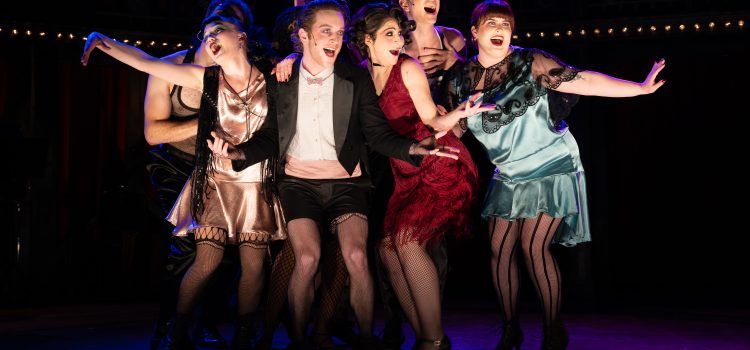
ST. LOUIS, February 3, 2026 – The Repertory Theatre of St. Louis (The Rep), with 38 nominations covering six different productions in the 2025 calendar year, leads the field at the 13th annual St. Louis Theater Circle Awards. “Cabaret,” which was performed by New Jewish Theatre, garnered the most nominations for an individual production with a total of 13. In all, 38 local, professional productions representing 20 theater companies received at least one nomination.
The annual gala will take place on Monday, March 23, 2026, at the Loretto-Hilton Center for the Performing Arts, 130 Edgar Road on the campus of Webster University, home of The Rep.
Tickets at $23 apiece ($20 plus a $3 processing fee) are available at The Rep’s web site www.repstl.org ticket link. https://www.repstl.org/events/detail/st-louis-theatre-circle-awards The Rep’s box office number is 314-968-4925. Tickets will also be available at The Rep’s box office one hour before the ceremony, which will start at 7:30 p.m. Doors will open at 6:30 p.m. for a one-hour ‘Happy Hour,’ with beverages and snacks available for purchase.
Nominees in 34 categories will vie for honors covering comedies, dramas, musicals and operas produced by local professional theater and opera companies in the calendar year 2025. Approximately 87 productions were considered for nominations for this year’s event.
Additionally, there will be three special awards. Opera Theatre of Saint Louis will be honored for 50 years of operatic excellence that have brought the company local, national and international recognition. Wayne Salomon, a founding member of Theatre Project Company, will be recognized with a lifetime achievement award for his contributions to the St. Louis theater community. Bob Trump, head draper of The Rep, who retired in 2025, will be lauded for 40 years of work in The Rep’s costume shop.
The Muny last autumn asked that it not be considered for any nominations for the 2025 calendar year. Reluctantly, the St. Louis Theater Circle has honored The Muny’s request.
The nominees for the 13th annual St. Louis Theater Circle Awards are:
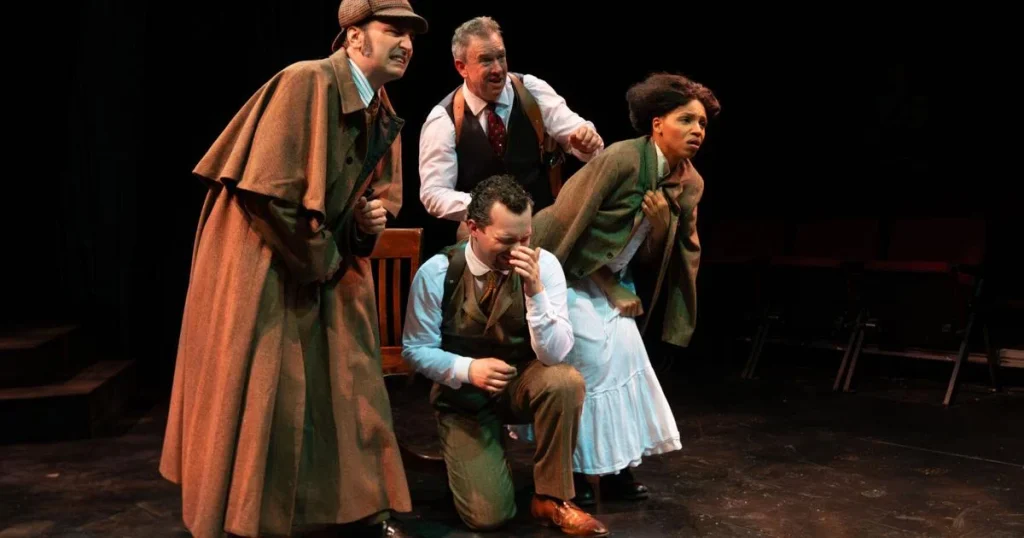
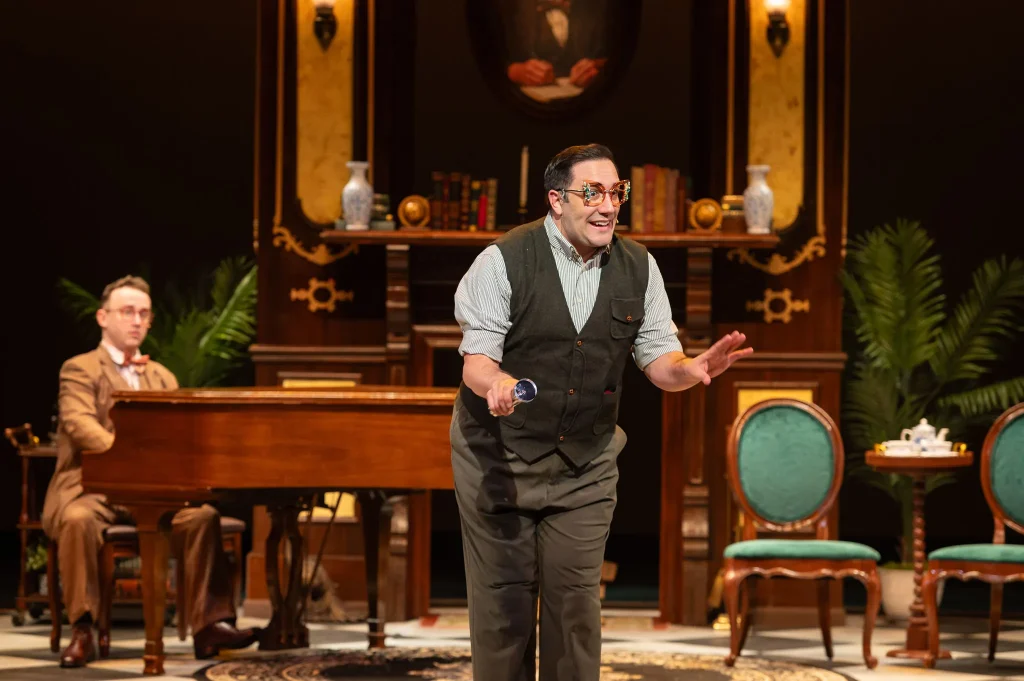
Baskerville. New Jewish. Photo by Jon Gitchoff.
Outstanding Supporting Performer in a Comedy, Female or Non-Binary Role
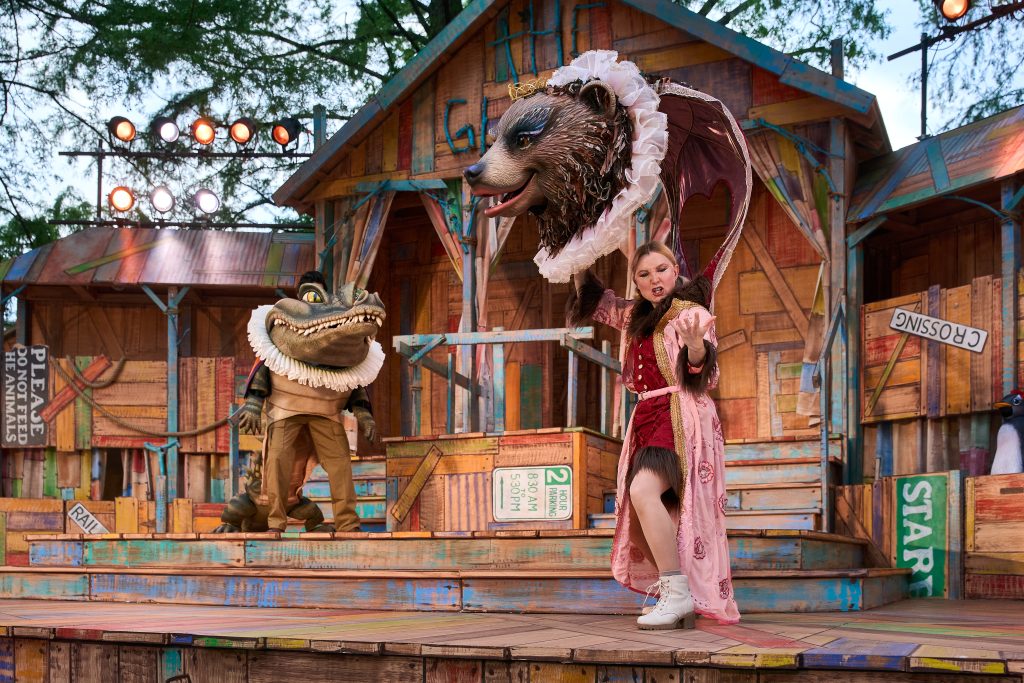
Nancy Bell, “Emma,” The Repertory Theatre of St. Louis Lindsey Grojean, “The Curious Savage,” Stray Dog Theatre Lize Lewy, “Emma,” The Repertory Theatre of St. Louis Alicia Revé Like, “Ken Ludwig’s Baskerville: A Sherlock Holmes Mystery,” New Jewish Theatre Essence Anisa Tyler, “Clyde’s,” The Repertory Theatre of St. Louis
Outstanding Supporting Performer in a Comedy, Male or Non-Binary Role
Louis Reyes McWilliams, “Emma,” The Repertory Theatre of St. Louis Michael James Reed, “Ken Ludwig’s Sherwood: The Adventures of Robin Hood,” The Repertory Theatre of St. Louis Jacob Schmidt, “Romeo & Zooliet,” St. Louis Shakespeare Festival Sean C. Seifert, “Ken Ludwig’s Baskerville: A Sherlock Holmes Mystery,” New Jewish Theatre John Wilson, “Ken Ludwig’s Baskerville: A Sherlock Holmes Mystery,” New Jewish Theatre
Outstanding Performer in a Comedy, Female or Non-Binary Role
Michelle Hand, “The Search for Signs of Intelligent Life in the Universe,” St. Louis Actors’ Studio Heather Matthews, “The Beauty Queen of Leenane,” Albion Theatre Company Andrea San Miguel, “The Cottage,” The Repertory Theatre of St. Louis Adelin Phelps, “Emma,” The Repertory Theatre of St. Louis Phyllis Yvonne Stickney, “Clyde’s,” The Repertory Theatre of St. Louis
Outstanding Performer in a Comedy, Male or Non-Binary Role
Jordan Coughtry, “The Cottage,” The Repertory Theatre of St. Louis Nick Freed, “The Minutes,” Stray Dog Theatre Gary Glasgow, “Two Jews Walk into a War: A Comedy,” New Jewish Theatre Ron Himes, “Clyde’s,” The Repertory Theatre of St. Louis Bryce A. Miller, “Ken Ludwig’s Baskerville: A Sherlock Holmes Mystery,” New Jewish Theatre
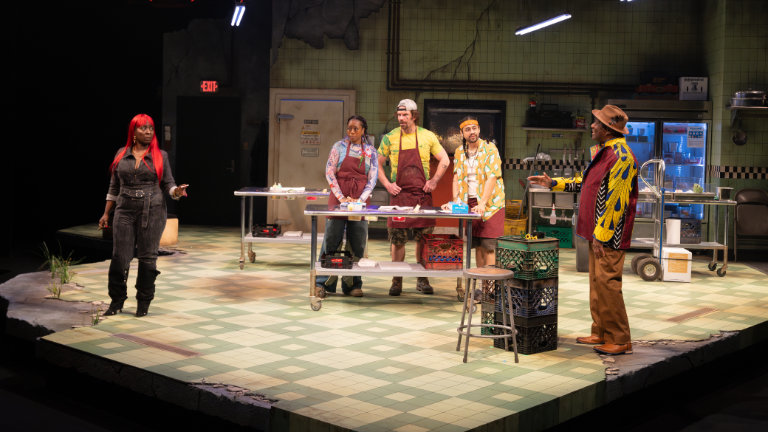
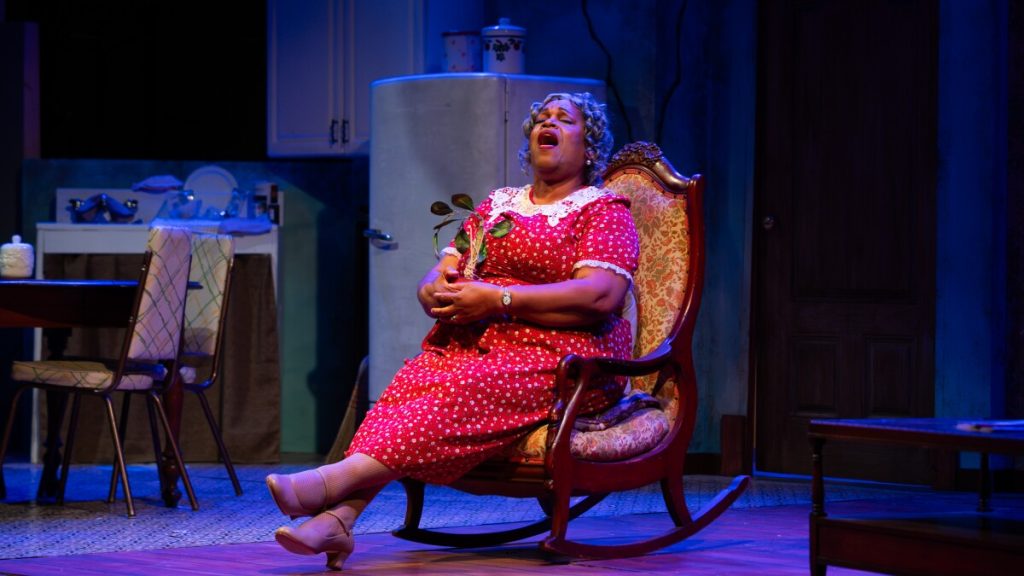
Clyde’s. The Rep. Photo by Jon Gitchoff.
Outstanding Lighting Design in a Play
Denisse Chavez, “Hamlet,” St. Louis Shakespeare Festival Jayson M. Lawshee, “Athena,” The Repertory Theatre of St. Louis Jason Lynch, “Emma,” The Repertory Theatre of St. Louis Matthew McCarthy, “A Streetcar Named Desire,” Tennessee Williams Festival St. Louis Christina Watanabe, “Clyde’s,” The Repertory Theatre of St. Louis
Outstanding Sound Design
Jimmy Bernatowicz, “Athena,” The Repertory Theatre of St. Louis Kareem Deanes, “Two Jews Walk into a War: A Comedy,” New Jewish Theatre Tre’von Griffith, “The Brothers Size,” The Repertory Theatre of St. Louis John Gromada, “Emma,” The Repertory Theatre of St. Louis Ellie Schwetye, “Professor House,” Contraband Theatre
Outstanding Costume Design in a Play
Oana Botez, “Hamlet,” St. Louis Shakespeare Festival Dorothy Marshall Englis, “Emma,” The Repertory Theatre of St. Louis Renee Garcia, “The Cottage,” The Repertory Theatre of St. Louis Tracey Newcomb, “I Have Been Here Before,” Albion Theatre Company Michele Friedman Siler, “The Heidi Chronicles,” New Jewish Theatre
The Heidi Chronicles. New Jewish Theatre. Photo by Jon Gitchoff.
Outstanding Set Design in a Play
Jean Kim, “Clyde’s,” The Repertory Theatre of St. Louis Robert Mark Morgan, “The Cottage,” The Repertory Theatre of St. Louis Scott C. Neale, “Hamlet,” St. Louis Shakespeare Festival Scott C. Neale, “Romeo & Zooliet,” St. Louis Shakespeare Festival Margery Spack & Peter Spack, “Emma,” The Repertory Theatre of St. Louis
Outstanding Supporting Performer in a Drama, Female or Non-Binary Role
Jade Cash, “The Wanderers,” New Jewish Theatre Sarah Chalfie, “Hamlet,” St. Louis Shakespeare Festival Jennifer Ikeda, “Hamlet,” St. Louis Shakespeare Festival Isa Venere, “A Streetcar Named Desire,” Tennessee Williams Festival St. Louis Maggie Wininger, “The Wanderers,” New Jewish Theatre
Outstanding Supporting Performer in a Drama, Male or Non-Binary Role
Grayson DeJesus, “Hamlet,” St. Louis Shakespeare Festival Ron Himes, “Radio Golf,” The Black Rep Donald Jones Jr., “The Brothers Size,” The Repertory Theatre of St. Louis Bryce A. Miller, “The Wanderers,” New Jewish Theatre Reginald Pierre, “Hamlet,” St. Louis Shakespeare Festival
Outstanding Performer in a Drama, Female or Non-Binary Role
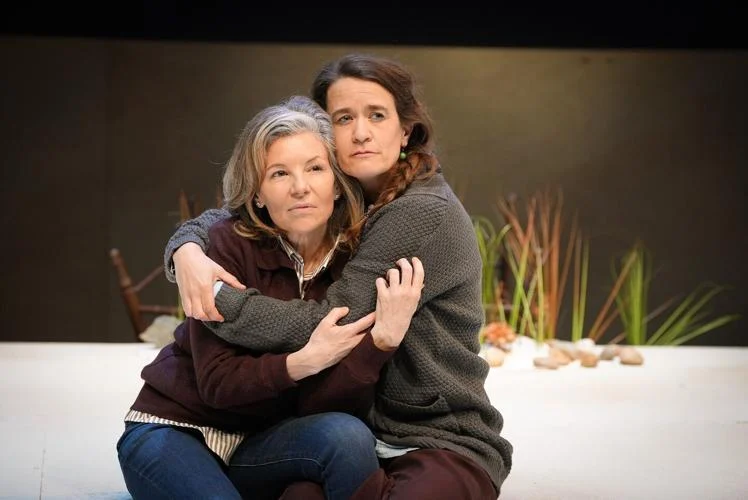
Mara Bollini, “Frankie and Johnny in the Clair de Lune,” Stray Dog Theatre Wendy Renée Greenwood, “The Wanderers,” New Jewish Theatre Michelle Hand, “Meet Me at Dawn,” Upstream Theater Lizi Watt, “Meet Me at Dawn,” Upstream Theater Donna Weinsting, “With,” St. Louis Actors’ Studio
Meet Me at Dawn. Upstream Theater. Photo by ProPhotoSTL
Outstanding Performer in a Drama, Male or Non-Binary Role
Nic Few, “The Brothers Size,” The Repertory Theatre of St. Louis Michael Khalid Karadsheh, “Hamlet,” St. Louis Shakespeare Festival Christian Kitchens, “The Brothers Size,” The Repertory Theatre of St. Louis Joel Moses, “The Wanderers,” New Jewish Theatre Whit Reichert, “With,” St. Louis Actors’ Studio
Outstanding New Play
“John Hughes Your Own Adventure,” by Joseph Garner, Chris “Mr.” Jones, Rob McLemore, Suki Peters, and Ben Ritchie, Cherokee Street Theatre Company “The Pavement Kingdom: A Clinic Escort Play,” by Courtney Bailey, Chorus of Fools “Romeo & Zooliet,” by Jennifer Joan Thompson, St. Louis Shakespeare Festival Professor House,” by Jacob Juntunen, Contraband Theatre “Scream, Echo. Scream.,” written and produced by Summer Baer
Outstanding Achievement in Opera
Christopher Alden, “Don Pasquale,” Opera Theatre of Saint Louis Susanne Burgess, “Don Pasquale,” Opera Theatre of Saint Louis John Gerdes, “The Second Hurricane,” Stray Dog Theatre Daniel Scofield, “Salome,” Union Avenue Opera Leonard Slatkin, “A Midsummer Night’s Dream,” Opera Theatre of Saint Louis
Outstanding Production of an Opera
“A Midsummer Night’s Dream,” Opera Theatre of Saint Louis “Don Pasquale,” Opera Theatre of Saint Louis “My Fair Lady,” Union Avenue Opera “The Second Hurricane,” Stray Dog Theatre “This House,” Opera Theatre of Saint Louis
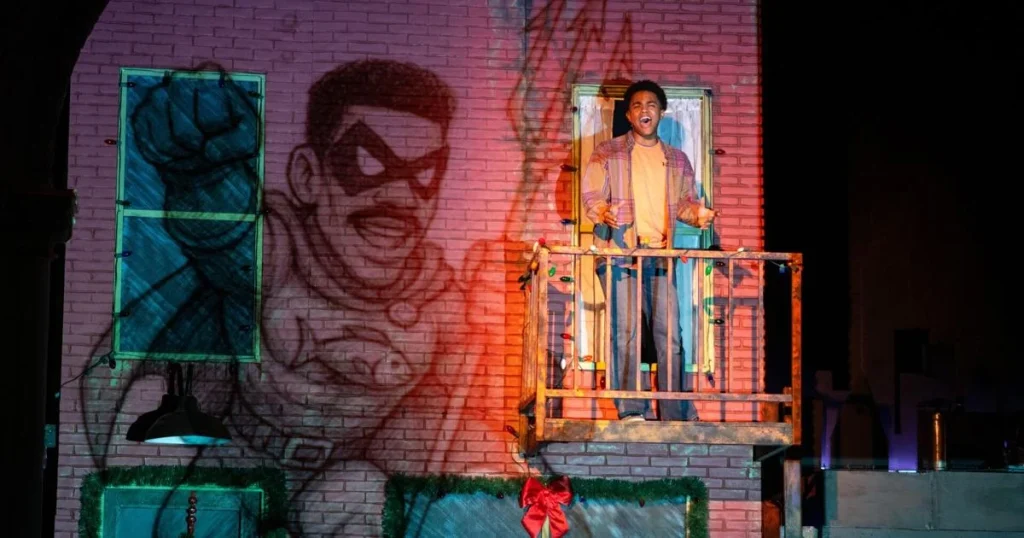
Superhero. Stray Dog Theatre.
Outstanding Musical Director
Jeremiah Ginn, “Murder for Two,” Stages St. Louis Mallory Golden, “Superhero,” Stray Dog Theatre Carter Haney, “Cabaret,” New Jewish Theatre Jermaine Manor, “Raisin (The Musical),” The Black Rep David Nehls, “Beautiful: The Carole King Musical,” Stages St. Louis
Outstanding Choreographer
Kirven Douthit-Boyd, “Raisin (The Musical),” The Black Rep Kirven Douthit-Boyd, “The Brothers Size,” The Repertory Theatre of St. Louis Ellen Isom, “Cabaret,” New Jewish Theatre Lisa Shriver, “Austen’s Pride,” Stages St. Louis Jennifer Werner, “Beautiful: The Carole King Musical,” Stages St. Louis
Outstanding Projections or Special Effects
Justin Been, “Superhero,” Stray Dog Theatre Kareem Deanes, “The Heidi Chronicles,” New Jewish Theatre Kareem Deanes, “The Wash,” The Black Rep Michael Curry Design, “Romeo & Zooliet,” St. Louis Shakespeare Festival Joe Taylor, “Dollhouse by Three Manufacturers,” Equally Represented Arts (ERA)
Outstanding Supporting Performer in a Musical, Female or Non-Binary Role
Kailey Boyle, “Beautiful: The Carole King Musical,” Stages St. Louis Marsiya Miller, “Legally Blonde, The Musical,” Tesseract Theatre Company Jane Paradise, “Cabaret,” New Jewish Theatre Dianica Phelan, “Austen’s Pride,” Stages St. Louis Sarah Polizzi, “Rock of Ages,” Stray Dog Theatre
Outstanding Supporting Performer in a Musical, Male or Non-Binary Role
Dave Cooperstein, “Cabaret,” New Jewish Theatre Aaron Fischer, “Superhero,” Stray Dog Theatre Aaron Fischer, “Cabaret,” New Jewish Theatre Dustin Petrillo, “Madam,” Fly North Theatricals David Socolar, “Beautiful: The Carole King Musical,” Stages St. Louis
Murder for Two. Stages St Louis. Photo by Phillip Hamer.
Outstanding Lighting Design in a Musical
Tony Anselmo, “Raisin (The Musical),” The Black Rep Denisse Chavez, “Cabaret,” New Jewish Theatre Tyler Duenow, “Superhero,” Stray Dog Theatre Jason Lyons, “Austen’s Pride,” Stages St. Louis Sean M. Savoie, “Beautiful: The Carole King Musical,” Stages St. Louis
Outstanding Set Design in a Musical
Peter Barbieri, “Beautiful: The Carole King Musical,” Stages St. Louis Ann Beyersdorfer, “Murder for Two,” Stages St. Louis David Blake, “Cabaret,” New Jewish Theatre Bradley Rohlf and Colin Healey, “Madam,” Fly North Theatricals Rob Lippert, “Superhero,” Stray Dog Theatre
Outstanding Costume Design in a Musical
Sam Hayes, “Madam,” Fly North Theatricals Colleen Michelson, “Rock of Ages,” Stray Dog Theatre Johanna Pan, “Beautiful: The Carole King Musical,” Stages St. Louis Emily Rebholz, “Austen’s Pride,” Stages St. Louis Michele Friedman Siler, “Cabaret,” New Jewish Theatre
Outstanding Performer in a Musical, Female or Non-Binary Role
Brianna Kothari Barnes, “Beautiful: The Carole King Musical,” Stages St. Louis Sarah Gene Dowling, “Superhero,” Stray Dog Theatre Olivia Hernandez, “Austen’s Pride,” Stages St. Louis Anita Michelle Jackson, “Raisin (The Musical),” The Black Rep Hailey Medrano, “Cabaret,” New Jewish Theatre
Anita Jackson. Raisin. The Black Rep. Phillip Hamer photo.
Outstanding Performer in a Musical, Male or Non-Binary Role
Jabari Boykin, “Superhero,” Stray Dog Theatre Rafael DaCosta, “Bat Boy,” New Line Theatre Jeremiah Ginn, “Murder for Two,” Stages St. Louis Dan Hoy, “Austen’s Pride,” Stages St. Louis Spencer Davis Milford, “Cabaret,” New Jewish Theatre
Outstanding Ensemble in a Comedy
“Clyde’s,” The Repertory Theatre of St. Loui “Emma,” The Repertory Theatre of St. Louis “Ken Ludwig’s Baskerville: A Sherlock Holmes Mystery,” New Jewish Theatre “The Cottage,” The Repertory Theatre of St. Louis “Romeo & Zooliet,” St. Louis Shakespeare Festival
Outstanding Ensemble in a Drama
“Hamlet,” St. Louis Shakespeare Festival “I Have Been Here Before,” Albion Theatre Company “The Brothers Size,” The Repertory Theatre of St. Louis “The Wanderers,” New Jewish Theatre “The Wash,” The Black Rep
Outstanding Ensemble in a Musical
“Austen’s Pride,” Stages St. Louis “Beautiful: The Carole King Musical,” Stages St. Louis “Cabaret,” New Jewish Theatre “Raisin (The Musical),” The Black Rep “Superhero,” Stray Dog Theatre
Romeo and Zooliet. St Louis Shakespeare Festival. Photo by Phillip Hamer.
Outstanding Director of a Comedy
Risa Brainin, “The Cottage,” The Repertory Theatre of St. Louis Tracy Brigden, “Emma,” The Repertory Theatre of St. Louis Josiah Davis, “Clyde’s,” The Repertory Theatre of St. Louis Tom Ridgely, “Romeo & Zooliet,” St. Louis Shakespeare Festival Nisi Sturgis, “Ken Ludwig’s Baskerville: A Sherlock Holmes Mystery,” New Jewish Theatre
Outstanding Director of a Drama
Nancy Bell, “Athena,” The Repertory Theatre of St. Louis Annamaria Pileggi, “With,” St. Louis Actors’ Studio Robert Quinlan, “The Wanderers,” New Jewish Theatre Michael Sexton, “Hamlet,” St. Louis Shakespeare Festival Jacqueline Thompson, “The Brothers Size,” The Repertory Theatre of St. Louis
Outstanding Director of a Musical
Justin Been, “Superhero,” Stray Dog Theatre Igor Goldin, “Austen’s Pride,” Stages St. Louis Michael Kostroff, “Murder for Two,” Stages St. Louis Rebekah Scallet, “Cabaret,” New Jewish Theatre Jennifer Werner, “Beautiful: The Carole King Musical,” Stages St. Louis
The Brothers Size. The Rep. Photo by Jon Gitchoff.
Outstanding Production of a Comedy
“Clyde’s,” The Repertory Theatre of St. Louis “Emma,” The Repertory Theatre of St. Louis “Romeo & Zooliet,” St. Louis Shakespeare Festival “The Beauty Queen of Leenane,” Albion Theatre Company “The Cottage,” The Repertory Theatre of St. Louis
Outstanding Production of a Drama
“Hamlet,” St. Louis Shakespeare Festival “Meet Me at Dawn,” Upstream Theater “The Brothers Size,” The Repertory Theatre of St. Louis “The Wanderers,” New Jewish Theatre “With,” St. Louis Actors’ Studio
Outstanding Production of a Musical
“Austen’s Pride,” Stages St. Louis “Beautiful: The Carole King Musical,” Stages St. Louis “Cabaret,” New Jewish Theatre “Raisin (The Musical),” The Black Rep “Superhero,” Stray Dog Theatre
The Wanderers. New Jewish Theatre. Photo by Jon Gitchoff.
Special Award for Lifetime Achievement
Wayne Salomon, early member and associate artistic director of Theatre Project Company, St. Louis theater community educator, director, actor
Milestone Anniversary
Opera Theatre of Saint Louis, for its 50th anniversary as an opera of local, national and international acclaim
Special Award for Lifetime Achievement
Bob Trump, Head Draper at The Repertory Theatre of St. Louis, retired in 2025 after 40 years of work in The Rep’s costume shop
A Midsummer Night’s Dream. Opera Theatre of St. Louis. Photo by Eric Woolsey.
The mission of the St. Louis Theater Circle is simple: To honor outstanding achievement in St. Louis professional theater. Other cities around the country, such as Boston, Chicago, Los Angeles, Philadelphia, San Diego, San Francisco and Washington, D.C., pay tribute to their own local theatrical productions with similar awards programs.
Active members of the St. Louis Theater Circle include Chas Adams (PopLifeSTL.com, St. Louis Arts Scene on Substack, STL Stage Snaps); Mark Bretz (LadueNews); Rosalind Early (St. Louis Post-Dispatch); Tina Farmer (Mound City Messenger); Michelle Kenyon (snoopstheatrethoughts.com, St. Louis Arts Scene on Substack); Gerry Kowarsky (Two on the Aisle, HEC Media); Chuck Lavazzi (St. Louis Arts Scene on Substack, Stage Left blog, Chuck’s Culture Channel on YouTube); Rob Levy (Broadwayworld.com, Review STL, The Arts STL); James Lindhorst (Broadwayworld.com, St. Louis Arts Scene on Substack; Lynn Venhaus (PopLifeSTL.com, KTRS); and Bob Wilcox (Two on theAisle, HEC Media). Eric Kenyon, director of The Chapel venue, is group administrator.
Lynn (Zipfel) Venhaus has had a continuous byline in St. Louis metro region publications since 1978. She writes features and news for Belleville News-Democrat and contributes to St. Louis magazine and other publications.
She is a Rotten Tomatoes-approved film critic, currently reviews films for Webster-Kirkwood Times and KTRS Radio, covers entertainment for PopLifeSTL.com and co-hosts podcast PopLifeSTL.com…Presents.
She is a member of Critics Choice Association, where she serves on the women’s and marketing committees; Alliance of Women Film Journalists; and on the board of the St. Louis Film Critics Association. She is a founding and board member of the St. Louis Theater Circle.
She is retired from teaching journalism/media as an adjunct college instructor.
In Opera Theatre of Saint Louis’ shimmering new production of Benjamin Britten’s “A Midsummer Night’s Dream,” the familiar Shakespearean tale is reborn with a rare blend of musical precision, visual poetry and theatrical wit.
Under the baton of maestro Leonard Slatkin and the direction of Tim Albery, this staging is less a retelling than a re-enchantment—an immersive journey into a world where fairies glide, lovers quarrel and rustic clowns stumble through tragedy with comic brilliance.
The production is anchored by a cast of world-class singers and actors, each bringing nuance and vitality to their roles. The creative team, led by designer Emma Kingsbury, conjures a forest that breathes and transforms while the children’s chorus and mechanicals add layers of charm and humor.
What follows is a breakdown of the production’s key contributors—principal cast, lovers, mechanicals, fairies and creatives—each of whom helps weave this dream into something unforgettable.
The heart of Britten’s dreamscape lies in the ethereal authority of its fairy royalty. Oberon and Tytania, portrayed with vocal finesse and dramatic poise, anchor the supernatural world with a sense of grandeur and mystery. Puck, though silent in song, is a kinetic presence who threads the narrative with mischief and grace.
James Laing – Oberon: A commanding OTSL debut, Laing’s countertenor voice is smooth and powerful, embodying the regal and mystical presence of the fairy king.
Jana McIntyre – Tytania: Also making her OTSL debut, McIntyre dazzles with a silvery bel canto soprano, bringing both elegance and emotional depth to the fairy queen.
Matisse Carmack – Puck: In this non-singing role, Carmack is a kinetic force—quick, agile and mischievous. Her delivery of Puck’s final monologue is masterful.
The quartet of young lovers brings emotional volatility and romantic confusion to the forest, their entanglements rendered with vocal clarity and dramatic charm. Each performer navigates the shifting affections and magical manipulations with humor and heart, grounding the opera’s fantasy in human longing.
Anthony Léon – Lysander: A strong and expressive tenor, Léon brings warmth and charm to the role.
Jennifer Johnson Cano – Hermia: A returning OTSL favorite, Cano delivers a sterling performance with emotional nuance and vocal richness.
Theo Hoffman – Demetrius: A standout among the lovers, Hoffman’s powerful baritone is one of the production’s vocal highlights.
Teresa Parrotta – Helena: Parrotta brings humor and heart to Helena, rounding out the quartet with a vibrant performance.
Comic relief arrives in the form of the “rude mechanicals,” whose earnest attempt at theatrical tragedy becomes a riotous farce. Their scenes are a masterclass in physical comedy and ensemble timing, with Bottom’s transformation into an ass providing one of the production’s most memorable visual gags.
Ben Brady – Bottom: A comedic triumph, Brady is hilarious in both human and donkey form. The donkey’s head is described as a miracle of stagecraft—realistic with a moving mouth that allows Brady’s voice to project clearly and powerfully.
Christian Sanders – Thisbe: Sanders delights with a playful and endearing portrayal of Thisbe.
Robert Mellon, Dylan Gregg, Adam Partridge, Sam Krausz – Mechanicals Ensemble: This troupe delivers classic low-comic charm, wringing every laugh from their vaudevillian rehearsal scenes.
The enchanted forest is populated by a chorus of fairy sprites, led by four charming attendants. Their presence adds a layer of visual and vocal delicacy, transforming the stage into a living, breathing dreamscape. The children’s chorus, under expert direction, brings both innocence and eerie beauty to the production.
Emily Kealani – Cobweb
Veronica Siebert – Mustardseed
Laura Santamaria – Peaseblossom
Zoe Brooks – Moth: These young performers lead the children’s chorus with grace and whimsy, adding a magical layer to the production.
St. Louis Children’s Choruses – Fairy Sprites: A visual and vocal delight, these young singers enhance the enchanted forest with charm and precision.
Behind the scenes, a visionary creative team shapes the production’s aesthetic and emotional tone. From the conductor’s podium to the costume shop, each contributor brings a distinct artistry that elevates the opera’s dreamlike world. Their collaboration results in a production that is as visually arresting as it is musically rich.
Tim Albery – Stage Director: Albery’s minimalist Shakespearean-inspired staging is both magical and emotionally resonant.
Emma Kingsbury – Scenic & Costume Designer: Her designs are exquisite with transformative sets and timeless costumes that elevate the production’s visual storytelling.
Krystal Balleza & Will Vicari – Wig & Makeup Designers: Their work is brilliant, especially in crafting the ethereal looks of the fairy realm.
Seán Curran – Choreographer: Curran’s choreography adds fluidity and charm, enhancing the dreamlike atmosphere.
Leonard Slatkin – Conductor: A celebrated return to OTSL, Slatkin leads the St. Louis Symphony Orchestra with finesse, bringing Britten’s haunting score to life.
Andrew Whitfield – Chorus Master: His direction of the children’s chorus is superb, contributing to some of the production’s most enchanting moments.
CB Adams is an award-winning fiction writer and photographer based in the Greater St. Louis area. A former music/arts editor and feature writer for the St. Louis Globe-Democrat, his non-fiction has been published in local, regional and national publications. His literary short stories have been published in more than a dozen literary journals and his fine art photography has been exhibited in more than 40 galley shows nationwide. Adams is the recipient of the Missouri Arts Council’s highest writing awards: the Writers’ Biennial and Missouri Writing!. The Riverfront Times named him, “St. Louis’ Most Under-Appreciated Writer” in 1996.
Opera Theatre of Saint Louis has always balanced reverence for tradition with a bold embrace of innovation, and its 50th anniversary season is no exception. The world premiere of “This House,” a new commission, looks squarely at the present and future of American opera (through and examination of the past), while the season’s revival of Donizetti’s “Don Pasquale” casts a backward glance—albeit through a sharply contemporary lens.
In remounting the company’s inaugural production from 1976, director Christopher Alden returns not with nostalgia, but with a bracingly modern aesthetic that reimagines the comic core of “Don Pasquale” as a meditation on aging, delusion and desire.
Alden, known for his psychologically incisive and visually stylized productions, sets the action in a Rococo-inspired espresso bar (by way of Botero and Fellini) populated by grotesque old men—figures who mirror the titular character’s absurd longing for youth. The setting is witty and revealing, a hallmark of Alden’s work, and it allows the production to comment on the opera’s themes without sacrificing its buoyant charm.
Sheri Greenawald, who played Norina in the original 1976 staging, returns in a newly created role as the espresso bar proprietor and faux notary. Though the role is modest in scale, Greenawald’s presence is quietly commanding, and her final duet with Susanne Burgess adds a poignant, intergenerational resonance to the production.
Susanne Burgess as Norina with (L to R) Sheri Greenawald as the Notary, Kyle Miller as Dr. Malatesta, and Patrick Wilhelm as the Waiter in Don Pasquale. Photo by Eric Woolsey
The creative team is uniformly strong. Marsha Ginsberg’s set and costume designs are richly evocative, from the frescoed walls and oversized granite-patterned floor to the exaggerated silhouettes that underscore the opera’s farcical elements.
Krystal Balleza and Will Vicari’s wigs and makeup heighten the grotesquerie, while Eric Southern’s lighting and the inventive use of video and shadow in Act Three add layers of visual storytelling. Seán Curran’s choreography, particularly in the Act Two finale, is a kinetic delight, echoing the protagonist’s unraveling psyche with physical wit.
One of the most striking aspects of this production is its use of English—a choice that proves both practical and profound. While operas often lose some of their musicality or nuance in translation, this Don Pasquale gains immediacy and clarity, allowing the humor and emotional stakes to land with unforced precision with an English translation by Phyllis Mead. The vernacular enhances accessibility as well as also deepens the audience’s connection to the characters’ foibles and desires.
This aligns with a long-standing debate in American opera circles, dating back (at least) to 1908 when critic Henry Krehbiel observed that opera in America would remain “experimental” until “the vernacular becomes the language of the performance and native talent provides both works and interpreters.”
(L to R) Patrick Carfizzi as Don Pasquale and Kyle Miller as Dr. Malatesta in Don Pasquale. Photo by Eric Woolsey
More than a century later, Opera Theatre of Saint Louis proves the prescience of Krehbiel’s vision. By embracing English, the company underscores its commitment to making opera a living, breathing art form—rooted in tradition, yet unmistakably of the moment.
This linguistic approach also distinguishes OTSL within the broader St. Louis opera landscape. While OTSL performs exclusively in English to foster immediacy and inclusivity, Union Avenue Opera often presents works in their original languages, preserving the musical and cultural authenticity of the repertoire. Winter Opera St. Louis similarly favors original-language performances, particularly in its focus on classic Italian and French works.
Together, these companies offer a rich spectrum of operatic expression—balancing accessibility with tradition—and contribute to a vibrant, multilingual arts scene that reflects the diversity and sophistication of St. Louis’s theater and entertainment culture.
Musically, the production is anchored by Kensho Watanabe’s elegant conducting of the St. Louis Symphony, which brings Donizetti’s score to life with warmth and precision. The orchestra does more than underscore the action; it articulates its momentum, its pauses, its turns.
Sheri Greenawald as the Notary in Don Pasquale. Sheri played Norina in OTSL’s first-ever production of the same title on May 22, 1976. Photo by Eric Woolsey
Far from a passive presence in the pit, it engages in a dynamic exchange with the stage—less an accompaniment than a co-author of the drama. Watanabe’s sensitivity to the singers and the comic pacing of the bel canto style is evident in the subtle dynamics and impeccable timing throughout.
The chorus, under Andrew Whitfield, is a comic force in its own right, first as leering old men and later as a chorus of women under Norina’s rule.
Among the principals, Patrick Carfizzi’s Don Pasquale is a masterclass in comic timing and pathos. He brings clarity and vocal lucidity to the role, embodying the pompous bachelor with a mix of bluster and vulnerability. Kyle Miller’s Malatesta is a charismatic schemer, his bold baritone matched by an energetic, almost acrobatic stage presence.
The ongoing sight gags with his pork pie hat were a nice touch of visual whimsy and an indication of the level of attention to detail that reveals the production’s quality (that is, they sweated the details).
Susanne Burgess (center) as Norina with members of the chorus in Don Pasquale. Photo by Eric Woolsey
Charles Sy’s Ernesto offers a sweet, lyrical tenor that soars in his serenade to Norina, a moment of romantic magic that culminates in a duet of sublime beauty. As Norina, Susanne Burgess dazzles with a performance that is both vocally virtuosic and emotionally grounded.
Her coloratura passages are delivered with effortless charm, and her comedic instincts are as sharp as her high notes are stratospheric. If forced to choose from the cast, Burgess’ performance was a knock-out, stand-out.
Adding to the comic texture is baritone Patrick Wilhelm in a delightful turn as the waiter-servant-factotum. His silent antics—managing Norina’s extravagant gown, delivering messages with canine devotion, and bouncing through scenes with Chaplinesque flair—contribute to the production’s surrealist tone.
That surrealism is further amplified by Alden’s visual wit: Don Pasquale perched Edith-Ann-like (ala the vintage “Rowan & Martin’s Laugh-In” television show) in an oversized chair; a veiled Sofronia wheeled in on a dessert cart like a birthday surprise; and a lavish shopping spree that name-drops every luxury brand from Armani to Ferrari.
Norina’s ritzy entourage spans a spectrum of chic identities, and her redecorating spree replaces Pasquale’s furnishings with pastel sectionals, which he and Malatesta later use to build a childlike fort.
Ernesto’s serenade is staged with a projected silent film of the lovers strolling through a wooded glen, and silhouette play cleverly underscores the shifting power dynamics—Pasquale literally diminished in Norina’s towering presence.
(L to R) Susanne Burgess as Norina and Charles Sy as Ernesto in Don Pasquale. Photo by Eric Woolsey
At one point, the cast unfurls a banner reading “VIVA LA RESISTENZA,” a gesture that flirts with political commentary but is so deftly woven into the scene that it feels both subversive and theatrically organic—especially as it culminates in the mummy-like wrapping of Sheri Greenawald’s character, blurring the line between satire and stagecraft.
This Don Pasquale is a vivid example of theatrical reinvention. It bridges past and present, celebrating five decades of OTSL’s forward-looking vision. At the risk of sounding highfalutin, this production exemplifies Regietheater—director’s theater—a mode of staging that has become ubiquitous across the global opera landscape.
Yet ubiquity does not guarantee success. What distinguishes this production is how deftly Christopher Alden wields the tools of Regietheater to craft a theatrical experience that is as intellectually stimulating as it is viscerally entertaining. In his hands, Donizetti’s comedy becomes something richer, stranger and altogether more delightful. It’s a production not to be missed.
Opera Theatre of St. Louis’ production of “Don Pasquale” continues in repertory at the Loretto-Hilton Center of Performing Arts at Webster University through June 29. For more information, visit https://opera-stl.org.
(L to R) Patrick Wilhelm as the Waiter and Kyle Miller as Dr. Malatesta in Don Pasquale. Photo by Eric Woolsey
CB Adams is an award-winning fiction writer and photographer based in the Greater St. Louis area. A former music/arts editor and feature writer for the St. Louis Globe-Democrat, his non-fiction has been published in local, regional and national publications. His literary short stories have been published in more than a dozen literary journals and his fine art photography has been exhibited in more than 40 galley shows nationwide. Adams is the recipient of the Missouri Arts Council’s highest writing awards: the Writers’ Biennial and Missouri Writing!. The Riverfront Times named him, “St. Louis’ Most Under-Appreciated Writer” in 1996.
To discuss Opera Theatre of Saint Louis’ New Works Collective in 2025 is to engage with a program that is, at once, an artistic initiative, a social experiment and a statement of intent.
The project, now in its third year, represents a quiet but deliberate recalibration of the operatic landscape, a gesture toward a more inclusive and participatory model of commissioning and production.
If Peter Gelb, General Manager of the Metropolitan Opera, is correct in asserting that “the future of opera lies in the creation of new works that speak to contemporary audiences,” then OTSL’s New Works Collective is both a response and a challenge to that claim. The initiative does more than merely generate new operas because it also interrogates the mechanisms by which they come into being.
The Collective’s methodology is notable: rather than relying on the insular world of opera professionals to dictate artistic output, it assembles a committee of St. Louis-based artists, advocates and local leaders to guide its commissions. The result is an inherently communal aesthetic, one that seeks to reflect the multiplicity of voices within its reach.
Black Coffee, with Taylor-Alexis DuPont and Paul Chwe Minchul An). Photo by Philip Hamer.
The productions have explored a diverse array of themes and settings, including explorations of female empowerment, free speech, Black queer joy, and neurodiversity.
This year’s cohort—three short operas bound by the thematic thread of parent-child relationships—extends the program’s tradition of eclecticism and social engagement.
The evening opened with Black Coffee, a collaboration between librettist Alicia Revé Like. At its core, the opera is a meditation on displacement and belonging, following Makena, a young woman newly arrived in St. Louis, as she navigates the nebulous terrain of community and self-definition. Taylor-Alexis DuPont’s portrayal of Makena was imbued with a light, airy lyricism that lent warmth to the character’s uncertainties.
The supporting cast, including Martin Luther Clark as Makena’s father and Emilie Kealani in dual roles as Blake and Allegra, demonstrated impressive versatility, particularly in a score that demanded an interplay of humor and poignancy. Concert Black’s music, characterized by its understated charm, was complemented by a nimble use of projections, evoking the shifting spaces of bookstores and cafés with a disarming sense of whimsy.
Makena ITaylor-Alexis DuPont) meets Allegra (Emilee Kealani) in ‘Black Coffee.” Philip Hamer photo.
The second opera, Family Style, offered a tonal shift. Librettist Melisa Tien and composer Meilina Tsui construct a world in which familial duty and personal aspiration collide with an almost operatic inevitability.
Mia, played with luminous sensitivity by Emilie Kealani, finds herself at an impasse: her father, Ping (Paul Chwe Minchul An), dreams of opening a Taiwanese restaurant, while she wrestles with the financial and emotional weight of her own ambitions.
Tsui’s score, laced with Chinese tonalities and instrumentation, shaped the opera’s emotional contours with an evocative depth.
A moment of levity—an exuberant ode to broccoli, featuring dancing vegetable stalks—was an unexpected delight, evidence of the production’s ability to balance gravity with playfulness. The chemistry between Kealani and An was particularly affecting, their voices intertwining in moments of shared longing and resignation.
Family-Style. Photo by Philip Hamer.
The evening concluded with Kandake, perhaps the most traditionally operatic of the three in scope and subject matter. Written by librettist Jarrod Lee and composer Tim Amukele, Kandake recounts the true story of Amanirenas, the warrior queen of Kush who defied the Roman Empire. Cierra Byrd, in the title role, delivered a performance of striking authority, her rich, full-bodied voice channeling both the grandeur and vulnerability of Amanirenas.
The opera’s climactic moment—a visual and musical spectacle in which Amanirenas, clad in Angelique Newbauer’s resplendent gold costume, ascends to her final triumph amidst a cascade of shimmering confetti—was among the evening’s most indelible images. If any of the works on offer seemed poised for expansion into full-length form, Kandake was the clear candidate, its narrative ambition and dramatic breadth demanding a longer canvas.
Kandake. Photo by Philip Hamer.
Under the assured musical direction of Darwin Aquino and the deft staging of Richard Gammon, the 2025 New Works Collective was executed with a coherence that belied its tripartite structure.
Yuki Izumihara’s scenic and projection designs, Newbauer’s costumes, Kaitlyn Breen’s lighting, Brandon Fink’s choreography, and Kelley Jordan’s wig and makeup design all contributed to a production that felt polished and deeply considered.
Three years into its existence, the New Works Collective has carved out a space that is at once generative and disruptive, honoring opera’s traditions while challenging its insular tendencies. It has become a platform not only for emerging composers and librettists but for an evolving vision of what opera can and should be.
Whether it continues beyond this cycle remains to be seen, but if the 2025 performances are any indication, the project is far from exhausted. One can only hope for its continuation, as a program and as a provocation to the wider operatic world: who gets to create opera, and for whom is it created?
CB Adams is an award-winning fiction writer and photographer based in the Greater St. Louis area. A former music/arts editor and feature writer for the St. Louis Globe-Democrat, his non-fiction has been published in local, regional and national publications. His literary short stories have been published in more than a dozen literary journals and his fine art photography has been exhibited in more than 40 galley shows nationwide. Adams is the recipient of the Missouri Arts Council’s highest writing awards: the Writers’ Biennial and Missouri Writing!. The Riverfront Times named him, “St. Louis’ Most Under-Appreciated Writer” in 1996.
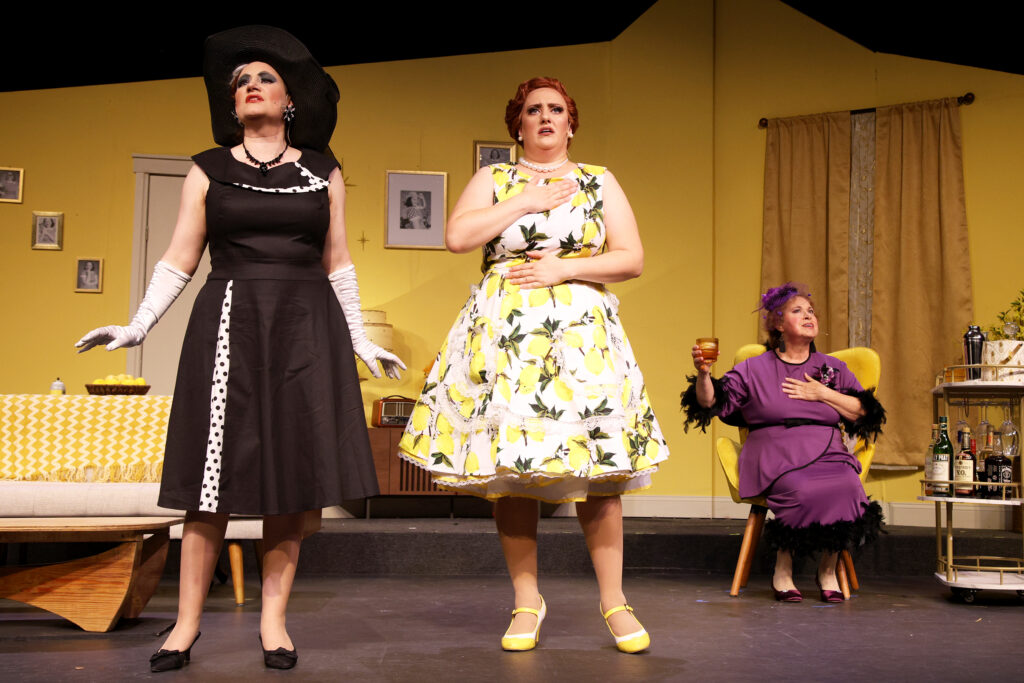
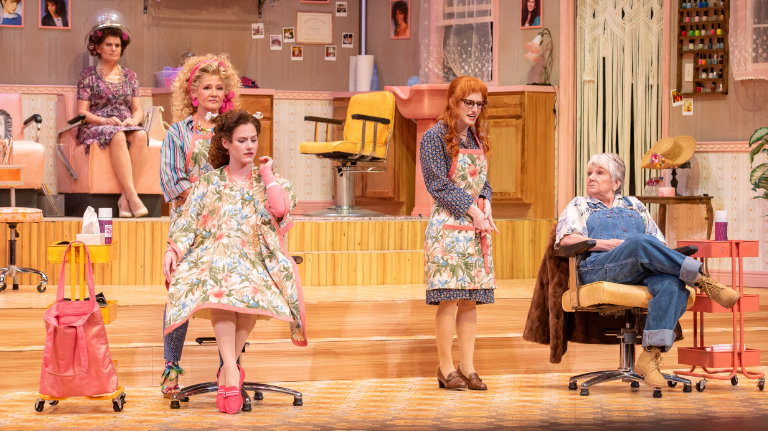
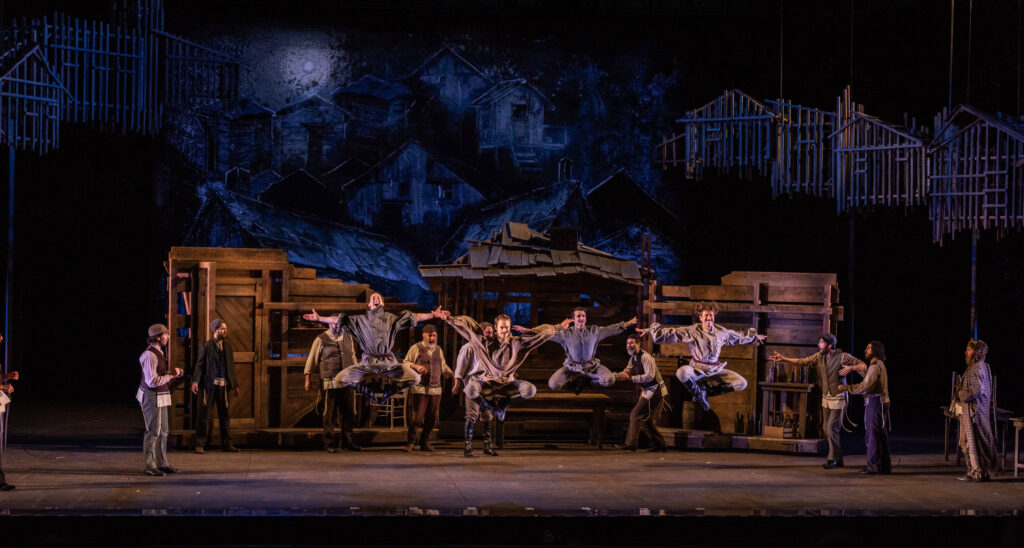
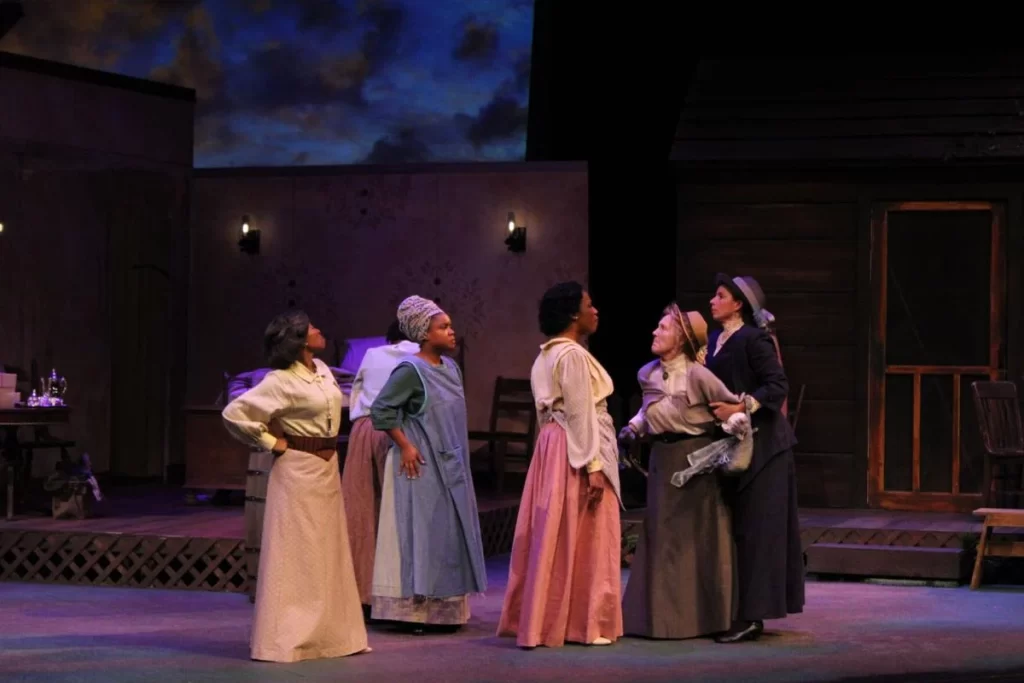
THE MUNY, WITH 30 NOMINATIONS, IS TOP CONTENDER FOR 12TH ANNUAL ST. LOUIS THEATER CIRCLE AWARDS; “RAGTIME,” “AS YOU LIKE IT” LEAD INDIVIDUAL SHOWS WITH 10 NOMINATIONS EACH
Event March 24 Will Honor Outstanding Work in Local Professional Theater in 2024
The Muny, with 30 nominations covering all seven of the productions in its 2024 season, is the top contender at the 12th annual St. Louis Theater Circle Awards. Individual shows “Ragtime” at Stages St. Louis, and “As You Like It” at St. Louis Shakespeare Festival, with 10 nominations apiece, lead the list of 53 productions to receive at least one nomination.
The annual gala will take place on Monday, March 24 at the Loretto-Hilton Center for the Performing Arts, 130 Edgar Road on the campus of Webster University, home of The Rep.
The Rep’s box office number is 314-968-4925. Tickets will also be available at The Rep’s box office one hour before the ceremony, which will start at 7:30 p.m. Doors will open at 6:30 p.m. for a one-hour ‘Happy Hour,’ with beverages and snacks available for purchase.
Nominees in 34 categories, including a new category “Outstanding Projections or Special Effects,” will vie for honors covering comedies, dramas, musicals and operas produced by local professional theater and opera companies in the calendar year 2024. Approximately 112 productions were considered for nominations for this year’s event.
Additionally, Joe Hanrahan, founder and artistic director of The Midnight Company, and Ron Himes, founder and producing director of the St. Louis Black Repertory (The Black Rep), will be honored with Lifetime Achievement Awards.
The eighth annual award ceremony, which was to have been held at the Loretto-Hilton Center on the campus of Webster University, was cancelled in February 2020 due to the escalating number of cases of COVID-19. Instead, that event, honoring outstanding local theater productions for the year 2019, was held virtually in a highly polished presentation produced by HEC Media and streamed on HEC’s YouTube channel and web site.
A ninth annual ceremony similarly was streamed on HEC Media for the combined years of 2020 and 2021, before the gala returned to the Loretto-Hilton in 2023 for the 10th annual awards.
The nominees for the 12th annual St. Louis Theater Circle Awards are:
Jasmine Cheri Rush, Caroline Amos and Ricki Franklin, all nominees for “As You Like It.”Photo by Philip Hamer.
Outstanding Supporting Performer in a Comedy, Female or Non-Binary Role
Ricki Franklin, “As You Like It,” St. Louis Shakespeare Festival Amy Loui, “Steel Magnolias,” Stages St. Louis Jasmine Cheri Rush, “As You Like It,” St. Louis Shakespeare Festival Zoe Vonder Haar, “Steel Magnolias,” Stages St. Louis Susan Wylie, “Woman in Mind (December Bee),” Albion Theatre
Outstanding Supporting Performer in a Comedy, Male or Non-Binary Role
Danny Brown, “Woman in Mind (December Bee),” Albion Theatre Joseph Garner, “Woman in Mind (December Bee),”” Albion Theatre Isaiah Di Lorenzo, “Woman in Mind (December Bee),” Albion Theatre Joel Moses, “As You Like It,” St. Louis Shakespeare Festival Spencer Sickmann, “Trayf,” New Jewish Theatre
Outstanding Performer in a Comedy, Female or Non-Binary Role
Caroline Amos, “As You Like It,” St. Louis Shakespeare Festival Emily Baker, “Woman in Mind (December Bee),” Albion Theatre Claire Coffey, “Bell, Book and Candle,” Stray Dog Theatre LaWanda Jackson, “Don’t Be a Hero, Thank You,” Prison Performing Arts Kelley Weber, “The Roommate,” Repertory Theatre of St. Louis
Spencer Sickmann, Jason Schmidt and Bryce Miller, all nominees for “Trayf.” Photo by Jon Gitchoff.
Outstanding Performer in a Comedy, Male or Non-Binary Role
Alan Knoll, “We All Fall Down,” New Jewish Theatre Bryce A. Miller, “Trayf,” New Jewish Theatre Ben Ritchie, “Red Jasper,” Michael Madden Productions Jacob Schmidt, “Trayf,” New Jewish Theatre Joel Wilper, “Bell, Book and Candle,” Stray Dog Theatre
Outstanding Lighting Design in a Play
Denisse Chavez, “All My Sons,” New Jewish Theatre Denisse Chavez, “As You Like It,” St. Louis Shakespeare Festival Minjoo Kim, “Dial ‘M’ for Murder,” Repertory Theatre of St. Louis William C. Kirkham, “Moby Dick,” Repertory Theatre of St. Louis Sean Savoie, “Hold On!,” The Black Rep
Outstanding Sound Design
Kareem Deanes, “The Roommate,” Repertory Theatre of St. Louis Chuck Harper, “Wolf Kings,” YoungLiars Rick Sims, “Moby Dick,” Repertory Theatre of St. Louis Amanda Werre, “All My Sons,” New Jewish Theatre Amanda Werre, “Dial ‘M’ for Murder,” Repertory Theatre of St. Louis
Marcy Wiegert nominated for “Romanov Family Yard Sale” among ERA’s 6 nominations. Photo by Joey Rumpell.
Outstanding Costume Design in a Play
Dorothy Marshall Englis, “As You Like It,” St. Louis Shakespeare Festival Colleen Michelson, “The Mousetrap,” Stray Dog Theatre Carolyn “Sully” Ratke, “Moby Dick,” Repertory Theatre of St. Louis Michele Friedman Siler, “Life Is a Dream,” Upstream Theater Marcy Wiegert, “Romanov Family Yard Sale,” ERA Theatre
Outstanding Set Design in a Play
Andrea Ball, “We All Fall Down,” New Jewish Theatre Scott C. Neale, “As You Like It,” St. Louis Shakespeare Festival Courtney O’Neill, “Moby Dick,” Repertory Theatre of St. Louis Margery and Peter Spack, “Dial ‘M’ for Murder,” Repertory Theatre of St. Louis Margery and Peter Spack, “Red,” New Jewish Theatre
Outstanding Supporting Performer in a Drama, Female or Non-Binary Role
Evann De-Bose, “Hold On!,” The Black Rep Kari Ely, “Wedding Band,” The Black Rep Margery Handy, “The Inheritance,” Tesseract Theatre Company Nadja Kapetanovich, “The Whale,” St. Louis Actors’ Studio Claire Karpen, “August: Osage County,” Repertory Theatre of St. Louis
“August: Osage County” received six nominations for The Rep, among its 19. Photo by Jon Gitchoff.
Outstanding Supporting Performer in a Drama, Male or Non-Binary Role
J. Samuel Davis, “King Hedley II,” The Black Rep Gary Glasgow, “Life Is a Dream,” Upstream Theater Jayson Heil, “All My Sons,” New Jewish Theatre Alan Knoll, “August: Osage County,” Repertory Theatre of St. Louis Peter Mayer, “Cat on a Hot Tin Roof,” Tennessee Williams Festival St. Louis
Outstanding Performer in a Drama, Female or Non-Binary Role
Nicole Angeli, “Lungs,” Albion Theatre Company Amy Loui, “All My Sons,” New Jewish Theatre Ellen McLaughlin, “August: Osage County,” Repertory Theatre of St. Louis Jacqueline Thompson, “Wedding Band,” The Black Rep Maggie Wininger, “Molly Sweeney,” Albion Theatre
Outstanding Performer in a Drama, Male or Non-Binary Role
Christopher Harris, “Red,” New Jewish Theatre Greg Johnston, “All My Sons,” New Jewish Theatre Joel Moses, “Lungs,” Albion Theatre Gabriel Paul, “The Inheritance,” Tesseract Theatre Company William Roth, “The Whale,” St. Louis Actors’ Studio
Kristen Joy Linvendt, and nominees Greg Johnston, Jayson Heil and Amy Loui in NJT’s” All My Sons.” Photo by Jon Gitchoff.
Outstanding New Play
“Am I Dangerous?,” by e.k. doolin, Contraband Theatre “Longing,” by Lize Lewy “Love in the Time of Nothing,” by Jayne Hannah, St. Louis Actors’ Studio “Romanov Family Yard Sale,” by Courtney Bailey, ERA Theatre “Tempest in a Teapot,” by Shualee Cook, SATE Ensemble
Outstanding Achievement in Opera
Justin Austin, “The Barber of Seville,” Opera Theatre of Saint Louis Daniela Candillari, “Julius Caesar,” Opera Theatre of Saint Louis Sarah Mesko, “Julius Caesar,” Opera Theatre of Saint Louis Elise Quagliata, “Carmen,” Union Avenue Opera Laura Skroska, “Into the Woods,” Union Avenue Opera
Outstanding Production of an Opera
“Carmen,” Union Avenue Opera “Galileo Galilei,” Opera Theatre of Saint Louis “H.M.S. Pinafore,” Winter Opera St. Louis “Julius Caesar,” Opera Theatre of Saint Louis “The Barber of Seville,” Opera Theatre of Saint Louis
The company of the 2024 Muny production of “Les Misérables.” Photo by Phillip Hamer
Outstanding Musical Director
E. Renee Gamez, “Ragtime,” Stages St. Louis Khalid McGee, “Blues in the Night,” The Black Rep James Moore, “Les Miserables,” The Muny Zach Newman, “Anastasia: The Musical,” Tesseract Theatre Company Andra Velis Simon, “Waitress,” The Muny
Outstanding Choreographer
William Carlos Angulo, “In the Heights,” The Muny Jared Grimes, “Anything Goes,” The Muny Sylvia Hernandez-Distasi, “Moby Dick,” Repertory Theatre of St. Louis Mike Hodges, “Xanadu,” Stray Dog Theatre Lindsay Joy Lancaster, “Disney’s Newsies,” Stages St. Louis
Outstanding Projections or Special Effects
Zach Cohn, “Hold On!,” The Black Rep Zachary Grimm, “Longing,” Lize Lewy Kylee Loera, “Anything Goes,” The Muny Joe Taylor, “Romanov Family Yard Sale,” ERA Theatre Mike Tutaj, “Waitress,” The Muny
Sarajane Clark and Sarah Gene Dowling are nominated for “Ruthless.” Photo by John Lamb.
Outstanding Supporting Performer in a Musical, Female or Non-Binary Role
Rachel Bailey, “[title of show],” Prism Theatre Company Sarajane Clark, “Ruthless,” Stray Dog Theatre Lissa deGuzman, “Waitress,” The Muny Kimmie Kidd, “Anastasia: The Musical,” Tesseract Theatre Company Shereen Pimentel, “Ragtime,” Stages St. Louis
Outstanding Supporting Performer in a Musical, Male or Non-Binary Role
Will Bonfiglio, “First Date,” New Jewish Theatre Kevin Chamberlin, “Anything Goes,” The Muny Matthew Cox, “Ragtime,” Stages St. Louis Fergie L. Philippe, “Disney’s The Little Mermaid,” The Muny Lara Teeter, “Anything Goes,” The Muny
Outstanding Lighting Design in a Musical
Tyler Duenow, “Nevermore,” Stray Dog Theatre John Lasiter, “Fiddler on the Roof,” The Muny Jason Lyons, “Les Miserables,” The Muny Sean M. Savoie, “Disney’s Newsies,” Stages St. Louis Sean M. Savoie, “Ragtime,” Stages St. Louis
Outstanding Set Design in a Musical
Ann Beyersdorfer, “Disney’s Newsies,” Stages St. Louis Ann Beyersdorfer, “Les Miserables,” The Muny Wilson Chin, “Waitress,” The Muny Edward E. Haynes Jr., “Anything Goes,” The Muny Arnie Sancianco, “In the Heights,” The Muny
Ann Beyersdorfer’s set design is one of her two nominations, and “Disney’s Newsies” received 5 nominations. Photo by Philip Hamer.
Outstanding Costume Design in a Musical
Leon Dobkowski, “Dreamgirls,” The Muny Sarah Gene Dowling, “Anastasia: The Musical,” Tesseract Theatre Company Sarah Gene Dowling, “Nevermore,” Stray Dog Theatre Robin L. McGee, “Disney’s The Little Mermaid,” The Muny Brad Musgrove, “Ragtime,” Stages St. Louis
Outstanding Performer in a Musical, Female or Non-Binary Role
Sarah Gene Dowling, “Ruthless,” Stray Dog Theatre Tiffany Mann, “Dreamgirls,” The Muny Marissa McGowan, “Ragtime,” Stages St. Louis Jessica Vosk, “Waitress,” The Muny Sarah Wilkinson, “Anastasia: The Musical,” Tesseract Theatre Company
Outstanding Performer in a Musical, Male or Non-Binary Role
Jordan Donica, “Les Miserables,” The Muny Aaron Fischer, “Anastasia: The Musical,” Tesseract Theatre Company Tamar Greene, “Ragtime,” Stages St. Louis Adam Heller, “Fiddler on the Roof,” The Muny John Riddle, “Les Miserables,” The Muny
“Steel Magnolias” at Stages St. Louis. Photo by Philip Hamer.
Outstanding Ensemble in a Comedy
“As You Like It,” St. Louis Shakespeare Festival “Romanov Family Yard Sale,” ERA Theatre “Spirits to Enforce,” The Midnight Company “Steel Magnolias,” Stages St. Louis “Woman in Mind (December Bee),” Albion Theatre
Outstanding Ensemble in a Drama
“All My Sons,” New Jewish Theatre “August: Osage County,” Repertory Theatre of St. Louis “Hold On!,” The Black Rep “Moby Dick,” Repertory Theatre of St. Louis “The Inheritance,” Tesseract Theatre Company
Outstanding Ensemble in a Musical
“Anastasia: The Musical,” Tesseract Theatre Company “Anything Goes,” The Muny “Disney’s Newsies,” Stages St. Louis “Fiddler on the Roof,” The Muny Ragtime,” Stages St. Louis
The company of the 2024 Muny production of “Fiddler on the Roof.” Photo by Phillip Hamer
Outstanding Director of a Comedy
Robert Ashton, “Woman in Mind (December Bee),” Albion Theatre Nancy Bell, “As You Like It,” St. Louis Shakespeare Festival Lucy Cashion, “Romanov Family Yard Sale,” ERA Theatre Lucy Cashion, “Spirits to Enforce,” The Midnight Company Aaron Sparks, “Trayf,” New Jewish Theatre
Outstanding Director of a Drama
Gary Wayne Barker, “All My Sons,” New Jewish Theatre David Catlin, “Moby Dick,” Repertory Theatre of St. Louis Alan Knoll, “Red,” New Jewish Theatre Stephen Peirick, “The Inheritance,” Tesseract Theatre Company Amelia Acosta Powell, “August: Osage County,” Repertory Theatre of St. Louis
Outstanding Director of a Musical
Lili-Anne Brown, “Waitress,” The Muny Marcia Milgrim Dodge, “Anything Goes,” The Muny Deidre Goodwin, “Ragtime,” Stages St. Louis Brittanie Gunn, “Anastasia: The Musical,” Tesseract Theatre Company Rob Ruggiero, “Fiddler on the Roof,” The Muny
Outstanding Production of a Comedy
“As You Like It,” St. Louis Shakespeare Festival “Romanov Family Yard Sale,” ERA Theatre “Steel Magnolias,” Stages St. Louis “Trayf,” New Jewish Theatre “Woman in Mind (December Bee),” Albion Theatre
The cast of “Wedding Bank” at The Black Rep, which received 3 nominations.
Outstanding Production of a Drama
“All My Sons,” New Jewish Theatre “August: Osage County,” Repertory Theatre of St. Louis “Moby Dick,” Repertory Theatre of St. Louis “The Inheritance,” Tesseract Theatre Company “Wedding Band,” The Black Rep
Outstanding Production of a Musical
“Anastasia: The Musical,” Tesseract Theatre Company “Disney’s Newsies,” Stages St. Louis “Fiddler on the Roof,” The Muny “Ragtime,” Stages St. Louis “Waitress,” The Muny
Joe Hanrahan.
Special Award for Lifetime Achievement
Ron Himes.
Joe Hanrahan, founder and artistic director, The Midnight Company Ron Himes, founder and producing director, The Black Rep
The mission of the St. Louis Theater Circle is simple: To honor outstanding achievement in St. Louis professional theater. Other cities around the country, such as Boston, Chicago, Los Angeles, Philadelphia, San Diego, San Francisco and Washington, D.C., pay tribute to their own local theatrical productions with similar awards programs.
Active members of the St. Louis Theater Circle include Chas Adams (PopLifeSTL.com,STL Stage Snaps, St. Louis Arts Sceneon Substack); Mark Bretz (LadueNews); Rosalind Early (St. Louis Post-Dispatch); Tina Farmer (Mound City Messenger); Michelle Kenyon (snoopstheatrethoughts.com, St. Louis Arts Sceneon Substack); Gerry Kowarsky (Two on the Aisle, HEC Media); Chuck Lavazzi ( St. Louis Arts Scene on Substack, Stage Left blog, Chuck’s Culture Channel on YouTube); James Lindhorst (Broadwayworld.com, St. Louis Arts Scene on Substack); Lynn Venhaus (PopLifeSTL.com, KTRS); and Bob Wilcox (Two on theAisle, HEC Media). Eric Kenyon, director of The Chapel venue, is group administrator.
Lynn (Zipfel) Venhaus has had a continuous byline in St. Louis metro region publications since 1978. She writes features and news for Belleville News-Democrat and contributes to St. Louis magazine and other publications.
She is a Rotten Tomatoes-approved film critic, currently reviews films for Webster-Kirkwood Times and KTRS Radio, covers entertainment for PopLifeSTL.com and co-hosts podcast PopLifeSTL.com…Presents.
She is a member of Critics Choice Association, where she serves on the women’s and marketing committees; Alliance of Women Film Journalists; and on the board of the St. Louis Film Critics Association. She is a founding and board member of the St. Louis Theater Circle.
She is retired from teaching journalism/media as an adjunct college instructor.
“Carmen” is no stranger to controversy. As far back as its premiere in 1875, audiences and reviewers were put off by the opera’s depiction of the lifestyles of commoners and bohemians, and their supposed immorality and lawlessness – not to mention the onstage death of Carmen herself. Flash forward to Opera Theatre of St. Louis’s 47th season opener, “Carmen,” at the Browning Theatre in the Loretto-Hilton Center, and there may be a bit of operatic controversy afoot as well.
That’s because Director Rodula Gaitanou has updated the setting and Carmen herself to appeal to more modern sensibilities. Gaitanou has moved the mid-19th century Spanish setting to the 1950s and, correspondingly, uniformed the original army into Franco’s Guardia Civil.
But it is Carmen herself, initially seen dragging a bloody bull’s head across the stage, who is distinctly reimagined in OTSL’s production. Carmen is often presented as a stereotypical, exotic, Spanish seductress – as hot as the “Habanera” she sings early in the opera. Not so in this production. Gaitanou provides a headstrong, independent Carmen – one that doesn’t need to prove her ability to turn a man’s heart and head with a flashy red dress, a provocative sashay or even stiletto heels. The audience is challenged to accept Carmen’s ability to inspire the men around her, as well as to witness her fatal attraction to the ideals captured in her final duet with Don José: “But whether I live or die / No! No! No! I will not give in.”
That idealistic inflexibility leads, even in this interpretation, to her inevitable demise.
Yunuet Laguna. Photo by Eric Woolsey
Gaitanou’s Carmen, as sung by Sarah Mesko, is more formidable, though no less unforgettable. She even rides through some scenes on a motorcycle, like a sort of Daughter of Anarchy. In other scenes, she sports a matador jacket, a visual metaphor for a woman who – ultimately fatally – runs and fights with men rather than the bulls.
To spend more time explaining Gaitanou’s artistic choices for the presentation of Carmen is to risk providing a lopsided review of the rest of this fine production. To Gaitanou’s credit, this production elevates and balances the role of Carmen with her love interests, Don José, sung by Adam Smith, and Escamillo, sung by Christian Pursell. Both are strong, masculine and believable – and Mesko’s Carmen is up to the challenges posed by these two males.
The standout performance among this strong cast is provided by Yunuet Laguna as Micaëla. Clad throughout as a dowdy, frumpy (and even pregnant by Don José) village maiden, Laguna’s “Je dis que rien m’epouvante” shines forth as a potent, if plaintive, Jiminy Cricket counterpoint to Carmen’s shinier persona. That a supporting role can rise to such showstopping prominence proves this production’s overall high quality and integrity.
Under the baton of Daniela Candillari, Opera Theatre’s new principal conductor, the Saint Louis Symphony impressively projects as if it were a larger ensemble of musicians and more than does justice to Bizet’s score.
Also noteworthy is the subtle-yet-profound sets and costumes by Cordelia Chisholm and lighting by Christopher Akerlind. “Carmen” is often associated with a fiery red and other brash, bullfighty colors. In contrast, this production evokes a Spain dusted in a drab desert palette, which is perfect for the most important splash of red at Carmen’s culminating death scene.
Opera Theatre’s “Carmen” continues at 7:30 p.m. on Jun 8, 12, 16, and 25 and at 12:30 p.m. on Jun 4 and 22.For more information on the 2022 Festival Season or for tickets, visit: https://opera-stl.org/
CB Adams is an award-winning fiction writer and photographer based in the Greater St. Louis area. A former music/arts editor and feature writer for the St. Louis Globe-Democrat, his non-fiction has been published in local, regional and national publications. His literary short stories have been published in more than a dozen literary journals and his fine art photography has been exhibited in more than 40 galley shows nationwide. Adams is the recipient of the Missouri Arts Council’s highest writing awards: the Writers’ Biennial and Missouri Writing!. The Riverfront Times named him, “St. Louis’ Most Under-Appreciated Writer” in 1996.
As Stage Director Omer Ben Seadia writes of “The Magic Flute” in this season’s gorgeously designed program for Opera Theatre of St. Louis (OTSL), “We come back to ‘The Magic Flute’ in every generation, so that we too can look around and decide for ourselves what the world should look like and who we want to be in the world.”
And like its balletic counterpart cum cultural chestnut, “The Nutcracker,” Mozart’s opera is indeed wide, magical and appealing enough to invite interest, interpretation and relevance from generation to generation since it premiered in 1791. As Paul Simon more recently put it, “…every generation throws a hero up the pop charts / Medicine is magical and magical is art…”
Jeni Houser as The Queen of the Night
It’s tempting to play the wonk and dwell on how and why this singspiel in two acts has enjoyed such a long run. But the more pressing question is whether OTSL’s 2022 production is up to the demanding challenge and delivers a Flute that is as relevant as it is magical and. The short answer is yes.
If you were at the May 28th performance and seek outside validation of why you and almost everyone else – across several generations – laughed, clapped and all-but sang along to the Queen of the Night’s famous aria (if only we were all coloratura sopranos), then consider yourself validated.
A closer look, however, reveals a subtle, cerebral interpretation of this classic – one that takes some interesting risks and rewards the careful observer. As film director/writer/producer Alan Parker once said, “It’s just as hard to make a bad film as a good one…” The same holds true for opera productions.
The pros at OTSL faced a million decisions that coalesced into this take on a canonical opera. One would have loved to have listened to the discussions between Seadia, Set Designer Ryan Howell and Lighting Designer Christopher Akerlind as they explored how to create the set, which is deceptively simple.
It was anchored by the twisted trunk of a tree – shades of Keebler Elves – that served as the synecdoche for the entire enchanted forest. The tree was flanked by an elevated, wood-toned walkway and staircase that was so ordinary as to become essentially ubiquitous, if not invisible.
The set’s standout element is the busy-patterned, bi-color, batik-like back wall. At first glance, the wall seems more fitting for “The Lion King” than an enchanted forest. But cue the lights. Throughout the opera, the use of light brings some of the no-so-random shapes to life as owls, heads or all-seeing eyes.
Clever in the best sense of the world, and never so obvious as to detract from the overall performance. The use of suspended light bars in Act II was spectacularly effective, especially since this half of the opera relates to light relative to Act I’s focus on darkness.
Jessica Jahn, costume designer, and Tom Watson, wig and make-up designer, created costumes that hinted at a disparate variety of influences. The costume for Sarastro, the High Priest of the Sun, for instance, enveloped Adam Lau in a spectral cape that was part David Bowie in “The Man Who Fell To Earth” and part Balok from the “The Corbomite Maneuver” episode of “Star Trek.”
Johnathan McCullough and Angel Riley
It would have been easy to rely on a more traditional, Egyptian-theme for Sarastro. At Sarastro’s first entrance, his costume was slightly off-putting, but as Lau stiffly moves about, his costume’s next-generation pharaonic vibe makes sense. Again, this is a cerebral production of the Flute.
The three Workers also sported spacey costumes that are a mash-up of brown Carhartt overalls and bowel-shaped hoods reminiscent of the Jawas in “Star Wars.” Not quite as effective was The Queen of the Night’s second act costume that included a lighted iconographic halo. Using lights to depict a character associated with darkness seems a bit gimmicky, but not overly detracting thanks to the powerful performance of Jeni Houser.
The Flute’s story is simply silly by today’s standards. Its magic lies in the music by Mozart. And the magic in this production is the cast. With a smooth assist from the orchestra led by Rory Macdonald, they almost make the set, costumes and lighting superfluous.
It’s easy to emphasize Johnathan McCollough’s Papageno because the character has all the best, funniest lines and he gets to romp through his scenes – so much Falstaffian id mucking about with all the other Flutian egos. The world of opera could use more laughter like this. McCollough plays his Papageno as a well-rounded, hedonistic nature boy. Angel Riley was the perfect counterpoint and foil with her Papagena as his devilish, spunky love-interest.
Balancing Papageno’s comic antics is the more serious, eyes-on-the-prize prince, Tamino, sung by tenor Joshua Blue. As the central character, Blue’s performance was silky, entrancing and believable.
Equally strong was Houser as The Queen of the Night – part Borg Queen and part Wicked Stepmother (lighted headdress notwithstanding.) Houser’s coloratura “Vengeance Aria” is a show-stopper, as it is intended to be.
Erica Petrocelli sings Pamina, the Queen’s daughter. Pamina is both vulnerable in a girl-tied-on-the-tracks sort of way and fiercely strong-willed like Elsa in “Frozen.” Petrocelli pulls off that balance with a performance equal to, if not surpassing, her queen mum.
The basso Lau convincingly and captivatingly sings Sarastro. Lau’s coldly controlled presence paired with his deep, resonate, voice imbues Sarastro with gravitas and other-worldliness.
The art of opera is a gestalt, composed of all of the theatrical arts, and especially music and voice. Magical is art. OTSL’s 2022 production of “The Magic Flute” joins the ongoing lineage of productions that precede it. And if anyone of this generation questions the need for another, borrow the title from the second volume of Elvis’s gold hits and say, “50,000,000 Flute Fans Can’t Be Wrong.”
Erica Petrocelli and Joshua Blue
“The Magic Flute” is presented in repertory by Opera Theatre of St. Louis June 8-26 at the Loretto-Hilton Center, 130 Edgar Road, St. Louis. It is performed in English with projected English subtitles and runs 2 hours, 30 minutes. Members of the St. Louis Symphony Orchestra accompany the performance. For dates, tickets and more information, visit: https://opera-stl.org/whats-on/the-magic-flute/
CB Adams is an award-winning fiction writer and photographer based in the Greater St. Louis area. A former music/arts editor and feature writer for the St. Louis Globe-Democrat, his non-fiction has been published in local, regional and national publications. His literary short stories have been published in more than a dozen literary journals and his fine art photography has been exhibited in more than 40 galley shows nationwide. Adams is the recipient of the Missouri Arts Council’s highest writing awards: the Writers’ Biennial and Missouri Writing!. The Riverfront Times named him, “St. Louis’ Most Under-Appreciated Writer” in 1996.
15 arts organizations will join forces with OTSL and RAC to present a streamed concert in support of artists whose livelihoods have been directly impacted by COVID-19.
Together with 14 other arts organizations and the Regional Arts Commission (RAC), Opera Theatre of Saint Louis (OTSL) is proud to announce “Arts United STL,” a free virtual benefit in support of RAC’s Artist Relief Fund, which provides critical aid to St. Louis working artists whose livelihoods have been critically interrupted by the pandemic. Produced by OTSL in partnership with the St. Louis Shakespeare Festival, this benefit will take place at 7 p.m. on Sunday, May 31st and present performances from local arts organizations, including The Big Muddy Dance Company, The Black Rep, Circus Flora, COCA, Jazz St. Louis, The Muny, Opera Theatre of Saint Louis, Repertory Theatre of St. Louis, St. Louis Ballet, St. Louis Children’s Choirs, St. Louis Shakespeare Festival, St. Louis Symphony Orchestra, The Sheldon, STAGES St. Louis, the Tennessee Williams Festival St. Louis, and more.
Arts United STL was first envisioned by OTSL General Director Andrew Jorgensen as a way for St. Louis’ established arts institutions to help support the community’s vibrant arts ecosystem. After an initial consultation between OTSL, RAC, and the St. Louis Shakespeare Festival, a consortium of 15 organizations was invited across an array of arts mediums. In the coming days, RAC will also encourage open submissions from independent artists and other arts organizations to further highlight the artistic diversity of the city.
More information about Arts United STL can be found on Opera Theatre’s website at ExperienceOpera.org/ArtsUnited, which will also host the live video stream on Sunday, May 31st. In addition, viewers may watch the livestream via YouTube on Opera Theatre’s channel. Viewers will be encouraged to donate to the RAC Artist Relief Fund during the concert. To date, the Artist Relief Fund has distributed $136,500 in direct support to individual artists. The goal of Arts United STL is to raise an additional $250,000 through 1,000 individual donations and sponsorships. Supporters may donate to the Artist Relief Fund at ExperienceOpera.org/ArtsUnited at any time before, during, or after the live event.
The arts and culture sector is an important driver for the St. Louis economy. According to the 2015 Americans for the Arts Economic Prosperity 5 study commissioned by RAC, the nonprofit arts and culture sector generated $590.9 million and 19,129 full-time equivalent jobs for the greater St. Louis area during that same year. Since the start of the pandemic, based on research conducted by Americans for the Arts, 89% of St. Louis City and County arts institutions have canceled events that would have reached more than 285,000 individuals.
“This benefit represents an exciting and collaborative effort to respond to the global crisis affecting the arts and culture sector in our region,” said Mont Levy, chair of the board of commissioners at RAC. “As the major public funder of arts in the region with a mandate to support individual artists, we know it is RAC’s responsibility to provide emergency support during this time of great need. We could not be more grateful to Opera Theatre of Saint Louis for spearheading this event, or to the St. Louis Shakespeare Festival and every participating organization for their work to highlight the rich cultural tapestry of our region and support their fellow artists.”
The Regional Arts Commission of St. Louis is the largest annual funder of non-profit arts in the region, providing grants to individual artists, arts and culture organizations, and other programs since 1985. RAC established the Artist Relief Fund through the St. Louis Community Foundation on April 1st to help working artists who have lost income due to the pandemic. So far, the fund has distributed $500 and $1,000 grants to more than 130 artists and will resume accepting new relief applications once additional funds have been secured.
OTSL General Director Andrew Jorgensen says of the effort, “We are thrilled to be collaborating with so many other arts organizations to help local artists, whose work makes St. Louis an immeasurably vibrant, special place. OTSL couldn’t be happier to produce this concert in support of artists during these difficult times. This benefit will highlight a fantastic array of art from different genres that reflect the artistic diversity and traditions of this community. I am so grateful to all my many colleagues who are uniting in this remarkable way to support one another and our entire arts ecosystem.”
All participating organizations are donating their time, with production costs and staffing needs covered by Opera Theatre of Saint Louis, additional staffing needs covered by St. Louis Shakespeare Festival, and an in-kind donation from Switch. The program will be directed by St. Louis Shakespeare Festival Artistic Director Tom Ridgely. Arts United STL is produced in partnership with the Regional Arts Commission, and the following arts partners: The Big Muddy Dance Company, The Black Rep, Circus Flora, COCA, Jazz St. Louis, The Muny, Opera Theatre of Saint Louis, Repertory Theatre of St. Louis, St. Louis Ballet, St. Louis Children’s Choirs, St. Louis Shakespeare Festival, St. Louis Symphony Orchestra, The Sheldon, STAGES St. Louis, and the Tennessee Williams Festival St. Louis.
Here is the HEC featurette piece: https://youtu.be/Upzz841hHX4
# #
About Regional Arts Commission
The Regional Arts Commission of St. Louis (RAC) supports artists and arts organizations through grantmaking, strategic initiatives and other programs that build capacity, improve quality and advance diversity, equity and inclusion within the region’s arts and culture sector. Celebrating its 35th anniversary in 2020, RAC has been pivotal in nurturing the vibrant art scene throughout St. Louis, awarding more than 7,000 grants totaling over $100 million since its inception in 1985. Directed by a board of 15 commissioners appointed by the chief executives of St. Louis City and St. Louis County, RAC prioritizes quality in its support of nonprofit arts organizations, individual artists, and programs and promotes partnerships that strengthen the sector and drive progress throughout the region. RAC receives its funding from hotel/motel room sales tax revenue from St. Louis City and County. Visit www.racstl.org for more information, or follow us on Facebook at Regional Arts Commission or Twitter @RACStLouis.
Lynn (Zipfel) Venhaus has had a continuous byline in St. Louis metro region publications since 1978. She writes features and news for Belleville News-Democrat and contributes to St. Louis magazine and other publications.
She is a Rotten Tomatoes-approved film critic, currently reviews films for Webster-Kirkwood Times and KTRS Radio, covers entertainment for PopLifeSTL.com and co-hosts podcast PopLifeSTL.com…Presents.
She is a member of Critics Choice Association, where she serves on the women’s and marketing committees; Alliance of Women Film Journalists; and on the board of the St. Louis Film Critics Association. She is a founding and board member of the St. Louis Theater Circle.
She is retired from teaching journalism/media as an adjunct college instructor.
The COVID-19 pandemic presents a multitude of obstacles to overcome for organizations of all types, and theater groups are no exception. Sharon Hunter, Artistic Director-Producer of Moonstone Theatre Company, aims to help address some of the virus-related challenges that the St. Louis theatre community faces by forming the St. Louis Theatre Community Task Force.
“As I was thinking about how to proceed with my own company in the wake of the pandemic, I started thinking it would be helpful to get a lot of the theaters to sit down via Zoom and discuss concerns, ideas and solutions for moving forward as we navigate the future of theatre in St. Louis,” Hunter explains.
Sharon Hunter
The Task Force will address concerns including conducting safe auditions, rehearsals and performances, finding new ways to seat audiences, maintaining the visibility of the St. Louis theatre community, new ways to offer theatre experiences and recommendations for the use of personal protective equipment.
Hunter said the Task Force, which is the first of its kind in the St. Louis area, welcomes local theatre groups of all sizes. In addition to these organizations, representatives from the St. Louis County Department of Health and the Center For Disease Control have also been invited to the first online meeting to address questions and concerns.
Theatre companies invited to participate include R-S Theatrics, The Q Collective, The Midnight Company, Slightly Askew Theatre Ensemble, Upstream Theater, Repertory Theatre of St. Louis, COCA, Shakespeare Festival STL, Black Rep, Stray Dog Theatre, Stages St. Louis, St. Louis Actors’ Studio, The Muny, Opera Theatre of Saint Louis, New Jewish Theatre, Cherokee Street Theatre, The Cabaret Project of St. Louis, Max & Louie Productions, Black Mirror Theatre, Young Liars, West End Players Guild, Tennessee Williams Festival St Louis, New Line Theatre, ERA Theatre Company, STL Fringe Festival, St Louis Shakespeare, Metro Theatre Company, That Uppity Theatre Company and the Tesseract Theatre Company.
The initial meeting of the Task Force is scheduled for Thursday, April 23, at 7 p.m. Theatre groups interested in interested in participating should contact Hunter at [email protected] to get access to the Zoom link. For more info, check their Facebook page for updates: https://www.facebook.com/STLTheatre/.
Lynn (Zipfel) Venhaus has had a continuous byline in St. Louis metro region publications since 1978. She writes features and news for Belleville News-Democrat and contributes to St. Louis magazine and other publications.
She is a Rotten Tomatoes-approved film critic, currently reviews films for Webster-Kirkwood Times and KTRS Radio, covers entertainment for PopLifeSTL.com and co-hosts podcast PopLifeSTL.com…Presents.
She is a member of Critics Choice Association, where she serves on the women’s and marketing committees; Alliance of Women Film Journalists; and on the board of the St. Louis Film Critics Association. She is a founding and board member of the St. Louis Theater Circle.
She is retired from teaching journalism/media as an adjunct college instructor.