
By CB Adams
Opera Theatre of Saint Louis closes its 2026 festival season with a production of Charles Gounod’s “Romeo and Juliet” that understands exactly what makes the opera work.
Director Keturah Stickann, conductor Ramón Tebar and a superb cast place the relationship between the young lovers at the center of the evening. Every scene, every duet and nearly every design choice serves that relationship, allowing the opera’s final moments to land with uncommon emotional force.
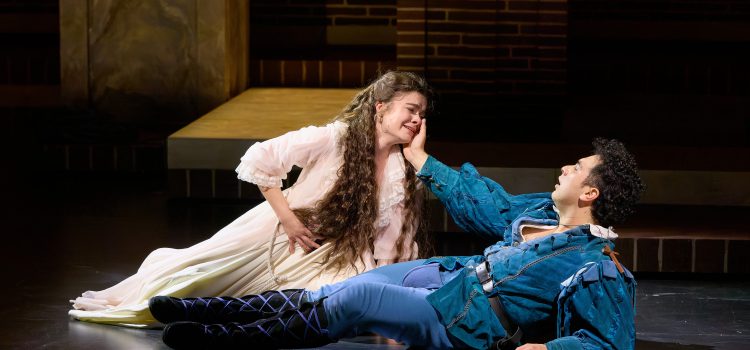
Emma Marhefka and Leonardo Sánchez establish that foundation from their first encounter at the Capulet ball. Over the course of four duets, attraction deepens into devotion, devotion deepens into intimacy and intimacy collides with tragedy. By the opera’s final moments, the fate of Romeo and Juliet feels like a personal loss.
Although the opera bears the lovers’ names, this production finds its emotional center in Juliet. Marhefka charts the evening’s most significant journey, carrying Juliet from youthful exuberance and certainty toward hard-won understanding. Her buoyant “Je veux vivre” captures a young woman delighted by life’s possibilities and confident in her place within them.
Marhefka uses the aria to establish the emotional ground beneath the entire performance. Experience, loss and consequence gradually reshape that confidence, and Marhefka traces every step of the transformation.
Sánchez proves an ideal partner in that journey. His clear, ardent tenor and openhearted stage presence ground Romeo’s devotion in genuine feeling. He also captures the impulsiveness that repeatedly transforms emotion into action and action into consequence. Together, Marhefka and Sánchez accomplish the production’s central task. They make the relationship real.
Stickann follows the emotional architecture that Gounod built into the score. The four great duets become milestones in the relationship’s evolution. At the ball, attraction arrives with the force of discovery.
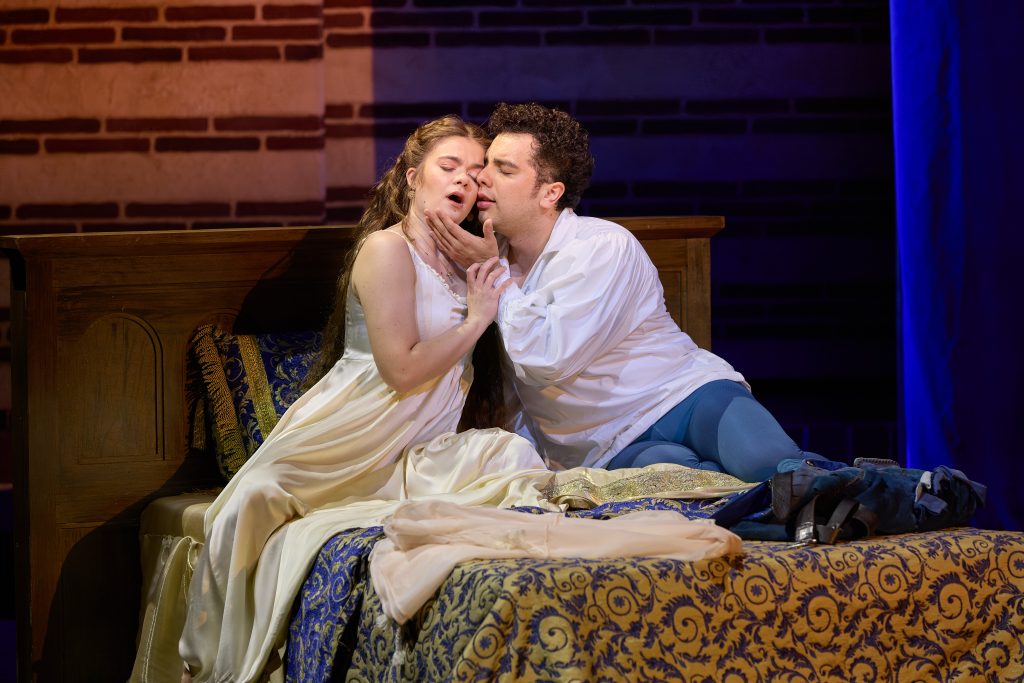
At the balcony, discovery deepens into commitment. In the bedroom, longing yields to intimacy. In the tomb, intimacy confronts consequence. Marhefka and Sánchez make each stage feel earned, allowing the relationship to grow before our eyes rather than simply advancing it from one familiar scene to the next.
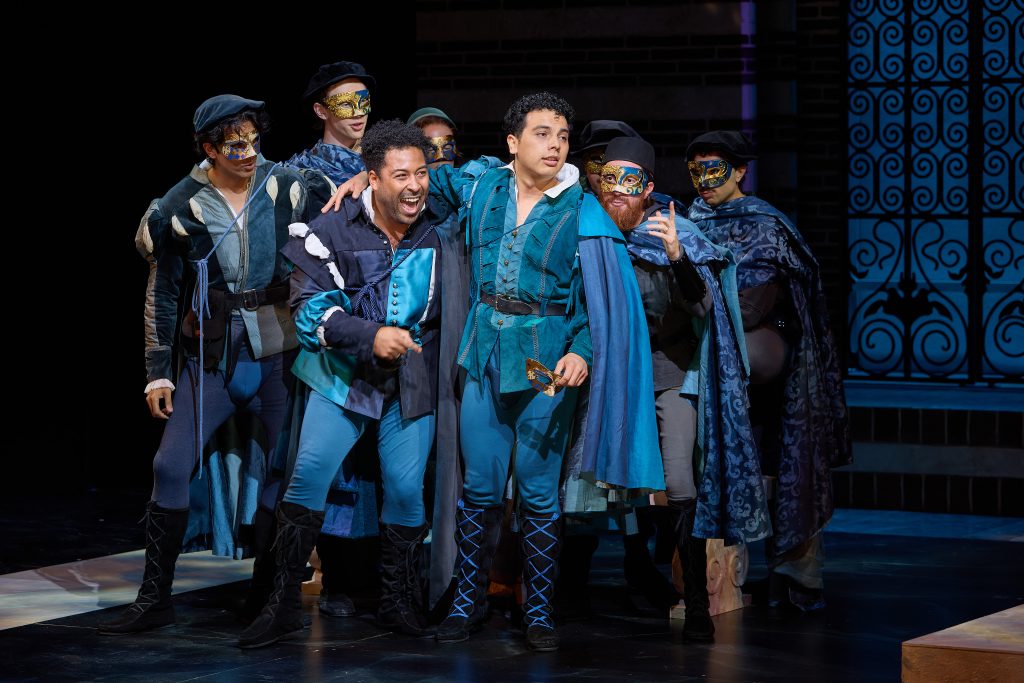
The masked ball pulses with youthful energy. Seán Curran’s choreography fills the stage with movement while Marhefka and Sánchez create an immediate connection that feels spontaneous and authentic.
The balcony scene narrows the world around them. Family loyalties, social obligations and old grievances lose their hold as the lovers construct a private universe of their own making. They move forward with complete certainty. They trust feeling to overcome circumstance.
The bedroom scene reveals the relationship at its fullest expression. The lovers move beyond longing and into intimacy. Reality waits outside the room. Neither lover recognizes how quickly it will arrive.
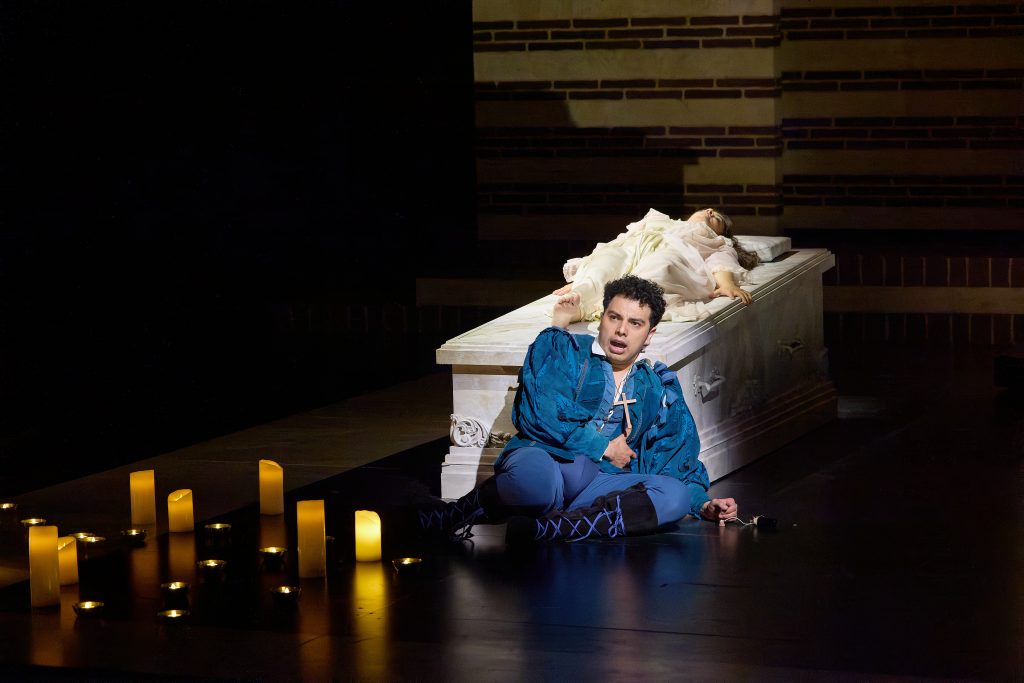
By the tomb scene, reality has arrived in full. The final duet devastates because the production earns it. Marhefka and Sánchez carry the emotional weight of everything that came before. The audience mourns two people rather than two symbols.
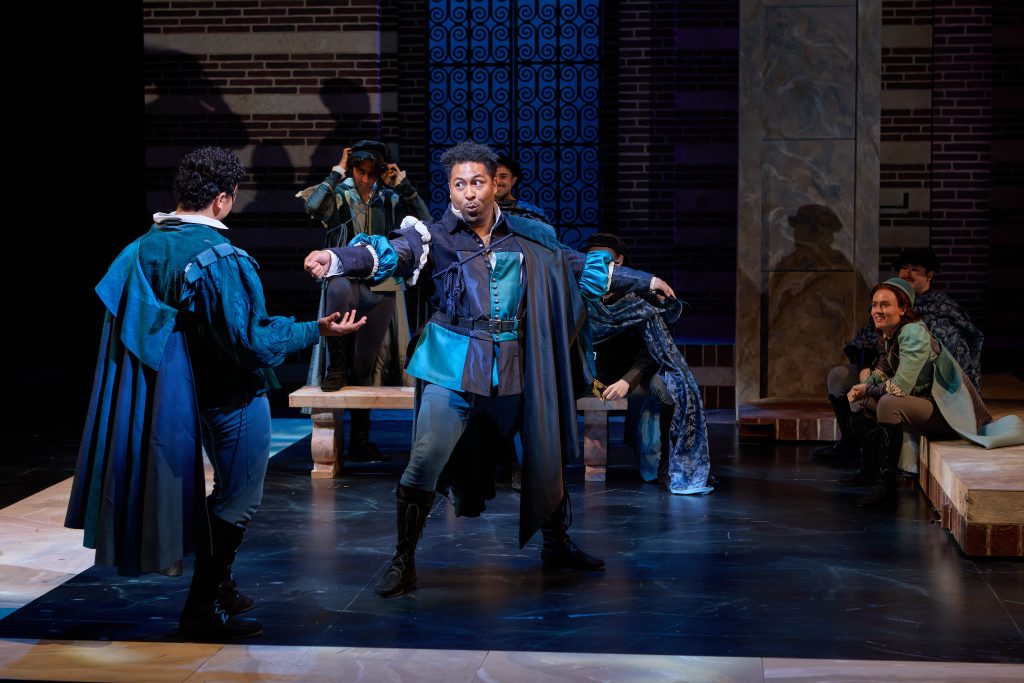
The supporting cast defines the forces pressing against that increasingly fragile private world. Benjamin Taylor’s Mercutio embodies the exuberance the production spends its first act celebrating and its remaining acts dismantling.
His Queen Mab scene sparkles with wit, confidence and youthful vitality. His death shifts the emotional temperature of the evening and signals that the world surrounding the lovers has begun to harden.
Micah Perry’s Tybalt burns hot and fast. His bright tenor matches a temperament that seems incapable of imagining a future beyond the next insult, challenge or grievance. The emotions arrive with the same force as his blade. Perry captures the moment when youthful certainty hardens into catastrophe.
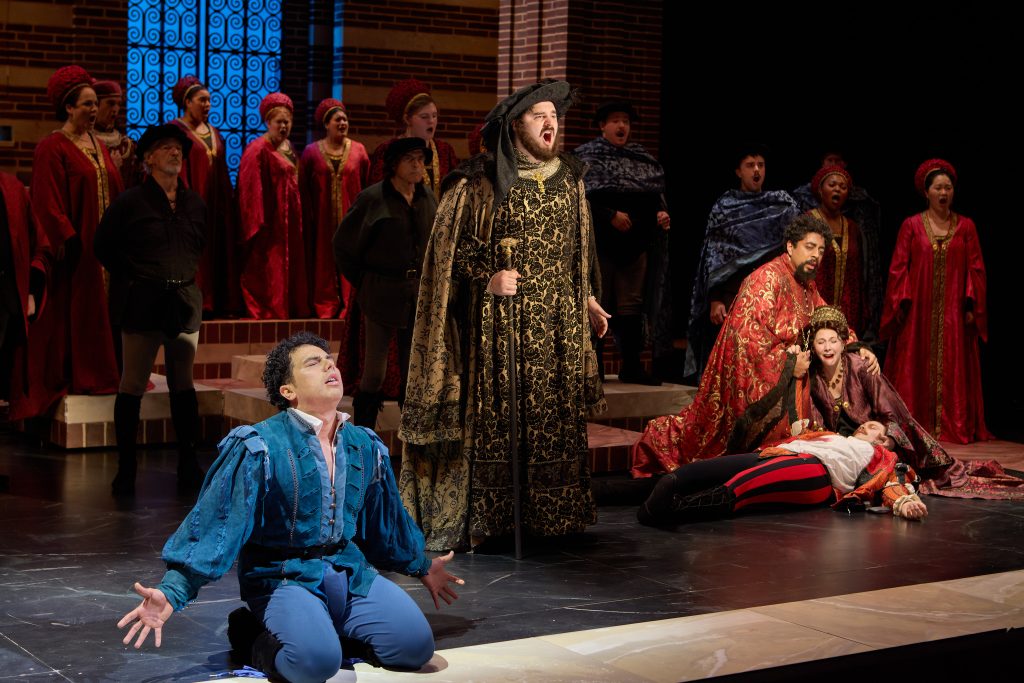
Nicholas Newton gives Friar Laurence the confidence of a man who believes wisdom and planning can master events. The opera steadily exposes the limits of that confidence.
Vinicius Costa commands the stage as Lord Capulet, embodying the expectations and obligations that increasingly constrain Juliet’s choices. The certainty of the older generation proves no more reliable than the certainty of the younger one.
Edmond Rodrigues brings quiet steadiness to Benvolio, while Veronica Siebert’s spirited Stephano, Imara Ashton’s warm Gertrude, Jason Edelstein’s authoritative Duke of Verona, Cole Bellamy’s Paris, Julia Mariah Johnson’s Lady Capulet and Kevin Douglas Jasaitis’ Gregorio give shape and texture to the world surrounding the lovers.
Tebar understands that Gounod often advances the drama by suspending it. Again and again, the orchestra creates moments in which time seems briefly to stop and attention narrows to the emotional lives of the lovers. Tebar draws feeling from melody, phrasing and texture rather than sheer volume. The St. Louis Symphony Orchestra illuminates the drama without overwhelming it.
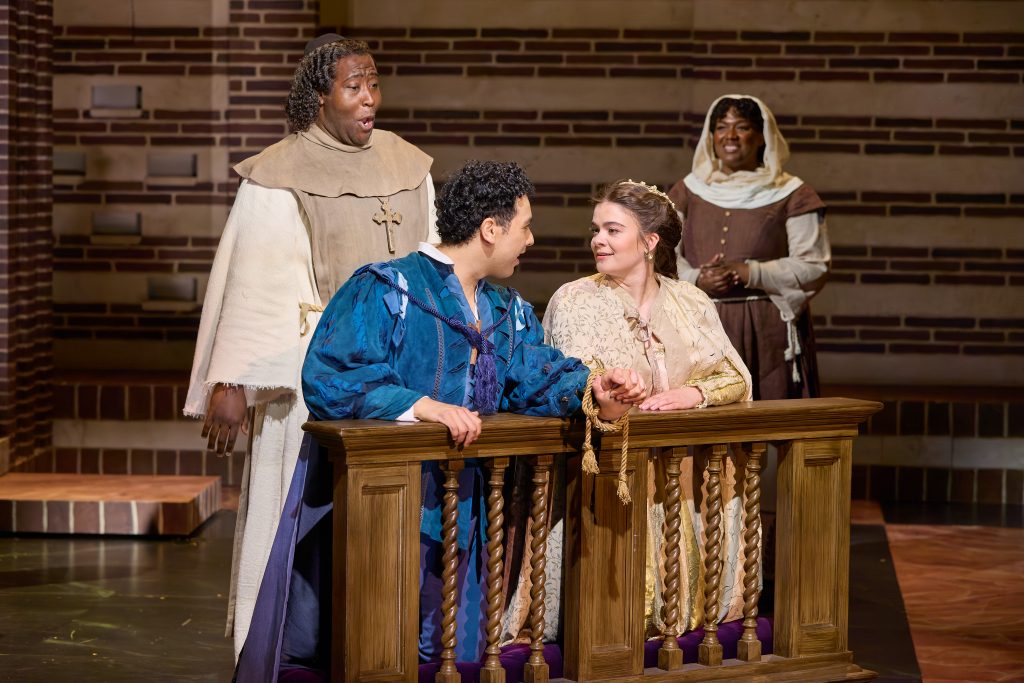
Stickann’s collaborators reinforce the production’s focus on emotional clarity. Scenic designer Liliana Duque Piñeiro embraces fluidity and metaphor. At first glance, the set’s broad expanse of masonry and geometric forms resembles a public swimming pool emptied of water.
As the evening unfolds, however, its logic reveals itself. Steps, balconies, platforms and even convenient toe holds for Romeo gradually emerge from the design, creating a flexible environment for the opera’s succession of intimate encounters. Large movable columns continually reshape the playing space, suggesting both a divided society and shifting emotional terrain.
Their movement occasionally draws attention to the mechanics of the staging, but never enough to pull the audience from the drama. The architecture rarely competes for attention. Instead, the eye naturally returns to the performers and Robert Perdziola’s richly colored costumes.
Costume designer Robert Perdziola externalizes the feud through color. The Montagues inhabit a world of blue while the Capulets move through shades of red, rose and violet. The visual contrast immediately clarifies the barriers the lovers spend the evening attempting to cross.
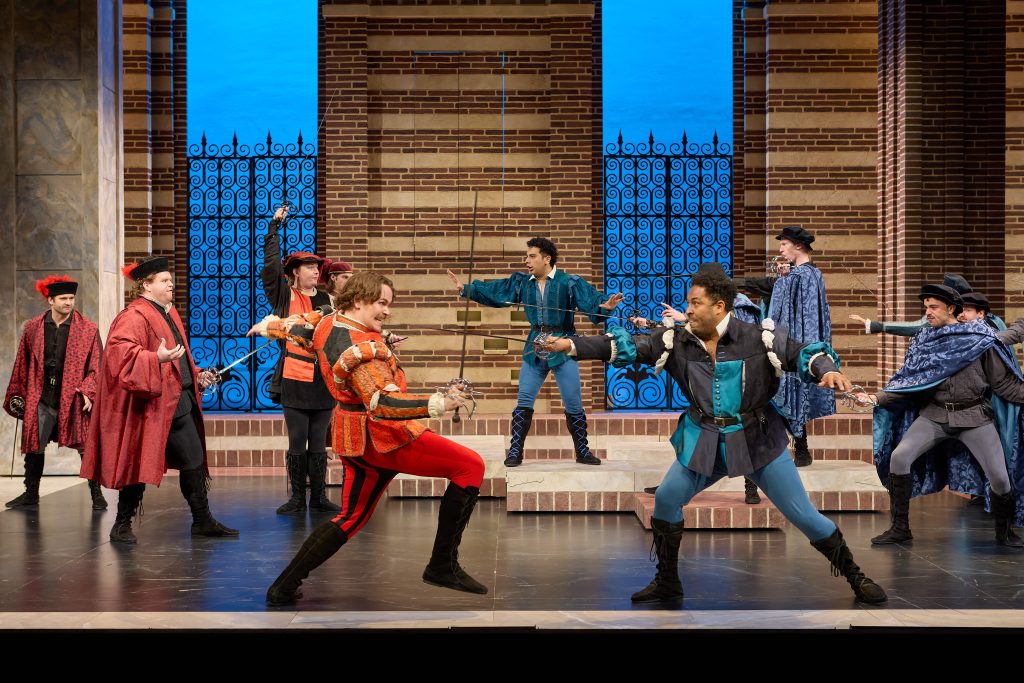
Eric Southern shapes mood and focus through light, while Andrew Whitfield’s chorus establishes the conflict that shadows the lovers from the opening moments.
The achievement of OTSL’s “Romeo and Juliet” lies in how completely it earns its emotional ending. By the time the lovers reach the tomb, the exuberance that animated the ball has collided with the realities waiting outside the lovers’ private world. The story remains familiar. The ending still hurts.
“Romeo and Juliet” runs June 7-26 at Opera Theatre of Saint Louis. The production concludes OTSL’s 2026 festival season, which features all four productions in rotating repertory at the Loretto-Hilton Center on the campus of Webster University. For tickets and additional information, visit Opera Theatre of Saint Louis at opera-stl.org.
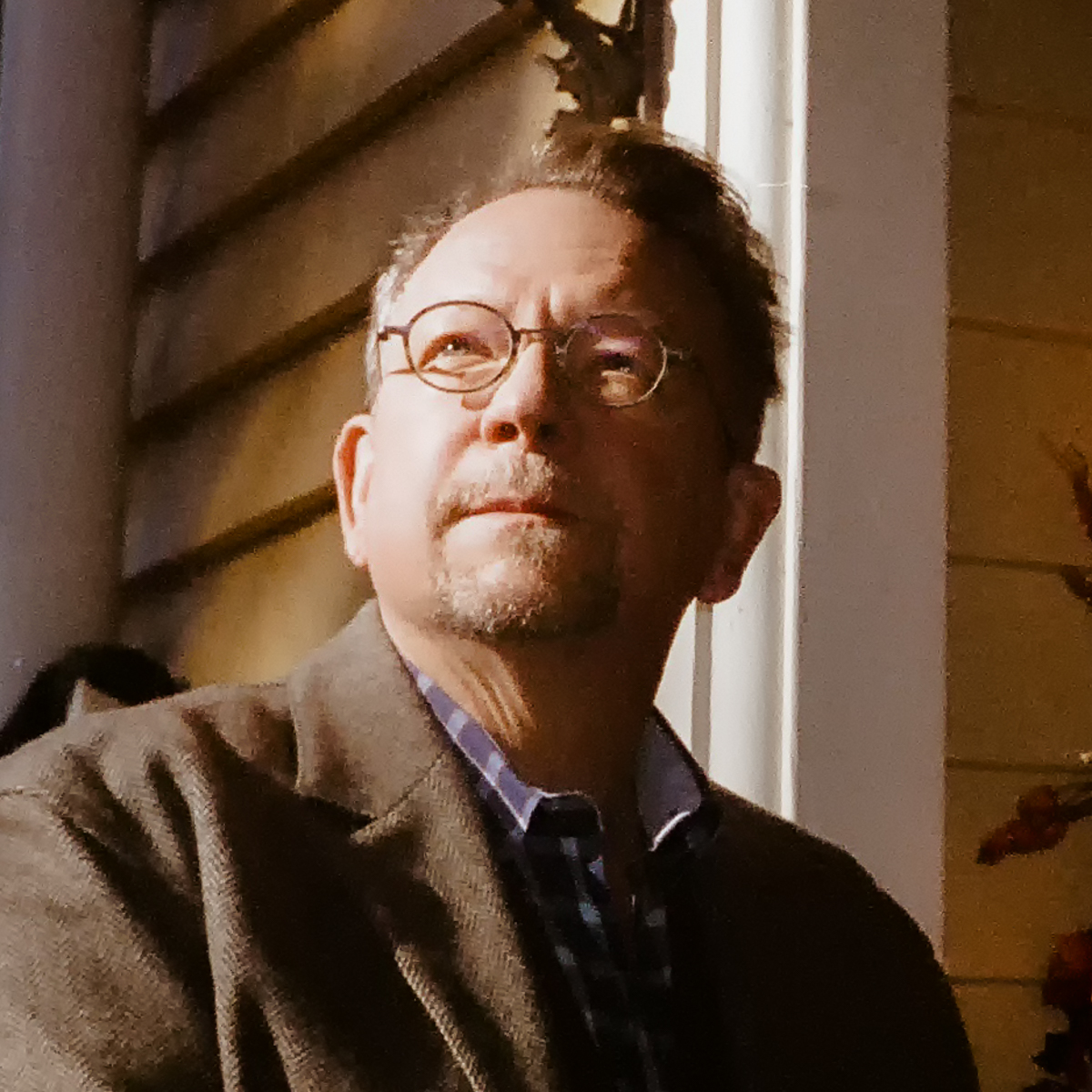
CB Adams is an award-winning fiction writer and photographer based in the Greater St. Louis area. A former music/arts editor and feature writer for the St. Louis Globe-Democrat, his non-fiction has been published in local, regional and national publications. His literary short stories have been published in more than a dozen literary journals and his fine art photography has been exhibited in more than 40 galley shows nationwide. Adams is the recipient of the Missouri Arts Council’s highest writing awards: the Writers’ Biennial and Missouri Writing!. The Riverfront Times named him, “St. Louis’ Most Under-Appreciated Writer” in 1996.