
by CB Adams
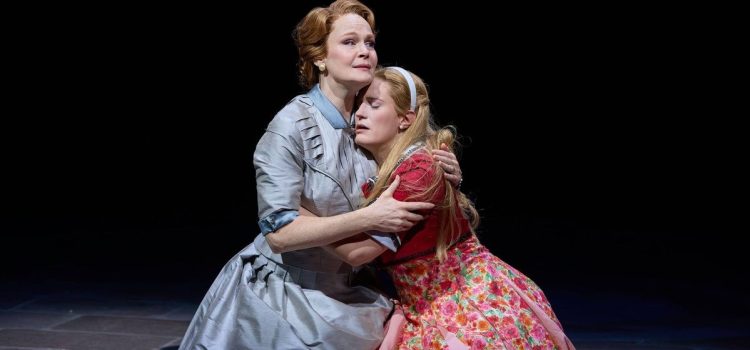
Opera Theatre of Saint Louis’ production of “The Light in the Piazza” consistently achieves the atmosphere of operatic emotional depth, even if it reaches true operatic emotional danger less often.
Through soaring vocal performances, elegant visual storytelling and sustained tonal sophistication, OTSL delivers a production enveloped in cultivated romanticism and musical yearning.
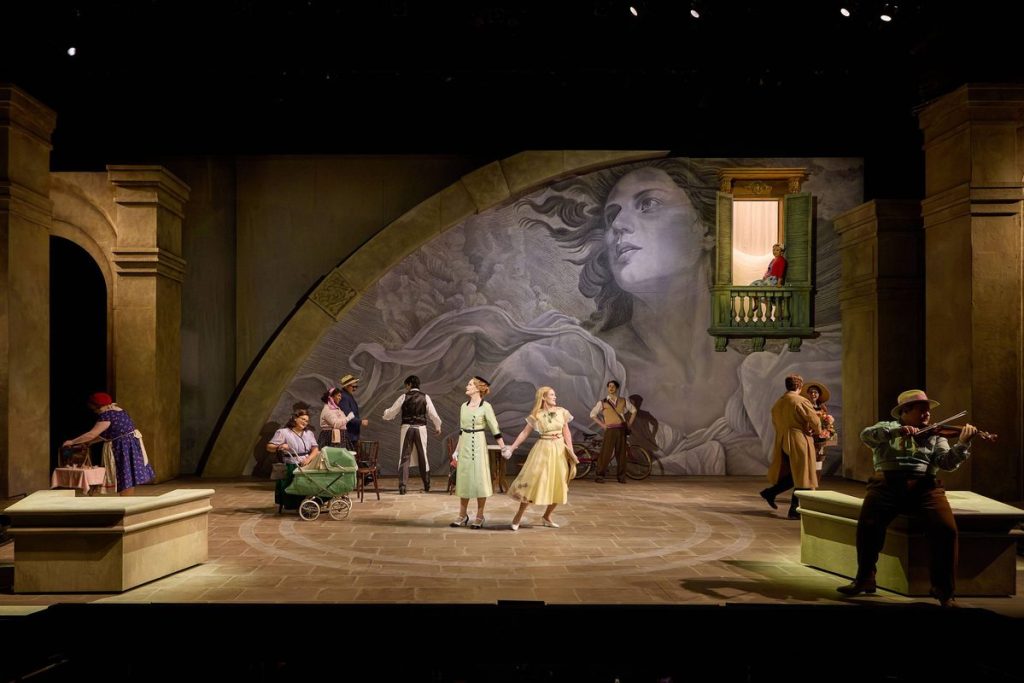
Cameron Anderson’s striking set design establishes that atmosphere immediately. Sweeping stone arches dominate the stage, carrying the accumulated emotional history of Florence itself.
The arches become emotional architecture — thresholds, passages and reminders that these characters are visitors twice over: tourists moving through Italy and emotional travelers moving toward unfamiliar versions of themselves.
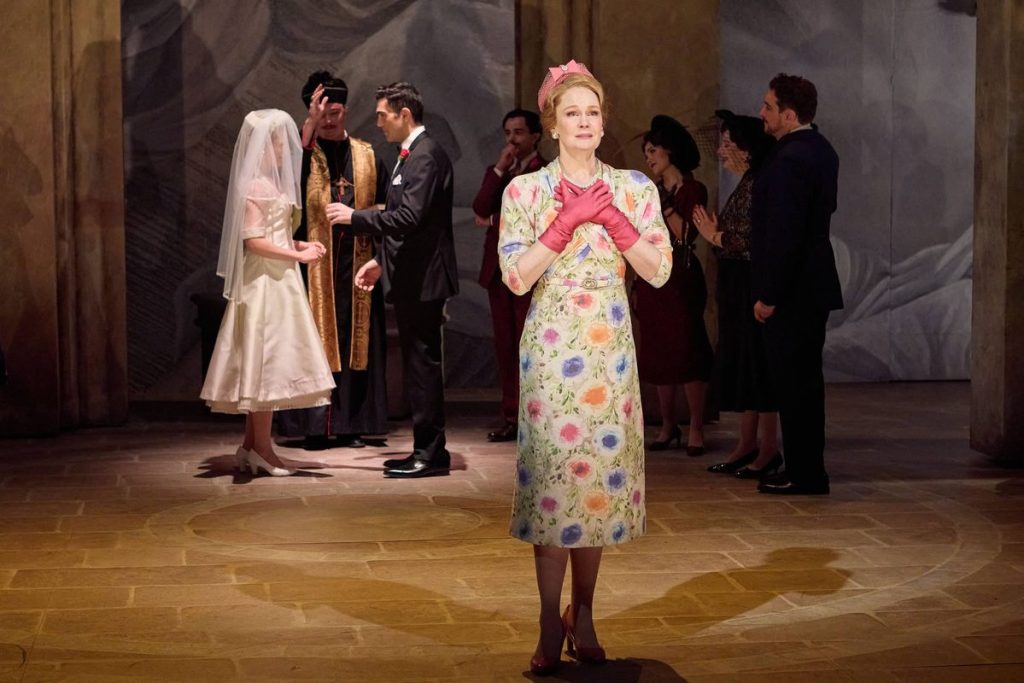
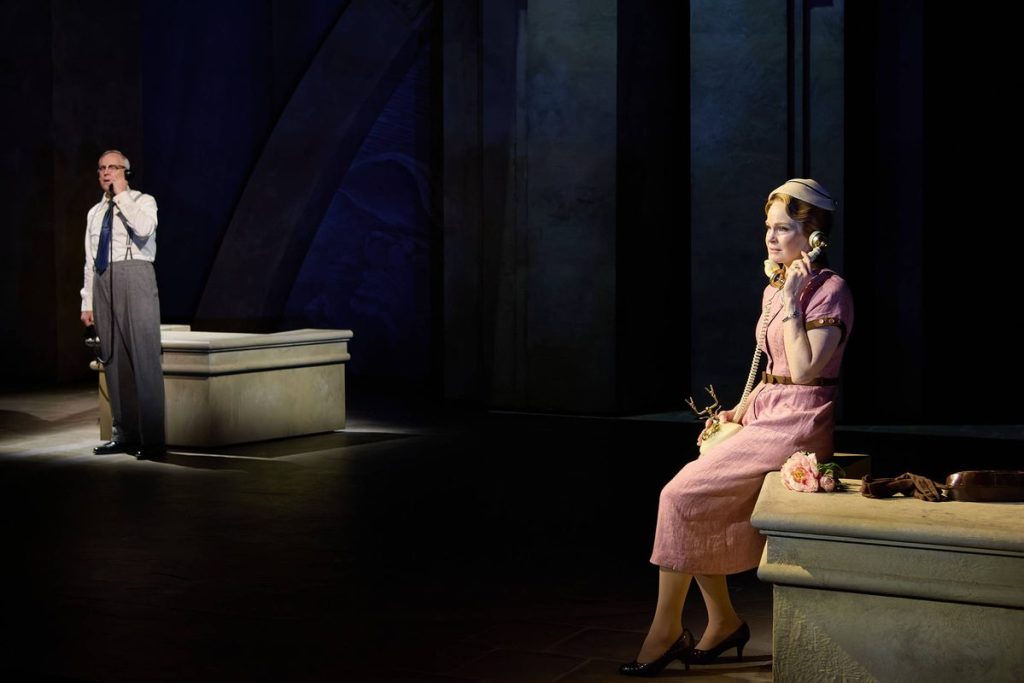
Eric Southern’s lighting deepens that visual language beautifully. A stark shaft of light isolates Clara at both the opening and near the production’s conclusion, quietly framing her as emotionally exposed and suspended between dependence and adulthood, innocence and self-determination.
Southern’s lighting and Anderson’s arches together create a visual vocabulary of passage, vulnerability and emotional crossing.
Crystal Manich directs with clarity and tonal confidence. Scene transitions flow with dreamlike fluidity, and the production sustains a remarkably cohesive emotional vocabulary from beginning to end.
The production ultimately belongs to Kate Baldwin’s Margaret Johnson.
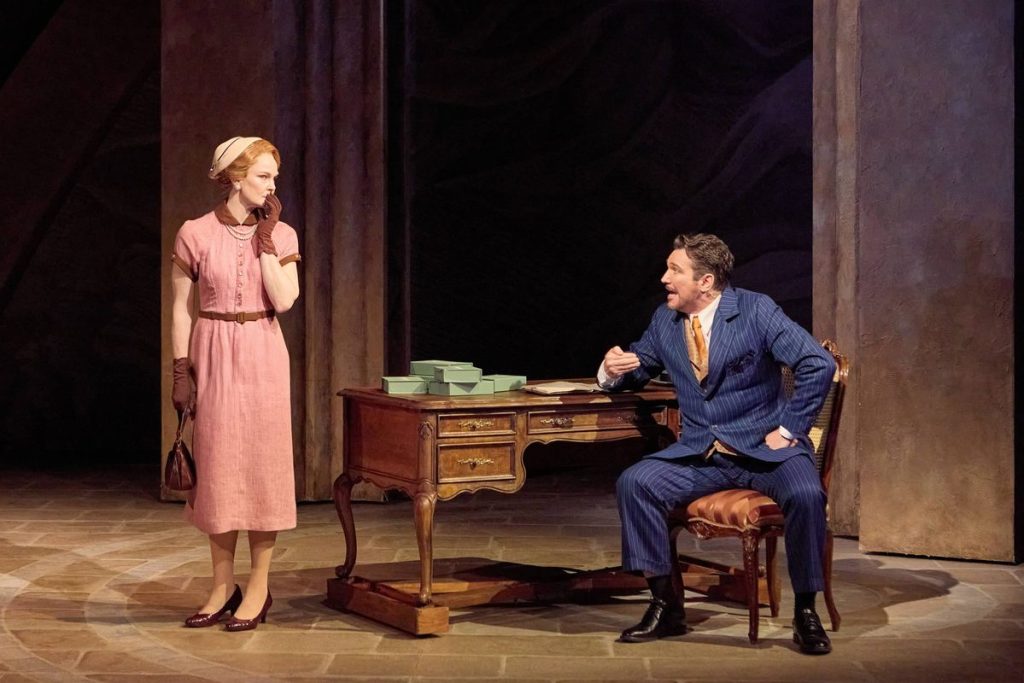
Baldwin gives the evening its mature emotional intelligence, shaping Margaret as a woman who understands that love offers no guarantees, safeguards or reliable maps. Warmth, wit, restraint and quiet exhaustion coexist seamlessly in her performance.
Her richly controlled vocals navigate Adam Guettel’s harmonically restless score with remarkable ease, while her acting continually reveals the emotional calculations unfolding beneath Margaret’s composed exterior.
Though Clara’s romance initiates the story, OTSL’s production increasingly reveals itself as Margaret’s drama — a mature reckoning with love, uncertainty and the frightening necessity of release.
Roy Hage’s Fabrizio proves equally essential to the production’s success. Hage brings lyrical warmth, sincerity and earnest emotional transparency to the role, grounding the production’s refined theatricality in genuine feeling.
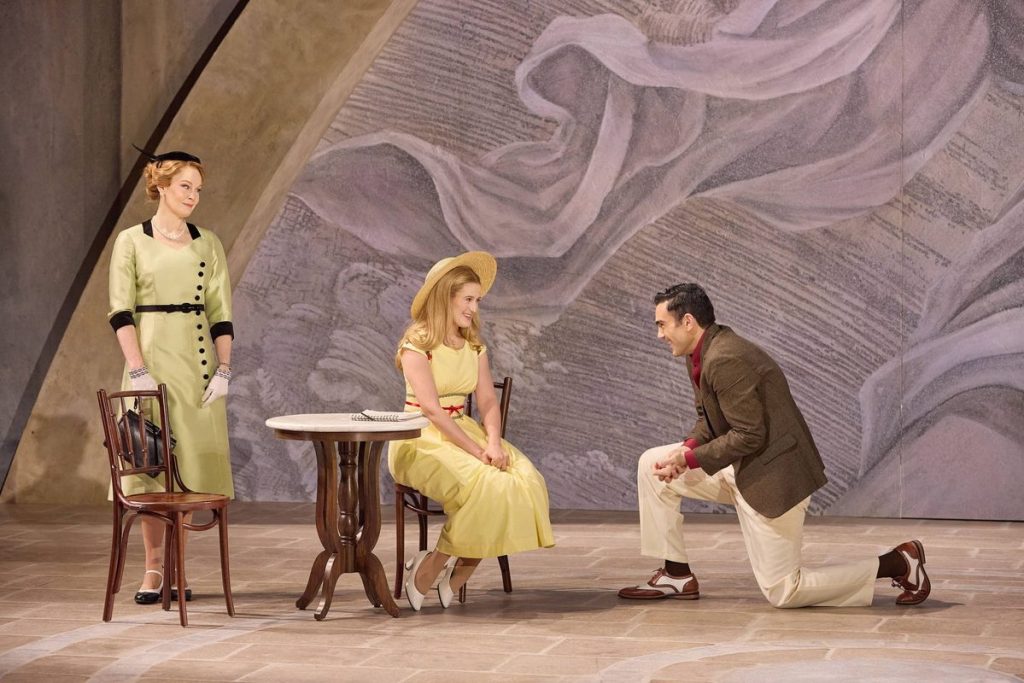
His chemistry with Katrina Galka’s Clara gives the romance persuasive emotional momentum even when the show’s idealism threatens to outrun practical realism.
Hage’s tenor remains consistently expressive and inviting, and his openness sustains much of the production’s emotional accessibility.
Galka delivers a thoughtful and sympathetic Clara, particularly in the later scenes where the character’s frustration with her constrained life emerges more forcefully.
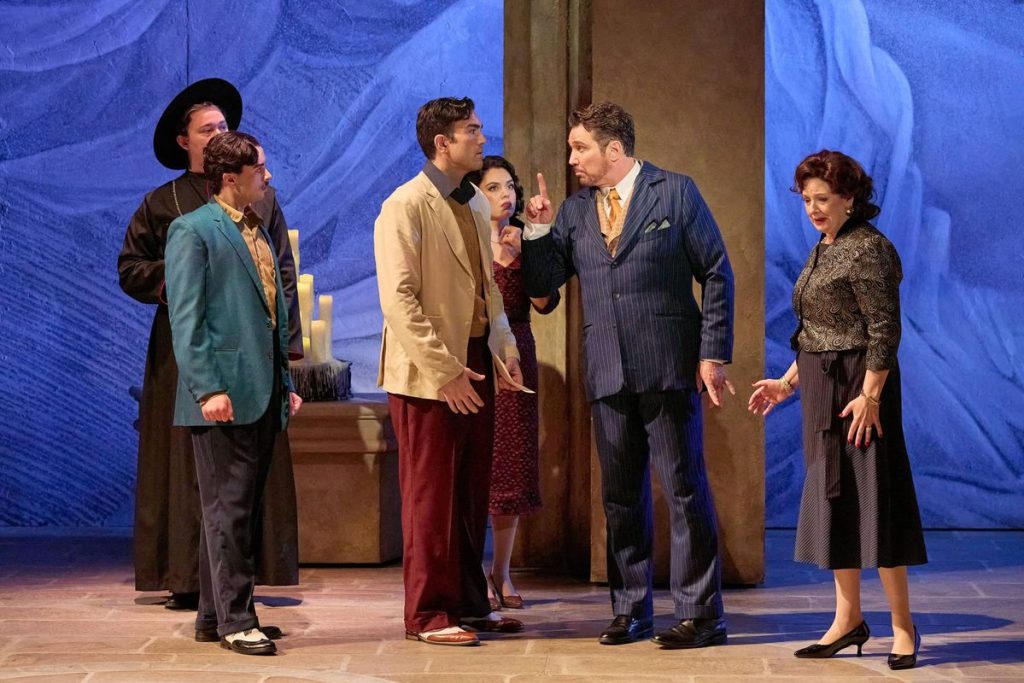
Even so, the production’s emotional center of gravity gradually shifts toward Baldwin and Hage, whose performances carry greater theatrical and vocal authority.
That contrast between youthful emotional openness and the erosion of adult certainty gives the production much of its emotional texture. Clara and Fabrizio move toward love with instinctive urgency, while Margaret and Roy inhabit the lingering emotional afterlife of a marriage whose passion has cooled into habit and caution.
Under Rob Berman’s direction, the St. Louis Symphony Orchestra fully embraces Guettel’s lush, classically inflected score. The music unfolds less as a sequence of distinct songs and more as a continuous emotional current built from soaring phrases, suspended harmonies and yearning orchestral textures.
At times, however, that richness works against dramatic immediacy. The orchestra occasionally overwhelms dialogue, and extended untranslated passages in Italian force audiences to work harder than necessary to remain textually connected.
Those passages clearly reinforce Margaret’s outsider status within Florence’s emotional and linguistic landscape. Still, the cumulative effect creates more distance than intimacy.
Perhaps it is unfair to apply operatic standards of clarity and accessibility to a musical deliberately straddling both worlds. Yet when an opera company stages “The Light in the Piazza” with such unapologetically operatic ambition, those comparisons become inevitable.
What ultimately lingers after OTSL’s “The Light in the Piazza” is less any individual song or dramatic revelation than the production’s carefully sustained emotional and visual atmosphere. The voices, the arches, the light and the cultivated romanticism remain vividly intact — a performance more immersive than transformative, though consistently elegant and theatrically persuasive throughout.
“The Light in the Piazza” continues through June 28 at the Loretto-Hilton Center on the Webster University campus, presented in rotating repertory as part of Opera Theatre of Saint Louis’ 2026 festival season. Ticket information, dining options and additional production details are available through the OTSL website.

CB Adams is an award-winning fiction writer and photographer based in the Greater St. Louis area. A former music/arts editor and feature writer for the St. Louis Globe-Democrat, his non-fiction has been published in local, regional and national publications. His literary short stories have been published in more than a dozen literary journals and his fine art photography has been exhibited in more than 40 galley shows nationwide. Adams is the recipient of the Missouri Arts Council’s highest writing awards: the Writers’ Biennial and Missouri Writing!. The Riverfront Times named him, “St. Louis’ Most Under-Appreciated Writer” in 1996.